News related to
crypto

Crypto influencer Ben Armstrong, known as BitBoy, has asserted that Ripple’s XRP possesses potential to rival Bitcoin’s dominance—not in every metric, but in overall market influence and growth. He argues that while Bitcoin remains unmatched on decentralisation and brand recognition, XRP may outpace Bitcoin in return-on-investment and adoption under certain conditions.

Armstrong points to several factors he believes could drive XRP forward: its far faster transaction settlement times, its emerging use for cross-border payments, and increasing interest from both retail and institutional investors. He acknowledges these victories come with drawbacks—particularly XRP’s higher centralisation compared with Bitcoin, given significant holdings of its supply are controlled by Ripple.

He describes market capitalisation as one pathway for competition, noting that XRP lags far behind Bitcoin’s more than US$2 trillion valuation. Nevertheless, he suggests that XRP could narrow that gap by capitalising on regulatory improvements and product developments in the crypto space. He cited possibilities such as exchange-traded funds for XRP and Ripple’s potential corporate moves that could boost legitimacy.

Comparisons with Ethereum form a large part of Armstrong’s argument. He has predicted that XRP may overtake Ethereum in market cap, saying Ethereum’s role in decentralised finance gives it current strength but also comes with trade-offs in efficiency and scalability. XRP, in his view, may benefit from being lighter in overhead, and more directly applicable in payment systems. Critics, however, highlight that Ethereum’s developer ecosystem, DeFi dominance, and smart contract utility are powerful advantages that XRP must overcome.

Recent legal developments related to Ripple have itself affected XRP’s trajectory. Armstrong notes that favourable rulings, greater regulatory clarity in jurisdictions like the US, and growing institutional interest are enhancing investor confidence. He also emphasises that the narrative around cryptocurrency regulation is shifting, which could favour assets like XRP that are often under scrutiny.

On price forecasts, Armstrong has offered a range of scenarios: gains ranging from three-fold to much higher depending on whether certain catalysts—such as regulatory approvals or ETF launches—unfold as hoped. He cautions that for XRP to truly rival Bitcoin, sustained momentum must be maintained over a multi-year horizon, not just in speculative bursts.
FTX’s bankruptcy estate will issue a $1.6 billion payment to verified creditors on 30 September, under its Chapter 11 plan of reorganisation. This marks the third major disbursement since the crypto exchange defaulted in November 2022.

Creditors who complete required verification on FTX’s claims portal and comply with tax documentation will receive payouts via service providers BitGo, Kraken, or Payoneer. Funds are expected to arrive in accounts within three business days after distribution.

Class-5B U. S. customer entitlement claims will receive 40% in this round, elevating their cumulative recovery to 95%. “Dotcom” customers will obtain an additional 6%, bringing their total recovery to 78%. General unsecured and digital asset loan claims will be paid 24%, lifting them to 85% total recovery. Convenience claims will be paid at 120%, exceeding their original declared amounts.

To date, over $6 billion has been repaid to creditors across prior distributions under the plan.

The distributions are being overseen by the FTX Recovery Trust, which is executing on its court-approved strategy to restore assets and settle claims. The plan reflects a structured priority of classes: senior claims and verified claims first, with smaller or “convenience” classes handled in earlier rounds. Sam Bankman-Fried, FTX’s founder, is serving a 25-year sentence for fraud and conspiracy tied to the exchange’s collapse.

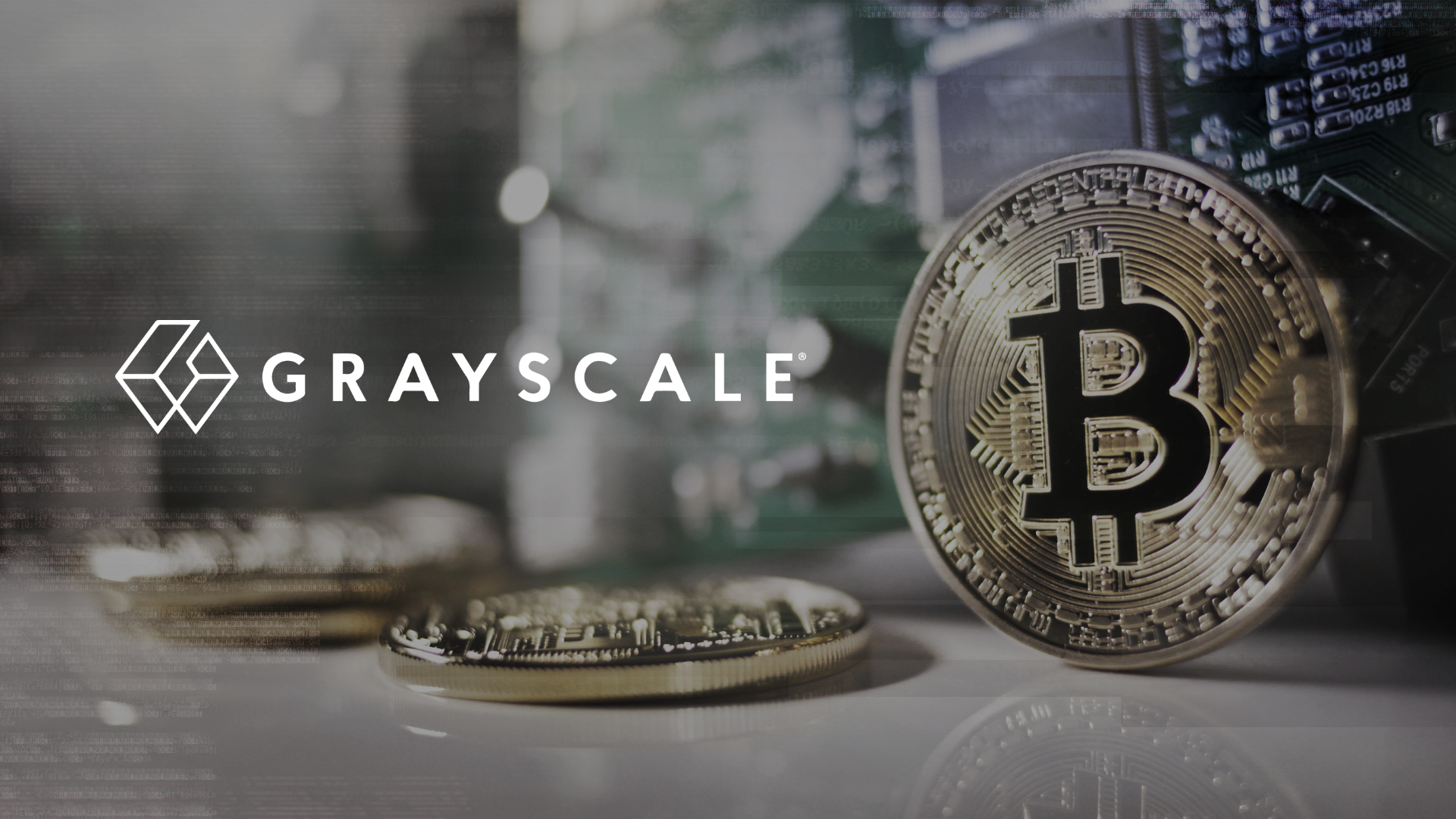
U. S. regulators have approved Grayscale’s Digital Large Cap Fund conversion into an exchange-traded fund that will hold multiple cryptocurrencies in a single product. The fund will allocate more than 70% to Bitcoin and about 17% to Ether, with the remainder distributed among XRP, Solana, and Cardano.

The Securities and Exchange Commission adopted new generic listing standards for commodity-based spot crypto ETFs, allowing exchanges such as NYSE Arca, Nasdaq, and Cboe BZX to list qualifying funds without bespoke approval filings. These rules cut the maximum approval time from several months to as little as 75 days.

Grayscale Investments will be the first asset manager to launch a multi-crypto ETF under this framework. The GLDC product offers regulated exposure through traditional securities structures, permitting investors to access these broad crypto assets in a single fund rather than holding individual tokens. GLDC had existed before as an investment product but lacked ETF status until this regulatory shift.

Industry analysts consider this a pivotal moment for the broader digital asset market, extending beyond the earlier wave of Bitcoin-only or Ether-only products. The decision formalises recognition by regulators that crypto portfolios comprising major altcoins may be viable under oversight and regulatory expectations. It also reflects growing institutional demand for diversified exposure as volatility remains high among lesser-known tokens.

Some market participants caution that, despite its multi-asset nature, the heavy weighting toward Bitcoin and Ether means the fund’s performance may still be strongly driven by those two assets. Questions remain about how XRP, Solana, and Cardano portions will perform in different market environments, and how liquidity, custody, and valuation will be managed for the less dominant tokens.

  Solmate, a newly launched Solana digital asset treasury headquartered in the UAE, is mobilising US$300 million to build on-chain infrastructure and deliver staking-based returns for investors. Marco Santori, formerly Chief Legal Officer of Kraken, has been appointed CEO. The company is setting up bare-metal validators in Abu Dhabi, in partnership with RockawayX, aiming for high reliability and performance in staking operations. Solmate’s backers include ARK Invest, […]

Government officials in New Delhi have unveiled a secure integrated circuit solution, fully developed within India, designed to underpin future digital identity systems including e-passports. All intellectual property is said to reside domestically, marking a significant milestone in the nation’s tech self-sufficiency drive.

The secure IC is embedded with a “smart OS”, enabling secure authentication, encryption, and identity verification. It is intended for deployment in identity credentials issued by federal authorities. Verification features include tamper resistance, cryptographic protection of stored data, and interoperability with global identity verification standards. The OS is modular, allowing updates and extension of features such as biometric modules, NFC, and remote authentication.

The development is part of the broader India Semiconductor Mission and Semicon India Programme, with an investment outlay of ₹76,000 crore supporting chip fabrication, assembly, display fabs, and design projects. The pilot line for this secure chip is being hosted in Gujarat at an OSAT facility.

Sources indicate that ten semiconductor manufacturing projects have been approved across six states—Gujarat, Assam, Uttar Pradesh, Punjab, Odisha, and Andhra Pradesh—with total investment commitments exceeding ₹1.60 lakh crore. These projects include multiple fabs, ATMP/OSAT facilities, and chip design initiatives.

Among recent achievements is the development of Vikram-3201, a 32-bit space-grade processor by the ISRO Semiconductor Laboratory, presented to the Prime Minister at Semicon India 2025. It has been validated in the PSLV-C60 mission and is said to be robust under extreme launch-vehicle conditions. It was fabricated using a 180 nm CMOS process.

The secure IC is expected to be somewhat different in specifications from Vikram-3201: targeted more towards identity and citizen services rather than space applications. Performance metrics are likely less extreme, but security requirements—such as resistance to physical tampering, side-channel attack mitigation, secure boot, and cryptographic module certification—are being prioritised. Implementation of secure OS standards is underway.

In tandem with hardware development, the government has accelerated IP and design ecosystem support. Under the Design Linked Incentive scheme, 23 design projects have been approved to foster startups, MSMEs, and academic participation. Skill development in VLSI design, packaging, EDA tools, and fab-operations is being emphasised.

Policy observers note that global supply-chain disruptions and geopolitical shifts have provided a backdrop that intensifies India’s push for technological sovereignty. External partnerships—for example in materials, equipment, packaging technologies—are being pursued to fill gaps in the domestic ecosystem.

Challenges remain. Process node maturity is one area—while the 180 nm node is proven and reliable for many applications including space, more advanced nodes dominate consumer electronics and high-performance identity solutions globally. Also, certifications for security standards, supply of trusted materials, secure hardware lifecycle management, and scaling production to volumes needed for national identity issuance will test capacity. Ensuring interoperability with international identity verification frameworks will also be essential.

Curve DAO is considering a proposal to pre-mint 60 million crvUSD to support its new Yield Basis AMM, a mechanism designed to use leveraged Bitcoin pools to eliminate impermanent loss while boosting yield. The crvUSD would be borrowed and paired with BTC in liquidity positions rather than sold on the open market, avoiding direct dilution of circulating stablecoin supply.

Proposed by Curve founder Michael Egorov, Yield Basis is expected to launch with three capped pools, each for BTC wrappers, with deposit limits of about US$10 million per pool. The proposal claims that Yield Basis returns value to both veYB holders and to Curve / veCRV holders through trade-and-fee flows, vote incentives, and other revenue mechanisms.

However, the plan has met with resistance in Curve’s governance forums. Critics warn that pre-minting unbacked crvUSD introduces systemic risk, including potential for unmanageable supply growth, governance overreach, and threats to the peg of crvUSD. One commenter described the risk of minting “out-of-thin-air, unbacked, 60M crvUSD”. Some community members argue the DAO’s current permissions already allow arbitrary minting of crvUSD, a concern in light of past vulnerabilities.

Risk mitigation is a major topic of debate. Suggestions include turning the pre-mint into a strict credit line structure, with per-pool limits, a governance-controlled kill-switch, staged rollout starting with a single BTC wrapper, insurance or first-loss vaults, and better transparency via telemetry dashboards. Yield Basis proponents have responded by noting that the protocol has passed six audits to date, is running a Sherlock bug bounty, and intends to enforce caps at launch. They emphasise that crvUSD in Yield Basis is minted only when BTC is deposited.

Scale and revenue projections form a core of the discussion. The proposal argues that Yield Basis solves what’s known as the demand-side absorption issue for crvUSD: rather than minting tokens that are sold, pairing them internally with BTC leverages LP positions, creating supply sinks and revenue flows. Fee distributions—from arbitrage trades, stablecoin pair pools involving crvUSD, and trading commissions—are structured to benefit veCRV holders, veYB holders, and liquidity providers. The DAO ecosystem is slated to receive a share of YB token inflation for vote incentives in major stablecoin pools.

Stakeholders are closely watching governance dynamics. veCRV voting power is fragmented, voter turnout on high-stakes proposals is variable, and some members say optics could affect market confidence. The precedent set by this mint could influence how future protocol decisions are made.

Shiba Inu is drawing increased attention after the project’s team outlined how a prospective spot SHIB exchange-traded fund could enhance demand for its Layer-2 blockchain, Shibarium, and its gas/governance token, BONE.

Speculation about a SHIB ETF has intensified as SHIB retains a multi-billion dollar market cap, maintains listings on major global exchanges, and commands one of the stronger retail investor communities in crypto. The Shib Inu ecosystem team emphasised that while no asset manager or regulator has yet submitted an approved SHIB ETF, the token’s scaling infrastructure and utility features parallel those that aided Bitcoin and Ethereum. Analysts suggest these attributes may not only raise SHIB’s institutional legitimacy but also funnel value into Shibarium and BONE.

Shibarium, launched in August 2023, serves as Shiba Inu’s native Layer-2 network. Its design aims for fast, low-cost transactions while pushing gas fees to be paid in BONE. Any amplification of SHIB demand could indirectly drive more activity on Shibarium, reinforcing BONE’s utility. In commentary, the SHIB team has framed this as a rising inflection point: greater visibility for SHIB might translate into growing network usage, with BONE benefiting from both transaction volume and staking demand.

Events in the Shibarium ecosystem heighten the urgency. A flash-loan exploit allowed an attacker to purchase about 4.6 million BONE tokens, gain validator voting power, then execute a malicious state change to siphon assets from the Shibarium bridge. The team paused staking operations, moved certain funds to a secure multi-signature hardware wallet, froze the compromised BONE, and launched investigations with security firms. While the exploit dented confidence temporarily, it also drew attention to the importance of infrastructure security in scaling projects.

Market response to these developments has been mixed but leaned positive in some respects. BONE surged by about 40 % at one point after the exploit was revealed, before correcting. SHIB also saw modest gains as traders reacted to the possibility of more institutional participation. Some analysts caution, however, that regulatory hurdles and timing remain uncertain. A SHIB ETF would likely require clear alignment with securities laws in multiple jurisdictions, plus concrete backing from major asset managers.

Institutional exposure is being eyed not just via a direct SHIB ETF but through alternate paths: DeFi-oriented funds, layer-2 infrastructure products, or token baskets that include SHIB and BONE. Shibarium’s base of wallets—numbering over 21 million during earlier phases—and its integration with Ethereum and DeFi protocols are being cited as evidence that usage is scaling.

Advertisements

Nasdaq has mandated that listed companies obtain shareholder approval before issuing new shares to acquire cryptocurrencies, and must disclose fuller justifications and risk assessments for large-scale crypto purchases.

The exchange’s enhanced oversight aims to guard investors, particularly retail traders, from underestimating the high volatility and speculative nature of cryptocurrencies. Companies must now explain why they are buying substantial amounts of crypto and articulate the associated financial, regulatory and market‐risk implications.

Under the new requirements, issued by Nasdaq earlier this month, firms proposing to issue equity to raise funds for crypto purchases must secure affirmative vote from their shareholders. Non‐compliance may result in trading suspension or delisting. Nasdaq is also tightening disclosure obligations: entities must show how much crypto they hold, the rationale for those holdings, and how they plan to manage the risks.

Architect Partners reports that over 120 US‐listed companies have announced plans to raise more than US$130-billion this year for cryptocurrency acquisitions, nearly 100 of which are listed on Nasdaq. Many of these firms have adopted “crypto-treasury” strategies—allocating a significant portion of their balance sheets to digital assets. Some high-profile companies have already attracted scrutiny for the size of their holdings and for the effects on shareholder dilution.

Nasdaq justifies the changes by citing investor protection. Wholesale accumulation of crypto assets can dramatically affect stock price volatility. There is concern that some retail investors may not fully grasp how crypto’s price swings, regulatory uncertainty or tax treatment risk hurting returns, or causing losses.

Critics worry the new rules could slow innovation or deter companies considering crypto exposure. Companies accustomed to quickly buying digital assets may face delays because shareholder voting cycles are time-consuming and costly. Some argue that imposing blanket rules could punish well-prepared firms that already maintain strong governance, transparency, and risk controls.

Regulators such as the US Securities and Exchange Commission and the Commodity Futures Trading Commission have been increasing pressure on exchanges and firms around crypto disclosures, anti‐fraud measure and governance. Nasdaq’s move aligns with broader regulatory momentum in financial markets toward more oversight of firms with substantial crypto exposure.

Abu Dhabi’s Hub71 has forged a strengthened alliance with the Japan External Trade Organization aimed at building deeper cross-border innovation, particularly in Web3, AI, spatial intelligence and sustainable tech sectors. Hub71 used its presence at Tokyo’s WebX and the Blockchain Leaders Summit to push forward new collaboration programmes and investment pathways.

At these events, Hub71 spotlighted a number of startups from Abu Dhabi—among them bitgrit, xMap, Aqua Development, Chainsight, Nodeshift, Bit2Me and 1Money—making connections with Japanese investors, corporate entities and ecosystem partners. The showcasing was closely aligned with Japan’s innovation priorities, including governance in blockchain and sustainable water solutions.

Key to the partnership is the launch of the J-StarX Programme, developed jointly by Hub71, JETRO and Elixir Capital, which will host seven Japanese Web3 startups in Abu Dhabi to facilitate scale-ups, market access, and ecosystem integration. Entrepreneurs in this programme will benefit from capital, mentoring, regulatory guidance and networking in the UAE’s tech environment.

Hub71 also assumed title-sponsorship of the Blockchain Leaders Summit in Tokyo, delivering the opening keynote. Executives emphasised the UAE’s position as an enabling region for innovators seeking overseas expansion, and positioned Abu Dhabi as a gateway for startups to penetrate Asia on one side and Middle East markets on the other.

Peter Abou Hachem, Head of Growth and Strategy at Hub71, stated that the collaboration underscores “the value of global connectivity”, and that Japan’s leadership in Web3 and innovation aligns with Hub71’s mission. He noted that through partners like JETRO, both ecosystems can unlock opportunities in market reach, talent exchange and frontier technologies.

HONG KONG SAR – Media OutReach Newswire – 16 September 2025 – After trading hours on 15 September 2025, DL Holdings Group Limited (HKEX: 1709) announced a major strategic cooperation with Fortune Peak Limited. DL Holdings will acquire the latest-generation, top-efficiency Bitcoin mining machines via the issuance of Convertible Bonds, fully entering the Bitcoin mining sector with the aim of becoming the Hong Kong capital market’s leader […]

Bitcoin mining operations are undergoing a transformation as firms leverage their substantial electricity capacity and infrastructure to meet booming demand for artificial intelligence compute. Companies that once focused solely on mining are now converting parts of their facilities into AI data centres, pressing for more stable revenue amid tightening profit margins in crypto. CoreWeave’s $9 billion acquisition of Core Scientific stands out as a major move in […]

Memecoins have surged across cryptocurrency markets as traders shift bets toward a probable interest-rate cut by the Federal Reserve and the possibility of U. S. altcoin ETF approvals. Bitcoin’s market share has declined by about 3.5% over the past month, while indexes comparing altcoin performance versus Bitcoin have entered so-called “altseason” territory.

Expectations that the Federal Reserve may reduce rates by 25 basis points later this month are currently priced in at over 90% by market observers using tools such as Polymarket and the CME’s FedWatch. A rate cut is widely seen as a trigger boosting risk-assets by lowering the comparative appeal of fixed-income securities.

The CoinDesk Memecoin Index rose roughly 7.1% over 24 hours, led by tokens like SHIB and BONE. These gains came despite Shiba Inu’s layer-2 network, Shibarium, being hit by a flash-loan exploit, which did not dampen investor enthusiasm.

Analysts point out that falling Bitcoin dominance, which reflects a shrinking slice of total crypto market capitalisation for the biggest token, often heralds a shift into altcoins. Indexes from providers including CoinMarketCap and CoinGlass have signalled this rotation of capital away from Bitcoin toward altcoins.

Institutional momentum is also tightening around altcoin exchange-traded funds; proposals for ETFs covering DOGE and TRUMP tokens are reportedly under consideration for U. S. markets in the final quarter of the year. Approval of such funds could draw both retail and institutional capital into memecoin-adjacent assets.

Singapore is witnessing a sharp decline in wealthy mainland Chinese individuals relocating to the city-state, driven by stricter financial regulation, tougher compliance requirements, and more burdensome permanent residence and family-office rules. The flow is shifting instead toward Hong Kong, Japan and the Middle East.

Applications from wealthy Chinese seeking family office status or residency in Singapore have dropped by about 50 per cent compared to 2022, according to legal advisers involved in vetting such clients. One lawyer noted that platforms offering cryptocurrency, tokenised equity or stablecoins must now obtain licensing even when serving clients outside Singapore, and approval will be rare. Minimum capital thresholds have been introduced, along with anti-money laundering, technology-risk and conduct obligations.

The Fujian money-laundering scandal of 2023 is widely cited as a turning point. Following that case, Singapore’s financial institutions and regulators re-screened clients and intensified know-your-customer processes. Some family office applications have taken over a year to process; others have been rejected or delayed because of stricter background checks, including detailed disclosures about dependents and family relationships that many find invasive.

Hong Kong has responded by making entry and residency procedures easier. Earlier this year, its Capital Investment Entrant Scheme was reformed so that applicants need only six months of asset holding instead of two years, and family-held wealth or investments via family companies are now accepted. Dubai and Japan are similarly pulling ahead with more streamlined family office incentives.

Henley & Partners projects that only 1,600 millionaires will move to Singapore in 2025, less than half the number projected in the previous year. Meanwhile, many Chinese family offices already based in Singapore are relocating their operations back to Hong Kong or setting up in the Middle East or Japan.

Regulation focusing on crypto activity has been particularly discouraging. New rules require licensing for platforms offering crypto or tokenised financial products even to clients outside Singapore; approvals are expected to be rare and compliance burdens steep. Some crypto firms have already departed because of the regulatory regime.

Gemini Space Station, the cryptocurrency exchange founded by Tyler and Cameron Winklevoss, saw its shares leap more than 32% when it began trading on Nasdaq under the ticker “GEMI”. The stock opened at $37.01, having been priced at $28, after the company raised $425 million through an initial public offering.

Gemini sold 15.2 million shares at the set price, above the originally floated range of $24 to $26 per share. Investor demand exceeded supply by over twenty times. Nasdaq also participated with a $50 million private placement simultaneous with the IPO.

The valuation placed Gemini at approximately $3.3 billion, non-diluted. After the rally, the share price settled closer to $32, still well above the IPO price but reflecting a pull-back from the intraday highs.

Gemini posted a net loss of $282.5 million for the first half of 2025, following a $159 million loss in 2024. Despite those losses, its business spans crypto exchange services, a stablecoin, and a rewards credit card product.

Regulatory developments have bolstered confidence in the cryptocurrency sector. Gemini has benefited from relaxed oversight compared with earlier years, and the IPO is seen as a signal of institutional adoption amid stronger clarity from U. S. regulators. The firm is now viewed alongside the likes of Coinbase and Bullish, both of which have gone public.

Pi Network is poised for a high-profile showing at TOKEN2049 in Singapore on 1–2 October, where co-founder Dr Chengdiao Fan will present the project’s vision amid concerns over price decline, token unlocks, and technological progress. As a Gold Sponsor of the event, Pi is seeking to use the platform to address major challenges to its growth and credibility.

Dr Fan’s speech is expected to centre on blockchain’s capacity for real-world societal utility, tackling Web3 obstacles such as governance, decentralisation, and adoption in under-served regions. The Pi Core Team says she will offer updates on how Pi plans to translate its mobile-mining community into meaningful applications and ecosystem engagement. The announcement confirms both the speaking engagement and the sponsorship role.

The project confronts several critical headwinds. The native token PI has lost substantial value in recent months, dropping from highs to levels around US$0.34, placing it near a psychological resistance zone. Market watchers note that upcoming token unlocks—scheduled for late September—may significantly increase supply, potentially weighing further on price. Liquidity concerns and limited exchange listings continue to cast doubt on how quickly Pi can scale beyond its existing user base.

Even so, community sentiment has perked up. Many Pioneers believe TOKEN2049 could act as a catalyst for a short-term breakout, with expectations of new roadmap disclosures, technological upgrades or partnerships. Some analysts caution that past events—such as previous conference appearances—have triggered spikes followed by sell-pressure, a pattern called “sell-the-news.”

Another issue for Pi Network is how it balances hype with substance. Technical progress, including support for Linux nodes, decentralized KYC procedures, and scalability upgrades, is viewed as crucial if the network is to build trust with developers, regulators and investors. On governance, Dr Fan’s academic background in social computing and anthropology has raised expectations that she will address how Pi plans to foster community-led consensus and trust.

Digital assets are no longer a Wild West – governments worldwide are setting clear rules. Any company that exchanges, trades, or safeguards crypto now needs a proper license. It’s not just about meeting AML and CTF laws: a license builds client trust and gives businesses the legal ground to grow. With it, firms can offer exchange, custody, and payments to global clients. But every country has its […]

SwissBorg has lost about $41 million worth of Solana after a breach in a third-party API linked to its staking partner Kiln, which facilitated its SOL Earn programme. The incident affected fewer than 1% of users and represented roughly 2% of SwissBorg’s total assets under management.

The vulnerability originated in Kiln’s API — the software interface SwissBorg uses to communicate with Solana’s staking network. By exploiting that interface, attackers manipulated staking requests tied to the SOL Earn product and diverted approximately 192,600 SOL to an external wallet. SwissBorg and Kiln stated that the main SwissBorg app and all other Earn products remain secure. SwissBorg has paused Solana staking transactions while investigations continue.

SwissBorg CEO Cyrus Fazel described the event as “a bad day,” assuring customers that operations remain stable. The company pledged to reimburse all affected users, confirmed it has sufficient treasury reserves to cover losses, and is working with law enforcement, white-hat hackers, and security firms to block stolen transactions and trace funds. Some transfers have already been intercepted, according to its statement.

Kiln acknowledged that the breach involved “unauthorised access to a wallet used for staking operations.” SwissBorg and Kiln jointly activated their incident response protocols upon detection, aiming to contain the damage.

Industry experts flag this as yet another example of how dependence on external service providers exposes crypto platforms to infrastructure-level risk. In recent years, comparable API and smart-contract vulnerabilities have been exploited across the sector, prompting calls for more rigorous audits and redundancy in trust relationships.

Bybit has restored full access to its mobile app for users in India, marking a pivotal stage in its compliance efforts and reaffirming its long-term presence in the market. Access to its website is being reinstated in phases and is expected to be fully live within the next three to four days. This marks a strategic relaunch of services including spot trading, derivatives, options and copy trading, supported by enhanced Know Your Customer protocols and security measures.

The exchange began its compliance drive earlier this year by registering with the Financial Intelligence Unit-India as a reporting entity under the Prevention of Money Laundering Act in January 2025. That move followed a penalty of approximately INR 9.27 crore imposed for operating without proper registration. Services had trickled back in February for authorised users, but full restoration remained pending until now.

Bybit co-founder and CEO Ben Zhou said the company views this phase Bybit Restores Full Trading Access in India as more than a mere return—it signals a renewed chapter in its India operations. He emphasised India’s potential as a leading digital-asset market and reiterated the company’s commitment to delivering secure, transparent, world-class trading experiences. Vikas Gupta, Country Manager of Bybit India, described the moment as a landmark in providing Indian clients a seamless and compliant trading environment. He also spoke of broader ambitions to nurture India’s crypto ecosystem through education, strategic partnerships and community initiatives.

Legal counsel from Cyril Amarchand Mangaldas led Bybit’s regulatory realignment, navigating months of negotiations and product realignment to meet Indian norms and transaction-reporting requirements. The process has been framed as a model for other offshore platforms seeking a compliant pathway into India’s tightening regulatory environment.

Bybit has intensified its outreach in the Indian market, serving as title sponsor for the India Blockchain Tour 2025 and preparing for the next leg, “Metamorphosis – India Blockchain Tour,” in New Delhi on 27–28 September. The exchange has also unveiled its World Series of Trading 2025, offering welcome bonuses and prizes such as cars and smartphones to attract users.

India remains one of the world’s most dynamic cryptocurrency markets, despite stiff tax and regulatory hurdles—such as a 30 per cent tax on crypto gains and no comprehensive legal framework yet in place. The restoration of Bybit’s services under tighter compliance standards reflects its resilience and underscores the importance of regulatory alignment for offshore platforms.

Bitcoin reclaimed the $112,000 level as markets remain focused on the week ahead, with investors balancing caution against emerging momentum across select digital assets. Solana and Dogecoin have seen notable uplift as traders reallocate positions amid mounting anticipation of U. S. macroeconomic releases and Federal Reserve developments.

Bitcoin traded in a tight range near $111,500 to $112,300 as market participants paused, waiting for fresh cues from upcoming Consumer Price Index, Producer Price Index and central bank announcements. This positioning reflects prudence amid heavier macroeconomic noise.

Solana climbed to around $218 to $220, marking a multi-month high as renewed interest drew capital from more established tokens. Meanwhile, Dogecoin extended a weekly gain to approximately $0.24, buoyed by optimism surrounding the imminent debut of the first U. S. memecoin exchange-traded fund.

SignalPlus head of insights Augustine Fan noted that crypto markets have been relatively flat recently, with Bitcoin underperforming both its major peers and traditional assets such as equities and spot gold. That underperformance accompanied weaker inflows into digital asset trusts and reduced activity on centralised exchanges.

Economists have also dialled back inflation and recession worries following revisions to U. S. labour data, prompting some rebound in market sentiment. Bitcoin, alongside European equities, saw support as experts downplayed fears of stagflation.

Prediction markets suggest that a rate cut from the Federal Reserve is increasingly likely, with sentiment split between a further cut or a hold in October. Gold reached record levels in anticipation of looser monetary policy, even as U. S. equity indices pushed higher.

Positioning remains defensive, but the rotation into altcoins signals willingness among traders to explore higher-beta opportunities. Reflecting this, the phrase Traders Push Bitcoin Above $112K captures the shifting dynamic in crypto allocations—but notably, attention remains fixed on upcoming U. S. data releases shaping the next phase of the market.

Liquidity has stayed modest. Reference points in the $110K–$112K zone appear increasingly important as support amid a backdrop of uncertainty.

Bitcoin whales appear poised for a dramatic ascent in the weeks ahead, with some expecting the cryptocurrency to crest $190,000 this December—a target that has drawn both excitement and caution among market observers.

Whales, or large holders of Bitcoin, have been signalling confidence through increasing accumulation. On-chain data indicates sustained purchasing patterns and institutions continuing to funnel capital into Bitcoin, supporting forecasts like the $190,000 December rally that some market models envision.

For instance, Tiger Research cites growing institutional inflows—including spot-Bitcoin ETF demand and new crypto allocations in retirement plans such as US 401s—as key drivers behind a projected price ceiling of $190,000. They argue that surging liquidity and tightened supply dynamics could push Bitcoin to that level by the close of Q3 or early Q4 2025.

Yet other analysts strike a more measured tone. Crypto economist Willy Woo warns that long-standing whales, many of whom acquired Bitcoin at below $10, now control large portions of the supply. He explains that each Bitcoin they opt to sell requires over $110,000 of fresh demand to absorb it—creating a de facto resistance level that complicates momentum.

eToro Group Ltd is poised to pursue bolder acquisitions after securing a substantial liquidity base, according to one of its co-founders. At the Ambrosetti Forum in Cernobbio, Italy, Ronen Assia, executive director and co-founder, confirmed that the firm “has cash and cash equivalents of around $1.2 billion at the end of the first half of the year, with a cash position of $988 million, with no debt.” He added: “We’re looking to do more ambitious stuff involving acquisitions,” emphasising that eToro aims to broaden both asset classes and its geographic footprint.

eToro’s deliberate pivot into more aggressive mergers and acquisitions comes on the heels of its listing on Nasdaq in May 2025, where it raised $620 million in its initial public offering. The company’s robust cash war-chest endows it with flexibility to explore new verticals and markets in a dynamic fintech landscape.

Beyond financial strength, eToro is deepening its product offering. The platform recently rolled out tokenisation and artificial intelligence tools targeted at retail investors, along with expanding its global reach. Meanwhile, preliminary selected business metrics for July and August reveal continued operational momentum: assets under administration rose to $19.7 billion, funded accounts approached 3.69 million—both reflecting high year-on-year growth—while crypto trading volumes surged by nearly 50 percent.

The company’s healthy balance sheet is grounded in a successful IPO and product innovation. In Q1 2025, eToro reported $736 million in cash, cash equivalents, and short-term investments, alongside growth in user accounts and assets under administration. The firm also expanded its trading products, launching options in the UK and futures in Europe, while diversifying geographic access to include exchanges in Abu Dhabi and Hong Kong.

This marks a clear signal that bold acquisitions are on eToro’s horizon—a phrase that captures the firm’s evolving strategic ambition and its capacity to act decisively in a competitive market.

The timing of this announcement is significant. Mergers and acquisitions within fintech and crypto sectors have become tools for scale, innovation, and regulatory navigation. With its substantial liquidity and no leverage, eToro may look to acquire firms offering complementary capabilities—whether in tokenisation, AI-driven trading, wealth management, or regional expansion.

Ronen Assia’s stance highlights both intent and preparedness. The expressed goal to take on “more ambitious” deals indicates a readiness to move beyond smaller bolt-ins, aiming instead for transformative moves that could reshape the firm’s product and regional scope. The emphasis on adding asset classes and locales suggests potential targets might include firms with niche offerings or solid footprints in under-penetrated markets.

At a time when many fintech companies are consolidating or recalibrating amid macroeconomic shifts and evolving regulation, eToro’s proactive posture sets it apart. With backing of a strong balance sheet and public market credibility, the platform is well placed to capitalise on strategic M&A opportunities as they arise.

Thunes has integrated Ripple’s infrastructure into its payments network, allowing Ripple–Thunes integration accelerates global payments with enhanced speed, transparency and cost-efficiency. Drawing on their existing 2020 alliance, the Singapore-based fintech firm and Ripple announced the deeper collaboration on 2 September 2025, aiming to transform cross-border transfers for businesses and financial institutions worldwide.

The integration embeds Ripple Payments into Thunes’s Direct Global Network, spanning 130 + countries and over 80 currencies. This union leverages Ripple’s global payout infrastructure—serving 90 + markets and covering more than 90 % of daily FX flows, with over US $70 billion processed—bringing real-time, cost-efficient, and transparent transactions to Thunes’s vast network.

Chloe Mayenobe, President and COO of Thunes, emphasised that the partnership bridges traditional finance and digital assets, enabling seamless, compliant cross-border payments at scale. She stressed the importance of real-time settlement and robust local integrations in scaling financial access globally. Fiona Murray, Managing Director for Asia-Pacific at Ripple, underscored how combining Thunes’s payment reach with Ripple’s digital asset infrastructure enhances speed, accessibility, and compliance.

This move extends Thunes’s capability to deliver payouts in local currencies in regions with limited banking access, particularly through its SmartX Treasury System. Ripple Payments is now integrated into SmartX, bolstering liquidity management and last-mile delivery in underbanked markets.

Analysis from BeInCrypto notes that this alignment enables faster settlement and improved compliance, especially where mobile wallets like GCash, M-Pesa, and WeChat Pay dominate. For enterprises, the collaboration promises efficient global transfers with lower friction. Crowdfund Insider adds that the partnership broadens payout reach while streamlining money movement across key markets.

Electronic Payments International confirms the integration into SmartX, reinforcing Thunes’s treasury capabilities and enhancing its services. CryptoBriefing highlights the joint effort to improve speed, transparency and compliance across Thunes’s global network by incorporating Ripple Payments.

This development reflects an industry shift: traditional payment networks increasingly adopt blockchain infrastructure to reduce costs and boost efficiency. Thunes, with its “Smart Superhighway” platform covering billions of mobile wallets, bank accounts, and cards, stands well-positioned to harness Ripple’s tools for expanding financial inclusion.

Thunes, founded in 2019 and headquartered in Singapore, already partners with PayPal, Uber, Grab, Paytm, and others, serving a global footprint that includes more than 3 billion accounts across 130 countries. The integration with Ripple strengthens its proposition to these and other clients seeking faster, more transparent cross-border transfers.

Tether is weighing entry into the gold industry by initiating discussions with mining, refining, trading and royalty firms to channel its crypto-generated profits into bullion-linked ventures. The company holds US $8.7 billion in gold reserves stored in Zurich as collateral, and already holds a minority stake in a royalty firm, with talks underway to expand that involvement. This move marks a strategic shift toward physical assets, seeking to broaden its exposure across the gold supply chain and diversify beyond the cryptocurrency market. While CEO Paolo Ardoino has likened gold to “natural bitcoin”, the gold sector has responded to the overture with caution and scepticism.

Tether’s consideration of investments in new realms of the gold industry underscores a calculated attempt to strengthen its position beyond USDT’s dollar peg. The firm has reportedly held talks with multiple royalty companies and even mining investment vehicles—but not all discussions have yielded results. Notably, Tether’s efforts include growing its exposure via Elemental Altus, a Toronto-listed gold royalty company in which it holds a minority stake, with potential for further investment. Talks with Terranova Resources reportedly ended without agreement.

Tether already anchors its stablecoin operations with nearly US $8.7 billion in gold backing, using physical bullion to support its broader digital asset ecosystem. The gold-backed token XAU₮ remains modest in scale compared to its dollar-pegged counterpart, holding a market value of approximately US $880 million.

Parallel to these strategic talks, Tether’s gold-backed offering—Tether Gold —demonstrates measurable growth. As of the end of June 2025, around 246,524 XAU₮ tokens were in circulation, each representing one fine troy ounce of physical gold; the total backing equates to more than 7.66 metric tonnes of gold. A paraphrase of the headline above encapsulates the thrust: Tether eyes gold mining expansion.

Falcon Finance has reached a new milestone as the circulating supply of its decentralized stablecoin, USDf, climbs to an all-time high of $1.5 billion, signalling sharply increased adoption and confidence in its DeFi infrastructure. The expansion tracks a surge from $1.12 billion over approximately one month, a performance driven by a blend of yield innovation, enhanced transparency, and risk-mitigation frameworks.

The $10 million on-chain insurance fund plays a pivotal role in strengthening institutional trust. Seeded initially with USD1 and replenished via protocol fees, the fund is structured to act as a financial buffer during market stress—supporting yield commitments, offsetting rare instances of negative returns, and serving as a fallback bidder for USDf to uphold its peg. Premium collateral strategies further bolster systemic resilience.

Yield generation remains a cornerstone: the yield-bearing counterpart of USDf, sUSDf, has delivered a standout 30-day APY of 9.30 per cent as of 30 August, outperforming notable competitors such as Ethena’s sUSDe, Maple’s SyrupUSDC, Sky’s sUSDS, Ondo’s OUSG, and BlackRock’s BUIDL.

To deepen engagement and expand utility, Falcon Finance launched the frxUSD–USDf Curve liquidity pool, which offers participants more than 20 per cent APR and rewards denominated as “40× Miles.” The community-oriented Yap2Fly campaign—run in partnership with Kaito—distributed $50,000 in rewards to its top 50 users in August, further stimulating active participation.

Transparency remains central to the protocol’s ethos. Falcon now publishes full reserve breakdowns and supports these with weekly third-party attestations. As per the latest reporting, USDf reserves amount to $1.29 billion—comprising $640.16 million in bitcoin, $375.65 million in stablecoins, with remaining allocation across Dogecoin, Fetch. ai, TRON, TON, and Ethereum. Custody spreads across Fireblocks, Ceffu, and multisignature setups, with 72.2 per cent held under multisig, fostering verifiable security.

These developments are underpinned by earlier strategic investments and roadmap expansions. A $10 million funding from World Liberty Financial in July accelerated technical integration with the fiat-backed USD1 stablecoin, facilitating liquidity sharing and conversion infrastructure. By mid-2025, USDf had already breached the $1 billion supply threshold, demonstrating steady growth ahead of its latest benchmark.

Falcon portrays USDf as more than a synthetic dollar; it is positioned as a global liquidity solution. The protocol’s architecture permits any custody-ready asset—including crypto, stablecoins, and real-world tokenised assets—to be turned into USD-pegged on-chain liquidity. This dual-token model is geared towards unlocking yield while safeguarding against volatility, effectively merging traditional risk frameworks with DeFi innovation.

Market observers note that USDf’s climb to $1.5 billion is emblematic of a broader shift in DeFi: users and institutions are increasingly seeking stable, yield-bearing alternatives to both fiat and traditional stablecoins. Falcon’s layered risk-management systems, institutional-grade safeguards, and developer partnerships appear to answer that demand with growing credibility.

VISHNU RAJA
RYO YAMADA
HITORI GOTOH
IKUYO KITA