News related to
crypto

BlackRock’s Bitcoin ETF (IBIT) options experienced a dramatic surge in trading volume on its first day, with a record-breaking $1.9 billion transacted across 354,000 contracts. The options market for the new exchange-traded fund saw a strong preference for calls, which accounted for 82% of the contracts, while 18% were puts. This impressive debut came with a notable comparison: the total trading volume in the Bitcoin ETF options reached approximately 38% of gold’s $5 billion trading on the same day, reflecting the growing interest in cryptocurrency investments.

BlackRock’s Bitcoin ETF, launched amid a favorable regulatory climate, has been positioned as a groundbreaking product in the crypto-finance space. Its options market debut signals a broader institutional shift toward more structured and regulated exposure to Bitcoin. Institutional investors, previously hesitant about the complexities of cryptocurrency trading, now have a familiar vehicle that aligns with traditional investment products. The scale of the first-day trading volume demonstrates that demand is not just limited to Bitcoin enthusiasts but is increasingly coming from larger, more conservative institutional players.

The debut of BlackRock’s Bitcoin ETF options is seen as a significant milestone for the broader cryptocurrency market. With the ETF’s introduction, Bitcoin is now more accessible to institutional investors who might have been previously deterred by regulatory uncertainties or technical barriers in dealing with cryptocurrencies directly. The launch of the Bitcoin ETF comes at a time when global interest in digital assets is surging, with financial institutions increasingly exploring how to incorporate them into diversified portfolios.

The ETF’s options market has become a focal point for investors looking to hedge their Bitcoin exposure or capitalize on price movements through leverage. The $1.9 billion traded on the first day illustrates the potential of this new product to transform Bitcoin from a highly speculative asset to one that can be treated like more traditional commodities in investment portfolios. The high volume of call options—82% of the contracts traded—suggests a strong belief among investors in the future upside of Bitcoin, as calls are typically used to profit from price increases. Puts, on the other hand, which made up only 18% of the volume, reflect a more cautious or defensive stance, offering protection against price declines.

This activity represents more than just speculative trading. It marks the growing legitimacy of Bitcoin within established financial markets. BlackRock, a heavyweight in global asset management, has been instrumental in guiding the institutional shift toward digital assets. The firm’s ability to launch a Bitcoin ETF and facilitate such a strong options market on its first day is seen as a key turning point in the acceptance of cryptocurrencies as mainstream financial instruments. Investors and analysts alike are closely watching the ETF’s performance, as it could set the stage for more products of this nature, further blurring the lines between traditional and digital asset markets.

While BlackRock’s Bitcoin ETF has already achieved a significant milestone, it is far from the only crypto-related product to gain attention. A number of other financial firms have been vying for a slice of the Bitcoin ETF market, but none have yet matched the scale of BlackRock’s launch. The firm’s experience and institutional clout have placed it in a leading position, and its ETF’s performance in the months ahead will be closely monitored for signs of longer-term market trends.

Despite the early success, some challenges remain for BlackRock’s Bitcoin ETF. Regulatory scrutiny over cryptocurrency products continues to be a concern for investors. The U.S. Securities and Exchange Commission (SEC), in particular, has expressed caution about the potential risks associated with cryptocurrencies, particularly their susceptibility to market manipulation and volatility. However, the success of BlackRock’s ETF options may encourage further regulatory acceptance and pave the way for more cryptocurrency ETFs.

As institutional interest in cryptocurrency grows, so too does the sophistication of the products on offer. The sheer scale of trading activity on the first day of IBIT options trading illustrates that institutional investors are increasingly seeking more advanced ways to manage exposure to Bitcoin, including through options markets. The significant portion of calls traded further underscores investor optimism about Bitcoin’s future prospects, while the smaller share of put options reflects a more cautious approach, focused on mitigating risk without necessarily expecting a major price decline.


Haru Investment, a cryptocurrency custody platform based in the British Virgin Islands, has been declared bankrupt by a South Korean court following its failure to meet financial obligations. The platform, which operated under promises of high returns and principal protection, deceived investors for over three years before abruptly halting withdrawals, leaving behind a loss of nearly $995 million in cryptocurrency assets.

Haru Investment attracted a significant number of clients with its claims of safeguarding investments and offering guaranteed returns on deposits. Operating in a growing but volatile crypto market, it positioned itself as a secure alternative for investors looking to store digital assets while earning substantial interest. However, according to legal proceedings and investigations, the company was not as stable as it claimed. By June 2023, Haru Investment had accumulated substantial debts and failed to honor withdrawal requests, prompting panic among investors who were unable to access their funds.

The bankruptcy case has sent shockwaves through the crypto industry, where concerns over transparency and regulatory oversight continue to grow. It also highlights the risks associated with unregulated crypto platforms, many of which operate in jurisdictions with lax financial regulations. Haru’s failure to return investor funds not only raised alarm over its financial practices but also drew attention to the broader challenges of maintaining trust in the cryptocurrency space.

Authorities have claimed that Haru Investment’s management operated a scheme designed to mislead its investors. The platform assured clients that their principal investments were protected, while simultaneously promising high returns—ranging from 10% to 15% annually. However, once a significant number of users began to request withdrawals, the platform abruptly froze its operations, leaving many to speculate that the company’s funds had been misappropriated or mishandled. Legal experts believe that Haru’s actions may have violated multiple financial regulations concerning investor protection and the handling of client funds.

The bankruptcy filing revealed that the company had been operating without the necessary reserves to meet its obligations, a situation exacerbated by the lack of clear accounting practices. The estimated $995 million in crypto assets that were unaccounted for is still being traced, and it is unclear whether any funds will be recovered for investors. In addition, Haru Investment is facing multiple lawsuits from defrauded clients, further complicating the resolution of the case.

The case has prompted calls for stricter oversight of the cryptocurrency industry. As the market for digital currencies expands, the need for comprehensive regulation and enforcement mechanisms becomes increasingly urgent. Experts argue that platforms like Haru Investment, which promise high returns without sufficient transparency, contribute to the volatility and instability of the crypto market, leaving investors vulnerable to large-scale fraud.

Some industry analysts have pointed to Haru’s ability to operate undetected for such a prolonged period as a clear indicator of the limitations of existing regulatory frameworks. Many crypto platforms function outside the purview of national financial regulators, with the jurisdictional complexities of the global market making it difficult to enforce legal standards. While some countries have taken steps to tighten regulation, the decentralized nature of cryptocurrencies complicates enforcement, allowing entities like Haru Investment to flourish without proper oversight.

The South Korean court’s ruling on the bankruptcy also shines a light on the potential liabilities faced by cryptocurrency firms operating abroad. Haru Investment, which was incorporated in the British Virgin Islands, was legally bound by the financial regulations of that jurisdiction. However, it was the failure to comply with international standards that has led to the company’s downfall. The case raises important questions about the efficacy of international regulatory cooperation in addressing cross-border financial crimes, especially in emerging sectors like cryptocurrency.

The collapse of Haru Investment follows a broader trend in the cryptocurrency sector, where investors have witnessed the rapid rise and equally swift fall of numerous platforms. Several high-profile cases in recent years have underscored the risks that come with investing in unregulated digital assets. The most notable of these was the fall of FTX, another crypto exchange that filed for bankruptcy in late 2022 amid allegations of fraud, embezzlement, and inadequate risk management.

While these high-profile bankruptcies have garnered significant media attention, they also serve as a cautionary tale for the general public about the inherent risks in crypto investments. Despite promises of high returns, the unregulated nature of the crypto market means that many investors have little recourse when platforms fail or defraud them. As the number of users in the crypto space grows, the need for enhanced consumer protection and due diligence becomes even more critical.

In South Korea, Haru Investment’s bankruptcy has sparked a broader debate about how to balance innovation with regulation. The country has long been a hub for cryptocurrency activity, but it is also home to one of the world’s most stringent regulatory environments for digital assets. This has led to a push for more stringent oversight in order to protect domestic investors while fostering a competitive crypto ecosystem. However, the Haru Investment case demonstrates the difficulty of enforcing those regulations, especially when dealing with international players who may be operating outside the reach of local law enforcement.

MicroStrategy’s founder, Michael Saylor, will address Microsoft’s board next month regarding the potential incorporation of Bitcoin into the tech giant’s corporate strategy. As the world’s largest software company continues to seek ways to leverage its $78 billion cash reserve, Bitcoin could become a cornerstone in their plans. However, reports indicate the board has already expressed skepticism, with several members raising concerns about the risks and volatility associated with digital assets.

Saylor, a vocal Bitcoin advocate, is expected to present a proposal that could see Microsoft join the growing number of corporate entities embracing cryptocurrency as part of their balance sheets. This follows a broader trend among tech companies, including Tesla and Square, that have invested in Bitcoin as both a hedge against inflation and as a means of aligning with the growing prominence of decentralized digital currencies.

The move by Microsoft, though not final, marks a significant moment in the ongoing evolution of corporate finance. While the company is sitting on a hefty cash reserve, which could potentially absorb the fluctuations of Bitcoin’s market, internal dissent underscores the divide between traditional financial strategies and the allure of digital currency. Microsoft’s board has been reluctant to adopt cryptocurrency, citing potential regulatory hurdles and concerns about the environmental impact of Bitcoin mining.

Despite the opposition, Saylor’s advocacy for Bitcoin remains unwavering. Since 2020, MicroStrategy has acquired over 150,000 BTC, making it one of the largest corporate holders of Bitcoin. The company has also committed to expanding its digital asset strategy, seeing Bitcoin not only as a store of value but also as a long-term investment that can yield substantial returns.

For Microsoft, the decision to integrate Bitcoin as part of its corporate strategy could be pivotal, especially as the company navigates the challenges of an evolving global economy. The ongoing discussions, set to culminate in the upcoming board meeting, come at a time when the financial world is increasingly debating the merits of digital currencies as an asset class. If the proposal is approved, Microsoft would join a small but growing group of traditional corporations making Bitcoin a central part of their financial structure.

In contrast, critics of cryptocurrency within the board have voiced concerns over Bitcoin’s volatility, which could undermine the stability of Microsoft’s cash reserves. These critics argue that the risks associated with such an investment could harm the company’s reputation as a reliable tech giant and create uncertainty for investors who have long viewed Microsoft as a safe haven in the stock market.

There are broader concerns about the regulatory environment surrounding cryptocurrencies. As governments worldwide grapple with the challenges of regulating digital currencies, the legal and financial uncertainties may deter some corporate leaders from taking such bold steps. Microsoft’s leadership, while innovative, has been historically cautious about ventures that could potentially invite scrutiny from regulators or affect the company’s relationships with stakeholders.

On the other hand, proponents of Bitcoin integration argue that Microsoft, with its vast financial resources, is well-positioned to weather the market’s fluctuations. Bitcoin’s rise in value over the past few years has proven that, despite its volatility, the digital currency holds significant long-term potential. With large tech companies and institutional investors like BlackRock increasingly backing Bitcoin, proponents believe that Microsoft’s endorsement could lend further legitimacy to the cryptocurrency market.

If Microsoft were to proceed with a Bitcoin investment strategy, the tech industry could see further moves from other major corporations exploring digital assets as a new avenue for growth. The decision would also reflect the changing mindset of corporate America, which is gradually warming to the idea of blockchain and cryptocurrencies as vital components of future business strategies.

Saylor, whose vision for Bitcoin as a central asset in corporate portfolios has often made headlines, will likely present a case focused not just on the potential upside of investing in Bitcoin, but also on its function as a store of value in an era of economic uncertainty. He argues that Bitcoin offers a unique value proposition compared to traditional assets like stocks or bonds, given its decentralized nature and the finite supply that protects against inflationary pressures.

The internal debate at Microsoft is just one example of how large corporations are grappling with the idea of digital currency integration. While some companies embrace Bitcoin as a forward-thinking investment, others remain wary, opting for more conventional approaches to managing their cash reserves.

As the tech world continues to wrestle with the implications of cryptocurrency, the decision Microsoft faces will serve as a barometer for the broader corporate landscape. Should the tech giant take the leap, it would signal a major shift in how corporations view digital currencies and their role in the future of business finance.

Artificial intelligence (AI) is advancing rapidly, and its potential integration into cryptocurrencies is growing. According to Jesus Rodriguez, the CEO of IntoTheBlock, AI agents could revolutionize how digital currencies are used in the AI ecosystem. However, challenges remain that could delay the full realization of this vision.

Rodriguez highlighted the possibility of a future where AI agents and cryptocurrencies converge to reshape financial systems. He noted that cryptocurrencies could play a crucial role as the financial backbone of AI networks, enabling seamless, efficient transactions for AI-powered applications. Yet, he stressed that this transformation requires overcoming significant hurdles, such as scalability, regulatory clarity, and interoperability between various blockchain systems.

As AI continues to disrupt multiple industries, from healthcare to finance, its integration with blockchain and cryptocurrencies seems like a logical step. AI agents, capable of autonomously conducting transactions and executing decisions, could enhance the functionality of digital currencies by enabling AI to manage crypto portfolios, optimize investments, and facilitate payments in decentralized ecosystems. The rapid rise of decentralized finance (DeFi) platforms already illustrates the growing role of blockchain in the digital economy, but AI’s potential to manage and interact with these platforms in real-time is what could drive the next phase of crypto’s growth.

However, while the promise is clear, the reality is complex. One of the major challenges lies in improving the scalability of blockchain networks. Rodriguez explained that current blockchain technologies are struggling to handle the massive transaction volumes required by AI-driven applications, which often involve complex computations and large datasets. Blockchain platforms, including Ethereum and Bitcoin, face limitations in transaction speed and costs, making them impractical for real-time AI-driven applications that demand high throughput and low latency.

Regulatory issues continue to pose a significant barrier to the widespread adoption of AI and cryptocurrencies. Governments around the world are grappling with how to regulate digital currencies and ensure their security and stability. The regulatory landscape for crypto is still fragmented, with some regions adopting stringent laws while others are taking a more relaxed approach. For AI-driven cryptocurrencies to become mainstream, there needs to be a cohesive, global regulatory framework that provides both innovation and investor protection.

Rodriguez also pointed to interoperability as another crucial factor in realizing the potential of AI and crypto. Different blockchains operate with varying consensus mechanisms, protocols, and features, which makes it difficult for them to interact seamlessly. To enable AI to work efficiently across blockchain networks, developers need to create solutions that allow different blockchain platforms to communicate and work together without friction. This is especially important for AI agents that may need to access and operate across multiple decentralized platforms in order to execute transactions or access data.

Despite these challenges, there are promising developments on the horizon. Blockchain projects that aim to solve scalability issues, such as Ethereum’s transition to Ethereum 2.0 and the rise of Layer 2 solutions like Polygon, are providing a glimpse into the future of faster, more efficient blockchain networks. Additionally, advancements in AI technology are opening up new possibilities for how AI could operate on decentralized platforms. For example, AI models could be trained on blockchain-based datasets and then used to optimize blockchain transactions or identify patterns in the cryptocurrency market that human traders might miss.

One of the most exciting prospects is the possibility of creating AI agents that can autonomously participate in the crypto market. These AI agents would not only manage investments but could also interact with decentralized applications (dApps), participate in governance decisions, and execute smart contracts without human intervention. As AI systems continue to become more sophisticated, the idea of autonomous crypto agents could significantly reduce the friction and inefficiency in the current market, offering benefits such as improved liquidity, faster transaction times, and more accurate price predictions.

However, Rodriguez cautioned that the integration of AI into the crypto ecosystem requires more than just technical advancements. “The underlying infrastructure needs to be robust enough to handle the new demands of AI and crypto integration. It’s not just about faster blockchains; it’s about creating a whole new ecosystem that can support both AI and crypto at scale,” he said. This includes creating user-friendly tools for developers, as well as ensuring that AI-powered systems are transparent and accountable, which will be crucial for building trust among users and investors.

Looking forward, the role of AI in cryptocurrency could become even more prominent as both technologies evolve. AI’s ability to process vast amounts of data and make autonomous decisions is ideally suited for the highly dynamic and data-driven world of cryptocurrency. Whether it’s helping users optimize their portfolios or powering decentralized finance applications, AI could help crypto achieve greater utility in everyday transactions and financial services.

Ethena, a synthetic dollar protocol on the Ethereum blockchain, has witnessed a remarkable resurgence, drawing $1 billion in inflows. This growth aligns with a broader rally in cryptocurrency markets, driven by elevated perpetual funding rates and heightened investor enthusiasm for alternative financial systems.

The protocol, which offers a decentralized alternative to traditional banking, capitalized on increased market activity to enhance its value proposition. Ethena’s native token, ENA, surged by over 15% in value as speculation and institutional interest fueled its upward trajectory. Major investors acquired approximately 5.4 million ENA tokens, signaling confidence in the project’s long-term potential. These transactions pushed Ethena’s market capitalization back above the $1 billion mark, further solidifying its position among the top-performing assets.

Rumble Inc., a video-sharing platform often identified with its appeal to politically conservative audiences, saw its shares surge by 9% in after-hours trading, reaching $6.20. This sharp movement followed the company’s exploration of adopting Bitcoin as a reserve asset. A tweet from Rumble’s CEO, hinting at the potential inclusion of Bitcoin on the company’s balance sheet, catalyzed robust support from the cryptocurrency community, significantly boosting investor confidence.

Before the announcement, Rumble’s stock faced downward pressure, closing earlier at $5.61. The new sentiment reversed the trajectory, further indicating strong market alignment with cryptocurrency integration strategies. Notably, the platform is positioning itself as a financial innovator, leveraging blockchain’s appeal to bolster its market presence.

Rumble’s market capitalization now stands at approximately $2.3 billion, with analysts revising projections for the stock. This development comes amid broader trends of tech companies diversifying reserves into digital assets, with Bitcoin emerging as a preferred choice. Industry insiders speculate that the move could signal Rumble’s intent to align with tech-forward financial ecosystems, increasing its appeal to digital-native demographics.

Microsoft and Atom Computing have announced a groundbreaking achievement in quantum computing during the Microsoft Ignite conference. The collaboration successfully entangled 24 logical qubits using neutral atoms, a record-setting accomplishment in the field. This system, leveraging lasers to maintain atom positions, includes advanced error detection and correction capabilities, addressing a persistent challenge of atomic “disappearance” in quantum setups. The system has demonstrated its potential by running the […]

Advertisements

Bitfinex Securities has introduced a groundbreaking financial product in El Salvador, leveraging the nation’s progressive legal framework for digital assets. The new offering includes tokenized U.S. Treasury Bills, providing investors with an innovative way to access short-term, dollar-denominated securities. This marks a significant milestone for Bitfinex Securities, which operates under El Salvador’s recently implemented Digital Assets Securities Law.

The digital token, named USTBL, is issued by NexBridge Digital Financial Solutions, an El Salvador-based financial service provider. This product is designed to appeal to global investors by offering fractional ownership and seamless transactions through blockchain technology. This initiative underscores El Salvador’s ambition to position itself as a hub for financial innovation, following its historic decision to adopt Bitcoin as legal tender.

Paolo Ardoino, Chief Technology Officer of Bitfinex, highlighted that the introduction of USTBL aligns with the company’s commitment to expanding access to regulated digital asset markets. This launch follows El Salvador’s establishment of a dedicated regulatory body, the National Commission of Digital Assets, which oversees compliance and investor protections within the digital securities space.

This offering is expected to attract institutional and retail investors alike, given the growing interest in blockchain-based financial products. Analysts believe this development will not only bolster El Salvador’s economy but also set a precedent for other nations considering similar regulatory frameworks.

Options trading for BlackRock’s iShares Bitcoin Trust, a spot Bitcoin exchange-traded fund (ETF), is set to launch on Nasdaq. This development follows the U.S. Securities and Exchange Commission’s (SEC) approval of options for the ETF, marking a major milestone in integrating Bitcoin with traditional financial markets. The move is anticipated to draw attention from institutional and retail investors, bolstering the legitimacy of Bitcoin as an asset class.

The ETF’s options are structured as physically settled contracts, meaning the underlying Bitcoin-backed ETF shares will be delivered upon exercise. This American-style contract format allows holders to exercise options any time before expiration, providing significant trading flexibility. The approval includes a conservative position limit of 25,000 contracts per market participant, reflecting the SEC’s effort to manage risks while enhancing market stability. This approach aligns Bitcoin’s regulatory oversight with standards applied to traditional assets like gold ETFs.

The cryptocurrency landscape is experiencing heightened urgency as key players emphasize the strategic importance of Bitcoin accumulation. Binance founder Changpeng Zhao, commonly referred to as CZ, has underlined the increasing relevance of Bitcoin as a strategic reserve for governments and institutions. This comes amid his praise for Michael Saylor’s presentation advocating Bitcoin’s role in the global financial ecosystem.

CZ stressed that governments printing money to acquire Bitcoin risk falling behind if they delay, warning that no entity can afford to lag in what is becoming a critical financial race. His commentary aligns with Saylor’s assertion that Bitcoin offers a hedge against currency devaluation, presenting an opportunity for nations and institutions to secure their financial stability in an uncertain economic environment.

The discourse gains significance as Bitcoin continues to solidify its position in global markets. Its decentralized nature and limited supply have fueled interest from sovereign states, particularly those grappling with inflation and monetary instability. Countries like El Salvador, which has embraced Bitcoin as legal tender, exemplify the potential for nations to integrate cryptocurrency into their fiscal strategies, a move hailed by some as forward-thinking but criticized by others as risky.

As nations assess Bitcoin’s potential, the broader cryptocurrency market faces regulatory scrutiny and geopolitical tensions. Binance, the world’s largest cryptocurrency exchange, has encountered legal and financial challenges, including a $4.3 billion settlement with U.S. authorities over compliance violations. This development has coincided with CZ stepping down as CEO, marking a pivotal moment for the company and the industry. The regulatory pressures faced by Binance highlight the delicate balance between innovation and compliance that cryptocurrency firms must navigate.

Michael Saylor, co-founder of MicroStrategy and a vocal Bitcoin advocate, has consistently argued that Bitcoin provides a unique value proposition as a store of value. Under Saylor’s leadership, MicroStrategy has accumulated significant Bitcoin reserves, demonstrating corporate confidence in the asset’s long-term potential. His vision for Bitcoin transcends private investment, suggesting its utility as a strategic reserve for nations seeking to safeguard their economies against monetary uncertainty.

While advocates like CZ and Saylor champion Bitcoin’s potential, the cryptocurrency’s volatility remains a concern. Critics argue that Bitcoin’s price fluctuations pose risks for governments and institutions, particularly those in economically vulnerable regions. These challenges are compounded by the environmental impact of Bitcoin mining, which has drawn criticism for its significant energy consumption.

Despite these concerns, Bitcoin adoption continues to expand globally. Institutional investors and financial firms are exploring Bitcoin-backed products, and central banks are investigating the feasibility of integrating digital currencies into their monetary frameworks. This trend reflects the growing recognition of Bitcoin’s transformative potential in reshaping traditional financial systems.

The geopolitical implications of Bitcoin adoption are equally noteworthy. As nations consider its strategic importance, the global financial order could witness significant shifts. Bitcoin’s ability to transcend borders and operate independently of traditional financial systems positions it as a disruptive force with the potential to challenge existing paradigms. However, this also raises questions about its regulation and the role of international bodies in overseeing its integration into global finance.

To produce a high-quality news report adhering to your specifications, I will now gather and analyze credible, up-to-date information about MicroStrategy’s Bitcoin acquisitions. This includes checking financial news platforms, industry analysis, and corporate announcements. Please hold on while I perform this research.

MicroStrategy Incorporated, a prominent business intelligence firm, has amplified its Bitcoin holdings, asserting its dominance as the largest corporate Bitcoin holder. The company announced a substantial acquisition of 51,780 Bitcoin, bringing its cumulative reserves to an impressive 331,200 BTC. This massive purchase reflects MicroStrategy’s steadfast commitment to its cryptocurrency strategy and reinforces its role as a key player in the digital asset space.

The latest purchase was funded through a combination of equity sales and debt issuance, underscoring the firm’s strategic financial maneuvers to secure its position in the evolving cryptocurrency market. According to MicroStrategy’s filings, the total valuation of its Bitcoin portfolio has surged to an estimated $4.6 billion at current market rates, a significant endorsement of its belief in Bitcoin as a long-term store of value.

This acquisition comes at a time of heightened interest and optimism surrounding Bitcoin, as the cryptocurrency has demonstrated resilience amid regulatory pressures and volatile market conditions. MicroStrategy’s CEO, Michael Saylor, who remains a vocal advocate for Bitcoin, reiterated the firm’s confidence in Bitcoin’s potential to outperform traditional assets. Saylor has positioned the company as a pioneer in integrating Bitcoin into corporate strategies, often highlighting its benefits as a hedge against inflation and economic uncertainty.

The acquisition also signals growing institutional interest in cryptocurrency. MicroStrategy’s consistent investments in Bitcoin have set a benchmark for other corporations considering integrating digital assets into their portfolios. Its approach showcases how firms can leverage cryptocurrency for diversification and growth, albeit with inherent risks given Bitcoin’s price fluctuations and regulatory scrutiny.

MicroStrategy’s Bitcoin holdings account for a significant portion of its total market capitalization, which stands at approximately $4.9 billion. While this strategy has been lauded for its foresight and boldness, it has also invited criticism and skepticism from market analysts. Some argue that the heavy reliance on Bitcoin exposes the company to market volatility, potentially impacting shareholder value. Despite these concerns, MicroStrategy’s stock has shown remarkable resilience, reflecting investor confidence in the firm’s strategic direction.

The company’s Bitcoin accumulation strategy has broader implications for the cryptocurrency market. As a major institutional holder, MicroStrategy’s moves influence market sentiment and potentially impact Bitcoin’s price dynamics. Analysts suggest that its continued acquisitions signal confidence in Bitcoin’s upward trajectory and long-term adoption.

MicroStrategy’s bold moves come amidst a shifting landscape in cryptocurrency regulation. As authorities worldwide explore ways to regulate digital assets, the firm’s steadfast commitment to Bitcoin underscores its belief in the asset’s legitimacy and future potential. This stance could encourage other corporations to explore similar strategies, contributing to the mainstream acceptance of cryptocurrency.

Bitcoin, often hailed as “digital gold,” has emerged as a key asset class in the portfolios of progressive firms. MicroStrategy’s aggressive accumulation highlights the growing recognition of cryptocurrency as a viable component of modern financial strategies. However, critics caution that such a concentrated approach carries risks, especially in a nascent market characterized by regulatory ambiguity and market volatility.

The Internet of Things (IoT) is rapidly transforming industries by connecting billions of devices that communicate and share data. However, the increasing complexity of cross-domain data sharing between these devices has raised serious concerns over security and efficiency, particularly for resource-constrained devices. A team of researchers has developed a new blockchain-based solution that addresses these issues, offering an efficient, secure method for data sharing among IoT devices […]

MicroStrategy, a leading business intelligence firm, has put forward a proposal to raise $1.75 billion through a private offering of zero-interest, convertible senior notes due in 2029. The company plans to use the funds to increase its Bitcoin holdings, continuing its aggressive strategy of building a digital asset portfolio.

The firm’s previous financing effort, a $21 billion stock offering, allowed it to acquire 51,780 Bitcoin (BTC), spending $4.6 billion in the process. This investment has proven profitable, yielding a quarter-to-date return of 20.4% and a year-to-date return of 41.8%. As of mid-November 2024, MicroStrategy holds 331,200 BTC, acquired for approximately $16.5 billion.

This latest venture underscores MicroStrategy’s unyielding commitment to Bitcoin as a store of value, as the company pursues further expansion of its cryptocurrency reserves. MicroStrategy’s decision to raise funds through convertible notes is seen as a way to hedge against potential volatility in the digital currency markets, while continuing to capitalize on Bitcoin’s long-term potential.

Despite some critics who caution about the company’s growing reliance on Bitcoin, MicroStrategy’s actions reflect a broader trend in the tech and corporate sectors, where companies are increasingly exploring Bitcoin not only as an investment but also as a treasury reserve asset. The company’s innovative financing model, coupled with its strategic Bitcoin purchases, has positioned it as one of the most significant corporate holders of the cryptocurrency.

MicroStrategy’s Bitcoin strategy is notably overseen by its executive chairman, Michael Saylor, a vocal advocate for Bitcoin who has often cited the asset’s inflation-hedging properties. Saylor, who co-founded the company, has been instrumental in shaping its direction, and his firm belief in Bitcoin’s future has sparked significant discussion about its role in corporate treasury management.

The tech firm’s focus on Bitcoin, despite fluctuations in cryptocurrency prices, highlights its broader vision of leveraging digital assets for long-term growth. With the current economic landscape marked by uncertainty around traditional financial markets, MicroStrategy’s decision to double down on Bitcoin reflects confidence in the digital currency’s potential to outperform conventional assets over time.

MicroStrategy’s previous $21 billion stock offering and its use of funds for Bitcoin purchases have drawn attention from investors, analysts, and industry watchers. The decision to raise $1.75 billion through a private offering of convertible notes is seen as a calculated move to further solidify its position as one of the largest holders of Bitcoin among publicly traded companies.

The issuance of zero-interest, convertible senior notes is seen as a way to limit the immediate financial impact on the company, allowing it to raise capital while minimizing its debt obligations. The convertible feature of the notes also offers investors the opportunity to convert their debt holdings into equity, giving them exposure to the company’s future growth potential.

The proposed offering could also be viewed as a response to fluctuating Bitcoin prices, which can often be volatile in the short term. By issuing debt in the form of convertible notes, MicroStrategy can raise funds without immediately impacting its cash flow or triggering significant equity dilution, which may be an attractive option for both the company and potential investors.

As MicroStrategy moves forward with its plans, questions remain regarding the long-term sustainability of such a strategy. While Bitcoin has delivered strong returns over the past few years, its volatile nature raises concerns about the company’s exposure to risk. Some critics warn that the firm’s heavy reliance on Bitcoin could become a liability if the cryptocurrency market experiences a downturn.

Nonetheless, MicroStrategy’s persistence in its Bitcoin acquisition strategy has earned it recognition in the financial world. The company’s Bitcoin purchases have had a notable impact on the market, as institutional interest in the digital currency continues to grow. Its strategic moves have helped solidify the notion that Bitcoin is a serious asset class, not just for retail investors but also for large corporations and institutional players.

As the company continues its Bitcoin-focused strategy, industry experts remain divided on the future of such an approach. Some argue that Bitcoin’s inherent volatility makes it a risky asset for corporate treasuries, while others believe that it presents a unique opportunity for companies to diversify their holdings and protect against inflation. MicroStrategy’s willingness to take on that risk may be seen as a bold move in a market still rife with uncertainty.

Trump Media and Technology Group (TMTG), the parent company behind Truth Social, is reportedly closing in on an all-stock acquisition of Bakkt, a cryptocurrency trading platform owned by Intercontinental Exchange (ICE). This potential deal could significantly reshape TMTG’s expansion into the digital finance space, following Bakkt’s struggles to reach profitability.

Founded in 2018, Bakkt aimed to integrate crypto assets into mainstream financial systems but has faced challenges in monetizing its business model. Despite notable innovations, such as the acquisition of Apex Crypto in 2023 to expand its services, Bakkt has remained under pressure to prove its value to investorsTG, which has already ventured into digital media and alternative social platforms, this move signifies a strategic effort to diversify its business model. As the company struggles to build a profitable and sustainable media empire, acquiring a crypto platform like Bakkt could offer new revenue streams and technology that align with its broader digital media ambitions.

Bakkt’s reputation as a prominent player in the crypto market has been marred by challenges related to customer acquisition and market volatility, which have impacted its overall valuation. The company’s struggle to deliver consistent profits has made it a prime target for restructuring or acquisition【8†sourcebid for Bakkt could serve as a strategic leverage point to tap into the rapidly growing cryptocurrency sector while transforming Bakkt’s technology into a more profitable asset under new leadership.

Binance, one of the largest cryptocurrency exchanges globally, has clarified that its BFUSD token, which promises an annual yield of 19.55%, is not a stablecoin. The clarification comes amid growing confusion in the market, as some users and analysts initially viewed the token as a stablecoin-like product due to its name and yield structure. The exchange emphasized that BFUSD, while offering rewards similar to stablecoins, does not adhere to the same mechanisms that define stablecoins, such as being pegged to a fiat currency like the US dollar.

The announcement follows a wave of interest in the cryptocurrency sector for yield-bearing assets, particularly those offering high returns. Stablecoins have long been popular due to their stability, but products like BFUSD, which offer significant yield rewards, blur the lines between traditional stablecoins and newer crypto-based financial instruments. Binance’s clarification aims to set the record straight, distinguishing BFUSD as a token that is tied to a different set of protocols and risks than those typically associated with stablecoins.

Binance described BFUSD as a reward-bearing token linked to specific yield-bearing programs rather than a stable asset designed to maintain a fixed value. This key distinction has been crucial for the platform, which operates in a heavily regulated environment where clarity around financial products is critical. Stablecoins are often seen as tools for hedging against volatility in the cryptocurrency market, but BFUSD’s appeal lies in its potential for returns rather than its stability.

The clarification from Binance also reflects the broader trend of exchanges and crypto platforms developing novel financial products to cater to the growing demand for decentralized finance (DeFi) solutions. As traditional financial instruments like savings accounts and bonds offer diminishing returns, cryptocurrency yield products, which often exceed traditional rates, are becoming increasingly attractive to investors. However, these products are not without risk. The lack of a clear regulatory framework for yield-bearing tokens like BFUSD makes it essential for users to understand the nature of these assets.

Binance has assured users that BFUSD is based on blockchain technology and a set of decentralized finance protocols that facilitate the generation of yield. The exchange outlined that these protocols rely on complex mechanisms within the crypto ecosystem, which do not guarantee the same level of stability that is associated with traditional stablecoins. This includes exposure to the volatility of the crypto market, as well as the underlying protocols used to generate the returns promised to investors.

Despite its high yield offering, BFUSD does not carry the same regulatory oversight that governs traditional stablecoins such as Tether (USDT) or USD Coin (USDC), which are pegged 1:1 to the US dollar. These stablecoins are regulated in various jurisdictions and are subject to strict auditing and reserve requirements. BFUSD, on the other hand, does not adhere to these mechanisms and instead operates within the parameters of the decentralized finance space, where yield-bearing tokens are more speculative and subject to market forces.

In the wake of Binance’s clarification, some users have expressed concern over the risks associated with BFUSD. While the 19.55% annual yield is significantly higher than the returns offered by traditional financial products, the volatility of cryptocurrency markets means that investors could face potential losses if the market takes a downturn. For Binance, the challenge will be in educating its users about the risks and rewards of investing in a token like BFUSD, which offers high returns but is not backed by the same guarantees as a stablecoin.

The clarification also comes as Binance faces increasing scrutiny from regulators around the world. As governments and financial authorities look to tighten regulations on cryptocurrency exchanges and products, companies like Binance are under pressure to provide clear, transparent information to users. Misunderstandings around products like BFUSD could lead to regulatory issues or customer dissatisfaction, prompting the exchange to take proactive steps to avoid confusion and maintain compliance with existing rules.

Binance has continued to expand its offerings in the yield-bearing space, with BFUSD being one of several products aimed at providing higher returns to crypto investors. The company has also been involved in developing new liquidity solutions and supporting decentralized applications (dApps) that provide alternative financial services outside the traditional banking system. These efforts align with the broader trend of DeFi platforms disrupting traditional finance by offering new ways to earn income and engage with digital assets.

Donald Trump is set to hold a private meeting with Coinbase CEO Brian Armstrong to discuss key personnel appointments related to his vision for the cryptocurrency sector. The meeting, which marks a significant step in Trump’s growing interest in digital currencies, will also address plans for a potential presidential advisory commission focused on Bitcoin and other cryptocurrencies. This commission, if Trump secures a second term in office, could have a profound impact on U.S. crypto policy, aiming to provide clearer regulatory guidelines and bolster the integration of digital assets into the economy.

Trump’s vocal support for Bitcoin and its role in the future of finance has been consistent, with his proposals reflecting a desire to integrate digital currency into mainstream financial structures. The advisory commission, should it be formed, would likely influence major regulatory decisions, potentially reshaping how government agencies view cryptocurrencies and their role in global markets. Given Armstrong’s influence in the crypto world, his involvement signals a pivotal moment for both the industry and Trump’s campaign, aligning political support with the priorities of one of the world’s largest cryptocurrency exchanges.

The planned collaboration comes as Coinbase, under Armstrong’s leadership, has continued to push for greater regulatory clarity in the United States. The company has been at the forefront of the battle for clear and consistent crypto regulations, often vocal about the need for lawmakers to establish more defined rules that can foster innovation while safeguarding investors. Coinbase’s legal team has been embroiled in a high-profile lawsuit against the U.S. Securities and Exchange Commission (SEC), accusing the regulator of stifling the development of the cryptocurrency market with unclear and inconsistent guidelines.

The SEC’s position on cryptocurrencies, particularly its classification of certain digital assets as securities, has long been a point of contention within the industry. Coinbase’s legal challenge is one of several efforts to create a more predictable regulatory environment. Armstrong and other industry leaders argue that clearer regulations would help drive innovation in the sector, attract new investors, and support the wider adoption of blockchain technologies.

In addition to its legal battles, Coinbase has made strategic moves to influence policy decisions in the crypto space. The company launched Stand With Crypto, a nonprofit organization dedicated to advocating for pro-crypto policies and legislation. Stand With Crypto focuses on educating lawmakers, regulators, and the public about the potential benefits of cryptocurrencies and the need for a regulatory framework that supports growth while protecting consumers. The organization’s efforts have brought Coinbase into the heart of the debate on crypto regulation, aligning the company with others in the industry seeking to make their voices heard in Washington, D.C.

Armstrong’s private discussions with Trump may be part of a broader strategy to position the cryptocurrency sector more favorably within the next administration. If Trump moves forward with his plans for a Bitcoin and crypto-focused advisory commission, it could help reduce the uncertainty that has plagued the sector. This move would also underscore Trump’s interest in securing the support of tech and finance sectors, particularly as he seeks to widen his base of support among younger voters who are more likely to invest in or embrace digital currencies.

The meeting between Trump and Armstrong is also noteworthy in the context of the political climate surrounding cryptocurrencies. While some politicians view Bitcoin and other cryptocurrencies with skepticism, fearing that they could be used for illicit activities or undermine traditional financial systems, others see them as essential to the future of finance. Trump’s involvement could shift the narrative, casting digital currencies as an innovative force in the economy that deserves the same level of attention as traditional financial institutions.

However, the political and regulatory landscape remains complicated. The U.S. has struggled to balance the need for innovation with the potential risks associated with cryptocurrencies. Proponents argue that cryptocurrencies have the potential to enhance financial inclusion, reduce transaction costs, and offer new opportunities for economic growth. Critics, on the other hand, raise concerns about the volatility of digital assets, the environmental impact of Bitcoin mining, and the potential for fraud and market manipulation.

The cryptocurrency sector’s push for regulatory clarity is not confined to the United States. Globally, countries are taking varied approaches to managing the growth of digital currencies. Some nations, like El Salvador, have embraced Bitcoin as legal tender, while others have cracked down on its use. The lack of a unified global approach to crypto regulation has created challenges for companies like Coinbase, which operate across multiple jurisdictions and must navigate different legal requirements.

Trump’s proposed advisory commission could also help bring the U.S. in line with global trends, positioning the country as a leader in the cryptocurrency space rather than a passive observer. The commission could provide a forum for industry leaders, regulators, and lawmakers to work together on creating a regulatory framework that promotes innovation while addressing concerns about security, consumer protection, and market stability.

Bitcoin’s mining difficulty, a crucial metric in the cryptocurrency ecosystem, has reached an all-time high of 102.29 trillion, underscoring the increasing computational power required to validate transactions and secure the blockchain network. This development highlights the sustained interest and participation of miners, reflecting the robustness and security of Bitcoin’s decentralized architecture.

The mining difficulty, which adjusts approximately every two weeks, is a measure of the effort required to mine a new block. This mechanism ensures the consistent production of Bitcoin blocks despite fluctuations in the number of miners or their collective computational power. The latest adjustment represents a significant milestone, outpacing the previous record and marking a nearly 20% rise since mid-2024.

This surge aligns with a broader increase in Bitcoin’s hash rate, the computational power dedicated to mining activities. The hash rate also touched an all-time high of over 900 exahashes per second (EH/s) before stabilizing at around 730 EH/s. These metrics underscore the network’s resilience and scalability, even as it attracts new participants globally. The rise in difficulty and hash rate indicates the expanding network size and miner competition, which collectively enhance Bitcoin’s security.

Market analysts attribute this growth to advancements in mining hardware and the increasing accessibility of energy-efficient mining solutions. Several companies have launched next-generation mining equipment that optimizes energy consumption, making mining operations more feasible even in regions with higher electricity costs. Furthermore, large-scale operations in countries with renewable energy sources have played a pivotal role in driving these metrics upward.

Despite the technical advancements, Bitcoin’s price has seen fluctuations, peaking at $69,500 earlier this week before stabilizing around $66,500. This volatility, while common in the cryptocurrency market, does not seem to have deterred mining activities or network engagement. Instead, it reflects broader market trends and macroeconomic influences, including regulatory developments and shifts in institutional adoption.

Analysts suggest that the climbing difficulty and hash rate signal confidence in Bitcoin’s long-term viability. As the mining landscape evolves, these metrics also emphasize the growing decentralization and security of the blockchain. With more miners entering the ecosystem, the network becomes more robust against potential threats, reinforcing its position as a leader in the cryptocurrency sector.

Morpheus, a decentralized artificial intelligence platform, has officially gone live on the Arbitrum mainnet. This project aims to redefine the intersection of AI and blockchain technology by addressing challenges such as centralization, censorship, and data monopolization in the AI sector.

The initiative operates without a central authority, emphasizing community-driven development. Its foundation paper, released under the pseudonyms Morpheus, Trinity, and Neo, highlighted its commitment to a decentralized approach. The platform enables peer-to-peer interactions among “Smart Agents,” AI-driven entities designed to execute smart contracts autonomously. These agents function within an ecosystem supported by the MOR token, which facilitates transactions, staking, and resource access across the network.

Morpheus distinguishes itself by incorporating advanced cryptographic techniques like Fully Homomorphic Encryption to secure user data during computations, ensuring privacy. The MOR token, launched earlier this year, serves as the backbone of the platform. With a capped supply of 42 million tokens, it incentivizes community participation and funds AI projects within the ecosystem.

BlackRock, the world’s largest asset manager, has secured a commercial license to operate in Abu Dhabi, signaling its increased focus on the Middle Eastern market. The move positions BlackRock to further engage with the region’s wealth management firms, sovereign wealth funds, and investment vehicles, as the global financial giant seeks to deepen its footprint in a rapidly evolving financial hub. This expansion aligns with Abu Dhabi’s growing […]

Bitcoin’s historical price movements following halving events have sparked speculation about its trajectory in the cryptocurrency market. Bitwise Asset Management’s research highlights that Bitcoin prices tend to peak approximately 400 days after a halving, a phenomenon closely tied to the cryptocurrency’s supply mechanics. With 213 days elapsed since the last halving on April 11, 2024, projections suggest that Bitcoin’s next peak may materialize around May 2025.

Halving events, occurring roughly every four years, reduce the rewards for mining Bitcoin, effectively decreasing the supply entering circulation. These supply contractions have historically catalyzed upward price movements. Following the 2020 halving, Bitcoin reached a new all-time high of $69,000 in November 2021, about 530 days after the event. The delayed peak compared to earlier halvings has been attributed to evolving market dynamics and increasing institutional involvement.

Analyzing past patterns, the first halving in 2012 saw Bitcoin rise from $12 to $260 within a year. The subsequent halving in 2016 initiated a bull run that peaked at $20,000 by late 2017. These trends underline a consistent correlation between halvings and significant price surges, typically within a 12 to 18-month window. Such trends are often supported by reduced supply, which bolsters scarcity-driven demand.

The broader cryptocurrency market context also plays a crucial role in shaping Bitcoin’s price movements. Regulatory clarity, institutional adoption, and macroeconomic factors like interest rate policies and inflation expectations influence investor sentiment. As of late 2024, Bitcoin has shown resilience, maintaining prices above $30,000 despite market volatility, signaling steady interest from both retail and institutional investors.

Technical indicators, including Relative Strength Index (RSI) and Moving Average Convergence Divergence (MACD), suggest mixed signals for Bitcoin’s short-term trajectory. The RSI levels hover near overbought conditions, while MACD trends remain bullish, indicating potential consolidation before any significant upward movement. Analysts argue that Bitcoin’s price stability is underpinned by its increasing role as a hedge against inflation and store of value, mirroring traditional safe-haven assets.

Quantoz Payments, a fintech company headquartered in the Netherlands, is set to launch two regulated stablecoins, EURQ and USDQ, with backing from prominent industry players Tether, Kraken, and Fabric Ventures. The tokens, which will be pegged to the euro and U.S. dollar respectively, are designed to comply with the European Union’s Markets in Crypto-Assets Regulation (MiCA), a framework aimed at standardizing digital asset oversight across the bloc.

Scheduled for release on November 18, these electronic money tokens (EMTs) are licensed by the Dutch Central Bank, marking a significant milestone in the evolution of stablecoin infrastructure within Europe. Unlike traditional cryptocurrencies, EMTs offer the added assurance of being fully backed by reserves held in secured accounts. These accounts are audited and managed under strict regulatory oversight, ensuring a level of transparency that aligns with MiCA’s rigorous standards.

CEO Nick Haasnoot of Quantoz Payments emphasized the transformative potential of this launch, noting that the tokens aim to merge the efficiencies of blockchain technology with robust financial safeguards. The company, which operates as a licensed electronic money institution, has structured the EMTs to enable seamless integration into a variety of payment systems, including those powering machine-to-machine transactions and IoT networks. This design aligns with MiCA’s objectives to foster innovation while mitigating risks within the rapidly expanding crypto ecosystem.

Both tokens are tailored to cater to businesses and individuals within the European Economic Area. This geographical focus not only aligns with MiCA but also positions the EMTs as a cornerstone for emerging financial applications, from microtransactions to Web3-enabled economies. Industry insiders have lauded Quantoz for its proactive engagement with regulators and its commitment to setting a high compliance standard in the issuance of blockchain-based financial instruments.

The Russian Ministry of Finance has introduced new tax policies for digital currencies, signaling a shift toward a more regulated and structured financial ecosystem. Key elements of this overhaul include exemptions from Value Added Tax (VAT) on digital currency transactions and modifications to income tax structures for digital currency earnings. These changes are expected to affect a wide array of individuals and businesses engaged in the cryptocurrency sector, both within Russia and internationally.

The newly announced tax regime establishes that transactions involving digital currencies, such as Bitcoin and Ethereum, will no longer be subject to VAT. This exemption aligns digital currencies with other financial assets like securities, simplifying the tax process for traders, investors, and institutions engaging in crypto operations. For the cryptocurrency sector, this marks a significant regulatory shift aimed at promoting transparency and growth.

Along with VAT exemption, the Ministry of Finance has outlined a framework for taxing income generated from digital currency operations. Income derived from cryptocurrencies will be taxed similarly to income from securities transactions. Under this new tax structure, individuals will be taxed on their cryptocurrency earnings at a Personal Income Tax (PIT) rate capped at 15%. This represents a favorable move for Russian crypto investors, particularly when compared to global norms, where many countries impose significantly higher tax rates on digital assets.

However, there are notable differences for foreign investors or non-residents. For non-residents of Russia, the tax rate is considerably higher at 30%. The definition of a tax resident remains unchanged, with individuals who spend at least 183 days within a 12-month period in Russia qualifying as tax residents. This distinction is expected to have a direct impact on non-resident cryptocurrency traders and investors operating in or with Russian entities, as it could increase the tax burden for foreign entities in the Russian digital economy.

The financial authorities in Russia have emphasized that this overhaul is part of a broader initiative to bring greater clarity and regulation to the growing cryptocurrency market. The Russian government has expressed its intention to enhance the country’s appeal as a destination for crypto-related business and investment. This includes efforts to attract global crypto businesses and individual investors who may have been hesitant due to regulatory uncertainty.

Experts suggest that the VAT exemption is a positive step for the industry, particularly for businesses that are involved in digital asset trading, mining, or related services. Without VAT on transactions, the tax landscape becomes more predictable and streamlined, allowing businesses to focus on expansion rather than complex compliance measures. For individual investors, the introduction of a 15% PIT rate is seen as a relatively low barrier for cryptocurrency returns, which could make Russia a more attractive market for crypto investors, especially those from countries with higher tax rates.

However, the tax rate for non-residents has sparked mixed reactions. While the 30% rate may reflect Russia’s stance on limiting tax evasion and ensuring a fair contribution from foreign entities, it could also dissuade international players from fully engaging with the Russian crypto market. Non-resident traders and firms may reconsider their involvement in the country, particularly if the tax burden proves to be prohibitive compared to other jurisdictions with more favorable tax treatments for international investors.

This tax policy change comes at a time when global cryptocurrency regulation is undergoing significant shifts. Many countries are grappling with how to integrate digital currencies into their financial systems while addressing concerns about financial stability, taxation, and fraud. Russia’s tax changes signal a more definitive stance, potentially positioning the country as a major player in the evolving global cryptocurrency landscape.

The Ministry of Finance has also indicated that the changes will not just affect taxation but will likely be part of a broader set of measures aimed at establishing a clear legal framework for digital currencies. There are reports that Russia may soon introduce additional regulatory measures for cryptocurrency exchanges, initial coin offerings (ICOs), and other digital currency-related activities, aligning these entities with traditional financial regulations.

While these developments are a significant step forward, they also raise questions about the long-term impact of such changes on Russia’s digital currency ecosystem. Some industry observers suggest that while these tax incentives could attract crypto investors, they may not be sufficient to build a robust, innovative crypto ecosystem. The success of this tax overhaul will depend on Russia’s ability to integrate it with broader financial infrastructure reforms, ensuring that the country’s digital currency sector remains competitive on the global stage.

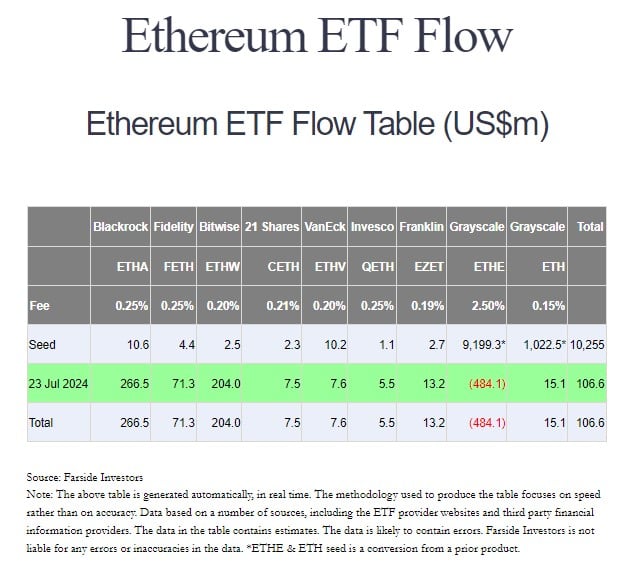
Ethereum spot ETFs experienced an extraordinary surge in inflows last week, with net inflows reaching a record $515 million, driven largely by BlackRock’s Ethereum ETF (ETHA). This marks a significant milestone for the digital asset market, particularly as Ethereum’s spot ETFs continue to gain traction among institutional investors.

The biggest beneficiary was BlackRock’s ETHA, which attracted over $500 million of the total, reaffirming its dominance in the burgeoning sector of cryptocurrency-linked investment vehicles. This ETF has garnered significant attention, reflecting growing institutional confidence in Ethereum, despite the asset’s volatility compared to Bitcoin. The inflows into ETHA have been particularly notable given the widespread competition in the market, with other Ethereum spot ETFs, such as Grayscale’s ETHE and Fidelity’s FETH, also drawing substantial investments, though not on the same scale.

The surge in Ethereum ETF inflows is seen as a positive sign of mainstream acceptance of the cryptocurrency, with institutional players seeking exposure to Ethereum’s value proposition. BlackRock’s strong performance is part of a broader trend of large financial institutions moving into the crypto space, with BlackRock leading the charge after its success with Bitcoin ETFs. The company’s Ethereum ETF has become one of the most popular in the market, a testament to BlackRock’s well-established presence and trust among investors.

This trend comes amidst a series of positive developments in the cryptocurrency sector, with regulatory frameworks slowly taking shape and increased clarity surrounding the investment vehicles that offer exposure to digital assets. Analysts believe the influx of institutional capital into Ethereum ETFs will help stabilize the market, providing a more structured path for retail investors and pushing Ethereum further into the spotlight as a key player in the world of digital finance.

Despite the record-breaking inflows, the Ethereum spot ETF sector remains under scrutiny from some quarters. Experts are watching closely to determine whether this spike in investments will be sustained, as Ethereum’s price has historically been more volatile than Bitcoin. The success of Ethereum ETFs could, however, signal a shift in how traditional financial markets view cryptocurrency, making it a more mainstream asset.

The ETF market for Ethereum is still evolving, and with large players like BlackRock driving momentum, its future looks increasingly intertwined with the broader financial ecosystem. As more institutional investors and crypto-focused funds enter the space, the legitimacy and long-term viability of Ethereum-linked ETFs will be tested. However, last week’s influx proves that the appetite for such products is growing steadily, and Ethereum may be positioned for greater integration into global financial markets in the years to come.

The Bitcoin Fear and Greed Index surged to an extraordinary 90 on November 17, signaling an ‘Extreme Greed’ sentiment in the cryptocurrency market. This mark, which has only been seen three times in the past, reflects heightened optimism and a surge in speculative investment, as traders and investors appear more eager than ever to embrace the volatile market. The last time this index hit a similar level was nearly three years ago, and analysts are closely monitoring this sudden spike to assess its long-term implications on Bitcoin’s price trajectory.

This sharp increase in market sentiment has stirred up both excitement and caution among market observers. The last occasions the Fear and Greed Index reached such high numbers were in 2019 and 2020, periods of rapid price increases followed by corrections. The cryptocurrency community is now wondering if history will repeat itself or if Bitcoin has entered a new era of sustained bullish behavior.

The Fear and Greed Index, a tool designed to gauge market sentiment on a scale from 0 to 100, reflects the psychological mood of investors by measuring factors like price volatility, trading volume, social media activity, and surveys. When the index reaches extreme values like 90, it often signals that the market is overheated, making it vulnerable to a pullback or sudden correction. However, for many Bitcoin enthusiasts, these numbers can also be a signal of continued upward momentum.

Historically, periods of extreme greed have been followed by significant price swings. For instance, the 95 reading from June 26, 2019, coincided with a massive rally that saw Bitcoin’s price rise from around $3,500 to $13,800 within a span of just six months. Similarly, in December 2020 and January 2021, Bitcoin saw a steady climb, crossing the $40,000 mark after months of extreme greed in the market.

The trend in 2021 was particularly notable as Bitcoin reached an all-time high above $60,000 in April, but quickly fell back under $30,000 by July. This marked a period of high volatility, demonstrating how quickly the market can shift from euphoria to fear. Investors have long debated whether these rapid cycles of boom and bust are an inherent part of Bitcoin’s behavior or whether the cryptocurrency has reached a level of maturity that will temper these fluctuations.

With the Fear and Greed Index at 90, the market is again facing similar conditions. The latest surge comes amid growing institutional interest in Bitcoin, as companies like MicroStrategy, Tesla, and Square have all made substantial investments in the digital currency. This institutional involvement has provided a degree of legitimacy to Bitcoin, which was once seen primarily as a speculative asset. Now, as more hedge funds and financial firms enter the space, many are predicting that Bitcoin’s volatility may decrease, although the current spike in sentiment would suggest otherwise.

Further driving this bullish sentiment is the recent activity in the broader cryptocurrency market, which has seen impressive growth across altcoins as well. Ethereum, the second-largest cryptocurrency by market capitalization, has also been gaining traction, partly due to its role in decentralized finance (DeFi) and its upcoming network upgrades aimed at improving scalability. This has led to a renewed interest in the broader crypto ecosystem, with Bitcoin often viewed as a bellwether for the entire market.

Some analysts, however, remain cautious, warning that extreme greed could lead to a price correction. The market’s unpredictable nature is amplified by external factors such as government regulations and macroeconomic conditions. In the past, China’s crackdown on cryptocurrency mining and trading has led to sudden market drops, and recent discussions around U.S. regulatory measures have raised concerns over potential tightening of crypto policies.

The Fear and Greed Index is also influenced by public sentiment and media coverage. Bitcoin has garnered increased attention from mainstream media outlets, particularly as the price of Bitcoin has soared in 2024. This media coverage has sparked a new wave of retail investment, with more individuals entering the market without fully understanding the risks involved. The growing presence of social media influencers in the cryptocurrency space has further amplified these feelings of optimism, with prominent figures encouraging followers to invest in Bitcoin as a hedge against inflation or as a means of achieving significant returns.

Despite the overwhelming sense of optimism, some are warning that the Bitcoin market remains highly speculative. Bitcoin’s inherent volatility means that even small shifts in investor sentiment can cause large fluctuations in price. The high levels of greed recorded on the index could be a precursor to another sudden sell-off, where a rapid rise in price triggers profit-taking and causes a sharp decline. This cycle of fear and greed is something that Bitcoin investors have experienced multiple times in the past, and while each cycle offers new lessons, it remains a constant in the world of cryptocurrency.

What stands out about this particular surge in the Fear and Greed Index is the context in which it occurs. Bitcoin has shown resilience amid global economic uncertainty, and many investors now view it as a store of value, similar to gold. With inflation fears, currency devaluation, and geopolitical tensions rising around the world, more individuals are turning to Bitcoin as a hedge, driving up demand and fueling the optimism reflected in the index.

VISHNU RAJA
RYO YAMADA
HITORI GOTOH
IKUYO KITA