News related to
crypto

MetaMask has rolled out an integration with Hyperliquid that allows perpetual futures trading directly within its wallet, marking a major expansion beyond its core custodial functionality. The launch went live today in selected jurisdictions, enabling users to take leveraged positions without leaving the application’s interface.

This move transforms MetaMask from a simple wallet to a more comprehensive on-chain trading hub. By embedding Hyperliquid’s perpetuals engine natively, MetaMask removes several intermediate steps that historically deter adoption—such as requiring users to traverse to external exchanges, cross chains, or cover multiple transaction fees. According to MetaMask’s global product lead, Gal Eldar, the integration “offers a frictionless path for passive holders to become active traders.” The wallet’s new “one-tap” experience is optimised for mobile usage, lowering barriers to entry.

Hyperliquid, a decentralised derivatives platform built with its own Layer 1 infrastructure, claims to support gas-free settlement and performance at scale. The platform processes tens of billions in trading volume, placing it among the leading names in on-chain perpetual markets. Hyperliquid’s architecture, with reported throughput exceeding 200,000 orders per second, underpins the performance demands of integrating derivatives directly inside a wallet.

MetaMask’s entry into this domain arrives amid sharp growth in decentralized perpetuals. In September, the total trading volume across decentralised perpetual platforms exceeded $700 billion, spurred by trader demand for leverage, 24/7 markets, and non-custodial exposure. Hyperliquid is a consistent high performer, with some estimates attributing to it a majority share of decentralised perpetual activity.

The new feature supports USDC deposits from any Ethereum Virtual Machine-compatible chain, and trades can be initiated with a single tap. The integration includes slippage checks, fee previews, and confirmation flows meant to shield users from common UX pitfalls. MetaMask’s team emphasises that the wallet retains self-custody at all stages, with users retaining control over private keys.

Critics caution that embedding leverage within a wallet may amplify risks for inexperienced users. Rapid liquidation, sharp market swings, and elevated margin requirements could expose users to sudden losses. To mitigate this, MetaMask is integrating risk-control measures and permission checks, though the success of those mechanisms will be closely watched by the community.

MetaMask’s expansion aligns with its broader roadmap. Earlier in the year, it unveiled a Mastercard-powered card feature, enabling spending directly from self-custodial wallets. It has also signalled intent to launch its native token, MASK, and is refining a loyalty rewards engine tied to on-chain activity. Those ancillary products may dovetail with its perpetuals integration, potentially weaving them into loyalty tiers, discounts, or governance models.

The decision pits MetaMask more directly against both centralised and decentralised exchanges. Centralised venues such as Binance and Bybit continue to dominate derivatives in terms of volume; however, their users must trust custody and counterparty risk. MetaMask’s proposition is differentiated by offering derivatives inside a wallet, combining convenience with self-custody.


Demand for Regulated Forex Brokers Grows for UAE Investors Trade247, a broker firm based in Dubai and regulated by the UAE’s Securities and Commodities Authority as well as the Financial Services Commission of Mauritius, has introduced its technology geared towards what it calls “complete multi-asset trading,” which covers forex, equities, indices, commodities, precious metals, energy products, and digital currencies, in which they identify the current trend of […]

CleanCore Solutions announced it has accrued over 710 million Dogecoin tokens in its treasury, yielding more than US$20 million in unrealised gains as it edges toward a one-billion token target.

The Omaha-based company launched its Dogecoin treasury programme on 5 September, using proceeds from a US$175 million private placement to make phased acquisitions. The holding is backed by the Dogecoin Foundation and coordinated through its corporate arm, House of Doge.

At a trading price near US$0.245 per DOGE, CleanCore values its holdings at roughly US$173.9 million, leaving a buffer over its capital outlay after marking the gains.

Chief Executive Officer Clayton Adams described the strategy as aligned with “long-term vision of insiders and the House of Doge,” emphasising that the company is not just stacking DOGE but is seeking to expand its utility and maintain disciplined treasury management.

CleanCore says it maintains sufficient cash reserves to continue its accumulation efforts. It has forged a strategic alliance with Bitstamp by Robinhood to serve as the primary trading venue for its Dogecoin operations.

On the markets, shares of CleanCore fell 8.44 per cent to close at US$2.06, before a modest rebound of 1.46 per cent in after-hours trade.

Some analysts question the relevance of mNAV metrics for companies pursuing large crypto treasuries. Greg Cipolaro of NYDIG has argued that mNAV may neglect operational businesses beyond token holdings and may not properly account for convertible instruments.

Standard Chartered has cautioned that smaller firms with aggressive crypto treasury strategies could face overexposure pressures if market volatility intensifies, predicting that consolidation may occur among weaker players.

CleanCore continues to monitor short interest in its stock while working with the SEC to register shares issued under its private placement. The company also underscores that restricted and locked shares are held by insiders, the House of Doge, and affiliates.

Wikipedia’s position as a trusted repository of knowledge is under intense pressure from the accelerating adoption of generative artificial intelligence, which poses multidimensional threats to its editorial integrity, infrastructure, and community model. Volunteer editors report surging volumes of AI-generated drafts, forcing a defensive stance rarely seen in its history. At the heart of the challenge lies the phenomenon often dubbed “AI slop” — text that superficially mimics […]

Fight Fight Fight LLC, the company behind the TRUMP memecoin, has launched a capital-raising campaign of at least $200 million with ambitions that could scale up to $1 billion to establish a dedicated digital asset treasury that would accumulate holdings of the token, according to people with knowledge of the matter.

The undertaking is led by Bill Zanker, a long-time promoter and Trump ally, and signifies one of the most aggressive attempts yet to stabilise a creator-driven token through internal backing. The funds would be deployed primarily to purchase TRUMP tokens from the open market, an effort to shore up price and signal confidence in what has become a volatile asset.

TRUMP, launched just before Donald Trump’s second inauguration, operates on the Solana blockchain under two joint issuers—Fight Fight Fight LLC and CIC Digital—together controlling 80 percent of its total supply. The public tranche was released in January 2025, and the token rapidly gained speculative traction before encountering steep declines.

Insiders caution that the fundraising process is ongoing and not guaranteed to succeed in full. They also note that structuring such a treasury around a politically branded memecoin carries substantial market, regulatory and reputational risks.

Cryptocurrency analysts observe that the move is consistent with broader trends in 2025: increasingly, token issuers are creating “treasury models” to backstop flagging price action. Yet few of those are tethered so explicitly to a political figure or narrative, making the TRUMP case unique.

The token’s price trajectory has been volatile. After peaking earlier in the year, it has fallen sharply—losing more than 80 percent of its value from highs—attracting scrutiny about its speculative nature and sustainability. Meanwhile, TRUMP maintains strong social media backing and occasional high-visibility events, such as a dinner hosted by Trump in May for top token holders, which had triggered a notable price bump.

In June, plans were floated by the issuer to launch an “Official Trump Wallet” to facilitate trading and custody, but disputes emerged with World Liberty Financial. Those tensions underscored internal complexity and fragmented control within the broader Trump crypto ecosystem.

Analysts underline that for the treasury plan to have long-term impact, it must go beyond buybacks. Critics argue that stockpiling tokens may serve only short-term price support, lacking sustainable utility or integration into broader infrastructure. There is a risk that concentrated control over token issuance and vesting schedules could invite regulatory scrutiny or undermine confidence among external investors.

Institutional curiosity is emerging: Canary Capital Group has reportedly filed paperwork with U. S. regulators to launch a spot ETF tied to TRUMP. Yet the Securities and Exchange Commission’s cautious posture toward meme coins, and obstacles in listing a futures-based derivative market, could impede progress.

The broader Trump-adjacent crypto strategy has already stretched into multiple verticals. Trump Media & Technology Group announced a $2.5 billion initiative to build a bitcoin treasury, and World Liberty Financial has launched a $1.5 billion self-buy programme in its own token, WLFI. In that case, about half the funding is to be in WLFI itself, with the rest directed to debt settlement and resale.

By Sushil Kutty Rare minerals included lots of ores, this was something we were taught in school and we learned about stone age, copper age and iron age, the last of which remains to this day the most basic of minerals, out of which was born steel and the term steely strength, like in ‘Superman […]

The article Pakistan Is The Dearest To Trump In Asia As Islamabad Exports Rare Earth Minerals appeared first on Latest India news, analysis and reports on Newspack by India Press Agency).

BlackRock’s iShares Bitcoin Trust has overtaken all other funds in its suite to become its most profitable exchange-traded product, generating approximately $244 million in fee revenue over the past year, analysts estimate. Its assets under management are approaching the $100 billion mark, driven by massive capital inflows into the spot Bitcoin ETF space.

IBIT has pulled in surging investor interest, with around $970 million flowing into it in a single trading session — the largest share of the $1.2 billion that U. S. spot Bitcoin ETFs collectively attracted that day. The fund now sits about $2.2 billion short of the $100 billion milestone, a level it is on track to cross more rapidly than any ETF in history.

That speed is notable: IBIT has amassed nearly $98–$100 billion in under 435 days, compared to Vanguard’s flagship S&P 500 ETF, which required over 2,000 days to reach the same threshold. This acceleration reflects investor appetite for regulated, exchange-traded access to digital assets.

BlackRock’s fee structure — currently 0.25% of AUM on IBIT — means that each incremental inflow directly boosts revenue. Analysts Eric Balchunas and James Seyffart have identified IBIT as now bringing in more income than long-established heavyweights in BlackRock’s portfolio, such as the iShares Russell 1000 Growth ETF and iShares MSCI EAFE ETF.

The inflow pattern underscores a broader shift. Since the U. S. Securities and Exchange Commission authorised spot Bitcoin ETFs in January 2024, the category has seen multiple single-day inflows exceeding $1 billion. In several past instances, such inflow spikes have coincided with short-term peaks in Bitcoin’s price, raising questions among market watchers whether these are signs of a turning point.

Bitcoin itself has responded: it pushed past $125,000 this month, buoyed by demand for regulated crypto exposure and safe-haven demand amid macroeconomic pressures. This run-up in price further amplifies IBIT’s appeal, because asset growth happens both through net inflows and valuation gains on its holdings.

BlackRock is also deepening its Bitcoin product strategy. It has filed to create a Bitcoin Premium Income ETF, which would generate yield by selling covered call options on Bitcoin futures — a move aimed at appealing to yield-focused investors seeking regulated crypto exposure. BlackRock has avoided entering the altcoin ETF arena for now, focusing its efforts on Bitcoin-linked products where regulatory clarity is more established.

Still, the meteoric rise of IBIT carries risks. Fee compression remains a structural challenge across the ETF industry, and competitors are poised to launch rival crypto products. The volatility inherent in Bitcoin could reverse gains sharply. Moreover, regulatory shifts — whether through tax treatment, disclosure mandates, or limits on crypto exposure — could reshuffle the competitive landscape.

Advertisements

A dramatic wave of forced liquidations has swept the crypto derivatives market, with around $160 million in long positions closed automatically in just 60 minutes. The event underscores the fragility of leverage-driven trading in volatile markets.

Data from major derivatives platforms points to sudden upward swings in key assets—chiefly Bitcoin and Ethereum—as the trigger. When prices move sharply against leveraged long positions, margin protocols step in to liquidate them to prevent further losses, compounding price moves in the process.

According to platform-level monitors, the lion’s share of the liquidation volume was concentrated in large longs on Bitcoin, with estimates suggesting individual trades as big as $8–10 million being liquidated in one go. Ethereum longs also saw heavy hits, as speculators betting on further upside were forced out. Metrics such as open interest and funding rate imbalances spiked just before the cascade, signalling a regime shift in market sentiment.

Insiders point to a cluster of cascading margin calls amplified by tight funding conditions. Some hedge funds and high-leverage retail positions lacked sufficient buffers against rapid price swings. As each liquidation pushes prices further, it creates a feedback loop that forces more delinquencies. Traders on social media flagged what they called “liquidation cascades” targeting illiquid zones and stop-loss clusters—areas where multiple orders are programmed to execute in close proximity.

Several trading desks observed that for every $1 million in liquidation, the price impact was amplified by slippage and widened spreads, particularly on derivatives contracts with low depth. One senior derivatives strategist remarked that the aggressiveness and sudden clustering of these liquidations suggest algorithmic triggers—bots scanning for vulnerable clusters and executing en masse.

The timing aligned with fresh macro data that hinted at stronger-than-expected economic indicators, which lifted risk appetite broadly and boosted crypto flows. Simultaneously, institutional participants monitored rising retail inflow indicators—such as large deposits moving on-chain into exchanges—which can foretell directional stress. With leverage high and positions tightly wound, the market was primed for this flush.

This is not the first time such mass liquidations have occurred. In mid-September, more than $149 million of crypto positions were liquidated within an hour, nearly all from longs, with a top single order of $9 million on a leading platform. That event and the current one both reflect how fragile leveraged markets are when macro sentiment shifts sharply.

Market watchers are parsing whether this is a short-term squeeze preparatory move or part of a deeper regime change. Some argue it clears out weak hands and sets the stage for fresh momentum. Others warn that forced liquidations may just be the start of a larger reversal, as residual leverage and alignment of hedge-fund strategies make markets prone to repeat stress.

On-chain and order-book signals are under scrutiny. Rising Token flows from wallets to exchanges, shifts in funding curves, and concentrated seller clustering in spot markets might shape the near-term path. Some algorithms already have “sniffers” for these stress events built in; in days following a liquidation cascade, trading volumes and volatility tend to stay elevated.

Governments and utility providers are exploring a blockchain-based incentive scheme dubbed “IncentiveChain” aimed at moderating agricultural electricity and water consumption by rewarding farmers with cryptocurrency. The system allocates crypto-ether from utility company accounts directly to farmers via smart contracts, thereby eliminating intermediaries, bolstering data integrity and reducing centralised risks. At its core, IncentiveChain combines distributed storage, edge computing nodes, and integrations with regional agricultural agencies and utility […]

MetaMask is rolling out a new on-chain rewards programme that will allocate more than $30 million worth of LINEA tokens during its first season, offering “special benefits” to long-time users and bridging the move with the launch of its own token.

The wallet’s parent, Consensys, confirmed over the weekend that this initiative is not merely a farming scheme but a dedicated rewards system aimed at recognising consistent user engagement. The rewards package will include referral bonuses, incentives denominated in mUSD, exclusive partner rewards, and early token access. MetaMask emphasised that the campaign is built to reward habitual on-chain activity, not speculative intervention.

LINEA, the native token of Consensys’ Layer 2 network, was launched in September via a token generation event distributing roughly 9.4 billion tokens. By tying the MetaMask rewards system to LINEA, the firm aims to channel wallet activity toward its own roll-up infrastructure. The rewards plan positions MetaMask not just as an interface but as an active participant in building the Layer 2 ecosystem.

Joseph Lubin, CEO of Consensys and co-founder of Ethereum, described the rewards drive as a step toward redefining the MetaMask experience. He stated that the programme is a “genuine method of regularly giving back to our community” and stressed that long-time users—whom the team terms “OGs”—will receive priority consideration. This linkage is also viewed as a precursor to the upcoming MetaMask token, tentatively known as MASK, which Lubin first publicly referenced in September.

The broader strategy links three core components: MetaMask’s wallet, the mUSD stablecoin, and the LINEA network. The mUSD token, issued by Bridge, reportedly has a circulating supply of nearly $88 million. Participation in the rewards scheme is expected to stimulate usage across these components: swapping, bridging, stakes, and portfolio activity within MetaMask.

While the announcement lays out the broad contours of the rewards campaign, it leaves critical details unspecified. MetaMask has not yet revealed eligibility criteria by jurisdiction, and no clear anti-Sybil or bot-prevention measures have been announced. The absence of such safeguards has drawn scrutiny from observers concerned about gaming of reward systems.

Community reaction on X has been mixed. Some users welcomed the move as a long-awaited monetisation of loyalty, while others questioned whether the structure might favour larger holders or those in jurisdictions with favourable access. Some pointed to past programs in the crypto space that allowed special participants to disproportionately benefit.

Amazon has slashed prices on a wide range of Nvidia GeForce RTX graphics cards as its Prime Big Deal Days shopping event goes live from 7 to 8 October. Among the standout bargains are flagship and mid-tier models hitting their lowest-ever prices, while concerns about shipping scams have also drawn scrutiny. The most aggressive discount applies to the Asus TUF GeForce RTX 5070 Ti, currently offered at […]

Organisers have confirmed that Future Blockchain Summit x Fintech Surge will take place at Dubai Harbour from 12 to 15 October 2025, positioning the event as a central nexus for blockchain, digital assets, and fintech innovation across the MENA region. The four-day gathering, held alongside Expand North Star and powered by GITEX GLOBAL, aims to attract regulators, investors, entrepreneurs and technologists to shape emerging frameworks for finance.

Attendance is expected to exceed 70,000, with over 1,200 investors and more than 225 speakers scheduled to participate, alongside 150 exhibitors showcasing new products and solutions. A feature highlight is the Digital Assets Forum, which brings regulators, banks, and innovators together for intensive discussions on topics such as CBDCs, stablecoins, tokenised capital markets, cross-border regulation and the role of AI in compliance.

Speakers confirmed include Jimmy Su, Lily Liu, Eric Piscini, Oliver Stauber, Helen Liu and Kevin Lee. The event also features the Supernova Challenge, a startup pitch competition offering equity-free prizes totalling US$214,000 to finalists presenting to global judges and investors. Corporations such as Ruya, OKX and DKK Partners anchor the sponsorship tiers, while YPAY backs the Digital Assets Forum.

Dubai has been steadily reinforcing its position in the digital asset ecosystem. Earlier this year, the DAMAC Group signed a $1 billion contract with blockchain platform MANTRA to tokenise its real-world assets, a move aligned with the UAE’s aspirations to become a global digital assets hub. The country has been actively implementing regulatory frameworks, particularly in free zones like ADGM and DMCC, to attract blockchain firms and promote tokenisation of assets.

Investment momentum in the broader crypto and fintech sphere in the UAE has been robust. In the first quarter of 2025, global venture capital funding into cryptotech startups reached $5.4 billion, its highest quarterly total since 2022. Dubai has hosted major conferences such as TOKEN2049, drawing tens of thousands of participants and signalling regional leadership, though industry sentiment currently balances optimism with caution amid regulatory uncertainty and macro-economic pressures.

Technology trends driving this year’s agenda include the convergence of AI and blockchain, regulatory clarity for digital assets, tokenised infrastructure, and embedded finance. A newly published academic framework proposes integrating blockchain with Zero Trust security models to improve protection against insider threats in fintech ecosystems — a demonstration of how research is intersecting with commercial deployment.

Organisers emphasise that the event’s format is more than a conference: it is designed to enable deal-making, pilot launches and real partnerships. One-to-one investor matchmaking, live product demonstrations, and structured labs are scheduled to convert ideas into actionable projects. Startups exhibiting at Expand North Star receive automatic inclusion in the Supernova Challenge, deepening integration between the startup and blockchain-fintech community.

Regulators from the MENA region and beyond are expected to engage at the forum. Discussions will centre on harmonising cross-border rules, interoperability of digital asset legislation, and pathways for institutional adoption of tokenised assets. Several central banks may share updates on central bank digital currency explorations.

BitMine Immersion Technologies has disclosed crypto and cash holdings amounting to $13.4 billion, with 2,830,151 ETH tokens forming the bulk of its position, according to its latest statement.

The company’s portfolio also includes 192 Bitcoin, $113 million in “moonshot” equity investments such as Eightco Holdings, and $456 million in unencumbered cash, positioning it as one of the largest public crypto treasuries by ETH exposure.

BitMine’s ETH stash represents roughly 2 percent of total Ethereum supply, underscoring the firm’s aggressive accumulation strategy. In its announcement, the company reaffirmed its ambition to reach a “5 percent alchemy” threshold—i. e., to hold 5 percent of ETH’s total circulation.

Thomas “Tom” Lee of Fundstrat, chairman of BitMine, framed ETH as the “premier choice” for its reliability, 100 percent uptime, and alignment with institutional and AI adoption in blockchain infrastructure. He argued that as Wall Street and AI increasingly anchor on the blockchain, Ethereum offers structural advantage.

The disclosed holdings mark a dramatic acceleration in BitMine’s pivot from bitcoin mining toward becoming a major Ethereum treasury vehicle. The firm claims it now leads all publicly traded companies in ETH holdings, and ranks second globally in treasury scale behind Strategy, Inc.

Investors and markets responded swiftly to BitMine’s disclosures and related developments. In July, shares soared following a regulatory filing revealing that Peter Thiel’s Founders Fund had taken a 9.1 percent stake in the company, making him its largest known institutional shareholder. That news helped drive BitMine’s stock to near-record intraday gains.

Analysts view the firm’s strategy as part of a broader trend: smaller-cap crypto and blockchain firms are increasingly diversifying beyond bitcoin into ETH-focused treasury allocations. BitMine’s velocity of accumulation and the high liquidity of its stock have drawn comparisons to Michael Saylor’s bitcoin strategy at MicroStrategy.

Regulatory and market timing factors may amplify or constrain BitMine’s ambition. The U. S. SEC’s evolving posture toward digital asset teams—including Project Crypto and the so-called “GENIUS Act” proposals—could shape the framing of Ethereum as a mainstream institutional asset, or alternatively intensify scrutiny of crypto treasury holdings.

Sceptics point to concentration risk and valuation vulnerability. Holding such a large share of a single token leaves BitMine exposed to ETH price swings, smart contract risks, network upgrades, and macro-crypto sentiment downturns. As the firm presses toward its 5 percent goal, it will also face growing attention from regulators, market participants, and the Ethereum community around centralisation concerns.

Still, BitMine’s approach stands out for its bold scale and speed. The company argues that the “power law benefits” favour large holders of ETH, and that a discount between ETH price and its future utility—particularly under rising AI and blockchain convergence narratives—makes accumulation compelling.

Robinhood’s platform is showing no signs of disruption after earlier reports emerged of a service breakdown affecting user access to its trading tools.

The company’s official status portal now declares “All Systems Operational,” even as its legacy status page has been retired. Meanwhile, independent monitors such as StatusGator and Uptime report no active outages.

Accounts of platform failure surfaced earlier today, with multiple users posting screenshots of login failures, trading delays and “app frozen” errors. Robinhood’s support centre responded with standard troubleshooting advice: update the app, check network connectivity, and switch to cellular data if needed.

Analysts and platform watchers say the timing of such incidents often elevates anxiety in retail trading communities, particularly when broader market volatility is feeding uncertainty. Past disruptions at Robinhood have been linked to temporary liquidity shifts and skewed price responses in thinly traded stocks. A study published in a financial markets journal suggests that outages on digital trading platforms tend to reduce order imbalances—but only until normal service resumes.

The brokerage has faced similar failures before, most notably during the meme-stock frenzy and other high-volume trading periods. In 2020, service breakdowns prompted class-action lawsuits, claiming users lost money because orders could not be processed. The company later agreed to settle those lawsuits and paid penalties to state regulators.

Regulators have continued to scrutinise Robinhood’s operations. In March, the company agreed to pay $29.75 million to settle a FINRA probe over inadequate supervision, lax anti-money laundering controls, and failures in handling order execution policies. Under that settlement, $26 million is assigned as a fine and $3.75 million as customer restitution. The firm did not admit wrongdoing.

Market observers say this backdrop intensifies scrutiny over any glitch at Robinhood. Trust in digital brokerages hinges on uninterrupted service, especially for retail investors who often enter or exit positions during sharp market moves.

Robinhood recently announced moves to expand in the UK, directly challenging legacy platforms like Hargreaves Lansdown and AJ Bell. Its planned British entry includes proposals for a no-fee stocks and shares ISA and prediction market offerings, pending discussions with the UK’s Financial Conduct Authority.

Internal sources suggest the company is investing heavily in backend resilience and redundancy to mitigate future downtime risks. Whether today’s incident will spur formal review or regulatory inquiry remains to be seen.

Grayscale Investments has enabled staking on its Grayscale Ethereum Trust and Grayscale Ethereum Mini Trust, making them the first U. S.-listed spot exchange-traded products to support native staking functions. In tandem, its Solana trust has also activated staking, pending regulatory approval for an exchange listing.

The introduction means investors in ETHE and ETH can now earn staking rewards while retaining exposure to Ether’s spot price. Grayscale says staking operations will be managed via institutional custodians and a distributed network of validator providers. The firm emphasises that staking is passive, intending to support protocol security while offering additional yield.

ETHE and ETH are not registered under the Investment Company Act of 1940, placing them outside the conventional ETF regulatory regime. That structure allows flexibility but also exposes investors to different oversight and risk frameworks. GSOL, currently quoted over the counter, must undergo a formal uplisting process to align with exchange-traded product standards.

The regulatory environment has posed ongoing challenges for staking-enabled products. Earlier in 2025, the U. S. Securities and Exchange Commission delayed decisions on staking features in ether ETFs proposed by major issuers. The SEC has articulated concerns that staking may constitute an offer of securities, complicating how such products can be structured under existing law. Grayscale’s new move comes amid evolving guidance around liquid staking receipts and the broader regulatory calibration of crypto ETPs.

Grayscale currently controls approximately half of U. S. ETP-held Ethereum, and as of the end of September 2025, the firm reported around $35 billion in assets under management. The firm has already staked tens of thousands of ETH, deploying mechanisms to balance liquidity demands with staking commitments. It uses what it calls a “liquidity sleeve”—a pool of unstaked tokens and short-term financing—to meet redemption requests without forcing premature withdrawals from staking pools.

Analysts note that Ethereum staking yields in the market range around 2 per cent annually, while Solana’s higher inflation and protocol incentives can push staking returns to double digits. For yield-seeking investors, a staking-enabled ETP structure promises a more seamless way to tap into rewards without managing validator nodes or staking accounts directly.

Yet the innovation also carries risks: validator slashing penalties, network downtime, and the volatility of token prices remain material. Because Grayscale’s staking is passive, investors’ rewards reflect aggregated validator performance. The firm has committed to transparency through regular reports disclosing validator partnerships, staking activity, and operational metrics.

Read the full PR Newswire release on Arabian Post Live News.

A GoMining-commissioned survey of over 700 Bitcoin holders across North America and Europe reveals that 77 percent of respondents have never engaged with any BTCFi platform. Only around 8 percent say they actively use BTCFi services for lending, staking or yield generation.

The data exposes a striking contradiction: while the BTCFi sector is receiving strong investment and attention, its reach among actual Bitcoin holders remains minimal. Over 65 percent of those surveyed could not name a single BTCFi protocol, pointing to a significant awareness gap in the industry. Roughly 40 percent of respondents say they would allocate less than 20 percent of their Bitcoin to DeFi products—underscoring cautious attitudes steeped in mistrust or lack of comprehension.

GoMining CEO Mark Zalan argues the survey reflects a mismatch in product design: “There’s an enormous appetite for these opportunities, but the industry has built products for crypto natives, not for everyday Bitcoin holders.” He cautions that BTCFi platforms must prioritise simplicity, trust and education over technical sophistication if they are to attract a broader base.

Despite limited adoption, interest in BTCFi is not absent. Some 73 percent of respondents express a desire to earn yield on their Bitcoin through lending or staking, while 42 percent would like access to liquidity without selling. Yet for now those desires largely remain theoretical.

The survey publication coincides with a sharp rise in BTCFi venture capital activity. Data from industry trackers show that in the first half of 2025, funding to Bitcoin-related infrastructure, custody, and DeFi projects reached US$175 million, spread across 32 funding rounds—20 of which targeted consumer-facing applications. Total value locked in BTCFi has also climbed, hitting US$6.6 billion by mid-2025, up from modest levels just a year earlier.

Industry analysts see this as a pivotal moment. BTCFi is theoretically well-positioned: Bitcoin holders collectively control over US$1 trillion in assets, and unlocking even a small portion into yield markets would shift capital flows substantially. But bridging the adoption chasm requires more than protocol robustness—it demands user trust, transparent security models, and intuitive onboarding.

Several projects are experimenting with custodial BTCFi models that reduce user friction, essentially merging decentralised finance with familiar wallet experiences. These hybrids aim to lower the barrier to entry for mainstream holders who are wary of self-custody risks. Others are focusing on streamlined education and marketing campaigns to bring awareness of BTCFi’s value proposition to non-tech audiences, rather than relying exclusively on high-end technical features.

Skeptics argue the reliance on Ethereum’s DeFi archetype may be a poor fit for Bitcoin’s more conservative base. BTCFi protocols often demand bridging, wrapping or interacting with smart contracts—actions that alienate users comfortable with simpler vehicles like ETFs and custodial wallets. A portion of Bitcoin holders remain risk-averse by nature, preferring regulated, custodial holdings and avoiding experimental protocols.

Some in the industry suggest a phased approach: target early adopters first, establish trust metrics, then gradually roll out to mainstream holders. Others urge a revisit to design philosophy itself: ensuring BTCFi can deliver yield, liquidity and composability while behaving in a way Bitcoin users find intuitive and safe.

Brazil has become Latin America’s dominant crypto market after logging $318.8 billion in cryptocurrency transaction volume between July 2024 and June 2025, accounting for about one-third of the region’s total crypto activity. That figure represents a year-on-year surge of 109.9 per cent, according to the 2025 Geography of Cryptocurrency report by Chainalysis.

No other country in Latin America comes close to Brazil’s scale: Argentina recorded $93.9 billion, Mexico $71.2 billion, Venezuela $44.6 billion, and Colombia $44.2 billion. The region as a whole pushed close to $1.5 trillion in crypto flows over the three-year span from mid-2022 to mid-2025, underscoring the growing importance of digital assets in Latin America’s financial ecosystem.

Stablecoins now dominate Brazil’s market, making up over 90 per cent of all transactions. This shift suggests that crypto is being used increasingly as a means of payment, remittance and hedge against currency volatility, rather than purely for speculative trading. Institutional and retail transfers both contributed to the growth, with institutional transfers alone more than doubling within the year.

Brazil’s regulatory framework has evolved in tandem. The 2022–2023 Brazilian Virtual Assets Law established compliance obligations for virtual asset service providers and made the central bank the authority for anti-money-laundering oversight in the crypto sector. Authorities are now finalising consultations that could yield further rules by end-2025.

Mainstream financial institutions are leveraging this clarity. Banks such as Itaú and digital platforms like Nubank and Mercado Pago are bridging traditional finance with crypto offerings. Global stakeholders have taken notice: in May 2024, Circle launched USDC services in Brazil to facilitate lower-cost and instant transfers.

Brazil’s ranking in the global crypto adoption picture has also strengthened. In Chainalysis’s 2025 Global Crypto Adoption Index, Brazil advanced to fifth globally, climbing from 10th in 2024. The methodology change that year introduced a new institutional activity sub-index and removed the retail DeFi sub-index, giving greater weight to large transfers while maintaining focus on broad adoption.

Brazil’s digital payments infrastructure—anchored by the Pix instant payments system—has eased the on-ramp to crypto. More than half of financial transactions in Brazil are now conducted over Pix, enabling users to move funds into crypto platforms seamlessly. Surveys suggest that between 18 and 19 per cent of Brazilians hold cryptocurrency, a rate second only behind Argentina in the region.

Still, challenges remain. Brazil’s macroeconomic environment is volatile: inflation pressures, depreciation of the real, and tax burdens could suppress retail demand. The central bank’s Drex project—a blockchain-based settlement platform—is under trial and could support on-chain finance, but integration with existing systems is complex. Some analysts warn that regulatory overreach or tax crackdowns may stifle innovation.

World Liberty Financial, the crypto venture tied to Donald Trump’s family, has announced it will issue a debit card enabling users to spend digital assets as conventional currency, with a pilot slated next quarter and full deployment targeted by late 2025 or early 2026.

At Singapore’s TOKEN2049 conference, CEO Zach Witkoff stated that the underlying aim is to “bridge crypto assets with everyday spending,” forecasting that the card could go live in the fourth quarter or first quarter of 2026. Co-founder Donald Trump Jr. joined the presentation, underscoring the project’s ambition to integrate cryptocurrency more deeply into consumer payments.

Beyond payments, World Liberty is advancing a plan to tokenise real-world commodities, aiming to use blockchain infrastructure to trade assets like oil, gas, timber and cotton. Witkoff described these as “really interesting” domains for on-chain trading, pointing to what the company sees as excess transactional inefficiency in traditional markets. The firm also launched its governance token, WLFI, earlier this month, and has introduced USD1, a dollar-pegged stablecoin backed by U. S. Treasuries and other cash equivalents to cut dependency on conventional banking rails.

World Liberty has secured a high-profile institutional backer: the UAE-based Aqua 1 Foundation invested USD 100 million in WLFI tokens, becoming the venture’s largest public investor. The strategic pact aims to fuel World Liberty’s expansion in South America, Europe and Asia, and to jointly incubate blockchain initiatives.

The governance token WLFI currently is non-transferable, granting holders voting rights rather than direct tradeability; World Liberty has said it is “working behind the scenes” to make WLFI transferable in the future. A large portion of WLFI’s supply remains held by the Trump family and affiliated entities.

The stablecoin USD1 gained traction after a major crypto exchange deal: World Liberty was among the early adopters when the funds backed by an Abu Dhabi entity were routed through USD1 to a major crypto platform, helping to elevate USD1’s market position in the stablecoin ecosystem.

Regulatory and ethical concerns already shadow the venture. Critics argue the project blurs lines between private enterprise and public office, noting that much of the Trump family’s wealth could become entangled with policy outcomes. Donald Trump Jr. has dismissed conflict-of-interest allegations as “complete nonsense,” but scrutiny over the convergence of politics and crypto is intensifying.

WLFI has exhibited wide volatility since launch, riding speculative momentum across global exchanges. Meanwhile, competing crypto card offerings already exist, with established fintechs and digital-asset platforms offering crypto-linked cards in partnership with Visa and Mastercard. Witkoff contends World Liberty’s version will differentiate through tighter integration with its stablecoin and tokenisation strategy.

Stock market information for Bitcoin
Bitcoin is a crypto in the CRYPTO market.
The price is 122782.0 USD currently with a change of 1997.00 USD from the previous close.
The intraday high is 123928.0 USD and the intraday low is 119360.0 USD.

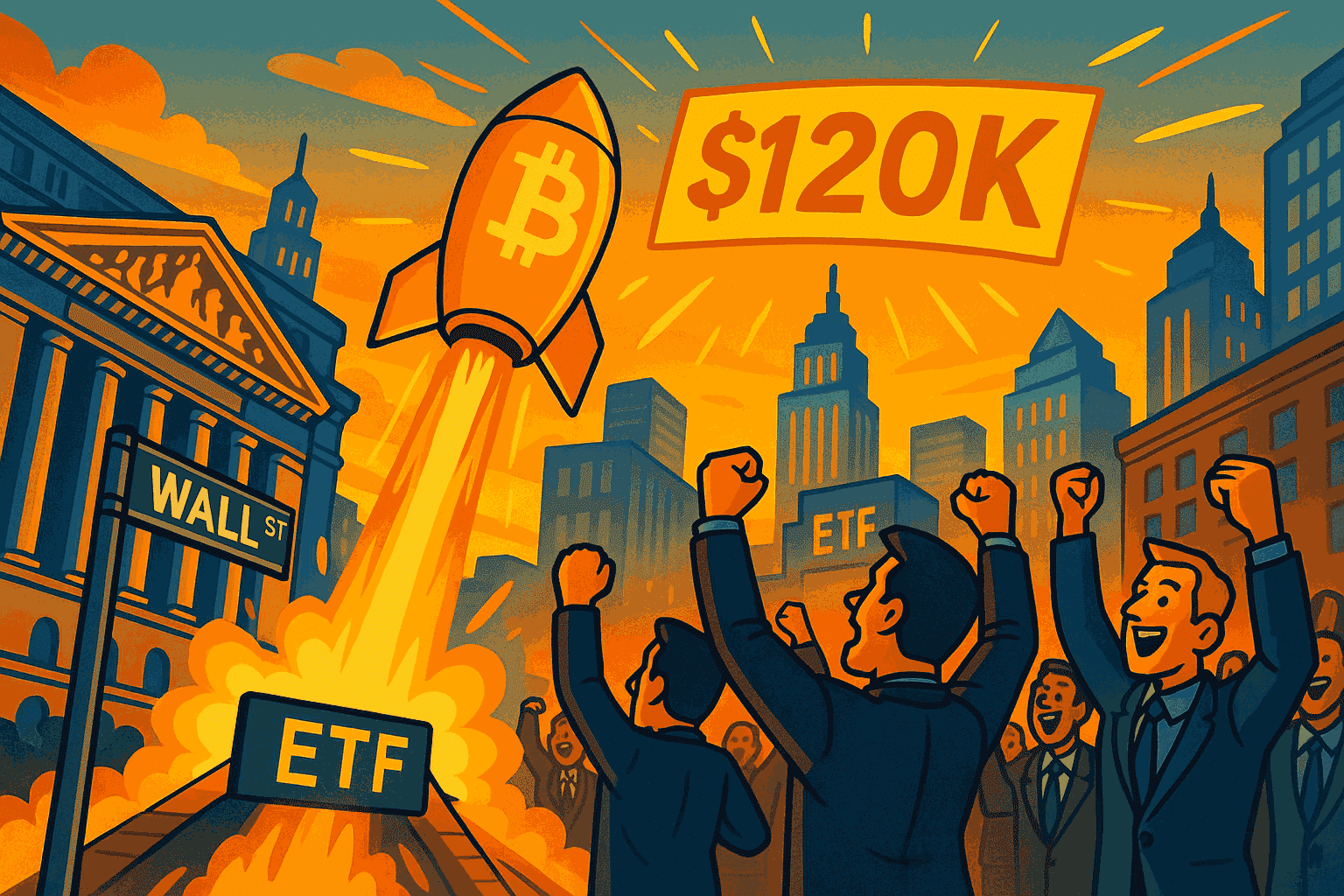
Bitcoin cleared the $120,000 mark on Friday, marking its strongest move in months as inflows into U. S. spot Bitcoin exchange-traded funds and fears of U. S. political gridlock spurred investor appetite.

The sharp rally saw Bitcoin rise toward levels not seen since August, with price action driven by mounting demand from institutional channels and growing speculative interest in its safe-haven appeal. Observers link the surge to accelerating purchases via ETFs, as well as elevated yields on derivative positions betting on further strength.

Citigroup this week trimmed its year-end Bitcoin forecast to $133,000, citing headwinds from a strengthening U. S. dollar and weak gold prices, while lifting expectations for Ethereum to $4,500 on the back of increasing inflows. The contrasting moves reflect a recalibration of expectations amid shifting capital flows in crypto markets.

Analysts tracking ETF inflows suggest that institutional adoption remains the catalyst for upward momentum. Bitwise reiterated a $200,000 target for Bitcoin in 2025, emphasising sustained demand from endowments, corporates, and sovereign treasuries. Meanwhile, Coindesk’s mid-year forecast placed a $150,000–$160,000 range as a probable zone should monetary policy ease.

Technical indicators show the path is not without resistance. Price models project a critical threshold at $117,000–$120,500: surpassing it decisively would confirm a bullish breakout, while failure to hold could trigger pullbacks toward $110,000 or lower support zones. Analysts caution that leveraged long positions may be vulnerable to liquidation should sentiment cool.

On-chain data shows accumulation by so-called “whales” has intensified over recent weeks, reinforcing the theory that major players are driving the advance. Machine-learning forecasting studies underscore that low, high, and opening price series remain the most informative variables for trend prediction, though the authors note models still struggle with sudden macro shocks.

MicroStrategy, a prominent corporate Bitcoin holder, has slowed its acquisitions. Its latest SEC filing disclosed a modest $22 million purchase, significantly down from earlier, more aggressive buys. That shift reflects a degree of caution in managing dilution risk and capital allocation.

Around the political landscape, speculation over a potential U. S. government shutdown elevated demand for non-traditional assets, while weak private sector job data has stoked hopes of a future rate cut by the U. S. central bank. Market participants are watching whether rate expectations shift further in favour of growth-assets like Bitcoin.

Valetax, a leading global provider of trading services, is proud to announce its participation as an Elite Sponsor at Forex Expo Dubai 2025, one of the world’s most prestigious financial events. The expo will take place on 6–7 October 2025 at the Dubai World Trade Centre, drawing traders, partners, and industry experts from across the globe. As an Elite Sponsor, Valetax is set to make a remarkable […]

Bitwise has launched a new exchange-traded product on Deutsche Börse Xetra under the ticker AVNB, offering regulated exposure to Avalanche’s native token AVAX along with integrated staking rewards.

The ETP is physically backed and domiciled in Germany, aiming to deliver price-tracking performance plus yield, while eliminating the need for investors to manage staking infrastructure or custody themselves. Staking rewards are credited daily and automatically reinvested. The product references the “CF AVAX Staked Return Index” as its benchmark.

Bitwise positions the AVAX staking ETP as part of its growing European suite of institutional crypto products. Earlier offerings in its staking line-up include Ethereum and other digital assets. The firm emphasizes that this launch addresses demand from institutional and professional investors seeking yield-bearing digital asset exposure within regulated frameworks.

Under the terms, the ETP carries a total expense ratio of 0.85 per cent annually. Bitwise retains roughly one-third of the staking rewards generated, as a staking service fee to cover operational costs including validator services and infrastructure. The remainder is passed to investors, net of protocol fees and slashing risk.

Bradley Duke, Head of Europe at Bitwise, stated that AVNB “opens the door for investors to access price movements in AVAX coupled with staking rewards through an exchange-traded total return product.” He noted that its regulated structure and transparency aim to bridge the traditional capital markets with crypto infrastructure. John Wu, President of Ava Labs, welcomed the development, saying that offering access through established market systems expands participation in Avalanche’s ecosystem.

Avalanche has gained traction as a scalable, energy-efficient layer-1 blockchain capable of supporting subnetworks tailored for compliance, governance and performance. Its adoption extends across tokenisation, decentralised finance, gaming and payment systems. The ability to stake AVAX is an integral feature of the network’s consensus, making yield products a natural extension for investors.

Samsung is deepening its collaboration with Coinbase to integrate cryptocurrency services directly into its Wallet app. Users with Galaxy devices in the U. S. will now be able to make crypto purchases using Samsung Pay, and enjoy enhanced access to Coinbase’s premium offerings.

Wallet users will gain special access to a three-month subscription to Coinbase One, and early users may receive a $25 credit after placing their first trade. The alliance bridges Samsung’s digital wallet ecosystem with Coinbase’s crypto infrastructure to simplify onboarding for mainstream consumers.

The rollout begins with U. S. Galaxy customers, where Samsung says more than 75 million device owners could benefit. Samsung executives have signalled plans to extend the integration to other markets globally.

This isn’t the first foray for the two companies. The integration was first announced in July, enabling Samsung Pay within the Coinbase app, allowing users to fund crypto purchases without leaving the app or switching payment methods.

Under the new details, Samsung Wallet becomes a conduit not just for payments and identity, but also crypto trading, staking, and portfolio oversight. The partnership emphasises security, leveraging Samsung’s Knox platform and tokenisation to protect user assets and data.

Shan Aggarwal, Coinbase’s Chief Business Officer, said the tie-up aligns with the firm’s mission to bring “more than a billion people on chain” by meeting them on devices they already use. Drew Blackard, Senior Vice President at Samsung, noted that Galaxy users already rely on their phones for payments, identity verification and digital storage—and crypto access is a natural extension.

The push is part of Coinbase’s broader strategy of embedding crypto capabilities across consumer channels. In August, the company disclosed $1.5 billion in Q2 revenue and underscored its ambition to become what it calls “the everything exchange” — a unified gateway to trading, payments, and on-chain finance.

In parallel, Coinbase has struck partnerships with financial institutions. Notably, it is collaborating with JPMorgan Chase to let customers link their bank accounts to Coinbase wallets, enabling crypto trading and the conversion of credit card points into digital assets.

Industry observers view the Samsung integration as one of the most ambitious consumer-level crypto distribution moves to date. By embedding exchange functionality directly into a widely used mobile wallet, Coinbase and Samsung seek to lower structural barriers that often frustrate new crypto users.

That said, challenges remain. The U. S. regulatory environment around crypto remains volatile, with the SEC and other agencies scrutinising exchanges, token listings, and taxation. Skeptics warn that bundling crypto into everyday apps could expose users to market risk without full awareness.

Meanwhile, the phased rollout in the U. S. and Canada will test adoption rates, user behaviour, cross-border compliance, and competition from rival wallets like Apple Pay or Google Wallet, some of which may pursue their own crypto plans.

Markets across the crypto derivatives space are on edge as Bitcoin and Ethereum options worth approximately $4.33 billion enter settlement today, setting the stage for heightened volatility in the near term.

On the Deribit platform, Bitcoin dominates the expiries, with about $3.5 billion notional value scheduled for settlement in roughly 30,200 contracts. Its put-to-call ratio stands at 1.23, suggesting more downside protection bets than bullish wagers. The so-called “max pain” level — the strike price at which the greatest number of contracts expire worthless — is pegged at $114,000, close to current trading levels and potentially acting as a magnet for price movement.

Ethereum’s portion comprises about $806.75 million, across 177,398 contracts, with a put-to-call ratio near 0.99, indicating a more balanced bias among traders. Its max pain is estimated at $4,500, just beneath recent market trading ranges.

Derivatives analysts caution that expiries of this size tend to exert short-term pressure on price behaviour, particularly as market makers and institutional actors roll, hedge or unwind positions ahead of settlement. In many past cycles, price action has gravitated toward max pain levels in the hours leading up to expiry.

Volatility expectations are reinforced by elevated implied volatility in both Bitcoin and Ethereum options markets. Some trading desks point to a compression of liquidity around strike clusters and warn that even modest directional flows may trigger outsized price swings.

Some market strategists argue that Bitcoin’s bearish tilt reflects growing hedging demand after price consolidation above major resistance zones. Meanwhile, Ethereum’s near-neutral PCR hints at structural hedging and profit-taking rather than outright directional bets.

Macro factors could amplify sensitivity. With markets digesting central bank policy signals, inflation indicators and equity market drift, crypto derivatives flows may act as a conduit for correlation shocks. That makes expiry day risk not purely technical but potentially reactive to broader sentiment shifts.

Earlier this month, a near-identical expiry event saw $4.3 billion in options settle, with BTC positioning yielding shortterm downside pressure and ETH holding more firmly near its pricing bands. That expiry foreshadowed a larger $18 billion BTC options expiry scheduled for 26 September, intensifying speculation on whether today’s event will prime momentum.

Market watchers are watching order-book depth near the $114,000 and $4,500 levels, as sharp absorption or rejection there may offer clues to directional bias post-expiry. In the absence of sustained trend breaks, much of the post-settlement period could hinge on whether institutions successfully reestablish exposure rather than exit.

Traders are also navigating strategy choices: rolling forward, closing positions, or rebalancing via delta hedges. The interplay of those flows may create forks in volatility—in which the first few hours post-expiry see directionless chop before a stronger move emerges.

VISHNU RAJA
RYO YAMADA
HITORI GOTOH
IKUYO KITA
Just in:
xCube Access Welcomes Entrust Capital Limited  Expanding Access to Professional Portfolio Management // CPI, CPM dispute portrayal of Vayalar uprising leaders // AI trust gap reveals distinct retail priorities: Divergent paths to consumer growth in Hong Kong and the GBA // America On Edge: November 3 Mid Term Polls Outcome May Weaken Trump // Anthropic to prohibit persistent abuse of Claude chatbot // Bank99 launches business accounts through Austrian postal network // Varsity jobs face quota questions // mamun raises US$3 million to finance cross-border trade between the Gulf and Asia // XRG secures agreement for $1.45bn Australian LNG stake // Ondine Capital Announces First Close of Fund III to Drive AI and Semiconductor Innovation // ADIPEC leaders urge investment in global energy networks // XTransfer and Bank of China (Hong Kong) Announce Partnership at Hong Kong FinTech Week // ChatGPT billing fraud deploys rotating sites for card theft // Winners and losers if a blue wave sweeps US Congress // UAE outlines Dh200 billion energy investment at ADIPEC // Arrow Electronics showcases technologies advancing intelligent robotics, mobility and digital infrastructure // Democrats secure Senate majority after Republican election losses // Apollo broadens Abu Dhabi partnership through Mubadala Capital stake // Can Bernie Sanders Ensure Enough Left Representation In New Congress? // As AI Reshapes Education, Singapore Convenes Global Dialogue on the Future of Early Childhood Education //