News related to
crypto

The UAE’s payment industry is on track for significant growth, projected to reach a value of $27.3 billion by 2028. This surge reflects the country’s increasing digital transformation, with innovative payment technologies gaining traction across multiple sectors. The shift toward a cashless economy and the growing demand for online and mobile payment solutions are key drivers behind this expansion. The shift to digital payments has been accelerated […]

Former President Donald Trump recently addressed the Blockchain Association’s Annual Policy Summit, where he expressed strong support for the growth of the blockchain industry in the United States. During the dinner event, Trump emphasized the importance of blockchain technology as a key driver for maintaining economic strength and preventing American businesses from moving overseas to countries like China. His remarks at the summit highlighted the need for clear regulatory frameworks that encourage innovation while safeguarding national interests.

Trump’s engagement with blockchain technology comes as part of a broader push to modernize the U.S. economy and ensure that cutting-edge technologies remain within the country’s borders. The former president has previously voiced concerns over the global shift of technology and business hubs toward nations with more favorable regulatory environments, particularly China, which has become a major player in sectors like cryptocurrency mining and blockchain-based services.

Speaking to the gathered policy experts, business leaders, and lawmakers, Trump urged for a balanced approach to regulation that allows for growth and innovation in the blockchain sector. “The U.S. must stay ahead in this field,” he said, warning that without action, American companies may seek more favorable environments abroad. His comments reflect his long-standing view on the need to maintain U.S. competitiveness, particularly in sectors that are expected to define the global economy in the coming decades.

The former president’s endorsement of blockchain technology is seen as an attempt to position the U.S. as a global leader in the emerging digital economy. Blockchain, which underpins cryptocurrencies like Bitcoin and Ethereum, has a broad range of applications, including in finance, supply chain management, and even healthcare. As industries around the world explore its potential, the U.S. government faces pressure to implement regulations that both foster innovation and protect investors and consumers.

Trump’s position on blockchain aligns with a growing consensus in Washington about the need to establish clearer guidelines for the technology. Several lawmakers have recently introduced bills aimed at improving the regulatory environment for blockchain and cryptocurrencies. These efforts aim to address the challenges of crypto-related fraud, money laundering, and tax evasion, while also encouraging the growth of legitimate businesses in the space.

The Blockchain Association, which represents a wide array of blockchain companies, has been at the forefront of advocating for such regulations. Their policy priorities include ensuring that the U.S. remains a favorable jurisdiction for blockchain entrepreneurs, particularly when compared to jurisdictions like China, where regulatory crackdowns have stifled domestic innovation. For Trump, promoting blockchain development is part of his broader economic vision that focuses on retaining technological leadership within U.S. borders.

Trump’s dinner remarks were met with mixed reactions. Supporters lauded his call for stronger blockchain policies, viewing it as a necessary step to ensure that the U.S. remains a technological powerhouse. However, critics cautioned that any regulatory push must balance innovation with security and consumer protection. They highlighted concerns that overly restrictive regulations could stifle growth in a sector that is still in its early stages.

The blockchain industry has been grappling with regulatory uncertainty for years. While blockchain technology itself is decentralized and largely unregulated, the use of cryptocurrencies and blockchain-based applications in finance has drawn significant attention from government agencies. The U.S. Securities and Exchange Commission (SEC) and other regulatory bodies have been working to develop frameworks that protect investors and ensure that the industry does not become a haven for illegal activities.

For the blockchain sector, Trump’s comments highlight the urgency of developing a regulatory structure that allows businesses to thrive while maintaining a clear legal framework. Blockchain companies have expressed concerns over the patchwork of regulations at the state and federal levels, which can create confusion and limit their ability to scale operations.

As global competition heats up, blockchain is increasingly seen as a critical area for investment. Countries around the world are making moves to attract blockchain startups and developers by offering tax incentives, regulatory clarity, and business-friendly environments. Trump’s statements signal that the U.S. government may need to do more to support the sector to remain competitive.

The future of blockchain technology in the U.S. may hinge on the development of a coherent regulatory strategy. Proponents argue that clear and consistent guidelines are essential for encouraging investment and innovation, while detractors warn that too much regulation could stifle the sector’s potential. Trump’s position reflects the growing recognition that the U.S. must act quickly to ensure it remains a global leader in blockchain, cryptocurrency, and other emerging technologies.

Argentina is set to become the first country in South America to install a cryptocurrency ATM, with plans to launch in 2025. The announcement comes at a time when the country is exploring new ways to enhance its digital economy, underscored by a recent partnership with El Salvador, a leader in digital currency adoption. The collaboration between Argentina and El Salvador aims to boost cryptocurrency use and financial innovation in the region.

BitBase, a Spanish cryptocurrency company, will be responsible for the installation of the ATM. The move marks a significant milestone in Argentina’s push towards embracing cryptocurrencies as a legitimate financial instrument, especially amid the country’s ongoing economic challenges. As inflation soars and the national currency struggles, Argentinians have increasingly turned to digital currencies for financial security. BitBase’s ATM will allow users to buy and sell cryptocurrencies like Bitcoin, facilitating easier access to digital assets in a country that has seen rapid growth in crypto adoption.

Argentina’s decision to integrate a crypto ATM into its financial infrastructure is also seen as a response to the evolving global economic landscape. As inflation rates continue to climb, Argentinians have turned to Bitcoin and other cryptocurrencies as a hedge against their volatile local currency. The country has already witnessed a surge in cryptocurrency transactions, and the introduction of the crypto ATM is expected to further fuel this trend, making it more convenient for citizens to access digital currencies.

The partnership with El Salvador is also a critical aspect of this shift towards digital currency adoption. El Salvador, the first country to make Bitcoin legal tender, has experienced a variety of successes and challenges in its efforts to integrate cryptocurrency into its financial system. Argentina’s collaboration with El Salvador aims to leverage their collective experiences, enabling Argentina to accelerate its own adoption of digital currencies while mitigating potential challenges.

The Argentinian government has remained cautious but open to the idea of integrating cryptocurrency into its financial system. While there is no official endorsement of cryptocurrency as a national currency, the government has acknowledged the potential of blockchain technology and digital assets to improve financial inclusion. As part of its economic strategy, Argentina is actively exploring the use of technology to combat financial instability, and cryptocurrency has become an increasingly prominent part of that conversation.

In a nation where access to traditional banking services is limited for many, cryptocurrencies offer an alternative financial system that is not reliant on centralized institutions. The ability to engage with a decentralized financial ecosystem presents an opportunity for the underbanked and those with limited access to traditional financial services. The installation of the crypto ATM is expected to bridge the gap for many Argentinians, providing them with a more direct route to engage with the digital economy.

BitBase’s decision to target Argentina for its first crypto ATM installation outside of Europe demonstrates the growing interest in Latin America as a hub for cryptocurrency adoption. Argentina, with its large population and economic struggles, offers an ideal environment for such initiatives. The region has become a key battleground for cryptocurrency firms, with countries like Brazil, Mexico, and Colombia also taking steps toward increasing cryptocurrency adoption.

While the introduction of crypto ATMs presents opportunities, it also raises concerns about the regulatory environment. Argentina’s government has yet to fully regulate cryptocurrency transactions, and the potential for future legislation remains a point of uncertainty. The Argentine Central Bank has issued warnings about the risks associated with cryptocurrencies, including their volatility and the potential for money laundering and other illicit activities. Despite these concerns, the growing public interest in cryptocurrencies is pushing the government to adopt a more pragmatic approach.

The installation of the crypto ATM in Argentina is expected to open the door for further advancements in the digital economy. This initiative aligns with the broader trend in Latin America, where countries are increasingly seeking to integrate blockchain technology and digital currencies into their financial systems. Argentina’s move is a significant step toward positioning itself as a leader in digital finance in the region.

As for the collaboration with El Salvador, both nations are working to develop a framework that ensures the safe and effective use of cryptocurrencies. The experience of El Salvador, which is currently navigating the complexities of cryptocurrency adoption, will provide Argentina with valuable insights. By learning from the successes and challenges faced by El Salvador, Argentina hopes to build a more robust infrastructure for digital currencies that can serve as a model for other countries in Latin America.

Simon’s Cat (CAT), a meme-inspired cryptocurrency, has been listed on Binance, one of the world’s leading cryptocurrency exchanges. This development has significantly impacted the token’s market performance and investor sentiment.

Following the announcement of its listing, CAT experienced a substantial price increase, surging over 60% to reach an all-time high of $0.00006811. This surge propelled the token’s market capitalization to approximately $439 million. The listing on Binance has provided CAT with increased visibility and liquidity, attracting a broader range of investors and traders.

The CAT token is now available for trading against several major cryptocurrencies, including USDT, BNB, FDUSD, and TRY. This diverse range of trading pairs enhances its accessibility and appeal to a global audience. The listing on Binance is expected to bolster CAT’s position in the competitive meme coin market, potentially attracting new investors and increasing its market share.

In addition to the Binance listing, CAT has been introduced to the OKX exchange, where it is now available for trading against USDT. This expansion to multiple exchanges is anticipated to further enhance CAT’s liquidity and market presence. The listing on OKX, a prominent cryptocurrency exchange, signifies growing institutional interest and acceptance of the token.

The futures market for CAT has also seen significant activity, with open interest reaching over $17 million. This indicates a strong interest from traders in speculating on the token’s future price movements. The substantial open interest reflects the market’s confidence in CAT’s potential and the increasing demand for exposure to the token.

Despite the positive developments, the listing of CAT on Binance has raised concerns among some market participants. Critics have questioned Binance’s listing practices, citing instances where newly listed tokens experienced significant price volatility, followed by sharp declines. They argue that such patterns resemble pump-and-dump schemes, potentially disadvantaging retail investors. The rapid price fluctuations observed in some tokens listed on Binance have led to increased scrutiny of the exchange’s listing and trading practices.

The CAT token’s surge in price and trading volume underscores the dynamic nature of the cryptocurrency market. It highlights the influence of major exchanges like Binance in shaping the fortunes of digital assets. The listing has not only boosted CAT’s market capitalization but also sparked renewed interest in meme-inspired cryptocurrencies, which have gained popularity for their community-driven initiatives and potential for high returns.

As the cryptocurrency market continues to evolve, the performance of tokens like CAT will be closely monitored by investors and analysts. The listing on Binance and other exchanges is expected to play a pivotal role in determining CAT’s future trajectory. The token’s ability to maintain its momentum and navigate the challenges of market volatility will be crucial in sustaining investor confidence and achieving long-term success.

MicroStrategy has further cemented its position as one of the largest corporate holders of Bitcoin, completing the acquisition of an additional 15,350 BTC for $1.5 billion, translating to an average price of approximately $100,386 per Bitcoin. This latest purchase marks a significant move for the company, reinforcing its bullish stance on the cryptocurrency as part of its long-term strategy.

The firm, led by Michael Saylor, now holds a total of 439,000 BTC, valued at around $27.1 billion. This represents a major commitment to the digital asset class, with an average purchase price of $61,725 per Bitcoin. The recent acquisition comes amid a highly volatile period for Bitcoin, reflecting MicroStrategy’s ongoing belief in the asset’s potential to appreciate over time despite fluctuations in market prices.

This move is part of MicroStrategy’s broader strategy, which has seen it steadily accumulate Bitcoin over several years. The company began its Bitcoin acquisition spree in August 2020, making waves with its decision to adopt Bitcoin as its primary treasury reserve asset. At the time, it was one of the first major publicly traded companies to make such a bold commitment. Since then, MicroStrategy has continued to expand its holdings, with the total now approaching half a million BTC.

The firm’s investment strategy has been both aggressive and disciplined. The recent purchase of 15,350 BTC is one of the largest single acquisitions the company has made, a testament to its confidence in Bitcoin’s future. With a BTC yield of 46.4% quarter-to-date and 72.4% year-to-date, the performance of its holdings has demonstrated significant growth, providing strong returns on investment amid the digital currency’s price movements. Despite the volatility of Bitcoin’s market, these figures underline MicroStrategy’s strategy of holding long-term, seeing fluctuations as temporary rather than risks to the investment.

MicroStrategy’s focus on Bitcoin has not been without its critics, especially given the volatility that the cryptocurrency market can exhibit. Yet, the company’s commitment to holding its Bitcoin rather than liquidating it has helped the firm weather some of the market’s downturns. For instance, when Bitcoin’s value dropped significantly in mid-2022, many investors reassessed their positions, yet MicroStrategy maintained its stance, reaffirming its strategy.

The recent surge in Bitcoin’s price in the latter part of 2023 and into 2024 has only bolstered MicroStrategy’s position. While Bitcoin’s market value has fluctuated over time, with sharp dips followed by recoveries, the price stability seen recently suggests that its adoption as a store of value is gaining broader acceptance. The digital currency has seen increasing interest from institutional investors, signaling a shift in market sentiment towards Bitcoin as a long-term asset rather than a speculative instrument.

MicroStrategy’s massive Bitcoin position has also had implications for the company’s financial health. The firm has financed many of its Bitcoin purchases through a combination of cash reserves and debt offerings, including a significant issuance of convertible senior notes. This strategy has allowed MicroStrategy to leverage its position in the cryptocurrency without diluting its equity.

As Bitcoin adoption continues to grow among institutional investors and corporations, the role of companies like MicroStrategy in shaping market trends becomes more apparent. Their buying patterns not only influence Bitcoin’s price movements but also signal to other investors the viability of cryptocurrency as part of a diversified investment portfolio.

The corporate adoption of Bitcoin, exemplified by MicroStrategy’s approach, has also sparked broader discussions about the future of digital currencies and their integration into the global financial system. While many countries are still grappling with the regulatory implications of cryptocurrencies, the rising influence of institutional players points to an inevitable shift towards digital assets in the broader financial ecosystem.

Despite the challenges of regulatory uncertainty and market volatility, MicroStrategy’s bet on Bitcoin has proven to be a long-term strategy rather than a short-term speculation. The firm’s actions illustrate a deep belief in Bitcoin as a foundational asset for the future, even as the broader market adjusts to its unpredictable nature.

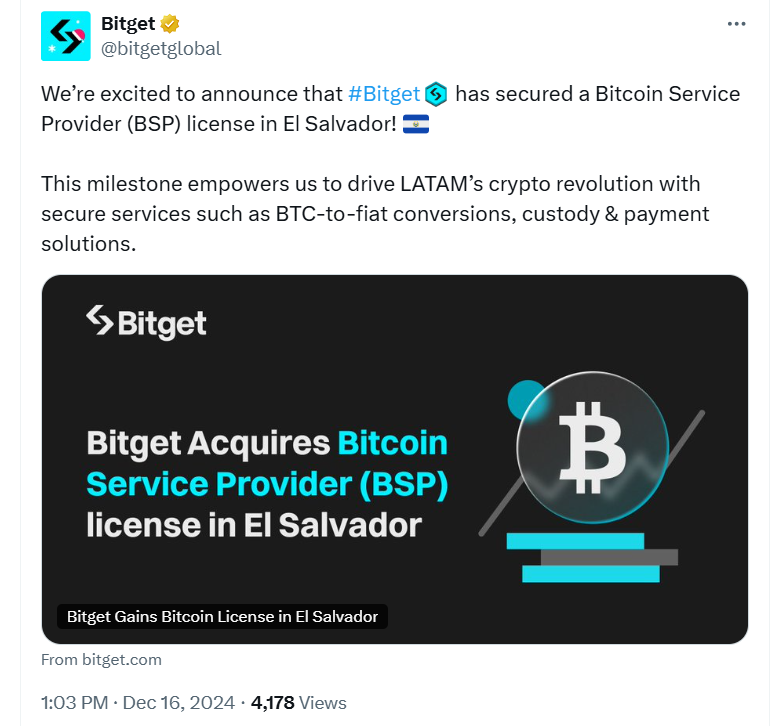
Bitget has received the coveted Bitcoin Service Provider (BSP) license from El Salvador’s Central Reserve Bank, marking a significant step in its global expansion strategy. This authorization allows the platform to offer a range of Bitcoin-related services, including exchanges, payments, and custody solutions, in the Central American nation known for its embrace of cryptocurrency.

The license represents a notable achievement for Bitget, signaling its commitment to adhering to regulatory frameworks in its pursuit of a stronger foothold in Latin America. El Salvador, which made Bitcoin legal tender in 2021, has positioned itself as a hub for crypto innovation, drawing interest from international players eager to tap into its growing digital economy.

Bitget’s decision to prioritize regulatory compliance aligns with its broader mission to establish trust and credibility in the global crypto space. By securing this license, the platform gains access to a burgeoning market while demonstrating its capability to meet the rigorous standards set by El Salvador’s financial authorities. This development underscores the firm’s ambition to build a robust presence in the region, leveraging the country’s pro-Bitcoin stance as a springboard for further growth.

El Salvador’s adoption of Bitcoin as legal tender has attracted significant attention, both for its groundbreaking approach and the challenges associated with integrating digital assets into a traditional economy. The move has created opportunities for companies like Bitget to introduce innovative solutions tailored to the unique needs of the Salvadoran market. By offering services such as secure custodial options and seamless payment integrations, Bitget aims to contribute to the local crypto ecosystem’s development while addressing concerns around security and accessibility.

Bitget’s license acquisition comes at a time when Latin America is experiencing an uptick in cryptocurrency adoption, driven by economic instability, high inflation rates, and limited access to traditional banking services. In this context, Bitcoin and other digital assets are increasingly seen as viable alternatives for financial inclusion. The platform’s expansion into El Salvador is expected to capitalize on these trends, providing users with reliable and regulated avenues for engaging with digital currencies.

Beyond its operations in El Salvador, Bitget has indicated plans to deepen its engagement with the wider Latin American region. Countries such as Brazil, Argentina, and Colombia have shown growing interest in blockchain technology, creating a fertile ground for companies looking to expand their footprint. By obtaining regulatory approvals and investing in localized solutions, Bitget aims to position itself as a leader in the regional crypto market.

El Salvador’s proactive stance on Bitcoin regulation has set it apart from many other nations, where digital assets remain subject to varying degrees of scrutiny and uncertainty. The BSP license issued to Bitget highlights the government’s willingness to work with private sector entities in fostering a dynamic and well-regulated crypto environment. This approach not only enhances the appeal of the Salvadoran market but also sets a precedent for other countries seeking to balance innovation with regulatory oversight.

As part of its expansion strategy, Bitget plans to introduce educational initiatives aimed at increasing awareness and understanding of cryptocurrencies among Salvadorans. These efforts are expected to complement the government’s existing programs and facilitate broader adoption of digital assets across diverse demographics. The company’s emphasis on education reflects its recognition of the need to address skepticism and build confidence among users new to the crypto space.

Bitget’s move also reflects broader industry trends, as major crypto firms increasingly seek to align with regulatory frameworks to ensure long-term sustainability. The BSP license not only enhances Bitget’s credibility but also serves as a testament to its operational rigor and strategic vision. By adhering to the highest standards of compliance, the platform positions itself to attract a diverse user base while mitigating risks associated with the volatile nature of the cryptocurrency market.

The crypto industry, while growing rapidly, remains a highly competitive field where job opportunities are often limited relative to the number of aspiring candidates. Despite a surge in cryptocurrency and blockchain-related innovations, many still struggle to land full-time roles due to the industry’s relatively small size compared to more established sectors.

To succeed in this competitive environment, candidates need to go beyond possessing the right knowledge, skills, and enthusiasm. Preparation and organization are paramount in securing a crypto job. Aspiring crypto professionals must focus on understanding the fundamental concepts of cryptocurrencies and blockchain technology, staying informed about trends such as decentralized finance (DeFi) and emerging blockchain platforms.

Building specialized skills, such as proficiency in blockchain programming languages (Solidity, Python), smart contract development, and cybersecurity, is also crucial. Industry certifications, like Certified Blockchain Developer (CBD), can boost a candidate’s credentials, enhancing their attractiveness to employersking plays a significant role in the crypto industry. Engaging in crypto communities, attending industry events, and participating in hackathons are ways to expand one’s professional network. This not only opens up job opportunities but also provides a platform to showcase one’s skills and gain practical experience. For example, contributing to open-source projects or building a personal portfolio can demonstrate expertise and enthusiasm to potential employers .

With rms and social media channels acting as critical gateways to job opportunities, candidates need to customize their resumes and cover letters for each application. Researching the company and understanding its products, services, and recent developments is essential to show genuine interest during interviews. This effort can set candidates apart in a crowded job market where everyone else may have similar technical skills.

Advertisements

Bitcoin has surged above $106,000, marking a notable milestone for the cryptocurrency as investors and analysts increasingly focus on its strategic role in future financial reserves. This rise reflects a broader shift in market sentiment, driven by growing institutional interest and increasing speculation around Bitcoin’s potential to become a key asset in global financial systems. As central banks, corporations, and financial institutions explore digital assets, Bitcoin’s price surge signals a pivot toward its establishment as a store of value.

Several factors have contributed to this dramatic price increase, but perhaps the most pivotal is the anticipation that Bitcoin will become a reserve asset for institutional investors and even central banks. As nations and large financial entities explore the possibility of holding Bitcoin in their reserves, it is positioning itself as a digital alternative to traditional assets like gold. Analysts view Bitcoin’s growth as part of a larger trend, where digital currencies are gaining acceptance amid growing concerns over inflation, currency debasement, and geopolitical risks.

Bitcoin’s performance, which has fluctuated significantly in recent months, now suggests a major shift in investor confidence. On platforms such as the Chicago Mercantile Exchange (CME), institutional interest in Bitcoin has been at an all-time high. Meanwhile, global financial institutions are increasingly analyzing the asset’s potential within their investment portfolios. Many are viewing Bitcoin not just as a speculative asset, but as a hedge against traditional financial risks, particularly in light of the ongoing turbulence in global markets. This shift in perception is underscored by statements from prominent market players, who indicate that Bitcoin could become a key part of diversified investment strategies moving forward.

Meanwhile, Bitcoin’s increasing adoption by large corporations has helped elevate its status. Companies like Tesla, MicroStrategy, and Block (formerly Square) have all made substantial Bitcoin purchases in recent years, contributing to the growing acceptance of the cryptocurrency as a legitimate investment. These moves are part of a larger trend in which major companies, especially in technology and finance, are increasingly embracing Bitcoin. Tesla’s CEO, Elon Musk, has notably been vocal about Bitcoin’s potential as a store of value, further fueling optimism in the market.

Bitcoin’s price surge also coincides with broader changes in global monetary policies. Amid inflationary pressures and low-interest rates in major economies, many investors are turning to digital assets as an alternative to traditional stocks and bonds. The growing acceptance of Bitcoin by governments and businesses as a viable asset class is helping drive the latest surge in its price. Notably, countries like El Salvador have already taken steps to recognize Bitcoin as legal tender, setting a precedent for other nations to follow suit.

Market participants also point to the increasing regulatory clarity surrounding Bitcoin and other cryptocurrencies. Countries such as the United States, with ongoing discussions in Congress, are exploring frameworks that could provide more stability and legitimacy to the cryptocurrency market. This evolving regulatory landscape is seen as a key factor in institutional investors’ willingness to adopt Bitcoin as part of their portfolios. While some concerns remain regarding how global regulators will handle cryptocurrencies in the long term, the current trend points toward greater integration of Bitcoin into the mainstream financial system.

As Bitcoin’s price climbs, so too does the debate over its environmental impact. Critics have long raised concerns about the high energy consumption required to mine Bitcoin. Despite this, Bitcoin’s advocates argue that advancements in sustainable mining technology and increasing use of renewable energy sources are addressing these issues. The rise of Bitcoin ETFs and other investment products also reflects a more mainstream acceptance of Bitcoin as an asset class. These products allow investors to gain exposure to Bitcoin without directly holding the cryptocurrency, expanding its appeal to a wider range of market participants.

The surging price has drawn the attention of both retail and institutional investors, who are looking to capitalize on Bitcoin’s new role in the global economy. However, while the optimism surrounding Bitcoin remains high, analysts warn that its volatility remains a significant risk. Prices can fluctuate dramatically in a short time frame, and this uncertainty continues to make Bitcoin a speculative investment for many. Nonetheless, with its growing acceptance among institutional investors, Bitcoin’s evolution from a niche asset to a more mainstream store of value seems increasingly likely.

The broader cryptocurrency market has also benefited from Bitcoin’s price movement, with altcoins like Ethereum seeing significant gains in recent weeks. Many investors view Bitcoin as a bellwether for the overall health of the digital asset market, and its rise has had a ripple effect across the industry. Ethereum, which has long been seen as the second-largest cryptocurrency by market capitalization, has also seen its price surge as more investors look for alternative digital assets with the potential for similar growth.

MicroStrategy, the business intelligence firm that has increasingly positioned itself as a major player in the Bitcoin space, is set to join the Nasdaq 100 index, a milestone that will further integrate Bitcoin-linked assets into mainstream financial markets. The decision underscores the growing intersection between traditional technology firms and cryptocurrency exposure, signaling to investors a new wave of passive investment flows.

This move places MicroStrategy among the 75 largest non-financial companies in the Nasdaq, a list traditionally populated by household names such as Apple, Microsoft, and Amazon. For the firm, it represents the culmination of a year marked by aggressive Bitcoin acquisitions, which have significantly boosted its market value. The firm’s stock has seen explosive growth as it has leaned heavily into Bitcoin, becoming one of the largest institutional holders of the digital asset.

Founded in 1989, MicroStrategy initially built its reputation as a provider of analytics software, helping companies harness data for decision-making. However, in recent years, under the leadership of CEO Michael Saylor, the company has transformed into a prominent Bitcoin advocate. MicroStrategy’s strategic pivot to Bitcoin began in 2020 when it made its first purchase of the cryptocurrency, and since then, it has continued to acquire more, amassing over 150,000 Bitcoin.

The company’s decision to enter the Nasdaq 100 has profound implications for investors. The inclusion not only boosts its visibility but also opens the door for passive investments from exchange-traded funds (ETFs) and mutual funds that track the Nasdaq 100. These funds, many of which are structured to automatically buy and sell stocks in the index, will now include MicroStrategy in their portfolios. As a result, Bitcoin-linked stocks could see billions of dollars in new investment inflows.

For passive investors who may have no direct interest in cryptocurrency but are focused on broad market exposure, MicroStrategy’s entry into the Nasdaq 100 offers a means to indirectly engage with Bitcoin’s price movements. While the firm’s stock has been volatile due to its dependence on the cryptocurrency market, this volatility may be tempered by its larger footprint in the tech sector, which has seen massive gains over the last decade.

MicroStrategy’s inclusion also reinforces the idea that Bitcoin is becoming entrenched in the financial ecosystem. Previously seen as an alternative investment for a select group of enthusiasts, the cryptocurrency is increasingly being integrated into corporate balance sheets and financial products. As traditional investors gain exposure to Bitcoin indirectly through stocks like MicroStrategy, it adds a layer of legitimacy to the cryptocurrency in the eyes of institutional investors and retirement funds.

While the move is seen as a victory for Bitcoin proponents, it has raised concerns among some analysts about the risks of such exposure. Bitcoin’s price fluctuations are well-known, and the cryptocurrency’s history of volatility could potentially affect MicroStrategy’s stock performance. For instance, as Bitcoin’s price rose, so too did MicroStrategy’s stock, but should Bitcoin experience a downturn, the company could face significant losses, which could then ripple through the broader Nasdaq 100 index.

Despite these risks, analysts view the inclusion of MicroStrategy in the Nasdaq 100 as a validation of the growing acceptance of Bitcoin by mainstream markets. The company’s transformation from a traditional business analytics firm to a Bitcoin-centric institution mirrors the broader trend of tech firms increasingly integrating digital assets into their business strategies. Companies like Tesla, Square, and Galaxy Digital have made similar moves, signaling a growing belief in Bitcoin as a store of value and hedge against inflation.

MicroStrategy’s financial standing has been propelled by Bitcoin’s rise. The firm’s market cap has swelled as its Bitcoin holdings have appreciated in value. Since its first purchase, Bitcoin’s price has experienced explosive growth, reaching over $60,000 per coin at its peak, although it has fluctuated significantly since then. Nevertheless, MicroStrategy’s heavy investment in Bitcoin continues to give it a major stake in the digital currency’s success.

One significant consequence of this shift is the potential impact on traditional investors who may not fully understand the cryptocurrency space. Many of these investors may now find themselves exposed to Bitcoin’s price swings through their broader equity holdings, even if they are not directly investing in cryptocurrency. This introduces a level of risk that was not present before, but also reflects the deepening ties between cryptocurrency and mainstream financial markets.

The inclusion of MicroStrategy in the Nasdaq 100 highlights a broader shift in how tech companies and institutional investors are incorporating cryptocurrency into their portfolios. The rise of Bitcoin-focused companies is part of a larger trend that is reshaping the landscape of global finance. As Bitcoin becomes more embedded in corporate strategies, its influence on traditional stock markets is likely to grow.


The cryptocurrency landscape is abuzz with the rise of a new meme coin that could soon join the ranks of the most explosive digital assets in the market. Catslap ($SLAP), a new feline-themed meme coin, has caught the attention of crypto enthusiasts with its impressive lineup of developments aimed at propelling the token to new heights. Riding on the success of previous meme coins like Popcat, which saw explosive gains in 2021, $SLAP is positioning itself as the next big player in the meme coin space, with forecasts suggesting it could experience gains as high as 700x in the coming year.

At the core of the latest buzz surrounding $SLAP is its innovative approach to building community engagement and boosting its market presence. The token has launched a series of initiatives designed to foster a dedicated user base and encourage participation, including a comprehensive Zealy social quests campaign. This initiative allows users to earn rewards and further engage with the $SLAP community, while simultaneously boosting the coin’s visibility across various social media platforms. The campaign’s success is critical, as it has the potential to accelerate the coin’s adoption among mainstream crypto investors.

Adding fuel to the fire is the coin’s airdrop event, designed to distribute tokens to new users, as well as those who have already shown interest in $SLAP. Airdrops have become a common tactic for crypto projects to create buzz and incentivize investment, and $SLAP’s airdrop is no exception. The campaign has already sparked excitement within the cryptocurrency ecosystem, as investors eagerly anticipate the distribution of tokens, hoping to capitalize on the anticipated surge in value.

The meme coin’s growth potential has also been bolstered by a growing online community that backs the project. Communities built around meme coins often play a significant role in their success, and $SLAP has quickly developed a dedicated following across platforms like Twitter, Telegram, and Reddit. As a result, the coin has generated significant buzz, with many hoping that it will follow in the footsteps of other meme-based tokens such as Dogecoin and Shiba Inu, which have both achieved substantial returns for early investors.

Cryptocurrency analysts have been keeping a close eye on $SLAP, with many seeing the coin as a potential powerhouse in the coming months. Some analysts predict that the coin could mirror the success of Popcat, a meme coin that took the crypto world by storm in 2021 and achieved astronomical gains. If $SLAP can capture the same level of attention and investor interest, it could see its value increase exponentially, making it a prime investment opportunity for those seeking high-risk, high-reward ventures.

The rise of meme coins has been one of the defining trends in the cryptocurrency world, particularly over the past few years. Coins like Dogecoin and Shiba Inu have shown that with the right amount of social media buzz and community support, meme coins can achieve massive growth. As more investors seek out the next big opportunity in the meme coin space, $SLAP is well-positioned to ride the wave of growing interest in this niche segment of the market.

However, as with all investments, there are risks involved. The volatility of meme coins is well-documented, and while the potential for massive returns exists, so too does the possibility of rapid losses. Critics argue that the hype surrounding meme coins can lead to unsustainable price surges, followed by sharp declines. For investors considering $SLAP, it is important to approach the coin with caution and an understanding of the risks associated with speculative digital assets.

Despite the risks, $SLAP’s developers have made strides to create a coin that offers more than just speculative trading opportunities. The team behind the project has emphasized its commitment to building a sustainable ecosystem, with plans for further utility integration and partnerships with other blockchain projects. By focusing on long-term growth and real-world use cases, $SLAP aims to differentiate itself from the typical meme coin, which often relies solely on hype and social media buzz for its value.

In addition to its marketing and community-building efforts, $SLAP is also exploring partnerships with other crypto projects to expand its utility and increase its market presence. Collaborations with decentralized finance (DeFi) protocols and non-fungible token (NFT) projects could provide $SLAP with additional use cases, helping to cement its place in the broader cryptocurrency ecosystem.

XRP has drawn renewed focus in the cryptocurrency market as on-chain data reveals substantial outflows of the token from major exchanges. Market analysts and blockchain trackers indicate that $300 million worth of XRP has been withdrawn, fueling speculation of accumulation by whales and institutional investors. This development arrives amid an extended phase of price consolidation for XRP, sparking discussions on its potential trajectory.

According to data from Coinglass, the significant outflows over the past week indicate a strategic shift by high-net-worth investors, who appear to be betting on the token’s future. The movement of such a considerable volume suggests confidence in XRP’s long-term potential despite broader market uncertainties. Observers highlight that such patterns of withdrawal often correlate with accumulation, as holders transfer their tokens to private wallets to prepare for anticipated price surges.

The timing of these transactions is notable, as XRP has demonstrated resilience following regulatory clarity in its ongoing legal battle with the United States Securities and Exchange Commission (SEC). The partial victory Ripple Labs achieved earlier this year, where XRP was deemed not to be a security when sold on secondary markets, has bolstered investor sentiment and rekindled interest in the asset.

XRP’s price has remained relatively stable, hovering within a tight range between $0.50 and $0.55. Analysts attribute this to broader market conditions and the lack of a significant catalyst in the crypto space. However, the scale of the $300 million outflows has prompted speculation that larger players could be positioning themselves for a breakout. Whale Alert, a blockchain tracker, recorded multiple transactions of XRP worth millions, adding weight to the idea that this activity is a precursor to strategic market movements.

Beyond these transactions, Ripple Labs has been advancing its efforts to expand XRP’s utility. The company has been actively pursuing partnerships with financial institutions globally, emphasizing cross-border payment solutions. Such initiatives aim to solidify XRP’s role as a preferred digital asset for seamless, low-cost transactions, a factor that experts believe could drive demand over time.

The cryptocurrency market has witnessed increased volatility in recent months, with fluctuating macroeconomic indicators and shifting investor sentiment impacting digital asset prices. While Bitcoin and Ethereum continue to dominate trading volumes, altcoins like XRP are gaining traction, especially among those seeking diversification in their crypto portfolios.

Analysts caution, however, that market dynamics remain uncertain. Although the $300 million outflows hint at positive sentiment, they do not guarantee immediate price action. Factors such as liquidity, macroeconomic conditions, and regulatory developments will play critical roles in shaping XRP’s near-term prospects. Some experts suggest that retail investors should carefully monitor market trends and avoid being swayed solely by whale activity.

On the regulatory front, Ripple’s legal entanglements continue to weigh on its ecosystem. Despite the partial victory in its case against the SEC, the broader question of XRP’s status under U.S. securities law remains unresolved. A final decision in the matter, expected in the coming months, could serve as a pivotal moment for the token, potentially influencing its adoption and price.

In addition to its legal battles, Ripple Labs is preparing for a new phase of innovation. Its recent announcements about leveraging XRP for real-world applications, including tokenized assets and central bank digital currency (CBDC) pilots, reflect the firm’s ambition to remain at the forefront of blockchain technology. This approach aligns with the growing demand for decentralized financial solutions, which many see as a transformative force in the global financial system.

Market participants are also paying close attention to XRP’s performance against broader altcoin indices. Some argue that the consolidation phase, coupled with heightened whale activity, presents a favorable entry point for long-term investors. However, the inherent volatility of cryptocurrency markets suggests that any investment carries significant risks.

Byte Federal, a prominent Bitcoin ATM network in the United States, has disclosed a security breach that compromised the personal data of 58,000 customers. The company revealed the incident after identifying unauthorized access to its systems, which reportedly led to the exposure of sensitive user information, including names, email addresses, and transaction details.

The breach has raised concerns about cybersecurity measures in the cryptocurrency sector. Byte Federal, known for operating over 1,000 Bitcoin ATMs across more than 40 states, has positioned itself as a major player in the digital asset ecosystem, facilitating cryptocurrency transactions for thousands of users daily. This incident underscores the vulnerabilities even in established networks within the fintech space.

Byte Federal’s systems were reportedly targeted in a sophisticated cyberattack, exploiting vulnerabilities in its data storage infrastructure. While the company has not confirmed whether financial information, such as bank account or credit card details, was accessed, it has assured customers that immediate steps were taken to address the breach and secure its systems. Additionally, Byte Federal is cooperating with law enforcement agencies and third-party cybersecurity firms to investigate the breach thoroughly and prevent future incidents.

This data breach follows Byte Federal’s expansion of its service offerings, including the integration of the Bitcoin Lightning Network, which enables faster and more cost-efficient transactions. The company’s focus on innovation has drawn significant attention, but this breach may lead to heightened scrutiny over its cybersecurity protocols. Industry experts have noted that companies in the cryptocurrency domain must balance innovation with robust security measures to protect user data.

Affected customers are being notified individually and advised to monitor their accounts for any unauthorized activity. Byte Federal has also recommended users to reset their passwords and adopt additional security measures, such as enabling two-factor authentication, to safeguard their accounts. The company is offering complimentary identity theft protection services to those impacted by the breach.

The incident has prompted discussions about regulatory oversight and the need for stricter cybersecurity compliance in the fintech and cryptocurrency sectors. Analysts argue that the growing adoption of digital assets necessitates a parallel emphasis on security standards to protect consumers and maintain trust in the ecosystem. This breach serves as a stark reminder of the challenges faced by firms operating in an increasingly digital financial landscape.

Tether (USDT) has seen a significant shift in its distribution across blockchain networks, with Ethereum surpassing TRON in terms of USDT supply. Over the past month, the amount of USDT on Ethereum has surged by approximately $20 billion, pushing its dominance in the stablecoin market. As of the latest reports, Ethereum now accounts for the majority of the USDT supply, with more than $12 billion of the total circulating USDT on the Ethereum network.

This notable growth is a result of increasing demand for Ethereum-based DeFi applications and the network’s broader adoption. USDT, a leading stablecoin in the cryptocurrency sector, has traditionally been spread across various blockchains, including Bitcoin’s Omni layer, TRON, and others like EOS and Liquid. However, Ethereum has long been the primary platform for stablecoins, and its share has now expanded significantly, reflecting Ethereum’s renewed appeal amid the growing DeFi ecosystem.

Ethereum’s dominance has been bolstered by its Ethereum 2.0 upgrade, improving scalability and transaction costs, which has made it a more attractive option for decentralized finance platforms and crypto traders. The increase in USDT supply on Ethereum is not just a byproduct of market demand but also a strategic move to enhance Ethereum’s role in decentralized applications (dApps) and smart contract solutions.

Meanwhile, TRON, which once held a more substantial share of USDT, has seen its role diminish in the face of Ethereum’s rising prominence. While TRON continues to be a player in the stablecoin ecosystem, its share of the total USDT supply has decreased notably in recent months. This shift is indicative of broader trends in the stablecoin market, where networks like Ethereum are increasingly seen as the go-to platforms for issuing and transferring stablecoins due to their robust infrastructure and widespread use.

Base, a layer-2 blockchain solution built atop Ethereum, has garnered significant attention due to its robust growth in 2024, securing $2.7 billion in net inflows year-to-date. The surge marks a pivotal moment for the project, reflecting strong investor confidence and the growing appeal of scaling solutions within the crypto ecosystem. In stark contrast, Ethereum itself, despite its dominance in the space, experienced a record $7.4 billion in net outflows over the same period, signaling a shift in investor sentiment away from the original Ethereum blockchain toward alternative platforms like Base.

The disparity in inflows and outflows has drawn attention from market analysts, particularly because both assets are intrinsically linked. Base’s success hinges on the Ethereum blockchain for security, but its tailored scalability and lower transaction costs have attracted considerable investment. Ethereum’s outflows are largely attributed to concerns over its scalability issues, particularly its high transaction fees and network congestion that have persisted despite ongoing updates.

The ongoing battle between layer-1 and layer-2 solutions illustrates a broader trend in blockchain development. Layer-2 solutions like Base aim to alleviate the scalability challenges faced by Ethereum by processing transactions off-chain while leveraging Ethereum’s security. This model has proven to be appealing to decentralized application developers and users who seek lower fees and faster transactions. Investors are increasingly recognizing these advantages, which has driven the substantial inflows into Base.

One of the key factors driving Base’s success has been its integration with Optimism, a layer-2 network that employs Optimistic Rollups. This technology allows transactions to be processed in batches, enhancing speed and efficiency while reducing costs. Optimism’s established track record, combined with the robust infrastructure of Base, has resulted in a growing number of decentralized finance (DeFi) protocols migrating to this ecosystem. These protocols are increasingly shifting their focus to Base, buoyed by its ability to scale and manage higher transaction volumes more effectively than Ethereum.

Ethereum’s struggle to retain investor confidence, on the other hand, can be traced to its long-standing scalability limitations. The Ethereum network, often hailed as the backbone of decentralized finance, has been plagued by network congestion, especially during periods of high transaction demand. While Ethereum’s transition to Ethereum 2.0, which aims to implement a Proof of Stake consensus mechanism, is intended to address some of these issues, many investors remain skeptical of its long-term viability in its current form. High transaction fees continue to plague the network, pushing investors and developers to seek alternatives that offer better scalability.

Despite Ethereum’s ongoing development efforts, including the introduction of sharding and other upgrades to enhance throughput, the market sentiment has leaned toward blockchain solutions that can offer immediate relief. Layer-2 solutions like Base, Arbitrum, and Polygon have benefitted from this shift, offering near-instant transaction finality and negligible fees. These benefits have not only attracted developers but also institutional investors who are looking to capitalize on the emerging layer-2 ecosystem, further driving the inflow into these platforms.

The contrast between Ethereum’s challenges and Base’s growth is particularly notable given the overlap in their underlying technologies. While Base runs on Ethereum’s base layer for security and consensus, its innovative scaling model has managed to sidestep many of the bottlenecks that continue to hinder Ethereum itself. This dynamic has led to the rapid rise of Base in the market, with many speculating that this trend could continue as more applications and investors shift their focus to layer-2 solutions.

A key consideration in the ongoing evolution of blockchain technology is the role of decentralization. Ethereum has long been the poster child for decentralization, emphasizing the importance of a trustless and distributed network. However, as scalability and efficiency have become more pressing issues, layer-2 solutions like Base are offering a middle ground—leveraging Ethereum’s security without burdening its mainnet with excessive transactions. This hybrid approach is increasingly gaining favor among users who value both decentralization and efficiency.

The entry of institutional investors into the blockchain space has played a critical role in shaping the landscape. Many institutional players have expressed interest in blockchain technologies that provide high throughput and minimal latency, qualities that are often found in layer-2 solutions. The inflows into Base reflect this shift, as institutions seek to diversify their portfolios in the rapidly evolving digital asset space. The growing adoption of decentralized finance, non-fungible tokens (NFTs), and other blockchain-based innovations has further cemented Base’s position as a platform that can support these applications with lower costs and faster speeds.

The contrasting trends in Ethereum’s outflows and Base’s inflows have sparked debate about the future of Ethereum’s role in the broader blockchain ecosystem. While Ethereum remains the dominant layer-1 blockchain, its scalability issues have led to increased competition from a range of layer-2 solutions. These developments highlight the evolving dynamics within the blockchain space, where scalability, speed, and cost-efficiency are becoming the key determinants of success.

Brian Quintenz, the head of crypto policy at Andreessen Horowitz, has emerged as a frontrunner for the position of chair at the Commodity Futures Trading Commission (CFTC). This potential appointment has generated considerable attention, particularly in the context of shaping the future of cryptocurrency regulation in the United States. Quintenz’s deep-rooted experience with the regulatory landscape, particularly his tenure at the CFTC under the Trump administration, positions him as a key figure in guiding the U.S. government’s approach to digital assets and derivatives markets.

During his tenure as a commissioner at the CFTC from 2017 to 2021, Quintenz made a significant impact in the world of financial regulation. He was one of the first regulators to recognize the growing importance of digital assets, including cryptocurrencies like Bitcoin and Ethereum, and the need to develop a regulatory framework that both fosters innovation and protects investors. Quintenz was known for his support of the crypto industry, advocating for clearer and more consistent rules governing digital asset markets. His work on derivatives, particularly around crypto futures contracts, laid the foundation for much of the regulatory framework in place today.

Quintenz’s appointment to the CFTC chair could signal a more crypto-friendly regulatory environment in the U.S., one that aligns with the priorities of industry advocates who have long argued for clearer rules to enable innovation without stifling growth. The CFTC, under Quintenz’s guidance, is expected to build upon his prior work, including his advocacy for creating a comprehensive regulatory framework that supports digital asset trading while ensuring financial stability.

Quintenz’s potential leadership is seen as crucial for addressing the growing demand for regulation in the cryptocurrency space, particularly as institutional interest in digital assets continues to rise. The U.S. has been grappling with questions around the appropriate regulatory body to oversee crypto markets, with the CFTC and the Securities and Exchange Commission (SEC) often at odds over jurisdictional issues. Quintenz, however, has long argued that the CFTC is best suited to oversee crypto derivatives and related markets due to its expertise in futures and commodities. If confirmed, Quintenz could play a pivotal role in resolving these jurisdictional disputes and advancing a clear, unified regulatory framework.

Under Quintenz’s leadership, the CFTC could also take a more proactive role in fostering innovation within the digital asset space. His track record at Andreessen Horowitz, one of Silicon Valley’s most influential venture capital firms, shows his keen understanding of the intersection between technology and regulation. At the firm, Quintenz has worked closely with emerging blockchain companies and crypto projects, providing guidance on navigating the complex regulatory landscape. This experience gives him a unique perspective on how to balance the need for regulation with the desire for innovation, making him a natural fit to lead the CFTC as it continues to evolve its approach to crypto.

The crypto industry, which has faced increasing scrutiny from lawmakers and regulators, would likely welcome a more consistent and favorable regulatory framework under Quintenz’s leadership. While some in the industry have expressed concerns about regulatory overreach, many are hopeful that Quintenz’s appointment could provide the clarity and stability needed to drive continued growth. The ongoing battle over cryptocurrency regulations has been marked by conflicting signals from different regulatory bodies, with the SEC taking a more aggressive stance on enforcement, particularly against centralized exchanges. In contrast, the CFTC has been more focused on ensuring that financial markets, including crypto derivatives, function within a legal framework that promotes transparency and market integrity.

One of the key challenges that Quintenz would face as CFTC chair is the evolving nature of the crypto market. With innovations like decentralized finance (DeFi) and non-fungible tokens (NFTs) continuing to gain popularity, the regulatory framework needs to be adaptable enough to keep pace with rapid changes in the industry. Quintenz’s previous work at the CFTC, where he helped craft rules for Bitcoin futures and other digital asset contracts, suggests he understands the importance of staying ahead of market developments and ensuring that regulation evolves in tandem with technological advancements.

Quintenz’s approach to digital asset regulation will likely focus on protecting consumers without stifling innovation. His stance during his time at the CFTC and his work at Andreessen Horowitz indicate that he views regulation as a tool to create a level playing field for all market participants while fostering innovation. This would be in stark contrast to some of the more stringent regulatory approaches favored by other factions within the U.S. government, which seek to impose more controls over the growing crypto market.

His potential appointment also comes at a time when the U.S. is facing mounting pressure to establish a clear and consistent regulatory framework for digital assets. Other countries, such as the European Union, have moved forward with comprehensive crypto regulation, and the U.S. risks falling behind in the global race to regulate emerging financial technologies. Quintenz’s appointment could help solidify the U.S.’s position as a leader in digital asset regulation, ensuring that the country remains competitive while safeguarding the financial system.

The stablecoin market has reached a significant milestone, surpassing a total market capitalization of $200 billion, a first in the digital asset’s history. This surge reflects a broader trend where stablecoins are increasingly being adopted for a range of uses beyond their initial function of facilitating cryptocurrency trading. Key drivers of this growth include rising capital inflows and the expanding role of stablecoins in real-world applications such as payments and remittances.

In the past few months, the stablecoin market has been on a steady upward trajectory, with assets like Tether (USDT) and USD Coin (USDC) leading the charge. Tether, in particular, has seen substantial growth, maintaining its dominance in the market with significant increases in its circulation. The overall growth of the stablecoin ecosystem is linked to both the rise in digital asset trading volumes and the increasing acceptance of these digital currencies as alternatives to traditional fiat money.

One of the main catalysts behind the expanding use of stablecoins is the broadening scope of their use cases. Traditionally, stablecoins were primarily used by traders as a way to move in and out of volatile cryptocurrency positions without leaving the ecosystem. However, in 2024, there has been a noticeable shift. Increasingly, businesses and individuals are utilizing stablecoins for payments, cross-border remittances, and even as a store of value. This shift has been especially visible in sectors like gaming, e-commerce, and even charity, where stablecoins offer a faster, cheaper, and more secure alternative to conventional payment methods.

As more users and companies look to leverage the benefits of stablecoins, the market has also attracted the attention of regulators. Many financial authorities around the world are taking a more active role in regulating stablecoins to ensure financial stability while balancing innovation. The regulatory landscape remains in flux, with governments working on frameworks to ensure stablecoins are used responsibly without undermining the traditional financial system.

The integration of stablecoins into decentralized finance (DeFi) platforms has further cemented their relevance. As DeFi grows, the demand for stablecoins within these decentralized applications has spiked. These platforms use stablecoins as a medium for lending, borrowing, and earning interest, all of which contribute to the broader adoption of stablecoins across various sectors.

Despite the growing popularity, challenges persist. Issues related to transparency, especially concerning the reserves backing stablecoins like Tether, have sparked debates among market participants and regulators alike. Nonetheless, the general outlook for the stablecoin market remains positive, as technological advancements continue to pave the way for greater adoption and diversification of stablecoin offerings.

Triton Liquid Fund, a leading player in digital asset hedge fund management, has taken a significant step by obtaining its full Financial Services Permission (FSP) licence from the Abu Dhabi Global Market (ADGM). This development empowers the firm to establish, manage, and operate diversified collective investment portfolios, cementing its position in the region’s expanding digital financial ecosystem. The fund, which has been strategically supported by New York-based […]

A cryptocurrency trader leveraged an audacious high-risk position to turn an initial investment of $2,500 into an impressive $200,000 by trading XRP with a staggering 500x leverage. The bold maneuver capitalized on XRP’s upward price movement following developments in its ongoing legal case with the U.S. Securities and Exchange Commission (SEC).

The trader’s position, which teetered near liquidation at one point, highlights the volatile nature of high-leverage trading. Leveraging 500x means a minor price fluctuation can significantly amplify gains—or wipe out investments. XRP’s sharp price increase, fueled by optimism over favorable judicial rulings, provided a critical lifeline for this strategy to succeed.

This dramatic transformation of funds underscores the high-reward potential of crypto derivatives trading but also serves as a cautionary tale about its risks. With leverage of this magnitude, traders face amplified exposure to market swings, emphasizing the importance of careful market analysis and risk management. XRP, buoyed by increased trading volumes and speculation about the SEC ruling, became the backdrop for this extraordinary financial feat.

The case surrounding Ripple Labs, the company behind XRP, has long been a focal point of crypto markets. Ripple’s partial victories in court have bolstered confidence among traders and investors, lifting XRP prices. Market sentiment, compounded by Ripple’s legal clarity in its battle over XRP’s classification as a security, catalyzed significant price action. Experts emphasize that while the trader’s success is remarkable, it is not representative of typical outcomes in high-leverage trading scenarios, where the odds heavily favor losses.

Cryptocurrency analysts point out that this incident reflects the unpredictable yet enticing nature of crypto markets. As digital assets become more integrated into mainstream financial systems, volatility remains a defining characteristic, particularly for leveraged products. Observers note that such stories can inspire further speculative activity, potentially fueling market bubbles and increasing the inherent risks of trading these assets.

Bitcoin’s ambitious march toward the $100,000 mark has hit significant resistance, with market analysts pointing to liquidity constraints and macroeconomic pressures as key factors tempering the rally. Despite a sustained bull run earlier this year, momentum has slowed as traders assess global monetary conditions and broader economic trends.

Cryptocurrency markets often mirror liquidity flows in global financial systems, and Bitcoin’s performance has shown sensitivity to tightening conditions. Market experts highlight that diminished liquidity, compounded by a robust U.S. dollar and increasing bond yields, is exerting downward pressure on risk assets, including cryptocurrencies. Jamie Coutts, a seasoned analyst, noted that liquidity metrics have displayed bearish signals since October, suggesting a challenging environment for Bitcoin in the short term. These constraints may persist for the next several months as markets recalibrate.

Nvidia’s stalled stock rally has also influenced Bitcoin’s trajectory, reflecting broader investor caution. The chipmaker, which has been pivotal in the AI and tech boom, has seen a slowdown in its market performance. This deceleration is significant because a portion of crypto enthusiasm is linked to advancements in AI and related sectors, intertwining tech equities with digital currencies.

Bitcoin’s macroeconomic backdrop is further complicated by external geopolitical and fiscal factors. The U.S. Federal Reserve’s policies, alongside potential shifts in global trade and political landscapes, are shaping the risk appetite across asset classes. Coupled with the anticipation of regulatory developments in major markets, these elements contribute to the uncertainty engulfing Bitcoin’s upward potential.

Regulators from El Salvador and Argentina have entered into a strategic agreement aimed at strengthening oversight in the cryptocurrency sector. The move is seen as a significant step toward enhancing regulatory frameworks and fostering innovation in the rapidly evolving world of digital assets. The collaboration, which aligns both countries’ regulatory authorities, focuses on boosting the integrity, efficiency, and security of virtual and digital asset services.

The agreement was formalized between the National Securities Commission (CNV) of El Salvador and Argentina’s National Digital Assets Commission (CNAD). It aims to establish a framework for better regulatory practices in both nations, with an emphasis on the prevention of fraud and the development of a robust digital financial system. The regulators plan to exchange expertise and best practices, engage in workshops, and share knowledge on digital asset supervision.

Dr. Roberto E. Silva, head of the CNV, expressed enthusiasm about the partnership, noting that El Salvador has long been a pioneer in the digital asset space, particularly with its adoption of Bitcoin as legal tender. He emphasized that the collaboration would build upon El Salvador’s experience with cryptocurrencies and help drive regional innovation.

El Salvador has made significant strides in cryptocurrency regulation, being one of the first countries to officially recognize Bitcoin as legal tender in 2021. This new agreement with Argentina marks the continuation of El Salvador’s efforts to solidify its position as a global leader in cryptocurrency regulation. The CNV has been actively working on enhancing its registry for virtual asset service providers (VASPs), which aims to provide a transparent and secure environment for crypto-related businesses.

For Argentina, the deal offers a chance to learn from El Salvador’s regulatory advancements and further solidify its position in the Latin American cryptocurrency ecosystem. The CNAD, which oversees all forms of digital assets in El Salvador, is expected to share its vast knowledge and regulatory frameworks with its Argentine counterparts, which have focused on regulating virtual assets and service providers, a narrower scope than El Salvador’s broader approach.

The signing of this agreement also highlights the increasing trend of cross-border collaboration in the digital assets space, as countries around the world look to establish clearer regulatory structures for cryptocurrencies. Both nations share a vision of developing more secure and transparent cryptocurrency markets that foster innovation while safeguarding investors.

In practical terms, the collaboration will enable both agencies to co-host workshops, joint seminars, and training programs for their respective teams. These efforts are aimed at improving the regulatory capabilities of both countries, ensuring that their digital asset markets remain competitive and secure. Experts suggest that this could also lead to a more integrated approach to managing digital assets across the region, making it easier for businesses and investors to navigate the growing cryptocurrency landscape.

The partnership comes at a time when both countries are navigating challenges in their financial sectors, with the volatility of digital assets adding complexity to their economic landscapes. By strengthening regulatory cooperation, both El Salvador and Argentina aim to mitigate risks associated with cryptocurrency investments, such as fraud and market manipulation, while encouraging further technological advancements in the sector.

India is moving forward with the phased implementation of its Central Bank Digital Currency (CBDC), with the Reserve Bank of India (RBI) ensuring its gradual and cautious adoption. Governor Shaktikanta Das has emphasized that the full-scale rollout of the digital rupee will not be rushed. Aiming to maintain the integrity, safety, and efficiency of the currency, the RBI is meticulously testing the CBDC’s functionality through its pilots, which started in 2022 for wholesale and retail transactions.

Currently, millions of users and merchants have participated in the retail CBDC pilot, which is being closely monitored for its usability and integration with other systems. While the digital rupee has been designed for use in both online and offline settings, Das stressed its potential for improving cross-border transactions, making them more efficient and cost-effective.

The RBI has focused on ensuring that the digital rupee works seamlessly with India’s existing payment infrastructure. The CBDC’s interoperability with the Unified Payments Interface (UPI), a system already widely used in the country, marks a significant step forward. This linkage allows digital currency transactions to be conducted with the same ease as UPI payments, even in environments with limited internet access.

Coincheck, Japan’s largest cryptocurrency exchange, has marked a significant milestone by becoming the first crypto exchange from the country to be listed on Nasdaq. The Tokyo-based exchange is set to go public through a merger with Thunder Bridge Capital Partners IV, a special purpose acquisition company (SPAC). This development positions Coincheck as a key player in the global crypto landscape, particularly as Japan’s regulatory environment for cryptocurrencies continues to evolve.

The listing was approved by the U.S. Securities and Exchange Commission (SEC) in mid-November 2024, clearing the way for the exchange to begin trading on Nasdaq under the ticker symbol CNCK. This approval followed Coincheck’s filing of a Form F-4 registration and a successful shareholder vote held on December 5. The timing of the listing is crucial, as it coincides with a shift in the U.S. crypto regulatory scene, which could have broad implications for other exchanges and digital asset firms eyeing Nasdaq.

Coincheck’s entry onto Nasdaq reflects the growing acceptance of cryptocurrency as a legitimate financial asset class, even as regulatory scrutiny intensifies globally. The move could also inspire other Japanese exchanges, which have been cautious about entering foreign markets, to explore similar listings, particularly given the global appetite for digital asset investments.

The SPAC merger allows Coincheck to remain a subsidiary of its parent company, Monex Group, which has supported the exchange’s growth over the years. The listing is not only a triumph for Coincheck but also highlights the broader trends in the crypto industry, including the increasing involvement of traditional financial players in the digital asset sector. It also raises questions about the future of Japan’s crypto regulation, with potential changes in the U.S. under the incoming administration of President Donald Trump.

While Coincheck’s Nasdaq debut marks a significant achievement, it also points to a larger trend of global exchanges looking beyond domestic borders to secure listings on international bourses. As one of the first major crypto firms to take this step, Coincheck’s success may pave the way for others in Japan and beyond to follow suit. This trend is likely to continue as the digital asset space matures and as international regulatory standards become clearer.

Binance and Circle have formed a strategic partnership aimed at accelerating the adoption of USDC, a prominent stablecoin, and enhancing the global digital-asset ecosystem. This collaboration is set to significantly expand the reach of USDC, as Binance integrates the stablecoin into its vast array of services, providing access to over 240 million users. Circle, in turn, will contribute its expertise in technology and liquidity, with a focus on fostering greater user trust and driving innovation in the cryptocurrency space.

This partnership underscores the growing importance of stablecoins within the broader cryptocurrency market, with both Binance and Circle working to create more robust infrastructure for their use. As part of the agreement, Binance’s vast exchange network will include USDC for transactions, trading, and savings products, making it one of the largest platforms to integrate the stablecoin. Meanwhile, Circle’s role as the issuer of USDC places it in a pivotal position to influence the way this asset is used within digital finance ecosystems, ensuring that it remains a trusted option for transactions and as a store of value.

Stablecoins have become a central pillar in the cryptocurrency industry due to their stability and their ability to bridge the gap between traditional fiat currencies and digital assets. USDC, in particular, has seen increasing adoption among investors, traders, and institutions, thanks to its backing by fully audited reserves and its operational transparency. This makes it an attractive option for users looking to mitigate the volatility that is commonly associated with cryptocurrencies like Bitcoin and Ethereum. By joining forces, Binance and Circle aim to further enhance USDC’s prominence, creating a seamless, trustworthy experience for users across the globe.

For Binance, which has long been one of the leading cryptocurrency exchanges in the world, the integration of USDC represents a strategic move to diversify its offerings and broaden the scope of services available to its users. Binance has already become a hub for various digital assets, and the addition of USDC aligns with its efforts to cater to a wide range of financial products, from spot trading to decentralized finance (DeFi) and yield farming.

Through its integration of USDC, Binance aims to provide its 240 million users with access to a stable, reliable digital currency for everyday transactions, trading, and investments. This expands the utility of USDC, positioning it as not only a reserve asset but also a practical medium of exchange across Binance’s ecosystem. The stablecoin’s ability to offer faster, lower-cost transactions is expected to provide enhanced efficiency for users, particularly in markets where traditional banking infrastructure is limited or unreliable.

On the other hand, Circle’s involvement in this collaboration emphasizes its role as a leading technology provider in the stablecoin space. Circle has been at the forefront of developing USDC and ensuring its continued success by maintaining strong reserves and complying with regulatory standards. As the company behind USDC, Circle’s commitment to enhancing liquidity and transparency is crucial for the stablecoin’s long-term sustainability.

Circle’s contributions to the partnership will include expanding liquidity and improving the overall user experience for those utilizing USDC across Binance’s platform. The company’s deep understanding of the stablecoin’s infrastructure will enable Binance to tap into new use cases and better serve the growing demand for stablecoins in global markets. Moreover, Circle’s track record of maintaining a 1:1 backing of USDC with traditional currency reserves further solidifies the trust users have in the stablecoin, making it an appealing choice for both institutional and retail investors.

This strategic alliance also comes at a time when regulators across the globe are paying increasing attention to the stablecoin sector. The regulatory landscape surrounding digital assets continues to evolve, with governments exploring frameworks to manage stablecoins while ensuring that they do not pose systemic risks to the financial system. In this context, Binance and Circle’s partnership may help reinforce the legitimacy of USDC, as both companies are committed to maintaining full transparency and regulatory compliance.

By enhancing the adoption of USDC, this partnership could also contribute to the broader acceptance of digital currencies as legitimate financial instruments. USDC’s stability and growing ecosystem have made it a key player in areas like cross-border payments, remittances, and digital asset trading, and Binance’s involvement will only strengthen this trend. The ability to use USDC within Binance’s ecosystem will make it even more accessible to people in regions where access to traditional financial services is limited.

As both Binance and Circle continue to innovate in the digital-asset space, the broader impact of their collaboration is expected to influence how other companies view the role of stablecoins in the financial ecosystem. Other exchanges and financial institutions may look to replicate this partnership model, integrating stablecoins like USDC into their offerings as a way to provide users with more stable and accessible digital assets.

Base, a decentralized layer-2 blockchain built on Ethereum, has shattered previous records, reaching an all-time high of 8.8 million daily transactions. This surge underscores its growing dominance in the blockchain ecosystem, as developers, businesses, and users flock to the platform for faster, cheaper transactions.

The new milestone reflects Base’s increasing popularity among decentralized application (dApp) developers and users who are seeking scalability and cost efficiency. As the blockchain space continues to mature, Base’s ability to handle a vast number of transactions per day without compromising security is a significant achievement, particularly as demand for decentralized finance (DeFi) services and blockchain-based applications expands globally.

This achievement comes as Base positions itself as a leader in the rollup space, an advanced scaling solution designed to alleviate congestion on the Ethereum mainnet. The layer-2 solution has gained considerable attention due to its seamless integration with Ethereum, making it an attractive option for developers who need a fast and efficient platform while retaining access to Ethereum’s security and infrastructure.

The 8.8 million transactions milestone comes amid an upswing in Layer-2 adoption, as the broader Ethereum ecosystem is faced with challenges related to scalability and gas fees. As Ethereum’s popularity continues to rise, users have become more sensitive to transaction costs, which can fluctuate wildly depending on network congestion. Base’s low-cost and high-speed model addresses these issues, which has made it an appealing alternative for developers seeking to mitigate high Ethereum gas fees.

The spike in daily transactions highlights Base’s expanding utility across various sectors. The platform has gained traction with decentralized finance protocols, gaming applications, and non-fungible token (NFT) marketplaces, all of which are driving up the number of daily transactions. By allowing users to access decentralized applications without experiencing the latency and high fees often associated with the Ethereum mainnet, Base is establishing itself as a leading force in Web3 innovation.

One of the most critical factors contributing to Base’s rapid growth is its strategic backing by major players in the crypto and blockchain industries. The platform is supported by Coinbase, one of the largest cryptocurrency exchanges globally, which has provided a strong foundation for Base’s expansion. Coinbase’s involvement not only adds credibility to the platform but also strengthens its integration with the broader cryptocurrency market, helping to attract users who are already familiar with Coinbase’s ecosystem.

As of now, Base is competing with other blockchain solutions like Arbitrum and Optimism, which also offer Layer-2 scaling solutions. However, what sets Base apart is its seamless connection to Ethereum, providing users with a reliable bridge between the scalability of Layer-2 and the robust security features of Ethereum’s Layer-1 chain. This integration has made Base a go-to platform for Ethereum developers who require a high-performance environment for decentralized applications.

Despite the impressive surge in transaction volume, Base is also tackling the complex challenges of ensuring security and decentralization in its system. One of the key concerns for blockchain platforms handling millions of transactions per day is the risk of centralization. In Base’s case, its integration with Ethereum’s robust security model helps mitigate these risks. However, the team behind the platform is continually working to refine and optimize the security protocols to ensure the network remains safe and resilient against potential attacks.

The rapid transaction growth also reflects the increasing interest in blockchain technology from institutional investors. As more companies explore the potential of decentralized applications, smart contracts, and blockchain-powered services, platforms like Base are becoming essential components of the enterprise technology stack. Additionally, Base’s support for developers through easy-to-use tools and infrastructure has positioned it as a go-to solution for building next-generation decentralized applications.

With Web3 technology evolving at a rapid pace, the continued success of platforms like Base depends on their ability to adapt to user demands and integrate new technologies. The demand for blockchain scalability solutions is expected to continue growing as more sectors look to integrate decentralized systems. The 8.8 million daily transaction milestone shows that Base is meeting this demand, while also pushing the boundaries of what is possible with Layer-2 technology.

VISHNU RAJA
RYO YAMADA
HITORI GOTOH
IKUYO KITA