News related to
crypto

Thousands of users of Trust Wallet suffered losses estimated at about $7 million after a malicious browser extension masquerading as the official Trust Wallet add-on circulated on Google Chrome’s extension store, prompting renewed scrutiny of security gaps in decentralised finance tools and browser marketplaces. The attack centred on a fake extension designed to mimic Trust Wallet’s legitimate Chrome interface. Once installed, the malicious software harvested private keys […]

Trump Media and Technology Group has moved bitcoin valued at about $174 million following a fresh purchase, signalling a more active approach to managing its digital-asset exposure rather than holding the tokens passively in long-term storage. Blockchain data reviewed by market analysts shows transfers between wallets linked to the company, a pattern that points to internal reallocation rather than liquidation. The movement comes after disclosures that Trump […]

COLORADO, USA – Media OutReach Newswire – 12 November 2025 – BGEANX has launched a high-performance trade matching engine capable of executing transactions in milliseconds, improving market liquidity and user experience. This innovation reinforces the platform’s position as a technological leader in the crypto industry.

Recently, the cryptocurrency trading platform BGEANX, known for its compliance, launched a high-performance matching engine that achieves millisecond-level trade execution, optimizing market liquidity and ensuring stable operation even under extreme market conditions. This technological advancement enhances user experience and positions BGEANX with core competitiveness in the fiercely competitive crypto market.

Due to high volatility in the crypto market, investors often face issues like long order placement times and increased slippage, leading to higher trading costs and missed opportunities. Leading exchanges are accelerating infrastructure development to optimize trade execution capabilities and improve liquidity. BGEANX launching the high-performance matching engine precisely responds to market demands, providing investors with a more stable market environment and optimal transaction prices.

In the competitive landscape of the industry, trading matching capability is one of the core competencies of exchanges. Through this technological update, BGEANX attracts professional traders and institutional users with faster order execution speed and stronger market depth. This upgrade ensures smoother execution of large trades, offering a more stable investment environment.

For different types of users, the technology upgrade brings tangible improvements in user experience. Ordinary users can enjoy faster order matching, avoiding missed trading opportunities due to matching delays. Professional traders and institutional investors focus more on low latency and high throughput, and the new generation matching engine of BGEANX ensures trading stability under extreme market conditions, providing reliable support for complex high-frequency quantitative strategies.

BGEANX spokesperson Seraphina stated: “BGEANX continues to invest in technological innovation, dedicated to providing users with excellent investment tools and a superior user experience. The launch of the millisecond matching engine marks another breakthrough in technology application for BGEANX. In the future, we will continue to optimize platform performance, combining AI trading tools and intelligent risk control systems to create a more intelligent crypto investment ecosystem for global investors.”

Hashtag: #BGEANX

The issuer is solely responsible for the content of this announcement.

Brazil’s youngest investors are reshaping the country’s crypto economy, pushing demand beyond speculative trading towards stablecoins and tokenised income products that mirror traditional fixed income while operating on blockchain rails. Platforms catering to this shift say participation from users in their late teens and twenties has climbed sharply, reflecting a broader generational move towards digital-first savings tools amid stubbornly high interest rates and volatile global markets. Data […]

Steven McClurg, chief executive of Canary Capital, has told investors that XRP could reach its cycle high in 2026, diverging from the typical pattern that sees alternative tokens fall sharply when Bitcoin weakens. His remarks come as Bitcoin shows signs of having already topped out for the current cycle, raising questions about whether parts of the digital-asset market are entering a phase of decoupling. McClurg said Bitcoin’s […]

Citigroup’s global research team is sticking with crypto-linked equities even after bitcoin’s sharp year-end volatility, arguing that listed companies tied to digital assets are increasingly driven by cash flows, regulation and market share rather than the spot price of the world’s largest token. The bank continues to flag Circle as its preferred exposure in the sector, while keeping a constructive view on Bullish and Coinbase, according to […]

Eight CryptoPunks non-fungible tokens have been accepted into the permanent collection of New York’s Museum of Modern Art, a move that places one of the most influential crypto-native projects alongside canonical works of modern and contemporary art. The acquisition underscores the growing institutional recognition of blockchain-based art forms, even as debate continues over their cultural and market value. The works were added through a donation organised by […]

Advertisements

Bitcoin’s slide below the closely watched $86,000 threshold has unsettled digital-asset markets, breaking a price floor that traders had treated as a key line of defence since the sharp sell-off in October. The move has triggered renewed volatility across major tokens and prompted a reassessment of risk as investors weigh whether the decline reflects temporary dislocation or a deeper shift in market structure. The breach occurred amid […]

HONG KONG SAR – Media OutReach Newswire – 18 December 2025 – IX Asia Indexes today announced the 2nd Half 2025 Review of the IX Digital Asset Industry Classification System (“DAICS®“), aiming to provide professionals worldwide with a transparent and standardized classification scheme to determine sector and exposure of particular digital assets. DAICS® classifies digital assets into 2 main categories: a) Cryptocurrencies and b) Asset Backed Tokens (ABTs) in a 3-tier system for each category. For Cryptocurrencies: Tier 1-Industry/ Tier 2-Sector/ Tier 3-Sub-sector; and for ABTs: Tier 1-Asset Type/ Tier 2-Branch/ Tier 3-Sub-branch. The results are as follows:

  • DAICS® coin coverage: As of 3rd December, the top 50 coins by average market capitalization across the past 90 days
  • DAICS® market capitalization coverage: 96.98%*
  • The % coverage of market capitalization of the 50th ranked coin: 0.048%**
  • Member changes within the Top 50 Coins in DAICS®: eight coins added and nine coins deleted
  • Additions: Zcash (ZEC), World Liberty Financial USD (WUSD), PayPalUSD (PYUSD), Memecore (M), Worldcoin (WLD), Story (IP), Arbitrum (ARB), KuCoin (KCS)
  • Deletions: Mantra (OM), GateToken (GT), Official Trump (TRUMP), VeChain (VET), Render (RENDER), First Digital USD (FDUSD), Filecoin (FIL), Cosmos (ATOM), Algorand (ALGO)
  • 9 Green Coins labelled: Cronos (CRO), Pi (PI), Internet Computer (ICP), Hedera, Sui (SUI), Toncoin (TON), Arbitrum (ARB), Mantle (MNT), Tron (TRX)

Note:
*Special currency treatment of DAICS® applies, where any wrapped or second-level cryptocurrency is not considered in the calculation for the market capitalization of DAICS®

**Based on 3rd December 2025
G: Green Coin

The rankings of additions and deletions for the DAICS® top 50 cryptocurrencies are listed in Appendix 1. All classification changes, including the ixCrypto Infrastructure Index and ixCrypto Stablecoin index, will take effect on 23rd January 2026, with market capitalization, rankings, and weightings available at www.ix-index.com.

1. Cryptocurrencies

1.1. Structure and Definitions

Tier 1: Industry Changes
The industry groups remain unchanged, with 5 industries and the respective weightings as follows:

Industry Weighting (%)
Payment (110) 73.87%
Infrastructure (120) 19.89%
Financial Services (130) 4.82%
Tech & Data (140) 0.22%
Media & Entertainment (150) 1.20%

Tier 2: Sector Changes
The number of sectors has increased from 17 to 18. There is one new sector added under the industry group “Tech & Data (140)”:

Identification (14040)
Definition: Cryptocurrencies that facilitate decentralized identity authentication and/or blockchain-based validation of digital intellectual property rights. The classification emphasizes trust, data consent, and privacy as core architectural features while the crypto by itself is not an identity token.

1.2. Reclassification Changes
This review doesn’t have any reclassification of the existing coins. The DAICS® 2H 2025 cryptocurrencies classification is available in Appendix 2.

1.3. Green Coin Label
This review identifies 9 Green Coins, classified based on their energy-per-unit-transaction, which is defined as the amount of energy consumed for a successful single unit transaction of the coin in the blockchain network. The coins selected rank in the top 20 percentile of the least energy-consuming cryptocurrencies out of the 50 DAICS® constituents. The top 20 percentile’s threshold in this review is ≤ 0.150 Wh. The table below lists these low-energy coins.

Industry Low Energy-per-transaction (≤ 0.150 Wh)
Payment (110) CROG
PIG
Infrastructure (120) ICPG
SUIG
ARBG
TRXG
HBARG
TONG
MNTG
Financial Services (130) NIL
Tech & Data (140) NIL
Media & Entertainment (150) NIL


Note: G as ‘Green Coin‘ labelling for cryptocurrencies that adhere to the principles of sustainability

2. Asset Backed Tokens (ABT)

2.1. Structure and Definitions

Tier 1: Asset Type Changes
The asset types remain unchanged at 6 as follows:
1) Culture (205),
2) Real Estate (215),
3) Financials (235),
4) Entertainment (255),
5) Natural Resources (265), and
6) Green Economy (275)

Tier 2: Branch Changes
The number of branches has increased from 31 to 32, with a new branch added under Financials (235): Tokenized funds (23540).

2.2. Classification Changes
This review doesn’t have any reclassification of the existing assets.

2.3. Coverage of DAICS®
A classification summary and definition table of both cryptocurrencies and ABTs are available in Appendices 3 and 4. For further information regarding the methodology of the DAICS®, please refer to the “IX Digital Asset Industry Classification System”- principle and guiding methodology on the company website https://ix-index.com/daics.html.

For more details on DAICS® qualification criteria, please email daics@ixindex.com.

Appendix 1

Additions and Deletions in DAICS® Top 50 Cryptocurrencies

Additions
Current Rank Cryptocurrencies
28 Zcash (ZEC)
31 World Liberty Financial USD (WUSD)
41 PayPal USD (PYUSD)
45 MemeCore (M)
46 Worldcoin (WLD)
49 Story (IP)
50 Arbitrum (ARBG)
51 KuCoin (KCS)

Deletions

Prev. Rank Cryptocurrencies Current Rank
34 Mantra (OM) 300+
41 GateToken (GT) 67
43 OFFICIAL TRUMP 56
45 VeChain (VET) 55
46 Render (RNDR) 58
47 First Digital USD (FDUSDG) 71
48 Filecoin (FIL) 61
50 Cosmos (ATOM) 54
51 Algorand (ALGO) 52

G: Green Coin

Appendix 2

Classification of the Top 50 Coins by Industry and Sector
Category

Industry Sector Cryptocurrencies
Cryptocurrencies (1) Payment:

Blockchain based money, designed for transactional purposes. This includes daily transactions usage and stablecoins.

Transaction & Payment BTC
XRP
BCH
XLM
LTC
XMR
CROG
ZEC
PIG
KAS
Stablecoin USDT
USDC
USDe
DAI
WUSD
PYUSD
Infrastructure:

Bedrock blockchain that facilitates the operation of other decentralised applications. This includes the creation and running of dedicated blockchain platforms, achieving interoperability between networks, increasing the amount or speed of transactions etc

Application Development Protocol & Smart Contract ETH
SOL
TRXG
ADA
HYPE
SUIG
AVAX
HBARG
TONG
NEAR
ETC
APT
ICPG
Interoperability LINK
DOT
ATOM
Scaling & Sharding MNTG
ARBG
POL
Supporting System NIL
Financial services:

Tokens that provide on-chain asset management services, crypto-exchange services, funding, lending and other capital markets related services

Exchange Tokens BNB
LEO
BGB
UNI
OKB
KCS
Lending & Borrowing AAVE
Staking ENA
Financial Asset Tokenization ONDO
Tech & Data:

Provision of data management and storage, and development of innovative crypto technology

Storage & Sharing NIL
Data Management NIL
Artificial Intelligence TAO
Identification
(NEW)
WLD IP
Media & Entertainment:

Recreational and media services. Including content creation and distribution, advertising through crypto-asset incentive mechanisms, gaming and collectibles

Social Media & Community DOGE
SHIB
PEPE
M
Streaming NIL
Gaming NIL
Metaverse NIL

Note:
G as ‘Green Coin‘ for cryptocurrencies that adhere to the principles of sustainability

NEW for newly added sector

Appendix 3

DAICS® Industry and Sector Definition

Category Industry Sector Sector definition
Cryptocurrencies (1) Payment: (110)

Definition
Blockchain based money, designed for transactional purposes. This includes daily transactions usage and stablecoins.

Transaction & Payment
(11010)
Cryptocurrencies that are used for store of value, unit of account, medium of exchange
Stablecoin
(11020)
Cryptocurrencies where price is pegged to a / a basket of, reference asset
Infrastructure: (120)

Definition
Bedrock blockchain that facilitates the operation of other decentralised applications. This includes the creation and running of dedicated blockchain platforms, achieving interoperability between networks, increasing the amount or speed of transactions etc.

Application Development Protocol & Smart Contract
(12010)
layer-1 blockchain network that facilitates DApp creation and smart contract execution and smart contract
Interoperability
(12020)
Network that increases inter-connectivity and integration of the fragmented cryptocurrency ecosystem
Scaling & Sharding
(12030)
Networks that increase the ability to cope with the influx of many transactions at a time and blockchain network that can be split into smaller partitions, to improve scalability and process transactions quicker
Supporting System
(12040)
Networks/sidechains that improve functionality of layer-1 network
Financial services: (130)

Definition
Tokens that provide on-chain asset management services, crypto-exchange services, funding, lending, and other capital markets related services

Exchange Tokens
(13010)
Cryptocurrencies that represent the stable coin in the exchange ecosystem and allow users to covert from digital asset on decentralised or centralised system int fiat currencies
Lending & Borrowing
(13020)
Borrowing and lending crypto assets with interest in return and other secondary financial tools derived from primary underlying asset, such as crypto futures and options
Staking
(13030)
Holding and “staking” of certain amount of cryptocurrency in a wallet to facilitate network operations
Financial Asset Tokenization (13040)

Cryptocurrencies/protocols that focus on the tokenized issuance and management of financial assets
Tech & Data: (140)

Definition
Provision of data management and storage, and development of innovative crypto technology

Storage & Sharing
(14010)
Crypto protocols that provide decentralized storage and/or sharing of data filing and resources.
Data Management
(14020)
Networks/Protocols that facilitate the indexing and querying of data from blockchain(s), enabling efficient data retrieval and management for decentralized applications
Artificial Intelligence
(14030)
Cryptos/Protocols that facilitate the use of AI powered apps or projects directly using blockchain platform.
Identification
(14040) (NEW)
Cryptocurrencies that facilitate decentralized identity authentication and/or blockchain-based validation of digital intellectual property rights. The classification emphasizes trust, data consent, and privacy as core architectural features while the crypto by itself is not an identity token.
Media & Entertainment: (150)

Definition
Recreational and media services. Including content creation and distribution, advertising through crypto-asset incentive mechanisms, gaming and collectibles

Social Media & Community
(15010)
Cryptos that provides mast social community and followers without a close secondary industry sector
Streaming
(15020)
Cryptos that provides rights to access decentralised video-streaming sites
Gaming
(15030)
Cryptos which mainly used in gaming or gaming supporting industry
Metaverse
(15040)
Cryptos that is commonly used in collective virtual open space, created by the convergence of virtually enhanced physical and digital reality. This includes the use of VR and/or AR and/or 3D.

Note: NEW for newly added sector

Appendix 4

DAICS® Asset Type and Branch Definition
Category

Asset Type Branch Sub -branch
Asset-Backed Tokens (2) Culture: (205)

Definition
Real asset relating to sports, art, cultural drama, festive collectibles and design IPs etc.

Art
(20510)

This shall be further developed in the future with more digital assets available in the market

Sports
(20520)
Festive Collectibles
(20530)
Design IPs
(20540)
Drama and Play IPs
(20550)
Real Estate:(215)

Definition
Assets that mainly derived its valuation from property, real estate, and land

Commercial Property
(21510)
Residential Property
(21520)
Governmental Property
(21530)
Residential and Commercial Land
(21540)
Financials: (235)

Definition
Real financial asset including listed company shareholdings on regulated centralised exchanges and private company shareholdings; debt instruments; property trusts and derivatives that settled on regulated exchange (CeFi and DeFi).

Tokenised Securities (Company Securities, ETF)
(23510)
Tokenised Debts
(23520)
Tokenised REITs
(23530)
Tokenised Funds(NEW)
(23540)
Entertainment: (255)

Definition
Ownership of the IPs assets in the area of entertainment in real world such as concert, play, shows, circus, musicals, songs, movies, games, events and programs, and souvenir collectibles that is derived from the above areas.

Movies
(25510)

This shall be further developed in the future with more digital assets available in the market

Songs
(25520)
Concerts
(25530)
Gaming
(25540)
All Other Entertainment Events and Collectibles
(25550)
Natural Resources: (265)

Definition
Natural resources asset that derived directly from sea, sky, atmosphere and underground and can be classified as a commodity with standardisation such as precious metals, agricultural, energy and metals.

Precious Metals
(26510)
Agricultural
(26520)
Energy
(26530)
Metals
(26540)
Green Economy (275)

Definition
Ownership of Projects Asset that falls under the definition of the UN 17SDG²s, with over 80% of the income or jobs provided on these 17 initiatives.

No Poverty & Zero Hunger
(27510)

Following definition of the United Nations
17 sustainable development goals²

Good Health and Well-Being
(27520)
Quality Education
(27530)
Gender Equality
(27540)
Clean Water and Sanitation/Affordable and Clean Energy
(27550)
Decent Work and Economic Growth/ Industry, Innovation, and Infrastructure/ Partnerships for the Goals
(27560)
Reduced inequalities/ Peace, Justice and Strong Institutions
(27570)
Sustainable Cities and Communities/Responsible Consumption and Production
(27580)
Climate Action
(27590)
Life Below Water & Life on Land
(27500)

Note: NEW for newly added branch

² United Nations 17 sustainable development goals covering 1) No Poverty 2) Zero Hunger 3) Good Health and Well-Being 4) Quality Education 5) Gender Equality 6) Clean Water and Sanitation 7) Affordable And Clean Energy 8) Decent Work and Economic Growth 9) Industry, Innovation and Infrastructure 10) Reduced inequalities 11) Sustainable Cities and Communities 12) Responsible Consumption and Production 13) Climate Action 14) Life Below Water 15) Life on Land 16) Peace, Justice and Strong Institutions and 17) Partnerships for the Goals https://sdgs.un.org/goals

The issuer is solely responsible for the content of this announcement.

About DAICS®

DAICS® covers both cryptocurrencies and asset-backed tokens (“ABTs”), to be reviewed semi-annually at the end of June and December. On the cryptocurrency side, it is a three-tier system that groups cryptocurrencies into 5 main industries: 1) Payment, 2) Infrastructure, 3) Financial services, 4) Technology & Data, and 5) Media & Entertainment. These industries are further divided into sectors and sub-sectors to be introduced in the future. Under asset-backed tokens, there are 6 asset types: 1) Culture, 2) Real Estate, 3) Financials, 4) Entertainment, 5) Natural Resources, 6) Green Economy. These asset types are further divided into branches and sub-branches to be introduced in the future.

About the IX Asia Tokenization Advisory Committee and Working Group

The establishment of the IX Asia Tokenization Advisory Committee (“Advisory Committee”) is to pursue the goal and vision of formulating a standard for a global tokenization framework in a compliant and transparent way. The key role of the Advisory Committee is to formulate the guidelines and references for tokenization in terms of infrastructure, business, financial stability, sustainability, internal control, and classification. The Advisory Committee is comprised of industry-recognised leaders from blockchain consultancy, sustainable projects, and the field of the Art industry.

The establishment of the Working Group is to identify, evaluate and recommend key directions and founding principles according to their specific industry knowledge and expertise in relating to the creation of the specified token. It will examine and propose improvements to the guidelines and references for tokenization. The working group is formed of a diverse group of market experts representing relevant sectors and markets, to provide input and discuss case studies for creation of tokenization framework, best practices and development of real-world projects.

For more information about IX Asia Tokenization Advisory Committee & Working Group, please visit .

Chainlink’s LINK token has settled into a narrow trading range above the $12 level, signalling a period of consolidation as market participants reassess risk appetite across digital assets. Price action around the $13 mark has been marked by subdued volatility, even as broader cryptocurrency markets digest shifting expectations on interest rates, exchange-traded fund flows and regulatory scrutiny. The stabilisation comes after a volatile first half of the […]

Conviction has entered the fast-growing digital wagering space with the launch of what it describes as the first prediction market platform designed specifically for the Native Asian market, positioning itself at the intersection of decentralised finance, artificial intelligence and cross-chain infrastructure. Built on ZetaChain, the platform aims to allow users to place and settle predictions across multiple blockchains without relying on wrapped assets or custodial bridges, a […]

Matein Khalid 2025 was the year I was convinced that silver would outperform gold in a classic late cycle acceleration trade that is a recurrent theme in full throttle precious metal bull markets. This means, silver has a tendency to lag gold’s ascent until an inflection point at which prices breakout and then accelerate sharply on the upside. This inflection point was $36 an ounce in spot […]

The U. S. Senate has deferred action on a highly anticipated crypto market structure bill, with the Senate Banking Committee confirming that it will not hold a markup vote on the legislation this year and plans to resume deliberations in early 2026. The decision prolongs regulatory uncertainty for digital asset markets and leaves unresolved how federal authorities will oversee cryptocurrency trading platforms, brokers, issuers and decentralised finance […]

CME Group has broadened its cryptocurrency derivatives suite with the launch of spot-quoted futures tied to XRP and Solana, offering market participants regulated, transparent tools to trade these digital assets with reference to live spot prices. The new contracts, introduced on 15 December 2025, sit alongside the exchange’s existing spot-quoted Bitcoin and Ether futures and are available for trading under the rules of the Chicago Mercantile Exchange […]

Tether, the issuer of the world’s largest stablecoin, has taken a formal step towards acquiring Juventus Football Club, signalling a deeper push by a major crypto firm into mainstream European sport. Paolo Ardoino, Tether’s chief executive, has confirmed that the company has submitted a proposal to buy the Turin-based club, opening a new chapter in speculation over the future ownership of one of football’s most recognisable names. […]

A public confrontation between cryptocurrency exchange OKX and blockchain project MANTRA has intensified, centring on the migration of the OM token and broader issues of transparency, alleged market manipulation and legal risk as holders await the transition to the upgraded MANTRA token. The dispute has spilt into social media exchanges and official correspondence, leaving investors and market participants grappling with conflicting narratives and uncertainty over timelines and […]

SYDNEY, AUSTRALIA – Media OutReach Newswire – 16 December 2025 – Leeds Capital and MIO Trust are proud to announce their collaboration. Together they are set to launch an AI‑driven multi‑asset trust with a dynamic allocation strategy, giving investors a new way to combine digital assets and precious metals—especially gold and silver—within a regulated, institutional‑grade trust platform. Leeds Capital will provide the legal architecture, compliance framework and […]

Hackers have siphoned about $2.7 million worth of digital assets from old wallets linked to Aevo, a decentralised options and perpetuals exchange, underscoring persistent security risks tied to legacy infrastructure in the crypto market. The breach did not affect Aevo’s core trading systems or user funds held in active contracts, but it has revived scrutiny of how exchanges manage dormant or transitional wallets long after platform upgrades. […]

On December 11, at W Dubai – The Palm, Entrepreneur Middle East hosted the Leadership Awards 2025 — one of the region’s key business events recognizing outstanding entrepreneurs and industry leaders whose work is shaping the economic and technological landscape of the Middle East. In the Fintech Leader of the Year category, the award was presented to Alexander Lozben, founder of INTERHASH and one of the notable […]

Market speculation around XRP has intensified after a well-known digital asset commentator argued that the token could climb from around $2 to $10 in less than a year, reigniting debate over whether structural shifts in payments, regulation and market plumbing could support such a move. XRP, the token associated with Ripple’s cross-border payments network, has spent much of its existence oscillating between bouts of optimism and prolonged […]

Bhutan has entered the digital asset arena with the rollout of a sovereign gold-backed token built on the Solana blockchain, marking a cautious but notable step by the Himalayan kingdom into tokenised finance. The initiative, unveiled on Thursday, aligns with Bhutan’s long-standing emphasis on economic stability and social well-being, while testing how blockchain technology can be used to modernise public finance without undermining monetary discipline. The token […]

Engineered for the AI era, MIMO delivers breakthrough metrics: 400 GB/s bandwidth, 54 million IOPS, and 40–90 μs latency—all within a form factor comparable to a large suitcase. MIMO serves as both a high-performance data hub for large-scale GPU clusters and a flexible edge deployment platform, extending seamlessly to desktop environments where it orchestrates workflows with various DGX Spark units based on NVIDIA’s GB10 Grace Blackwell superchip. […]

A federal judge has granted Kalshi a temporary stay against enforcement by Connecticut Department of Consumer Protection, pausing a directive that ordered Kalshi — along with Robinhood Derivatives and Crypto. com — to stop offering sports-event contracts to residents. The move underscores the intensifying legal battle between state regulators framing such contracts as illegal gambling and the platform’s claim that its products fall under federal derivatives regulation […]

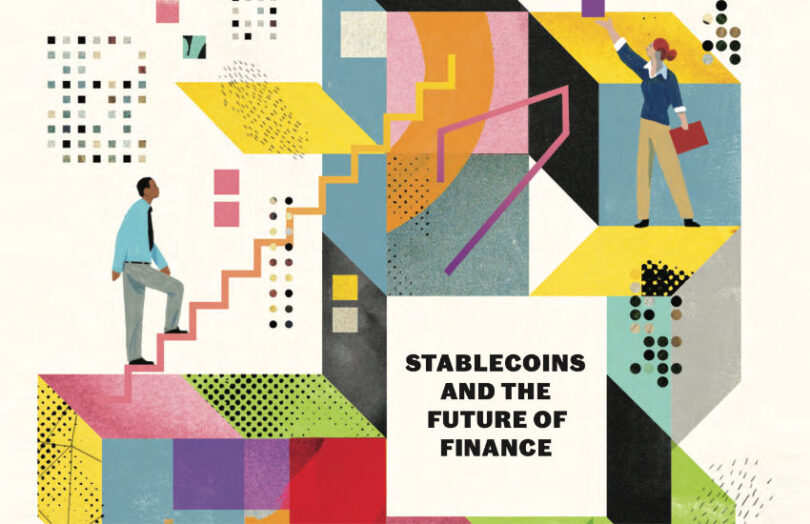
Growing concerns over the expansion of dollar-linked digital tokens have prompted the International Monetary Fund to issue a caution over the strain stablecoins could place on emerging markets, with the institution arguing that widespread use of these instruments risks weakening domestic monetary frameworks. The warning centres on the potential for currency substitution and accelerated outflows should stablecoins gain traction in jurisdictions where confidence in local units is fragile. This caution mirrors the broader message conveyed in IMF warns of stablecoin strain on emerging economies, underscoring the possibility of digital tokens amplifying financial vulnerabilities.

The Fund’s latest assessment highlights the challenge posed by USD-pegged tokens such as USDT and USDC, which together dominate the global stablecoin market. Analysts tracking flows note that these instruments have evolved into widely used vehicles for cross-border transfers, digital asset trading and store-of-value purposes in countries with volatile currencies. The IMF argues that their adoption can reduce the capacity of central banks to manage liquidity conditions, especially in economies where monetary authorities already contend with limited tools to stabilise inflation and anchor expectations. The institution has urged regulators to assume a proactive posture, particularly in markets where capital controls or shallow financial systems heighten the risk of abrupt movements.

The concerns reflect a shift from earlier phases of the digital asset cycle, when stablecoins attracted regulatory scrutiny largely due to their reserve backing and operational transparency. With greater clarity emerging around reserve audits and redemption mechanisms, policymakers are now looking beyond technical design and towards systemic implications. Economic experts cautioned that dollar-denominated tokens might evolve into parallel settlement channels, enabling households and corporates to bypass domestic banking systems during periods of stress. For countries with restricted foreign exchange markets, that pattern could complicate monetary management and accelerate the erosion of trust in local units.

Despite these warnings, several analysts point out that the scale of stablecoin adoption across developing economies remains uneven. Data from blockchain analytics firms suggests that while usage has grown in parts of Latin America, Africa, Eastern Europe and South Asia, activity is still far from the threshold that would trigger systemic currency substitution. Experts add that stablecoins often function as short-term hedging tools rather than long-term savings instruments, meaning their impact on monetary sovereignty is not yet of the magnitude implied by more pessimistic scenarios. Many economists argue that structural weaknesses in local economies, such as persistent inflation or fiscal imbalances, are more significant drivers of currency instability than the availability of digital dollar substitutes.

Regulators in several markets have already begun drafting frameworks to govern stablecoin issuance and use. Authorities in regions including the Gulf, the European Union, Singapore and parts of East Asia have introduced licensing requirements and reserve rules to ensure issuers maintain high-quality backing assets. These frameworks emphasise transparency and redemption at par, which policymakers view as essential to preventing destabilising runs. Some central banks are also exploring bilateral agreements to manage cross-border flows facilitated by stablecoins, particularly where local banks have limited capacity to monitor or report such transactions.

Several financial commentators suggest that concerns over capital flight through stablecoins stem from gaps in existing capital control regimes rather than from the forms of technology used to move funds. They argue that digital tokens merely enhance the speed and efficiency of transfers that might otherwise occur through informal channels. Nonetheless, the IMF stresses that the visibility and liquidity offered by stablecoins could encourage larger volumes to exit strained economies during periods of uncertainty. The institution asserts that emerging markets could face amplified volatility if households and corporates shift towards digital dollars at scale.

The rise of stablecoins has also coincided with broader experimentation in monetary innovation, with more than one hundred central banks evaluating options for digital currencies. Some economists view central bank digital currencies as a potential counterbalance to dollar-pegged private tokens, offering residents a regulated alternative for digital payments while preserving oversight. Others note that CBDCs alone will not offset the appeal of USD-linked tokens in countries where macroeconomic fundamentals drive demand for safer units. Policymakers face the challenge of building credibility, strengthening reserves and reinforcing inflation-targeting regimes while managing digital asset adoption.

While a number of market strategists acknowledge the IMF’s concerns, they contend that fears of widespread dominance of dollar-linked tokens may be overstated at the current stage of development. Adoption depends heavily on access to smartphones, internet connectivity, financial literacy and the availability of compliant service providers. These conditions vary widely across emerging economies, limiting the capacity of stablecoins to displace formal banking for now. Yet industry participants agree that the trajectory of digital finance warrants close oversight as stablecoin issuers expand their footprint and integration with payment networks.

VISHNU RAJA
RYO YAMADA
HITORI GOTOH
IKUYO KITA