News related to
crypto

Thunes has integrated Ripple’s infrastructure into its payments network, allowing Ripple–Thunes integration accelerates global payments with enhanced speed, transparency and cost-efficiency. Drawing on their existing 2020 alliance, the Singapore-based fintech firm and Ripple announced the deeper collaboration on 2 September 2025, aiming to transform cross-border transfers for businesses and financial institutions worldwide.

The integration embeds Ripple Payments into Thunes’s Direct Global Network, spanning 130 + countries and over 80 currencies. This union leverages Ripple’s global payout infrastructure—serving 90 + markets and covering more than 90 % of daily FX flows, with over US $70 billion processed—bringing real-time, cost-efficient, and transparent transactions to Thunes’s vast network.

Chloe Mayenobe, President and COO of Thunes, emphasised that the partnership bridges traditional finance and digital assets, enabling seamless, compliant cross-border payments at scale. She stressed the importance of real-time settlement and robust local integrations in scaling financial access globally. Fiona Murray, Managing Director for Asia-Pacific at Ripple, underscored how combining Thunes’s payment reach with Ripple’s digital asset infrastructure enhances speed, accessibility, and compliance.

This move extends Thunes’s capability to deliver payouts in local currencies in regions with limited banking access, particularly through its SmartX Treasury System. Ripple Payments is now integrated into SmartX, bolstering liquidity management and last-mile delivery in underbanked markets.

Analysis from BeInCrypto notes that this alignment enables faster settlement and improved compliance, especially where mobile wallets like GCash, M-Pesa, and WeChat Pay dominate. For enterprises, the collaboration promises efficient global transfers with lower friction. Crowdfund Insider adds that the partnership broadens payout reach while streamlining money movement across key markets.

Electronic Payments International confirms the integration into SmartX, reinforcing Thunes’s treasury capabilities and enhancing its services. CryptoBriefing highlights the joint effort to improve speed, transparency and compliance across Thunes’s global network by incorporating Ripple Payments.

This development reflects an industry shift: traditional payment networks increasingly adopt blockchain infrastructure to reduce costs and boost efficiency. Thunes, with its “Smart Superhighway” platform covering billions of mobile wallets, bank accounts, and cards, stands well-positioned to harness Ripple’s tools for expanding financial inclusion.

Thunes, founded in 2019 and headquartered in Singapore, already partners with PayPal, Uber, Grab, Paytm, and others, serving a global footprint that includes more than 3 billion accounts across 130 countries. The integration with Ripple strengthens its proposition to these and other clients seeking faster, more transparent cross-border transfers.

Tether is weighing entry into the gold industry by initiating discussions with mining, refining, trading and royalty firms to channel its crypto-generated profits into bullion-linked ventures. The company holds US $8.7 billion in gold reserves stored in Zurich as collateral, and already holds a minority stake in a royalty firm, with talks underway to expand that involvement. This move marks a strategic shift toward physical assets, seeking to broaden its exposure across the gold supply chain and diversify beyond the cryptocurrency market. While CEO Paolo Ardoino has likened gold to “natural bitcoin”, the gold sector has responded to the overture with caution and scepticism.

Tether’s consideration of investments in new realms of the gold industry underscores a calculated attempt to strengthen its position beyond USDT’s dollar peg. The firm has reportedly held talks with multiple royalty companies and even mining investment vehicles—but not all discussions have yielded results. Notably, Tether’s efforts include growing its exposure via Elemental Altus, a Toronto-listed gold royalty company in which it holds a minority stake, with potential for further investment. Talks with Terranova Resources reportedly ended without agreement.

Tether already anchors its stablecoin operations with nearly US $8.7 billion in gold backing, using physical bullion to support its broader digital asset ecosystem. The gold-backed token XAU₮ remains modest in scale compared to its dollar-pegged counterpart, holding a market value of approximately US $880 million.

Parallel to these strategic talks, Tether’s gold-backed offering—Tether Gold —demonstrates measurable growth. As of the end of June 2025, around 246,524 XAU₮ tokens were in circulation, each representing one fine troy ounce of physical gold; the total backing equates to more than 7.66 metric tonnes of gold. A paraphrase of the headline above encapsulates the thrust: Tether eyes gold mining expansion.

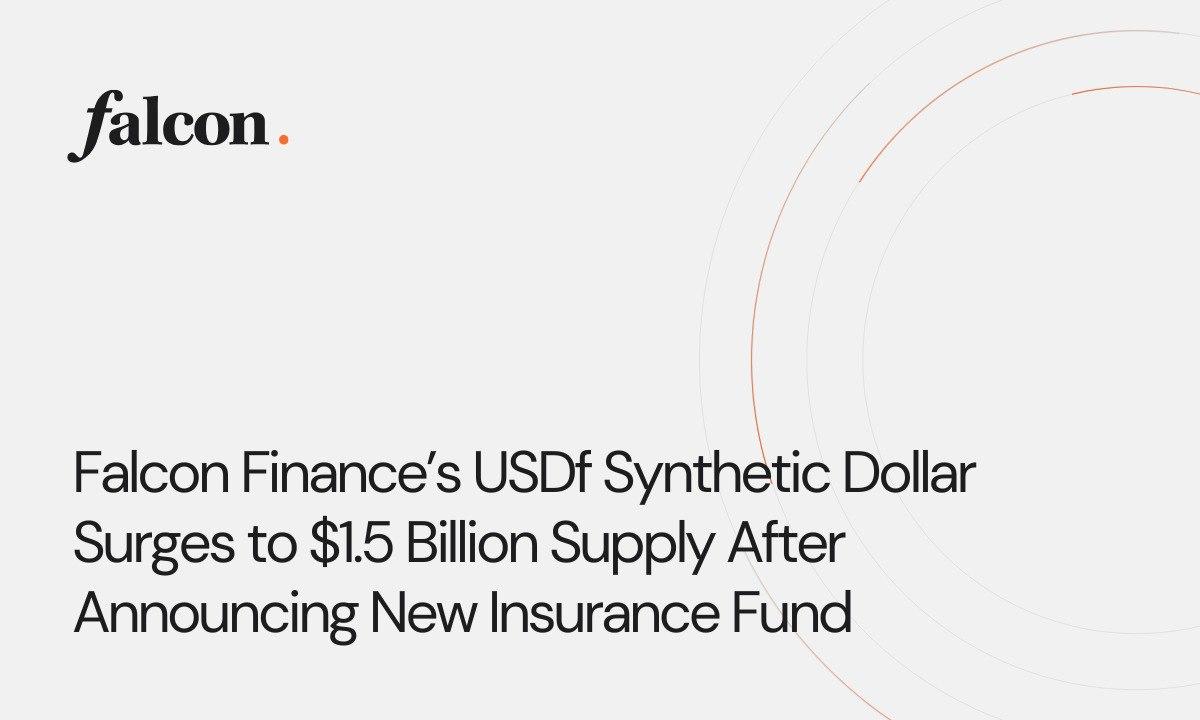
Falcon Finance has reached a new milestone as the circulating supply of its decentralized stablecoin, USDf, climbs to an all-time high of $1.5 billion, signalling sharply increased adoption and confidence in its DeFi infrastructure. The expansion tracks a surge from $1.12 billion over approximately one month, a performance driven by a blend of yield innovation, enhanced transparency, and risk-mitigation frameworks.

The $10 million on-chain insurance fund plays a pivotal role in strengthening institutional trust. Seeded initially with USD1 and replenished via protocol fees, the fund is structured to act as a financial buffer during market stress—supporting yield commitments, offsetting rare instances of negative returns, and serving as a fallback bidder for USDf to uphold its peg. Premium collateral strategies further bolster systemic resilience.

Yield generation remains a cornerstone: the yield-bearing counterpart of USDf, sUSDf, has delivered a standout 30-day APY of 9.30 per cent as of 30 August, outperforming notable competitors such as Ethena’s sUSDe, Maple’s SyrupUSDC, Sky’s sUSDS, Ondo’s OUSG, and BlackRock’s BUIDL.

To deepen engagement and expand utility, Falcon Finance launched the frxUSD–USDf Curve liquidity pool, which offers participants more than 20 per cent APR and rewards denominated as “40× Miles.” The community-oriented Yap2Fly campaign—run in partnership with Kaito—distributed $50,000 in rewards to its top 50 users in August, further stimulating active participation.

Transparency remains central to the protocol’s ethos. Falcon now publishes full reserve breakdowns and supports these with weekly third-party attestations. As per the latest reporting, USDf reserves amount to $1.29 billion—comprising $640.16 million in bitcoin, $375.65 million in stablecoins, with remaining allocation across Dogecoin, Fetch. ai, TRON, TON, and Ethereum. Custody spreads across Fireblocks, Ceffu, and multisignature setups, with 72.2 per cent held under multisig, fostering verifiable security.

These developments are underpinned by earlier strategic investments and roadmap expansions. A $10 million funding from World Liberty Financial in July accelerated technical integration with the fiat-backed USD1 stablecoin, facilitating liquidity sharing and conversion infrastructure. By mid-2025, USDf had already breached the $1 billion supply threshold, demonstrating steady growth ahead of its latest benchmark.

Falcon portrays USDf as more than a synthetic dollar; it is positioned as a global liquidity solution. The protocol’s architecture permits any custody-ready asset—including crypto, stablecoins, and real-world tokenised assets—to be turned into USD-pegged on-chain liquidity. This dual-token model is geared towards unlocking yield while safeguarding against volatility, effectively merging traditional risk frameworks with DeFi innovation.

Market observers note that USDf’s climb to $1.5 billion is emblematic of a broader shift in DeFi: users and institutions are increasingly seeking stable, yield-bearing alternatives to both fiat and traditional stablecoins. Falcon’s layered risk-management systems, institutional-grade safeguards, and developer partnerships appear to answer that demand with growing credibility.

A bitcoin wallet, untouched since 2012, has activated and realised a windfall worth $53 million from an initial investment of just $4,400 after nearly 13 years of dormancy. The wallet remained idle through multiple eras of bitcoin’s volatility before movement on 4 September 2025 triggered fresh attention.

The activation points to the investor’s decision to hold steadfast—“…patently holding their BTC holdings for over 12 years,”—a remarkable example of long-term strategic patience in the notoriously volatile cryptocurrency space.

Blockchain tracking services and on-chain analysts, while not identifying the holder, confirm that the bitcoin moved from a cold storage wallet first funded around 2012 has now matured into a substantial fortune thanks to the soaring bitcoin price. Historical price data indicates that the $4,400 stake likely purchased the bitcoin when its value was in the low-hundreds of dollars or even under $100 per coin.

This event occurs amid renewed upward momentum in bitcoin markets, where price action above the $111,000 level hints at a potential breakout to surpass $112,500. Analysts caution that maintaining momentum will be key, noting that the current ascent could falter under resistance.

While stories of dormant wallets awakening to deliver vast profits are not unprecedented, this case underscores the dramatic impact of time in cryptocurrency investing. Earlier this year, another long-term bitcoin holder netted nearly $30 million in profit after liquidating 300 BTC originally acquired in 2013 for around $60,000—a 496-fold return after more than a decade. In August 2025, yet another investor moved 300 BTC mined in 2013, transforming a $50 valuation per coin into a $30 million gain.

These developments highlight three evolving trends:

Firstly, long-term holding remains a potent strategy. The volatility of crypto is tempered by the compounding power of holding through cycles when the asset appreciates significantly over time.

Secondly, dormant wallets serve as markers of early adoption, especially during bitcoin’s infancy around 2010–2013. Their reactivation often signals profound gains to long-forgotten investors.

Thirdly, current market dynamics favour such histories. With bitcoin approaching and testing six-figure levels, such reawakenings may become more visible as early investors reclaim their positions.

The ethics of reporting such cases demand sensitivity. Without identifying individuals, disclosures should remain factual and avoid speculation about motives. What matters most is the concrete data: time-stamped transactions, verified wallet histories, and precise investment-to-return comparisons.

Private firms are allocating an average of 22 per cent of their profits into Bitcoin, as revealed by a new analysis from River, a specialist in Bitcoin financial services. The move underscores an accelerating wave of adoption from traditional companies across sectors from real estate to hospitality, driven by favourable regulation, strengthened accounting clarity, and a buoyant bull market.

River’s data shows that real estate businesses are leading this charge, with nearly 15 per cent reinvesting profits into Bitcoin, while hospitality, finance, and software firms direct between 8 per cent and 10 per cent. Even smaller, diverse businesses—including fitness studios, painting outfits, roofing contractors, and religious nonprofits—are joining the trend. By 2025, these private firms have quietly amassed 84,000 bitcoins, amounting to roughly a quarter of what institutional fund managers and corporate treasury holders combined have acquired.

The underlying conditions for this surge are clear. River attributes the shift to improved Bitcoin accounting standards, regulatory certainty, growing institutional acceptance, and a strong bull market that has seen Bitcoin’s value surge—creating an “ideal environment for widespread adoption”.

Smaller businesses, typically with fewer than 50 employees, account for 75 per cent of River’s clients, and appear to find Bitcoin adoption simpler than larger corporations. Those with complex, committee-based governance are more cautious, often awaiting peer precedent before committing—even when convinced of Bitcoin’s long-term value.

Adoption patterns also vary in scale. Over 40 per cent of the businesses allocate between 1 per cent and 10 per cent of profits to Bitcoin, while just 10 per cent invest more than half of their net income into the cryptocurrency.

This wave of grassroots participation complements broader institutional demand. River reports that public and private firms—the latter including treasury-managed corporations—are purchasing approximately 1,755 BTC per day on average in 2025. Exchange-traded funds and other investment vehicles are acquiring about 1,430 BTC per day, and governments add another 39 BTC daily. These figures stack up sharply against miner output, which is only around 450 BTC per day—raising the likelihood of a supply squeeze if exchange inventories continue to deplete.

Institution-grade buyers are also piling in. Bitcoin treasury firms accounted for 159,107 BTC acquired in the second quarter of 2025, pushing the total corporate and business-held Bitcoin to around 1.3 million BTC. Michael Saylor’s company Strategy remains the dominant corporate holder, with more than 630,000 BTC under its control.

Parallel developments illustrate the growing strategic shift toward Bitcoin within corporate finance. In the United States, investor Anthony Pompliano orchestrated a $1 billion SPAC merger to launch ProCap Financial, a new Bitcoin treasury firm with an ambition to manage up to $1 billion in cryptocurrency holdings. The firm plans to monetise its holdings through lending, derivatives, and other services, pushing the boundaries of Bitcoin treasury strategies.

Across the Atlantic, UK markets are witnessing their own momentum. At least nine London-listed companies—from technology to mining ventures—have either acquired Bitcoin or announced plans to do so, seeking similar boosts in investor appeal. Despite historical resistance from regulators concerned about money‑laundering risks, the Financial Conduct Authority appears open to easing restrictions, offering a potential regulatory tailwind to adoption in Britain.

This widespread movement mirrors and builds upon earlier corporate Bitcoin trends. As of mid‑2025, nearly 130 publicly traded companies held about $87 billion in Bitcoin, or 3.2 per cent of the total supply, driven by the ‘Bitcoin treasury’ blueprint pioneered by Strategy. Firms including Tesla, Metaplanet, Twenty One Capital, Block, GameStop, and Trump Media & Technology Group have followed suit, deploying equity issuance, bonds, and convertible debt to fund their Bitcoin accumulation.

Analysts also project an enormous potential inflow of corporate capital: Bernstein Research estimates that corporate demand could funnel as much as $330 billion into Bitcoin by 2029, with up to $124 billion attributable to Strategy alone.

Entrepreneurship is a challenge, especially when it comes to your own project: a small restaurant, a boutique, or an online store. For many women, starting a business feels like a personal trial, a test of resilience. But in reality, any business is a game, an opportunity to grow, create something of your own, and bring ideas to life. And yes, every business faces crises. But this is […]

Abu Dhabi’s Hub71 has just onboarded its most AI‑centric cohort yet, inviting 26 startups that have collectively raised more than USD 223 million—marking the highest funding milestone in the initiative’s history, a testament to growing investor confidence and Abu Dhabi’s elevated position in the global AI landscape. The majority of this intake—over eighty per cent—are AI‑driven ventures focused on tackling high‑impact challenges across HealthTech, FinTech, and ClimateTech. Their arrival not […]

Advertisements

A looming technical hurdle has landed Bitcoin in precarious territory as veteran trader Peter Brandt cautions that the asset must reclaim the $117,570 level to avoid triggering a bearish reversal known as a double‑top formation. This warning comes amid growing supply pressure and heightened selling activity, marking a defining moment for market direction.

Bitcoin is grappling with the aftermath of a substantial sell‑off, attributed to a major “whale” sale of 24,000 BTC—worth an estimated $2.7 billion—which has intensified caution among traders. Brandt emphasised that such sizable supply events cannot be overlooked, stressing that market tops are often formed through supply or distribution.

Market observers note that Bitcoin’s price now hovers in a seven‑week double‑top pattern, a configuration often associated with impending declines if price resistance remains unbroken. Brandt maintains a strictly neutral stance, drawing attention to the chart’s technical signals rather than issuing a directional forecast.

On‑chain metrics compound the caution. The Taker Buy/Sell Ratio, a measure of buying and selling pressure, has fallen to its lowest point since May 2018—a worrying sign of sustained selling momentum. In addition, Bitcoin’s ability to reclaim $117,570 will play a pivotal role in determining whether bullish momentum holds or falters.

Yet, institutional backing offers a counterbalance to technical concerns. Spot Bitcoin ETFs have attracted considerable institutional inflows, indicating that Bitcoin’s role within global finance continues to strengthen. JPMorgan has also highlighted that Bitcoin appears undervalued relative to gold, estimating that fair‑value models place it approximately $16,000 higher, around $126,000, supported by decreasing volatility and growing corporate treasury holdings.

Technical signals remain mixed. While the double‑top pattern persists as a warning, some analysts underscore Bitcoin’s resilience. Swissblock Technologies, for example, asserts that on‑chain indicators show no decisive bearish divergence, suggesting that the broader trend could still favour upward movement. Others, including Jacob King of WhaleWire, point to past double‑top patterns—such as those in 2017, 2019, and 2021—that preceded steep corrections, reinforcing the need for caution if support fails. Should Bitcoin break above the $117,570 threshold, some analysts suggest that $125,000 or beyond could become realistic targets.

Meanwhile, market activity has remained volatile. Bitcoin is trading in the range of approximately $109,000 to $112,000, with intraday swings reflecting persistent uncertainty. Traders are closely watching for shifts in momentum, knowing that a break above resistance could reignite bullish sentiment, while failure could deepen losses.

Amid these developments, the broader narrative treads between technical fragility and growing financial legitimacy. As Bitcoin straddles this crossroads, its next directional move may be shaped as much by whether it can muster the strength to surpass $117,570 as by the strength of institutional confidence and macroeconomic tailwinds.

BitMine Immersion Technologies now controls nearly 1.87 million ETH, equivalent to about 1.55 per cent of total Ether supply, along with substantial cryptocurrency and cash reserves. The Las Vegas‑based miner‑turned‑treasury manager has emerged as the largest corporate holder of Ether globally, with holdings valued at close to $9 billion. The firm’s robust position underscores its aggressive strategy in digital‑asset accumulation amid growing institutional interest in Ethereum.

The surge in holdings is underpinned by a flurry of recent purchases, including an addition of approximately 153,000 ETH—a $656 million acquisition—bringing the total to about 1.867 million ETH, valued above $8 billion at current market rates. Such moves position BitMine well on its strategic pathway toward aiming for 5 per cent of total Ether supply. The Ethereum holdings are complemented by 192 Bitcoin and roughly $635 million in unencumbered cash, contributing to a combined crypto plus cash asset base nearing $9 billion. BitMine now stands as the foremost Ethereum treasury company, and ranks second among global crypto treasuries—behind Strategy Inc., which holds significantly larger Bitcoin reserves.

BitMine’s assertive accumulation follows its ETH treasury launch in late June and has accelerated through August and early September. Institutional confidence appears to have grown in step, evidenced by continued investment from ARK Invest, whose latest injection exceeded $15 million, raising total backing above $300 million.

Chairman Tom Lee casts the company’s strategy in historical perspective, likening Ethereum’s ascendant role to financial innovation following the United States’ departure from the gold standard in 1971. He described Ether’s trajectory as a “supercycle”, with emerging regulatory frameworks such as SEC Project Crypto and the GENIUS Act unlocking transformative potential for blockchain finance.

The market response has mirrored BitMine’s bullish posture. Its stock price has jumped nearly 41 per cent over the last month, trading in the mid‑$40 range at the time of the announcement, and showing intraday gains of over 1 per cent.

BitMine’s ascent is emblematic of a broader shift among corporates toward Ethereum as a treasury asset. Firms like SharpLink Gaming, Bit Digital, GameSquare, and The Ether Machine are following suit, each holding significant ETH reserves—some exceeding $100 million. Collectively, institutional ETH treasuries now represent an ecosystem worth billions, with BitMine firmly at the forefront.

That growing interest is tied to Ethereum’s technical strength: its native support for staking, smart contracts, stablecoins, and NFTs. These features enable yield generation and diversified application, attracting corporate treasurers seeking productive digital assets. As the co‑founder of Figment observed, staking is emerging as “the centre of global banking for digital assets,” while ETH’s productive capacity makes it a strategic asset rather than speculative holding.

Still, the aggressive accumulation navigates potential risks. Scale offers liquidity and negotiating leverage, but also exposure to market volatility and custodial challenges in event of operational failures. Security lapses or market shocks could carry amplified consequences given the size of holdings.

Yunfeng Financial Group, a Hong Kong‑listed firm with ties to Alibaba’s Jack Ma, has acquired 10,000 ETH—valued at approximately $44 million—using its own cash reserves. The firm intends to list Ether as an investment on its balance sheet as part of a strategic shift towards blockchain-enabled finance.

Yunfeng’s move aligns with its broader blueprint unveiled in July, which sets Web3 technologies, real-world asset tokenisation and artificial intelligence at the heart of its expansion strategy. The company emphasises that including Ether among its strategic reserve assets supports tokenisation efforts and integrates its financial operations with Web3 infrastructure. The firm also plans to explore Ethereum’s uses in insurance services and decentralised finance applications, signalling ambitions beyond treasury diversification.

This step places Yunfeng alongside a growing list of publicly traded firms embracing Ether as a reserve asset. Notable peers include SharpLink Gaming, BitMine Immersion Technologies and Ether Machine, which collectively reflect a broader institutional enthusiasm for Ethereum amid increasing corporate treasury adoption. The trend echoes earlier Fortune 500 strategies for Bitcoin, with Ethereum emerging as a comparable asset in this evolving corporate playbook.

Ether’s market resilience underpins Yunfeng’s strategy. Despite subdued crypto market conditions, ETH continues to trade above the psychologically significant $4,000 threshold, noted by analysts as a key marker of investor confidence. Technical analysis by market watchers, including the chartist CryptoGoos, suggests ETH is maintaining an upward breakout trend from a falling wedge formation, with potential upside targets stretching to $6,000—driven by heightened institutional inflows.

Yunfeng’s approach signals a calculated embrace of digital assets that transcends short‑term speculation. By positioning Ethereum at the foundational level of its Web3 and AI strategy, the company is asserting the utility of the token within financial services, as well as its role as a long‑term reserve option. Ether holdings will offer an alternative to traditional fiat reliance while granting greater operational flexibility across emerging business lines.

Shiba Inu has bounced off a decisive demand zone, reclaiming support near $0.000012 and positioning itself for potential upward movement toward $0.000015, as technical charts and market dynamics align in favour of bulls.

The meme token recently rallied from a support cluster between $0.0000115 and $0.000012, forming a reassuring double‑bottom pattern that underscores emerging buying interest. Observers note that if this momentum holds, SHIB could head toward its key short‑term resistance around $0.000015. Analysts emphasise that sustaining pressure above this demand zone is critical to maintaining bullish prospects.

A chart pattern also suggests that SHIB is attempting to break above a descending channel, lying just below its 50‑day moving average. Crossing that threshold could trigger a sharper rally, with targets stretching to $0.000014, $0.0000175, and even beyond, provided higher timeframe breakouts materialise.

Adding fuel to the rally, token burns have surged significantly—over 48,000% in one documented instance—with tens of millions of SHIB permanently removed from circulation. This deflationary action tightens supply and, combined with heightened derivatives activity, bolsters bullish sentiment.

Yet, technical caution is advised. SHIB is currently compressed within a symmetrical triangle near $0.0000123, and the direction of the breakout—either above $0.000013 or below $0.00001—will likely determine whether bullish or bearish trajectories dominate. A clean advance above the upper trendline and rising volume would open the door toward $0.000015 and the 200‑day moving average; conversely, a breakdown could expose support near $0.0000095.

Beyond price mechanics, structural developments around the Shiba Inu ecosystem—such as Layer‑3 platform expansion, burn infrastructure, and community governance initiatives—offer a long‑term narrative that could support sustained demand, though analysts caution that burns and buzz alone may not suffice without wider utility adoption.

In essence, Shiba Inu now stands at an inflection point. A firm hold above the demand zone has reignited interest, and a break above the 50-day MA or the triangle’s upper boundary could spark a more pronounced rally. Conversely, failure to defend current levels risks deeper retracement. Technology upgrades, ecosystem growth, and on-chain developments remain key components shaping its trajectory.

Rocket Lab has expanded its in‑house manufacturing strength by successfully incorporating Planetary Systems Corporation, a Maryland‑based specialist in satellite separation systems. The deal, announced on 15 November 2021 and concluded by December that year, involved $42 million in cash and 1.72 million shares of Rocket Lab stock, with an additional performance‑based stock earn‑out dependent on PSC’s performance through 2022 and 2023.

PSC, celebrated for its “Canisterized Satellite Dispenser” and Lightband separation systems, boasts a flawless 100 percent mission‑success record across more than 100 launches. Its hardware has served a broad spectrum of launch platforms—from Rocket Lab’s own Electron vehicles to those managed by SpaceX, United Launch Alliance, Northrop Grumman, and international agencies such as Arianespace, the Indian Space Research Organisation, and JAXA.

By bringing PSC into its fold, Rocket Lab enhances its vertically integrated Space Systems division, now including Photon satellite buses, Maxwell dispensers, reaction wheels, star trackers, solar solutions, flight software, and the newly added separation hardware. PSC will continue operations in Maryland under the leadership of Mike Whalen as CEO, with founder Walter Holemans remaining chief engineer.

Chunked behind this strategic move is Rocket Lab’s intent to streamline the satellite deployment value chain, offering customers a one‑stop solution—from launch services to the final separation of payloads in orbit. Founder and CEO Peter Beck noted that integrating PSC’s proven hardware “simplifies the journey to orbit” by aligning hardware, software, spacecraft, and launch into a seamless package.

Alongside the acquisition of Advanced Solutions, Inc. in October 2021, this move aligns with Rocket Lab’s broader objective to secure technology, talent, and production capacity internally, reducing external dependencies. Industry observers have characterised this as a deliberate backward integration effort. A participant in an online space‑industry discussion observed:

“It seems like they are reverse integrating into their supply chain… instead of paying for products, buy the company, make the products for yourself, and make the margin on selling to others.”

Operationally, the acquisition has borne tangible returns. In November 2022, Rocket Lab secured two contracts totalling $14 million to supply Lightband separation systems for the Space Development Agency’s Tranche 1 transport layer constellation, reinforcing its position in national security‑oriented space architecture. The Lightbands, inherited from PSC, now supply critical satellite deployments with demonstrated reliability in specialised environments.

Rocket Lab’s expanded suite of capabilities positions it advantageously within a market increasingly dominated by fully integrated space services providers. By combining its Electron launch vehicle, Photon spacecraft, separation hardware, and on‑orbit software offerings, the company provides end‑to‑end mission support—a compelling proposition for both commercial and government customers.

With growth in space demand showing no signs of abating, particularly in low-Earth orbit constellations and defence networks, consolidating key enabling technologies under one roof offers Rocket Lab both operational efficiencies and competitive edge. The PSC acquisition stands as a pivotal building block in that strategy.

WorldShards has revealed that its Token Generation Event will take place on 5 September 2025, aligned with its debut listing on Bybit’s Spot market. The collaboration has been formalised through a partnership with Bybit, the world’s second‑largest cryptocurrency exchange by trading volume, setting the stage for the $SHARDS token to embrace broader market accessibility.

The partnership entails a Bybit Megadrop promotion, offering participants opportunities to stake USDT or MNT and earn from a 60 million SHARDS prize pool. This initiative runs from 5 to 9 September and is intended to support early liquidity and user engagement.

WorldShards is a downloadable Web3 MMORPG developed by Lowkick Studio, rooted in a fantasy sandbox universe filled with crafting, exploration, and dynamic role‑playing. It blends blockchain elements such as NFT‑authenticated content into its interactive gameplay. The $SHARDS token adheres to a “fair launch” model, with no allocations reserved for the development team or early investors—enhancing perceived transparency and community ownership.

Ahead of its TGE, WorldShards will offer a 30‑day free access period to new players. Those who remain active for at least 25 days within that window will unlock full and permanent access to the game at no additional cost. This incentive is limited to new accounts and is designed to accelerate early engagement.

WorldShards operates on a fixed total supply model, capped at 5 billion tokens. Tokenomics are structured to distribute 60 percent for player rewards and 25 percent for ecosystem liquidity, with the remainder supporting broader community initiatives; remaining tokens are vested over six years to safeguard economic equilibrium.

Industry observers note that Bybit’s participation brings critical market exposure, offering access to its global user base—which exceeds 70 million accounts—and enhancing $SHARDS’ market liquidity and visibility. This positions $SHARDS amid the growing momentum of GameFi, where blockchain technology merges with immersive gaming economies.

While specific user metrics for WorldShards remain undisclosed, broader gaming industry data suggests a robust opportunity: in 2025, there are an estimated 3.43 billion active online gamers, with mobile gaming accounting for more than half of platform usage. Regions such as the Middle East, North Africa and Turkey have displayed notable growth in mobile gaming revenue, signalling favourable markets for adoption.

Lowkick Studio, the developer based in Abu Dhabi and founded in 2022, comprises industry veterans formerly involved in games such as World of Tanks and Allods Online. The studio’s trajectory includes partnerships with Abu Dhabi Gaming and OpenLoot, rapid community expansion exceeding half a million members, $8.6 million in NFT sales during 2024, and over 600,000 unique active wallets prior to TGE.

Within the WorldShards ecosystem, $SHARDS serves multiple functions—including item upgrades, rarity enhancements, rift processing, stat re‑rolling, and external trade—solidifying ties between in‑game progression and broader market dynamics.

Kraken’s Chief Security Officer, Nick Percoco, has issued a warning to users about a sophisticated phishing campaign impersonating the platform. Attackers are dispatching emails that replicate Kraken’s branding—with near-identical logos, fonts and messaging—to pressure recipients into taking urgent action. The emails allege the need to accept “updated terms” within a two‑day window, a tactic intended to prompt hasty decisions. In nearly every instance, the sender urges recipients to download remote desktop software such as AnyDesk under the guise of offering support. Percoco emphasises that Kraken will never request installation of such tools from users.

Such phishing attempts exploit both visual authenticity and psychological manipulation—cultivating a sense of urgency to override caution. According to official guidance, Kraken will only use verified domains—including @kraken. com, @futures. kraken. com, @email2. kraken. com, @email. krak. app and other specific, approved addresses—to communicate with users. Any other source should be treated as suspicious.

This incident reflects a broader escalation in phishing tactics across the crypto sector. Industry data indicates that phishing attacks surged more than 200% in August, resulting in losses exceeding $66 million. One single breach accounted for $55 million in stolen funds. Abnormal AI, a cybersecurity firm, attributes the elevated threat level to more advanced techniques—emails originating from older, seemingly trustworthy domains, employment of social engineering, and polished language devoid of traditional red‑flag keywords. These newer attacks are designed to bypass legacy email filters and evade automated detection.

Users are urged to remain vigilant and adopt a security-first mindset. The most effective defence measures include verifying sender addresses, suspecting communications that evoke fear or demand immediate compliance, and avoiding email links entirely—especially those prompting software installation. Instead, users should always navigate directly to Kraken’s official URL (), ideally via a bookmarked link, and contact support through trusted channels if unsure.

Kraken’s approach is rooted not only in technological safeguards but also in cultivating user awareness. Percoco has previously underscored that phishing and social engineering are among the most common threats to both users and employees. Kraken’s layered filtering and a security-conscious culture help reduce risk, though no system is foolproof. Humans remain the critical last line of defence.

With trusts at stake, exchanges are under mounting pressure to enhance transparency and user education. Some platforms have introduced anti‑phishing codes or digital signatures to help users verify authenticity. While Kraken currently relies on verified domains and user education, the challenge continues to evolve as attackers adopt more deceptive techniques.

Crypto casinos continue to outpace regulatory efforts, with regulatory frameworks lagging behind industry growth. Crypto gambling revenue soared past $81 billion in 2024, a more than fivefold increase since 2022, as players flocked to platforms such as Stake, Rollbit and Roobet—licensed in jurisdictions like Curaçao and Malta—despite restrictions in major markets including the UK, US and China. Widespread access through VPNs and affiliate marketing, combined with limited KYC […]

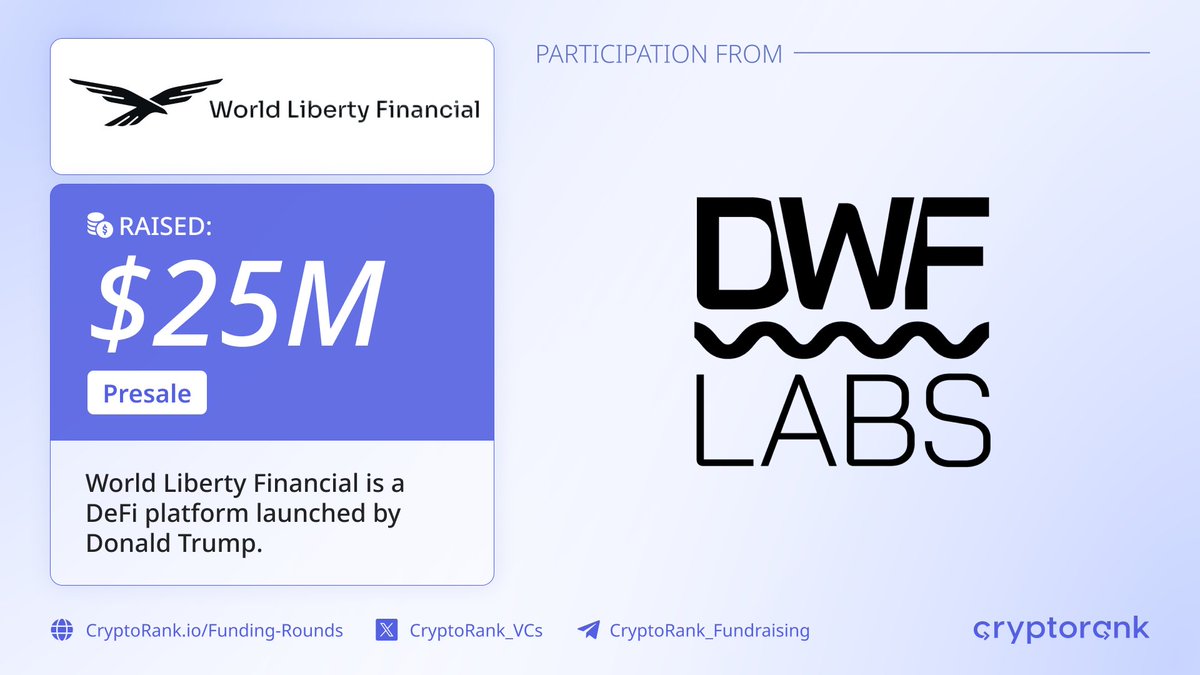
DWF Ventures, the investment arm of Web3 market‑maker DWF Labs, has delivered a detailed evaluation of $WLFI, World Liberty Financial’s newly issued utility token. Published via X, the analysis emphasises $WLFI’s integration into World Liberty’s broader ecosystem and its potential as a key enabler in connecting traditional finance with on‑chain liquidity. Unlike World Liberty’s $TRUMP memecoin, $WLFI is purpose‑built to power the upcoming “WLFI super app”, which will streamline access through web wallets and bank on‑ramps, and underpin planned lending and borrowing services.

The report highlights the success of the USD1 stablecoin—backed by short‑term US Treasuries and cash equivalents—which now commands a market capitalisation approaching $2.5 billion and enjoys listings on major exchanges such as Binance and Coinbase. These developments have significantly boosted investor attention toward the $WLFI token.

World Liberty has raised approximately $500 million across two funding rounds by selling about a quarter of its 100 billion token supply. Among its backers are DWF Labs itself and crypto figure Justin Sun, while ALT5 Sigma has outlined a $1.5 billion treasury strategy centred around $WLFI. DWF Ventures expects that the token could soon be integrated by several DeFi protocols, including Falcon Finance, Ethena and Mantle.

Importantly, DWF Ventures positions $WLFI’s launch as more than a token debut; it sees the initiative as a structural pivot that could catalyse institutional adoption and facilitate compliant capital onboarding—possibly even drawing interest from sovereign investors.

But $WLFI’s entry into the market has triggered concerns. Reports reveal technical difficulties involving the Lockbox contract, intended to unlock 20 percent of token allocations for early investors, which have left many users unable to activate the mechanism. Pre‑market trading responded with a 40 percent drop, raising doubts about launch readiness. Coupling these issues with the political profile of its founders, the token has become entangled in financial and reputational risks.

Indeed, WLFI’s connection to the family of the former president has cast a shadow over its market potential. The token’s political dimensions have already affected diplomatic engagements—such as withdrawals from the Bitcoin Asia 2025 conference—and prompted ethical criticism over conflicts of interest.

Broader scrutiny of World Liberty Financial underscores such tensions. Investigations have revealed that the Trump family commands a substantial share of revenue from token sales and that governance design reflects unusual centralisation for a DeFi project. Further concerns relate to self‑dealing practices: for instance, ALT5 Sigma—a firm acquired by World Liberty—purchased $750 million worth of WLFI tokens. As part of this arrangement, its leadership includes Eric Trump and WLFI co-founder Zach Witkoff, a structure that regulators and critics view as raising red flags.

Ethics experts warn that such close ties between ruling office, private enterprise and foreign investment could undermine democratic safeguards. The New Yorker, for one, described the venture as stretching the norms of political ethics, with World Liberty seen by some as a mechanism for influence through token‑based access channels.

The $WLFI launch is clearly more than a token generation event—it is shaping into a test case for the nexus of politics, finance and regulation in the emerging Web3 era.

Lunate has unveiled a new thematic ETF offering, marking the first of its kind in the region, aimed squarely at quantum computing—a field rapidly reshaping sectors from pharmaceuticals to cybersecurity. The Boreas Solactive Quantum Computing UCITS ETF, developed under Lunate’s newly introduced Boreas range, is set to debut on the Abu Dhabi Securities Exchange on 22 September under the ticker QUANTM.

The fund traces the Solactive Developed Quantum Computing Index and encompasses 25 firms spanning pure-play quantum specialists like IonQ and Rigetti, alongside technology giants at the vanguard of quantum research such as Microsoft, Nvidia, and IBM. Lunate, acting through its regulated affiliate in Abu Dhabi, is spearheading the investor-facing programme, which integrates active thematic research with transparent, index‑based selection.

Geir Espeskog, an industry veteran, heads the specialist team behind the Boreas suite, reinforcing Lunate’s intensified investment in its ETF platform. Following the addition of this thematic ETF to its portfolio, Lunate will manage a total of 19 offerings, combining traditional and thematic strategies.

ADX’s Group Chief Executive, Abdulla Salem Alnuaimi, highlighted the significance of this launch, noting that QUANTM will serve as the 17th ETF listed on the exchange. He underscored its value in granting investors direct access to global leaders in quantum computing, including Alphabet and Amazon.

Solactive, the index provider, described the collaboration as a milestone both for itself and for thematic ETFs in the region. Its ARTIS® natural language processing power plays a central role in categorising companies across hardware, software & algorithms, and communication & sensing segments—applying a rank-weighted methodology that ensures balanced exposure within the index.

Market trends underpinning this launch are compelling. The global thematic fund arena has nearly doubled in size over five years, reaching roughly $562 billion. In the U. S. and Europe, thematic ETFs have also surged; by early 2025, the U. S. counted 473 listings, while Europe hosted 748, with assets concentrated in tech-heavy strategies such as AI and digital infrastructure.

Investors may subscribe to QUANTM between 10 and 16 September via six authorised participants or the ADX eIPO portal. The fund will carry a total expense ratio of 0.49 percent.

BullZilla has captured investor attention in a way few meme coins have, combining storytelling with meticulously designed tokenomics. Within just 50 minutes of opening its presale on 29 August 2025, the project raised approximately $10,000 while selling over 2 billion tokens—an immediate display of strong market demand.

The presale, structured across 24 stages, begins at $0.00000575 per token. Token prices increase automatically every 48 hours or whenever $100,000 is raised, via BullZilla’s so‑called Mutation Mechanism. This upward‑only pricing scheme injects urgency and rewards early conviction. Analysts point to projections that token prices may reach $0.00527141 by launch—representing potential returns of over 90,000–91,500 % for early investors.

BullZilla’s tokenomics architecture includes more than just dynamic pricing. Its Roar Burn mechanism permanently destroys a portion of tokens—up to 5% at each presale milestone—and aims to reduce total supply by around 70% by the presale’s conclusion. That creates intentional scarcity and enhances price pressure.

Complementing scarcity and momentum, BullZilla offers its HODL Furnace staking system with up to 70 % annual percentage yield. This staking platform locks tokens into the ecosystem, incentivising holders to remain committed rather than flip early gains.

Taken together, BullZilla weaves scarcity, staking rewards, and narrative into a single model. Industry commentators highlight it as perhaps the most “engineered” meme coin of 2025, juxtaposed against peers like Cheems, Pepe, or Baby Dogecoin, which rely more heavily on meme culture without such structured mechanics.

This structured approach arrives as legacy meme coins—such as ApeCoin and Shiba Inu—struggle to sustain momentum without ongoing token utility or strategic innovation.

For potential investors evaluating presale options, BullZilla offers a triad of value drivers: early‑bird pricing, deflationary dynamics, and yield incentives. Yet, all of this is set against the backdrop of meme‑coin volatility. Experts caution that despite the innovation, inherent risk remains high, emphasizing the need for rigorous due diligence.

OKB, the native token of the OKX exchange, surged past the $200 threshold in the wake of a sweeping tokenomics overhaul and landmark ecosystem upgrades. These strategic shifts have reshaped the token’s role within the OKX ecosystem, igniting both market interest and institutional focus.

A decisive blow to token supply was delivered on 13 August 2025, when OKX executed a one‑off burn of approximately 65 million OKB—equivalent to around $7.3 billion—effectively halving circulating supply and capping total supply at 21 million tokens. The smart‑contract upgrade also eliminated future minting or discretionary burns, solidifying this deflationary model.

That scarcity shock triggered an explosive price rally. OKB vaulted from roughly $45 to a range between $135 and $200, with reported gains of 160–170% in the immediate aftermath. Trading volumes followed suit, rising sharply—in some accounts by as much as 383%, with daily turnover exceeding $1 billion.

Parallel to the token burn, OKX launched its upgraded X Layer blockchain, powered by Polygon’s CDK and zkEVM technology. This infrastructure now delivers throughput of 5,000 transactions per second, near‑zero gas fees and enhanced Ethereum compatibility, positioning OKB as the exclusive gas token across OKX Wallet, Exchange and Pay services. By migrating more than 90% of OKB tokens to X Layer and phasing out Ethereum Layer‑1 and OKTChain, OKX has consolidated liquidity and simplified its token architecture.

OKX also introduced a $100 million X Layer Ecosystem Fund to support developers and drive adoption in areas such as DeFi, payments and real‑world assets, while exploring entry into regulated markets in Europe and pursuing an IPO in the U. S..

Analysts caution that the token’s meteoric rise has pushed key technical indicators into overbought territory. Yet, many argue that OKB’s redefined scarcity model and expanded utility offer a structural foundation for sustained value, rather than a fleeting speculative euphoria.

Amid lingering regulatory uncertainties, particularly across Asian markets, investor sentiment remains firm. Continued strength may hinge on user migration to X Layer and the successful rollout of incentive initiatives and application-building support.

Tuta has added a user-controlled key verification feature that brings heightened assurance to encrypted email and calendar exchanges. The feature allows senders and receivers to confirm the authenticity of public encryption keys—either by scanning a QR code or comparing a verification code—before communication begins. Once verified, the client safeguards future exchanges by ensuring the key remains unchanged, alerting users to any unexpected alteration that might signal interception. […]

Mastercard and Circle have deepened their collaboration to enable settlement of transactions in USDC and EURC stablecoins for acquirers and merchants across Eastern Europe, the Middle East and Africa. Arab Financial Services and Eazy Financial Services are among the first institutions to access this capability, which integrates stablecoin payments into Mastercard’s established global network.

The initiative marks a clear shift towards tokenised money. Mastercard’s President for EEMEA, Dimitrios Dosis, emphasised the ambition to bring stablecoins into mainstream finance by investing in infrastructure, governance and partnerships, while leveraging the company’s longstanding expertise in security and compliance. Kash Razzaghi, Chief Business Officer at Circle, framed the move as a step towards “borderless, real‑time commerce,” seeking to make USDC as ubiquitous as traditional payments.

Arab Financial Services highlighted the tangible value of the new model: improved liquidity, operational efficiencies and dramatically reduced friction in high‑volume reconciliations. Eazy Financial Services underscored how the expanded settlement option aligns with its mission to offer faster, more secure, and efficient payment solutions, setting a fresh standard for digital settlements in EEMEA.

This development builds on existing collaborations such as crypto payment card solutions with the likes of Bybit and S1LKPAY, which already use USDC for settlement in the region. Mastercard further extends its stablecoin portfolio beyond USDC and EURC, already supporting USDG, FIUSD and PYUSD across various use‑cases spanning remittances, B2B, and payouts via platforms like Mastercard Move and the Multi‑Token Network, underpinned by its Crypto Credential and Crypto Secure frameworks.

Financial infrastructure experts view the rollout as particularly meaningful for emerging markets. World Bank data indicates cross‑border transfer costs remain high—around 8% on average—far exceeding the UN’s Sustainable Development Goal threshold of 3%. Introducing stablecoin settlement is expected to trim costs, accelerate transfers, and bolster working capital and currency resilience for small and medium businesses.

Analyses point to early adopters witnessing significant gains: settlement speeds up by 30%, and liquidity costs drop around 20%, according to some reports. Mastercard’s compliance infrastructure, combined with evolving regulatory frameworks like the European MiCA and US GENIUS Act, fosters institutional trust in this digital settlement evolution.

Circle is working to fortify USDC’s global footprint beyond this initiative. Its broader strategy includes partnerships with Finastra to plug USDC into traditional payment hubs, OKX for zero‑fee USDC conversions, and ventures with SBI Group and Ripple in Asia—all aimed at building liquidity, interoperability and widespread adoption.

Sui Network and Alibaba Cloud have unveiled an artificial intelligence‑powered coding assistant for the Move programming language, embedded directly within ChainIDE to enhance developer experience from the outset.

An AI assistant has been introduced into ChainIDE, Sui’s flagship development environment, enabling developers to generate Move code through natural language prompts in English, Chinese and Korean. The assistant provides intelligent autocompletion, real‑time security checks, automated documentation and readily available templates—features engineered to smooth out common roadblocks in smart contract development.

This integration aligns with the growing convergence of AI and blockchain innovation, offering a unified environment where developers can focus more on creativity and less on syntax or language barriers.

Market reception has been positive. The SUI token’s price climbed between one and 2.1 percent following the announcement, reaching approximately $3.44, signalling investor confidence despite a generally bearish crypto climate.

Behind the integration lies a broader strategy to lower entry barriers for Move developers—particularly non-English speakers, who constitute a significant portion of the global Web3 community. By offering multilingual support, the tool opens the door for wider participation across Asia and beyond.

Industry observers suggest that this could translate into increased developer engagement and boosted ecosystem activity. The intelligent tooling is expected to streamline dApp deployment, reduce development cycles and yield more robust, secure code—even for newcomers to blockchain development.

Emerging data underscores this potential. Preliminary reports indicate a possible 40 percent uplift in developer activity within the Sui ecosystem, alongside rising application deployment and on‑chain usage. When combined with enhanced tooling and cloud infrastructure from Alibaba Cloud, this surge can help catalyse a flywheel effect: more developers, more dApps, more users, stronger demand for SUI through gas fees and staking.

Alibaba Cloud contributes more than software. The alliance includes node infrastructure support and enterprise‑grade scalability capabilities, reinforcing the network’s ability to handle higher transaction volumes and support institutional use cases.

Security remains a key consideration. The assistant’s real‑time vulnerability detection helps flag potential issues such as reentrancy risks or inefficiencies before deployment. Yet concerns persist about overreliance on AI-generated code, emphasising the importance of combining automation with developer oversight.

Institutional momentum continues to build. Swiss custodial services and SUI‑centric investment vehicles have entered the ecosystem, signalling growing trust. Meanwhile, developer outreach events in financial hubs such as Hong Kong, Singapore and Dubai are helping showcase Sui’s AI‑enhanced toolkit to enterprises and Web3 innovators.

Stellar’s native token, XLM, slumped to roughly $0.36—a drop from $0.39—prompted by heightened institutional selling and wider unease among corporate investors. Trading volumes soared beyond 41 million XLM as large holders trimmed positions, yet the token managed to recover from intraday lows thanks to renewed institutional interest.

Despite the volatility, adoption on the Stellar network continues to advance. The Stellar Development Foundation reports that the network is approaching 10 million registered accounts, bolstered by an influx of 5,000 to 6,000 new corporate wallets added every day. Partnerships with payment giants such as MoneyGram and Circle remain instrumental, underpinning the network’s increasing relevance in cross‑border and blockchain‑based payments infrastructure.

Institutional activity remains a double‑edged sword. While selling pressure drove the price lower, it was also institutional buyers who provided critical support during the final trading hours. Analysts observing the movement between US and European market hours noted a sharp intraday decline followed by a swift rebound, suggesting opportunistic accumulation among corporate participants.

These market fluctuations align with broader patterns. Just a day earlier, XLM had floated between $0.38 and $0.39—posting a 3 % intraday gain amid unusually high volumes, interpreted as evidence of institutional accumulation and rebounding sentiment.

Looking ahead, several on-chain and technical indicators suggest that the token’s trajectory will hinge on whether supportive fundamentals can withstand market turbulence. The momentum in account growth and network partnerships points to robust infrastructure development, but the path to renewed price strength may depend on whether XLM can reclaim levels above $0.38–$0.40 on sustained institutional demand.

This pattern of decline followed by recovery highlights the tension between short-term volatility and enduring network utility. XLM’s immediate price response may be driven by sentiment, yet the underlying metrics suggest steady progress toward adoption and financial infrastructure resilience—terms of increasing importance in a shifting regulatory and institutional landscape.

Pepeto has secured over $6.5 million in presale funding, driven by an operational ecosystem that includes a zero‑fee decentralised exchange, staking rewards exceeding 230 per cent APY, and independent audits—a suite of features positioning the token as a serious contender amid meme‑coin revival.

At its Ethereum‑based core, Pepeto boasts PepetoSwap, a DEX offering fee‑free, fast trading, alongside PepetoBridge, enabling seamless cross‑chain transfers without intermediaries—all built on the security of Ethereum’s mainnet. Audits conducted by SolidProof and Coinsult reinforce its transparency credentials, a notable departure from many fleeting meme‑coin projects.

The presale’s momentum stems from strong investor appetite. Millions have poured into the token, with reports showing more than $6.2 million raised by Stage 10—completed ahead of schedule—and over $6.5 million amassed as the presale continues. Token pricing has incrementally increased across presale stages, intensifying urgency among investors hoping to enter early.

Pepeto’s tokenomics reflect a deliberately structured approach: 30 per cent allocated to presale distribution, another 30 per cent to staking incentives, 20 per cent for marketing, 12.5 per cent for liquidity, and 7.5 per cent reserved for development. The absence of team wallets and trade taxes further underscores a model designed to align with holder interests.

Community engagement appears healthy; over 100,000 followers on social platforms are amplifying the narrative around Pepeto—and its product rollout, including a public demo exchange, has already lifted awareness and participation.

Analysts compare Pepeto’s structure favourably to early meme‑coin success stories. Some suggest that the ecosystem, staking mechanics, and infrastructure could drive returns of 30× to 70×—or more—if broader market conditions align, drawing parallels to Shiba Inu’s legendary run but with stronger fundamentals.

Broader industry commentary frames Pepeto as more than a hopeful token—it is being touted as the meme‑coin with legs in 2025, combining utility with the viral energy typically absent in the category. A few analysts even liken Pepeto’s potential trajectory to a “next‑BNB‑style” breakout following exchange listings.

Still, the meme‑coin landscape remains inherently speculative. While Pepeto addresses familiar structural weaknesses—such as high fees and opaque governance—its success will depend on sustained investor interest, execution of its infrastructure, and broader crypto market cycles. History cautions that meme‑coins often fade when hype fades.

If Pepeto translates infrastructure into adoption, it may carve out a path distinct from prior meme plays. Early investors, particularly those securing tokens at the current presale price—estimated at approximately $0.000000150—stand to gain significantly should the token replicate past meme-coin rallies, albeit with arguably enhanced foundation.

VISHNU RAJA
RYO YAMADA
HITORI GOTOH
IKUYO KITA