News related to
data

HONG KONG SAR – Media OutReach Newswire – 14 March 2025 – UU Wallet, a leading global Web3 payment platform, recently announced that it has officially obtained the Money Services Business (MSB) license from the United States. This makes UU Wallet one of the few digital financial service platforms that combines robust security capabilities with global compliance credentials. The approval of this license signifies that UU Wallet […]

Bitso, a leading cryptocurrency exchange in Latin America, has added Toncoin to its trading platform, reflecting its commitment to broadening digital asset offerings. Users can now trade TON through the Bitso app, enhancing their access to The Open Network’s ecosystem.

To begin trading Toncoin on Bitso, users should:

1. Create a Bitso Account: Register and complete the verification process.
2. Fund the Wallet: Deposit local currency or other cryptocurrencies into the Bitso wallet.
3. Purchase TON: Navigate to the Buy/Sell section in the Bitso app, locate the TON trading pair, and execute the transaction.

This integration offers users seamless, efficient transactions within The Open Network’s ecosystem.

Toncoin, the native cryptocurrency of The Open Network , is designed to facilitate decentralized applications and services. The network aims to provide fast, secure, and scalable blockchain solutions, positioning itself as a significant player in the evolving digital landscape.

Founded in 2014, Bitso has emerged as a prominent cryptocurrency platform in Latin America, boasting over 7 million users globally. The exchange offers a variety of services, including a mobile app for buying, selling, and using cryptocurrencies, as well as Bitso Alpha, a platform tailored for traders seeking advanced tools and high liquidity. Bitso operates under regulatory frameworks in countries like Mexico, Brazil, and Argentina, ensuring compliance and security for its users.

The addition of Toncoin aligns with Bitso’s strategy to diversify its cryptocurrency offerings, catering to the growing demand for varied digital assets. This move not only enriches the trading options for existing users but also attracts new investors interested in exploring The Open Network’s capabilities.

In the context of the broader cryptocurrency market, Toncoin has been gaining attention. Technical analyses suggest potential price movements, with patterns indicating possible bullish trends. However, as with all cryptocurrencies, investors are advised to conduct thorough research and exercise caution due to the inherent volatility of the market.

Bitso’s continuous efforts to integrate diverse cryptocurrencies demonstrate its dedication to providing comprehensive services to its user base. By adding assets like Toncoin, Bitso enhances its platform’s appeal, offering users opportunities to engage with emerging technologies and blockchain innovations.

HONG KONG SAR – Media OutReach Newswire – 14 March 2025 – Hong Kong Science and Technology Parks Corporation (HKSTP) is excited to announce the 9th edition of the Elevator Pitch International Competition (EPIC 2025), a global stage for visionary startups to secure investment, spur business opportunities, and scale in Asia’s innovation arena from 3-7 November, as finalists showcase their groundbreaking ideas with a 60-second pitch at […]

Saturday Morning Breakfast Cereal by Zach Weinersmith Source – Patreon

Saturday Morning Breakfast Cereal by Zach Weinersmith Source – Patreon

Aldar Investment Properties , a subsidiary of Aldar Properties, has successfully issued a $500 million 10-year green sukuk, significantly enhancing its financial standing. The issuance witnessed remarkable investor interest, with the order book surpassing $3.6 billion, indicating an oversubscription rate of 7.2 times. Regional investors accounted for 61% of the allocations, while international investors took up the remaining 39%. The sukuk was competitively priced at a spread […]

Abu Dhabi-based technology investment firm MGX has invested $2 billion in Binance, marking the first institutional backing for the world’s largest cryptocurrency exchange. This unprecedented move underscores the growing convergence between traditional finance and the digital asset industry. The investment, finalized on March 12, 2025, was transacted entirely in stablecoins—a category of cryptocurrencies pegged to traditional fiat currencies. While the specific stablecoin utilized remains undisclosed, this method […]

Advertisements

Dubai-based robotics manufacturer Micropolis Holding has successfully raised $15.5 million through its initial public offering on the NYSE American exchange. The company offered approximately 3.875 million ordinary shares at $4 per share, aligning with the lower end of the anticipated price range. Trading commenced on March 7, 2025, under the ticker symbol “MCRP”. Established in 2014 and headquartered in Dubai Production City, Micropolis specializes in developing autonomous […]

Shareholders of Gulf Navigation Holding PJSC have approved the company’s AED 3.2 billion acquisition of Brooge Energy Limited , a NASDAQ-listed oil refining and storage firm. This strategic move aims to bolster Gulf Navigation’s presence in the midstream oil and gas logistics sector. The approval was secured despite earlier reservations from minority shareholders regarding potential dilution of their holdings. The acquisition entails a multifaceted financial arrangement. Gulf […]

Dubai-based global ports and logistics operator DP World announced a record revenue of $20 billion for the fiscal year 2024, marking a 9.7% increase from the previous year. This surge is attributed to enhanced performance in its ports and terminals division, alongside contributions from new acquisitions and concessions. Despite the revenue growth, profit attributable to owners, after separately disclosed items, fell by 28.9% to $591 million from […]

Sheikh Tahnoun bin Zayed Al Nahyan, the United Arab Emirates’ National Security Adviser and brother to President Mohamed bin Zayed, is set to visit Washington. His agenda includes advocating for relaxed U.S. export controls on advanced semiconductors essential for artificial intelligence development and exploring investment opportunities within the United States. The U.S. government has recently tightened export restrictions on AI chips produced by companies like Nvidia, limiting […]

The United States has escalated its economic pressure on Iran by imposing sanctions on Iranian Oil Minister Mohsen Paknejad and a network of vessels, commonly referred to as the “shadow fleet,” accused of facilitating Tehran’s evasion of existing sanctions. This move is part of President Donald Trump’s “maximum pressure” campaign aimed at curtailing Iran’s oil exports and hindering its alleged nuclear ambitions.

The U.S. Treasury Department’s Office of Foreign Assets Control announced the sanctions, highlighting Paknejad’s role in overseeing the export of oil valued at tens of billions of dollars, with significant portions allocated to Iran’s armed forces. Treasury Secretary Scott Bessent emphasized that the Iranian regime exploits its oil wealth for its own interests rather than for the benefit of its people.

The sanctions also target a fleet of vessels accused of disguising Iranian oil shipments. Among them are the Hong Kong-flagged Peace Hill and the Iran-flagged Polaris 1, as well as others registered in Seychelles and Liberia. These ships are allegedly part of a sophisticated network designed to circumvent international sanctions by obscuring the origin of Iranian oil.

The concept of a “shadow fleet” refers to a collection of aging tankers that operate under various flags and ownership structures to evade detection. These vessels often engage in deceptive practices such as turning off their Automatic Identification Systems , conducting ship-to-ship transfers in international waters, and falsifying documentation to mask the origin of their cargo. Such tactics have been employed to maintain the flow of Iranian oil to international markets despite stringent sanctions.

The U.S. administration’s strategy includes not only sanctioning individuals and entities directly involved in Iran’s oil exports but also those facilitating these clandestine operations. By targeting the maritime infrastructure that supports Iran’s oil trade, the U.S. aims to disrupt the financial networks that fund Iran’s nuclear program and its support for militant groups.

In addition to these measures, the U.S. is considering more aggressive tactics to impede Iran’s oil exports. One proposal under review involves stopping and inspecting Iranian oil tankers at sea. This approach aims to delay crude deliveries and create uncertainty in the supply chains that are vital for Iran’s revenue. Such actions would further tighten the economic noose around Tehran, limiting its ability to generate income from oil sales.

The U.S. State Department has also announced a comprehensive review of all sanctions waivers that provide Iran with economic relief. This includes scrutinizing waivers that allow countries like Iraq to pay Iran for electricity, as well as those permitting other nations to import Iranian oil. The objective is to close any loopholes that might enable Iran to sustain its economy despite the sanctions.

Iran has sharply criticized the U.S. for its “hypocrisy” following the new sanctions on its oil minister, further straining U.S.-Iran relations. The Iranian government argues that these measures are part of a broader strategy to destabilize the country and undermine its sovereignty.

The international community remains divided over the U.S.’s approach. While some allies support the hardline stance against Iran’s nuclear program and regional activities, others express concern that escalating sanctions could lead to increased tensions in the Middle East. There are fears that such measures might provoke retaliatory actions from Iran, potentially disrupting global oil markets and leading to broader geopolitical instability.

The effectiveness of the “maximum pressure” campaign is a subject of ongoing debate. Proponents argue that the economic strain forces Iran to reconsider its nuclear ambitions and regional policies. Critics, however, contend that the sanctions disproportionately affect ordinary Iranians and may strengthen hardline factions within the country, reducing the prospects for diplomatic engagement.

As the U.S. continues to tighten its sanctions regime, the resilience of Iran’s strategies to circumvent these measures will be tested. The international community will closely monitor the situation to assess the impact on global oil markets, regional stability, and the broader geopolitical landscape.

Lila Sciences, a pioneering venture in artificial intelligence , has secured $200 million in seed funding to develop a groundbreaking scientific superintelligence platform. This platform aims to revolutionise scientific research by integrating AI with autonomous laboratories across life sciences, chemistry, and materials science. The funding round saw participation from notable investors, including Flagship Pioneering, General Catalyst, March Capital, ARK Venture Fund, Altitude Life Science Ventures, Blue Horizon Advisors, the State of Michigan Retirement System, Modi Ventures, and a wholly owned subsidiary of the Abu Dhabi Investment Authority .

Founded in 2023 within the labs of Flagship Pioneering, Lila Sciences is on a mission to achieve what it terms “scientific superintelligence.” This concept involves an advanced form of AI capable of not only processing vast amounts of data and making predictions but also assisting scientists in designing and conducting new experiments, generating hypotheses, and testing them in real-world environments. The company’s Autonomous Science platform is designed to scale and optimise experimentation in any scientific domain by combining generative AI with generalisable, scalable, and autonomous AI science units.

Chief Executive Officer Geoffrey von Maltzahn, Ph.D., co-founder of Lila Sciences and General Partner at Flagship Pioneering, emphasised the company’s ambitious vision: “Lila’s mission to responsibly achieve scientific superintelligence is born out of the belief that this is the most important opportunity of our time, and that the leader in this pursuit will be the entity that runs the scientific method at the largest scale, speed, and intelligence.” He further elaborated on the necessity of solving complex challenges to enable AI to autonomously and scalably execute each step of the scientific process, from idea generation to practical implementation using robotics and automation.

The investment by ADIA underscores the growing interest of sovereign wealth funds in cutting-edge technologies, particularly those with the potential to transform industries. While the exact financial contribution from ADIA remains undisclosed, its participation aligns with the fund’s strategy to diversify its portfolio by investing in innovative sectors poised for significant growth.

Lila Sciences’ platform has already demonstrated remarkable capabilities in multiple domains. These include developing large language models with state-of-the-art reasoning abilities on critical scientific problems, generating genetic medicine constructs that outperform commercially available therapeutics, discovering and validating hundreds of novel antibodies, peptides, and binders, and creating unique non-platinum catalysts for green hydrogen production. These achievements highlight the platform’s potential to accelerate scientific discovery and address complex challenges in human health and sustainability.

The company’s leadership team comprises distinguished figures in the scientific community. George Church, Ph.D., a renowned geneticist, serves as the Chief Scientist Officer. Andrew Beam, Ph.D., an expert in AI and machine learning, holds the position of Chief Technology Officer. Kenneth Stanley, Ph.D., known for his work in neuroevolution, is the Senior Vice President. Rafael Gómez-Bombarelli, Ph.D., an authority in materials science, serves as the Chief Science Officer of Materials. Christopher Fussell, with extensive experience in organisational leadership, is the President of Operations. This diverse team brings a wealth of knowledge and expertise to drive Lila Sciences’ ambitious agenda forward.

The platform’s design aims to be open to partners across the life and material sciences industries. By collaborating with various stakeholders, Lila Sciences intends to jointly develop solutions in human health and sustainability at an unprecedented pace and scale. This collaborative approach is expected to harness the collective expertise of industry leaders, researchers, and innovators to tackle some of the most pressing challenges facing society today.

The involvement of investors such as Flagship Pioneering, General Catalyst, March Capital, ARK Venture Fund, Altitude Life Science Ventures, Blue Horizon Advisors, the State of Michigan Retirement System, Modi Ventures, and ADIA reflects a strong confidence in Lila Sciences’ vision and potential. Flagship Pioneering, known for its role in founding Moderna, has a track record of supporting transformative biotech ventures. General Catalyst and March Capital bring significant experience in scaling technology companies, while ARK Venture Fund and Altitude Life Science Ventures are recognised for their focus on disruptive innovations in science and technology. Blue Horizon Advisors, with offices in the UAE and the UK, adds a global perspective to the investor consortium. The State of Michigan Retirement System’s participation signifies institutional interest in groundbreaking technologies, and Modi Ventures’ involvement highlights the appeal of Lila Sciences’ mission to diverse investor groups.

The substantial seed funding of $200 million is earmarked to support the further development of Lila Sciences’ AI platform, the establishment of autonomous labs, and the infrastructure necessary for rapid scaling. These resources are intended to enable the company to expand its capabilities, enhance its technological infrastructure, and accelerate the deployment of its platform across various scientific domains. The goal is to create a robust ecosystem where AI-driven experimentation can lead to faster, more efficient, and more accurate scientific discoveries.

Lila Sciences’ emergence comes at a time when the integration of AI into scientific research is gaining momentum. The company’s approach represents a significant shift towards automating the scientific method, potentially reducing the time and cost associated with traditional research and development processes. By enabling AI to autonomously generate hypotheses, design experiments, and interpret results, Lila Sciences aims to unlock new possibilities in drug discovery, materials development, and other critical areas.


A U.S. court has approved Three Arrows Capital’s request to raise its claim against FTX to $1.53 billion. This decision allows the embattled hedge fund to pursue a larger share in the bankruptcy proceedings of the collapsed cryptocurrency exchange, FTX. The court’s approval comes after 3AC, which held significant assets in FTX, revised its initial claim to reflect a more substantial financial stake.

As of June 12, 2022, 3AC reportedly held assets valued at $1.53 billion in FTX, a cryptocurrency exchange that has since spiraled into bankruptcy. However, a rapid series of transactions between the two parties led to the liquidation of a significant portion of these assets. Just days after 3AC held the assets, they were sold off to cover a $1.3 billion debt owed to FTX, leaving 3AC with a significantly reduced amount.

Initially, 3AC had filed a claim for $120 million in June 2023, which represented the remaining value of its assets at the time. The claim was based on 3AC’s holdings of FTX’s native FTT tokens and other crypto assets tied to the exchange, which were initially valued higher. However, in light of further analysis and unfolding details, the claim has now been revised upwards, with 3AC seeking $1.53 billion in total.

The court’s ruling allows 3AC to officially revise the terms of its claim, which will impact how the proceedings in FTX’s bankruptcy case unfold. With a claim now nearly ten times larger than originally filed, 3AC’s request highlights the complexity of the ongoing bankruptcy proceedings and the intricate relationships between major crypto players.

The revised claim is rooted in the volatile collapse of FTX, which saw assets across the crypto sector lose significant value. The turmoil within the digital currency market has also raised questions regarding asset valuations and the interlinked financial risks faced by companies involved in the cryptocurrency ecosystem. The asset liquidation that occurred between 3AC and FTX highlights the systemic risks that crypto exchanges, funds, and investors face during such crises.

The U.S. court’s approval comes amid continuing investigations into FTX’s operations, with authorities scrutinising the events leading to the exchange’s downfall. FTX founder Sam Bankman-Fried faces multiple charges related to fraud and mismanagement, and the ongoing legal proceedings have drawn attention to the broader impact on investors and creditors. The case of 3AC is just one of many high-profile claims emerging from the aftermath of FTX’s bankruptcy, but its size and prominence underscore the potential consequences for other creditors.

For 3AC, the court’s approval marks a critical development as the firm continues its restructuring efforts in the wake of its own collapse. Three Arrows Capital had once been a prominent player in the cryptocurrency hedge fund space, but it has faced significant financial setbacks following its exposure to failing crypto assets. The fund’s involvement in the FTX debacle further complicates its ongoing recovery, with large sums of money at stake.

3AC’s strategy to pursue a larger claim indicates its ongoing efforts to secure as much compensation as possible through FTX’s bankruptcy process. Given the scale of its claim, 3AC may also seek to negotiate its position with other creditors involved in the bankruptcy, all of whom are competing for a share of the limited remaining assets.

The approval also raises broader questions about the future of cryptocurrency regulation, as both the U.S. and international regulators examine the collapse of FTX and its ramifications. The FTX debacle has drawn scrutiny from lawmakers and regulatory bodies, with calls for more stringent oversight of the cryptocurrency industry. As the fallout from the collapse continues to unfold, many expect further legal challenges and claims from other investors and entities that were involved in the exchange’s operations.

Recognized for “go-to-market innovation and consistent partner engagement” HONG KONG SAR – Media OutReach Newswire – 14 March 2025 – Cybersecurity giant Trend Micro Incorporated (TYO: 4704; TSE: 4704) has been named a Champion in the Canalys Global Cybersecurity Leadership Matrix 2025. This marks Trend’s third consecutive placement as #1 among the 32 cybersecurity vendors appraised by Canalys. Trend and its partners serve the industry’s most geographically […]

KUALA LUMPUR, MALAYSIA – Media OutReach Newswire – 14 March 2025 – Silver is attracting investor interest, with market analysts predicting a potential leap to $40 per troy ounce in 2025. The metal is rising in global investment portfolios, providing stiff competition to gold’s long reign over commodity markets. Kar Yong Ang, a financial market analyst at Octa Broker, explains why silver has a very good opportunity […]

MACAO SAR – Media OutReach Newswire – 13 March 2025 – Melco Resorts & Entertainment continues to lead in Macau in the newly published MICHELIN Guide Hong Kong & Macau 2025, being granted eight MICHELIN Stars across five restaurants located in City of Dreams, Studio City and Altira Macau. This year’s result sees Jade Dragon, City of Dreams’ Cantonese fine dining restaurant, maintain its superior Three MICHELIN […]

Members of President Donald Trump’s family have entered talks regarding a potential investment in Binance’s U.S. arm, a move that has drawn significant attention given the rising influence of cryptocurrency exchanges in global finance. The discussions revolve around securing a financial stake in Binance.US, which has been expanding its reach within the U.S. despite ongoing regulatory hurdles.

Sources indicate that the Trump family, including figures close to the former president, have shown increasing interest in the digital assets space. While specific details of the talks remain confidential, insiders suggest that the potential investment would allow the Trump family to become a major player in one of the largest cryptocurrency exchanges worldwide. This development has attracted scrutiny due to the complexities surrounding cryptocurrency regulation in the U.S. and Binance’s efforts to navigate these challenges.

Binance.US, a subsidiary of the global cryptocurrency exchange Binance, has been under intense regulatory pressure, particularly from the U.S. Securities and Exchange Commission . The regulatory body has taken aim at cryptocurrency exchanges, scrutinising their operations and pushing for tighter compliance with financial laws. Binance.US has worked to distinguish itself from its parent company, striving to comply with U.S. regulations in order to maintain access to the lucrative American market. This regulatory scrutiny has intensified as the SEC investigates various crypto-related activities, leading some exchanges to reassess their operations in the U.S.

The Trump family’s potential involvement in Binance.US comes at a time when cryptocurrency remains a divisive issue within U.S. political circles. President Trump himself has expressed scepticism about digital currencies in the past, calling Bitcoin a “scam” and reiterating his support for the U.S. dollar. However, some of his family members, including his sons, have reportedly shown greater interest in blockchain technology and the broader financial opportunities within the sector.

The growing interest in cryptocurrencies and their market potential has not gone unnoticed by established financial institutions, traditional investors, and wealthy individuals, including those with political influence. Cryptocurrency offers an alternative financial system that is decentralised, offering benefits like increased privacy and reduced reliance on traditional banking systems. At the same time, the volatility and lack of regulation continue to be a major concern for investors.

Binance, which was founded in 2017 by Changpeng Zhao, has become one of the most prominent cryptocurrency exchanges globally. The company has maintained a significant foothold in international markets but has faced regulatory challenges in several jurisdictions, including the United States, the United Kingdom, and Japan. In the U.S., the company has been forced to adapt its operations to meet local compliance requirements, which have included halting certain services and modifying trading offerings.

In addition to the regulatory concerns, Binance has faced allegations of facilitating illegal activities, including money laundering, leading to legal battles in several countries. These challenges have prompted Binance.US to distance itself from its parent company, ensuring that its operations remain fully compliant with U.S. laws. The platform has also been active in cooperating with regulators to ensure that it operates within the confines of U.S. financial regulations.

The Trump family’s interest in Binance.US signals the growing trend of prominent individuals and families seeking to establish financial positions in emerging markets, especially those that offer substantial growth opportunities like the cryptocurrency sector. While the discussions are still in the early stages, industry analysts suggest that the involvement of the Trump family could accelerate the exchange’s push to expand further within the U.S. market. With both the political clout and financial resources that the Trump family brings, their entry into the cryptocurrency space could prove to be a significant development for Binance and the broader digital assets industry.

The potential partnership also underscores the increasing mainstream acceptance of cryptocurrencies among high-profile investors and their growing role in the future of finance. As the U.S. government and regulators continue to grapple with how to regulate digital currencies, the involvement of politically connected figures in cryptocurrency investments could potentially alter the trajectory of future regulatory frameworks.

Despite the regulatory challenges, Binance.US has reported strong growth in user adoption and trading volume. As the global market for digital currencies continues to expand, platforms like Binance are positioned to benefit from increasing demand for alternative investment opportunities. Moreover, Binance.US’s strategic adjustments to comply with U.S. regulations, coupled with the potential involvement of high-profile investors like the Trump family, may further solidify its standing in the competitive crypto market.

The conversations surrounding the Trump family’s involvement in Binance come amid broader discussions in Washington about how to best regulate the cryptocurrency space. Lawmakers have expressed concerns about the risks posed by digital currencies, ranging from fraud to their use in illicit transactions. At the same time, they have recognised the growing popularity of cryptocurrencies and the need to establish clear rules that both protect consumers and foster innovation in the sector.

The Trump family’s engagement in the cryptocurrency industry also raises questions about the increasing convergence of political influence and financial markets. As more individuals and families with political ties explore opportunities in the digital asset space, the lines between politics and business may continue to blur. This development may set the stage for a new era of investments in which political figures play an increasingly central role in shaping the future of digital finance.

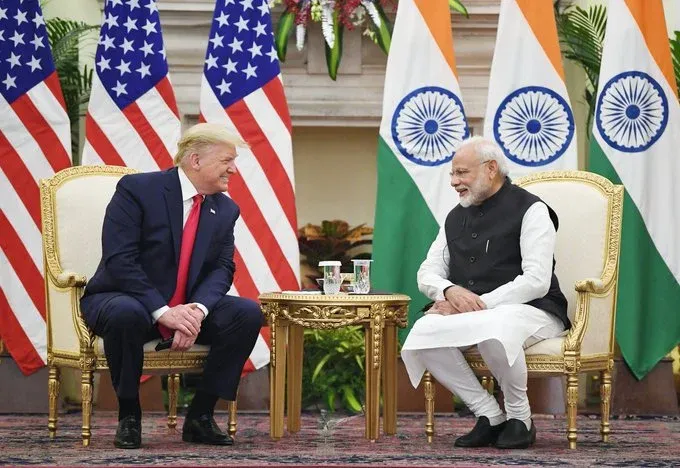
By P. Sudhir The US President Donald Trump, in his first address to the US Congress following his election, has threatened to impose tariffs on countries that he considers are taking advantage of US trade policies. In his list is India, along with Canada, Mexico, China, Brazil and the European Union. Trump has repeatedly named […]

In a significant move to bolster global sustainability efforts, the United Arab Emirates and Denmark have formalized a partnership aimed at enhancing cooperation in sustainable agriculture and food systems. This development underscores both nations’ commitment to addressing pressing environmental challenges and ensuring food security. On 12th March 2025, His Highness Sheikh Abdullah bin Zayed Al Nahyan, UAE’s Deputy Prime Minister and Minister of Foreign Affairs, met with […]

President Donald Trump has expressed a desire to negotiate a new nuclear agreement with Iran, aiming to address escalating concerns over Tehran’s advancing uranium enrichment activities. In a move to initiate dialogue, Trump dispatched a letter to Iran’s Supreme Leader, Ayatollah Ali Khamenei, proposing direct talks to forge a revised pact. The letter, facilitated by a senior adviser to the President of the United Arab Emirates, underscores […]

Swiss private equity firm Partners Group has finalized an agreement to acquire Australian data center operator GreenSquare Data Centers , committing up to AU$1.2 billion to establish a next-generation data center platform across Australia. GreenSquareDC, established in October 2022, is actively developing a data center in Belmont, Perth. The four-story facility is set to offer 68,000 square meters of gross floor area on a 38,000-square-meter site, with […]

A U.S. bankruptcy court has found Byju Raveendran, founder of Indian ed-tech giant Byju’s, complicit in fraudulent financial activities, marking a significant escalation in the company’s ongoing legal and financial challenges.

The court determined that Raveendran, along with his brother Riju Ravindran and entities associated with Byju’s, orchestrated the unauthorized transfer of $533 million from Byju’s Alpha, a U.S.-based subsidiary, to Camshaft Capital Management, a hedge fund with dubious credentials. Camshaft, managed by a high school dropout lacking formal investment experience, was characterized by the court as a “sham” entity, raising serious concerns about the legitimacy of the transactions.

This ruling stems from a broader legal dispute between Byju’s and its lenders over a $1.2 billion term loan. Lenders initiated legal action following Byju’s alleged defaults on payment obligations and delays in financial disclosures. The unauthorized fund transfers were uncovered during these proceedings, leading to allegations of fraudulent conduct against the company’s leadership.

The court’s findings highlight a series of “badges of fraud,” including the concealment of funds and breach of fiduciary duties by the company’s directors. These actions have not only violated legal and ethical standards but have also severely undermined the trust of investors and stakeholders in the company’s governance.

Byju’s, once valued at $22 billion, has experienced a dramatic decline amid these controversies. The company’s aggressive expansion during the pandemic, fueled by substantial investments, has come under scrutiny as financial instability and governance issues have surfaced. The post-pandemic economic shift, characterized by rising interest rates, has further exacerbated the company’s challenges, leading to funding shortages and legal battles.

The repercussions of the court’s decision are far-reaching. Byju’s now faces intensified scrutiny from regulatory authorities, investors, and the broader public. The company’s reputation, once a beacon of India’s burgeoning ed-tech sector, has been tarnished, raising questions about its future viability and the potential impact on its extensive user base.

In response to the ruling, Byju’s leadership has maintained their stance of denying any wrongdoing. However, the court’s findings present a formidable challenge to this narrative, placing the onus on the company’s executives to address these serious allegations transparently and effectively.

The situation has also had a profound impact on Byju’s employees. Reports indicate widespread anxiety among the workforce, with many facing delayed salaries and uncertain job security. The company’s insolvency proceedings have further fueled concerns, prompting discussions about potential protests and legal actions by affected employees.

Investors, too, are reevaluating their positions. The exodus of prominent board members and auditors, coupled with the court’s recent findings, has led to a crisis of confidence. The company’s valuation has plummeted, and its ability to secure future funding is in jeopardy. This scenario underscores the critical importance of robust corporate governance and ethical financial practices in maintaining investor trust and ensuring long-term sustainability.

The court has yet to determine the specific damages to be awarded to the lenders. This pending decision adds another layer of uncertainty to Byju’s financial outlook. The company’s ability to navigate these legal and financial challenges will be crucial in determining its future trajectory and its role in the global ed-tech landscape.

This case serves as a cautionary tale for startups and investors alike. It highlights the potential pitfalls of rapid expansion without adequate oversight and the dangers of compromising ethical standards for short-term gains. As the ed-tech industry continues to evolve, the Byju’s saga underscores the necessity for transparency, accountability, and prudent financial management.

The coming months will be critical for Byju’s as it seeks to restore credibility and stabilize its operations. Stakeholders will be closely monitoring the company’s actions, looking for signs of meaningful reforms and a commitment to rectifying past missteps. The outcome of this situation will have significant implications not only for Byju’s but also for the broader perception of India’s startup ecosystem on the global stage.

In light of these developments, industry observers are advocating for stronger regulatory frameworks to prevent similar occurrences in the future. There is a growing consensus that while innovation and growth are essential, they must be balanced with responsibility and integrity to ensure sustainable success.

Janus Marine and Defense, a U.S.-based marine autonomy specialist, in collaboration with Nexus Remote Solutions, has announced plans to establish the United Arab Emirates’ inaugural center dedicated to the testing, hiring, and maintenance of unmanned vessels. The Remote Operations Center , aptly named ‘The Quarterdeck,’ is set to be located at Addax Tower on Al Reem Island in Abu Dhabi, marking a significant milestone in the region’s maritime industry.

This initiative represents a pioneering effort to provide industry and small to medium-sized enterprises with access to advanced facilities for unmanned surface vessels and unmanned underwater vessels . The Quarterdeck aims to serve both commercial offshore and defense sectors, fostering innovation and development in marine autonomy technologies.

Jack Dougherty, owner of Janus Marine and Defense and a former U.S. Navy seafarer with extensive experience in naval and commercial marine autonomy, highlighted the strategic advantages of operating in the UAE. He noted that the country’s open policy towards USV operations in its territorial waters offers favorable conditions, free from the bureaucratic hurdles and regulations encountered in other parts of the world.

The Quarterdeck is scheduled to officially open in June, positioning itself as a unique facility in the Gulf region. Currently, the UAE hosts three ROCs spanning the offshore, commercial, and defense markets; however, all three are privately owned and inaccessible to external contractors. The establishment of the Quarterdeck aims to bridge this gap by providing private companies with access to state-of-the-art technology and facilities typically reserved for private ROCs.

This development is poised to significantly enhance the capabilities of startups and scale-ups in the region, enabling them to innovate and advance USV and UUV technologies. By offering a dedicated space for testing and maintenance, the Quarterdeck is expected to accelerate the growth of the unmanned vessel industry within the UAE and beyond.

The collaboration between Janus Marine and Defense and Nexus Remote Solutions underscores a shared vision for industry standardization and practical cooperation. In May 2024, the two companies unveiled the Nexus-Janus Portal, a groundbreaking USV payload management system designed for universal compatibility. The NJ Portal aims to standardize payload integration across various vessel builders, payload providers, and autonomous control manufacturers, thereby enhancing the modularity and operational flexibility of USVs.

The NJ Portal is a scalable, versatile server solution that simplifies the integration and management of payload systems on USVs. It adapts to diverse data processing requirements and power needs, ranging from single-board computers to powerful 8U GPU servers. This ensures easy management of payload integrations and rapid deployment or modification of configurations across different vessels. Jack Dougherty, CEO of Janus Marine and Defense, emphasized the portal’s versatility, stating, “Whether it’s a tow-behind side scan sonar performing a hydro survey or a .50 caliber machine gun in a remote weapon system, the principle is the same. We take a manned or wired system and make it work on an autonomous platform where it wasn’t designed to be.”

John Woroniuk, Director of Nexus and Portal Development Engineer, highlighted the portal’s potential, noting, “With version 3 of our system, we offer nearly unlimited integration possibilities. This enhances payload efficiency and allows preprogrammed accommodation for additional payloads yet to be installed. Whether your fleet consists of 11-meter USVs equipped for varied missions, our system delivers the seamless integration needed.”

The establishment of the Quarterdeck aligns with the UAE’s broader strategic objectives to position itself as a leader in maritime innovation and technology. By providing a dedicated facility for the development and maintenance of unmanned vessels, the UAE is set to attract global attention and investment in the marine autonomy sector.

The Quarterdeck’s location at Addax Tower on Al Reem Island offers strategic advantages, providing easy access to key maritime routes and infrastructure. This prime location is expected to facilitate seamless operations and collaborations with local and international partners.

The launch of the Quarterdeck is anticipated to have a ripple effect across the maritime industry in the region. By offering accessible facilities for testing and maintaining unmanned vessels, the center is likely to encourage more companies to explore and invest in marine autonomy technologies. This could lead to increased innovation, job creation, and economic growth within the sector.

The Quarterdeck is expected to serve as a hub for knowledge exchange and collaboration. By bringing together industry experts, researchers, and companies, the center aims to foster a community dedicated to advancing unmanned vessel technologies. This collaborative environment is likely to spur new ideas, partnerships, and solutions to existing challenges in the maritime industry.

The initiative also reflects a growing global trend towards the adoption of unmanned systems in various sectors, including defense, oil and gas, and environmental monitoring. The ability to operate vessels remotely offers numerous advantages, such as increased safety, reduced operational costs, and the capability to perform tasks in hazardous environments.

As the maritime industry continues to evolve, the establishment of facilities like the Quarterdeck will play a crucial role in shaping the future of marine operations. By providing the necessary infrastructure and support, such centers enable the development and deployment of advanced technologies that can transform traditional practices.

VISHNU RAJA
RYO YAMADA
HITORI GOTOH
IKUYO KITA