News related to
prices

We’re heading into earnings season again in Corporate America, and S&P 500 earnings are forecast to climb 27% in the third quarter, and for the first time since 2021, every single sector is expected to grow its profits. For two years sceptics have argued the AI boom is a narrow bet on a handful of technology companies. These numbers point to an investment wave now feeding profits […]

Advanced Micro Devices chief executive Lisa Su met Samsung Electronics’ semiconductor leadership in Seoul on Wednesday as the US chip designer sought closer co-operation on memory and manufacturing amid persistent supply constraints driven by artificial intelligence demand.

Su held talks with Young Hyun Jun, Samsung’s vice chairman and chief executive of its Device Solutions division, during a visit to South Korea that also included discussions with SK Hynix chief executive Kwak Noh-jung. The meetings placed high-bandwidth memory, broader DRAM supplies and possible foundry co-operation at the centre of AMD’s efforts to secure capacity for its expanding AI business.

Speaking to reporters in Seoul, Su said AMD continued to explore opportunities with Samsung across both memory and contract chip manufacturing. She described Samsung and SK Hynix as critical partners for AMD’s data-centre ambitions and urged memory producers to add capacity as quickly as possible.

The talks come as shortages across parts of the memory market complicate expansion plans for chip designers and data-centre operators. Demand for high-bandwidth memory, or HBM, has surged because AI accelerators require substantially greater memory bandwidth than conventional computing processors, while strong demand has also tightened supplies of standard DRAM products.

Su said the supply environment remained tight and AMD was working with customers to optimise their memory requirements so available capacity could support more computing. She said the company had built a strong supply chain but was working with suppliers to accelerate its expansion.

AMD expects demand for AI computing to remain elevated for several years and plans to increase chip supply substantially in 2027. Su said during a stop in Taiwan this week that the company had extended its capacity-planning horizon from one or two years to between three and five years as it works with manufacturing partners.

That planning encompasses advanced wafers, packaging, substrates and memory, all of which have become potential constraints as companies race to build AI infrastructure. AMD has been expanding its Instinct accelerator business as it competes with Nvidia for spending by cloud providers and other large data-centre customers.

Samsung already occupies an important position in AMD’s supply plans. The companies signed a memorandum of understanding in March covering next-generation AI memory and computing technologies, with Samsung designated a primary HBM4 supplier for AMD’s Instinct MI455X graphics processor.

Their agreement also covers advanced DRAM products for AMD’s sixth-generation EPYC processors, code-named Venice, and its Helios rack-scale AI platform. Samsung has supplied HBM3E memory for AMD’s MI350X and MI355X accelerators, extending a technology relationship between the companies that spans graphics, mobile and computing products.

HBM4 is particularly important to the next generation of AI hardware because increasingly powerful accelerators need faster transfers of enormous datasets while controlling energy consumption. Memory manufacturers have consequently directed more investment towards HBM, leaving capacity across other memory categories under pressure.

Samsung has been seeking to increase its position in the high-margin HBM market while SK Hynix remains another major supplier to AI chip developers. Strong AI demand has supported memory prices and earnings, though the pace of conventional DRAM price increases is expected to moderate after steep gains earlier this year.

AMD’s discussions with Samsung could also extend beyond memory. Their March agreement provided for talks on a possible foundry partnership under which Samsung could manufacture future AMD products. Su said on Wednesday that AMD was continuing to examine opportunities in that area, without announcing a manufacturing contract.

The possibility would give AMD another potential production option as advanced semiconductor capacity remains heavily sought after. Taiwan Semiconductor Manufacturing Co remains a central manufacturing partner for AMD, and Su met suppliers in Taiwan before travelling to South Korea as part of her capacity discussions.

Ghana’s annual inflation could slow to between 4.1 per cent and 4.4 per cent in September, Databank Research has projected, as improved supplies of key food staples are expected to reverse part of August’s price pressure. The forecast would mark a renewed decline from the 5.0 per cent recorded in August, when headline inflation increased from 4.6 per cent in July. Databank said a late-season improvement in […]

Saudi Aramco is examining additional crude export routes and more overseas storage as prolonged disruption to the Strait of Hormuz exposes increasingly thin buffers in the global oil system, chief executive Amin Nasser has said. Nasser told the Energy Intelligence Forum in London that the disruption represented the most serious energy supply shock of his career, warning that emergency stock releases could provide temporary relief but could […]

Arabian Post Staff -Dubai Oil prices climbed on Wednesday as traders assessed the risk of supply disruption from a developing Gulf of Mexico storm and escalating Houthi attacks on Saudi Arabia, offsetting signs that more Middle East crude was reaching global markets. Brent crude futures rose 93 cents, or 0.92%, to $101.51 a barrel by 0022 GMT, while US West Texas Intermediate crude gained 82 cents, or […]

Arabian Post Staff -Dubai Dubai’s residential and commercial property transactions totalled AED 90.62 billion in the third quarter of 2026, with off-plan housing retaining the largest share of residential activity, according to market data released by Springfield Properties. The dataset recorded 36,738 transactions during the quarter, including residential sales worth AED 72.58 billion across 33,949 deals. Off-plan residential properties accounted for AED 41.58 billion through 23,457 transactions, […]

By Ashok Nilakantan Ayers WASHINGTON: The battle lines for America’s November 3 midterm elections are now unmistakably drawn. With barely a month remaining, President Donald Trump is turning the contest for control of Congress into a personal referendum on his presidency, urging Americans to vote as though his own name were on the ballot. For […]

The article Donald Trump Has Made November 3 Mid Term Polls As Unmistakenly Personal appeared first on Latest India news, analysis and reports on Newspack by India Press Agency).

Advertisements

Luxury homes in central London are approaching a 50% fall in inflation-adjusted value from their market peak, underlining the scale of a decade-long downturn that has reshaped one of the world’s best-known high-end property markets. Prime central London values are now about 26% below their 2014 peak in nominal terms, according to Savills, after falling another 2.5% during 2026 through its September assessment. Once the rise in […]

By Nantoo Banerjee The hand-picked 30-share sensitive index (Sensex) of Bombay Stock Exchange, which has long been seen as the country’s overall industry performance barometer, seems to be losing its reliability under profit-booking punters’ whims. The Sensex faced sharp selling pressure last week, closing down at 72,972.56 after plunging over 1,000 points earlier in the […]

The article Corporate Sector Is Growing Well Despite Iran War, Poor Monsoon appeared first on Latest India news, analysis and reports on Newspack by India Press Agency).

Grade A Office Availability Rate Drops Further, High Street Leasing Activities Focus on Kowloon

  • Residential Market: Market sentiment turned more cautious in Q3, with total residential transaction numbers slipping by 40% q-o-q and 21% y-o-y to record around 13,240 cases. Home prices softened by 0.8% between July and August, yet, supported by stronger 1H performance, still recorded a cumulative rise of 7% in the first eight months of 2026.
  • Grade A Office Market: Citywide net absorption reached 412,400 sq ft in Q3, mainly driven by expansion activities by the banking, financial services and insurance (BFSI) sector. Rents in Greater Central continued to pick up, while rental level declines in non-core submarkets narrowed. The overall office market rental level is expected to rise by +5% to +7% in 2026.
  • Retail Market: Overall retail sales growth remained resilient on the back of growing tourist arrivals and stronger economic fundamentals supporting local consumption sentiment. The overall high street vacancy rate remained broadly stable in Q3, with leasing activities concentrated in Mongkok and Tsimshatsui.

HONG KONG SAR – Media OutReach Newswire – 5 October 2026 – Global real estate services firm Cushman & Wakefield today held its Hong Kong Property Markets Q3 2026 Review andOutlook press conference. The Hong Kong residential market entered a consolidation phase in Q3 amid a shift in the U.S. Federal Reserve’s interest rate outlook, increased stock market volatility, and tighter cross-border capital controls in the Chinese mainland. Against this backdrop, residential transaction numbers dropped by 40% q-o-q to record around 13,240 cases in Q3, while home prices declined by 0.8% during July and August. In the Grade A office market, the total new leased area for Q3 reached 1.4 million sq ft, the highest quarterly level since 2019, supported by expansion activities from the BFSI sector. Citywide net absorption reached +412,400 sq ft for the quarter, bringing the overall availability rate to trend further downward, while YTD rental growth recorded +6.1%. In the retail sector, total retail sales remained resilient in Q3. The overall high street vacancy rate remained broadly stable during the quarter, chiefly supported by more active leasing commitments in Mongkok. Leasing activity in Hong Kong Island districts moderated somewhat.

Grade A office leasing market:BSFI expansion demand fuels leasing momentum

The Q3 2026 period marked another active quarter for Hong Kong’s Grade A office market. Total new leased area reached 1.4 million sq ft in Q3, the highest quarterly level since 2019. The banking, financial services, and insurance (BFSI) sector, and consumer products / manufacturing sectors, were the key demand drivers, with BFSI occupiers largely expansion-led. Citywide net absorption reached +412,400 sq ft in the quarter. This performance helped pull down the overall availability rate 0.4 percentage point q-o-q to 19.1%. Core district rents continued to outperform non-core areas. Greater Central rents continued to climb by a further 3.0% q-o-q in Q3, while non-core area rental level declines further narrowed. Rents in Hong Kong East and Hong Kong South edged up slightly in Q3. The overall citywide rental level rose by 1.7% q-o-q in Q3, bringing YTD rental growth to +6.1%.

John Siu, Managing Director, Hong Kong, Cushman & Wakefield,said, “Rents in Greater Central grew by 13% YTD, reflecting strong demand for prime offices. However, mid-priced Grade A offices, particularly those with net effective rents of around HK$45-60 psf, are expected to continue facing headwinds, as abundant existing space and forthcoming supply across multiple submarkets within this price range is likely to sustain intense competition.”

Siu added, “Looking ahead, positive market momentum is likely to partly offset the scheduled 1.2 million sq ft of new supply in Q4, keeping the availability rate broadly stable at 19% to 20% at the year-end. With a decelerating supply pipeline beyond 2026, availability may have passed its cyclical peak in 2025, but non-core areas will continue to face absorption pressure. Full-year rental growth in Greater Central is now projected to grow by +12% to +14%, supporting the citywide Grade A office rental level to rise by +5% to +7% in 2026.”

Retail leasing market: Retail sales growth remains resilient, with Mongkok leading high street leasing activities

Hong Kong retail sales growth remained resilient in Q3, driven by growing tourist arrivals and stronger economic fundamentals supporting local consumption sentiment. The city’s overall retail sales for the January to August 2026 period reached HK$266 billion, up 8.5% y-o-y. Among key retail categories, the Jewellery & Watches sector recorded the strongest performance, recording y-o-y sales growth of 22.6%. Other sectors, such as Medicines & Cosmetics (+5.0%) and Fashion & Accessories (+3.2%), recorded more modest low single-digit growth.

The overall high street vacancy rate remained broadly stable at 5.4% in Q3, chiefly supported by more active leasing commitments in Mongkok, with the district’s vacancy rate dropping to 4.8% from 8.6% in Q2. In Tsimshatsui, although the vacancy rate moved up to 9.5%, notable new transactions were also recorded during the quarter. On Hong Kong Island, vacancy rates in Causeway Bay and Central increased in Q3, rising to 5.1% and 1.4%, respectively, after remaining at 0% for two consecutive quarters. With prime retail spaces in both districts fully occupied in previous quarters, leasing activity moderated in Q3.

High street retail rents in both Causeway Bay and Tsimshatsui remained unchanged in the quarter. In Mongkok, stronger leasing momentum supported a 0.4% q-o-q rise in rental levels. As for Tsimshatsui, a slowdown in the luxury segment combined with relatively high vacancy weighed on the district’s rental performance, resulting in a fall of 1.1% q-o-q. In the F&B sector, rents remained under pressure amid high availability, dropping within a 1% range q-o-q across the four key districts.

John Siu commented, “We have observed stronger leasing demand from Japanese, South Korean and Thai brands in recent months. Looking at the first-stores recorded so far this year, approximately 36% originated from Japan, South Korea and Thailand, similar to the share accounted for by Chinese mainland brands, while exceeding the 29% recorded for 2025 full-year. We expect this trend to continue through the remainder of the year. Looking ahead, the Hong Kong retail market is expected to remain supported by resilient local consumption resulting from stronger economic fundamentals, together with greater tourist spending underpinned by a stronger RMB, and a pipeline of planned mega-events. These factors will bring continued momentum to the city’s retail market. We also expect local and non-local retailers to remain selective, with demand focused on well-located retail spaces in core districts offering attractive rental packages. In turn, the city’s retail market is likely to maintain a gradual recovery trajectory. We forecast high street retail rents in Causeway Bay and Central to pick up by 2% to 3% y-o-y in 2026, with Tsimshatsui and Mongkok recording modest rental growth of 1% to 2% y-o-y.”

Residential Market: Home prices consolidate as transaction numbers cool in Q3, rate hikes remain key

The Hong Kong residential market consolidated somewhat in Q3 following the strong momentum recorded in 1H. After the sustained release of purchasing power over the past year, coupled with the shift of the U.S. Federal Reserve rate direction, increased stock market volatility and heightened uncertainties, some prospective buyers reverted to a wait-and-see stance. This resulted in a noticeable slowdown in transaction activity from July onwards. The monthly transaction number, which averaged more than 7,000 cases in Q2, fell back to around 4,000 deals between July and September. A total of 13,242 residential transactions were recorded in Q3, down 40% q-o-q, bringing cumulative transactions to reach 54,052 cases for the first nine months of the year, representing an 18% increase y-o-y.

Edgar Lai, Senior Director, Valuation and Consultancy Services, Hong Kong, Cushman & Wakefield, commented, “Housing price growth momentum decelerated in Q3 2026. Rating and Valuation Department data suggests that the overall residential price index softened by 0.8% in the two months from July to August, yet still achieved 7.0% growth for the first eight months of 2026. Meanwhile, our Cushman & Wakefield mid-and-small size units price index shows that home prices mildly dropped 0.1% q-o-q, yet still registering a cumulative increase of 7.7% year to date. Our tracking of popular housing estates shows that prices softened in Q3 across different market segments. Prices at City One Shatin, representing the mass market, declined by 5.7% q-o-q, while prices at Taikoo Shing, representing the mid-market, dropped by 0.6% q-o-q. Residence Bel-Air, representing the luxury segment, retreated by 3.8% q-o-q. Following the sustained release of purchasing power over the past year, coupled with tighter cross-border capital controls from the Chinese mainland, and the U.S. Fed rate hike of 0.25% in September, our September Verbal Enquiry Index declined by 35% compared with the peak seen in May.”

Rosanna Tang, Deputy Managing Director, Head of Research, Hong Kong, Cushman & Wakefield, added, “The city’s residential market consolidated in Q3, with monthly transactions retreating to around 4,000 cases. The slowdown reflects a more cautious stance among homebuyers amid shifting interest rate expectations and heightened external uncertainties. Looking ahead, the frequency and pace of rate hikes, together with whether local banks will follow suit, will be the key factors affecting homebuyers’ purchasing decisions and affordability. Given the slower pace of transactions in Q3, we have revised our full-year residential transaction forecast to around 67,000 to 68,000 cases.

“As for pricing, should the U.S. Fed rate further increase in Q4, the residential market is expected to remain in a consolidation phase, with 2026 annual home prices likely to fluctuate in a narrow range near +7%. The rental market, however, will be more resilient underpinned by rental demand brought by the inflow of talent, non-local students, and new entrants to the city. With rental growth of 4.9% recorded in the first eight months of the year, we project a 5% to 7% y-o-y increase for the full year of 2026.”

Hashtag: #CWK

The issuer is solely responsible for the content of this announcement.

About Cushman & Wakefield

Cushman & Wakefield (NYSE: CWK) is a leading global commercial real estate services firm for property owners and occupiers with approximately 53,000 employees in nearly 350 offices and 60 countries. In Greater China, a network of 23 offices serves local markets across the region. In 2025, the firm reported revenue of $10.3 billion across its core services of Valuation, Consulting, Project & Development Services, Capital Markets, Project & Occupier Services, Industrial & Logistics, Retail, and others. Built around the belief that Better never settles, the firm receives numerous industry and business accolades for its award-winning culture. For additional information, visit www.cushmanwakefield.com.hk or follow us on LinkedIn (https://www.linkedin.com/company/cushman-&-wakefield-greater-china).


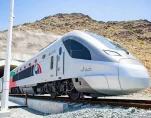
Etihad Rail’s expanded passenger service could alter residential demand around stations in Abu Dhabi, Dubai and Sharjah, with rental enquiries likely to respond before sale prices, property consultancy Betterhomes has said. The assessment follows the official launch of the UAE national passenger rail network on September 30, when services expanded beyond the Abu Dhabi-Fujairah introductory route to include Dubai’s Al Yalayis Station and Al Dhaid in Sharjah. […]

Arabian Post Staff -Dubai Saudi Aramco has cut the November official selling price of its flagship Arab Light crude for Asian customers by $3 a barrel, setting it at a $5 discount to the average of Oman and Dubai benchmarks, the widest discount since June 2020. The unexpectedly deep reduction comes as Brent crude remains above $100 a barrel amid persistent Middle East security risks, while recovering […]

Arabian Post Staff -Dubai Oil prices were broadly steady above $102 a barrel on Friday as traders weighed China’s suspension of fuel exports and an expanding US military presence in the Middle East against signs that regional crude supplies were recovering. Brent crude slipped 3 cents, or 0.03%, to $102.28 a barrel by 0350 GMT after edging higher earlier in Asian trading. US West Texas Intermediate fell […]

Arabian Post Staff -Dubai Global air passenger demand fell 0.8 per cent year-on-year in August, as a renewed contraction in Middle Eastern traffic outweighed growth across several other regions, the International Air Transport Association said. Demand, measured in revenue passenger kilometres, declined from August 2025 even as airlines increased total capacity by 0.3 per cent, measured in available seat kilometres. The global passenger load factor consequently slipped […]

Singapore households will pay 10.4 per cent less for electricity from October after lower natural gas prices cut generation costs, reversing part of the record increase imposed in the third quarter.

The regulated household tariff will fall to 28.59 Singapore cents per kilowatt-hour before goods and services tax for October to December, from 31.91 cents in the July-September quarter, grid operator SP Group said on Wednesday. The reduction amounts to 3.32 cents per kWh.

Families living in four-room Housing Board flats are expected to see their average monthly electricity bill decline by S$12.99 before GST. The overall electricity tariff, covering households and non-household users, will decrease by an average 10.6 per cent, also equivalent to 3.32 cents per kWh.

The cut follows a 17 per cent jump in the household tariff for July to September, when the rate climbed by 4.64 cents per kWh as high natural gas prices fed through to power-generation costs. That increase lifted average monthly bills for four-room Housing Board households by S$17.14 before GST.

SP Group said the fourth-quarter reduction reflects lower natural gas prices between July 1 and September 15, which moved down alongside global fuel prices. Singapore’s regulated tariffs incorporate fuel costs with a lag, meaning the impact of movements in international energy markets is not immediately reflected in household bills.

The Energy Market Authority sets the regulatory framework under which SP Group reviews tariffs every quarter. The energy-cost component is calculated using average daily natural gas prices during the first two-and-a-half months of the preceding quarter.

Imported natural gas accounts for about 95 per cent of Singapore’s electricity generation, leaving domestic power costs sensitive to movements in global fuel markets. Fuel costs are tied to oil prices through commercial gas contracts, while other parts of the tariff cover generation, grid, billing, market administration and power-system operating expenses.

The tariff decline offers some relief after energy costs contributed to stronger consumer-price pressures during the third quarter. Singapore’s overall consumer price inflation rose to 2.3 per cent year on year in August from 2.2 per cent in July, while the Monetary Authority of Singapore’s core inflation measure increased to 2.2 per cent from 2 per cent.

Electricity and gas prices were 8.7 per cent higher in August than a year earlier, according to official inflation data. Authorities said the increase reflected the earlier surge in global energy prices, whose effect was transmitted into the regulated tariff with the usual delay.

The Monetary Authority and Ministry of Trade and Industry expect both core and headline inflation to average between 1.5 per cent and 2.5 per cent in 2026. They have cautioned that the inflation outlook remains exposed to renewed disruptions in global energy supplies, alongside other imported cost pressures.

The latest tariff reduction may therefore temper household utility costs during the final three months of the year, although it does not fully reverse the preceding quarter’s increase. The fourth-quarter rate remains 1.32 cents per kWh above the 27.27-cent tariff charged from April to June.

Piped town gas prices will also decline. City Energy said the household gas tariff will fall 8.6 per cent to 21.45 cents per kWh from October 1 to December 31, compared with 23.48 cents in the third quarter, reflecting lower fuel costs.

Households have several electricity purchasing options. Consumers may remain on SP Group’s regulated tariff or buy from retailers under fixed-price, discount-off-regulated-tariff and time-of-use plans. The regulated rate remains the default option for most households.

The share of households on fixed-price plans rose from 36.6 per cent on February 1 to 38.4 per cent on September 1, while proportion buying from SP Group under the regulated tariff declined from 63.4 per cent to 61.6 per cent.

Arabian Post Staff -Dubai Oman’s manufacturing output rose 16.1 per cent year on year to about RO2.188 billion in the first half of 2026, with chemicals and refined petroleum products driving a broad expansion in industrial activity. Data from the National Centre for Statistics and Information showed basic chemicals manufacturing increased 22.7 per cent to RO659.6 million, while refined petroleum products climbed 40 per cent to RO397.2 […]

HONG KONG SAR – Media OutReach Newswire – 22 September 2026 – Hong Kong’s Chief Executive John Lee announced the First Five-Year Plan for Economic and Social Development of the Hong Kong Special Administrative Region (HKSAR) (2026-2030) and his fifth Policy Address on September 16, rolling out measures to further sharpen Hong Kong’s edge amid global competition, consolidate development of the Guangdong-Hong Kong-Macao Greater Bay Area (GBA) and promote green transformation.

image-1.jpeg

Initiatives aim to support high-quality development of the GBA, align rules and mechanisms within the region, and promote cross-boundary collaboration.

“The HKSAR Government will continue its efforts in fostering synergistic development of the GBA,” said Mr Lee. “We will strengthen co‑operation in technological innovation, promote ‘hard connectivity’ in infrastructure, foster ‘soft connectivity’ by deepening the alignment of rules and mechanisms, and achieve ‘connectivity of hearts’ among residents of the three places.”

The HKSAR Government will continue to actively participate in the development of the various major co-operation platforms, including Qianhai of Shenzhen, Nansha of Guangzhou, Hengqin of Zhuhai and the Hetao Shenzhen-Hong Kong Co-operation Zone, to promote mutual benefits.

In terms of “hard connectivity” the HKSAR Government will support Nansha in its role as a high‑standard gateway for opening up, including encouraging the trade to participate in Nansha’s infrastructure development.

“To promote the co‑ordinated development of rail transit in Guangdong, Hong Kong and Macao, we are pressing ahead with the Northern Link Project and the Hong Kong‑Shenzhen Western Rail Link (Hung Shui Kiu‑Qianhai), with target commissioning in 2034 and 2035 respectively, to fully connect the rail transit networks of Hong Kong and Shenzhen,” Mr Lee said.

Regarding “soft connectivity”, Mr Lee said the HKSAR Government will set up a Task Force to explore ways to advance the alignment of rules and mechanisms within the GBA.

To achieve “Connectivity of Hearts” among residents across the GBA, Hong Kong will strengthen co-operation between its higher education institutions and those in other GBA cities by establishing cross‑disciplinary partnerships, facilitating scientific research, knowledge transfer, and commercialisation, with a view to promoting high‑level research.

Hong Kong’s Secretary for Constitutional and Mainland Affairs, Janice Tse, noted that the First Five-Year Plan clearly states that Hong Kong will participate in the development of the GBA into an international first‑class bay area and a world‑class city cluster with global influence.

“Hong Kong will forge closer alignment and synergy with the nine GBA cities in Guangdong Province and Macao, making full use of our respective advantages to jointly promote the high-quality development of the GBA,” Miss Tse said.

To foster financial development in the GBA, Hong Kong will continue to capitalise on institutional innovation, financial infrastructure upgrading and enhanced regulatory alignment to encourage the orderly flow of financial elements among GBA cities.

The Hong Kong Exchanges and Clearing Limited’s Core Climate, in collaboration with the Guangzhou Power Exchange Centre, is working towards the pilot trading of national renewable‑energy, green electricity certificates in Hong Kong in 2026.

“On connecting the Chinese Mainland and the world, the HKSAR Government will continue to support green technology development through the HK$400 million (aboutUS$51 million) Green Tech Fund, leveraging Hong Kong’s function as a springboard for green technology and assisting national green technologies and products in going global,” said Hong Kong’sSecretary for Environment and Ecology, Tse Chin-wan. “On the development of hydrogen energy, we have participated in drafting national hydrogen energy standards with a view to helping these standards align with international practice.”

To meet the country’s “dual carbon” targets and fulfil Hong Kong’s commitment to achieving carbon neutrality before 2050, the HKSAR Government steered the establishment of a production base for sustainable aviation fuel (SAF) in Dongguan, leveraging the leading position of Hong Kong enterprises in the international SAF industry.

“By combining technology strengths with industrial foundation, Hong Kong and Guangdong will jointly develop a globally influential green industry,” Mr Lee said.

The HKSAR Government will take forward the construction of an SAF blending facility in Hong Kong to build an end‑to‑end SAF value chain and reduce logistics costs to make SAF prices more competitive. The target is to achieve an SAF consumption ratio of 1% to 3% for flights departing from Hong Kong International Airport in 2030.

Hong Kong’s Five-Year Plan promotes the integrated development of culture, sports, and tourism, to develop the GBA into a cultured bay area.

Under the strategic framework of the Agreement on Strengthening of Sports Cooperation and Promotion of Integrated Development, Hong Kong will deepen co-operation, and strive to co‑organise important regional and international single‑sport events. It will also strengthen cultural exchanges, pass on Cantonese opera and the characteristics of Lingnan culture, and promote the sales and cross‑boundary exhibition of Hong Kong publications.


Hashtag: #HongKong #PolicyAddress #First5YearPlan #GBA #Green #Transformation


The issuer is solely responsible for the content of this announcement.

Japan’s two-year government bond auction drew stronger-than-average demand on Wednesday as yields near three-decade highs encouraged investors to buy short-dated sovereign debt despite expectations that the Bank of Japan could tighten monetary policy further.

The sale of about ¥2.8 trillion of two-year Japanese government bonds attracted demand above its 12-month average, improving markedly from the weak August auction. The result suggested that higher yields are beginning to compensate investors for the risk of additional increases in official interest rates.

The two-year JGB yield was around 1.95% before the auction, close to 2% and its highest region since 1995. Short-dated bonds had gained earlier in the session, tracking an overnight advance in comparable US Treasuries, with the two-year yield edging lower as prices rose.

Demand at the auction was closely watched because two-year debt is particularly sensitive to expectations for Bank of Japan policy. The central bank raised its policy rate to 1.25% in September, the highest level in 31 years, as policymakers confronted persistent inflation pressures, elevated energy costs and the effects of a weaker yen on import prices.

Minutes of the Bank of Japan’s July meeting, released this week, showed policymakers had discussed whether interest rates might need to rise faster if inflation risks intensified. Several board members stressed the importance of anchoring inflation around the central bank’s 2% target, reinforcing market expectations that policy normalisation has further to run.

Those expectations have driven yields sharply higher across Japan’s government bond curve. The benchmark 10-year yield was around 3.09% on Tuesday, near the 30-year high of 3.115% touched last week. Five-year yields have also reached record levels, while yields on super-long bonds remain elevated as investors weigh inflation, fiscal spending and the outlook for government issuance.

Wednesday’s auction nevertheless indicated that the repricing is creating buying opportunities at the shorter end of the curve. Investors receive greater income from newly issued bonds than they did earlier in the year, providing a cushion against the possibility of further price declines if the central bank raises rates again.

The result followed a strong sale of 40-year government bonds on Tuesday. The Ministry of Finance received ¥928 billion of competitive bids for ¥299.7 billion accepted at that auction, producing a bid-to-cover ratio of about 3.1. The highest accepted yield was 4.125%, according to ministry data. Demand for the longest maturity was the strongest in several years.

The two auctions offered evidence that elevated yields can draw buyers back even as Japan’s bond market adjusts to a markedly different interest-rate environment. The Bank of Japan has been reducing the scale of its government bond purchases, leaving private investors to play a larger role in determining prices after years of exceptionally heavy central-bank intervention in the market.

The adjustment has been accompanied by unusually large moves in yields. Japan’s 10-year yield crossed 3% this month for the first time since 1996, while the two-year yield has climbed substantially during 2026 as traders repeatedly brought forward expectations for monetary tightening.

Inflation remains central to those calculations. Higher oil and other commodity costs linked to the Middle East conflict have added pressure to import prices, while the yen’s weakness has increased the local-currency cost of goods purchased overseas. Bank of Japan Governor Kazuo Ueda has said currency movements can have a significant impact on the economy and prices.

Global bond markets have also been under pressure from persistent inflation concerns, heavy government borrowing and expectations that major central banks may keep interest rates higher for longer. Rising US Treasury yields have at times amplified moves in JGBs, particularly as investors reassess relative returns between Japanese and overseas debt.

Japan’s Finance Ministry had announced the two-year auction for Wednesday as part of its regular issuance programme. The previous two-year sale in August produced substantially weaker demand, with its bid-to-cover ratio falling below the preceding 12-month average as investors positioned for a September Bank of Japan rate increase.

Oil prices steadied on Wednesday as Middle East crude exports approached pre-war levels, with restored Saudi pipeline flows easing immediate supply concerns despite continuing geopolitical risks around the Strait of Hormuz. The more-active December Brent contract traded near $96 a barrel after falling 1.7% in the previous session, while US West Texas Intermediate hovered around $90. Prices later edged higher after US President Donald Trump rejected reports […]

President Trump says the White House is considering a ban on US diesel exports “very seriously”. This is a huge threat, but behind the threat sits a problem no export ban can solve: the world can’t refine enough fuel. A barrel of crude does nothing for a truck or a cargo ship until a refinery has processed it. Oil in the ground or on a tanker counts […]

Arabian Post Staff -Dubai Oil prices steadied near $105 a barrel on Tuesday as Saudi Arabia restored substantial flows through its East-West pipeline, easing supply concerns while stalled US-Iran diplomacy kept a risk premium embedded in the market. Brent crude futures for November traded around $105.50 a barrel after settling at $105.28 on Monday, while US West Texas Intermediate was near $93. Prices had risen earlier as […]

Republican candidates in several closely contested US races are urging President Donald Trump to bring the war with Iran to a swift end, widening a party split as soaring fuel costs and voter dissatisfaction intensify pressure ahead of November’s midterm elections. The shift is most visible among Republicans who had previously supported Trump’s military campaign or opposed congressional efforts to restrain it. Mike Rogers, the Republican Senate […]

Iranian officials have privately voiced doubt that Tehran and Washington can reach an agreement ending hostilities and restoring normal traffic through the Strait of Hormuz before the US midterm elections in November, even as Qatari mediators pursue indirect negotiations in New York. The pessimism follows President Donald Trump’s rejection at the weekend of Iran’s seven-day proposal for reopening the waterway and restarting negotiations. Officials familiar with Tehran’s […]

Polymarket has added 15-minute Bitcoin price markets to its US app, giving users a new way to trade contracts tied to whether the cryptocurrency rises or falls during successive quarter-hour windows. The contracts, listed as “BTC Up or Down: 15 min”, settle according to whether a specified Bitcoin reference price at the end of each 15-minute interval is greater than or equal to its level at the […]

VISHNU RAJA
RYO YAMADA
HITORI GOTOH
IKUYO KITA