News related to
prices

Escalating hostilities involving Iran have entered a third week, prompting growing unease across financial markets in the Gulf as investors recalibrate risk exposure amid fears of a prolonged conflict and wider regional spillover. Equity markets in the UAE have shown heightened volatility over the past several trading sessions, reflecting a cautious shift in sentiment as geopolitical uncertainty intensifies. Analysts say the sustained confrontation is beginning to influence […]

Zimbabwe’s abrupt ban on the export of unprocessed lithium has sent ripples through global battery supply chains, triggering uncertainty among miners, refiners and manufacturers while intensifying competition for alternative sources of the critical mineral. The government’s move, aimed at forcing local beneficiation and boosting domestic value addition, has effectively halted shipments of lithium ore to key overseas buyers. The policy has disrupted established trade flows, particularly those […]

Greenlogue/AP Escalating conflict involving Iran has triggered sharp volatility across global energy markets, prompting a stark warning from the United Nations’ climate leadership that the turmoil exposes structural dependence on fossil fuels and reinforces the urgency of transitioning to cleaner energy systems. Simon Stiell, executive secretary of the United Nations Framework Convention on Climate Change, described the disruption as a clear demonstration of how geopolitical shocks tied […]

By Nantoo Banerjee Notwithstanding the assurance given in Parliament last week by Union Petroleum and Natural Gas Minister Hardeep Singh Puri on India’s ‘robust’ energy supplies, fuel and gas prices in the country are expected to shoot up soon in keeping with the global trend. The minister’s statement appears to be substantially political having little […]

The article Petro Products Prices In Import-Dependent India May Surge Further appeared first on Latest India news, analysis and reports on Newspack by India Press Agency).

Arabian Post Special Missile and drone strikes linked to the widening confrontation around Iran have forced Gulf governments to confront a reality long considered unlikely: the region’s economic hubs, energy infrastructure and aviation networks can no longer assume insulation from large-scale conflict. Airports, oil terminals and urban centres across the Gulf have experienced disruptions as Iranian projectiles and drones targeted sites tied to military or logistical support […]

Chicago soybean futures retreated on Monday as traders reassessed market optimism that had lifted prices to near two-year highs the previous week, with uncertainty over a possible delay in talks between United States President Donald Trump and China’s President Xi Jinping prompting fresh caution in agricultural markets. The decline in soybean prices followed strong gains driven by expectations that renewed diplomatic engagement between Washington and Beijing could […]

Michael Saylor’s business intelligence firm Strategy has acquired 22,337 bitcoin valued at roughly $1.6 billion, strengthening its position as the largest corporate holder of the cryptocurrency and signalling continued institutional confidence in digital assets despite ongoing market volatility. The purchase, disclosed through regulatory filings and company statements, adds substantially to Strategy’s already vast bitcoin reserves and underscores the company’s long-standing approach of treating the cryptocurrency as a […]

Advertisements

Dubai’s real estate market has begun to show signs of renewed activity even as equity investors continue to retreat from property-linked shares, highlighting a widening divide between the city’s physical property transactions and the performance of listed real estate companies on the Dubai Financial Market. Data from early March trading and transaction records point to a sharp recovery in property deals during the second week of the […]

Britain’s counter-drone and air-defence units have shot down multiple Iranian drones across the Gulf theatre as London expands what it describes as a strictly defensive military posture, with ministers arguing the operations are aimed at protecting British personnel, allied states and vital regional infrastructure rather than joining any offensive campaign against Tehran. The latest intercepts come as tensions around the Gulf and the wider Middle East continue […]

China’s industrial sector expanded at a faster pace during the opening months of 2026, offering a lift to the world’s second-largest economy as policymakers balance external uncertainties and fragile domestic demand.

Official data released by the National Bureau of Statistics showed value-added industrial output rose 6.3 per cent year on year during January and February combined. The figure marked an acceleration from the 5.2 per cent growth recorded in December and exceeded forecasts by economists who had anticipated a more modest rise of around five per cent.

Authorities combine the first two months of the year when reporting major economic indicators to smooth distortions created by the Lunar New Year holiday, which shifts between January and February and can disrupt production schedules and consumer spending patterns.

The latest figures indicate that industrial activity remains one of the more resilient pillars of China’s economic performance. Manufacturing, mining and utilities production all contributed to the increase, with higher-value sectors linked to technology and advanced equipment manufacturing continuing to expand.

Stronger factory output came alongside moderate improvement in other key indicators. Retail sales, a broad measure of consumption, climbed 2.8 per cent during the same period, signalling some recovery in household spending after a subdued end to the previous year. Fixed-asset investment, which tracks spending on infrastructure, property and equipment, rose 1.8 per cent after contracting during 2025.

Analysts view the combination of rising industrial production and steady investment as evidence that state-backed infrastructure projects and export-oriented manufacturing are helping stabilise growth, even as other sectors continue to face pressure.

Manufacturing linked to high-technology and green industries has been a central driver of output gains. Production of computers, communications equipment and advanced machinery has expanded more rapidly than traditional heavy industries, reflecting Beijing’s push to upgrade the country’s industrial base and strengthen technological self-reliance. Data on industrial structure show that more than thirty of the country’s forty-one major manufacturing categories recorded growth during the past year, underlining the breadth of activity across sectors.

Exports have also provided support. Overseas shipments from China surged at the start of the year, led by electronics, semiconductors and equipment associated with artificial intelligence infrastructure. Robust global demand for solar panels, electric vehicles and lithium batteries has further reinforced factory activity, with these sectors often described as part of China’s emerging “new three” export engines.

Despite the stronger industrial figures, economists caution that the broader economic outlook remains uneven. Domestic consumption has not fully regained momentum, and households continue to show caution in discretionary spending. Retail sales growth, although improving, still lags behind pre-pandemic levels, highlighting lingering uncertainty among consumers.

A prolonged downturn in the property sector remains one of the most significant drags on economic confidence. Investment in real estate development has declined sharply over the past several years, and housing sales have contracted as developers grapple with high debt levels and weak buyer demand. The downturn has had ripple effects across construction, steel, cement and household goods industries, sectors traditionally linked to housing activity.

Labour market conditions also present a mixed picture. Urban unemployment rates have edged higher, with the jobless rate reaching slightly above five per cent early in the year. Rising employment pressure, particularly among younger workers and graduates, has become a focus of policy discussions as authorities seek to sustain economic stability.

Manufacturing sentiment indicators underscore these challenges. Official purchasing managers’ surveys have slipped below the expansion threshold of 50, suggesting some factories are experiencing slower order growth and cautious business expectations. Analysts note that while export-oriented companies continue to benefit from global demand, firms dependent on domestic consumption face more subdued conditions.

Beijing has set a national economic growth target of around 4.5 to 5 per cent for 2026, the lowest range in decades and a signal that policymakers are preparing for a more moderate expansion phase as structural adjustments reshape the economy. The leadership has repeatedly emphasised the need to strengthen domestic demand while maintaining technological advancement and industrial upgrading.

Infrastructure spending remains a key policy lever. Local governments have accelerated projects in transportation networks, energy systems and digital infrastructure, helping sustain industrial demand for materials and equipment. Investment in strategic industries, including renewable energy and advanced manufacturing, continues to receive policy support.

Global developments also weigh on the outlook. Geopolitical tensions and fluctuations in energy prices could affect trade flows and production costs, while shifting trade policies among major economies present another layer of uncertainty for exporters.


Arabian Post Staff -Dubai Aluminium Bahrain BSC, operator of the world’s largest single-site aluminium smelter, has begun a phased shutdown of part of its production capacity in an effort to conserve dwindling raw-material supplies as shipping routes in the Gulf face severe disruption. The company, widely known as Alba, confirmed that it has taken three production lines offline, representing about 19 per cent of its annual output […]

Chainlink’s native token LINK climbed more than 2 per cent as Bitcoin surged beyond the $73,000 threshold, reinforcing a broader recovery across the cryptocurrency market and drawing renewed attention to blockchain infrastructure projects tied to decentralised finance. Market data shows LINK trading near $9.2–$9.3 during the rally, giving the token a market capitalisation of roughly $6.5 billion and placing it among the leading digital assets by value. […]

Rising oil prices linked to the war involving Iran are creating fresh economic strain for Indonesia just as millions prepare for the annual Eid al-Fitr travel surge, placing President Prabowo Subianto’s administration under mounting pressure to shield consumers from higher fuel costs.

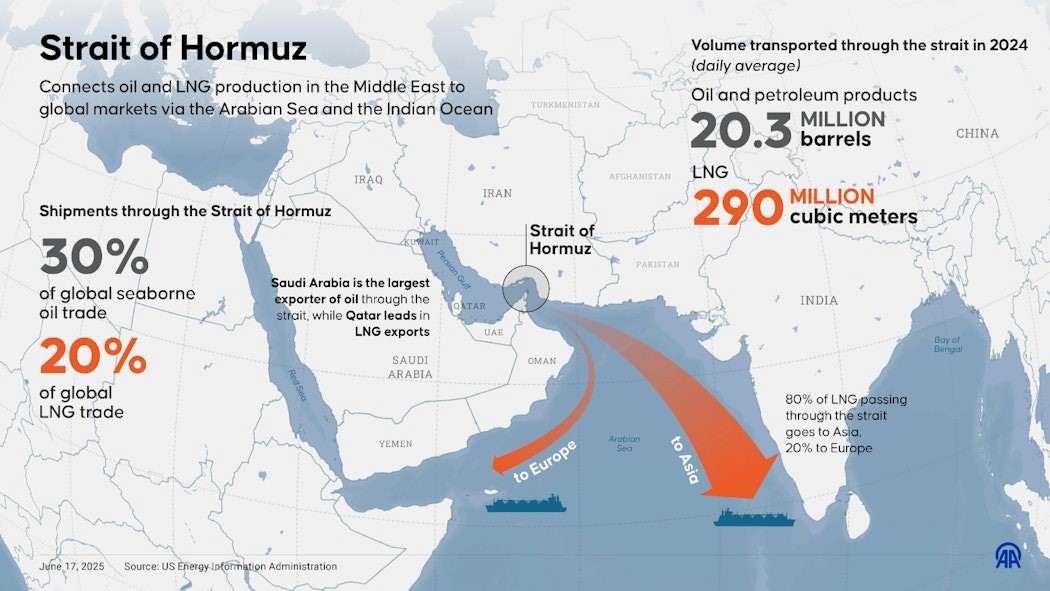
Energy markets have been rattled by escalating conflict across the Persian Gulf, where attacks on shipping routes and oil infrastructure have disrupted global crude supplies. A large share of the world’s petroleum exports passes through the Strait of Hormuz, a narrow maritime corridor connecting Gulf producers with international markets. Disruption to tanker traffic through this chokepoint has pushed benchmark crude prices sharply higher, triggering fuel price increases across Asia and raising fears of supply shortages in import-dependent economies.

Indonesia faces particular vulnerability because it relies heavily on imported energy. Around a quarter of its crude oil and roughly a third of liquefied petroleum gas supplies originate in the Middle East. Shipping disruptions in the Gulf have already complicated trade flows, with tanker movements slowed by security risks and insurance costs rising for vessels operating in the region. Market volatility has driven crude prices beyond the psychological threshold of $100 per barrel, fuelling concern that further escalation could drive them even higher.

The timing of the price shock has heightened the challenge for Jakarta. Eid al-Fitr, marking the end of Ramadan, triggers one of the largest annual travel movements in the country as families journey from major cities to hometowns across the archipelago. State energy company Pertamina anticipates gasoline demand during the holiday period to climb by more than 10 per cent, intensifying pressure on supply chains already strained by global market turbulence.

Authorities have attempted to reassure the public that domestic fuel supplies remain sufficient. Officials say government stockpiles and logistics networks can support the expected surge in consumption during the festive season. At the same time, policymakers have signalled that subsidised fuel prices will remain unchanged until the Eid holidays conclude, a move designed to prevent abrupt increases in transport costs during the peak travel period.

Holding prices steady carries significant fiscal implications. Indonesia already devotes substantial resources to energy subsidies, allocating more than 380 trillion rupiah in the state budget to keep fuel and electricity costs manageable for households and businesses. Sustaining those subsidies while global oil prices rise could widen the fiscal deficit or force adjustments elsewhere in the budget.

Economists warn that prolonged turbulence in global oil markets may reverberate across the broader economy. Higher crude prices increase the cost of imports and can erode Indonesia’s trade balance, particularly because the country has transitioned from being an oil exporter to a net importer over the past two decades. Analysts estimate that each $10 increase in the price of oil could shave hundreds of millions of dollars from the country’s trade surplus while raising domestic inflationary pressures.

Currency markets have already reacted to the geopolitical shock. The rupiah has faced downward pressure amid investor concerns about rising energy import costs and potential fiscal strain from expanded subsidies. A weaker currency makes fuel imports more expensive, compounding the burden on state finances and increasing the risk that domestic prices may eventually need to adjust.

Officials are exploring alternative strategies to mitigate the impact. One approach involves diversifying crude imports away from the Middle East by securing additional shipments from suppliers such as the United States and other regions less affected by the conflict. Authorities are also considering longer-term measures including accelerated blending of biofuels and the expansion of renewable energy capacity to reduce dependence on imported oil.

Energy security has become a central concern for policymakers across Southeast Asia as the Gulf crisis unfolds. Countries throughout the region rely heavily on imported petroleum and have limited capacity to absorb sustained price shocks. Governments have begun introducing conservation measures, adjusting subsidies, and seeking alternative suppliers as they attempt to stabilise domestic markets.

Indonesia’s logistical challenges are magnified by its geography. The archipelago spans more than 17,000 islands, making fuel distribution complex even during stable market conditions. Sudden shifts in global prices can ripple quickly through domestic supply chains, affecting transportation costs, food prices, and broader consumer inflation.

Political pressures add another layer of complexity for the administration. Public sensitivity to fuel prices has historically been high, and previous attempts to reduce subsidies have sparked protests and social unrest. Managing the current crisis therefore requires balancing fiscal prudence with the need to maintain social stability and support economic growth.

Market analysts say the duration of the Middle East conflict will determine how severe the economic impact becomes. If disruptions to shipping lanes and energy infrastructure persist, global crude supplies could tighten further, pushing prices to levels that strain government budgets and household finances alike. A prolonged crisis could also prompt broader shifts in energy policy, encouraging faster investment in domestic energy resources and renewable alternatives.

Pressure from Washington for allies to help secure shipping lanes in West Asia has placed Tokyo in a delicate strategic position, with senior figures signalling that dispatching Japanese military vessels to the Middle East would face formidable political and legal barriers. Takayuki Kobayashi, policy chief of the ruling Liberal Democratic Party, stated that any move to send Japanese naval assets to escort commercial vessels through the Strait […]

Bitcoin surged past the $72,000 mark on 13 March, buoyed by a sustained inflow of institutional capital into spot exchange-traded funds and improving market sentiment following a volatile start to the year. The rally lifted the world’s largest cryptocurrency to its highest level in more than a week, strengthening a rebound that has unfolded alongside growing interest from large investors and asset managers. Market data showed Bitcoin […]

Former UK prime minister Boris Johnson has triggered a sharp debate across financial and technology circles after describing Bitcoin as a “giant Ponzi scheme”, drawing swift rebuttals from leading cryptocurrency advocates including MicroStrategy chairman Michael Saylor and other industry figures. Johnson made the remarks in a newspaper column in which he questioned the long-term value of cryptocurrencies, arguing that their prices rely heavily on a continuous influx […]

New Delhi has pressed Tehran to allow more India-bound vessels to cross the Strait of Hormuz after two liquefied petroleum gas carriers carrying critical fuel supplies cleared the strategic waterway, highlighting the vulnerability of energy flows through one of the world’s most important maritime chokepoints.

Officials confirmed that two Indian-flagged LPG carriers, Shivalik and Nanda Devi, passed through the strait with cargo bound for ports in Gujarat, transporting roughly 92,700 tonnes of cooking gas. The shipments represent more than a day’s requirement for household LPG consumption, providing partial relief amid tightening supplies.

Government representatives indicated that discussions with Iranian authorities are continuing to secure safe transit for additional tankers waiting in the Persian Gulf. More than twenty vessels carrying crude oil and gas destined for India have been held up near the waterway during the standoff, raising concerns over prolonged disruptions to fuel deliveries.

The Strait of Hormuz, situated between Iran and Oman, handles about a fifth of global oil and liquefied natural gas shipments. Any disturbance along this narrow corridor has the potential to reverberate across global energy markets and shipping routes. Escalating tensions across West Asia have already led to attacks on several vessels and heightened security risks for commercial shipping in the region.

Iran’s decision to permit the two LPG carriers to sail through the strait marked an exception to restrictions imposed after military action targeting Iranian infrastructure triggered a broader confrontation. Tehran has maintained that vessels from most countries can navigate the passage but warned that ships from states viewed as hostile could face restrictions or heightened scrutiny.

Diplomatic engagement between New Delhi and Tehran played a role in securing the initial transit. Conversations between Prime Minister Narendra Modi and Iran’s president Masoud Pezeshkian, along with discussions between foreign ministers, focused on safeguarding energy shipments and the safety of nationals in the conflict-affected region.

India depends heavily on Middle Eastern suppliers for its energy needs. About 90 per cent of the country’s imported LPG originates from the region, while a substantial share of crude oil imports also passes through the Strait of Hormuz. That reliance has made the stability of the shipping lane central to the country’s energy security strategy.

Officials from the shipping ministry confirmed that Indian authorities are coordinating with regional partners and monitoring maritime traffic closely. Naval vessels deployed in the Gulf under Operation Sankalp have been keeping watch over merchant ships heading towards the subcontinent, providing situational awareness and escort support where necessary.

Energy analysts say the partial reopening of the route for Indian cargo illustrates the delicate balance between geopolitical confrontation and commercial necessity. Countries reliant on Gulf hydrocarbons have sought diplomatic channels to keep trade flowing even as military tensions complicate navigation in the region.

Oil markets reacted sharply to the conflict surrounding the strait, with benchmark crude prices surging amid fears of prolonged disruption to supply. Traders remain wary that even isolated incidents could affect tanker movements through the corridor, where narrow shipping lanes and heavy traffic leave little room for error.

The two LPG carriers now sailing toward the western coast highlight the importance of maintaining uninterrupted access to the strait. With domestic demand for cooking gas remaining high, authorities have prioritised household supply chains while assessing contingency measures for industrial users if shipments continue to face delays.

Shipping industry figures note that vessels have increasingly adopted precautionary routes or delayed departures until security conditions improve. Insurance costs for tankers operating in the Gulf have also climbed, reflecting the heightened risk environment created by missile strikes, drone attacks and naval deployments in surrounding waters.

Strategic calculations extend beyond immediate fuel deliveries. India has been strengthening diplomatic engagement with Gulf producers and maritime partners to ensure continued energy access during periods of instability. The country has also expanded storage capacity and diversified crude sources over the past decade to mitigate supply shocks.

Even with those measures, the Strait of Hormuz remains a critical artery for trade between the Gulf and Asia. Any sustained restriction would affect not only India but also large importers such as China, Japan and South Korea, which depend on the same route for oil and gas shipments.

By K Raveendran #Oil markets have entered a phase of acute uncertainty as military escalation involving strikes on Iran and the resulting closure of the Strait of Hormuz begin to reverberate through global energy supply chains. Within just over a week of the disruption, more than 12 million barrels of oil equivalent per day of […]

The article Analysts See Prolonged War Cutting Up To 70% Of Crude Output appeared first on Latest India news, analysis and reports on Newspack by India Press Agency).

Arabian Post Staff -Dubai Conflict involving Iran, Israel and the United States has entered a second week, prompting heightened caution across financial markets in the Gulf while investment banks operating in the region signal that their local operations remain in place despite escalating security warnings. Financial institutions active in the Gulf Cooperation Council have indicated that dealmaking teams and advisory units will continue functioning as normal even […]

Arabian Post Staff -Dubai Saudi Arabia has cut crude oil production by about two million barrels per day after shutting down major offshore fields as conflict around Iran disrupts shipping through the Strait of Hormuz, forcing the world’s largest exporter to scale back output and reroute supplies. Production has fallen to around eight million barrels per day, down from more than 10 million barrels per day earlier […]

Authorities in Hong Kong have launched one of the most sweeping investigations into the territory’s financial industry in nearly a decade, placing hedge fund Infini Capital Management at the centre of a widening insider-trading probe that has rattled brokers, banks and investors across Asia’s leading financial hub.

The investigation, conducted jointly by the Securities and Futures Commission and the Independent Commission Against Corruption, has led to the arrest of eight people and the search of offices and residences across the city. The operation targeted suspected exchanges of confidential market information tied to share placements in Hong Kong-listed companies, a practice that authorities say may have generated illicit profits while undermining confidence in capital markets.

Sources familiar with the matter have identified Infini Capital Management, alongside brokerage operations linked to Citic Securities and Guotai Junan International, as among the firms caught up in the crackdown. The investigation centres on allegations that executives accepted more than HK$4 million in bribes in return for non-public information about equity placements before those transactions were disclosed to investors.

According to regulatory statements, the suspected information leaks allowed traders to establish short positions in companies whose share placements would later depress prices once announced publicly. Authorities estimate the strategy generated profits of roughly HK$315 million, underscoring the scale of the alleged misconduct.

Infini Capital has said its operations remain normal and that its investment management processes have not been disrupted by the investigation. The firm has pledged to comply fully with regulatory authorities while declining to comment on what it described as unverified reports circulating in the market.

Founded in 2015 by former investment banker Tony Chin, the hedge fund built a reputation for aggressive trading strategies and direct negotiations with companies seeking capital. Market participants say the firm sometimes approached share placement deals in ways that bypassed traditional investment bank intermediaries, a tactic that brought both attention and scrutiny within Hong Kong’s tightly interconnected financial community.

Chin, who previously worked at major global financial institutions before establishing the fund, has not responded publicly to requests for comment regarding the probe. Regulatory filings indicate that he stepped down as a responsible officer for Infini Capital at the end of 2025, meaning he no longer holds the licence required to oversee regulated asset management activities on behalf of the firm.

Developments surrounding the investigation have reverberated beyond the immediate targets of the raid. Several global banks, including JPMorgan and UBS, had already severed prime brokerage relationships with Infini Capital months before the probe became public, according to people familiar with the matter. The reasons behind the decisions were not disclosed, though the timing has drawn attention among market observers assessing the fund’s risk profile and compliance record.

Prime brokerage services play a critical role in hedge fund operations, providing financing, securities lending and trade execution support. Losing such relationships can constrain trading activity and signal broader concerns among financial institutions regarding counterparty risk.

The crackdown arrives at a moment when Hong Kong’s equity capital markets have been undergoing a revival following a prolonged downturn in listings. Fundraising through share offerings surged in the past year as Chinese technology and industrial companies turned to the territory for capital, helping restore the city’s position as one of the world’s busiest venues for initial public offerings.

Regulators have responded to that surge by intensifying scrutiny of investment banks and brokers responsible for underwriting and distributing share sales. Officials have warned repeatedly that lapses in due diligence or market conduct could undermine investor trust and the credibility of Hong Kong’s financial system.

Analysts say the case highlights the complex ecosystem that has developed around equity placements, where hedge funds, banks and corporate issuers interact in fast-moving transactions worth hundreds of millions of dollars. Such deals often involve limited groups of investors receiving shares at discounted prices, creating incentives for traders to speculate on how markets will react once the placements are disclosed.

Authorities believe that confidential information about several such deals was circulated before public announcements, allowing certain investors to position themselves advantageously. The resulting trades allegedly generated substantial profits when share prices fell following the disclosure of the placements.

Operation “Fuse”, the codename given to the joint investigation, involved searches at fourteen locations across Hong Kong, including corporate offices and private residences. The arrests included senior executives within financial firms, signalling that regulators are pursuing accountability at the highest levels of the industry.

Market participants are watching closely to see whether the probe expands further. Hong Kong’s regulators have historically pursued insider trading cases aggressively, but raids on multiple high-profile financial institutions simultaneously are comparatively rare.

Infini Capital had become an active participant in the city’s equity markets over the past several years, taking positions in a number of high-profile share placements linked to technology companies and other fast-growing sectors. The firm also forged financing partnerships with emerging robotics and artificial intelligence businesses seeking funding through Hong Kong’s capital markets.

Nintendo’s newest Pokémon spin-off has delivered a powerful commercial debut, selling more than 2.2 million copies worldwide within its first four days and triggering a sharp rally in the company’s share price as investors respond to renewed momentum for the Switch 2 platform. The title, Pokémon Pokopia, launched globally on 5 March for Nintendo Switch 2 and rapidly climbed digital sales charts while physical editions sold out […]

Arabian Post Staff -Dubai Brent crude could average more than $100 a barrel in March as escalating conflict and shipping disruptions in the Gulf tighten global supply, according to a revised outlook from Goldman Sachs that underscores mounting volatility in energy markets. The investment bank said benchmark Brent prices are expected to average above the $100 mark during March before easing to around $85 a barrel in […]

Air freight rates have surged sharply across several global trade corridors as the war involving the United States and Israel against Iran disrupts transport routes, closes large portions of Middle Eastern airspace and forces cargo operators to reroute shipments at significantly higher cost. Industry data show some air cargo routes have experienced price increases of up to 70 percent since the escalation of hostilities, with South Asia–Europe […]

VISHNU RAJA
RYO YAMADA
HITORI GOTOH
IKUYO KITA