Just in:
Govt opposes Arlekar’s PSC action // Arrow Electronics showcases technologies advancing intelligent robotics, mobility and digital infrastructure // As AI Reshapes Education, Singapore Convenes Global Dialogue on the Future of Early Childhood Education // ADIA and partners establish $1.4 billion aviation venture // DIP Holding targets Dh1.12 IPO price and $529m proceeds // AI trust gap reveals distinct retail priorities: Divergent paths to consumer growth in Hong Kong and the GBA // Anthropic to prohibit persistent abuse of Claude chatbot // Fast Just Got Fastest: STING Energy Boost™ Celebrates Kimi Antonelli’s Formula 1® World Championship and the Fan Energy Behind It // BJP’s Aggressive Response Exposes Anxiety Over Opposition Unity // Pinarayi faults UDF over mounting road crashes // mamun raises US$3 million to finance cross-border trade between the Gulf and Asia // Burying Head In “India Made Poverty Reduction” Data Is Dangerous // Democrats capture Senate majority with seven Republican seats // ADIPEC leaders urge investment in global energy networks // Vingroup And Legends Global Announce Strategic Partnership For VinFast – Trong Dong Stadium // CPI, CPM dispute portrayal of Vayalar uprising leaders // xCube Access Welcomes Entrust Capital Limited  Expanding Access to Professional Portfolio Management // Vance attributes Republican midterm defeats to Iran conflict // Democrats secure Senate majority after Republican election losses // After Reaching 7 Million Users in the Philippines, Skyro Launches Transparent Cash Loans in Malaysia //

News related to
trading

Empowering Enterprises in Global Expansion and Reinforcing Hong Kong’s Position as an International Innovation and Technology Hub HONG KONG SAR – Media OutReach Newswire – 11 April 2025 – The Hong Kong Productivity Council (HKPC) officially launched “The Cradle – Going Global Service Centre” (The Cradle) today, supported by the Zhongguancun Beijing-Hong Kong-Macao Youth Innovation Centre, the National Innovation Centre par Excellence (NICE), and the Greater Bay […]

Zambia is set to resume construction of a high-voltage transmission line connecting its power grid with Tanzania’s, a move expected to enhance energy security and foster economic integration across Eastern and Southern Africa. The Zambia–Tanzania Interconnector Project , backed by a $292 million financing package from the World Bank, the UK Foreign, Commonwealth & Development Office, and the European Union, aims to establish a 620-kilometre, 400kV double-circuit […]

The European Union and the United Arab Emirates have agreed to commence negotiations for a bilateral free trade agreement, marking a significant shift in their economic relations. This development comes amid global trade uncertainties and reflects both parties’ desire to deepen ties across various sectors.

The proposed agreement aims to enhance trade in goods and services, investment, and collaboration in key sectors such as renewable energy, green hydrogen, and critical raw materials. The UAE described the pact as a pathway to deeper bilateral ties and economic growth, with benefits including tariff reductions, improved market access, and expanded opportunities in advanced manufacturing, healthcare, logistics, and artificial intelligence.

Currently, the EU is the UAE’s second-largest trading partner, representing 8.3% of its non-oil trade, while the UAE stands as the EU’s top export market and investment partner in the Middle East and North Africa. The deal also marks a strategic shift, as the UAE encouraged direct trade discussions with the EU outside of the broader Gulf Cooperation Council framework.

The UAE has been actively pursuing trade diversification, achieving a record 3 trillion dirhams in non-oil trade in 2024, marking a 14.6% increase from the previous year. This growth is part of the UAE’s strategy to spur economic growth through trade diversification. Since 2021, it has executed numerous Comprehensive Economic Partnership Agreements with countries such as India, Indonesia, Israel, and Turkey.

HONG KONG SAR – Media OutReach Newswire – 11 April 2025 – Today, IX Asia Indexes announced the 2025 1st quarter review of ixCrypto Index Series. The constituent changes will be effective on 18th April 2025 (Friday) (“the effective date”). The results of the constituent review and exchange review are as follows: 1. Constituent Review – ixCrypto Index Series 1.1 ixCrypto Index (“IXCI”) The number of constituents […]

Global financial markets are experiencing significant volatility as the United States and China escalate their trade dispute, prompting investors to seek refuge in traditional safe-haven currencies. The Japanese yen and Swiss franc have notably strengthened, while risk-sensitive currencies such as the Australian dollar and Chinese yuan have faced substantial pressure.

The turmoil intensified following President Donald Trump’s decision to impose a 125% tariff on Chinese imports, a move that has overshadowed a 90-day suspension of tariffs for other nations. This action led to a swift response from China, which announced an 84% tariff on U.S. imports and lodged a new complaint with the World Trade Organization. These developments have heightened investor anxiety, leading to a pronounced shift towards assets perceived as safer.

In currency markets, the Japanese yen appreciated to 147.68 per dollar, nearing a five-month high, while the Swiss franc reached 0.87665 per dollar, marking a three-month peak. Conversely, the Australian dollar declined sharply, approaching levels not seen since the early stages of the COVID-19 pandemic. The Chinese yuan also experienced volatility, with the offshore rate nearing record lows at 7.3536 yuan per dollar.

Equity markets have mirrored these currency movements, with significant declines observed across major indices. The S&P 500 experienced a 0.90% drop, reaching one-month lows, while European stocks, represented by the Stoxx 600, fell approximately 4%. Asian markets were not spared, as Japan’s Nikkei tumbled as much as 2.3% in early trading. The heightened trade tensions have sparked fears of a global economic slowdown, prompting investors to reevaluate their risk exposure.

U.S. Treasury yields have also been affected, with the 10-year yield rising sharply. This increase is partly attributed to a lackluster three-year Treasury auction and concerns over the diminishing appeal of U.S. assets as safe havens. The dollar index, which measures the greenback against a basket of currencies, has declined, reflecting broader apprehensions about the U.S. economic outlook amid escalating trade disputes.

The corporate sector is feeling the impact of these developments. Companies such as Stellantis and Cleveland-Cliffs have announced job cuts in response to the uncertain trade environment. Many firms are delaying hiring and investment decisions, citing a lack of clear guidance from policymakers. Business leaders have expressed deep concern over the instability and unpredictability of current trade policies, emphasizing the need for a more consistent and transparent approach.

In the commodities market, gold prices have risen as investors seek safe-haven assets amid the market turmoil. Conversely, oil prices have remained relatively stable, despite the broader market volatility. Analysts attribute this stability to factors such as supply constraints and geopolitical considerations that are currently supporting oil prices.

Market analysts warn that the escalating trade confrontation between the U.S. and China could lead to further depreciation of the yuan and increased market instability. The potential for a full-scale trade war raises concerns about long-term global economic growth and investor confidence. The World Trade Organization has cautioned that prolonged trade disputes could result in significant declines in global GDP, underscoring the need for diplomatic efforts to resolve the tensions.

Matein Khalid We are now living “ten days that shook the world” in real life, as John Reed did that fateful autumn long ago in Lenin’s shadow as the Bolshies stormed the Winter Palace in October 1917 before he was resurrected to begin his next life as the chairman/CEO of Citicorp in 1984. Is this just a magic realism joke? No. The fall of Tsar Nicki and […]

KUALA LUMPUR, MALAYSIA – Media OutReach Newswire – 10 April 2025 – A recent quiz conducted by global broker Octa and World of Buzz media discovered that 62% of Malaysian traders are ‘calculated strategists’—investors who base their decisions on information, risk management, and long-term stability rather than emotional fluctuations. This change in trading behaviour makes rational, strategic investing the new norm. In this article, Octa Broker, a […]

Advertisements

Matein Khalid Thank God last night was just a manic Monday and not Black Monday, even though I saw doomsday options trade in the index futures market on Sunday night and the VIX was 60 at the open. This is 100% evidence that some major financial institution is in distress because 60 VIX is a 3-sigma event that I have seen only in 9/11, the GFC and […]

Treasury Secretary Scott Bessent has disclosed that more than 70 countries have approached the United States to initiate discussions on new trade agreements. This development follows the Trump administration’s implementation of significant tariffs aimed at addressing trade imbalances and protecting domestic industries.

The administration recently imposed a 10% minimum tariff on all imported goods, with higher rates targeting specific nations—25% for allies such as Japan and South Korea, and over 45% for export-reliant countries like Vietnam. These measures have led to global market fluctuations and prompted several nations to seek negotiations. Bessent emphasized that these tariffs serve as a strategic tool to encourage fair trade practices and open markets for American products.

Japan, significantly affected by the new tariffs, has swiftly responded. President Donald Trump announced that Japanese Prime Minister Shigeru Ishiba is sending a delegation to Washington for trade discussions. During a recent call, Ishiba expressed disappointment over the tariffs and urged reconsideration. Bessent noted that Japan’s proactive approach exemplifies the administration’s intention to use tariffs as leverage to bring trading partners to the negotiating table.

The administration’s tariff strategy has elicited mixed reactions domestically and internationally. Critics argue that such measures could escalate into trade wars, leading to increased consumer prices and economic instability. Conversely, supporters contend that the tariffs are a necessary step to rectify longstanding trade inequities and revitalize American manufacturing.

In Congress, the response has been largely supportive among Republicans. Senate Majority Leader John Thune and House Speaker Mike Johnson have opposed bipartisan efforts to limit presidential tariff authority. However, some Republicans, including Senators Chuck Grassley and Mitch McConnell, have advocated for legislation requiring congressional approval for tariffs, reflecting concerns about potential overreach and economic repercussions.

President Donald Trump has announced plans to impose an additional 50% tariff on Chinese goods starting April 9, escalating tensions in the ongoing trade dispute between the United States and China. This move comes in response to Beijing’s recent implementation of a 34% tariff on U.S. imports, which was itself a countermeasure to earlier U.S. tariffs. The administration’s decision has sent shockwaves through global financial markets. The […]

Investors should brace for volatility to remain a defining feature of financial markets until at least September, as a new era of trade disruption, inflation pressures, and global realignments gathers pace. Markets are still reeling from the deepening fallout of President Donald Trump’s sweeping tariff offensive. After his aggressive trade moves last week — dubbed Liberation Day by the White House — equities have suffered one of […]

Taiwan’s Financial Supervisory Commission has announced a temporary ban on short selling, effective from April 7 to April 11, in response to a significant market downturn triggered by newly imposed U.S. tariffs. This measure aims to stabilize the financial markets after the benchmark TAIEX index experienced a 12% decline since the beginning of April.

The U.S. administration, under President Donald Trump, recently imposed a 32% tariff on Taiwanese imports, citing concerns over trade imbalances. This action has had immediate repercussions on Taiwan’s export-driven economy, particularly affecting the semiconductor sector, which is a major contributor to the nation’s exports. In response, the FSC has increased the margin requirement for short selling from 90% to 130% and limited the volume of shares available for such transactions. These steps are intended to mitigate speculative trading and reduce market volatility.

President Lai Ching-te has stated that Taiwan does not intend to retaliate against the U.S. tariffs. Instead, the government plans to collaborate with other Asian nations and engage in negotiations with the United States to seek a reduction or elimination of the imposed tariffs. Lai emphasized Taiwan’s significant contribution to the U.S. economy and proposed increasing Taiwanese purchases of American goods as a strategy to address the trade deficit. A delegation led by the deputy premier, including trade and security officials, is set to initiate these discussions.

The global financial markets have also felt the impact of the U.S. tariffs. Major indices, including the S&P 500, Dow Jones, and Nasdaq, have experienced declines ranging from 2% to 2.5%. In Asia, markets have been particularly affected, with Hong Kong’s Hang Seng index dropping by 13.2% and Taiwan’s TAIEX falling by 9.7%. Commodity markets have not been spared, with oil prices decreasing by 2.7% and cryptocurrencies such as Bitcoin and Ether also experiencing losses.

Bitcoin has experienced a notable decline, falling below the $75,000 mark, a level not seen in five months. Ethereum has also faced a substantial drop, trading below $1,500, reaching its lowest point since March 2023.

As of April 7, 2025, Bitcoin’s price stands at approximately $74,500, marking a decrease of over 10% within the past 24 hours. This decline reflects investor anxiety over escalating trade tensions between the United States and China. China’s recent imposition of retaliatory tariffs in response to U.S. measures has intensified fears of a prolonged trade conflict, potentially leading to a global economic downturn.

Ethereum has mirrored this downward trend, with its price dropping below $1,500. This represents a significant decrease from its position earlier in the year and underscores the broader market’s volatility. The decline in Ethereum’s value is partly attributed to a surge in liquidations, with approximately $890 million in crypto positions liquidated over a 24-hour period. Of these, $758 million were long positions, indicating that many traders were forced to exit their bullish bets at a loss.

The broader cryptocurrency market has not been immune to these fluctuations. Major altcoins have also seen double-digit percentage declines, emphasizing the current instability within the digital asset space. This market turbulence is occurring alongside significant downturns in traditional financial markets, particularly in Asia and Europe. For instance, Japan’s Nikkei 225 index closed 7.8% lower, while China’s Shanghai Composite Index fell by over 7.3%. These substantial drops have triggered circuit breaker events, temporarily halting trading to prevent further losses.

Technical analysis of Bitcoin’s price movement reveals the formation of a “death cross,” a bearish indicator that occurs when the 50-day moving average crosses below the 200-day moving average. This pattern suggests the potential for further declines in Bitcoin’s value. Key support levels to monitor include $74,000, $65,000, and $57,000, each corresponding to previous performance benchmarks and trendlines. Conversely, resistance is anticipated around the $87,000 mark, where significant moving averages converge.

Goldman Sachs has increased the probability of a United States recession in the next 12 months to 45%, aligning with a wave of revised risk assessments by major investment banks as escalating trade tensions and tighter financial conditions unsettle global markets. The adjustment from Goldman’s previous estimate of 35% reflects the firm’s assessment that a sharp tightening in financial conditions and heightened policy uncertainty will significantly hinder […]

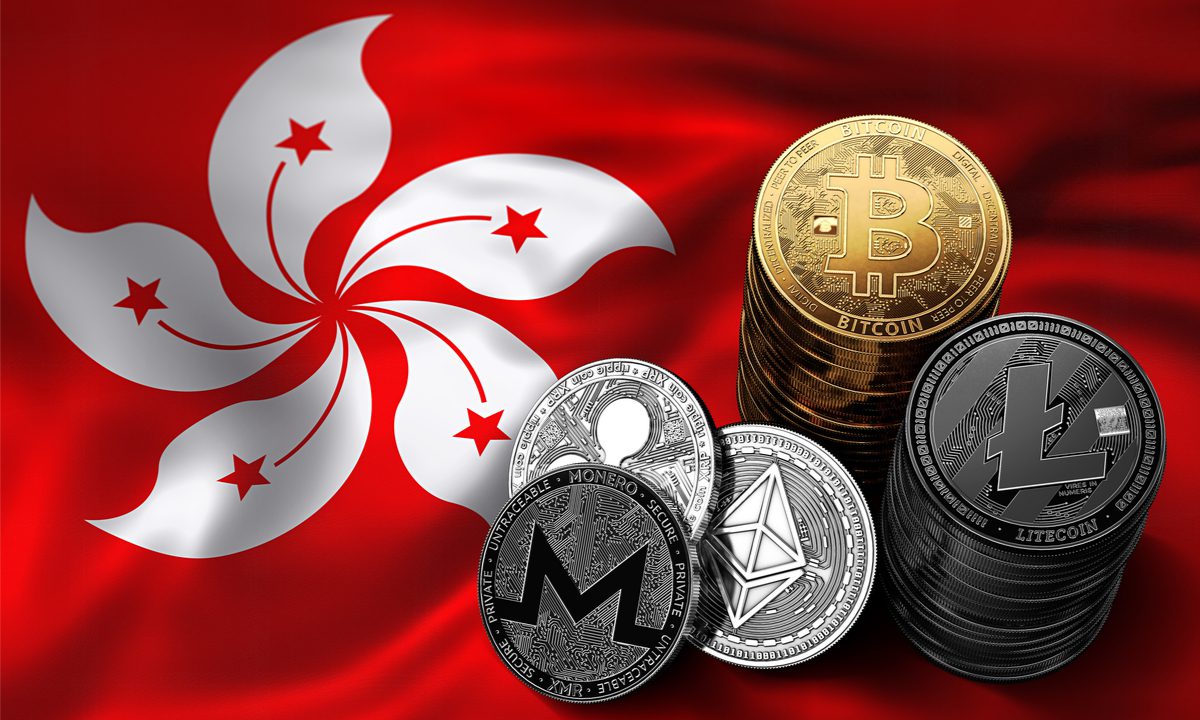
Hong Kong’s Securities and Futures Commission has intensified its scrutiny of virtual asset platforms offering staking services, emphasizing the associated risks and potential legal ramifications. The regulatory body has observed a surge in platforms promoting high-yield returns through staking, prompting a public advisory on the matter.

Staking, a process where cryptocurrency holders delegate their assets to support blockchain network operations, has gained popularity as a means to earn passive income. However, the SFC warns that many of these staking arrangements are not regulated, leaving investors vulnerable to significant risks, including the total loss of their investments. The commission highlighted that some platforms offer returns by on-lending deposited virtual assets or engaging in other investment activities without adequate transparency.

In a statement, the SFC underscored that certain staking programs might constitute unauthorized collective investment schemes . Under Hong Kong law, promoting or operating such schemes without proper authorization is a criminal offense, potentially leading to substantial fines and imprisonment.

The regulatory focus on staking services aligns with Hong Kong’s broader efforts to establish a comprehensive framework for virtual assets. The SFC has been actively exploring the introduction of new token listings, derivatives, and margin trading to enhance the city’s position as a digital asset hub. Julia Leung, the SFC’s Chief Executive, announced plans to potentially expand the regulatory framework to facilitate the listing of new tokens exclusively for professional investors and to review existing safeguards for retail offerings.

The SFC is considering the regulation of crypto derivative trading for professional investors, aiming to facilitate efficient risk transfer within the market. Staking is another area under review, with the commission planning to establish requirements governing the custody of client assets and mitigating risks associated with staking activities.

In addition to these initiatives, the SFC has been in discussions with crypto exchange-traded fund issuers about the possibility of including Ether staking options. This move could allow ETF issuers to stake ETH and generate passive income, providing investors with additional avenues for returns. However, these discussions are ongoing, and no definitive timeline has been established for implementation.

Ethereum’s performance relative to Bitcoin has declined significantly, with the ETH/BTC trading pair reaching its lowest level since March 2020. This downturn reflects Ethereum’s struggle to keep pace with Bitcoin’s recent market dominance.

The ETH/BTC ratio, a key indicator of Ethereum’s value compared to Bitcoin, has fallen to approximately 0.031. This means one Bitcoin is now equivalent to about 32.26 Ether, a stark contrast to previous periods where Ethereum showed stronger performance. This decline is attributed to Bitcoin’s substantial appreciation over the past year, outpacing Ethereum’s growth.

Bitcoin has experienced a remarkable surge, appreciating by approximately 158% over the past year. Its price escalated from around $41,000 in January 2024 to over $107,000. In contrast, Ethereum’s growth has been more modest, with its price increasing by about 35% in the same timeframe, remaining approximately 32% below its all-time high of $4,878 recorded in November 2021.

Several factors contribute to Ethereum’s underperformance relative to Bitcoin. Notably, the re-election of pro-crypto President Donald Trump has been associated with a favorable outlook toward Bitcoin, potentially influencing investor sentiment and contributing to Bitcoin’s price surge. Additionally, the rise of competing smart contract platforms, such as Solana, has intensified competition in the space, drawing attention and investment away from Ethereum.

Market analysts express concerns about Ethereum’s future trajectory. The declining ETH/BTC ratio suggests a shift in investor preference toward Bitcoin, potentially impacting Ethereum’s market position. Some analysts predict that if current trends persist, Ethereum may face further challenges in regaining its previous market dominance.

Bitcoin’s price experienced a significant drop, falling from over $83,000 to below $77,000 within a 24-hour period. This abrupt decline led to the liquidation of more than $1 billion in leveraged positions, with long positions accounting for approximately $865 million of the total. The sudden downturn caught many traders off guard, resulting in substantial financial losses across the cryptocurrency market.

Data from Coinglass indicates that a total of 305,170 traders were liquidated during this period, reflecting the widespread impact of Bitcoin’s price movement on investor positions. The majority of these liquidations stemmed from long positions, where traders had anticipated a price increase. As the market moved against them, forced sell-offs occurred, further accelerating the downward momentum.

Among the affected cryptocurrency exchanges, Bybit and Binance recorded the highest liquidation volumes, with $411.54 million and $242.25 million, respectively. Bitcoin itself accounted for the largest share of the total liquidations, contributing $371.66 million. Ethereum was the second most impacted cryptocurrency, with $200.94 million in liquidations, while other crypto assets collectively accounted for over $100 million. The single largest liquidation order took place on Bitfinex, involving a $13.40 million BTC position being forcefully closed.

The high liquidation volume suggests that many traders were caught off guard by Bitcoin’s price drop. With long positions dominating the liquidations, it indicates that market sentiment was largely bullish before the downturn. This scenario underscores the inherent volatility of the cryptocurrency market and the risks associated with leveraged trading.

Despite the sharp downturn, some analysts remain optimistic about Bitcoin’s long-term trajectory. Crypto analyst Javon Marks noted that indicators still suggest Bitcoin could be gearing up for a larger bullish rally. Meanwhile, RektCapital pointed out that Bitcoin’s decline has resulted in a fully filled CME gap between $84,650 and $93,300, which could potentially lead to a price reversal in the near term.

The recent price movement also aligns with patterns observed in previous market cycles. Historically, Bitcoin has experienced significant price corrections following substantial rallies. These corrections often lead to a shakeout of leveraged positions, contributing to market volatility. However, such corrections have also been followed by periods of consolidation and subsequent recoveries.

Market analysts suggest that the current price drop may be attributed to a combination of factors, including profit-taking by long-term holders and macroeconomic uncertainties. The broader financial markets have been experiencing volatility, with investors reacting to various economic indicators and geopolitical developments. These external factors can influence investor sentiment and contribute to price movements in the cryptocurrency market.

The recent liquidation event serves as a reminder of the risks associated with leveraged trading in the cryptocurrency market. Traders employing leverage amplify their potential gains but also their potential losses. In volatile markets, sudden price movements can trigger margin calls and forced liquidations, leading to significant financial losses.

The Emirate of Ajman has introduced a new law aimed at bolstering investment in its property sector while safeguarding investor rights and enhancing transparency. This legislative move is part of a broader strategy to position Ajman as a premier destination for real estate investment. The law seeks to encourage private sector participation in developmental projects and attract both national and international investments across various domains. It is […]

Ondo Finance’s native cryptocurrency, ONDO, is currently trading at $0.8041, reflecting a slight decline of 0.0131% from the previous close. The token’s intraday performance has seen a high of $0.8216 and a low of $0.7952.

The recent downturn in ONDO’s value aligns with escalating global trade tensions, which have introduced volatility across financial markets, including the cryptocurrency sector. Analysts are closely monitoring the $0.786 support level, considering it a critical threshold for ONDO’s short-term price stability. A breach below this point could signal further declines, while maintaining above it may indicate potential for recovery.

Technical indicators present a mixed outlook. The Relative Strength Index for ONDO stands at 41.91, suggesting that the token is neither in overbought nor oversold territory. Additionally, an uptick in trading volume during price dips points to increased selling pressure. Conversely, the proximity to the $0.786 support level offers a possibility for a rebound if buyers re-enter the market.

Ondo Finance has been proactive in bridging traditional finance with decentralized finance . The platform focuses on tokenizing real-world assets, aiming to provide institutional-grade liquidity solutions. Collaborations with prominent financial entities such as BlackRock, Franklin Templeton, and PayPal underscore its commitment to integrating conventional financial instruments with blockchain technology.

Cryptocurrency exchange FTX has disqualified approximately 392,000 customer claims after users failed to verify their identities by the March 3 deadline, potentially nullifying claims exceeding $2.5 billion. This action affects a substantial portion of creditors seeking restitution following FTX’s collapse in November 2022.

FTX creditor advocate Sunil Kavuri estimates that claims under $50,000, totaling around $655 million, and larger claims amounting to approximately $1.9 billion are subject to disqualification due to Know Your Customer violations. The KYC process, a standard compliance measure in the financial industry, requires users to provide personal identification information to prevent fraud and money laundering.

FTX’s bankruptcy proceedings have been complex and protracted. In October 2024, U.S. Bankruptcy Judge John Dorsey approved the company’s wind-down plan, allowing FTX to utilize up to $16.5 billion in recovered assets to fully repay customers. The plan prioritized customers with claims of $50,000 or less, aiming to reimburse 98% of such claimants within 60 days of the plan’s effective date.

The repayment process commenced on February 18, 2025, targeting the “convenience class” of creditors with claims under $50,000. Distributions were facilitated through cryptocurrency firms Kraken and BitGo, with customers expected to receive funds within one to three business days. FTX Recovery Trust Plan Administrator John J. Ray III acknowledged the significance of this milestone but emphasized the ongoing nature of recovery efforts.

The next phase of repayments is scheduled to begin on May 30, 2025, addressing larger claims exceeding $50,000. FTX has amassed an $11.4 billion cash reserve to fund these payments. Bankruptcy attorney Andrew Dietderich informed the court that while minor creditors have started receiving payments, the first distribution to major debt holders is set for late May.

Despite these efforts, some creditors have expressed dissatisfaction with the repayment terms. Concerns have been raised about reimbursements being based on cryptocurrency valuations from November 2022, when prices were significantly lower. For instance, Bitcoin was trading at approximately $16,000 during that period, compared to its current value exceeding $100,000. This discrepancy means that creditors might receive only 10–25% of their crypto’s current value.

Oil markets witnessed a significant downturn as Brent crude, the global benchmark, tumbled over 13% in two days, settling just above $66 per barrel. This sharp decline follows the dual impact of OPEC+ unexpectedly increasing production and the imposition of new tariffs by President Donald Trump.

On April 4, 2025, Saudi Arabia led an initiative within OPEC+ to substantially boost oil output by 411,000 barrels per day starting in May. This move aims to penalize member countries like Kazakhstan and Iraq for consistently exceeding production quotas. The decision contributed to an 8% drop in oil prices, with Brent crude falling below $65 per barrel for the first time since 2021.

Concurrently, President Trump intensified trade tensions by imposing tariffs on imports from Canada, China, and Mexico. China responded with a retaliatory 34% tariff on U.S. imports, escalating fears of a global economic slowdown and further pressuring oil prices.

Goldman Sachs revised its 2025 oil price forecasts downward, cutting Brent crude to $69 and West Texas Intermediate to $66 per barrel. JPMorgan raised its global recession probability to 60%, up from 40%, reflecting growing concerns over economic stability.

The surge in supply and escalating trade disputes have led to significant losses in energy stocks. Major oil companies, including Chevron, APA, Occidental Petroleum, and Diamondback Energy, experienced notable declines. The Energy Select Sector SPDR ETF fell nearly 7% on the day and almost 13% for the week.

Analysts suggest that until production is significantly reduced, oil prices may continue to fall. The geopolitical backdrop includes U.S. relations with Saudi Arabia, key to both energy policy and diplomatic efforts related to Russia, Iran, and broader Middle East tensions.

In contrast, natural gas stocks have shown resilience, supported by rising LNG exports and less exposure to OPEC’s dynamics. Companies like EQT, Expand Energy , and Coterra Energy are highlighted as attractive investments due to geographic advantages and favorable valuations.

The current downward trend in oil prices is primarily driven by OPEC+’s decision to increase output and the introduction of U.S. tariffs. Analysts expect the tariffs to curb economic activity and demand for energy, weighing on oil prices. The bank also said higher-than-expected crude supply and a demand squeeze from softer U.S. economic activity and tariff escalation posed downside risks to oil price forecasts.

The Organization of the Petroleum Exporting Countries and its allies, known as OPEC+, decided on Monday to increase output for the first time since 2022, further pressuring crude prices. The group will make a small increase of 138,000 barrels per day from April, the first step in planned monthly increases to unwind its nearly 6 million bpd of cuts, equal to almost 6% of global demand.

The larger-than-expected decline in crude stocks supported the downward trend in oil prices, pointing to weakening demand in the U.S. The U.S. Energy Information Administration is expected to announce the official inventory data during the day.

The risks to oil prices remain tilted to the downside with new supply from OPEC+ and non-OPEC producers expected to push the market well into an oversupply. Brent prices on Wednesday fell to their lowest since December 2021 after U.S. crude inventories rose and in the wake of the decision by OPEC+ to increase their output quotas.

Oil prices had already been trading lower in the last few weeks, partly because of expectations that U.S. president Donald Trump could swiftly end Russia’s war in Ukraine. This, in turn, is likely to increase Russian oil output thanks to sanctions relief.

The benchmark previously dropped to $66.77 a barrel, the lowest since November. “The current downward trend in oil prices is primarily driven by OPEC+’s decision to increase output and the introduction of U.S. tariffs,” said Darren Lim, commodities strategist at Phillip Nova. He said another factor was President Donald Trump’s decision to pause all U.S. military aid to Ukraine after his Oval Office clash with President Volodymyr Zelenskiy last week.

Those politics are likely connected with the wheeling and dealing of Donald Trump, referring to the U.S. president’s calls for lower oil prices. U.S. tariffs of 25% on imports from Canada and Mexico took effect at 12:01 a.m. EST on Tuesday, with 10% tariffs on Canadian energy, while tariffs on imports of Chinese goods were increased to 20% from 10%. Analysts expect the tariffs to curb economic activity and demand for energy, weighing on oil prices.

The bank also said higher-than-expected crude supply and a demand squeeze from softer U.S. economic activity and tariff escalation posed downside risks to oil price forecasts. Chinese demand is also down, with a period of refinery maintenance looming, said Josh Callaghan, head of crude derivatives at Arrow Energy Markets.

Oil prices declined for a third day on Wednesday, as investors worried about OPEC+ plans to proceed with output increases in April, and U.S. President Donald Trump’s tariffs on Canada, China, and Mexico escalated trade tensions. Brent futures fell $1.02, or 1.44%, to $70.02 a barrel by 1149 GMT. U.S. West Texas Intermediate crude declined $1.33, or 1.95%, to $66.93 a barrel.


Dr Imran Khalid President Donald Trump’s declaration of April 2, 2025, as “Liberation Day” marked a seismic shift in U.S. trade policy, with the imposition of sweeping reciprocal tariffs that have sent shockwaves through the global economy. The new measures include a universal 10% tariff on all imports, with punitive rates as high as 54% for China, 46% for Vietnam, and 20% for the European Union, alongside […]

KUALA LUMPUR, MALAYSIA – Media OutReach Newswire – 5 April 2025 – Octa, a global broker since 2011, recently received the FXDailyInfo award as ‘The Most Innovative Broker 2025’. This accolade yet again highlights Octa’s focus on incrementally improving its proprietary trading platform, OctaTrader. Financial portal FXDailyInfo recognised Octa as ‘The Most Innovative Broker 2025’. With this award under its belt, Octa broker has already gained 10 […]

Tether, the issuer of the world’s largest stablecoin, is evaluating the creation of a new digital currency designed to comply with forthcoming U.S. regulations. CEO Paolo Ardoino indicated that while USDT will maintain its focus on emerging markets, the proposed stablecoin would cater specifically to the U.S. market.

Ardoino emphasized Tether’s commitment to regulatory compliance, stating that the company is actively engaging with U.S. lawmakers to help shape stablecoin legislation. He noted Tether’s willingness to adapt its operations to align with legal frameworks, ensuring the company’s continued operation within the law.

The U.S. Congress is currently deliberating several bills aimed at regulating stablecoins. Notably, the STABLE Act, co-introduced by Representative Bryan Steil, proposes that stablecoin issuers maintain reserves consisting solely of high-quality liquid assets, such as U.S. Treasury bills and insured deposits. Ardoino confirmed Tether’s involvement in discussions regarding this legislation, highlighting the company’s proactive approach to compliance.

In addition to legislative engagement, Tether is expanding its global footprint. The company is finalizing the relocation of its headquarters to El Salvador after obtaining a digital asset service provider license there. This move aligns with El Salvador’s ambitions to become a digital currency trading hub, following its establishment of Bitcoin as legal tender.

Tether is also exploring opportunities beyond its traditional offerings. The company recently announced a partnership with Phoenix Group PLC to launch a Dirham -pegged stablecoin in the United Arab Emirates. This initiative aims to provide financial stability to individuals in high-inflation countries and enhance remittance services.

Tether is considering deeper involvement in the sports industry. The company holds a 5% stake in Italian Serie A soccer club Juventus and is open to increasing its investment if the current owners decide to sell more shares. This potential investment reflects Tether’s strategy to leverage its platform and user base to support global brands, particularly in emerging markets.

VISHNU RAJA
RYO YAMADA
HITORI GOTOH
IKUYO KITA