News related to
China

Matein Khalid Chinese fast-fashion giant Shein is set to list in Hong Kong on September 1 at a valuation of up to $27 billion. That is less than half the $64 billion valuation at which Abu Dhabi sovereign wealth fund Mubadala invested in 2023. It is a brutal comedown for a retailer once expected to be worth $100 billion. My knowledge of sartorial retailing is admittedly less than encyclopaedic. Yet I […]

Scientists in China have developed muscle grafts that contract continuously inside the body and reproduced several benefits of exercise in mice, raising the prospect of future treatments for people unable to exercise because of frailty, illness or prolonged bed rest. The experimental “myografts”, described in Nature Aging on August 26, were made from each animal’s own muscle cells and implanted beneath the skin. The grafts formed mature, […]

A US high-school student has made about $20,000 by selling a Telegram digital collectible awarded for his performance at this month’s International Olympiad in Informatics. Telegram founder Pavel Durov said Jonathan He, who won a gold medal and finished seventh overall at IOI 2026, sold his Algorithm Cup for 15,000 Grams, valuing the transaction at roughly $20,000. The collectible was among a limited set distributed to medal-winning […]

US authorities have warned that a China-linked hacking group built a distributed ecosystem of scanning, exploitation and proxy tools to target government networks and critical infrastructure, while court-authorised action has disabled two central platforms. The FBI, National Security Agency and US Cyber Command’s Cyber National Mission Force said QTFY, also known as QT and QTCYBER, developed purpose-built systems that allowed hackers to identify vulnerable devices at scale, […]

By TN Ashok INDIA bloc opposition leader and Congress chairperson Mrs. Sonia Gandhi’s forthcoming memoir, Belonging: A Journey of Love, has become a focal point of political controversy before a single copy has reached an Indian bookseller. The irony is considerable: a book about a woman who spent much of her public life guarding her […]

The article Sonia Gandhi’s Belonging: Penguin demanded unfair redactions appeared first on Latest India news, analysis and reports on Newspack by India Press Agency).

China’s data industry expanded to 6.78 trillion yuan in 2025, registering 15.7 per cent annual growth as artificial intelligence drove demand for specialised datasets, software and data-processing services.

Figures unveiled at the 2026 China International Big Data Industry Expo in Guiyang, Guizhou province, showed that data-related software products, including AI application software, and data-resource products involving token services generated a combined 4.99 trillion yuan. The two categories accounted for 73.6 per cent of the industry’s total output, underlining the growing commercial connection between data resources and AI development.

The number of data enterprises operating across China reached 482,000 by the end of 2025, an increase of 17.9 per cent from a year earlier. The eastern regions remained the largest concentration of activity, with their data industry valued at about 5.23 trillion yuan.

Growth has accelerated steadily over the past three years. China’s data industry was valued at 5.06 trillion yuan in 2023 and 5.86 trillion yuan in 2024 before climbing above 6.7 trillion yuan last year. Expansion has increasingly shifted from basic data collection and processing towards higher-value services designed for AI models, intelligent agents and industry-specific applications.

High-quality datasets have emerged as a particularly important segment. By August 2026, more than 126,000 such datasets had been established nationwide, containing more than 1,815 petabytes of data. Their combined volume has risen by more than 89 per cent since March, reflecting rapidly expanding demand from developers training and refining AI systems.

The broader supply of digital information is also growing sharply. China generated 52.26 zettabytes of data during 2025, up 27.28 per cent from the previous year and representing roughly 27.4 per cent of global data production. Enterprises accounted for about nine-tenths of the increase, with manufacturing, transport and logistics, software and information technology services recording especially strong gains.

That expansion is occurring alongside rapid growth in AI itself. China’s core AI industry exceeded 1.2 trillion yuan in 2025, with more than 6,200 specialised AI enterprises operating nationwide. More than 30 per cent of large manufacturing enterprises had adopted AI technologies by the end of the year, widening demand for industrial datasets capable of training systems for production, quality inspection, predictive maintenance and automation.

AI development is also changing the composition of the data market. Large language models initially depended heavily on publicly accessible text and image material, but developers are increasingly seeking proprietary industrial, scientific, financial, medical and operational data. The expansion of intelligent agents and embodied AI is adding demand for video, three-dimensional information, sensor readings, physical interaction records and synthetic data.

Intelligent-agent innovation has become another growth area. More than 3,400 patents associated with agent technologies were authorised during 2025, with the pace of growth more than doubling from the previous year. Commercial platforms are simultaneously combining access to multiple AI models with tools that allow companies to select, adapt and deploy systems without developing every component internally.

Policy is increasingly focused on turning China’s vast quantity of information into commercially usable AI resources. A national programme launched this year calls for high-quality industry datasets covering areas including scientific research, manufacturing, agriculture, energy, transport, financial services, healthcare, education, e-commerce, tourism, meteorology, urban governance, autonomous driving, embodied intelligence and biotechnology.

The programme is intended to expand dataset supply, improve annotation and quality assessment, encourage controlled circulation and connect dataset development more closely with practical AI applications. Authorities are targeting significant progress by the end of 2028, including industry datasets tested through real-world applications and specialised companies capable of developing tools and standards around them.

Arabian Post Staff -Dubai Jordan’s industrial exports to the UAE jumped 29% in the first half of 2026, adding about JD45 million to their value as manufacturers expanded sales across major regional and global markets. The increase implies industrial shipments to the UAE reached roughly JD200 million during the January-June period, compared with about JD155 million a year earlier. The JD45 million gain is equivalent to about […]

Advertisements

Venezuela is considering leaving OPEC as its energy relationship with the United States deepens, raising fresh questions over the producer group’s cohesion only months after the United Arab Emirates ended nearly six decades of membership. No final decision has been taken in Caracas, but the possibility of withdrawing from the Organization of the Petroleum Exporting Countries has figured in discussions involving Venezuelan and US officials. Such a […]

The UAE National Golf Team will leave for Beijing early on Saturday as a three-player squad prepares to contest the Nomura Cup, one of the Asia-Pacific region’s leading amateur team championships. Mohammad Skaik, Sayed Rayan Ahmed and Sam Mullane will represent the UAE at the Asia-Pacific Amateur Golf Team Championship, scheduled from September 1 to 4 at Bayhood No. 9 International Golf Club in Beijing. The delegation […]

China has formally removed Generals Zhang Youxia and Liu Zhenli from the state Central Military Commission, deepening an extraordinary leadership purge that has dismantled much of President Xi Jinping’s senior military command. The Standing Committee of the National People’s Congress approved the removal on Friday, seven months after authorities placed both officers under investigation for suspected serious violations of discipline and law. Zhang had served as the […]

Issac John The Silk Road Finance & Technology Forum concluded in Tashkent with a proposition that carries important implications for the UAE: Central Asia wants its historic trade routes transformed into new corridors for money, payments, technology and investment. For a country whose prosperity has been built partly on functioning as the commercial and financial crossroads between East and West, that raises an intriguing question. Does the […]

HOHHOT, CHINA – Media OutReach Newswire – 28 August 2026 – On 25 August, Hohhot convened a conference on deepening the integration of technological innovation and industrial innovation. At the event, the city officially released its Measures for Advancing Deep Integration of Technological Innovation and Industrial Innovation, together with an overarching implementation plan. The 20 measures share one objective: to place economic and social development firmly on an innovation-driven path and accelerate Hohhot’s emergence as an important growth pole for high-quality development in northern China.

Scene from Hohhot's Conference on Deepening the Integration of Technological Innovation and Industrial Innovation
Scene from Hohhot’s Conference on Deepening the Integration of Technological Innovation and Industrial Innovation

“The less developed a region is, the more it needs to pursue an innovation-driven development strategy.” This message, voiced at the conference, reflects the clear-eyed resolve of a provincial capital city.

That resolve is underpinned by real strengths.

Here, the National Dairy Technology Innovation Centre has shortened dairy-cattle breeding evaluation from four years to just 45 days and cultivated China’s first probiotic strain for infants and young children derived from Chinese breast milk, helping the “Dairy Capital of China” advance towards becoming a global dairy hub. A major scientific facility for aerospace, sky-to-ground, cross-scale metrology, benchmarked against international leaders, is rising in Horinger New District. Inner Mongolia University of Technology has launched the region’s first new-energy industrial large model open to the world. Meanwhile, a domestic enterprise—the only one currently able to produce 4N5 high-purity germanium products consistently—is helping quantum technology and calcium-titanium mineral photovoltaics overcome key raw-material bottlenecks. From a single microbial strain to a beam of light, technological and industrial innovation are converging here and reinforcing one another.

Even more compelling is the city’s tangible commitment.

Municipal fiscal investment in science and technology will double in 2026 and double again in 2027. Newly recognised national-level innovation platforms will receive a one-off research grant of RMB 3 million, while each “Qingcheng Science and Technology Innovation Leading Talent” may receive up to RMB 500,000 in research support. By 2030, Hohhot aims to introduce an additional 10 academicians of the Chinese Academy of Sciences and the Chinese Academy of Engineering, as well as 50 high-level innovation teams. Through a policy approach of “enjoy benefits without application and receive them directly and swiftly”, the city will provide inclusive computing-power vouchers, model vouchers and token vouchers to technology-oriented small and medium-sized enterprises—lowering barriers to innovation and demonstrating the city’s sincerity in supporting innovators.

The World Dairy Capital sculpture is unveiled at Yili Modern Wisdom Health Valley.

Openness is a defining feature of Hohhot.

Drawing on the Hohhot Area of the China (Inner Mongolia) Pilot Free Trade Zone, the city is building an international science and technology cooperation base with countries along the Belt and Road. It is also deepening coordination with Beijing’s Haidian District through a “two-hour innovation circle”, exploring a new pathway in which research and development take place elsewhere while results are transformed and applied in Hohhot. Hohhot understands that innovation cannot thrive as an undertaking enclosed behind walls.

Like the Mongolian horse, it is resilient, diligent and determined—never resting until the goal is achieved. This is the character of the city: the breadth and inclusiveness of the grasslands, combined with the courage and pioneering spirit to open northwards, explore new frontiers and put ideas into action.

From the “Dairy Capital of China” to China’s “Cloud Valley”, from the pastures of Chilechuan to the computing-power clusters of Horinger, this green city is becoming a city of innovation.

Hohhot extends an invitation to the world: here there are supportive policies, real-world application scenarios and a genuine commitment to partnership—together with a vast landscape in which to join hands with those who strive and build for the future.

Hashtag: #Hohhot

The issuer is solely responsible for the content of this announcement.

  • IFPHK x YF Life: Hong Kong–Macau Retirement Expense Indexrises to 131.6 — Monthly Spending Reaches HK$15,090
  • Retiree Living Costs Have Risen Nearly 3 Times Faster Than General Inflation Since 2020

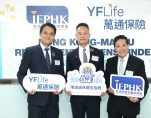
HONG KONG SAR – Media OutReach Newswire – 27 August 2026 – The Institute of Financial Planners of Hong Kong (IFPHK), in collaboration with YF Life Trustees Ltd. (YF Life Trustees), today launched the “IFPHK x YF Life: Hong Kong–Macau Retirement Expense Index” (Index). While the Index has been tracking retiree living expenses since its inception in 2020, this year marks the first time IFPHK and YF Life Trustees have partnered to expand the study to cover both Hong Kong and Macau, providing a broader regional benchmark.

Retirement Costs Soar Faster Than Inflation, Monthly Spend Hits HK$15,090: Over 72% of HK Retirees Wish They'd Acted Sooner

The findings show that retiree inflation in Hong Kong has continued to outpace general inflation. The Index rose to 131.6 in 2026, up from 127.0 in 2023 and 100 in 2020, while average monthly spending increased to about HK$15,090 in 2026. On an annualised basis, the Hong Kong Retirement Expense Index grew by more than 5% per annumfrom November 2020 to May 2026, compared with about 1.8% per annum for Hong Kong’s Composite CPI over the same period, showing that retiree living costs have effectively appreciated close to three times faster than Hong Kong’s general Composite CPI over the same period, underscoring how retirement-specific inflation — driven by travel and dining — is materially outpacing headline price trends.

Furthermore, the study reveals that more than 72% of retirees carry at least one regret regarding their retirement preparation. Most commonly, respondents feel they should have started saving or investing earlier and learned about financial planning sooner, while many continue to express concerns about medical costs, inflation, longevity risk and the risk of outliving their savings.

Dr. Paris Yeung, Chief Executive Officer of IFPHK, stated: “The findings show that satisfaction alone does not mean retirees are fully prepared. More than 72% say they have regrets, and the most common regrets point clearly to the need to start saving, investing and planning earlier. At the same time, retiree inflation has been rising faster than headline inflation, which means future retirees need more robust and flexible plans to protect their purchasing power over time. Through this expanded collaboration with YF Life, we aim to provide deeper regional insights to help future retirees plan with greater confidence.”

He added: “Turning regret into action requires starting earlier, integrating healthcare protection into retirement planning, viewing MPF as a steady retirement paycheck, and engaging qualified financial planners to address estate planning gaps. More importantly, retirement planning should shift from a rigid, set-and-forget approach to a flexible plan that adapts to each retiree’s evolving needs—what we call moving from a ‘fixed plan’ to a ‘flexible, evolving strategy’. Our goal is to help future retirees achieve sustainable and wellplanned golden years.”

Mr. Alvin Tse, Chief Executive Officer of YF Life Trustees, stated: “As the exclusive Project Sponsor of this expanded regional study, YF Life is proud to collaborate with IFPHK on this critical benchmark for Hong Kong and Macau. The 2026 data clearly shows that while retirees desire active lifestyles, they are heavily squeezed by medical inflation and the fear of outliving their wealth. To bridge this gap, retirees must shift away from viewing retirement savings as a static lump sum. By maximizing the flexibility of the MPF through phased withdrawals and mixed-asset strategies, alongside pairing them with lifetime annuity-style income streams and robust medical protection, individuals can effectively convert accumulated assets into a predictable, lifelong paycheck. True financial peace of mind comes from building an integrated fortress that safeguards against both market volatility and longevity risk.”

Key Highlights of the Study:

  • Retiree Inflation Has Outpaced General Inflation: The Index rose from 100 in 2020 to 131.6 in 2026, with average monthly retiree expenses increasing to about HK$15,090 and the Index growing at more than 5% per annum versus about 1.8% for Hong Kong’s Composite CPI for the same period. This escalation is driven partly by travelling and cross‑boundary transport—with roughly four out of five retirees visiting GBA Mainland cities and spending about RMB 1,100 per trip. This suggests that general inflation figures may understate retirees’ actual cash‑flow needs, highlighting the importance of planning for inflation‑protected retirement income and periodically rebasing budgets using a retiree‑specific living expense index rather than general CPI so they can maintain their intended post‑retirement lifestyle.
  • Retirees’ Satisfaction Masks Ongoing Financial Anxiety and Planning Gaps: Although many retirees report being satisfied with their current retirement life, concerns remain widespread, with 51% worrying about unexpected medical expenses, 41% about inflation and 77% still lacking any form of estate or asset planning. This suggests that retirees should turn present satisfaction into future resilience by building healthcare and contingency reserves, setting clear drawdown rules to manage longevity risk, and putting in place basic estate and incapacity documents such as wills, enduring powers of attorney and advance directives well before potential health or family crises arise.
  • Conservative Spending but Widespread Regret—Especially Among Asset‑Rich Retirees
    Actual retirement spending remains conservative, with average retirement expenses in 2026 equal to about 49% of pre‑retirement income. Yet more than 72% of retirees say they would have done something differently in preparing for retirement, most notably saving or investing earlier, learning financial planning earlier and communicating more openly with family about money and care needs. This pattern emphasizes that future retirees should start disciplined saving, investing and family financial discussions much earlier, even when their asset position appears comfortable.
  • MPF Transitioning Toward Income Support: While most eligible retirees still treat MPF as a lump sum, with about 76% having fully withdrawn their benefits in 2026, the scheme is gradually shifting toward an income‑support role, as 22% now use MPF to fund monthly expenses, up from 12% in 2023. Retirees are encouraged to treat MPF as part of a structured retirement income strategy, considering phased withdrawals, annuity‑style income solutions, and planned drawdowns rather than a single cash‑out, converting accumulated MPF assets into a more predictable and sustainable retirement paycheck.

Hashtag: #IFPHK #YFLife #RetirementPlanning

The issuer is solely responsible for the content of this announcement.

About “IFPHK x YF Life: Hong Kong–Macau Retirement Expense Index”

The “IFPHK x YF Life: Hong Kong–Macau Retirement Expense Index” was jointly launched in 2026 by the Institute of Financial Planners of Hong Kong (IFPHK) and YF Life Insurance International Limited. Since 2020, the Index has been the only long-term, retirement-specific benchmark tracking retirees’ actual living expenses. As the first study of its kind by IFPHK, the Index tracks and measures long-term changes in retirees’ actual living expenses with reference to the Composite Consumer Price Index (CPI) and the expenditure weightings published by the Government.

In the Hong Kong survey conducted in June 2026, NielsenIQ (NIQ) interviewed 304 retirees aged 55 to 74 with monthly personal income of at least HK$20,000 before retirement and not receiving means-tested social security or charitable support.

About IFPHK

IFPHK was established in June 2000 as a non-profit organization for the fast–growing financial industry. The Institute is the sole licensing body in Hong Kong authorized by Financial Planning Standards Board Limited to grant the much-coveted and internationally recognized CFP® certification and AFP® certification to qualified financial planning professionals in Hong Kong and Macau. Currently there are more than 236,000 CFP certificants in 29 regions; the majority of these professionals are in the U.S., China, Japan, Canada and Brazil. As at 28 February 2026, Hong Kong had approximately 3,238 CFP certificants.

At present, IFPHK has 5,298 members in Hong Kong including 956 Qualified Retirement Adviser (QRA) holders; and represents financial planning practitioners in diverse professional backgrounds such as banking, insurance, independent financial advisory, stock broking, accounting, and legal services.

About YF Life Trustees Ltd. & YF Life

YF Life Trustees is a member of YF Life Insurance International Limited (YF Life), and was among the first group of institutions approved as a Mandatory Provident Fund (MPF) scheme trustee. The company specializes in providing MPF services and is committed to creating long-term value for its scheme members.

The major indirect shareholders* of YF Life Insurance International Limited (“YF Life”) include Massachusetts Mutual Life Insurance Company (“MassMutual”), which itself has over 170 years of experience and is one of the Five Largest US Life Insurance Companies**, as well as Yunfeng Financial Holdings Limited, among others. YF Life is a long-term strategic partner of Barings. We stay at the forefront of Hong Kong’s insurance industry with our superior global investment capabilities, extensive partnership network, and fintech innovation.

* MassMutual and Yunfeng Financial Holdings Limited have indirect shareholdings in YF Life.
** The “Five Largest US Life Insurance Companies” are ranked according to the results of “Insurance: Life, Health (Mutual)” and “Insurance: Life, Health (Stock)”on total revenues for 2025, and based on the FORTUNE 500 as published on June 3, 2026.

HONG KONG SAR – Media OutReach Newswire – 27 August 2026 – In an era when enterprise software valuations are being fundamentally repriced by the rise of agentic AI, Deepexi Technology Co., Ltd. (1384.HK) has emerged as a rare counterexample: a pure-play enterprise AI platform that is delivering both technology leadership and bottom-line profitability. According to the company’s first interim results following its public listing, Deepexi recorded a 115% year-over-year surge in revenue for the first half of the year, powered by a 209% leap in core AI revenue and a decisive turnaround to quarterly GAAP profitability in the second quarter of 2026. This performance has earned the company “Buy” and “Overweight” ratings from multiple brokerages within its first year of listing.

Quarterly Profitability: A Rare Milestone in Hong Kong’s AI Sector

In capital markets, ambitious visions must ultimately be backed by real financial performance—and Deepexi’s interim results provide clear proof of execution.

For the first half of 2026, the company generated RMB 284.0 million in total revenue, marking a 115.0% year-over-year increase. Its AI business served as the primary growth engine, contributing RMB 226.0 million—an impressive 209.2% year-over-year surge—bringing AI revenue to 79.6% of total corporate turnover.

Even more noteworthy is the marked improvement in profitability. First-half gross profit reached RMB 160.0 million, up 120.5% year-over-year, with gross profit margin expanding to 56.5%. Crucially, during the second quarter of 2026, Deepexi posted a standalone quarterly net profit of approximately RMB 30.1 million, officially crossing the breakeven threshold.

In Hong Kong’s technology sector, pure-play enterprise AI companies capable of achieving quarterly net profitability while sustaining high R&D investment remain exceptionally rare. This milestone underscores Deepexi’s operational efficiency, scalable software delivery, and self-sustaining monetization engine.

This scarcity value is equally evident in the company’s revenue composition and vertical reach. Industrial manufacturing accounted for more than 50% of total revenue, while retail and consumer goods contributed 30%, alongside expanding footholds in healthcare and smart transportation. In manufacturing, for example, equipment troubleshooting and predictive maintenance involve dense engineering schematics, real-time IoT sensor telemetry, and extensive historical maintenance logs—all of which Deepexi translates into structured logic that AI models can readily interpret. This deep vertical expertise and proprietary data accumulation create a formidable competitive barrier that general-purpose AI vendors cannot easily match.

Beyond the “SaaSpocalypse”: Deepexi’s AI-Native Platform Defies the Software Valuation Reset

The first quarter of 2026 witnessed what market observers have dubbed the “SaaSpocalypse”—a tectonic shift in which approximately $2 trillion in market capitalization was erased from B2B software equities, driven by a fundamental fear that agentic AI would cannibalize the traditional per-seat licensing model. The iShares Expanded Tech-Software ETF (IGV) plunged nearly 21% year-to-date, and enterprise software multiples (EV/Sales) cratered from a 5.6x average at the end of 2025 to 4.2x by mid-March.

Investors have pivoted decisively toward AI-native infrastructure—companies that manage the data and underlying plumbing of autonomous systems—while penalizing traditional application-layer SaaS vendors reliant on human-centric interfaces. As a recent Windsor Drake analysis notes, “AI-native agentic platforms clear 14x to 22x revenue, with private rounds at 20x to 30x,” while legacy standalone RPA trades at just 2.5x to 5x. The market is now rewarding AI-native architecture and measurable workflow ownership.

Deepexi sits squarely on the winning side of this divergence. Unlike traditional SaaS vendors whose revenues are tied to human seat counts—and thus vulnerable to agentic displacement—Deepexi’s token-based, consumption-driven model aligns directly with the agentic AI future. The company’s DeepWorks enterprise Agent platform does not sell per-seat licenses; it sells AI productivity, enabling enterprises to deploy autonomous agents that replace repetitive administrative work, not software seats. As the market shifts from “AI as a feature” to “AI as a replacement,” Deepexi’s business model is structurally insulated from the seat-compression forces that have punished legacy software vendors.

Focus on Enterprise AI Applications and Proprietary Domain Data

To ensure AI truly meets real-world enterprise demands, generic foundational models are insufficient on their own. Deepexi’s core competitive edge lies in its specialized “Data + AI” dual-engine architecture, anchored by the FastData enterprise data intelligence platform, the FastAGI agentic AI suite, and the Deepexi Enterprise Large Model Platform, supported by its proprietary Deepology ontology dataset containing over 2,000 vertical industry skills.

At the foundational layer, the FastData platform—powered by the FastData Foil fusion engine—acts as an intelligent lakehouse that tokenizes structured, semi-structured, and complex unstructured enterprise data into standardized formats ready for large model training and inference. Building upon this data foundation, the FastAGI platform and DeepWorks Enterprise Agent Platform provide organizations with a flexible, modular AI operating system.

Featuring a pluggable architecture, the platform connects seamlessly to leading open-source foundation models such as DeepSeek and Zhipu AI, giving enterprise clients complete autonomy while eliminating vendor lock-in. This “model-agnostic” approach is a key differentiator in an environment where enterprises increasingly demand flexibility to choose the best model for each use case, rather than being locked into a single provider.

Through native Model Context Protocol (MCP) frameworks and specialized agents—ranging from operational decision-making agents to productivity and autonomous workflow execution agents—Deepexi embeds intelligence directly into core business operations. DeepWorks is fully integrated with mainstream workplace collaboration suites such as DingTalk, Feishu, and Tencent Meeting, allowing employees to summon AI copilots directly for automated weekly reporting, data synthesis, and cross-departmental coordination—effectively turning AI into an indispensable daily productivity tool.

In an enterprise AI market where 42% of organizations already have AI agents in production and 72% are deploying across production and pilots combined, Deepexi’s proven, governed agentic workflows are no longer an experiment—they are core infrastructure.

Strategic Partnership with Huawei Cloud: Tackling Compute and Data Bottlenecks

In the commercialization of enterprise AI, computing costs and access to high-quality domain data represent two of the industry’s most critical bottlenecks. On August 12, Deepexi announced a strategic alliance with Huawei Cloud to jointly launch enterprise data intelligence solutions, providing strong operational backing for the company’s long-term expansion.

The partnership combines the complementary strengths of both technology leaders. Huawei Cloud provides underlying Ascend AI computing clusters and distributed cloud infrastructure, while Deepexi brings its deep expertise in enterprise data governance, data tokenization, and vertical AI agent deployments. By integrating with Huawei’s domestic Ascend compute clusters, Deepexi not only secures stable, long-term computing power but also significantly drives down token processing costs. This cost efficiency establishes ideal conditions for exploring usage-based, token-metered commercial billing models—precisely the kind of consumption-based pricing that aligns with the agentic AI future.

Crucially, falling AI costs are widely expected to accelerate enterprise adoption of autonomous agents. Deepexi’s partnership with Huawei Cloud positions the company to capture this demand wave with a cost structure that improves as token volumes scale—a powerful margin-expansion dynamic that stands in stark contrast to the fixed-cost burden of traditional SaaS.

Strong Institutional Backing Highlights Long-Term Investment Value

Reflecting strong capital market confidence, Deepexi announced on August 17 the successful placement of 14,286,000 new H-shares at HK$35.00 per share, raising net proceeds of approximately HK$488.0 million. Successfully closing a sizeable placement amid broader market volatility demonstrates strong institutional recognition of Deepexi’s proven business model, robust unit economics, and profitability trajectory.

The company’s strategic shareholder structure provides a solid foundation for long-term growth. It is supported by prominent independent investors, including Hillhouse, 5Y Capital, and BAI, as well as industry-focused investors such as Shanghai AI. These partnerships enhance Deepexi’s industry reputation, drive technological innovation, and strengthen its market competitiveness.

The newly raised funds are earmarked primarily for continuous R&D in next-generation enterprise agent systems and token productivity platforms—positioning the company to capture the $206.5 billion AI agent software market projected for 2026, which Gartner expects to grow to $376.3 billion in 2027.

Investment Thesis: Why Deepexi Stands Apart

1. AI-Native Architecture in an Agentic World. Unlike legacy SaaS vendors facing seat compression, Deepexi’s token-based model is structurally aligned with the agentic AI future. The company doesn’t sell software seats—it sells AI productivity.

2. Rare Profitability in Enterprise AI. Quarterly GAAP profitability at a 56.5% gross margin, with projected revenue CAGR of 95.5% through 2027, places Deepexi among the most financially disciplined enterprise AI companies globally.

3. Model-Agnostic, Vendor-Neutral Platform. In an environment where enterprises demand flexibility, Deepexi’s pluggable architecture—supporting DeepSeek, Zhipu, and other open-source models—eliminates lock-in and captures value regardless of which foundation model wins.

4. Proprietary Data Moat. With over 2,000 vertical industry skills and deep expertise in manufacturing, retail, healthcare, and transportation, Deepexi’s domain-specific data capabilities create barriers that general-purpose AI vendors cannot replicate.

5. Strategic Compute Partnership with Huawei Cloud. Long-term, cost-effective compute access, combined with token-metered pricing models, positions Deepexi for sustained margin expansion as token volumes scale.

6. Institutional Validation. Backing from top-tier investors and a successful HK$488 million placement amid market volatility signal strong institutional confidence in Deepexi’s business model and growth trajectory.

The enterprise AI market has decisively shifted from early conceptual exploration into a new era of commercial execution and tangible financial delivery. Backed by mature product suites across FastData and FastAGI, proprietary vertical ontologies, strategic cloud partnerships, and an official transition to net profitability, Deepexi Technology has proven that enterprise AI can deliver both transformative technology and sustainable profits.

Hashtag: #DeepexiTechnology

The issuer is solely responsible for the content of this announcement.

About Deepexi Technology

Deepexi Technology is China’s leading provider of enterprise large model AI application solutions. Through its FastData enterprise data intelligence solution and FastAGI enterprise AI solution, it empowers enterprises to integrate their data, decisions and operations efficiently at scale. Deepexi ranked fifth in China’s enterprise large model AI application solution market in terms of revenue in 2024. Its solutions have achieved large-scale commercialization across multiple verticals, including consumer goods, manufacturing, healthcare and transportation. As of June 30, 2025, Deepexi Technology served a cumulative total of 283 enterprise customers across various industries.

This press release contains forward-looking statements that involve risks and uncertainties. Actual results may differ materially from those projected. The company undertakes no obligation to update any forward-looking statements.


HONG KONG SAR – Media OutReach Newswire – 26 August 2026 – SenseTime Group Inc. (“SenseTime” or the “Company”; Stock Code: 0020.HK) today announced its results for the first half of 2026. During the Reporting Period, the Group recorded total revenue of RMB2.91 billion, representing a year‑on‑year (“YoY”) increase of 23.4%, and gross profit of RMB1.21 billion, up 32.9% YoY. Gross profit margin reached 41.4%, an increase of 2.9 percentage points YoY. The Group also introduced recurring revenue (“RR”) for the first time, which totaled RMB1.14 billion and accounted for 39.3% of total revenue. The Group recorded a net profit of RMB620 million under International Financial Reporting Standards (“IFRS”), marking its first IFRS profit since its public listing. Generative AI revenue reached RMB2.33 billion, representing nearly 80% of the Group’s total revenue, while overseas business revenue increased 127% YoY, significantly outpacing the Group’s overall growth rate. While delivering healthy growth in revenue and gross profit, the Group continued to improve operating efficiency, with core operating losses narrowing significantly. Non‑IFRS adjusted net loss was RMB390 million, narrowing by 67.3% YoY.

The Group continued to accelerate the large‑scale commercial deployment of its AI capabilities, building system‑level AI capabilities around the framework of “one model system, one Token Factory, and one Agent Harness” to advance AI from intelligence generation toward end‑to‑end task execution and transform these capabilities into scalable commercial value.

Dr. Xu Li, Chairman of the Board and CEO of SenseTime, said: “SenseTime’s three-pillar core capability framework, built around ‘one model system, one Token Factory, and one Agent Harness’, uses a unified model system to continuously push the boundaries of intelligence, leverages infrastructure and optimization capabilities to reduce Token costs and strengthen cost‑based pricing power, and deploys agents deeply integrated into enterprise and individual workflows to deliver complete task execution capabilities. This framework enables SenseTime to move beyond pure price competition and create sustainable commercial value through differentiated technologies and services. At the same time, it allows us to expand our user base, drive recurring revenue growth, and lay a solid foundation for the Group’s high‑quality development.”

One Model System: Advancing Native Multimodal Intelligence and Long‑Horizon Agents with Global Leading Performance

In 2026, SenseTime released a series of models at a rapid pace, spanning native multimodal unification, visual perception and reasoning, controllable generation, long‑horizon agents, spatial intelligence, and physical world models. These included the NEO‑Unify architecture; SenseNova U1, U1.5 and U1.5‑Lite; SenseNova Vision; the office‑focused multimodal agent SenseNova 6.8‑Flash‑Lite; the content creation model SenseNova U1‑Pro; the spatial intelligence model SenseNova SI‑8B; and the Kairos 3.1 world model co‑developed with Ace Robotics. Across multiple core benchmarks, these models matched or outperformed leading international models, including Gemini, GPT, and DeepSeek. Less than four months after the U1 series was open‑sourced, the three projects had collectively garnered more than 11,000 stars on GitHub.

SenseTime is advancing from digital intelligence toward physical AGI through the closed‑loop framework of “architectural innovation, system capabilities, and high‑value delivery,” continuously translating technological breakthroughs into real-world applications and commercial value.

Token Factory: Upgrading from Compute Provisioning to Scaled Intelligence Production

SenseTime’s SenseCore is evolving into a production‑oriented Token Factory. Through integrated model and infrastructure optimization, as well as capabilities in model adaptation, inference optimization, heterogeneous scheduling, energy management and global service delivery, the Token Factory not only expands Token output and lowers unit costs, but also continuously enhances the reasoning, understanding, generation, and execution capabilities embedded in each Token.

In July 2026, SenseCore delivered an average daily Token service volume of 2.4 trillion, representing a YoY increase of approximately 22 times. As of the date of this announcement, the Group’s total deployed computing power had reached 48,000 Petaflops (P).

The Token Factory provides strong support for SenseTime in advancing the performance boundaries of its foundation models and scaling their commercial deployment. It has tripled the training speed for long‑context Agent models, increased image and video generation efficiency sixfold, improved reinforcement learning training efficiency, and shortened the cycle from model R&D validation to large‑scale deployment to just one week. In addition to supporting the SenseNova foundation model, the Token Factory now serves four external foundation model providers, establishing differentiated capabilities across high‑complexity computing domains, including AI for Science (“AI4S”), video generation, embodied intelligence, world models, and city‑level intelligent applications.

In addition, the Group remains committed to advancing the domestic compute ecosystem, increasing the MFU (Model Floating‑Point Utilization) of mainstream domestic chips by up to 2.5 times compared with the baseline levels established by chip manufacturers. SenseNova U1 has achieved Day 0 adaptation across more than ten domestic chip platforms.

Through compute‑energy synergy, the Company continues to reduce the unit cost of intelligence. During the Reporting Period, its Compute‑Energy Synergy Agent achieved load forecasting accuracy of 96% and generated cumulative electricity cost savings of more than RMB12 million. For every 10,000P of computing power, annual carbon emissions were reduced by 24,000 tons.

Agents Accelerate Adoption Across Enterprise and Consumer Markets, Delivering Value Through Workflow Integration and Enhanced Everyday Experiences

Building on its model and Token capabilities, SenseTime connects models, knowledge, tools, and workflows through a unified Agent Harness, transforming underlying AI capabilities into end-to-end task delivery solutions for enterprise and individual users.

The Group’s agents are rapidly expanding across both enterprise and personal workflows. During the Reporting Period, they served more than 1,000 enterprise customers across over 20 key industries, including education, government, marketing, logistics, banking, and insurance. The Office Agent, Raccoon, has served major enterprises including Lenovo, Ping An Technology, China’s three major telecommunications operators, JD.com, and Kylin Software. Total users increased more than fivefold YoY, enterprise users grew more than sixfold, and monthly active users on the cloud platform increased nearly tenfold. In addition, the video‑generation agent Seko reached a daily video production volume of 10,000 minutes. Content created on the platform has amassed an estimated 1.5+ billion views across short‑video platforms, including 10 short-form dramas that have each surpassed 100 million views. AI productivity solutions are also expanding beyond large organizations to serve smaller teams and One‑Person Companies (OPCs). In the consumer market, the Kapi series of agents, covering use cases such as health, finance, and content creation, has surpassed 45 million cumulative users.

Computer Vision remains a strategic gateway for the Group’s expansion into industry verticals and overseas markets. During the Reporting Period, revenue from the business reached RMB500 million, accounting for approximately 17% of the Group’s total revenue. The business extended across more than 20 countries and regions and served more than 4,500 customers worldwide, with recurring customers contributing 67% of revenue.

Bridging Digital and Physical Intelligence, Unlocking Ecosystem Value

SenseTime continued to invest in frontier areas, including world models and embodied intelligence, intelligent terminals, smart healthcare, and chips. The increase in the valuation of certain AI ecosystem investments generated fair‑value gains, contributing to the Group’s first‑ever IFRS profit and reflecting the gradual realization of financial value from our ecosystem assets. Beyond short‑term investment returns, the more significant long‑term value of these ecosystem investments lies in enabling the Group gain early access to frontier domains, continuously acquire real‑world tasks, data, and feedback, and further strengthen SenseTime’s unified multimodal models and system‑level delivery capabilities.

SenseTime is deepening its “Three-pillar Framework”: one model system to raise the ceiling of intelligence and expand agents’ ability to handle complex tasks; one Token Factory to improve quality and efficiency, reduce costs, and enhance global delivery capabilities; and one Agent Harness to integrate multimodal models with the Token Factory, enabling AI to complete end‑to‑end tasks in real-world scenarios.

Looking ahead, SenseTime will continue to advance the iteration of multimodal agents, driving the evolution of the Token Factory from pricing based on Token volume to pricing based on task outcomes. The Group will also deepen the application of multi‑agent collaboration across enterprise, individual, and OPC workflows, delivering efficient and reliable productivity solutions to users.

Hashtag: #SenseTime

The issuer is solely responsible for the content of this announcement.

About SenseTime

Founded in 2014, SenseTime is a leading artificial intelligence (AI) software company, committed to its mission of “creating a better AI-empowered future through original innovation”. The Company continues to lead cutting-edge AI research while accelerating the large-scale commercialization of AI technologies.

Leveraging deep academic expertise and strong in-house innovation capabilities, SenseTime continues to enhance its industry-leading multimodal, multi-task general AI capabilities, while fostering a vibrant developer ecosystem through structured open-source initiatives.

SenseTime’s business spans Generative AI, Vision AI, and emerging innovation-driven segments. Underpinned by SenseCore, its next-generation AI infrastructure, the Company integrates computing power, algorithms, and platforms to enable scalable AI deployment. Building on this foundation, SenseTime has developed the SenseNova foundation model series, delivering cost-efficient capabilities across a wide range of general AI tasks. SenseTime continues to lead the global Vision AI market, ranking No.1 worldwide by market share. Its SenseFoundry platform integrates years of accumulated computer vision expertise with advanced multimodal foundation models, providing stable and efficient Vision AI solutions to industries worldwide.

SenseTime is listed on The Stock Exchange of Hong Kong, with operations spanning more than a dozen countries and regions.

The United States has disrupted a China-linked cyber operation blamed for intrusions into some of the country’s most sensitive government networks, including the Justice Department, NASA, the Federal Reserve and the US Senate. Federal authorities on Wednesday seized internet domains supporting two hacking platforms, QScan and QTRouter, which investigators say were used to penetrate government agencies, critical infrastructure and corporate networks. The action effectively disabled key parts […]

Project integrates UNESCO-recognized Can Gio mangrove forest as core climate infrastructure, expanding ESG to include Regeneration and Climate Adaptation

HANOI, VIETNAM – Media OutReach Newswire – 26 August 2026 – Vinhomes Green Paradise, the 2,870-hectare coastal urban development in Can Gio, has become the first greenfield project worldwide to receive the Interim Custom ISO 37122 Smart City Certification from the World Council on City Data (WCCD), even before the arrival of its first residents.

An aerial master plan of Vinhomes Green Paradise in Can Gio, the world's first greenfield project to achieve early-stage ISO 37122 Smart City Certification from the World Council on City Data.
An aerial master plan of Vinhomes Green Paradise in Can Gio, the world’s first greenfield project to achieve early-stage ISO 37122 Smart City Certification from the World Council on City Data.

The milestone reinforces Vinhomes’ pioneering “ESG++” model for the project, a framework that moves beyond traditional environmental, social and governance pillars to explicitly incorporate Regeneration and Climate Adaptation as core design principles.

By placing the adjacent UNESCO-recognized Cần Giờ Mangrove Biosphere Reserve at the center of its urban strategy, rather than treating it as peripheral landscape, Vinhomes is demonstrating that large-scale coastal development can simultaneously address biodiversity loss, carbon sequestration and long-term climate resilience.

A measured response to the global urban health crisis

The urgency of rethinking urban models is underscored by global health data. According to the Health Effects Institute’s State of Global Air 2025 report, air pollution was linked to 8.1 million deaths worldwide in 2021, overtaking tobacco to become the second-leading global risk factor for death and the leading cause of death for children under five after malnutrition. The World Health Organization estimates that approximately 89% of the 4.2 million annual premature deaths attributed to outdoor air pollution occur in low- and middle-income countries, precisely the regions experiencing the fastest urban growth.

This reality has redirected global capital flows. Grand View Research projects the global smart-city market to reach USD 3.76 trillion by 2030, compounding at nearly 30% annually, one of the fastest expansion rates across any industry sector. In this context, the question is no longer whether smart cities are worth building, but which developments can demonstrate independently verifiable performance.

Vinhomes Green Paradise has addressed this global benchmark through its Interim Custom ISO 37122 Smart City Certification, awarded by the World Council on City Data (WCCD), which validates its smart infrastructure and data-driven urban governance against international standards.

Moving beyond conventional standards, the project operates under an elevated philosophy known as ESG++, integrating two commitments that extend well past standard corporate reporting: Regeneration and Climate Adaptation. Under the pillar of Regeneration, the development goes beyond traditional conservation by actively restoring local coastal ecosystems through targeted mangrove reforestation, biodiversity preservation and community environmental education.

Concurrently, its Climate Adaptation strategy re-engineers urban infrastructure to proactively withstand long-term environmental hazards such as sea-level rise, storm surges and coastal erosion, ensuring the city is built for future resilience rather than simply reacting to present conditions.

Community perspectives reflect the broader appeal of this approach. Ho Chi Minh City-based content creator FABO Nguyen, speaking to CNBC, described his affection for the city’s dynamism alongside growing concerns about air quality and congestion. For him, and for many urban residents weighing similar trade-offs, the Vinhomes Green Paradise model offers a forward-looking alternative that does not require leaving the region, but instead redefines what a sustainable, livable urban environment can look like.

Mangrove forests as climate infrastructure

What sets Vinhomes Green Paradise apart from most coastal megaprojects globally is not merely its size, but its ecological adjacency. The development borders the Can Gio Mangrove Biosphere Reserve, a UNESCO-recognized site spanning over 75,000 hectares, one of southern Vietnam’s most valuable natural assets.

Recent scientific research has revalued the role of mangroves in climate regulation. A study published in Nature Communications indicates that while mangroves account for just 0.36% of global forest area, they sequester carbon per hectare at nearly four times the rate of mature terrestrial forests, making them among the most efficient natural carbon sinks on Earth. According to the Blue Carbon Initiative, a single hectare of mangrove forest can store carbon equivalent to approximately 1,500 tons of CO₂, a figure no concrete structure can replicate.

Against a backdrop where global mangrove cover has declined by as much as 67% in some estimates, Vinhomes has adopted a preservation-first strategy. The Vinhomes Green Paradise master plan limits building density to just 16% of the total area and establishes a dedicated Forest Regeneration and Climate Adaptation Fund. These measures treat the adjacent mangrove ecosystem not as passive scenery but as active, natural defensive infrastructure against coastal erosion and storm surges, precisely the approach that climate scientists are urging coastal cities worldwide to adopt.

This ecological commitment aligns with measurable economic value. JLL’s research across Asia Pacific, based on an analysis of nearly 3,100 Grade A office buildings in 14 cities, shows that green-certified buildings can command rental premiums as high as 28% over non-certified equivalents in the region’s tightest markets, with supply continuing to lag behind occupier demand. Sustainability, in other words, has ceased to be simply a virtue and has become a measurable asset class.

Similarly, the global energy transition reinforces the viability of Vinhomes Green Paradise’s renewable-energy targets. The Global Wind Energy Council forecasts offshore wind capacity to nearly triple from 83 GW in 2024 to approximately 238 GW by 2030, while the International Energy Agency projects global renewable capacity to grow by 4,600 GW over the same period, equivalent to adding the combined current generation capacity of China, the European Union and Japan. Against this backdrop, Vinhomes Green Paradise’s ambition to run on offshore wind, solar and battery storage reflects a broader global trajectory rather than an isolated pledge.

A blueprint for 21st-century urbanization

Taken together, the ISO 37122 certification, the ESG++ framework, the strategic integration of the Can Gio mangrove ecosystem and the economic revaluation of green assets, Vinhomes Green Paradise presents a coherent response to a defining question in contemporary real estate: how to build cities that are both worth living in and built to endure.

The project’s recognition as the first Official Participant in New7Wonders’ global “7 Wonders of Future Cities” campaign further underscores its international relevance. Vinhomes Green Paradise serves as a notable reference point for coastal urban development, illustrating how economic growth and ecological preservation can be integrated in regional contexts.

Hashtag: #Vinhomes

The issuer is solely responsible for the content of this announcement.

About Vinhomes

Vinhomes is Vietnam’s largest residential real estate and integrated township developer. The company pioneers the development of synchronized, modern large-scale townships, delivering premium living standards and unlocking sustainable investment opportunities for domestic and international clients.

By Subrata Majumder In the post Japanese Yen appreciation era, Japanese overseas investment shifted to China and ASEAN for low-cost manufacturing, leaving India behind. The trajectory is now witnessing movement in the reverse gear, owing to US President Trump’s high reciprocal tariff. Japanese investment has surged in India, leaving China and ASEAN behind. While Japanese […]

The article Trump’s high-tariff regime revives Japanese investment in India appeared first on Latest India news, analysis and reports on Newspack by India Press Agency).

Washington’s expanding economic offensive against Tehran is threatening to squeeze China’s access to discounted Iranian crude after war, blockades and maritime attacks sharply reduced flows through the Middle East’s main energy chokepoints. Chinese imports of Iranian crude moving through the Strait of Hormuz averaged about 530,000 barrels a day in July and August, down roughly 36 per cent from the first half of 2026 and 72 per […]

SHANGHAI, CHINA – Media OutReach Newswire – 26 August 2026 – From tapping into the metro and paying at local shops to claiming tax refunds, booking family stays and unlocking dining benefits, Shanghai Summer 2026 is introducing visitor-focused products designed to make exploring the city easier for international travellers.

Running from July to October under the theme “Shanghai Summer, Join the Family Fun,” the international consumption season brings together payment networks, banks, hospitality groups and mobility providers to improve the visitor journey.

As a global strategic partner of Shanghai Summer, Visa is expanding its payment-friendly network across the city. Visa’s contactless “Tap to Pay” experience covers dining, accommodation, transport, tourism, shopping and entertainment. Visa data shows that in the first quarter of 2026, offline card spending by international visitors in Shanghai increased by more than 50% year-on-year, while transaction volumes rose by more than 60%.

China UnionPay is expanding its support for international visitors through the Nihao China App, an all-in-one digital platform combining payments, transportation, travel information and multilingual services. Available in more than 160 countries and regions, the app allows users to top up with international Visa or Mastercard cards and pay via UnionPay QR codes at more than 100,000 merchant locations. It also supports metro and bus travel in Shanghai, real-time translation, navigation and instant tax-refund services.

Bank of China Shanghai Branch has launched an upgraded Tax Refund 2.0 programme during Shanghai Summer. The initiative expands tax-refund services into hotels, supermarkets, restaurants, attractions and international talent service centres, supported by integrated POS refund functions and self-service tax-refund machines.

For travellers navigating the city, Shanghai Pass combines transportation, sightseeing and merchant benefits in one product. The card can be used across Shanghai’s metro, buses, ferries, suburban railways, Maglev services and taxis, while cardholders can access privileges at nearly 150 merchants.

Jin Jiang International is taking a similar integrated approach through its “2026 Jin Jiang ∞ Journey, Shanghai Summer” programme, combining hotels with cultural attractions, dining, guided city experiences and family entertainment. Its Shanghai Gourmet Passport 2.0 also connects dining, hotels and cultural experiences for international travellers.

Together, these products are making payment, transport, tax refunds, hotels, dining and attractions more connected — helping international visitors move more freely, pay more simply and experience more of Shanghai.

Hashtag: #ShanghaiSummer

The issuer is solely responsible for the content of this announcement.

XINYI, CHINA – Media OutReach Newswire – 24 August 2026 – In September 2025, the Huajiang Grand Canyon Bridge in Guizhou Province was open to traffic. This super project, “the world’s highest bridge both vertically and horizontally”, brought Huajiang Village, a once-quiet Bouyei ethnic village, its first full summer vacation season.

image-1.jpeg

Since the start of the summer vacation, the village’s 15 homestays and 13 restaurants have been fully booked every day.

Guizhou Huajiang Grand Canyon Bridge, photographed in September last year (drone photo)

With the booming cool-climate economy, nowadays, Huajiang Village has seen idle farm houses turned into high‑end homestays, home‑cooked meals upgraded into special local delicacies, traditional crafts developed into cultural and creative products, and migrant workers returning home to start businesses.

The village has taken on a brand‑new look with concrete roads, tidy surroundings and growing popularity, and local people’s livelihood and happiness keeps improving.

The booming cool-climate summer tourism industry has successfully converted cultural‑tourism traffic into sustained development momentum, injecting strong impetus into comprehensive rural revitalization.

Hashtag: #GuizhouDongjingCultureCommunication

The issuer is solely responsible for the content of this announcement.

Arjavi Indraneesh Iraq’s proposal for a joint security council bringing Saudi Arabia and Iran into a formal mechanism is more than another attempt at regional mediation. It reflects Baghdad’s growing conviction that diplomatic contact between the two powers, while valuable, is no longer sufficient to prevent security crises from spilling across borders. National Security Adviser […]

The article Iraq tests new security formula for Saudi-Iran rivalry appeared first on Latest India news, analysis and reports on Newspack by India Press Agency).

Cross-industry Collaboration to Support Northern Metropolis Growth
Total Investment Approximately HK$16.8 Billion

HONG KONG SAR– Media OutReach Newswire – 24 August 2026 – HSK New Development Limited, a joint venture formed by China Overseas Land & Investment Limited (Stock Code: 0688), China Merchants Land Limited (Stock Code: 0978), China Resources Land (Overseas) Limited, CTG Investment Management Corporation Limited, JD.com Inc., and Sino Land Company Limited (Stock Code: 0083), has been awarded the development project for the first pilot area within the Hung Shui Kiu/Ha Tsuen New Development Area (the ‘HSK Pilot Area’) in the Northern Metropolis. In full support of the National 15th Five-Year Plan and under the coordination of the HKSAR Government, the joint venture will leverage the strengths of cross-boundary collaboration across diverse industries to invest in, develop and operate a large-scale smart logistics project. The project will also incorporate residential and community commercial facilities, with innovative technologies driving industrial upgrading, contributing to the high-quality development of the Northern Metropolis and reinforcing the commitment to supporting Hong Kong’s long-term development.

Mr Daryl Ng, Chairman of Sino Land Company Limited

Mr Daryl Ng, Chairman of Sino Land Company Limited, said, ‘The National 15th Five-Year Plan states the accelerated development of the Northern Metropolis as a key priority of Hong Kong’s future growth engine. We are truly honoured to have been awarded the HSK Pilot Area project alongside our distinguished corporate partners. We have full confidence in Hong Kong and believe that the cross-sector collaboration can help bring together diverse expertise to contribute to the region’s innovation and technology development. In the HKSAR Government’s first Five-Year Plan, the Chief Executive also highlighted the pivotal role of the Northern Metropolis in enriching the housing ladder and creating more opportunities and space for home ownership. We are committed to bringing high-value industries and a quality living community to the Northern Metropolis, providing more housing and employment opportunities while enhancing connectivity between Hong Kong and cities across the Greater Bay Area.’

The HSK Pilot Area development project.

Hashtag: #SinoLand #NorthernMetropolis #HungShuiKiu

The issuer is solely responsible for the content of this announcement.

BEIJING, CHINA– Media OutReach Newswire – 24 August 2026 – The 2nd World Humanoid Robot Games opened yesterday at Beijing’s National Speed Skating Oval, also known as the “Ice Ribbon.” As another real-world validation of 5G Capital in robotics and embodied AI, China Unicom Beijing and Huawei have built an integrated digital foundation powered by a 5G-A GigaUplink network, supporting intelligent event operations, robot competition, and spectator experiences. The deployment also lays a connectivity foundation for humanoid robots to move beyond the arena and into everyday life. Across Beijing, 5G Capital’s region-wide GigaUplink network is providing ubiquitous, secure, and reliable connectivity for a growing range of cultural tourism, embodied AI, and Mobile AI applications and events.

China Unicom Beijing and Huawei Power the 2nd World Humanoid Robot Games with 5G-A GigaUplink

This year’s Games feature major upgrades in both scale and competition design. A total of 1,301 competitions across 51 events will see 2,056 humanoid robots from 666 teams worldwide take part. The number of events has nearly doubled from 26 in the inaugural Games to 51 this year, with new high-intensity head-to-head events such as table tennis and kickboxing. Scenario-based competitions have also expanded into real-world settings including industrial production, hotels, homes, and logistics, while dance events place greater emphasis on synchronized movement across multiple robots. More autonomous competition formats and significantly higher task complexity are placing stringent demands on networks for high-capacity uplink, millisecond-level responsiveness, and high reliability, supporting real-time robot telemetry, precise control signaling, and multi-robot coordination.

To meet these requirements, China Unicom Beijing and Huawei deployed a dedicated 100 MHz network, complemented by a 300 MHz LampSite ultra-wideband indoor network, to support real-time robot telemetry and precise signaling exchange. A dedicated 5QI 7 slice combined with carrier isolation keeps end-to-end latency for humanoid robots within 30 milliseconds, supporting millisecond-level decision-making and response while helping ensure the precision of multi-robot coordination, obstacle avoidance, and fine-motion control.

By further integrating the dedicated network with BeiDou RTK (Real-Time Kinematic) positioning, the solution delivers decimeter- to sub-decimeter-level positioning accuracy, supporting autonomous navigation, agile obstacle avoidance, and precision racing in complex environments. On-site tests recorded a peak uplink speed of 1 Gbps, with average latency below 30 milliseconds.

While safeguarding mission-critical connectivity for the robots, China Unicom has also made the network experience of on-site spectators a priority. To address the high-density, heavy-traffic demands of large crowds, network resources and service assurance policies are dynamically adjusted according to different phases and areas of the event, including admission, waiting, competition, and departure. Core services such as instant messaging, ticket inquiries, QR-code admission, and mobile payments are prioritized for stable access, while the network also accommodates data-intensive services such as photo uploads, short-video sharing, and live streaming. This allows spectators to stay connected, interact seamlessly, and share highlights in real time even during peak traffic periods.

On the operations side, China Unicom has also developed China’s first embodied AI robot management platform designed for event scenarios. Through a unique network ID assigned to each robot, event staff can monitor its location within the venue, competition status, and operational metrics in real time, creating a closed-loop operations and management system.

China Unicom and Huawei Together Advancing the 5G Capital initiative

Yang Lifan, Deputy General Manager of China Unicom Beijing, said: “This network deployment is not only a real-world test of China Unicom’s network capabilities; it will also help us accumulate valuable network assurance experience for the large-scale deployment of embodied AI. China Unicom will continue to build on the experience gained through the 5G Capital initiative and turn technological innovation into tangible and replicable network capabilities for the Mobile AI era. In doing so, we aim to support industrial innovation and help bring Chinese solutions to the world with China Unicom’s expertise.”

David Li, President of Huawei’s Wireless TDD Product Line, said: “The 2nd World Humanoid Robot Games have provided a compelling real-world validation of the 5G-A 100 MHz GigaUplink network based on 3.5 GHz 2CC + 2.1 GHz SUL for embodied AI scenarios. Looking ahead, Huawei will continue to work with China Unicom Beijing to strengthen uplink capabilities and advance spectrum coordination, building multidimensional network capabilities with tiered and differentiated service assurance for multimodal device-to-cloud transmission. This will enable real-time interaction and precise control across a wide range of embodied AI scenarios.

“Networks are about more than speed. Low latency, high reliability, and ubiquitous coverage are equally important. Building on these capabilities, we will further advance the 5G Capital initiative, continue to expand the boundaries of network performance, and lay a solid foundation for the Mobile AI era, working with industry partners to enable an intelligent future.”

Hashtag: #Huawei #WorldHumanoidRobotGames

The issuer is solely responsible for the content of this announcement.

VISHNU RAJA
RYO YAMADA
HITORI GOTOH
IKUYO KITA