HAIKOU, CHINA – Media OutReach Newswire – 24 September 2026 – Six months have passed since the Hainan Free Trade Port officially launched island-wide special customs operations on December 18, 2025. On June 18, Malaysia’s Nanyang Siang Pau, in collaboration with Hainan Daily Press Group, launched the financial video series Nanyang Interview: Exploring Opportunities in China’s Largest Free Trade Port, examining the development potential of the Hainan Free Trade Port and investment opportunities for ASEAN businesses.
A related report published in the digital edition of Malaysia’s Nanyang Siang Pau on June 18, 2026.
Economists interviewed for the series said that, as a key gateway to the world’s second-largest single market, ASEAN businesses cannot afford to overlook the historic opportunity to enter the Chinese market through Hainan. Chen Bo, Senior Research Fellow at the East Asian Institute of the National University of Singapore, said that with multiple policy incentives taking effect, the next decade represents a golden opportunity for Hainan. Xiao Saizi, a professor at the University of Nottingham Malaysia, noted that in the six months since the launch of special customs operations, the number of foreign trade companies registered in Hainan has grown rapidly. High-end manufacturing and processing industries—including chip packaging and testing, premium food processing, aviation maintenance, green energy, medical devices, and biopharmaceuticals—are among the sectors most likely to benefit.
Located at the southernmost tip of China, Hainan is within a four-hour flight of 21 Asia-Pacific countries. This natural geographic advantage makes it an important springboard for ASEAN businesses seeking to enter the Chinese market. Xiao said that Hainan received 106 million domestic and international tourist visits in 2025, making it an ideal testing ground where foreign investors can test the market at relatively low cost.
Previous surveys have shown that foreign exchange settlement is one of the key concerns for foreign investors. By the end of 2025, 11 banks in Hainan had launched EF accounts, enabling cross-border fund flows with 91 countries and regions, with total transaction volume equivalent to CNY 350.9 billion.
Several economists advised ASEAN businesses to conduct thorough internal assessments before making investment decisions. If they determine that the Chinese market will form part of their future growth strategy, they should consider entering Hainan early while the benefits of the Free Trade Port’s policies continue to unfold.
Hashtag: #FreeTradePort
The issuer is solely responsible for the content of this announcement.
WUHAN, CHINA – Media OutReach Newswire – 23 September 2026 – The Global Mayors Dialogue · Wuhan and the 2026 Wuhan International Friendship Cities Cooperation Conference, held from Sept. 18 to 21, brought together 80 international guests from 24 cities across 22 countries, according to organizers.
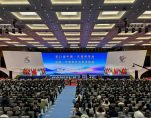
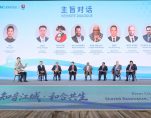
The Global Mayors Dialogue and the 2026 Wuhan International Friendship Cities Cooperation Conference kicked off on September 20.(Photo by Chen liang)
At the event, mayors and city representatives from six international sister cities of Wuhan called for closer cooperation in technology, industry, education and culture.
Representatives from Manchester in Britain, Kemi in Finland, Cape Town in South Africa, Yangon in Myanmar, Rzeszów in Poland and Turkistan in Kazakhstan took part in discussions on urban innovation, industrial cooperation and cultural exchange.
Manchester: a new start after 40 years of friendship
This year marks the 40th anniversary of the sister-city relationship between Wuhan and Manchester.
Shaukat Ali, lord mayor of Manchester, said the city was ready to deepen cooperation with Wuhan in education, culture, youth affairs, innovation and industry.
“Manchester is committed to promoting urban transformation through open cooperation, sharing opportunities, and fostering common development with international sister cities like Wuhan,” he said.
Ali said Manchester had developed from a post-industrial city into an innovation-oriented economy, with a focus on advanced manufacturing, artificial intelligence, life sciences and green technologies.
He said the two cities could share experience in urban transformation, innovation districts, university-industry cooperation and low-carbon development, while encouraging links among universities, businesses and research institutions.
He also highlighted existing educational and cultural links, including cooperation between Hubei University and Manchester Metropolitan University and exchanges between the Royal Northern College of Music and Wuhan Conservatory of Music.
Kemi: balancing growth with environmental protection
Mikko Koivulehto, chairman of the City Council of Kemi, said the Finnish city sought to balance economic growth with environmental protection.
“We believe that protecting nature and building a prosperous city can go hand in hand,” he said.
Kemi, a port city in Finnish Lapland, has developed industries based on renewable raw materials, clean energy and the bioeconomy. The city is also seeking to expand tourism and improve livability.
This year marks the 10th anniversary of the friendly exchange relationship between Wuhan and Kemi. The two cities have cooperated in areas including trade, the circular economy, tourism and youth exchanges.
Cape Town: technology and jobs key to urban transformation
Lungelo Mbandazayo, city manager of Cape Town, said technological innovation, talent development, infrastructure and green renewal were key to Wuhan’s transformation.
Cape Town, a UNESCO City of Design, is seeking to expand its technology and digital sectors while promoting green technology and an inclusive economy.
Mbandazayo said youth unemployment remained a major challenge for Cape Town and that technological development needed to create jobs.
After visiting Wuhan companies and technology facilities, he said Cape Town hoped to deepen exchanges with Wuhan in technology and talent.
Yangon: seeking practical cooperation with Wuhan
Yangon Mayor Myo Myint Aung said the city was looking to Wuhan for experience in smart-city development, digital governance, intelligent transport and urban resilience.
Wuhan and Yangon signed a letter of intent on friendly exchanges and cooperation during the event.
Yangon is developing a long-term plan to accommodate population growth and expand its urban, industrial and transport infrastructure.
During a visit to Wuhan on Sept. 19, Myo toured the Optics Valley “Photon” suspended monorail, HGTECH and a Xiaomi smart home appliance factory.
“We came to Wuhan not just to observe, but to learn and cooperate,” he said, adding that Yangon hoped to develop smart manufacturing and strengthen cooperation in information technology.
Rzeszów: opportunities in aerospace and technology
Rzeszów Mayor Konrad Fijołek said the Polish city hoped to cooperate with Wuhan in aerospace, sensor technology, biodiversity and climate action.
Rzeszów is home to the “Aviation Valley,” a major aerospace cluster in Central Europe.
“Exploring cooperation with Wuhan is the reason I came here,” Fijołek said.
After visiting HGTECH and a Xiaomi smart home appliance factory, he said Wuhan’s automated manufacturing and technologies in sensors and satellite systems had impressed him.
He said cities could help connect universities, businesses and research institutions and promote international cooperation.
Turkistan: five areas for cooperation
Turkestan Mayor Azimbek Pazylbekuly said his city hoped to expand cooperation with Wuhan in tourism and culture, education and science, investment and entrepreneurship, digitalization and innovation, and transport and logistics.
Wuhan and Turkistan signed a memorandum of intent on friendly exchanges and cooperation during the event.
Turkistan, an ancient Silk Road city and a UNESCO World Heritage site, has been developing industries including food processing, textiles, furniture and construction materials.
Pazylbekuly said cooperation between governments, businesses, universities and research institutions could help turn the two cities’ exchanges into concrete projects.
The conference also included friendship-city anniversary celebrations and a signing ceremony for 10 cooperation projects. A digital list of cooperation opportunities and an initiative on international friendship-city cooperation were released.
During their stay, the visiting mayors toured Wuhan’s technology, manufacturing and ecological facilities, including the Optics Valley suspended monorail, a Yangtze finless porpoise conservation center, Xiaomi, HGTECH and Dongfeng Motor facilities.
Hashtag: #wuhan
The issuer is solely responsible for the content of this announcement.
By Ashok Nilakantan Ayers NEW YORK: External Affairs Minister S Jaishankar arrived at the 81st UN General Assembly with an unusually broad diplomatic canvas before him. In meetings with European, Ukrainian, Arab, Asian and other counterparts, India was simultaneously talking to countries that sit on opposite sides of some of the world’s sharpest geopolitical divides. […]
A fresh outage on the C2C submarine cable system is contributing to packet loss and higher latency across parts of Asia, website security provider Sucuri said on Tuesday. Sucuri identified the disruption at 15:00 UTC on September 22, saying multiple simultaneous subsea cable outages were reducing backbone capacity available to its upstream network provider. Traffic was being rerouted over remaining paths, creating intermittent packet loss, slower responses […]
By Annie Domini MOSCOW: It might have been predictable to some extent, but United Russia scoring eight percentage points higher than the previous parliamentary elections in 2021, has, on the one hand, surprised some, while on the other, got branded as one of the ‘dullest election’ ever, despite the wartime upheavals. The just-concluded elections to […]
Chinese and US officials concluded a second day of economic talks in New York on Monday, focusing on artificial intelligence, investment and trade ahead of President Xi Jinping’s state visit to the United States this week. China’s Vice Finance Minister Liao Min said the Monday discussions concentrated on implementing understandings reached by the two sides’ lead negotiators. He spoke briefly outside JPMorgan Chase’s headquarters in Manhattan, where […]
Tencent Holdings has launched Hy Image 3.5 Preview, its latest image-generation model, expanding its push into generative artificial intelligence as competition intensifies with ByteDance and Alibaba Group.
The model supports text-to-image creation, image-to-image generation and multi-round editing, according to Tencent Cloud documentation published alongside the release. It can accept multimodal inputs combining text and reference images, preserve context across successive editing turns and produce images at resolutions of up to 4K.
Tencent said the model improves on Hy Image 3.0 in text rendering, realism, stylistic expression and editing consistency. The company said internal evaluations showed an overall capability improvement of about 30 per cent over the previous generation, though those performance claims have not been independently established.
The new system is being integrated into Tencent products including its Yuanbao chatbot and a range of design, productivity and creative tools, while developers can access it through Tencent Cloud’s TokenHub platform. Tencent’s cloud documentation lists the model under the identifier hy-image-v3.5-preview and says it can handle up to 100,000 input tokens for conversational image-generation and editing requests.
The release places greater emphasis on iterative visual production rather than single-prompt image creation. Users can provide reference pictures, request changes over several rounds and retain earlier context, allowing the model to perform tasks such as poster design, product-image editing and other workflows that require repeated adjustments.
Tencent also says the model can use external search enhancement and automatic prompt rewriting, while its application programming interface allows developers to specify image dimensions or let the system determine an appropriate format. The model supports output of up to 4,096 by 4,096 pixels under Tencent Cloud’s documented limits.
The launch comes as China’s largest technology groups broaden their AI offerings beyond large language models and compete more aggressively in image, video and agent-based systems. ByteDance has built a strong position in visual-generation tools through its Seedream family, while Alibaba has expanded its Qwen image models alongside a wider push into cloud infrastructure and AI chips.
Tencent said testing among hundreds of its in-house designers found Hy Image 3.5 Preview performed on a level comparable with ByteDance’s Seedream 5.0 Pro. It also claimed the model slightly exceeded Google’s Nano Banana Pro and Alibaba’s Qwen-Image-3.0 Pro in its own assessments. The company did not disclose full methodology or independent benchmark results for those comparisons.
The timing also coincided with Alibaba’s annual Apsara conference in Hangzhou, where the company outlined plans for a much larger next-generation AI model and introduced its Zhenwu V900 accelerator chip. Alibaba Chief Executive Eddie Wu said the planned model would contain between five trillion and 10 trillion parameters, potentially several times the size of its current flagship system.
Tencent has been accelerating investment in its Hunyuan model family while placing more emphasis on deployment across its existing products. Its Hy3 language model, released in July, was designed around a mixture-of-experts architecture and has since been integrated into services including WorkBuddy, Yuanbao and Tencent Cloud.
The company has also strengthened its AI research leadership. Former OpenAI researcher Yao Shunyu serves as Tencent’s chief AI scientist, while computer-vision specialist Tian Yonglong joined the company in July and leads vision-language model development within the Hunyuan team.
Tencent’s Hong Kong-listed shares climbed more than 6 per cent during Tuesday trading as investors reacted to the product launch and a broader rise in technology stocks. The stock had also advanced in the previous session.
For business users, Tencent Cloud is positioning Hy Image 3.5 Preview as a professional visual-production model rather than a consumer-only image generator. Its documentation says users can combine multiple reference images with text instructions, carry generated images forward into later editing rounds and receive synchronously generated results without submitting separate polling requests.
Alibaba Group unveiled its Zhenwu V900 artificial intelligence accelerator on Tuesday, saying the processor delivers three times the performance of its predecessor and is its most powerful AI chip yet. Chief Executive Eddie Wu introduced the chip at Alibaba’s annual Apsara Conference in Hangzhou, placing proprietary semiconductors at the centre of the company’s expanding artificial intelligence strategy. Alibaba said the V900, designed by its T-Head semiconductor unit, […]
Arabian Post Staff -Dubai New World Development Co. and Abu Dhabi Investment Authority are in talks with Singapore’s UOL Group Ltd. over a potential sale of the Hyatt Regency Hong Kong, Tsim Sha Tsui, in a transaction that could value the hotel at about HK$3 billion. New World is discussing the disposal of its 50% interest in the property, while Abu Dhabi Investment Authority, or ADIA, is […]
Focusing on “Nature-Positive” Concept: Inviting the Education Sector to Co-Create a Vision for Green Building
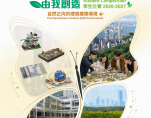
HONG KONG SAR – Media OutReach Newswire – 22 September 2026 – To enhance public understanding and awareness of green buildings, the Hong Kong Green Building Council (HKGBC) has launched “My Green Space” Student Competition since 2011. The Competition encourages students to unleash their creativity and integrate green building concepts into real life, thus creating ideal green spaces.
The 2026-2027 edition, solely sponsored by Chinachem Group, explores “The Ideal Nature-Positive Built Environment“. It seeks to inspire the younger generation to reimagine the relationship between cities and nature through creative thinking and to nurture future green building pioneers.
Organised by the Hong Kong Green Building Council (HKGBC) and solely sponsored by Chinachem Group, the “My Green Space” Student Competition 2026-2027 explores “The Ideal Nature-Positive Built Environment”. The Competition seeks to inspire the younger generation to reimagine the relationship between cities and nature through creative thinking and to nurture future green building pioneers.
Aligning with Policy: Urban Transformation and Ecological Balance
Natural ecosystems and biodiversity are essential foundations of human well-being and sustainable development. Amid escalating climate challenges, transforming cities into more sustainable built environments is paramount to balancing human development with nature conservation.
The Biodiversity Strategy and Action Plan (BSAP) updated by the Government of the HKSAR, underscores the urgency of protecting local biodiversity to foster the harmonious coexistence between humans and nature, as well as between urban development and ecological conservation. The Hong Kong Nature-based Solutions Design Guidelines (HKNbSDG) provides a localised framework in this regard for designing and implementing solutions to enhance climate resilience, promote biodiversity and coexistence of development and nature conservation.
This year’s Competition invites students to present their vision of a liveable, regenerative, zero-waste and circular built environment through the lenses of design, planning, engineering, climate-resilient strategies and nature-based solution, to help drive society toward a carbon-neutral and nature-positive future.
Open to Primary, Secondary and Tertiary Students with Comprehensive Support and Learning Experiences
The Competition features five divisions covering different learning stages: Junior Primary,Senior Primary, Junior Secondary, Senior Secondary, and Tertiary. To foster cross-regional collaboration, the Tertiary category welcomes student teams from across the Greater Bay Area.
Participants may submit entries in the form of 2D artworks (for the Junior Primary and Senior Primary Divisions only), 3D models, multimedia works, or proposals. Each entry must include at least one building of any type, allowing participants to explore the possibilities of green building through different creative formats.
To equip participants with fundamental knowledge of green building, HKGBC will organise “Green Building Tour and Training Workshop” to impart relevant knowledge. “The Companion Scheme” will also be launched, under which young green building practitioners from the “Green Building Young Leaders (GBYLs)” Programme will answer participants’ technical questions on a voluntary basis and provide professional advice throughout the Competition.
Entries will be assessed on four criteria: application of sustainability from the environment, economics and social aspects or green building concepts, originality, creativity and innovation, effectiveness of presentation, and feasibility of implementation. Participants who join the “Green Building Tour and Training Workshop” and complete the designated questionnaires will receive bonus marks.
Attractive Prizes and Development Opportunities to Help Students Build Careers
Each category offers Champion, First Runner-up, Second Runner-up and Merit awards, with cash prizes of up to HK$8,000, trophies and certificates. As the sole sponsor, Chinachem Group will also offer special awards to demonstrate its ongoing commitment to nurturing future talent. Full award details will be announced later.
Beyond cash prizes and certificates, HKGBC offers diverse extra recognition and development opportunities. Winning entries will be exhibited at D.PARK , further showcasing participants’ creativity and achievements and enriching their personal portfolios.
Tertiary winners may also be invited to internship interviews with Chinachem Group, Arup, and other leading green building organisations, thereby laying a solid foundation for future careers in green building and sustainable development.
Details of “My Green Space” Student Competition 2026-2027:
The Competition is open to students from local primary and secondary schools or local and Greater Bay Area Tertiary Institutions in the academic year 2026/27.
Students can participate as individuals or in groups of up to 6 members. Each participant can join one group only.
Each entrant or group is allowed to submit 1 entry only.
The issuer is solely responsible for the content of this announcement.
About the Hong Kong Green Building Council (HKGBC)
The Hong Kong Green Building Council (HKGBC) is a non-profit, member-led organisation established in 2009 and has become a public body under the Prevention of Bribery Ordinance since 2016. The HKGBC strives to promote the standard and development of sustainable buildings in Hong Kong. The HKGBC also aims to raise green building awareness by engaging the government, the industry and the public, and to develop practical solutions for Hong Kong’s unique, subtropical built environment of high-rise, high density urban area, leading Hong Kong to achieve carbon neutrality by 2050 and to become a world’s exemplar of green building development. The Founding Members of the HKGBC include the Construction Industry Council (CIC), the Business Environment Council (BEC), the BEAM Society Limited (BSL) and the Professional Green Building Council (PGBC).
Arabian Post Staff -Dubai Oil prices edged higher on Tuesday, snapping a four-session decline as traders balanced persistent Middle East supply risks against the possibility of diplomatic contacts between the United States and Iran during the United Nations General Assembly in New York. Brent crude futures for November rose $1.14 to $101.48 a barrel in early trading, while US West Texas Intermediate for October gained 87 cents […]
Drivers aged 8–17 build real race experience through qualifying, attack, defense and overtaking
HONG KONG / GUANGZHOU, CHINA – Media OutReach Newswire – 21 September 2026 — For a young racing driver, there is far more to learn from a kart race than simply setting the fastest lap. Organised by China Hong Kong Motorsports Centre (CHKMC) with the support of IAME Series Asia and HKAA, the opening round of the HK Youth Karting Championship 2026 was recently completed at Guangzhou Conghua International Circuit.
Over two days of practice, qualifying and competitive racing, young drivers from Hong Kong put their training into action, testing their speed, race craft and decision-making under genuine race conditions.
The championship features two categories — Cadet for drivers aged 8–12 using 60cc karts and Junior for drivers aged 12–17 using 125cc karts — competing on the approximately 1.2-kilometre, 14-corner circuit.
From lap time to real race craft
The weekend began with practice, allowing drivers to refine braking points, racing lines and corner-exit speed with support from coaches and mechanics.
Qualifying then challenged competitors to produce a competitive lap within a limited time on track to secure the best possible starting position.
However, once the racing began, outright speed was only part of the challenge.
With multiple karts fighting for position at the very first corner, drivers had to assess the traffic around them, choose attacking or defensive lines and decide when to overtake or hold position.
Over the two days of racing, the young drivers chased each other through various corners, with moments of side-by-side cornering, defending positions, and looking for overtaking opportunities. For young drivers, managing traffic on the track, race pressure, and split-second decision-making are experiences that are difficult to fully simulate in routine solo practice.
These situations help young drivers develop genuine race craft, which is an important step for a driver to learn, progress and grow in motorsports.
One Make Karting unifies kart and engine specification, putting the focus on the driver
The championship adopts a One Make Karting / Arrive & Drive format, with race karts and competition equipment arranged to a unified specification, together with designated practice and race tyres.
By reducing equipment differences, the format places greater emphasis on driving technique, consistency, decision-making and race strategy.
It also gives young racers stepping into competitive racing for the first time the opportunity to experience a complete race weekend, from practice and qualifying to race starts, on-track battles and post-session analysis.
The value of the first race is not measured by podium positions
In youth motorsport, results are important, but racing experience often has to be built up race by race.
A position gained or lost at the start, choosing the right moment to overtake, or learning how to recover after a mistake can become valuable lessons for the next race.
CHKMC Head Coach Chester Lam said, “Training can teach a driver racing lines, braking points and kart control, but a real race involves other drivers, starts, attack and defense, and pressure. It is a completely different situation.”
“Young drivers need real racing to gradually learn how to read a race. Every time they complete a race, they should be equipped with more experience than they had before.”
Karting has long been one of the first forms of competitive motorsport experienced by many professional racing drivers. CHKMC hopes to create more opportunities for young people in Hong Kong to develop from fundamental training to track driving and, ultimately, real racing.
From Hong Kong to a wider Asian racing stage
The aim of the HK Youth Karting Championship is not for every participant to become a front-running racer immediately, but to provide a platform where young drivers can compete, make mistakes, learn and gradually build their racing experience.
From lining up on the starting grid to attempting an overtake, defending a position or understanding tyres and changing track conditions, every race adds another layer to a young driver’s development.
The championship also connects young racers with the wider Asian karting scene.
Strong performers in the Cadet and Junior categories may have the opportunity to progress towards the IAME Asia Final 2026 in Macau, competing alongside drivers from across the region.
Round 1 complete, attention turns to the next challenge
Following the opening round, drivers and coaching teams started reviewing lap times, racing lines and overall performance as they prepare for the next race.
The HK Youth Karting Championship 2026 will continue with its next round at Guangzhou Conghua International Circuit on 10 – 11 October 2026, giving young racers another opportunity to apply what they learned and continue building valuable race experience.
For a young driver, the chequered flag at the end of one race is not the end of the journey.
Asian share markets advanced on Monday as technology stocks rallied on continuing demand for artificial intelligence infrastructure, while crude oil prices fell as traders assessed stronger-than-expected energy flows from the Middle East.
South Korea and Taiwan led the regional gains, reflecting renewed buying in semiconductor companies tied to expanding demand for data centres, memory chips and advanced computing. South Korea’s Kospi rose about 1.4%, while Taiwan’s benchmark gained around 1% and reached a three-month high. MSCI’s broadest index of Asia-Pacific shares outside Japan added roughly 0.9%.
Chinese blue-chip shares were also firmer, rising about 0.2%, while Japan’s cash market was closed for the Silver Week holiday. Nikkei futures nevertheless edged 0.2% higher. Trading across parts of the region was thinner than usual because Japanese markets will remain shut through Wednesday.
The strength in Asian technology shares followed continued investor focus on the capital spending required to support generative AI and cloud computing. Samsung Electronics rose sharply in Seoul, while Taiwan Semiconductor Manufacturing Co gained in Taipei, reinforcing the technology-heavy tone across major regional bourses.
US equity futures also pointed higher during Asian trading. S&P 500 futures gained about 0.4% and Nasdaq futures rose 0.6%, while European futures indicated a firmer opening, with EUROSTOXX 50 and German DAX contracts advancing.
Oil prices moved in the opposite direction. Brent crude fell about 1.7% to just above $102 a barrel, while US West Texas Intermediate dropped close to 2% to around $98.50. Both benchmarks had already weakened at the end of last week.
The decline reflected signs that more crude and other energy cargoes were moving through the Gulf despite continuing disruption linked to the conflict in the region. Data from Kpler showed Saudi Arabian crude exports recovering to just above 4 million barrels per day so far in September after dropping to about 2.4 million barrels per day in August.
Saudi shipments through the Strait of Hormuz have increased after disruption to the East-West pipeline and reduced flows through the Red Sea export hub of Yanbu. JPMorgan analysts estimated that total Middle East oil flows averaged 17.1 million barrels per day over the previous 10 days, suggesting that physical supply had proved more resilient than traders initially feared.
Energy markets were also monitoring the possibility of diplomatic engagement this week, which helped reduce part of the geopolitical risk premium built into crude prices. However, tensions remained high after further attacks involving Saudi targets, leaving traders cautious about assuming that supply risks had disappeared.
Bond markets remained another constraint on risk appetite. The US two-year Treasury yield was around 4.76%, after rising sharply over the previous two weeks. Futures markets were pricing a greater-than-even chance of another Federal Reserve rate increase in October following the central bank’s hawkish guidance last week.
Higher borrowing costs have complicated the outlook for equities even as technology stocks continue to attract capital. Investors are balancing the earnings potential created by AI-related investment against the prospect that restrictive monetary policy could persist as central banks attempt to contain inflation.
The US 10-year Treasury yield was close to 5%, keeping pressure on rate-sensitive assets and supporting the dollar. The currency was little changed around 157 yen, with investors alert to the possibility of intervention by Japan’s authorities during the holiday-thinned session.
The yen had strengthened sharply on Friday after Japanese authorities conducted rate checks in the foreign-exchange market. The euro was broadly steady near $1.148 after losing ground against the dollar over the previous week.
Gold prices were little changed to slightly lower as higher bond yields offset safe-haven demand generated by Middle East tensions. Copper, meanwhile, remained supported by signs of stronger demand from China and constrained inventories.
Australia’s S&P/ASX 200 was broadly flat, lagging the technology-led advances elsewhere in the region. India’s benchmark Sensex traded higher during the session, while Hong Kong shares also advanced as investors continued to favour large technology and internet companies.
HONG KONG SAR – Media OutReach Newswire – 21 September 2026 – Phancy Group Co., Ltd. (“Phancy” or “the Group”, stock code: 6682.HK), a leading full-stack enterprise-AI cloud services platform, ranked first overall in the latest 2026 China AI Computing Resource Management Platform Technology Capability Assessment, published by International Data Corporation (“IDC”), a global technology intelligence firm.
The assessment evaluated multiple leading AI computing resource management platform providers in China and noted Phancy’s industry-leading technological maturity across heterogeneous accelerator compatibility and adaptation, large-scale cluster operations, and delivery in hybrid cloud environments. Drawing on its accumulated capabilities in heterogeneous computing resource management, fine-grained GPU virtualization and agent-oriented computing services, Phancy received full scores and outperformed the industry benchmark in four out of six evaluated dimensions[1].
According to the IDC report, as AI moves into large-scale deployment, the growing adoption of AI agents is reshaping cloud infrastructure. In the meantime, AI infrastructure is evolving beyond basic computing capacity to become a core part of the enterprise technology stack, supporting digital and intelligent transformation.
Dr. Dai Wenyuan, Founder and Chief Executive Officer of Phancy, said: “The AI industry is moving beyond the ‘model race’ and entering a new phase of large-scale deployment. For enterprises, the real challenge is no longer whether they can access large language models, but about how to translate agentic AI capabilities into sustained productivity while keeping costs under control and operations stable. IDC’s assessment reflects the growing importance of unified management, flexible scheduling and fine-grained operations for heterogeneous computing resources. Phancy will continue to advance its capabilities in heterogeneous computing resource scheduling and agent infrastructure, helping more enterprises unlock the value of AI with greater efficiency, cost-effectiveness and reliability.”
Five Core Capabilities Behind Phancy’s Vendor-Neutral Unified Management Platform
At the core of Phancy’s offering is vendor-neutral unified management software that supports large-scale training and high-concurrency inference for mainstream models across chips from over ten leading vendors[2]. Its core technological capabilities include:
Code-compatible multi-chip virtualization: Phancy supports the partitioning of a single AI accelerator across multiple workloads, enabling mainstream frameworks and inference engines, including PyTorch, TensorFlow, vLLM and SGLang, to run without changes to application code. Resource quotas help maintain stability when multiple workloads run concurrently.
Three-tier resource pools and intelligent workload scheduling: Phancy’s platform provides three types of resource pools: dedicated, shared and overcommitted pool. Resources can be intelligently scheduled based on four dimensions (workload priority, hardware topology, real-time load and resource requirements), enabling large-scale training and high-concurrency inference workloads to run on the same infrastructure.
AI gateway and dual-track metering: The AI gateway provides unified management of model routing, API calls and audit activities. Usage is measured through both accelerator hours and token consumption, helping enterprises track costs and resource utilization from the perspectives of both resource consumption and model usage.
Agent-oriented computing services: Phancy’s platform turns heterogeneous computing resources into standardized services that AI agents can call on demand. These services support partitioning, reuse and elastic scaling. Combined with intelligent routing through the AI gateway, this accommodates the frequent calls and fluctuating workloads associated with AI agents, while token quotas and circuit-breaking mechanisms also help enterprises manage usage risks and costs when predefined limits are exceeded.
Operations and maintenance for heterogeneous computing resources: Phancy’s platform provides end-to-end observability spanning nodes, accelerators, workloads and model services. It supports fault isolation, workload rescheduling and private deployment in environments without public internet access, helping enterprises improve operational efficiency across complex heterogeneous computing environments.
The report highlighted a use case in which a Chinese policy bank significant improved resource utilization by using Phancy’s three-tier resource pool architecture to manage computing resources across three data centers in two locations, while also enabling a smooth business migration.
Looking ahead, Phancy will continue to advance its AI computing resource management platform as AI infrastructure shifts from traditional “cloud + AI” architectures toward greater cloud-native, agent-oriented integration. The Group will continue to help enterprises manage computing resources more efficiently, deploy AI across a wider range of production environments, and turn AI into sustainable business productivity at scale.
[1] The assessment evaluated platforms across six dimensions: computing resource management, computing service management, compute operations, Technical architecture, business scenario support, and delivery services. According to the IDC report, the findings are intended to help enterprises evaluate and select the platforms best suited to their needs.
[2] Phancy’s platform now supports accelerators from more than ten vendors, including Ascend, Hygon DCU, Cambricon, Iluvatar CoreX, MetaX, Moore Threads, Kunlunxin, Enflame, T-Head and Biren Technology.
Hashtag: #Phancy
The issuer is solely responsible for the content of this announcement.
About Phancy Group
Phancy Group (6682.HK) is a leading full-stack AI cloud services platform, providing comprehensive solutions for the AI 2.0 era. Our offerings include SageAIOS, HAMi vGPU and ModelHub XC, delivering efficient and scalable AI infrastructure with end-to-end capabilities. We provide a complete solution from heterogeneous compute resource management and optimization to the deployment of intelligent agent models. These solutions empower digital transformation across a wide range of industries, supporting our vision of building a large-scale and efficient “Token Factory.”
Guided by the mission of “AI for Everyone” and positioned as the “Navigator of AI,” Phancy Group is committed to becoming a global leader in Artificial General Intelligence.
NANNING, CHINA – Media OutReach Newswire – 20 September 2026 – On September 16, as an international science and technology exchange platform included in the list of cooperation initiatives for the series of leaders’ meetings on East Asia cooperation, the Fourth Forum on China-ASEAN Artificial Intelligence Cooperation was successfully held in Nanning, Guangxi. With the theme of “AI for Industries, Digitalization for Shared Future”, this forum was co-hosted by the China-ASEAN Technology Transfer Center, the China-ASEAN Innovation Cooperation Center for Artificial Intelligence, the Department of Science and Technology of Guangxi Zhuang Autonomous Region, and the Guangxi Institute of Industrial Technology. More than 700 government representatives, research scholars, tech entrepreneurs, and venture capital representatives from China and ASEAN countries gathered on site, focusing on three major directions, namely embodied intelligence, AI finance, and data circulation, discussing collaborative technological innovation, jointly pursuing industrial digital transformation, and comprehensively deepening pragmatic cooperation between China and ASEAN in the field of artificial intelligence.
Fourth Forum on China-ASEAN Artificial Intelligence Cooperation Successfully Held in Nanning, Drawing Over 700 Delegates
Coinciding with the historic milestone of the Pinglu Canal being completed and navigable, a canal opens up a physical trade corridor between China and ASEAN, opening a new chapter of digital economy collaboration. “Goods Flow Across Rivers and Seas, Digital Intelligence Connects ASEAN” has become the most distinctive symbol of the era at this forum. The forum closely follows the differentiated development path of “R&D in Beijing, Shanghai, and Guangzhou + Integration in Guangxi + Application in ASEAN”, solving problems through technological breakthroughs, gathering momentum through industry-finance linkage, and promoting effectiveness through scenario implementation, to deepen and solidify China-ASEAN AI cooperation.
Technology empowers the opening, creating a new paradigm of human-machine collaboration
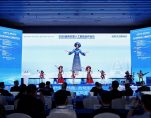
The forum kicked off with Guangxi’s classic ethnic song “Folk Songs like the Spring River”, where human dancers, dancing robots, accompaniment robots, and a digital crowd performing the folk song collaborated across disciplines to perform group collaborations. Relying on millisecond-level cluster scheduling technology, ethnic culture and embodied intelligence were deeply integrated to create an immersive technological audiovisual feast. This forum innovatively adopted a three-party collaborative hosting model of “human host + digital human avatar + intelligent robot”. Yang Yanqing, Professor of ShanghaiTech University, coordinated with her digital human avatar and AGIBOT Lingxi X2 to jointly host the forum, empowering the forum scene through technology, which became a major highlight of the event.
Dr. Padapxay SAYAKHOT, Director-General, Institute of Information and Communication Technology, Ministry of Technology and Communications, Lao PDR, Sun Ruijun, Director-General, China-ASEAN Technology Transfer Center, Secretary of the Party Leadership Group and Director-General, Department of Science and Technology of Guangxi Zhuang Autonomous Region, Secretary of the Party Committee, Guangxi Institute of Industrial Technology, delivered speeches in succession. Both sides stated that they will use this forum as a link to deepen the connection of scientific research and innovation, the implementation of industrial scenarios, and the coordination of policies and mechanisms, gather synergy for digital and intelligent development, and serve the building of a closer China-ASEAN community with a shared future.
Industry authorities gather, anchoring regional AI development directions
The speakers at the forum combined international breadth and professional depth, bringing together industry experts, academic and cutting-edge research forces, industrial technology, and cross-border implementation capabilities from ASEAN countries, forming a core high ground for intellectual exchange and gathering top intellectuals for China-ASEAN AI innovation and development.
Industry experts from ASEAN countries: Dr. Wasan Pattara-atikom, Vice President, National Science and Technology Development Agency, Thailand; Li Haizhou, Fellow of the Academy of Engineering, Singapore (SAEng), Dean of the School of Artificial Intelligence, the Chinese University of Hong Kong, Shenzhen; YAP Hwa Jen, Professor of Universiti Malaya, Managing Director of the UPUM Sdn. Bhd.;
Academic and cutting-edge research forces: Yang Chao, Professor of Peking University, Founder and Chief Scientist of Beijing 1011 Technology Co., Ltd.; Cui Peng, Professor of Tsinghua University and Chief Scientist of Stable AI (Xiong’an) Technology Co., Ltd.; Wang Shisong, Professor of Guangzhou University, Co-founder of Abelian (a quantum-resistant blockchain infrastructure);
Industry technology and cross-border implementation forces: Li Nan, Founder, Chairman, and CEO of Maimai Technology Group; Yao Yuan, Vice President of the Middle East Asia-Pacific Region Division, AGIBOT Innovation (Shanghai) Technology Co., Ltd.; Lyu Jun, Chief Scientist of Shanghai Noematrix Technology Co., Ltd.; Liu Liqi, General Manager of Data Strategy Department, X Square Robot Technology (Shenzhen) Co., Ltd.
The guests focused on three major directions, namely embodied intelligence, AI finance, and data circulation, exploring feasible paths for technological breakthroughs, ecosystem co-construction, and joint innovation. They covered the key stages of artificial intelligence from source research and development and technology transfer to industrial implementation and cross-border cooperation, achieving a two-way dialogue between cutting-edge academic theories and practical industry needs, and providing diverse perspectives and action ideas to bridge the regional digital divide and unlock the inclusive value of AI.
Five achievements released, strengthening the solid foundation for digital intelligence cooperation
At the forum, five scientific and technological innovation achievements were released together, constructing an AI innovation supply system oriented toward ASEAN from multiple dimensions including technology products, platform carriers, talent systems, and decision-making support.
1. The China-ASEAN Cross-Border Industrial Large Language Model: It covers multilingual capabilities and industry knowledge graph for ASEAN, integrates six major agents to collaboratively analyze business scenarios, and serves as a professional intelligent partner for Chinese enterprises to expand into the ASEAN market.
2. Achievements in AI Talent Development for ASEAN: Relying on the Guangxi Academy of Artificial Intelligence, a talent training model of “a dual-mentor system, dual-integrated teaching, dual training tracks, and an integrated master-doctoral program” has been created, achieving an international education pattern of enrolling at one university, earning credits from multiple universities, gaining practical experience in multiple countries, and strengthening talent support for cross-border AI cooperation.
3. “Guikerong” Sci-Tech Finance Digital-Intelligent Foundation Platform: Developed under the guidance of the Department of Science and Technology of Guangxi Zhuang Autonomous Region, it uses data-driven technology credit evaluation to open the value transformation chain of “technology, industry, and finance”, supporting the innovative development of technology-based enterprises.
4. Lao-Language Large Language Model (LLM) for the Energy and Power Sector: China’s first AI overseas project in the power industry, implemented on Electricite du Laos, exploring a new model of “Retaining Computing Power in Guangxi, Exporting Services Globally” for compliant token going global, providing a practical example for cross-border services in the energy sector.
5. “2026 China-ASEAN Artificial Intelligence Industry Development Study Report”: A panoramic overview of regional industrial policy environment, market scale, and application patterns, analyzing core industry development trends, and providing decision-making references for China-ASEAN AI industry cooperation.
Exhibition and negotiation are working together to build a pragmatic platform for exchange and cooperation
The forum adheres to the principles of “promoting research through exhibitions, cooperation through meetings, and implementation through business matchmaking”, simultaneously hosting the Special Session on AI: Bank-Enterprise Matchmaking and the Industry Supply-Demand Matchmaking and Technology Achievement Exhibition, achieving precise coordination between exhibition displays and business negotiations, and building a cross-border cooperation ecosystem deeply integrating industry, academia, research, and application.
The Technology Achievement Exhibition showcased high-tech products such as the General Embodied Intelligent Robot, Fingertip 3D Force Sensors, Integrated Land-Sea-Air Inspection Equipment, Smart Wall-Climbing Industrial Robot, and AI + Embodied Intelligence Teaching and Experiment Platform, covering key tracks like humanoid robots, industrial intelligent equipment, and education and training, demonstrating the innovative strength of domestic AI technology adaptation to ASEAN scenarios.
The venue also set up an immersive AI experience zone, where interactive projects such as coffee-making robots, agile robotic arms, AI customized cultural products, and unmanned retail attracted attendees to stop and experience the vivid effects of AI empowering people’s services up close, highlighting the development philosophy of technology for good and digital intelligence benefiting the people.
Focusing on collaborative win-win cooperation to jointly build a new pattern of regional development
As an international platform for scientific and technological exchange aimed at ASEAN, the Forum on China-ASEAN Artificial Intelligence Cooperation has been held consecutively for four sessions, bringing together more than 4,300 guests from China, foreign government, industry, academia, and research, facilitating the connection of over a hundred industrial projects, and becoming an important platform for the exchange of ideas, interconnection of technologies, and mutual industrial support between China and ASEAN in the field of artificial intelligence.
Looking to the future, China and ASEAN will continue to deepen cross-border joint innovation, promote the orderly flow of AI innovation elements, cultivate a vibrant and inclusive regional digital innovation ecosystem, facilitate digital intelligence benefiting regional industrial upgrading and livelihood development, and jointly build a new mutually beneficial and win-win pattern of China-ASEAN digital economy.
This forum was supported by the Ministry of Technology and Communications of Laos and the ASEAN Secretariat, and co-hosted by Guangzhou University, Guangxi Beibu Gulf Bank, Guangxi Academy of Artificial Intelligence, and Computer Academy of Guangxi.
The issuer is solely responsible for the content of this announcement.
By K Raveendran Donald Trump now possesses one of the most formidable economic weapons available to an American president against countries sustaining Russia’s energy revenues. Yet, the decision on how aggressively to wield it is complicated by a contradiction that Washington cannot easily escape: squeezing Russian oil out of the international market could also push […]
Waymo will launch a fully autonomous ride-hailing service in Singapore in 2028, making the city-state its first Southeast Asian market as the Alphabet-owned company accelerates its international expansion.
The company said an initial fleet of all-electric Jaguar I-PACE vehicles will arrive in Singapore over the coming months, with preparations beginning before a phased testing programme in 2027. Trained autonomous specialists will initially drive the vehicles manually while Waymo maps roads and adapts its self-driving system to local conditions.
The programme will expose the Waymo Driver to Singapore’s road geometry, dense traffic environment and monsoon weather patterns before the company seeks to move towards autonomous operation. Commercial rides are scheduled to be offered through the Waymo app in 2028, subject to regulatory approvals.
Initial operations are expected to focus on western Singapore, including the Labrador and HarbourFront area, before any broader passenger rollout is considered locally.
Singapore’s Land Transport Authority said Waymo would become the country’s newest autonomous vehicle operator, joining ComfortDelGro and Grab. The authority said it would work closely with the company to ensure deployments meet safety and regulatory requirements and help build public confidence in autonomous vehicles.
Waymo is entering a market where autonomous transport is already moving from trials towards limited passenger services. Public rides on autonomous shuttle services began in Punggol in April, while operators including Grab, WeRide, ComfortDelGro and Pony. ai are expanding deployments and testing additional routes.
Waymo’s arrival therefore adds a major US developer to a field that already includes regional and China-based autonomous driving companies. Singapore has sought to attract multiple operators as it develops a competitive autonomous mobility sector and evaluates how driverless vehicles could supplement existing public transport.
Transport Minister Jeffrey Siow said Waymo would bring technology and operational expertise while supporting Singapore’s goal of creating additional transport options. Authorities have also stressed that autonomous vehicle deployment will not be allowed to move faster than measures to retrain and support drivers whose jobs could be affected.
The government announced a manpower transition package in July aimed at helping drivers acquire new skills and, where appropriate, move into jobs created by the autonomous vehicle sector. The issue has become more prominent as testing expands from controlled trials towards services carrying members of the public.
Singapore’s regulatory framework requires autonomous vehicles to clear technical and operational assessments before carrying passengers and progressing towards driverless operation. The Land Transport Authority assesses performance on authorised routes, including whether vehicles can cover sufficient distance without intervention and handle a range of traffic situations within their approved operating areas.
The Ministry of Transport also opened a public consultation this year on a broader legislative framework covering autonomous vehicles, including responsibility, licensing, insurance, liability and enforcement. Existing rules already require authorisation for autonomous vehicle trials and use on public roads.
Waymo said its Singapore expansion would follow the phased approach it has used elsewhere. The company has completed more than 20 million fully autonomous passenger rides and more than 300 million autonomous kilometres, according to company figures, giving it one of the largest operating datasets among commercial robotaxi developers.
Its overseas push is gathering pace. Waymo is preparing for commercial autonomous services in Tokyo and has also announced plans involving London and Munich, as it seeks to extend technology developed largely on US roads to markets with different driving environments, regulations and weather conditions.
Singapore offers a compact but demanding testing ground. Heavy rainfall, complex urban traffic, motorcycles, cyclists and dense interactions around public transport infrastructure create operating conditions that differ from many of Waymo’s established US service areas.
The company says its vehicles use lidar, radar and cameras to maintain a 360-degree view of their surroundings. The Singapore fleet will initially use Jaguar I-PACE sport utility vehicles, although Waymo has not disclosed how many vehicles will be deployed at launch or the eventual size of its commercial fleet.
China-aligned threat actors are using Chinese-language casino and adult websites to conceal PeckBirdy command-and-control infrastructure, with Infoblox telemetry showing the framework touching networks across a broad range of enterprise customers. Infoblox Threat Intelligence said just over 3% of its enterprise customers resolved at least one domain associated with PeckBirdy, indicating that traffic linked to the campaign is appearing well beyond the narrow set of organisations previously connected […]
NANNING, CHINA – Media OutReach Newswire – 19 September 2026 – On September 17, the 23rd China-ASEAN Expo and China-ASEAN Business and Investment Summit opened in Nanning, Guangxi. With the theme of “CAFTA 3.0 Opportunities, Better Life”, the 23rd CAEXPO and CABIS was attended by Chinese and foreign leaders and important guests at the opening ceremony.
This year marks the 5th anniversary of the establishment of the China-ASEAN comprehensive strategic partnership, the inaugural year of the “Plan of Action to Implement the ASEAN-China Comprehensive Strategic Partnership (2026-2030)”, and a critical year for accelerating the implementation of the China-ASEAN Free Trade Area (CAFTA) 3.0 Upgrade Protocol following its signing.
The 23rd CAEXPO has a total exhibition area of approximately 170,000 square meters, showcasing the latest achievements of cooperation between China and ASEAN countries, as well as new business opportunities under the Version 3.0 China-ASEAN Free Trade Area (CAFTA). More than 3,400 enterprises from over 70 countries and regions are participating, with the total number of exhibitors increasing by 5.3% compared to the previous session. Timor-Leste made its debut as a formal ASEAN member state and co-organizer of the CAEXPO. This marks the first time that all 11 ASEAN countries have gathered in Nanning, Guangxi, since ASEAN’s expansion, representing a historic moment for the CAEXPO’s circle of friends. In addition to the main exhibition area at the Nanning International Convention and Exhibition Center, two other exhibition areas are set up at CAAIC Community and the Guilin International Conference & Exhibition Center.
For the first time, an ASEAN country demand exhibition is set up during the event, and an ASEAN demand list is released for the first time, focusing on showcasing projects and application needs of ASEAN countries in areas such as transportation, smart logistics, artificial intelligence applications, urban management, and park construction, creating a new one-stop precise matchmaking platform for China and ASEAN.
In addition, more than 50 economic and trade promotion activities will be held during the event, focusing on trade and investment facilitation and regional economic integration, cross-border industrial and supply chain cooperation, “Shop in China”, “Export to China”, “Invest in China”, and other topics.
Hashtag: #CAEXPO#CABIS
The issuer is solely responsible for the content of this announcement.
By T N Ashok The passage by the US Congress of the Lindsey O. Graham Sanctioning Russia and Iran Act of 2026 has confronted India with a problem that is simultaneously diplomatic, economic and strategic. The immediate headline is stark: the legislation creates a statutory pathway allowing President Donald Trump to impose tariffs of up […]
Cybersecurity researchers have identified a new Android malware strain that uses generative artificial intelligence to help attackers navigate infected devices and steal banking credentials, payment information and authentication codes. Zimperium’s zLabs team disclosed the malware, named RatHat, on September 16, saying its technical indicators point to threat actors who appear to be operating from China. The researchers stopped short of definitively attributing the campaign, basing the assessment […]
SHANGHAI, CHINA – Media OutReach Newswire – 17 September 2026 – Huawei today announced the Peerium Computing Architecture, a new computing architecture for the AI era. The architecture enables processors at the million scale to work as one computer, meeting the ever-growing demand for AI compute.
The Peerium Computing Architecture achieves strong scaling to the million-processor level through nested parallelism, unified memory addressing, and peer interconnect. It breaks through the Turing paradigm with the introduction of Nested BSP (Nested Bulk Synchronous Parallel), extends the von Neumann single-machine architecture, and overturns the master–slave architecture that has prevailed for decades, so that a million processors truly become one larger computer.
UnifiedBus (UB) is the key interconnect technology that makes the Peerium Computing Architecture possible. Built on a single open protocol, UB is a high-speed bus that scales without limit to connect CPUs, NPUs, memory, SSDs, network interface cards (NICs), and switches. With UB, peer interconnect is achieved across compute, storage, and networking.
The Atlas 950 SuperPoD and SuperPoD-based SuperClusters are the first-generation product built on the Peerium Computing Architecture. An Atlas 950 SuperCluster with 256,000 cards is already being deployed, and the Atlas 960 system based on near-packaged optics (NPO) is currently under testing.
Eric Xu, Huawei’s Rotating Chairman, said, “In the AI era, Huawei is drawing on the Peerium Computing Architecture we pioneered to continuously build the SuperPoDs and SuperPod-based SuperClusters that meet customer needs for training and inference, making computing power available everywhere and intelligence accessible to all.”
Hashtag: #Huawei
The issuer is solely responsible for the content of this announcement.
Dr. Julie Xing, Global Board Chairman and CEO Discusses New Pathways to High-Quality Growth with Global Business Leaders
GUANGZHOU, CHINA – Media OutReach Newswire – 17 September 2026 – Lee Kum Kee Sauce (“Lee Kum Kee”), the century-old sauce brand and the only sauce and condiments brand among this year’s Forum partners, actively participated in the 2026 Fortune Global 500 Forum, held on September 16 in Guangzhou, China. Julie Xing, Ph.D., Global Board Chairman and Chief Executive Officer of Lee Kum Kee Sauce, was invited to speak at a panel discussion and to attend the Most Powerful Women (MPW) Breakfast, joining other leading global business leaders to explore the key pathways for enterprises to achieve sustainable growth.
Dr. Julie Xing, Global Board Chairman and Chief Executive Officer of Lee Kum Kee Sauce, speaks at the panel discussion of the 2026 Fortune Global 500 Forum, exchanging insights with industry leaders.
Under the theme “The New Growth Equation”, this year’s forum brought Dr. Xing and three other industry leaders, including Pingyi Huang, Senior Vice President of Shandong Weiqiao Pioneering Group Co., Ltd.; Weiming Xiang, Vice President, GE Aerospace and President, GE Aerospace Greater China; and John Qu, Senior Partner, McKinsey & Company, for a panel discussion titled “The Invisible Moat: Revaluing Soft Power and Sustainability”. Moderated by Wei Yue, Senior Editor at Fortune China, the discussion explored what truly constitutes long-term advantages that can withstand cycles amid rapid technological iteration and intensifying competition. Topics spanned brand trust and consumer mindshare in consumer goods, data insights and organizational transformation in the AI era, and the pathways and stages of globalization for Chinese enterprises.
During the panel discussion, Dr. Xing points out that a true moat is a 360-degree, multi-dimensional structure built on product quality, consumer experience, emotional value, and innovative scenarios. (Photo credit: Fortune Global 500 Forum)
“In an era where almost everything can be replicated, consumers’ mindshare and trust cannot,” Dr. Xing said during the discussion. “The real moat is not just the product itself — it is a 360-degree, multi-dimensional moat built on product quality, consumer experience, emotional value and innovative scenarios.” She added that AI is bringing disruptive changes from consumer insights to organizational structure, and that future-ready organizations must embrace a flatter structure powered by AI agents, redirecting freed-up resources toward strategic decision-making and long-term value creation.
On the topic of Chinese enterprise globalization, Dr. Xing shared a three-stage pathway from product export to local manufacturing to glocalization, emphasizing that true globalization means deeply understanding local consumers and serving local markets with local insights.
Dr. Julie Xing, named to the 2026 Fortune China MPW list, attends the MPW Breakfast and shares her thoughts on corporate competitiveness in the AI era. (Photo credit: Fortune Global 500 Forum)
During the Forum, Dr. Xing was invited to share her insights at the MPW Breakfast themed “Decision-Making Power in the Age of Efficiency”, where she joined leaders from across industries to discuss opportunities and challenges for businesses in the new era. She highlighted that while AI enhances operational efficiency, human judgment, leadership and long-termism remain more critical competitive advantages.
As a recipient of the 2026 Fortune China’s MPW list, Dr. Xing has earned this recognition for three consecutive years. Launched in 2010, the MPW list is regarded as one of the most representative rankings of women business leaders in China.
The Fortune Global 500 Forum this year brought together representatives from over 350 leading global companies, academic institutions, and business leaders worldwide. Discussions focused on topics including artificial intelligence, global supply chain transformation, sustainable development, and opportunities in emerging markets.
Looking ahead, Lee Kum Kee will continue to uphold its commitment to quality and innovation. Alongside driving business growth, the company will further deepen its sustainability practices, nurture talent, and enhance corporate governance, working with all stakeholders to forge new pathways to high-quality growth. Hashtag: #LeeKumKee #LKK
The issuer is solely responsible for the content of this announcement.
About Lee Kum Kee Sauce
Lee Kum Kee Sauce is the global gateway to Asian culinary culture, dedicated to promoting Chinese culinary culture worldwide. Since 1888, it has brought people together over joyful reunions, shared traditions and memorable meals. Beloved by consumers and chefs alike, Lee Kum Kee Sauce’s range of more than 300 sauces and condiments sparks creativity in kitchens everywhere, inspiring professional and home chefs to experiment, create and delight. Headquartered in Hong Kong, China and serving over 100 countries and regions, Lee Kum Kee Sauce’s rich heritage, unwavering commitment to quality, sustainable practices and “Constant Entrepreneurship” combine to enable superior experiences through Asian cuisine for people worldwide. For more information, please visit www.LKK.com.
About Fortune
Fortune is the premier global media company for global business leaders, built on a 96-year-old legacy of trusted, award-winning journalism. Independently owned, Fortune tells the story of business, spanning legacy companies to the world’s new generation of innovators. Fortune measures corporate performance through rigorous benchmarks, and holds companies accountable, in regions around the world. Its iconic rankings include Fortune 500, Fortune Global 500, Most Powerful Women, and World’s Most Admired Companies. Fortune builds world-class communities by convening industry thought leaders for exclusive summits and conferences, including the Fortune Global Forum, Fortune Brainstorm Tech, and Fortune Most Powerful Women. For more information, visit fortune.com.
Security specialists from the United States and China have proposed a set of nuclear-style safeguards for military artificial intelligence, including red lines around nuclear command systems, mandatory human control over major cyber operations and a dedicated bilateral crisis hotline. The proposals were published on September 9 by Melanie Sisson, a senior fellow at the Brookings Institution, and Tianjiao Jiang, an associate professor at Fudan University. Both participate […]









 www.hkgbc.org.hk