News related to
China

Investcorp Capital, listed on the Abu Dhabi Securities Exchange, has pledged to commit $750 million to the Investcorp Golden Horizon platform, a strategic growth-stage vehicle that supports pre-IPO companies across the Gulf Cooperation Council and China. Golden Horizon was launched by Investcorp in conjunction with China Investment Corporation and is anchored by CIC as the lead institutional investor. The platform is structured to channel capital into high-growth […]

The Philippines has accused a Chinese coast guard ship of deliberately ramming and deploying a water cannon on a Philippine government vessel near Thitu Island in the disputed Spratly archipelago, causing minor damage but no injuries, according to Manila’s coast guard.

Manila says three Philippine government vessels were anchored off Thitu to support local fishermen when Chinese ships approached and fired water cannon. One Chinese coast guard ship is alleged to have rammed the stern of the Philippine vessel BRP Datu Pagbuaya after using the water cannon. China, however, claims the Philippine vessels “illegally entered” waters near Sandy Cay and caused the collision by dangerous manoeuvres.

Beijing condemned Manila’s accusations as a distortion of facts, stating that the Philippine boats ignored repeated stern warnings and violated Chinese territorial waters. According to the Chinese coast guard, the Philippines bore responsibility for the collision.

The U. S. embassy in Manila weighed in, denouncing China’s actions as “dangerous ramming” and stressing support for the Philippines in upholding maritime rights under international law. Philippine officials vowed to press diplomatic action while continuing patrols to protect Filipino fishermen’s access in the area.

Experts tracking the South China Sea dispute see this episode as part of an intensification of maritime confrontations. Overlapping claims by China, the Philippines, Vietnam, Malaysia, Brunei and Taiwan have long made the region volatile, especially around fishing zones and strategic shipping routes.

In August, a high-speed pursuit near Scarborough Shoal resulted in a China Coast Guard cutter and a Chinese naval vessel colliding while chasing a Philippine patrol. That incident injured none but raised alarm over the risks of escalation.

Manila’s strategy has increasingly leaned on international legal norms, especially the 2016 ruling by a Hague tribunal that rejected China’s sweeping maritime claims under the “nine-dash line.” Beijing refuses to accept that decision and has steadily expanded coast guard deployments, artificial island construction, and maritime militia activity.

Analysts suggest that China’s recent operations indicate a shift towards more assertive enforcement in its claimed seas. Pressure tactics such as water cannon use, ramming, and vessel interdiction are becoming more frequent in contested zones. Philippine officials contend such tactics intimidate local fishing communities and undermine sovereign rights over their exclusive economic zone.

Diplomatic watchers note that the timing of these clashes often aligns with Chinese domestic political or military posturing, especially as Beijing seeks to reinforce its claims ahead of international scrutiny. For its part, the Philippines has stronger backing from Washington, and its defence and coast guard are gradually upgrading capabilities and interoperability with allies.

Washington pressed Beijing to adopt a more conciliatory stance in an intensifying trade dispute over rare earths, as Vice President JD Vance asserted that President Donald Trump holds superior leverage in any escalating confrontation. Speaking on Fox News’s Sunday Morning Futures, Vance warned that China’s reaction will largely decide whether the standoff becomes a full-blown trade war or returns to negotiation. China responded with defiance. Its Ministry […]

Dubai hosted the first public manned flight of Aridge’s Land Aircraft Carrier over Palm Jumeirah, a demonstration that showcases the vehicle’s dual-mode driving and flying capabilities and signals ambitions for the Gulf as an early adoption market.

The modular vehicle, combining a ground “mothership” with a detachable two-seat aerial unit, lifted off from the grounds near the Waldorf Astoria before reattaching and driving away. Aridge said the flight marks a milestone in its plan to roll out consumer deliveries in the Middle East by 2027.

Company executives reported that 600 units have already been pre-ordered by GCC firms, including UAE’s Ali & Sons Group, Kuwait’s Al-Sayer, and Qatar’s Almana, pushing the global tally past 7,000. The firm expects deliveries to begin in 2026 from a new facility in Guangzhou, capable of producing 10,000 vehicles annually.

Aridge’s modular design addresses a common challenge in flying car development: how to balance driving performance, storage, and aerial capability. The ground vehicle acts as a mobile energy platform and storage base, while the air module docks and undocks autonomously. The air unit’s control system uses a single-stick interface managing ascent, speed, and stability with built-in safety constraints such as geofencing.

This version is the fifth generation of the platform, evolving from earlier prototypes demonstrated in Dubai in 2022. For mass adoption, regulatory certification is pivotal: the UAE granted a special flight permit, allowing the test flights to proceed. Aridge’s air module has already received civil aviation type certification in China.

The startup forecasts a market worth of US $41 billion for China’s eVTOL sector by 2040, while projecting Middle East demand to reach about $11 billion. Executives say technological advances—shortened development cycles and lower costs—are making what once seemed science fiction increasingly viable.

Despite the showpiece flight, challenges remain. Integrating city air traffic management, ensuring safety for public use, and building air-ground infrastructure—such as landing pads, vertiports, and regulatory frameworks—are hurdles in most jurisdictions. Some analysts caution that even with promising prototypes, wide adoption may lag until certification, cost reduction, and public trust converge.

In the Gulf region, regulatory openness is proving advantageous: the UAE’s willingness to issue experimental permits positions it as a testbed, attracting innovators who might struggle to get approval elsewhere. Meanwhile, Aridge is lining up partnerships and agreements across the GCC to support sales, operations, and maintenance in local markets.

BEIJING, CHINA – Media OutReach Newswire – 11 October 2025 – An article published by CGTN highlights China’s upcoming Global Leaders’ Meeting on Women in Beijing, marking 30 years since the 1995 Beijing Declaration. It reviews China’s progress in women’s empowerment under Xi Jinping’s leadership and its global contributions to gender equality, while noting persistent worldwide challenges to achieving women’s full advancement. Thirty years ago, the Beijing […]

By Nitya Chakraborty There is a big possibility of renewal of India-US bilateral ties impacting the ongoing trade talks following the proposed one on one meeting between the Indian Prime Minister Narendra Modi and the U.S. President Donald Trump during their presence in Kuala Lumpur to attend the summit of ASEAN members on October 26 […]

The article Trump-Modi Meet At ASEAN Summit In Malaysia Can Remove Irritants In Indo-US Ties appeared first on Latest India news, analysis and reports on Newspack by India Press Agency).

China’s expanded export controls on rare-earth materials have jolted global semiconductor supply chains, with firms scrambling to assess vulnerabilities while the United States countered by threatening a sweeping 100 % tariff and new software export curbs. The Chinese Ministry of Commerce broadened restrictions to 12 elements and extended licensing requirements to include mining, refining and recycling equipment—pressing that any dual-use or defence-tied requests will be denied. Foreign […]

Advertisements

DP World has struck a joint venture with Tashkent Invest, a firm under the Tashkent City Administration, to build and manage a multimodal logistics terminal in the Yangi Avlod Special Industrial Zone in the Yangihayot district on the outskirts of Tashkent. Under the deal, DP World will own 85 percent of the venture and Tashkent Invest will contribute 15 percent. The overall investment across three phases is […]

Cryptocurrency markets endured a historic collapse as leveraged positions were liquidated en masse – over 1.6 million traders wiped out $19.13 billion in bets within 24 hours, data from Coinglass shows.

The crash accelerated sharply after U. S. President Donald Trump announced an additional 100 per cent tariff on Chinese imports and threatened export controls on critical software, heightening fears of a full-blown trade war. Bitcoin plunged more than 12 per cent from its recent highs, briefly sliding below $102,000 before rebounding above $113,000.

Before the sell-off, Bitcoin had breached a new all-time peak above $125,000, buoyed by institutional inflows into crypto exchange-traded funds. Governments and institutional investors had viewed digital assets as a hedge amid macroeconomic uncertainty.

Today’s market rout, however, exposed the fragility of overleveraged positions in a thinly capitalised market. In a single hour on Friday, more than $7 billion of liquidations occurred. The top losses were seen among long positions, particularly in Bitcoin and Ethereum derivatives, which accounted for a substantial share of the forced unwinds.

Institutional players and high-net-worth traders were swept up in the cascade. Market watchers noted that order books lacked the depth to absorb such a severe shock, triggering knock-on effects through futures and perpetual swap markets.

Beyond crypto, equity indices faltered under the weight of renewed global risk aversion. The S&P 500 dropped 2.7 percent, while tech stocks, sensitive to trade tensions, bore steep losses.

Some analysts likened the event to a “black swan” moment for crypto markets — a sudden shock revealing systemic vulnerabilities in a still nascent asset class. Traders operating with high leverage, little hedging, and aggressive margin policies found themselves particularly exposed.

Efforts to assess contagion effects to traditional finance are underway. Banks offering crypto derivatives and prime brokers are now scrutinising counterparty risks. Regulators in several jurisdictions may use today’s crash to justify stricter margin and leverage rules for crypto trading.

Reviewing policy implications, the tariff escalation marks a sharp pivot in U. S.–China trade strategy. Trump framed the measures as retaliation for China’s export curbs on rare earth metals, which are critical for tech manufacturing. The move signals willingness to escalate economic confrontation, with markets already pricing in broader disruption to global supply chains.

Despite the volatility, some investors are still betting on long-term resilience of digital assets. The week before the crash saw a record $5.95 billion flow into global crypto ETFs, led by U. S. allocations, suggesting that capital rotation into crypto remains strong over medium timeframes.

Liquidity providers and market makers face fresh trials. Some have temporarily withdrawn from funding markets or widened spreads to mitigate risk exposure. In highly volatile hours, arbitrage desks and algorithmic liquidity engines contributed to exaggerated price swings.

Wider sentiment has turned cautious: on-chain analytics show a rise in stablecoin inflows to exchanges, possibly reflecting flight from risk. Options markets registered growing demand for deep out-of-the-money puts, as traders brace for further downside.

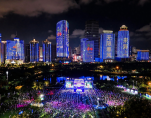
HAIKOU, CHINA – Media OutReach Newswire – 11 October 2025 – From September 28 to October 8, Haikou, the capital of China’s Hainan Province, won global attention with its colorful public art activities. Nearly 150 events, including lawn concerts, opera salons and street parades, have transformed this “Land of International Performing Arts” in the East into a boundless palace of art. Caption: A bird’s-eye view of the […]

Ethereum’s value slipped beneath the psychologically and technically significant $4,000 mark today, intensifying fears that the second-largest cryptocurrency may be entering a deeper correction. On Binance, ETH dipped to $3,988.89, down almost 8 per cent in 24 hours.

The abrupt drop triggered widespread liquidations, especially among leveraged positions. On-chain liquidation trackers show nearly $188 million in crypto was liquidated in just one hour during the sharp move.

Persistent macroeconomic headwinds, alongside renewed U. S.–China trade tensions, appear to have compounded selling pressure. The Nasdaq and other equity benchmarks also suffered, amplifying risk aversion among crypto investors.

Technical analysts now view the breakdown below $4,000 as a turning point. From a charting perspective, the fall invalidated previously bullish setups such as bull flags, leaving Ethereum exposed to further downside. One analyst cautioned that extended weakness could push ETH toward the $3,750 to $3,500 zone if pivotal support fails.

Support between $4,200 and $4,300 had held in recent sessions, but now that zone is under siege. Should it collapse, the stage may be set for a retest of $3,900 or lower. Traders are watching whether buyers will defend this corridor or capitulate.

Despite today’s plunge, some investors see accumulation underway. Ethereum’s total on-exchange supply has declined to a nine-year low, with large holders withdrawing ETH from exchanges—an indicator that long-term confidence may still remain intact.

Longer term, expectations remain cautiously optimistic. Standard Chartered recently raised its year-end target for ETH to $7,500, citing heightened institutional adoption and increasing use of the Ethereum network in stablecoin and DeFi infrastructures. Meanwhile, Citigroup offers a more conservative forecast of $4,300 by end-2025, warning that current prices may be more sentiment-driven than fundamentals-rooted.

Major upgrades on Ethereum’s roadmap could yet shift sentiment. Among them: the Glamsterdam upgrade, which integrates enhanced proposer-builder separation. However, a fresh academic study warns of a “free option” risk under high volatility, whereby builders may cancel committed payloads without penalty—posing challenges to network liveness during stress.

In the short term, analysts are split. Some argue that the slide is a healthy reset before ETH resumes an uptrend, provided support zones hold. Others say the breach of $4,000 suggests a loss of momentum strong enough to spark a deeper correction.

Crypto markets are already exhibiting signs of strain beyond Ethereum. Bitcoin is under pressure as well, and risk assets broadly are being squeezed by mixed macro data and higher real-interest rates. Some strategists say the crypto pullback could morph into a broader derisking wave unless fresh catalysts emerge.

Looking ahead, observers point to a few key variables: whether ETH can reclaim and sustain above $4,500; whether buyers will step in at $4,200–$4,300; and whether the network upgrades can deliver tangible improvements to gas, scalability, and decentralisation.


Matein Khalid Private equity and money center banks on Wall Street are in free fall even as the private credit market is in classic contagion mode, without a lender of the last resort for overleveraged shadow banks/hedge funds whose illiquid assets now disappear into Wall Street’s structured vehicles blackholes. Peekaboo Finance 101! When Citigroup and Brent crude both fall 8% in a synchronized bearish death dive, I […]

By Girish Linganna In a move that would have seemed unthinkable just a few years ago, Taliban Foreign Minister Amir Khan Muttaqi arrived in New Delhi on October 9 for an eight-day official visit that marks a watershed moment in India’s foreign policy. His meetings with External Affairs Minister S. Jaishankar, followed by visits to […]

The article The Price Of Pragmatism: What India Gains (And Loses) By Courting The Taliban appeared first on Latest India news, analysis and reports on Newspack by India Press Agency).

Cameroonian fintech startup REasy has secured a $1.8 million pre-seed investment to expand its cross-border payment and trade infrastructure for small and medium enterprises. The funding was led by Ingressive Capital, Launch Africa, 54 Collective and Digital Africa, alongside fintech angels including Christophe Chausson, Mathias Léopoldie and Joël Nana Kontchou. REasy intends to deploy the capital toward technology development, regulatory licensing across new markets and accelerated customer […]

The Government of Sharjah, rated Ba1/BBB–/AAA by Moody’s, S&P and Lianhe respectively, has mandated several major banks to explore a new Panda Bond issuance in China’s onshore bond market. The Finance Department has appointed Bank of China as lead underwriter and bookrunner, with Crédit Agricole, JP Morgan Chase, ICBC, China Bohai Bank, Citic Securities, the Export-Import Bank of China, and Shenwan Hongyuan Securities acting as joint lead underwriters and bookrunners.

This initiative marks Sharjah’s second foray into the Panda Bond space; it first tapped the Chinese domestic bond market in February 2018 with a RMB 2 billion issue, becoming the Middle East’s first Panda issuer. That issuance carried a coupon rate of 5.8 per cent and matured in 2021.

Market participants say Sharjah’s renewed interest signals increasing appetite among Gulf issuers for renminbi funding, especially given the growing scale of China’s interbank bond market and its accessibility to international issuers. The Panda market is seen as a way to diversify funding sources away from traditional dollar or euro issuance, while deepening engagement with China’s capital markets.

Observers note that the list of joint bookrunners and underwriters—including both Chinese and Western entities—reflects a strategic bridging between global and Chinese investor bases. Bank of China’s role as lead suggests that Chinese financial institutions will play a key role in structuring and distributing the bonds to domestic accounts. The presence of Crédit Agricole and JP Morgan, meanwhile, may facilitate cross-border investor participation.

Industry sources expect the issuance to follow the standard procedure under China’s bond regulations governing overseas issuers. This includes registration with NAFMII, compliance with disclosure requirements, and pricing via roadshows to institutional investors in China. The timeline, tenor and final coupon structure have not yet been disclosed, but sources familiar with the matter suggest Sharjah is seeking favourable market conditions to launch.

Issuers of Panda Bonds have historically benefitted from lower yields relative to comparable offshore RMB options, thanks to the liquidity and depth of China’s domestic markets. That said, success depends heavily on investor confidence in the issuer’s credit profile, transparency in the bond documentation, and the relative attractiveness of coupon spreads over domestic benchmarks.

Sharjah’s credit ratings present both strengths and challenges. Its triple-A rating from Lianhe bolsters credibility in the Chinese market. However, its non-investment grade rating from Moody’s and S&P may weigh on perceptions among global investors. How Sharjah positions itself to bridge that gap will be critical, particularly in roadshow messaging and bond structuring.

This development arrives at a time when Panda bond issuance is gaining momentum. The Asian Infrastructure Investment Bank, for example, raised CNY 2 billion in its latest two-year Panda issuance, achieving oversubscription and attracting new investor accounts. The New Development Bank further expanded its onshore footprint earlier this year, issuing RMB 7 billion under its registered Panda Bond Programme.

Matein Khalid Gold is in its most spectacular bull run since 1976-1980, when prices rocketed from $91 to over $800 an ounce. The current cycle found its floor near $1,800 in late 2022, as the Powell Fed’s rate-hike campaign peaked and Washington froze $300 billion in Russian reserves in response to the invasion of Ukraine. “Dr Auric” now trades at just over $4,000 an ounce – a perfect vindication of […]

Linh Tran The Dow Jones (US30) recorded its fourth consecutive decline, reflecting the growing caution across financial markets as the U.S. government remains partially shut down and a series of key economic data releases have been delayed. This disruption has made investors more defensive, as crucial reports such as Nonfarm Payrolls (NFP), CPI, and GDP have yet to be published. The absence of clear economic signals has […]

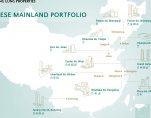
Chinese Mainland Tenant Sales and Footfall Achieve Double-Digit Growth Hong Kong Footfall Shows Steady Uptick HONG KONG AND SHANGHAI, CHINA – Media OutReach Newswire – 10 October 2025 – Hang Lung Properties Limited (SEHK Stock Code: 00101) (“Hang Lung” or the “Company”) today announced strong preliminary operational results from its properties in the Chinese Mainland and Hong Kong during the first four days (October 1-4) of the […]

MACAU SAR – Media OutReach Newswire – 9 October 2025 – Galaxy Macau™ Integrated Resort is delighted to present an evening of operatic splendour with “Galaxy Macau™ Presents – Galaxy Music Gala: Sumi Jo – Mad for Love” as internationally acclaimed South Korean soprano Sumi Jo makes her long-awaited Macau debut at 17:00 on December 28 at Auditorium of the Galaxy International Convention Center (GICC). Tickets will […]

Tesla has introduced stripped-down “Standard” versions of its Model Y and Model 3 in China, priced at about US$39,990 and US$36,990 respectively, in an effort to stem declining demand. The clean, steep drop into affordability came with a catch: several key features have been removed. The move has triggered wide disquiet and mixed sentiment across Chinese social media platforms as observers weigh its significance for Tesla’s China fortunes.

Tesla said the new models omit elements such as leather seats, a rear-passenger screen, radio functionality and the “Autosteer” feature of Autopilot. The price cut—roughly a 10 per cent reduction from higher-end trims—aims to broaden appeal without launching an entirely new product line. Many Chinese users responded sharply, dubbing the launch a “beggar version” of Tesla. Some highlighted that domestic EV rivals already offer more complete features at similar or lower price points.

Discussions on Weibo ranged from dismissive to cautiously optimistic. One commenter asked, “The beggar’s version of the Model Y costs 230,000 yuan. Would one actually buy it?” Another compared it to offerings from Li Auto, arguing that a similarly priced Li model delivers more “intelligent” content. Others countered that buyers often criticise products online yet still purchase them, suggesting Tesla might yet move significant volume.

Analysts see the move as a double-edged sword. While it could generate volume and help defend market share, it risks cannibalising Tesla’s own higher-margin variants. According to one industry strategist, the success of this strategy depends heavily on Tesla’s ability to squeeze out cost in manufacturing, battery sourcing and logistics. If it fails to manage margins, the gambit could backfire.

Tesla’s share price dropped by about 3.6 per cent in daytime trading following the announcement. One market observer described the shift as symbolic: “Tesla is slipping into a mainstream volume play rather than remaining a luxury-tech halo.” The automaker is being cast less as a disruptor and more as a mass-market player trying to straddle both prestige and affordability.

The pressure on Tesla is mounting. Its China market share has slipped amid surging competition from local automakers such as BYD, Nio and Xiaomi, which are aggressive on both pricing and feature bundles. Earlier this year, Xiaomi unveiled its YU7 SUV boasting strong range, 800-volt architecture and performance metrics designed to challenge Tesla directly. Tesla’s market share in China fell sharply, in part because local brands are better able to integrate battery innovations, in-vehicle entertainment, and smart-home integration.

Tesla’s strategy in China is complicated further by macro and regulatory tension. The company has already suspended orders for its U. S.-imported Model S and Model X in China, possibly in response to trade tensions. Meanwhile, the Gigafactory in Shanghai remains Tesla’s main hub for local and export production of Model 3 and Model Y, representing one of its rare wholly foreign-owned plants in China.

The U. S. Department of Commerce has granted export licences for several billion dollars’ worth of Nvidia chips destined for the United Arab Emirates under a bilateral AI agreement struck in May, paving the way for a high-stakes test of America’s artificial intelligence diplomacy. The licences were issued through the Commerce Department’s Bureau of Industry and Security, marking the first concrete implementation of the Trump-era pact with […]

Nvidia CEO Jensen Huang dismissed assertions that the artificial intelligence boom is mirroring the dot-com bubble, saying the current momentum rests on strong fundamentals rather than speculation. He defended Nvidia’s recent investments in AI startups and pitched infrastructure build-out as the engine sustaining growth. During a wide-ranging interview on CNBC, Huang stated that what differentiates today’s environment from the dot-com era is the depth of demand: global […]

By Nitya Chakraborty Just forty eight hours within the external affairs minister Dr. S Jaishankar’s candid statement that Trump has to respect red lines drawn by India at trade talks, Indian officials joining China, Russia, Taliban government of Afghanistan and even Pakistan denouncing President Trump’s bid to take over Bagram air base in Afghanistan, is […]

The article India’s Opposition To Trump Bid To Take Over Bagram Airbase Has Special Significance appeared first on Latest India news, analysis and reports on Newspack by India Press Agency).

Gold climbed past $4,000 per ounce for the first time, propelled by soaring investor demand for safer assets in the face of intensifying economic and political uncertainty. Spot gold reached about $4,011.18 per ounce, while U. S. gold futures for December delivery touched $4,033.40. The rally reflects mounting expectations that the U. S. Federal Reserve will begin trimming rates, combined with a weakening dollar, heavy central bank […]

VISHNU RAJA
RYO YAMADA
HITORI GOTOH
IKUYO KITA
Just in:
UK air traffic outage inflicted £33m financial losses // OpenAI identifies 948 Linux privilege escalation flaws using AI // Fast Just Got Fastest: STING Energy Boost™ Celebrates Kimi Antonelli’s Formula 1® World Championship and the Fan Energy Behind It // CR Longdation Aethereal Cybersecurity × Global Cybersecurity Alliance (GCSA) Join Hands to Establish the “AI and Cybersecurity Research Centre” // Cyberport Venture & Capital Forum 2026 Grand Opening // Oil and chip shares retreat after Democratic victories // Vance attributes Republican midterm defeats to Iran conflict // After Reaching 7 Million Users in the Philippines, Skyro Launches Transparent Cash Loans in Malaysia // ADIA and partners establish $1.4 billion aviation venture // Asia Left Behind: Ten international companies have yet to report delivering on their cage-free egg pledges across the region // Private varsities bill all set to face the axe // Trump’s Iran War Has A Share Of Contribution To His Midterm Debacle // Hong Kong mandates crypto transaction disclosures to tax authorities // APT29-linked campaign exploits outdated Apple and Android software // Xi Jinping Preparing For A Trilateral Summit With Trump And Putin At APEC Summit On Nov 18-19 // Utilities pursue ₹1,992 cr in unpaid bills // Dubai boat show confirms international shipyard line-up for November // Meraas showcases five residential zones at Dubai Design Week // Emirates Group records AED 4.1 billion half-year profit // Ta’ziz finalises $1.39bn funding for Ruwais industrial facilities //