Just in:
Xi Jinping Preparing For A Trilateral Summit With Trump And Putin At APEC Summit On Nov 18-19 // Ningbo Consensus on Collaborative Development released at 2026 Global Mayors Dialogue · Ningbo // OpenAI introduces GPT-6 Cyber with restricted security access // CR Longdation Aethereal Cybersecurity × Global Cybersecurity Alliance (GCSA) Join Hands to Establish the “AI and Cybersecurity Research Centre” // Oil and chip shares retreat after Democratic victories // e-Crime Bureau Signs Cybersecurity Partnership With Smart Africa, Reinforcing Its Global Expansion // Geely’s i-HEV Intelligent Hybrid Technology Offers a New Direction Vision for Gasoline-Powered Vehicles // Hong Kong mandates crypto transaction disclosures to tax authorities // Asia Left Behind: Ten international companies have yet to report delivering on their cage-free egg pledges across the region // Trump’s Iran War Has A Share Of Contribution To His Midterm Debacle // Millions Of Indians May Soon Be Deprived Of Government Assistance // Emaar approves Development buyout ahead of planned delisting // Miss Universe Hong Kong Jen Zhou Departs for Puerto Rico to Compete in the 75th Miss Universe World Final // Meraas showcases five residential zones at Dubai Design Week // Ousted top Kochi cop gets IG post // Dubai boat show confirms international shipyard line-up for November // The “1st Greater Bay Area Health and Longevity Summit & Awards Ceremony” concludes successfully in Macao // Kochi police detain two actors over bid to honey trap doctor // Motorola introduces Signature 27 flagship priced at $1,599 // Dubai details five-year visa benefits for returning visitors //

News related to
China

Strategic alliance to drive headline concerts, sports events and premium travel experiences for international audiences, accelerating Macau’s push to become a global “City of Performing Arts.”

MACAU SAR – Media OutReach Newswire – 3 June 2026 – Galaxy Macau, the world-class luxury integrated resort, has entered into a landmark three-year strategic partnership with Trip.com Group, the global leading one-stop travel services platform, spanning 2026 to 2029. Anchored in the fast-growing convergence of live entertainment, sports and premium travel, the alliance signals an ambitious push to reshape Asia’s high-value tourism and events landscape.

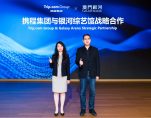
Galaxy Macau and Trip.com Group formulate a three-year strategic partnership that focuses on scaling live events and unlocking value through integrated membership ecosystems. Pictured at the Galaxy Auditorium (trom right) Mr Jeffrey Jiang, Executive Vice President of Entertainment Services of Galaxy Entertainment Group, and Ms Echo He, Vice President of Trip.com Group, marking the collaboration.

At the core of the collaboration lies a shared commitment to scale world-class live experiences, leveraging Trip.com Group’s expansive global membership ecosystem alongside Galaxy Macau’s proven expertise in venue operations and large-scale event execution. This includes the flagship Galaxy Arena, a premier destination for international concerts, sporting spectacles and marquee entertainment programming.

Celebrating 15th Anniversary in 2026, Galaxy Macau cements its position as Asia's market-leading leisure and entertainment hub.
Celebrating 15th Anniversary in 2026, Galaxy Macau cements its position as Asia’s market-leading leisure and entertainment hub.

Through this partnership, both parties will deepen integration across event curation, execution and distribution, while unlocking new layers of value through cross-platform membership privileges. The result is designed to deliver a more seamless, diversified and elevated experience for audiences — from ticket access and travel planning to on-ground entertainment delivery.

The agreement marks a pivotal step forward in advancing the integration of culture and tourism, a priority theme shaping the next phase of regional tourismdevelopment. By combining digital reach with physical destination excellence, Galaxy Macau and Trip.com Group are positioned to explore a broader spectrum of co-branded initiatives, immersive event formats and destination-led campaigns that extend beyond conventional travel offerings.

As the collaboration evolves, Galaxy Macau and Trip.com Group will jointly shape emerging trends at the intersection of luxury tourism and cultural entertainment, injecting fresh momentum into Macau’s ambition to strengthen its standing as a world centre of tourism and leisure.

For more information about Galaxy Macau, please visit www.galaxymacau.com.

Hashtag: #GalaxyMacau

The issuer is solely responsible for the content of this announcement.

ABOUT GALAXY MACAU INTEGRATED RESORT

Galaxy Macau, world-class luxury integrated resort, delivers the “Most Spectacular Entertainment and Leisure Destination in the World”. Developed at an investment of HK$43 billion, the property covers 1.1 million-square-meter of unique entertainment and leisure attractions that are unlike anything else in Macau. Nine award-winning world-class luxury hotels provide close to 5,000 rooms, suites and villas. They include Banyan Tree Macau, Galaxy Hotel™, Hotel Okura Macau, JW Marriott Hotel Macau, The Ritz-Carlton, Macau, Broadway Hotel, Raffles at Galaxy Macau, Andaz Macau, and Capella at Galaxy Macau. Unique to Galaxy Macau, the 75,000-square-meter Grand Resort Deck features the world’s longest Skytop Adventure Rapids at 575 metres, the largest Skytop Wave Pool with waves up to 1.5-metre high and 150-metre pristine white sand beach. Two five-star spas from Banyan Tree Spa Macau and The Ritz- Carlton Spa, Macau help guests relax and rejuvenate.

As the dining destination in Asia, Galaxy Macau offers a wide variety of gastronomic delights, exquisite experiences and ingredients of the finest quality with over 120 dining options from Michelin dining to authentic delicacies; Galaxy Promenade is the hottest shopping destination featuring the latest in fashion and curated experiences in Macau. Spanning over 100,000-square-meter, luxury flagship stores, lifestyle boutiques and our selection of labels are among the more than 200 world-renowned brands for a world-class shopping journey; Galaxy Cinemas, immersive thrills and luxurious comfort go hand in hand at Galaxy Cinemas. All 10 theatres are equipped with the latest audio-visual technology; CHINA ROUGE, one-of-a-kind deluxe lounge that evokes the glitz and glamor of Shanghai’s golden era with entertainment in luxury and style; and Foot Hub presents the traditional art of reflexology to make you feel more relaxed and revitalized. For Authentic Macau Flavours & Vibrant Asian Experiences, Broadway Macau – just a 90-second walk via a bridge from Galaxy Macau, has over 35 Authentic Macau & Asian Flavours at its Broadway Food Street. The 2,500-seat Broadway Theatre plays host to world-class entertainers and a diverse array of cultural events. Meeting, incentive and banquet groups are also well looked after with a portfolio of unique venues in Galaxy Macau and a professional service staff.

Galaxy International Convention Center (GICC) is the latest addition to the Group’s ever-expanding integrated resort precinct and will usher in a new era for the MICE industry in Macau. GICC is a world- class event venue featuring 40,000-square-meter of total flexible MICE, and a 16,000-seat Galaxy Arena – the largest indoor arena in Macau.

For more details, please visit and

HONG KONG SAR – Media OutReach Newswire – 3 June 2026 – A large delegation, led by John Lee, Chief Executive of the Hong Kong Special Administrative Region (HKSAR), is visiting Kazakhstan and Uzbekistan (June 1-6) to forge closer ties with Central Asia.

Comprising over 70 business and professional representatives from Hong Kong and the Chinese Mainland, the delegation has already yielded significant results at its first stop in Kazakhstan.

Speaking at a business luncheon in Astana yesterday (June 2), Mr Lee highlighted that 43 memoranda of understanding (MOU) and agreements have been concluded by the visiting delegation with companies and organisations from Kazakhstan, with more agreements to come.

“They span aviation, finance and trade, innovation and technology, the digital economy, green development, and more,” Mr Lee said, adding that a Hong Kong airline plans to launch direct flights to Almaty in the first quarter of 2027.

“I believe that Kazakhstan can serve as a hub for Hong Kong to connect with the Central Asian market. In turn, Hong Kong can be Central Asia’s hub in the east and southeast Asian region,” Mr Lee said.

“By strengthening co-operation between our two hubs, we can construct a hub-to-hub co-operation model.”

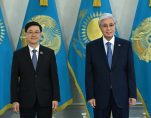
On his first day of visit in Astana (June 1), Mr Lee met with top government officials including the President of Kazakhstan, Kassym-Jomart Tokayev, Prime Minister Olzhas Bektenov, and Deputy Prime Minister and Minister of National Economy Serik Zhumangarin.

Hong Kong SAR's Chief Executive John Lee (left) meets with the President of Kazakhstan Kassym-Jomart Tokayev to exchange views on deepening bilateral relations.
Hong Kong SAR’s Chief Executive John Lee (left) meets with the President of Kazakhstan Kassym-Jomart Tokayev to exchange views on deepening bilateral relations.

Mr Lee noted that Kazakhstan has been actively promoting reforms on various fronts to bring about rapid economic growth.

“As one of the world’s three major financial centres, and the world’s largest cross-boundary wealth management centre and offshore Renminbi business hub, Hong Kong can provide diversified and flexible support including capital and asset allocation for Kazakhstan’s economic reforms and infrastructure development,” Mr Lee said.

The Chief Executive also encouraged companies in Kazakhstan to leverage Hong Kong’s advantages under the “one country, two systems” principle.

“Under this unique principle, Hong Kong has its own economic, social, legal, legislative and judicial systems. We are the only common law jurisdiction in China. We have our own currency, with no capital or foreign exchange controls. We are, as well, a separate customs territory,” Mr Lee said.

“The ‘one country, two systems’ principle ensures Hong Kong’s unparalleled access to the markets of the Chinese Mainland. Capitalising on our global connectivity and world-class professional services, Hong Kong is your ideal, two-way springboard for business expansion.”

Mr Lee also visited the Astana International Financial Centre and the Astana Hub, a local technology and innovation park, to respectively learn about Kazakhstan’s experience in promoting the development of the non-bank financial sector and the latest developments of the country in the field of AI.

Hong Kong SAR's Chief Executive John Lee (centre) witnesses the exchange of memoranda of understanding and co-operation agreements between organisations from both sides with the Governor of the Astana International Financial Centre Renat Bekturov (second right).
Hong Kong SAR’s Chief Executive John Lee (centre) witnesses the exchange of memoranda of understanding and co-operation agreements between organisations from both sides with the Governor of the Astana International Financial Centre Renat Bekturov (second right).

Before leaving Kazakhstan today (June 3), Mr Lee visited Nazarbayev University, underscoring the historic significance of the trip.

image-1.jpeg

“It was here, at Astana’s Nazarbayev University in 2013, that President Xi Jinping first raised the visionary initiative of jointly building the Silk Road Economic Belt – today’s Belt and Road Initiative (BRI),” Mr Lee said.

Last year, at the 10th Belt and Road Summit in Hong Kong, the university signed a MOU with the Hong Kong University of Science and Technology, demonstrating a shared commitment to advancing higher education co-operation under the BRI. It further reached MOUs with Hong Kong’s Education University and Polytechnic University today.

“These agreements will deepen academic and research collaboration.

“Hong Kong is the only city in the world with five of the top 100 universities. This talent environment is reinforced by our global standing: last year, Hong Kong ranked first in Asia, and fourth globally, in the World Talent Ranking,” he added.

Mr Lee will continue to lead the delegation to Uzbekistan for the second leg of the mission to Central Asia.

Hashtag: #hongkong #brandhongkong #asiasworldcity #opportunitieswithCentralAsia


The issuer is solely responsible for the content of this announcement.

Advancing Cross-Border Payments Across Latin America and Europe

AMSTERDAM, NETHERLANDS – Media OutReach Newswire – 3 June 2026 – XTransfer, the world’s leading B2B cross-border trade payment platform, and BBVA, a global financial group, have signed a Memorandum of Understanding (MOU) during Money20/20 Europe 2026 in Amsterdam to deepen cross-border payment infrastructure across Latin America and Europe.

The MOU was signed by Bill Deng, Founder and CEO of XTransfer, and Ksenia Nekrasova, Global Sector Co-Head of TMT at BBVA, at Money20/20 Europe 2026 in Amsterdam.

Under the MOU, XTransfer and BBVA will combine their respective strengths to explore the delivery of integrated cross-border financial solutions, spanning FX conversion, local payments and cross-border payments across Latin America, Europe and Hong Kong SAR.

The parties will also explore leveraging technology and innovation, including APIs, digital platforms, collection solutions and virtual accounts, to support more automated, real-time and seamless FX conversion and transaction processing. By streamlining payment flows and improving operational connectivity, the collaboration is expected to enhance the scalability, efficiency and reliability of cross-border financial services for SMEs engaged in international trade.

In recent years, trade between China and Latin America has grown closer. XTransfer data shows that in 2025, payment collections from Latin America on its platform rose 94% y-o-y. Yet many SMEs still face major cross-border settlement hurdles, including slow onboarding, FX constraints, and complex compliance. The partnership between XTransfer and BBVA is structured to tackle these barriers directly.

For XTransfer, the partnership strengthens the coverage and depth of X-Net, its global unified B2B cross-border settlement and risk management network, in two of the most important regions for its SME clients. With Latin America emerging as a high-growth corridor for Chinese exporter settlements, BBVA’s strong presence across Latin America and Europe further strengthens XTransfer’s reach and competitive position.

With XTransfer’s network of more than 897,000 SME clients worldwide, the partnership also strengthens BBVA’s position in global payments and expands its ability to serve a broader, more diverse client base across multiple regions.

Bill Deng, Founder and CEO of XTransfer, said, “Latin America remains an active but underserved B2B trade corridor, where SMEs still encounter significant challenges. We are pleased to sign this MOU with BBVA, enabling us to leverage their expertise to bring X-Net’s infrastructure directly into the region. Together, we aim to simplify cross-border finance and improve the efficiency and inclusivity for global traders.”

Ksenia Nekrasova, Global Sector Co-Head of TMT at BBVA, said: “Beyond the growth in flows, we are seeing a shift in how our clients operate: digital platforms with global, real-time and highly integrated needs. This agreement allows us to anticipate that evolution, strengthening our capabilities in the TMT space and supporting these clients in their international expansion with solutions designed for their scale and complexity.”
Hashtag: #XTransfer #BBVA #CrossborderPayments #SMEs


The issuer is solely responsible for the content of this announcement.

About XTransfer

XTransfer, the world’s largest B2B cross-border trade payment platform with over US$60 billion TPV in 2025, according to CIC. Founded in 2017 as one of the first payment platforms worldwide dedicated to B2B cross-border trade, we serve the largest customer base of over 800,000 registered SMEs globally as of March 31, 2026.

We connect top-tier financial institutions directly to SMEs, the backbone of global trade, giving businesses of every size access to the same secure, compliant and seamless payment infrastructure once reserved for multinationals. As of March 31, 2026, we provide payment services across more than 200 countries and regions through partnerships with financial institutions, including some of the most established international banks around the world.

XTransfer has obtained required licenses in major hubs, including the Chinese Mainland, Hong Kong, the United Kingdom, the United States, Singapore, the Netherlands, Australia and Canada.

For more information, please visit: https://www.xtransfer.com

Spiro has raised $215 million in equity financing to expand its electric motorcycles, battery-swapping network and energy infrastructure across Africa, marking one of the largest funding rounds for the continent’s clean mobility sector. The Nairobi-based electric mobility platform said the investment was backed by institutional investors from Europe and Africa, including Impact Fund Denmark and Equitane, alongside continuing support from long-standing partners such as FEDA. The company […]

Mainland Chinese investors have turned net sellers of Hong Kong-listed equities through Stock Connect, marking a rare reversal in cross-border flows as enthusiasm for onshore artificial intelligence shares draws capital back towards Shanghai and Shenzhen.

The shift reflects a sharp change in investor preference after months of underperformance by Hong Kong equities against mainland peers. Mainland investors sold about HK$3.6 billion of Hong Kong shares through the trading links last month, the first monthly net outflow since June 2023 and one of only a small number of monthly selling episodes since the southbound channel became a key route for mainland money into the city’s market.

The move is striking because southbound buying has been one of the strongest supports for Hong Kong stocks over the past year. Mainland funds poured into high-dividend banks, telecoms groups, energy companies and internet platforms during earlier phases of the rally, helping offset caution among global investors. That support is now weakening as domestic funds chase companies tied to AI infrastructure, chips, optical modules, software and computing power.

Onshore AI shares have delivered a stronger performance than Hong Kong’s technology benchmarks this year. The CSI Artificial Intelligence Index has risen sharply, while the Hang Seng Tech Index has lagged, weighed down by concerns over platform margins, heavy spending on AI models and pressure from subsidy battles in e-commerce and online services. The divergence has encouraged active money managers and retail traders to reassess whether Hong Kong-listed internet giants still offer the most attractive exposure to China’s technology story.

The change in flows also comes as Beijing’s industrial policy continues to favour advanced manufacturing, domestic semiconductors, large language models and high-end computing. Companies linked to AI servers, data centres, optical communications, robotics and chip design have become favoured market proxies for China’s effort to reduce dependence on foreign technology. That policy backdrop has helped support valuations even as questions persist over earnings visibility, capital expenditure demands and competition.

Cambricon Technologies, Zhongji Innolight, Kingsoft Office, iFlytek and other mainland-listed technology names have been among the companies watched closely by investors seeking domestic AI exposure. Hong Kong still hosts major technology groups such as Tencent, Alibaba, Baidu, Meituan and Xiaomi, but the market’s heavyweight structure makes it more exposed to mature platform businesses than to the faster-growing AI hardware and infrastructure supply chain favoured by onshore traders.

Hong Kong’s role as a fundraising centre remains intact despite the outflow. The city has continued to attract listings from technology, healthcare, robotics and semiconductor-related companies, while mainland firms still view it as the most practical offshore venue for raising international capital. Several AI and chip-linked companies are preparing or considering Hong Kong share sales, suggesting the city remains central to China’s capital market architecture even as secondary-market money rotates elsewhere.

The weakness in southbound appetite also reflects broader caution over Hong Kong valuations after a strong earlier advance. Investors who bought the market for dividends and policy support are locking in gains while seeking higher-beta opportunities at home. The shift does not necessarily point to a structural rejection of Hong Kong stocks, but it does show that mainland money is becoming more selective after helping drive earlier momentum.

Regulatory pressure on offshore investment channels may also be influencing behaviour. Authorities have tightened scrutiny of unauthorised cross-border trading accounts and offshore brokerage activity, reinforcing the appeal of regulated domestic routes. While Stock Connect remains an approved mechanism, wider efforts to keep capital within supervised channels have added another layer of sensitivity around outbound allocations.

Market analysts say the key question is whether the AI-led onshore rally can broaden beyond a narrow group of highly valued companies. China’s AI supply chain is benefiting from state support, falling model costs and growing enterprise adoption, but investors face risks from crowded positioning, uneven profitability and rapid technological shifts. Several AI-linked companies still trade more on expectations than on proven earnings, leaving the sector vulnerable to volatility if sentiment turns.

Oil markets are heading towards a possible August inflection point as constrained flows through the Strait of Hormuz, recovering seasonal demand and disrupted supply chains combine to keep upward pressure on crude prices. Philippe Khoury, executive vice-president for sales and trading at ADNOC, told the Middle East Petroleum and Gas Conference in London that prices could move sharply higher if demand strengthens while the Iran war supply […]

Advancing Research Commercialization and Building a Vibrant I&T Ecosystem

HONG KONG SAR – Media OutReach Newswire – 2 June 2026 – The Hong Kong University of Science and Technology (HKUST) today successfully hosted its annual “Unicorn Day,” one of Hong Kong’s flagship innovation and entrepreneurship events. The event brought together over 1,800 participants, including students, faculty, and alumni, as well as international and local government representatives, industry partners, investors, innovation and technology entrepreneurs, and researchers. Participants exchanged insights on strategies to strengthen collaboration across the innovation ecosystem, foster cross-disciplinary partnerships, and accelerate the translation of research outcomes into real-world impact.

The event was officiated by Prof. SUN Dong, Secretary for Innovation, Technology and Industry of the HKSAR Government, alongside consuls-generals and senior officials from countries including Australia, Chile, France, Hungary, India, Japan, Malaysia, the Netherlands, Vietnam, and the United Arab Emirates. They were joined by Prof. Nancy IP, HKUST President; Prof. Lionel NI, HKUST (Guangzhou) President; and Prof. Tim CHENG, HKUST Vice-President for Research and Development; in touring over 100 HKUST-nurtured startups, showcasing innovations and applications spanning areas such as healthcare, electronics, and artificial intelligence systems, as well as new materials, green energy, and sustainability.

Prof. Sun Dong remarked, “Innovation and technology (I&T) has always been at the top of the Hong Kong SAR Government’s agenda. We fully recognise the crucial role of local universities — not only as key partners, but as the bedrock of Hong Kong’s I&T ecosystem. In just three and a half decades, HKUST has risen to become a global powerhouse in deep tech, entrepreneurship, and innovation as demonstrated by its ability to nurture unicorns and deep-tech ventures. Hong Kong is entering a golden era of I&T development. We are building new engines to drive Hong Kong’s high-quality development, focusing on research and development in key fields and leading industry applications. I am confident that Hong Kong will rise as a leading international I&T center and contribute meaningfully to our nation’s high-quality development, and that HKUST will continue to be a driving force in this amazing journey.”

President Ip said, “As we mark the 35th anniversary of HKUST this year, we also celebrate the spirit of innovation and entrepreneurship that has long been embedded in our DNA. Both the Technology Transfer Center and the Entrepreneurship Center were established in the University’s early years to support faculty and students in realizing their entrepreneurial aspirations and to promote the translation of research outcomes into practical solutions. Over the past 35 years, the University has forged ahead with determination, sowing the seeds of innovation and yielding remarkable achievements across multiple frontier fields. Today, HKUST continues to broaden its horizons, strategically positioning itself in key domains. One example is medical education. The establishment of the HKUST Medical School will integrate the life sciences with cutting-edge technologies to nurture a new generation of interdisciplinary medical professionals.

Concurrently, HKUST has been actively involved in national initiatives such as the Chang’E 8 lunar exploration mission and research projects for the Tiangong Space Station, and the launch of the first commercially viable aerospace project under the RAISe+ Scheme. These achievements exemplify HKUST’s enduring ‘can do’ spirit over the past decades and echo the theme of today’s event—’From Ideas to Miracles—35 Years of Impact and Beyond’. Looking ahead, HKUST will continue to nurture bold ideas and action, working hand in hand with partners across different sectors to cultivate a vibrant innovation ecosystem, ensuring that research achievements benefit society and create lasting global impact.”

To support startups in expanding into global markets and to promote cross-border collaboration, HKUST introduced an “International Pavilion,” featuring startups and innovation organizations from various countries and regions. Participants from Thailand, Singapore and Korea were among those represented, strengthening connections between Hong Kong, and countries and regions along the Belt and Road in technology application and industry development.

The event also saw the signing of multiple partnership agreements, including six strategic collaborations with:

  • GPTX Investment Management Limited
  • China Everbright Water Limited
  • Jiangsu Daotop Environmental Technology
  • Samsung R&D Institute China – Guangzhou
  • CalmCar Physical AI Innovation Center
  • InnoAngel

to advance talent development and industry–academia integration, and foster innovation-driven research and real-world technology translation.

HKUST’s I&T Strength Driving Economic Growth

In addition, HKUST also released the report Driving Socioeconomic Impact Through Research and Innovation: Insights from HKUST, commissioned by the University and prepared by the international research information analytics organization Elsevier. The report highlights HKUST’s outstanding performance in innovation and entrepreneurship. Over the past five years, research output has recorded an average growth of 10%, approximately 9% higher than that of other local institutions. More than 65% of the research is concentrated in engineering and computer science, while 6.2% involves academia-industry collaboration, significantly higher than the global average of 2.7%. These collaborations have translated into impactful intellectual property, with approximately 1,670 patent applications and 700 grants over the same period, and a high IP utilization rate of above 30%.

Prof. Tim Cheng noted that the findings demonstrate HKUST’s steadily strengthening capabilities in research translation and academia-industry collaboration. HKUST’s publications achieved a Field-Weighted Citation Impact of 4.40, indicating that their citation impact is 4.4 times the global average. This underscores HKUST’s significant contributions to advancing Hong Kong’s socioeconomic development and enhancing its competitiveness in innovation and technology.

In addition, a “Marketplace” was also featured, showcasing products already launched by startups, including AI analytics tools, healthcare technologies, and smart city solutions, demonstrating the progress of translating research into practical applications.

Hashtag: #unicorn #unicornday #HKUST #partnership #innovation #startup #tech #AI #space #robotics #materialscience

The issuer is solely responsible for the content of this announcement.

Advertisements

Gold has overtaken US Treasuries as the world’s largest reserve asset by market value, marking a significant change in the composition of official reserves and underlining how central banks are adjusting to geopolitical risk, high debt levels and uncertainty over the dollar-based financial system. The European Central Bank’s latest review of the international monetary system shows gold accounted for 27 per cent of total official foreign reserves […]

Swiss watch exports fell sharply in April as shipments to the United States slumped from a distorted high base created last year, when brands and distributors rushed inventory across the Atlantic before higher US tariffs took effect. Exports dropped 16.6 per cent year on year to CHF2.13 billion, with the United States accounting for the largest drag on the industry’s monthly performance. Shipments to the US, still […]

Tencent Holdings shares posted their strongest intraday gain in more than three years in Hong Kong after details emerged that the company is testing an artificial intelligence agent for WeChat, raising expectations that China’s most powerful consumer internet platform may become a launchpad for mass-market AI services.

The stock climbed about 6 per cent on Tuesday as investors reacted to signs that Tencent is moving closer to embedding a task-performing assistant inside WeChat, the messaging, payments and social platform used by more than 1.4 billion people. The prototype is designed to help users complete everyday actions within the app, including finding venues, interacting with mini-programmes and placing customised orders, rather than merely answering questions in chatbot form.

The planned agent would mark a significant step in Tencent’s push to convert its AI investments into consumer products at scale. WeChat already functions as a digital operating system for daily life in China, covering messaging, payments, shopping, food delivery, public services, entertainment, ride-hailing and enterprise communication. That reach gives Tencent an advantage that few rivals can match: a single platform with a vast user base, heavy daily engagement and a dense network of third-party services.

People familiar with the prototype have indicated that users would be able to access the AI agent through a swipe gesture on the main WeChat screen. Tencent is expected to begin the regulatory compliance process before wider testing, with a small group of external users likely to receive access before any phased public launch. A firm release date has not been set, reflecting both regulatory uncertainty and the technical demands of deploying agentic AI across a platform of WeChat’s size.

The market response underscores how investors are reassessing Tencent’s AI position after months of concern that the company was trailing Alibaba, ByteDance and Baidu in the race to commercialise generative AI. Tencent has promoted Yuanbao, its AI chatbot, developed its Hunyuan foundation model and introduced productivity-focused AI tools, but WeChat remains the asset most capable of turning those efforts into a daily consumer habit.

Tencent’s first-quarter earnings showed both the strength and the cost of that strategy. Revenue rose 9 per cent year on year to RMB196.5 billion, while IFRS net profit attributable to equity holders increased 21 per cent to RMB58.1 billion. Marketing services revenue rose 20 per cent to RMB38.2 billion, helped by AI-driven advertising improvements, while domestic games revenue grew 6 per cent and international games revenue climbed 13 per cent. Capital expenditure reached RMB31.9 billion, up 16 per cent, as spending on AI infrastructure continued to rise.

The company has told investors that new AI products are weighing on margins, even as core businesses continue to generate strong cash flow. Excluding new AI products, non-IFRS operating profit rose 17 per cent in the first quarter, compared with a 9 per cent increase overall. That gap highlights the near-term drag from AI investment, but also explains why investors are sensitive to any sign that Tencent can place AI directly into revenue-generating services.

Competition is intensifying across China’s technology sector. Alibaba has pushed Qwen into consumer and enterprise markets, ByteDance has expanded AI features across its content ecosystem, and Baidu continues to build around Ernie and AI cloud services. The key battleground is shifting from chatbots to agents that can perform tasks, connect with apps and act across digital services with limited user input.

WeChat’s mini-programme ecosystem could be central to Tencent’s approach. Millions of merchants, developers and service providers already operate within the platform, allowing an AI agent to navigate services without pushing users outside Tencent’s environment. For merchants, an effective agent could increase conversion rates by shortening the path from search to purchase. For Tencent, it could deepen engagement, improve advertising relevance and strengthen its fintech and business services ecosystem.

Regulation remains a critical constraint. China requires generative AI services offered to the public to comply with rules covering data security, content control and algorithmic governance. Any WeChat agent would need to satisfy those requirements before broad release, especially because it could interact with payments, commerce and public services.

Beijing’s new trade secret rules have taken effect, bringing data, algorithms, computer programs and source code explicitly within the country’s administrative protection system as China moves to curb technology leaks during a sharper contest with the United States over artificial intelligence, advanced computing and strategic know-how.

The Provisions on the Protection of Trade Secrets, issued by the State Administration for Market Regulation under Order No. 126, came into force on 1 June 2026 and replace rules first introduced in 1995. The overhaul gives regulators clearer authority to handle disputes involving digital assets that now sit at the centre of corporate value, from AI model architecture and training datasets to platform recommendation systems, software code and commercially valuable operational data.

The change marks a significant shift in China’s treatment of intangible technology assets. Earlier rules were drafted before cloud computing, AI systems and large-scale data operations became central to business competition. The new framework defines trade secrets as technical or business information that is not publicly known, has commercial value and has been subject to confidentiality measures by the rights holder. Technical information now expressly covers data, algorithms, computer programs and code, while business information can include management, sales, finance, planning, customer and operational data.

The timing gives the regulation wider strategic weight. China and the United States are locked in a prolonged technology rivalry involving semiconductor controls, restrictions on advanced computing hardware, limits on investment in sensitive sectors and scrutiny of cross-border technology transfers. Washington has tightened export controls on high-end chips and chipmaking equipment, while Beijing has expanded its own legal toolkit to protect critical technology, secure data flows and prevent overseas transfer of capabilities it regards as strategically important.

The new rules do not create a separate trade secret law, but provide more detailed administrative guidance under China’s Anti-Unfair Competition Law. They clarify how regulators should assess whether information is secret, whether it has commercial value, what counts as reasonable confidentiality measures and how infringement should be investigated. For companies, the central message is that protection will depend not only on the value of the information, but also on whether internal controls, access limits, confidentiality agreements, digital safeguards and evidence trails are in place.

The provisions also recognise that unsuccessful research can have commercial value. Stage-by-stage technical results, failed experimental data and development paths that save time or cost in future research may qualify for protection if they meet the legal conditions. That is especially relevant for AI labs, pharmaceutical developers, electric vehicle makers, chip design firms and advanced manufacturing groups, where failed trials can reveal important technical boundaries and prevent competitors from repeating expensive mistakes.

Regulators have been given practical enforcement tools, including powers to inspect business premises, question individuals, copy documents, examine electronic records and take action against materials linked to suspected infringement. Penalties can include orders to stop unlawful conduct, confiscation of illegal gains and fines that may reach CNY5 million in serious cases. The framework also covers improper acquisition, disclosure, use or permission to use trade secrets obtained through theft, bribery, fraud, coercion, electronic intrusion or breach of confidentiality obligations.

For multinational companies operating in China, the new rules create a mixed picture. Stronger protection could help firms defend proprietary data, software systems and industrial processes in a market where trade secret disputes have often been difficult to pursue. At the same time, wider protection for data and algorithms may increase compliance complexity, particularly in joint ventures, outsourced research, cloud services, employee mobility, cross-border collaboration and licensing arrangements.

Technology companies are likely to face tougher expectations over documentation. Firms seeking protection will need to show that the information was not easily accessible, carried economic value and was actively protected. Generic claims that an algorithm or dataset is confidential may not be enough. Companies will be expected to classify sensitive assets, restrict access by role, track downloads and transfers, maintain logs, use encryption or watermarking where appropriate, and ensure that employment and partnership contracts define confidentiality obligations with precision.

The rules also sit alongside China’s broader data and security regime, including laws on data security, personal information protection, cybersecurity and export control. That overlap could make enforcement more powerful but also more complicated. A dataset may be a trade secret, a regulated data asset and a cross-border transfer concern at the same time. Businesses handling AI training material, user behaviour data or industrial performance data will need to assess those obligations together rather than treating trade secret protection as a standalone issue.

BrainCo expects a sharp rise in sales of its robotic hands this year as China’s humanoid robotics industry pushes beyond laboratory demonstrations into factory trials, logistics pilots and commercial component sourcing. The Hangzhou-based prosthetics and neurotechnology developer, founded in 2015, is seeing demand broaden from medical bionic hands to dexterous hands designed for humanoid robots. Its latest Revo hand models place the company in a fast-growing supply […]

Johannesburg has become the opening stage for a European Union push to turn a pledged €12 billion investment package for South Africa into bankable projects, with about 200 companies joining the bloc’s first investment roadshow in the country as competition intensifies over critical minerals. The event, hosted at the Johannesburg Stock Exchange on Monday, marked the first major effort to mobilise private capital under the EU-South Africa […]

Hackers are using targeted spearphishing emails to deploy AZUREVEIL, an Adaptix-based command-and-control agent, against government and enterprise-linked targets in the Czech Republic and Taiwan, underscoring the growing use of trusted cloud services to mask cyber-espionage activity. The campaign, tracked as Operation Dragon Weave, begins with a malicious ZIP archive carrying files designed to appear as official documents. Once opened, the archive can trigger a multi-stage infection chain […]

SINGAPORE – Media OutReach Newswire – 2 June 2026 – UnionPay International (UPI) and the Singapore Tourism Board (STB) have renewed their strategic partnership to jointly promote Singapore tourism and enhance payment experiences for international travelers through integrated marketing campaigns, merchant collaborations, and cross-border payment initiatives.

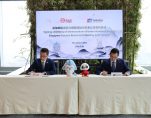
Signing ceremony of Memorandum of Understanding between Singapore Tourism Board and UnionPay International

The renewed three-year Memorandum of Understanding (MOU) builds on previous successful collaborations between both parties and aims to drive tourism spending by combining STB’s destination marketing resources with UnionPay’s global payment network and regional marketing channels.

Under the partnership, both parties will jointly launch tourism and payment campaigns targeting key visitor markets including China and other regional outbound travel segments. Campaigns will promote Singapore tourism offerings alongside UnionPay’s payment privileges, merchant promotions, and acceptance network across shopping, dining, attractions, transportation and hospitality sectors.

The collaboration will also focus on premium travel and MICE segments through partnerships with banks, luxury travel platforms and tourism stakeholders to introduce tailored privileges and curated experiences for UnionPay cardholders visiting Singapore.

According to STB, Singapore welcomed approximately 16.9 million international visitors in 2025, with China’s mainland remaining the country’s largest source market. As international travel demand continues to recover, seamless and secure payment experiences are playing an increasingly important role in enhancing visitor satisfaction and driving tourism consumption.

Over the past cooperation period, UPI and STB jointly launched multiple tourism campaigns through leading travel and digital platforms, generating more than 40 million impressions and strengthening UnionPay’s presence among travelers visiting Singapore.

Moving forward, both parties will continue to explore new opportunities in tourism marketing, merchant collaboration, and consumer engagement to further support Singapore’s tourism growth and cross-border travel ecosystem.

Hashtag: #Unionpay

The issuer is solely responsible for the content of this announcement.

By Nantoo Banerjee Bangladesh’s involvement of China in the country’s US$ 1.5-billion Teesta River Comprehensive Management and Restoration Project (TRCMRP) seems to have posed a significant geopolitical tension for India and its defence concerns. Dhaka made a formal request to China for the project during Foreign Minister Khalilur Rahman’s recent visit to Beijing, reflecting a […]

The article Chinese Part In Bangladesh Teesta Project Alarms India appeared first on Latest India news, analysis and reports on Newspack by India Press Agency).

Sharjah’s eastern coast is preparing for a new high-altitude tourism landmark as “Above the Clouds”, a crescent-shaped retreat on Mount Deem in Kalba, moves towards opening by late 2026 or early 2027, adding a dramatic mountain destination to the emirate’s expanding nature-led visitor economy. The project, positioned 850 metres above sea level, covers 4,700 square metres across two levels and is designed to offer panoramic views of […]

SoftBank Group has overtaken Toyota Motor as Japan’s most valuable company, underlining a sharp shift in investor preference from the country’s traditional manufacturing champions towards businesses seen as central to the global artificial intelligence build-out.

Shares in Masayoshi Son’s technology investment group surged in Tokyo trading, lifting its market value to about ¥47.2 trillion, or roughly $296 billion, ahead of Toyota’s ¥45.7 trillion after the carmaker’s stock fell nearly 5 per cent. The move placed SoftBank at the top of Japan’s corporate valuation table for the first time in more than two decades and added momentum to a Nikkei 225 rally that pushed the index above 67,000.

The change is more than a stock-market milestone. It reflects how the AI boom has reshaped capital allocation in Japan, where investors are assigning higher value to companies with exposure to semiconductors, data centres, power infrastructure and generative AI platforms. Toyota remains one of the world’s largest and most profitable carmakers, but its valuation is now being weighed against a slower earnings outlook, tariff pressure, currency swings and the heavy cost of electrification.

SoftBank’s advance has been driven by a powerful combination of portfolio gains and expectations that its AI-linked holdings could generate fresh liquidity. The group’s exposure to Arm, the British chip-design company it took public in 2023, has become a key pillar of its market value. Arm’s technology is used widely across smartphones, cloud computing and increasingly AI-related chips, giving SoftBank a central position in the semiconductor supply chain.

OpenAI has become the second major driver of investor attention. SoftBank has committed tens of billions of dollars to the ChatGPT developer and is positioning itself as a core financier of AI infrastructure. Expectations that OpenAI could move towards a public listing have intensified interest in SoftBank’s asset base, even as analysts continue to debate how much of the group’s valuation depends on private-market pricing and future monetisation.

The latest surge followed SoftBank’s plan to invest up to €75 billion in AI infrastructure in France, including data centres and power-intensive computing capacity. The first phase is expected to involve about €45 billion of investment to build 3.1 gigawatts of capacity by 2031, with further expansion potentially taking the total to 5 gigawatts. The project places France at the centre of Europe’s push to develop sovereign AI infrastructure, helped by its nuclear-heavy power system and available industrial sites.

SoftBank is also moving to create public-market vehicles around AI infrastructure. SB Energy, its power and data-centre platform, is preparing for a potential US listing and has been linked to a valuation above $50 billion. The company is involved in large-scale power projects designed to support AI workloads, including a 1.2-gigawatt data-centre development in Texas. A separate robotics venture, Roze, is also being prepared for a possible listing, highlighting SoftBank’s attempt to build an ecosystem around energy, construction automation and computing capacity.

Toyota’s fall in ranking does not signal operational weakness. The carmaker reported operating income of ¥3.8 trillion for the financial year ended March 2026, supported by vehicle sales and pricing power despite tariff costs and rising expenses. It remains a global force in hybrid technology, production efficiency and supply-chain management. However, investors have become more cautious about its growth outlook as the auto sector faces higher regulatory costs, slower battery-electric vehicle adoption in some markets, and intensifying competition from China-based manufacturers.

The contrast between SoftBank and Toyota captures a broader reordering of Japan’s equity market. AI-linked names, chip suppliers and infrastructure companies are drawing strong inflows, while parts of the auto sector and older industrial groups face questions over margin durability. Kioxia, the memory-chip maker, has also climbed sharply this year, showing how investor enthusiasm has spread beyond SoftBank into companies tied to storage and high-performance computing.

The rally has strengthened the profile of Son, whose investment record has swung between spectacular gains and painful losses. SoftBank’s Vision Fund suffered heavy write-downs after the collapse in technology valuations in 2021 and 2022, while earlier bets such as WeWork damaged confidence in the group’s risk controls. Its comeback has been powered by a more concentrated AI narrative, but that also leaves the shares vulnerable if expectations around OpenAI, Arm or infrastructure listings are revised lower.

Global economic leaders have warned that the Middle East war is tightening energy supplies, disrupting trade routes and placing the heaviest burden on poorer economies already struggling with inflation, debt and food-security pressures. The heads of the International Energy Agency, International Monetary Fund, World Bank and World Trade Organization issued the warning on Friday as the U. S.-Israel war on Iran continued to unsettle commodity markets and […]

HONG KONG SAR – Media OutReach – 28 May 2026 – Eternal Beauty Holdings Limited (Eternal Group; Stock Code: 6883.HK), for over four decades the preeminent strategic gateway for fragrance and beauty brands into China, including Hong Kong SAR and Macao SAR, today announced its official partnership with Esxence and the launch of a dedicated campaign titled “The Eternal Path to China.” Running from 3 to 6 June 2026 at Esxence 2026 in Milan, the campaign presents a comprehensive navigable roadmap for international fragrance brands —from niche artisan perfumers to established luxury heritage brands—seeking to enter or expand within one of the world’s most dynamic and fast-growing fragrance markets.

For details: https://www.eternal.hk/the-eternal-path-to-china/

Downloadable Photo: https://drive.google.com/drive/folders/1awiWHa161_BbmFiJVdW_dE8gIm7imaJV?usp=sharing

A Flagship Seminar with Industry Leaders

The flagship session, “Paving the Way to China Fragrance Market,” will take place on 5 June 2026 from 15:00 to 15:45 (CEST) at the Conference Hall on the Main Stage of Esxence 2026. A distinguished panel of industry experts will examine China’s economic landscape and fragrance market, offering practical and insight-driven perspectives on successful market entry strategies. The confirmed speakers are Mr. Stefano De Paoli, Italy Chief Representative of InvestHK; Mr. Haocong Weng, Director of the Xuelei Fragrance Museum; Ms. Wincy Tang, General Manager of Marketing and Partnership at Experience 11 Limited, and Ms. Cindy Chung, Director of General Affairs of Eternal Group.

Beyond the Seminar: A Full Suite of Brand Resources

Beyond the seminar, Eternal Group has curated a comprehensive suite of resources to equip brands with actionable intelligence and operational guidance. Six industry talks will be held at Business Lounge No. 8 with speakers from Hong Kong Productivity Council, PricewaterhouseCoopers, The Loops Hong Kong, as well as expertise from Eternal Group. Topics will cover regulatory compliance, emerging marketing trends, and brand storytelling tailored for Chinese consumers. One-on-one consultations will offer bespoke advisory sessions with Eternal Group’s senior experts. In addition, attendees will have access to The China Market Entry Blueprint, a proprietary guide featuring market insights and consumer trend analysis, NMPA compliance pathways and formula testing requirements, localization best practices, as well as marketing, PR, and retail channel strategies across shopping malls, pop‑ups, and museums.

“For more than 40 years, Eternal Group has served as a trusted bridge for international fragrance brands navigating the complexities of the China market,” said Ms Wendy Lau, Executive Director of Eternal Group.”With ‘The Eternal Path to China’ at Esxence 2026, we are transforming complexity into clarity—providing strategic insights, trusted partnership and a clear pathway to market success. Whether a brand is taking its first step or strengthening its existing presence, we are here to guide its journey into the China market.”

Registration & Inquiries

You are invited to attend the seminar, industry talks, and exclusive briefings. To register or schedule interviews with speakers or Eternal Group representatives, please contact the PR & Corporate Communication Department at [email protected]. To register for the seminar, please visit: https://bit.ly/3PRfOrM.

Remarks:

To access both the Conference Hall and Business Lounge, please purchase a standard Esxence ticket on VivaTicket.com. The ticket includes exhibition access (first 3 days are open to industry professionals only; the final day is open to the public). Consumers may register by contacting: [email protected].

Hashtag: #EternalGroup

The issuer is solely responsible for the content of this announcement.

About Eternal Beauty Holdings Limited (Stock Code: 6883.HK)

Eternal Beauty Holdings Limited (Eternal Group) is the largest perfume group (apart from brand-owner perfume groups) in China (including Hong Kong and Macao) in terms of retail sales in 2023*. It primarily sells and distributes products procured from third-party brand licensors, and deploys market for these brand licensors, offering such services as brand management, and designing and implementing customized market entry and expansion plans for their brands. The Group boasts large and diversified brand portfolios that include not only perfumes, but also color cosmetics, skincare products, personal care products, eyewear and home fragrances. As at 31 March 2026, it conducted product distribution and market deployment for a total of 75 external brands, including Hermès, Van Cleef & Arpels, Chopard, Albion and Laura Mercier, with products in different pricing tiers and of versatile features that meet the differentiated demands of consumers in Chinese Mainland, Hong Kong and/or Macao. Website:

*Data source: Frost & Sullivan

About Esxence

Esxence – The Art Perfumery Event has been the International Artistic Perfumery Event since 2009, it represents for professionals and enthusiasts the opportunity to meet the real protagonists of this fascinating world of fragrances, where history and tradition combine with innovation and research. An exhibition area dedicated to excellence, together with a rich and interesting calendar of meetings and events, which offer to the public – last edition reached more than 10,000 attendees – a unique and unmissable experience. Website:

FOSHAN, CHINA – Media OutReach Newswire – 31 May 2026 – As global travelers seek more diverse destinations, China has emerged as a top choice. In the first quarter of 2026, the country recorded 21.33 million border entries and exit checks involving international visitors. Among the growing array of destinations in the vast country, China’s villages have emerged as a compelling draw. To explore these gems, CGTN presents Village Voyage, a series following American host Julian Waghann and Namibian traveler Absalom Absalom through villages in Guangdong Province, located in the Pearl River Delta, north of Hong Kong. For Absalom, the journey offers what he sees as a replicable model of how villages can thrive without losing their “souls.”

IMG 8135

Ancestral halls and the scholars who never left

In Shunde’s Yang’e Village in southern Guangdong Province, Julian and Absalom step into the cultural space of a community – once the Lu Ancestral Hall, where scholar Lu Cang founded an academy after retiring from office. It is a small village but home to 14 civil and military jinshi scholars during the Ming (1368-1644) and Qing (1644-1911) dynasties, a reflection of its long-held reverence for education. A jinshi was the highest and most prestigious rank in China’s imperial civil service examination system – a scholar who passed the final court-administered exam. But the village’s living heritage does not stop at books. Here, the lion dance – an intangible cultural heritage item – passes down from old masters to children. “If they want to learn, we just provide the opportunity for the kids,” said lion dance coach Feng Jianhua. “So, they can carry forward our millennia-old culture.”

The village that gave the world kung fu

Few know Bruce Lee’s ancestral home stands in Jun’an, Shunde. Guangdong has long been the heartland of southern Chinese martial arts. Locals greet each other not with “Have you eaten?” but “Have you had your night porridge?” – a phrase that means “Have you been practicing kung fu?”

Luo Dezhi, a fifth-generation inheritor of Shaolin Wing Chun and Bruce Lee’s fellow disciple, has trained for over 50 years. “For a martial artist, virtue comes first, then a strong body,” he said. “Kung fu represents traditional Chinese culture – to strengthen the body, protect oneself, and help others.”

Soft gold from village waterways

A century ago, merchant He Mingshi shipped xiangyunsha – gambiered Canton gauze, known as “soft gold” – from Shunde’s villages down the Pearl River Delta to countries abroad, like Malaysia.

The saying goes: “A tael of gold for a tael of silk.” Today, this UNESCO-recognized intangible cultural heritage is still made by hand. “It’s way harder than it looks,” Absalom said as he tried the process. Inheritor Chen Hongfa watched and smiled. From Shunde, Guangdong, the craft reaches the world.

UNESCO gastronomy inside towns

Shunde is one of only a handful of UNESCO Cities of Gastronomy worldwide. Within Guangdong – a province famous for Cantonese cuisine – Shunde is widely regarded as its birthplace. “About ten years ago, they converted this place into a food street,” a fish skin vendor said. Now, visitors come for crispy African crucian carp skin, fried milk (a recipe unchanged since 2002), and Shunde raw fish slices. “This is the best choice I’ve made this year so far,” Absalom said. “I would never imagine tasting this in a village.”

More than a series – a travel companion

Village Voyage is more than a television feature. It is a living travel guide – a “road book” that maps Shunde’s hidden gems through detailed itineraries, rich photo essays, and short-form videos. The series expands beyond the screen with guest vlogs and first-person POV footage, placing viewers directly into the boat, the kung fu training hall, and the bustling food street. For armchair travelers and policymakers alike, it offers an immersive, replicable vision of rural development. Whether you seek cultural roots, martial arts legacy, merchant wisdom, or the simple warmth of a village meal, this series delivers it all, through the quiet rituals of daily life: a bowl of porridge, a punch practiced at dawn, a piece of silk dried in sunlight.

An open, confident rural China is not a relic. It is a flight or train ride away.

Hashtag: #CGTN

The issuer is solely responsible for the content of this announcement.

Arabian Post Staff -Dubai Oman has launched a $1 billion lithium-ion battery materials project in Sohar Free Zone, marking one of the Sultanate’s most significant moves into the clean-energy manufacturing supply chain and deepening its push to attract advanced industrial investment beyond oil and gas. The project centres on an anode materials production plant with planned annual capacity of up to 200,000 tonnes, a scale that places […]

BYD has moved to reassure drivers over assisted-driving safety by pledging to cover some crash-related losses linked to its God’s Eye system, a step that could reshape expectations in China’s fast-moving smart-vehicle market while leaving key liability limits firmly in place. The Shenzhen-based carmaker said users of God’s Eye A, God’s Eye B and God’s Eye 5.0 would receive one year of cover for accidents occurring while […]

By Nitya Chakraborty Facing the big possibility of China taking control of the new Junta government in Myanmar which took office last month, Indian policy makers are now very keen to give a big push to the India-Myanmar relations covering both economy and security aspects. Myanmar President U Min Aung Hlaing is in India visit […]

The article Facing Major Challenge From China, India Set To Improve Bilateral Relations With Myanmar appeared first on Latest India news, analysis and reports on Newspack by India Press Agency).

VISHNU RAJA
RYO YAMADA
HITORI GOTOH
IKUYO KITA
Just in:
Miss Universe Hong Kong Jen Zhou Departs for Puerto Rico to Compete in the 75th Miss Universe World Final // Dubai details five-year visa benefits for returning visitors // Kochi police detain two actors over bid to honey trap doctor // OpenAI introduces GPT-6 Cyber with restricted security access // TVM –Mangaluru Vande Bharat claims top spot // Geely’s i-HEV Intelligent Hybrid Technology Offers a New Direction Vision for Gasoline-Powered Vehicles // Geely’s i-HEV Intelligent Hybrid Technology Offers a New Direction for Gasoline-Powered Vehicles // Dubai boat show confirms international shipyard line-up for November // e-Crime Bureau Signs Cybersecurity Partnership With Smart Africa, Reinforcing Its Global Expansion // APT29-linked campaign exploits outdated Apple and Android software // Ousted top Kochi cop gets IG post // Oil advances towards $100 as tanker attacks persist // Technology shares plunge as Nasdaq enters correction // Ningbo Consensus on Collaborative Development released at 2026 Global Mayors Dialogue · Ningbo // Emaar approves Development buyout ahead of planned delisting // The “1st Greater Bay Area Health and Longevity Summit & Awards Ceremony” concludes successfully in Macao // Hong Kong mandates crypto transaction disclosures to tax authorities // Private varsities bill all set to face the axe // CR Longdation Aethereal Cybersecurity × Global Cybersecurity Alliance (GCSA) Join Hands to Establish the “AI and Cybersecurity Research Centre” // OpenAI abandons secrecy agreements for future data centres //