News related to
China

Arabian Post Staff -Dubai United Arab Emirates is advancing an ambitious programme to use laser pulses in clouds in an effort to increase rainfall, positioning the desert nation at the forefront of experimental weather modification as it seeks long-term water security. Scientists at the Technology Innovation Institute, the applied research arm of Abu Dhabi’s Advanced Technology Research Council, are testing ground-based laser systems designed to influence the […]

Europe has strengthened its push for technological sovereignty with the launch of the Euro Q Exa quantum computing system in Munich, marking a significant addition to the continent’s developing high-performance computing network. Unveiled on 12 February at the Leibniz Supercomputing Centre, part of the Bavarian Academy of Sciences and Humanities, Euro Q Exa is designed to integrate quantum processors into Europe’s broader supercomputing ecosystem. The system forms […]

YIWU, CHINA – Media OutReach Newswire – 17 February 2026 – As red lanterns light up the streets and alleys, Yiwu is welcoming spring in a unique way. For the international community living here, the city has transformed from a foreign commercial hub into a warm “hometown.”

image-1.jpeg

This year, three expatriates shared their unique Chinese New Year experiences in Yiwu.

For Lina from Ukraine, the festival is a visual feast of “Chinese Red.” Having lived in Yiwu for five years, she immerses herself in local traditions, shopping for “Get-Rich Horse” dolls for the upcoming Year of the Horse and buying traditional red outfits to take back to her home country.

For He Lvsheng, the holiday offers a chance to find a comfortable rhythm. While he notes that the New Year isn’t celebrated with the same intensity in his home country, in Yiwu, he enjoys the festive atmosphere by buying food and toys for friends while maintaining his daily fitness routine.

For foreign businessman Weihua, the Spring Festival is about unity. He celebrates by pasting spring couplets with his Chinese employees and handing out “Hongbao” (red envelopes), turning business partners into family.

From the scent of ink on couplets to the shared joy of the holidays, Yiwu’s inclusive environment allows entrepreneurs and residents from around the world to strive, live, and turn a foreign land into home.

Hashtag: #Yiwu

The issuer is solely responsible for the content of this announcement.

ByteDance is said to be in advanced negotiations to sell Shanghai-based game developer Moonton Technology — the studio behind Mobile Legends: Bang Bang — to the Saudi-backed Savvy Games Group in a transaction valued at between $6 billion and $7 billion, with talks progressing toward a possible deal this quarter. Both parties have reportedly agreed on broad commercial terms, marking a significant shift in ByteDance’s strategy and […]

Arabian Post Staff -Dubai   Indian authorities have seized three oil tankers that were under United States sanctions and linked to Iranian oil networks, intensifying surveillance of the country’s maritime zones to stem illicit trade and enforce sanctions compliance, officials familiar with the matter said. The vessels, operating under multiple identities to evade detection, were intercepted about 100 nautical miles west of Mumbai in the Arabian Sea […]

China is set to eliminate import tariffs on goods from 53 African nations from 1 May 2026, a sweeping policy shift that extends duty-free access to almost the entire continent and aims to deepen trade ties and economic cooperation between Beijing and Africa. The government announcement confirms that the move will apply to all tariff lines for countries with which China has formal diplomatic relations, excluding only […]

By Nantoo Banerjee There is little to be excited about the defence ministry’s latest clearance for the acquisition of 114 Rafale fighter jets from France at a huge cost of Rs.3.25 lakh crore (nearly $40 billion), branded as ‘mother of all defence deals’. It is a matter of major concern that even 78 years after […]

The article India’s Reliance On Imported Arms For Defence Is A Concern appeared first on Latest India news, analysis and reports on Newspack by India Press Agency).

Advertisements

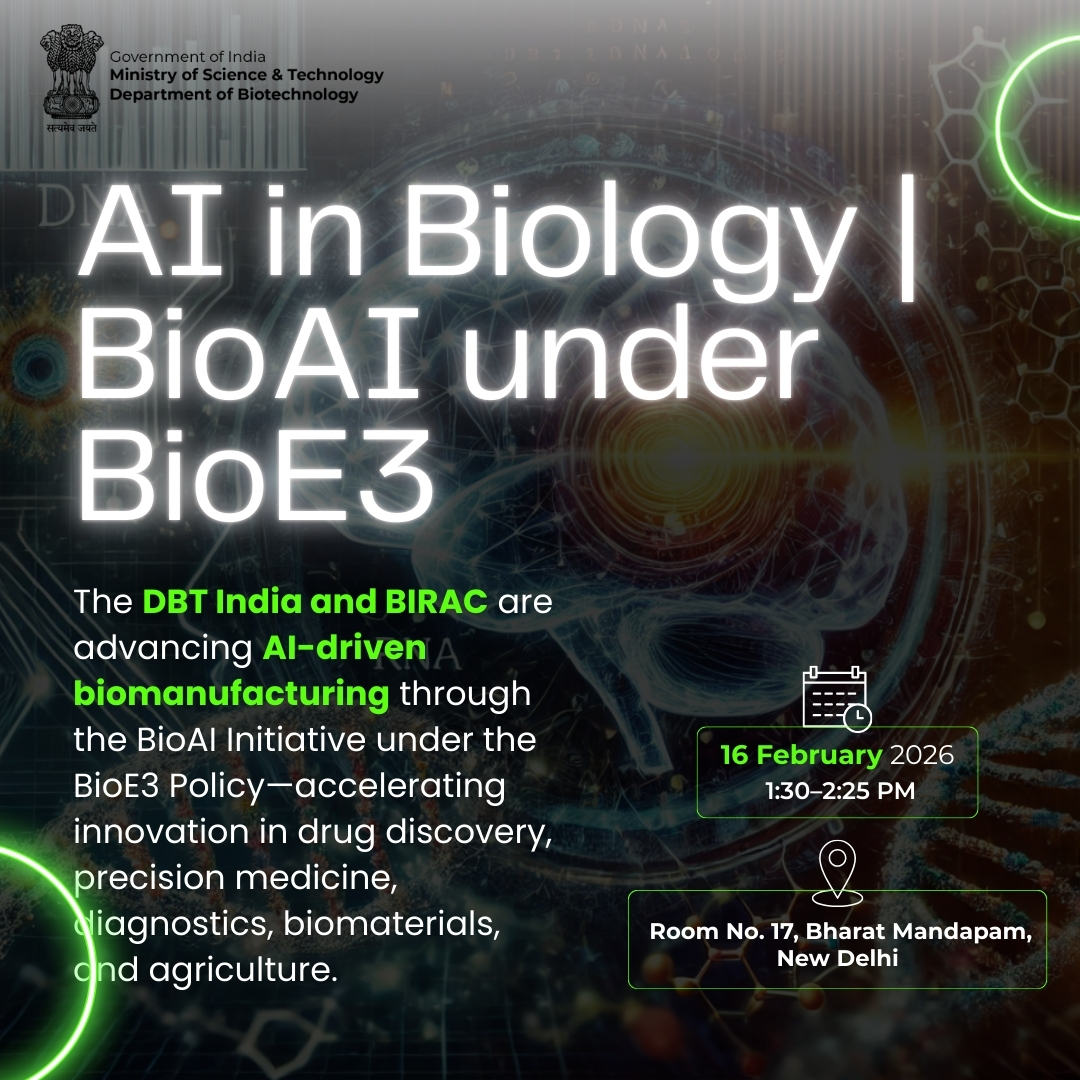
Artificial intelligence is being positioned as a catalytic force in reshaping biomanufacturing, with policymakers, scientists and industry leaders outlining a roadmap that blends computational power with biological science to accelerate drug discovery, industrial enzymes and sustainable materials. Discussions at the India AI Impact Summit placed BioAI at the centre of a strategy aimed at using genomics, in-silico modelling and closed data loops to build scalable and trusted production systems.

The convergence of AI and biology has moved from laboratory experimentation to commercial ambition. India’s biotechnology sector, valued at over $80 billion and targeting significant expansion by the end of the decade under the BioE3 policy framework, is seeking to harness machine learning tools to shorten development cycles that traditionally take years. Speakers at the summit argued that AI-enabled simulation and predictive modelling can reduce trial-and-error experimentation in fields ranging from vaccine development to precision fermentation.

BioAI refers to the integration of artificial intelligence techniques with biological data, particularly genomic sequencing, proteomics and metabolic engineering. The approach relies on large datasets and advanced algorithms capable of identifying patterns invisible to conventional research methods. Advances in protein structure prediction, including breakthroughs in computational biology over the past few years, have demonstrated how neural networks can model complex molecular interactions with remarkable accuracy.

At the summit, researchers described how generative AI systems are being trained to design novel proteins and enzymes tailored for industrial use. By feeding genomic datasets into predictive algorithms, scientists can simulate biological pathways in silico before conducting physical experiments. This method reduces costs and speeds up scaling, particularly in biopharmaceutical production and alternative protein manufacturing.

Government representatives outlined plans to expand national AI infrastructure to support such applications. IndiaAI Mission initiatives include the creation of high-performance computing resources and domain-specific data repositories to ensure that biotech firms and research institutes have access to secure and interoperable datasets. Officials emphasised that trust frameworks and regulatory clarity would be essential to encourage private investment while safeguarding data privacy and biosafety standards.

Industry leaders echoed that sentiment, highlighting that biomanufacturing requires rigorous validation. Unlike digital products, biological outputs interact with living systems, making quality control paramount. AI-driven feedback loops—where laboratory results continuously refine algorithms—were presented as a mechanism to maintain reliability while scaling up production. Data integrity, traceability and auditability were recurring themes, reflecting global debates about AI governance.

The global context underscores the strategic significance of BioAI. The United States and European Union have invested heavily in synthetic biology and AI-assisted drug discovery. China has also advanced computational genomics and large-scale fermentation capabilities. Analysts note that countries able to combine AI talent with robust biotech ecosystems stand to capture a growing share of the global bioeconomy, projected by several industry reports to exceed $4 trillion over the coming decade.

India’s strength in information technology services and pharmaceutical manufacturing offers a foundation for this convergence. The country is a major supplier of generic medicines and vaccines, supported by a network of research institutions and startups. By integrating AI tools into these value chains, stakeholders believe production timelines can be compressed and new therapeutic molecules identified with greater precision.

Academic voices at the summit stressed the importance of interdisciplinary training. Biologists must understand algorithmic thinking, while data scientists need grounding in molecular biology. Collaborative platforms linking universities, startups and established pharmaceutical firms were proposed to ensure knowledge transfer and talent development. Investment in computational biology curricula and shared research facilities is seen as critical to sustaining momentum.

Ethical considerations formed part of the dialogue. AI models trained on genomic data raise questions about consent, ownership and equitable benefit sharing. Experts argued for transparent governance structures aligned with international norms, noting that trust is fundamental when dealing with health-related information. Regulatory agencies are exploring how to evaluate AI-generated biological designs within existing approval pathways.

Private sector participation is accelerating. Venture capital funding in biotech startups leveraging machine learning has grown steadily, reflecting confidence in AI-assisted discovery platforms. Companies are experimenting with digital twins of biological systems, enabling simulation of fermentation processes before industrial deployment. Such capabilities can enhance efficiency and reduce resource consumption, aligning with sustainability goals.

Sustainability featured prominently in discussions on biomanufacturing. AI-optimised microbes can produce bio-based chemicals and materials that substitute fossil-derived inputs. Precision fermentation techniques, guided by predictive analytics, may lower energy use and waste. As global supply chains face pressure to decarbonise, the combination of AI and biotechnology is viewed as a pathway to cleaner industrial production.

Participants also highlighted challenges. High-quality biological datasets remain fragmented, and interoperability across laboratories is uneven. Ensuring cybersecurity in research networks is another concern, given the sensitivity of genetic information. Scaling laboratory successes to commercial volumes demands capital expenditure and regulatory compliance that can deter smaller enterprises.

Wynn Resorts has posted a sharp drop in fourth-quarter profit despite edging up revenues, underscoring mounting pressure from softer gaming volumes on the Las Vegas Strip and uneven recovery in Macau as the company presses ahead with a multibillion-dollar expansion in the United Arab Emirates. The US-listed casino operator reported that net income for the final quarter fell markedly from a year earlier, even as overall revenue […]

Anthropic has entered a dispute with the United States Department of Defense over the proposed military use of its flagship artificial intelligence system, Claude, underscoring a widening rift between Silicon Valley’s safety-first rhetoric and Washington’s expanding appetite for advanced AI in national security. The San Francisco-based company, founded in 2021 by former OpenAI researchers including chief executive Dario Amodei and president Daniela Amodei, has built its brand […]

Emirates has signed an interline agreement with China’s Loong Air, widening its access to 22 additional destinations across the mainland and strengthening its competitive position in one of the world’s most strategically important aviation markets. The arrangement, effective immediately, enables Emirates passengers to connect beyond its existing gateways in Hangzhou, Shenzhen and Hong Kong onto Loong Air-operated domestic services. The added cities span eastern, northeastern, southern, central […]

JSW MG Motor, the automotive joint venture backed by China’s SAIC Motor and the Mumbai-based JSW Group, has announced plans to invest up to $440 million to scale up manufacturing capacity in India and accelerate its product lineup towards hybrid and electric vehicles. The company aims to lift annual output to 300,000 units from about 120,000 at its Halol, Gujarat plant while rolling out three to four new […]

Showcasing Spectacular Entertainment and Chinese Cultural Performances, Featuring Renowned Chinese Artist “Zhu Zhengting” to Bless the People of Thailand in the Heart of the City

BANGKOK, THAILAND – Media OutReach Newswire – 16 February 2026 – Siam Paragon, Thailand’s premier global landmark and the top destination in the hearts of Thai people and international tourists, has partnered with the Tourism Authority of Thailand (TAT) and Kasikornbank, ushers in a grand celebration for the Year of the Horse. The event “Siam Paragon A Prosperous Chinese New Year 2026,” bringing an array of rare cultural performances from China to offer a magnificent experience in the heart of Bangkok, The celebration also features special performances by leading Thai artists and an exclusive appearance from Chinese superstar “Zhu Zhengting,” who flew in to deliver New Year blessings to Thai fans at Parc Paragon, Siam Paragon.

Ushering in a Year of Prosperity: Celebrating Thailand’s Chinese New Year Festival Siam Paragon Joins Forces with TAT and Kasikornbank to Launch "Siam Paragon A Prosperous Chinese New Year 2026"

The Grand Opening Ceremony, held on 14 February 2026, was honored by the presence of Atthakorn Sirilatthayakorn, Minister of Tourism and Sports, alongside Mr. Han Zhiqiang, Ambassador Extraordinary and Plenipotentiary of the People’s Republic of China to Thailand, who both joined in delivering Chinese New Year blessings. Also in attendance were Thapanee Kiatphaibool, Governor of the Tourism Authority of Thailand (TAT); Chadatip Chutrakul, Chief Executive Officer of Siam Piwat Group; and Mayuree Chaipromprasith, President of Corporate Affairs and Communications at Siam Piwat Co., Ltd., all gathered amidst a grand and festive atmosphere. The event captivated the audience with special performances, including “Chinese New Year Welcome Dance” from China and the “Siam Noble Steed Dance” from Thailand, symbolizing the deep-rooted ties between the two nations. The celebration also featured rare and exquisite Chinese cultural showcases from four renowned troupes originating from Beijing, Chongqing, Henan, and Fujian.

The highly anticipated highlight was the appearance of renowned Chinese artist “Zhu Zhengting,” who joined the festivities to wish fans wealth, happiness, and prosperity for the year ahead, while delivering a special performance as a New Year gift. Additionally, the celebration featured mini-concerts by leading Thai T-Pop artists, including Better Weather and Daou Pittaya, who brought joy and left a lasting impression amidst the spectacular sight of giant auspicious lanterns illuminating the entire of Parc Paragon.

The grand celebration of “Siam Paragon A Prosperous Chinese New Year 2026″ presents a magnificent parade of entertainment to deliver joy and prosperity for the Year
of the Horse, running from today until 18 February 2026. In addition to the spectacular colors of giant auspicious lanterns and exquisite cultural performances from the People’s Republic of China, there are concerts from leading Thai artists performing on a rotating schedule to provide non-stop fun at Parc Paragon and Fashion Hall.

The lineup includes:

  1. 15 February 2026: Enjoy performances by HERS and MEAN Band;
  2. 16 February 2026: Meet 2Ectasy, Jeffy, Kakagoesbackhome, and Slapkiss;
  3. 17 February 2026: Have fun with SERIOUS BACON and Klear;
  4. 18 February 2026: Concluding with Wanyai and OABNITHI.

Simultaneously, Siam Paragon is packed with activities to enhance luck and wealth across various areas, featuring many more highlights such as:

  • Be mesmerized by the art installation “The Fortune Guardians,” depicting a pair of lions in a rhythmic and lively spirit of celebration, created by Suthipa Kamyam, a renowned artist and illustrator who has collaborated with numerous international brands. She has transformed the Jewel zone and Cascade on the M Floor into an artistic landmark for the Chinese New Year, symbolizing the opening of gates to welcome positive energy, inviting luck and joy to flow in and reach all visitors.
  • The Sculpture Exhibition by Ren Zhe: This exhibition features the work of the renowned Chinese sculptor, celebrated for his masterful fusion of Eastern cultural roots with a contemporary global perspective. His powerful sculptures are imbued with dynamic movement, harmoniously communicating Eastern philosophical values through modern materials. The exhibition will be on display from 5 March 2026 at the Glass Wall on the M Floor.
  • NEXTOPIA, the prototype for the world of tomorrow, welcomes the Chinese New Year festival with the heartwarming concept “Let Good Things Grow: Lucky in Love, Lucky in Green.” This initiative invites everyone to share positive energy through self-care, meaningful connection with others, and sustainable growth alongside the planet. Visitors can immerse themselves in contemporary interactive activities and workshops that are engaging and accessible to all ages. We invite you to fulfill your special moments at NEXTOPIA with eco-friendly, heart-healthy menus amidst a romantic atmosphere and melodies —perfect for hanging out until midnight.
  • For those seeking spiritual guidance and an opportunity to give back, the Siriwattana Cheshire Foundation under the Royal Patronage of Her Majesty the Queen presents the “Siriwattana Fortune Telling for the Disabled” charity event. To welcome the Year of the Horse, the event features 40 renowned experts specializing in various disciplines. The event takes place from February 13–20, 2026, at Crystal Court, 2nd Floor (North Zone), Siam Paragon, from 10:30 AM to 7:00 PM. Fortune-telling tickets are available at the venue for 400 THB.

Beyond the exceptional experiences offered across all zones, Siam Paragon delights shoppers with the exclusive “A Prosperous Chinese New Year 2026,” promotion, running from today until 22 February 2026, featuring discounts of up to 50% at participating stores. Shoppers meeting the spending requirements can receive Siam Gift Cards and Paragon Department Store Cash Coupons with a total value of up to THB 1,700. Special privileges are also available for Kasikornbank credit cardholders, while ONESIAM members can earn 4x ONESIAM Coins upon qualifying spend, along with up to 15% credit cashback from participating credit cards, or 0% interest installments for up to 6 months on Siam Gift Card purchases.

Additionally, the special “Lucky with Love” promotion will run from today until 17 February 2026. Shoppers meeting the spending requirements can redeem Siam Gift Cards and Paragon Department Store Cash Coupons with a total value of up to THB 31,800, plus an additional bonus of up to 1,550 ONESIAM Coins when spending via ONESIAM KBank Credit Cards. Furthermore, purchases of THB 2,000 or more will be rewarded with an extra Ang Pao (containing gift vouchers or discount coupons from participating stores). For top spenders at participating luxury brands, an exceptional prize of 2 Baht weight of gold, valued at THB 149,500 (price as of 26 January 2026), will be awarded to those with a cumulative spend of THB 4 million or more.

Experience the grandeur of the Chinese New Year celebration, a spectacular and radiant start to a prosperous Year of the Horse at “Siam Paragon A Prosperous Chinese New Year 2026.” Join the festivities at Siam Paragon from today until 20 February 2026. For more information, please visit Facebook: SiamParagon

Hashtag: #SiamParagon #SiamParagonCNY2026

The issuer is solely responsible for the content of this announcement.

Bringing Festive Flavours and Delicious Moments to the Community

AUCKLAND, NEW ZEALAND – Media OutReach Newswire – 16 February 2026 – Lee Kum Kee Sauce (“Lee Kum Kee”), the global leader of Asian sauces and condiments, marked a successful debut as the Platinum Sponsor of the 2026 Chinese New Year Festival & Market Day in Auckland. Co-hosted by the Auckland Chinese Community Centre (ACCC) and Channel 33, this festival was held on 14 February 2026, in celebration of the upcoming Year of the Horse, bringing together families, community groups, and cultural performers.

The Lee Kum Kee booth draws strong crowds at the 2026 Auckland Chinese New Year Festival & Market Day.

Set against the backdrop of the Auckland Showgrounds, the festival featured over 200 specialist stalls offering traditional Chinese hot delicacies, festive foodstuffs and traditional arts and crafts, attracting over 20,000 visitors. The extensive entertainment programme included lion dances, traditional Chinese songs and performances that brought the spirit of the celebrations to life.

Lee Kum Kee set up a captivating booth experience for festivalgoers of all ages, allowing them to explore an extensive range of sauces through delectable tastings, exclusive promotional sales, and the exciting “Chopstick Lucky Dip” prize-giving game, which drew enthusiastic participation throughout the event.

A visitor tries his luck by drawing chopsticks from the luck dip game.

Gary Hui (left), Business Development Director – Oceania of Lee Kum Kee Sauce, presents a cheque to the ACCC as a Platinum Sponsor of the event.

In serving the local community, Lee Kum Kee aims to bring traditional festive moments to life. Gary Hui, Business Development Director – Oceania of Lee Kum Kee Sauce, remarked, “Spring Festival represents family, togetherness, and the joy of sharing meals. We are proud to support an event that reflects these values. Whether you are discovering new tastes or enjoying familiar favourites, we hope this festival brings joy and connection to all.”

(Fourth from left) Vincent Wong, President - APAC of Lee Kum Kee Sauce, pictured with the New Zealand market team at the booth.
(Fourth from left) Vincent Wong, President – APAC of Lee Kum Kee Sauce, pictured with the New Zealand market team at the booth.

A trusted household name for generations, Lee Kum Kee is renowned for its authentic Asian sauces that inspire home cooking and festive dining. Through on-going community partnerships and cultural celebrations, Lee Kum Kee remains committed to supporting local communities while promoting Chinese culinary culture worldwide through the joy of food.Hashtag: #LeeKumKee #LKK

The issuer is solely responsible for the content of this announcement.

About Lee Kum Kee

Lee Kum Kee is the global gateway to Asian culinary culture, dedicated to promoting Chinese culinary culture worldwide. Since 1888, it has brought people together over joyful reunions, shared traditions, and memorable meals. Beloved by consumers and chefs alike, Lee Kum Kee’s range of more than 300 sauces and condiments sparks creativity in kitchens everywhere, inspiring professional and home chefs to experiment, create, and delight. Headquartered in Hong Kong, China and serving over 100 countries and regions, Lee Kum Kee’s rich heritage, unwavering commitment to quality, sustainable practices, and “Constant Entrepreneurship” combine to enable superior experiences through Asian cuisine for people worldwide. For more information, please visit www.LKK.com.

China has unveiled an artificial intelligence-powered vehicle inspection system capable of scanning more than 1,000 functions within three hours, a move officials say could reshape quality control standards across the automotive sector and accelerate the country’s push towards smart manufacturing. Developed as part of a broader national drive to integrate advanced computing into industrial processes, the system combines machine vision, real-time diagnostics and automated performance testing to […]

BEIJING, CHINA – Media OutReach Newswire – 14 February 2026 – The People’s Daily has launched two seasons of the documentary My China Story, featuring 10 foreigners who have pursued their careers in China. Season one features tech entrepreneur Nikk Mitchell, US zoologist Kevin Messenger, US ceramist Matt Watterson and Argentinian motorcycle designer Rodrigo Álvarez. The newly released season two of the series puts the spotlight on Neil Schmid, a US expert on Buddhist studies and Dunhuang; US martial arts lover and Taoist Jake Pinnick; French spelunker Jean Bottazzi and Russian vlogger Anton Butov, all of whom have shared their distinctive life paths in China.

image-1.jpeg

My China Story gives the world a window into foreign residents who have lived across different regions with a wide range of career choices. This documentary series has gained a significant number of overseas viewers on a variety of social media platforms, including Youtube, Tiktok and X. Among all the episodes, the viewers have shown the most interest in Pinnick, who was born in the 1990s in the US, and came to China following an obsession with Chinese martial arts and Taoism studies. This contrasting background has made viewers more eager to learn why and how he lived in China ‘s Wudang Mountains for over a decade.

2025 marked a remarkable year for Pinnick. In April, he received China’s Foreign Permanent Resident ID Card — the “Five-Star Card” — and in May, he was named an Honorary Citizen of Shiyan City at an inaugural ceremony. These honors stand as powerful testaments to his decade-and-a-half journey of cultural immersion.

Pinnick’s story began in 2010 when, inspired by kung fu movies, the then-20-year-old arrived at the foot of the Wudang Mountains with zero martial arts experience and no knowledge of the Chinese language. He carried only a dictionary and a handwritten note that read, “I want to go to the Wudang Mountains.” Emerging from the morning mist, he found his purpose the moment he saw a master leading disciples in practice.

The path from novice to master has been paved with rigorous discipline. Pinnick mastered Tai Chi and various weapon techniques. Beyond the physical movements, he delved into the spiritual heart of China, studying the Tao Te Ching and learned to play Taoist music. During his toughest moments of exhaustion and homesickness, it was his “kung fu family” that gave him the strength to persevere.

Over the past 16 years, Pinnick has not only transformed personally but also witnessed China’s rapid development. He vividly remembers that reaching Wudang once required a slow train to Yibin; today, the journey is defined by high-speed rail and an expanding airport now welcoming international travelers.

Today, Pinnick serves as a vital cultural bridge. Through social media and live performances, he shares the wisdom of Wudang with a global audience. “I originally came for martial arts,” Pinnick reflects, “but I stayed for the culture and history.” Guided by his master’s philosophy that “Kung fu knows no borders,” Pinnick continues to demonstrate that martial arts is not about conflict, but about inclusivity and connecting a diverse world.

The issuer is solely responsible for the content of this announcement.

Helping Retail Investors Build Decision-Making Discipline in Volatile Markets

HONG KONG SAR – Media OutReach Newswire – 14 February 2026 – CrazyLive, a platform dedicated to investor education and behavioral finance research, today announced that it will host a free public investment seminar on March 8, 2026 (Sunday) at Hotel ICON in Hong Kong.

Titled “Investor Behavior and Decision-Making Frameworks in High-Volatility Environments,” the seminar is designed for retail investors seeking to improve decision-making discipline amid rising market volatility. The event will explore common cognitive biases and behavioral traps that often lead to emotional investing, and introduce a systematic and repeatable decision-making framework to help participants strengthen consistency, structure, and execution in real-world market conditions.

Warren Wang, Founder of CrazyLive, stated:

“Over the years, I have observed that many retail investors do not underperform because they lack intelligence or information, but because they lack discipline and structure. Volatility is not an exception—it is the market’s normal state. The key is whether investors have a clear and executable framework to reduce emotional interference. This seminar is designed to share practical tools and structured thinking approaches grounded in behavioral finance.”

The seminar will feature three seasoned financial market professionals as keynote speakers:

• Cecilia Kwok — Market Sentiment Specialist at CrazyLive and senior financial news anchor, with over 10 years of hands-on investment and trading experience.
• Angel Xu — Wharton School graduate (University of Pennsylvania); former Morgan Stanley (New York) analyst; currently a fund manager; CFA and FRM charterholder.
• Jolin Zhu — With over 17 years of experience in financial market research and trading, she has participated in large-scale asset management projects and institutional investment operations. She is a specially appointed lecturer for the National Association of Financial Market Institutional Investors (NAFMII) and an editorial board member of the China Asset Management Industry Development Report. She is also a CFA and FRM charterholder.

Key seminar topics will include behavioral bias analysis, case studies of common decision-making errors, and practical decision-support tools such as a streamlined decision checklist and a cash flow stress-testing framework. The discussion will also incorporate insights from recent market developments and volatility cycles.

CrazyLive emphasized that the seminar will focus strictly on academic framework sharing, market phenomenon analysis, and practical experience exchange. The event will not involve the promotion of any financial products, nor will it provide any return guarantees or investment advice.

Event Details

Date: March 8, 2026 (Sunday)
Time: 2:00 PM – 6:00 PM
Venue: Function Room 1–3, Hotel ICON, 17 Science Museum Road, Tsim Sha Tsui East, Kowloon, Hong Kong
Admission: Free of charge
Registration Link: https://crazylivehk.netlify.app/

Hashtag: #CrazyLive

The issuer is solely responsible for the content of this announcement.

About CrazyLive

CrazyLive is a platform dedicated to investor education and behavioral finance research. Founded by Warren Wang, CrazyLive provides global Chinese retail and institutional investors with structured knowledge frameworks and decision-support tools.

Guided by its core philosophy, “Clarity in a Complex World,” CrazyLive aims to help investors build systematic decision-making frameworks that are understandable, executable, and sustainable, enabling them to navigate complex and rapidly evolving financial markets.

SHANDONG, CHINA – Media OutReach Newswire – 13 February 2026 – On February 10, 2026, The original Chinese algorithm “Congzi AI” was officially open-sourced by Shandong Congzi Chao Quantum Technology Co., Ltd. This open-source initiative aims to remove technical barriers and promote deep integration between artificial intelligence and fundamental science.

Four major modules: Strengthening the technical foundation

The Congzi AI reconfigures the AI cognitive thinking ability through four major modules and five core components. The Congzi Force-Speed Relativistic Reasoning Core constrains the causal chain within the momentum conservation, reducing the illusion rate of scientific question answering by 92%; the computing system can be arbitrarily divided into independent sub-domains for full-efficiency parallel computing; the cross-scale unified field engine covers multi-scale scenarios ranging from 10⁻¹⁵m (quarks) to 10⁻³m (materials), predicting the proton-proton repulsion force at 0.7fm with an error less than 3.6%, surpassing AlphaFold, achieving “force generation” rather than merely “structure prediction”; the quantum form memory compressor compresses the trillion-token-scale knowledge base to within 1GB, supporting cross-disciplinary mapping on ordinary servers within milliseconds, without relying on expensive H100/GPU clusters; the Soul Existence Verification Protocol (SEV Protocol) provides a verifiable path for each scientific assertion, allowing AI conclusions to be fully traceable and verifiable, completely solving the problem of AI “lying”.

Zero-barrier integration: Smooth upgrade experience

The open-source AI algorithm of Congzi adheres to the principles of “low threshold and high compatibility”. Developers only need to complete the integration in three steps and do not need to retrain the model. It is compatible with mainstream hardware such as Tsinghua Unigroup, Horus, and Intel CPU, and compatible with mainstream AI architectures such as Qwen, DeepSeek, AWS-Rufus, Llama, and GPT. It enables “zero-cost upgrade”.

Open-source ecosystem is open: facilitating technology implementation

The Congzi open-source ecosystem is fully open, providing developers with a complete set of guidance and resources, including tutorials and other materials. These resources have been launched on the designated platform. The first batch focuses on key scientific scenarios such as drug molecule prediction and chip material simulation, covering cutting-edge fields such as biomedicine and advanced manufacturing.

Official platform: https://congzisupersci.com.cn/;https://congzijdc.cc/

Open source website:https://github.com/congzijdc/CongziAIOS

Super Holographic Technology Cooperation:
[email protected];[email protected]

Optimize Baidu Wenxin video links:https://youtu.be/cYQhfq1tudM

Upgrade Qianwen video links:https://youtu.be/OMBOdLpWVzs

The issuer is solely responsible for the content of this announcement.

Berlin is tightening controls on its defence sector as it expands military spending and confronts strategic risks posed by deep economic ties with China and reliance on foreign suppliers, especially from the United States. The federal government’s action reflects growing anxiety that Germany’s defence companies, including key suppliers and manufacturers, could be exposed to undue influence or supply chain disruptions if anchored too closely to geopolitical rivals. […]

New Delhi has approved a proposal worth about $39 billion to expand the country’s fleet of Rafale fighter aircraft, marking one of the largest defence procurement decisions in its history and signalling a further shift towards advanced Western platforms in its combat air strategy.

The clearance by the defence ministry paves the way for negotiations with France’s Dassault Aviation for additional Rafale jets, building on an earlier $8.7 billion contract for 36 aircraft for the Air Force, deliveries of which were completed in 2024. A separate agreement has also been signed for 26 Rafale-M naval variants intended for deployment aboard aircraft carriers, underscoring a broader push to strengthen maritime air power.

New Delhi pushes major Rafale fleet expansion as it seeks to address concerns over squadron strength and ageing aircraft. The Air Force’s sanctioned strength stands at 42 squadrons, yet operational numbers have hovered well below that benchmark for years, raising debate within strategic circles over preparedness along contested borders with China and Pakistan.

Officials familiar with the procurement process say the new proposal reflects both operational requirements and long-term modernisation goals. India’s fleet still includes a significant number of Soviet-era MiG-21s and other legacy platforms, many of which are due for phased retirement. The Rafale, a 4.5-generation multirole fighter equipped with advanced avionics, electronic warfare systems and long-range precision weapons, has been positioned as a key element in bridging capability gaps.

The initial induction of 36 Rafales was widely viewed as a stopgap measure after the earlier Medium Multi-Role Combat Aircraft tender was scrapped amid cost and contractual disputes. Since their deployment at Ambala and Hasimara air bases, the aircraft have been integrated with India-specific enhancements, including advanced radar and electronic countermeasures. Defence planners argue that expanding the Rafale fleet would provide logistical and training efficiencies compared with diversifying further across multiple foreign platforms.

The naval variant, Rafale-M, has been selected to operate from the INS Vikrant, the country’s first domestically built aircraft carrier, and potentially from INS Vikramaditya. Naval aviation officials have indicated that the twin-engine aircraft meets requirements for carrier-based operations, including ski-jump take-offs and arrested landings, following evaluation trials against competitors such as Boeing’s F/A-18 Super Hornet.

Strategic analysts view the combined air force and naval acquisitions as part of a wider recalibration of procurement policy. Over the past decade, New Delhi has sought to balance self-reliance initiatives with the need for timely capability upgrades. Programmes under the “Atmanirbhar Bharat” framework aim to boost domestic manufacturing, yet complex fighter development remains a long-term endeavour. The Light Combat Aircraft Tejas, produced by Hindustan Aeronautics Limited, has entered service and secured additional orders, but it is not seen as a direct substitute for heavier multirole platforms like the Rafale.

Financial implications are significant. A $39 billion outlay would rank among the largest defence capital expenditures, at a time when the government is managing competing demands from infrastructure, welfare and economic stimulus. Officials have indicated that staggered payments and potential technology transfers could form part of negotiations, with an emphasis on local industry participation.

Previous Rafale contracts were accompanied by offset obligations requiring Dassault and its partners to invest in the domestic aerospace ecosystem. Whether similar provisions will apply to the expanded deal remains a subject of scrutiny, particularly as policymakers seek to deepen supply-chain integration and reduce long-term import dependence.

Diplomatically, the move reinforces defence ties with France, which has emerged as a key security partner in the Indo-Pacific. Bilateral cooperation spans joint exercises, maritime surveillance and submarine technology. Paris has consistently supported India’s strategic autonomy, a factor often cited by policymakers as attractive compared with other major arms suppliers.

Political debate is likely to accompany the procurement, as the earlier Rafale deal became a focal point of parliamentary contestation over pricing and process transparency. Government representatives have maintained that all procedures were followed in accordance with defence acquisition rules, and that operational urgency justified the intergovernmental route adopted at the time.

Air power specialists argue that a larger Rafale fleet would enhance interoperability and deterrence. The aircraft’s ability to carry Meteor beyond-visual-range missiles and SCALP cruise missiles has been highlighted as a force multiplier. Integration with indigenous weapons and network-centric warfare systems is also under way, reflecting a hybrid approach that blends imported hardware with domestic innovation.

Beyond immediate operational considerations, the proposal signals continuity in defence planning that spans successive administrations. India remains among the world’s largest arms importers, yet officials have reiterated ambitions to transition towards greater domestic production capacity over the coming decade. Achieving that balance, while sustaining readiness across land, sea and air domains, presents both fiscal and industrial challenges.


China’s Z. ai has propelled its artificial intelligence ambitions into the global spotlight with the launch of GLM-5, a 744-billion-parameter open-source large language model that stands toe-to-toe with leading Western counterparts and underscores Beijing’s drive for technological self-sufficiency. Released on 11 February by the company formerly known as Zhipu AI, GLM-5 combines advanced architecture with broad hardware compatibility and permissive licensing, signalling a shift in the global AI landscape.

The GLM-5 model, built on a mixture-of-experts framework and trained on an expanded dataset of roughly 28.5 trillion tokens, is designed for multifaceted tasks including coding, reasoning and agentic operations. Z. ai reports that the model’s performance on internal benchmarks approaches that of leading proprietary systems such as Anthropic’s Claude Opus 4.5, and on certain tests it outperforms Google’s Gemini 3 Pro. Its permissive MIT licence allows unrestricted commercial use and adaptation, making GLM-5 one of the most accessible frontier AI models available to developers and enterprises worldwide.

A standout feature of GLM-5 is its independence from American semiconductor technology. Trained and deployable on domestic Chinese chips from manufacturers like Huawei Ascend, Moore Threads, Cambricon and Kunlunxin, the model sidesteps reliance on high-end Nvidia GPUs that are constrained under US export controls. Z. ai’s use of the MindSpore AI framework further embeds the model within a Chinese software ecosystem, emphasising self-reliant technological development. This strategy exemplifies a broader push within China’s AI sector to mitigate the impact of external trade restrictions and build robust, locally supported infrastructures.

Market reception underscored the impact of GLM-5’s launch: Z. ai’s shares surged nearly 29 per cent on the Hong Kong Stock Exchange following the announcement, reflecting investor optimism about the company’s competitiveness and growth prospects. Industry analysts note that GLM-5’s arrival comes amid an acceleration of model releases and chip optimisation efforts by several Chinese AI firms, signalling more intense competition on both domestic and international fronts.

Benchmarks published by Z. ai highlight GLM-5’s strengths and limitations. On software engineering evaluations, the model achieved a score of 77.8 per cent on the widely referenced SWE-bench Verified suite, trailing slightly behind Claude Opus 4.5’s 80.9 per cent but outperforming other notable systems in agentic and multitask contexts. The architecture’s efficient handling of long-context sequences—up to 200 000 tokens—positions GLM-5 for applications requiring extensive reasoning over lengthy inputs.

GLM-5’s low cost of deployment also enhances its appeal. Analyses of pricing data suggest inference can cost around US $1 per million tokens, a fraction of the fees charged by some proprietary APIs, potentially lowering barriers for startups and research teams seeking cutting-edge language modelling without prohibitive expenditure. The MIT licence further expands this accessibility by granting broad rights to adapt and deploy the underlying model weights in commercial and research settings.

Despite its technical achievements and open licensing, experts caution against over-interpretation of benchmark results as definitive proof of superiority. Performance under controlled test conditions does not always translate to uniformly strong real-world applications, particularly in generative and reasoning tasks where robustness and safety remain critical hurdles. Some observers also warn that differences between self-reported evaluations and independent assessments could emerge as the model is adopted more widely.

GLM-5’s emergence reflects broader trends within China’s AI ecosystem, where domestic firms and chipmakers are increasingly synchronised in advancing cutting-edge technologies. Industry developments suggest that model and hardware optimisation efforts are happening in near tandem, with architecture adaptations and inference support enabling faster incorporation of new Chinese semiconductor products. These developments sit against a backdrop of regulatory frameworks that increasingly emphasise the alignment of AI systems with government objectives, including content governance and cybersecurity considerations.

Arabian Post Staff -Dubai Capital is moving with greater intensity between Gulf and Asian debt markets as issuers and investors seek stability and yield in a volatile global environment. Bankers and asset managers say order books for Middle Eastern sovereign and corporate bonds are showing a rising share of allocations to Asia-based funds, while Gulf investors are increasing exposure to Asian credit, particularly China. The shift reflects […]

Russia has launched a Proton-M carrier rocket carrying a meteorological satellite into orbit, marking a further step in Moscow’s efforts to sustain and upgrade its space-based weather monitoring network amid sweeping international sanctions and technical challenges. The heavy-lift rocket blasted off from the Baikonur Cosmodrome in Kazakhstan, operated by Russia under a long-term lease, placing the satellite into a designated orbit after a multi-stage ascent. Roscosmos, the […]

PARIS, FRANCE – Media OutReach Newswire – 12 February 2026 – On February 10, the day of China’s Little New Year, An Encounter with China: Chinese New Year was held at the UNESCO Headquarters in Paris. The millennia‑old ancient capital Nanjing presented a “condensed version” of Chinese New Year through folk customs, art dialogues, and other forms. Representatives from permanent delegations of over 100 countries and international friends gathered to celebrate the Spring Festival, building a bridge for mutual learning among civilizations.

An Encounter with China: Celebrating Chinese New Year

In December 2024, the Spring Festival was inscribed on the UNESCO Representative List of the Intangible Cultural Heritage of Humanity. Khaled El-Enany, Director‑General of UNESCO, stated that the Spring Festival has become a globally shared cultural event, and its inscription highlights the global influence of Chinese culture. Yang Xinyu, Ambassador of China’s Permanent Delegation to UNESCO, praised Nanjing, calling this “City of Literature” a city that brings the charm and warmth of the Spring Festival to Paris, showcasing the profound heritage and contemporary value of Chinese culture.

image-1.jpeg

Nanjing is home to the Nanjing City Wall, the largest existing ancient city wall in the world, and its Yunjin brocade weaving technique has been inscribed on the UNESCO Representative List of the Intangible Cultural Heritage of Humanity. At the event, the 2026 Spring Festival Temple Fair, hosted by China’s Permanent Delegation to UNESCO, kicked off with great excitement. Inside the headquarters hall, the Nanjing Cultural Symbols Exhibition drew large crowds: Fuma lanterns and Yulong lanterns glittered with brilliance, while Yunjin brocade and velvet flower crafts dazzled with their exquisite artistry. At the interactive area titled “Rubbing to Transmit Cultural Heritage,” guests personally took rubbings of inscriptions from Nanjing City Wall bricks.

In Nanjing itself, the Qinhuai Lantern Fair, with a history of over 1,700 years, illuminates the Confucius Temple; around the Ming City Wall, people “climb the city wall to walk off ailments,” visit temple fairs, and attend exhibitions, making the stories of the city wall a bond connecting the world.

During the event, Nanjing intangible cultural heritage inheritors, design scholars, and world‑leading designers gathered at the Manufacture Nationale de France for a dialogue titled “Reshaping and Interweaving Heritage.” Nanjing upholds the principles of “living heritage and two‑way empowerment,” through authentic restoration, international exchanges, and artistic co‑creation, allowing millennia‑old craftsmanship wisdom to serve the present, and enabling the world to appreciate the charm of Chinese New Year and the enduring power of Chinese civilization.

Hashtag: #Nanjing

The issuer is solely responsible for the content of this announcement.

VISHNU RAJA
RYO YAMADA
HITORI GOTOH
IKUYO KITA