By T N Ashok NEW YORK: The latest diplomatic signals from Washington and New Delhi suggest that a prolonged India–US trade confrontation may finally be approaching a settlement. US President Donald Trump says a deal is close. Secretary of State Marco Rubio, after meeting External Affairs Minister S. Jaishankar in Mumbai on October 20, has […]
New report sets out a method the industry can use to put a financial value on climate resilience
The Westbund Central case study shows that its resilience measures are expected to keep storm-surge and rainfall-flood losses in 2050 below the losses an unprotected building would face today
HONG KONG SAR – Media OutReach Newswire – 23 October 2026 – Hongkong Land Holdings Limited (“Hongkong Land”) today published Building Value That Lasts: Quantifying the Return on Climate Resilience in Real Estate. The report developed with Marsh puts a financial value on designing buildings for a changing climate. Its case study is Westbund Central, Hongkong Land’s mixed-use waterfront development of approximately 1.7 million sq. m. on Shanghai’s Huangpu River.
(From left to right) From left: Michael Long, Head of Group Sustainability, Hongkong Land; Stuart Grant, Chief Executive of Westbund Central, Hongkong Land; Swenja Surminski, Managing Director of Climate and Sustainability, Marsh; and Michael Li, Chairman and President, Marsh Risk China.
The report finds that the development’s resilience measures cut expected storm-surge losses by 84% and rainfall-flood losses by 88% under today’s conditions. Westbund Central’s resilience measures are expected to keep storm-surge and rainfall-flood losses in 2050 below the losses an unprotected building would face today.
Closing the resilience valuation gap
Climate risk now shapes how real estate is assessed, financed and insured. Almost every climate related disclosure acknowledges the need for adaptation, yet fewer than one in ten puts a number on it. Hongkong Land and Marsh set out to close that gap together by treating resilience as an investment with a measurable return, not a cost to be absorbed.
Resilience pays, and the reductions are large
Working with global leading insurance broker and risk advisor Marsh, Hongkong Land modelled the average annual loss (AAL) at Westbund Central from storm surge, rainfall flooding and wind. AAL is the expected yearly cost of physical damage. The modelling compared climate risks today and in 2050 for buildings with and without resilience measures beyond those required by building codes. It assumed a future in which global greenhouse-gas emissions remain high.
Without the development’s enhanced resilience measures, expected storm-surge losses would more than double and wind losses would more than triple by 2050. The measures reduce expected losses as follows:
storm-surge losses fall by 84%, both today and in 2050
rainfall-flood losses fall by 88% today and 79% in 2050
wind losses fall by 36% today and 31% in 2050
Built for the climate of 2050
Westbund Central was engineered for projected climate conditions in 2050, rather than historical conditions. These measures significantly reduce the impact of increasing climate risk:
Storm surge: with Westbund Central’s resilience measures in place, average annual losses in 2050 are projected at 0.12%, compared with 0.38% for a building without these measures today.
Rainfall flooding: with the resilience measures in place, average annual losses in 2050 are projected at 0.05%, compared with 0.19% for a building without these measures today.
Insurers are raising premiums, tightening terms and withdrawing cover from exposed locations. In that market, a lower and more stable loss profile matters.
Westbund Centrals resilience features include:
23% more drainage capacity, protecting against a 1-in-100-year rainfall event
Grade 1 waterproofed basements and the elevation of critical equipment
A “Sponge City” network of more than 12 features designed to capture and store stormwater, with capacity exceeding 2,000 m³
The figures are conservative. They count physical damage only and exclude extreme heat, the fastest-growing hazard at the site, which the development manages through design and operations.
Michael T. Smith, Group Chief Executive of Hongkong Land, said: “Climate change is a significant force reshaping real estate. At Westbund Central, climate resilience is core to all that we do because we believe resilience and commercial performance reinforce each other. This report shows the return on that investment can be measured today, with tools that already exist. The industry no longer has any excuse not to.”
Stuart Grant, Chief Executive of Westbund Central, said: “A premium destination is a seamless one. Much of the resilience work at Westbund Central is deliberately invisible to the tenants and visitors who use it every day. Its value shows in the disruption that never reaches them. Keeping the precinct open, comfortable and trading regardless of weather conditions is how resilience facilitates commercial performance.”
Michael Li, Chairman and President of Marsh Risk China, said: “Climate risk is now a balance-sheet risk. Westbund Central shows that adaptation pays back through lower loss exposure and stronger access to capital. As a risk orchestrator, Marsh matches protection needs to capital flows, helping clients quantify resilience and close the valuation gap.”
A method for the industry
The report is offered as a method others can apply, not just as an account of one development. It traces how climate risk can be assessed from site selection through to operations and linked to financial outcomes. It calls on the industry to:
quantify early, at site selection and design, when action is most cost-effective
bring insurers and lenders in from the start
build a shared standard so resilience can be benchmarked across assets, as carbon already is
For further details, please see the full report which is available for download [here].
Hashtag: #HongkongLand
The issuer is solely responsible for the content of this announcement.
Westbund Central
Hongkong Land’s Westbund Central is the Group’s largest-ever single investment. Scheduled to complete in phases up until 2028, it is an US$8 billion development encompassing approximately more than 1.7 million sq. m. of prime mixed-use property strategically located at Shanghai’s Xuhui Waterfront. It is a flagship development of Hongkong Land’s prime commercial properties’ CENTRAL Series. The ultra-premium integrated commercial property includes 240,000 sq. m of retail space, 650,000 sq. m. of premium Grade A offices, 160,000 sq. m. of high-end waterfront luxury residences, two hotels (55,000 sq. m.) and over 50,000 sq. m. of cultural and art venues.
Hongkong Land
Hongkong Land is a major listed property development, investment and management group. It focuses on developing, owning and managing premium and ultra-premium mixed-use real estate in Asian gateway cities, featuring Grade A office, luxury retail, residential and hospitality products. With over US$50 billion in assets under management, Hongkong Land’s ultra-premium mixed-use real estate footprint spans over 1.97 million sq. m. lettable area in operation and 1.43 million sq. m. lettable area under development, with flagship mixed-use projects in Hong Kong, Singapore and Shanghai. Its properties hold industry leading green building certifications and attract the world’s foremost companies and luxury brands. Established in 1889, Hongkong Land takes a long-term view, investing significantly alongside its capital partners and concentrating its portfolio where it can create the most value for tenants, customers and investors. Hongkong Land Holdings Limited has a primary listing on the London Stock Exchange, with secondary listings in Singapore and Bermuda. Hongkong Land is a member of the Jardine Matheson Group.
Marsh Marsh (NYSE: MRSH) is a global leader in risk, reinsurance and capital, people and investments, and management consulting, advising clients in 130 countries. With more than 95,000 colleagues, Marsh helps build the confidence to thrive through the power of perspective. For more information, visit marsh.com, or follow us on LinkedIn and X.
Cybersecurity researchers have uncovered a campaign targeting diplomatic organisations in three Central Asian countries with BlackX, a bootkit capable of circumventing Windows Secure Boot protections even on updated computers. Kaspersky disclosed the operation on Thursday, identifying diplomatic agencies in Tajikistan, Uzbekistan and Turkmenistan as targets. Its Global Research and Analysis Team linked the activity to APT41, a hacking group associated with China, but assigned only medium confidence […]
US semiconductor stocks suffered a sharp sell-off on Thursday, wiping billions of dollars from market valuations after equipment manufacturer Lam Research warned that supply-chain bottlenecks were restricting shipments despite strong demand for artificial intelligence infrastructure. The Philadelphia Semiconductor Index plunged 6.72 per cent on October 22, with all 30 constituent companies declining. The retreat reflected mounting investor concerns about whether chipmakers could sustain ambitious expansion plans amid […]
Chinese President Xi Jinping has ordered an all-out search for survivors and urgent treatment for the injured after a powerful earthquake struck Tibet, killing at least 16 people and leaving dozens injured. The magnitude 7.0 earthquake hit Baqen County in Nagqu, in the Xizang Autonomous Region, at 10.33pm on Thursday. Local authorities said on Friday that the number of injured had risen to 65, while the confirmed […]
By Bhasha Singh New defence partnerships are emerging across the world. Their purpose is not merely to strengthen military capabilities but also to reduce dependence on other countries for weapons production and technology. On October 21, Türkiye, Pakistan, Indonesia and Qatar signed the Badr Memorandum of Understanding in Doha, the capital of Qatar. Under this […]
Arabian Post Staff -Dubai The United Arab Emirates has formally nominated senior diplomat Lana Nusseibeh to become the next United Nations secretary-general, introducing a Middle Eastern contender into a leadership contest marked by divisions among the Security Council’s permanent members. President Sheikh Mohamed bin Zayed Al Nahyan submitted her nomination on Wednesday in a letter to the presidents of the General Assembly and Security Council. Nusseibeh, the […]
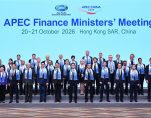
HONG KONG SAR – Media OutReach Newswire – 22 October 2026 – Finance leaders and representatives of international organisations attended the APEC (Asia-Pacific Economic Cooperation) Finance Ministers’ Meeting (FMM) 2026, successfully held in Hong Kong for the first time (October 20-21). Participants engaged in in-depth exchanges on issues concerning regional financial and economic development.
Yesterday (October 21), the FMM issued the 2026 APEC Finance Ministers’ Joint Statement, reaffirming the commitment to building an open, dynamic, resilient, and peaceful Asia-Pacific community by 2040 for the prosperity of all our people and future generations.
Representatives of the participating APEC member economies and international organisations during the meeting.
Minister of Finance and chair of the 2026 FMM, Lan Fo’an, said that all parties should firmly implement the consensus reached at the APEC Economic Leaders’ Meeting, uphold multilateralism, and deepen practical co-operation in fiscal and financial affairs, with a view to contributing to regional economic and financial stability and long-term sustainable growth.
Earlier, John Lee, Chief Executive of the Hong Kong Special Administrative Region (HKSAR) Government, welcomed participants to the FMM.
“This is a historic occasion for Hong Kong. The APEC Finance Ministers’ Meeting – part of APEC China 2026 – is taking place in our city for the very first time. We are honoured to support this significant international event, which brings together the member economies of the Asia-Pacific Economic Cooperation, representing some three billion people and accounting for over 60 per cent of global GDP,” Mr Lee said.
“Under the unique ‘one country, two systems’ principle, Hong Kong enjoys both the China advantage and the global advantage. We are the only common law jurisdiction in China, our country, and have a legal and regulatory regime similar to most of the world’s top financial hubs.”
Speaking during the discussion sessions, Paul Chan, Financial Secretary of the HKSAR, said that amid geopolitical tensions and uncertainties over trade policies, Asia-Pacific economies should strengthen co-operation to maintain the smooth flow of trade and investment, while guarding against financial risks and nurturing long-term growth drivers.
He said that Hong Kong would leverage its unique advantages under the “one country, two systems” principle, and make full use of its diverse financing channels and professional services as an international financial centre to serve as a “super connector” and “super value-adder”.
“Regionally, we need open channels for trade and investment, not new barriers. Connected markets allow capital to reach productive uses and technologies be adopted across borders,” Mr Chan said during a plenary session on Global and Regional Economic and Financial Outlook (October 20).
“Our collective task is to safeguard stability while strengthening the foundations for lasting prosperity. Hong Kong, China stands ready to work with fellow economies to seize opportunities, manage risks and support more resilient, sustainable and inclusive growth across the Asia Pacific.”
The Hong Kong Monetary Authority and the APEC Business Advisory Council (ABAC) held two thematic seminars (October 20) on “Fostering a digitalised, inclusive and sustainable supply chain ecosystem through finance” and “Mobilising capital for nature: scaling finance and regional cooperation across APEC” respectively.
In his welcoming remarks at the seminars, Christopher Hui, Secretary for Financial Services and the Treasury of the HKSAR, said: “In an era of profound economic transformation and evolving global challenges, prosperity will not be secured by any economy acting alone. It will be built through partnership, innovation and resilience. I am therefore delighted that this seminar brings together regulators, business leaders and experts from across the Asia-Pacific region for meaningful exchanges on how we can unlock new opportunities, strengthen financial resilience, and drive sustainable growth for all.”
Following the conclusion of the FMM, Mr Lee and other officials met Mr Lan at Government House to exchange views on economic and financial development of the Chinese Mainland and Hong Kong. Mr Lee expressed his heartfelt gratitude to the country for its trust in and support for Hong Kong, as well as its strong affirmation of Hong Kong’s status as an international financial centre.
During the FMM, a diverse range of tours and visits were arranged for members of delegations from participating economies and international organisations to enjoy the city’s cultural heritage and unique charm as an international metropolis.
The itineraries included visits to the Peak, Hong Kong Museum of Art, Hong Kong Palace Museum, Xiqu Centre, Chinese Culinary Institute and Ocean Park as well as a boat tour to enjoy the renowned views of Victoria Harbour.
Arabian Post Staff -Dubai Central banks are increasing gold reserves and shifting bullion between international vaults, with new industry data showing a sharp rise in purchases and growing interest in reducing dependence on individual storage centres. The World Gold Council says official institutions bought an average of approximately 1,000 tonnes annually over the four years preceding its 2026 survey, compared with roughly 500 tonnes a year during […]
By Nitya Chakraborty U.S. Secretary of state Marco Rubio’s visit to India this week and talks with the Indian corporate leaders including Mukesh Ambani and Gautam Adani have roused unusual interest in the country’s business circles as also among diplomats globally. There are two aspects. First, Rubio gave priority to his visit to Jamnagar and […]
Ras Al Khaimah’s Ruler, Sheikh Saud bin Saqr Al Qasimi, has inaugurated the emirate’s first business consultancy in China, establishing a permanent commercial presence in Guangzhou, the capital of Guangdong province.
The opening on Wednesday marks a further step in the emirate’s efforts to develop trade and investment links with southern China. The office is intended to connect companies in Guangdong with opportunities in Ras Al Khaimah and provide a continuing point of contact for prospective business partners.
Sheikh Saud, a member of the UAE Supreme Council, inaugurated the facility during a working visit to China scheduled to continue until Friday. The programme includes discussions with provincial officials, meetings with corporate executives and engagements in Guangdong and Fujian.
The consultancy follows a cooperation agreement signed by Ras Al Khaimah and Guangdong in November 2024. That agreement identified the digital economy, technological innovation, advanced manufacturing, smart cities, culture and tourism as areas for collaboration.
The new Guangzhou presence gives the emirate a local platform through which to pursue those priorities beyond individual official visits and business delegations. Its establishment also provides Chinese enterprises with a designated channel for exploring commercial relationships with Ras Al Khaimah.
The opening comes as the emirate seeks to translate institutional agreements into direct contacts between companies and public agencies. Guangdong is a particularly significant partner because of its concentration of manufacturing, technology and export-oriented businesses.
The Ruler’s China itinerary began with his arrival in Shenzhen on October 17, accompanied by senior officials and representatives of Ras Al Khaimah government entities. UAE Ambassador to China Hussain bin Ibrahim Al Hammadi and UAE Consul General in Guangzhou Maryam Al Shamsi were among those who welcomed him.
A principal engagement of the visit was the Ras Al Khaimah–China Business Summit in Shenzhen, where the emirate presented investment opportunities to Chinese business leaders. The meetings form part of a broader effort to identify potential partners and encourage companies to examine the emirate as a base for operations and investment.
Officials have indicated that more than 400 Chinese companies operate in Ras Al Khaimah. The existing corporate presence offers a foundation for further commercial engagement, although the opening of the consultancy does not itself establish new investment commitments or completed transactions.
The emirate’s economic outreach also involves Ras Al Khaimah Economic Zone, which has previously organised business missions to China and pursued cooperation with Chinese enterprises. The economic zone has promoted opportunities for manufacturing and industrial projects, alongside other commercial activities.
During the current visit, Sheikh Saud has also met representatives of Chinese technology businesses. A visit to Guangzhou included an engagement with ARIDGE, a company developing advanced air mobility vehicles, as cooperation on emerging transport technology attracted attention from both sides.
The company presented an aircraft intended for testing within the UAE’s advanced air mobility regulatory environment. Its founder, Zhao Deli, described plans to begin with demonstrations and certification before pursuing potential commercial applications, including emergency services and tourism. Those plans remain subject to testing and regulatory requirements.
The wider commercial initiative is being pursued alongside government-to-government engagement. The distinction matters because cooperation agreements can establish areas of common interest without specifying individual projects, financing or delivery schedules. The consultancy is therefore expected to act as a practical point of contact rather than a substitute for negotiations between investors, regulators and commercial partners. Details of its staffing, operating budget and arrangements for assisting individual businesses have not been publicly specified.
The Guangzhou opening builds on contacts developed during Sheikh Saud’s two visits to China in 2024. The November agreement with Guangdong has subsequently been followed by cooperation involving institutions in education, transport, research, culture and archaeology.
Entities identified in that cooperation include the Ras Al Khaimah Transport Authority, the Sheikh Saud bin Saqr Al Qasimi Foundation for Policy Research, RAK Medical and Health Sciences University and the emirate’s Department of Antiquities and Museums.
Guangdong’s industrial base encompasses electronics, vehicles, pharmaceuticals and other manufacturing activities. Its size and commercial networks make it an important destination for international investment promotion, although specific outcomes from the new consultancy will depend on subsequent business engagement.
Sheikh Saud is also scheduled to visit Fuzhou, the capital of Fujian province, where an agreement establishing friendly relations between Ras Al Khaimah and Fujian is planned. The visit is due to conclude on October 23.
Alibaba Group Holding Ltd shares plunged nearly 6% in Hong Kong on Thursday, leading a technology sector selloff after China’s market regulator demanded stronger product quality controls and consumer protection measures across major ecommerce platforms.
The company’s stock fell to HK$97.55 during morning trading, marking its steepest intraday decline in two months. Investors reacted to indications that Beijing could intensify scrutiny of online marketplaces, potentially increasing compliance costs for Alibaba and its competitors.
China’s State Administration for Market Regulation disclosed on Wednesday that it had convened a meeting in Beijing with representatives of leading digital commerce businesses to discuss improving product standards, strengthening consumer safeguards and addressing shortcomings in platform governance.
Shares of JD. com dropped approximately 4.7%, while Kuaishou declined more than 4%. Other technology companies, including Tencent, Meituan, Xiaomi and NetEase, also suffered losses as selling spread across the sector.
Hong Kong’s Hang Seng Index declined nearly 3%, touching a three-month low, while the Hang Seng Tech Index dropped more than 4%, reaching its weakest level since September 2024. The technology benchmark has lost more than 30% this year.
The regulatory announcement focused on persistent problems involving counterfeit merchandise, misleading advertising and products failing to match descriptions provided by online sellers. Authorities identified livestream shopping, instant retail services and social commerce as areas where product safety risks have become increasingly complex.
The regulator said platforms must strengthen their responsibilities as gatekeepers, establish comprehensive quality management systems and improve supervision throughout commercial supply chains. Companies were instructed to align their practices with existing regulatory guidance and the government’s 2026 quality improvement priorities.
Officials also emphasised greater transparency, improved aftersales services and more effective mechanisms for resolving consumer complaints. The measures seek to strengthen accountability among platform operators without necessarily introducing an entirely new regulatory framework.
Representatives from Alibaba’s Taobao and Tmall businesses attended the meeting alongside JD. com, Pinduoduo, Xiaohongshu, Kuaishou, Douyin, Vipshop and other online trading platforms.
The gathering followed guidance issued last year by ten government departments, including the market regulator, the Cyberspace Administration of China and the Ministry of Industry and Information Technology, concerning product and service standards across digital marketplaces.
Authorities acknowledged that companies had implemented improvements under those guidelines but said substantial challenges remained. Emerging business models were creating additional difficulties for regulators attempting to identify unsafe products, deceptive marketing and inadequate consumer safeguards.
For Alibaba, the renewed regulatory emphasis directly affects its domestic commerce operations, particularly Taobao and Tmall, which connect merchants with consumers across China’s vast online retail market.
Stricter monitoring requirements could oblige marketplace operators to devote additional resources to merchant verification, product inspections, complaint handling and supply chain oversight. The financial implications will depend on how existing requirements are implemented and enforced.
The announcement did not disclose fresh financial penalties against Alibaba or establish a timetable for additional enforcement measures. The market reaction therefore reflected concerns about possible regulatory consequences rather than confirmation of sanctions against the company.
Broader investor caution compounded the selling pressure. Mainland investors had reduced their exposure to Hong Kong equities during the preceding trading session, while technology valuations remained under pressure amid questions surrounding substantial expenditure on artificial intelligence infrastructure.
Alibaba has committed significant capital to expanding its computing capacity and artificial intelligence operations, making investor assessments of profitability and spending particularly important alongside regulatory developments.
The company completed an HK$80 billion share placement in August, allocating approximately 60% of net proceeds towards expanding global computing infrastructure and the remainder towards hyperscale artificial intelligence data centres and upgrades to cloud systems.
That financing underlined Alibaba’s commitment to technological investment even as its established ecommerce businesses face heightened expectations concerning operational standards and consumer safeguards.
The regulator also encouraged companies to use commercial data to improve product quality among suppliers, linking information gathered through online transactions with manufacturing improvements and better supply chain coordination.
Another proposal involved developing and publishing platform quality governance indices, intended to provide consumers with clearer information about standards maintained by different marketplaces.
Officials urged participating companies to strengthen cooperation with regulators and other stakeholders while making information about products and services more transparent.
The meeting included discussions of the ISO 9001 quality management framework and methods for businesses to assess their own governance arrangements. Platform representatives exchanged views on implementing quality improvements and addressing weaknesses identified by the authorities across online trading activities.
DeepSeek has released the source code for DeepInfer, the inference framework underpinning its artificial intelligence services, giving developers access to key software used to operate its models at scale. The China-based company announced the release on Tuesday, making the framework available through GitHub under the Apache 2.0 licence. Its initial public version supports DeepSeek-V4.1-Flash and includes software for processing requests, coordinating computing resources and generating responses. The […]
KUALA LUMPUR, MALAYSIA – Media OutReach Newswire – 21 October 2026 – At thefinals of the “C-Wave Global Music Co-creation Plan ·Joy Resonance of Nanyang” held in Kuala Lumpur, Malaysia, Indonesian singer Kezia Kaithlyn won the grand prize with “Aku Masih Memikirkanmu,” an Indonesian-language adaptation of the Chinese song “Later I Met Him.” The single’s global streams have surpassed 2 billion. She hopes the adaptation will help Southeast Asian listeners understand the emotional core of Chinese-language music—a vivid embodiment of the global co-creation initiative.
Hosted by China’s Guangdong Radio and Television, the project is open worldwide with no restrictions on nationality or age, featuring three tracks: original creation, adaptation, and AI co-creation. Within just 30 days of launch, it received over 5,000 submissions from around the world, with musicians from more than half of APEC member economies participating.
The finals brought together 300 guests, with 68 local media outlets including Radio Televisyen Malaysia covering the event. A Malaysian member of parliament said music can dissolve differences and expressed hope the event becomes a regular fixture. A local tourism and culture official described the project as building a bridge for Asia-Pacific youth exchange under the framework of APEC’s China year. Scholars from multiple countries also recognized Chinese-language music’s value in connecting hearts across regions.
The program has generated an enthusiastic response. Experts on international affairs and China studies, the president of the UNESCO Culture Without Borders association, and Chinese-language schools worldwide have followed it closely. Overseas reach has totaled 300 million, with 137 domestic and international platforms simultaneously promoting it. The initiative helps ordinary amateurs reach the international stage, using music as a vehicle for civilizational dialogue and conveying an open and inclusive Chinese culture to the world.
The issuer is solely responsible for the content of this announcement.
BEIJING, CHINA – Media OutReach Newswire – 20 October 2026 – In Rongjiang, a county in Guizhou, southwest China, soccer is bringing communities together and creating new opportunities for local businesses.
From packed stadiums to traditional music and dance, the Village Super League is about much more than the game; it’s a celebration of local culture, community spirit and hometown pride.
Hashtag: #CGTN
The issuer is solely responsible for the content of this announcement.
TONGXIANG, CHINA – Media OutReach Newswire – 20 October 2026 – The 2026 World Internet Conference Wuzhen Summit will open on Nov. 2, bringing technology leaders, researchers and companies to the historic water town as Tongxiang firms expand AI applications from commercial cleaning and autonomous delivery to industrial control and data-center cooling.
The CenoBot S5 autonomous cleaning robot undergoes real-world testing at a demonstration site in Tongxiang.
For Tongxiang, long associated with the annual internet conference, the summit is also a chance to demonstrate how local companies are commercializing AI technologies for customers at home and abroad.
Ahead of the event, reporters visited seven Tongxiang-based companies working in robotics, intelligent vehicles, synthetic data, industrial automation, logistics and computing infrastructure.
Singapore Changi Airport earlier this year placed a fourth order for commercial cleaning robots from CenoBots, a Tongxiang-based company whose machines are used in airports, supermarkets, hospitals, factories and warehouses.
CenoBots has sold products in more than 40 countries and regions. Its customers include Changi Airport, British retailer Tesco, the University of Minnesota and pharmaceutical company Novo Nordisk. This year, the company supplied about 600 autonomous cleaning robots for Tesco Express stores across the United Kingdom.
“Cleaning robots are appearing in more and more settings,” said Shen Jizhong, CenoBots’ co-founder and vice president. “It is much like electric vehicles becoming a familiar sight on the roads — a trend that is gathering pace.”
The company’s machines are adapted to different settings. Hospital robots must move through busy corridors without disrupting patient care, while those used in supermarkets navigate around shoppers and carts. Factory robots operate near forklifts, and airport models must handle both fine debris in carpeted areas and small obstacles on smooth floors.
CenoBots continues to refine its robots through real-world testing, focusing on reliable operation and consistent cleaning performance across diverse environments. The company has expanded its research, development and production facilities in Tongxiang from approximately 3,000 square meters in its early years to more than 20,000 square meters. Local malls, hospitals and sports venues have also served as long-term testing sites.
While CenoBots focuses on service robots, TEEMO is developing the vehicle platforms that support autonomous mobility. The company makes drive-by-wire skateboard chassis and core components for autonomous vehicles used in last-mile delivery, patrols and logistics.
Its standardized chassis can be equipped with different vehicle bodies and hardware for specific uses. One of TEEMO’s strategic customers, autonomous delivery-vehicle maker Zelos, was selected for all lots in China Post’s centralized procurement program for 7,000 autonomous delivery vehicles.
TEEMO’s customers already span the United States, the Middle East, India and Russia, said Zhang Yongjian, the company’s director of operations.
“In some overseas markets, distances are long, populations are dispersed and last-mile delivery is difficult to staff,” Zhang said. “Autonomous delivery vehicles have strong potential there, and overseas business will become an important growth driver for us.”
Other Tongxiang companies are concentrating on the data and perception systems that allow machines to function in physical environments.
Dayan Technology, founded in Tongxiang in May 2025, provides synthetic-data and toolchain services for autonomous-driving and humanoid-robotics companies. It combines real-world data collection, digital twins and simulated training environments to help developers train robots before they are deployed.
Its wearable devices record human movement and interactions with objects. A haptic glove uses liquid-metal and pressure sensors to capture hand gestures, finger movements and contact force. A multi-camera headset records a user’s visual field, body posture, hand movements and the position of nearby objects.
Dayan said its tactile-perception model can process touch signals in milliseconds. The technology is intended to help robots do more than identify objects visually: They can learn how firmly to grip an item, recognize when it is slipping and apply force without causing damage.
Freetech Intelligent Factory
Freetech is applying related sensing and decision-making capabilities to intelligent driving. The company develops intelligent-driving systems and 4D imaging radar for passenger and commercial vehicles, and said its technology has been selected for hundreds of vehicle programs.
Its ODIN AI platform supports products at different levels of driving automation. The radar is designed to complement cameras in heavy rain, fog, darkness and abrupt changes in light, including when vehicles enter or leave tunnels.
At its intelligent-manufacturing base in Wuzhen, Freetech is also using AI in production. An in-house system reads customer orders and calculates the components and materials needed for each production line before manufacturing begins. The company said the system has increased overall efficiency by more than 20%.
“Transportation combined with a specialized function will be an important direction for the future,” said Dr. Zhang Lin, Freetech’s founder and CEO.
Freetech sees potential applications beyond passenger vehicles, including robots, elder-care vehicles, mining equipment and agricultural machinery.
Beyond mobility, Tongxiang firms are using AI to address the complexity of industrial operations. Founded in 2019, Shuhan Technologies provides on-premises industrial AI for chemical plants, energy facilities and wastewater-treatment systems. Its AI-driven control layer continuously ingests data from central control systems and field sensors, identifies dynamic conditions and autonomously adjusts operating parameters in real time.
“Fundamentally, all industrial process challenges can be framed as control and optimization problems,” said Zhai Zhengjun, Shuhan’s Chief Technology Officer.
At a coal chemical plant with annual capacity of 1.2 million metric tons, Shuhan said its system reduced raw-material consumption by 6%. The company estimated that the deployment generated more than 176 million yuan, or about $26 million, in annualized economic benefits and reduced carbon emissions by more than 500,000 metric tons.
SENAD is targeting bottlenecks in logistics operations, including loading, unloading, sorting and pallet handling. It develops autonomous loading and unloading robots, as well as a multimodal logistics model called Robot Insight, for sectors including beverages, tobacco, consumer goods, pharmaceuticals and logistics.
Tongxiang’s AI sector also includes companies addressing the infrastructure needed to run increasingly powerful computing systems. SynthCool is tackling a basic constraint of the AI boom: heat.
SynthCool develops two-phase liquid-cooling systems to address the heat generated by increasingly powerful processors. Inadequate cooling can trigger thermal throttling, reducing performance and energy efficiency.
“Heat dissipation is infrastructure,” said Zhu Zhijiang, SynthCool’s general manager.
SynthCool’s two-phase cooling technology uses the latent heat of vaporization to remove heat from processors. The cooling fluid absorbs heat and boils into vapor, which is then condensed back into liquid and recirculated.
Depending on ambient conditions and system design, two-phase cooling can also support free cooling and reduce reliance on compressor-based refrigeration. Waste heat may be recovered where temperatures and local demand make reuse practical.
According to SynthCool, its technology supports heat dissipation of more than 3,000 watts per chip and heat flux above 250 watts per square centimeter. Under comparable cooling requirements, the system requires approximately one-third of the flow needed by conventional single-phase water-cooled cold plates, helping reduce piping requirements and pumping demand.
SynthCool’s portfolio includes two-phase direct-to-chip and immersion cooling solutions, along with distribution units and control systems for AI data centers.
Hashtag: #Tongxiang
The issuer is solely responsible for the content of this announcement.
President of Botswana Duma Gideon Boko’s visit underscores Botswana’s longstanding ties with Chow Tai Fook across the natural diamond value chain
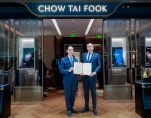
BEIJING, CHINA – Media OutReach Newswire – 20 October 2026 – During his State Visit to China, President of the Republic of Botswana Duma Gideon Boko led a delegation to visit the newly opened signature boutique of Chow Tai Fook Jewellery Group Limited (“Chow Tai Fook Jewellery”, the “Group” or the “Company”; SEHK stock code: 1929) at Beijing SKP on 14 October, for an exchange on China–Botswana cooperation across the natural diamond value chain. Mr Kent Wong, Managing Director of Chow Tai Fook Jewellery Group, welcomed President Boko and the delegation, highlighting the Group’s longstanding ties with Botswana’s diamond industry and sharing how Chow Tai Fook creates new value to natural diamonds through cultural heritage reinterpretation and contemporary design.
Mr Kent Wong, Managing Director of Chow Tai Fook Jewellery Group (left) welcomes President of Botswana Duma Gideon Boko (right) to the newly opened signature boutique at Beijing SKP, during his State Visit to China, and the President presents a heartfelt message to the Group
President Boko’s visit took place as China and Botswana elevated bilateral relations to a comprehensive strategic cooperative partnership. The two countries also agreed to deepen cooperation in the diamond sector and enhance access for Botswana’s diamond products to the Chinese market.
Mr Kent Wong, Managing Director of Chow Tai Fook Jewellery Group, said, ” We are deeply honoured to welcome President Boko to Chow Tai Fook in Beijing. Botswana holds an important place in the global natural diamond value chain and in Chow Tai Fook’s own journey with natural diamonds. Our longstanding partnerships with Botswana’s diamond industry and De Beers Group reflect a shared commitment to the enduring value of natural diamonds. We look forward to continuing to contribute our expertise in craftsmanship, design and retail to enhance consumer confidence in natural diamonds and support the industry’s sustainable development.”
Deepening ties across the natural diamond value chain
Botswana is one of the world’s leading diamond-producing countries, and diamonds are an important pillar of China-Botswana economic cooperation. The latest China-Botswana Joint Statement identifies the diamond sector as an area for further cooperation, including improved access for Botswana’s diamond products to the Chinese market.
Chow Tai Fook has deep roots in the natural diamond industry, underpinned by established global sourcing capabilities. The Group’s relationship with De Beers Group dates back to 1973, when Chow Tai Fook became a De Beers Group Sightholder. Since 2011, Chow Tai Fook has operated its own diamond cutting and polishing facility in Botswana, extending the Group’s involvement across the value chain from sourcing and craftsmanship to jewellery design and retail.
Chow Tai Fook has also been an early advocate of diamond traceability. Launched in 2016, T·MARK enables customers to trace the journey of selected diamonds from sourcing, cutting and polishing to certification and setting. In FY2026, all newly procured T·MARK diamonds were traceable to their country of origin.
Reimagining natural diamonds through Chinese creativity
Natural diamonds embody both the extraordinary beauty of nature and the emotions and memories that jewellery carries across generations. Through design and craftsmanship, Chow Tai Fook brings Chinese cultural heritage into a contemporary context, creating natural diamond jewellery that resonates with evolving lifestyles and expressions of individuality.
In September 2026, Chow Tai Fook participated in the signing of the Beijing Declaration on Natural Diamonds and Sustainable Development. Convened by The Shanghai Diamond Exchange, the initiative brought together government representatives from Botswana, Namibia and South Africa, as well as members of the Chinese and international diamond industry. It supports closer engagement between diamond-producing countries and the Chinese market, while advancing consumer understanding of the enduring value of natural diamonds.
Chow Tai Fook and De Beers Group also recently launched the Desert Rose Collection, inspired by desert rose stone formations and the resilience of plants thriving in arid landscapes. The collaboration builds on the two companies’ longstanding relationship and their shared focus on strengthening consumer appreciation and confidence in natural diamonds.
Looking ahead, Chow Tai Fook will continue to invest in design, craftsmanship and consumer engagement, while working with partners across the natural diamond value chain to support the industry’s sustainable development and contribute to deeper ties between China and Botswana.
The issuer is solely responsible for the content of this announcement.
About De Beers Group
Established in 1888, De Beers Group is the world’s leading diamond company with expertise in the exploration, mining, marketing and retailing of diamonds. Together with its joint venture partners, De Beers Group employs more than 20,000 people across the diamond pipeline and is the world’s largest diamond producer by value, with diamond mining operations in Botswana, Canada, Namibia and South Africa. Innovation sits at the heart of De Beers Group’s strategy as it develops a portfolio of offers that span the diamond value chain, including its jewellery houses, De Beers London and Forevermark, and other pioneering solutions such as diamond sourcing and traceability initiatives Tracr and GemFair. De Beers Group also provides leading services and technology to the diamond industry in the form of education and laboratory services and a wide range of diamond sorting, detection and classification technology services. De Beers Group is committed to ‘Building Forever,’ a holistic and integrated approach to sustainability that underpins our efforts to create meaningful impact for the people and places where our diamonds are discovered. Building Forever focuses on three key areas where, through collaborations and partnerships around the globe, we have an enhanced ability to drive positive impact; Livelihoods, Climate and Nature. De Beers Group is a member of the Anglo American plc group. For further information, visit www.debeersgroup.com.
About Chow Tai Fook Jewellery Group Limited
Since its founding in 1929, CHOW TAI FOOK, the flagship brand of Chow Tai Fook Jewellery Group, has been celebrated for its bold designs and meticulous attention to detail. Our commitment to innovation and craftsmanship has made us synonymous with excellence, value, and authenticity.
As a global Chinese luxury group, we blend contemporary designs with traditional techniques to create timeless pieces. Each collection reflects our customers’ stories and lives, celebrating their special moments. We aspire to inspire and captivate generations to come, weaving the story of CHOW TAI FOOK into their own.
Our brand portfolio includes the iconic CHOW TAI FOOK flagship brand, HEARTS ON FIRE, ENZO, and MONOLOGUE, offering a wide variety of products, including an expanding range of cuttingedge IP collaborations. With over 5,000 stores worldwide, we offer a seamless client journey across all touchpoints through a network spanning China and a growing number of global locations.
Chow Tai Fook Jewellery Group Limited (SEHK: 1929) has been listed on the Main Board of the Hong Kong Stock Exchange since December 2011. We are committed to delivering sustainable long-term value for our stakeholders by continually enhancing earnings quality and driving higher value growth.
Arabian Post Staff -Dubai Abu Dhabi National Energy Company (TAQA) has launched a dual-tranche US dollar bond offering, targeting international investors as the utility group seeks financing for eligible green projects and other corporate requirements. The transaction, launched on Monday, October 19, comprises a long five-year tranche and a 10-year tranche of senior unsecured notes. Initial pricing discussions placed the shorter maturity at approximately 130 basis points […]
By Nantoo Banerjee The prolonged blockade of the Strait of Hormuz, lately due to the ego tussle between the United States and Iran, have inflicted severe financial, operational, and human costs on India’s merchant marine industry and broader import-export trade. But, thanks to an excellent supply chain management effort, it failed to impact the country’s […]
Google has warned that a suspected China-linked espionage group exploited a critical vulnerability in BeyondTrust remote support systems, gaining privileged access and establishing mechanisms to remain inside compromised networks. The vulnerability, designated CVE-2026-102764, was disclosed on 15 October after investigators identified attacks dating to 29 August. Google’s Threat Intelligence Group and its Mandiant division attributed the activity to Armory Castle, previously tracked as UNC5221, and warned that […]
Step into The World of Indian Cinema and celebrate the Festival of Lights alongside Deepika Padukone, Shah Rukh Khan and many more, in partnership with MakeMyTrip!
SINGAPORE – Media OutReach Newswire – 19 October 2026 – This Diwali, Madame Tussauds Singapore and MakeMyTrip invite visitors to celebrate the Festival of Lights with Icons of India, a limited period experience. As partners, the two brands spotlight the enduring global appeal of Indian cinema, celebrating its glamour, energy and cultural influence while creating new ways for audiences to connect with their favourite stars.
Guests can get up close with the wax figures including Deepika Padukone, Varun Dhawan, Shah Rukh Khan and Ranveer Singh, along with a special lineup of activities. MakeMyTrip is offering travellers an exclusive Buy 1 Get 1 deal on tickets for bookings made between 21 October and 15 November 2026.
Wade Chang, General Manager of Madame Tussauds Singapore, said: “Diwali is an important celebration of Indian culture, bringing people together through the shared spirit of light, joy and togetherness. Through the Icons of Indiacampaign, we’re excited to bring guests closer to the most iconic starsand create memorable experience. The partnership with MakeMyTrip is a wonderful opportunity toshare the magic of Indian cinema with even more audiences in Singapore.”
Jasmeet Singh, Chief Business Officer – Holidays & Experiences, MakeMyTrip, said:“Travellers today want to do more than just visit a destination; they want experiences that make the trip memorable. Our association with Madame Tussauds Singapore brings a much-loved attraction closer to Indian travellers, bookable on MakeMyTrip as easily as a hotel or a flight. With many Indians travelling abroad over the festive season, Icons of India gives travellers heading to Singapore one more reason to plan their trip around Diwali.”
Meet the Newest Star: Deepika Padukone A highlight of the experience is the newly unveiled wax figure of Deepika Padukone, one of the most recognisable stars of contemporary Indian cinema. Dressed in a striking red floor-length gown with an elegant open-back design, the figure captures Deepika’s signature glamour, with her long cascading hair and captivating gaze bringing her distinctive screen presence to life.
With a celebrated career spanning Indian and international cinema, Deepika has established herself as one of India’s most recognisable global stars, having served on the Feature Film Jury at the 2022 Cannes Film Festival and represented Indian cinema on the global stage at the 2023 Oscars. Her newest wax figure now brings this celebrated icon to Madame Tussauds Singapore.
The issuer is solely responsible for the content of this announcement.
Madame Tussauds Singapore
Madame Tussauds has been inviting people to walk the red carpet and get closer to the revered – and feared – for over 250 years. With 22 attractions in the world’s top destination cities, we are dedicated to giving millions of visitors the opportunity to mingle with the mighty from A-listers to music legends, heroes of sport, to infamous world leaders. Today, we continue to partner with the global icons of a generation to create astonishing lifelike figures from sittings and offer exciting and interactive experiences to ensure guests have never felt closer to fame.
About Merlin Entertainments Merlin Entertainments is a world leader in branded entertainment destinations, offering a diverse portfolio of resort theme parks, city-centre gateway attractions and LEGOLAND Resorts which span across the UK, US, Western Europe, China and Asia Pacific. Dedicated to creating experiences that inspire joy and connection, Merlin welcomes more than 60 million guests annually to its diverse global estate in over 20 countries. An expert in bringing world-famous entertainment brands to life, Merlin works with partners including the LEGO Group, Sony Pictures Entertainment, Peppa Pig, DreamWorks and Ferrari to create destinations where guests can immerse themselves in a wide array of brand-driven worlds, rides and uplifting learning experiences.
MakeMyTrip is a travel technology platform that enables transactions across a range of travel needs, empowering customers with seamless and integrated experiences. It serves a broad and diverse customer base ranging from individuals to enterprises and small and medium sized businesses. Its key brands, MakeMyTrip, Goibibo and redBus, address distinct traveller categories, use cases and price points across the Indian travel ecosystem.
Bitcoin and US stock futures climbed on Monday after China’s economy expanded faster than expected in the third quarter, while falling oil prices helped improve investor sentiment across global financial markets.
China’s gross domestic product grew 4.5% year on year during July to September, exceeding economists’ forecast of 4.4% and accelerating from 4.3% in the preceding quarter, according to the National Bureau of Statistics.
Bitcoin briefly climbed towards $82,500 as cryptocurrency traders responded to the stronger economic figures and improving conditions in traditional financial markets. Nasdaq futures also advanced, reflecting renewed demand for technology shares following a difficult period for companies associated with artificial intelligence.
The market recovery was uneven, however. South Korea’s Kospi faced selling pressure after an initial improvement, highlighting continuing concerns about technology valuations and the substantial financing requirements of artificial intelligence development.
US Nasdaq futures gained approximately 1% during Asian trading, while contracts tracking the broader S&P 500 advanced around 0.7%. Lower energy prices provided additional support as investors assessed their implications for inflation, corporate earnings and borrowing costs.
China’s economic figures offered a measure of reassurance about activity in the world’s second-largest economy. Quarterly output increased 1.2% from the preceding three months, exceeding expectations for a 1.1% expansion and improving from 0.9% growth during April to June.
The stronger performance was supported by exports and industrial production, although weaknesses in household consumption and property investment continued to complicate the economic outlook.
Official figures showed industrial production increasing 5.5% year on year in September, compared with 5.2% in August. Retail sales grew 1.1%, indicating modest improvement in consumer spending despite persistent pressure on household confidence.
China’s government has established an annual economic growth target of approximately 4.5% to 5%, making the third-quarter performance significant for policymakers considering whether further stimulus measures are necessary.
Growth during the first nine months reached 4.6%, according to official estimates, keeping the economy within reach of the government’s full-year objective.
Financial markets nevertheless remained sensitive to concerns that China’s expansion depends heavily on exports and industrial investment rather than sustained improvements in domestic demand.
The property sector remained a particular concern, with investment continuing to contract despite measures intended to support homebuyers and stabilise developers.
Oil markets supplied another important influence on trading. Brent crude futures declined approximately 1.7% to $107.95 a barrel, while US crude futures slipped 0.8% to $100.62.
The decline followed developments surrounding Washington’s sanctions policy towards Russia. President Donald Trump indicated that restrictions could be eased, potentially allowing additional Russian energy supplies into international markets, although the administration had not finalised its position.
US Secretary of State Marco Rubio indicated that the administration could take up to 60 days to assess the economic consequences of changing sanctions arrangements.
Lower crude prices helped ease immediate concerns about inflation, particularly because energy costs influence transport, manufacturing and household expenditure across major economies.
US government bonds strengthened as yields declined. The benchmark 10-year Treasury yield fell approximately four basis points to 5.0525%, providing some relief to financial markets concerned about elevated borrowing costs.
Expectations surrounding Federal Reserve policy remained important for cryptocurrency investors. Lower inflation could eventually create additional room for monetary easing, although policymakers face competing pressures from energy markets and economic activity.
The Federal Reserve’s benchmark interest rate currently stands between 4.75% and 5%, with financial markets expecting policymakers to leave borrowing costs unchanged at their next meeting.
Across Asian equities, the initial advance reflected bargain hunting following substantial losses in technology stocks. Japan’s Nikkei and South Korea’s Kospi both experienced volatile trading as investors reassessed exposure to semiconductor manufacturers.
Concerns about artificial intelligence spending remained prominent. Goldman Sachs estimates that five major technology companies could increase their combined capital expenditure to approximately $1.2 trillion next year, raising questions about investment returns.
China’s currency strengthened against the dollar, with the yuan reaching approximately 6.6828, its strongest level since July 2022.
Gold traded around $4,181 an ounce, supported by declining bond yields, while the dollar remained under pressure against several currencies.
Elsewhere, European equity futures weakened amid political uncertainty in France, demonstrating the differing regional influences on international investment flows.
Chinese blue-chip shares edged lower after initially benefiting from the economic figures, with investors continuing to assess whether stronger industrial activity would translate into a sustained improvement in domestic consumption.
CHANGSHA, CHINA – Media OutReach Newswire – 19 October 2026 – Co-produced by Hunan Satellite TV and Mango TV and created by Wang Qin Studio, Season 4 of the food and cultural tourism program Go Where Flavors of Hunan Abound premiered on October 12, 2026, and is airing simultaneously on Hunan Satellite TV and Mango TV from Monday to Thursday at 7:30 p.m.
Under the theme “A Season of World-Class Landscapes,” the new season focuses on the development of the Greater Zhangjiajie International Tourism Area. Host Wang Han leads the program’s food exploration team through Zhangjiajie, Cili, Jishou, Fenghuang, Changde, Shaoyang and Huaihua, presenting a cultural tourism journey that connects local cuisine with spectacular landscapes and the stories of the people who call these places home.
Connecting Landscapes Through Food
The opening episode takes viewers to Zhangjiajie, beginning with the towering Bailong Elevator before following the hiking trails along Golden Whip Stream. International tourists encountered along the way share that Zhangjiajie was their planned first stop in China. Zhangjiajie welcomes more than one million international visitors annually from over 190 countries.
Yet the destination’s international appeal extends beyond its extraordinary scenery. It also lies in the flavors nurtured by the land and the people whose lives are rooted in it.
In Longweiba Village, young entrepreneurs who have returned to their hometowns are rediscovering local ingredients such as kudzu root and vine tea, incorporating them into coffee and bingfen, a traditional chilled jelly dessert. Their creations bring new life to familiar mountain flavors and introduce them to younger generations.
In Cili, local cuisine reveals stories passed down through generations. The dish known as Yanghe Dumi carries a history of mutual support dating back to 1935. After receiving help from their neighbors during difficult times, local residents cut pork tripe into rice-sized pieces to prepare a dish that could be shared among more people. The recipe became a lasting reminder of community solidarity.
The team also visits a centuries-old tree associated with the Red Army and samples Xikou beef. Revolutionary commanders He Long and Xiao Ke once held a pre-battle mobilization meeting at the site. The ancient tree, which survived a lightning strike, embodies the resilience of the local community, a quality echoed in the firm, chewy texture of Xikou beef. Together, the stories and flavors reveal the enduring spirit of the mountains.
Discovering the People Behind the Flavors
At Jixiang Rice Noodle Shop in Jishou, owner Wang Jixiang has been running her business for 35 years. The shop serves four varieties of rice noodles with a selection of toppings. Among them, rice noodles topped with stir-fried pork and fermented chili offer a distinctive combination of sour and spicy flavors characteristic of western Hunan.
The journey continues along the Wanrong River and across Xinnü Bridge, adorned with wish plaques, before reaching the creative home of the Miao folk band Miao Ren San Man.
The band members moved from their mountain village to town to support their children’s education and earn a living by running a business, but they never abandoned their musical aspirations. Performing their original song Calling to the Mountains in a Miao village, they express a longing to reach a mountaintop together and release their deepest frustrations through a collective shout.
In Fenghuang, restaurant owner Xiao Yang offers another example of how local culinary traditions are finding new audiences. After leaving military service, he worked as a tour guide and discovered that many visitors knew little about Fenghuang’s distinctive local cuisine.
He subsequently introduced Miao-style smoked pork trotters in sour soup, a specialty of the La’ershan area, to a wider market, making modest adjustments to suit broader tastes while preserving its traditional character.
Wang Han also shares the history of Miao sour soup, which he learned about when first tasting the dish. During the migrations of their ancestors, the Miao people often faced shortages of supplies, including salt. They fermented green vegetables and relied on sour flavors for seasoning. Over time, sour soup became a culinary reminder of those journeys.
Today, the distinctive fermented flavor continues to evolve as it is paired with an increasingly diverse range of ingredients. Rather than remaining unchanged, traditional recipes continue to thrive through new interpretations, connecting generations of people to the land and its history.
Connecting Local Journeys with the World
One distinctive feature of the fourth season is the introduction of a food-tasting panel at each destination, bringing together local residents, visitors from other regions and international guests.
After sampling the dishes, panel members vote to select the “Hunan Flavor Signature Dishes.”
Among the selected specialties are claypot rice with farm-raised Chinese giant salamander and Tujia-style Sangun Wawa from Zhangjiajie; Xikou beef and Lao Sizhong rice noodles from Cili; and Fangyuan rice noodles and smoked pork trotters in sour soup from Fenghuang.
This interactive format demonstrates how people from different cultural backgrounds can experience and interpret the same dish in their own ways.
The towering sandstone peaks of Zhangjiajie, the Loushui River in Cili, the Wanrong River in Jishou, and the Tuojiang River, Hongqiao Bridge and traditional stilt houses of Fenghuang together form the scenic landscape of the Greater Zhangjiajie International Tourism Area.
Meanwhile, rice noodles, cured meats, sour soup and distinctive local delicacies bring warmth, flavor and everyday life to these natural and cultural landscapes.
About Season 4 of Go Where Flavors of Hunan Abound
Under the theme “A Season of World-Class Landscapes,” Season 4 of Go Where Flavors of Hunan Abound focuses on the Greater Zhangjiajie International Tourism Area and adopts a two-episode format for each destination.
The first episode, focusing on rural and mountain flavors, takes viewers hiking, exploring lesser-known destinations and participating in local challenges while visiting ordinary households to discover traditional home-cooked dishes.
The second episode explores the culinary life of urban neighborhoods, visiting long-established restaurants, discovering local food traditions and featuring signature dishes prepared by experienced chefs.
Landscapes provide the setting, while local flavors bring the stories to life. By bringing together China’s distinctive natural scenery and authentic regional cuisine, Go Where Flavors of Hunan Abound presents the Greater Zhangjiajie International Tourism Area to international audiences as a vibrant destination rich in culture, character and culinary heritage.
The issuer is solely responsible for the content of this announcement.
PARIS, FRANCE – Media OutReach Newswire – 18 October 2026 – At the 2026 Paris Motor Show, Clifford Kang, Board Member and Vice President of SERES Group, announced that AITO plans to officially enter the European market in autumn 2027, marking another major step in its global development. With deep respect for Europe’s automotive heritage, AITO looks forward to collaborating and growing with partners around the world.
In China, AITO has earned the trust of over 1.2 million customers. Globally, in Brand Finance’s Automobiles 100 2026 ranking, AITO ranked among the world’s top 10 luxury automotive brands and was the No.1 Chinese luxury automotive brand by brand value, making it the only Chinese automotive brand.
Driven by its philosophy of “Intelligence Redefining Luxury”, AITO is committed to bringing together traditional luxury and technological luxury to create an elevated intelligent mobility experience.
“AITO stands for ‘Adding Intelligence to Auto’. We believe a vehicle should be a mobile intelligent agent that understands you and responds to your needs. That is why we introduced our brand philosophy, Intelligence Redefining Luxury. It is our interpretation of what New Luxury means for AITO,” said Clifford Kang, Board Member and Vice President of SERES Group. “We come with deep respect for Europe’s automotive heritage. We come to collaborate and grow with partners around the world. And we come with our philosophy: Intelligence Redefining Luxury.”
As AITO strengthens its global presence, it looks forward to working with partners across the value chain to build a healthy automotive ecosystem, foster mutual growth and bring intelligent luxury mobility to more customers around the world.
Hashtag: #AITO
The issuer is solely responsible for the content of this announcement.






 https://www.brandhk.gov.hk/
 https://www.linkedin.com/company/brand-hong-kong/
 https://x.com/Brand_HK/
 https://www.facebook.com/brandhk.isd
 https://www.instagram.com/brandhongkong