China’s state security minister Chen Yixin has warned that artificial intelligence poses six major risks to national security, ranging from political manipulation and cyberattacks to data leakage, social disruption and military transformation. Chen, who heads the Ministry of State Security, set out the risks in an article published on Sunday by China Cyberspace magazine, arguing that Beijing must build a stronger system for monitoring, regulating and responding […]
ZHANGJIAKOU, HEBEI – Media OutReach Newswire – 13 September 2026 – In the third season of Village Voyage, CGTN host Julian Waghann from the United States and Mexican traveler Juan Carlos Cheang Guzmán journey across Zhangjiakou, a city in Hebei Province some 200 kilometers northwest of Beijing, to explore how its land and people are creating new possibilities for rural life. Known for its mountains, wide-open highlands and vibrant outdoor culture, boosted by the 2022 Beijing Winter Olympics, Zhangjiakou has emerged as a distinctive destination in northern China.
Village Voyage Season 3 Poster
This latest season takes viewers beyond the city‘s famous landmarks and into the countryside, where international travelers get their hands in the soil, learn traditional crafts and share everyday meals with local residents. Through these experiences, they discover a different side of rural China and the people who are helping shape its future.
Mountain pulse: A year-round outdoor playground
The mountains of Chongli in Zhangjiakou are more than the backdrop for the 2022 Beijing Winter Olympics. Once best known for their snow-covered slopes, they are increasingly becoming a year-round destination for outdoor activities.
“Winter is for skiing, but summer opens up a whole new world,” said a local outdoor guide.
Since the Winter Olympics, residents have been steadily unlocking the hills’ year-round potential: from mountain biking and trail running to hiking and camping. The mountains no longer fall dormant when the snow melts.
Julian and Juan pedal along forest trails, surrounded by mountain air and the scent of damp earth. At the Chongli 168 Ultra-Trail Race, they stand at the starting line as thousands of runners surge forward – a river of energy that sweeps up everyone watching.
For Juan, the scene strikes a familiar chord. “Mountains don’t have borders,” he said. “The urge to run and challenge yourself in the wild is something we share, whether in Latin America or here.”
Field-rooted well-being: Yoga that grew from the soil
Surrounded by farmland and an open sky, Yugouliang Village sits on a high plateau in northern Zhangjiakou. The village has gained attention for a distinctive form of outdoor yoga practiced among its fields. Unlike the wellness trends often associated with urban gyms and resorts, yoga here has grown naturally out of village life.
“Our yoga comes from farm work,” one villager explained. “It is part of how we live.” Between planting and harvesting, they stretch and breathe, finding stillness in the middle of open fields.
Julian and Juan first experienced another part of village life by making youmian, a local staple made from oats. They kneaded the dough and shaped it by hand, then headed into the fields, where they spread their mats on the earth and practiced yoga alongside local residents.
“This feels familiar,” Juan reflected. “No matter where we are, people want the same things – health, peace, security and a life that feels full.”
Yugouliang offers a different picture of rural China: not a place frozen in the past, but a community that has found its own rhythm and a new sense of well-being amid the fields.
Living heritage remains part of daily life
Located in the southern part of Zhangjiakou, Yuxian is known for its historic settlements, traditional architecture and folk arts. Its ancient buildings have also reached new audiences through popular culture. Some of its architecture has inspired locations in Black Myth: Wukong, the hit Chinese action role-playing game.
Yuxian paper-cutting is one of its best-known folk traditions. “Paper-cutting came from everyday people,” said a master of the craft. “It used to decorate farmhouse windows. Now it reaches the wider world.”
With that spirit in mind, Julian and Juan tried their hand at paper-cutting, fumbling with scissors to produce something far from perfect – but they feel, briefly, what it means to make art out of ordinary life. Here, heritage isn’t sealed behind glass. It’s passed from hand to hand, cut into paper and woven into the fabric of daily existence.
Where clean energy meets modern farming
If Yuxian’s ancient villages preserve the memories of the past, Desheng Village shows how rural communities are looking toward the future. Located in the highland farming region of northern Zhangjiakou, Desheng has embraced modern agriculture and solar power as part of its rural development.
Rows of solar panels stretch across the land, capturing sunlight that once only fed crops. Beneath them, modern greenhouses hum with temperature-controlled precision. It’s agriculture reimagined – and the benefits are tangible.
“We used to depend heavily on the weather,” one villager said “Now technology and sunlight give us new hope.”
Julian and Juan stepped into the greenhouses, picking ripe tomatoes and crisp cucumbers, tasting the sweetness of a harvest that no longer depends on luck. They saw how clean energy revenue flows back into the community – funding schools, roads and public spaces.
As night fell, they joined a bonfire gathering in the village square. Music, laughter and conversation filled the evening air. Around the fire, the visitors saw another side of rural development: a village changing with the times while maintaining the close-knit community spirit that has long defined local life.
More than a journey: Stories shaped by the land
For a new generation of travelers, immersive experiences are offering a more complete picture of rural China. In Zhangjiakou, the countryside is not defined by a single landscape or a single way of life. Chongli’s mountains pulse with year-round energy; Yugouliang’s fields offer a slower rhythm of life; Yuxian’s ancient villages keep traditional architecture and folk crafts alive; and Desheng shows how clean energy and modern agriculture can create new opportunities for rural communities.
Here, tradition and innovation coexist in the same villages, where ancient skills can find new audiences and modern technology can take root in centuries-old communities.
Every village has its own story. From mountain trails and open farmland to historic villages and modern greenhouses, Zhangjiakou reveals a northern Chinese countryside that is more diverse, dynamic and full of possibility than any single image can capture.
Visitors may come for the scenery. But by stepping into village life, they leave with something more lasting: a closer understanding of the people who live on this land, the traditions they carry forward and the future they are building together.
Hashtag: #CGTN
The issuer is solely responsible for the content of this announcement.
China’s National Data Administration plans to accelerate standards for embodied artificial intelligence and direct local authorities on implementation, targeting one of the biggest bottlenecks in the fast-growing robotics sector: access to high-quality, diverse and large-scale training data.
The regulator said the work will focus on creating clearer rules for datasets used by embodied AI systems, which combine artificial intelligence with physical machines such as humanoid robots. The effort is intended to support more consistent data collection, processing, evaluation and use as companies race to improve machines that must perceive, reason and act in real-world environments.
China has already moved to build a broader standards framework around the sector. National standards published on August 27 cover the quality of real-world embodied-intelligence data and technical requirements for data-generation platforms, while several additional specifications remain under development.
Among projects overseen by the National Data Administration are proposed standards covering the sources and constituent elements of high-quality embodied-intelligence datasets, simulated synthetic-data generation and processing, and specifications for data collection and model training at training bases. The projects are being developed under the National Data Standardisation Technical Committee.
One draft programme, registered in April, sets a 12-month timetable for a standard on data collection and model training at embodied-intelligence training bases. Its drafting group includes the China Electronics Standardization Institute, Beijing Institute of Technology, the Institute of Software at the Chinese Academy of Sciences and robotics companies.
A separate draft addresses synthetic data, which is becoming increasingly important because collecting enough physical-world robot interactions can be expensive, slow and difficult to reproduce. China’s policy framework encourages the use of simulation and synthetic techniques to expand supply where genuine operating data are scarce or costly to obtain.
The National Data Administration has made high-quality datasets a central part of its wider artificial-intelligence strategy. An implementation plan issued in June called for faster construction of datasets in strategic and emerging fields including embodied intelligence, intelligent driving and the low-altitude economy. It also called for data covering physical interaction, environmental perception and motion control in key scenarios.
The plan directs authorities and industry participants to improve data cleaning, enhancement, labelling, alignment and quality inspection, while developing national standards covering formats, categories, annotation and quality assessment. The regulator said such work should produce datasets that are structurally complete, diverse, accurately labelled and suitable for model development.
China’s push reflects the distinct data demands of robots operating in the physical world. Unlike text-based systems trained largely on digital information, embodied AI requires large volumes of multimodal material that can include video, images, sensor readings, point clouds, movement trajectories and feedback from physical interaction.
Data supply has therefore emerged as a competitive constraint for developers seeking to train machines to perform long sequences of actions reliably across changing environments. The National Data Development Research Institute has said embodied intelligence and world models are driving sharply higher demand for three-dimensional, video and other multimodal data, while also raising requirements for collection and annotation quality.
The government has also been expanding the underlying pool of AI-ready datasets. At a national data industry event in Guiyang in August, the National Data Administration said more than 126,000 high-quality datasets had been built across China, with a combined volume exceeding 1,815 petabytes.
Officials described a system combining a national dataset management platform, an open-source community and a data-labelling network with sector-specific pilot programmes. The framework includes 106 leading organisations and 140 pilot tasks, with regional authorities encouraged to develop projects suited to local industrial strengths.
Embodied intelligence has featured in those pilots alongside other emerging fields. The administration has promoted cooperation among robotics companies, universities, research institutes and public bodies to increase the quantity and usefulness of machine-training data while testing standards before wider application.
Nepal has put the reconstruction requirement from the devastating August 26 floods at about $4.78 billion, sharply exceeding the government’s initial estimate of direct physical damage and economic losses. The Ministry of Foreign Affairs said the figure came from a Rapid Damage and Needs Assessment prepared after floods tore through northern river valleys, destroying homes, transport links, hydropower facilities and other critical infrastructure. The assessment estimated direct […]
Chinese President Xi Jinping and Prime Minister Narendra Modi agreed to strengthen economic, transport and people-to-people links while preserving peace along their disputed frontier, using Xi’s first visit to India in seven years to push forward a cautious repair of bilateral relations.
The two leaders met on Saturday on the sidelines of the BRICS summit in New Delhi and welcomed what the Prime Minister’s Office described as steady progress in ties since their meeting in Tianjin in August 2025. They agreed that relations should be approached from a strategic and long-term perspective and that differences should not be allowed to become disputes.
Modi said peace and tranquillity in border areas remained an essential basis for further development of the relationship. He called for both sides to observe existing agreements and understandings on frontier issues and said engagement should be guided by “mutual respect, mutual sensitivity and mutual interest”.
Both leaders committed themselves to seeking a fair, reasonable and mutually acceptable settlement of the boundary question, while expanding cooperation in areas where their interests converge. They also backed stronger cultural exchanges, business links and mobility, alongside efforts to resolve economic frictions.
Trade featured prominently in the discussions. The two sides agreed on the need to address concerns over the structural trade imbalance, supply-chain issues and access to each other’s markets. Bilateral trade reached a record $155.6 billion in 2025, while India’s imports from China were about $132 billion, leaving a large deficit that New Delhi has repeatedly sought to narrow.
The meeting marked Xi’s first trip to India since 2019, when he travelled to Tamil Nadu for an informal summit with Modi. Relations deteriorated sharply after the 2020 military confrontation in eastern Ladakh, including the Galwan Valley clash that killed 20 soldiers from India and four from China.
A disengagement agreement reached in October 2024 helped end key points of the military standoff and opened the way for higher-level political contacts. Modi and Xi then held a substantive bilateral meeting during the BRICS summit in Kazan that month, followed by another meeting in Tianjin in August 2025.
Diplomatic and military mechanisms have since been revived. At the 25th round of Special Representatives’ talks in Beijing on August 25, National Security Adviser Ajit Doval and China’s Wang Yi agreed on eight measures covering border management, military communication, boundary negotiations, trade routes, pilgrimage arrangements and cooperation on trans-border rivers.
Among those steps were two additional channels for military hotlines in the eastern and middle sectors and two additional meeting points for senior commanders. The two sides also agreed to continue work towards a framework for settling the boundary dispute and to use existing diplomatic and military channels to deal promptly with incidents along the Line of Actual Control.
Practical links have also begun returning. Direct passenger flights have resumed, business visa processing has improved and the Kailash Mansarovar pilgrimage has restarted, while three traditional border trading points have reopened. Those measures have not removed the deeper trust deficit, but they have restored channels that were largely frozen after 2020. Officials on both sides have indicated that further easing will depend on predictable border management and progress on commercial concerns over the coming months.
Despite the thaw, major differences remain. Large troop deployments continue along sections of the Himalayan frontier, and the boundary itself has not been settled. Economic engagement is also constrained by investment screening, regulatory barriers, visa delays and security concerns affecting sectors considered sensitive by either government.
Xi’s visit nevertheless gave both governments an opportunity to demonstrate that political contacts are becoming more regular after years of strained relations. Beijing has repeatedly said the two countries should view each other as partners rather than rivals, while New Delhi has maintained that normal relations require durable peace at the border.
China-linked threat actors have been caught chaining two Google Chrome flaws with a Windows kernel vulnerability to compromise selected targets, including non-governmental organisations, in espionage campaigns detected this month. Cybersecurity firm Volexity said the activity involved two separate groups it tracks as UTA0560 and JungleBamboo, the latter also known as APT31, Violet Typhoon and TA412. Both used the same core browser-to-kernel exploit chain, but installed different post-exploitation […]
By R Suryamurthy The latest BRICS financial agenda is ambitious enough to suggest that the grouping is no longer content merely to complain about the inequities of the global economic order; it wants to build pieces of an alternative. But ambition, particularly in a grouping as diverse as BRICS, is cheap. The harder question is […]
Modi pressed Iranian President Masoud Pezeshkian to support freedom of navigation, uninterrupted commerce and the safety of seafarers as the two leaders met in New Delhi on Friday amid continuing conflict and shipping disruption across West Asia.
The talks, held on the sidelines of the BRICS summit, focused on bilateral relations and the regional security situation. India’s Prime Minister reiterated that disputes should be resolved through dialogue and diplomacy and called for sustained efforts to secure lasting peace and stability, according to an official statement issued after the meeting.
Modi specifically highlighted the need to safeguard freedom of navigation and commerce and the safety and well-being of seafarers. The issue has become a central concern for New Delhi as attacks on commercial vessels and disruption to maritime routes in the region have affected trade and put crews at risk.
The meeting was Modi and Pezeshkian’s second in less than two weeks. They had met on August 31 on the sidelines of the Shanghai Cooperation Organisation summit in Bishkek, where Modi also raised the protection of commercial shipping and seafarers and urged a diplomatic approach to the West Asia conflict.
Friday’s discussion came as the conflict involving Iran, the United States and Israel continued to place pressure on strategic waterways and supply routes. India has sought to maintain working relations with Iran while also preserving close ties with Israel and Arab states, making maritime security and regional stability important economic as well as diplomatic priorities.
At least 10 nationals of India have been killed in attacks on vessels transiting the region during the conflict. New Delhi has condemned attacks affecting Gulf countries, energy infrastructure and commercial shipping, while repeatedly calling for de-escalation and protection of civilians and maritime workers.
The maritime threat has sharpened concerns over energy shipments through Gulf waters that remain critical to India’s oil and gas imports.
Modi reinforced the same message earlier on Friday at the BRICS Business Forum, saying global trade could advance only when sea lanes were secure, supply routes remained open and seafarers were safe. He described India as a firm supporter of freedom of navigation and the safety of maritime crews.
Pezeshkian, who was making his first visit to India as president, used his participation in BRICS meetings to press for stronger economic cooperation among members and protection of legitimate trade from political and military pressure. He argued that the grouping’s strength would be demonstrated by converting economic capacity into functioning networks for trade, investment and joint financing.
The Iranian president also called for greater use of national currencies in trade among BRICS members and said Tehran was prepared to work as a strategic partner in energy and transport supply chains. His remarks reflected Iran’s effort to reduce exposure to sanctions and other constraints on cross-border commerce.
During the bilateral meeting, Modi thanked Iran for maintaining high-level participation in BRICS-related meetings despite difficult circumstances. He said the grouping could strengthen resilience, innovation, cooperation and sustainability among countries of the Global South.
The two leaders also reviewed broader bilateral ties and cooperation in multilateral organisations. Modi welcomed continuing coordination on issues of mutual interest within BRICS, where Iran is a full member alongside Brazil, Russia, India, China, South Africa and other states that have joined the expanded grouping.
The talks followed Pezeshkian’s participation in the Leaders’ Session of the BRICS Business Forum. Modi thanked him for attending and said engagement between the two countries should continue across bilateral and multilateral channels.
The New Delhi meeting also built on the August 31 discussions in Bishkek, when Pezeshkian told Modi that Tehran favoured a negotiated solution to its confrontation with the United States. Modi at that meeting expressed concern over escalating tensions and said civilians, civilian infrastructure, commercial shipping and seafarers should not be harmed.
Prime Minister Narendra Modi is hosting the BRICS summit in New Delhi with Russia and China displaying a closer strategic alignment, adding pressure to India’s effort to preserve strong ties with Moscow while managing a cautious thaw with Beijing and maintaining partnerships with the West. Russian President Vladimir Putin met Modi on Friday, a day before the leaders’ summit, and the two reviewed cooperation spanning trade, defence, […]
BEIJING, CHINA – Media OutReach Newswire – 11 September 2026 – On 10 September, the one-year countdown event for the World Athletics Championships Beijing 27 (WCH Beijing 27) was held in the Golden Hall of the National Stadium, commonly known as the Bird’s Nest. Amidst the anticipation of the audience, the emblem, mascot, and theme slogan of the WCH Beijing 27 were officially unveiled, conveying the message of Beijing through unique designs.
The Emblem of WCH Beijing 27: Jing Yue
The emblem, “Jing Yue”, centred on the Temple of Heaven and the Chinese character “京” (Jing), draws on the expressive charm of Chinese calligraphy, engraves Beijing’s local identity, and radiates the vibrant energy of athletics.
The Mascot of WCH Beijing 27: Jing Yan
The mascot, “Jing Yan”, draws inspiration from “Yan’er”, the mascot of the 2015 edition of the Championships. Modelled after the Beijing swift, it symbolises “the return of the swift after 12 years”. The design subtly incorporates traditional Chinese kite patterns and the expressive eye makeup of Peking Opera, while a lightning-bolt dynamic adds a sense of speed. This seamlessly blends natural vitality, culture, art, and athletic competition. It not only nods to the 2015 edition of the Championships, but also brings Beijing’s rich cultural heritage vividly to life.
The theme slogan “Every Step Counts” embodies the relentless competitive spirit that every step and every effort matters. It sends a warm yet resolute message to the world: on the road to excellence, every wholehearted effort holds extraordinary value.
In his video address, President of World Athletics Sebastian Coe noted that Beijing is the first city in the world to have successfully hosted both the Summer and Winter Olympics, with a remarkable record of staging world-class events. He said the World Championships Beijing 2015 produced many iconic moments, and that World Athletics firmly believes China will stage the 2027 edition of the Championships to the highest possible standard and deliver an unforgettable sporting spectacular for audiences across the globe.
The World Athletics Championships Beijing 27 will be held at the National Stadium from 10 to 19 September 2027. More than 2,000 athletes from over 200 countries and regions will gather at the Bird’s Nest for this grand athletics celebration. Hashtag: #WCHBeijing27 #EveryStepCounts
The issuer is solely responsible for the content of this announcement.
Shanghai Enflame Technology nearly tripled in value on its Shanghai trading debut on Friday, extending a wave of listings that has turned founders of loss-making Chinese artificial-intelligence chipmakers into billionaires as investors bet heavily on domestic alternatives to Nvidia.
Enflame’s shares closed 179 per cent above their initial public offering price on the STAR Market, lifting the company’s market value to about 171 billion yuan from 61.2 billion yuan at the offer price. The Tencent-backed company raised 6.12 billion yuan by selling 43.04 million new shares at 142.18 yuan each.
The surge came despite Enflame having never reported an annual profit since its establishment in 2018. Its 2025 revenue reached 990.2 million yuan while its net loss narrowed to about 1.2 billion yuan. The company has forecast revenue of 2.3 billion yuan to 3 billion yuan for the first nine months of 2026, alongside a net loss of 700 million yuan to 860 million yuan.
Revenue has expanded quickly from 301 million yuan in 2023 and about 722 million yuan in 2024, but losses have remained substantial as the company spends heavily on research and product development. Enflame recorded net losses of about 1.67 billion yuan in 2023 and 1.51 billion yuan in 2024 before narrowing the deficit last year, underscoring how far commercial growth has run ahead of earnings for the company.
Enflame said in its prospectus that it expects to reach break-even or profitability in 2026 or 2027. It plans to direct much of the IPO proceeds towards development and industrialisation of fifth- and sixth-generation artificial-intelligence chips, software and large-scale computing systems.
The company’s rapid revaluation also highlights the unusual economics of China’s artificial-intelligence chip boom. Investors have rewarded several young semiconductor groups whose sales are expanding quickly but whose research spending remains heavy and earnings records are limited or negative.
Moore Threads Technology, another Shanghai-listed graphics processor developer, created several billionaires after its market debut in December 2025, when its shares rose more than fourfold. Founder and chairman Zhang Jianzhong, a former head of Nvidia’s China operations, was valued at several billion dollars after the listing, while co-founders Zhang Yubo and Wang Dong also crossed the billionaire threshold based on their holdings.
MetaX Integrated Circuits produced a similar outcome after its Shanghai flotation. Chairman and chief executive Chen Weiliang, who previously worked at Advanced Micro Devices, became a billionaire as investors pushed the company’s valuation sharply higher despite continuing operating losses. Early investor Ge Weidong also joined the billionaire ranks through his stake.
The valuations reflect expectations that domestic chipmakers will capture a larger share of China’s fast-growing demand for artificial-intelligence computing as access to the most advanced US-designed processors remains constrained. Domestic producers are competing to supply cloud companies, data centres and developers running large language models, recommendation engines and other computing-intensive services.
Enflame’s commercial position, however, remains unusually concentrated. Tencent is its largest shareholder, with a 17.95 per cent stake after the offering, and sales linked to the technology group accounted for 83.79 per cent of Enflame’s 2025 revenue. The concentration gives Enflame a major anchor customer but also leaves its growth closely tied to purchasing decisions by one group.
The company employed about 860 people as of September 2025, according to disclosures compiled from its listing materials. Founded by former AMD executives Zhao Lidong and Zhang Yalin, Enflame develops accelerator chips, add-on cards, computing systems and software for artificial-intelligence training and inference in data centres.
Only 17.9 million shares, equivalent to 4.16 per cent of Enflame’s enlarged share capital, were freely tradable at the start of trading, limiting the initial public float and potentially amplifying price swings. The retail portion of the offering attracted thousands of times more demand than the shares available.
Arabian Post Staff -Dubai The UAE has backed closer financial coordination among BRICS members and supported the New Development Bank’s next five-year strategy during high-level meetings in Mumbai, reinforcing its expanding role in multilateral development finance. The Ministry of Finance said the country took part on Thursday in the second meeting of BRICS finance ministers and central bank governors and a special meeting of the New Development […]
Anthropic has accused Moonshot AI of secretly sending customer requests meant for its Kimi chatbot to Anthropic’s Claude models, alleging that the Beijing-based company concealed the practice from users and presented Claude-generated answers as its own. The US artificial intelligence developer said on Thursday that it identified one ten-day period in which Moonshot routed almost 300,000 requests through a network of 5,380 fraudulent accounts, with much of […]
China exported more passenger cars in the first eight months of 2026 than during all of 2025, underscoring a sharp acceleration in overseas shipments as electric and plug-in hybrid models gain ground abroad.
Passenger-car exports reached more than 6.2 million units between January and August, according to the China Association of Automobile Manufacturers, already topping the roughly 6.04 million passenger vehicles exported during 2025. August shipments alone climbed 67.1% from a year earlier to about 890,000 units.
The milestone highlights how overseas demand has become an increasingly important outlet for China’s automotive manufacturing capacity while its home market weakens. Domestic passenger-car sales fell sharply in August, even as manufacturers pushed record volumes into foreign markets.
Exports of passenger vehicles measured by the China Passenger Car Association rose 77.5% year on year in August to 894,000 units. The association’s figures, compiled on a different basis from those of the broader industry group, also showed particularly rapid growth in exports of battery-electric and plug-in hybrid vehicles, which rose 154.7% from a year earlier.
China’s wider vehicle export sector has expanded at a pace well above expectations set at the start of the year. Total vehicle exports exceeded one million units in a single month for the first time in June and remained above that level in July. The first half alone produced 5.096 million vehicle exports, up 65.3% from a year earlier.
New-energy vehicles have supplied much of the increase. Exports of such vehicles reached 553,000 units in July, up about 150% year on year, after crossing 500,000 for the first time in June. During the first seven months, China exported 2.909 million new-energy vehicles, more than double the level a year earlier.
Conventional fuel vehicles also continued to contribute. July exports of petrol and diesel vehicles totalled about 490,000 units, up 40% from a year earlier, showing that the overseas expansion is not confined to electric models.
The surge has pushed full-year expectations higher. S&P Global Ratings expects China’s passenger-vehicle exports to grow by roughly 50% to 70% this year. The China Passenger Car Association has projected overall vehicle exports could reach about 12 million units in 2026 if the current pace is sustained.
That trajectory would place exports far above the industry’s own initial forecast. CAAM said in January that it expected total vehicle exports of about 7.4 million units this year, an increase of just 4.3% from 2025, when all vehicle exports exceeded seven million.
Manufacturers are increasingly relying on international markets as sales at home come under pressure from softer consumer demand and intense price competition. BYD and Geely have been among the companies reporting record overseas deliveries, while other producers are accelerating plans to sell or manufacture vehicles outside China.
Europe, Latin America, Southeast Asia, the Middle East and Africa have become major destinations as companies diversify away from markets where tariffs are high. Chinese-built electric vehicles face additional duties in the European Union, while access to the United States remains constrained by steep tariffs and regulatory barriers.
Automakers have responded by building assembly plants and manufacturing bases abroad, a strategy that can reduce shipping costs, shorten delivery times and, depending on local rules, limit exposure to import duties. Several groups are also expanding dealer networks and adapting models to local safety, software and charging requirements.
Beijing has sought to curb practices it says could damage the industry’s overseas reputation. Authorities and industry bodies have urged manufacturers to avoid destructive price competition and disorderly exports as the scale of shipments rises, while companies have pledged to comply with guidance aimed at maintaining fair competition.
The automotive boom is also visible in China’s broader trade figures. Customs data showed the value and volume of car exports both increased by more than 50% during the first eight months, helping lift total goods exports by 14.6% in yuan terms from a year earlier.
Advancing low-altitude economy development across the Belt and Road regions
HONG KONG SAR – Media OutReach Newswire – 10 September 2026 – HKT (SEHK: 6823) – PCCW Global, the international telecommunications service provider under HKT, and Harmony Tech Innovation signed a Memorandum of Understanding (MoU) at the 11th Belt and Road Summit to jointly promote the low‑altitude economy across the Belt and Road regions, facilitating Chinese enterprises and innovative technologies as they expand overseas.
Frederick Chui, CEO, PCCW Global (left) and Jacqueline Kang, Chairman, Harmony Tech Innovation (right) signed a Memorandum of Understanding at the Belt and Road Summit 2026.
PCCW Global plans to leverage its global communications networks and international market resources, together with Harmony Tech Innovation’s low-altitude airspace traffic management technology, to explore and promote low‑altitude airspace traffic management solutions and related smart city solutions in Belt and Road markets. The collaboration will also explore applications in areas such as transportation, logistics, and emergency rescue, to support the development of smart cities and the low-altitude economy in local markets.
Frederick Chui, CEO of PCCW Global, said: “The low-altitude economy is a strategically important emerging industry for the nation, and also a key direction for developing new quality productive forces. As countries along the Belt and Road accelerate urban development, demand for low-altitude airspace management and communications technologies continues to grow. PCCW Global is ready to further extend our network capabilities into the low‑altitude economy, providing efficient and reliable communications support for low‑altitude airspace traffic management. In collaboration with Harmony Tech Innovation, we will help bring Chinese innovative technologies to the global market, and support the advancement of smart cities and the digital economy along the Belt and Road.”
Jacqueline Kang, Chairman, Harmony Tech Innovation said: “Communications networks and management systems are critical foundations for the low-altitude economy. We are delighted to collaborate with PCCW Global, combining our digital management capabilities with PCCW Global’s extensive communications networks to provide robust support for low-altitude operations. Looking ahead, we look forward to continuing our collaboration, driving the practical application of low-altitude technologies, and seizing opportunities in overseas markets.”
Harmony Tech Innovation is a global leading provider of low-altitude airspace traffic management and unmanned aerial vehicle ecosystem, focusing on low‑altitude economy and 3D low‑altitude traffic management platform. Its “Low Altitude Airspace Coordination and Service System”, launched in Zhuhai in 2024, is interconnected with China’s Unmanned Aircraft Integrated Management Platform and offers capabilities including regional remote low‑altitude surveillance, centimetre‑level satellite positioning, providing data support for smart city management and laying the foundation for the development of the low-altitude economy in the Greater Bay Area.
PCCW Global’s network infrastructure spans five continents and is backed by extensive international operational experience, enabling it to actively help drive the overseas expansion of China’s advanced technologies. PCCW Global delivers customised network solutions for low‑altitude economy scenarios, supporting real‑time data transmission and the management of low‑altitude aircraft.
Hashtag: #HKT #PCCWGlobal
The issuer is solely responsible for the content of this announcement.
About PCCW Global
PCCW Global is a leading digital infrastructure provider, empowering businesses with agile, scalable and secure connectivity solutions. By combining a best-in-class network with our award-winning on-demand platform Console Connect, we help businesses navigate the network complexities of the digital world with ease. With extensive reach across international markets, we make it simple to connect and move data between clouds, apps, data centres and devices. At the core of our business is a belief that automated, high-performance network infrastructure has the power to elevate business and society. For more information, visit www.pccwglobal.com.
By R. Suryamurthy India’s trade with BRICS has expanded dramatically, but the numbers reveal an uncomfortable imbalance beneath the rhetoric about a multipolar world and alternative financial architecture. Between FY2021 and FY2026, India’s total merchandise trade with the 11-member grouping more than doubled, from $203.1 billion to $417.5 billion. Yet the expansion was overwhelmingly […]
Mubadala Investment Company has agreed to acquire a significant minority interest in Luckin Coffee alongside controlling shareholder Centurium Capital in a transaction valued at about $1 billion, extending the Abu Dhabi sovereign investor’s exposure to China’s consumer sector. The transaction is structured through Success Cup Limited and is expected to give a Mubadala affiliate the right to nominate a director to Luckin Coffee’s board while it maintains […]
India is preparing to press BRICS partners to deepen the use of central bank digital currencies for cross-border payments while avoiding support for a single bloc-wide payments network that could be portrayed as an alternative to the dollar-dominated financial system.
The proposal is expected to feature at the BRICS leaders’ summit in New Delhi on September 12 and 13, where India, as this year’s chair, is seeking agreement on ways to lower the cost and speed up the settlement of trade, tourism and remittance payments among member states.
Reserve Bank of India Governor Sanjay Malhotra said last month that BRICS members were examining links between their fast-payment systems and central bank digital currencies, with a payments task force considering several options. He stressed that discussions remained at an exploratory stage and that no model had been agreed.
India’s preference is for interoperable national systems rather than either a common currency or centrally controlled BRICS payments architecture. Officials have framed the initiative around efficiency, cheaper transactions and use of sovereign currencies, distancing it from proposals that could be interpreted as an organised campaign to displace the US dollar.
That distinction has become politically important as BRICS members debate how far financial cooperation should go. Russia and some other members have advocated stronger alternatives to Western-dominated payment channels, while India has repeatedly ruled out backing a common BRICS currency and has resisted presenting financial initiatives as a de-dollarisation project.
The RBI earlier recommended that linking BRICS members’ digital currencies be placed on the summit agenda. Such an arrangement could allow transactions to be settled directly through participating central banks or financial institutions, reducing dependence on multiple correspondent banks and potentially cutting foreign-exchange and processing costs.
Central bank digital currencies are electronic forms of sovereign money issued by monetary authorities. Unlike privately issued stablecoins, their value and settlement are backed by central banks. India has been testing the digital rupee since 2022 and has added features including programmability and offline functionality as the RBI studies how it can complement payment methods.
Malhotra has said cross-border payments offer scope for lower costs, particularly in retail transactions. He has also said the RBI will continue efforts to promote greater international use of the rupee and encourage settlement in local currencies where commercially viable.
India is pursuing payment connectivity on a parallel track through the Unified Payments Interface, its instant retail payments platform. Prime Minister Narendra Modi this week called for UPI to be connected with payment systems in more countries. UPI is already available or linked with services in several overseas markets, including Singapore and the United Arab Emirates.
The BRICS discussions nevertheless extend beyond retail payment links. Officials have also been examining whether digital currencies issued by central banks can provide a secure settlement layer for transactions between member economies without requiring the creation of a shared currency or new supranational monetary authority.
Technical and policy obstacles remain. CBDC systems across BRICS countries are at different stages of development, and any cross-border arrangement would require agreement on interoperability, cybersecurity, data standards, foreign-exchange conversion, liquidity, governance and legal responsibility when transactions fail or disputes arise.
Trade imbalances pose another complication because a country receiving more of another member’s currency than it can use may be reluctant to accumulate balances. Policymakers have therefore also discussed mechanisms involving currency swaps and other settlement arrangements to deal with mismatches in bilateral trade.
The BRICS grouping now comprises 11 members, making consensus more difficult than when it consisted only of Brazil, Russia, India, China and South Africa. The expanded membership includes Egypt, Ethiopia, Iran, the United Arab Emirates and Indonesia, while Saudi Arabia has participated in BRICS meetings as its membership status has remained subject to clarification.
The International Atomic Energy Agency’s board has reported Iran to the UN Security Council over nuclear safeguards failures, marking the first such referral in two decades and widening the diplomatic confrontation between Tehran and Western governments. The 35-member Board of Governors adopted the resolution on Wednesday by 23 votes to three, with eight abstentions. China, Russia and Niger voted against the measure, while one member did not […]
Growth reflects Prudential’s continued investment in adviser development and career progression
HONG KONG SAR – Media OutReach Newswire – 10 September 2026 – Prudential plc (“Prudential”) has retained its No. 2 position among multinational companies in the 2026 Million Dollar Round Table (MDRT) rankings. First-time qualifiers increased 14 per cent year-on-year, reflecting continued momentum in Prudential’s agency business and the impact of its strategy to build a more professional and productive agency force across Asia and Africa.
This momentum is reflected across Prudential’s markets:
Indonesia has held the No. 1 in-country ranking for more than a decade and continues to have the largest number of MDRT members in the market.
Hong Kong climbed three places in MDRT rankings to No. 3 globally and No. 2 in-country, with the second-highest number of Top of Table (TOT) and Court of Table (COT) qualifiers.
Singapore ranked No. 1 in-country for TOT qualifiers, with an 83.8 per cent MDRT member retention rate, and sits in the global top three. It also led the 2026 MDRT Culture of Excellence Awards, with 29 Agency Leader award recipients from a total of 68 winners worldwide.
In Africa, Prudential remains the only insurer represented in the MDRT Global Top 100 company rankings in the last three years, with Nigeria and Ghana each ranked No. 1 in-country.
In the Chinese Mainland, Prudential grew MDRT qualifiers 40 per cent year-on-year in the first half of 2026.
Prudential’s base of quality producers is driving year-on-year double-digit growth in new business profit per MDRT agent, as reported in its 2026 Half Year Results.
Pankaj Banerjee, Group Chief Agency Officer, Prudential plc, said: “Our agency transformation is gathering pace, and our direction is clear: we are building a higher-quality, more professional and more productive agency force, equipped to deliver the trusted advice our customers increasingly need, at every stage of their lives. The continued growth in first-time MDRT qualifiers reflects the progress we are making and the commitment of our advisers, agency leaders and colleagues to raising professional standards across the industry.”
As customer needs become more complex, particularly in health, protection and wealth planning, the demand for trusted, high-quality advice is rising. For Prudential, upholding agency excellence is about providing advisers access to learning, role models, communities and opportunities that help them progress and deliver better outcomes for customers.
This commitment is reflected in Prudential’s long-standing partnership with MDRT, which gives advisers access to a global professional community, learning opportunities and standards of excellence. At every stage of the adviser journey, Prudential continues to invest in attracting high-quality talent, strengthening capabilities and productivity. This includes equipping advisers with deeper wealth planning capabilities, insights and AI-enabled tools to meet evolving customer needs and drive sustained MDRT growth.
To accelerate this progress, Prudential recently established the MDRT Advisory Council, a Group-wide platform bringing together leading producers in 11 agency markets to share best practices, accelerate adviser growth and support advisers in their professional progression across the force.
Prudential’s commitment to adviser development was also reflected at the 2026 MDRT Global Conference in Sydney, where it was recognised as MDRT Premier Sponsor and joined by 400 of its advisers and agency leaders from across different markets.
As MDRT approaches its 100th anniversary, Prudential looks forward to continuing its partnership with MDRT with a focus on expanding development pathways, raising professional standards, and supporting the next generation of advisers to achieve their full potential.
Hashtag: #Prudentialplc
The issuer is solely responsible for the content of this announcement.
About Prudential plc
Prudential provides life and health insurance and asset management in Greater China, ASEAN, India and Africa. Prudential’s mission is to be the most trusted partner and protector for this generation and generations to come, by providing simple and accessible financial and health solutions. The business has dual primary listings on the Stock Exchange of Hong Kong (HKEX: 2378) and the London Stock Exchange (LSE: PRU). It also has a secondary listing on the Singapore Stock Exchange (SGX: K6S) and a listing on the New York Stock Exchange (NYSE: PUK) in the form of American Depositary Receipts. It is a constituent of the Hang Seng Composite Index and is also included for trading in the Shenzhen-Hong Kong Stock Connect programme and the Shanghai-Hong Kong Stock Connect programme.
Prudential is not affiliated in any manner with Prudential Financial, Inc. a company whose principal place of business is in the United States of America, nor with The Prudential Assurance Company Limited, a subsidiary of M&G plc, a company incorporated in the United Kingdom.
By K Raveendran India has spent the past four years demonstrating that energy security can sometimes be protected by refusing to choose sides. Russian crude offered discounts when Western sanctions rearranged the global oil market, Gulf producers remained indispensable despite the new relationship with Moscow, and purchases from the United States and other distant suppliers […]
China’s oil demand is expected to fall by 600,000 barrels a day, or 8.9%, in 2026, marking a third consecutive annual decline as high crude prices and faster electric-vehicle adoption curb fuel consumption, according to Sinopec Group’s research arm.
The Sinopec Economics & Development Research Institute said petrol and diesel would account for most of the reduction, with petrol demand projected to drop 8.7% from a year earlier to 149 million tonnes and diesel consumption to fall 11.4% to 164 million tonnes. Jet fuel demand, by contrast, is forecast to rise 1.3% to 41.55 million tonnes.
The forecast underscores a sharper structural shift in the world’s biggest crude importer, where transport electrification is steadily reducing dependence on petroleum fuels while the US-Iran war has pushed up energy prices and disrupted supplies through the Strait of Hormuz. The institute said the combination of high prices and changing transport patterns was weakening consumption across key refined products.
China’s oil demand has now declined for three straight years, according to the institute, strengthening evidence that growth in transport fuel use has peaked. The International Energy Agency has separately estimated that electric vehicles displaced about one million barrels a day of oil demand in China during 2025, roughly 15% of the road-transport demand that would otherwise have been required if the fleet had remained dominated by internal-combustion vehicles.
The IEA expects the displacement effect to deepen as the electric fleet expands, with electric vehicles in China projected to displace about 2.7 million barrels a day by 2030 under current policy settings. China already has the world’s largest stock of electric vehicles, and electrification is spreading beyond passenger cars into buses and heavy trucks, where diesel use has historically been substantial.
The IEA has said China’s transport oil consumption has flattened despite economic growth, as electric vehicles, gas-powered trucks and high-speed rail increasingly replace petroleum-based travel and freight.
The Sinopec research unit also lowered its outlook for crude processing, putting China’s 2026 refinery throughput at 697 million tonnes. Sinopec itself, the world’s largest refiner by capacity, has set a second-half oil throughput target of 113 million tonnes, broadly unchanged from the first half, according to its interim results.
Refining capacity is nevertheless expected to reach 952 million tonnes a year, equivalent to about 19.04 million barrels a day, in 2026. The research institute said tighter policy requirements and falling domestic demand would speed the closure of inefficient plants, particularly smaller and medium-sized refineries with limited product ranges.
It estimated that facilities representing 80 million to 100 million tonnes of annual refining capacity could leave the market. That would reduce national refining capacity to between 900 million and 910 million tonnes a year by the end of 2030, a contraction of as much as 5.5% from the 2026 level.
Weakness is also evident in petrochemicals. Although profits in China’s chemical industry rose by more than 50% year on year during the first seven months of 2026, the institute said apparent demand remained subdued. It forecast full-year ethylene-equivalent consumption to decline 8% because of high costs and inventory pressures.
The demand outlook has wider implications for global oil markets because China’s purchases have long been a major source of incremental consumption. Lower demand has helped restrain crude imports and limit price gains even as the conflict involving the United States and Iran has disrupted Gulf supply routes and tightened physical markets.
Brent crude climbed above $100 a barrel on Wednesday as renewed attacks raised fears of further supply losses. Yet weaker consumption in China remains an important counterweight to the supply shock, with traders weighing the effects of reduced imports against disruption across the Middle East.
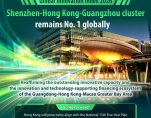
HONG KONG SAR – Media OutReach Newswire – 9 September 2026 – The World Intellectual Property Organization (WIPO) released its Global Innovation Index (GII) 2026 on September 8, revealing that the Shenzhen-Hong Kong-Guangzhou metropolitan cluster, located in Southern China, has once again secured the top position among the world’s 100 leading innovation clusters. This marks another triumph for the Guangdong-Hong Kong-Macao Greater Bay Area (GBA), solidifying its status as a global powerhouse for scientific advancement and technological entrepreneurship.
The annual GII ranking evaluates innovation activity through three core metrics: international patent filings via WIPO’s Patent Cooperation Treaty (PCT), scientific publications and the number of venture capital deals. For this year’s ranking, the Shenzhen-Hong Kong-Guangzhou cluster filed 2,259 PCT applications, published 4,060 scientific articles and had 138 venture capital deals, all per 1 million inhabitants over the past five years.
Welcoming the announcement, a spokesman for the Hong Kong Special Administrative Region (HKSAR) Government said the ranking reaffirms the outstanding innovative capacity and the innovation and technology (I&T)-supporting financing ecosystem of the GBA.
“Expediting I&T development has been a policy priority of this Government,” the spokesman added, highlighting the HKSAR Government’s continuous development of the original grant patent system and introduction of the patent box regime, which offers tax concessions for intellectual property income to promote innovation.
The HKSAR Government’s strategic investments are already yielding tangible results. The number of start-ups in Hong Kong has surged from over 1,500 in 2015 to more than 5,200 in 2025. The city’s two I&T flagships—Hong Kong Science Park and Cyberport—have collectively nurtured around 20 unicorns to date.
A landmark development in this trajectory is the official opening of the Hong Kong Park of the Hetao Shenzhen-Hong Kong Science and Technology Innovation Co-operation Zone (the Loop Hong Kong Park) in December 2025. Over 100 technology enterprises and institutions have already signed leases and begun moving in. The Loop Hong Kong Park is poised to serve as an important platform for basic scientific research, commercialisation, pilot production, and international I&T collaboration within the GBA.
Furthermore, the establishment of the San Tin Technopole Company Limited in June 2026 is set to develop 210 hectares of I&T land in the San Tin Technopole, which is located in Hong Kong’s Northern Metropolis development. It will create a vital node for integrated upstream, midstream and downstream industrial development, alongside the Loop Hong Kong Park.
Hong Kong’s financial machinery remains a cornerstone of its innovation success. The city boasts a vibrant private equity market with assets under management nearing US$250 billion, ranking second in Asia after the Chinese Mainland.
Looking ahead, Hong Kong will proactively align its strategy with the National 15th Five-Year Plan to fortify its position as an international I&T centre. The city will also further deepen collaboration with GBA sister cities, and contribute to the nation’s efforts in building a modern industrial system and achieving high-level scientific and technological self-reliance and strength.
Scientists examining Nepal’s catastrophic August glacier collapse have identified accelerating movement in satellite images before the slope failed, strengthening hopes that high-resolution monitoring could provide warning of some future Himalayan glacier disasters. The 26 August failure high in the Lhende catchment near the Nepal-China border sent ice, rock, mud and water down the Bhote Koshi-Trishuli river system, devastating settlements and infrastructure. Nepalese authorities say the disaster has […]










 www.pccwglobal.com





 https://www.linkedin.com/company/brand-hong-kong/
 https://x.com/Brand_HK/
 https://www.facebook.com/brandhk.isd
 https://www.instagram.com/brandhongkong




