News related to
China

Abu Dhabi National Oil Company faces significant challenges in its $17.2 billion bid for German chemicals company Covestro after the European Union’s competition watchdog launched a full investigation into the acquisition. The deal, struck last October, was poised to be ADNOC’s largest ever, as well as one of the most substantial foreign takeovers of a European Union-based company by a Gulf state. However, European regulators are concerned that the acquisition may distort the EU internal market due to potential subsidies granted by the United Arab Emirates to ADNOC, which could provide the state-owned oil giant with an unfair advantage.

The European Commission’s investigation, which was triggered earlier this week, specifically focuses on the possibility of foreign subsidies that could influence the competitive landscape within the EU. The Commission, which is tasked with safeguarding market competition within the EU, has expressed concerns that ADNOC’s acquisition of Covestro could be significantly affected by the financial support ADNOC is receiving from the UAE.

Among the subsidies under scrutiny are an unlimited guarantee provided by the UAE government and a capital injection into Covestro. The latter involves ADNOC committing substantial funding into the German company, which would significantly increase its capital base and, potentially, its market power. The Commission’s investigation could ultimately delay or alter the terms of the deal depending on its findings.

ADNOC, which has been aggressively expanding its portfolio and seeking new global opportunities, sees Covestro as an attractive addition to its investments, particularly as the German company holds a strong position in the global chemicals market. The chemicals sector is seen as a crucial area for growth, especially in industries like plastics and polyurethane, which have applications across numerous sectors, including automotive, construction, and electronics. By acquiring Covestro, ADNOC would be able to diversify its business beyond oil and gas, thus making it a more integrated player in the global economy.

The issue of foreign subsidies in cross-border mergers and acquisitions has gained increasing attention in recent years, particularly with the growing influence of state-backed companies from non-EU countries. In 2020, the European Commission introduced new tools to assess foreign subsidies in mergers and acquisitions, with the aim of protecting the EU’s internal market from potential distortions. The ADNOC-Covestro deal is the latest in a series of transactions under this scrutiny.

The Commission’s probe is particularly significant as it reflects broader concerns within the EU over the impact of state-backed companies from non-EU nations acquiring strategic European assets. Such concerns have been heightened by geopolitical tensions and the growing influence of countries like China, Russia, and the UAE, all of which have state-owned or state-supported companies engaging in high-profile international mergers and acquisitions.

While ADNOC has yet to comment on the investigation, the company’s bid to acquire Covestro highlights its ambitions to expand beyond the energy sector. ADNOC’s foray into chemicals and materials is seen as part of its strategy to hedge against the global shift towards renewable energy and decarbonisation. The company is looking to solidify its place in the post-oil world by investing in value-added industries, thereby ensuring a diversified revenue stream.

On the other hand, the European Commission’s actions reflect its determination to maintain a level playing field in the market, ensuring that EU companies are not at a disadvantage when competing with state-backed enterprises from outside the bloc. The EU’s foreign subsidies regulation, which came into force in 2020, provides the Commission with the authority to intervene in such cases, even when the potential subsidies do not directly involve EU-based companies.

As the investigation unfolds, it remains unclear whether the Commission will clear the deal or impose conditions on it. If the deal goes ahead, it could set a significant precedent for future cross-border mergers involving foreign state-backed companies. Conversely, if the deal is blocked or altered significantly, it may send a strong message about the EU’s stance on foreign subsidies and the influence of non-EU governments on its internal market.
Where culinary elites are brought together to celebrate Asian gastronomy HONG KONG, CHINA – Media OutReach Newswire – 29 July 2025 – The 2025 Asian Championship of World Chinese Cuisine, organised by the World Federation of Chinese Catering Industry, was held on 26th June 2025 at the Chinese Culinary Institute in Hong Kong, China. As the title sponsor, Lee Kum Kee provided contestants with its sauce products […]

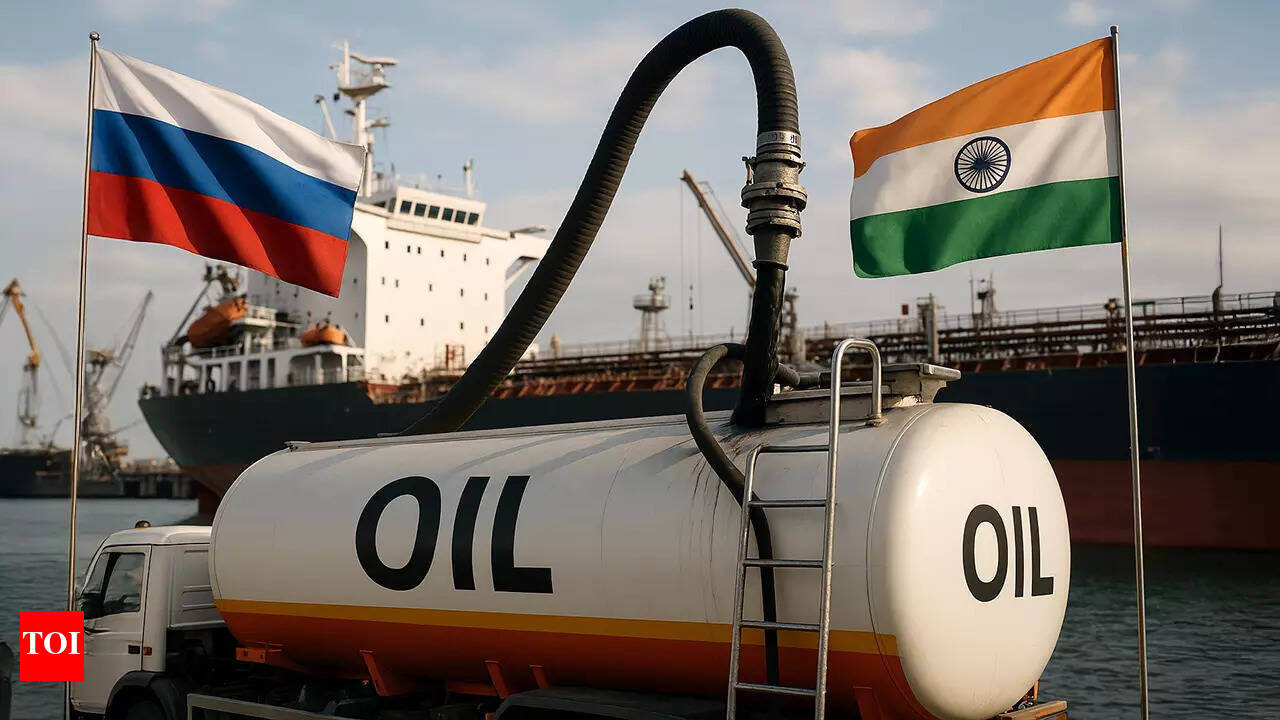
By Nantoo Banerjee The European Union seems to have arrogated itself with extrajudicial power to prevent outside nations from purchasing Russian oil. It has no locus standi to impose its will on countries which are not members of EU. Thus, the latest expansion of the EU sanctions targeting Russian energy exports can legally cover only […]


KUALA LUMPUR, MALAYSIA – Media OutReach Newswire – 28 July 2025 – Forex traders are bracing for what could be one of the most pivotal trading weeks of the year. The calendar is packed with high-impact releases that could send shockwaves through the markets, potentially even temporarily halting trading altogether as global economies digest a barrage of critical data. From central bank decisions to blockbuster economic reports, […]

SHANGHAI, CHINA – Media OutReach Newswire – 28 July 2025 – Co-presented by Lincoln Center for the Performing Arts and Center for the China Shanghai International Arts Festival, Summer for the City’s Shanghai Day ignited a cultural wave in New York City. From afternoon until late at night, a vibrant array of performances and interactive experiences—fusing classics with innovation, fashion with tradition, and youth with passion—took place […]

Malaysia’s central bank has revised its economic growth forecast for 2025, citing increased volatility stemming from ongoing global trade tensions, notably those related to US tariffs. The Bank Negara Malaysia reduced its expected GDP growth to a range of 4% to 5%, down from an earlier projection of 5% to 5.5%. The adjustment comes as a response to the shifting dynamics of global trade, which have been exacerbated by the imposition of tariffs by the United States under the administration of President Donald Trump.

While Malaysia has been largely insulated from direct tariff measures, the broader implications of the US-China trade war and related tariffs have left a significant mark on its export-driven economy. Malaysia’s position as a key player in global supply chains has made it vulnerable to shifts in the global trade environment. The US tariffs, particularly on Chinese goods, have reverberated through Southeast Asia’s manufacturing sector, affecting Malaysia’s export performance and business sentiment.

BNM’s decision to cut the forecast reflects the broader concerns surrounding economic stability in the region. The central bank noted that the uncertainty surrounding US trade policy, particularly regarding its tariffs on various Chinese products, is likely to persist throughout 2025. Furthermore, the report highlighted the continued risks posed by rising protectionism and trade barriers globally, which have disrupted supply chains and added to market volatility.

In addition to the impact of tariffs, Malaysia’s central bank has also pointed to domestic factors influencing growth. These include higher inflationary pressures, mainly due to increased global commodity prices, which have had a knock-on effect on consumer spending. Malaysia’s key exports, such as palm oil, rubber, and electronic components, have all seen price fluctuations driven by external factors such as US tariffs and China’s economic slowdown.

The reduction in growth expectations comes at a time when Malaysia is also grappling with challenges in maintaining fiscal discipline. The government has pledged to reduce its budget deficit but has struggled to meet its revenue targets, further complicating the nation’s economic outlook. Malaysia’s reliance on exports, especially to major economies like the United States and China, has made it particularly sensitive to trade tensions. These developments have placed additional strain on the country’s fiscal policy, forcing the government to reconsider its growth strategies.

The central bank’s move is likely to have significant implications for Malaysia’s monetary policy. With inflation on the rise and external risks mounting, BNM may opt to adopt a more cautious stance in terms of interest rate adjustments. While the central bank has refrained from any immediate changes, economists expect that it will closely monitor both domestic and international developments, particularly as trade tensions show no sign of easing.

The challenges facing Malaysia’s economy are also compounded by global economic slowdowns, which have affected demand for Malaysian goods and services. As countries like the United States and China grapple with their own internal economic issues, Malaysia’s export markets have softened, leading to a reduced demand for its products. In particular, Malaysia’s electronics and semiconductor industries, which account for a significant portion of its exports, have faced headwinds as the US-China trade war has diverted global supply chains elsewhere.

Despite these challenges, the government remains optimistic about Malaysia’s long-term prospects. The country has made significant strides in diversifying its economy over the past few years, with a growing emphasis on technology, innovation, and sustainable development. Malaysia’s efforts to strengthen its digital infrastructure and promote industries such as e-commerce and renewable energy are seen as key to sustaining growth, even amid global trade disruptions.

By Manish Rai Recently, we saw large-scale violence targeting the Syrian Druze community in Sweida province in southern Syria. Druze are a small religious minority group in Syria and are around 3.20% of the total Syrian population. As per the Syrian Observatory for Human Rights (SOHR) Syrian interim President Ahmed al-Sharaa’s forces and allied militias have carried out massacres in Sweida, and approximately 600 members of the […]

Advertisements

HONG KONG SAR – Media OutReach Newswire – 25 July 2025 – MicroPort Scientific Corporation (Stock Code: 00853.HK, “MicroPort”) announced that Shanghai Healthcare M&A Fund (“SHMAF”), a fund managed by SIIC Capital, a subsidiary of SIIC Group, has entered into a share purchase agreement to acquire 135,335,204 shares in MicroPort held by Otsuka Medical Devices Co., Ltd. Through this transaction, SHMAF will become a strategic shareholder in […]

By Nitya Chakraborty The recent months have not been comfortable for India with its two neighbours Pakistan and India, but as regards the third most powerful neighbouring county China, th scenario has turned different. India-China ties which became bitter at the time of clashes in Galwan valley in 2020, started softening from last year and […]

KUALA LUMPUR, MALAYSIA – Media OutReach Newswire – 24 July 2025 – Bitcoin (BTC) has been rising almost uninterruptedly over the past three months, setting new all-time highs (ATH) essentially every week since mid-May. According to Coinbase, BTCUSD surpassed the crucial $112,000 mark on 10 July and went on to touch the $123,200 level on 14 July. Since then, the market seems to have entered a period […]

PayPal has unveiled PayPal World, a global payments network that links PayPal and Venmo with prominent domestic digital wallets—India’s Unified Payments Interface, China’s Tenpay Global, and Latin America’s Mercado Pago—with the aim of serving nearly 2 billion users by late 2025.

The announcement, made on 23 July 2025, positions PayPal World as the first truly interoperable cross-border payments ecosystem. Users will be able to send money and shop overseas using their familiar wallets, while merchants can receive payments from these networks without further integration. This ecosystem begins with the interoperability of PayPal and Venmo, progressing to UPI, Tenpay, and Mercado Pago.

Alex Chriss, PayPal’s president and CEO, described PayPal World as a “first‑of‑its‑kind payments ecosystem” capable of simplifying intricate cross‑border transactions for “nearly two billion consumers and businesses”. Ritesh Shukla, CEO of NPCI International Payments Ltd, affirmed that UPI’s integration will expand its global reach and benefit Indian users by offering secure and seamless international payments. Wenhui Yang, Tenpay Global’s CEO, added that the partnership would enable PayPal and Venmo customers to use Weixin Pay QR codes in China, while enabling deeper remittance collaboration.

The platform is technologically built for scale, using open‑commerce APIs and cloud‑native architecture to ensure low latency and reliability across global regions. It promises “device and technology‑agnostic” compatibility and is designed to embrace emerging commerce formats—including AI‑agent payments, dynamic payment buttons, and stablecoins over time.

Competitors and analysts note that PayPal World addresses a longstanding fragmentation in international payments. By reducing dependency on credit cards, currency conversion, and complex onboarding, it offers a streamlined experience for consumers and merchants alike. However, successful execution will depend on regulatory compliance across jurisdictions and the ability to integrate smaller wallets and merchants beyond launch partners.

Operationally, PayPal World will go live in autumn 2025 with PayPal and Venmo already interoperable. In 2026, Venmo users will be able to make purchases at millions of global merchants within the PayPal network—both online and in physical stores.

For Indian users, the move is particularly significant. UPI, which represents around 85% of digital retail payments domestically, gains a pathway to the global market, including e‑commerce platforms abroad and in‑store payments when travelling internationally. The integration could substantially reduce costs tied to credit card surcharges and foreign exchange fees.

Latin America’s Mercado Pago, though not yet fully finalised, joins under a memorandum of understanding, reinforcing PayPal’s focus on emerging-market inclusion.

If implementation proceeds as outlined, PayPal World could reshape cross‑border commerce by integrating regional payment infrastructures into a unified global network. Its potential success will hinge on seamless interoperability, robust regulatory alignment, and continued onboarding of diverse payment ecosystems.

Global oil consumption has shifted, with demand now peaking in the third quarter instead of the traditional fourth, signalling a structural change reshaping markets during the summer months. Analysts point to stronger consumption from Asia—particularly China and India—alongside diminished heating fuel use in advanced economies as key drivers behind this trend, which carries significant implications for trading patterns, strategic reserves and pricing dynamics.

Industry data show that consumption of heating oil and kerosene in wealthy nations has declined steadily. In the US, fewer households rely on refined petroleum for heating—dropping from 17 % in 1990 to just 9 % today—while Europe has seen even steeper falls. Conversely, jet fuel use during Northern Hemisphere summers has grown, especially as holiday travel resumes. This has pushed demand peaks into July–September, reversing a long-standing seasonal rhythm.

Fuel consumption patterns in emerging economies present a stark contrast. Many countries, including those closer to the equator, rely on oil year-round for industrial power, electricity generation, and water desalination. Saudi Arabia, for instance, burned over 800,000 barrels per day of crude in just one summer to power air conditioning—a volume comparable to Belgium’s entire daily petroleum demand.

Climate change compounds the shift. Milder winters reduce heating demand, while hotter summers elevate energy needs for cooling and travel. In 2025 so far, global oil consumption in the third quarter is projected to exceed fourth-quarter levels by approximately 500,000 barrels per day—the fifth recorded year this has happened since 1991.

This transformation carries consequences for market tightness and pricing. Although OPEC+ and rising non‑OPEC output have attempted to balance supply, physical markets appear increasingly tight during summer months. In mid-July, Brent crude hovered in the mid‑US$60s, reflecting supply constraints despite softening from spring lows. Speculative traders, noting robust seasonal demand, have also increased their net long positions in Brent and gasoil contracts.

Asia’s role has been pivotal. China ramped refinery runs to over 80 % of capacity in June—the highest levels in five years—as stockpiling alongside consumption drove strong throughput. Meanwhile, Asia’s crude imports rose by around 510,000 bpd in the first half of 2025, underscoring the region’s impact. Despite cautious forecasts from the IEA and OPEC—projecting crude demand growth of 700,000 bpd and 1.29 million bpd respectively—actual refinery intake and imports suggest potential underestimation.

India’s fuel consumption trends provide further insights. June data from the Petroleum Planning and Analysis Cell show fuel demand was 20.31 million tonnes—down 4.7 % from May but up 1.9 % year-on-year—reflecting monsoon-related dips typical through August and September. Diesel usage, especially linked to industry and logistics, is a key part of India’s expanding consumption profile.

OPEC+ has responded to these dynamics. In August, the alliance approved production increases of roughly 548,000 bpd aiming to satisfy peak Q3 demand. Simultaneously, US shale output remains robust; American producers reported nearly 13.5 million bpd in April, although well completion rates have slowed, reflecting the dependency on prices.

Nevertheless, the market outlook grows more uncertain as it heads into fourth quarter. The EIA forecasts OECD inventories will build to 62 days’ worth of supply in the second half of 2025—rising further to 66 days by end-2026—signalling a potential surplus as summer demand wanes. EIA projections for 2026 also expect US production to decline, with WTI prices retreating toward US$53 per barrel.

Pricing reflects this shift. Oil markets have shown summer tightness in 2025, but expectations for a Q4 surplus weigh on medium-term prices. The IEA forecasts refinery throughput will drop from a projected August peak of 85.4 million bpd to about 81.7 million bpd by October, implying weaker demand later in the year.

The shift in seasonality thus becomes a critical market pivot. Traders, refiners and producers must recalibrate strategies around production schedules, storage cycles and investment decisions. Q3 now demands heightened vigilance—from physical balancing to hedging strategies—while Q4 may require reassessment of storage utilisation and pricing risk.

Madame Tussauds Hong Kong’s new Taylor Swift wax figure will celebrate the folklore era, as part of the global entertainment brand’s biggest launch to date HONG KONG SAR – Media OutReach Newswire – 23 July 2025 – In news that’s sure to make every Swiftie’s wildest dreams come true, global entertainment brand Madame Tussauds today unveils its biggest figure launch to date, creating not one, but 13 […]

By Nitya Chakraborty After nearly a year of frosty relations between the two neighbours India and Bangladesh, signs are there of a breakthrough as India is sending a team of burn doctors and nurses to Dhaka to treat the victims of the Monday’s devastating crash of a fighter jet plane leading to the death of […]

Emerging Markets Become the “Blue Ocean” for Enterprises Going Global SHANGHAI, CHINA – Media OutReach Newswire – 23 July 2025 – XTransfer, the World’s Leading & China’s No.1 B2B Cross-Border Trade Payment Platform, announces that its global enterprise customer base has exceeded 700,000. This significant milestone highlights the platform’s remarkable achievements in supporting small and medium-sized enterprises (SMEs) to expand globally. As a global leader in the […]

Highlights 39% underlying earnings growth Increased contributions from associates, Health & Beauty and Food Health & Beauty delivered strong like-for-like (LFL) sales growth of 4% Portfolio simplification continues with the announced divestment of Singapore Food business and sale of minority stake in Robinsons Retail Proceeds from Yonghui and Robinsons Retail divestments strengthen balance sheet to a net cash position of US$442 million Raised full-year underlying profit guidance […]

Global crude consumption is now cresting in the third quarter rather than the fourth, as China and India’s surging summer demand upends decades of winter-driven market patterns. The reversal of the traditional seasonality, first observed around 2015, is being amplified in 2025, with implications for supply strategies, prices and refinery operations worldwide. OPEC’s July report highlights strong refinery throughput in June, with intake rising by 2.1 million bpd—clear evidence […]

Fintech firm Qlub has raised $30 million in a funding round aimed at accelerating its global expansion and deepening its technological capabilities. The Dubai-based startup, known for digitising the dining experience, has drawn strong investor interest as it scales operations across Asia, the Middle East, and other international markets. The funding round was co-led by UAE-headquartered Shorooq Partners and Berlin-based Cherry Ventures, marking a cross-border vote of […]

A sophisticated cyber‑espionage campaign has targeted a government‑affiliated IT department in Southern Africa, with indicators pointing to the China‑linked APT41 group. Kaspersky’s Managed Detection and Response team detected the intrusion via unusual activity on multiple workstations, prompting an in‑depth investigation and attribution to APT41 with high confidence. The attackers infiltrated the network by exploiting a publicly exposed web server, carrying out registry dumping to harvest credentials for […]

HONG KONG SAR – Media OutReach Newswire – 21 July 2025 – Chengdu Kanghua Biological Products Co., Ltd. (Stock Code: 300841.SZ) announced that Shanghai Healthcare M&A Fund (“the M&A Fund”) intends to acquire the Company through a strategic agreement. Leveraging its substantial resource and financial strength, the M&A Fund plans to support Kanghua Biological’s established product portfolio, accelerate sales of its mature products, and develop industry synergies […]

M A Hossain It is easy to overlook the quiet revolutions in geopolitics, especially when the headlines are dominated by wars in Ukraine and Gaza, tensions in the Indo-Pacific, or the perennial drama of U.S.-China rivalry. Yet, beneath the surface of global power struggles, there is a subtler but equally consequential shift unfolding across Central Asia and the South Caucasus. And it is not Moscow, Beijing, or […]

A significant majority of sovereign wealth funds from the Middle East are poised to increase their investments in Chinese assets over the coming five years, according to the latest findings from Invesco’s Global Sovereign Asset Management Study. This shift places China at the forefront of strategic allocation decisions, reflecting growing confidence in its innovation-led sectors.

The study, conducted between January and March and covering funds and central banks managing a combined US$27 trillion, reveals that around 60% of Middle Eastern sovereign wealth funds are planning to boost exposure to China. This places the region only behind Asia‑Pacific and Africa, where 88% and 80% of funds respectively intend to raise allocations. North American counterparts also show strong interest, with approximately 73% signalling intent to increase investment in China.

Funds across regions cited strong returns—identified by 71% of respondents—as a key motivator, alongside diversification goals cited by 63% and improved market access for foreigners mentioned by 45%. Chinese innovation sectors, including digital technology, software, advanced manufacturing, automation, and clean energy, are particularly attractive, with 89% indicating interest in digital tech and software, and 70% each for manufacturing and green energy.

Participants in the study included 141 senior investment professionals—chief investment officers, asset-class heads and portfolio strategists—drawn from 83 sovereign wealth funds and 58 central banks globally. The high participation rate lends weight to the findings: China is now ranked as a high or moderate priority for 59% of funds, a notable jump from the previous year.

Despite geopolitical tensions between Washington and Beijing, sovereign funds appear more focused on structural opportunities. North American allocations towards China are framed as strategic, long-term bets in innovation rather than reactive moves to policy friction. As one Invesco executive described, investors appear driven by fear of missing out on China’s strides in semiconductors, AI, EVs and renewable energy—“a strategic urgency they once directed toward Silicon Valley”.

A regional lens reveals the Middle Eastern shift as part of a larger recalibration. Sovereign funds in the Gulf and from oil-rich neighbours are increasingly turning to China not just for commodity trades but for diversified returns and access to high-growth sectors. One Middle Eastern fund commented that the credit spectrum in fixed income markets currently offers more attractive risk-adjusted returns than public equities, underlining a broader repositioning.

Globally, sovereign investors are embracing active management, allocating more to fixed income and private credit as markets normalise post ultra-low interest rate era. Thirty‑nine per cent of funds plan to increase fixed income exposure, underscoring a pivot towards liquidity management and resilience. Private credit usage has expanded sharply, from 30% to 44% in direct or co-investments, reflecting growing appetite for yield and portfolio diversification.

Central banks are also reshaping strategy, with 64% planning to grow reserve holdings and 53% aiming to diversify further within two years. Gold remains a popular hedge: almost half intend to expand allocations over the next three years. The dominance of the US dollar persists, with 78% expecting no credible alternative supply within the next two decades.

A modest entrant in the digital asset space, sovereign wealth funds are gradually increasing exposure to digital currencies. Direct allocations rose to 11% from 7% in 2022, most pronounced in the Middle East, Asia‑Pacific and North America. Stablecoins, viewed as more accessible than traditional crypto, are gaining attention among emerging market funds.

China remains a focal point for global sovereign investors seeking exposure to growth-critical sectors and structural diversification. The convergence of strong returns, market access improvements, and sectoral opportunities is driving Middle Eastern and other funds to recalibrate their portfolios. China has transitioned from an optional allocation into a central pillar of future-focused asset strategies, marking a calculated investment pivot amid an evolving global landscape.

HO CHI MINH, VIETNAM – Media OutReach Newswire – 19 July 2025 – The China Factory Products Export Fair 2025 was held in Ho Chi Minh City, Vietnam from July 12 to 14. Hundreds of original manufacturers from places like Shandong province’s Linyi city displayed thousands of products ranging from daily necessities, office supplies, chemical products, and outdoor equipment to hardware tools. This fair adopted a collaborative […]

dnata has introduced six autonomous electric baggage tractors at Dubai World Central – Al Maktoum International Airport, marking a pioneering shift in airport ground operations. The EZTow tractors, designed by TractEasy, tow up to four baggage containers at speeds near 15 km/h, operating at Level 3 autonomy under limited human oversight. By early 2026 the system is set to upgrade to Level 4 self-driving capability. The AED 6 million rollout seeks to enhance […]

VISHNU RAJA
RYO YAMADA
HITORI GOTOH
IKUYO KITA