News related to
Emirates

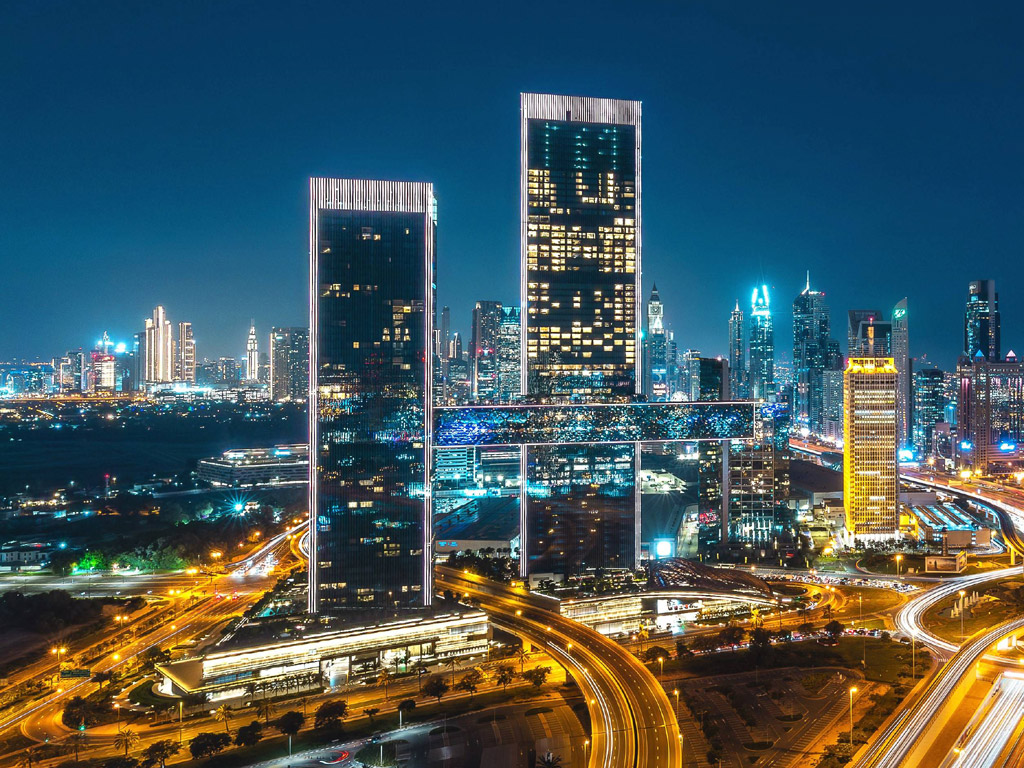
A dramatic concept video portraying a proposed “Dubai Air Hotel” by Emirates has ignited global attention, depicting a full-scale Airbus A380 mounted atop a 580-metre, 125-storey tower in Dubai. The vision, priced at an estimated $3 billion, imagines an aviation-themed landmark that would combine ultra-luxury hospitality with a striking architectural statement, reinforcing the city’s reputation for headline-grabbing development. The footage shows the double-deck superjumbo positioned like a […]

Ras Al Khaimah has faced one of the most intense rainfall episodes in its recorded history, with official gauges measuring up to 127 millimetres across two days as a powerful storm system swept the northern emirates. The deluge exceeded the emirate’s typical annual average, overwhelming drainage networks and triggering flash flooding in low-lying and mountainous areas.

Authorities said the heaviest downpours were concentrated around Mina Saqr, Jebel Al Rahibah and the upper reaches of Jebel Jais, where steep terrain funnelled runoff into wadis and access roads. Several residential districts reported water entering homes and ground floors, while industrial zones near the coast saw yards and warehouses inundated. Emergency crews were deployed through the night to clear debris, pump water and assist stranded motorists.

Meteorological data show that the system delivered short bursts of exceptionally intense rainfall, a pattern that hydrologists say increases flood risk even where total volumes might otherwise be manageable. In the mountains, rainfall totals were uneven but locally extreme, with gauges registering more than a year’s worth of rain over 48 hours. The combination of saturated ground and rapid runoff led to temporary road closures and landslides on feeder routes to higher elevations.

Officials from civil defence and municipal services said no fatalities had been reported, though injuries were treated at local hospitals and several families were temporarily relocated as a precaution. Schools in affected zones shifted to remote learning for a day while assessments were carried out. Power and water supplies were largely maintained, though brief outages were recorded in pockets where substations were flooded.

The storm formed as moist air from the Arabian Sea collided with a slow-moving upper-level trough, creating prolonged convective activity over the UAE’s north. Weather specialists noted that while heavy rain events are not unprecedented, the persistence and concentration over Ras Al Khaimah set this episode apart. Satellite imagery showed successive storm cells tracking along the same corridor, repeatedly dumping rain over the same catchments.

Urban planners and climate scientists say the episode underlines growing exposure to extreme weather in arid regions. Studies of the Gulf’s climate indicate a tendency towards more erratic rainfall, with longer dry spells punctuated by intense storms. Such shifts challenge infrastructure designed around historical averages, particularly drainage systems sized for shorter, lighter showers.

Ras Al Khaimah’s leadership said post-storm reviews would examine drainage capacity, early-warning protocols and land-use planning in flood-prone areas. Investment in wadis management and retention basins has increased in recent years, but officials acknowledged that rapid development and changing rainfall patterns require constant reassessment. Work crews were already clearing silt from channels and inspecting culverts to restore full flow capacity.

Residents described scenes of fast-moving water sweeping through streets and wadis within minutes of the heaviest rain. In mountain communities, drivers abandoned vehicles as torrents crossed roads, while hikers on Jebel Jais were escorted to safety by rescue teams once conditions allowed. Authorities reiterated advisories against entering wadis during storms, warning that flows can rise without notice far downstream from where rain is falling.

Insurance providers said claims assessments were under way, with early indications pointing to damage to vehicles, ground-floor properties and small businesses. Analysts noted that insurance penetration for flood damage remains uneven, leaving some households reliant on emergency assistance and community support. Local charities and volunteer groups organised relief supplies, including pumps and cleaning equipment, to help affected families return to their homes.

The episode has also prompted renewed discussion about data sharing and public communication. Meteorologists said advances in radar and nowcasting allow for more precise warnings, but effective response depends on rapid dissemination and public trust. Authorities credited social media alerts and mobile notifications with reducing exposure, though they acknowledged that compliance varies, particularly among motorists accustomed to short-lived showers.

Arabian Post Staff -Dubai Kuwait is set to sign a contract next week with China Communications Construction Company to advance the long-delayed Mubarak Al-Kabeer Port, signalling renewed momentum behind a project seen as pivotal to the country’s trade ambitions and its role in regional logistics. Public Works Minister Noura Al-Mashaan confirmed the timeline on Thursday, following formal approval by the Central Agency for Public Tenders for the […]

Greenlogue/AP AMEA Power has commissioned a 120 megawatts-peak solar photovoltaic plant in Tunisia’s Kairouan Governorate, adding one of the country’s largest utility-scale renewable assets to the national grid and strengthening North Africa’s push to diversify power generation. The project operates under a 20-year power purchase agreement with Société Tunisienne de l’Electricité et du Gaz, providing long-term offtake certainty for the state utility and stable revenues for the […]

Mall of the Emirates has embarked on a $1.36bn expansion programme that will add 20,000 square metres of retail space, introduce about 100 new stores, and significantly broaden its dining and entertainment offering, reinforcing Dubai’s position as a global retail and lifestyle hub. The project, announced by owner and operator Majid Al Futtaim, represents one of the most substantial investments in the mall since it opened in […]

The United Arab Emirates has consolidated its standing in 2025 as one of the world’s fastest-growing economies, underpinned by a surge in non-oil activity, sustained investment inflows and a regulatory framework designed to attract capital and talent. Data released through the year point to broad-based expansion across trade, manufacturing, logistics, tourism, finance and technology, reinforcing a shift away from hydrocarbons as the primary engine of growth.

Non-oil foreign trade climbed 24.5 per cent in the first half of 2025 to AED1.7 trillion, a pace that far exceeds the prevailing global trade growth rate. The increase reflects rising re-exports, stronger demand from Asia, Europe and Africa, and the UAE’s role as a commercial bridge linking major markets. Officials have highlighted gains in machinery, electronics, precious metals, food products and pharmaceuticals, supported by expanded port capacity, faster customs procedures and new trade agreements.

Investment indicators have moved in tandem with trade. The UN Conference on Trade and Development’s World Investment Report 2025 ranked the UAE 10th globally for inbound foreign direct investment in 2024, with inflows of AED167.6 billion. That placing keeps the country among the world’s most attractive destinations for capital, alongside much larger economies, and underscores confidence in the policy environment, infrastructure and legal protections available to investors.

Economic planners attribute the momentum to a combination of structural reforms and targeted incentives. Liberalised ownership rules, long-term residency options for professionals and entrepreneurs, and streamlined licensing have lowered barriers for international firms. Specialised free zones continue to draw companies in logistics, clean energy, advanced manufacturing, fintech and digital services, while onshore jurisdictions have simplified company formation and compliance.

Non-oil GDP growth has been supported by strong domestic demand and an expanding population of skilled workers. Tourism has posted record levels of hotel occupancy and visitor spending, aided by expanded air connectivity and major events that have kept demand resilient across seasons. Retail and hospitality have benefited from rising consumer confidence, while real estate transactions have remained active across residential, commercial and industrial segments.

Manufacturing has emerged as a key contributor, with investments flowing into metals, food processing, pharmaceuticals and building materials. The push to localise supply chains and boost exports has been reinforced by incentives for advanced manufacturing and the adoption of automation and artificial intelligence. Renewable energy and clean technology projects have also attracted capital, aligning economic growth with climate commitments.

The financial sector has played a central role in channelling investment. Banks have reported healthy credit growth to businesses, while capital markets have seen new listings and debt issuance that broaden funding options. Asset managers and private equity firms have expanded regional operations, using the UAE as a base for Middle East, Africa and South Asia strategies. Regulatory clarity in digital assets and fintech has further widened the investor base.

Trade policy has complemented domestic reforms. Comprehensive economic partnership agreements have reduced tariffs and opened access to fast-growing markets, supporting exporters and logistics providers. Improved customs digitisation has shortened clearance times, enhancing the country’s competitiveness as a trans-shipment hub. The scale of non-oil trade growth indicates that these measures are translating into higher volumes rather than merely price effects.

Oman’s sovereign wealth fund arm ITHCA Group has entered a strategic investment partnership with Saudi Vision Venture Capital, marking a significant step in Muscat’s efforts to deepen the funding pool and regional reach available to start-ups based in the sultanate. The agreement is designed to give Omani founders structured access to the Saudi investment ecosystem, one of the largest and fastest-growing venture capital markets in the Middle […]

Advertisements

Arabian Post Staff -Dubai Dubai-based Emirates NBD Bank has launched a $700 million seven-year bullet term loan aimed at lenders across Asia, marking a notable cross-border funding move as regional banks continue to diversify their funding bases amid shifting global liquidity conditions. The facility carries an interest margin of 100 basis points over term SOFR and includes a $200 million accordion option, allowing the borrower to increase […]

Quality of life has emerged as the defining differentiator in Dubai’s luxury real estate market, overtaking the earlier emphasis on global brand names as affluent buyers continue to flow into the emirate, according to senior industry voices tracking buying behaviour at the top end of the sector.

Developers and brokers say high-net-worth individuals are no longer drawn solely by branded residences, waterfront addresses or headline prices. Instead, purchasing decisions are increasingly shaped by liveability factors such as community design, access to green space, wellness infrastructure, privacy, security, and the integration of daily services within residential districts. This shift reflects the changing profile of buyers, many of whom are relocating families or establishing long-term bases rather than acquiring purely investment assets.

Dubai’s luxury segment has expanded sharply over the past few years, with prime residential areas such as Palm Jumeirah, Emirates Hills, Jumeirah Bay Island and Dubai Hills Estate recording strong demand across villas and high-end apartments. Transaction values at the upper end of the market have risen, supported by sustained interest from buyers based in Europe, the Middle East, East Asia and parts of Africa. Market participants note that this demand has remained resilient despite global economic uncertainty, underpinned by Dubai’s status as a low-tax jurisdiction, political stability and international connectivity.

Industry executives argue that the maturation of buyer expectations is a sign of a more sophisticated market. Luxury purchasers are placing greater weight on neighbourhood planning, walkability, schools, healthcare access and leisure amenities, alongside the quality of construction and long-term maintenance standards. Smart home technology, energy efficiency, noise management and private outdoor space have become standard expectations rather than premium add-ons.

Wellness has become a particularly influential theme. Developers are incorporating features such as landscaped parks, jogging tracks, cycling paths, spa facilities and air-quality controls into master-planned communities. Water access, whether through beachfront living, marinas or canal-side developments, remains a powerful draw, but buyers are increasingly scrutinising how these elements support daily living rather than visual appeal alone.

The rise of liveability as a core selling point has altered developer strategies. Several major players are prioritising mixed-use developments that blend residential, retail, hospitality and office components into self-contained ecosystems. This approach is designed to reduce commuting times and create neighbourhoods where residents can live, work and socialise within a short radius, aligning with broader urban planning goals set out by Dubai authorities.

Pricing dynamics also reflect the shift. Properties that combine prime locations with strong community features have outperformed standalone luxury units that rely mainly on branding or architectural statement. Analysts observe that buyers are willing to pay premiums for homes that offer privacy, low density and access to well-managed communal spaces, while overly dense developments face greater scrutiny.

Rental demand in the luxury segment has mirrored these trends. Executive tenants and relocating families are seeking properties that provide stability and lifestyle benefits, driving demand for villas and larger apartments in established communities. This has supported yields in select areas, reinforcing the appeal of liveability-focused developments to both end users and long-term investors.

Dubai’s regulatory environment has also played a role in shaping buyer confidence. Clear property ownership rules, long-term residency options linked to investment, and transparent transaction processes have helped position the city as a secure destination for capital. Market participants say this framework encourages buyers to consider lifestyle factors, confident that their legal and financial interests are protected.

Competition among developers has intensified as a result. Rather than competing solely on scale or brand partnerships, firms are differentiating through design quality, community management and post-handover services. Some developers have expanded in-house property management and concierge offerings to ensure consistent standards after completion, addressing a long-standing concern among luxury buyers.


Dubai’s skyline is poised for a new addition as Dar Global, a London-listed luxury real estate developer, has appointed Edrafor Emirates LLC to carry out enabling and foundational works for the Trump International Hotel & Tower project along Sheikh Zayed Road, marking a significant early stage in the development of what is set to be one of the city’s most ambitious luxury properties. The contract covers the […]

Sharjah’s real estate market achieved an unprecedented milestone in November 2025, with transaction values soaring to AED 9.5 billion — the highest monthly figure in the emirate’s history. This performance highlights a powerful upswing in property demand and transaction activity, according to data from the Sharjah Real Estate Registration Department.

The surge was driven by a total of 15,131 individual real estate transactions completed across residential, commercial and land sectors, with the cumulative traded area in sales transactions reaching about 34.9 million square feet. Market dynamics showed robust participation from both end-users and investors, signalling sustained confidence in the emirate’s property market fundamentals.

Sales transactions contributed significantly to this total, accounting for 2,126 deals — around 14 per cent of all transactions — demonstrating heightened buyer activity. Mortgage deals also featured prominently, with 698 recorded transactions valued at approximately AED 1.6 billion. The volume and value of these mortgages reflect strong backing from financial institutions and growing investor confidence amid a favourable credit environment.

Analysts note that the November outcome builds on the emirate’s broader market momentum through 2025. Year-to-date figures indicate that property transactions in Sharjah have risen sharply compared with the previous year. Data from a Savills report show that the first nine months of 2025 saw total sales reach around AED 44.3 billion, up by more than half relative to the same period in 2024.

The jump in monthly and cumulative annual activity reflects several intersecting trends shaping Sharjah’s property landscape. Developers across the emirate have accelerated new project launches and master-planned communities that appeal to both domestic and international buyers. Villa and townhouse segments have been particularly active, buoyed by strong demand from families and investors seeking space outside the ultra-premium segments found in neighbouring markets.

Macro-economic factors also play a role. Sharjah’s broader economic ecosystem has recorded steady expansion, with diversification efforts in sectors such as logistics, education, and tourism underpinning population growth and boosting housing demand. Property professionals point to these structural drivers as crucial to the market’s resilience and robust performance.

Regional comparisons further contextualise Sharjah’s achievement. Across the United Arab Emirates, major property markets have posted strong results throughout 2025, with Dubai and Abu Dhabi also reporting significant upticks in transaction volumes and values. In Dubai, for example, transaction figures remained elevated in both off-plan and secondary markets, while Abu Dhabi logged increased activity linked to lifestyle-oriented developments and foreign investment.

Despite these broader national trends, Sharjah’s November figure stands out for its magnitude relative to the emirate’s historical performance. Prior monthly totals in 2025 — including around AED 7 billion in October — already pointed to accelerated momentum, but November’s record haul marks a pronounced inflection point.

Market insiders attribute part of this growth to flexible regulatory frameworks and proactive initiatives introduced by local authorities aimed at stimulating property sector participation. Enhanced transparency in transaction processes and targeted incentives for first-time buyers and investors have helped attract a more diverse buyer base.

Despite the strong upswing, industry observers caution that sustained growth will require continued alignment of supply with demand, particularly in mid-income and affordable housing segments. Robust demand could exert upward pressure on prices if not matched by commensurate increases in new deliveries. Developers and policymakers will need to address these dynamics to maintain market stability over the medium term.

Japan is intensifying its economic engagement with Gulf partners as policymakers and corporate leaders seek to counter global uncertainty and reduce exposure to shifting geopolitical priorities under evolving US policy. The recalibration marks a notable acceleration in Tokyo’s outreach to the Middle East’s major sovereign investors, energy exporters, and technology funds, reflecting a sense within government and industry that the country must widen access to capital and secure strategic partnerships as global supply chains face persistent strain.

A growing number of senior officials and executives have argued that Japan’s longstanding reliance on the US as an anchor for both economic and security stability now requires broader support. Their stance reflects concerns generated by the more transactional orientation of the US under the America First framework, which has amplified debates in Tokyo on the need for diversified alliances. That reassessment has coincided with unprecedented liquidity flows across the Gulf, where sovereign wealth funds are expanding global portfolios in sectors ranging from clean energy and advanced manufacturing to semiconductors, logistics and emerging technologies.

Prime Minister Fumio Kishida’s government has moved to strengthen ties with the region’s largest investment authorities, including Abu Dhabi’s Mubadala Investment Company and Saudi Arabia’s Public Investment Fund. Japanese ministries have encouraged joint projects that align with national priorities such as chip resilience, hydrogen supply chains, carbon management, and infrastructure modernisation. Officials familiar with the discussions say the focus extends beyond energy security to long-term industrial cooperation, with Tokyo exploring ways to integrate Middle Eastern capital into Japan’s domestic renewal.

Several major companies have already positioned themselves to capture the shift. Trading houses such as Mitsui & Co. and Mitsubishi Corp. have expanded partnerships in clean fuels and petrochemicals, while Japan’s leading automakers are examining opportunities linked to Gulf diversification strategies, particularly in battery supply, autonomous mobility, and advanced materials. Banks including MUFG and SMBC are increasing their presence in the region to support outbound investment, project finance, and corporate advisory mandates requested by Gulf entities looking to deploy capital in Asia.

Analysts observe that the evolving dynamic is not one-sided. Middle Eastern investors have signalled interest in stable, technologically advanced economies as part of their long-term diversification plans. Japan’s strong intellectual property base, advanced industrial ecosystem, and predictable regulatory environment have become increasingly attractive to funds seeking alternatives to higher-risk markets. Executives have also pointed to the convergence of strategic priorities, including shared urgency around food security, energy transition, and digital infrastructure development.

The country’s semiconductor revival has emerged as a key area of alignment. As Japan attempts to rebuild its chip manufacturing footprint with government-backed projects involving firms such as Rapidus and partnerships with global foundries, Gulf investors have explored opportunities to participate in upstream and downstream components of the supply chain. Officials tracking the conversations describe growing interest from Middle Eastern funds in Japan’s materials science know-how and next-generation fabrication technologies, which they view as long-term assets capable of supporting their broader industrial programmes.

Energy cooperation remains central to the relationship. Japan continues to depend heavily on the Gulf for crude oil and liquefied natural gas, but the nature of that relationship is shifting toward co-investment in renewable energy, hydrogen production, and carbon capture projects. Tokyo’s efforts to secure stable supplies of blue and green hydrogen align closely with the decarbonisation roadmaps of Saudi Arabia and the United Arab Emirates, which are positioning themselves as future exporters of low-carbon fuels. Japanese companies have signed multiple memoranda with Gulf partners to test supply chains that could support both nations’ energy transition targets.

Technology collaboration is also gathering momentum. Gulf sovereign funds have expanded their allocations to late-stage venture investments and tech infrastructure, creating new openings for Japanese firms in fields such as robotics, clean-tech, mobility software, and advanced manufacturing systems. Executives from several technology conglomerates have confirmed that discussions are under way to establish joint R&D facilities, venture co-investment platforms, and industrial clusters that could operate across Asia and the Middle East.

Diplomatic signalling has reinforced the economic shift. Visits by senior Japanese officials to Riyadh, Abu Dhabi, Doha and Manama have highlighted Tokyo’s intent to deepen ties not only through energy partnerships but also through digital transformation initiatives, defence industrial cooperation, and food-supply agreements. These engagements complement Japan’s broader Indo-Pacific strategy, which emphasises stability, open trade routes, and resilience in critical sectors.

Abu Dhabi’s transformation into a leading centre for digital asset regulation is gathering global recognition, with legal and financial experts pointing to its advanced regulatory framework and investor-friendly environment as key drivers for growing crypto-sector confidence.

At the sidelines of Abu Dhabi Finance Week, compliance specialist Magdalena Boškić of Swiss firm Kellerhals Carrard declared that the UAE has firmly established itself as a global hub for digital-asset businesses, drawing major international players thanks to robust legislation and transparent licensing regimes. She highlighted the role of regulatory bodies such as the Financial Services Regulatory Authority at Abu Dhabi Global Market, the Virtual Assets Regulatory Authority in Dubai, the Dubai Financial Services Authority, and the Central Bank of the UAE, describing their collective efforts as among the most advanced globally.

Under the UAE’s multi-jurisdictional model, companies involved in trading, custody, asset-management or tokenisation can select the regulatory framework that matches their business model, offering flexibility without sacrificing oversight. The regime is built on principles like technology neutrality, activity-based licensing and strict compliance with investor-protection standards — features that offer legal clarity and attract institutional as well as retail participation. Boškić noted that this environment has led several prominent Swiss digital-asset banks such as Sygnum and AMINA to expand their presence in the Emirates.

A 2025 ranking by the Global Finance & Technology Network, in collaboration with consultancy Arthur D. Little, placed the UAE alongside jurisdictions such as Switzerland and Singapore among the most advanced globally for crypto regulation. The report credited the UAE for its comprehensive approach to tokenised assets, stablecoins, virtual-asset service providers and other fintech innovations — moving the country from ambition into execution.

Institutional adoption has risen sharply. Data on inflows between mid-2023 and mid-2024 show digital-asset investments of more than US$30 billion — roughly 10 percent of the Middle East and North Africa region’s total — with institutional-sized transfers jumping about 55 percent year-on-year. Simultaneously, retail participation has surged; the number of daily active crypto traders in the UAE has reportedly crossed 500,000, underscoring broad public engagement with digital-asset markets.

Fiscal incentives have added to the appeal. The absence of personal income tax or capital-gains tax, combined with exemptions on value-added tax for trading and conversion of virtual assets, offers one of the most favourable tax regimes globally. These conditions, combined with regulatory clarity, help explain the influx of both specialized crypto firms and traditional financial institutions adapting to digital-asset offerings.

The expansion also includes the tokenisation of real-world assets — such as real estate, aviation and even sovereign bonds — indicating that the UAE’s digital-asset market is evolving beyond speculative cryptocurrency trading into structured financial instruments. This opens pathways for sophisticated investors and enterprises seeking to integrate blockchain-based financing or asset-tokenisation into mainstream operations.

Still, rapid growth is not without risks. Observers caution that heightened crypto activity brings exposure to money laundering, unregulated peer-to-peer trading, cybersecurity threats and uneven investor protection. Regulators must balance fostering innovation with safeguarding financial integrity.

A milestone for regulatory trust came this week when Binance secured a global licence under the ADGM framework granted by the FSRA. The approval of the world’s largest crypto exchange underlines the UAE’s drive to cement its status as a credible, regulated base for digital-asset operations.

Arabian Post Staff -Dubai A USD 500 million floating-rate bond issued by Bank of China Dubai Branch has been listed on Nasdaq Dubai under its USD 40 billion Medium Term Note Programme, maturing on 24 November 2028. The three-year conventional bond achieved the narrowest issuance spread for a US-dollar bond of comparable tenor among Chinese banks, signaling robust investor confidence in the issuer’s credit standing. The listing […]

Gulf Cooperation Council sovereigns and corporates issued a record-breaking $226 billion in debt by November 11, 2025 — the highest single-year total this decade — boosted by surging investor demand and tight spreads across the region.

Issuance of bonds and sukuk vastly outpaced equity capital-market activity, which saw the weakest IPO fundraising since 2020.

Regional governments and major companies returned to debt markets, capitalising on favourable financing conditions. Notable sovereign issuance came from all six GCC states — Saudi Arabia, United Arab Emirates, Kuwait, Qatar, Bahrain and Oman. Corporations also joined, including heavyweight names such as Saudi Aramco and Abu Dhabi National Oil Company.

The rebound in debt issuance reflects a shift in financing strategies. Many issuers had stayed out of markets earlier this year, waiting for better conditions. As spreads tightened sharply, they re-entered. As HSBC’s head of MENA debt capital markets, Nour Safa, put it: the tightening spreads “convinced them to return to the market.”

By the third quarter of 2025, total outstanding debt on GCC debt capital markets reached $1.1 trillion — a 12.7 per cent increase year-on-year. Sukuk issuances led the growth, rising nearly 22 per cent and now accounting for more than 40 per cent of overall debt issuance volume.

The strength emanates largely from the two biggest markets: Saudi Arabia and the UAE. As per recent analysis, these two nations comprise 46 per cent and 30 per cent respectively of total outstanding GCC debt.

Meanwhile, IPO funding has stalled. Across the GCC, 2025 saw a dramatic slump in equity issuance: a total of only 40 IPOs raised about $5.8 billion, down markedly from 2024’s 52 listings which raised $12.9 billion — the lowest fundraising level since 2020.

In the first half of 2025, IPO activity had shown modest resilience: 27 listings raised $4.10 billion, up from $3.57 billion a year earlier. But the second half slowdown reversed much of that progress.

Analysts say the divergence between bond and equity markets has several drivers. Doubts over global macroeconomic stability and trade-policy uncertainty have suppressed investor appetite for riskier equity. At the same time, Gulf issuers found debt markets more attractive: high-quality issuers, deep dollar-denominated bond markets, and relatively higher yields compared with many emerging-market alternatives.

Banks across the region added to the surge: by mid-2025 they had issued over $60 billion of debt — surpassing 2024 levels — much of it Tier-2 or hybrid debt aimed at bolstering capital under evolving regulations and funding growth tied to national development plans.

Urban development in the UAE is undergoing a noticeable shift toward environments that support long-term physical and mental wellbeing. As cities across the Emirates continue to grow, architecture and planning agencies increasingly treat wellness not as an amenity but as a structural principle shaping buildings, public spaces, and residential communities. Recent projects, including PASSO by Beyond, reflect this new direction in which design is guided by light, airflow, […]

A new specialised laboratory for testing and certifying sustainable aviation fuel is being set up in Fujairah, marking a significant expansion of the UAE’s ambitions to become a leading hub for low-carbon aviation fuels across the Middle East and North Africa. The project, developed by MENA Biofuels in partnership with Saybolt, is positioned as the first facility of its kind in the country dedicated to sustainable aviation fuel testing and is expected to strengthen the supply chain for carriers adopting cleaner fuel blends.

The laboratory will be located within the Fujairah Oil Industry Zone, one of the region’s key energy storage and logistics centres. According to the developers, the facility will operate under internationally recognised standards and provide independent verification and certification services for SAF produced in the UAE and the wider region. This will allow aviation fuel suppliers to meet the stringent quality and sustainability benchmarks required by global regulators and airlines, many of which are targeting large-scale SAF adoption over the coming decade.

MENA Biofuels and Saybolt have indicated that the lab is being designed to serve both domestic producers and international clients moving fuel through Fujairah’s terminals. Industry analysts note that Fujairah’s strategic location on the global maritime route linking the Gulf to Asia and Europe gives the new testing operation considerable potential to influence regional fuel flows. The developers said the initiative reflects growing demand among airlines for certified SAF, which is viewed as one of the most immediate pathways to reducing aviation emissions.

The UAE has been expanding investments in biofuels as part of its broader decarbonisation strategy, with several aviation stakeholders stepping up procurement of SAF blends for commercial flights. Etihad Airways and Emirates have both trialled SAF operations, while Abu Dhabi and Dubai authorities have emphasised the need for stronger regional production capacity. Industry data indicates that SAF supply remains constrained worldwide, making certification infrastructure a critical component for scaling up output. The new Fujairah lab aims to close a gap in regional capabilities by offering end-to-end testing that aligns with international requirements established by organisations such as ASTM International, which governs SAF specifications.

Saybolt, an inspection and testing group with long-standing operations in global energy markets, is expected to lead the technical management of the laboratory. Its role will involve implementing fuel-testing protocols, quality assurance systems and sustainability verification frameworks. Executives familiar with the arrangement said the partnership combines Saybolt’s technical expertise with MENA Biofuels’ regional network and logistics access. Market observers believe this gives the venture a strong foundation to support both emerging SAF producers and established energy companies evaluating diversification into aviation biofuels.

The decision to anchor the lab within the Fujairah Oil Industry Zone aligns with local authorities’ push to broaden the zone’s portfolio beyond crude and refined products. The zone already hosts significant tank storage, bunkering and refining infrastructure, and expanding into sustainable fuels aligns with the UAE’s national energy transition commitments. Investors and analysts have pointed to Fujairah’s ability to handle large volumes of fuel as an advantage for SAF certification, particularly for producers that require rapid turnaround on testing to meet airline delivery schedules.

Aviation industry figures have highlighted that the move addresses a structural bottleneck in the SAF market. Certification processes are often conducted in Europe or the United States, adding cost and delay for producers operating in the Gulf. By offering testing capacity locally, the Fujairah lab is expected to reduce lead times and encourage investment in regional SAF manufacturing. Some analysts say the initiative may draw interest from energy companies in neighbouring Gulf states exploring SAF pathways as part of their decarbonisation agendas.

Airline industry targets have accelerated demand for SAF, with global carriers collectively aiming for significant emissions reductions by 2030. Several Gulf-based airlines, including those operating through Abu Dhabi, Dubai and Sharjah, have pledged to expand their use of sustainable fuel blends once supply becomes more stable. SAF production in the region remains at an early stage, but energy firms have been evaluating waste-to-fuel pathways, renewable feedstocks and partnerships with technology providers to scale output. The establishment of credible certification capacity is viewed as an essential precursor to commercial production.

Emirates NBD has sealed a strategic partnership with the Dubai International Financial Centre aimed at offering enhanced wealth governance, succession planning and legacy-preservation services to ultra-high-net-worth families and family-owned enterprises. The collaboration will channel the capabilities of Emirates NBD Private Banking and the infrastructure of DIFC’s Family Wealth Centre to meet the complex needs of family businesses within the jurisdiction.

Under the agreement, Emirates NBD will provide tailored governance frameworks, succession-planning blueprints, tax structuring, and bespoke advisory services designed for clients with significant wealth or business holdings. The bank intends to complement these offerings with educational workshops, governance-best-practice programmes and family-office structuring support — all delivered through DIFC’s institutional facilities.

The move reflects growing demand in the Middle East for professionalised wealth-transfer and legacy-management solutions as substantial assets stand to pass to younger generations. Regional trends indicate about one trillion US dollars in assets are expected to be transferred within wealthy families by 2030, underscoring the urgency for robust governance structures.

The Arab Investment & Export Credit Guarantee Corporation reported that the collective gross domestic product of Arab countries rose by 1.7 percent to about US$3.8 trillion in 2025, even as the region grappled with significant geopolitical tensions. The bulk of the growth remained concentrated in a handful of large economies — Saudi Arabia, United Arab Emirates, Egypt, Algeria and Iraq — which together account for nearly 73 […]

At the third edition of the Saudi International Handicrafts Week, held at Princess Nourah bint Abdulrahman University in Riyadh, veteran craftsperson Wu Jianmei rose to the spotlight as exhibitors and visitors gathered to experience global artistry. Wu Jianmei took a seat in the bright red-themed China pavilion, her fingers deftly guiding a needle in a demonstration of Xiang embroidery — a traditional art form that has earned her acclaim over a career spanning more than four decades. Her calm poise and meticulous stitching drew a steady stream of visitors who paused to watch each slender thread breathe life into the fabric.

Organised by Heritage Commission, Banan has brought together over 400 artisans representing more than 40 countries for 2025. China holds the title of Guest of Honour, a symbolic showcase of its cultural heritage in a pavilion designed to present more than a thousand handmade pieces alongside live craft demonstrations. The pavilion features lacquerware, fan-making, batik techniques and complex embroidery — each presented by skilled heritage bearers chosen to represent China’s rich craft traditions.

China’s role this year coincides with the 35th anniversary of formal diplomatic relations with Saudi Arabia, as well as the designation of 2025 as the Year of Handicrafts in the Kingdom. Officials accompanying the Chinese delegation underscored the ambition to promote cross-cultural understanding and elevate artisanal craftsmanship within a broader creative economy. Among those present was the Chinese ambassador, who visited the China pavilion and praised the global scope of the event and the Kingdom’s support for heritage-driven cultural exchange.

Visitors to Banan were drawn not only to the China pavilion but to a wider tapestry of worldwide craftsmanship. Traditional techniques from Syria, the United Arab Emirates, Egypt, Oman, Bahrain and Jordan featured prominently, alongside booths from European, African, Asian, and Middle Eastern artisans. Demonstrations ranged across wood carving, clay pottery, metalwork, weaving and shadow-puppet craft.

A special interactive zone called “Banan Story” offered families and children an opportunity to engage hands-on with materials and tools under guided supervision, helping younger attendees connect playfully with global craft techniques. This initiative reflects a broader strategy by the Heritage Commission to foster intergenerational appreciation of handcrafts, encouraging younger audiences to explore cultural diversity through creativity.

For many, Wu Jianmei’s presence at Banan served as a powerful cultural bridge. Her Xiang embroidery pieces — delicate and intricate — symbolised a living history: patterns and stitches that carried stories of generations. Locals and expatriates alike watched in quiet admiration as the needle moved, building intricate motifs destined for display or sale. Her work has previously been exhibited in major institutions, a testament to her stature in the heritage-arts community.

Travel demand across the Gulf is undergoing a distinctive shift as Saud Arabia and Bahrain emerge as the region’s fastest-growing outbound markets. Airport usage data compiled by Dragonpass shows that Saudi travel volumes increased by 36 per cent this summer, with June marking its busiest month ever. Meanwhile Bahrain posted a 208 per cent year-on-year rise, the sharpest growth among Gulf Cooperation Council nations and a clear signal of expanding mobility across the region.

The surge in air travel across these Gulf states reflects a combination of expanded airport capacity, evolving travel behaviour and government efforts to reposition their countries as regional travel hubs. Saudi Arabia’s growth aligns with its strategic development blueprint under Saudi Vision 2030, which aims to promote tourism and business travel alongside infrastructure investment. Bahrain’s dramatic increase illustrates its emergence as a regional connector, reinforcing its role in the Gulf’s evolving aviation and tourism ecosystem.

The upturn is not limited to those two. Other Gulf states including Qatar and Oman also recorded notable increases—travel volumes in Qatar rose by 198.9 per cent year-on-year, while Oman saw an 89.2 per cent boost as its airport infrastructure and heritage-led tourism gained traction. At the same time the region’s historical hub United Arab Emirates witnessed a 21 per cent decline over the summer, a reversal that observers attribute to shifting travel patterns and growing competition from its neighbours.

Beyond sheer volume, travel habits are evolving. A rising number of travellers across the Gulf are opting for premium airport services such as lounge access, signalling growing demand for comfort and convenience. Bahrain now leads globally on lounge-use, with 1.35 per cent of passengers utilising premium facilities — a rate ahead of major global aviation hubs. Saudi Arabia placed second in the region at 0.86 per cent.

Analysts suggest that this shift is driven by a combination of rising disposable incomes, increased business travel, and a changing perception of intra-Gulf mobility from a necessity to a lifestyle and leisure choice. Expansion of airport capacity, new routes and better services have made air travel more accessible and attractive than before. In Saudi Arabia, expanding infrastructure investment under Vision 2030 has increased flight connectivity and lifted capacity constraints. In Bahrain, efforts to position the nation as a regional aviation hub seem to be bearing fruit as the kingdom leverages its strategic geographic location and growing investment in tourism.

The broader context signals a reconfiguration of Gulf air travel dynamics. As smaller Gulf states and Saudi Arabia ramp up capacity and services, they are drawing passengers who might previously have transited through traditional hubs such as the UAE. This pattern points to intensifying intra-Gulf competition in aviation and travel services, accompanied by a shift in consumer preferences toward convenience, comfort and variety.

Abu Dhabi’s major energy players have agreed a US$1.9 billion transaction that hands over the power and water generation facilities of Emirates Global Aluminium at Al Taweelah to a joint venture between Abu Dhabi National Energy Company PJSC and DUBAL Holding LLC. The assets include a 3.1 gigawatt combined-cycle gas-fired plant and a desalination facility with 6.25 million imperial gallons per day capacity. Operational control will rest […]

Sunteck Realty Ltd of Mumbai has formally entered the United Arab Emirates market under a new international arm, Sunteck International, by unveiling a prime land parcel in Downtown Dubai for an ultra-luxury residential development valued at AED 5 billion. The 2.5-acre plot is located in the Burj Khalifa district, just steps away from The Dubai Mall, suggesting the project will cater to high-net-worth buyers seeking exclusivity and proximity to Dubai’s iconic landmarks.

The debut project will comprise two residential towers that combine standard luxury apartments with branded residences developed in collaboration with global hospitality names. The initial launch marks the first overseas venture for Sunteck, long known for high-end real estate in Mumbai, and lays the foundation for a larger pipeline targeting AED 15 billion over the next three years.

Sunteck’s chairman highlighted the strategic appeal of Dubai: a city combining strong infrastructure, international connectivity, favourable tax structures and a growing concentration of affluent residents—conditions that the company believes are ideal for luxury real estate. This view aligns with projections of continued inflows of global wealth into Dubai’s property market.

Data executives in the United Arab Emirates are signalling serious alarm over the lack of transparency in how their artificial-intelligence systems make decisions, according to a fresh survey. About 94 per cent of data leaders in the country say they do not have full visibility of decision-making processes in their AI systems, pointing to deep governance vulnerabilities at a time when adoption is accelerating. This revelation emerges […]

VISHNU RAJA
RYO YAMADA
HITORI GOTOH
IKUYO KITA