News related to
Emirates

Gulf nations are intensifying their investments in global sports, strategically deploying sovereign wealth funds to diversify economies and enhance international standing. Saudi Arabia, the United Arab Emirates , and Qatar are at the forefront of this movement, each utilising sports as a vehicle for economic diversification and soft power projection. Saudi Arabia’s Public Investment Fund , managing assets exceeding $700 billion, has acquired significant stakes in domestic […]

Abu Dhabi National Oil Company has entered into framework agreements valued at Dhs6 billion with 12 UAE-based manufacturers to produce critical industrial equipment locally. This initiative, part of the “Make it in the Emirates” programme, aims to enhance the resilience of the nation’s supply chain and create up to 1,300 skilled private-sector jobs.

The agreements focus on the domestic production of cables and pressure vessels, essential components in ADNOC’s operations. By localising the manufacturing of these items, ADNOC seeks to ensure timely availability, reduce dependency on international suppliers, and mitigate global supply chain disruptions.

The signing took place during the “Make it in the Emirates” forum in Abu Dhabi, attended by Dr Sultan Ahmed Al Jaber, Minister of Industry and Advanced Technology and ADNOC’s Managing Director and Group CEO. Dr Al Jaber emphasised the importance of strengthening local manufacturing capabilities to support the UAE’s industrial growth and economic diversification.

This move aligns with ADNOC’s broader strategy to stimulate domestic manufacturing. Previously, the company announced agreements with over 60 companies to locally produce critical non-oil products, aiming to manufacture AED70 billion worth of products in its procurement pipeline by 2027. These efforts are expected to create thousands of job opportunities and enhance the resilience of the local supply chain.

In addition to the current agreements, ADNOC has committed over AED20 billion for the procurement of structures and metal products from national companies. This commitment is part of a broader initiative to stimulate industrial growth and create more private-sector jobs for UAE nationals.

The “Make it in the Emirates” initiative, led by the Ministry of Industry and Advanced Technology, aims to position the UAE as a global hub for advanced industry and innovation. The programme encourages local manufacturing, supports the development of national talent, and promotes sustainable industrial practices.

ADNOC’s investment in local manufacturing is complemented by its focus on sustainability and technological innovation. The company has been leveraging artificial intelligence and advanced technologies to optimise operations and reduce emissions. Facilities like the Habshan 5 gas processing plant and Zirku Island offshore operations have been at the forefront of deploying such technologies, contributing to ADNOC’s goal of becoming a low-carbon energy leader.

ADNOC’s In-Country Value programme incentivises suppliers to adopt clean technologies and establish new manufacturing facilities in the UAE. Since its inception, the ICV programme has driven significant investment back into the UAE economy, supporting the nation’s Net Zero by 2050 Strategic Initiative.

The “Make it in the Emirates” forum serves as a platform for collaboration between government entities, industry leaders, and investors. It showcases the UAE’s commitment to fostering a robust industrial sector, enhancing economic resilience, and achieving sustainable growth.

Bitcoin Suisse, a pioneering Swiss crypto-financial services firm, has obtained regulatory approval to operate in Abu Dhabi, marking its inaugural venture beyond Europe since its establishment in 2013. This development underscores the United Arab Emirates’ emergence as a magnet for global digital asset enterprises.

The Abu Dhabi Global Market , the emirate’s international financial centre, granted the licence, enabling Bitcoin Suisse to offer its suite of crypto services within the region. This move aligns with the company’s strategy to tap into the Middle East’s burgeoning demand for regulated digital asset solutions.

Andrej Majcen, CEO of Bitcoin Suisse, emphasized the significance of this expansion, stating that the company’s Swiss heritage and decade-long experience position it well to serve the Middle Eastern market. He highlighted the UAE’s progressive regulatory framework and its commitment to fostering innovation in the financial sector as key factors influencing the decision.

Abu Dhabi has been proactive in establishing itself as a hub for digital assets, attracting a slew of international crypto firms. The ADGM’s introduction of comprehensive digital asset regulations in 2018 has been instrumental in this regard, providing clarity and fostering investor confidence.

Several notable crypto entities have set up operations in Abu Dhabi, including Standard Chartered-backed Zodia Markets, which received regulatory approval to operate as a virtual asset brokerage. Similarly, Singapore-based custody provider Liminal secured permission to offer its services in the region, reflecting a broader trend of global crypto firms gravitating towards the UAE.

The UAE’s appeal lies not only in its regulatory environment but also in its strategic location and robust infrastructure. The government’s initiatives to diversify the economy and invest in fintech have created a conducive ecosystem for digital asset companies.

Bitcoin Suisse’s entry into the Abu Dhabi market is expected to catalyze further growth in the region’s digital asset sector. The company’s comprehensive offerings, ranging from trading and custody to staking and tokenization, will cater to a diverse clientele, including institutional investors and high-net-worth individuals seeking regulated crypto services.

This expansion also signifies a broader shift in the global crypto landscape, with firms increasingly seeking jurisdictions that offer regulatory clarity and support for innovation. The UAE’s proactive stance positions it as a leading destination for such enterprises, potentially setting a benchmark for other regions aiming to attract digital asset businesses.

Enercap by Apex Energy and ROX Motor have entered into a strategic partnership aimed at integrating advanced energy storage solutions into electric vehicles. The agreement was formalised at the Make it in the Emirates 2025 forum in Abu Dhabi, highlighting a commitment to sustainable mobility and localised manufacturing.

Enercap, a subsidiary of Apex Investment, specialises in non-chemical, electrostatic energy storage systems. These systems, developed and manufactured in the UAE, offer rapid charging capabilities, extended lifespans, and mitigate risks associated with thermal runaway. ROX Motor, an international new energy vehicle brand, plans to incorporate Enercap’s technology into its next-generation electric vehicles, enhancing performance and sustainability.

The collaboration aligns with the UAE’s national strategies, including Operation 300Bn, UAE Industry 4.0, and the Net Zero by 2050 initiative. By leveraging local innovation and manufacturing, the partnership aims to bolster the UAE’s position in the global electric vehicle market and contribute to the country’s industrial growth.

Artificial Intelligence is expected to contribute around US$320 billion to the Middle East’s Gross Domestic Product (GDP) by 2030, with the Gulf Cooperation Council countries accounting for nearly 80 percent of that impact, translating to approximately US$260 billion, according to a latest report by global accounting firm PriceWaterhouseCoopers (PwC). The Gulf Cooperation Council (GCC) countries—Bahrain, Kuwait, Oman, Qatar, Saudi Arabia, and the United Arab Emirates—are at a […]

Abu Dhabi’s aerospace firm Space 42 is set to initiate production of prototype platforms designed to operate at altitudes reaching thousands of metres above the Earth’s surface. This development marks a significant step in the emirate’s growing ambitions within the aerospace sector, targeting near-space exploration and flight operations.

The prototypes will serve as platforms to launch near-space flights, a field that bridges traditional aviation and outer space exploration by operating at the edge of the Earth’s atmosphere. Space 42’s initiative is aligned with broader national goals to position Abu Dhabi and the United Arab Emirates as leaders in aerospace innovation and technology development. The company aims to contribute to the emerging commercial space economy by developing technologies capable of operating in the stratosphere and beyond.

Near-space platforms have a variety of potential applications, ranging from scientific research and atmospheric monitoring to telecommunications and high-altitude surveillance. These platforms can also serve as launchpads for suborbital missions, enabling experimental payloads or commercial ventures to access near-space environments more cost-effectively than traditional rockets.

Space 42 plans to produce the prototypes by the end of the year, employing advanced aerospace engineering and leveraging local expertise alongside international collaborations. The company’s approach involves creating modular, reusable platforms that can carry payloads to high altitudes while maintaining stability and control in the thin upper atmosphere.

Abu Dhabi has invested heavily in aerospace and space-related ventures as part of its strategy to diversify the economy away from oil. Space 42 is among several entities in the emirate focused on fostering innovation and building capabilities in advanced technologies. The move toward near-space flights reflects a global trend where governments and private companies alike are investing in technologies that can bridge the gap between Earth-bound aviation and space travel.

The platforms under development will use cutting-edge materials and propulsion technologies tailored to withstand harsh near-space conditions, including extreme temperature variations and low atmospheric pressure. The prototypes are expected to undergo rigorous testing phases before any commercial or scientific deployments.

Space 42’s project is part of a broader wave of interest in high-altitude platforms worldwide. These platforms offer a middle ground between satellites and aircraft, combining endurance and payload capacity with relative ease of deployment and maintenance. Their ability to provide persistent observation or communication coverage without the high costs associated with orbital launches makes them attractive for various industries.

The company’s initiative aligns with the UAE’s long-term space ambitions, which include Mars exploration, satellite development, and fostering a local space industry ecosystem. By manufacturing these prototype platforms, Space 42 aims to develop a technological edge that can be leveraged for both domestic and international markets.

Industry experts note that near-space platforms could transform how data is collected and transmitted across multiple sectors. They can support environmental monitoring by offering high-resolution data on atmospheric conditions, track climate change indicators, and improve weather prediction models. Telecommunications companies see potential in using such platforms to extend internet coverage to remote areas or enhance network resilience during emergencies.

Globally, the near-space flight market is gaining momentum as new entrants join established aerospace firms in developing technologies for stratospheric operations. Governments are increasingly recognising the strategic importance of controlling near-space assets for national security, scientific advancement, and economic competitiveness.

The production of prototype platforms by Space 42 is expected to position Abu Dhabi as a key player in this expanding field. This move may encourage further investments in research and development, talent acquisition, and infrastructure to support near-space flight activities. The initiative also aligns with the UAE’s vision to be a hub for science and technology innovation in the Middle East.

Space 42 has emphasised the role of sustainability and cost-effectiveness in their design philosophy, aiming to reduce the environmental footprint compared to traditional aerospace operations. Reusability and energy-efficient propulsion systems are central to this strategy, ensuring that the platforms can operate repeatedly without significant resource expenditure.

As the prototypes enter production, the company plans to collaborate with academic institutions, industry partners, and government bodies to validate performance and explore potential applications. This cooperation will be critical to overcoming technical challenges inherent in operating at the edge of space, where conditions differ markedly from those experienced by conventional aircraft.

The near-space platform project reflects a strategic blend of ambition and pragmatism. By focusing on prototype development, Space 42 is taking measured steps toward establishing a presence in an area that promises to grow significantly in importance and economic value. The company’s work contributes to the broader narrative of the UAE’s emergence as a forward-looking aerospace nation, committed to advancing scientific knowledge and commercial capabilities beyond the atmosphere.

While the production timeline anticipates completion before year-end, the path ahead will involve iterative testing and refinement. These phases are crucial to ensure the platforms meet stringent operational standards for safety, reliability, and performance under near-space conditions.

The company’s announcement has drawn attention from industry analysts and potential customers interested in utilising high-altitude platforms for various applications, from telecommunications to defence. The development also signals increasing competition in a sector where innovation and technical mastery are vital.


Dubai Holding has increased the size of its Dubai Residential REIT initial public offering to 15% of the entity’s capital, up from the previously announced 12.5%, in response to robust investor interest. The offering now comprises 1.875 billion units, with the institutional tranche expanded to 1.7875 billion units, while the retail tranche remains unchanged. Based on the price range of AED 1.07 to AED 1.10 per unit, […]

Advertisements

Mubadala Investment Company has launched Mubadala Bio, a life sciences enterprise aimed at bolstering the United Arab Emirates’ pharmaceutical sector, enhancing health outcomes, and propelling economic diversification. The announcement precedes the company’s participation in the Make it in the Emirates 2025 initiative. Mubadala Bio is set to concentrate on national drug security, expanding access to essential therapeutics and medical devices, and fostering a knowledge-based economy. This move […]

The United Arab Emirates has unveiled a Dh40 billion financing initiative aimed at accelerating the growth of its industrial sector over the next five years. Announced by Dr Sultan Al Jaber, Minister of Industry and Advanced Technology, during the Make it in the Emirates forum in Abu Dhabi, the plan seeks to enhance the nation’s manufacturing capabilities and diversify its economy.

The financing will be facilitated through a consortium of major banks, including Emirates Development Bank , First Abu Dhabi Bank, Mashreq, Emirates NBD, Abu Dhabi Commercial Bank, Abu Dhabi Islamic Bank, and Wio Bank. These institutions will offer competitive loans to industrial companies, supporting projects that align with the UAE’s strategic economic objectives.

Dr Al Jaber emphasized the multiplier effect of industrial investments, stating that each investment stimulates growth in related sectors. He highlighted that the initiative is part of the broader Operation 300bn strategy, which aims to increase the industrial sector’s contribution to the UAE’s GDP to Dh300 billion by 2031.

The Make it in the Emirates forum also saw the announcement of additional incentives, including Dh23 billion in guaranteed offtake agreements, bringing the total value of captive procurement opportunities to Dh143 billion. These agreements are designed to encourage local manufacturing of over 2,000 products, with significant procurement commitments from entities like ADNOC and Pure Health.

New industrial projects and investments worth Dh20 billion were unveiled, alongside co-lending financial solutions of Dh1 billion to empower small and medium enterprises . The government also introduced comparative electricity tariffs in the northern Emirates and launched an AI innovation programme providing Dh370 million to targeted technology startups.

Emirates Development Bank has played a pivotal role in supporting the UAE’s industrial sector. Since the launch of its strategy in 2021, EDB’s financing has reached Dh15.7 billion, contributing Dh7.4 billion to the industrial GDP by the end of 2024. The bank has also facilitated Dh50.2 billion in capital expenditure financing, supported Dh15 billion in greenfield projects, and attracted Dh7 billion in foreign direct investment.

In 2024 alone, EDB provided Dh8.7 billion in financing, marking a 222% increase from the previous year. This financing supported the creation of over 14,000 industrial jobs and contributed Dh4.1 billion to the UAE’s industrial GDP. The manufacturing sector received the largest share, with Dh4.23 billion, accounting for 49% of total disbursements.

The bank’s focus on key sectors includes advanced technology, which received Dh3 billion in financing, and renewable energy projects, which secured Dh1.2 billion. Additionally, the food security and healthcare sectors received Dh1.22 billion and Dh1.14 billion, respectively.

EDB’s support for micro, small, and medium enterprises remained a core priority, with total financing reaching Dh3 billion in 2024. This includes Dh758 million through the bank’s Credit Guarantee Scheme in partnership with 11 commercial banks, Dh2.1 billion in direct financing to mSMEs, and Dh107 million to SME-Micro projects.

The bank’s strong financial performance and strategic focus have been recognized by S&P Global, which upgraded EDB’s credit rating to AA, the highest among financial institutions in the UAE and MENA region. This milestone underscores the bank’s robust financial profile and alignment with national development priorities.

A group of prominent Senate Democrats, led by Elizabeth Warren and Minority Leader Chuck Schumer, has urged the Trump administration to reconsider newly announced artificial intelligence chip agreements with Saudi Arabia and the United Arab Emirates . The lawmakers argue that these deals could compromise U.S. national security by potentially exposing advanced technology to adversaries like China and Russia, while also limiting the availability of critical components for American companies.

The agreements, unveiled during President Donald Trump’s recent trip to the Middle East, involve major U.S. tech firms such as Nvidia Corp. and Advanced Micro Devices Inc. selling tens of thousands of advanced semiconductors to the Gulf nations. These deals could pave the way for the sale of over a million more chips, coinciding with the administration’s plans to rescind and rewrite Biden-era rules that had capped the access of these countries to such technology.

Critics within the Senate express concern that these moves could inadvertently aid China’s technological advancement, given the close ties between the Gulf states and Beijing. They also warn that the agreements might strain the domestic supply of AI chips, potentially hindering the growth of U.S. companies reliant on these components.

OpenAI CEO Sam Altman has defended the administration’s decisions, dismissing critics as “naïve” and emphasizing the strategic benefits of the deals. Altman, along with White House AI advisor David Sacks, argues that the agreements shift the technological balance in favor of the U.S. against China. Despite these assurances, concerns persist among lawmakers and national security experts about the potential risks associated with the export of sensitive technology to the Gulf region.

The deals have also sparked debate within the tech industry, with some companies eager to pursue opportunities in the Gulf, while others express apprehension regarding security and geopolitical implications. The collaborations highlight a divide in the industry and raise broader questions about the global strategic direction of emerging technologies.

Dubai has solidified its position as a leading global diamond trading hub, with over 1.06 billion carats of rough and polished diamonds transacted through the city over the past five years. In 2024 alone, nearly 179 million carats were traded, underscoring the United Arab Emirates’ pivotal role in the international diamond market.

These figures were disclosed by Ahmed Bin Sulayem, Chair of the Kimberley Process and Executive Chairman of the Dubai Multi Commodities Centre , during the UN-mandated KP Intersessional Meeting held at Uptown Tower in Dubai. The event convened hundreds of representatives from governments, industry, and civil society, marking a significant milestone in the UAE’s third tenure as KP Chair.

Under the theme “Year of Delivery,” the UAE’s 2024 chairmanship focused on implementing substantial reforms within the KP framework. A notable achievement was the introduction of a blockchain-based digital certification system, transitioning from traditional paper certificates. This innovation aims to enhance the traceability and security of diamond transactions, ensuring greater transparency in the supply chain.

Another significant development was the readmission of the Central African Republic into the KP. After a decade-long embargo due to internal conflicts, CAR’s reinstatement followed a comprehensive review and improved security conditions. Ahmed Bin Sulayem’s direct engagement with CAR authorities facilitated this process, reflecting the UAE’s commitment to integrating diamond-producing nations into the global market responsibly.

The KP also welcomed Uzbekistan as its 60th member, expanding the coalition’s reach and reinforcing its mission to prevent conflict diamonds from entering the mainstream market. This inclusion signifies the KP’s growing influence and the increasing global consensus on ethical diamond trading practices.

In a move to institutionalize the KP’s operations, a permanent secretariat was established in Gaborone, Botswana. This development aims to provide continuity and enhance the administrative efficiency of the KP, ensuring sustained efforts toward conflict-free diamond trade.

The UAE’s leadership also garnered international recognition through a resolution adopted by the United Nations General Assembly. Titled “The Role of Diamonds in Fueling Conflict,” the resolution, co-sponsored by 37 countries, acknowledged the UAE’s initiatives in promoting ethical practices within the diamond industry.

Industry leaders and civil society representatives lauded the UAE’s efforts. Feriel Zerouki, President of the World Diamond Council, emphasized the importance of innovation and transparency in maintaining the integrity of the diamond trade. Jaff Bamenjo, representing the Civil Society Coalition, highlighted the significance of engaging with diamond-affected communities to ensure equitable benefits from the industry.

Mubadala Investment Company has unveiled Mubadala Bio, a new life sciences entity designed to bolster the United Arab Emirates’ pharmaceutical manufacturing capabilities and enhance healthcare resilience. The initiative aligns with the country’s Centennial 2071 vision, aiming to position Abu Dhabi as a regional hub for biopharmaceutical innovation.

Mubadala Bio’s infrastructure encompasses ten facilities across Asia, Africa, and Europe, with six situated within the UAE. Collectively, these sites span 110,000 square metres and possess an annual production capacity exceeding 2.5 billion tablets and capsules, along with 120 million intravenous and injectable units. The company’s extensive portfolio includes over 10,000 medical products, serving more than 100 countries worldwide.

The company’s focus extends across the entire continuum of care, from prevention and diagnostics to treatment and supportive therapies. This comprehensive approach aims to address pressing global health challenges and improve patient outcomes.

Dr. Bakheet Al Katheeri, CEO of Mubadala’s UAE Investments Platform, stated that the launch of Mubadala Bio represents a transformative step toward strengthening national drug security and fostering innovation in life sciences. He emphasized that this positions Mubadala at the forefront of the industry, enabling long-term economic growth and the development of a resilient life sciences ecosystem.

Ismail Ali Abdulla, Executive Director of UAE Clusters at Mubadala, highlighted the company’s commitment to supporting the UAE’s ambition to become a global leader in the life sciences industry. By focusing on local manufacturing and enhancing distribution and logistics capabilities, Mubadala Bio aims to build a self-sustaining sector prepared for future challenges.

Mubadala Bio plans to establish strategic partnerships with global life sciences firms and academic institutions to accelerate biopharmaceutical innovation and nurture world-class talent within the UAE. These collaborations are intended to drive advancements in healthcare and support the country’s transition to a knowledge-based economy.

The company’s launch will be formally introduced at the upcoming Make it in the Emirates 2025 event, showcasing the UAE’s success in building a competitive life sciences industry. This event serves as a national industrial showcase, reinforcing the country’s position as a hub for innovation and local manufacturing.

Mubadala Bio is designated as one of Mubadala’s “National Champions,” entities established to support strategic sectors aligned with the UAE’s long-term development goals. Through its initiatives, the company aims to accelerate the UAE’s economic diversification, particularly in healthcare and biotechnology.

Abu Dhabi National Oil Company has granted contracts totaling Dh65.7 billion to nearly 400 local suppliers, contractors, and service providers during the first half of 2025. This extensive award reflects ADNOC’s ongoing commitment to strengthening the United Arab Emirates’ economy through its In-Country Value programme, which aims to bolster domestic industries and national supply chains. The contracts cover a diverse range of sectors vital to ADNOC’s operations, […]

Marking its 14th global market entry spanning Asia, Latin America to spur further growth in EMEA region HONG KONG SAR – Media OutReach Newswire – 19 May 2025 – Lalamove, the leading on-demand delivery platform, has officially launched operations in the United Arab Emirates (UAE), marking a strategic entry into its 14th global market and a significant expansion within the EMEA (Europe, the Middle East, and Africa) […]

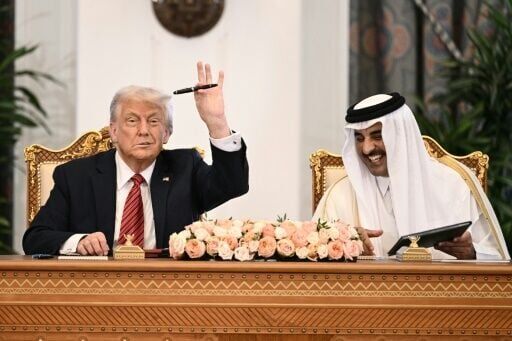
By K Raveendran Donald Trump’s Gulf tour has marked a defining chapter in his post-presidential brand of deal diplomacy, delivering a staggering $2 trillion in agreements that stretch across Saudi Arabia, the United Arab Emirates, and Qatar. This campaign stands in sharp contrast to the flagging results of his so-called trade mark tariff war, which—despite […]

The United Arab Emirates has committed to increasing its energy sector investments in the United States to $440 billion over the next decade, a significant expansion from the current $70 billion. This strategic move was announced by Sultan Al Jaber, chief executive of Abu Dhabi National Oil Company , during a high-profile meeting with US President Donald Trump amid his Gulf tour aimed at fostering major business […]

Qualcomm Technologies has revealed plans to establish a global engineering centre in Abu Dhabi, marking a significant expansion of its research and development footprint. The new facility will concentrate on cutting-edge technologies such as artificial intelligence, the industrial internet of things, and advanced data centre solutions, positioning Abu Dhabi as a pivotal node within Qualcomm’s worldwide network of engineering operations. This engineering centre is set to bolster […]

Donald Trump concluded his Gulf tour with the White House touting more than $2 trillion in economic agreements, a figure that has drawn significant scepticism from financial analysts and diplomatic observers. The administration presented the headline number as a demonstration of strengthened U.S.-Gulf relations and expanded economic ties. However, a detailed examination of the announced agreements reveals a far lower total when measured against firm commitments. Official […]

The United Arab Emirates has finalised a significant agreement with the United States to import advanced American-made artificial intelligence semiconductors, marking a pivotal step in Abu Dhabi’s ambition to become a global AI hub. The deal, announced during President Donald Trump’s Gulf tour, permits the UAE to import 500,000 Nvidia H100 chips annually, facilitating the development of large-scale data centres in the region.

This agreement coincides with the UAE’s broader commitment to invest $1.4 trillion in the U.S. over the next decade, focusing on sectors such as AI infrastructure, semiconductors, energy, and manufacturing. The investment framework includes partnerships with major U.S. companies like BlackRock, Microsoft, and Global Infrastructure Partners, aiming to mobilise up to $100 billion for next-generation data centres and energy infrastructure.

A key component of the deal is the construction of a 10-square-mile, 5-gigawatt data centre in Abu Dhabi, led by Emirati firm G42 and involving several U.S. tech companies. This facility is set to be the largest of its kind outside the United States, significantly enhancing the UAE’s data processing capabilities and supporting its AI initiatives.

The agreement also includes substantial U.S. investments in the UAE, with American energy companies expected to invest in upstream oil and gas and unconventional energy projects. Top U.S. firms such as ExxonMobil, Oxy, and EOG Resources are involved in these initiatives, reflecting a deepening of bilateral energy ties.

President Trump’s Gulf tour, which included visits to Saudi Arabia, Qatar, and the UAE, focused on securing financial commitments from wealthy energy producers to boost the U.S. economy and create jobs. The UAE’s pledge to increase its energy sector investments in the United States to $440 billion by 2035, up from the current $70 billion, underscores the success of this diplomatic effort.

The UAE’s strategic shift towards the U.S. in technology and energy sectors is seen as a move to decouple from Chinese influence, particularly in AI. Emirati officials have explicitly pursued this realignment to secure U.S. technology transfers, including advanced semiconductors like Nvidia’s H100 GPUs. This pivot follows U.S. pressure to remove Chinese equipment from critical infrastructure, exemplified by G42’s removal of Huawei technology from its data centres.

The $1.4 trillion investment framework also encompasses initiatives in critical minerals and industrial capacity. The UAE’s $1.2 billion mining partnership with Orion Resource Partners targets lithium, cobalt, and rare earth metals essential for AI hardware and renewable energy systems. Additionally, Emirates Global Aluminum plans to build the first new aluminum smelter in the U.S. in 35 years, aiming to nearly double the country’s domestic production.

President Donald Trump’s strategic tour across the Middle East has ignited internal discord within his administration, as China-focused officials express concern over expansive artificial intelligence agreements with Saudi Arabia and the United Arab Emirates . These deals, involving the acquisition of advanced semiconductors from U.S. firms Nvidia and Advanced Micro Devices , are perceived by some as potential threats to national security and economic interests. During his […]

President Donald Trump has announced a series of agreements exceeding $200 billion between the United States and the United Arab Emirates, including a $14.5 billion deal involving Etihad Airways, Boeing, and GE Aerospace. The announcement was made during Trump’s visit to the UAE, part of his broader Middle East tour aimed at strengthening economic and diplomatic ties. Etihad Airways confirmed the purchase of 28 wide-body Boeing aircraft […]

President Donald Trump has unveiled a series of agreements with the United Arab Emirates totalling over $200 billion, encompassing significant investments in aviation and artificial intelligence. The announcements followed Trump’s meeting with UAE President Sheikh Mohamed bin Zayed Al Nahyan, underscoring a deepening strategic partnership between the two nations. Etihad Airways has committed $14.5 billion to acquire 28 wide-body Boeing aircraft, including 787 Dreamliners and 777X models, […]

Arabian Post Staff -Dubai The United States has pledged a $60 billion investment in the United Arab Emirates’ energy sector, as part of a broader $440 billion joint initiative extending through 2035. This commitment was announced during President Donald Trump’s visit to the Gulf, underscoring a significant deepening of economic relations between the two nations. Sultan al-Jaber, chief executive of the Abu Dhabi National Oil Company , […]

Dubai, United Arab Emirates— Swiss International University (SIU) has issued an official warning regarding scam institutions falsely claiming affiliation with the university. SIU clarified that by 2025, it will operate campuses in only seven cities, and any new expansions or campus openings will be formally confirmed through its website, swissuniversity.com. Globally recognized for its commitment to delivering high-quality education, SIU has become a target for fraudsters exploiting […]

VISHNU RAJA
RYO YAMADA
HITORI GOTOH
IKUYO KITA