Just in:
Ta’ziz finalises $1.39bn funding for Ruwais industrial facilities // Asia Left Behind: Ten international companies have yet to report delivering on their cage-free egg pledges across the region // Trump’s Iran War Has A Share Of Contribution To His Midterm Debacle // Xi Jinping Preparing For A Trilateral Summit With Trump And Putin At APEC Summit On Nov 18-19 // Vance attributes Republican midterm defeats to Iran conflict // OpenAI identifies 948 Linux privilege escalation flaws using AI // SC to examine students’ exam plea today // Kochi police detain two actors over bid to honey trap doctor // Emirates Group records AED 4.1 billion half-year profit // UK air traffic outage inflicted £33m financial losses // Millions Of Indians May Soon Be Deprived Of Government Assistance // After Reaching 7 Million Users in the Philippines, Skyro Launches Transparent Cash Loans in Malaysia // ADIA and partners establish $1.4 billion aviation venture // Oil and chip shares retreat after Democratic victories // Cloudflare unveils Zero Wire vulnerability intelligence service // e-Crime Bureau Signs Cybersecurity Partnership With Smart Africa, Reinforcing Its Global Expansion // The “1st Greater Bay Area Health and Longevity Summit & Awards Ceremony” concludes successfully in Macao // Fast Just Got Fastest: STING Energy Boost™ Celebrates Kimi Antonelli’s Formula 1® World Championship and the Fan Energy Behind It // Hong Kong mandates crypto transaction disclosures to tax authorities // Middle East governments assess Iran war after US vote //

News related to
Tech

KUALA LUMPUR, MALAYSIA – Media OutReach Newswire – 25 February 2025 – Over the past few years, the strategic endorsements, enigmatic tweets, and business manoeuvres of Elon Musk have caused shock waves in the cryptocurrency market with wild price fluctuations. Today, he is creating a native cryptocurrency on the X platform under the temporary name, X Money. Source: Shutterstock When and if it happens, the project can […]

HONG KONG SAR – Media OutReach Newswire – 24 February 2025 – Arlo Technologies, a leading innovator in smart home security solutions, is thrilled to announce a Recommended Retail Price repositioning across selected products in the Arlo range. Effective immediately, this initiative makes it easier than ever to experience extraordinary value and upgrade home and business security with Arlo’s award-winning surveillance technology. Customers can take advantage of […]

Tata Consultancy Services has announced a strategic partnership with Salesforce to enhance artificial intelligence applications within the manufacturing and semiconductor sectors. This collaboration aims to integrate TCS’s industry expertise with Salesforce’s AI and cloud capabilities, offering data-driven solutions to improve sales and customer service.

As part of this initiative, TCS has introduced three key programs:

1. Semiconductor Sales Accelerator: Designed to boost sales through data-driven insights, this program addresses the challenge of navigating complex technical data swiftly and accurately. By leveraging AI, it enables sales teams to access real-time information, reducing cycle times and enhancing customer engagement.

2. Seller for the Future: This initiative provides sales teams with near real-time insights, predictive analytics, and personalized recommendations within the Salesforce platform. It empowers sales representatives to anticipate customer needs, identify opportunities for cross-selling and upselling, and expedite deal closures, thereby driving revenue growth.

3. Digital Field Service: Aimed at field technicians, this program offers real-time information, predictive maintenance insights, and optimized scheduling. By equipping technicians with these tools, it enhances service efficiency and reduces downtime for clients.

Indira Gillingham, Vice President of Alliances at Salesforce, expressed enthusiasm about the partnership, stating that combining TCS’s extensive industry knowledge with Salesforce’s customer relationship management capabilities will enable clients to harness advanced AI-powered insights.

Prashant Shirgur, Global Head of Enterprise Solutions for Technology, Software, and Services at TCS, highlighted the importance of real-time information in the fast-paced semiconductor market. He emphasized TCS’s commitment to providing clients with intelligent tools that enhance customer engagement, shorten sales cycles, and drive business growth.

This partnership addresses a significant hurdle in AI adoption: unlocking the true value of data often stored in unstructured silos. By offering integrated solutions, TCS and Salesforce aim to digitally transform sales and service operations in the manufacturing and semiconductor industries, fostering smarter decision-making and improved customer experiences.

The collaboration also leverages TCS Crystallus™ on Salesforce, a set of pre-configured industry solutions and composable business applications. This platform assists enterprises in accelerating their cloud-led transformation journeys, enabling them to realize their digital transformation visions and achieve superior business outcomes.

The TCS-Salesforce alliance represents a significant advancement in the application of AI within manufacturing and semiconductor sectors. By combining their respective strengths, the two companies are poised to deliver innovative solutions that address industry-specific challenges, streamline operations, and enhance overall efficiency.

BANGKOK, THAILAND – Media OutReach Newswire – 24 February 2025 – Dr. Chana Poomee, Chairman of Thai Cement Manufacturers Association (TCMA), has been elected as the President of the ASEAN Federation of Cement Manufacturers (AFCM). In his two years term 2025–2027, he aims to strengthen collaboration among the eight ASEAN cement-producing member countries driving ASEAN Cement dynamically, accelerate the development of the AFCM Decarbonization Roadmap, and foster […]

Blockchain-based role-playing game BattleRise: Kingdom of Champions has announced its integration with the Beam Network, aiming to expand its multi-chain accessibility for players. This collaboration signifies a strategic move to enhance the game’s reach and provide a seamless gaming experience across various blockchain platforms.

The Beam Network, recognized for its focus on gaming infrastructure, recently transitioned to a Layer 1 blockchain. This shift, facilitated by the Avalanche Community Proposal ACP-77 and the Etna upgrade, allows Beam to operate independently while leveraging Avalanche’s technical framework. The transition offers Beam increased flexibility and decentralization, enabling it to tailor its infrastructure to better serve gaming applications.

BattleRise’s decision to join the Beam Network is part of its broader strategy to integrate multiple blockchain networks, thereby delivering an accessible multi-chain gaming environment. The game’s development team has actively engaged its community, soliciting feedback on preferred blockchain integrations. This collaborative approach underscores the game’s commitment to aligning with player preferences and enhancing user experience.

While the exact timeline for BattleRise’s integration with the Beam Network remains undisclosed, the partnership is expected to introduce new features and opportunities for players. Notably, following a previous minting of 1,500 NFT skins on Etherlink, an EVM-compatible Layer 2 network utilizing Tezos technology, there is speculation about an upcoming NFT mint on the Beam Network. This potential event would provide players with additional chances to acquire unique in-game skins and increase their allocation of the forthcoming $BATTLE token.

BattleRise: Kingdom of Champions offers a mobile fantasy RPG experience where players engage in turn-based battles to defend the world of Eos from the God of Death’s forces. Players can assemble teams of upgradable Champions from various factions, each possessing unique skills and abilities that enable strategic gameplay. The game features multiple modes, including Story mode, an endless dungeon mode, and a Player versus Player Arena, catering to diverse player preferences.

In addition to its gameplay offerings, BattleRise incorporates blockchain elements such as NFTs and the upcoming $BATTLE token. Players can earn these tokens through various in-game activities, including climbing PvP and Player versus Environment leaderboards and participating in social tasks on the game’s questing platform. The integration with the Beam Network is anticipated to further enrich these blockchain-based features, providing a more robust and interconnected gaming ecosystem.

The Beam Network’s evolution into a Layer 1 blockchain, coupled with its decentralized proof-of-stake consensus mechanism introduced through the Horizon upgrade, positions it as a formidable platform for gaming applications. This infrastructure supports community involvement in network security and offers developers the flexibility to customize their applications, aligning with BattleRise’s objectives of providing an immersive and player-centric gaming experience.

Saudi Arabia and the United Arab Emirates are actively transitioning from oil-dependent economies to leaders in artificial intelligence to drive sustainable development. This strategic shift aligns with their broader goals of economic diversification and technological innovation. Saudi Arabia’s Vision 2030 plan emphasizes AI as a cornerstone for future growth. The kingdom has committed substantial resources to this end, including a $100 billion AI initiative aimed at fostering […]

RIYADH, SAUDI ARABIA – Media OutReach Newswire – 24 February 2025 – Sahm Capital, a leading financial services provider, empowered investors at the CMF Riyadh 2025 Investor Bootcamp. Hadeel Bedeeri, General Manager of Sahm Capital, led a session on navigating the IPO process, equipping attendees with essential knowledge to thrive in Saudi Arabia’s evolving capital market. The Investor Bootcamp, held on February 19th, 2025, is part of […]

Advertisements

The Dubai International Financial Centre has officially recognised USDC and EURC as approved stablecoins, marking a significant advancement in the integration of digital currencies within the region’s financial ecosystem. This move aligns with DIFC’s commitment to fostering innovation while ensuring robust regulatory oversight in the rapidly evolving digital asset landscape.

USDC and EURC, issued by Circle, are stablecoins pegged to the US dollar and the euro, respectively. They are designed to maintain a stable value by being fully backed by their respective fiat currencies, providing a reliable medium of exchange in the digital economy. Circle has ensured that both USDC and EURC comply with the European Union’s Markets in Crypto-Assets regulations, obtaining an Electronic Money Institution licence from France’s Autorité de Contrôle Prudentiel et de Résolution . This compliance underscores Circle’s commitment to adhering to stringent regulatory standards, enhancing the credibility and acceptance of its stablecoins in global markets.

The recognition of these stablecoins by DIFC is a strategic move to position Dubai as a leading hub for digital finance. By incorporating USDC and EURC into its financial framework, DIFC aims to attract a broader spectrum of fintech companies and investors seeking a regulated environment for digital asset transactions. This initiative is expected to facilitate seamless cross-border transactions, reduce reliance on traditional banking systems, and promote financial inclusion by providing accessible digital payment solutions.

Dubai’s proactive approach to digital asset regulation is evident in its comprehensive framework governing crypto tokens. The Dubai Financial Services Authority has established clear guidelines for the issuance and use of crypto tokens within DIFC, ensuring that only recognised tokens meeting specific criteria are permitted. This regulatory clarity is designed to mitigate risks associated with digital assets, such as fraud and market volatility, thereby fostering a secure environment for investors and users.

The inclusion of USDC and EURC in DIFC’s recognised list of stablecoins is anticipated to have a profound impact on the financial landscape of the United Arab Emirates . It offers businesses and consumers a stable and efficient medium for transactions, potentially reducing transaction costs and enhancing the speed of financial operations. Moreover, it aligns with the UAE’s broader vision of embracing digital transformation and becoming a global leader in fintech innovation.

Industry experts view this development as a positive step towards the mainstream adoption of digital currencies in the region. The regulatory endorsement by a reputable financial centre like DIFC not only boosts confidence among existing crypto enthusiasts but also encourages traditional financial institutions to explore and integrate digital assets into their services. This convergence of traditional and digital finance is poised to unlock new opportunities for economic growth and diversification in the UAE.

However, the integration of stablecoins into the financial system is not without challenges. Regulatory bodies must continuously monitor and adapt to the dynamic nature of digital assets to address potential risks such as money laundering, cybersecurity threats, and market manipulation. Collaborative efforts between regulators, financial institutions, and technology providers are essential to establish robust safeguards and ensure the integrity of the financial system.

In the global context, the recognition of USDC and EURC by DIFC reflects a growing trend of regulatory acceptance of stablecoins. Jurisdictions worldwide are acknowledging the potential benefits of stablecoins in enhancing payment systems and promoting financial inclusion. The European Union’s MiCA regulations, for instance, provide a harmonised regulatory framework for crypto assets, aiming to protect consumers and ensure financial stability. Circle’s compliance with these regulations and its subsequent recognition by DIFC exemplify how adherence to regulatory standards can facilitate the integration of digital assets into mainstream finance.

Netrouting and AFIBER have successfully activated a 400-gigabit backbone connection between The Hague and Amsterdam, significantly boosting data transfer capabilities for clients of Netrouting and Data Facilities Data Centers in the Netherlands. This development offers enhanced connectivity, reduced latency, and increased bandwidth for businesses operating within these regions. The newly established redundant backbone link connects DFDC’s facilities in The Hague to major data hubs in Amsterdam, including […]

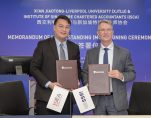
SINGAPORE – Media OutReach Newswire – 24 February 2025 – The Institute of Singapore Chartered Accountants (ISCA) has signed a Memorandum of Understanding (MOU) with Xi’an Jiaotong-Liverpool University (XJTLU) in Suzhou, China, to establish pathways for students in China to pursue the Singapore Chartered Accountant Qualification (SCAQ). The newly-formed partnership marks the first collaboration with a university in China for ISCA, since the launch of its first […]

Chinese artificial intelligence startup DeepSeek has announced plans to release five open-source code repositories in the coming week, furthering its commitment to transparency and community collaboration. This initiative follows the company’s recent unveiling of its R1 reasoning model, which has positioned DeepSeek as a formidable competitor to established AI entities like OpenAI and Meta. Founder Liang Wenfeng emphasized the cultural significance of open-source practices, stating that they […]

MG Motor has achieved a significant milestone in the Middle East automotive market, recording 70,033 vehicle sales in 2024. This figure represents a 10% increase compared to the previous year, underscoring the brand’s growing popularity in the region. The Kingdom of Saudi Arabia emerged as MG’s largest market, contributing over 30,000 units to the total sales. This robust performance solidifies MG’s position among the top car manufacturers […]

The American University of Sharjah’s College of Engineering has successfully renewed accreditation for its seven undergraduate programs through the Commission for Academic Accreditation of the UAE Ministry of Education. This achievement underscores the university’s commitment to maintaining high educational standards and providing quality engineering education in the region.

The accredited programs include Bachelor of Science degrees in Chemical Engineering, Civil Engineering, Computer Engineering, Electrical Engineering, Industrial Engineering, Mechanical Engineering, and Computer Science. This comprehensive accreditation ensures that each program meets rigorous academic and professional criteria, aligning with both national and international standards.

Dr. Susan Mumm, Chancellor of AUS, expressed pride in this accomplishment, stating that it reflects the university’s dedication to excellence in engineering education. She emphasized that such recognition not only enhances the institution’s reputation but also assures current and prospective students of the quality and relevance of their chosen programs.

The CAA serves as the UAE’s federal quality assurance agency for higher education, responsible for licensing institutions and accrediting academic programs. Its role is pivotal in ensuring that educational offerings in the country adhere to international best practices and equip graduates with the necessary skills and knowledge for their professional careers.

In addition to CAA accreditation, AUS’s engineering programs have also been reaccredited by the Accreditation Board for Engineering and Technology through September 30, 2030. ABET accreditation is a globally recognized endorsement that signifies a program’s adherence to quality standards essential for graduates entering the engineering profession.

Dr. Fadi Aloul, Dean of the College of Engineering, highlighted the significance of these accreditations, noting that they are a testament to the faculty’s dedication, the university’s robust curriculum, and the continuous efforts to align with industry advancements. He added that such achievements position AUS graduates competitively in the global job market.

The rigorous accreditation process involves comprehensive evaluations of program curricula, faculty qualifications, facilities, and institutional support. These assessments ensure that the programs not only meet academic standards but also effectively prepare students for the challenges of the engineering field.

Students and alumni have also expressed their satisfaction with the renewed accreditations. Many believe that graduating from accredited programs enhances their employment prospects and provides assurance to employers regarding the quality of education they have received.

Arabian Post Staff -Dubai Visa has unveiled its Tap-to-Add Card service in Jordan, enabling cardholders to incorporate their Visa contactless cards into digital wallets by simply tapping them on their mobile devices. This initiative aims to enhance the security and convenience of digital wallet provisioning, eliminating the need for manual data entry—a process often prone to errors and potential security vulnerabilities. Mario Makary, Vice President and Cluster […]

National Central Cooling Company PJSC , a prominent district cooling provider in the United Arab Emirates, has mandated several banks to arrange a five-year, Regulation S, dollar-denominated benchmark green sukuk. This strategic move aims to bolster Tabreed’s financial position and support its ongoing sustainability initiatives.

The consortium of banks includes Citigroup and Standard Chartered Bank as Joint Global Coordinators. Additionally, Citigroup, Emirates NBD Capital, First Abu Dhabi Bank, HSBC, and Standard Chartered Bank have been appointed as Joint Lead Managers and Joint Bookrunners. Abu Dhabi Commercial Bank will serve as Co-Manager for the issuance. Notably, Citigroup, First Abu Dhabi Bank, and Standard Chartered are also acting as Joint Green Structurers, underscoring the green credentials of the sukuk.

This forthcoming green sukuk is part of Tabreed’s broader strategy to refinance existing debt and invest in environmentally sustainable projects. The company has previously issued two $500 million fixed-income instruments: a sukuk in October 2018 and a bond in October 2020. These issuances were supported by Tabreed’s strong credit quality and consistent revenue streams. In line with its commitment to maintaining an optimal debt structure, Tabreed has implemented a conservative debt policy to preserve its investment-grade status, currently rated Baa3 by Moody’s and BBB by Fitch.

In 2022, Tabreed established a Green Finance Framework to align its financing activities with its sustainability objectives. This framework adheres to the Green Bond Principles 2021 and the Green Loan Principles 2021, ensuring that funds raised are allocated to projects with clear environmental benefits. Eligible projects under this framework include investments in energy-efficient district cooling systems, sustainable water and wastewater management, green buildings, and renewable energy initiatives. The framework has received a Second Party Opinion from Sustainalytics, confirming its alignment with the aforementioned principles.

The proceeds from the upcoming green sukuk will be utilized to refinance Tabreed’s existing debt, including the $500 million sukuk issued in 2018, which is due to mature in October 2025. This refinancing effort is part of Tabreed’s proactive approach to debt management, aiming to reduce financing costs and extend debt maturities. Earlier, the company announced plans to issue green bonds or sukuk to refinance $1.2 billion in debt, reflecting its commitment to sustainable financing practices.

Tabreed’s financial performance has remained robust, with the company reporting increased revenue and profits for the year 2024. The company’s revenue reached AED 2.434 billion, with a net profit before tax of AED 624 million, representing a 4% increase over the previous year. Earnings before interest, taxes, depreciation, and amortization also saw a 5% year-on-year increase, amounting to AED 1.252 billion, with an improved margin of 51%. These financial metrics underscore Tabreed’s strong operational performance and prudent financial management.

The decision to issue a green sukuk aligns with the UAE’s broader sustainability goals and the global trend towards green financing. Green sukuk, Islamic bonds specifically earmarked for environmentally friendly projects, have gained traction in recent years as investors increasingly prioritize sustainable investments. By tapping into this growing market, Tabreed not only reinforces its commitment to environmental stewardship but also appeals to a broader base of socially responsible investors.

Tabreed’s leadership in the district cooling sector is complemented by its dedication to innovation and sustainability. The company’s investments in energy-efficient cooling solutions contribute significantly to reducing greenhouse gas emissions and promoting energy conservation in the region. As urbanization and demand for cooling services continue to rise, Tabreed’s sustainable practices position it well to meet these challenges while supporting the UAE’s vision for a greener future.

The successful issuance of the green sukuk will further enhance Tabreed’s financial flexibility, enabling the company to pursue strategic growth opportunities and invest in cutting-edge technologies. Moreover, it sets a benchmark for other companies in the region to adopt sustainable financing mechanisms, fostering a culture of environmental responsibility within the corporate sector.

Shenzhen, a prominent technology hub in southern China’s Guangdong province, has unveiled an ambitious plan to inject 4.5 billion yuan into its burgeoning artificial intelligence and robotics sectors. This substantial financial commitment aims to fortify the city’s position as a global leader in technological innovation.

The newly announced policy package offers significant incentives to enterprises operating within these industries. Businesses can avail themselves of subsidies covering up to 60% of their computing power expenses, with a ceiling of 10 million yuan per company. These vouchers are designed to alleviate the substantial costs associated with high-performance computing, a critical component in AI development. Additionally, the government plans to introduce model vouchers, corpus vouchers, and scene-based subsidies to further stimulate growth and innovation within the AI and robotics sectors.

Lin Yi, the head of Shenzhen’s AI industry department, emphasized the city’s dedication to advancing humanoid robotics. He outlined plans to implement specialized policies aimed at achieving breakthroughs in key technologies, enhancing databases, and scaling up manufacturing processes. These initiatives are expected to accelerate the development and deployment of humanoid robots in various sectors.

To foster a collaborative ecosystem, the Shenzhen government intends to support companies through a ranking system designed to encourage partnerships and expedite technological advancements. This approach aims to create a synergistic environment where industry leaders, startups, and research institutions can collaborate effectively. The allocation of the 4.5 billion yuan fund is slated for this year, with applications for companies opening in March.

In a broader strategic move, Shenzhen plans to integrate AI and robotics into its major science and technology projects. This integration seeks to cultivate robust partnerships between industry players, academic institutions, and research organizations, thereby creating a comprehensive and collaborative innovation ecosystem. Zhang Lin, director of the Shenzhen municipal bureau of science and technology innovation, highlighted the city’s ambition to accelerate the development of a globally influential industrial and technological innovation center, positioning Shenzhen as a beacon of innovation.

Historically, Shenzhen has transformed from a modest fishing village into one of China’s most dynamic and innovative cities. Currently, it is home to over 2,200 AI companies, boasting a comprehensive AI industry chain that spans from smart chip production and algorithm development to large-scale models and software-hardware applications. This extensive ecosystem underscores the city’s capacity to support and sustain rapid technological advancements.

The city’s AI ambitions are not limited to financial incentives. Plans are underway to expand AI applications across various sectors, with an additional 100 scenarios set to be introduced in 2025. These scenarios will focus on areas such as municipal sanitation, emergency response, and healthcare, building upon the nearly 200 AI-powered applications already operational throughout the city. This expansion reflects Shenzhen’s commitment to leveraging AI to enhance public services and quality of life for its residents.

Elon Musk’s Starlink, the pioneering satellite internet service, is encountering escalating competition from China’s state-backed SpaceSail and Amazon’s Project Kuiper. SpaceSail, headquartered in Shanghai, has embarked on an ambitious expansion, aiming to deploy up to 15,000 low-Earth orbit satellites by 2030. This initiative seeks to challenge Starlink’s current dominance in the high-speed satellite internet sector. Since its inception in 2020, Starlink has launched approximately 7,000 LEO satellites, […]

GamerBoom, an AI-driven gaming data platform, has successfully raised $9 million in its latest funding round, elevating its total capital to $11 million. This infusion of funds is poised to accelerate the company’s mission to enhance gaming experiences through advanced data analytics and seamless Web3 integration.

The funding round attracted prominent investors, including NVIDIA, Solana, Bing Ventures, Mask Network, Digital Finance Group , and Jsquare. Their collective investment underscores a growing confidence in GamerBoom’s innovative approach to merging artificial intelligence with gaming data solutions.

Zino, the Chief Executive Officer of GamerBoom, expressed enthusiasm about the investment, stating, “This funding will enable us to scale our AI-driven gaming data solutions and unlock new opportunities for the Web3 gaming space.” The company aims to utilise the capital to refine its AI models, expand its suite of analytical tools, and broaden its reach within the gaming community.

GamerBoom’s platform functions as a data layer that integrates seamlessly with popular Web2 games, such as “League of Legends.” By employing AI-driven data tagging, the platform meticulously tracks in-game actions, transforming them into valuable insights. This process not only aids in training AI models but also rewards players through an innovative “Train-to-Earn” system, fostering a symbiotic relationship between gamers and developers.

The platform boasts nearly one million registered users, reflecting its growing popularity among both gamers and developers. By incentivising data labelling, GamerBoom ensures the continuous influx of high-quality, real-time gaming data, which is crucial for the development of responsive AI applications in the gaming industry.

Key features of GamerBoom include:

– Gamified Incentive Layer & AI Tagging: Enhances traditional gaming by rewarding players for completing specific tasks, while AI tagging converts in-game actions into tokenised assets.

– Broad Compatibility: Supports a wide range of PC and mobile games, allowing for effortless integration without necessitating significant changes to existing gaming setups.

– AI Agent-as-a-Service: Introduces AI agents that simplify blockchain interactions, such as wallet creation and cryptocurrency management, thereby making Web3 gaming more accessible to a broader audience.

– User-Friendly Interface: Offers a familiar user experience akin to platforms like Steam and Epic Games, facilitating easy adoption by gamers.

NVIDIA’s participation in the funding round is particularly noteworthy. As a leader in AI technology, NVIDIA’s backing is expected to bolster GamerBoom’s capabilities in delivering sophisticated gaming analytics. This partnership signifies a strategic alignment aimed at pushing the boundaries of AI-powered gaming solutions.

GamerBoom’s inclusion in Binance’s Most Valuable Builder Accelerator Program and its shortlisting for the Solana AI Hackathon further highlight its prominence in the AI gaming sector. These accolades reflect the company’s commitment to innovation and its potential to set new standards in the industry.

Looking ahead, GamerBoom plans to expand its ecosystem by introducing features such as an entry portal that enables users to create personalised gaming AI agents. This initiative will allow gamers to interact with intelligent virtual assistants, simultaneously contributing to the training and refinement of AI models.


French defence and technology conglomerate Thales has announced plans to commence production of radar antennas in the United Arab Emirates within this year. This strategic initiative aims to cater to both domestic requirements and international export demands, marking a significant expansion of Thales’ footprint in the Middle East. Pascale Sourisse, President and Chief Executive Officer of Thales International, detailed the company’s commitment to establishing a radar manufacturing […]

Dubai’s leading public parking provider, Parkin Company PJSC, has unveiled a mobile application designed to revolutionise parking for residents and visitors. The app offers a range of features aimed at simplifying parking management, enhancing accessibility, and promoting efficient urban mobility. Users can register through three methods: creating an account directly, utilising UAE Pass, or linking an existing Roads and Transport Authority account via the Parkin registration form. […]

Elon Musk’s AI chatbot, Grok 3, experienced a brief period during which it was programmed to exclude references to Musk and former President Donald Trump when responding to questions about prominent sources of misinformation. This incident has ignited discussions about potential biases and content moderation within AI systems. Users interacting with Grok 3 observed that when inquiring about individuals who disseminate misinformation, the AI’s internal reasoning—visible through […]

Strengthening Global Trade Financial Solutions NEW YORK, US – Media OutReach Newswire – 24 February 2025 – XTransfer, a leading global B2B cross-border trade payment platform, continues solidifying its regulatory presence in the United States by acquiring five new payment licenses in Illinois, Iowa, New Mexico, Idaho, and South Carolina. This milestone follows the company’s recent expansion into New Hampshire, the District of Columbia, Utah, Georgia, and […]

Japan’s digital trade deficit reached an unprecedented ¥6.65 trillion in 2024, highlighting the increasing reliance on foreign digital services, particularly from dominant U.S. technology firms. This figure has more than tripled since 2014, when comparable data first became available, according to a recent government report.

The surge in the digital trade deficit is primarily attributed to Japanese companies’ growing dependence on services provided by American tech giants such as Amazon, Microsoft, and Google. These services encompass cloud computing, online advertising, and licensing fees, which have become integral to enhancing operational efficiency across various sectors in Japan. The lack of competitive domestic alternatives has further entrenched the position of these foreign providers in the Japanese market.

In 2024, Japan’s imports of digital-related services outpaced exports, leading to the record deficit. This trend reflects the broader global dominance of U.S. information technology companies, whose advanced services have become indispensable to businesses worldwide. The Finance Ministry’s preliminary balance of payments report indicates that while Japan enjoyed a record current account surplus of ¥29.26 trillion in 2024, bolstered by higher dividend and interest receipts from abroad, the goods and services trade deficit stood at ¥6.51 trillion, heavily influenced by the digital trade imbalance.

Experts suggest that bridging this digital divide requires significant investment in domestic technological development. Kengo Wataya, a researcher at the Mitsubishi Research Institute, points out that despite efforts to develop homegrown cloud services, there remains a substantial gap in capabilities between Japanese and American companies. Wataya emphasizes the necessity for Japan to leverage digital technologies to generate revenue in other sectors, thereby mitigating the burgeoning deficit.

The government’s data also reveals that Japan’s digital trade deficit has been on a consistent upward trajectory over the past decade. In 2014, the deficit was recorded at ¥2.02 trillion, underscoring a more than threefold increase by 2024. This escalation is indicative of the rapid digital transformation globally and Japan’s escalating consumption of foreign digital services.

The digital trade balance encompasses various services, including payments for cloud infrastructure, online advertising, and licensing fees for digital content such as music and video. As both individuals and enterprises in Japan continue to digitize their operations and lifestyles, the demand for sophisticated digital services has surged. However, the domestic market’s inability to supply comparable services has resulted in increased reliance on imports, thereby widening the trade deficit.

While the overall current account surplus suggests a positive economic outlook, the underlying figures present a complex narrative. The substantial income from overseas investments has been a significant contributor to the surplus. However, the persistent and growing trade deficit, particularly in the digital sector, raises concerns about the sustainability of this economic model. Analysts warn that an overreliance on foreign digital services could expose Japan to external economic fluctuations and undermine the competitiveness of its domestic tech industry.

In response to these challenges, there have been calls for strategic policy interventions aimed at fostering innovation within Japan’s tech sector. Proposals include increased funding for research and development, incentives for startups, and collaborations between academia and industry to cultivate a robust digital ecosystem. By enhancing domestic capabilities, Japan could reduce its dependence on foreign services and improve its trade balance in the digital domain.

Addressing the digital trade deficit is not solely an economic imperative but also a matter of national security. Reliance on foreign digital infrastructure and services may pose risks related to data sovereignty and cybersecurity. Therefore, developing indigenous technologies and services is crucial for safeguarding sensitive information and maintaining technological autonomy.

The Ministry of Communications and Information Technology has introduced a pioneering ‘Digital Skills Framework’ aimed at accelerating Qatar’s digital transformation. This initiative delineates 115 distinct digital competencies across 19 key domains, structured into four progressive proficiency levels. The framework is designed to enhance digital literacy and expertise within both public and private sectors, aligning with the nation’s Digital Agenda 2030 and the Third National Development Strategy.

The Digital Skills Framework serves as a foundational tool to standardize digital competencies across various industries in Qatar. By categorizing skills into beginner, intermediate, advanced, and expert levels, the framework provides a clear pathway for individuals and organizations to assess and develop their digital capabilities. This structured approach ensures that the workforce is equipped to meet the evolving demands of a digitally-driven economy.

In conjunction with the launch of the Digital Skills Framework, MCIT has established the ‘Digital Skills Working Group.’ This collaborative body comprises representatives from various government entities and aims to foster the development of digital skills nationwide. The working group is tasked with coordinating efforts to implement the framework effectively, identifying opportunities for digital upskilling, and addressing challenges related to digital competency development. Regular quarterly meetings are scheduled to ensure continuous progress and alignment with national digital strategies.

The introduction of the Digital Skills Framework and the formation of the working group are integral components of Qatar’s broader strategy to position itself as a leading digital economy. The Digital Agenda 2030 outlines key pillars, including the enhancement of digital infrastructure, promotion of digital innovation, and integration of smart technologies across various sectors. By focusing on these areas, Qatar aims to create a conducive environment for technological advancement and economic diversification.

In a significant move to bolster its digital transformation efforts, Qatar has entered into a five-year partnership with Scale AI, a San Francisco-based artificial intelligence solutions provider. This collaboration is set to deploy AI-powered tools and training programs to enhance government services. Scale AI will develop over 50 AI use cases tailored to Qatar’s governmental needs, incorporating predictive analytics, automation, and advanced data analysis. This initiative is expected to streamline operations and improve public service delivery, positioning Qatar at the forefront of AI integration in governance.

The partnership with Scale AI underscores Qatar’s commitment to leveraging cutting-edge technologies to drive national development. By integrating AI solutions into government operations, Qatar aims to enhance efficiency, reduce operational costs, and provide more responsive services to its citizens. This initiative also reflects a broader trend among Gulf nations to invest in artificial intelligence as a means to diversify their economies and reduce dependence on hydrocarbon revenues.

Qatar’s focus on digital transformation is further evidenced by its substantial investments in digital infrastructure. The Qatar Investment Authority has announced plans to merge Qatar National Broadband Network with Gulf Bridge International , aiming to create a national leader in telecommunications. This merger is expected to enhance the country’s digital and AI infrastructure, providing a robust foundation for future technological initiatives. Additionally, telecommunications company Ooredoo is expanding its regional data centers to meet the growing demand for AI applications, further solidifying Qatar’s position as a digital hub in the region.

VISHNU RAJA
RYO YAMADA
HITORI GOTOH
IKUYO KITA