UAE and Czech Republic have stepped up efforts to widen economic cooperation across advanced manufacturing, clean energy and digital industries, with ministers from both countries reviewing a slate of joint projects targeted for rollout in 2026. Talks between UAE Minister of Economy Abdulla bin Touq Al Marri and Czech Minister of Industry and Trade Jozef Síkela focused on expanding collaboration in sectors described as central to the […]
Hyundai Motor Group has proposed establishing hydrogen fuel-cell infrastructure across Canada as part of South Korea’s effort to secure a multibillion-dollar contract to build a new class of submarines for the Royal Canadian Navy, executives involved in the bid have said. The move, designed to appeal to Ottawa’s focus on broader industrial benefits beyond defence capabilities, envisages hydrogen production and refuelling corridors that could serve heavy-duty transport […]
JAKARTA, INDONESIA – Media OutReach Newswire – 25 February 2026 – Olymptrade marked Ramadan with a continued commitment to supporting elderly communities through its long-term partnership with the YUM Community Center. As part of its ongoing social responsibility efforts, Olymptrade organized another distribution initiative aimed at providing essential assistance to those in need during this meaningful month.
Olymptrade’s Ramadan Commitment: Supporting the Elderly Community
Since the partnership began in September 2025, more than 1,000 food boxes have been distributed to elderly residents across local communities. Each package included staple items such as rice, mung beans, sugar, milk, honey, and eggs; helping ensure that basic nutritional needs were met with dignity and care.
Beyond food assistance, the initiative has also included free eye checkups and the provision of eyeglasses for elderly individuals requiring vision support, reinforcing a broader focus on well-being rather than one-time aid.
February 12 Distribution: Expanding Support During Ramadan
On February 12, the latest round of support reached hundreds of elderly community members. The distribution included:
300 hygiene kits with toothpaste, toothbrushes, soap, floor cleaner, and other daily necessities
300 freshly prepared lunch boxes including rice with chicken, fried vegetables, tofu or corn fritters, crackers, fruit (bananas or oranges), and mineral water
The initiative was made even more meaningful through the involvement of local volunteers from the Olymptrade Indonesia community. Their participation helped transform the distribution from a logistical effort into a personal and compassionate exchange.
Ramadan is widely recognized as a time of generosity, reflection, and shared responsibility. By supporting elderly citizens during this period, the trading platform sought to reinforce the values of kindness and collective care that resonate deeply within Indonesian communities.
A Continued Commitment to the Community
The partnership with YUM Community Center reflects an ongoing commitment rather than a one-time effort. Since September 2025, consistent collaboration has delivered more than 1,000 food boxes, provided medical support, and strengthened local ties through steady, hands-on involvement.
What stands out most is not only the scale of the support, but its continuity. Volunteers return, relationships deepen, and elderly residents know they are not forgotten once the headlines fade. As Ramadan continues, the focus remains simple: provide practical help, show up consistently, and ensure that care extends beyond a single distribution day.
Hashtag: #Olymptrade
The issuer is solely responsible for the content of this announcement.
Storm-related travel bans, widespread flight cancellations and severe blizzard conditions have thrown daily life into disarray across large swathes of the northeastern United States, disrupting transportation networks and leaving hundreds of thousands without power. Authorities in major cities including New York enforced bans on non-essential road travel, while some states declared states of emergency as heavy snow and fierce winds battered the densely populated East Coast. New […]
In recent months, headlines proclaiming the death of ESG investing have grown louder. From record fund outflows to political pushback in the United States, it’s easy to fall into the narrative that the environmental, social and governance approach to investing has run its course. Those stories, however, miss the deeper reality. ESG is not dead, it’s adapting to a more complex market environment and evolving client expectations. […]
India is pushing ahead with a rapid build-out of artificial intelligence data centres, even as concerns mount over water stress and rising electricity demand in the very regions chosen to host them.
Global technology groups including Microsoft, Amazon and Google have pledged billions of dollars to expand cloud and AI infrastructure across the country, betting on strong digital adoption, a vast developer base and policy support from New Delhi. At the same time, domestic conglomerates such as Reliance Industries and the Adani Group have unveiled plans to scale up capacity, signalling an arms race to capture the next phase of AI growth.
The surge is centred on established data centre hubs such as Mumbai, Hyderabad, Chennai and the National Capital Region. Industry estimates place India’s operational data centre capacity at more than 900 megawatts, with projections that this could double within a few years as hyperscale facilities come online. Much of the new supply is being designed for AI workloads, which require more powerful processors and higher rack densities than traditional cloud computing.
Microsoft has committed to expanding its Azure footprint in multiple regions, while Amazon Web Services continues to invest in its Mumbai and Hyderabad zones. Google Cloud has also deepened its presence, citing demand from financial services, healthcare and government clients. Nvidia, whose graphics processing units underpin many AI systems, has strengthened partnerships with Indian firms to support sovereign AI initiatives and localised computing.
Officials argue that this wave of investment will support economic growth, digital inclusion and advanced research. India’s data protection framework and semiconductor incentives have been positioned as part of a broader strategy to create a resilient digital ecosystem. The government has also outlined ambitions to develop domestic AI models trained on local languages and datasets, increasing the need for high-performance computing infrastructure within national borders.
Yet environmental experts warn that the geography of expansion raises difficult trade-offs. Mumbai and Chennai, two of the country’s largest data centre clusters, face periodic water shortages and are vulnerable to climate-related risks, including extreme heat and flooding. Hyderabad, another key hub, has experienced mounting pressure on groundwater resources amid rapid urbanisation.
AI data centres are particularly resource-intensive. Training large language models can consume vast amounts of electricity, and the cooling systems required to maintain optimal temperatures often rely on significant volumes of water. While operators increasingly use advanced cooling technologies and pursue renewable energy procurement, critics question whether efficiency gains can keep pace with the scale of expansion.
According to industry analysts, AI-optimised facilities can draw substantially more power per rack than conventional data centres. India’s peak power demand has been rising steadily, touching record highs during heatwaves. Coal continues to account for a large share of electricity generation, although solar and wind capacity have expanded rapidly. The tension between decarbonisation goals and surging digital energy needs is becoming more pronounced.
Water usage is another flashpoint. Traditional evaporative cooling systems can require millions of litres annually for large facilities, though some operators are shifting to air-cooled or liquid immersion systems to reduce dependence on freshwater. Companies state that they are investing in water recycling, rainwater harvesting and wastewater treatment, particularly in regions classified as water-stressed.
Environmental groups argue that even with mitigation measures, cumulative impacts could strain local communities. Urban residents in Chennai and parts of Maharashtra have already experienced water rationing during drought periods. The prospect of energy-hungry AI campuses expanding in these same areas has prompted calls for stricter environmental assessments and greater transparency around resource use.
Corporate leaders counter that hyperscale operators often have stronger sustainability commitments than smaller, on-premise data centres. Many global firms have pledged to run on 100 per cent renewable energy and to become water positive within the decade. In India, power purchase agreements for solar and wind farms are increasingly tied to data centre projects, supporting the build-out of clean energy capacity.
Policy makers face a delicate balancing act. Digital infrastructure is viewed as critical to competitiveness, especially as countries race to develop generative AI capabilities. India’s large pool of engineers and its expanding start-up ecosystem make it an attractive base for AI research and deployment. Delaying capacity expansion could risk ceding ground to regional rivals in Southeast Asia or the Middle East, where governments are also courting hyperscale investment.
At the same time, climate resilience is rising on the national agenda. The country has set ambitious renewable energy targets and emphasised sustainable development in international forums. Integrating AI growth with environmental safeguards will test regulatory frameworks at both central and state levels.
Greenlogue/AP More than 40 manufacturing facilities have been awarded the Green Factory Seal by Bahrain’s Ministry of Industry and Commerce, marking a push to embed environmental standards and energy efficiency deeper into the kingdom’s industrial base. Officials said the certification recognises factories that meet benchmarks on resource conservation, waste reduction, emissions control and compliance with national environmental regulations. The scheme forms part of a broader strategy to […]
Arabian Post Staff -Dubai Dubai Electricity and Water Authority has opened discussions with a visiting United States delegation to expand cooperation in sustainable power, hydrogen and advanced energy technologies, underscoring Dubai’s ambition to position itself at the forefront of the global energy transition. Saeed Mohammed Al Tayer, Managing Director and Chief Executive of DEWA, held talks in Dubai with Robert Hertzberg, senior fellow at Mission Possible Partnership […]
Urban smog and industrial emissions are amplifying the intensity of fire tornadoes in major wildfire zones, with scientists warning that polluted air is contributing to atmospheric conditions that favour the formation of violent, spinning columns of flame. Fire tornadoes, or “fire whirls”, arise when intense heat from large blazes interacts with unstable air, generating rotating updrafts that can stretch hundreds of metres high. While such phenomena have […]
United States import tariffs have largely been paid by domestic businesses and households rather than foreign exporters, according to a growing body of economic research, sharpening debate in Washington over the long-term costs of trade protection. Studies by Federal Reserve economists and leading academic institutions show that the bulk of duties imposed during the trade disputes of the past decade were passed through to American importers in […]
By T N Ashok At the center of Bharat Mandapam, the chiselled, lotus-shaped convention complex that has become the theatre for India’s global ambitions, Prime Minister Narendra Modi stood for a “family photo” that looked less like a diplomatic formality and more like a merger of Silicon Valley and the Westphalian order. To his left […]
The secret to a perfect sauna experience isn’t just the bench or the view – it’s the heater. As the engine of your wellness space, it dictates the texture of the steam and the depth of your relaxation. HUUM, a pioneering Estonian company, has emerged as a leader in the industry, masterfully blending nature-inspired design with cutting-edge technology to create sauna heaters that are both beautiful and powerful. […]
Open-source game engine Godot is facing mounting strain as a surge of AI-generated code submissions overwhelms volunteer maintainers, raising concerns about quality control, contributor accountability and the long-term sustainability of community-driven software projects. Core developers behind the free and open-source engine say they are grappling with a wave of pull requests that appear to have been produced with the help of generative artificial intelligence tools. While such […]
United Arab Emirates and Saudi Arabia are set to dominate Middle East sustainable bond issuance this year, with total regional volumes projected to reach between $20 billion and $25 billion, according to S&P Global, as governments and corporations accelerate funding for climate and energy transition goals. The ratings agency estimates that the two largest Gulf economies already accounted for about 80 per cent of sustainable bond issuance […]
Arabian Post Staff -Dubai United Arab Emirates is advancing an ambitious programme to use laser pulses in clouds in an effort to increase rainfall, positioning the desert nation at the forefront of experimental weather modification as it seeks long-term water security. Scientists at the Technology Innovation Institute, the applied research arm of Abu Dhabi’s Advanced Technology Research Council, are testing ground-based laser systems designed to influence the […]
Mac users have long faced a stubborn reality: many of the world’s most popular games are built for Windows, leaving Apple Silicon machines underused in a global industry worth more than $180 billion. A new application from Mist Studio, called GameHub, is seeking to narrow that gap by combining several compatibility technologies into a single interface designed to make Windows titles playable on macOS with far less […]
Arabian Post Staff -Dubai Abu Dhabi-based Global South Utilities has inaugurated a 5 megawatt-peak grid-connected solar photovoltaic plant in Berbera, marking a significant step in Somaliland’s efforts to diversify its energy mix and curb dependence on diesel generation. The project, developed under a public-private partnership model, is accompanied by the launch of the Green Berbera initiative aimed at accelerating renewable energy adoption and sustainable infrastructure in the […]
Dragonfly Capital has secured $650 million for its fourth investment vehicle, pressing ahead with fresh commitments to digital asset infrastructure even as senior partners describe the current venture climate in crypto as a “mass extinction event”. The San Francisco and Singapore-based firm said the new capital will be directed towards foundational blockchain systems, stablecoins, on-chain financial services and tokenised real-world assets, signalling a long-term strategy despite persistent […]
Brussels has thrust the European Union’s carbon market into a fresh political battle, as leaders weigh changes to the bloc’s Emissions Trading System amid economic headwinds and mounting pressure from industry. Debate intensified at a summit of EU heads of state and government last week, where divisions surfaced over how far to adjust the Emissions Trading System, widely regarded as the centrepiece of Europe’s climate policy. European […]
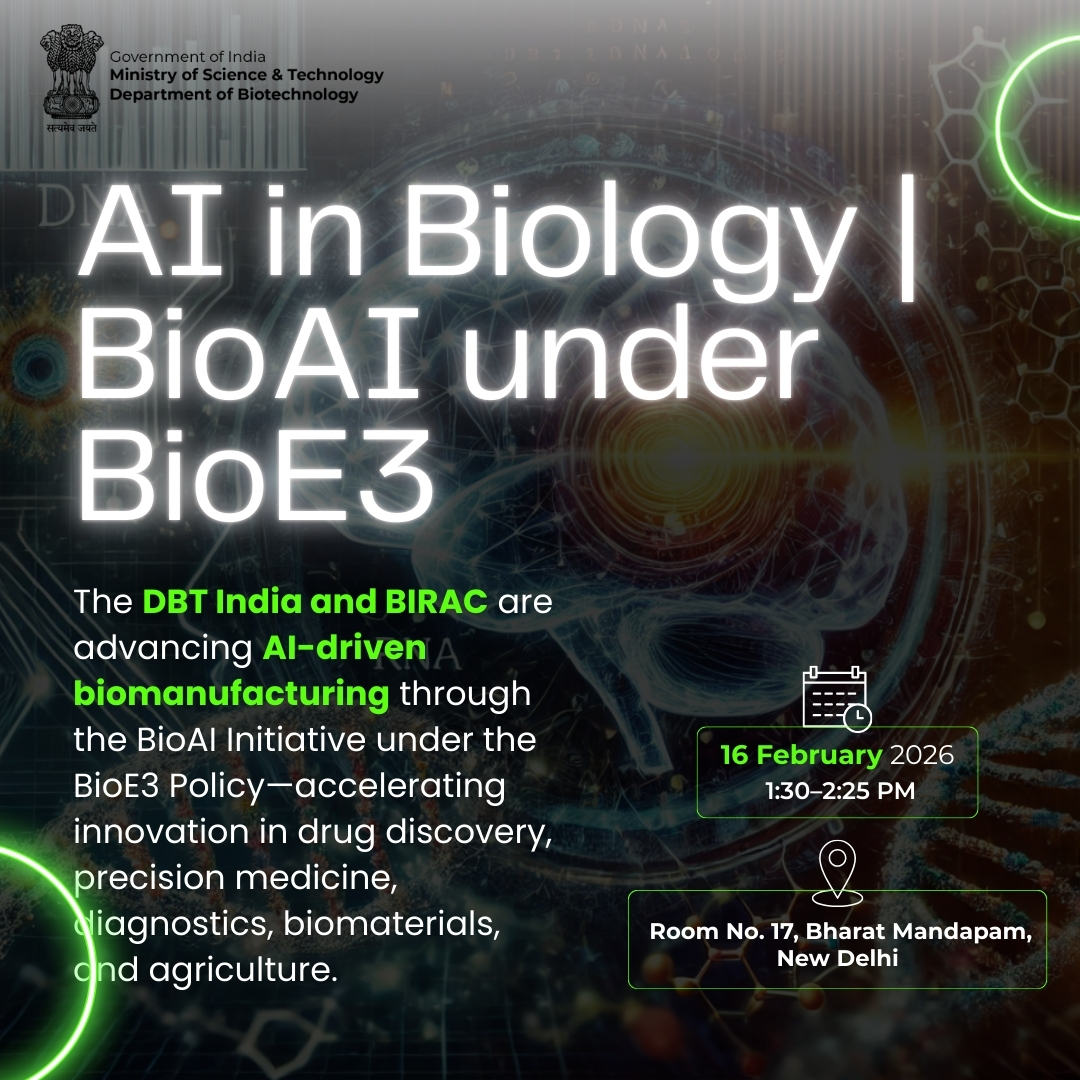
Artificial intelligence is being positioned as a catalytic force in reshaping biomanufacturing, with policymakers, scientists and industry leaders outlining a roadmap that blends computational power with biological science to accelerate drug discovery, industrial enzymes and sustainable materials. Discussions at the India AI Impact Summit placed BioAI at the centre of a strategy aimed at using genomics, in-silico modelling and closed data loops to build scalable and trusted production systems.
The convergence of AI and biology has moved from laboratory experimentation to commercial ambition. India’s biotechnology sector, valued at over $80 billion and targeting significant expansion by the end of the decade under the BioE3 policy framework, is seeking to harness machine learning tools to shorten development cycles that traditionally take years. Speakers at the summit argued that AI-enabled simulation and predictive modelling can reduce trial-and-error experimentation in fields ranging from vaccine development to precision fermentation.
BioAI refers to the integration of artificial intelligence techniques with biological data, particularly genomic sequencing, proteomics and metabolic engineering. The approach relies on large datasets and advanced algorithms capable of identifying patterns invisible to conventional research methods. Advances in protein structure prediction, including breakthroughs in computational biology over the past few years, have demonstrated how neural networks can model complex molecular interactions with remarkable accuracy.
At the summit, researchers described how generative AI systems are being trained to design novel proteins and enzymes tailored for industrial use. By feeding genomic datasets into predictive algorithms, scientists can simulate biological pathways in silico before conducting physical experiments. This method reduces costs and speeds up scaling, particularly in biopharmaceutical production and alternative protein manufacturing.
Government representatives outlined plans to expand national AI infrastructure to support such applications. IndiaAI Mission initiatives include the creation of high-performance computing resources and domain-specific data repositories to ensure that biotech firms and research institutes have access to secure and interoperable datasets. Officials emphasised that trust frameworks and regulatory clarity would be essential to encourage private investment while safeguarding data privacy and biosafety standards.
Industry leaders echoed that sentiment, highlighting that biomanufacturing requires rigorous validation. Unlike digital products, biological outputs interact with living systems, making quality control paramount. AI-driven feedback loops—where laboratory results continuously refine algorithms—were presented as a mechanism to maintain reliability while scaling up production. Data integrity, traceability and auditability were recurring themes, reflecting global debates about AI governance.
The global context underscores the strategic significance of BioAI. The United States and European Union have invested heavily in synthetic biology and AI-assisted drug discovery. China has also advanced computational genomics and large-scale fermentation capabilities. Analysts note that countries able to combine AI talent with robust biotech ecosystems stand to capture a growing share of the global bioeconomy, projected by several industry reports to exceed $4 trillion over the coming decade.
India’s strength in information technology services and pharmaceutical manufacturing offers a foundation for this convergence. The country is a major supplier of generic medicines and vaccines, supported by a network of research institutions and startups. By integrating AI tools into these value chains, stakeholders believe production timelines can be compressed and new therapeutic molecules identified with greater precision.
Academic voices at the summit stressed the importance of interdisciplinary training. Biologists must understand algorithmic thinking, while data scientists need grounding in molecular biology. Collaborative platforms linking universities, startups and established pharmaceutical firms were proposed to ensure knowledge transfer and talent development. Investment in computational biology curricula and shared research facilities is seen as critical to sustaining momentum.
Ethical considerations formed part of the dialogue. AI models trained on genomic data raise questions about consent, ownership and equitable benefit sharing. Experts argued for transparent governance structures aligned with international norms, noting that trust is fundamental when dealing with health-related information. Regulatory agencies are exploring how to evaluate AI-generated biological designs within existing approval pathways.
Private sector participation is accelerating. Venture capital funding in biotech startups leveraging machine learning has grown steadily, reflecting confidence in AI-assisted discovery platforms. Companies are experimenting with digital twins of biological systems, enabling simulation of fermentation processes before industrial deployment. Such capabilities can enhance efficiency and reduce resource consumption, aligning with sustainability goals.
Sustainability featured prominently in discussions on biomanufacturing. AI-optimised microbes can produce bio-based chemicals and materials that substitute fossil-derived inputs. Precision fermentation techniques, guided by predictive analytics, may lower energy use and waste. As global supply chains face pressure to decarbonise, the combination of AI and biotechnology is viewed as a pathway to cleaner industrial production.
Participants also highlighted challenges. High-quality biological datasets remain fragmented, and interoperability across laboratories is uneven. Ensuring cybersecurity in research networks is another concern, given the sensitivity of genetic information. Scaling laboratory successes to commercial volumes demands capital expenditure and regulatory compliance that can deter smaller enterprises.
Laboratories, whether in universities, hospitals or industrial research centres, rarely command public attention. Yet the integrity of their work often depends as much on routine maintenance and appropriate equipment as on scientific expertise. In recent years, lab managers across the Middle East and beyond have been reassessing how safety infrastructure is selected, maintained and upgraded, particularly as research volumes increase and regulatory scrutiny tightens. At the […]
HANOI, VIETNAM – Media OutReach Newswire – 10 February 2026 – VinFast and Exposure SARL announced the signing of a Memorandum of Understanding regarding the potential supply of electric vehicles for green taxi services in Kinshasa, Democratic Republic of the Congo. The agreement marks an important milestone in the Vietnamese EV maker’s international expansion strategy and a major step forward in promoting the transition to green transportation in the capital of the DRC.
Ms. Le Thi Thu Thuy – Vice Chairwoman of Vingroup and Chairwoman of VinFast, and Mr. Fely Samuna Lukwaka – CEO of Exposure SARL, together with representatives of both parties at the signing ceremony.
Under the MOU, the two parties will discuss and coordinate to develop a plan to supply the first batch of VinFast electric vehicles for Exposure to operate electric taxi services in Kinshasa. This batch is expected to include the commercial-oriented Limo Green and Herio Green models, regarded as an initial foundation for an all-electric taxi model, contributing to the formation of zero-emission transport habits in urban passenger transportation in Congo.
At the same time, Exposure has expressed its intention to become a distributor of VinFast vehicles in the Congolese market and will jointly study a business plan suited to local conditions. Both parties commit to continued cooperation in good faith, laying the groundwork for deeper collaboration in the future.
The MOU between VinFast and Exposure SARL initiates the implementation of the strategic cooperation framework established by Vingroup and the City of Kinshasa in 2025. At that time, the parties agreed to study and promote the procurement and deployment of VinFast’s electric mobility solutions, including electric buses, cars, and scooters, to serve the city’s and residents’ transportation needs.
Earlier, the Kinshasa municipal authorities and Vingroup also signed an MOU to study and develop a riverside mega urban project covering approximately 6,300 hectares. Featuring housing, villas, hospitals, schools, shopping centers, hotels, and entertainment facilities, the project is expected to become a new tourism destination and a symbol of Kinshasa’s future development.
The partnerships align with the Democratic Republic of the Congo’s long-term vision for sustainable urban development and green transition, particularly in rapidly urbanizing cities such as Kinshasa, where demand for clean, smart and efficient mobility is rising. Building on the country’s renewable energy potential and commitment to low-emission growth, the initiative supports Kinshasa’s ambition to develop an integrated green infrastructure and electric mobility ecosystem.
Ms. Duong Thi Thu Trang, Deputy CEO of Global Sales, VinFast, stated: “The cooperation with Exposure SARL reflects VinFast’s confidence in the potential for green transportation in Africa and reaffirms our commitment to delivering modern, accessible green mobility solutions tailored to each market. We believe that VinFast’s electric vehicle products, proven across multiple markets, combined with Exposure’s local expertise, will help accelerate the transition to green transportation in Congo.”
Mr. Fely Samuna Lukwaka, Chief Executive Officer of Exposure SARL, said: “We are very pleased to cooperate with VinFast toward a low emission mobility future for the Democratic Republic of the Congo in general and the capital Kinshasa in particular. With a population of more than 120 million and a strategic location bordering nine countries, forming a regional market of over 200 million people, the Democratic Republic of the Congo has strong potential to become a gateway for electric vehicle development in Central Africa. We have full confidence in VinFast’s technological capabilities and product ecosystem, and we expect this cooperation to establish a foundation for the next stages of development of the electric vehicle market not only in the DRC but across the wider region.”
VinFast is a pure-play electric vehicle automaker under Vingroup, Vietnam’s largest private conglomerate, with a vision to drive the movement of the global smart electric vehicle revolution. Over the past years, the EV maker has expanded strongly into new and promising markets such as India, the Philippines, Indonesia, and the Middle East, while continuing to strengthen its presence in key markets in Europe and North America. Strategic moves in 2025 are expected to provide strong momentum and a solid launchpad for further breakthroughs in 2026.
Hashtag: #VinFast
The issuer is solely responsible for the content of this announcement.
About VinFast
VinFast (NASDAQ: VFS), a subsidiary of Vingroup JSC, one of Vietnam’s largest conglomerates, is a pure-play electric vehicle (“EV”) manufacturer with the mission of making EVs accessible to everyone. VinFast’s product lineup today includes a wide range of electric SUVs, e-scooters, and e-buses.
VinFast is currently embarking on its next growth phase through rapid expansion of its distribution and dealership network globally and increasing its manufacturing capacities with a focus on key markets across North America, Europe and Asia.
Bluesky has introduced a drafts feature that allows users to save unfinished posts on their own devices, a change that closes one of the most noticeable gaps between the decentralised network and larger rivals while signalling that the platform is shifting from experimental roots towards day-to-day usability. The update enables posts to be paused and resumed without being published, a basic function long taken for granted […]
Larsen & Toubro is set to expand its data centre footprint to 32 megawatts by the end of March, commissioning 18 MW of new capacity as the engineering major sharpens its focus on digital infrastructure alongside emerging opportunities in green hydrogen and semiconductors.
The additional capacity will lift the group’s operational data centre load from the existing 14 MW, marking a decisive step in a segment that has become a core pillar of its technology-led growth strategy. The commissioning is scheduled to be completed before the close of the financial year, aligning with strong demand from cloud service providers, hyperscalers and large enterprises accelerating their migration to outsourced digital infrastructure.
Larsen & Toubro has steadily built its data centre business over the past few years, leveraging its engineering, procurement and construction capabilities to develop facilities that meet high standards for power efficiency, uptime and scalability. Executives have previously indicated that the group’s focus is on delivering carrier-neutral and hyperscale-ready campuses in key metros, where demand continues to outpace supply despite a wave of new announcements by domestic and global operators.
Industry estimates show that data consumption growth, artificial intelligence workloads and stricter data localisation norms are driving sustained investment in capacity across Asia. India remains one of the fastest-growing markets in this space, with several multinational cloud companies committing to expand their presence. Against this backdrop, L&T’s move to lift capacity by more than double underscores its intention to be a long-term player rather than a peripheral builder.
The data centre expansion is being pursued alongside the company’s ambitions in newer industrial segments. L&T has signalled that it is actively pursuing orders related to electrolysers, a critical component for producing green hydrogen, as governments and industrial groups accelerate decarbonisation plans. Electrolyser manufacturing and deployment are viewed as strategic areas where the company’s heavy engineering background can be translated into repeatable, export-oriented businesses.
Management has also reiterated interest in the semiconductor ecosystem, particularly in supplying equipment, engineering services and infrastructure for chip fabrication and assembly units. While L&T is not positioning itself as a chipmaker, it aims to capture value across the supply chain as multiple semiconductor projects move from proposal to execution stages. The company has indicated that it is evaluating opportunities linked to cleanroom construction, precision engineering and advanced manufacturing systems required by chip plants.
Analysts tracking the capital goods sector note that diversification into data centres and clean energy-linked manufacturing provides a hedge against cyclicality in traditional infrastructure spending. Order inflows from transport, hydrocarbons and power transmission remain important for L&T, but newer verticals are expected to deliver higher margins and longer visibility once scale is achieved.
The data centre business, in particular, benefits from predictable long-term contracts and rising demand for energy-efficient facilities. Power availability and cooling efficiency have become critical differentiators as operators seek to control operating costs and meet sustainability targets. L&T has highlighted its emphasis on optimised designs, modular construction and integration of renewable energy where feasible, in response to customer requirements.
From a financial perspective, the 18 MW commissioning is not expected to materially strain the balance sheet, given the group’s strong cash flows and diversified revenue base. The company has historically funded growth through a mix of internal accruals and selective partnerships, and similar structures are being explored for digital infrastructure projects to manage risk and accelerate execution.
Market participants also point to the broader ecosystem benefits of large data centre builds, including demand for electrical equipment, cooling systems, specialised construction and long-term maintenance services. This creates opportunities for L&T to cross-leverage capabilities across its subsidiaries and verticals, reinforcing the strategic rationale behind the expansion.










 https://vinfastauto.com/vn_en