

News related to
clean

The government has approved 543 Data and Artificial Intelligence Labs in industrial training institutes and polytechnics, alongside 58 AI Centres of Excellence, as it seeks to expand advanced technology skills and research capacity beyond the country’s largest urban centres.

The laboratories will be established across Tier-2 and Tier-3 cities under the IndiaAI FutureSkills programme. They are intended to provide practical training in artificial intelligence, data annotation, data curation and applied data science, giving students in technical institutions access to infrastructure and courses aligned with emerging employment needs.

The 58 Centres of Excellence will be developed across states and Union Territories through partnerships involving state administrations, academic institutions and industry. Their mandate is expected to include research, product development, startup support, workforce training and the application of AI to local economic and public-service challenges.

The expansion forms part of the ₹10,372 crore IndiaAI Mission approved in March 2024. The programme is structured around seven areas covering computing capacity, indigenous foundation models, application development, skills, datasets, startup financing and safe deployment of artificial intelligence.

Twenty-seven Data and AI Labs have already been established with the National Institute of Electronics and Information Technology in Tier-2 and Tier-3 locations. The additional 543 facilities will take the planned national network to 570 laboratories, extending the initiative through ITIs and polytechnics in all states and Union Territories.

Courses are being designed to offer both foundational instruction and sector-focused training. Planned subjects include data cleaning, Python-based annotation and curation, data science, generative AI awareness and the responsible use of automated tools. The laboratories are also expected to provide hands-on access to computing systems rather than relying solely on classroom theory.

The programme addresses a persistent concentration of technology education, research institutions and high-value digital employment in major cities. Students in smaller industrial and educational centres often face limited access to specialised trainers, computing infrastructure and industry networks, even as companies seek workers capable of handling data-intensive operations and AI-supported processes.

Industrial training institutes and polytechnics have been chosen because of their role in preparing students for technical occupations. Integrating AI modules into these institutions could connect traditional vocational education with changing requirements in manufacturing, logistics, healthcare, agriculture, retail, financial services and public administration.

The government is also developing standardised curricula for different levels of technical ability. The YUVA AI for All programme supports introductory literacy, while the Skilling for AI Readiness framework offers nationally aligned learning pathways for school students, educators, technical trainees and workers without formal computing backgrounds.

More than 120 AI-related courses are available through the Skill India Digital Hub, including 11 focused specifically on generative artificial intelligence. A 15-hour course titled AI to be Aware introduces learners to generative tools, practical applications, limitations and responsible usage under the National Skills Qualification Framework.

The laboratory rollout is being accompanied by a wider effort to strengthen research and deployment. The IndiaAI Mission has identified 762 potential AI use cases across 62 ministries, covering areas such as healthcare, agriculture, climate management, cybersecurity, financial regulation and government service delivery.

Eleven national hackathons and innovation challenges have been launched to move selected ideas from initial development towards pilot projects and wider implementation. The government has also approved applications for AI solutions designed around domestic languages, datasets and operational conditions.

The common computing programme has onboarded more than 38,000 graphics processing units, which are being offered to startups, researchers and academic institutions at subsidised rates. Access to such computing power is essential for training and testing large models, but costs remain a barrier for smaller companies and institutions.

Twelve organisations and consortia have been selected to develop large and small language models using domestic datasets. Participants include startups, technology companies and academic groups working on multilingual, multimodal and sector-specific systems. The resulting models are expected to support government applications and become available to the broader research and startup ecosystem.

Talent development under the mission includes support for more than 8,000 undergraduate students, 5,000 postgraduate students and 500 doctoral researchers. The laboratory network is designed to widen the entry point further by reaching students enrolled in vocational and diploma-level programmes.

Implementation will depend on the availability of qualified instructors, reliable connectivity, maintained hardware and sustained coordination between institutions and industry. Training outcomes will also need to be measured against employment, certification and practical competence rather than the number of laboratories formally approved.
Masdar and Montenegro’s state power utility have moved a planned 2-gigawatt renewable energy partnership into execution, signing agreements for two solar plants and exploring large-scale pumped hydro storage. Abu Dhabi Future Energy Company, known as Masdar, and Elektroprivreda Crne Gore, or EPCG, will jointly develop the 115-megawatt Štedim solar photovoltaic project and the 35-megawatt Krupac solar plant. The agreements cover 150 MW of initial generation capacity under […]

Onsite solar installation to cut FCC Philippines’ energy costs by 30% compared to grid electricity prices, supporting the automotive supply chain manufacturer’s cost competitiveness and energy resilience in Laguna.

LAGUNA, PHILIPPINES – Media OutReach Newswire – 29 July 2026 – FCC (Philippines) Corp., a subsidiary of Japan’s FCC CO., LTD. and a key global supplier to leading automotive and motorcycle brands including Honda, Yamaha, Suzuki and Kawasaki, Ford, Harley-Davidson, BMW, among others, has signed a long-term solar agreement with Peak Energy to power its clutch systems facility in Laguna with onsite renewable energy.

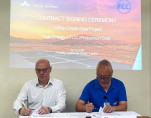
Sandro Bruni (Peak Energy) and Tsuyoshi Nakada (FCC Philippines Corporation) at the Signing Ceremony held on 10th of July

The system is expected to generate approximately 1,500 MWh in its first year of operation from a
1 MWp onsite solar installation, delivering electricity to FCC Philippines at a price approximately 30% lower than grid tariffs. This is expected to avoid approximately 650 tons of CO₂ annually, equivalent to avoiding the consumption of almost 252,000 liters of gasoline.

Under the 15-year agreement, Peak Energy will design, finance, construct, own and operate the solar system, with FCC Philippines purchasing the electricity generated at no upfront capital cost. The structure allows FCC Philippines to access clean, competitively priced power while Peak Energy manages construction and ongoing operations and maintenance.

FCC CO., LTD. is the undisputed global leader in the motorcycle clutch market, with more than 50% global market share, and a leading supplier of automotive clutch components worldwide. The company and has manufactured in the Philippines since 1993, supplying integrated clutch systems not only to the four of the world’s four largest motorcycle OEMs, but also to other established global brands across both the two-wheel and four-wheel industries. Global automotive supply chains are under growing pressure to reduce embedded emissions, and the agreement gives FCC Philippines a concrete way to strengthen its competitiveness within that supply chain.

The agreement builds on Peak Energy’s track record with Japanese-parented manufacturers across the region, including JTEKT (Toyota Group) in Japan, AICA in Thailand and Yokogawa in Singapore. FCC Philippines’ decision to choose Peak Energy reflects the same standard of engineering excellence and delivery experience that has earned these manufacturers’ trust, technical rigor, disciplined project execution and a track record of on-time, on-budget delivery that meets the exacting quality expectations Japanese corporates apply to their partners across Asia.

As industrial demand for lower-cost, predictable power grows, the Philippine market is naturally redirecting capacity toward developers with the financial strength, engineering capability and technology to execute and operate assets credibly at scale, supported by a Department of Energy target of 35% renewable energy share by 2030.

“Industrial buyers in the Philippines are increasingly looking for power that’s cheaper than the grid and shielded from imported fuel prices,” said Gavin Adda, CEO of Peak Energy. “This project delivers both, at a 30% discount to grid tariffs. We are glad to see FCC moving toward a developer with the financial strength and engineering capability to deliver at scale.”

“This solar project represents an important milestone in FCC’s journey toward a more sustainable future,” said Tsuyoshi Nakada, President of FCC (Philippines) Corp. “As part of the FCC CO., LTD., Group’s commitment to achieve carbon neutrality by 2050, with a 50% reduction in carbon emissions by 2030, we continue to invest in initiatives that reduce our environmental footprint while strengthening the resilience of our operations. We are pleased to partner with Peak Energy in advancing these shared sustainability goals.”
Hashtag: #Japan #Automotive #Irarwar #Iran #Philippines #redalert #energy #energycosts #Scope2 #sustainability


The issuer is solely responsible for the content of this announcement.

About Peak Energy

Headquartered in Singapore, Peak Energy develops, owns, and operates renewable assets across Asia Pacific (APAC). With over 300 MW of operating assets and 2 GW worth of projects in development, Peak Energy is the fastest growing renewable energy developer with a portfolio spanning Japan, Korea, Australia, Taiwan, the Philippines, Thailand, Singapore and Indonesia. With activities encompassing the full range of renewable energy business models – including utility-scale development, off-site PPAs, onsite PPAs, and energy storage applications – Peak Energy is a one-stop partner for corporates seeking to decarbonize their operations in APAC. We believe in establishing long-term partnerships with our corporate customers, to accompany them in their decarbonization journey, through cleaner, cheaper energy.

An experienced team handles the complete life cycle of our energy assets from origination and development through to operations and decommissioning, employing state-of-the art technology and the industry best practices, respectful of the environment and following world-class HSE standards.

Our business practices, technological and HSE standards are standardized across APAC, but we are implemented and operate locally, with teams in seven countries, and lasting partnerships with local customers, EPCs, vendors, channel partners.

Peak Energy is wholly owned by Stonepeak, a leading alternative investment firm specializing in infrastructure and real assets with approximatively USD 88 billion of assets under management. Our financial and technical strength coupled with our relationships in local markets allows us to optimize our capital deployment in high quality assets.

For more information, please visit .

About FCC (Philippines) Corporation

Established in 1993 at Laguna Technopark in Biñan City, Laguna, FCC (Philippines) Corp. is a subsidiary of Japan’s FCC CO., LTD., a global leader in automotive and motorcycle clutch systems. The company manufactures and assembles clutch engine components for leading global automotive and motorcycle brands and has a workforce of more than 600 personnel at its Laguna facility. As part of its commitment to sustainable growth, FCC CO., LTD., continues to strengthen its core clutch business while expanding into electrification-related technologies by leveraging its core expertise in die casting, press, and joining technologies to support the evolving mobility industry.

Dubai Municipality has opened an integrated animal welfare shelter in Warsan, combining veterinary care, rehabilitation and adoption services with a digital platform for residents seeking cats and dogs. The facility is located inside the Birds and Pets Market and is designed to provide a safe, humane environment for stray, abandoned and lost companion animals. It also gives prospective adopters access to verified information about each animal before […]

A powerful tornado tore across north-eastern Wisconsin on Monday, damaging homes, businesses and vehicles while cutting electricity to tens of thousands of customers. The National Weather Service confirmed that the tornado struck parts of Winnebago and Outagamie counties during a severe thunderstorm outbreak driven by intense heat, high humidity and unstable atmospheric conditions. Preliminary surveys identified damage consistent with at least an EF2 tornado in Menasha, where […]

A malvertising operation targeting traders and cryptocurrency users is assembling malicious Windows software inside victims’ browsers, allowing each downloaded file to evade conventional fingerprint-based security checks. The campaign, known as SourTrade, uses sponsored advertisements and imitation websites resembling TradingView, Solana and Luno. Rather than transmitting a complete malicious program, the sites send instructions and separate components that the browser combines into an executable file on the user’s […]

Dubai Municipality has opened an integrated animal welfare shelter in Warsan, expanding the city’s capacity to rescue, treat and rehome stray and abandoned pets. The Animal Welfare Shelter, located at the Birds and Pets Market, combines veterinary care, rehabilitation, adoption facilities and digital services within a single centre. It is intended to reduce the number of animals living on the streets while making responsible adoption easier and […]

Advertisements
Saudia and Garuda Indonesia have agreed to pursue a joint business partnership aimed at expanding passenger connectivity between Southeast Asia, Saudi Arabia and destinations across Europe, Africa and the Middle East.

The airlines signed a memorandum of understanding that establishes a framework for negotiating a future joint business agreement. The proposed arrangement would deepen their existing codeshare relationship and could allow closer coordination across schedules, sales, network planning and passenger services.

The partnership is expected to explore single-ticket journeys across the two carriers’ combined networks. Garuda Indonesia passengers could gain easier access to Saudia-operated destinations in the Middle East, Europe and Africa, while Saudia customers could connect through Garuda’s domestic network and services to Australia.

The carriers will examine coordinating flight schedules between Saudi Arabia and Indonesia to improve connection times and reduce lengthy transfers. They will also assess joint sales, marketing and distribution initiatives in markets where both airlines see opportunities for traffic growth.

Cooperation could extend to frequent-flyer programmes, airport services, technology systems and customer handling. The memorandum also places particular emphasis on services for Umrah and Hajj passengers travelling from Indonesia, one of the world’s largest markets for pilgrimage-related air travel.

Saudia Chief Commercial Officer Arved von zur Muehlen and Garuda Indonesia Director of Transformation Neil Raymond Mills signed the agreement. The ceremony was attended by Saudia Group Director General Ibrahim Al-Omar and Garuda Indonesia Vice President Director Thomas Sugiarto Oentoro.

Von zur Muehlen said the agreement reflected Saudia’s strategy of building commercial partnerships that strengthen its international network. He said the proposed cooperation would offer passengers greater flexibility between Indonesia, Australia and destinations served by Saudia across three regions.

Mills said the partnership carried strategic value beyond expanding flight networks. Improved access to the Middle East, Europe and Africa would support pilgrimage travel, family and community movement, business links and wider economic cooperation.

A joint business agreement would represent a deeper form of cooperation than a conventional codeshare. Codeshares allow airlines to sell seats on flights operated by a partner, while joint business structures can involve coordinated scheduling, pricing, sales and capacity planning, subject to regulatory approval.

Such arrangements allow airlines to extend their market reach without immediately adding aircraft or launching a large number of new routes. They can also improve aircraft utilisation and feed passenger traffic through major hubs. Regulators, however, generally examine these partnerships to ensure that closer coordination does not weaken competition or limit consumer choice.

The proposed partnership builds on the airlines’ membership of the SkyTeam alliance. Saudia joined SkyTeam in 2012, while Garuda Indonesia became a member in 2014. Alliance membership already supports shared passenger benefits, lounge access, priority services and frequent-flyer recognition across participating carriers.

Saudia operates from hubs including Jeddah, Riyadh, Dammam and Medina, connecting Saudi Arabia with destinations across Asia, Africa, Europe and North America. Its Jeddah hub is particularly important for religious travel because of its proximity to Makkah and its role as a gateway for pilgrims.

Garuda Indonesia’s network is centred on Jakarta and Bali, with domestic services covering major commercial centres and tourism destinations across the archipelago. Its international operations connect Indonesia with markets in Asia, the Middle East and Australia.

The agreement comes as Garuda expands commercial cooperation with overseas airlines during its continuing operational and financial restructuring. The carrier launched a codeshare partnership with Scandinavian Airlines in June, offering connections between Indonesia and Copenhagen, Stockholm and Oslo through hubs including Amsterdam and Tokyo.

Greater cooperation with Saudia could strengthen Garuda’s access to markets that are difficult to serve economically with direct flights. The arrangement could also help generate connecting traffic for domestic destinations beyond Jakarta, including cities that supply significant numbers of Umrah and Hajj travellers.

Indonesia and Saudi Arabia have sought to expand economic and transport ties alongside their strong religious and cultural links. Agreements between companies from the two countries valued at about $27 billion were announced in 2025 across sectors including clean energy, petrochemicals and aviation fuel services.

VANCOUVER, CANADA – Media OutReach Newswire – 22 July 2026 – ZenaTech (Nasdaq: ZENA) is combining AI-powered drone technology, enterprise software and professional services through its Drone-as-a-Service (DaaS) model, supporting commercial applications across engineering data collection, agriculture, warehouse management, facility inspection and property maintenance.

Through DaaS, enterprise customers can access drone equipment, trained personnel, mission execution, data collection and project deliverables without purchasing and maintaining a complete in-house drone system. The model extends ZenaTech’s business beyond equipment sales and enables the company to generate recurring service revenue from customers’ operational requirements.

ZenaTech reported revenue of CAD 8.4 million for the first quarter of 2026, an increase of 640% from CAD 1.13 million in the same period of 2025. DaaS contributed approximately CAD 7.8 million, accounting for around 93% of quarterly revenue.

In 2025, the company generated annual revenue of CAD 12.9 million, up 558% from approximately CAD 2 million in 2024. DaaS contributed approximately CAD 10.1 million during its first full year of operations, representing around 78% of total annual revenue.

Acquisitions Support Service Network Expansion

ZenaTech has expanded its DaaS operations through a combination of internal technology development and acquisitions. The acquired businesses bring existing customers, professional teams and local operating capabilities, while ZenaTech gradually introduces drones, automated data collection and AI-supported analytics into selected workflows.

In 2025, the company completed 20 acquisitions, including 19 businesses providing engineering data, facility inspection and related professional services, as well as one enterprise software company.

By June 2026, ZenaTech had completed its 24th DaaS-related acquisition and expanded its services into property cleaning, facility inspection and maintenance.

Through its ZenaDrone subsidiary, ZenaTech has also developed drone products for indoor and outdoor operations. The IQ Quad supports site data collection, engineering imagery and 3D modelling, while the IQ Nano uses barcode and RFID scanning to support inventory records, shelf inspections and indoor data collection.

The company’s reported revenue growth, acquisition activity and DaaS contribution provide investors following the AI and drone sectors with measurable indicators of how its technologies are being integrated into commercial operations and converted into service revenue.

Hashtag: #ZenaTech

The issuer is solely responsible for the content of this announcement.

About ZenaTech

ZenaTech (Nasdaq: ZENA) is a technology company specialising in AI-powered drones, Drone-as-a-Service (DaaS), enterprise SaaS solutions and related technologies. Through its ZenaDrone subsidiary, the company develops drone products and software for commercial applications including engineering data collection, agriculture, warehouse management, facility inspection and property maintenance. ZenaTech combines its technology capabilities with a growing professional service network to support the adoption of drone-based solutions across a range of operational environments.

Dubai’s former zoo site in Jumeirah 1 is entering a new phase as a low-rise residential community, while a 710-metre public artwork preserves memories of the landmark during construction. The development will comprise 90 homes arranged around landscaped courtyards, green spaces and a central park. Shamal Holding is leading the project, which seeks to combine residential privacy with walkability, shared amenities and architectural references to the site’s […]

Gardening is emerging as a practical route to healthier ageing, combining moderate exercise, stress relief, mental stimulation and social connection in an activity that can be adapted to almost any level of mobility. Fresh research has strengthened the association between regular gardening and longer life. A 25-year study of older adults born in Scotland in 1921 found that frequent gardeners had a 22 per cent lower risk […]

Markets rarely break for one reason. Right now there are four forces pulling at global equities simultaneously, and none of them has fully played out yet. Investors heading into next week need to understand all four, because treating any single one in isolation misses the bigger picture. Start with the rotation nobody predicted a month ago. Tech has stalled while old-economy value has caught a bid. The […]

Arabian Post Staff -Dubai Abu Dhabi is emerging as a leading long-term residential investment market as economic diversification, controlled development and stronger international capital flows reshape demand across the emirate. BlackBrick, a UAE real estate advisory firm, said the capital offered investors a combination of government-backed planning, limited prime supply and expanding employment sectors. Its assessment reflects growing interest in Abu Dhabi among overseas buyers seeking stability, […]

Arabian Post Staff -Dubai Dubai is assessing the feasibility of converting organic waste into sustainable aviation fuel, extending the emirate’s clean-energy ambitions to one of the world’s most difficult sectors to decarbonise. The proposal was examined at the 95th meeting of the Dubai Supreme Council of Energy, chaired by Sheikh Ahmed bin Saeed Al Maktoum. Council members reviewed how locally available waste could provide feedstock for lower-carbon […]

Arabian Post Staff -Dubai DMCC and the Botswana Stock Exchange Group have signed an agreement to connect Botswana’s commodity producers with Dubai’s trade, finance and logistics network, creating a new commercial corridor between Gaborone and the emirate. The memorandum of understanding will establish what the organisations describe as Africa’s first multi-commodity sister-hub trading corridor. It is intended to widen international market access for Botswana’s diamonds, copper, coal, […]

Masdar has reached financial close on a $6.1 billion renewable energy project in Abu Dhabi, securing $5.1 billion in debt financing for a solar and battery complex designed to supply clean electricity around the clock. The Abu Dhabi-based clean energy company will provide $1 billion in equity for the development, which is being undertaken with Emirates Water and Electricity Company. A consortium of 13 local and international […]

Arabian Post Staff -Dubai Abu Dhabi recorded a 21 per cent annual increase in new economic licences during the first quarter of 2026, signalling sustained investor demand and stronger business formation across commercial, professional and industrial activities. The number of active licences across the emirate rose 12 per cent between January and March compared with the same period last year. The expansion covered all three regions, with […]

Arabian Post Staff -Dubai Emrill has opened a central warehouse in Dubai’s Ras Al Khor district, consolidating materials storage and distribution to improve response times across its facilities management contracts in the UAE. The strategically located facility is expected to cut travel time across the company’s Dubai operations by as much as 12 minutes per journey on average. Emrill said the reduction would accelerate deliveries to client […]

India’s grip on the top men’s T20 international ranking is under threat after England inflicted a fifth consecutive completed-match defeat on the double world champions and secured their first series victory over them in the format.

England completed a commanding nine-wicket win in Bristol on Thursday, taking an unassailable 3-0 lead in the five-match series. The opening match was abandoned without a result, leaving Harry Brook’s side with the chance to complete a 4-0 sweep in Southampton on Saturday and replace India at the head of the rankings.

India made 158 for seven after choosing to bat, with captain Shreyas Iyer carrying the innings through an unbeaten 80. England reached 159 for one in only 13.5 overs, finishing the chase with 37 balls unused as Brook and Phil Salt dismantled a bowling attack that struggled for control.

Brook struck an unbeaten 79 from 35 deliveries, while Salt made 59 not out from 42. Their unbroken 146-run partnership turned what could have been a competitive chase on a slow surface into a one-sided contest.

The result extended India’s sequence of defeats across Ireland and England. Their tour began with a 2-0 series loss in Belfast, where Ireland recorded their first men’s international victory over India before completing a clean sweep. England then won three completed matches in succession, exposing weaknesses in India’s batting, bowling and fielding.

The slide represents an abrupt reversal for a team that entered the tour as the leading side in the format after defending its T20 World Cup title. India’s depth, power-hitting and varied bowling attack had made it the standard-setter in international T20 cricket, but a reshaped squad has struggled to reproduce that authority in unfamiliar conditions.

Iyer’s innings in Bristol prevented a lower total, yet India failed to build partnerships around him. The captain arrived after the early loss of Abhishek Sharma and watched the middle order repeatedly surrender momentum. Vaibhav Sooryavanshi and Shivam Dube offered brief support, but England’s bowlers controlled the scoring rate and forced mistakes.

Jofra Archer led the attack with two wickets for 20 runs, combining pace with well-directed slower deliveries. England also fielded sharply, cutting off boundaries and converting pressure into dismissals as India failed to accelerate decisively during the closing overs.

Iyer acknowledged that 158 was below the total required and said India had fallen short in all three departments. His unbeaten effort offered evidence of personal form, but it also highlighted the dependence on one batter during a series in which the top order has been inconsistent.

England’s chase demonstrated the growing confidence within Brook’s side. An early wicket did little to interrupt their approach. Brook attacked the shorter boundaries while Salt maintained the tempo, ensuring India could not settle into defensive bowling patterns.

The hosts have won 19 of their 22 completed T20 internationals since Brook assumed the captaincy, a run built on aggressive batting, flexible selection and an increasingly effective pace group. Their victories against India have come through different routes, underlining the balance of the squad.

Jacob Bethell guided England through an early collapse in Manchester, scoring an unbeaten 76 as the hosts chased 191 with six balls remaining. At Trent Bridge, the pace attack dominated after England posted 201 for seven. India were dismissed for 76, suffering their heaviest defeat by runs in a T20 international.

Josh Tongue took four wickets in that match and Archer claimed three as India lost by 125 runs. Iyer described the batting display as unacceptable, but the response in Bristol was limited despite his own substantial contribution.

The tour has also intensified scrutiny of India’s transition under a new captain. Sooryavanshi became the youngest player to represent the country at senior level when he debuted at 15 in Manchester. His selection reflects an effort to prepare a new generation, although the decision to introduce inexperienced players during a demanding away campaign has increased the pressure on the established members of the squad.

Injuries have further disrupted India’s plans, with fast bowler Prasidh Krishna and all-rounder Washington Sundar among the players rotated into the side. The changes have complicated efforts to establish a settled combination and clear roles.

DuckDuckGo has added YouTube video ad blocking to its privacy-focused browser, widening its challenge to dominant browsers and giving users a built-in way to watch videos with fewer commercial interruptions. The feature blocks ads that appear before and during videos viewed inside the DuckDuckGo browser, including on YouTube. It relies on community-maintained uBlock Origin filter lists, a significant choice because those lists are open-source, regularly updated and […]

A China-linked cyber-espionage group has expanded its use of hijacked devices to mask attacks on telecommunications infrastructure, deploying three newly documented malware implants across Windows, Linux and network edge systems. The activity, tracked as UAT-9244, has targeted critical telecoms infrastructure in South America since 2024. The campaign shows how state-aligned operators are moving beyond direct server compromise to build distributed relay networks that help them scan, brute-force […]

Spain reached the World Cup quarter-finals by beating Portugal 1-0 in Arlington, Texas, while setting a tournament record with a sixth consecutive match without conceding a goal. Mikel Merino scored in the 91st minute to settle a tight Round of 16 tie at AT&T Stadium, sending Spain through and ending Portugal’s campaign after a match shaped more by control, discipline and defensive concentration than attacking fluency. The […]

Dutch prosecutors have summoned Tata Steel IJmuiden B. V. to face criminal proceedings over alleged unlawful pollution from its vast steelworks on the North Sea coast, escalating a long-running dispute over emissions, public health and industrial regulation in the IJmond region.

The Public Prosecution Service suspects the company of multiple criminal offences, including deliberately and unlawfully releasing harmful substances into the air with possible adverse consequences for public health. The case also covers alleged breaches of the company’s duty of care, insufficient maintenance, operating without the required permits and failure to report several incidents involving raw coke, a by-product linked to the steelmaking process.

A first procedural hearing has been scheduled for 20 November 2026 at the Amsterdam District Court, where prosecutors are expected to set out the precise charges. The investigation began after a criminal complaint filed on behalf of more than 800 residents and campaigners, who have for years linked emissions from the IJmuiden complex to health risks, nuisance and damage to quality of life.

The steelworks, located west of Amsterdam in Velsen, is among the Netherlands’ biggest industrial sites and one of its largest greenhouse gas emitters. Its blast furnaces, coke ovens and associated facilities have made it a strategic employer and export asset, but also a central target for environmental enforcement. Local concern intensified after pollution incidents, odour complaints and measurements showing deposits of metals and polycyclic aromatic hydrocarbons in nearby communities.

Prosecutors say the criminal investigation examined the steel production process and the operation of Tata Steel’s coke gas factories. The inquiry was carried out with input from environmental inspection and police units, including the investigative arm of the Human Environment and Transport Inspectorate and regional environmental enforcement agencies.

The company has rejected the accusations, saying it disagrees with the decision to prosecute and has already made major improvements to reduce emissions. Tata Steel Nederland has described the case as unnecessary, arguing that it relates to a limited number of incidents where corrective action had already been taken. The company maintains that its emissions comply with legal limits and that planned investments will cut pollution further.

The prosecution has not ruled out possible action against individuals. A separate part of the investigation is examining whether people in management roles could be held personally criminally liable. Prosecutors said that part of the inquiry may take more time, while the company summons has been issued now to keep the criminal case moving.

The summons comes against a broader legal and regulatory backdrop. Residents living near the plant and environmental groups have pursued civil and criminal routes to force faster reductions in pollution. A collective claim filed in the Netherlands seeks about €1.4 billion in compensation from Tata Steel’s Dutch subsidiaries, alleging health damage, stress, loss of enjoyment of life and property-related losses across the region. Tata Steel has dismissed those claims as speculative and unsupported.

Regulatory pressure has also mounted over the coke ovens, one of the most contentious parts of the IJmuiden operation. Authorities have previously warned that permits could be at risk if breaches continue, and financial penalties have been imposed over emissions violations. The coke-making process is crucial to conventional blast-furnace steel production, but it is also associated with pollutants that have drawn sustained scrutiny from residents and health experts.

Public health studies commissioned by Dutch authorities have strengthened demands for action. Research has identified the Tata Steel site as a significant source of metals and polycyclic aromatic hydrocarbons in the IJmond area, while health assessments have pointed to higher exposure risks for communities around the plant. Campaigners argue that enforcement has been too slow, given the scale of the plant and the duration of residents’ complaints.

Tata Steel is attempting to balance the legal fight with negotiations over a cleaner production model. The company, the Dutch government and the province of North Holland signed a non-binding framework in 2025 aimed at cutting carbon emissions and improving the living environment around IJmuiden. The plan includes a shift towards lower-carbon steelmaking, with public support of up to €2 billion under discussion and additional funding sought from European programmes.

China has offered fresh channels for easing trade tensions with the European Union after Foreign Minister Wang Yi completed a four-country Nordic tour aimed at rebuilding confidence with some of Europe’s most security-conscious governments.

Wang’s 2-8 July visit to Denmark, Sweden, Finland and Norway came as Brussels and Beijing try to prevent a deepening dispute over industrial subsidies, electric vehicles, market access, export controls and critical minerals from turning into a broader trade confrontation. The trip placed trade, green technology, shipping, healthcare, tourism and scientific innovation at the centre of talks, while allowing Beijing to test whether northern Europe could support a less confrontational EU approach.

The diplomatic push followed high-level trade discussions in Brussels, where both sides agreed to establish a ministerial-level mechanism that would meet once or twice a year. Four negotiation tracks are expected to cover export controls, trade and investment balancing, market access, and supply-chain transparency, with October emerging as a key deadline for measurable progress.

The EU’s trade deficit with China stood at about €360 billion last year, driven by imports of electric vehicles, batteries, solar equipment, machinery and consumer goods. European officials have warned that subsidised Chinese production could put pressure on strategic industries, while Beijing argues that EU restrictions on technology exports and investment screening have politicised commerce.

Wang used the Nordic leg to frame China and Europe as partners rather than rivals. In Copenhagen, he urged Denmark to play a constructive role in stabilising EU-China relations and highlighted cooperation in green shipping, life sciences and tourism. Denmark holds political weight in Brussels through its support for open trade, but it has also backed a firmer European line on economic security and resilience.

The tour carried symbolic value. It was the first visit by a Chinese foreign minister to Denmark in 15 years and to Sweden in 22 years. Sweden is China’s largest trading partner in the Nordic region, but relations have faced strain over human rights, security policy and Europe’s concerns over dependence on Chinese technology. Wang met Prime Minister Ulf Kristersson and Foreign Minister Maria Malmer Stenergard in Stockholm, where the talks covered bilateral ties and the wider EU agenda.

Finland added a sharper security dimension to the visit. President Alexander Stubb and Foreign Minister Elina Valtonen have supported a more cautious European posture towards Beijing, particularly since Russia’s war in Ukraine reshaped the security debate across northern Europe. Finland’s accession to NATO has also altered the regional balance, placing Helsinki firmly inside the transatlantic security framework. Trade dialogue with Beijing therefore sits alongside hard questions over Russia, technology transfer and strategic infrastructure.

Norway, the final stop, offered Beijing a more pragmatic opening. Oslo is outside the EU but closely tied to the single market through the European Economic Area. Its energy, maritime and seafood industries give it economic links with China, while Norway’s diplomatic tradition allows space for dialogue even during periods of political tension. Wang’s meeting with Foreign Minister Espen Barth Eide was expected to focus on trade, green transition and international security.

Beijing’s message is that the EU should expand trade rather than restrict it. China has signalled willingness to increase imports from Europe and improve communication over trade frictions. It has also pressed Brussels to ease restrictions on high-tech exports and avoid measures that it views as protectionist. European negotiators, however, want more than general assurances. They are seeking concrete steps to narrow the trade gap, improve access for European firms, and curb state-backed overcapacity in sectors where Chinese exports have surged.

The most sensitive issue remains electric vehicles. The EU imposed duties on battery-powered cars made in China after concluding that state support had distorted competition. Chinese manufacturers have responded by looking more seriously at European production sites, including plants in Hungary and other markets, to maintain access to consumers while reducing tariff exposure. The dispute has become a test case for whether Brussels can defend industry without triggering retaliation that would hit exporters, luxury brands, agriculture and aviation.

Rare earths and critical inputs have become another pressure point. China dominates several stages of processing for materials used in clean energy, defence and advanced manufacturing. European officials are trying to reduce exposure without severing commercial links. Beijing retains leverage through licensing and supply-chain controls, while the EU is developing tools to diversify sourcing, screen investment and support domestic production.

VISHNU RAJA
RYO YAMADA
HITORI GOTOH
IKUYO KITA



