XRP slipped towards the lower end of its three-week trading band as weak turnover, softer derivatives positioning and fading momentum left traders focused on the $1.05-$1.10 support zone as the market’s decisive near-term test. The token traded near $1.10 on Tuesday, down about 3 per cent over 24 hours and more than 10 per cent over the week, with its market value hovering around $68 billion to […]
ClawHub has moved to contain a supply-chain weakness in its plugin registry after researchers found 23 code-executing packages published under official-looking @openclaw/ and @clawhub/ scopes by accounts with no verified link to either project. The finding has sharpened concerns over trust signals in the fast-growing AI agent ecosystem, where plugins and skills can run commands, connect to external services, modify files and act on a user’s behalf. […]
Abu Dhabi Investment Authority and a group of institutional investors have bought a 7.3 per cent stake in Corona Remedies for ₹777 crore, marking a sizeable secondary market transaction in the Ahmedabad-based drugmaker months after its stock market debut.
The shares changed hands through block deals on the National Stock Exchange, with the transaction executed at ₹1,730 a share. The deal involved about 44.9 lakh shares, with private equity investor ChrysCapital, through its affiliate Sepia Investments, and Anchor Partners selling part of their holdings. ADIA bought 39,130 shares, while other buyers included Aberdeen Group, Factory Mutual Insurance Company, HDFC Mutual Fund, Kotak Mahindra Mutual Fund, Ashoka WhiteOak and other funds.
Corona Remedies’ shares rose nearly 3 per cent after the transaction, trading around ₹1,840 on the NSE, as the market read the entry of large domestic and overseas institutions as a vote of confidence in the company’s branded formulations business. The block deal valued the stake at a premium to the company’s public issue price band of ₹1,008-₹1,062 a share in December 2025, underlining the strong post-listing performance of the stock.
Sepia Investments sold 43.28 lakh shares, equal to about 7.07 per cent of Corona Remedies’ equity, for around ₹748.9 crore. Anchor Partners offloaded 1.61 lakh shares, or 0.26 per cent, for about ₹28 crore. Sepia’s stake fell to 12.69 per cent from 19.76 per cent after the sale, while the wider ownership base brought more institutional depth to the company’s shareholder register.
The transaction is also a partial exit for early financial investors who backed Corona Remedies before its public listing. For buyers, the attraction lies in a domestic formulations franchise with established brands across women’s healthcare, cardio-diabeto, pain management, urology and other therapeutic categories. The company has positioned itself in segments with higher repeat prescription potential and relatively stronger pricing resilience than low-margin commodity generics.
Corona Remedies reported revenue growth of about 17 per cent in the financial year ended March 2026, while profit after tax rose about 33 per cent. Its full-year revenue crossed ₹1,400 crore, supported by growth in chronic and sub-chronic therapies, brand-led marketing and wider distribution. The company’s earlier public offer was entirely an offer for sale, meaning the proceeds went to existing shareholders rather than to the company.
The drugmaker was ranked among the top 30 pharmaceutical companies in the domestic pharmaceutical market by sales before its listing. Women’s healthcare is one of its strongest verticals, followed by cardio-diabeto, pain management and urology. Its brand portfolio includes products targeted at specialist doctors, a strategy that has helped it command higher prescription visibility in selected therapies.
The stake purchase comes at a time when pharmaceutical companies with strong domestic franchises are drawing investor interest. Companies focused on branded formulations have benefited from rising healthcare consumption, deeper insurance penetration, higher diagnosis rates for chronic conditions and stronger prescription volumes in urban and semi-urban markets. The domestic pharmaceutical market has also been less exposed to some of the pricing and regulatory volatility faced by export-heavy generic drugmakers.
ADIA’s participation fits a broader pattern of Gulf sovereign capital seeking exposure to healthcare, pharmaceuticals, financial services, infrastructure and consumer platforms across growth markets. The Abu Dhabi fund has built a diversified global portfolio and has been active in private equity, listed equities, real estate and alternatives. Its entry into Corona Remedies, though modest in percentage terms, adds to institutional interest in healthcare businesses with predictable cash flows and long-term demand visibility.
For Corona Remedies, the deal improves public float quality and may support market liquidity. Greater institutional ownership can also bring closer scrutiny of margins, product concentration, compliance, capital allocation and future acquisition strategy. The company’s next phase will be measured against its ability to maintain growth while protecting profitability in a market where promotional expenses, field-force productivity and doctor engagement remain critical.
The transaction also highlights how block deals have become an important route for private equity funds to monetise stakes after listings. Rather than waiting for gradual market sales, large shareholders can exit or pare exposure through negotiated exchange transactions that allow institutional buyers to acquire sizeable positions in a single trading window. Such deals can reduce overhang when executed cleanly, though they also put focus on valuation sustainability after the initial market response.
SINGAPORE – Media OutReach Newswire – 18 June 2026 – Seafood Expo Asia/Seafood Processing Asia, organized by Diversified, announces its 2026 conference program ahead of the fourteenth edition of the event, taking place 2–4 September at the Sands Expo & Convention Centre, Singapore. Free to attend to all registered visitors, this year’s program brings leading voices from the industry and across technology and policy to address the defining challenges and opportunities shaping seafood’s future across Asia and beyond.
Consumer Trust & Market Dynamics
A session titled Seafood in the Spotlight: Trust. Taste. Tomorrow’s Consumer will present findings from a GlobeScan bi-annual survey commissioned by the Marine Stewardship Council (MSC), tracking consumer attitudes across 20+ global markets. Fresh from its debut at Seafood Expo Global in April, the research lands in Singapore at a critical moment. Attendees will explore how rising sustainability expectations, cost-of-living pressures and shifting retail dynamics are reshaping purchasing decisions and what it takes to build durable consumer trust.
The most pressing issues facing the Asian shrimp trade will be discussed in a session around rebalancing export-dependent supply as demand and price signals shift across major markets. Amid reduced China import pull, elevated US tariffs and uneven farm output trends, these forces are already reshaping trade flows, pricing power and production planning decisions and will determine which Asian producers can protect margins and maintain market access in 2026–2027.
Innovation & Technology
A panel of industry insiders will discuss the rapid rise of recirculating aquaculture systems across the region in RAS Fish Farming: Why is Asia Leading the Way. The panel will deliver an honest assessment of real-world challenges alongside compelling results already being achieved in markets across Asia, and what this leadership position means for the future of sustainable fish production worldwide.
A session around Asia’s growing demand for seafood processing will discuss how advanced automation, productivity gains and a sharper focus on consumer trends are significantly changing the industry across Asia. Challenging market conditions are driving the industry to rethink the future of the processing environment, with innovative tools and precise systems now enabling processors to optimize resource utilization and promote sustainability to drive maximum profit. The session features Marcel Franz, Managing Director of BAADER Asia and Nils Rabe, Global Sales Director Fish at BAADER.
Eric Enno Tamm, CEO of ThisFish Inc. will map the practical and transformative applications of AI across seafood supply chains in The Definitive Guide to AI & the Tuna Value Chain. From machine learning and computer vision to generative AI and AI agents, Tamm will outline how these technologies are already reshaping operations and offer a forward-looking vision of what an AI-optimized tuna value chain could look like from boat to plate.
Food Integrity & Digital Resilience
FAO GLOBEFISH convenes a timely session on Aquatic Food Fraud: Mislabeling, Market Demand and Consumer Trust. Drawing on FAO’s recent technical paper on food fraud in the fisheries and aquaculture sector, the session will examine a problem of significant scale: up to 20% of fisheries and aquaculture products may be mislabeled globally, with fraud particularly prevalent in processed products, restaurants and catering. The session will examine how price incentives, supply chain complexity and governance gaps interact to enable fraud, and what governments, industry, retailers and standard-setting bodies are doing to address it.
The Invisible Net: Securing the Digital Integrity and Resilience of the Asian Seafood Supply Chain is a session led by the President of the Cyber Security Alliance for the Seafood Industry (CSAFI) that will discuss the emerging risk for the sector. As seafood supply chains become increasingly powered by IoT-enabled processing plants, AI-driven logistics and blockchain-backed traceability, they also become vulnerable to cyberattack. With incidents on global logistics networks rising over 900% in five years, a single breach can trigger immediate product spoilage, financial loss and reputational damage.
The session will present a 2026 roadmap for protecting operational technology, defending traceability data against digital fraud and making the business case for cybersecurity as a core ESG and trade compliance imperative.
Learn More & Register to Attend
Seafood industry professionals can learn more about Seafood Expo Asia/Seafood Processing Asia, find information on the conference program and other special events, and register to attend for free by visiting www.seafoodexpo.com/asia.
To register as media/press, please visit the press center.
Hashtag: #SEASIA26
The issuer is solely responsible for the content of this announcement.
About Seafood Expo Asia/Seafood Processing Asia
Seafood Expo Asia/Seafood Processing Asia is a trade event where buyers from across Asia and industry suppliers from around the world come together to network and conduct business in the lucrative Asian market. The event is produced by Diversified and takes place annually in Asia. SeafoodSource is the exposition’s official media covering industry news year-round.
Follow on Social LinkedIn @Seafood Expo Asia Instagram @seafoodexpoasia Facebook @SeafoodExpoAsia
About Diversified
Diversified is a global B2B events and media company that strengthens business communities by fostering a space, in person and online, for professionals and businesses to connect and grow. The company serves as a trusted partner across several industries including active lifestyle, business management, clean energy, commercial marine, healthcare, seafood, technology and more. The company’s global seafood portfolio of expositions and media includes Seafood Expo North America/Seafood Processing North America, Seafood Expo Global/Seafood Processing Global, Seafood Expo Asia/Seafood Processing Asia and SeafoodSource.com. Established in 1949 and headquartered in Portland, Maine, the global company has divisions and offices around the world in Australia, Canada, Hong Kong and the United Kingdom. Diversified is a third-generation, family-owned business. For more information, visit: www.divcom.com.
Oman and Sri Lanka have opened a new channel of investment cooperation centred on special economic zones, free zones and industrial cities, adding momentum to efforts by both countries to attract long-term capital into logistics, real estate, services and manufacturing.
Qais Mohammed Al Yousef, Chairman of the Public Authority for Special Economic Zones and Free Zones, held talks in Muscat with Harsha Amarasekera, Chairman of the Colombo Port City Economic Commission, on opportunities to link the two countries’ zone-development strategies. The discussions covered commercial and real estate development, mechanisms to improve the business environment, and ways to draw high-quality investments into projects designed to support sustainable growth.
The meeting marks a targeted attempt to move bilateral economic ties beyond conventional trade into the management, promotion and regulation of investment destinations. Both sides reviewed experience in developing and administering special economic zones and examined international practices that could raise operational efficiency, improve investor services and strengthen competitiveness.
For Oman, the engagement fits a wider policy push to make economic zones central to diversification under Vision 2040. OPAZ, established in 2020, supervises key destinations including the Special Economic Zone at Duqm, Sohar Free Zone, Salalah Free Zone and Al Mazunah Free Zone, while promoting a network of industrial estates and logistics-led investment sites. The zones offer incentives such as full foreign ownership, capital and profit repatriation, customs advantages and tax exemptions that can run up to 30 years for qualifying projects.
The policy framework was reinforced by Royal Decree 38/2025, which brought special economic zones and free zones under a unified law that took effect in April 2025. The legislation replaced separate legal regimes for free zones and Duqm, introduced clearer provisions for foreign ownership and licensing, and strengthened the case for a one-stop system to cut procedural delays for investors.
Duqm has become the most visible test of that strategy. Oman signed ten agreements and memoranda this month for projects in the zone with estimated investments of $7.5 billion, including a $4.2 billion green hydrogen development by ACME Group. The package underlines how Muscat is using zone-based infrastructure to capture capital in clean energy, downstream industry, logistics and export-linked production.
Sri Lanka approaches the talks from a different but complementary position. The island’s post-crisis recovery has made investment promotion a policy priority, with foreign direct investment crossing $1 billion in 2025. The Board of Investment approved 146 projects worth about $1.9 billion during the year, with manufacturing, port development and tourism accounting for the largest shares of inflows.
Colombo Port City gives Sri Lanka a flagship platform for the dialogue with Oman. Built on 269 hectares of reclaimed land next to Colombo’s central business district, the project is structured as an international service-oriented special economic zone, with an initial investment of $1.4 billion and expected overall investment of about $20 billion when fully developed. Its commission acts as a single-window facilitator for investors and grants incentives for businesses of strategic importance.
The Omani-Sri Lankan conversation also highlighted small and medium-sized enterprises, an area where both economies are seeking wider participation in export growth and innovation. Sri Lanka’s SME base is tied to apparel, services, technology, tourism and light manufacturing, while Oman is trying to deepen local supply chains around ports, industrial estates and energy projects. Collaboration could extend from investor promotion to training, supplier development and zone management systems.
The timing is significant. Sri Lanka remains under an IMF-backed reform programme after its 2022 financial crisis, with fresh financing approved in May to support reserves and policy stability. Growth remains exposed to external pressures, including energy-price volatility and climate shocks, making durable foreign investment more important than short-term inflows. Oman, meanwhile, is positioning itself as a stable Gulf logistics and production base as investors reassess supply chains.
By K Raveendran The US-Iran deal marks a genuine easing of one of the most dangerous geopolitical shocks to hit the energy market, but it should not be mistaken for a reset button. The immediate risk of a military breakdown has declined, and that matters for every stakeholder: Washington, Tehran, Gulf producers, Asian importers, shipping […]
Abu Dhabi sovereign investor Mubadala has acquired $200 million of Equitix’s stake in Greenlink, deepening its exposure to European energy infrastructure as power markets seek stronger cross-border capacity and more flexible grids. The transaction gives Mubadala a place alongside Equitix and Baltic Cable in Greenlink, the operator of a 504MW subsea electricity interconnector linking Great Britain and Ireland. The deal was announced on Tuesday and follows regulatory […]
Refreshed five-year Encompass roadmap highlights accelerated fleet decarbonisation and proactive talent integration as key competitive advantages
HONG KONG SAR – Media OutReach Newswire – 17 June 2026 – The Caravel Group, a diversified global conglomerate with core businesses in maritime services, commodity trading and investment management, today released its fifth annual Responsibility Report, Encompass. The report details the Group’s progress, key achievements and future targets in running a sustainable and resilient business, with a particular focus on its ship management subsidiary, Fleet Management Limited.
Guided by the four core pillars of the Encompass strategy—Navigating Responsibly, Evolving Environmental Stewardship, Safeguarding People and Working Together—the 2025 report demonstrates how the Group has successfully translated high-level ESG ambitions into measurable, accountable day-to-day operational practices across ship and shore.
Dr. Harry S. Banga, Founder & Executive Chairman of The Caravel Group, said: “Five years ago, we established Encompass as our guiding compass. This fifth annual report is a testament to how we have built a business trusted to perform responsibly, adapt with discipline and remain relevant in a volatile maritime industry. By formally embedding ESG metrics into performance reviews for all onshore employees and establishing strategic initiatives like our LNG bunkering joint venture, we have ensured that responsibility and performance are no longer separate conversations.”
The Group achieved a 42% reduction in managed ship GHG emission intensity from its 2008 baseline, significantly exceeding its established 2030 target of a 30% reduction.
Currently, 74% of the managed fleet is equipped with advanced Energy Saving Devices (ESDs), including high-performance hull paint, Propeller Boss Cap Fins (PBCFs) and variable speed motors, keeping the Group firmly on track to equip 100% of its fleet by 2030.
The Caravel Group entered a strategic joint venture with Celsius Shipping to co-own and operate a new fleet of high-specification LNG bunkering vessels, supporting the maritime sector’s wider transition towards cleaner fuels.
2. Navigating Responsibly & Digital Innovation
The Group continued the active pilot deployment of Captain’s Eye, an AI-powered maritime safety solution using onboard CCTV to detect smoke, leaks and safety hazards in real-time.
Upgrades to PARIS (integrated fleet management platform) and NOVA (data analytics) provided vessel owners with real-time financial, EU ETS and FuelEU Maritime compliance reporting, bolstering transparency and proactive risk management.
3. Safeguarding People & Safety Excellence
Port State Control (PSC) detentions across the fleet plummeted from 22 in 2023 to just 5 in 2025, driven by the Group’s increasingly rigorous safety protocols and strengthened reporting discipline.
The Group recorded an exceptional 91% wellbeing score in its annual employee survey, surpassing its 78% target set for 2028 ahead of schedule.
4. Working Together, Talent & Community Engagement
Following its landmark acquisition of the International Maritime Institute (IMI) in India, the Group integrated a highly reliable, Group-aligned talent channel, welcoming over 500 job-ready cadets to Fleet Management in 2025.
The Caravel Group recorded a 92% employee engagement score and a 93% Diversity, Equity and Inclusion (DEI) score.
In line with its pledge to commit at least 2% of average net profits over the previous three years to social causes, the Group contributed USD 1,529,993 to community partnerships, education initiatives and disaster relief programmes.
Mr. Angad Banga, Group Chief Executive Officer of The Caravel Group, added: “In today’s market, sustainability is no longer a future consideration—it is an active operating condition. Regulatory frameworks like FuelEU Maritime and EU ETS carry real economic consequences, and our clients look to us for the systems, judgment and commercial depth to navigate this landscape. By pairing digital tools with a robust talent pipeline through the IMI, we are building organisational capability before the moment it is needed, creating a lasting competitive advantage.”
The issuer is solely responsible for the content of this announcement.
About The Caravel Group Limited
The Caravel Group, headquartered in Hong Kong, is a privately held and globally diversified group with operations across maritime services, dry bulk commodity trading, institutional investment management, and philanthropy. Its maritime division includes Fleet Management Limited, one of the world’s largest third‑party ship managers, with more than 500 vessels under management, and strategic investments, including a major stake in Pacific Basin (HKEX: 2343). Caravel also owns the International Maritime Institute (IMI) in India, reinforcing its commitment to maritime talent development. Through Caravel Asset Management, the Group invests globally across public markets and private equity, while its philanthropic arm, The Caravel Foundation, supports the education and well-being of underprivileged youth across Hong Kong, China, and India.
Fleet Management Limited, part of The Caravel Group, is one of the world’s largest third‑party ship managers, with more than 500 vessels under management. This scale bears testament to the resilience and commitment of thousands of seafarers and onshore maritime professionals serving shipowners worldwide.
Fleet manages a range of vessels, including bulk carriers, containers, car carriers, oil tankers, gas carriers and chemical tankers from 600 to 320,000 DWT in size – with many being young and energy-efficient with an age profile below the industry average. The company also has a dynamic newbuilding supervision department.
Chainguard has launched Athena, a coalition backed by major financial, technology and security groups to repair open-source software flaws before attackers can use artificial intelligence to find and weaponise them. The initiative brings together BNY, Cisco, Cloudflare, Corridor, DepthFirst, Docker, JPMorganChase, Kyndryl, LTM and PwC, with Chainguard acting as the coordinating platform. Athena is already operational with more than two dozen participating organisations, having processed over 20,000 […]
A China-nexus hacking group maintained covert access to a segregated critical-infrastructure network for nearly a decade by tampering with Linux authentication tools that administrators rely on to control access. The operation, tracked as Velvet Ant and labelled Operation Highland by investigators, exposed a high-risk tactic in cyber espionage: rather than relying only on conventional malware, the intruders replaced trusted OpenSSH binaries and Pluggable Authentication Modules with altered […]
Service provides medical assessment, ingredient information and delivery arrangements where appropriate
HONG KONG SAR – Media OutReach Newswire – 15 June 2026 – FastMed today announced the launch of online consultation support for hair loss concerns, providing a private and structured pathway for medical assessment of increased shedding, a receding hairline, thinning at the crown and reduced hair volume. The service covers online information submission, doctor assessment, review of possible hair loss causes, evidence-informed ingredient information and follow-up arrangements where appropriate.
Structured Online Assessment for Hair Loss Concerns
Hair loss has become an earlier concern among urban adults. Many cases are first managed through over-the-counter shampoos, hair growth serums, supplements or products promoted online. Hair loss, however, may be associated with a range of factors, including genetics, hormonal changes, stress, lack of sleep, nutritional status, scalp conditions, underlying illnesses and medication-related effects.
FastMed’s online consultation workflow supports the submission of relevant health information before medical assessment. Information reviewed may include duration of shedding, location of hair thinning, family history of hair loss, recent health status, lifestyle factors and products previously used. The process is designed to support assessment of whether hair loss may be related to temporary shedding, scalp-related concerns, or genetic and hormonal factors.
Genetic and Hormonal Factors Included in Assessment
Male-pattern hair loss, also known as androgenetic alopecia, and female-pattern hair loss are commonly associated with genetic and hormonal factors. These conditions may appear before middle age. Early signs may include a gradually receding frontal hairline, thinning at the crown, finer hair strands or widening of the hair parting. Because these changes often develop gradually, early signs may be mistaken for stress, insufficient rest or unsuitable haircare products.
Dr. Leung Kin Hei, medical adviser to FastMed, said: “Hair loss can involve a range of underlying causes. General haircare products may help cleanse the scalp or improve hair appearance, but hair loss associated with genetic or hormonal factors requires a clearer understanding of hair loss type and possible causes. A structured assessment process can support more appropriate follow-up decisions.”
Evidence-Informed Ingredient Information
FastMed’s online consultation support may also provide medical information on commonly discussed ingredients for hair loss, based on assessment findings. For androgenetic alopecia, ingredients commonly referenced in medical literature and supported by regulatory approval include finasteride and topical minoxidil. Finasteride is the active ingredient in prescription medicines such as Propecia and Damocare, while topical minoxidil is commonly found in external hair growth products such as Regro and Regaine.
Suitability, method of use and potential risks vary across ingredients. Prescription medicines in particular should only be considered following medical assessment. FastMed’s service is designed to support appropriate information provision and assessment-based follow-up, rather than product selection based solely on advertising, online reviews or brand claims.
Online Process Supports Privacy and Convenience
Hair loss is common, but concerns about appearance, confidence and privacy may delay medical support. FastMed’s online process allows information to be submitted through a digital pathway before doctor assessment. Where appropriate following assessment, the platform may arrange relevant support, medication advice, delivery or follow-up.
Dr. Leung added: “Hair loss concerns may affect confidence, social interaction and emotional well-being. Medical support is not intended to create anxiety. A structured assessment process can help clarify possible causes, reduce reliance on unverified online information and support more informed follow-up decisions.”
The issuer is solely responsible for the content of this announcement.
About FastMed HK
FastMed is a medical platform providing online doctor consultations and delivery support. The platform supports access to appropriate medical information and follow-up arrangements in a private, convenient and compliant manner, with assessments conducted according to individual circumstances.
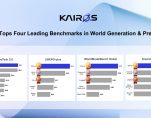
SHANGHAI, CHINA – Media OutReach Newswire – 15 June 2026 – ACE ROBOTICS today announced that its open-source Kairos world model has achieved leading results across four global embodied-intelligence benchmarks: RoboTwin 2.0, LIBERO-Plus, WorldModelBench Robot and DreamGen. Kairos ranked first among evaluated world models and vision-language-action (VLA) systems on these benchmarks’ public leaderboards as of 12 June 2026, leading across the core capabilities of embodied intelligence, including complex robotic manipulation, scene-level generalization, physical-world modeling and zero-shot transfer. The project is openly available on GitHub, Hugging Face and ModelScope, giving researchers and developers a public reference point for the model, benchmark results and technical materials.
Tops Four Leading Benchmarks in World Generation & Prediction
Embodied intelligence faces a fundamental challenge: generalization. A robot must operate reliably in environments it has never seen, adapting to new lighting, layouts, objects, embodiments and noisy real-world conditions. While VLA models have become a prevailing approach by directly mapping perception and language inputs to robot actions, ACE ROBOTICS believes world models offer a more scalable path by explicitly learning the underlying dynamics of the physical world and predicting how environments evolve. Kairos is designed to validate that approach.
Leading scene-level generalization on LIBERO-Plus
One of Kairos’ most significant results comes from LIBERO-Plus, a scene-level generalization benchmark proposed by the Shanghai Innovation Institute with Fudan University, Tongji University and the National University of Singapore. It evaluates robustness under seven real-world variables: camera angle, robot embodiment, language instruction, lighting, background, sensor noise and spatial layout.
Kairos achieved an overall score of 89.0, ranking first among all evaluated world models and VLA systems. It surpassed leading VLA models including ACoT-VLA (88.0), Pi 0.5 (85.7) and ProGAL-VLA (85.5), as well as the Being-H0.7 world model (84.8). It also showed strong environmental robustness, with near-ceiling performance on lighting (97.7), noise (96.8) and background (95.8), and ranked highly on camera angle and language instruction.
According to ACE ROBOTICS, this marks the first time a world-model approach has outperformed leading VLA systems on LIBERO-Plus for scene-level generalization, pointing to a path where robots adapt to homes, factories, retail spaces and other environments with far less environment-specific retraining.
A compact model with strong physical modeling efficiency
On WorldModelBench Robot, a physical-modeling benchmark proposed by researchers from UC Berkeley, UC San Diego, NVIDIA and MIT, Kairos-4B achieved an overall score of 9.30, ranking first on the benchmark. With only 4 billion parameters, it outperformed larger systems including 28-billion-parameter Lingbot, 16-billion-parameter Cosmos 3, 14-billion-parameter Abot-PhysWorld and 5-billion-parameter Wan 2.2, setting a new record for parameter efficiency in embodied world models.
Kairos matched the top instruction-following score (2.36) of the 16-billion-parameter Cosmos 3 with about one quarter of the parameters, a fourfold efficiency gain. It scored 4.96 on physics adherence, with perfect marks on Newtonian mechanics and gravity, and a perfect score on temporal quality, reflecting strong temporal consistency and visual continuity over long horizons.
A unified architecture, not a modular pipeline
ACE ROBOTICS attributes Kairos’ performance to its native unified “multi-modal understanding-generation-prediction” architecture. Unlike modular approaches that stitch together separate components for world understanding, generation and prediction, Kairos integrates these within a single backbone that shares one global world state, reducing the information loss and coordination latency between modules for more consistent physical modeling, stronger long-horizon prediction and more reliable action planning.
ACE ROBOTICS first introduced this architecture in December 2025, and the broader industry is now converging on a similar path: NVIDIA’s Cosmos 3.0, introduced in 2026, adopts a comparable single-system design that brings vision reasoning, world generation and action prediction into one architecture. Built on this foundation, Kairos-4B is, in ACE ROBOTICS’ description, the first embodied world model able to drive a physical robot directly on-device, closing the perception-to-action loop without intermediate translation latency.
Leading on synthetic data transfer and complex robot manipulation
Kairos also ranked first on DreamGen Bench, a benchmark led by NVIDIA with the University of Washington, UC Berkeley and UCLA that measures how well synthetic data generated by world models transfers to unseen objects, behaviors and environments, a key predictor of downstream robot-training value. Kairos ranked first on both average physics adherence (AVG_PA 0.538) and overall average score (AVG_Score 0.618), and led globally on new-behavior execution and new-environment adaptation.
On RoboTwin 2.0, a demanding dual-arm manipulation benchmark proposed by Shanghai Jiao Tong University and the University of Hong Kong with Shanghai AI Laboratory, Kairos scored 96.1% — a state-of-the-art result on the benchmark’s public leaderboard as of 12 June 2026. Across the benchmark’s 50 complex two-arm tasks it scored 96.9% in clean scenarios and 95.2% in randomized scenarios, ahead of VLA models such as G0.5 (93.2) and starVLA (88.3) and world models including AIM (93.1), Fast-WAM (91.8) and MotuBrain (96.0).
From benchmark leadership to commercial deployment
Together, these results validate Kairos’ technical direction across the core dimensions of embodied intelligence, from physical-rule understanding and zero-shot generalization to environmental robustness and fine-grained dual-arm manipulation, supporting ACE ROBOTICS’ aim to move robots beyond task imitation toward physical-world understanding, long-horizon reasoning and real-world execution.
The results come as ACE ROBOTICS accelerates commercialization. The company says it has raised several hundred million U.S. dollars across financing rounds in the first half of 2026, including a recent Angel+ round backed by investors such as Geely Capital, Dachen Caizhi, Shenzhen Capital Group and the Shanghai Sci-Tech Innovation Fund, with existing shareholder SenseTime’s Guoxiang Capital increasing its stake. The proceeds will support continued world-model research and integrated hardware-software solutions for sectors including smart retail, security and inspection, tourism and hospitality.
“Embodied intelligence is the next era of AI, and a world model is the key to unlocking it,” said Wang Xiaogang, Chairman of ACE ROBOTICS. “Our mission is to give every robot a capable brain.”
The issuer is solely responsible for the content of this announcement.
About ACE ROBOTICS – Equipping robots with intelligent “brains” and engaging “souls”
ACE ROBOTICS is a pioneering robotics company dedicated to advancing the field of embodied intelligence. Through breakthrough technological innovations and deep insights into embodied intelligence scenarios, we aim to empower robots with the ability to autonomously understand and explore the physical world, thereby accelerating their commercial implementation.
The company pioneered the ACE R&D paradigm and built a vision-based “environmental data engine, real-world cognition, embodied interaction generalization” technology chain. Using full spatiotemporal and multi-perspective environmental capture as its engine, along with Kairos 3.0 – China’s first open-source and commercially applicable world model – plus the Embodied Foundation Model as its technical backbone, ACE ROBOTICS addresses core industry challenges such as data scarcity, common sense gaps, poor generalization, and limited versatility. Simultaneously, the company unveiled its flagship A1 Embodied Super Brain Module, accelerating the large-scale commercial deployment of embodied intelligence across diverse scenarios.
ACE ROBOTICS is both a technology pioneer and an ecosystem builder. Through strategic cooperation with top hardware manufacturers, cloud service providers, and vertical scenario partners, we have broken through the “model-hardware-scenario” industrial deadlock, providing standardized and customized solutions that are driving the development of China’s embodied intelligence industry.
A cross-border policing operation has dismantled AudiA6, a cryptocurrency laundering service accused of helping ransomware gangs and other cybercriminals move more than €336 million through hidden digital-asset channels. Two alleged administrators were arrested in Georgia on 10 June after investigators targeted the platform’s clear web and dark web infrastructure, seized domains, blocked Telegram accounts and replaced AudiA6 and Dark2Web pages with law-enforcement seizure banners. The action struck […]
Taiwan is moving to anchor its alliance with Paraguay through a data-centre project expected to require at least $200 million in its first phase, tying diplomatic survival to artificial intelligence, clean energy and strategic infrastructure.
The plan, centred on a sovereign AI computing facility in Paraguay, gives Taipei a rare large-scale investment platform in South America as Beijing intensifies pressure on Asunción to cut formal ties. Paraguay remains Taiwan’s only diplomatic partner on the continent and one of just 12 governments worldwide that maintain official relations with Taipei.
The project emerged from a memorandum signed in Taipei during President Santiago Peña’s visit to Taiwan, where he met President Lai Ching-te and senior technology officials. The proposed centre is intended to combine Taiwan’s computing and semiconductor expertise with Paraguay’s abundant hydroelectric power, a resource the Peña administration wants to convert into higher-value digital services.
Paraguay’s authorities have described the first stage as a 10-megawatt data centre focused largely on state use, including secure processing of public records, health data, tax systems and other sensitive government information. Investment for that phase has been estimated at between $200 million and $300 million. Officials have also outlined broader ambitions for later stages that could lift power demand to 100 megawatts and eventually 1,000 megawatts, though those targets remain politically and commercially demanding.
The initiative is being framed by both governments as a sovereign AI project rather than a conventional colocation facility. That distinction is important for Asunción, which wants to avoid being seen merely as a low-cost power host for foreign cloud companies. The official pitch is that Paraguay would retain strategic use of the computing capacity while Taiwan helps provide technology, financing channels and international credibility.
For Taiwan, the political stakes are clear. Paraguay established diplomatic relations with Taipei in 1957 and has resisted repeated calls to recognise Beijing. China claims Taiwan as part of its territory and rejects any formal state-to-state relationship with the island. Taipei rejects Beijing’s sovereignty claim and has sought to hold its remaining partners by shifting assistance from grants and symbolic diplomacy towards trade, investment, technology and education.
Peña has defended the relationship as one based on democracy, freedom and institutions, saying the partnership must produce tangible opportunities for Paraguayans. During the Taipei visit, he also reiterated support for Taiwan’s participation in international organisations and criticised pressure directed at the island. Beijing responded sharply, urging Paraguay to “stand on the right side of history” and sever ties with Taipei.
The diplomatic contest has domestic resonance in Paraguay. Agribusiness exporters and some opposition figures have long argued that formal ties with Taiwan limit access to China’s vast market, particularly for soybeans and beef. Peña’s government is trying to counter that argument by showing that the Taiwan relationship can deliver higher-value investment, technology transfer and market access, including Taiwan’s decision to open its market to Paraguayan poultry.
The data-centre proposal fits into a wider push to position Paraguay as a digital infrastructure hub. The country draws most of its electricity from major hydroelectric assets, including Itaipú and Yacyretá, giving it one of the cleanest power profiles in the region. That advantage is attracting interest from data-centre developers, crypto-mining firms and AI infrastructure companies seeking cheap, low-carbon electricity at a time when demand for computing power is rising worldwide.
Yet the plan faces serious tests. Data centres require not only electricity, but firm grid delivery, fibre connectivity, cooling systems, specialised construction, cybersecurity rules and skilled engineers. Paraguay’s digital workforce remains limited, and critics have questioned whether the country can support an AI facility on the scale described by officials. Energy planners also face pressure to balance industrial demand against future domestic consumption and export commitments.
Regional experience offers both encouragement and caution. Latin America is drawing heavier investment from cloud and AI companies because of renewable energy, growing digital markets and geopolitical diversification. Brazil, Chile, Mexico and Uruguay have advanced faster because they combine power access with deeper telecoms networks, larger technology labour pools and clearer regulatory pathways. Paraguay’s advantage lies in energy supply, but its success will depend on whether infrastructure, governance and talent can catch up.
Arabian Post Staff -Dubai Dubai Future Foundation has graduated 160 students from the second cohort of the Dubai TKS – Knowledge Society programme, marking a sharp expansion of the emirate’s effort to build early-stage talent in artificial intelligence, robotics, climate technology, biotechnology and advanced computing. The students, aged 13 to 17 and drawn from a range of nationalities, completed the 10-month programme at a ceremony held at […]
Cybercriminals are using counterfeit AI learning material and developer guides to lure professionals into opening files that trigger a multi-stage malware chain ending in AsyncRAT, a remote access trojan capable of surveillance, data theft and covert system control. The campaign targets Windows users with archives and documents framed as useful resources for artificial intelligence adoption, coding and marketing. One lure was presented as a developer guide for […]
ReactOS has crossed a symbolic gaming milestone after the open-source Windows-compatible operating system ran Valve’s original Half-Life in playable, in-game form on real hardware, marking a notable advance for a project that has spent decades trying to reproduce Windows NT behaviour without using Microsoft code. The demonstration showed the Windows version of Half-Life running on a Dell OptiPlex desktop fitted with an Intel Core i5-2400 processor and […]
Shin-Etsu Chemical plans to build a new rare-earth refining facility in Fukui Prefecture as Japan accelerates efforts to protect critical mineral supply chains from disruption caused by China’s export controls.
The project marks the company’s first new rare-earth refining facility since 2008 and comes as demand for high-performance magnets rises across electric vehicles, hard disk drives, robotics, wind power systems, defence equipment and advanced electronics. The investment is expected to exceed ¥35 billion, with ¥17.5 billion to be covered by government subsidy support, although the final cost and production schedule have not yet been fixed.
The new facility is intended to reinforce supplies for Shin-Etsu’s rare-earth magnet business and strengthen access to raw materials used in neodymium-based magnets. Heavy rare earths such as dysprosium, terbium and yttrium are particularly important because they improve magnet performance in high-temperature and high-stress applications, including vehicle motors and precision industrial systems.
Shin-Etsu already operates rare-earth refining facilities in Japan and has long been one of the country’s most important producers in the sector. Its rare-earth operations are centred in Fukui Prefecture, where it smelts materials and manufactures magnets at its plant in Echizen. The company says it works from raw materials through production to provide stable quality and supply, while also pursuing recycling and resource diversification.
The planned expansion reflects a broader shift in Japan’s industrial policy after months of tightening access to critical minerals. Chinese shipments of several heavy rare earths and gallium to Japan have been severely restricted since late 2025, heightening concerns among manufacturers that depend on these materials for magnets, semiconductors and other precision components. China continues to dominate mining, separation and refining capacity across the rare-earth value chain, giving Beijing considerable leverage over downstream industries.
Japan remains the largest rare-earth magnet producer outside China, but its manufacturers are still exposed to bottlenecks in the supply of heavy rare earths. The country has built stockpiles, backed overseas projects and encouraged recycling since the 2010 rare-earth shock, when diplomatic tensions with China exposed the risk of overdependence on one supplier. Those measures have improved resilience, but they have not removed the vulnerability.
The latest project is significant because it targets refining and processing rather than simply raw-material procurement. Mining deposits alone do not solve the supply challenge; rare earths require complex separation, purification and alloy processing before they can be turned into magnets. China’s advantage lies not only in reserves but also in decades of accumulated processing capacity, cost efficiency and industrial integration.
Shin-Etsu’s move also fits into a wider network of partnerships being pursued by Japan with Australia, France and the United States. Tokyo has backed alternative producers, supported offtake arrangements and encouraged private-sector investment in midstream processing. Australia-based Lynas has become a key non-China supplier, but output of heavy rare earths remains far below the volumes needed to replace Chinese supply in full.
The pressure is not limited to Japan. Manufacturers in the United States and Europe have faced similar supply uncertainty as export licensing delays affect rare earths used in aerospace, defence, clean energy and electronics. Companies exposed to the restrictions are searching for alternative suppliers, but industry executives warn that rebuilding a fully independent supply chain will take years.
For Shin-Etsu, the business case rests on both security and demand. Permanent magnets are central to electrification and digital infrastructure. Electric vehicles require compact, powerful motors; data centres and hard disk drives depend on precision magnetic components; wind turbines need high-strength magnets to improve efficiency. Demand growth has made the magnet supply chain a strategic concern for governments as well as manufacturers.
The company’s project is unlikely to eliminate Japan’s reliance on imported feedstock, especially for heavy rare earths where global non-China supply remains thin. It could, however, give domestic manufacturers greater control over processing, quality assurance and emergency production planning. That matters for customers in sectors where delivery delays can disrupt production lines and where material specifications are tightly controlled.
The government subsidy underscores how rare earths have moved from a specialist materials issue to a national industrial priority. Public support reduces the financial burden on companies undertaking technically demanding projects with long payback periods. It also signals that Tokyo is prepared to use industrial policy to keep strategic capabilities onshore.
Abu Dhabi’s L’IMAD Holding has deepened its grip on TAQA after its subsidiary Abu Dhabi Power Corporation bought a further 8.09 per cent stake in the listed power and water utility, lifting its holding to 98.12 per cent. The transaction, disclosed on Wednesday, involved the acquisition of 9.1 billion TAQA shares from Two Point Zero Group. Based on TAQA’s closing share price that day, the stake was […]
Arabian Post Staff -Dubai Industrial and Commercial Bank of China Limited’s Dubai branch is marketing dual-currency green bonds, offering investors a dollar floating-rate tranche and a renminbi fixed-rate tranche as sustainable debt issuance continues to gain traction across Gulf capital markets. The proposed three-year dollar notes carry initial price guidance at the Secured Overnight Financing Rate plus 90 basis points, while the three-year offshore renminbi tranche is […]
Arabian Post Staff -Dubai Oman is moving to convert fiscal repair and regulatory reform into a stronger claim on international capital, positioning the International Financial Centre of Oman as the centrepiece of a drive to attract financial institutions, fund managers and professional services firms. The push comes as Muscat benefits from a restored investment-grade profile after several years of debt reduction, spending restraint and higher policy credibility […]
Apple Maps is preparing a major upgrade to its three-dimensional city experience, with 3D Gaussian splatting set to give users cleaner, sharper and more realistic urban scenes built from oblique aerial imagery. The shift marks a technical break from conventional mesh-based photogrammetry, the approach that has long powered digital city models but often produced warped tree canopies, distorted cables, softened building edges and streetscapes that appeared convincing […]
Access to finance for industrial startups is becoming a sharper policy test for the UAE as high-growth manufacturing ventures confront longer revenue cycles, heavier capital needs and risk profiles that often sit outside conventional lending models. Shaker Zainal, head of the Mohammed Bin Rashid Innovation Fund, has placed the financing gap for industrial startups within a wider challenge of alignment between founders, banks, government-backed platforms and ecosystem […]
Europe’s largest airline groups have warned Brussels that extending carbon charges to long-haul international flights would lift fares, raise cargo costs and deepen a dispute over how aviation should pay for its climate impact. Chief executives from major carriers including Air France-KLM, IAG, Lufthansa, Ryanair, easyJet, TUI and AirBaltic have urged European Commission President Ursula von der Leyen not to widen the European Union’s Emissions Trading System […]



 Seafood Expo Asia/Seafood Processing Asia





 https://www.facebook.com/people/Fast-med/61577995881471/
 https://www.instagram.com/fastmedhongkong/


 https://www.linkedin.com/company/acerobotics/posts/?feedView=all&viewAsMember=true%EF%BD%9C
 https://x.com/ace_robotics




