News related to
data

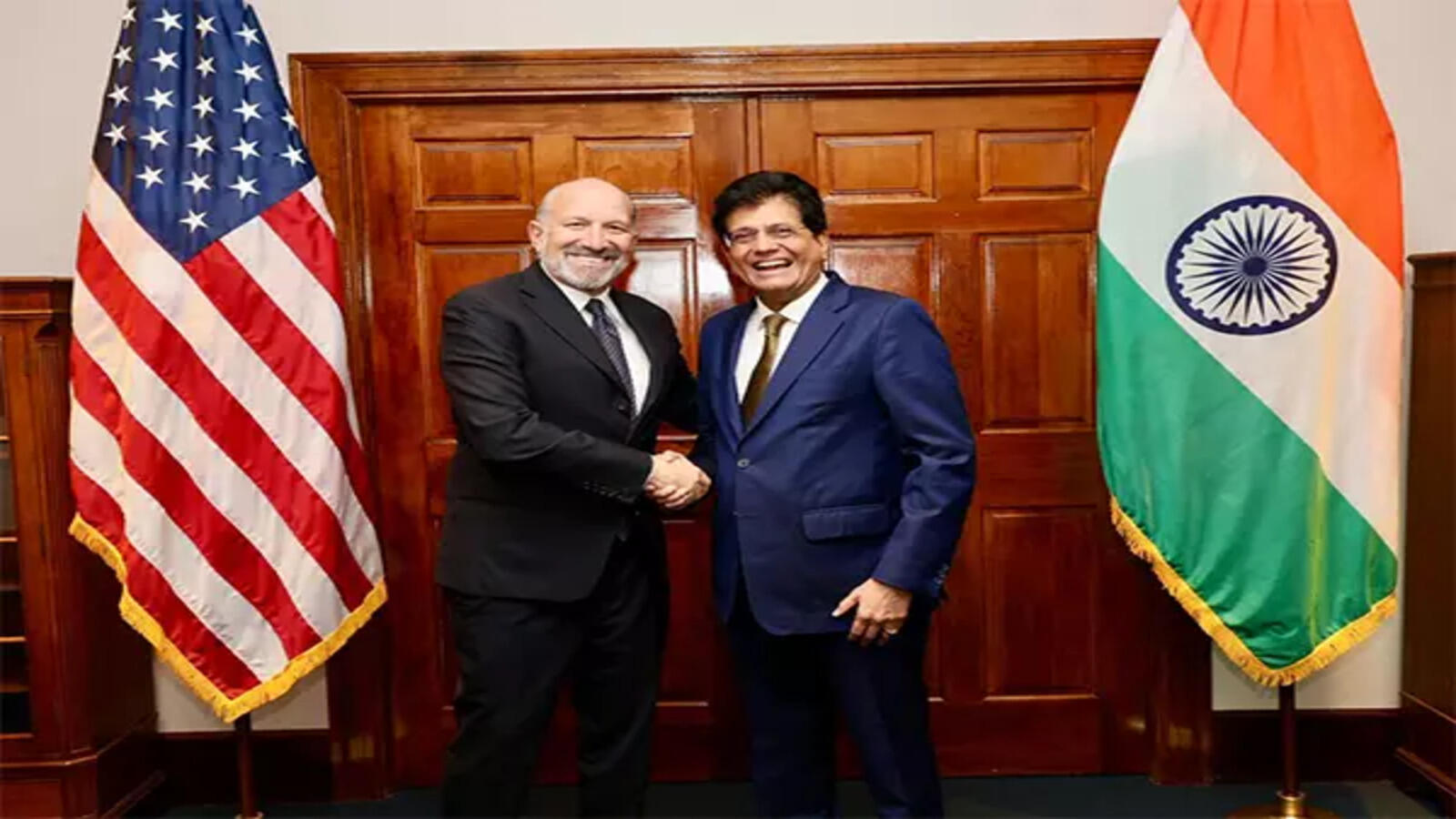
By K Raveendran Trade negotiations between Washington and New Delhi have moved into a critical phase as senior American trade officials arrive in India with the stated intention of clearing the final hurdles to a long-discussed agreement. The presence of Deputy US Trade Representative Rick Switzer and chief India-deal negotiator Brendan Lynch underscores the renewed […]

The article US Officials’ Delhi Trip Takes Trade Negotiations Into A Decisive Stage appeared first on Latest India news, analysis and reports on Newspack by India Press Agency).

Growing concerns over the expansion of dollar-linked digital tokens have prompted the International Monetary Fund to issue a caution over the strain stablecoins could place on emerging markets, with the institution arguing that widespread use of these instruments risks weakening domestic monetary frameworks. The warning centres on the potential for currency substitution and accelerated outflows should stablecoins gain traction in jurisdictions where confidence in local units is fragile. This caution mirrors the broader message conveyed in IMF warns of stablecoin strain on emerging economies, underscoring the possibility of digital tokens amplifying financial vulnerabilities.

The Fund’s latest assessment highlights the challenge posed by USD-pegged tokens such as USDT and USDC, which together dominate the global stablecoin market. Analysts tracking flows note that these instruments have evolved into widely used vehicles for cross-border transfers, digital asset trading and store-of-value purposes in countries with volatile currencies. The IMF argues that their adoption can reduce the capacity of central banks to manage liquidity conditions, especially in economies where monetary authorities already contend with limited tools to stabilise inflation and anchor expectations. The institution has urged regulators to assume a proactive posture, particularly in markets where capital controls or shallow financial systems heighten the risk of abrupt movements.

The concerns reflect a shift from earlier phases of the digital asset cycle, when stablecoins attracted regulatory scrutiny largely due to their reserve backing and operational transparency. With greater clarity emerging around reserve audits and redemption mechanisms, policymakers are now looking beyond technical design and towards systemic implications. Economic experts cautioned that dollar-denominated tokens might evolve into parallel settlement channels, enabling households and corporates to bypass domestic banking systems during periods of stress. For countries with restricted foreign exchange markets, that pattern could complicate monetary management and accelerate the erosion of trust in local units.

Despite these warnings, several analysts point out that the scale of stablecoin adoption across developing economies remains uneven. Data from blockchain analytics firms suggests that while usage has grown in parts of Latin America, Africa, Eastern Europe and South Asia, activity is still far from the threshold that would trigger systemic currency substitution. Experts add that stablecoins often function as short-term hedging tools rather than long-term savings instruments, meaning their impact on monetary sovereignty is not yet of the magnitude implied by more pessimistic scenarios. Many economists argue that structural weaknesses in local economies, such as persistent inflation or fiscal imbalances, are more significant drivers of currency instability than the availability of digital dollar substitutes.

Regulators in several markets have already begun drafting frameworks to govern stablecoin issuance and use. Authorities in regions including the Gulf, the European Union, Singapore and parts of East Asia have introduced licensing requirements and reserve rules to ensure issuers maintain high-quality backing assets. These frameworks emphasise transparency and redemption at par, which policymakers view as essential to preventing destabilising runs. Some central banks are also exploring bilateral agreements to manage cross-border flows facilitated by stablecoins, particularly where local banks have limited capacity to monitor or report such transactions.

Several financial commentators suggest that concerns over capital flight through stablecoins stem from gaps in existing capital control regimes rather than from the forms of technology used to move funds. They argue that digital tokens merely enhance the speed and efficiency of transfers that might otherwise occur through informal channels. Nonetheless, the IMF stresses that the visibility and liquidity offered by stablecoins could encourage larger volumes to exit strained economies during periods of uncertainty. The institution asserts that emerging markets could face amplified volatility if households and corporates shift towards digital dollars at scale.

The rise of stablecoins has also coincided with broader experimentation in monetary innovation, with more than one hundred central banks evaluating options for digital currencies. Some economists view central bank digital currencies as a potential counterbalance to dollar-pegged private tokens, offering residents a regulated alternative for digital payments while preserving oversight. Others note that CBDCs alone will not offset the appeal of USD-linked tokens in countries where macroeconomic fundamentals drive demand for safer units. Policymakers face the challenge of building credibility, strengthening reserves and reinforcing inflation-targeting regimes while managing digital asset adoption.

While a number of market strategists acknowledge the IMF’s concerns, they contend that fears of widespread dominance of dollar-linked tokens may be overstated at the current stage of development. Adoption depends heavily on access to smartphones, internet connectivity, financial literacy and the availability of compliant service providers. These conditions vary widely across emerging economies, limiting the capacity of stablecoins to displace formal banking for now. Yet industry participants agree that the trajectory of digital finance warrants close oversight as stablecoin issuers expand their footprint and integration with payment networks.


SHENZHEN, CHINA – Media OutReach Newswire – 10 December 2025 – Across South Africa, millions still struggle to get online, limiting access to education, jobs, and opportunity. As the government accelerates its SA Connect broadband strategy, Huawei and Broadband Infraco are helping extend high-speed connectivity to underserved communities. For young people like Godfrey, a digital future is finally coming within reach. “No Internet, no modern life.” That’s […]

Lucid Group has inaugurated a new retail studio in Al Khobar on December 5, extending its operational footprint across the Kingdom by adding a facility in the Eastern Province. This marks Lucid’s third studio in Saudi Arabia, joining its existing sites in Riyadh and Jeddah — a move the company says reflects growing demand and commitment to the region.

The Al Khobar studio offers prospective customers the opportunity to view the company’s flagship models, including the Lucid Air sedan and Lucid Gravity SUV, alongside services such as product consultations, vehicle customisation and after-sales support.

According to the company’s Middle East president, the new facility brings Lucid closer to buyers in what is considered one of the Kingdom’s most affluent markets. Lucid described the Eastern Province as its third-largest market, underscoring the importance of establishing a direct presence there.

The expansion comes amid broader efforts by Lucid to localise electric vehicle production. Since 2023, the company has operated a manufacturing facility at King Abdullah Economic City, which began with semi-knocked down assembly of its vehicles and is being upgraded to full build capability. The factory is expected to reach a production capacity of up to 150,000 vehicles annually once completely operational.

This localisation aligns with Saudi Arabia’s drive to transform its economy under Vision 2030, by promoting advanced manufacturing, reducing reliance on oil, and supporting sustainable mobility. In January 2025, Lucid became the first global automaker to join the country’s “Made in Saudi” programme, reinforcing its long-term industrial and strategic role in the Kingdom.

Industry analysts highlight the creation of a nascent Saudi EV ecosystem, with Lucid among the pioneers shaping domestic market demands, infrastructure build-out and consumer adoption of electric vehicles.

Shares of the national carrier InterGlobe Aviation — operator of IndiGo — have tumbled over the last week after the airline cancelled thousands of flights following implementation of stricter pilot-duty regulations. Regulatory pressure and mounting costs have weighed on sentiment, yet several brokerages are urging investors to stay the course, citing the airline’s cost advantages and long-term dominance in the domestic market.

The aviation watchdog Directorate General of Civil Aviation has ordered IndiGo to slash its winter schedule ― first by 5 per cent, then escalating to a 10 per cent reduction ― in response to widespread cancellations and what regulators described as the carrier’s inability to manage the higher demands of new Flight Duty Time Limitations norms.

Operationally, the carrier flagged fatigue-rule compliance, crew scheduling bottlenecks and minor technical issues as reasons for the cancellations. It said a full root-cause analysis is underway.

Despite forecasting that IndiGo might cancel as many as 11,000 flights overall — incurring revenue losses of roughly ₹12–14 billion and reducing net profits by ₹3–5 billion — global banking major HSBC has retained a “Buy” rating for InterGlobe, while trimming its price target for FY26–27. Analysts say the airline’s unit cost per seat-kilometre might rise only around 1 per cent even after additional pilot hires.

Supporters of the airline point out that IndiGo remains the only Indian carrier ramping up capacity by roughly 50 aircraft each year — a growth rate unmatched by competitors such as Air India, SpiceJet or Akasa Air. This expansion underlines its dominant market share and suggests that regulatory interest in capping capacity is unlikely, even amid the crisis.

Not all are convinced. Credit-rating agency Moody’s flagged the flight disruptions as “credit negative,” pointing to potential long-term damage from compensation claims, refunds, potential DGCA penalties and erosion of customer trust. The agency also downgraded IndiGo’s human-capital score — citing slower hiring and inability to scale crew strength for its expanding fleet.

Market technicians have sounded alarms, noting that the share price has broken key support levels and fallen below major moving averages, a trend that could continue if recoveries don’t materialise.

Within the company, top leadership has attempted to calm nerves. IndiGo’s CEO has acknowledged the disruptions, termed the episode a “network reboot” and said flights are being progressively restored. The airline also disclosed that refunds for stranded passengers have been processed, luggage backlog cleared for most, and on-time performance is edging back towards normal.

Amid this turbulence, investors and regulators alike will watch closely whether IndiGo can restore operational stability in the coming weeks, and whether its long-term advantages in scale and cost can withstand the upheaval sparked by regulation and mis-management.

Amazon has pledged to invest more than $35 billion in India by 2030, targeting a significant expansion of its technology, logistics, and export operations across the country. The announcement, delivered on 10 December at the Amazon Smbhav Summit in New Delhi, follows previous investments totalling about $40 billion since 2010 — including a $26 billion commitment in 2023.

The funding will be channelled along three strategic pillars identified by Amazon: AI-driven digitisation, export growth and job creation. The company intends to leverage artificial intelligence to reshape its marketplace operations and support small and medium-sized enterprises.

Amazon aims to boost cumulative exports from Indian sellers — which hit over $20 billion — to $80 billion by 2030. That step would represent a four-fold increase in volume while providing an impetus to local manufacturing, packaging, logistics and supply-chain networks.

As part of this push, the firm expects to generate at least 1 million new employment opportunities across direct, indirect and seasonal roles by the end of the decade. These would be distributed across technology, operations, logistics, fulfilment and customer support functions.

The announcement by Amazon aligns with similar large-scale commitments from other global tech players. A day earlier, Microsoft committed $17.5 billion for cloud and AI infrastructure in India, while Google has floated plans to inject about $15 billion over five years towards AI data-centre development in the country.

Amazon’s renewed commitment comes against a backdrop of intensifying competition in India’s e-commerce and delivery space. Firms such as Flipkart, along with app-based delivery services like Blinkit, Swiggy-led Instamart and Zepto, have rapidly expanded consumer-facing logistics, creating pressure on legacy players to scale up technological and operational capabilities.

According to a report by consultancy Keystone Strategy, Amazon’s past investments helped digitise over 12 million small businesses, enabled more than $20 billion in exports and supported around 2.8 million jobs as of 2024. The upcoming investment aims to deepen that impact by extending digital infrastructure, training, fulfilment and AI-powered tools to more businesses.

A coalition of six major video-game unions from across Western Europe has come together to condemn widespread layoffs, growing use of generative AI and persistent toxic workplace conditions across the industry. The group includes France’s STJV, the UK’s IWGB Game Workers, Spain’s CGT, Italy’s FIOM-CGIL, Germany’s ver. di, and Game Workers Unite Ireland. Their joint move signals one of the strongest cross-border union alliances the gaming sector […]

Advertisements

A breakthrough in neural engineering is prompting wide debate over how far humans should push the boundaries between biological thought and digital computation. The unveiling of an ultra-thin implant known as BISC, designed to stream neural activity in real time through a high-bandwidth wireless interface, offers a glimpse of a future where the movement of a limb, the perception of an object, or the intent behind a […]

A newly announced strategic alliance between Ford and Renault will yield two new affordable Ford-badged electric vehicles for the European market, with the first expected to arrive in early 2028. The announcement marks a decisive move by both automakers to regain competitiveness amid mounting pressure from lower-cost electric vehicles flooding in from Chinese manufacturers. Under the agreement, Renault will provide its Ampere EV platform — already used […]

The US Supreme Court indicated during oral arguments that it is prepared to permit the president to remove leaders of independent federal agencies at will — a move that could weaken decades-old protections shielding regulatory bodies from political control. The case centers on the dismissal of Rebecca Kelly Slaughter from the Federal Trade Commission, and touches on the fate of more than two dozen agencies governed by […]

Google has rolled out a major update to its AI fashion experiment Doppl, introducing a “shoppable discovery feed” that blends virtual try-ons with direct-to-merchant shopping. The new feed displays AI-generated videos of real clothing items tailored to users’ style preferences, enabling a seamless path from browsing to purchase. This marks a distinct step from the original “virtual dressing room” concept: now shoppers can scroll, preview outfits virtually, […]

Figma chief executive Dylan Field admitted he struggled as a manager during the company’s formative years but has since used those shortcomings to forge a leadership style rooted in clarity, feedback and self-improvement — a transformation that comes at a critical time as the company navigates public markets, AI-led expansion and investor scrutiny. Field told the “First Time Founders” podcast that when he launched Figma with co-founder […]

SINGAPORE – Media OutReach Newswire – 10 December 2025 – In today’s interconnected world, global perspectives and internationally recognized qualifications play a pivotal role in shaping career opportunities. The Singapore Institute of Management (SIM) provides students with access to degrees from leading universities in the UK, US, Canada, Australia, and Europe, delivered locally with the same academic rigor and standards as those offered on campus in our […]

A token linked to the brand of popular creator-entrepreneur Jimmy Donaldson — known globally as MrBeast — saw price gains of nearly 900 per cent in 24 hours, reflecting growing investor speculation around the newly filed fintech trademark by his corporate group. The rally has thrust the unofficial memecoin spotlit by social-media buzz, despite clear warnings that the currency remains unauthorised and unconnected to any official launch.

The underlying spark appeared after his firm, Beast Holdings, submitted a trademark application in October 2025 for a brand called MrBeast Financial. The filing outlines services ranging from mobile banking, crypto payment processing, exchange and decentralized-trading tools to loans, credit cards and financial-education offerings.

Soon after media and investor attention picked up, the BEAST token’s trading volume soared — a pattern analysts attribute to a mix of hype, confusion with other meme coins referencing MrBeast, and overbought technical indicators that often precede sharp reversals.

Insiders at Beast Industries, including CEO Jeffrey Housenbold, have confirmed that financial-services expansion is part of a broader diversification strategy. At the summit event where the plan was publicly discussed, Housenbold said the company aims to package banking, fintech and creator economy functions under one umbrella — potentially offering fans access to financial services via a recognised brand.

Beast Industries’ market valuation has reportedly reached around US $5 billion. That, combined with MrBeast’s social-media reach, fuels investor optimism that “MrBeast Financial” — if realised — might attract millions of users instantly. This visibility helps explain why speculative investors clung to BEAST token amid the buzz.

Yet experts caution over regulatory and structural hurdles before any fintech project materialises. A US trademark filing does not equate to regulatory clearance; launching banking or crypto-exchange services would require compliance with complex licensing regimes, including money-transmitter permits, anti-money-laundering protocols and possibly oversight by financial authorities.

This is not the first time the MrBeast brand has floated multiple trademarks without launching full-fledged products. Past filings — ranging from burgers to gaming to snacks — have produced mixed results, with some evolving into real ventures and others quietly fading. That casts ambiguity over whether “MrBeast Financial” will ever become a functioning platform.

Despite that, investor appetite for BEAST appears to remain driven by two forces: the fear of missing out characteristic of crypto cycles, and hope that a fintech rollout tied to a globally recognised creator could upend traditional financial models. Until regulators weigh in or Beast Industries announces concrete partnerships, however, BEAST remains a speculative asset — its value tied more to branding buzz than fundamentals.

Botim Money and Binance have moved to broaden digital asset access for users across the UAE after signing a memorandum of understanding during Binance Blockchain Week in Dubai, signalling a push to integrate regulated crypto services into one of the region’s most widely used digital platforms. The agreement reflects a growing alignment between established fintech operators and global exchanges seeking to deepen their presence in a market that has positioned itself as a leader in digital-asset regulation and innovation.

Botim Money, the financial services arm of the UAE-based communications platform Botim, aims to use the partnership to explore compliant pathways for users to buy, sell and manage crypto assets from within its ecosystem. The platform, owned by Astra Tech, has expanded from a calling and messaging service into a broader super-app model, adding payments, remittance and e-commerce tools. Executives have argued that embedding secure crypto access is a natural progression as users increasingly seek unified financial services in trusted digital environments. The collaboration with Binance, one of the world’s largest crypto exchanges by trading volume, is expected to focus first on regulatory frameworks, technical integration and user-protection standards.

The signing of the agreement at Binance Blockchain Week placed the partnership in the spotlight as global industry participants gathered in Dubai. Officials from Binance highlighted that the UAE’s licensing landscape and digital economy strategy have created conditions where exchanges can build long-term infrastructure. Richard Teng, who heads Binance globally, has repeatedly emphasised that the Gulf region’s regulatory clarity has allowed the company to stabilise operations after addressing compliance concerns elsewhere. The MoU with Botim Money follows earlier moves by Binance to secure approvals through Dubai’s Virtual Assets Regulatory Authority, enabling it to develop a locally compliant exchange environment.

Senior figures at Botim Money pointed to the super-app’s large user base as a strategic advantage. With millions of active customers across the Middle East and South Asia, Botim has become a central payments and communications tool for expatriate workers. Astra Tech’s leadership said the partnership could help bridge the gap between conventional financial users and digital-asset platforms, allowing remittance senders, online shoppers and small businesses to access crypto payments or investment tools without transitioning to unfamiliar applications. Industry analysts noted that such integrations could accelerate mainstream adoption, provided that strong risk controls are embedded from the outset.

Dubai’s position as a global blockchain hub formed a central backdrop to the announcement. The emirate has attracted exchanges, tokenisation projects and Web3 developers with its tiered licensing system and emphasis on consumer safeguards. Officials have pitched Dubai as a base for companies seeking regulatory stability after volatility in global crypto markets. Binance Blockchain Week itself drew developers, institutional investors, compliance specialists and start-ups exploring tokenised assets, AI-driven trading tools and cross-border payment systems. The Botim Money–Binance collaboration stood out among the event’s business announcements for its potential to link a mass-market communications app with a globally recognised exchange.

The partnership arrives at a time when the UAE continues to refine rules governing custodial services, stablecoins and digital-asset marketing. Market participants say these developments have strengthened confidence among fintech companies looking to integrate virtual assets without jeopardising compliance obligations. Botim Money’s leadership has indicated that any crypto services made available through the platform would adhere to regulatory requirements on customer verification, anti-money laundering controls and risk disclosures. Binance has similarly stressed that its growth strategy in the UAE is tied to full regulatory alignment, following heightened scrutiny by authorities in Europe and North America earlier this year.

Observers viewed the agreement as part of a broader trend in which everyday digital platforms embed financial products to enhance user engagement. For Binance, the arrangement offers an opportunity to reach a large demographic that predominately uses mobile channels for financial activities. For Botim Money, it presents a pathway to diversify revenue streams and retain users within a single app environment, especially as competition intensifies among regional fintech operators seeking to offer remittances, payment processing, microfinance and merchant tools.

Matein Khalid When the rats scramble to escape a sinking ship as hungry sharks circle the blood red water, the end is near. 100 insider Johnnies sold $6.5 billion in OpenAI shares in a recent employee tender. Why bailout now at $500 billion if OpenAI is a slam dunk for a trillion dollar IPO next year? Simp​le. The 100 newly minted decamillionaires know that OpenAI can no […]

Global asset manager BlackRock has indicated it is willing to partner with sovereign wealth funds from the Gulf Cooperation Council to channel more capital into Asian markets. The company’s Chief Investment Strategist for Middle East and Asia-Pacific, Ben Powell, described the firm as “very open minded” about co-investment opportunities with SWFs in the region. This marks a notable strategic shift by the world’s largest asset manager, which […]

Alpha Dhabi Holding PJSC has unveiled a three-year dividend policy offering annual payouts of AED 2 billion, with a built-in 5 per cent increase each year starting from the 2025 financial year. The Abu Dhabi–listed investment house also proposed a share buyback scheme of up to AED 1 billion, capped at 10 per cent of its issued share capital. The dividend plan is subject to approval by […]

Bank lending across the UAE, Saudi Arabia and wider Middle East is projected to gather momentum next year as resilient economic conditions and steady financing demand strengthen the outlook for regional lenders. The assessment reflects the prevailing view among major rating analysts that banks have entered the coming year with solid balance sheets, expanding pipelines in corporate and retail credit, and a supportive macroeconomic environment. Fitch Ratings […]

The Kingdom of Saudi Arabia is planning a massive infrastructure push to achieve net-zero carbon emissions by 2060, with a significant portion of financing expected to come from the private sector. Investment Minister Khalid Al-Falih, speaking at the MOMENTUM2025 Development Finance Conference in Riyadh, projected that infrastructure investments could reach up to $1 trillion over the medium term, with private capital accounting for around 40 per cent — equivalent to $400-500 billion.

Al-Falih outlined that this influx of investment will be channelled across diverse programmes: privatisation schemes, energy infrastructure under the supervision of the Ministry of Energy, and major initiatives led by key domestic players such as ACWA Power and Saudi Aramco, including expansion of blue hydrogen production and global marketing. The minister emphasised that the push reflects the Kingdom’s evolving infrastructure and energy strategy — aligning economic diversification under Saudi Vision 2030 with climate-related commitments.

Officials at the conference stressed that the investment liquidity will flow through multiple channels. Besides large-scale energy and infrastructure projects, capital will also support expansion in sustainable tourism, desalination plants, airport and logistics development, and logistics hubs, boosting sectors beyond oil and traditional energy. This drive is underpinned by a broader green finance framework recently introduced by domestic regulators, including the issuance of green bonds and the creation of a domestic carbon-credit market under Tadawul.

Despite the ambitious plan, some observers remain cautious. Independent analysts — such as those at the Climate Action Tracker — rate the Kingdom’s net-zero pledge for 2060 as “poor”, noting that the target lacks legal codification and fails to clarify which greenhouse gases or sectors are included. They underline that while domestic investments in renewables, carbon capture and clean hydrogen are growing, the lack of a comprehensive emissions-reduction pathway — especially regarding export-related emissions — leaves a significant portion of emissions unaddressed.

Al-Falih acknowledged the challenges but framed the plan as a transformation rather than a short-term campaign. He pointed out that the Kingdom has already exceeded some Paris Agreement-linked targets, and underlined an energy mix strategy aiming for 50 per cent of electricity generation through renewables by 2030, supplemented by high-efficiency gas turbines and storage technologies to ensure reliability.

As global demand for energy continues to rise — driven in part by rapid advances in artificial intelligence and digital infrastructure — Riyadh’s roadmap envisages that growing energy needs will dovetail with sustainable investment in infrastructure, industrial transformation and green-energy exports.

Arabian Post Staff -Dubai Abu Dhabi-based investment firm Mubadala Capital has entered into a collaboration with blockchain infrastructure provider KAIO, aiming to explore tokenised access to its private-market investment strategies for qualified institutional and accredited investors. The initiative is designed to assess how KAIO’s regulated digital infrastructure could create secure, compliant routes to alternative investments ordinarily reserved for traditional private-markets participants. Under the agreement, Mubadala Capital will […]

Collaboration aims to connect groundbreaking innovators with Asia’s leading retail network to address agriculture’s most urgent climate challenges HONG KONG SAR – Media OutReach Newswire – 10 December 2025 – DFI Retail Group (DFI), a leading Asian retailer, and The Mills Fabrica, a global collaborative hub propelling sustainability-focused innovations in techstyle (textile and apparel) and agrifood sectors, today announced the launch of the DFI Sustainability Innovation Challenge […]

Apple has confirmed that its subscription-based fitness and wellness platform, Fitness+, will be launched across 28 additional markets on 15 December, extending its global footprint to 49 countries and regions. The expansion includes Singapore, India, Chile, Hong Kong, the Netherlands, Taiwan, Vietnam, and more, with Japan scheduled to follow in early 2026.

The announcement from Apple’s Fitness Technologies division highlights that hundreds of existing workouts and guided meditations will become available in those new markets, with digital dubbing introduced in Spanish and German from launch, and Japanese to follow next year. The dubbed tracks utilise “a generated voice based on the actual voice” of the 28 Fitness+ trainers, allowing users to select their preferred audio language per session or set a default preference within the Fitness app.

Subscribers will gain access to the full slate of 12 workout categories — including Strength, Yoga, HIIT, Pilates, Dance, Cycling, Kickboxing and Meditation — with session lengths ranging from five to 45 minutes. The platform continues to support a range of devices, including iPhone, iPad and Apple TV, and offers enhanced experience when combined with Apple Watch or AirPods Pro 3, enabling users to view real-time metrics like heart rate, calories burned, activity ring progress and the “Burn Bar” overlay during workouts.

A new feature accompanying the global rollout is the addition of a dedicated K-Pop music genre for workout playlists, complementing existing options such as Upbeat Anthems, Hip-Hop/R&B, Latin Grooves and more. The “Artist Spotlight” series remains part of the offering, giving workouts curated around global music stars.

Apple emphasised the inclusive and flexible nature of Fitness+ in its announcement. The company pointed out that Custom Plans — which automatically generate a personalised schedule based on a user’s preferred activities, session durations, favourite trainers and music style — make it easier for individuals across fitness levels to build consistent exercise routines. With the expansion, users in newly covered markets will now be able to take advantage of curated workout and meditation content designed to fit different lifestyles and routines.

While the bulk of the newly available content remains in English, the introduction of AI-driven dubbing represents a major shift in accessibility, aimed at reducing language barriers and extending the reach of the service among non-English speaking audiences. The company plans to add more dubbed episodes weekly, gradually expanding the library of workouts available in different languages.

Empowering Enterprises with AI-Driven, Built-In Security and Unmatched Flexibility HONG KONG SAR – Media OutReach Newswire – 10 December 2025 – As digitalization accelerates, Hong Kong enterprises of all sizes are confronting an increasingly challenging cyberattack landscape, where system vulnerabilities, phishing, and ransomware are becoming more prevalent, jeopardizing operational continuity and corporate cybersecurity. Addressing these challenges, HGC Global Communications (“HGC”), a fully-fledged ICT service provider and network […]

VISHNU RAJA
RYO YAMADA
HITORI GOTOH
IKUYO KITA