News related to
demand

Leading Financial Institutions, Regulators, and Tech Innovators Converge to Accelerate Hong Kong’s AI Readiness and Global Leadership HONG KONG SAR – Media OutReach Newswire – 24 September 2025 – Citi Hong Kong, in collaboration with Mastercard and the FinTech Association of Hong Kong (FTAHK), successfully co-hosted the “Creating an AI Ready Economy” forum yesterday. Riding on the success of last year, this flagship event, now in its […]

Exports of gasoline and diesel from India have climbed to multi-year highs in 2025, pushed by expanded refinery output, elevated ethanol blending, and weakening domestic demand during the monsoon season. Analysts expect gasoil shipments to reach 610,000–630,000 barrels per day, according to Wood Mackenzie, while Kpler forecasts hover nearer 560,000 bpd.

Heightened crude processing capacity has enabled major refiners such as Reliance Industries and Mangalore Refinery and Petrochemicals Ltd to divert more fuel into exports. Gasoline exports are estimated at about 400,000 bpd this year, supported by the country’s adoption of 20 % ethanol blending in petrol—a marked rise from 12 % in 2023.

Much of India’s diesel is now bound for Europe, where supply may tighten later this year due to refinery maintenance across the Middle East and Europe. The shift is occurring as the European Union phases in restrictions on refined petroleum imports derived from Russian crude, which clears the way for alternative sources. In August alone, India’s diesel exports to Europe surged by 137 % year-on-year, reaching 242,000 bpd.

India’s push into export markets is aided by discounts on Russian crude supplied during Western sanctions, allowing refiners to maintain margins even as exports grow. The increase in export volumes comes despite diplomatic criticism from Washington, which questions the use of discounted crude for profit. India asserts that its procurement practices stabilise global fuel markets rather than distort them.

Domestically, the monsoon period has dampened fuel demand, helping free up surplus supply for export. In parallel, Indian refiners have managed fewer unscheduled maintenance shutdowns, keeping plants operating near capacity. Wood Mackenzie anticipates India’s crude processing will increase by 130,000 to 160,000 bpd in 2025, reaching around 5.51 million bpd.

The higher share of ethanol in petrol has been key to redirecting conventional fuel toward exports. As of August, India achieved a 19.8 % ethanol blend—putting the country on track for its 20 % target. To facilitate further expansion of cleaner fuels, the Directorate General of Foreign Trade has also authorised exports of second-generation ethanol, subject to certification and authorisation.

Europe’s transition away from Russian-derived refined products leaves a strategic opening for India. Saudi Arabia’s refined product shipments are projected to dip by about 300,000 bpd in October–November due to maintenance of several Aramco plants, creating additional export opportunities for Indian producers.

Yet the surge is not without complexity. In April 2025, India’s diesel exports hit their lowest point in over a decade, dropping to an estimated 1.15 million metric tons amid refinery maintenance at the Jamnagar complex. That earlier slump underscores the delicate balance between sustaining export momentum and managing domestic operations.

Simultaneously, India is also redirecting surplus rice stocks toward ethanol production to bolster blending targets. The government has allocated 5.2 million metric tons of rice for biofuel conversion—a move that helps ease pressure on grain reserves while reinforcing fuel strategy.


MetaMask’s long-awaited native token, MASK, has received confirmation from ConsenSys CEO Joe Lubin that it is on the horizon, stoking anticipation across crypto markets. Lubin suggested the token may arrive sooner than many expect, reawakening speculation about a potential airdrop tied to user activity. Traders have already begun positioning around the move.

Parallel to the MASK buzz, derivatives activity around Aster’s native token has escalated dramatically: futures open interest has expanded by 46 per cent, reflecting aggressive speculative demand.

Bitcoin’s climb toward as high as $113,500 has added momentum to altcoin risk appetite, though analysts warn of resistance near $115,000 as a critical hurdle for sustained upside.

Momentum behind Aster has been fuelled by on‐chain flows and whale accumulation. One address spent over $1.18 million acquiring nearly 595,580 ASTER tokens in a single trade, underscoring deep-pocketed conviction in the token’s trajectory. Aster has also introduced 300x leverage trading for HYPE, drawing comparison and competition with Hyperliquid’s native token ecosystem.

Meanwhile, Hyperliquid’s own tokenomics are under pressure. A major holder transferred around 200,000 HYPE tokens—worth roughly $8.9 million—within two hours, moving the assets toward Aster platforms. The selling pressure from large holders is prompting governance discussions: one proposal suggests burning 45 per cent of HYPE supply to counterbalance impending token unlocks.

Liquidity metrics reflect the competitive dynamics among perpetual DEX platforms. While Hyperliquid historically dominated, new entrants such as Aster, Lighter and edgeX are aggressively capturing share through incentives and token distribution programmes. Some analysts caution that much of Aster’s volume is driven by incentive-seeking rather than long-term retention.

The MASK narrative adds an extra layer of complexity. Decrypt reports that prediction markets assign roughly 32 per cent odds to a token launch by November, indicating widespread uncertainty despite Lubin’s confident tone. MetaMask’s path to decentralisation is expected to involve allocation to active users—those conducting swaps or interacting with dApps—though tokenomics remain unpublished.

Traders are watching to see whether cross-correlations form between MASK speculation and derivative positioning in ASTER and HYPE. If Aster’s futures momentum continues, it may draw further capital away from incumbents, even while regulatory risk looms over token launches.

African Bank has successfully issued its first social bonds, raising R700 million through 3- and 5-year securities aimed at funding small and medium enterprises. Demand exceeded supply, with bid volumes surpassing R1 billion. This marks a key step under the bank’s newly implemented Sustainable Finance Framework, which seeks to align its funding practices with environmental and social objectives. The Sustainable Finance Framework, formally adopted in August 2025, […]

New data centers and service centers designed to enhance infrastructure coverage and stay ahead of global growing demand for AI and Cloud services Full-stack AI and Cloud capabilities fuel innovations withglobalpartners and customers HANGZHOU, CHINA – Media OutReach Newswire – 24 September 2025 – Alibaba Cloud, the digital technology and intelligence backbone of Alibaba Group, today announced its latest strategic plans to launch its first data centers […]

Aldar Properties has acquired Modon Holding’s full 17.45 per cent indirect stake in Aldar Estates, pushing its total ownership to 82.55 per cent. The shares had been held through Modon’s subsidiary ADNEC Group. Financial terms of the deal were not made public. With the transaction, Aldar retains its position as majority stakeholder, consolidating its influence over the real-estate services arm. Aldar Estates, launched in 2023 via a […]

Abu Dhabi’s real estate market posted a 42 percent leap in value of property deals during the first half of 2025, with total transaction values reaching AED 54 billion. Residential unit sales were a major contributor, rising by 38 percent to AED 25 billion. The number of transactions climbed 25 percent to 15,578 deals over the same period.

Population growth in the emirate—specifically crossing four million residents in 2024—has intensified demand for housing, boosting both apartment and villa/town-house sectors. Apartment prices jumped 14 percent year-on-year in Q2, while villa and townhouse prices rose by 11 percent. Premium properties now account for 57 percent of apartment sales value, more than double their share last year. Saadiyat Island saw the highest apartment values per square metre, while Ramhan Island led villa/town house prices.

Economic expansion has underpinned the property market upswing. The non-oil sector increased by 6.2 percent, making up 54.7 percent of Abu Dhabi’s gross domestic product, which grew 3.8 percent to about AED 1.2 trillion. Real estate development continues apace, with master-planned communities like Al Hudayriat, Balghailyam in Yas Island, Mamsha Gardens and Saadiyat Lagoons fuelling supply.

Supply still trails demand. Existing residential inventory stood at approximately 400,000 units at mid-2025, while projections suggest that by 2028, the supply will grow by 4.6 percent annually, adding roughly 64,000 new units. Developers such as Aldar have released a number of high-value projects: town houses at Al Deem, Fahid Beach Residences, The Beach House, and the Waldorf Astoria Residences on Yas Island together pulling in billions of dirhams in sales.

Advertisements

Citadines strengthens leadership in the resilient upper-midscale segment through rapid conversions and geographical diversification Franchise model gains momentum as a driver of scalable, efficient growth Global brand campaign amplifies refreshed Citadines lifestyle with activ∞ and “For the Love of Coffee” experiences across operational properties SINGAPORE – Media OutReach Newswire – 24 September 2025 – The Ascott Limited (Ascott), the wholly owned lodging business unit of CapitaLand Investment […]

China’s solar manufacturing industry is under pressure as Beijing intensifies efforts to restrain aggressive pricing tactics and eliminate surplus capacity. The National Energy Administration has signalled that firms engaging in destructive price competition will face stricter oversight, while draft regulations threaten shutdowns of plants that fail to comply with energy efficiency standards.

Wang Hongzhi, head of the NEA, published a directive ordering more balanced alignment between supply and demand, with emphasis on improving quality across the solar value chain. His message highlights that continued overcapacity and “cut-throat competition” must be contained to preserve the viability of the sector.

A key focus lies in the polysilicon segment. New standards proposed by China’s Standardization Administration would require factories to meet energy consumption thresholds—6.4 kgce/kg initially, and 5.5 kgce/kg after remediation. Facilities failing to upgrade would be shut. These rules could remove about 16.4 percent of capacity, trimming effective production to roughly 2.4 million metric tons annually.

At the same time, major polysilicon producers are planning capacity cuts via a 50 billion yuan consolidation fund. That plan aims to retire roughly one-third of low-efficiency production and impose output quotas akin to those used by oil producers. The expected cutback would reduce capacity from approximately 3.25 million tons to around 2 million.

Industry ministry meetings with solar firms have escalated in frequency, with Li Lecheng of the Ministry of Industry and Information Technology reiterating the need to phase out outdated lines, raise product standards, and enforce self-discipline among companies. The government is pushing for cleaner governance, stiffer quality controls, and curbs on unfair price undercutting. Several top-tier firms—LONGi, Trina, JA Solar, GCL, and others—attended these discussions.

Financial pressures on the solar sector have been acute. In 2024, the manufacturing chain posted losses of about US$40 billion. Many firms slashed their workforce by nearly a third. Utilisation rates in polysilicon and module production have hovered near 50 percent, constraining margins. Recent easing of pricing pressures shows polysilicon prices rebounding as the market anticipates tighter supply control.

Emerging leaders in next-generation module technology may gain an edge as the sector readjusts. N-type modules—such as TOPCon and HJT types—are being seen by some manufacturers as instruments to command premium pricing and differentiate from low-cost rivals. Companies that invest early could secure advantages in both domestic and export markets.

A longer-term obstacle is aligning central directives with local compliance. Local governments have historically defended regional solar output through subsidies, land allocation, and lax enforcement. Analysts warn that meeting the central government’s expectations may prove disruptive to local industrial planning. Enforcement is anticipated to ramp over the coming months.

OpenAI, Oracle and SoftBank have unveiled plans for five new artificial intelligence data centres across the United States under their Stargate infrastructure initiative, pushing the programme’s capacity to almost 7 gigawatts and investment to over US$400 billion over the next three years. Three of the new sites will be developed in partnership between OpenAI and Oracle, located in Shackelford County, Texas; Doña Ana County, New Mexico; and […]

HO CHI MINH, VIETNAM – Media OutReach Newswire – 24 September 2025 – ECOVACS, a global leader in intelligent home robotics, unveiled its flagship DEEBOT X11 Family for the first time in the APAC region. The prestigious regional launch event brought together over 600 guests, including key distributor partners, leading influencers, and prominent tech media representatives, who gathered in Ho Chi Minh City for an exclusive firsthand […]

China is pursuing arrangements with allied central banks to store foreign sovereign gold within its territory, aiming to elevate its influence over global bullion holdings. The People’s Bank of China is deploying the Shanghai Gold Exchange as a vehicle to attract sovereign clients to park bullion inside China. At least one Southeast Asian country has expressed interest.

Officials involved say that the proposal involves central banks of “friendly” states buying gold and placing it in warehouses tied to the Shanghai Gold Exchange. This builds on China’s strategy of diversifying reserves and enhancing its status in global bullion markets.

China’s own gold holdings are growing steadily. As of July, its official international reserves included approximately 73.96 million ounces of gold, up from 73.9 million the month before. That marks nine months of continuous growth. At that point gold accounted for about 7% of China’s foreign reserves—well below the global average of around 15%. Analysts said China is likely to continue buying gold while moderately reducing holdings of US Treasuries, both to strengthen the renminbi’s international standing and mitigate exposure to dollar-linked risks.

Gold-buying by China fits into a larger global trend among central banks. Many are raising their allocation to gold as a hedge against geopolitical risks, inflation, and the uncertainty of reliance on major foreign currencies. Market watchers note that China’s moves are consistent with efforts from BRICS countries to build financial infrastructure and reserve mechanisms less dependent on dollar-centred systems.

For China, becoming a custodian for others’ gold reserves would represent a significant shift. It would mean not only controlling its own gold supply but also offering vaulting, storage, and custodial services to foreign sovereign clients. Such an arrangement would involve regulatory, security, and diplomatic considerations—from ensuring physical security of bullion to managing compliance with international rules around audits, transparency, and cross-border transfers.

Questions remain about how much demand exists among sovereigns for such an arrangement. The identity of the Southeast Asian country showing interest has not been confirmed. Some central banks prefer keeping reserves offshore for perceived neutrality or diversification of geographic risk. Others may hesitate due to concerns over sovereignty, geopolitical leverage, or storage fees and logistics.

China’s global gold purchases continue regardless. Observers point to continued accumulation of gold by the People’s Bank of China, a trend seen in the State Administration of Foreign Exchange data. Gold holdings have increased month after month, even as foreign exchange reserves fluctuate.

Zorin OS has launched the beta version of its forthcoming Zorin OS 18, delivering a redesigned user interface, enhanced app integration, and tools aimed at easing migration for users moving away from Windows. The update introduces features intended to offer familiarity alongside modern Linux capabilities, with support lined up through April 2029 under the Ubuntu LTS foundation. The new release includes a cleaner visual design with a […]

Arabian Post Staff -Dubai FuriLabs has unveiled the FLX1s, a Linux-based smartphone priced at US$550 that delivers physical kill switches to disable the microphone, cameras, and modem/GPS. The device runs its custom Debian-based operating system, FuriOS, and supports 5G connectivity. The kill switches allow users to cut power to sensitive components: one switch disables the microphone, another blocks both front and rear cameras, and a third severs […]

Aldar Properties has increased its ownership stake in Aldar Estates to 82.55%, acquiring the 17.45% indirect share held by Modon Holding via its wholly-owned subsidiary ADNEC Group. The move solidifies Aldar’s dominance over the region’s largest integrated real-estate service platform.

Aldar Estates, formed through a merger of Aldar, IHC, and ADNEC’s property and facilities management businesses, has seen strong growth since its establishment in 2023. Aldar now holds outright control following the ADNEC-Modon exit.

Under Aldar’s direction, the platform manages roughly 155,000 residential units, and has almost doubled its prime retail and commercial leasable space to two million square metres. Contracts under management are now said to exceed AED 3 billion. These figures reflect ambitious expansion in recurring-income services.

Financially, Aldar Estates delivered revenues of about AED 2.6 billion in 2024, with EBITDA near AED 400 million, forming a growing part of Aldar’s overall strategy to emphasise stable income-streams outside pure property development. Aldar Investment oversees a broader AED 47 billion portfolio of income-generating assets.

Aldar’s Chief Executive of Aldar Investment, Jassem Salah Busaibe, said that the business is well positioned for further scale-up given increasing demand in property, facilities, and community services, along with a rising base of third-party clients. Gordons in landscaping, technical services, security, sustainability consulting and community management have been among the areas where Aldar Estates has expanded its offering.

UAE’s construction sector is projected to reach US$ 130.8 billion by 2029, up from US$ 107.2 billion in 2024, as government-led projects and developmental pipelines drive a sustained growth trajectory of about 4% annually. Construction makes up 62% of all future pipeline projects across the Emirates, dwarfing the contribution from transport, power and water. Among construction subsectors, mixed-use projects lead the pipeline with about 42%, followed by […]

China’s goods exports expanded by 4.4% year-on-year in August, the slowest growth in six months, as shipments to the United States plunged more than 33%, weighed down by steep tariffs. Customs data showed imports rising just 1.3%, leading to a trade surplus of approximately US$102.3 billion for the month. China has now posted a goods surplus of more than US$785 billion through the first eight months of the year.

Exporters are offsetting the loss of U. S. demand by shifting focus to markets in Southeast Asia, Africa and Europe. Shipments to Southeast Asian nations rose 22.5%, while exports to Africa are on track for an annual peak, demonstrating that China’s firms are diversifying sales away from U. S. consumers.

India has emerged as a critical destination. August saw Chinese sales to India hit record highs, with strong volumes in electronics playing a central role. Firms assembling smartphones and components have increasingly used export routes into India, capitalising on shifting supply-chains that seek to avoid punitive duties in U. S. trade policy.

The gains elsewhere have only partially compensated for losses in the U. S. Bilateral shipments to America fell by about 33% in August compared to the same month last year; exports to the EU, by contrast, rose about 10.4%.

Manufacturers are accepting lower profit margins to maintain volume. Domestic industrial profits have declined in recent months as overcapacity forces price-cutting for export orders. Meanwhile, home consumption remains weak, undercut by a property sector in distress, tight credit for consumers, and muted wage growth.

Trade policy experts warn the durability of this export pivot depends heavily on external stability. Many countries receiving surging shipments from China are contemplating anti-dumping investigations; India, for example, has reportedly registered dozens of petitions addressing low-cost imports from China and Vietnam. Indonesia has raised concern over ultra-cheap clothing items appearing in its large urban markets.

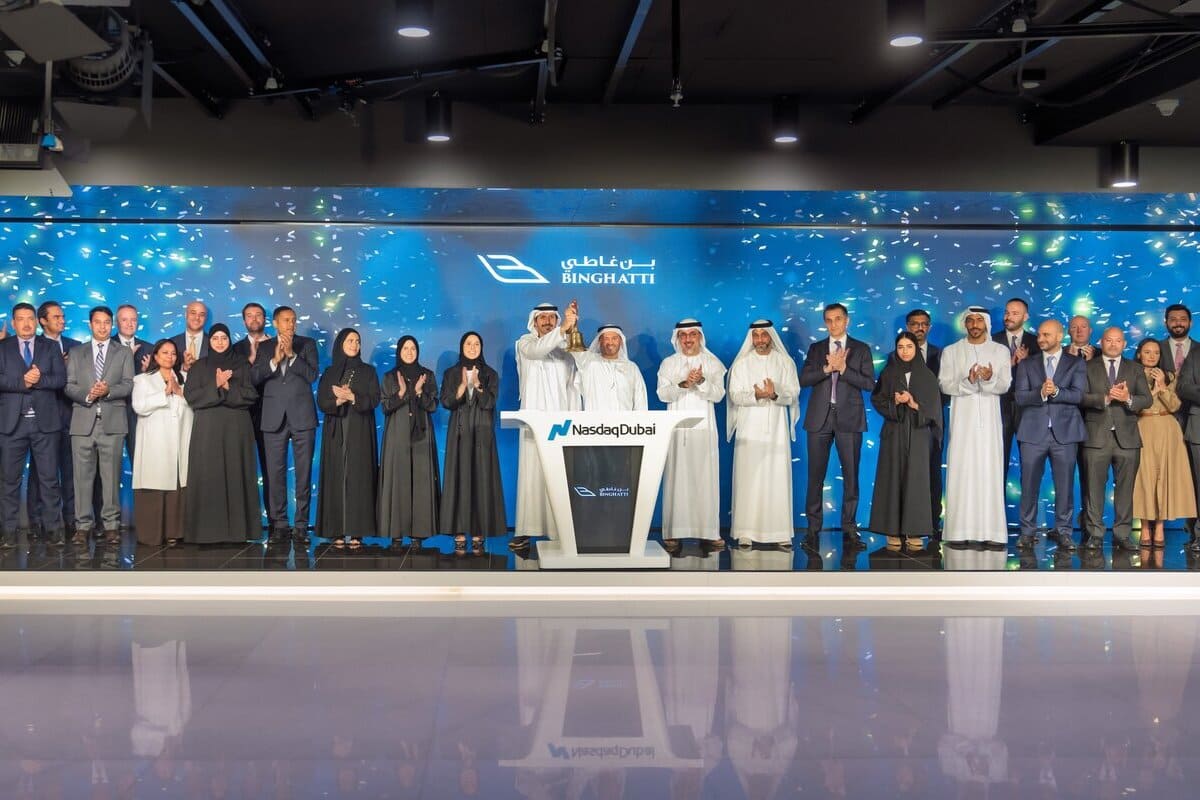
Binghatti Holding Limited has appointed a slate of banks to lead its first USD Reg S senior unsecured three-year green sukuk under its $1.5 billion Trust Certificate Issuance Programme. The developer, rated Ba3 by Moody’s and BB- by Fitch with both outlooks stable, has kick-started global investor calls and fixed income meetings. The mandate names Abu Dhabi Islamic Bank, Dubai Islamic Bank, Emirates NBD Capital, JP Morgan and Mashreq as Joint Global Coordinators; Abu Dhabi Commercial Bank, Ajman Bank, Arqaam Capital, Crédit Agricole CIB, First Abu Dhabi Bank, RAKBANK, Sharjah Islamic Bank and Warba Bank will act as Joint Lead Managers and Joint Bookrunners.

The green structuring is overseen solely by Mashreq, with DNV, based in Oslo, providing the Second Party Opinion on Binghatti’s Green Financing Framework. The issuance will make use of Binghatti Sukuk 2 SPC Limited under its wider Trust Certificate Issuance Programme.

Binghatti’s credit profile strengthened earlier this year when Moody’s assigned it its first ever corporate family rating of Ba3 with a stable outlook, citing its strong market position in Dubai’s luxury real estate sector, a vertically integrated model, low leverage, strong liquidity and disciplined cost controls. Shortly after, Fitch upgraded its long-term issuer default rating to BB- from B+, also citing its resilient growth, liquidity position and ability to self-fund projects through internal cash flows.

The developer’s previous sukuk issued under the same Programme—a five-year senior unsecured benchmark in August—was priced at a profit rate of 8.125%. That issuance attracted over USD 2.5 billion of orders, making it oversubscribed about five times and confirming significant demand from global and regional investors. That sukuk was dual listed on the London Stock Exchange and Nasdaq Dubai.

By Nantoo Banerjee Few will disagree that India should keep investing substantially in both onshore and offshore oil search as the country is becoming increasingly dependent on the import of petroleum crude to meet its energy needs. Currently, almost 86 percent of India’s annual crude petroleum needs are being met through imports. During his recent […]

The article Higher GST Will Hurt Oil-Starved India’s Exploration Drills appeared first on Latest India news, analysis and reports on IPA Newspack.

CEO Explores New Opportunities in Foreign Trade Finance SHANGHAI, CHINA – Media OutReach Newswire – 22 September 2025 – XTransfer, the World’s Leading & China’s No.1 B2B Cross-Border Trade Payment Platform, was recently invited by the Global Finance & Technology Network (GFTN) to attend the highly anticipated annual technology event, 2025 Inclusion·Conference on the Bund in Shanghai. Bill Deng, Founder and CEO of XTransfer, was invited as […]

National Industries Park, the DP World-run industrial zone in Dubai, has secured over AED 1 billion in new project investments between January and September 2025, underpinned by a major push into greenfield manufacturing. It has leased more than 7 million square feet of land during that period, with much of the allocation going to fresh build-outs rather than expansions of existing facilities. The tenant roster has grown […]

Abu Dhabi sovereign wealth fund Mubadala is exploring a full exit from its Turkish operations with Getir, which would include its delivery, financing and car-rental units, say people familiar with the matter. It is in advanced negotiations to offload Getir Arac, the car-rental arm, to Turkish firm Tiktak. Other units, including Getir Finans and the main delivery business, are also under consideration for sale.

Mubadala is Getir’s largest shareholder and obtained controlling interests across Getir’s Turkish subsidiaries in 2021 and 2024. The fund’s deliberations follow an ongoing dispute with the founders of Getir over how the company should be restructured. The founders resisted Mubadala’s plans, describing some actions by the fund as an “illegal coup”, and launched legal challenges in the Netherlands and elsewhere. The courts have, in some instances, sided with Mubadala.

Talks on Getir Arac are said to be well-advanced, although Tiktak has declined to comment. Meanwhile, in the delivery business, U. S.-based DoorDash has been identified as one of the potential buyers, among others. The details of ownership stakes in each Getir unit—delivery, financing, car rental—remain unclear. Mubadala has not offered public comment on these possible divestments.

Getir’s financial trajectory has weakened since its peak valuation of approximately $12 billion in 2022. The company expanded rapidly during the pandemic across several Western European markets and into North America, only to withdraw from those operations as demand waned and operational costs rose. As part of restructuring, non-core businesses were intended to be separated from profitable local grocery delivery operations.

HONG KONG SAR – Media OutReach Newswire – 22 September 2025 – DFI Retail Group (“DFI” or “the Group”) is pleased to announce a five-year partnership with Toumi Foods and Product Co., Ltd. (“Toumi”), one of Thailand’s leading rice exporters. This collaboration will see the production and delivery of 1,000 metric tons low-carbon rice to Hong Kong and Macau markets in 2026. Curtis Liu, Chief Executive Officer, […]

Vista by Lara has unveiled an enhanced design and digital growth studio in the UAE, marrying artificial intelligence with Shopify-centric services to assist local brands in accelerating sales, improving customer experience and scaling operations. The Dubai-based outfit offers a full suite of tools including Shopify storefront construction, conversion rate optimisation, search engine optimisation, advanced analytics and proprietary AI creative utilities. Dr Lara, founder of Vista by Lara, […]

VISHNU RAJA
RYO YAMADA
HITORI GOTOH
IKUYO KITA