News related to
demand

Greenlogue/AP Saudi Arabia’s Public Investment Fund has mandated Crédit Agricole CIB, JPMorgan and Société Générale to arrange a dual-tranche, euro-denominated green bond issue in three- and seven-year maturities, sources close to the matter said. This marks the fund’s inaugural euro green bond issuance and appears set to be its only green debt deal of the year. By pursuing this move, the sovereign wealth fund signals a further […]

Dubai Aerospace Enterprise has enlisted a consortium of international and regional banks to host a series of fixed income investor calls beginning 6 October 2025, with the aim of gauging demand for a potential benchmark 5-year senior unsecured US dollar sukuk issuance. The mandate positions Emirates NBD Capital, First Abu Dhabi Bank, Goldman Sachs International and HSBC as active bookrunners, while Abu Dhabi Commercial Bank, Ajman Bank, […]

Amazon has slashed prices on a wide range of Nvidia GeForce RTX graphics cards as its Prime Big Deal Days shopping event goes live from 7 to 8 October. Among the standout bargains are flagship and mid-tier models hitting their lowest-ever prices, while concerns about shipping scams have also drawn scrutiny. The most aggressive discount applies to the Asus TUF GeForce RTX 5070 Ti, currently offered at […]

Omnix International will unveil its HOT Systems suite—built in collaboration with PNY—at GITEX Global Dubai from 13 to 17 October, spotlighting AI workstations, liquid-cooled laptops and a new system-monitoring tool dubbed HOT Guard.

Visitors to the Hall 5, Booth 30 installation will see across-industry demonstrations—architecture, engineering, media, research—illustrating how tailored hardware accelerates digital transformation, reduces thermal throttling, and boosts reliability under sustained loads. HOT Guard introduces a continuous monitoring layer that oversees thermal behaviour, utilisation and system health, integrated with Omnix’s Hardware Optimization Technology stack.

The partnership with PNY ensures integration of high-performance memory and NVIDIA RTX graphics. PNY’s regional manager for MEA, Talus A Arukalil, emphasised that this collaboration positions the company to deliver “technology that doesn’t just keep pace with the future but defines it in the region.” On the HOT Systems side, Joseph John, Regional Sales Manager, asserted that the hardware is engineered “for today’s demands and tomorrow’s innovation,” targeting sectors where sustained compute power and system stability matter most.

According to Omnix’s own announcements, the new laptop models under the HOT Systems brand will be equipped with cutting-edge silicon—Intel Core Ultra 9 200HX or AMD Ryzen 9000 HX—matched with NVIDIA RTX 5080/5090 GPUs, DDR5 memory up to 128 GB, PCIe Gen 5 SSDs, Wi-Fi 7 and optional liquid cooling. These designs aim to balance high thermal headroom with energy efficiency and sustained performance even under intense workloads such as CAD, simulation and AI/ML inference.

Liquid cooling in a laptop format is still relatively rare. During previews, the company has framed this design choice as essential for holding consistent clock speeds over long renders or training sessions, reducing throttling under heat stress. As TBreak put it, the “pitch is stable clocks over flash specs,” targeting firms that can’t afford dips in performance mid-job.

With the industry steadily shifting from experimental AI use cases to full deployment, enterprises are increasingly looking for turnkey, dependable solutions—not just proof-of-concepts. In this environment, Omnix seeks to differentiate itself by offering not just hardware, but optimised stacks, monitoring, service support and aligned component integration.

GITEX Global 2025 is expected to host over 6,800 exhibitors from around 180 countries, showing advances across semiconductors, data centres, quantum computing, biotech and AI infrastructure. With global AI infrastructure investments accelerating sharply, regional companies and integrators are keen to showcase solutions tailored to local conditions—particularly in arid climates and metropolises with high operating temperatures.

Arabian Post Staff -Dubai Goldman Sachs lifted its December 2026 gold price forecast from $4,300 to $4,900 per ounce, citing strength in Western exchange-traded fund inflows and sustained central bank purchases. Gold’s spot price hovered around $3,960 per ounce early on Tuesday, having earlier touched an intraday high of $3,977.19. Goldman analysts expect central banks—particularly in emerging markets—to continue diversifying foreign-exchange reserves into gold, with forecast average […]

Cisco will unveil its latest innovations at GITEX GLOBAL 2025 in Dubai, aiming to equip enterprises across the Middle East and broader region with infrastructure built specifically for the AI era. The showcase focuses on AI-ready data centres, resilient network architectures, and strengthened security frameworks designed to support advanced workloads in data-intensive environments.

By joining the AI Infrastructure Partnership alongside BlackRock, Microsoft, NVIDIA, xAI and others, Cisco has committed to accelerating capital flows into datacentre and infrastructure projects. The partnership expects to unlock $30 billion in initial funding, scaling up to $100 billion including debt financing. Cisco brings its network, security and systems expertise to support the platform’s mission of secure, at-scale AI infrastructure.

At the heart of Cisco’s push is its new Cisco Data Fabric, launched in integration with Splunk, which provides federated data access across systems such as Amazon S3, Iceberg, Delta Lake and Snowflake, routing workloads intelligently to the best analytics or storage engine. This architecture is intended to reduce data movement, shorten analysis latency, and enable enterprises to transform machine data into AI-ready intelligence.

To support retrieval-augmented generation and agentic AI deployments, Cisco introduced the Secure AI Factory solution with NVIDIA and VAST Data. This validated architecture accelerates data extraction and retrieval at scale while enforcing security guardrails for every token processed. AI PODs built under this architecture offer pre-validated, high-performance building blocks for enterprise AI.

Networking and security are being redefined for the AI workload environment. At Cisco Live 2025, the company launched a next-generation network architecture for campus, branch and industrial environments, delivering unified management and devices purpose-built to support AI traffic patterns. It also introduced Hybrid Mesh Firewall and Universal Zero Trust Network Access to embed security into network fabric across hybrid and distributed environments. These features aim to simplify policy enforcement, improve visibility, and reduce complexity in securing both human users and AI agents.

Cisco CEO Chuck Robbins disclosed that fiscal year 2025 saw record AI infrastructure orders. In its final quarter, the company secured over $800 million from webscale clients, bringing total AI-focused orders to more than $2 billion—more than double its initial target. He described the pipeline as steadily growing into “hundreds of millions” as enterprises demand scalable, secure solutions.

In the Middle East, Cisco plans to demonstrate the regional relevance of its technologies under the theme “Make AI Work for You.” According to Cisco’s new AI Readiness Index, a vast majority of organisations in the UAE expect to expand their data centre capacity for AI within five years. The company will also present its work with Splunk on security and observability platforms at the event.

Cisco’s collaboration with Saudi Arabia’s HUMAIN is intended to build out an open, scalable AI infrastructure ecosystem aligned with Vision 2030. The multi-year programme includes deployment of cloud-based AI infrastructure, joint research initiatives, and efforts to grow local talent and innovation. The partnership underscores Saudi ambitions to position itself as a global AI hub.

Cisco sees accelerating demand for network modernisation. Its internal research reports that 97 percent of IT leaders view modernised networks as critical to deploying AI, cloud and IoT workloads, and 98 percent rate secure networking as essential for growth. However, the same study notes that only 40 percent of organisations have begun deploying advanced segmentation or intelligent control, illustrating an execution gap.

To strengthen its AI strategy, Cisco also expanded its presence in Indonesia by signing a Letter of Intent with BRIN to develop AI and cybersecurity capabilities via its Country Digital Acceleration programme. The plan includes building an AI Centre of Excellence and delivering training in AI, security and networking to 500,000 Indonesians by 2030.

Splunk’s observability portfolio itself is being reworked to embrace agentic AI, deploying AI agents to automate tasks such as root cause detection, alert correlation and issue resolution. This is intended to lighten the operational burden on IT and engineering teams while driving real-time insight.


Filestack has launched a sweeping upgrade to its core platform, introducing a fully integrated Digital Asset Management system, a comprehensive Event Logger, and a revamped Filepicker 4.0 with advanced upload control features. The move is aimed at giving developers stronger tools to manage file workflows, versioning, and audit trails—all without building these systems from scratch. At the heart of the update is the DAM, which allows users […]

Advertisements

Telecom operator du and technology vendor Nokia have completed a trial of an artificial intelligence–driven automation system aimed at simplifying and expediting the expansion and management of optical networks in the UAE.

The deployment tested Nokia’s WaveSuite AI, which combines traditional AI methods with generative models to assist du engineers with tasks such as planning, troubleshooting and documentation retrieval. The trial reportedly halved the time needed for optical network planning and produced designs 30 percent more efficient, while reducing errors during deployment.

During the trial, du’s engineering team used a single natural language interface to query live network status, access accurate documentation instantly, and simulate potential network evolutions. The system flagged possible inconsistencies or conflicting configurations early, allowing corrective adjustment before full-scale rollout. According to du, the result was faster troubleshooting, fewer manual errors and improved resource utilisation.

Saleem AlBlooshi, chief technology officer at du, said the trial “shows how innovation can transform network operations to face challenges brought on by increasingly sophisticated networks and ever-higher traffic volumes.” He emphasised that the automation of routine tasks and provision of intelligent tools would lead to more reliable, SLA-backed connectivity for customers.

From Nokia’s standpoint, Ron Johnson, senior vice president and general manager of Optical Networks, called WaveSuite AI “a demonstration of the real value of automation solutions with both classical and generative AI for optical networking.” He noted that the system reduces friction in planning, documentation search, and operational processes, and helps service providers accelerate provisioning of higher-speed, more reliable services.

The trial builds on du’s broader effort to embed AI and automation more deeply across its systems. Earlier this year, du partnered with Microsoft, Nokia, Khalifa University’s 6G Research Center and the ITU to launch an “Arabic Telecom LLM,” a large language model tailored for internal telecom operations. That model is designed to handle internal workflows, resolve device issues, process complaints and provide operational insights in Arabic and English. The initiative is part of du’s strategy to blend regional research leadership and global AI tools while retaining language and cultural fidelity in its operations.

This AI-driven automation trial comes amid growing pressures on telecom operators worldwide to scale quickly to meet surging demand for bandwidth, driven by AI workloads, data centers and new real-time applications. As networks grow in complexity, manual processes no longer scale efficiently, pushing operators into an era of closed-loop or autonomous operations. Nokia, in its public literature, frames network automation as essential to reducing manual intervention, improving performance and enabling faster service delivery across domains such as core, mobile, IP and optical networks.

In the UAE context, this trial signals du’s ambition to advance its optical infrastructure ahead of demand peaks, while benchmarking its operations for future 6G readiness. The success of automation in planning and deployment could reduce operational costs, increase agility, and support more complex services such as network slicing, ultra-low latency applications and differentiated service tiers.

A consortium led by Saudi Arabia’s Public Investment Fund, with Silver Lake and Jared Kushner’s Affinity Partners, has struck a deal to acquire Electronic Arts for approximately $55 billion, taking the iconic game publisher private. Under the agreement, EA’s shareholders will receive $210 per share, a 25 percent premium over the share price before the deal emerged, as the consortium combines fresh equity with a leveraged debt […]

Scientists have found that a marine heatwave triggered mass die-offs of clownfish across central Red Sea reefs once thought to offer thermal refuge, and that elsewhere these fish are now shrinking to withstand rising ocean temperatures. Research published in npj Biodiversity indicates that the 2023 marine heatwave caused bleaching in all monitored anemones across three reefs off Saudi Arabia, leading to mortality of more than 66 per […]

openSUSE Project has rolled out the beta of Leap 16, marking a substantial shift in its Linux distribution strategy by extending community support to 24 months and introducing core architectural changes. The transition signals a deliberate move toward modernization and longer-term stability for users. Leap 16’s codebase is now aligned with SUSE Linux Enterprise 16 and built atop the SUSE Linux Framework One. The beta ships with […]

Primark will launch three flagship stores in Dubai in early 2026, marking its first retail foray in the UAE under a franchise partnership with Alshaya Group. The outlets are slated for Dubai Mall, Mall of the Emirates and City Centre Mirdif. Under the alliance, the company is also targeting the GCC market more broadly, beginning with a store in Kuwait later this year at The Avenues. The […]

Google has chosen Saudi startup Lahint for inclusion in its Growth Academy: AI for GovTech 2025 cohort, positioning the company among 24 global government-technology innovators supported by Google. The move aims to strengthen Lahint’s capacity to deliver AI-enabled public services and further Saudi Arabia’s push for digital transformation under Vision 2030.

Lahint, established in 2023 by Ahmed Saber and Mohamed Ibrahim, secured a $1 million pre-seed investment earlier this year to scale its AI and automation offerings in government services. The platform currently manages more than 60 digital government services and serves over 200 businesses, integrating robotic process automation and AI to streamline licensing, permits and administrative workflows.

By integrating Lahint into its accelerator, Google pledges technical support, mentorship and access to cloud infrastructure—tools that could accelerate Lahint’s roadmap to full automation of priority public services. Lahint has already earned multiple ISO certifications and is accredited by the Saudi Data & AI Authority with a Waee badge for AI ethics compliance.

Lahint has advanced its internal timeline for key automation milestones. The company is now targeting completion of its GovTech automation program by early 2026, a shift from an earlier 2027 target. This acceleration comes alongside newly signed partnerships with government entities to deploy real-time status reporting and predictive compliance tools covering domain areas such as licensing, taxation and corporate registration.

Saudi Arabia’s broader AI landscape is scaling rapidly. In 2025, the kingdom announced over $14.9 billion in investments at LEAP and pursued MoUs under SDAIA to reinforce its data and AI infrastructure. The establishment of HUMAIN, a state-backed AI company under the Public Investment Fund, is central to that strategy. HUMAIN, launched in May 2025, has already inked collaboration agreements with Nvidia, AMD and Qualcomm to develop AI factories and Arabic large language models.

Google’s AI programme in Saudi Arabia is part of a wider arrangement. A $10 billion joint investment by Google Cloud and the Public Investment Fund backs a national AI hub to reinforce the local ecosystem and serve regional demand.

Glencore has entered a 20-year agreement with Discovery Green to supply renewable energy for four of its South African mining operations, beginning 2027. The deal is expected to deliver over 290 GWh annually to mines in the eMalahleni area, replacing the bulk of their existing power demand with wind and solar energy. Under the terms of the agreement, renewable power will be delivered from Discovery Green’s contracted […]

Teams at GITEX Global 2025 in Dubai will put liquid-cooled AI laptops under extreme thermal stress, testing whether advanced cooling systems can uphold sustained performance in one of the world’s harshest climates. Omnix International’s HOT Systems division, in partnership with PNY, will unveil a lineup of AI workstations, liquid-cooled laptops and the new HOT Guard monitoring suite, aiming to prove that these machines can maintain stability in high ambient temperatures.

At the heart of the exhibit is the challenge posed by regional heat: daytime temperatures in Dubai frequently exceed 40 °C, while indoor exhibition halls still pose cooling constraints. For high-performance AI workloads—particularly those involving CAD, BIM and machine learning—thermal throttling can cripple throughput. HOT Systems claims its integrated cooling and hardware optimisation can circumvent that performance drop. The accompanying HOT Guard software will monitor temperatures, fan and pump behaviour and security in real time on site.

Liquid cooling is no novelty in high-density server enclosures, but applying it in portable form factors presents a tougher engineering problem. In data centres, the shift from air to liquid systems has accelerated because conventional cooling struggles to keep up with power densities above 10–15 kW per rack. Liquid systems offer reduced power use, higher thermal headroom and often reclaimed waste heat reuse. But translating that to mobile form demands compact and robust fluid paths, efficient pumps, and risk control against leakage.

Advances in chip cooling are reinforcing that liquid systems represent more than a marginal improvement. Microsoft engineers have developed a microfluidics cooling technique that embeds coolant channels within the silicon substrate itself, enhancing heat removal efficiency at the chip level. That suggests future AI hardware may increasingly rely on liquid solutions at a micro scale.

Regional data centre operators are already embracing the shift: Khazna Data Centres, active across the UAE, has rolled out the country’s first liquid-cooled AI data centre and is developing more AI-optimised campuses. The move reflects recognition that standard cooling infrastructure cannot scale profitably with AI workloads.

Technical design choices behind liquid cooling include direct-to-chip systems, which place cold plates atop CPUs or GPUs, and immersion cooling, where liquid envelops hardware. The former is more suited for modular, retrofit deployments; the latter can offer full heat removal but introduces maintenance and material challenges, especially for localised devices. A recent review in AI systems architecture emphasises single-phase direct cooling as a flexible compromise for power levels below extreme thresholds, though it demands high reliability in fluid delivery and sealing.

Within the exhibition context, the HOT Systems demo will likely emphasise sustained throughput rather than peak benchmarks. The company plans real-world workflows—such as rendering, simulation and AI model inference—to demonstrate how the cooling system maintains clock speeds under load. PNY’s involvement underlines the reliance on qualified memory, GPUs and driver support, ensuring that thermal gains translate into usable computing stability.

End-users in architecture, media, engineering and AI fields are closely watching such developments. If heat throttling can be mitigated in this climate, portable AI rigs could expand in markets previously constrained to air-conditioned labs. But adoption depends on how well the solutions resist failure under harsh dust, vibration and heat cycles inherent to Gulf environments.

Prinker, a South Korea–based self-expression technology firm, is launching its full suite of personalization solutions in the Middle East and North Africa region at GITEX GLOBAL 2025, seeking to penetrate a market showing robust growth in beauty and personal care.

At its Dubai showcase, Prinker will debut Prinker POP, a smart beauty kiosk that enables users to mix and preview custom makeup palettes via a touchscreen interface and AI-driven simulation. It will also bring its handheld devices—Prinker S and Prinker M—capable of applying temporary, skin-safe tattoos within seconds, as well as a standalone Prinker Tattoo Kiosk allowing users to self-apply designs in malls or entertainment venues without staff assistance.

The company aims to tap into accelerating demand for experiential retail and personalisation in beauty, positioning itself at the intersection of tech and aesthetics as regional consumers and retailers seek interactive, low-risk forms of self-expression.

The MENA beauty and personal care market is projected to expand sharply, with estimates placing its value at around USD 95.2 billion by 2030 and an annual growth rate of 9.0 %. Rising digital penetration, social media influence, and youthful demographics are driving demand for personalised and immersive beauty experiences.

Prinker’s approach reflects broader industry trends in tech-infused beauty. Beauty firms worldwide are increasingly adopting AR mirrors, AI skin diagnostics, and custom formulation platforms. Yet few have ventured into on-demand, skin-printing devices in public retail spaces. Prinker positions its handheld and kiosk systems as a bridge between digital and physical engagement.

Retailers and salon operators in the region may see appeal in integrating Prinker’s solutions as a customer acquisition tool. By offering interactive touchpoints, brands can boost dwell time and cross-sell products. Prinker’s machines also reduce staff overhead and allow consistent brand experiences across locations.

Prinker’s global track record includes deployments for brand activations and content creation campaigns in Asia and the United States. However, scaling into MENA requires navigating regulatory regimes for cosmetic safety, cultural sensibilities around appearance, and localisation of designs to reflect regional tastes.

Prinker faces competition from AR/VR beauty apps that let users visualise makeup digitally, as well as legacy cosmetic brands developing custom blends in stores. But none currently replicate live, direct-to-skin printing in physical venues. Prinker’s advantage lies in marrying hardware and software with a frictionless user experience.

Executives leading Prinker’s expansion emphasise strategic partnerships. They plan to collaborate with regional beauty chains, department stores and mall operators, integrating kiosks into high-footfall environments. They also intend to localise design libraries—such as Arabic calligraphy motifs and regionally relevant patterns—to enhance appeal.

Analysts note that success will depend on commercial viability: cost per use, durability, and consumer uptake. Prinker will need to balance affordability with perceptible novelty so that users perceive value in transient tattoos or customised palettes.

Unlocking Africa’s Growing Payment Corridors for UAE Enterprises UAE now has a payment partner that unlocks Africa’s growing economic opportunity Verto today announced its official launch in the UAE. With over $25 billion processed annually for clients such as Unilever, and Maersk, the company’s platform is designed to address the unique challenges of cross-border payments between UAE and emerging market currency corridors (particularly in Africa), offering businesses […]

Atelic today unveiled Atelic Studio, a new toolkit designed to help companies deploy enterprise-grade AI solutions with enhanced security, streamlined integration and measurable business returns. The Dubai-based firm says Studio represents a shift toward more accessible, modular and trustworthy AI for sectors such as industry, healthcare and energy markets.

Atelic presents Studio as a vendor-agnostic, multi-tenant platform that supports organisations in managing AI model deployment, data pipelines and governance from a unified interface. The company emphasises that the goal is to deliver “trusted AI” at scale — giving enterprises control over security and compliance while achieving return on investment.

According to Atelic, Studio’s architecture layers include model management, access control, explainability tools and deployment orchestration. It supports hybrid and cloud environments and allows users to plug in models from existing AI providers or open-source frameworks. In promotional documentation, the company describes Studio as both “secure” and “strategic” — stressing that enterprises should not just build models but build them for business impact.

Atelic’s background lies in AI software, chatbots, predictive analytics and data engineering across markets. Earlier projects focused on custom AI solutions, but the push with Studio marks a move toward a standardised platform offering. The firm’s public profile positions it as a tech partner aiming to help organisations “automate, innovate, and grow.”

Industry analysts note that the challenge Atelic is trying to solve is not trivial: many enterprises struggle with integrating AI into legacy infrastructure, managing security risks, and proving business value. Such obstacles have prevented AI pilots from crossing into production in many firms. If Studio lives up to its claims, it could attract customers looking for a balanced bridge between agility and control.

In the Middle East, the push for digital transformation has seen strong governmental and corporate backing. Atelic anticipates demand from local energy, healthcare and industrial firms that are under pressure to adopt AI responsibly. The company says it will offer pilot engagements through regional partnerships to demonstrate local compliance, security and use-case feasibility.

Atelic has not publicly disclosed pricing or commercial terms for Studio. Observers believe the platform market is crowded—competitors include major cloud AI platforms, AI ops tools, and niche MLOps startups. The success of Studio will hinge on differentiation: the promise of enterprise trust, modular integration, and clear business metrics.

Technical job listings from Atelic suggest the company is building out the platform’s infrastructure: a Full Stack Software Developer role cites work on an “AI industrial platform” using a multi-tenant architecture. Meanwhile, a short video presentation of Studio describes it as a secure, vendor-agnostic AI user interface that aims to future-proof enterprises as requirements evolve.

Rania Gule Over the past few months, silver prices have witnessed a strong rally — not only as a safe-haven asset alongside gold, but also due to fundamental factors rooted in industrial supply and demand dynamics. As of early October 2025, silver is trading around $48.65 per ounce in spot market data, while ETFs such as iShares SLV show a slightly lower net asset value (NAV), reflecting […]

Grayscale Investments has enabled staking on its Grayscale Ethereum Trust and Grayscale Ethereum Mini Trust, making them the first U. S.-listed spot exchange-traded products to support native staking functions. In tandem, its Solana trust has also activated staking, pending regulatory approval for an exchange listing.

The introduction means investors in ETHE and ETH can now earn staking rewards while retaining exposure to Ether’s spot price. Grayscale says staking operations will be managed via institutional custodians and a distributed network of validator providers. The firm emphasises that staking is passive, intending to support protocol security while offering additional yield.

ETHE and ETH are not registered under the Investment Company Act of 1940, placing them outside the conventional ETF regulatory regime. That structure allows flexibility but also exposes investors to different oversight and risk frameworks. GSOL, currently quoted over the counter, must undergo a formal uplisting process to align with exchange-traded product standards.

The regulatory environment has posed ongoing challenges for staking-enabled products. Earlier in 2025, the U. S. Securities and Exchange Commission delayed decisions on staking features in ether ETFs proposed by major issuers. The SEC has articulated concerns that staking may constitute an offer of securities, complicating how such products can be structured under existing law. Grayscale’s new move comes amid evolving guidance around liquid staking receipts and the broader regulatory calibration of crypto ETPs.

Grayscale currently controls approximately half of U. S. ETP-held Ethereum, and as of the end of September 2025, the firm reported around $35 billion in assets under management. The firm has already staked tens of thousands of ETH, deploying mechanisms to balance liquidity demands with staking commitments. It uses what it calls a “liquidity sleeve”—a pool of unstaked tokens and short-term financing—to meet redemption requests without forcing premature withdrawals from staking pools.

Analysts note that Ethereum staking yields in the market range around 2 per cent annually, while Solana’s higher inflation and protocol incentives can push staking returns to double digits. For yield-seeking investors, a staking-enabled ETP structure promises a more seamless way to tap into rewards without managing validator nodes or staking accounts directly.

Yet the innovation also carries risks: validator slashing penalties, network downtime, and the volatility of token prices remain material. Because Grayscale’s staking is passive, investors’ rewards reflect aggregated validator performance. The firm has committed to transparency through regular reports disclosing validator partnerships, staking activity, and operational metrics.

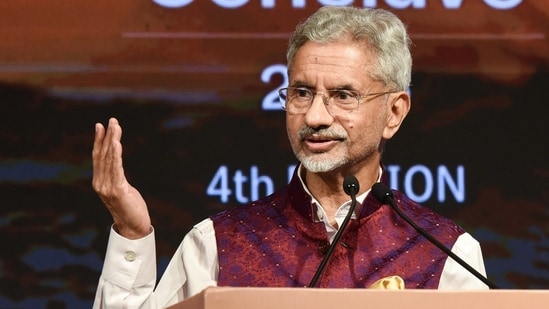
By Nitya Chakraborty Indian foreign policy makers have at last showing some mature understanding of the geopolitics of the post-Trump.2 months if the external affairs minister Dr. S Jaishankar’s observations at the concluding session of Kautilya Economic Conclave in New Delhi on Sunday, are any indication. The minister was quite candid in explaining the complexity […]

The article EAM Jaishankar Is Right: Trump Has To Respect India’s Red Lines appeared first on Latest India news, analysis and reports on Newspack by India Press Agency).

HONG KONG SAR – Media OutReach Newswire – 6 October 2025 – The anime IP “BUCKET MAN”, created by filmmaker Stephen Fung, has been awarded the Rising IP Award at DesignerCon 2025, held at AsiaWorld-Expo, in recognition of its outstanding potential in creativity, technology, and cultural development. “BUCKET MAN”, created by filmmaker Stephen Fung DesignerCon (DCon) first launched in California in 2005 as a gathering for toy […]

HANOI, VIETNAM – Media OutReach Newswire – 6 October 2025 – This November, for the very first time, Vietnamese audiences will be immersed in an unprecedented music event: the global superstar G-DRAGON’s world tour, landing right on the Eastern bank of Hanoi. Few realize that securing the nod from G-DRAGON required 8Wonder, the mega-festival brand of Vingroup, to overcome the incredibly stringent standards set by this S-tier […]

UAE’s non-oil private sector continued to gain momentum in September, with the seasonally adjusted S&P Global UAE Purchasing Managers’ Index reaching 54.2 — the highest reading in seven months and up from 53.3 in August. The increase underscores a solid acceleration in non-oil business activity in the country’s diversified economy. Growth was led by a sharp upswing in new business; the new orders sub-index jumped to 57.2 […]

VISHNU RAJA
RYO YAMADA
HITORI GOTOH
IKUYO KITA