News related to
demand

Engineering firm ABB India has announced a 25 per cent increase in the production capacity of variable speed drives at its Peenya facility in Bengaluru. The expansion involves a newly installed production line equipped with advanced automation and sensor-based monitoring, and is aimed at boosting local manufacturing, reducing lead times and supporting domestic industry sectors such as buildings, data centres, water, cement and metal processing.

The new manufacturing line is reported to slash lead-times by up to 40 per cent while enabling more customer-specific configuration of high-power drives. According to AR Madhusudan, Business Line Manager, Drive Products at ABB India, “As we mark two decades of drives production in India, this expansion reinforces our strong commitment to advancing local production capabilities and delivering energy-efficient technologies for India’s industries.” The upgrade is said to align with the country’s wider ‘Atmanirbhar Bharat’ and ‘Make in India’ initiatives and reflect the Group’s deployment of Industry 4.0-style automation.

The enhanced line integrates robotics for the assembly of key components and digital monitoring tools for real-time visibility of operations, designed to boost productivity while reducing manual handling and improving safety. Tuomo Hoysniemi, Division President for Drive Products in ABB Motion, stated the move supports the firm’s global push to help industries become leaner and cleaner by localising production and strengthening ecosystem proximity to customers.

Driven market demand for energy-efficient drives has been growing rapidly, as industries seek to reduce electricity consumption and enhance operational performance. VSDs allow electric motors to adjust speed to match demand, which in turn lowers energy use and improves process control. ABB’s upgrade adds capacity for large-power-rated drives to meet higher performance needs in key industry verticals.

The decision to bolster local manufacturing forms part of ABB’s broader global strategy. The firm has previously stated it aims to achieve over 90 per cent local production in key markets including India, to mitigate supply-chain risk and respond more nimbly to demand. Outside India, ABB has increased investment in the U. S. and Europe to expand local production capacity for electrification equipment and industrial automation.

Industry analysts note that with growing pressure on carbon emissions as well as rising electricity costs, the demand for high-efficiency drives is set to rise steadily. Manufacturing localisation also delivers benefits such as reduced logistics cost, faster service and improved customisation, especially when the line can deliver “made-to-order” drives to match client specifications.

In India, the upgrade is also timed with the global celebrations by ABB of 50 years of innovation in drives and two decades of drives production in India. The move is expected to strengthen ABB India’s position among competitors in the domestic automation market, in which other firms are also investing in local ecosystem capabilities and digital manufacturing.

However, challenges remain. While localisation reduces lead times and improves responsiveness, it also requires ongoing investment in workforce skills, digital infrastructure and supply-chain resilience. The extent to which the upgraded line will translate into significantly higher market share for ABB India or broader cost advantages remains to be seen. Similarly, customer uptake may depend on the long-term savings delivered by the drives and the availability of after-sales support in the regions targeted.

BANGKOK, THAILAND – Media OutReach Newswire – 30 October 2025 – Charoen Pokphand Foods Public Company Limited (CPF) of Thailand and NH Foods Ltd. of Japan, two leading food companies in Asia, join forces to establish a new joint venture, CPF NH Foods Co., Ltd. This partnership unites leading capabilities in innovation, food safety, high-quality protein production, and sustainable manufacturing processes to serve the rising demand for […]

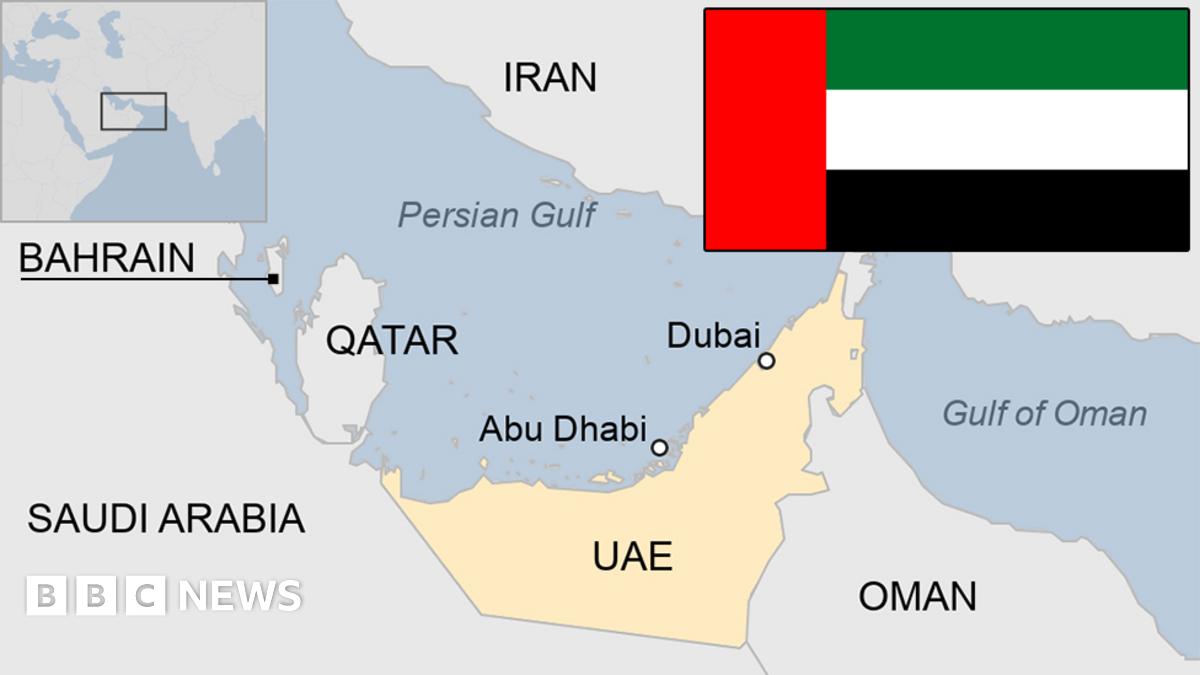
Thrifty Car Rental UAE has introduced the region’s first self-service digital car rental kiosk, a move aimed at transforming how vehicles are rented across the Emirates. The kiosk, unveiled at the lobby of Novotel and Ibis Deira Creekside Dubai, allows customers to browse available vehicles, complete identity verification and make payment entirely digitally — the car can then be delivered within one to three hours. The launch signals a clear shift toward technology-led mobility solutions in the car rental industry.

The kiosk offering is part of Thrifty’s broader strategy to engage customers seeking convenience, speed and flexibility. At the Arabian Travel Market 2025 the firm outlined its ambition to expand this self-service model across high-traffic zones, including residential areas, shopping centres and transit hubs. The head of retail at Thrifty, Chand Soni, said the company was “building more than a rental network; we’re building a connected experience.”

Industry data suggest that the regional car rental market is undergoing a fundamental digital transformation, driven by customer demand for contactless service and the tourism sector’s push for smarter mobility. A market research report covering Oman values the digitisation of car rental — including self-service kiosks and app-based models — at US$150 million and growing, citing rising smartphone penetration and government digital-economy initiatives.

Thrifty’s kiosk system employs a touchscreen interface, secure identity verification and live payment integration. Users select vehicle type, rental duration and location via the kiosk, triggering delivery logistics in what the company promises as “minutes, not hours”. The vehicle is dropped off at a location of the renter’s choice. The system is designed to address both leisure travellers and residents who may need a flexible vehicle-rental alternative without the usual counter-based rental process.

The shift comes as car rental players in the region face increased competition not just from traditional rivals but from app-based mobility services and subscription models. For example, Thrifty itself is rolling out flexible rental plans — including monthly specials and lease-to-own options — to attract customers who prefer longer-term flexibility over ownership. The kiosk adds another layer of convenience for shorter-term rentals or spontaneous plans.

The move may also help Thrifty scale more efficiently. By deploying kiosks in multiple locations, the company can reduce staffing and branch-infrastructure costs, optimise fleet utilisation and meet spontaneous demand without needing multiple full‐service outlets. Soni noted the goal of doubling the network of touchpoints in the period ahead.

However, executing this strategy will bring challenges. The initial investment in digital kiosks and supporting IT infrastructure is substantial, and the process requires robust identity verification, payment security and logistics coordination. According to regional research, smaller operators may struggle to deploy such tech due to cost constraints and customer inertia — in some markets a majority of users remain more comfortable engaging via staffed counters.

Another risk lies in customer adoption. While younger and tech-savvy users may welcome the kiosk format, others may prefer the human interaction offered by traditional rental counters. Thrifty will need to ensure service reliability, vehicle availability and customer support — especially if rentals are completed entirely digitally and delivery timelines become core customer expectations.

Regional mobility trends underscore the importance of innovation. With the UAE emphasising tourism growth, smart infrastructure and digital transformation, the launch aligns with broader national strategies. Thrifty’s positioning at the intersection of mobility, digital convenience and customer experience may help meet evolving consumer behaviour, but sustaining value will depend on execution across logistics, fleet management and customer service.

For business travel, hotel partnerships and leisure rentals, the kiosk offers a compelling convenience proposition. At the same time, Thrifty must manage fleet availability, delivery logistics and system uptime to avoid service disruptions. Monitoring how customers adopt the kiosks, how much rental behaviour changes and how much cost or revenue upside emerges will be key to assessing whether this innovation delivers long-term competitive advantage.

Households may soon welcome a new occupant. Robotics firm 1X Technologies has opened pre-orders for its humanoid home assistant model, NEO, signalling a push into consumer domestic robots. The Palo Alto and Norway-based company lists the unit at about US$20,000, with deliveries slated to begin in 2026. The robot is pitched to perform household chores such as folding laundry, organising shelves, fetching items and greeting guests. 1X […]

By K Raveendran New Delhi appears to be recalibrating its crude-oil sourcing strategy under mounting pressure from Washington, signalling what may be a strategic shift away from Moscow in favour of deeper ties with the United States. Over the past few months, Indian refiners, including the major private player Reliance Industries, have ceased or paused […]

The article India’s Energy Pivot Under Donald Trump’s Tariff Pressure appeared first on Latest India news, analysis and reports on Newspack by India Press Agency).

Natura Bissé becomes the first and exclusive spa brand in the prestigious ranking of the world’s finest hotels BARCELONA, SPAIN – Comunicae – 29 October 2025 – The Spanish skincare brand takes a key step in its commitment to remaining a global leader in the world of high-end wellness experiences, becoming the first and exclusive “Official Spa Brand” of The World’s 50 Best Hotels, the global authority […]

The national assembly’s Committee on Agriculture launched a week-long oversight tour of the Eastern Cape that began with a visit to the Eastern Cape Rural Development Agency-backed macadamia and citrus programmes, signalling heightened focus on agricultural transformation and small-farmer inclusion. The delegation arrived in the Raymond Mhlaba local municipality to meet traditional authority Chief Siseko Maqoma and inspect packhouse operations in the Kat River/Seymour area, before moving […]

Advertisements

The US stock market continues to surge, its strength underpinned by robust earnings and an easing policy stance from the Federal Reserve. AI remains the defining force, lifting productivity expectations and propelling capital spending. Wall Street is still the engine of global growth, but attention is beginning to turn elsewhere. A growing number of market participants see the next major wave forming in Asia, led by China […]

BARCELONA, SPAIN – Media OutReach Newswire – 28 October 2025 – OPPO’s global launch of the Find X9 Series reinforces its continued commitment to the high-end segment. This move coincides with the brand’s global user base exceeding 740 million, reflecting its success in engaging new generations through user-centric innovation. “OPPO is advancing its brand and user experience with a clear focus on the new generation of global […]

Horizon English School has announced the establishment of an all-through campus in the Town Square community of Dubai, signalling a strategic expansion of the institution’s British curriculum offering to ages 3-18. Under a joint venture between education group Cognita and developer Nshama, the new facility is scheduled to open in August 2027 and will begin with Foundation Stage 1 through Year 8, expanding to Year 13 in […]

Showed Growing Interest in Healthcare Technology Event Featured a 30-second AI Retinal Imaging to Screen 55 Health Risks Instantly HONG KONG SAR – Media OutReach Newswire – 28 October 2025 – “Prevention is better than cure” is a common saying that reflects the concept of “preventive healthcare,” which advocates for citizens to proactively manage their health in daily life to reduce the future financial burden of treating […]

By R. Suryamurthy As Bihar heads to the polls on November 6 and 11, the contest is being pitched as a battle for identity, justice, and governance. But no matter which side wins—the NDA led by the BJP–JD(U) combine, the opposition Mahagathbandhan under the RJD-Congress, or the insurgent Jan Suraaj of Prashant Kishor—the victor will […]

The article The Battle For The Ballot Cannot Hide Bihar’s Bitter Economic Truth appeared first on Latest India news, analysis and reports on Newspack by India Press Agency).

Dubai-based Emirates NBD has executed a finance-lease facility supporting the acquisition of two Airbus A321neo aircraft for India’s largest carrier IndiGo, marking the lender’s entry into aviation asset financing and underlining its commitment to the aviation sector. The transaction adds to IndiGo’s sizable fleet growth ambitions and aligns with the UAE bank’s strategy to deepen its aviation-finance capabilities.

Under the deal, Emirates NBD will supply the structured leasing facility enabling IndiGo to secure two A321neo jets, which the airline intends to deploy as it strengthens its domestic network and expands international reach. The airline currently holds an order-book of nearly 900 aircraft across the A320neo, A321neo and A321XLR families.

IndiGo’s Chief Aircraft Acquisition and Financing Officer Riyaz Peermohamed commented: “We are pleased to partner with Emirates NBD on this financing transaction and look forward to building on the success of this transaction and further strengthen our relationship in the future.” Emirates NBD’s Group Head of Wholesale Banking Ahmed Al Qassim said that the deal “demonstrates our ability to provide bespoke financing structures to support the aviation industry’s growth”, and confirmed this marks the bank’s first aircraft finance lease.

The transaction comes amid a broader context of rapid fleet expansion in India’s aviation market. Airbus has indicated that IndiGo and another Indian carrier together are due to receive some 1,260 aircraft, of which around 916 are earmarked for IndiGo alone, making it one of the largest airline backlog commitments globally. On the wide-body front, IndiGo recently converted 30 of its purchase rights into firm orders for 30 additional Airbus A350‑900 aircraft, raising its wide-body order to 60 units and signalling its desire to build a global network reach beyond its low-cost domestic model.

From the lender’s perspective, Emirates NBD is positioning itself as an aviation-finance partner of choice in the Middle East and internationally. The bank’s move into aircraft leasing coincides with a rising investor and lender interest in aviation assets, as carriers renew fleets to improve fuel efficiency and meet higher demand. For IndiGo, this lease transaction adds financing flexibility, diversifies its funding sources and supports the airline’s aircraft-asset strategy at a time when supply-chain headwinds and delivery schedules remain tight in the global aerospace market.

Gold regained momentum as the US dollar’s slide and expectations of a shift in Federal Reserve policy helped lift the metal above the psychologically important $4,000-per-ounce mark. Spot gold rose around 0.7 % to $4,009.39 per ounce, while US gold futures for December delivery edged up to $4,022.10. At the same time, broader factors have introduced both bullish and cautionary signals to the market.

Investor interest is rekindled by the weaker dollar, which makes gold relatively cheaper for buyers holding other currencies, and by widespread anticipation that the Fed will adopt a more dovish stance. The dollar index fell roughly 0.1 % as markets weighed the possibility of rate cuts. At the same time, certain easing in trade-tensions between the US and China has slightly reduced gold’s role as a safe-haven asset. The confluence of these opposing forces has begun to shape a more nuanced outlook for the metal.

Analysts say that the rebound above $4,000 should not be taken as a strong bullish assurance yet. While the technical bounce signals renewed buying interest, momentum must be supported by fundamentals. One market commentator observed that “buyers who were waiting on the sidelines for gold are now being tempted into taking positions at these price levels. Also, we are seeing a bit of softness from the dollar, which is giving gold a reprieve”.

The wider context shows that gold has already surged markedly this year, up more than 50 % in 2025, and reached a record high near $4,381.21 in mid-October. The rally has been fuelled by a combination of geopolitical anxiety, central-bank buying and expectations of monetary easing. But the pull-back seen earlier this week underscores that investor discipline and macro clarity are still required for any sustained rise.

Emerging trends in the market reveal more structural undercurrents. Research from noted finance academics suggests that gold’s role is evolving: it may increasingly function as a high-quality liquid asset, competing with traditional safe-havens and benefiting from de-dollarisation in global reserves. But at the same time, some firms argue the rally may be overstretched: one analysis warned that with gold already up so sharply this year, its next move could be a “mini-bust,” with projections that prices might fall toward $3,500 by 2026 if support from central-bank demand weakens.

Forecasts for 2026 have also shifted. A poll of analysts and traders indicates a median expectation that average gold prices will exceed $4,000 per ounce next year – a milestone in itself – although forecasts vary widely, reflecting both optimism and caution. On the upside, institutions such as Goldman Sachs remain bullish, pointing to potential further gains on the back of monetary accommodation and geopolitical risk. On the downside, if trade tensions ease and inflation moderates, some believe gold could correct.

The interplay between stimulus expectations and dollar dynamics remains crucial. A softer dollar supports gold, but if authorities signal confidence in economic recovery and maintain higher interest rates, gold’s appeal could diminish because it offers no yield. Additionally, the safe-haven narrative is under pressure as expectations of improved US-China relations gain traction, which may lower investors’ impetus to hold gold purely for risk hedging.

Strength in demand from global central banks has supported prices thus far, but market watchers caution that this may face constraints as gold holdings rise and incremental purchases become harder. For now, the up-move above $4,000 may signal a tentative buying opportunity for traders who believe a rate-cut cycle is on the horizon. For longer-term investors though, vigilance remains essential, as valuations are elevated and market dynamics could shift rapidly.

A leading enterprise-artificial-intelligence firm, Fractal Analytics, is preparing to launch a public share sale of around ₹4,900 crore and is targeting a market valuation near US $3 billion. The move comes as the company positions itself at the forefront of the AI-analytics sector and seeks to capitalise on growing investor demand for technology listings. The proposed offering would comprise fresh shares worth about ₹1,280 crore and an offer-for-sale by existing investors totalling approximately ₹3,620 crore as part of its entry into public markets.

Fractal Analytics was founded in 2000 by five graduates of the Indian Institute of Management Ahmedabad. Today only two of the original founders remain with the company: Group Chief Executive Officer Srikanth Velamakanni and Chief Executive Officer Pranay Agrawal, each holding roughly 10 per cent of the company’s equity and not looking to sell in the upcoming offering. The firm achieved unicorn status in 2022 and generates more than 90 per cent of its revenues outside its home market, meaning its exposure to global enterprise clients is strong.

Advising banks on the share sale include major names such as Axis Bank, Goldman Sachs, Kotak Mahindra Capital and Morgan Stanley, signalling the IPO is being positioned among marquee listings. Industry data show that new-listing proceeds in the Indian market have already approached US $16 billion in 2025, with expectations that this year could surpass the US $21 billion record set in the prior year.

In financial terms, Fractal has posted a turnaround in performance. According to regulatory disclosures, its revenue rose from about ₹2,043.7 crore in FY23 to approximately ₹2,816.2 crore in FY25, reflecting a compound annual growth rate of around 17.4 per cent. Meanwhile, profitability returned in FY25 with a net profit of ₹220.6 crore after a loss of ₹54.7 crore in the previous year. The firm’s adjusted EBITDA margin improved from 6.8 per cent in FY23 to 17.4 per cent in FY25, and operating cash-flow rose substantially to ₹397 crore in FY25 from the previous year.

Fractal’s service model is built around large global enterprises, which in FY25 included 113 “must-win clients”—companies with annual revenues in excess of US $10 billion or customer bases over 30 million. About 65 per cent of the firm’s FY25 revenues were derived from the United States, underlining its dependence on Western markets. To maintain growth momentum the company intends to channel IPO proceeds into further research and development, strategic acquisitions, expansion of its R&D centres in locations such as Bengaluru, Gurugram, Pune and Noida, and boosting its sales-and-marketing capabilities.

Despite the strong metrics the IPO plan carries risks. The business remains heavily concentrated: its top ten clients contributed 53.8 per cent of revenue in the Fractal. ai segment in FY25. Losing a major client could have a disproportionate impact on its results. The firm is also operating in a rapidly evolving global AI landscape dominated by large diversified IT-service providers as well as specialist startups. Its heavy reliance on the U. S. market exposes it to foreign-exchange volatility and regulatory shifts abroad. Analysts comment that an IPO valuation near US $3 billion may leave little margin for error if market sentiment weakens or growth decelerates.

Arabian Post Staff -Dubai Apple plans to equip its next-generation iPad Pro with a vapor chamber cooling system, marking a significant step for heat management in the tablet line. The upgrade is expected to accompany the launch of the M6 chip, built on TSMC’s 2-nanometre process, with a product refresh anticipated in spring 2027. The change responds to increasing thermal demands as the iPad Pro evolves into […]

Citigroup Inc. and Coinbase Global Inc. have announced a collaboration to expand digital-asset payment services for the bank’s corporate clients, signalling a deeper institutional embrace of blockchain-based money transfers. The partnership will first focus on facilitating conversions between fiat currencies and digital assets, including stablecoins, and improving access to on- and off-ramps for firms that move large volumes of funds.

The deal between Citi and Coinbase addresses a prominent pain point in global payments: the cost, time and complexity of moving funds across borders or between fiat and crypto systems. Under the agreement, the participants will work on streamlining pay-ins and pay-outs for institutional clients, simplifying the flow between traditional bank accounts and Coinbase’s digital-asset platform.

“With more than 300 payment-clearing networks across 94 markets globally, we see collaborating with Coinbase as a natural extension of our ‘network of networks’ approach,” said Debopama Sen, Citi’s head of payments and services. Brian Foster, global head of crypto-as-a-service at Coinbase, added that the collaboration “reflects our commitment to building the infrastructure needed for the next generation of financial services.”

Analysts view the move as part of a broader trend in which leading financial institutions are shifting from cautious observation of digital assets to actively integrating crypto and stable-coin infrastructure. Citi had already signalled interest earlier this year in issuing its own stablecoin and providing custody services for crypto assets backing investment funds.

Stablecoins—cryptocurrencies pegged to fiat currencies—currently serve mostly trading and settlement within crypto markets. The new collaboration suggests an ambition to extend their use into cross-border payments, treasury operations and institutional settlements. In this case, the plan explicitly includes exploring mechanisms to directly link fiat balances to on-chain stable-coin payouts for corporate clients.

While the partnership presents opportunity, it also raises regulatory and operational challenges. Financial regulators have increased scrutiny of stable-coin issuance, backing reserves and the potential risks to payments stability. Traditional banks entering the crypto space must manage compliance, money-laundering controls and cyber security in new systems. For instance, a consortium of ten major banks—including Citi—are together exploring stable-coin issuance tied to G7 currencies, with regulatory oversight a key consideration.

From an operational standpoint, integrating digital-asset infrastructure into a global bank’s existing payments network is complex. Citi’s model involves multiple clearing networks and real-time settlement expectations; adding 24/7 on-chain rails demands robust coordination, governance and risk management frameworks. The collaboration acknowledges this by focusing first on institutional clients and later expanding to broader corporate use.

For Coinbase, this partnership enhances its positioning as a trusted infrastructure provider for institutions. The firm has made several moves to support institutional adoption, including acquiring technology to expand capital markets presence and forming strategies around tokenised credit products. By joining forces with a major bank like Citi, Coinbase gains access to a wide international payments network and the bridge between traditional finance and digital assets.

Market reaction has been positive; following the announcement, Coinbase’s shares rose, reflecting investor appetite for digital-asset infrastructure deals with legacy banks. For corporate clients of Citi, the collaboration means access to a potentially faster, lower-cost payment model that combines fiat and crypto rails and the possibility of 24/7 global transfers.

In examining trends, the deal fits into a pattern where banks are no longer sidelined observers of cryptocurrency innovation but active participants. As one executive at Citi observed, the financial-services landscape is changing fast, and institutional demand for real-time, border-less payments is driving innovation. That said, the extent and pace of adoption will depend on regulatory clarity, technological readiness and client acceptance.

By Nantoo Banerjee If global oil giant BP plc’s ‘Energy Outlook 2025’ proves to be true, India will be a global leader in energy consumption, outpacing all other countries by 2050. The country will account for 12 percent of the global demand, up from seven percent from 2023, according to BP’s chief economist Spencer Dale. […]

The article India Is At The Heart Of Driving The Global Energy Process appeared first on Latest India news, analysis and reports on Newspack by India Press Agency).

Saudi Arabia’s flagship New Murabba project is poised to become a major investment hub, with plans to attract capital in technology, real estate, and construction sectors. Michael Dyke, the CEO of New Murabba, announced the initiative at the Fortune Global Forum in Riyadh, marking a significant step forward in the kingdom’s diversification strategy.

Launched in 2023 by Crown Prince Mohammed bin Salman, the New Murabba project is part of Saudi Arabia’s broader Vision 2030, aimed at reducing the nation’s reliance on oil revenues by fostering new industries and boosting economic growth. The initiative aims to transform the heart of Riyadh into a sprawling mixed-use urban area, poised to redefine the cityscape with a mix of residential, commercial, and entertainment offerings.

The project will cover an area of 19 square kilometres, positioning it as one of the largest urban developments globally. Its scale is unprecedented, making it one of the most ambitious projects in Saudi Arabia’s recent history. The new district is expected to accommodate over 100,000 residents and create hundreds of thousands of jobs in various sectors, significantly contributing to Riyadh’s economic development.

One of the key areas that Dyke highlighted during his speech at the forum is the focus on technology. The New Murabba project aims to integrate cutting-edge technological innovations into its design and infrastructure. The development will feature smart city technologies, including AI-driven systems for traffic management, energy conservation, and public services. Moreover, the project is expected to foster a thriving ecosystem for tech startups and established companies, making it an attractive destination for both domestic and international tech investors.

The project’s real estate and construction sectors will also play a pivotal role. With residential spaces, luxury hotels, office towers, and retail outlets planned, the project is designed to meet the needs of a diverse range of residents, businesses, and tourists. This focus on mixed-use developments aims to create a self-sustaining urban area, with a heavy emphasis on sustainability and green architecture. Additionally, the construction phase alone is expected to generate significant economic activity, providing a substantial number of jobs in the kingdom’s building sector.

New Murabba’s strategic location within Riyadh further boosts its potential as a central business and cultural district. It will be positioned in close proximity to key landmarks, including the King Abdulaziz Historical Centre and the King Saud University, enhancing its accessibility and making it a focal point for both locals and visitors. The project’s proximity to the King Khalid International Airport is also expected to make it a prime location for international businesses, especially in the tech and tourism industries.

The Saudi government’s backing of the New Murabba initiative signals a strong commitment to its diversification efforts. As part of the Vision 2030 programme, the kingdom is looking to foster a more sustainable and diversified economy, moving away from its dependence on oil exports. This development aligns with broader trends in urbanisation across the Middle East, where large-scale projects are shaping the future of cities and driving economic change.

The investment opportunities presented by New Murabba are expected to attract a wide range of investors from various sectors. For real estate developers, the sheer scale of the project represents an unparalleled opportunity. For technology firms, the integration of smart city technologies offers a unique environment in which to develop and test innovative solutions. Meanwhile, the construction sector stands to benefit greatly from the demand for infrastructure and buildings, with the long-term potential for growth in both residential and commercial spaces.

With the Saudi government’s push for private sector involvement, the New Murabba project is expected to be a catalyst for further investments in the kingdom. The involvement of international investors and companies will be crucial to its success, with the project acting as a gateway to other opportunities within Saudi Arabia’s growing economy.

Greenlogue/AP Schneider Electric is charting a new course in the realm of energy and automation by positioning artificial intelligence -integrated data centres as central to the sustainability of digital infrastructures. The company unveiled its latest vision for these AI-driven hubs at its Global Innovation Summit in Copenhagen, marking a pivotal moment in its commitment to driving the global digital energy transition. During the summit, CEO Olivier Blum […]

Crusoe, a company renowned for its vertically integrated AI factories, has secured $1.375 billion in its Series E funding round. This infusion of capital values the Denver-based firm at over $10 billion, marking a significant milestone in its growth trajectory. The funding is expected to fuel the company’s ambitious expansion plans, particularly in its AI-driven infrastructure and computing services. The latest funding round, which saw participation from […]

The REX-Osprey XRP ETF, the first U. S. exchange-traded fund offering direct exposure to XRP, has surpassed $100 million in assets under management within a month of its launch. Launched on September 18, the fund provides investors with a unique opportunity to gain direct exposure to XRP, the fourth-largest cryptocurrency by market capitalization, without the complexities of purchasing the digital asset itself.

According to REX Osprey, the firm behind the launch of the ETF, the rapid growth in AUM highlights the increasing interest in digital assets and their integration into mainstream investment products. The ETF, which trades on the Cboe BZX Exchange, allows investors to gain exposure to XRP through a traditional brokerage account, making it more accessible than purchasing the cryptocurrency directly on exchanges.

XRP has long been one of the most controversial and volatile cryptocurrencies, primarily due to its ongoing legal battle with the U. S. Securities and Exchange Commission. The SEC initially filed a lawsuit against Ripple Labs, the company behind XRP, alleging that the cryptocurrency is an unregistered security. However, recent developments in the case, including partial victories for Ripple, have given a boost to investor sentiment, contributing to XRP’s price increase and the subsequent success of the ETF.

Since its launch, the XRP ETF has attracted both institutional and retail investors seeking exposure to the cryptocurrency market in a more regulated, liquid form. The growth in AUM also underscores the growing demand for innovative financial products that allow mainstream investors to participate in the digital asset space without directly owning the underlying cryptocurrencies.

The popularity of cryptocurrency ETFs has been rising globally, and the launch of XRPR marks a significant milestone in the U. S. market, which has been cautious in approving crypto-based exchange-traded products. The approval of the XRP ETF comes at a time when other digital asset ETFs, such as those based on Bitcoin and Ethereum, have seen significant traction. The success of these products has raised expectations for further expansion of the cryptocurrency ETF market, especially as regulatory clarity surrounding digital assets continues to improve.

The launch of the REX-Osprey XRP ETF also reflects broader trends in the financial markets, with traditional financial institutions increasingly integrating cryptocurrencies into their offerings. Institutional investors, who have historically been wary of the volatility and regulatory uncertainty surrounding digital assets, are now more open to exploring the potential of blockchain technology and digital currencies as part of a diversified investment portfolio.

XRP, which has faced significant volatility over the years, has experienced a surge in value following key legal victories in its ongoing battle with the SEC. Ripple’s partial legal wins have boosted investor confidence, and many view the outcome of the case as a critical factor in the future of XRP’s market position. The cryptocurrency’s price has seen a sharp upward movement in response to the more positive outlook surrounding the lawsuit.

The success of the XRP ETF reflects growing confidence in XRP as an investment vehicle, despite the regulatory uncertainties that continue to surround it. While there are still ongoing legal challenges, the launch of this ETF signals a shift in how the cryptocurrency market is viewed by investors and regulators alike. The ability to trade XRP through an exchange-traded fund allows for more streamlined access to the asset, eliminating some of the complexities involved in handling digital currencies directly.

Microsoft has introduced a new avatar named Mico to lead its latest update of the Copilot assistant, marking a strategic move in how the company presents AI interactions. The Mico character joins an array of twelve new enhancements in the Copilot Fall Release, positioning the assistant as more expressive, collaborative and user-friendly. The visual identity of Mico is intentionally playful—an abstract, floating shape capable of changing colour […]

US-based data-centre specialist Crusoe Energy Systems LLC has secured approximately $1.38 billion in a Series E funding round, raising its valuation to more than $10 billion underlining the intensity of demand for artificial-intelligence infrastructure. The equity fundraising was co-led by Mubadala Capital and Valor Equity Partners, and attracted backing from major investors including Nvidia Corporation, Fidelity Management & Research Company and Founders Fund. Crusoe, founded in 2018, […]

VISHNU RAJA
RYO YAMADA
HITORI GOTOH
IKUYO KITA