News related to
demand

Grovy Developers has unveiled plans to present its newest luxury project at the International Real Estate & Investment Show, to be held at the Abu Dhabi National Exhibition Centre from 12 to 14 September. At the event, Grovy Developers Spotlights Smart-Tech Real Estate will detail investment opportunities in the increasingly vibrant UAE property sector, with Abhishek Jalan, chief executive, offering insights into real estate’s financial appeal amid […]

Gold in Dubai opened trading on Tuesday with the 22K grade touching Dh408 per gram, setting a fresh all-time high and elevating investor and shopper concerns alike. The 24K variety climbed to Dh440.5, while 21K inched ever closer to the key Dh400 level, trading at Dh391.0 per gram.

Global and regional market dynamics are fueling this surge. The international spot price of gold has consistently pushed new heights, recently nearing $3,600 per ounce, with August seeing an approximate 31 per cent year-to-date gain. In part, this reflects growing expectations of US Federal Reserve rate cuts, which traditionally support gold’s safe-haven appeal.

Experts caution that the Dh408 per gram summit for 22K gold may not mark a plateau. Elevated global demand, festival-season jewellery purchases, and sustained investor appetite are converging. Yet there is also speculation about a pullback. Some analysts interpret current levels as ripe for partial profit-taking, while others expect continued momentum if support holds.

The 상승 in gold prices is reshaping shopper sentiment. With Dubai gold surges; 22K at Dh408 now firmly established, affordability becomes a pressing issue for consumers, particularly those buying for weddings, gifts, or as long-term stores of value. Jewellery retailers, in turn, are adapting by promoting lighter ornament designs and gold savings schemes to manage demand amid elevated prices.

Buyers may face a strategic dilemma: delay purchases in hopes of a correction, or lock in gold at historically high prices before potential further rises. The combination of geopolitical tensions, inflationary pressures, and currency fluctuations continues to bolster gold’s attractiveness.

As the UAE moves deeper into its peak gold-buying season, Dubai gold surges; 22K at Dh408 encapsulates the shifting dynamics at play: strong upward trajectory, global economic tension, and consumer caution all intersecting in a market where every dirham counts.

Matein Khalid My readers and friends know that I have been a boring perma-bull on gold since early 2024, when it became obvious that the People’s Bank of China was accumulating gold bullions as a hedge against an overvalued King Dollar and a capricious White House, which had just seized $300 billion in Russian central bank reserves to punish Putin’s invasion of Ukraine. The bullish gold trade […]

Markets are sending urgent signals. Gold has burst above $3,600 an ounce, a record that reflects both anticipation of rate cuts and a broader scramble for safety. Treasury yields have swung sharply, with shorter maturities pulled lower by expectations of central bank easing while long-dated bonds creep toward multi-year highs, and across equities, momentum has become fragmented, with volatility rising around political headlines and economic uncertainty. These […]

By Nantoo Banerjee One’s pain could be another’s gain. The phrase aptly describes those big business gainers across the world out of the three-and-a-half-year-old Russia-Ukraine war, killing thousands of soldiers and civilians on both sides. The list of such gainers may be short but very impressive. They include some of the giant US defence manufacturers […]

Real estate developers are increasingly adopting modern technologies, including CRM for property developers, to enhance efficiency and improve customer interactions. According to a study by CSO Insights, 80% of surveyed companies in the real estate sector already utilize customer relationship management tools, highlighting a global shift toward digitalization. The Dubai and UAE real estate market continues to set global benchmarks, attracting developers, brokers, and investors with its record-breaking property sales and ambitious […]

Bitcoin whales appear poised for a dramatic ascent in the weeks ahead, with some expecting the cryptocurrency to crest $190,000 this December—a target that has drawn both excitement and caution among market observers.

Whales, or large holders of Bitcoin, have been signalling confidence through increasing accumulation. On-chain data indicates sustained purchasing patterns and institutions continuing to funnel capital into Bitcoin, supporting forecasts like the $190,000 December rally that some market models envision.

For instance, Tiger Research cites growing institutional inflows—including spot-Bitcoin ETF demand and new crypto allocations in retirement plans such as US 401s—as key drivers behind a projected price ceiling of $190,000. They argue that surging liquidity and tightened supply dynamics could push Bitcoin to that level by the close of Q3 or early Q4 2025.

Yet other analysts strike a more measured tone. Crypto economist Willy Woo warns that long-standing whales, many of whom acquired Bitcoin at below $10, now control large portions of the supply. He explains that each Bitcoin they opt to sell requires over $110,000 of fresh demand to absorb it—creating a de facto resistance level that complicates momentum.

Advertisements

Dubai is witnessing a sharp rise in gold-driven fortunes as long-established Indian entrepreneurs reshape its jewellery sector. Titan Company, known for its Tanishq brand, will acquire 67 per cent of Damas, a leading luxury jewellery retailer with some 146 outlets across the Gulf, for 1.04 billion dirhams, in a deal expected to close by 31 January 2026. This bold expansion markedly strengthens Titan’s foothold under its emerging […]

Net profits for banks listed across the Gulf Cooperation Council surged to an unprecedented $16.6 billion in the second quarter, marking the second straight quarter of gains and a sequential increase of roughly 3.7 %, with year-on-year growth at a robust 9.2 %, according to Kamco Invest. This performance was driven by broadly higher revenues and a lower cost-to-income ratio that more than compensated for a rise in impairments. Lending activity remained resilient, underpinned by strong economic fundamentals and a pipeline of projects in the region.

Banks across the GCC achieved strong growth, with net profits rising 10.3 % year-on-year to $16.6 billion in Q2 2025, according to the latest Kamco Invest analysis. The sequential increase of about 3.7 % was fuelled by a broad-based rise in revenues, while a leaner cost-to-income ratio offset the impact of elevated impairments. Lending growth persisted, reflecting healthy demand and continued economic momentum.

Abu Dhabi led regional outperformers as its banks posted aggregate Q2 earnings of $3.2 billion—a 23.1 % rise compared to the year before. First Abu Dhabi Bank stood out with a 29.4 % surge in quarterly net profits to $1.5 billion, supported by stronger non-interest income and lower impairment charges. Abu Dhabi Commercial Bank and Abu Dhabi Islamic Bank also delivered solid gains, buoyed by elevated interest and fee income.

Dubai’s banks, by contrast, experienced a contraction: aggregate city-listed earnings fell by 6.4 % to $3.2 billion, weighed down by increased impairments at major lenders such as Emirates NBD. Some resilience came from Commercial Bank of Dubai, which posted a 15.4 % rise, alongside a surge in real-estate and utilities profits—Emaar Properties and DEWA among the top performers.

Among other GCC markets, Q2 net profits for Oman-listed banks were around $1 billion, while those in Qatar also posted gains, contributing to the overall strength in the banking sector.

The headline figure—$16.6 billion in quarterly profit for GCC banks—captures the scale of the region’s banking sector resilience. This strong performance highlights how GCC banks post record-high quarterly profits, powered by sustained credit growth and operational efficiencies even amid higher impairments.
—

China’s AI sector is accelerating beyond reliance on imported semiconductors, leaning into algorithmic ingenuity and open-source collaboration to offset hardware constraints and project growing soft power abroad. Chinese firms face significant barriers in securing the most advanced GPUs, due to U. S. export restrictions. Rather than compete on sheer processing capacity, companies such as DeepSeek have turned to architectural innovation. Its R1 large language model, released under […]

AI-Powered Chess Robot Highlights STEAM Education and Family Engagement BERLIN, GERMANY – Media OutReach Newswire – 6 September 2025 – At IFA 2025, the world’s leading consumer electronics showcase, SenseRobot debuted its SenseRobot Chess Mini demo, an AI-powered chess robot designed to support STEAM (Science, Technology, Engineering, Arts, and Mathematics) education. As the first company to mass-produce household robotic arms, with over 100,000 units shipped globally, SenseRobot […]

By Anjan Roy The GST reforms introduced by the GST council at its September 4 meeting is a mega budget for the entire country. It will be the determining factor for the budgets of the central government as well as those of the states. The goods and services tax, shorter form GST, had consolidated all […]

Nairobi forecasts steadiness in the shilling, naira and cedi for the week ahead to Thursday, even as Uganda’s shilling may firm and Zambia’s kwacha shows signs of weakness, according to trader assessments cited on 5 September 2025. Kenya’s shilling is anticipated to remain stable against the dollar, with commercial bank quotes clustered around 129.00/40 per dollar—virtually unchanged from the prior Thursday—thanks to subdued foreign exchange demand. Traders […]

A Reuters-compiled survey reveals that OPEC’s oil output climbed in August following a coordinated decision to raise production, with the United Arab Emirates and Saudi Arabia driving the increase. The group lifted August output by approximately 400,000 barrels per day to reach 28.55 million bpd, according to a Bloomberg-based survey cited by Commerzbank. Saudi Arabia accounted for roughly 230,000 bpd of that surge, raising its production to […]

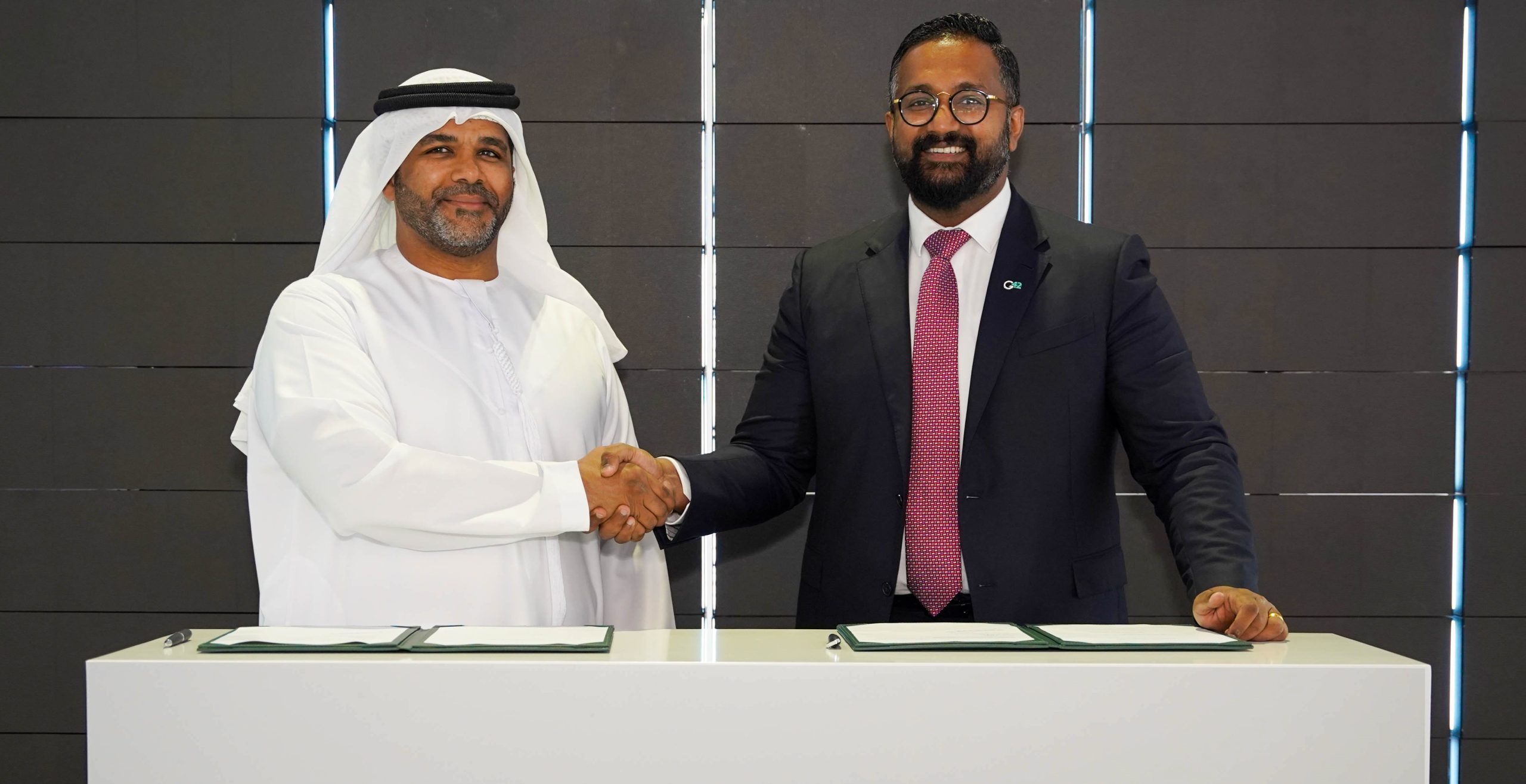
Abu Dhabi’s G42 is offering 2 % of its shareholding in its subsidiary, Presight AI, to institutional investors through an accelerated book-build, aiming to raise slightly more than $100 million. The transaction will reduce G42’s holding in the analytics group from 70.5 % to 68.5 %, while retaining majority control. First Abu Dhabi Bank and Jefferies are acting as joint global coordinators and joint bookrunners, with International Securities serving as joint bookrunner.

Demand for the placement has been strong, with books reportedly fully covered ahead of finalisation. Settlement is expected around 10 September 2025, following final terms being set by 4 September. G42 has also committed to a 180-day lock-up period before any further sale of its Presight shares.

The strategic purpose behind G42 lowers Presight AI stake via ABB is to broaden and institutionalise Presight’s investor base, enhance liquidity, and strengthen its case for inclusion in the FTSE Emerging Market Index. Greater free float and international institutional ownership would increase trading activity and appeal to passive investment funds.

Presight AI, which listed on the Abu Dhabi Securities Exchange in 2023, has posted strong financials through 2025. Its share price has risen by approximately 67 % year-to-date, closing recently at AED 3.47. In the first half of 2025, organic revenue grew by 33.5 %, supported by new domestic contracts. In the second quarter, group net profit rose by nearly 8 % to Dh77 million, with revenue up by over 53 % to Dh523.9 million. International markets now contribute 26.8 % of revenue, up from just 4.9 % a year earlier.

G42 group CFO Ricky Thirion described Presight as “a critical pillar of the G42 ecosystem and a cornerstone of our Intelligence Grid offering,” noting that its performance reflects consistent growth and strong leadership.

Regionally, secondary offerings like this one are gaining traction. In 2025, follow-on sales across the Middle East have raised roughly $3.7 billion, surpassing IPO proceeds—a sign of deepening market maturity.

The placement’s proceeds will go entirely to G42, with no dilution or impact on other shareholders or Presight’s operations.

Abu Dhabi’s G42 has therefore engineered a measured recalibration of its ownership in Presight AI—G42 lowers Presight AI stake via ABB—while securing capital, expanding its shareholder base, and positioning the company for broader market inclusion and visibility.

Hon Hai Precision Industry Co. reported August sales of NT$606.5 billion, marking a 10.6 per cent increase year-on-year. The Taiwanese manufacturer, a key production partner for Nvidia’s AI-enabled servers, anticipates both sequential and year-on-year growth in third-quarter revenue, underpinned by a sharp rise in cloud and networking product shipments. Hon Hai’s August sales climb 10.6 per cent amid AI demand reflects continued strength in AI infrastructure spending. […]

A protocol on phytosanitary standards agreed upon during President Emmerson Mnangagwa’s visit to Beijing has unlocked the possibility of Zimbabwe exporting blueberries to China, the Horticultural Development Council has announced. This agreement offers local growers access to one of the world’s fastest-growing blueberry markets, although actual export volumes will depend on their ability to meet stringent sanitary conditions and manage compliance-related costs. Zimbabwe’s blueberry production is set […]

Abu Dhabi state oil giant ADNOC criticised the European Commission’s antitrust investigators for issuing what it described as excessive and intrusive information demands in their examination of its €14.7 billion bid for Covestro. The company cautioned that such regulatory pressure could endanger the takeover. Under the EU’s Foreign Subsidies Regulation, the Commission is scrutinising whether ADNOC benefited from unfair advantages—such as an unlimited UAE government guarantee and […]

Arabian Post Staff Dubai has again claimed first place in the Savills Executive Nomad Index 2025 as the most sought-after destination for executive nomads worldwide, while Abu Dhabi holds second place for the second year running. Dubai’s dominance stems from its unmatched airline connectivity and comprehensive amenities, with Dubai Maintains No-1 Spot as Executive Nomads’ Top Choice capturing the essence of its appeal. The index, evaluating 30 […]

Falcon Finance has reached a new milestone as the circulating supply of its decentralized stablecoin, USDf, climbs to an all-time high of $1.5 billion, signalling sharply increased adoption and confidence in its DeFi infrastructure. The expansion tracks a surge from $1.12 billion over approximately one month, a performance driven by a blend of yield innovation, enhanced transparency, and risk-mitigation frameworks.

The $10 million on-chain insurance fund plays a pivotal role in strengthening institutional trust. Seeded initially with USD1 and replenished via protocol fees, the fund is structured to act as a financial buffer during market stress—supporting yield commitments, offsetting rare instances of negative returns, and serving as a fallback bidder for USDf to uphold its peg. Premium collateral strategies further bolster systemic resilience.

Yield generation remains a cornerstone: the yield-bearing counterpart of USDf, sUSDf, has delivered a standout 30-day APY of 9.30 per cent as of 30 August, outperforming notable competitors such as Ethena’s sUSDe, Maple’s SyrupUSDC, Sky’s sUSDS, Ondo’s OUSG, and BlackRock’s BUIDL.

To deepen engagement and expand utility, Falcon Finance launched the frxUSD–USDf Curve liquidity pool, which offers participants more than 20 per cent APR and rewards denominated as “40× Miles.” The community-oriented Yap2Fly campaign—run in partnership with Kaito—distributed $50,000 in rewards to its top 50 users in August, further stimulating active participation.

Transparency remains central to the protocol’s ethos. Falcon now publishes full reserve breakdowns and supports these with weekly third-party attestations. As per the latest reporting, USDf reserves amount to $1.29 billion—comprising $640.16 million in bitcoin, $375.65 million in stablecoins, with remaining allocation across Dogecoin, Fetch. ai, TRON, TON, and Ethereum. Custody spreads across Fireblocks, Ceffu, and multisignature setups, with 72.2 per cent held under multisig, fostering verifiable security.

These developments are underpinned by earlier strategic investments and roadmap expansions. A $10 million funding from World Liberty Financial in July accelerated technical integration with the fiat-backed USD1 stablecoin, facilitating liquidity sharing and conversion infrastructure. By mid-2025, USDf had already breached the $1 billion supply threshold, demonstrating steady growth ahead of its latest benchmark.

Falcon portrays USDf as more than a synthetic dollar; it is positioned as a global liquidity solution. The protocol’s architecture permits any custody-ready asset—including crypto, stablecoins, and real-world tokenised assets—to be turned into USD-pegged on-chain liquidity. This dual-token model is geared towards unlocking yield while safeguarding against volatility, effectively merging traditional risk frameworks with DeFi innovation.

Market observers note that USDf’s climb to $1.5 billion is emblematic of a broader shift in DeFi: users and institutions are increasingly seeking stable, yield-bearing alternatives to both fiat and traditional stablecoins. Falcon’s layered risk-management systems, institutional-grade safeguards, and developer partnerships appear to answer that demand with growing credibility.

Meta’s long-anticipated app for the iPad has made its debut, launching on 3 September 2025 after over 15 years of user demand. Tailored to take advantage of the larger screen, the app opens straight to Reels—a shift that signals Instagram’s strategic emphasis on short-form videos. Unlike previous work-arounds, which relied on an upscaled iPhone app or the web version, this release offers a fully redesigned experience with […]

A bitcoin wallet, untouched since 2012, has activated and realised a windfall worth $53 million from an initial investment of just $4,400 after nearly 13 years of dormancy. The wallet remained idle through multiple eras of bitcoin’s volatility before movement on 4 September 2025 triggered fresh attention.

The activation points to the investor’s decision to hold steadfast—“…patently holding their BTC holdings for over 12 years,”—a remarkable example of long-term strategic patience in the notoriously volatile cryptocurrency space.

Blockchain tracking services and on-chain analysts, while not identifying the holder, confirm that the bitcoin moved from a cold storage wallet first funded around 2012 has now matured into a substantial fortune thanks to the soaring bitcoin price. Historical price data indicates that the $4,400 stake likely purchased the bitcoin when its value was in the low-hundreds of dollars or even under $100 per coin.

This event occurs amid renewed upward momentum in bitcoin markets, where price action above the $111,000 level hints at a potential breakout to surpass $112,500. Analysts caution that maintaining momentum will be key, noting that the current ascent could falter under resistance.

While stories of dormant wallets awakening to deliver vast profits are not unprecedented, this case underscores the dramatic impact of time in cryptocurrency investing. Earlier this year, another long-term bitcoin holder netted nearly $30 million in profit after liquidating 300 BTC originally acquired in 2013 for around $60,000—a 496-fold return after more than a decade. In August 2025, yet another investor moved 300 BTC mined in 2013, transforming a $50 valuation per coin into a $30 million gain.

These developments highlight three evolving trends:

Firstly, long-term holding remains a potent strategy. The volatility of crypto is tempered by the compounding power of holding through cycles when the asset appreciates significantly over time.

Secondly, dormant wallets serve as markers of early adoption, especially during bitcoin’s infancy around 2010–2013. Their reactivation often signals profound gains to long-forgotten investors.

Thirdly, current market dynamics favour such histories. With bitcoin approaching and testing six-figure levels, such reawakenings may become more visible as early investors reclaim their positions.

The ethics of reporting such cases demand sensitivity. Without identifying individuals, disclosures should remain factual and avoid speculation about motives. What matters most is the concrete data: time-stamped transactions, verified wallet histories, and precise investment-to-return comparisons.

Conor McGregor has announced his intention to run for President of Ireland in the upcoming election, marking a dramatic shift from mixed martial arts to the political arena. The election is scheduled for 24 October 2025. The victory is deeply improbable, given Ireland’s strict constitutional requirements for candidacy and growing scepticism from political observers. McGregor’s campaign relies heavily on public support rather than political endorsements. On 4 […]

Private firms are allocating an average of 22 per cent of their profits into Bitcoin, as revealed by a new analysis from River, a specialist in Bitcoin financial services. The move underscores an accelerating wave of adoption from traditional companies across sectors from real estate to hospitality, driven by favourable regulation, strengthened accounting clarity, and a buoyant bull market.

River’s data shows that real estate businesses are leading this charge, with nearly 15 per cent reinvesting profits into Bitcoin, while hospitality, finance, and software firms direct between 8 per cent and 10 per cent. Even smaller, diverse businesses—including fitness studios, painting outfits, roofing contractors, and religious nonprofits—are joining the trend. By 2025, these private firms have quietly amassed 84,000 bitcoins, amounting to roughly a quarter of what institutional fund managers and corporate treasury holders combined have acquired.

The underlying conditions for this surge are clear. River attributes the shift to improved Bitcoin accounting standards, regulatory certainty, growing institutional acceptance, and a strong bull market that has seen Bitcoin’s value surge—creating an “ideal environment for widespread adoption”.

Smaller businesses, typically with fewer than 50 employees, account for 75 per cent of River’s clients, and appear to find Bitcoin adoption simpler than larger corporations. Those with complex, committee-based governance are more cautious, often awaiting peer precedent before committing—even when convinced of Bitcoin’s long-term value.

Adoption patterns also vary in scale. Over 40 per cent of the businesses allocate between 1 per cent and 10 per cent of profits to Bitcoin, while just 10 per cent invest more than half of their net income into the cryptocurrency.

This wave of grassroots participation complements broader institutional demand. River reports that public and private firms—the latter including treasury-managed corporations—are purchasing approximately 1,755 BTC per day on average in 2025. Exchange-traded funds and other investment vehicles are acquiring about 1,430 BTC per day, and governments add another 39 BTC daily. These figures stack up sharply against miner output, which is only around 450 BTC per day—raising the likelihood of a supply squeeze if exchange inventories continue to deplete.

Institution-grade buyers are also piling in. Bitcoin treasury firms accounted for 159,107 BTC acquired in the second quarter of 2025, pushing the total corporate and business-held Bitcoin to around 1.3 million BTC. Michael Saylor’s company Strategy remains the dominant corporate holder, with more than 630,000 BTC under its control.

Parallel developments illustrate the growing strategic shift toward Bitcoin within corporate finance. In the United States, investor Anthony Pompliano orchestrated a $1 billion SPAC merger to launch ProCap Financial, a new Bitcoin treasury firm with an ambition to manage up to $1 billion in cryptocurrency holdings. The firm plans to monetise its holdings through lending, derivatives, and other services, pushing the boundaries of Bitcoin treasury strategies.

Across the Atlantic, UK markets are witnessing their own momentum. At least nine London-listed companies—from technology to mining ventures—have either acquired Bitcoin or announced plans to do so, seeking similar boosts in investor appeal. Despite historical resistance from regulators concerned about money‑laundering risks, the Financial Conduct Authority appears open to easing restrictions, offering a potential regulatory tailwind to adoption in Britain.

This widespread movement mirrors and builds upon earlier corporate Bitcoin trends. As of mid‑2025, nearly 130 publicly traded companies held about $87 billion in Bitcoin, or 3.2 per cent of the total supply, driven by the ‘Bitcoin treasury’ blueprint pioneered by Strategy. Firms including Tesla, Metaplanet, Twenty One Capital, Block, GameStop, and Trump Media & Technology Group have followed suit, deploying equity issuance, bonds, and convertible debt to fund their Bitcoin accumulation.

Analysts also project an enormous potential inflow of corporate capital: Bernstein Research estimates that corporate demand could funnel as much as $330 billion into Bitcoin by 2029, with up to $124 billion attributable to Strategy alone.

VISHNU RAJA
RYO YAMADA
HITORI GOTOH
IKUYO KITA