News related to
demand

The Ministry of Energy and Infrastructure has set in motion a major infrastructure programme valued at AED 750 million to upgrade Emirates Road over two years, aimed at relieving traffic congestion and accelerating inter-emirate connectivity. Stretching some 25 km from the Al Badee Interchange to Umm Al Quwain, the project will expand the highway from three to five lanes in each direction and reinforce its capacity to […]

Microsoft has halted specific cloud and artificial intelligence services to a unit within Israel’s Ministry of Defence after uncovering evidence that its Azure infrastructure was being used in a mass surveillance programme targeting Palestinians. The firm confirmed that access to a subset of its subscriptions has been suspended, while non-surveillance services remain unaffected. The decision follows an investigative exposé by The Guardian, in collaboration with +972 Magazine […]

Three companies—The Littlestone Company, Alpha Ledger Technologies and Celadon Capital Markets—have launched a joint initiative to convert up to $1 billion of essential housing projects into blockchain-based tokens on the Solana network. The programme aims to democratise real estate investment by enabling fractional ownership, automated income flows and secondary market trading.

At the core of the effort, Littlestone brings decades of housing development experience, particularly in underserved communities. Alpha Ledger will supply the tokenisation infrastructure, mapping property ownership rights into programmable digital assets. Celadon will manage legal structuring, compliance and investor onboarding. Their first focus is on multifamily housing in Texas, with plans to scale thereafter.

Littlestone’s CEO, Peter Wasserman, frames the collaboration as a way to “accelerate delivery of sustainable, high-quality communities for workforce families and active adults 55+,” stressing that tokenisation can reduce capital constraints while broadening investor participation. Celadon’s Armand Pastine says the partnership targets the so-called “Missing Middle”—teachers, nurses and seniors underserved by conventional housing finance—and intends to unlock that segment through blockchain.

Solana’s mechanics—fast settlement, low fees and built-in tooling for real-world assets—make it a natural fit for such endeavours. The network already supports token extensions, permissioned environments and “transfer hooks” to embed KYC/AML rules directly into on-chain logic. Solana itself promotes the concept of real-world assets onchain, arguing that its architecture enables instant, cross-border settlement and programmable compliance at scale.

This project is not an outlier. The asset tokenisation sector has seen explosive growth in 2025, with estimates for real-world asset capital on chain rising from under $10 billion at the year’s start to over $60 billion by mid-year. The rise reflects growing institutional and retail demand, as well as regulatory openings. Meanwhile, major players like Securitize are expanding their issuance and trading platforms for tokenised securities, and firms such as Tokeny, ADDX and Ondo are becoming increasingly active in the tokenisation ecosystem.

Still, the initiative faces structural challenges. Regulatory uncertainty over securities laws, valuation complexities, liquidity concerns and investor protection remain key hurdles. The need to map off-chain legal claims into on-chain expression requires careful design, often involving special purpose vehicles or trust structures. Token liquidity may rely on secondary markets that are still nascent.

SINGAPORE – Media OutReach Newswire – 26 September 2025 – Singapore lawyers will soon be able to gain specialised skills in family office advisory through a strategic partnership between the Wealth Management Institute (WMI) and the Law Society of Singapore. This multi-year training initiative aims to equip Singapore’s 6,500 practising lawyers with specialised skills to serve the rapidly growing family office sector. Training agreement signed on 26 […]

Abu Dhabi-based XRG P. J. S. C. has finalised its acquisition of an 11.7 percent equity interest in Phase 1 of the Rio Grande LNG project in Brownsville, Texas, marking the company’s first natural gas investment in the United States. The purchase was made through a joint-venture structure involving Global Infrastructure Partners, an investment vehicle affiliated with BlackRock. Phase 1 of Rio Grande LNG is one of […]

Nasdaq Dubai has admitted a US$450 million Sukuk issued by Arada Developments LLC under Arada Sukuk 2 Limited’s US$1 billion trust certificate programme. The securities carry a maturity in 2030 and were priced at a profit rate of 7.150 percent. The offering drew orders in excess of US$2 billion, representing over four times oversubscription. The listing increases Arada’s cumulative Sukuk outstanding on the exchange to US$1.5 billion […]

The UAE Ministry of Finance, acting as issuer with the Central Bank of the UAE as issuing and payment agent, has completed the September 2025 auction for dirham-denominated Islamic Treasury Sukuk, issuing AED1.1 billion in two tranches.

Investor appetite proved robust: total bids reached AED5.1 billion, representing an oversubscription rate of 4.6 times. The two tranches mature in August 2028 and May 2030. Yields to maturity were set at 3.64 percent for the 2028 tranche and 3.72 percent for the 2030 tranche, with spreads of up to 5 basis points over comparable US Treasuries. The new Sukuk are now listed under the UAE Treasury Islamic Sukuk Programme on Nasdaq Dubai, bolstering their tradability in secondary markets.

This issuance is part of the 2025 T-Sukuk programme designed to deepen the UAE’s domestic Islamic capital market and to help establish a dirham yield curve. Authorities view it as a tool for liquidity management and as a mechanism to broaden investment options for both regional and international investors participating in the UAE’s fixed-income markets.

Market observers note that the oversubscription signals confidence in the UAE’s fiscal credentials and its commitment to injecting dynamism into its debt capital markets. The tight pricing relative to US Treasuries is seen as competitive and attractive for institutional players seeking yield in the Gulf region.

In recent months, the UAE has steadily pursued domestic sovereign Islamic issuances as a complement to conventional instruments, seeking to accommodate demand from Islamic financial institutions as well as conventional banks’ Shariah-compliant units. The coordination between the Ministry of Finance and the Central Bank ensures that these issuances are integrated into broader monetary and financial stability objectives.

Across the Gulf, sovereign issuers have increasingly leaned into domestic currency Islamic instruments to reduce dependence on external funding, develop local capital markets, and provide alternative yield playbooks for investors. Within that context, the UAE’s T-Sukuk programme is gaining traction as a benchmark vehicle.

Primary dealers participating in the auction included eight banks, all mandated under the program to support both primary and secondary market activity. Their participation is key to maintaining liquidity and encouraging wider investor participation beyond the initial subscription.

Advertisements

President Duma Boko has declared that his government intends to secure a controlling share in De Beers by the end of October, pushing Botswana to renegotiate its position in the global diamond supply chain. The move comes as Anglo American, the majority owner of De Beers, appears ready to divest its 85 percent stake. Botswana currently holds 15 percent of De Beers and jointly operates the mining […]

Dubai’s Roads and Transport Authority has unveiled a new strategic focus for the 5th Dubai World Challenge for Self-Driving Transport, scheduled for 2027: smart integrated infrastructure. Mattar Al Tayer, Director-General and Chairman of the Board of Executive Directors of the RTA, said the competition will pivot to challenges that bind sensing, connectivity and analytics to urban infrastructure across Dubai.

At the closing of the Dubai World Congress for Self-Driving Transport held at the Dubai World Trade Centre, RTA inked four key agreements with Emaar Properties, Al Futtaim Group, and the winners of the 2025 challenge—WeRide and Deutsche Bahn consortium, together with Zelos Technology—to deploy and test autonomous systems in Festival City, Creek Harbour and other strategic urban zones. Al Tayer affirmed that the move aligns with Dubai’s ambition to serve as a global testbed for mobility innovation.

This year’s theme shifts from discrete vehicle-centric competition to a systems-level mandate: entrants will be judged on how well their solutions embed into city-wide networks of sensors, roads, communication links and data platforms. The RTA framework calls for designs that anticipate traffic dynamics, weather variations and public transit interaction, while maintaining safety, resilience and sustainability.

Over 3,000 participants and more than 80 expert speakers participated in the Congress, spanning government, academia and industry. The gathering marked the formal launch of the 2027 edition. The Congress also highlighted Dubai’s strategic goal that by 2030, one quarter of all journeys within the emirate will be autonomous or smart-enabled—an ambition already embedded in the RTA’s transport roadmap.

Stakeholders see this shift as an essential maturation of the challenge format. Rather than focusing only on individual vehicle prototypes, the next competition will test ecosystem coherence and scalability across urban modules. According to industry analysts, the new direction presses participants to align with evolving demands in mobility, where digital and physical layers must fuse.

Dubai’s prior edition in 2025 carried the theme “Dubai Autonomous Transport Zone,” pushing contestants to integrate multiple autonomous mobility modes in defined neighbourhoods. That foundation now gives way to a broader remit, with RTA officials stressing that smart infrastructure is the backbone for reliability and public acceptance of self-driving systems.

The agreements struck with developers and past challenge winners will see pilots in zones like Festival City and Creek Harbour, where road layouts, sensor grids and vehicle operations will be tested side by side. RTA counts on these field deployments to validate technical performance, operational cost and citizen experience before full-scale adoption.

Critics caution that the complexity of integrating diverse systems—communications, edge computing, failsafe control layers—could raise cost, regulatory and interoperability risks. Some stakeholders argue the success of the 2027 challenge will depend on whether entrants can navigate not only technical but institutional challenges across urban agencies and telecommunications providers.

For technology firms and research groups, the new emphasis offers both opportunity and challenge. It rewards proposals able to harmonise hardware, software, data and governance. Observers expect to see consortia spanning telecom operators, municipal agencies, AI firms, and road infrastructure specialists.


HONG KONG SAR – Media OutReach Newswire – 25 September 2025 – Southco Asia Limited proudly celebrated the grand opening of its new state-of-the-art manufacturing facility, Southco Manufacturing and Technology (Foshan) Co., Ltd., located in the Plainvim Intelligent Industrial Park in Gaoming, Foshan, China. The event marked a major milestone for Southco, showcasing its commitment to innovation, operational excellence, and strengthening its presence in the Asian market. […]

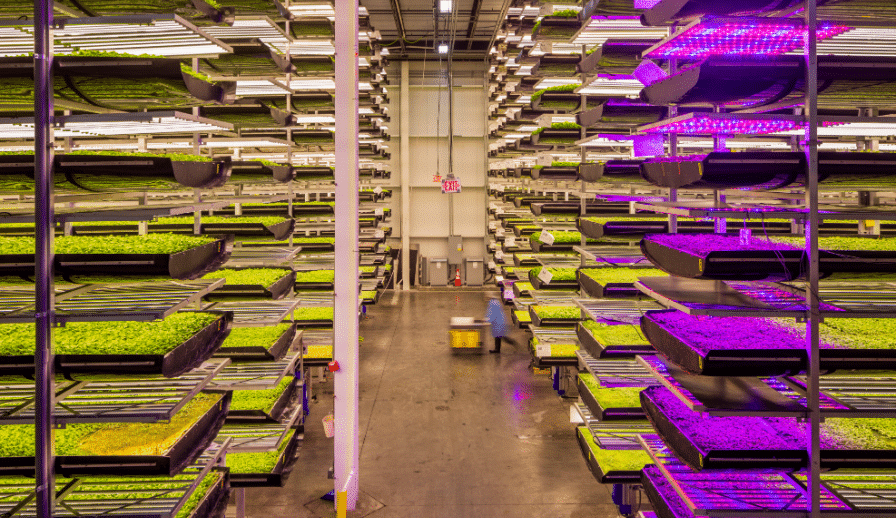
By Satyaki Chakraborty The Communist Party of India(CPI) concluded its five day Party Congress at Chandigarh on September 25 reelecting D. Raja as the general secretary of the CPI for another three year term. Raja is the first dalit leader to head the CPI in 2019 after the then party secretary S Sudhakar Reddy sought […]

The article CPI’s 25th Party Congress Elects D Raja As The General Secretary For The Third Time appeared first on Latest India news, analysis and reports on Newspack by India Press Agency).

Abu Dhabi is marketing a three-year and a 10-year US dollar Reg S/144A bond offering, aiming to capitalise on robust investor demand and reinforce its global funding outlook. The three-year tranche is pitched at approximately 40 basis points over US Treasuries, while the longer 10-year issue is offered at around 55 bps.

By mid-morning in Dubai, books had swelled past $10 billion, excluding joint lead manager interest, with slight tilt toward the 10-year line. The bonds will be senior, unsecured and rated AA/AA by S&P and Fitch, matching the issuer’s prevailing Aa2/AA/AA credit standing. Listings are planned in both London and Abu Dhabi.

Investors see this transaction as a test of global appetite for Gulf sovereign credits amid a cautious backdrop of moderate US interest rates and evolving geopolitical risk. Despite volatility in energy prices and external debt markets, Abu Dhabi’s strong fiscal and balance sheet metrics underpin confidence in its sovereign name. The credit ratings assigned reflect the emirate’s resilient fiscal policy, substantial hydrocarbon reserves, and large sovereign wealth fund buffers.

Structurally, the Reg S/144A setup allows the issuer to access both non-US and US institutional investor pools. Regulation S permits offers outside the United States, while Rule 144A enables sales to qualified institutional buyers within the US, offering dual reach while maintaining issuance flexibility. The base offering circular explicitly restricts transfers and resales to be compliant with those regimes.

Observers note that the pricing levels—40 bps for three years and 55 bps for 10 years over Treasuries—are ambitious but not unprecedented within Gulf sovereign borrowing. Prior precedent includes a multi-tranche Abu Dhabi sovereign bond of $5 billion in April 2024, which achieved strong oversubscriptions and favourable pricing benchmarks. That deal underlined investor appetite for Gulf issuers with strong credit credentials.

Market participants closely monitor skew and order distribution between tenors. That the books are marginally skewed toward the 10-year suggests appetite for duration, perhaps reflecting yield scarcity in core markets. Should the order book widen further, the issuer may flex uncertainty concessions or tighten spreads modestly before final pricing. Co-ordinating banks are likely adjusting intermediate guidance as allocations firm.

Analysts flag that appetite for Gulf sovereign issuance is tempered by global headwinds: tighter US credit spreads, sticky inflation, and competition from other supranational and sovereign issuers. Some international investors may demand additional premium for regional or geopolitical exposures. Yet Abu Dhabi’s entry with a dual-tranche issuance signals intent to extend its credit curve, deepen investor relationships, and enhance liquidity in its sovereign bonds.

The listings in London and Abu Dhabi are intended to enhance secondary market trading, improve visibility to European and global investors, and cement Abu Dhabi’s status in global bond markets. The London listing, especially, provides access to a deep pool of international fixed income investors and a regulatory framework well understood by global asset managers.

The decentralized finance space is undergoing a critical transformation in 2025, ushering in what many observers call “DeFi 3.0.” While the earlier waves of DeFi focused on decentralized exchanges and liquidity incentives, the next generation is centered on permissionless lending, composability, capital efficiency, and real-time adaptation. As platforms such as Euler, Morpho and Hyperliquid gain traction, the shifts promise to reshape how capital moves, how risk is […]

Dubai is gearing up to host the third edition of the Invest Web3 Forum, powered by bepay money, assembling over $500 billion in assets under management and more than 80 institutional investors. The one-day gathering, slated for 15 October at Dubai Knowledge Park, seeks to advance institutional adoption of blockchain through capital allocation, policy dialogue and startup investing. Market watchers point to the forum as a bellwether […]

Luma Protocol, incubated by PopChain and Nivex, officially entered the market on 20 September 2025, positioning itself as a new architecture in decentralized finance that anchors value in computing power rather than speculative token mechanics. At midday UTC+8 the project launched its pre-sale and, within hours, issued the first mining rewards — signalling a shift from purely token-based incentives toward infrastructure-backed models.

The project’s core proposition is that “Hash Power” — the computational capacity underlying blockchains — becomes a tangible, tradeable asset integrated into DeFi systems. Luma’s model seeks to counterbalance what its promoters describe as the unsustainable cycles of token subsidies that have affected prior generations of DeFi protocols. Underpinning the system, Luma plans to merge capital, computational resource markets, and application layers in a closed-loop infrastructure.

PopChain contributes its identity and settlement capabilities, while Nivex offers liquidity, exchange infrastructure, and compliance support. This strategic alignment aims to deliver an ecosystem where value issuance, transaction execution, and mining resource distribution interlock. According to the announcement, the first mining rewards were disbursed at midnight UTC+8, immediately after launching the pre-sale.

Market reaction to the LUMA token has been volatile. On the MEXC exchange, LUMA traded with a 24-hour jump of 26 per cent, reflecting speculative interest. Yet the token’s 7-day price variance is extremely steep, plunging nearly 99.97 per cent over the week, pointing to high risk and low liquidity stability. The circulating supply and full market capitalisation currently remain opaque.

Critics caution that the concept of tokenizing hash power is not without inherent risk. In the realm of blockchain security, high concentration of mining capacity has historically exposed smaller networks to attacks. The accessibility of mining power through services like NiceHash demonstrates how hash power can be rented and concentrated, creating vulnerability, especially for new entrants. At the same time, mainstream DeFi research underscores systemic risks emerging from leverage, protocol interdependence, and opacity in governance.

Luma’s governance architecture is not fully detailed in public documentation, but the model will need to grapple with decentralised decision-making, hardware centralisation, and incentives for fair participation. Without sufficient safeguards, the protocol may face the same challenges of centralisation, collusion, or exploitability that have troubled other DeFi platforms.

For its part, Nivex has been scaling its ecosystem prior to Luma’s debut. It recently launched a Web3 wallet integrated with PopChain, with plans to embed users into a flow from wallet to liquidity operations to settlement. This vertical integration may benefit Luma by driving demand for the infrastructure stack. Nivex also recently listed the POP/USDT trading pair, anchoring the POP ecosystem that underlies PopChain’s social finance ambitions.

On the supply side, the broader mining industry’s economics are under strain. Electricity, hardware depreciation, and operational costs continue to restrict profitable deployment of hash power. The Cambridge Digital Mining Report underscores that energy cost variance across geographies is a major barrier for expansion. Projects that seek to monetise compute power must navigate this cost differential.

Emaar has announced Dubai Mansions, a highly exclusive enclave of ultra-luxury homes positioned adjacent to Dubai Hills Estate. The development will include mansions available in 10,000, 15,000 or 20,000 square feet configurations, targeting elite global buyers seeking exceptional scale, privacy and design. The founder, Mohamed Alabbar, has framed the project as a statement of understated luxury: “There’s a kind of luxury that isn’t loud … from knowing […]

SHANGHAI, CHINA – Media OutReach Newswire – 25 September 2025 – During HUAWEI CONNECT 2025, Huawei released the ISP/MSP Business Success Driven by RAMS White Paper at the summit themed “Powering the ISP/MSP Industry with All Intelligence and Resilience.” The white paper introduces the RAMS framework—ROI, Availability, Maintenance, and Security, aiming to help ISPs and MSPs thrive with AI by transitioning from providing connectivity to offering intelligent […]

Abu Dhabi’s real-estate sector recorded its most powerful half-year showing to date, with transaction values climbing sharply to AED 54 billion. The newly published inaugural market report by the Abu Dhabi Real Estate Centre signals a turning point in transparency and market discipline in the emirate. The ADREC report shows residential unit sales reached AED 25 billion in the first six months, marking a 38 per cent […]

VFS Global has priced a seven-year USD tranche of $1,010 million at 250 basis points over SOFR, marking a 50bps tightening from its previous guidance. The loan forms part of a dual-currency raise, with an equivalent euro tranche also in play as part of a broader funding package totalling approximately $2 billion. The dollar portion, priced at 2.50% over SOFR, signals strong investor appetite and confidence in […]

Arada has acquired a 75 percent stake in London-based residential developer Regal as part of a Dhs 2.5 billion investment that marks its first UK foray and second international expansion after Australia. The UK business will be rebranded as Arada London, with an ambition to turbocharge Regal’s pipeline from 10,000 units across 11 projects to over 30,000 within three years.

The acquisition was formalised in a ceremony attended by Sheikh Sultan bin Ahmed bin Sultan Al Qasimi, Chairman of Arada. Arada’s Group CEO, Ahmed Alkhoshaibi, said that more than half of the capital will be channelled into accelerating development and securing new land parcels. He described the London market environment as one presenting “right opportunities to acquire the right sites at the right price”.

Regal’s chief executive, Jonathan Seal, and the existing executive team will remain in post after the transaction. Seal remarked that Arada’s alignment with Regal’s strategic values and long-term vision made it a fitting partner to lead the next phase of growth.

The deal gives Arada an immediate platform in London, tapping into Regal’s diversified portfolio, which spans for-sale residential units, purpose-built student accommodation, and mixed-use regeneration schemes. Among ongoing developments is the Fulton & Fifth project in Wembley, comprising 876 homes of which 40 percent are designated as affordable housing, and Orchard Wharf in Tower Hamlets, which recently secured approval for 1,365 student beds and 200 homes.

Analysts see strategic logic in entering London via acquisition rather than greenfield development, citing the complexities and regulatory friction in the UK housing sector. Arada’s move follows a wave of Gulf-based developers expanding into London, including Damac, Aldar, and Modon, often via partnerships or subsidiaries.

However, entering the London residential market is not without risk. Regal’s 2024 accounts showed £252 million in short-term debt, contrasted against £196 million of investment property, reflecting potential balance-sheet stress. The UK housing sector continues to face headwinds from construction inflation, planning delays, and demand volatility.

Arada has defended the timing. Alkhoshaibi stated that entering markets when sentiment is subdued allows for acquiring desirable assets at lower cost, positioning for upside when conditions recover. He noted that Arada’s approach is to maintain momentum in its UAE operations while layering growth abroad.

Beyond the UK, Arada is also contemplating further regional expansion. The company is reportedly in discussions with Saudi Arabia’s Public Investment Fund about a large mixed-use project in the kingdom. In the UAE itself, Arada plans a Dhs 3 billion development project in Ras Al Khaimah next year, reinforcing its domestic footprint.

The Indian rupee plunged to a lifetime low of ₹88.7975 per US dollar, sliding about 0.5 per cent on the day as fears over a sharp hike in U. S. H-1B visa fees rallied selling pressure across foreign exchange markets. Intervention by the Reserve Bank of India failed to staunch the slide fully, leaving the currency exposed amid faltering capital inflows and heightened external risks.

Markets pointed to the visa fee jump as a critical trigger. The Trump administration’s new proclamation imposes a $100,000 application cost on fresh H-1B visa petitions, vastly above its prior range, and is widely seen as a threat to remittance flows and the earnings outlook for India’s technology exporters. Meanwhile, persistent foreign portfolio outflows and U. S. tariff tensions on Indian goods compounded downward pressure.

Analysts estimate that remittances from the U. S. account for roughly 3.4 per cent of India’s GDP, making any disruption in the flow of workers and repatriated funds significant for the external balance. The visa change, if sustained, could erode that buffer. Traders now widely expect the rupee’s trajectory to remain weak in the coming weeks unless policy tailwinds emerge.

Speculation is building that the RBI sold dollars via state banks in the ₹88.50 zone to support the rupee, but the support was limited. While intervention took multiple forms—spot market, non-deliverable forwards and futures—the central bank appears to be managing volatility more than defending a fixed exchange rate. Some market participants view the decline as partly calibrated and allowable, until macro fundamentals justify a reversal.

Data from the RBI’s monthly bulletin show that in July alone, the central bank sold a net $2.54 billion in the spot foreign exchange market. It held forward dollar sales of about $57.85 billion at the end of July—suggesting pre-emptive hedging and reserve deployment to offset pressure. The use of forward sales is a tool to mitigate speculative demand and signal resolve.

U. S. rate expectations and the global dollar trajectory also weigh heavily. The U. S. dollar index remains firm, underpinning strength in emerging market currency pairs’ downside. Weakness in India’s export performance and looming protectionist measures add to caution. In September to date, foreign investors withdrew over $1 billion from Indian equities, pushing year-to-date outflows to roughly $16 billion.

Technology stocks bore the brunt of the rupee stress. With margins threatened by the visa fee shock, several large IT firms are already budgeting for higher immigration costs. Estimates place incremental fee burdens between $150 million and $550 million for major firms, depending on visa volumes and contract structures.

The Indian government mounted a diplomatic push in response, deploying a high-level delegation to Washington to discuss the visa fee policy and broader trade concerns. Delhi has warned of “humanitarian consequences,” arguing that abrupt changes in visa costs risk disrupting families and the livelihood of highly skilled professionals. In public remarks, Commerce Minister Piyush Goyal and other officials have insisted that they will press for reversals or carveouts.

White House sources clarified that the $100,000 fee will apply only to new applications, not renewals or current visa holders—a move that soothed some immediate concerns in the IT industry. That assurance has allowed short-term relief in some quarters, though uncertainty lingers over enforcement guidelines and compliance timelines.

Meta has partnered with Circus SE, a leading European AI company, to extend its artificial intelligence capabilities to the defence and security sectors. This collaboration signals Meta’s growing commitment to leverage AI technologies for a range of applications, including military and security operations, aiming to strengthen both European and global defence strategies. Meta, which has been investing heavily in AI over the past few years, is shifting […]

Defence stocks will rally and global investors will be paying attention, I believe. The reason the bullish analysis is a catalyst came the moment President Donald Trump, after meeting Ukraine’s President Volodymyr Zelenskyy at the UN General Assembly, declared that Kyiv can reclaim all territory seized by Russia, an abrupt and market-moving pivot from his earlier calls for compromise. In a single statement, the world’s largest economy […]

Fitch Ratings changed Thailand’s long-term foreign-currency issuer outlook to Negative from Stable, citing mounting pressures on public finances, fragile growth prospects and ongoing political fragility. The sovereign rating itself remains at BBB+.

The credit agency warned that escalating risks to fiscal stability — especially rising debt and persistent budget deficits — are aggravated by uncertainty over government continuity and policy direction. Economic growth slowing below peer averages and vulnerabilities in the tourism and export sectors further reinforce downside risks.

Fitch singled out Thailand’s general government debt reaching about 59.4 percent of GDP, a level close to median thresholds for ‘BBB’-rated sovereigns, noting it has risen sharply from pre-pandemic levels. Persistent fiscal deficits of 4.6 percent of GDP in fiscal 2025 and 4.3 percent in 2026 are projected, and though Fitch expects stabilisation beyond 2027, the window for improvement is narrow.

Fitch also emphasised Thailand’s external buffers — a consistent current account surplus and conservative composition of government debt — as mitigants that support the affirmed rating despite the negative outlook. It noted that average debt servicing costs relative to revenues remain lower than peer country averages, which grants some breathing room.

The political backdrop has intensified the strain. The constitutional court’s removal of Prime Minister Paetongtarn Shinawatra over an ethics violation tied to a leaked phone conversation triggered a swift transition. Anutin Charnvirakul assumed the premiership through a deal with the opposition party that mandates a general election within four months, introducing turbulence to fiscal continuity and policy clarity. Fitch warned that this political flux could amplify short-term spending pressures and generate unpredictable policy shifts.

Macro-economic forecasts reinforce the downgrade rationale. The World Bank has trimmed Thailand’s projected GDP growth in 2025 to 1.8 percent and 1.7 percent in 2026, citing weak external demand, slowed tourism recovery and waning domestic consumption — outcomes likely exacerbated by political volatility. Inflation has turned slightly negative, prompting central bank expectations of further rate cuts; Fitch expects two more 25 basis point cuts this year and in 2026.

Thailand’s central bank has already lowered its policy rate 100 basis points over the past year to 1.5 percent, and with inflation below zero, the case for easing remains plausible — though constrained by high household debt levels. The Bank of Thailand has signalled readiness to act if growth weakens further.

Analysts caution that structural deficiencies — such as sluggish productivity gains, reliance on tourism, and high household debts — limit upside recovery. Institutional weakness and frequent leadership turnover further deter investment confidence.

To reverse the negative trajectory, Fitch emphasised that Thailand’s government must demonstrate strong fiscal consolidation, stabilise public debt dynamics and restore growth momentum. A return to a stable outlook would require credible cuts to the fiscal deficit, credible medium-term plans to reduce debt, and a more predictable policy environment that supports private investment.

VISHNU RAJA
RYO YAMADA
HITORI GOTOH
IKUYO KITA