News related to
good

Open source software has received a significant injection of support from leading companies such as Canonical, Zerodha, and other major industry players, marking a pivotal moment for the global development community. This wave of generous contributions comes as open source projects continue to underpin vast segments of the digital infrastructure powering everything from cloud computing to fintech applications. Canonical, known globally as the company behind the Ubuntu […]

PepsiCo has embarked on a significant multi-year partnership with Amazon Web Services to boost its digital and cloud transformation initiatives. The agreement positions PepsiCo to harness AWS’s comprehensive infrastructure and advanced artificial intelligence tools, aiming to streamline operations, enhance data analytics, and drive innovation across its global business. This strategic collaboration reflects PepsiCo’s commitment to embedding technology deeply within its operations. By migrating critical workloads to the […]

Matein Khalid While I was not surprised by Moody’s decision to cut the sovereign credit rating of the US from Aaa to Aa1 since I have done my best to warn my friends in this post about the King Dollar’s vulnerable underbelly on debt/deficits, I am surprised that the credit rating agencies is willing to risk the wrath of Trump White House with this move. After all, […]

By Dr. Nilanjan Banik Renowned Nobel laureate economist Robert Solow was once asked if having a trade deficit is bad for any economy. He answered by saying he would always have a trade deficit with his barber and would always run a trade surplus with his students. Such is the nature of the game in […]

Apple continues to hold its position as the world’s most valuable brand, maintaining a dominant lead in the annual Kantar BrandZ rankings. The technology giant’s brand value remains firmly ahead of its competitors, driven by sustained innovation, strong consumer loyalty, and expanding services. Among the global giants, Saudi Aramco stands out as the only company from the Gulf Cooperation Council and Middle East region to secure a spot within the Top 100, reflecting its growing international recognition amid shifting energy markets.

The Kantar BrandZ report evaluates thousands of brands worldwide based on consumer perceptions, financial performance, and market presence. Apple, which has consistently topped the rankings for several years, saw its brand value strengthen further due to its diversified product ecosystem and significant investments in augmented reality, artificial intelligence, and subscription services. Its ability to integrate hardware, software, and services continues to set it apart, contributing to record-breaking revenues and reinforcing customer engagement across the globe.

The inclusion of Saudi Aramco in the Top 100 highlights the resilience and strategic positioning of this energy giant amid global transitions. As the world accelerates its shift towards renewable energy, Saudi Aramco’s presence in the rankings underscores its efforts to diversify and adapt to evolving demands. The company has been investing heavily in cleaner energy technologies and sustainability initiatives, while still capitalising on its vast oil reserves and refining capabilities. This dual approach has helped maintain its strong financial standing and global brand stature.

Saudi Aramco’s entry into the list marks an important milestone for the GCC and the Middle East, regions that have been working to boost their global business profiles beyond the traditional hydrocarbon sector. The company’s brand value benefits from its critical role in global energy supply chains and its status as one of the largest integrated energy and chemicals companies worldwide. Its prominence in the BrandZ ranking reflects the ongoing transformation of the regional economy and the growing importance of Gulf-based enterprises in international markets.

Technology companies dominate the upper echelons of the BrandZ Top 100, with Apple’s closest rivals including Microsoft, Amazon, Google, and Samsung. These brands owe their high valuations to their broad global reach, innovation pipelines, and ability to capture consumer attention in a fast-evolving digital landscape. The report shows a marked increase in the value of brands involved in cloud computing, software services, and digital entertainment, signalling shifts in consumer behaviour and business investment.

Financial services and luxury goods brands also feature prominently, with firms such as Visa, Mastercard, and Louis Vuitton holding strong positions. These sectors benefit from sustained consumer demand and adaptation to digital channels, including e-commerce and fintech innovations. Luxury brands have further capitalised on expanding affluent markets in Asia and the Middle East, contributing to their steady brand valuation growth.

Saudi Aramco’s inclusion is particularly notable given the absence of other Middle Eastern brands in the Top 100, illustrating the challenging environment for regional companies in competing at this global scale. Despite high national revenues and significant economic influence, many Gulf firms have yet to establish the kind of global brand recognition needed to appear alongside the world’s largest multinational corporations. This reflects broader economic and strategic factors, including the diversification efforts underway across GCC countries and their focus on building competitive industries beyond energy.

The report also highlights evolving consumer expectations around sustainability and corporate responsibility, with brands that demonstrate genuine commitment to environmental and social governance increasingly favoured in valuation metrics. For energy companies like Saudi Aramco, this presents both challenges and opportunities, as stakeholders scrutinise their environmental impact and transition strategies. The company’s public commitments to reducing carbon emissions and investing in alternative energy projects are critical to its ongoing reputation and brand strength.

Among the factors contributing to Apple’s sustained brand leadership is its capacity to maintain premium pricing while expanding its user base globally. Its flagship products such as the iPhone, iPad, and Mac continue to enjoy strong demand, while services like Apple Music, iCloud, and the App Store generate consistent recurring revenue streams. Innovations in health technology, privacy features, and integration with smart home devices further deepen consumer engagement and brand loyalty.

The Kantar BrandZ rankings serve as a barometer for global business trends, reflecting shifts in consumer sentiment, technological advancement, and economic power distribution. Apple’s dominance underlines the continuing importance of technology innovation as a driver of brand value, while Saudi Aramco’s position signals the evolving role of energy companies in the global economy. As the world grapples with climate change and digital transformation, these rankings highlight how adaptability and strategic vision underpin the most valuable brands.

The presence of Saudi Aramco in the Top 100 is likely to inspire other Gulf-based companies to pursue greater international brand recognition through strategic investments, partnerships, and innovation. Governments across the region have increasingly prioritised economic diversification and global competitiveness, aiming to foster industries such as technology, finance, tourism, and renewable energy. Building strong, globally respected brands will be essential to this long-term vision.

This year’s BrandZ report underscores the growing concentration of brand value among a relatively small group of global leaders, with the top 10 brands accounting for a significant share of total valuation. While new entrants occasionally disrupt the rankings, the core list remains dominated by technology firms and consumer-focused corporations with expansive ecosystems and high consumer trust.

Saudi Aramco’s performance within this competitive context is a testament to its strategic management and financial robustness. It reflects its ability to navigate geopolitical uncertainties, market volatility, and the pressures of a shifting energy paradigm. As international investors and consumers become more conscious of sustainability, Saudi Aramco’s ongoing brand strategy will likely focus on balancing its traditional strengths with innovation in low-carbon energy solutions.

The Kantar BrandZ Top 100 also illustrates broader global economic trends, including the rise of Asian brands and the shifting influence of different markets. Chinese companies such as Tencent, Alibaba, and Huawei continue to climb the rankings, leveraging vast domestic markets and aggressive expansion strategies. Meanwhile, European brands have seen mixed fortunes amid economic challenges and regulatory shifts, emphasising the competitive pressures on established global players.


BEIJING, CHINA – Media OutReach Newswire – 14 May 2025 – The National Centre for the Performing Arts (NCPA) in Beijing on Tuesday welcomed Peng Liyuan, wife of Chinese President Xi Jinping, and Rosangela Lula da Silva, wife of Brazilian President Luiz Inacio Lula da Silva, as CGTN reported. Rosangela is accompanying the Brazilian president on his state visit to China. Peng and Rosangela appreciated the centre’s […]

Leaders from seven humanoid manufacturers convene with hardware experts to discuss the future of humanoid hardware standardization VANDALIA, OHIO – Media OutReach Newswire – 14 May 2025 – Johnson Electric, a global leader in motion systems, hosted the inaugural 2025 Humanoid Roundtable on April 29 in Boston, MA, USA. The event brought together C-suite and technical executives in small to large humanoid manufacturers located across North America, […]

Advertisements

U.S. consumer prices climbed 2.3% year-on-year in April, marking the lowest inflation rate since February 2021 and falling short of the 2.4% forecast. On a monthly basis, the Consumer Price Index rose 0.2%, also below the anticipated 0.3%. This deceleration occurred despite the introduction of sweeping tariffs by the Trump administration earlier in the month. The inflation data, released by the Labor Department, suggests that the immediate […]

Visa-free travel arrangement and 35 bilateral accords signed HONG KONG SAR – Media OutReach Newswire – 13 May 2025 – Hong Kong Special Administrative Region (HKSAR)’s Chief Executive John Lee is leading a delegation of over 50 business leaders from Hong Kong and Mainland China to Qatar and Kuwait to forge closer connections and promote the city’s advantages to the Middle East. This historic visit marks the […]

Nigeria’s economy expanded by 4.6% year-on-year in the fourth quarter of 2024, marking its fastest growth in a decade, according to the World Bank. This surge was propelled by fiscal reforms and a rebound in the oil and services sectors. However, the growth coincided with a sharp rise in inflation and a significant increase in poverty levels, underscoring the complex challenges facing Africa’s largest economy. The World […]

Oil prices surged over $2 per barrel in Asian trading on Monday, buoyed by a significant easing of trade tensions between the United States and China. Brent crude futures climbed $2.11, or 3.3%, to $64.14 a barrel, while US West Texas Intermediate crude futures rose $2.12, or 3.47%, to $63.14. The rally followed a joint announcement from Washington and Beijing declaring a 90-day suspension of additional tariffs, […]

The United States and China have agreed to a significant reduction in tariffs, marking a notable de-escalation in their ongoing trade conflict. Effective immediately, the US will lower tariffs on Chinese imports from 145% to 30%, while China will reduce its tariffs on US goods from 125% to 10%. This mutual agreement, set to last for 90 days, follows high-level negotiations held in Geneva. The trade dispute […]

Pope Leo XIV, the newly elected pontiff and the first American to hold the office, has identified artificial intelligence as one of the most pressing challenges confronting humanity. In his inaugural address to the College of Cardinals at the Vatican, he underscored the ethical and societal dilemmas posed by AI, drawing parallels to the upheavals of the Industrial Revolution. Formerly Cardinal Robert Prevost, Pope Leo XIV chose […]

OpenAI is engaged in high-stakes negotiations with Microsoft to restructure their multibillion-dollar partnership, aiming to secure new funding and lay the groundwork for a potential initial public offering . The discussions focus on revising equity arrangements and long-term access to OpenAI’s advanced artificial intelligence technologies.

Microsoft, having invested over $13 billion in OpenAI since 2019, is reportedly willing to adjust its equity stake in exchange for extended access to OpenAI’s AI models beyond the current 2030 agreement. This move reflects Microsoft’s strategic interest in maintaining a competitive edge in AI integration across its products and services.

The renegotiation also involves updating broader contractual terms established during Microsoft’s initial $1 billion investment in 2019. These revisions are crucial as OpenAI transitions into a public benefit corporation , a structure that balances profit motives with its mission to develop AI for the public good.

OpenAI’s shift to a PBC comes after abandoning plans to become a for-profit entity, following criticism from stakeholders concerned about deviating from its nonprofit origins. The new structure allows for conventional equity holdings by investors and employees while ensuring that the nonprofit entity retains significant control over the company’s direction.

The company’s recent fundraising efforts underscore its ambitions, with $6.6 billion raised in October 2024 and an additional $40 billion in March 2025, elevating its valuation to approximately $300 billion. These funds are intended to support OpenAI’s pursuit of artificial general intelligence and the development of AI technologies that can be broadly beneficial.

However, the partnership’s evolution has not been without tension. OpenAI’s engagements with other tech giants like SoftBank and Oracle have reportedly caused friction with Microsoft. Despite these challenges, both companies recognize their mutual dependence, particularly as Microsoft continues to integrate OpenAI’s technologies into its offerings.

Critics, including co-founder Elon Musk, have expressed concerns that OpenAI’s restructuring could compromise its nonprofit mission. Legal scrutiny from authorities in California and Delaware adds another layer of complexity to the company’s transformation. OpenAI must navigate these regulatory landscapes carefully to maintain its mission-driven approach while accommodating investor interests.

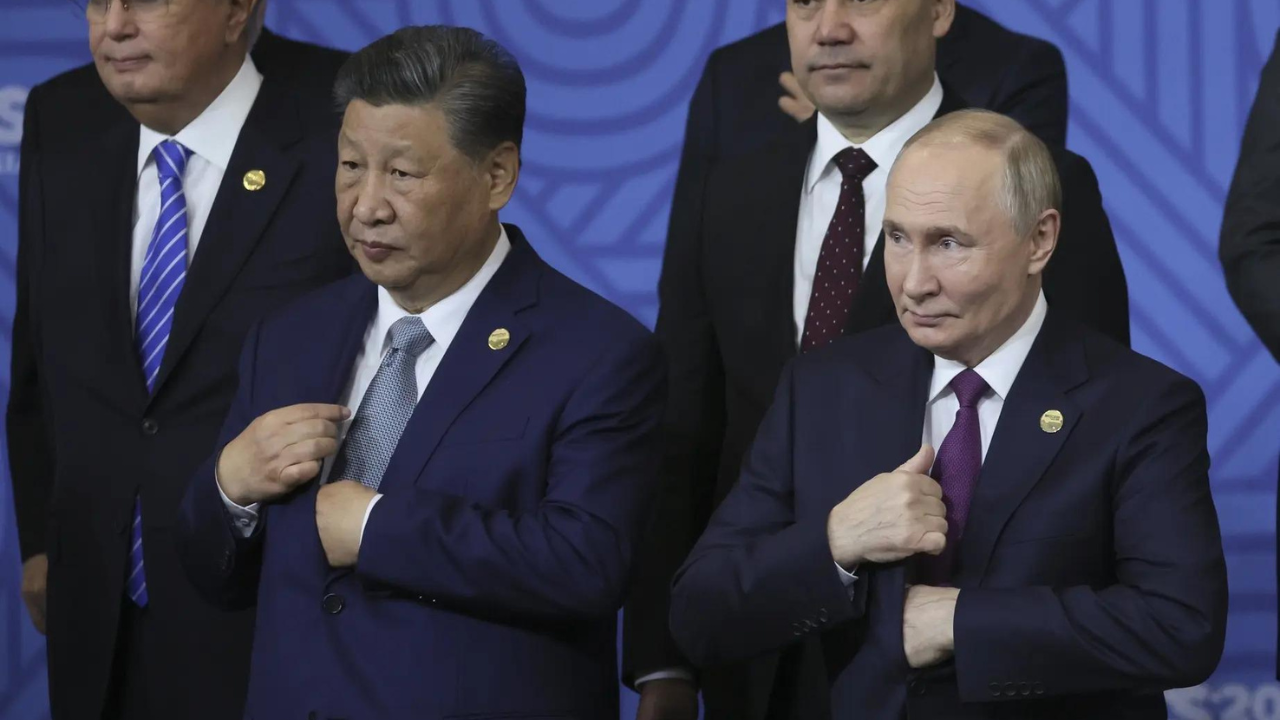
By Nitya Chakraborty The joint declaration issued by the Russian President Vladimir Putin and the Chinese President Xi Jinping on the eve of the Victory Day on May 9 upholding longstanding friendship to pursue mutual benefit and win-win outcomes in the new era carries major significance in the present period of global tariff war as […]


Bitcoin’s value soared above $100,000 on Thursday, marking its first return to six figures since February. The cryptocurrency climbed to $101,329.97 by midday, reflecting a 4.7% increase for the day. This resurgence is attributed to a combination of geopolitical developments and shifting regulatory landscapes. A significant catalyst for this uptick was the announcement of a comprehensive trade agreement between the United States and the United Kingdom. The […]

The Indian Rupee has plummeted to its lowest value against the UAE Dirham in over a month, marking a significant drop to 23.36 per dirham. This decline, the steepest since mid-April, follows escalating border tensions between India and Pakistan, which have triggered volatile market reactions. Traders are closely monitoring the situation, with fears of further instability driving the currency’s slide.

As the conflict intensifies, the Rupee’s depreciation is attributed to growing uncertainties surrounding the geopolitical standoff. India and Pakistan, both nuclear-armed neighbours, have long been at odds over the Kashmir region. The latest developments have exacerbated market fears of prolonged instability, pushing investors to seek safer assets, which has further weighed on the Rupee.

Currency markets, traditionally sensitive to geopolitical risks, have seen a surge in demand for the US Dollar, which remains a global safe-haven. Analysts point to the Dollar’s strengthening as a direct response to mounting tensions in South Asia, compounded by global inflationary pressures. With foreign investors retreating from riskier assets, the Rupee has been further pressured, intensifying the currency’s downtrend.

The Indian government’s response to the situation, alongside Pakistan’s military actions, has added to investor uncertainty. The military exchanges along the Line of Control between the two countries have led to heightened concerns not only about regional security but also about the broader economic repercussions of prolonged instability. Economists suggest that the markets will continue to reflect these risks until diplomatic measures are taken to de-escalate tensions.

The ongoing conflict is expected to affect trade relations, particularly in sectors reliant on cross-border commerce. Import and export activities between India and Pakistan, already hindered by past disputes, are likely to experience further disruptions. This could lead to an uptick in inflation, especially in critical sectors like oil, where price fluctuations are particularly sensitive to regional tensions.

Central banks in both nations, as well as the International Monetary Fund , have called for restraint, urging both sides to avoid further military escalation and seek peaceful resolutions. However, the risk of military confrontations spilling over into broader regional instability remains a concern that is factoring heavily into currency movements.

The financial impact on India is also underscored by the continued inflationary pressures faced by the country. While India has a relatively strong domestic economy, analysts warn that the ongoing uncertainty over the border conflict could undermine investor confidence, further destabilising the currency. This would place more pressure on the Reserve Bank of India , which may be forced to intervene in the markets to prevent excessive depreciation.

For businesses and consumers, the weakening Rupee has meant higher costs for imported goods, particularly fuel and electronic products, which are crucial to India’s economy. The cost of living for many Indian citizens is expected to rise, further intensifying socio-economic concerns. The rise in fuel prices has already led to protests in certain parts of India, with many calling on the government to address the economic fallout from the ongoing tensions.

The Indian government, however, remains optimistic about the long-term outlook for the Rupee. According to finance ministry officials, the country’s economic fundamentals remain robust despite the external geopolitical risks. They argue that the current currency depreciation is part of a broader, global trend, and that India is well-positioned to weather the storm with its growing foreign reserves and strong trade relationships beyond the subcontinent.

Despite these assurances, many analysts argue that India’s growing fiscal deficits and inflationary pressures could further complicate the Rupee’s recovery. A sharp depreciation could potentially lead to an erosion of investor confidence, compounding the country’s financial challenges.

By Nitya Chakraborty More than forty hours have passed since the missile strikes by Indian military on the nine terror camp sites in Pakistan. The situation in both New Delhi and Islamabad is witnessing the same type of preparations indicating that Pakistan is getting ready for another military confrontation with India after the Kargil war […]

By Saifur Rahman The Emirates Group reported an 18 percent growth in profit before tax exceeding US$6.2 billion (Dh22.7 billion) – a new record – in the financial year 2024-25. This is the first financial year that the UAE corporate tax, enacted in 2023, is applied to the Emirates Group. After accounting for the 9 percent tax charge, the Group’s profit after tax reached US$5.6 billion (Dh20.5 […]

Tether, the issuer of the popular stablecoin USDT, is set to launch its token on the Kaia blockchain, marking a significant move into the ecosystem of LINE NEXT, the subsidiary of the messaging giant LINE Corporation. This new development will enable LINE users to access a range of blockchain-based financial services directly from their platform. Through this partnership, the USDT stablecoin will be integrated into LINE’s Mini Dapp platform and wallet, broadening the scope of services available to millions of users within LINE’s ecosystem.

The collaboration between Tether, Kaia, and LINE NEXT aims to leverage the fast-growing trend of integrating blockchain technology with mobile apps, particularly in Asia, where LINE has a dominant presence. LINE NEXT, which focuses on the development of Web3 and blockchain-related technologies, is poised to play a key role in facilitating the adoption of digital currencies within LINE’s ecosystem. By integrating USDT into its Mini Dapp platform, LINE hopes to attract more users to explore decentralized finance services, including payments, cross-border remittances, and token transfers.

The partnership is expected to provide LINE users with enhanced payment options, allowing them to transfer funds internationally with minimal fees. The use of USDT, a stablecoin pegged to the US dollar, offers an appealing solution for users who wish to avoid the volatility often associated with cryptocurrencies. Tether’s USDT is already one of the most widely adopted stablecoins, with billions of dollars in circulation, making it a reliable option for both retail and institutional users.

The inclusion of USDT on the Kaia blockchain represents a significant milestone for both Tether and the broader blockchain industry. The Kaia blockchain, which has been gaining attention for its focus on scalability and security, will benefit from the increased demand for its services through this partnership. The Kaia blockchain is expected to provide a robust and efficient infrastructure for Tether’s USDT transactions, offering users fast and secure transfers while ensuring that the scalability needs of the growing LINE ecosystem are met.

With the integration of USDT into LINE’s Mini Dapp platform, users will be able to engage in a variety of blockchain-based financial activities without leaving the LINE app. This includes paying for goods and services, making cross-border payments, and participating in DeFi services such as lending and borrowing. LINE has already made significant strides in incorporating blockchain technology into its platform, and this move is expected to further solidify its position as a leader in the Web3 space.

The timing of this partnership comes at a crucial moment in the evolution of blockchain technology, as more companies and platforms are exploring ways to integrate digital currencies into their services. The popularity of mobile payment systems and the growing adoption of DeFi services make this collaboration particularly noteworthy. By providing a seamless experience for users to access both traditional and decentralized financial services, LINE and Tether are tapping into a new wave of digital financial innovation.

By Nitya Chakraborty It is now official. After waiting for a few days since Donald Trump diluted the U.S. tariff rates for China and announced his intention for talks, China confirmed on Wednesday morning that a high level Chinese negotiating team will be visiting Switzerland for four days beginning May 9 to hold talks with […]


SINGAPORE – Media OutReach Newswire – 7 May 2025 – Bee Choo Origin, Singapore’s leading herbal hair care brand that specialises in hair fall treatment and oily scalp treatment, has reaffirmed its commitment to corporate social responsibility (CSR) with the donation of an electric passenger van to The National Kidney Foundation (NKF). This marks a significant step in enhancing patient mobility while promoting sustainable transport solutions. Bee […]

Kenya’s private sector recorded its most substantial growth in over two years in April, bolstered by increased sales volumes and heightened business activity. The Stanbic Bank Kenya Purchasing Managers’ Index revealed that the country’s private sector growth surged to a 27-month peak, pointing to a more resilient economic outlook as businesses expanded and demand continued to rise. The PMI for April showed a notable uptick, reaching its […]

By Saifur Rahman When Ho Kwon Ping, a young Stanford drop-out, saw an abandoned tin mine in Thailand’s Bang Tao Bay in Laguna Phuket area in 1984, he didn’t know what to do with it as the land that was dimmed ‘useless’ by its former occupiers. It was a patch of a waste land with no activities then. In his Stanford days, he was a firebrand social […]

VISHNU RAJA
RYO YAMADA
HITORI GOTOH
IKUYO KITA