News related to
good

BEIJING, CHINA- Media OutReach Newswire – 31 October 2025 – The Annual Conference of Financial Street Forum 2025 was held in Beijing from October 27 to 30. During the four-day agenda, over 400 financial leaders, policymakers and industry experts from more than 30 countries and regions around the world gathered in Beijing’s Financial Street. The core area of Beijing’s Financial Street, covering an area of 2.59 square […]

A new wave of digital activity has shifted the balance of the internet as automated bots now account for over half of global web traffic. Cybersecurity data shows that traffic from non-human sources rose to 51 per cent in 2024, overtaking human‐generated traffic for the first time. Behind this shift lies a complex web of generative-AI, automated crawlers and malicious botnets, raising questions about the role of […]

Matein Khalid Critical minerals have become a national security priority for GCC states as China has weaponised its dominance over supply chains, refining capacity and magnet production. These materials, including lithium, nickel, cobalt, tin, tungsten, vanadium and germanium, are essential for defence systems such as Lockheed’s F-35 stealth fighters, Raytheon’s hypersonic missiles and General Dynamics’ Virginia-class submarines, as well as civilian applications in advanced semiconductors, electric vehicles, […]

Dubai-listed developer Emaar Properties is sharpening its global expansion strategy by placing a stronger emphasis on India while exercising caution over entry into China’s troubled housing market, according to chief executive and founder Mohamed Alabbar.

Alabbar told the Future Investment Initiative conference in Riyadh that India would be “our next big step,” citing two decades of operations in the country and significant growth potential. He emphasised that, while Emaar remains “very interested in China,” it is holding off until the market shows clear signs of recovery, noting that “it is a different world. Let them recover.”

The directive comes after Emaar posted strong financial results: net profit jumped 25 per cent to AED 18.9 billion last year and rose a further 34 per cent in the first half of 2025, conditions that Alabbar says position the firm to target large market acquisitions rather than start-ups abroad. Emaar’s land-bank footprint already spans more than 1.87 billion sq ft globally, including a 122 million sq ft stake in India and around 175 million sq ft outside the UAE.

In India the driver is rising urbanisation, youthful demographics and a housing deficit that Emaar believes it is well placed to address. Alabbar signalled that the company is pursuing joint-venture partnerships with local groups rather than divesting its Indian operations, dismissing reports of a sale to one of the country’s major conglomerates. By contrast, China presents multiple headwinds including a pronounced housing market slump: new-home prices in 63 out of 70 major Chinese cities fell in September, reflecting a 0.4 per cent month-on-month drop and a 2.2 per cent year-on-year fall.

Analysts say Emaar’s bifurcated strategy makes sense in the context of broader market dynamics. India’s economy is forecast to grow about 6.7 per cent in fiscal 2025-26, according to a Reuters poll, while China is projected to expand by roughly 4.8 per cent amid real-estate weakness. Alabbar noted that the company sees China’s environment as “still suffering with their housing problem, but they’ll come up with it,” stating that Emaar wants to be ready rather than reactive.

Emaar’s preferred mode of overseas expansion appears to be acquiring significant stakes in existing developers, upgrading business models and rolling out its integrated real-estate offering rather than green-field launches. “Maybe you go and buy a majority stake in a developer and then change the way they do business … or maybe they already do good business and we learn from them,” Alabbar explained. That approach aligns with Emaar’s low net debt, elevated cash position and willingness to invest in large markets such as the US, Europe and China.

Critics caution that while India holds promise, foreign developers often face regulatory, land-title and partner-alignment risks. Emaar’s long-standing Indian venture, launched in 2005, endured partner disputes and execution delays, a history that Alabbar acknowledged when he said “we’ve been there 20 years. That’s big for us.” He further noted that successful growth in India depends on selecting the proper location and product mix. Meanwhile, China’s structural property problems are deep-rooted: unsold inventory and falling valuations continue to impair home­buyer confidence, raising questions about the timing of any major developer expansion into the market.

Forum invites businesses to Lead with Smart Tech towards Innovation, Resilience, and Growth in today’s digital-first economy KUALA LUMPUR, MALAYSIA – Media OutReach Newswire – 29 October 2025 – Canon today announced its upcoming Think Big Klang Valley Series, happening on 12 November 2025 at the Sheraton Petaling Jaya Hotel. Under the theme of ‘Future-Ready Malaysia: Innovation, Resilience, Growth’, the forum will bring together industry leaders and […]

A high-level delegation from China plans to meet officials in Brussels this month to discuss tightening restrictions on rare earths and other critical minerals after the bloc flagged the controls as a threat to its key industrial sectors. The European Union has increased pressure on Beijing to restore stable access to materials essential for electric vehicles, semiconductors and defence capabilities while also advancing its own diversification plan […]

The trail blazed by Hamza, founder of Hexona Systems and the architect of one of the world’s largest AI automation communities, is leading him back to the Middle East, a region that played a significant role in his past. Hamza’s journey is that of a visionary who travelled across the globe to gain wisdom and novel experiences but eventually came back to his homeland with a more […]

Advertisements

HANOI, VIETNAM – Media OutReach Newswire – 27 October 2025 – Professor Sir Richard Henry Friend, Chair of the VinFuture Prize Council, shared that what began as a bold idea five years ago has grown into a symbol of confidence in the power of science to serve humanity. For him, being part of VinFuture is not merely a mission, but a deeply inspiring journey—one that brings together […]

The manufacturing sector in the United Arab Emirates, accounting for 15 per cent of gross domestic product, is set to become the main engine of the country’s next economic phase, according to entrepreneur Mohamed Alabbar, founder of Emaar Properties and Noon. com and chairman of Eagle Hills. Speaking at the eighth Sharjah Investment Forum–World Investment Conference 2025, he emphasised that while real estate contributes around 12 per […]

SINGAPORE – Media OutReach Newswire – 24 October 2025 – Apical was awarded the Sustainable Supply Chain Partnership Award – Singapore at the ESGBusiness Awards 2025 in Kuala Lumpur, Malaysia. The honour recognises Apical’s leadership in building a responsible, deforestation-free palm oil sourcing model that supports inclusive growth across its value chain. The award highlights Apical2030, the company’s long-term sustainability strategy, built on four pillars: Transformative Partnerships, […]

Cape Town — South Africa’s agricultural exports to the United States rose sharply in the second quarter of 2025, hitting US$161 million and marking a 26 per cent year-on-year increase despite the imposition of heavy tariffs by the U. S. administration. The growth is attributed to strong harvests and increased shipments of high-value produce, but concerns linger over how sustainable the trend is given the trade headwinds. […]

The International Court of Justice in The Hague issued an advisory opinion stating that Gaza Strip’s occupying power must facilitate humanitarian relief efforts by the United Nations Relief and Works Agency for Palestine Refugees in the Near East and other UN bodies, and ensure the civilian population’s essential needs for food, water, shelter, fuel and medical care are met. Presiding Judge Yuji Iwasawa declared that Israel “is […]

India’s online retail sector is showing signs of stabilising momentum outside of its traditional festival peaks, as consumer habits increasingly shift toward year-round purchasing patterns. According to a report by consulting firm Redseer, while the September-October period continues to see elevated demand—driven principally by mobiles and electronics—overall online shopping volumes are less reliant on a single event window than in previous years.

The study noted that during the opening two days of the 2025 festive sales period, gross merchandise value for online platforms rose 23 to 25 per cent year-on-year; this uptick marked a four-to-five-fold improvement relative to the equivalent stage of last year. The growth was particularly strong for premium smartphones and large-screen televisions.

Analysts say this shift reflects structural changes in India’s commerce ecosystem. According to a separate 2025 report by Bain and partners, India’s e-retail market hit roughly US$ 60 billion in 2024, despite growth rates moderating to around 10-12 per cent from earlier double-digit levels, due to inflation and slower wage growth. Long-term projections remain optimistic, with the market expected to grow at over 18 per cent annually and reach US$ 170-190 billion by 2030.

Several key drivers underpin the movement toward more stable demand. First, a broader geographic spread: Tier-2 and Tier-3 cities are playing an increasing role in online retail, with the Internet and smartphone penetration expanding rapidly beyond metro areas. According to the India Brand Equity Foundation, Tier-3 cities posted 21 per cent year-on-year growth during summer sales in 2025 and accounted for 38 per cent of order volumes.

Second, tax policy reforms have had an impact. In September 2025, the government implemented new Goods and Services Tax rate cuts affecting electronics, furniture and mid-priced apparel. For instance, GST on large-screen TVs fell from 28 per cent to 18 per cent, producing a 6-8 per cent drop in retail price in those segments according to reporting by the Economic Times. These changes helped elevate consumption in discretionary categories and show how policy can shift timing and category mix of online purchases.

Third, the rise of quick-commerce and digital payment adoption is changing how and when people shop. Q-commerce platforms delivering in under 30 minutes have been growing rapidly: one market report forecasts the segment will hit US$ 1.6 billion in 2025 and account for 12 per cent of online sales. These platforms are increasingly used for impulse or gifting purchases rather than just replenishment.

Yet, the data also show nuance and caveats. Even as online retail becomes less festival-driven, mobiles and electronics continue to dominate during the peak windows. The Redseer survey found that the surge in early festival days was led by premium smartphones and TVs—users that were already loyalty-members or heavy-buyers. This suggests the shift to steady year-round demand is underway, but not yet universal across all product categories. Beauty, apparel, and general merchandise are still heavily influenced by the time around festivals.

Brands and retailers are responding by adjusting their strategies. Many are investing more in digital-first discovery, including influencer content and short-form video, recognising that consumers are engaging earlier and across multiple touchpoints. For example, analysis by HT Media found that in the 2025 festival season shoppers were starting purchases up to six weeks ahead, and were blending online research with offline store conversions, especially for high-value items.

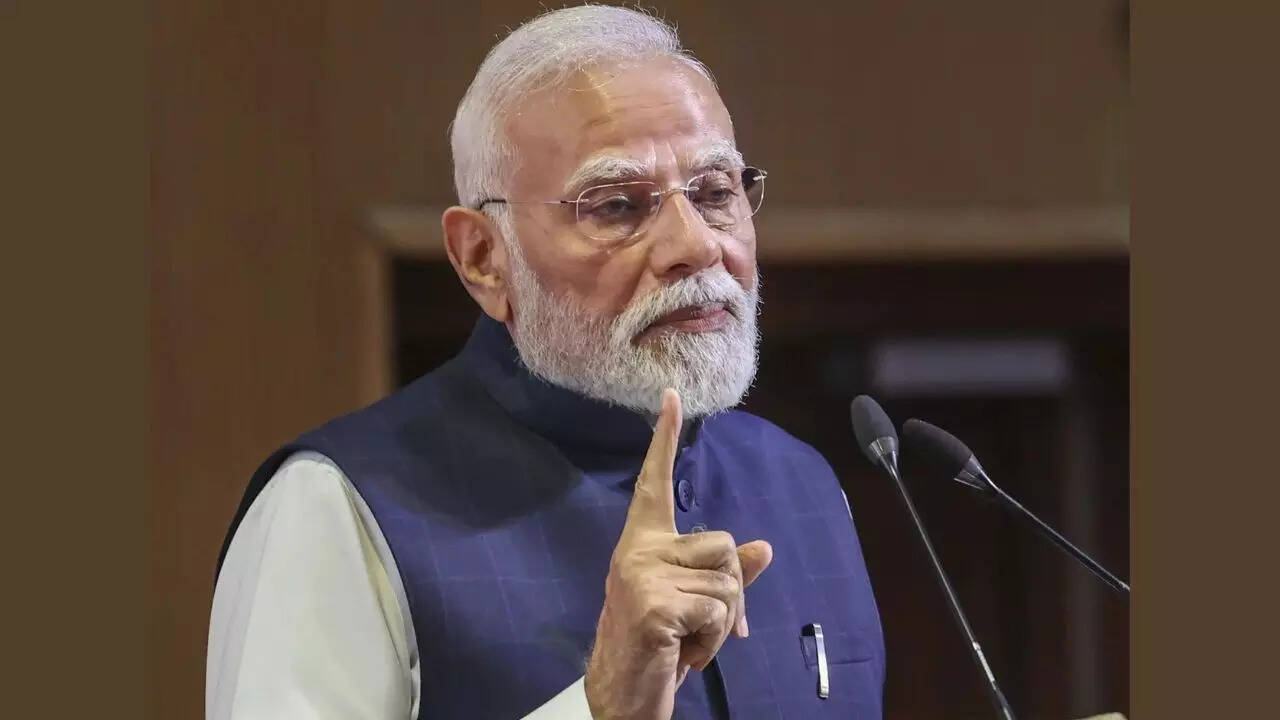
By Nitya Chakraborty   The twist and turns in Prime Minister Narendra Modi’s dealing with the overtures to him from the US President Donald Trump in the last three weeks speak eloquently of the tussle that is going on at the highest level of the BJP leadership and the RSS over how to send the […]

The article Sangh’s Nationalist Line Restrains Modi From Early Deal With Trump appeared first on Latest India news, analysis and reports on Newspack by India Press Agency).

Travel Influencers Christy Leung and “African Prince” Kunbi Journey into the Heart of Childhood HONG KONG SAR – Media OutReach Newswire – 22 October 2025 – Hongkongers love to travel, and in recent years, more people are seeking in-depth experiences, venturing into local communities to feel the cultural pulse. Travel enables us to experience diverse traditions and build genuine connections with people. Similarly, helping to improve the […]

SYDNEY, AUSTRALIA – Media OutReach Newswire – 22 October 2025 – Lee Kum Kee, the global leader in Asian sauces and condiments is inviting food lovers to experience fortune and prosperity via its “Unlock 1888 Good Fortune” Lucky Draw, which runs nationally from 13 October to 23 November 2025. Above: Mimi Wong, chef and Lee Kum Kee ambassador in Australia Lee Kum Kee and its broad array […]

The competition between the AMD Ryzen 7 9800X3D and the Intel Core Ultra 7 265K highlights a deeper shift in desktop CPU design and market dynamics for 2025. While both are positioned for high-end users, their strengths lie in distinct directions: AMD emphasises gaming cache architecture, whereas Intel leans into hybrid core layouts and productivity-oriented features. In gaming performance, the Ryzen 7 9800X3D retains a marked lead. Independent testing assigns it the title “fastest […]

BANGKOK, THAILAND – Media OutReach Newswire – 21 October 2025 – The Gem and Jewelry Institute of Thailand (Public Organization), or GIT, has unveiled a strategic plan to accelerate the adoption of Sustainability Standards aimed at strengthening Thailand’s gem and jewelry industry. The initiative promotes good governance, transparency, and traceability across the supply chain, establishing international benchmarks that build confidence among global buyers and leading brands. GIT […]

Merchandise exports rose to USD 220.12 billion in the six-month period ending September, an uptick of 3.02 per cent compared with the equivalent span of the prior year, while imports climbed by 4.53 per cent to USD 375.11 billion, resulting in a trade deficit of USD 154.99 billion.

A key facet of this performance is that exports to 24 nations recorded growth, underscoring a push by Indian exporters to diversify markets beyond traditional strongholds. These countries span regions from the Middle East and Southeast Asia to Africa and Latin America, and collectively accounted for USD 129.3 billion, or 59 per cent of the country’s total exports in the period.

Despite this diversification, exports to the United States — one of the largest destination markets — slipped in September as tariffs imposed by Washington weighed on certain sectors. For the month, shipments to the US declined by 11.93 per cent to USD 5.46 billion.

Those opposing movements such as exporters point to the 50 per cent tariff introduced by the US on Indian goods from late August. The exports community says that while growth is evident in alternative geographies including Africa, Latin America and the Middle East, the US tariff climate remains a drag.

Within the group of 24 countries that posted export growth are the UAE, Germany, Vietnam, Mexico, Russia, Kenya, Nigeria, Canada, Poland, Sri Lanka, Oman, Thailand, Bangladesh, Brazil, Belgium, Italy and Tanzania, among others.

At the same time, exports to 16 other countries recorded negative growth, representing roughly USD 60.3 billion or about 27 per cent of total exports in the period. This reveals that while diversification is under way, certain destination markets continue to deliver weak outcomes.

Industry observers suggest that the strategic reorientation of markets has been accelerated by external pressures such as protectionist measures in key markets and supply-chain disruptions across sectors. One exporter noted: “The trend will continue in the coming months as well.”

Meanwhile, the Government of India is engaging on multiple fronts to sustain export momentum. Officials from the commerce ministry signalled that structural steps will be needed to strengthen manufacturing competitiveness and integrate India more deeply into global value chains. They pointed to raw‐material bottlenecks and high logistics costs among the constraints.

In parallel, trade discussions with the US are underway, aimed at reducing friction caused by duties and exploring possibilities for energy-and-goods cooperation. For instance, US officials have raised concerns over Indian imports of Russian oil and bilateral trade.

Another trend shaping export performance is the push into manufacturing sectors aligned with global demand shifts. The electronics and mobile-phone export segment, for example, has delivered strong growth: exports in certain months surged by as much as 39-60 per cent in year-on-year terms, signalling India’s growing role as a manufacturing hub for global brands.

On the import side, the widening of the trade deficit is partly explained by rising inbound shipments of gold, silver and crude oil, ahead of domestic demand spikes and festival season pickup. These pressure points reflect larger global cost dynamics rather than domestic export weakness per se.

Export diversification is also being viewed as a risk-mitigation strategy. The weakening of certain traditional markets combined with tariff exposure in the US has underscored the importance of broadening the destination base. Africa, Latin America and Southeast Asia are emerging as focal regions.

Manufacturers and trade bodies emphasise that sustaining this diversification will require improving logistics efficiency, deepening downstream processing, upgrading product quality and securing better access via trade agreements and export-promotion schemes.

For exporters that achieved growth in the 24-country set, end-markets include consumer goods, engineering exports, pharmaceuticals, agro-products and electronics. Their performance demonstrates the incremental success of strategic investment and policy alignment.

Still, the fact that over a quarter of export value was derived from countries with declining shipments signals a dual challenge. Growth pockets exist, but structural weaknesses and external dependencies remain persistent obstacles.


The Dubai-based airline Emirates has formally marked 25 years of its flight operations to Uganda, signalling both a milestone in the company’s growth in East Africa and its deeper entrenchment in the Ugandan travel market. Since its first landing in 2000, the carrier reports transporting 2.8 million passengers on 15,900 flights between Uganda’s capital region and Dubai. At launch, the service flew three times weekly, routed via […]

BEIJING, CHINA – Media OutReach Newswire – 19 October 2025 – A thousand years ago, delivering fresh lychees from southern China to the capital, Chang’an, took over a week—and exhausted entire relays of horses. Today, the same journey takes just 24 hours. This dramatic change illustrates the rise of China’s modern logistics network: a nationwide system connecting producers, markets, and households with unprecedented speed and scale. Three […]

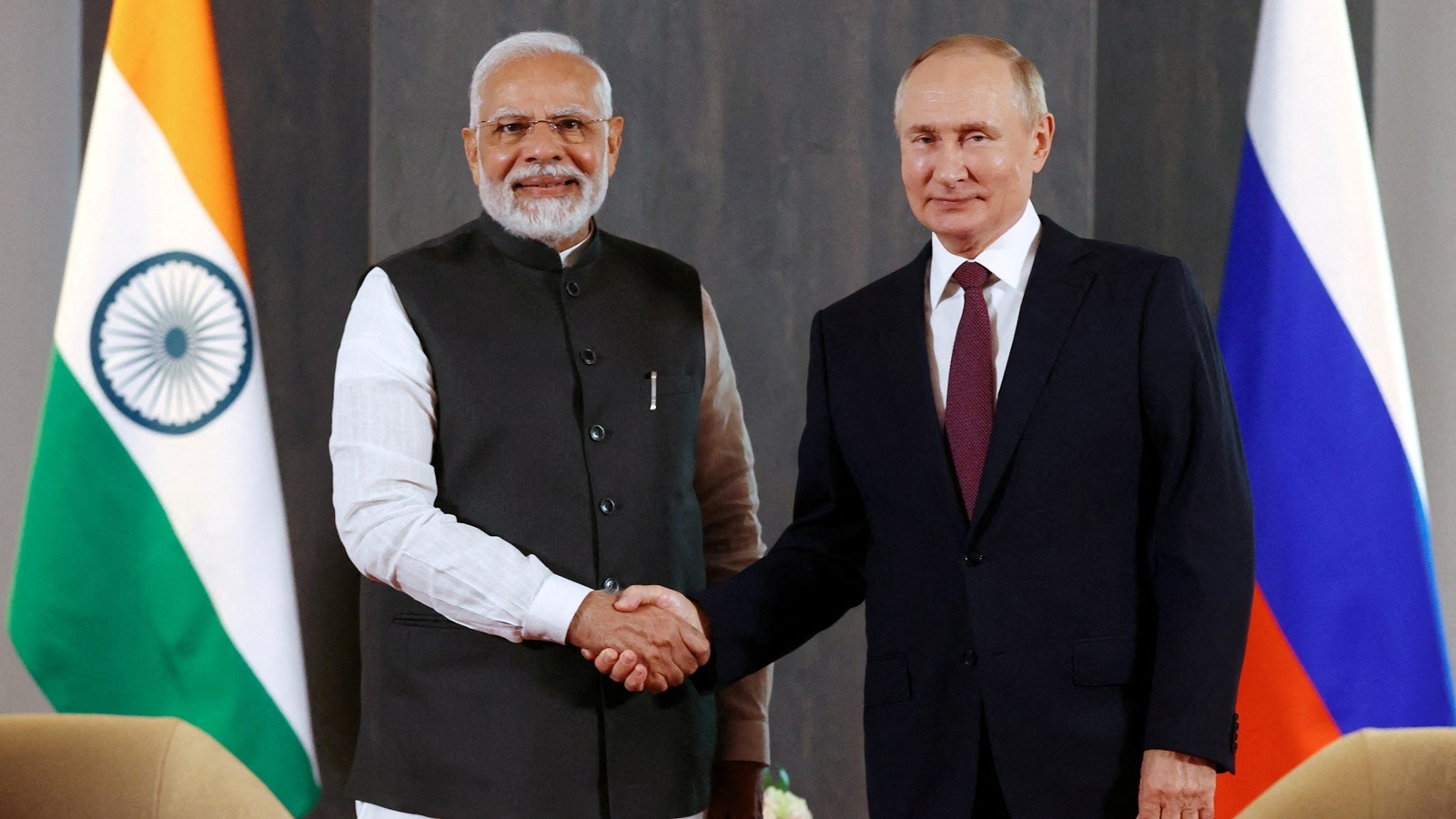
By Nitya Chakraborty Prime Minister Narendra Modi’s diplomatic woes are mounting as Russian President Vladimir Putin’s proposed visit to India on December 5 and 6 is approaching. US President Donald Trump is determined to ensure substantial reduction in Indian imports of Russian oil by November and this has been linked with the progress of the […]


The article Narendra Modi’s Mounting Dilemma Over President Putin’s Visit To India In December appeared first on Latest India news, analysis and reports on Newspack by India Press Agency).

Multiple posts flooding social media demand accountability—users call for a regulator-led probe, the CEO’s arrest, and deep scrutiny of Binance’s internal systems. The outcry follows recent chaos around synthetic tokens USDe, BNSOL, and wBETH, which lost their pegs on Binance amid massive liquidations. Compensation is flowing, but the narrative now centers on whether the crash was a desperate scramble or a deeply orchestrated exploit.

When Binance announced it would pay $283 million to users affected by depegging and associated liquidations, it framed the move as a goodwill gesture to restore stability. The payout applies to users whose positions used USDe, BNSOL, or wBETH as collateral between 21:36 UTC and 22:16 UTC on October 10. The exchange said compensation covers the difference between liquidation price and market price at 00:00 UTC on October 11, plus fees. It also promised to improve its risk-control systems and change how its indices weigh collateral assets..

These remedial steps, however, have not assuaged skeptics. Analysts at Uphold argued the event was no accident: they see the crash as a coordinated exploit of a vulnerability in Binance’s unified margin system, in which USDe, BNSOL, and wBETH were accepted as collateral. Because the exchange valued collateral based on internal order-book data instead of aggregated external prices, they say the system could be manipulated from within the venue itself. That, they believe, allowed an attacker to locally crash prices and trigger a cascade of liquidations.

One widely cited theory points to timing. Binance announced on October 6 it would update its pricing mechanisms to rely more on external oracles, with the changes scheduled for October 14. The incident happened on October 10—right in the middle of that eight-day window. In effect, critics argue, the exchange had acknowledged the flaw but had not yet implemented the fix, leaving a vulnerability no one should have touched. On-chain data shows USDe dropped to as low as $0.65 on Binance while remaining near parity across other markets, and wBETH and BNSOL showed similar divergence. The fact that only these three tokens—and only on Binance—were massively disrupted raises the specter that this was a targeted strike, not a systemic weak spot.

The theory gains further support from social media researchers. A thread by a user called “ElonTrades” describes how roughly $60–90 million of USDe was dumped on Binance to manipulate its order book, triggering forced liquidations in unified-account positions. That thread also links to outsized short positions opened elsewhere in anticipation of a broad market drop. Combined, the strategy would allow the attacker to profit while setting off mayhem across crypto markets.

Binance has rejected claims of an external exploit. In its public statement, the company argues that extreme market volatility predated the depegs, and that local platform issues amplified rather than initiated the crash. It also suggests some of the price distortions stemmed from interface display glitches—tokens with very small values were rendered as zero on users’ screens—while others reflect execution of long-dormant limit orders. The company contends liquidation volume occurring on its platform was only a fraction of broader market activity.

Even some industry voices have pushed back against blanket condemnation of Binance. One analyst told reporters that attributing the crash entirely to internal failure is premature, and that extreme leverage and macro market turmoil may have interacted with, not originated from, the exchange’s anomalies.

Yet the optics are harsh and the damage is real. The crypto community remains intensely uneasy. Many traders point to how precisely the exploit—or crash—focused on three collateral tokens, how it preceded a planned patch, and how quickly the stains were cleaned up by compensation. To many, the $283 million seems less like accountability than a strategic PR move to calm markets and buy time.

BNB, the exchange’s native token, soared after the compensation announcement, reaching a high near $1,370. That rally suggests some market participants interpreted the payout as a signal that Binance could backstop risks if needed. But it has not quelled deeper anxieties: users are now demanding full transparency about trades, collateral decisions, and the CEO’s role in risk oversight.

Amanda, a margin trader who lost funds in the incident, told crypto forums: “This wasn’t a market tantrum. The order flow was too precise, too surgical. It felt like someone pulled the plug on us.” Other users posted examples of margin calls executed within fractions of seconds after the depeg, with little time or warning to react.

The sequence of events presents too many coincidences: a pricing flaw known and scheduled for repair, large collateral-related token dumps executed mid-window, massive liquidations cascading in an insular system, and a rapid compensation move. Taken together, the evidence aligns with a narrative of design-level risk exploited rather than location-level chaos.

If the worst scenario proves true—that Binance’s unified margin design was manipulable from inside its own infrastructure—the implications ripple far beyond a single crash. Centralized exchanges, hailed for their convenience and liquidity, might now be exposed as fragile ecosystems. Traders could demand stricter oversight, regulators more frequent audits, and entire collateral frameworks could be reassessed.

Multiply Group, the Abu Dhabi investment holding firm, will acquire 2PointZero and Ghitha Holding via a share-swap deal, creating a combined enterprise with an estimated valuation of AED 120 billion. The transaction involves issuing around 23.36 billion new shares, lifting Multiply’s share capital from AED 2.8 billion to AED 8.64 billion and expanding the total shares to 34.56 billion. Approval from shareholders and regulators is pending.

The decision follows board sanction and aligns with a broader move by IHC to consolidate its leading portfolio companies—Multiply, 2PointZero, and Ghitha—into a unified listed entity under the name 2PointZero Group PJSC. The merger is pitched as an effort to streamline governance, deepen synergies across sectors, and accelerate growth. The transaction is slated for completion by mid-November 2025, contingent on formal clearances.

Under the proposed structure, Multiply will absorb full ownership of 2PointZero and a majority of Ghitha Holding. The merged entity will retain its listing on the Abu Dhabi Securities Exchange. With combined operations across energy, mining, financial services, agrifood, consumer goods, media, logistics, and related verticals, the new 2PointZero Group aims to harness diversification and integrated scale.

2PointZero brings to the table AI, energy transition, mining and financial services capabilities. Its role as a facilitator in cleantech and future resource assets is central to the logic of the merger. Ghitha Holding contributes a robust agriculture, food production, processing and distribution footprint—one of the UAE’s key players in national food security. Multiply already has stakes in sectors including mobility, media & communications, retail/apparel, packaging, and beauty.

Syed Basar Shueb, Chairman of Multiply, called the deal “a natural evolution of our portfolio strategy,” emphasising the aim to “optimise scale and strengthen the platforms we have built.” Samia Bouazza, Group CEO and Managing Director, framed the merger as aligning capital with megatrends, stating the unified entity would “grow bottom line both organically and inorganically, unlock value through AI, and deliver consistent long-term returns.” The new group will operate across more than 85 countries and target service to one billion people globally.

IHC’s own communications parallel Multiply’s narrative. The parent firm describes the merger as a means to craft a “next-generation investment powerhouse” anchored in a dual focus on energy and consumer sectors, intended to enhance operational efficiency and strategic scale. Sheikh Tahnoon bin Zayed Al Nahyan, IHC Chairman, cited the move as reaffirming IHC’s role as a catalyst of transformation, leveraging AI and value networks. Sheikh Zayed bin Hamdan bin Zayed Al Nahyan, Chairman of 2PointZero, said the consolidation would further the mission of driving energy transition, enabling AI, and empowering communities.

VISHNU RAJA
RYO YAMADA
HITORI GOTOH
IKUYO KITA