By Dr. Gyan Pathak PM Narendra Modi led Government has been successfully marketing its slogan “Affordable medicine for all” ever since it started implementation of Jan Aushadhi scheme under Pradhan Mantri Bhartiya Janaushadhi Pariyojana (PMBJP) launched in 2015-16, but on the ground level pharmaceutical companies and hospitals were allowed to charge exorbitant and unaffordable prices, […]
LOS ANGELES, USA – Media OutReach Newswire – 30 October 2026– Drivers in Los Angeles spend an average of approximately 87 hours each year in rush-hour traffic, equivalent to more than three full days. According to the INRIX 2025 Global Traffic Scorecard, this figure is slightly lower than the 88 hours recorded the previous year, while Los Angeles moved from eighth to tenth place among the world’s most congested urban areas.
For commuters, however, this time can be an opportunity: 15 minutes to review a presentation, a few moments to prepare for an important meeting, or a quiet transition from family life to the workday ahead. The key is finding ways to make these moments more meaningful and begin each day in a more positive frame of mind, contributing to overall well-being and happiness.
The in-vehicle experience plays an important role in making that difference. J.D. Power’s 2026 U.S. Automotive Performance, Execution and Layout (APEAL) Study, which evaluates the emotional appeal and ownership experience of 78,514 new-vehicle owners during the first 90 days of ownership across 37 attributes, found that electric vehicles outperformed internal combustion engine vehicles in nearly every category. The largest gap was in the powertrain category, where EVs scored 109 points higher on a 1,000-point scale.
A 2018 study conducted by the University of York in the United Kingdom also reported positive changes among drivers who switched from diesel vehicles to electric vehicles, including improved concentration, greater calmness and a stronger sense of happiness.
Together, these findings highlight how a morning commute can become a more positive start to the day – with less stress, greater comfort and a stronger sense of control. Rather than allowing rush-hour traffic to drain their energy, commuters can turn their journey into an opportunity to prepare, recharge and feel ready for the day ahead.
This is the spirit behind “Start Strong. Arrive Ready.”, the message Green SM, a Vietnamese-born all-electric taxi service, has chosen to introduce its experience to the U.S. market. Through every electric ride, Green SM aims to help passengers begin their day feeling more positive, comfortable and energized.
Making Every Moment Before Work Count: How a Smoother Ride Enhances the Passenger Experience
This experience comes to life through the VinFast VF 8, a D-segment electric SUV in Green SM’s fleet in Los Angeles. Its spacious interior, clean cabin and smooth, quiet performance offer passengers a welcome moment of comfort amid the pace of urban life. Whether heading to the office or an important appointment, passengers can use the journey to finish emails, review key talking points for a meeting, or simply relax and recharge before the day begins.
A pleasant journey is shaped not only by the vehicle, but also by the quality of service. Green Driver partners are carefully selected and trained, with an emphasis on professionalism, courtesy and attentive service throughout every ride.
For customers booking through the Green SM app, available features provide information about drivers, vehicles and routes, helping passengers follow their journeys and stay informed along the way. Fares and promotional offers are also displayed clearly, making it easier for customers to compare options and choose a ride that suits their needs.
Whether it is a morning ride before an important meeting, a transfer from a hotel to an event venue, or a series of journeys packed into a business trip, Green SM aims to make urban mobility more comfortable and convenient. After all, the value of a ride lies not only in getting passengers to their destinations, but also in helping them arrive feeling relaxed, in control and ready for whatever comes next.
From Vietnam to Los Angeles: Bringing Green Mobility to More People Through the Five Green Goodness Pillars
In mid-October, Green SM officially launched its all-electric taxi service in Los Angeles, marking the brand’s first entry into North America and expanding its global footprint to nine markets. Customers can book rides through the Green SM app, contact the call center or hail a vehicle on the street, with options to meet a range of mobility needs, from everyday commutes and longer journeys to airport transfers.
Across its markets, Green SM builds its service experience around the 5 Good Promises: Good Cars, Good Drivers, Good Price, Good Experience and Good for the Environment. In Los Angeles, these principles are reflected in an all-electric VinFast fleet, transparent fares and promotional offers, professional drivers, attentive service and rides with zero tailpipe emissions.
To celebrate its launch, Green SM is offering special promotions to customers in Los Angeles. New users can enjoy 50% off their fares, up to $12 per ride, on their first five trips. Customers can also sign up for Green Pass membership free of charge and receive 10 discount codes each month, with each code offering 30% off a fare, up to $10.
Founded in Vietnam in 2023, Green SM has steadily expanded its operations, bringing all-electric mobility services to markets around the world, including Vietnam, Laos, Indonesia, the Philippines, India, Kazakhstan, Denmark and the Netherlands. The brand has completed approximately 850 million trips covering nearly 6 billion kilometers, helping reduce more than 800,000 metric tons of CO₂ emissions, equivalent to the amount of carbon absorbed by approximately 36 million trees.
In the U.S., Green SM says it will progressively strengthen its local operations and recruit and train drivers from the local community, creating additional employment opportunities while contributing to the transition toward greener transportation in Los Angeles and the surrounding region. Alongside its expansion, the brand will continue investing in its fleet, technology, people and service quality, with the goal of building a sustainable, long-term presence in the U.S. market.
From Vietnam to Los Angeles, Green SM’s global journey represents more than an expansion of its brand footprint. It is also an opportunity to bring a greener, more comfortable mobility experience to people in major cities around the world.
Because a productive day can begin with a better ride. Start Strong. Arrive Ready.
Unveiling Three Innovative Products Integrating Local Hong Kong Culture and Consumption Scenarios, Demonstrating Deep Synergy Between Chinese Baijiu and Modern Leisure Lifestyles
HONG KONG SAR – Media OutReach Newswire – 29 October 2026 – The “Hong Kong Wine & Dine Festival 2026,” a premier global culinary extravaganza organized by the Hong Kong Tourism Board, officially opened today, 29 October. Kweichow Zhen (also known as Zhenjiu), the flagship brand of ZJLD Group Inc. (6979.HK), a leading Chinese baijiu enterprise listed on the Hong Kong Stock Exchange, makes a powerful return to the event. Against the backdrop of accelerating its global expansion and developing innovative products following its IPO, Kweichow Zhen centres its participation on the core theme of “Zhenjiu Encounters Hong Kong“. By seamlessly blending rich sauce-aroma baijiu with Hong Kong’s vibrant contemporary urban culture, the brand creates an immersive tasting experience that highlights its latest breakthroughs in product innovation and integration with lifestyle scenarios.
As a pioneer championing Chinese baijiu culture on the global stage, ZJLD Group is dedicated to breaking traditional stereotypes and continuously expanding the horizons of baijiu within modern casual living. Catering to the preferences of young urbanites and international consumers for versatile and rich flavor profiles, the Group presents three flagship innovative products. These offerings fully showcase an innovative interpretation of time-honoured craftsmanship and a profound resonance with modern Hong Kong aesthetics.
Three Highlighted Innovative Products: Local Flavors, Cross-Industry Collaboration, and Multi-Category Breakthroughs
Local Flavor Inspiration: ZESS(Zhenjiu Cocktail with Local Ginger and Lemon)
To broaden the daily appeal of traditional baijiu and capture younger demographics, Kweichow Zhen introduces an innovative low-ABV, light-sip concept. Crafted with Zhenjiu’s premium sauce-aroma baijiu as its base, the cocktail is specially infused with carefully selected local Hong Kong ginger and fresh lemon. Featuring a light 5% ABV sparkling profile, it harmoniously balances spicy nuances with crisp citrus notes, offering an approachable, low-alcohol alternative that revitalizes traditional sauce-aroma baijiu with a distinctly local Hong Kong touch.
Cross-Brand Innovation: Exclusive Launch of Chocolate Baijiu Ice Cream with The Ice Cream & Cookie Co.
Building on the enthusiastic response to past collaborations, Zhenjiu deepens its partnership with The Ice Cream & Cookie Co., an artisanal dessert brand from Singapore that has gained widespread popularity in Hong Kong. Making its exclusive debut at the festival, the “Chocolate-Flavored Baijiu Ice Cream” features a rich 60% dark chocolate base infused with premium apricots deeply soaked in Zhenjiu. The bright acidity and fermented complexity of the apricots blend perfectly with the smooth cocoa notes, delivering a luxurious triple-layered flavor experience of fruit, baijiu, and dark chocolate.
Major Category Expansion: “NEWS Oak-Aged Craft Beer” Makes Its Wine & Dine Debut
Marking a significant milestone in ZJLD’s multi-category beverage ecosystem, “NEWS Oak-Aged Craft Beer“, hailed as a “Super Beer”, makes its premiere at this year’s Wine & Dine. Developed over three years by Kweichow Zhen’s R&D team, it is crafted from imported Canadian and Australian two-row barley malt, top-grade German and Belgian yeast, Yakima Valley aroma hops from the US, and pristine water from Mount Mogan. Brewed using top-fermented Ale techniques with an ABV of 5.9%, it delivers elegant fruity, malty, and subtle woody notes. The brand incorporates the Eastern cultural ethos of “good fortune and prosperity” into its marketing narrative, accompanied by a sleek, modern, minimalist packaging design that embodies continuous progress and infinite possibilities.
Deepening the Baijiu Globalization Strategy: Partnering with Hong Kong to Enhance Its Charm as a Global Culinary Capital
Mr. Paul Ng, Vice President of International Operations at ZJLD Group Inc., stated:
“The Hong Kong Wine & Dine Festival is a world-class event of immense global influence. Kweichow Zhen has participated for consecutive years, and this year, we are placing even greater emphasis on the deep integration and scenario innovation between baijiu and local Hong Kong culture. From ZESS, our local flavor-inspired cocktail, to our co-created baijiu ice cream with a renowned artisanal dessert brand, and the premiere of NEWS Oak-Aged Craft Beer, we aim to present a fresh international calling card for Chinese baijiu. We want to demonstrate that baijiu is not only a traditional cultural symbol, but a dynamic, stylish lifestyle choice that seamlessly fits into modern urban leisure and daily living.”
Hashtag: #ZJLDGroup
The issuer is solely responsible for the content of this announcement.
About ZJLD Group Inc.
Zhenjiu was established in 1975 in Zunyi, Guizhou, China’s primary production area for sauce-aroma baijiu. In 1988, it was honored with the National Quality Award at the 5th National Wine Appreciation Conference. In the same year, it was selected by the Protocol Department of the Ministry of Foreign Affairs, the Communication Department of the Ministry of Economy and Trade, and the Great Hall of the People Management Bureau to become one of the two sauce-aroma baijiu served at state banquets. It is also recognized as one of the “Three RepresentativeBaijiu Brands in Guizhou“.
ZJLD Group Inc. is a leading baijiu group in China devoted to offering premium baijiu products, including sauce-aroma, mixed-aroma, and strong-aroma varieties. The Company operates four renowned baijiu brands in China, including two national baijiu brands (Zhenjiu and Li Du) and two regional brands (Xiangjiao and Kaikouxiao). ZJLD prides itself on inheriting the time-honored baijiu-distilling techniques and reinvigorating them to develop iconic products, striving to create a diverse portfolio that meets modern consumer preferences, captures broader market opportunities, and promotes traditional Chinese baijiu culture worldwide.
By Dr. Gyan Pathak Just after the results of MLC elections were out, Prime Minister Narendra Modi led a taunt against Congress for their ‘loss’ on October 28 by posting on X and followed such by the BJP-RSS clan. PM Modi posted, “MLC elections in 28 seats across 4 big states – Uttar Pradesh, Maharashtra, […]
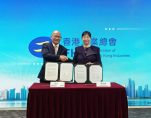
HONG KONG SAR – Media OutReach Newswire – 29 October 2026 – From October 19 to 20, an economic and trade delegation from Hainan Province paid a visit to Hong Kong. The delegation signed memoranda of cooperation respectively withThe Chinese Manufacturers’ Association of Hong Kong(CMA)and the Federation of Hong Kong Industries(FHKI) to advance pragmatic cross-border collaboration between Hainan and Hong Kong in trade and investment, manufacturing industrial chains and professional services.
Signing ceremony for the cooperation memoranda
During its stay in Hong Kong, the delegation visited the CCPIT Representative Office in Hong Kong. It held discussions with CMA and co-hosted the Hainan Free Trade Port (Hong Kong) Economic and Trade Cooperation Exchange Meeting with FHKI. The event showcased the policies, key industrial layout and investment opportunities of the Hainan Free Trade Port (FTP), and arranged one-on-one business matchmaking between Hainan and Hong Kong enterprises.
Wang Yuyuan, Vice President of the China Council for the Promotion of International Trade Hainan Sub-council (CCPIT Hainan) and China Chamber of International Commerce Hainan Chamber of Commerce, noted that since the official launch of island-wide special customs operations at the Hainan FTP on December 18, 2025, 174,000 new enterprises have been registered, representing a year-on-year surge of 95.9 percent. Newly established foreign-invested enterprises rose by 35.8 percent year on year. In the first half of this year, inbound and outbound tourist arrivals exceeded 70 million, up 28 percent year on year, with the number of visa-free entry countries expanding to 88. From January to August, the province’s total goods import and export volume hit 250 billion yuan, growing by 61.5 percent year on year. Hainan is rapidly emerging as a critical gateway connecting China with the rest of the world and a prime channel for two-way investment.
According to CCPIT Hainan, Hong Kong ranks as a major source of foreign investment for Hainan. In the first half of this year, Hainan registered 1,303 new foreign-invested enterprises, an increase of 38.62 percent year on year, with Hong Kong-funded enterprises accounting for the lion’s share. Hainan has issued offshore RMB local government bonds in Hong Kong for four consecutive years, with a cumulative issuance volume reaching 18 billion yuan.
CMA is one of Hong Kong’s most representative non-profit industrial and commercial bodies, with around 3,000 member enterprises. It has long provided members with business services including exhibitions, brand promotion, testing and certification. FHKI, one of Hong Kong’s four major chambers of commerce, has approximately 2,000 corporate members. It focuses on boosting the sustained development of Hong Kong industry and manufacturing through policy advocacy, business matchmaking, certification services and youth talent cultivation.
The two memoranda explicitly stipulate that the two sides will establish a regular liaison mechanism, build a long-term cooperation platform covering information sharing, business matchmaking, exhibition collaboration and professional services, and provide solid support for pragmatic business cooperation between Hainan and Hong Kong enterprises.
Source: China Council for the Promotion of International Trade Hainan Provincial Committee (CCPIT Hainan)
Hashtag: #CPITHainan
The issuer is solely responsible for the content of this announcement.
The London Metal Exchange is exploring plans to convert metal inventories held in Hong Kong warehouses into digital assets that businesses could use to secure financing, as the city develops its commodities trading infrastructure. The exchange confirmed that its proposal remains at an exploratory stage and focuses on off-warrant metal, a category of warehouse inventory not covered by the standard title documents used in its established trading […]
The United Nations General Assembly voted overwhelmingly on Wednesday to demand an end to the United States embargo on Cuba, although support for the annual resolution fell sharply following a diplomatic campaign by Washington. The resolution passed with 130 countries voting in favour, 17 against and 25 abstaining. That compared with 165 votes in favour, seven against and 12 abstentions in 2025, marking a substantial shift in […]
By Ashok Nilakantan Ayers NEW YORK: India’s digital media industry has taken an unusually significant step in challenging Prime Minister Narendra Modi’s government. Twenty-one major news publishers, including media organisations owned by Mukesh Ambani and Gautam Adani, have approached the Supreme Court, arguing that India’s digital privacy legislation could undermine investigative journalism, compromise confidential sources […]
Peru’s exports are projected to reach $110.794 billion by the end of 2026, an increase of 21.16% over the previous year, as higher mineral prices and strong international demand lift the country’s overseas sales. The Lima Chamber of Commerce released the forecast based on estimates prepared by its Institute for Foreign Trade Research and Development (Idexcam), identifying mining as the principal contributor to the anticipated expansion. The […]
MLA G Sudhakaran has sharply criticised the state’s Home Department, declaring that the personal qualities and appearance of Home Minister Ramesh Chennithala cannot compensate for shortcomings in the administration. The Ambalappuzha legislator described Chennithala as a good person and an admirable political figure bu…
The Mosprom Export Support Center arranged a series of meetings between Moscow industrial companies and potential clients in Manama. The parties to the talks discussed joint projects in construction, IT and telecoms, as well as supplies of sweet goods to the local market. This was reported by Maksim Liksutov, Deputy Mayor of Moscow for Transport and Industry. “The capital is a confident leader among Russian regions in […]
By Kalyani Shankar In India, festivals are more than just celebrations; they are significant traditions. Families often spend a considerable amount on new clothes, sweets, decorations, and gifts during these times. However, rising prices and inflation are forcing consumers to adjust their budgets and shopping habits. Many families are choosing to celebrate on a smaller […]
Tourists leaving the UAE can now receive value added tax refunds within one business day under an artificial intelligence platform introduced by the Federal Tax Authority, reducing the previous waiting period of approximately nine days. The system, launched on October 20 in partnership with authorised refund operator Planet, is operating at Dubai International Airport, Zayed International Airport in Abu Dhabi and Sharjah International Airport. It enables eligible […]
By Dr. Gyan Pathak India is set to further ‘improve’ employment and unemployment data by revamping the Periodic Labour Force Survey (PLFS) and bringing out the data accordingly from January 2027. The National Statistics Office (NSO), Ministry of Statistics and Programme Implementation (MoSPI) has proposed to introduce modification in the sampling design of the PLFS […]
By T N Ashok NEW YORK: The latest diplomatic signals from Washington and New Delhi suggest that a prolonged India–US trade confrontation may finally be approaching a settlement. US President Donald Trump says a deal is close. Secretary of State Marco Rubio, after meeting External Affairs Minister S. Jaishankar in Mumbai on October 20, has […]
QashierGM works from each merchant’s own sales, payouts and menu, and gets routine work done with the owner’s approval. With Crew, Qashier’s new team chat, anyone on the team can tag @GM to get things done, and QashierGM acts only within each person’s role.
SINGAPORE – Media OutReach Newswire – 23 October 2026 – Qashier, the unified merchant operating system serving more than 25,000 businesses across Southeast Asia, today launched QashierGM, an AI general manager that works with a merchant’s whole team. Available at no additional cost to all Qashier merchants in Singapore, QashierGM lives in QashierHQ, the web and mobile app (Android and iOS) merchants use to manage their sales, payouts, products and staff. Owners can ask it about sales, payouts and products in plain language. Merchants on the Qashier plan also get Crew, a new team chat where staff can bring QashierGM into any conversation by tagging @GM. Malaysia, Thailand and the Philippines follow in November.
Because QashierGM works directly from each merchant’s own transactions and settlements, it can do what a general-purpose chatbot cannot: explain, line by line, why a payout is lower than the day’s sales, or show which outlet is underperforming this week. Owners get answers grounded in their actual operations, without piecing together reports.
“Most small business owners can’t afford a general manager, so they become one after closing, going through reports at midnight,” said Christopher Choo, Co-Founder and CEO of Qashier. “QashierGM is the manager they never had. It already knows the business, takes on the routine work and never makes a change without asking. With Crew, it now works alongside the whole team, not just the owner.”
The launch follows an open beta that began in September with merchants ranging from single-outlet cafés and shops to multi-outlet chains, with F&B operators the most active. Their most common questions were about sales trends, best sellers and payouts, and with the year-end festive season approaching, many are asking QashierGM to suggest festive promotions built around their most popular items.
Jun Rong, Operations Manager of Coexist Coffee Co., likens using QashierGM to talking to his store managers, only faster. “Running a café means wearing every hat, and the numbers usually wait until after closing. QashierGM already knows our sales, payouts and menu, so I just ask. When we plan a promotion, it suggests ideas based on what our customers actually buy, and nothing changes until I confirm. It feels like having a general manager who’s been with us from day one.”
QashierGM also takes routine admin off the owner’s plate. An owner can ask it to update a price, mark an item as sold out or add a new product, and QashierGM shows a card with exactly what will change and where. Nothing goes live until the owner taps confirm. Multi-outlet operators can compare stores, spot the one underperforming and push a change to every store in one request. Store managers see and change only their own store. Owners can also set alerts in their own words, such as “alert me on any unusual refunds” or “tell me when the first staff clocks in”, and QashierGM tells them when it matters.
Crew: the whole team, with QashierGM in the conversation
Crew, included in the Qashier plan and Enterprise plans, gives a merchant’s team a work chat of its own, separate from personal messaging groups where messages get lost and former staff keep the history. Owners, managers, kitchen and floor staff get private direct messages, group chats by team or department, and announcements with read receipts. Anyone can tag @GM to check a number, update an item or send a customer an invoice with a payment link. QashierGM acts only with the permissions of the person who tagged it, sends bigger changes to whoever can approve them right in the chat, and posts an update when an invoice is paid. It only sees the conversations it is tagged into.
On a typical day, a floor staff member can mark a dish sold out, a manager can approve a price change from her phone, and an owner can send an event deposit invoice and see it paid, all in the same app. Crew and QashierGM work in all major languages used across the region, including English, Mandarin Chinese, Malay and Thai.
Connectors to third party apps such as Gmail and Google Business Profile arrive in November, extending QashierGM beyond Qashier to supplier emails, customer enquiries and Google reviews. “A good general manager handles the work wherever it lands, not just inside one system,” added Choo. “This is the first step.”
Qashier processes more than US$1 billion in annualised payment volume for over 25,000 merchants across Singapore, Malaysia, Thailand and the Philippines. The company has been profitable since December 2025 and raised US$6.125 million in Series A+ financing in June 2026. QashierGM is available now to all Qashier merchants in Singapore through QashierHQ on web, Android and iOS, at no additional cost. Crew is included in the Qashier plan and Enterprise plans. Both launch in Malaysia, Thailand and the Philippines in November. To learn more, visit https://qashier.com/sg/.
The issuer is solely responsible for the content of this announcement.
Qashier Pte. Ltd.
Qashier is a unified merchant operating system that brings together payments, business software, embedded financial services and customer engagement tools on one platform. Operating across Singapore, Malaysia, Thailand and the Philippines, Qashier supports more than 25,000 SMEs with an integrated ecosystem built for Southeast Asia’s digital economy. Qashier is licensed by the Monetary Authority of Singapore as a Major Payment Institution. Founded in Singapore in 2019, Qashier gives merchants an AI general manager, QashierGM, and a team chat, Crew, through QashierHQ.
A US food importer has challenged President Donald Trump’s 50 per cent tariffs on Canadian goods in the United States Court of International Trade, arguing that the administration exceeded its legal authority. Gellert Global Group filed the lawsuit on Tuesday, October 20, with representation from the Liberty Justice Center. The New York-based court has been asked to halt collection of the duties, declare them unlawful and order […]
Artificial intelligence is becoming a bigger part of the smartphone experience, powering features such as real-time translation, photo editing, voice assistants, and text summarisation. Similar digital experiences, including those offered through platforms like GameZone casino, also rely on mobile devices that balance functionality with performance. However, delivering AI capabilities without significantly reducing battery life remains a technical challenge. Manufacturers are exploring specialised processors, smaller AI models, and […]
LOS ANGELES, USA – Newsaktuell – 21 October 2026 – A newly released study of US state government performance found strong partisan and regional patterns within three pillars of governance: democratic accountability, state capacity and public goods provision. Yet, the US states’ outcomes differ in important ways from international comparisons, as the three governance dimensions show limited correlation, the researchers found.
Panel discussion at Columbia University in New York: Speaking about the study “The Governance Performance of the Fifty States: The U.S. Berggruen Governance Index” were (from left): Prof. Helmut K. Anheier (UCLA), Prof. Robert Y. Shapiro, Prof. Adam Tooze (both Columbia), and Joseph C. Saraceno (UCLA). (Picture: Jason DeCrow/AP Content Services for DNA)
The report, “The Governance Performance of the Fifty States: The U.S. Berggruen Governance Index”, applies the research team’s “governance triangle” from past global country rankings to the 50 US states. The report has now been presented to the public at Columbia University in New York.
“Unlike in the Berggruen Governance Index’s cross-national comparisons, where the three dimensions are broadly correlated, in the 50 U.S. states they often run counter to each other,” the authors conclude. “This may seem counterintuitive, as one might expect a well-governed state to finish high on all three and a poorly governed one to place low across all three.”
The report concluded that state capacity and public goods provision are “essentially uncorrelated.” Massachusetts, which has among the highest per capita incomes, was third in public goods but 49th in state capacity. Mining and agriculture-dependent Wyoming was 36th in public goods provision but No. 1 in state capacity.
Public goods provision, which combines quality-of-life metrics such as health and educational outcomes with infrastructure and quasi-public goods that are often delivered by the private sector, saw four of the top five from the Northeast, while the bottom seven were in the South. All but one of the top 16 states were won by Democratic nominee Kamala Harris in the 2024 US presidential election. Nineteen of the bottom 20 went to Donald Trump.
Democratic accountability measures election procedures, which vary widely among states, along with scores for civil society activity and government openness. These include among others lobbying disclosures and state auditor independence. The top 12 states were a geographical mix of the West, Northeast and Midwest. Nine of that dozen voted for Harris, though the state with the highest score was reliably Republican Montana. The 10 lowest-ranked states were all Southern, and the bottom 20 were all won by Trump in 2024.
State capacity foremost indicates debt levels, along with budget processes and effective welfare-state delivery such as unemployment insurance. The top-ranked states were geographically diversified, but no Northeastern state was among the top 12. All major regions were represented in the bottom 10, including notoriously debt-laden Rhode Island, Illinois, Connecticut and New Jersey.
The three components produce four state groupings identified by the authors:
14 fiscally sound and delivering states, which are half Republican and half Democratic and swing states, based on the 2024 presidential race.
16 strained but delivering states, which are mostly Democratic.
Nine fiscally strong but poorly served states, almost entirely Republican.
11 low performing states, including only one Democratic state.
The report was written by principal investigator Helmut K. Anheier with co-authors Joseph C. Saraceno and Edward L. Knudsen, all of the UCLA Luskin School of Public Affairs, and produced as a collaboration of the Luskin School with the Berlin-based Hertie School, supported by the Berggruen Institute, a Los Angeles think tank.
During a panel discussion held with the release of the report at Columbia University, economic historian Adam Tooze focused on the states with poor scores for provision of public goods. He pointed out that for many public goods that in Europe are assumed to be state-led, such as health care, education and utilities, in the US the private sector has a greater role.
“If you look at all of the states which are underperforming, it’s the South, and the variable that’s operating here is race,” said Tooze, a Columbia professor. “The reason why these states don’t have large-scale public services is that white people who are richer don’t want to pay taxes to redistribute income to black people. And it’s not a secret; it’s the logic of American politics.”
Among the 11 low performing states, the very worst performers are in the South: Louisiana, Mississippi, Alabama and Kentucky.
Joseph C. Saraceno said that the 14 states classified in the report as fiscally sound and delivering “provide a moderate level of public goods while also having state capacity, or this measure of fiscal room that they find to be comfortable, or have a rainy day fund as needed.”
The group of fiscally strong, poorly served states have strong balance sheets but little to show for it in quality of life. Arkansas, for example, ranks seventh in state capacity but 46th in public goods provision. Tooze said those states have better fiscal resilience and “rank high on their capacity score because basically they’ve never done anything. So unsurprisingly, when push comes to shove, they could do something if one supposed they had politics that would allow them to.”
Edward Knudsen, another researcher who worked on the previous global versions of the Berggruen Governance Index, pointed out that the strained but delivering states are heavily traditionally Democratic Party states that also score higher for democratic accountability. “In a lot of the Democratic leaning states, you have more ability for the population to demand public goods. They in turn are able to receive them. That places this fiscal stress,” Knudsen said.
This text and the accompanying material (photos and graphics) are an offer from the Democracy News Alliance, a close co-operation between Agence France-Presse (AFP, France), Agenzia Nazionale Stampa Associata (ANSA, Italy), The Canadian Press (CP, Canada), Deutsche Presse-Agentur (dpa, Germany) and Press Association (PA, United Kingdom). All recipients can use this material without the need for a separate subscription agreement with one or more of the participating agencies. This includes the recipient’s right to publish the material in own products.
The DNA content is an independent journalistic service that operates separately from the other services of the participating agencies. It is produced by editorial units that are not involved in the production of the agencies’ main news services. Nevertheless, the editorial standards of the agencies and their assurance of completely independent, impartial and unbiased reporting also apply here.
The issuer is solely responsible for the content of this announcement.
HONG KONG SAR – Media OutReach Newswire – 21 October 2026 – To mark the annual World Sight Day, international sight-saving organization Orbis, in partnership with the Hong Kong Ophthalmological Society (HKOS), Southern District Office, and Southern District Services & Community Care Teams (Southern District Care Teams), held the “World Sight Day: Southern District Eye Care Day” at Wah Kwai Community Hall in Aberdeen. Combining medical expertise, government administrative support, and local district networks, the event featured interactive sensory games, medical seminars, and in-depth eye screening to promote eye disease prevention and early screening for underprivileged seniors.
Intergenerational Care: The Earlier the Eye Protection, The Better – “When Vision Fades, It’s Already Too Late”
Eyes are the windows to the soul, and good vision is key to maintaining quality of life and dignity for seniors. Clear vision allows everyone to live life to the fullest. Yet, many local seniors dismiss deteriorating vision as an inevitable sign of aging and choose to endure it. As early-stage eye diseases are often painless and asymptomatic, by the time seniors experience noticeable blurriness or vision impairment, they have often missed the golden window for effective treatment.
On World Sight Day, the message from organizers was clear: caring for aging eyes is a shared family responsibility. Through twin themes of “Intergenerational Care” and “Early Screening, Early Control,” they called on younger generations to accompany their elderly loved ones on the journey to better vision. Eye care should never be put off until problems arise. A gentle word of concern, a thoughtful reminder, or simply offering to accompany parents to an eye exam could be the very thing that catches a silent disease early and protects seniors’ clarity, confidence, and quality of life.
Three Key Program Highlights: From Interactive Sensory Games to In-Depth Eye Screening
The full-day event offered a comprehensive eye care experience:
Interactive Sensory Games: Featured 5 interactive eye care booths (including AR eye disease simulation and Braille challenges), allowing residents and young caregivers to experience visual challenges faced by seniors firsthand while learning eye care knowledge.
Professional Medical Seminars: 3 specialized seminars hosted by HKOS specialist ophthalmologists unraveled “silent vision thieves” like cataracts, glaucoma, and macular degeneration in accessible terms, attracting over 500 seniors and caregivers.
In-Depth Eye Screening: On-site HKOS specialist ophthalmologists provided free Optical Coherence Tomography (OCT) scans and diagnostic consultations to 120 underprivileged seniors from the Southern District, issuing specialist referral letters to cases requiring further medical follow-up.
Quotes from Officiating Guests
Ms. Sandy CHEUNG, JP, District Officer (Southern)
“The Southern District Office has always been committed to bringing together government, charitable organizations, and community forces to serve residents. We are delighted to coordinate the Southern District Care Team, partnering with Orbis and the Hong Kong Ophthalmological Society to bring top-tier eye care resources directly to Wah Kwai Estate for free screenings for local seniors. The Care Team will continue to leverage its community network to care for the physical and mental well-being of the elderly.”
Ms. Kathleen SHERWIN, President & Chief Executive Officer of Orbis International
“For over 40 years, Orbis has firmly believed that cross-sector collaboration is key to preventing and treating avoidable blindness. Hong Kong has always been a vital global hub for Orbis. As a centerpiece of Orbis’s World Sight Day community initiatives, this event aims to promote ‘Intergenerational Care’ and encourage the younger generation to actively care for their elders’ eye health.”
Prof. YAM Cheuk Sing, Jason, President of Hong Kong Ophthalmological Society
“Common elderly eye conditions such as cataracts, glaucoma, and macular degeneration often develop silently in their early stages. By the time seniors notice blurred vision, irreversible vision damage may already have occurred. HKOS is honored to mobilize specialist ophthalmologists into the community to conduct screenings, putting the medical philosophy of ‘Early Screening, Early Control’ into practice.”
Ms. HUI Sze Man, Orbis “Sight Ambassador” & Senior Artiste
“Having had cataract surgery myself, I was fortunate that my habit of regular eye checkups allowed me to recover my vision completely post-surgery! My five grandchildren are always caring for my eyes. I strongly urge fellow seniors not to endure vision problems silently, and encourage the younger generation to show more care by taking their elders for regular eye checkups!”
Cross-Sector Unity to Achieve “Early Screening, Early Control”
The event featured a simple yet solemn kick-off ceremony. Officiating guests affixed colorful “E” chart props onto a giant eye chart backdrop, symbolizing the four-party partnership across government, medical, charitable, and district sectors, uniting to restore clear vision to Southern District seniors. This was followed by a mass photo op with over a hundred seniors and family members holding eye care props and chanting slogans in a warm, enthusiastic atmosphere.
Photo Captions
Photo 1 (Joint Kick-off Ceremony): Ms. Kathleen SHERWIN, President & CEO of Orbis International (right 3); Ms. Sandy CHEUNG, JP, District Officer (Southern) (left 3); Prof. YAM Cheuk Sing, Jason, President of HKOS (right 1); Ms. LAM Yuk-chin, BBS, MH, Representative of the Southern District Care Team (left 2); Ms. Mary LAU, Executive Director of Orbis Hong Kong (right 2); and Ms. HUI Sze Man, Orbis “Sight Ambassador” (left 1) officiate the “World Sight Day Senior Eye Care Action” launch ceremony by placing colorful “E” props on a giant eye chart.
Photo 2 (Mass Intergenerational Group Photo): Officiating guests pose with nearly 160 Southern District seniors, residents, and family members, holding eye care props and calling for “Early Screening, Early Control” and promoting “Intergenerational Care”.
Photo 3 (Free Specialist Eye Screening): HKOS specialist ophthalmologists provide free comprehensive consultations and OCT scan evaluations for underprivileged seniors in Wah Kwai Estate.
Photo 4 (Sight Ambassador Experience): Orbis “Sight Ambassador” Ms. HUI undergoes a professional eye checkup on-site and shares her story of overcoming cataracts to encourage seniors not to endure eye issues silently.
Photo 5 (Community Eye Care Booths and Seminars): The event featured AR eye disease simulation booths and medical seminars to help residents experience patient perspectives and deepen community eye health education.
Hashtag: #Orbis
The issuer is solely responsible for the content of this announcement.
TONGXIANG, CHINA – Media OutReach Newswire – 20 October 2026 – The 2026 World Internet Conference Wuzhen Summit will open on Nov. 2, bringing technology leaders, researchers and companies to the historic water town as Tongxiang firms expand AI applications from commercial cleaning and autonomous delivery to industrial control and data-center cooling.
The CenoBot S5 autonomous cleaning robot undergoes real-world testing at a demonstration site in Tongxiang.
For Tongxiang, long associated with the annual internet conference, the summit is also a chance to demonstrate how local companies are commercializing AI technologies for customers at home and abroad.
Ahead of the event, reporters visited seven Tongxiang-based companies working in robotics, intelligent vehicles, synthetic data, industrial automation, logistics and computing infrastructure.
Singapore Changi Airport earlier this year placed a fourth order for commercial cleaning robots from CenoBots, a Tongxiang-based company whose machines are used in airports, supermarkets, hospitals, factories and warehouses.
CenoBots has sold products in more than 40 countries and regions. Its customers include Changi Airport, British retailer Tesco, the University of Minnesota and pharmaceutical company Novo Nordisk. This year, the company supplied about 600 autonomous cleaning robots for Tesco Express stores across the United Kingdom.
“Cleaning robots are appearing in more and more settings,” said Shen Jizhong, CenoBots’ co-founder and vice president. “It is much like electric vehicles becoming a familiar sight on the roads — a trend that is gathering pace.”
The company’s machines are adapted to different settings. Hospital robots must move through busy corridors without disrupting patient care, while those used in supermarkets navigate around shoppers and carts. Factory robots operate near forklifts, and airport models must handle both fine debris in carpeted areas and small obstacles on smooth floors.
CenoBots continues to refine its robots through real-world testing, focusing on reliable operation and consistent cleaning performance across diverse environments. The company has expanded its research, development and production facilities in Tongxiang from approximately 3,000 square meters in its early years to more than 20,000 square meters. Local malls, hospitals and sports venues have also served as long-term testing sites.
While CenoBots focuses on service robots, TEEMO is developing the vehicle platforms that support autonomous mobility. The company makes drive-by-wire skateboard chassis and core components for autonomous vehicles used in last-mile delivery, patrols and logistics.
Its standardized chassis can be equipped with different vehicle bodies and hardware for specific uses. One of TEEMO’s strategic customers, autonomous delivery-vehicle maker Zelos, was selected for all lots in China Post’s centralized procurement program for 7,000 autonomous delivery vehicles.
TEEMO’s customers already span the United States, the Middle East, India and Russia, said Zhang Yongjian, the company’s director of operations.
“In some overseas markets, distances are long, populations are dispersed and last-mile delivery is difficult to staff,” Zhang said. “Autonomous delivery vehicles have strong potential there, and overseas business will become an important growth driver for us.”
Other Tongxiang companies are concentrating on the data and perception systems that allow machines to function in physical environments.
Dayan Technology, founded in Tongxiang in May 2025, provides synthetic-data and toolchain services for autonomous-driving and humanoid-robotics companies. It combines real-world data collection, digital twins and simulated training environments to help developers train robots before they are deployed.
Its wearable devices record human movement and interactions with objects. A haptic glove uses liquid-metal and pressure sensors to capture hand gestures, finger movements and contact force. A multi-camera headset records a user’s visual field, body posture, hand movements and the position of nearby objects.
Dayan said its tactile-perception model can process touch signals in milliseconds. The technology is intended to help robots do more than identify objects visually: They can learn how firmly to grip an item, recognize when it is slipping and apply force without causing damage.
Freetech Intelligent Factory
Freetech is applying related sensing and decision-making capabilities to intelligent driving. The company develops intelligent-driving systems and 4D imaging radar for passenger and commercial vehicles, and said its technology has been selected for hundreds of vehicle programs.
Its ODIN AI platform supports products at different levels of driving automation. The radar is designed to complement cameras in heavy rain, fog, darkness and abrupt changes in light, including when vehicles enter or leave tunnels.
At its intelligent-manufacturing base in Wuzhen, Freetech is also using AI in production. An in-house system reads customer orders and calculates the components and materials needed for each production line before manufacturing begins. The company said the system has increased overall efficiency by more than 20%.
“Transportation combined with a specialized function will be an important direction for the future,” said Dr. Zhang Lin, Freetech’s founder and CEO.
Freetech sees potential applications beyond passenger vehicles, including robots, elder-care vehicles, mining equipment and agricultural machinery.
Beyond mobility, Tongxiang firms are using AI to address the complexity of industrial operations. Founded in 2019, Shuhan Technologies provides on-premises industrial AI for chemical plants, energy facilities and wastewater-treatment systems. Its AI-driven control layer continuously ingests data from central control systems and field sensors, identifies dynamic conditions and autonomously adjusts operating parameters in real time.
“Fundamentally, all industrial process challenges can be framed as control and optimization problems,” said Zhai Zhengjun, Shuhan’s Chief Technology Officer.
At a coal chemical plant with annual capacity of 1.2 million metric tons, Shuhan said its system reduced raw-material consumption by 6%. The company estimated that the deployment generated more than 176 million yuan, or about $26 million, in annualized economic benefits and reduced carbon emissions by more than 500,000 metric tons.
SENAD is targeting bottlenecks in logistics operations, including loading, unloading, sorting and pallet handling. It develops autonomous loading and unloading robots, as well as a multimodal logistics model called Robot Insight, for sectors including beverages, tobacco, consumer goods, pharmaceuticals and logistics.
Tongxiang’s AI sector also includes companies addressing the infrastructure needed to run increasingly powerful computing systems. SynthCool is tackling a basic constraint of the AI boom: heat.
SynthCool develops two-phase liquid-cooling systems to address the heat generated by increasingly powerful processors. Inadequate cooling can trigger thermal throttling, reducing performance and energy efficiency.
“Heat dissipation is infrastructure,” said Zhu Zhijiang, SynthCool’s general manager.
SynthCool’s two-phase cooling technology uses the latent heat of vaporization to remove heat from processors. The cooling fluid absorbs heat and boils into vapor, which is then condensed back into liquid and recirculated.
Depending on ambient conditions and system design, two-phase cooling can also support free cooling and reduce reliance on compressor-based refrigeration. Waste heat may be recovered where temperatures and local demand make reuse practical.
According to SynthCool, its technology supports heat dissipation of more than 3,000 watts per chip and heat flux above 250 watts per square centimeter. Under comparable cooling requirements, the system requires approximately one-third of the flow needed by conventional single-phase water-cooled cold plates, helping reduce piping requirements and pumping demand.
SynthCool’s portfolio includes two-phase direct-to-chip and immersion cooling solutions, along with distribution units and control systems for AI data centers.
Hashtag: #Tongxiang
The issuer is solely responsible for the content of this announcement.
BANGKOK, THAILAND – Media OutReach Newswire – 20 October 2026 – Choosing a restaurant today may begin with more than the question, “What would you like to eat?” It may also mean asking, “Who would you like to spend time with?” and “What kind of meal would you like it to be?” Whether it is a family meal, a gathering with friends, a celebration of a special occasion or a romantic moment by the sea, each calls for different flavours, atmospheres and experiences.
ONYX Dining invites guests to discover a variety of dining experiences at Amari Bangkok and Amari Pattaya, from family meals with something for every generation and relaxed gatherings over long conversations to opportunities to discover new flavours or dine by the sea. Each offers more than a meal: “More of What You Love”
A family meal with something for everyone at the table — Prego
When dining out as a family, everyone may have a different favourite. Some may be in the mood for pizza, others may prefer pasta, while others may wish to try something new. Prego Italian Restaurant at Amari Bangkok brings a variety of Italian dishes together at one table, from wood-fired pizza, homemade pasta and Italian classics to children’s menus and gluten-free options. Highlights also include Risotto alla Montanara, one of the restaurant’s signature dishes, burrata and tiramisu, allowing everyone to choose a dish they love and make the most of their time together.
For those looking to swap the city for the seaside, Prego Pattaya Pasta Lab & Bar at Amari Pattaya welcomes guests with fresh pasta made in-house, pizza and contemporary interpretations of Italian classics, overlooking the curve of North Pattaya Beach. Meanwhile, Amaya Food Gallery offers familiar Thai and international dishes, making a seaside meal another opportunity to relax and spend time with family or someone special.
This November, Prego is set to open a new location at Amari Don Muang Airport Bangkok, offering another choice for families looking to spend time together over their favourite Italian dishes, whether in the city, by the sea or close to the airport.
A Thai meal for moments when you want the conversation to last a little longer — ChomSindh
For meals with older family members or friends of different generations, part of the appeal of Thai cuisine lies in gathering around a table to enjoy a variety of dishes, choosing, serving and sharing as the conversation flows. ChomSindh at Amari Bangkok presents Thai cuisine inspired by rivers and the sea, with dishes such as Chaiya-style Pad Thai with River Prawns, ChomSindh Rice Soup, Naree Kansaeng, Tiger Prawns Stir-fried with Herbs and Spices using a traditional recipe, and Grouper with Three-flavour Sauce. These dishes draw on recipes passed down through generations, locally sourced ingredients and traditional cooking techniques, served in a contemporary setting with an open kitchen.
ChomSindh is also bringing its flavours to Amari Johor Bahru in Malaysia through a pop-up throughout October, followed by Amari Hua Hin throughout November. These pop-ups invite guests to discover Thai cuisine inspired by rivers and the sea, while sharing good food and memorable moments with family and friends. With a selection of dishes brought together at one table, everyone can explore different flavours while talking, exchanging stories and spending time together throughout the meal, bringing the pleasure of good food together with the joy of good company.
Turn an everyday meal into a special occasion with new flavours — NILA
Celebrations need not be reserved for birthdays or anniversaries. Some good news, a new beginning or simply a desire to spend time together can be reason enough. NILA at Amari Bangkok presents a contemporary interpretation of Indian cuisine from across the country, drawing on the heritage, stories and memories behind its recipes. Its approachable flavours make it an inviting choice for couples and groups of friends keen to discover something new.
More than a meal: time spent together, another experience from ONYX Hospitality Group
From family meals where everyone can choose a favourite dish and longer conversations over Thai cuisine to exploring new flavours with friends or enjoying a change of scenery by the sea, food may be the starting point, but it is the time spent together that makes each meal memorable.
For ONYX Hospitality Group, which manages hotels, resorts, serviced apartments and luxury residences, alongside restaurants and spas across Asia Pacific, dining is another important part of the journey. The Group has therefore developed ONYX Dining to bring together its restaurants with a variety of concepts, from Italian, Thai and contemporary Indian cuisine to seaside dining, while establishing a distinctive identity for each restaurant in its destination.
This approach aligns with ONYX Hospitality Group’s More of What You Love theme, reflecting the idea of choosing to spend time on the things each person enjoys throughout their journey, from dining and relaxation to activities, discovering destinations and moments shared with the people who matter.
ONYX Rewards members can enjoy dining discounts at participating restaurants according to their membership tier, while Prego offers discounts starting from 10% and up to 30% for Platinum members, in addition to accommodation benefits, subject to the applicable terms and conditions.
Whatever the occasion, the question may be more than “What would you like to eat today?” It may also be “Who would you like to spend this meal with?”
Hashtag: #ONYXHospitalityGroup
The issuer is solely responsible for the content of this announcement.
About ONYX Hospitality Group:
ONYX Hospitality Group is a leading hospitality management company in Asia-Pacific, with a complementary portfolio of brands comprising Amari, OZO, Shama and Oriental Residence. Together, these brands serve the diverse needs of business and leisure travellers across the region, where ONYX has deep market expertise. Beyond accommodation, the Group also operates spa and food and beverage businesses. Drawing on six decades of management experience, ONYX delivers innovative hospitality solutions across the region while upholding internationally recognised standards and maintaining operational agility. By building enduring relationships with like-minded business partners, ONYX Hospitality Group delivers distinctive experiences in a dynamic and competitive market, responding to the evolving needs of today’s travellers.
By Nantoo Banerjee The prolonged blockade of the Strait of Hormuz, lately due to the ego tussle between the United States and Iran, have inflicted severe financial, operational, and human costs on India’s merchant marine industry and broader import-export trade. But, thanks to an excellent supply chain management effort, it failed to impact the country’s […]
India’s space economy could expand fivefold to $45 billion within eight years as the government seeks more private investment, quicker regulatory clearances and stronger commercial demand, Space Minister Jitendra Singh has said.
Singh estimated the sector’s current value at approximately $9 billion and projected it could reach $40 billion to $45 billion over seven to eight years. Speaking at a New Delhi roundtable on Saturday, he said the next priority was building internationally competitive businesses rather than simply demonstrating technological capabilities.
The minister identified predictable customer demand, domestic and overseas capital, efficient approvals and sustainable business models as essential conditions for expansion. His remarks at the Bloomberg New Economy Forum placed commercial viability at the centre of the government’s efforts to enlarge the role of private companies in space activities.
Government departments could become anchor customers for emerging enterprises, Singh said, providing contracts that enable businesses to test technology and develop products for wider markets. Support for proof-of-concept projects would also help companies demonstrate practical applications before committing to larger production programmes.
Such arrangements could address a central challenge for space ventures: securing reliable revenue while facing substantial development costs and lengthy periods before projects generate returns. Singh argued that an identifiable customer base would encourage manufacturing investment and allow companies to establish more durable commercial operations.
He also called for defined timeframes for installation and export licences, alongside lower operating costs and better integration of supply chains. Regulatory improvements, he said, must produce practical results for companies seeking to enter the market or expand their activities.
Singh referred to goods and services tax measures affecting space products, saying policy changes should deliver tangible benefits to industry. He did not announce a fresh tax package or specify new deadlines for regulatory decisions during the discussion.
The forecast broadly matches the longer-term ambition set out by the Indian National Space Promotion and Authorisation Centre, or IN-SPACe, which has outlined a $44 billion space economy by 2033. Its strategy envisages $11 billion in exports, with opportunities spanning satellite communications, navigation, Earth observation, manufacturing and launch services.
That target remains an aspiration rather than an assured outcome. Delivering it would require sustained growth across multiple segments, with private operators securing customers and financing while navigating technical, regulatory and commercial risks.
Figures disclosed to Parliament in July illustrate both the expansion of private participation and the distance still to travel. Singh said cumulative private investment had reached $618.5 million by March 31, 2026, while $187 million had been reported during 2026. The government had granted 105 authorisations to non-government entities as of July 14.
Those authorisations are subject to national security and strategic considerations under IN-SPACe procedures. The government has said it is developing dedicated safety and security guidelines as commercial activity expands, reflecting the need to balance market access with oversight of sensitive technologies.
Singh said international partnerships could bring investment, technological expertise and access to overseas customers, while domestic capabilities remained important for strategic autonomy. He advocated closer cooperation among government agencies, private enterprises and foreign partners, particularly where collaboration could strengthen manufacturing networks and market access.
He pointed to satellite communications, geospatial services and Earth observation as areas where space technology already supports economic activity. Applications include infrastructure monitoring, agriculture, disaster management and defence, alongside services built around satellite data.
The minister highlighted government use of geotagging to monitor development projects, track implementation schedules and assist administrative clearances. He also cited space-based disaster information supplied to neighbouring countries, including Myanmar, Bangladesh and Sri Lanka.
The commercialisation programme follows the opening of space activities to private participation in 2019 and 2020, a change that enabled enterprises to work alongside public institutions. Singh said that cooperation had yielded results but that technical achievement alone would not guarantee commercial success. The distinction is significant for companies developing satellite hardware, data services and launch technologies: demonstrating that a system works is different from securing repeat orders at prices sufficient to sustain operations. Public procurement and export access could therefore influence investment decisions.
The roundtable, titled Space, Sovereignty and New Economy, included IN-SPACe promotion director Vinod Kumar and Aisha Bowe, founder and chief executive of STEMBoard and LINGO, a former NASA engineer who has flown with Blue Origin. Participants discussed investment, international cooperation and the challenge of converting national space capabilities into commercially viable enterprises.













 https://qashier.com/sg/
 https://www.linkedin.com/company/qashier/
 https://www.facebook.com/Qashier
 https://www.instagram.com/qashier.sg/
 https://www.tiktok.com/@qashier.sg