News related to
good

The Real Estate Regulatory Agency at Dubai Land Department has announced the formation and registration of 127 new owners’ committees across the emirate. This initiative aims to enhance governance and sustainability in jointly owned properties, empowering property owners to actively participate in community management.

RERA received a substantial number of applications for these committees, approving them based on established criteria. This surge in interest indicates a growing enthusiasm among property owners to engage in the oversight of their communities. Registration remains open to all eligible applicants, both individuals and companies, though each committee is limited to nine members, underscoring the importance of early application to secure a role in decision-making processes.

These owners’ committees are instrumental in improving the quality of life within their communities. They are tasked with reviewing budgets, setting maintenance priorities, and overseeing shared services, thereby ensuring efficient management of jointly owned properties. Property management companies will collaborate with the newly formed committees to elect a chairperson and vice-chairperson, assign responsibilities, and initiate the execution of designated tasks.

RERA will supervise the workflow, coordinating between management companies and owners’ committees, and monitoring developments to ensure smooth and effective operations. The agency emphasizes its commitment to maintaining direct communication with all property owners, inviting them to join the owners’ committees. Applications from individuals will be reviewed and approved directly.

In Karnataka, the Real Estate Regulatory Authority has also been active in promoting transparency and accountability in the real estate sector. The Karnataka RERA has issued several circulars and notices aimed at enhancing compliance and protecting the interests of property buyers and owners. These include invitations for eligible candidates to apply for various positions within the authority, notifications regarding National Lok-Adalat sessions, and directives for the submission of annual audit reports as per Section 4 of the RERA Act, 2016. Additionally, the authority has published a list of promoters pending for recovery as arrears of land revenue who have not complied with its orders. These efforts reflect Karnataka RERA’s dedication to enforcing regulations and ensuring that stakeholders adhere to the legal requirements governing the real estate industry.

The establishment of owners’ committees in Dubai and the regulatory measures in Karnataka signify a broader trend towards enhanced governance in the real estate sector. By fostering active participation from property owners and enforcing stringent compliance measures, these initiatives aim to create sustainable and well-managed communities, ultimately leading to increased resident satisfaction and investment security.

Property owners interested in joining the owners’ committees in Dubai must meet specific criteria, including residing in the property, holding a valid UAE ID, providing a certificate of good conduct issued by Dubai Police, and settling all outstanding service fees. The Real Estate Regulatory Agency has clarified that registration is open until 31 January 2025, with priority given to the first nine registrants. Members will be approved by RERA, and the committee members for each group will be announced in February.

In Karnataka, real estate agents and developers are encouraged to register with RERA to gain credibility and trust among buyers. The registration process involves submitting the necessary documents, such as proof of identity, address, and educational qualifications, along with the prescribed fees. Upon approval, registrants receive a unique registration number from Karnataka RERA, signifying their compliance with the state’s real estate regulations.


SINGAPORE – Media OutReach Newswire – 27 February 2025 – Prepare for an interstellar cinematic journey as “HEAVENS: The Boy and His Robot,” a groundbreaking sci-fi adventure from Singapore, 12 years in the making, achieves two unprecedented milestones. On February 28, 2025, this visionary film will be the first Singaporean movie to enjoy a wide special re-release in Japan, screening simultaneously in 50 Aeon Cinemas across the […]

India has inaugurated its first hyperloop test track, a 422-meter facility developed by the Indian Institute of Technology Madras in collaboration with the Ministry of Railways. This significant milestone aims to revolutionize high-speed transportation in the country, potentially reducing travel times between major cities to mere minutes.

The hyperloop concept, first proposed by Elon Musk in 2013, envisions passenger pods traveling through low-pressure tubes at speeds exceeding 1,000 km/h. The completion of this test track at IIT Madras marks India’s commitment to exploring this cutting-edge technology. The facility, located on the IIT Madras campus in Chennai, serves as a critical platform for testing and refining hyperloop systems.

Union Minister for Railways, Electronics, and Information Technology, Ashwini Vaishnaw, announced an additional grant of $1 million to IIT Madras for the continued development of the hyperloop project. This funding follows two previous grants of the same amount, underscoring the government’s dedication to advancing this transformative mode of transport. Speaking at the closing ceremony of the Global Hyperloop Competition 2025, held at the Discovery Campus in Thaiyur, Vaishnaw emphasized the importance of this investment in propelling India’s transportation infrastructure into the future.

The hyperloop system promises to drastically cut travel times between major urban centers. For instance, the distance between Delhi and Jaipur, approximately 300 kilometers, could be traversed in less than 30 minutes using this technology. Similarly, routes like Mumbai to Delhi and Bengaluru to Chennai could see travel times reduced to a fraction of current durations. Such advancements not only enhance passenger convenience but also have the potential to boost economic activities by facilitating faster movement of goods and people.

The Ministry of Railways is also exploring the development of a 50-kilometer commercial hyperloop corridor, which would be the world’s longest test track of its kind. This initiative aims to assess the feasibility of integrating hyperloop technology into India’s existing transportation network. The proposed corridor is expected to serve as a prototype for future commercial hyperloop routes, setting the stage for a new era of high-speed travel in the country.

IIT Madras has been at the forefront of hyperloop research in India. The institute’s Avishkar Hyperloop team has been actively involved in developing scalable and efficient hyperloop technologies. Their efforts have garnered international recognition, positioning India as a significant player in the global pursuit of ultra-fast transportation solutions. The team’s work focuses on creating cost-effective and energy-efficient systems tailored to India’s unique geographic and demographic challenges.

The hyperloop project aligns with India’s broader strategy to modernize its transportation infrastructure. The government has been prioritizing investments in railway modernization, with plans to expand the 68,000-kilometer rail network and introduce 400 high-speed Vande Bharat trains by 2027. The integration of hyperloop technology is seen as a complementary effort to these initiatives, offering an alternative mode of transport that could alleviate congestion on traditional rail and road networks.

However, the implementation of hyperloop systems is not without challenges. High capital expenditure, land acquisition hurdles, and the need for rigorous safety standards pose significant obstacles. Moreover, the technology is still in its nascent stages globally, with no fully operational commercial hyperloop systems to date. Despite these challenges, India’s proactive approach, exemplified by the IIT Madras test track and continued governmental support, reflects a strong commitment to overcoming these barriers and pioneering the future of transportation.

By Sushil Kutty External Affairs Minister S Jaishankar never seems to finish his thoughts. People might mistake him to be a hesitant hacker. But that isn’t the case. EAM Jaishankar is the second longest serving foreign minister after Jawaharlal Nehru, who kept the external affairs portfolio with him, for the entirety of his tenure as […]
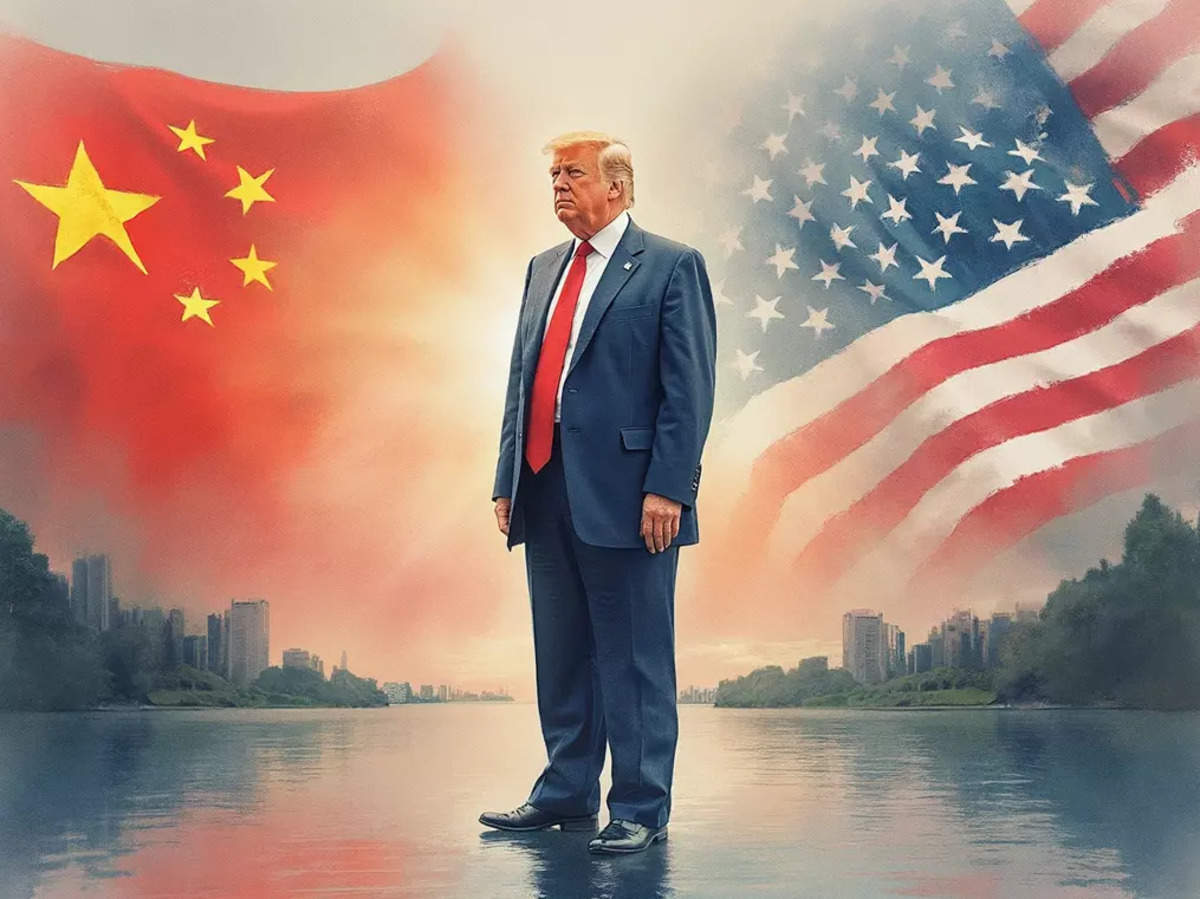
https://www.census.gov/foreign-trade/balance/c5700.htmlhttps://www.census.gov/foreign-trade/balance/c5700.htmlBy Dr. Nilanjan Banik The US-China trade war has been a focal point of economic discussions for a significant period, as the world’s two largest economies have imposed tariffs on each other’s goods. The Trump administration imposed 10% tariffs on Chinese imports, while China, in turn, levied 15% tariffs on US liquid natural gas (LNG) […]

The Healthy with KidSTART initiative has expanded significantly, growing from supporting 120 families in 2020 to more than 3,100 families in 2024 SINGAPORE – Media OutReach Newswire – 25 February 2025 – On 22 February 2025, over 600 KidSTART parents and children gathered for a day of fun at the What’s for Lunch? A Farm Adventure food expo organised by Prudential Singapore (“Prudential’) and KidSTART Singapore (“KidSTART”). […]

A new initiative, the Build for Bharat Fellowship, has been launched in India, offering students the opportunity to directly contribute to public governance through technology. The fellowship, aimed at early-career technologists, focuses on leveraging students’ skills to tackle some of India’s most pressing public challenges while strengthening the country’s digital systems.

With a deadline set for 7th March, the program is designed to provide students with a unique platform to work alongside government departments, where they can engage in high-impact technology projects. These projects, often involving innovative digital solutions, aim to enhance the efficiency of government operations and improve the quality of life for millions of citizens. The fellowship promises hands-on exposure to real-world applications of technology, guiding future technologists through a complex landscape of public service.

The need for such initiatives has become evident as India’s rapid digitalisation continues to evolve. From providing digital access to healthcare services to improving governance through data, the country’s technological landscape has seen an unprecedented transformation in recent years. However, the success of these advancements relies on skilled technologists who understand both the nuances of technology and the intricacies of governance. The Build for Bharat Fellowship seeks to address this gap by training future public-interest technologists who can design, develop, and implement tech solutions in public service.

Fellows will undergo a rigorous orientation program designed to help them navigate the complexities of public service, policy, and the unique challenges that arise when implementing technology in social and governmental frameworks. This immersive learning experience will provide students with insights into how government departments work, offering a critical perspective on the role of technology in public administration.

Moreover, the program connects fellows with top industry experts. Fellows will have access to mentorship through online office hours with leaders in fields such as databases, security, distributed systems, and open-source technology. These experts come from diverse sectors, including top tech companies, academia, and the public sector, offering invaluable guidance to participants as they embark on their projects.

By training the next generation of public-interest technologists, the fellowship program aims to modernise the country’s digital infrastructure while ensuring that technology solutions remain human-centred. As India continues to expand its digital footprint, there is a growing need for professionals who are not only technically skilled but also understand the broader social and governance contexts in which technology operates. The fellowship is designed to nurture such professionals, allowing them to contribute meaningfully to the country’s digital governance systems.

Applications for the fellowship are now open, with the deadline fast approaching. Students with a background in technology, whether in software development, design, or systems architecture, are encouraged to apply. The program promises not only to be a valuable learning experience but also an opportunity to make a tangible impact on the country’s technological landscape.

Interested applicants can submit their applications through the official form available at this link. With the closing date of 7th March, aspiring technologists are urged to apply soon to seize the opportunity to be part of this groundbreaking initiative.

The Build for Bharat Fellowship is not just an internship—it’s a chance for students to actively shape the future of India’s digital governance while working alongside the very departments that form the backbone of the country’s administration. It is a stepping stone for young professionals eager to apply their tech skills for the public good, ensuring that India’s digital transformation remains inclusive, effective, and sustainable for all.

Advertisements

India’s economy could face a reduction of up to 0.6% in its Gross Domestic Product due to proposed tariff increases by the United States, according to a recent analysis by Goldman Sachs. The financial institution’s report highlights the potential economic repercussions for India if the US implements higher tariffs on imported goods.

The analysis outlines three potential scenarios under the US administration’s “Fair and Reciprocal Plan”: country-level reciprocity, product-level reciprocity, and inclusion of non-tariff barriers. In the country-level reciprocity scenario, the US would elevate tariffs on all imports from a specific nation to match the average tariff differential. For India, this could mean an increase of approximately 6.5 percentage points in effective US tariff rates on Indian imports. The product-level reciprocity approach would involve matching tariffs on individual products, potentially leading to an 11.5 percentage point rise in tariffs on Indian goods. The inclusion of non-tariff barriers, such as administrative hurdles and import licensing requirements, presents a more complex scenario, making precise impact assessments challenging.

Goldman Sachs’ report emphasizes that India’s export exposure to the US is relatively modest, with exports to the US accounting for about 2% of India’s GDP in 2023. However, when considering indirect exposure through exports to other countries reliant on US demand, India’s domestic activity exposure rises to approximately 4% of GDP. This broader exposure suggests that the potential impact on India’s GDP growth could range from 0.1 to 0.6 percentage points, depending on the specific tariff measures implemented.

The bilateral trade relationship between India and the US has seen significant growth over the past decade. India’s goods trade surplus with the US expanded from $17 billion in the fiscal year 2014 to $35 billion in fiscal year 2024. This increase is largely attributed to a surge in exports of electronic items, bolstered by initiatives like the Production-Linked Incentive scheme introduced in 2020.

Despite the potential challenges posed by increased US tariffs, India’s central bank governor, Shaktikanta Das, has expressed confidence in the country’s economic resilience. He highlighted India’s substantial foreign exchange reserves, amounting to $676 billion, and the robust growth trajectory of the economy as key factors that equip the nation to navigate global disruptions, including those arising from protectionist trade policies.

The US administration’s move towards implementing reciprocal tariffs is part of a broader strategy to address perceived trade imbalances. A memo signed by President Donald Trump directs the Commerce Department and the US Trade Representative to develop plans for adjusting tariff rates to mirror those imposed by trading partners. These measures are set to be introduced gradually over the coming weeks and months, with an initial focus on countries maintaining significant trade surpluses with the US or those engaged in practices deemed unfair.

While the intended goal of these tariffs is to protect domestic industries and reduce trade deficits, there are concerns about potential unintended consequences. Analysts warn that such measures could lead to increased costs for consumers and businesses, supply chain disruptions, and retaliatory actions from affected trading partners, potentially escalating into broader trade conflicts.

By Nantoo Banerjee India, the world’s second most preferred destination of illegal migrants, has a lot to learn from the United States about how the latter has been handling the situation in recent years. Although US President Donald Trump is lately hogging the limelight for forcing illegal immigrants out of the country, such deportations are […]

Strengthening Global Trade Financial Solutions NEW YORK, US – Media OutReach Newswire – 24 February 2025 – XTransfer, a leading global B2B cross-border trade payment platform, continues solidifying its regulatory presence in the United States by acquiring five new payment licenses in Illinois, Iowa, New Mexico, Idaho, and South Carolina. This milestone follows the company’s recent expansion into New Hampshire, the District of Columbia, Utah, Georgia, and […]

Japan’s digital trade deficit reached an unprecedented ¥6.65 trillion in 2024, highlighting the increasing reliance on foreign digital services, particularly from dominant U.S. technology firms. This figure has more than tripled since 2014, when comparable data first became available, according to a recent government report.

The surge in the digital trade deficit is primarily attributed to Japanese companies’ growing dependence on services provided by American tech giants such as Amazon, Microsoft, and Google. These services encompass cloud computing, online advertising, and licensing fees, which have become integral to enhancing operational efficiency across various sectors in Japan. The lack of competitive domestic alternatives has further entrenched the position of these foreign providers in the Japanese market.

In 2024, Japan’s imports of digital-related services outpaced exports, leading to the record deficit. This trend reflects the broader global dominance of U.S. information technology companies, whose advanced services have become indispensable to businesses worldwide. The Finance Ministry’s preliminary balance of payments report indicates that while Japan enjoyed a record current account surplus of ¥29.26 trillion in 2024, bolstered by higher dividend and interest receipts from abroad, the goods and services trade deficit stood at ¥6.51 trillion, heavily influenced by the digital trade imbalance.

Experts suggest that bridging this digital divide requires significant investment in domestic technological development. Kengo Wataya, a researcher at the Mitsubishi Research Institute, points out that despite efforts to develop homegrown cloud services, there remains a substantial gap in capabilities between Japanese and American companies. Wataya emphasizes the necessity for Japan to leverage digital technologies to generate revenue in other sectors, thereby mitigating the burgeoning deficit.

The government’s data also reveals that Japan’s digital trade deficit has been on a consistent upward trajectory over the past decade. In 2014, the deficit was recorded at ¥2.02 trillion, underscoring a more than threefold increase by 2024. This escalation is indicative of the rapid digital transformation globally and Japan’s escalating consumption of foreign digital services.

The digital trade balance encompasses various services, including payments for cloud infrastructure, online advertising, and licensing fees for digital content such as music and video. As both individuals and enterprises in Japan continue to digitize their operations and lifestyles, the demand for sophisticated digital services has surged. However, the domestic market’s inability to supply comparable services has resulted in increased reliance on imports, thereby widening the trade deficit.

While the overall current account surplus suggests a positive economic outlook, the underlying figures present a complex narrative. The substantial income from overseas investments has been a significant contributor to the surplus. However, the persistent and growing trade deficit, particularly in the digital sector, raises concerns about the sustainability of this economic model. Analysts warn that an overreliance on foreign digital services could expose Japan to external economic fluctuations and undermine the competitiveness of its domestic tech industry.

In response to these challenges, there have been calls for strategic policy interventions aimed at fostering innovation within Japan’s tech sector. Proposals include increased funding for research and development, incentives for startups, and collaborations between academia and industry to cultivate a robust digital ecosystem. By enhancing domestic capabilities, Japan could reduce its dependence on foreign services and improve its trade balance in the digital domain.

Addressing the digital trade deficit is not solely an economic imperative but also a matter of national security. Reliance on foreign digital infrastructure and services may pose risks related to data sovereignty and cybersecurity. Therefore, developing indigenous technologies and services is crucial for safeguarding sensitive information and maintaining technological autonomy.

By K Raveendran The term disruption has undergone a significant transformation in meaning over the years. Traditionally, it carried a negative connotation, indicating disorder or interruption. However, in the contemporary technological setting, disruption is celebrated as a driver of innovation, progress, and problem-solving. Companies like Uber, Airbnb, and Tesla have all disrupted their respective industries, […]

Bavaguthu Raghuram Shetty, the founder of the UAE’s largest private healthcare chain, has been ordered by the Dubai International Financial Centre Court to pay $106 million to ICICI Bank. This ruling pertains to personal guarantees Shetty allegedly provided for loans taken by his now-insolvent company, NMC Healthcare.

The judgment, delivered on February 17, 2025, mandates Shetty to fulfill his obligations as a personal guarantor for loans extended to NMC Healthcare. ICICI Bank had sought claims exceeding $125 million after NMC Healthcare and another related entity, Modular Concepts, defaulted on their loan repayments. While the court upheld the claims concerning NMC Healthcare, it dismissed those related to Modular Concepts.

In response to the verdict, Shetty expressed his intention to challenge the decision. He stated, “I am definitely filing an appeal against this judgment, and I’m very confident that this judgment will be overturned by the appeal court. Ultimately, truth will prevail, and I will get justice.”

Central to Shetty’s defense is his assertion that the signatures on the loan documents were forged. Despite his claims, handwriting experts from both ICICI Bank and Shetty’s legal team testified that the signatures matched Shetty’s. Shetty contended, “Looks like my signature, but maybe it’s a fake. Maybe signature expert can check… I’m sure there’s a fraud in this.”

This legal battle is the latest development in the dramatic rise and fall of Shetty’s business empire. Originating from Udupi, Karnataka, Shetty migrated to the UAE in the 1970s and established a conglomerate that included NMC Healthcare, which was listed on the London Stock Exchange in 2012, raising £117 million. In 2018, he joined The Giving Pledge, committing to donate a significant portion of his wealth to philanthropic causes.

However, in 2019, the American short-seller firm Muddy Waters raised concerns about NMC Healthcare’s financial practices, describing its profitability as “too good to be true.” This scrutiny led to revelations of undisclosed debts exceeding $6.6 billion across 75 debt facilities from more than 80 financial institutions. Consequently, NMC Healthcare entered administration in 2020, and Shetty returned to India amid ongoing legal and financial challenges.

Lightpath, a prominent provider of all-fiber infrastructure-based connectivity, has announced the deployment of a 230-route mile, high-fiber-count network in the Phoenix metropolitan area. This strategic expansion is driven by partnerships with multiple hyperscaler clients and aims to meet the escalating demand for robust connectivity, particularly for artificial intelligence applications. The newly constructed network features underground, multi-conduit systems capable of housing up to 20,000 fibers. It establishes connections […]

The United Arab Emirates Ministry of Economy has unveiled a national digital platform designed to monitor the prices of essential commodities across the nation. This initiative aims to provide real-time tracking of key consumer goods, including cooking oil, eggs, dairy products, rice, sugar, poultry, legumes, bread, and wheat, from various retailers. The platform enables officials to compare current prices against established ceilings, ensuring compliance and preventing unjustified […]

Matein Khalid My mystical vegan-pivot makes Christmas goose tab​oo for the rest of my life but my quest for those rare geese that lay golden eggs for me ​on the stock exchanges continues unabated. Alibaba (BABA) was despised/dissed by everyone I respected, from CNBC honcho Jim Cramer to my Indian luminati (but never Illuminati) friends in the DIFC and even hedgies in New York and London who […]

SHANGHAI, CHINA – Media OutReach Newswire – 21 February 2025 – In the Financial Times‘ 2025 global ranking of MBA programmes, CEIBS has once again been named #1 in Asia, marking nine consecutive years as the highest ranked programme in the region on the internationally authoritative list. The programme was ranked #12 globally. This accomplishment demonstrates the robustness and enduring quality of our programme in a climate […]

Nissan Motor Co. experienced an 11% surge in its share price on Friday following reports that a prominent Japanese consortium is formulating plans to attract investment from Tesla Inc. This development comes on the heels of Nissan’s unsuccessful merger discussions with Honda Motor Co., highlighting the automaker’s ongoing efforts to stabilize its financial standing. The initiative is spearheaded by Hiro Mizuno, a former Tesla board member, with […]

MACAU SAR – Media OutReach Newswire – 21 February 2025 – Galaxy Macau™, the world-class luxury integrated resort, stands as a premier culinary destination, offering exquisite dishes from around the globe and ensuring that every visit to Macau is vibrant and memorable. Since its opening in 2015, 8½ Otto e Mezzo BOMBANA at Galaxy Macau has garnered numerous accolades, including a Michelin one-star rating for nine consecutive […]

Canadian Retailer Expands to Six ‘Must-See’ Showrooms ALBERTA & ONTARIO, CANADA – Media OutReach Newswire – 20 February 2025 – In a joint agreement that completes today at 11:00 am MST, Barbecue Country, of 5682 75 Street NW, Edmonton, Alberta will officially join the proudly Canadian, Barbecues Galore family. Canadian homeowners have trusted Barbecues Galore since 1979 for expert advice and exceptional services related to luxury patio […]

By Nitya Chakraborty February 2025 is not just the moment of truth for the European nations and NATO members but also time for reckoning for the Global Left and the peace movement which are still sizing up the dimension of the impact of U.S. President Donald Trump’s emergence as a peacenik to end the three […]

Google Pay, a leading digital payment platform in India, has introduced a convenience fee for users settling utility bills via credit and debit cards. This development marks a significant shift from the platform’s previous policy of offering fee-free transactions for essential services such as electricity and gas.

The newly imposed charges range between 0.5% and 1% of the transaction amount, in addition to the applicable Goods and Services Tax . For instance, a user paying an electricity bill of ₹2,000 through a credit card may incur a convenience fee of up to ₹20, plus GST. These fees are applicable exclusively to payments made using credit and debit cards; transactions conducted directly through UPI-linked bank accounts remain exempt from such charges.

This move aligns with a broader trend in the digital payments industry, where platforms are exploring monetisation strategies to offset operational costs associated with payment processing. The National Payments Corporation of India had previously introduced an interchange fee of up to 1.1% on UPI transactions exceeding ₹2,000 when conducted through Prepaid Payment Instruments such as digital wallets. However, it’s important to note that this interchange fee is typically borne by merchants, and standard UPI transactions between bank accounts continue to be free for consumers.

The introduction of convenience fees by Google Pay may influence user behaviour, potentially prompting a shift towards alternative payment methods that do not attract additional charges. Users aiming to avoid these fees are encouraged to utilise UPI-linked bank account payments, which continue to offer a cost-free experience for bill settlements and other transactions.

The cryptocurrency platform Pump.fun has experienced a significant decline in daily trading volume, coinciding with the controversy surrounding Argentine President Javier Milei’s endorsement of the LIBRA memecoin. Data indicates that Pump.fun’s daily trading volume decreased by 27%, falling from $184 million to $134 million, following the promotion of LIBRA on February 14, 2025.

President Milei’s endorsement of LIBRA led to a rapid surge in the token’s market capitalization, reaching approximately $4 billion. However, the token’s value plummeted shortly thereafter, resulting in substantial financial losses for investors. This incident has sparked widespread criticism and calls for President Milei’s impeachment. He has defended his actions, stating that he was not fully informed about the token and acted in good faith.

The LIBRA memecoin was launched on February 14, 2025, with the intention of supporting small and mid-sized businesses in Argentina. President Milei promoted the token on his social media account, describing it as a promising investment opportunity. The token’s value experienced a brief surge before collapsing, leading to allegations of fraud and a significant financial impact on investors.

In the aftermath of the LIBRA incident, Pump.fun’s trading activity has notably declined. The platform’s daily trading volume fell by 27%, from $184 million to $134 million, as of February 19, 2025. This downturn reflects a broader trend of decreased activity in the memecoin market, possibly influenced by the negative publicity surrounding the LIBRA scandal.

Further complicating the situation, blockchain researchers have reported that approximately $99 million worth of cryptocurrency was withdrawn from the LIBRA marketplace by eight digital wallets linked to the token’s creator. These withdrawals have raised questions about the legitimacy of the token and the intentions of its creators.

The LIBRA incident has also prompted legal and political repercussions. Over 100 complaints have been filed against President Milei in Argentina’s supreme court, alleging financial misconduct and fraud. Opposition parties are calling for his impeachment, accusing him of irresponsibly promoting a fraudulent investment scheme. President Milei has denied any wrongdoing, asserting that he did not benefit financially from the promotion and was unaware of the token’s potential risks.

President Donald Trump has announced plans to impose tariffs of 25% or more on imported pharmaceuticals, automobiles, and semiconductors, aiming to reduce the U.S. trade deficit and bolster domestic manufacturing. The tariffs are slated for formal announcement on April 2, following a comprehensive review of trade policies concluding on April 1. This move signifies a significant shift in U.S. trade policy, as pharmaceutical products have traditionally been exempt from such tariffs under World Trade Organization rules.

The U.S. pharmaceutical market, valued at approximately $560 billion in 2024, relies heavily on imports, with around $200 billion worth of pharmaceutical products sourced from abroad. Major suppliers include Ireland, Germany, and Switzerland, which are expected to be significantly impacted by the proposed tariffs. India, another key exporter, sent pharmaceutical goods worth $8.73 billion to the U.S. in the fiscal year 2024, accounting for 31% of its total pharmaceutical exports. Following the tariff announcement, Indian pharmaceutical stocks experienced a notable decline, with the sector’s index dropping 2% to a seven-month low. Companies such as Sun Pharma and Dr. Reddy’s Laboratories saw their shares fall by 2% and 4%, respectively.

Industry experts warn that these tariffs could lead to increased drug prices for U.S. consumers and exacerbate existing medication shortages. The Healthcare Distribution Alliance , representing pharmaceutical distributors, expressed concerns that tariffs on generic drug products developed outside the U.S. could worsen shortages and elevate costs for patients, including those in Medicare and Medicaid programs. The HDA emphasized that distributors operate on low profit margins—approximately 0.3%—limiting their ability to absorb additional costs.

The global pharmaceutical supply chain is intricately linked, with many active pharmaceutical ingredients and raw materials sourced from countries like China and India. Approximately 13% of APIs used in the U.S. originate from China. Imposing tariffs on these imports could disrupt the supply chain, leading to production delays and increased manufacturing costs. Caroline Shleifer, CEO of regulatory research firm RegASK, noted that higher raw material costs are likely to cascade through the supply chain, raising overall production expenses and potentially leading to inflationary pressures in healthcare.

The proposed tariffs also pose challenges for domestic manufacturers. While the intent is to encourage companies to relocate production to the U.S., establishing new manufacturing facilities is a complex and time-consuming process. It requires significant investment in infrastructure, adherence to stringent regulatory approvals, and a skilled workforce. In the interim, consumers may face higher prices and limited access to essential medications.

The tariffs could have broader economic implications, potentially triggering retaliatory measures from affected trading partners. Such trade disputes may lead to a contraction in global trade, affecting not only the pharmaceutical industry but also other sectors interconnected through international supply chains. The uncertainty surrounding these developments has already led to volatility in global stock markets, with investors closely monitoring the situation.

VISHNU RAJA
RYO YAMADA
HITORI GOTOH
IKUYO KITA