News related to
macro

South African equities climbed to unprecedented levels on Thursday, driven by buoyant momentum in mining and financial sectors. The benchmark FTSE/JSE All-Share Index rose past its prior peak, cementing the capital market’s status as one of the continent’s top performers this year. The rally has been underpinned by a strong commodity backdrop: iron ore, platinum, and gold all posted gains, boosting mining stocks across the board. The […]

Brazil has become Latin America’s dominant crypto market after logging $318.8 billion in cryptocurrency transaction volume between July 2024 and June 2025, accounting for about one-third of the region’s total crypto activity. That figure represents a year-on-year surge of 109.9 per cent, according to the 2025 Geography of Cryptocurrency report by Chainalysis.

No other country in Latin America comes close to Brazil’s scale: Argentina recorded $93.9 billion, Mexico $71.2 billion, Venezuela $44.6 billion, and Colombia $44.2 billion. The region as a whole pushed close to $1.5 trillion in crypto flows over the three-year span from mid-2022 to mid-2025, underscoring the growing importance of digital assets in Latin America’s financial ecosystem.

Stablecoins now dominate Brazil’s market, making up over 90 per cent of all transactions. This shift suggests that crypto is being used increasingly as a means of payment, remittance and hedge against currency volatility, rather than purely for speculative trading. Institutional and retail transfers both contributed to the growth, with institutional transfers alone more than doubling within the year.

Brazil’s regulatory framework has evolved in tandem. The 2022–2023 Brazilian Virtual Assets Law established compliance obligations for virtual asset service providers and made the central bank the authority for anti-money-laundering oversight in the crypto sector. Authorities are now finalising consultations that could yield further rules by end-2025.

Mainstream financial institutions are leveraging this clarity. Banks such as Itaú and digital platforms like Nubank and Mercado Pago are bridging traditional finance with crypto offerings. Global stakeholders have taken notice: in May 2024, Circle launched USDC services in Brazil to facilitate lower-cost and instant transfers.

Brazil’s ranking in the global crypto adoption picture has also strengthened. In Chainalysis’s 2025 Global Crypto Adoption Index, Brazil advanced to fifth globally, climbing from 10th in 2024. The methodology change that year introduced a new institutional activity sub-index and removed the retail DeFi sub-index, giving greater weight to large transfers while maintaining focus on broad adoption.

Brazil’s digital payments infrastructure—anchored by the Pix instant payments system—has eased the on-ramp to crypto. More than half of financial transactions in Brazil are now conducted over Pix, enabling users to move funds into crypto platforms seamlessly. Surveys suggest that between 18 and 19 per cent of Brazilians hold cryptocurrency, a rate second only behind Argentina in the region.

Still, challenges remain. Brazil’s macroeconomic environment is volatile: inflation pressures, depreciation of the real, and tax burdens could suppress retail demand. The central bank’s Drex project—a blockchain-based settlement platform—is under trial and could support on-chain finance, but integration with existing systems is complex. Some analysts warn that regulatory overreach or tax crackdowns may stifle innovation.

By Manish Rai In his maiden speech in the United Nations General Assembly, Syria’s interim president, Ahmed al-Sharaa, called for lifting of international sanctions on Syria, becoming the first head of state from Syria to address the gathering in nearly 60 years. This signifies the first appearance of a Syrian president since Nureddin al-Atassi took office in 1967. Syrian President Sharra engaged in a series of bilateral […]

Stock market information for Bitcoin
Bitcoin is a crypto in the CRYPTO market.
The price is 122782.0 USD currently with a change of 1997.00 USD from the previous close.
The intraday high is 123928.0 USD and the intraday low is 119360.0 USD.

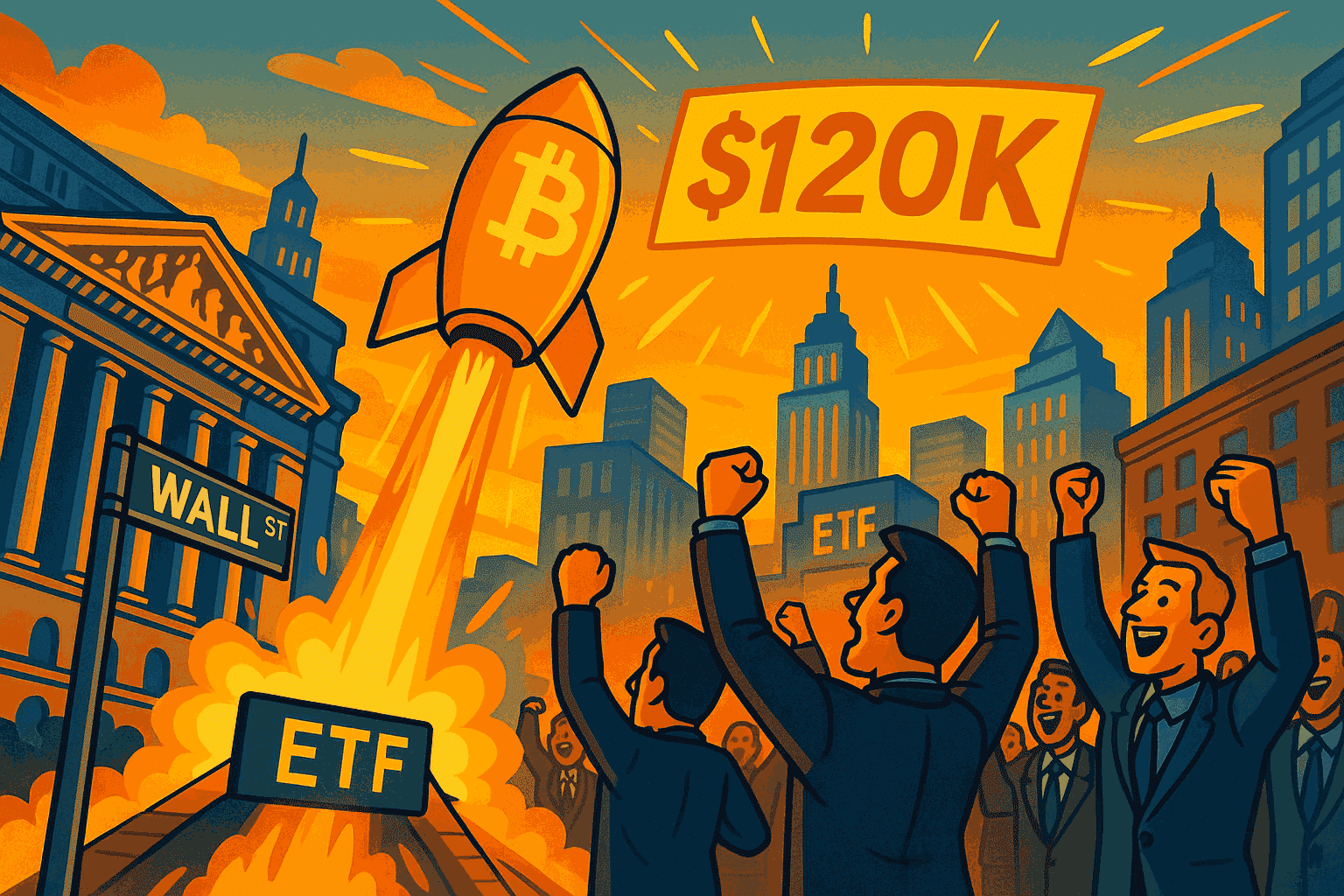
Bitcoin cleared the $120,000 mark on Friday, marking its strongest move in months as inflows into U. S. spot Bitcoin exchange-traded funds and fears of U. S. political gridlock spurred investor appetite.

The sharp rally saw Bitcoin rise toward levels not seen since August, with price action driven by mounting demand from institutional channels and growing speculative interest in its safe-haven appeal. Observers link the surge to accelerating purchases via ETFs, as well as elevated yields on derivative positions betting on further strength.

Citigroup this week trimmed its year-end Bitcoin forecast to $133,000, citing headwinds from a strengthening U. S. dollar and weak gold prices, while lifting expectations for Ethereum to $4,500 on the back of increasing inflows. The contrasting moves reflect a recalibration of expectations amid shifting capital flows in crypto markets.

Analysts tracking ETF inflows suggest that institutional adoption remains the catalyst for upward momentum. Bitwise reiterated a $200,000 target for Bitcoin in 2025, emphasising sustained demand from endowments, corporates, and sovereign treasuries. Meanwhile, Coindesk’s mid-year forecast placed a $150,000–$160,000 range as a probable zone should monetary policy ease.

Technical indicators show the path is not without resistance. Price models project a critical threshold at $117,000–$120,500: surpassing it decisively would confirm a bullish breakout, while failure to hold could trigger pullbacks toward $110,000 or lower support zones. Analysts caution that leveraged long positions may be vulnerable to liquidation should sentiment cool.

On-chain data shows accumulation by so-called “whales” has intensified over recent weeks, reinforcing the theory that major players are driving the advance. Machine-learning forecasting studies underscore that low, high, and opening price series remain the most informative variables for trend prediction, though the authors note models still struggle with sudden macro shocks.

MicroStrategy, a prominent corporate Bitcoin holder, has slowed its acquisitions. Its latest SEC filing disclosed a modest $22 million purchase, significantly down from earlier, more aggressive buys. That shift reflects a degree of caution in managing dilution risk and capital allocation.

Around the political landscape, speculation over a potential U. S. government shutdown elevated demand for non-traditional assets, while weak private sector job data has stoked hopes of a future rate cut by the U. S. central bank. Market participants are watching whether rate expectations shift further in favour of growth-assets like Bitcoin.

Markets across the crypto derivatives space are on edge as Bitcoin and Ethereum options worth approximately $4.33 billion enter settlement today, setting the stage for heightened volatility in the near term.

On the Deribit platform, Bitcoin dominates the expiries, with about $3.5 billion notional value scheduled for settlement in roughly 30,200 contracts. Its put-to-call ratio stands at 1.23, suggesting more downside protection bets than bullish wagers. The so-called “max pain” level — the strike price at which the greatest number of contracts expire worthless — is pegged at $114,000, close to current trading levels and potentially acting as a magnet for price movement.

Ethereum’s portion comprises about $806.75 million, across 177,398 contracts, with a put-to-call ratio near 0.99, indicating a more balanced bias among traders. Its max pain is estimated at $4,500, just beneath recent market trading ranges.

Derivatives analysts caution that expiries of this size tend to exert short-term pressure on price behaviour, particularly as market makers and institutional actors roll, hedge or unwind positions ahead of settlement. In many past cycles, price action has gravitated toward max pain levels in the hours leading up to expiry.

Volatility expectations are reinforced by elevated implied volatility in both Bitcoin and Ethereum options markets. Some trading desks point to a compression of liquidity around strike clusters and warn that even modest directional flows may trigger outsized price swings.

Some market strategists argue that Bitcoin’s bearish tilt reflects growing hedging demand after price consolidation above major resistance zones. Meanwhile, Ethereum’s near-neutral PCR hints at structural hedging and profit-taking rather than outright directional bets.

Macro factors could amplify sensitivity. With markets digesting central bank policy signals, inflation indicators and equity market drift, crypto derivatives flows may act as a conduit for correlation shocks. That makes expiry day risk not purely technical but potentially reactive to broader sentiment shifts.

Earlier this month, a near-identical expiry event saw $4.3 billion in options settle, with BTC positioning yielding shortterm downside pressure and ETH holding more firmly near its pricing bands. That expiry foreshadowed a larger $18 billion BTC options expiry scheduled for 26 September, intensifying speculation on whether today’s event will prime momentum.

Market watchers are watching order-book depth near the $114,000 and $4,500 levels, as sharp absorption or rejection there may offer clues to directional bias post-expiry. In the absence of sustained trend breaks, much of the post-settlement period could hinge on whether institutions successfully reestablish exposure rather than exit.

Traders are also navigating strategy choices: rolling forward, closing positions, or rebalancing via delta hedges. The interplay of those flows may create forks in volatility—in which the first few hours post-expiry see directionless chop before a stronger move emerges.

The non-oil private sector in the United Arab Emirates surged in September, with the S&P Global UAE Purchasing Managers’ Index climbing to 54.2, up from 53.3 in August. This marks the strongest expansion in seven months, as new business inflows rebounded sharply and domestic demand regained traction. Growth across new orders was the standout driver. The new orders sub-index jumped to 57.2 from 53.1, registering its fastest […]

Citi has revised its cryptocurrency outlook with a bold projection that Bitcoin will reach $181,000 within the next 12 months, while lowering its year-end 2025 target to $133,000 amid macro headwinds. The bank’s analysts emphasise that sustained inflows from exchange-traded funds and institutional adoption will serve as the key drivers behind this forecast.

In its latest note to clients, Citi outlined a base case assuming roughly $7.5 billion of inflows into Bitcoin through ETFs and corporate digital treasuries. In its bullish scenario, that figure could accelerate, boosting the upper bound estimate to $156,000 by year-end 2025. On the other hand, if recessionary pressures intensify, the bear case puts Bitcoin as low as $83,000.

Citi trimmed its near-term outlook slightly, revising the 2025 year-end Bitcoin target downward from $135,000 to $133,000. The bank cited factors such as a stronger U. S. dollar and softer gold prices as constraining forces even as demand remains intact. Ethereum’s forecast was upgraded: the bank now expects it to close 2025 at $4,500 and rise to $5,440 over 12 months. The increased optimism for Ethereum stems from its yield-producing features, staking potential and growing institutional interest.

These adjustments came amidst a backdrop of accelerating ETF inflows across asset classes. U. S.-listed ETFs have now amassed roughly $917 billion this year alone, following on from a record $1.1 trillion in the prior year. Bitcoin‐linked ETFs such as BlackRock’s IBIT have contributed meaningfully to that tally, while ETFs offering derivative strategies or income-oriented profiles have also drawn substantial capital.

Market commentators point out that ETFs offer a more accessible, regulated path for institutional investors and financial advisors to gain crypto exposure. That ease of entry, combined with the liquidity and scale of Bitcoin as the “digital gold” play, underpins Citi’s conviction that Bitcoin remains poised to absorb a disproportionate share of new capital entering the crypto sector.

Still, Citi emphasises that its bullish scenario depends heavily on flow continuity. Should macro conditions deteriorate—whether through tighter monetary policy, weaker risk appetite, or geopolitical stress—those inflows could slow or reverse. In such a scenario, Citi’s downside targets become relevant.

Other analysts echo a cautiously bullish tone. Some foresee Bitcoin reaching $160,000 to $200,000 by year-end, citing seasonal patterns and regulatory tailwinds, especially developments in U. S. crypto policy. Others warn that high valuations and volatility could invite sharper pullbacks if sentiment weakens.

The tension between macro headwinds and structural drivers is particularly evident in Ethereum’s case. Unlike Bitcoin, Ethereum supports staking and decentralized finance activity, making it more sensitive to adoption metrics and usage growth. Citi believes that those features make Ethereum increasingly appealing to yield-seeking institutions, especially as its ecosystem matures.

Crypto markets have responded positively to the outlook. Bitcoin has recently moved past $120,000 levels, reaching two-month highs, while Ethereum’s price has also climbed steadily. Some of this momentum, analysts say, appears driven by ETF allocations and strong demand from institutional flows.


Advertisements

Austria’s armed forces have shifted from Microsoft Office to the open-source LibreOffice platform on approximately 16,000 desktops, a move framed by defence authorities as a step toward digital sovereignty rather than cost cutting. Michael Hillebrand, head of Directorate 6 ICT and Cyber, emphasised that data processing will now remain entirely in-house under strictly auditable systems. He told ORF radio that dependency on external cloud providers was considered […]

Kuwait has issued $11.25 billion in sovereign bonds split across three maturities, marking its first successful US dollar debt sale since 2017 and signalling a renewed re-entry into global capital markets. The offering drew strong investor demand, allowing the country to secure attractive pricing even as it seeks to diversify its funding amid mounting fiscal pressures.

The issuance comprised $3.25 billion in three-year bonds at 40 basis points over US Treasuries, $3 billion in five-year bonds also at 40 bps, and $5 billion in ten-year bonds at 50 bps. Order books reached as high as $28 billion—roughly 2.5 times oversubscribed—enabling Kuwait to tighten guidance from initial levels. Over two-thirds of the allocations went to investors outside the Middle East and North Africa, with significant participation from the United States, Europe, the United Kingdom and Asia.

Acting Finance Minister Subaih Al-Mukhaizeem described the deal as “historic”, citing that it reflects “global markets’ confidence in Kuwait’s financial strength, prudent policies, and solid reserves.” He added that this issuance reinforces Kuwait’s reputation as a credible sovereign issuer while supporting the New Kuwait 2035 vision of economic transformation.

Analysts noted that the spreads achieved in this issuance are significantly tighter than Kuwait’s inaugural dollar bond sale in 2017, underscoring market optimism about its credit metrics and macro outlook. Its low debt burden—currently less than 10 percent of GDP—offers the space for measured borrowing, even while the International Monetary Fund projects that the ratio may rise toward 25 percent by 2030 as deficits widen.

The path to this issuance was opened in March with the passage of a long-delayed public debt law, which raised the borrowing ceiling from KD 10 billion to KD 30 billion and permitted longer maturities. That law had been stalled for years due to clashes between the appointed government and the elected parliament; in response, the emir dissolved parliament for up to four years, clearing the way for reform.

Kuwait is the latest Gulf sovereign to take advantage of favourable global interest rates and strong investor appetite, joining others such as Saudi Arabia, the United Arab Emirates and Bahrain in tapping dollar markets to address fiscal gaps and finance diversification programmes.

While the bond sale delivers fresh funding, questions remain about Kuwait’s strategy for deploying the proceeds. Its economy remains heavily dependent on hydrocarbon revenues, which accounted for nearly 90 percent of government income in the most recent fiscal year. Previous reporting indicates that proposed projects include infrastructure upgrades such as a new port and airport expansion, intended to generate non-oil revenue streams.

GlobalSource Partners had speculated earlier that Kuwait’s general deficit could rise to between 7 and 8 percent of GDP in the current year, with this issuance expected to cover a large portion of the shortfall. The country has also tapped local debt markets, issuing about $5 billion in domestic bonds before turning to international markets.

The cryptocurrency market saw more than US$330 million of short positions liquidated over a 24-hour span, reflecting mounting pressure on traders betting on a downturn in Bitcoin and Ethereum. Liquidations of this magnitude underscore the fragility of leveraged positions amid sudden price swings.

Data compiled from derivatives analytics shows that the bulk of the liquidations struck bears — traders who had placed bets that the prices of BTC and ETH would fall. While precise exchange-level breakdowns vary across analytics platforms, the overall magnitude points to a sharp reversal in market dynamics.

The liquidation wave was triggered as both Bitcoin and Ethereum posted upward moves, igniting what appears to be a short squeeze — a market condition where rising prices force short-sellers to cover positions, further accelerating the rally. On-chain volume and open interest metrics surged, suggesting that traders were forced to exit leveraged bets en masse.

Ethereum stood out in the mix: analysts attributed a substantial portion of the liquidated shorts to ETH derivatives. The second-largest cryptocurrency has often been more volatile in these situations, and its recent upward momentum inflicted considerable pain on those betting against it. The pressure on short positions flowed into Bitcoin markets as well, although to a lesser degree.

The exchange derivatives arena—spanning platforms such as Binance, Bybit and OKX—saw divergent stress levels. Some exchanges reported that short liquidations exceeded those of longs by a wide margin, suggesting that hedged strategies and aggressive shorting were particularly vulnerable during the surge. In several cases, individual orders topping tens of millions of dollars were forcibly closed.

Market analysts caution that such events can create feedback loops. Forced liquidations push prices higher, inflicting further losses on lagging short sellers, which in turn intensifies the rally. At the same time, elevated funding rates and reduced liquidity become major risks for momentum traders and institutional participants.

Macro and sentiment factors are believed to have played contributory roles. Speculation around easing monetary policy, stronger demand for risk assets, and renewed interest from institutional crypto funds have been cited by analysts as underlying catalysts. In particular, expectations that interest rates may soften have fuelled investor appetite for higher-volatility assets like Bitcoin and Ethereum.

Nevertheless, this kind of volatility also invites skepticism. Some market watchers warn that forced liquidations of this scale may not reflect genuine organic demand but rather mechanical stress in overleveraged market segments. The question is whether the rally can sustain itself once all forced short covering has played out.

Bitcoin’s price has flirted with the $115,000 mark, only to pull back and settle into a tight range between about $108,750 and $112,000 as buying momentum weakens. Traders and analysts now await a decisive move in either direction to signal the next major trend.

After a breakout attempt stalled just above $115,000, liquidity cooled and buyers began to step aside, according to on-chain data and sentiment analysis. The 30-day momentum index on CryptoQuant dropped to –2 per cent from +1 per cent earlier in the week, underlining a loss of conviction behind the rally. The price action now shows descending highs, suggesting bulls are losing early ground. Resistance sits in the $111,000–$112,000 zone; only a sustained move here could re-ignite upward pressure. Failure to defend support around $108,600 could expose the market to a slide toward $106,000–$105,000.

Technical analysts point to a pattern of consolidation following the failed breakout above $115,000. While buyers attempted to push through, they lacked follow-through, leaving the market stuck in a neutral to slightly bearish posture. Axel Adler, whose work with CryptoQuant is cited in analyses, observed that sellers are stepping in at lower highs, limiting upside attempts. Market structure is now tilted toward volatility unless fresh demand emerges.

Institutional behaviour adds nuance. Whale wallets—those holding between 100 and 1,000 BTC—have accumulated roughly 65,000 BTC in recent sessions, bringing their aggregate holdings to an all-time high of about 3.65 million BTC. That accumulation suggests structural demand remains under the surface. At the same time, analysts note that technical indicators like moving averages have formed bullish signals—for instance, a “golden cross” between the 50-day and 100-day exponential moving averages on shorter timeframes is seen as supportive. Some forecasts even project a path toward $150,000 should momentum revive.

Macro drivers are also in focus. ETF inflows in the United States are injecting liquidity into the market and are widely regarded as a catalyst for continuation moves. Bitcoin has reclaimed its 100-day moving average, which had acted as resistance and is now a support anchor. RSI readings have turned positive, and the broader sentiment has shifted from outright bearish to cautiously optimistic as institutional capital flows reappear.

Still, not everyone is confident. Some analysts argue that despite price strength, the upside is structurally vulnerable. A technical review on Seeking Alpha has rated Bitcoin a “Sell” over the next 12 months, citing weaker momentum and divergence as signals that gains may not sustain without external catalysts.

Crucially, macroeconomic uncertainty looms. Market bets converge around expectations of U. S. Federal Reserve interest rate cuts in the final quarter. Should stimulus emerge, risk-assets including Bitcoin might rally; if inflation surprises or central banks hold firm, volatility could reverberate downward.

Gold surged to an unprecedented high on Wednesday, driven by investor flight to safe assets after the United States entered a federal government shutdown that threatens to delay key economic data releases.

Spot gold climbed above $3,875 per ounce, and U. S. gold futures for December touched $3,887.40, marking fresh peaks in the metal’s dramatic rally this year. The dollar weakened, while U. S. stock futures slid, reflecting the heightened uncertainty gripping global markets.

The shutdown froze large swathes of federal operations after Congress failed to approve funding for the 2026 fiscal year, triggering furloughs for approximately 750,000 federal workers and imposing a daily cost to the government of around $400 million.

With the shutdown effectively halting the release of critical economic indicators—most notably the September non-farm payrolls data—the Federal Reserve is being forced to rely on alternate data sources to assess conditions ahead of its October meeting. Chicago Fed President Austan Goolsbee warned that central bankers will need to “turn to other data sources” if official reports are suspended.

In labor market reports released earlier, the JOLTS data showed only marginal growth in job openings in August, while hiring declined—signalling cooling momentum in the U. S. labour market. This, combined with the shutdown, has increased market expectations that the Fed will move to cut interest rates in October. Futures now price in a 96 per cent likelihood of a 25-basis-point cut.

Institutional demand has bolstered the gold rally: central banks have continued to accumulate bullion, even as inflows to gold-backed exchange-traded funds have surged. Analysts point to a powerful confluence of safe-haven inflows and speculative momentum. Deutsche Bank and other firms have flagged upside targets in the $3,900–$4,000 range if current conditions persist.

Silver also posted gains, hitting a 14-year high, while platinum and palladium lagged modestly. In India, gold prices on the MCX breached all-time highs, crossing ₹1,17,351 per 10 grams as global and domestic investors sought shelter from volatility.

Analysts caution, however, that the rally faces key risks. A rebound in the dollar, a surprise hawkish tilt from the Fed, or a sudden resolution of the funding impasse could reverse momentum. The longer the shutdown endures, the greater the danger that data collection becomes impaired—threatening the quality of future releases such as inflation, GDP, and employment statistics.

The valuation of the U. S. Treasury’s gold reserves has also gained attention: the gold holdings—officially booked at historical rates—now command a market value exceeding $1 trillion, driven by the steep rise in bullion prices.

Wall Street insiders note that the shutdown has injected a new element of volatility into markets already stretched by geopolitical tensions and macro imbalances. Equity futures were already under pressure on Wednesday, with the S&P 500 and Nasdaq both down nearly 0.5 per cent in early trade.

Matein Khalid The old adage that stock markets swing between fear and greed has been borne out by the mixed performance of Saudi Arabia’s Tadawul All Share Index over the first nine months of 2025. A turning point came on Wednesday September 24 when the Tadawul staged its biggest single-day rally since 2020, after a Capital Market Authority board member signalled that the 49 percent foreign ownership cap on Saudi equities […]

Arcapita Group Holdings has divested nine industrial real estate assets totalling 1.5 million square feet in Indianapolis, Indiana, to logistics specialist Capital Partners. The firm described the transaction as a key value realisation under challenging market conditions. The assets comprised a diverse mix of office, flex, and distribution facilities. Throughout the holding period, the portfolio generated steady income and delivered “meaningful value appreciation”, according to Arcapita’s statement. […]

Matein Khalid Wall Street’s strong bid is skating on macro thin ice as a government shutdown that reflects the toxic polarization in Congress looms. The latest PCE data shows that Powell’s fear for a tariff related uptick in inflation was well founded and Fed funds futures have narrowed the odds of a December rate cut to only 60%, which is perfectly rational given that the US economy […]

The Central Bank of the UAE and Dubai Finance today formalised an agreement to deepen collaboration in the development of the country’s capital markets, enabling Dubai to draw on the central bank’s infrastructure to issue dirham-denominated government bonds.

Khaled Mohamed Balama, Governor of the CBUAE, and Abdulrahman Saleh Al Saleh, Director-General of Dubai’s Department of Finance, signed the Memorandum of Understanding in Abu Dhabi before senior officials and assistant governors.

Under the pact, Dubai Finance gains access to the central bank’s systems and platforms to support bond issuance, while both parties commit to joint efforts in fintech, payment systems, and digital currency development. The agreement further encompasses capacity building, knowledge exchange and coordination in regulatory and infrastructural domains.

Balama described the partnership as “an important step toward advancing the country’s financial markets, supporting their growth, and ensuring their readiness to adapt to future changes.” He affirmed that the nation’s leadership is focused on promoting innovation and digitisation in financial services to boost private-sector participation and investor confidence.

Al Saleh said the MoU would help diversify the UAE’s investment tools and align capital market expansion with the vision of the country’s leadership. He emphasised the importance of collaboration with regulatory bodies at both federal and local levels to elevate the nation’s reputation as an investment hub.

The MoU aligns with broader moves by the central bank in strengthening financial infrastructure and market regulation. The central bank has recently advanced its “Financial Infrastructure Transformation” programme, which includes the rollout of the domestic card scheme Jaywan and development of a Central Bank Digital Currency, known as the Digital Dirham. The institution also introduced regulations on Open Finance platforms and has conducted stress tests affirming resilience in the banking sector under diverse macroeconomic pressures.

The UAE’s push to build robust capital markets fits into a regional trend of using debt instruments to broaden funding sources beyond oil and real estate. In December 2024, the CBUAE signed an MoU with the Hong Kong Monetary Authority to enhance cross-border debt issuance and settlement between the UAE and Asia, aiming to foster deeper connectivity between debt markets.

Analysts see the newly inked agreement as a mechanism to centralise the infrastructure layer of government debt issuance under one roof, avoiding fragmentation across emirates. Doing so could lower costs, standardise procedures, and deepen liquidity in domestic markets. It may also foster greater issuance activity from state and municipal entities.

HONG KONG SAR – Media OutReach Newswire – 29 September 2025 – Cushman & Wakefield, a leading global real estate services firm, today released its annual Greater China Retail Supply/Demand Trends report. According to the report, by Q2 2025, the total prime retail property stock in the core markets of the 15 major cities we track in Greater China reached 116.7 million sq m. During the past […]

Bitcoin nudged higher overnight, trading around $109,448, as markets showed signs of stabilisation following a wave of forced liquidations across crypto derivatives.

Stock market information for Bitcoin
Bitcoin is a crypto in the CRYPTO market.
The price is 109448.0 USD currently with a change of 30.00 USD from the previous close.
The intraday high is 110305.0 USD and the intraday low is 108741.0 USD.

Ethereum outperformed, crossing the $4,000 threshold, while broader sentiment remains under strain amid macro uncertainty.

Crypto markets endured brutal deleveraging earlier in the week, with more than $1.5 billion in long positions wiped from derivatives across major tokens. Analysts report that Ether accounted for a significant share of that, prompting cascade liquidations in leveraged positions. Some firms with heavy Bitcoin exposure have seen their stock valuations collapse below the value of token holdings.

Investors tagged this as the sharpest deleveraging event of 2025, emphasising how excess leverage built up in recent months is being violently unwound. That same vulnerability leaves markets sensitive to any surprise in macro data or central bank commentary.

The immediate bounce in Bitcoin and Ether is viewed as corrective rather than structural—several traders suggest the market may trade sideways or drift lower unless fresh catalysts emerge. The rebound succeeded in erasing some losses, but resistance above $110,000 for Bitcoin and around $4,200 for Ether remained challenging.

The U. S. personal consumption expenditures index for August showed year-on-year inflation of 2.7%, broadly in line with expectations. That alignment suggests policymakers are threading a narrow path between supporting growth and avoiding inflation surprises. Some strategists believe the muted inflation reading reduces pressure on central banks to delay easing; others caution that sticky core inflation still leaves room for hawkish surprises.

Crypto sentiment has weakened sharply. The Fear & Greed Index plunged to levels last seen in mid-April, underscoring elevated trader anxiety. According to strategists, over $3 billion of leveraged long positions have been liquidated in the past few sessions, pushing the long-to-short ratio in many tokens toward one-to-nine. That extreme positioning could set the stage for short squeezes—but not without attendant risk.

On-chain flows hint at institutional accumulation, a counterpoint to retail panic. Ethereum has seen meaningful inflows tied to existing ETH ETFs, while some large wallets have made ETH-to-BTC swaps. That movement could reflect growing conviction in Ethereum as a structural play for DeFi and smart contract demand, rather than a pure speculative asset. But challenges remain: Ethereum’s fee-based economics have softened, and alternative chains are gaining traction in niche sectors.

Seasonal models bolster optimism toward the year-end. Historically, Bitcoin has delivered an average return of over 80 per cent in the final quarter, with November being the strongest month on record. Ether, though more volatile, also has a track record of strong Q4 performance. These patterns are not guarantees, but they influence positioning among quantitative funds.

Abu Dhabi raised $1 billion from a three-year bond sale at 3.625 per cent, about 10 basis points over U. S. Treasuries, and simultaneously issued $2 billion in a 10-year tranche at 4.25 per cent, 18 basis points over Treasuries, drawing a combined order book of over $16 billion. The Reg S senior unsecured bonds will be rated AA by S&P and Fitch, matching the issuer’s credit […]

VFS Global has priced a seven-year USD tranche of $1,010 million at 250 basis points over SOFR, marking a 50bps tightening from its previous guidance. The loan forms part of a dual-currency raise, with an equivalent euro tranche also in play as part of a broader funding package totalling approximately $2 billion. The dollar portion, priced at 2.50% over SOFR, signals strong investor appetite and confidence in […]

The Indian rupee plunged to a lifetime low of ₹88.7975 per US dollar, sliding about 0.5 per cent on the day as fears over a sharp hike in U. S. H-1B visa fees rallied selling pressure across foreign exchange markets. Intervention by the Reserve Bank of India failed to staunch the slide fully, leaving the currency exposed amid faltering capital inflows and heightened external risks.

Markets pointed to the visa fee jump as a critical trigger. The Trump administration’s new proclamation imposes a $100,000 application cost on fresh H-1B visa petitions, vastly above its prior range, and is widely seen as a threat to remittance flows and the earnings outlook for India’s technology exporters. Meanwhile, persistent foreign portfolio outflows and U. S. tariff tensions on Indian goods compounded downward pressure.

Analysts estimate that remittances from the U. S. account for roughly 3.4 per cent of India’s GDP, making any disruption in the flow of workers and repatriated funds significant for the external balance. The visa change, if sustained, could erode that buffer. Traders now widely expect the rupee’s trajectory to remain weak in the coming weeks unless policy tailwinds emerge.

Speculation is building that the RBI sold dollars via state banks in the ₹88.50 zone to support the rupee, but the support was limited. While intervention took multiple forms—spot market, non-deliverable forwards and futures—the central bank appears to be managing volatility more than defending a fixed exchange rate. Some market participants view the decline as partly calibrated and allowable, until macro fundamentals justify a reversal.

Data from the RBI’s monthly bulletin show that in July alone, the central bank sold a net $2.54 billion in the spot foreign exchange market. It held forward dollar sales of about $57.85 billion at the end of July—suggesting pre-emptive hedging and reserve deployment to offset pressure. The use of forward sales is a tool to mitigate speculative demand and signal resolve.

U. S. rate expectations and the global dollar trajectory also weigh heavily. The U. S. dollar index remains firm, underpinning strength in emerging market currency pairs’ downside. Weakness in India’s export performance and looming protectionist measures add to caution. In September to date, foreign investors withdrew over $1 billion from Indian equities, pushing year-to-date outflows to roughly $16 billion.

Technology stocks bore the brunt of the rupee stress. With margins threatened by the visa fee shock, several large IT firms are already budgeting for higher immigration costs. Estimates place incremental fee burdens between $150 million and $550 million for major firms, depending on visa volumes and contract structures.

The Indian government mounted a diplomatic push in response, deploying a high-level delegation to Washington to discuss the visa fee policy and broader trade concerns. Delhi has warned of “humanitarian consequences,” arguing that abrupt changes in visa costs risk disrupting families and the livelihood of highly skilled professionals. In public remarks, Commerce Minister Piyush Goyal and other officials have insisted that they will press for reversals or carveouts.

White House sources clarified that the $100,000 fee will apply only to new applications, not renewals or current visa holders—a move that soothed some immediate concerns in the IT industry. That assurance has allowed short-term relief in some quarters, though uncertainty lingers over enforcement guidelines and compliance timelines.

Fitch Ratings changed Thailand’s long-term foreign-currency issuer outlook to Negative from Stable, citing mounting pressures on public finances, fragile growth prospects and ongoing political fragility. The sovereign rating itself remains at BBB+.

The credit agency warned that escalating risks to fiscal stability — especially rising debt and persistent budget deficits — are aggravated by uncertainty over government continuity and policy direction. Economic growth slowing below peer averages and vulnerabilities in the tourism and export sectors further reinforce downside risks.

Fitch singled out Thailand’s general government debt reaching about 59.4 percent of GDP, a level close to median thresholds for ‘BBB’-rated sovereigns, noting it has risen sharply from pre-pandemic levels. Persistent fiscal deficits of 4.6 percent of GDP in fiscal 2025 and 4.3 percent in 2026 are projected, and though Fitch expects stabilisation beyond 2027, the window for improvement is narrow.

Fitch also emphasised Thailand’s external buffers — a consistent current account surplus and conservative composition of government debt — as mitigants that support the affirmed rating despite the negative outlook. It noted that average debt servicing costs relative to revenues remain lower than peer country averages, which grants some breathing room.

The political backdrop has intensified the strain. The constitutional court’s removal of Prime Minister Paetongtarn Shinawatra over an ethics violation tied to a leaked phone conversation triggered a swift transition. Anutin Charnvirakul assumed the premiership through a deal with the opposition party that mandates a general election within four months, introducing turbulence to fiscal continuity and policy clarity. Fitch warned that this political flux could amplify short-term spending pressures and generate unpredictable policy shifts.

Macro-economic forecasts reinforce the downgrade rationale. The World Bank has trimmed Thailand’s projected GDP growth in 2025 to 1.8 percent and 1.7 percent in 2026, citing weak external demand, slowed tourism recovery and waning domestic consumption — outcomes likely exacerbated by political volatility. Inflation has turned slightly negative, prompting central bank expectations of further rate cuts; Fitch expects two more 25 basis point cuts this year and in 2026.

Thailand’s central bank has already lowered its policy rate 100 basis points over the past year to 1.5 percent, and with inflation below zero, the case for easing remains plausible — though constrained by high household debt levels. The Bank of Thailand has signalled readiness to act if growth weakens further.

Analysts caution that structural deficiencies — such as sluggish productivity gains, reliance on tourism, and high household debts — limit upside recovery. Institutional weakness and frequent leadership turnover further deter investment confidence.

To reverse the negative trajectory, Fitch emphasised that Thailand’s government must demonstrate strong fiscal consolidation, stabilise public debt dynamics and restore growth momentum. A return to a stable outlook would require credible cuts to the fiscal deficit, credible medium-term plans to reduce debt, and a more predictable policy environment that supports private investment.

Empowering residents and patients with details on calorie count and macronutrients for every dish SINGAPORE – Media OutReach Newswire – 21 September 2025 – Today, NHG Health and Tanoto Foundation jointly launched a cookbook titled, ‘I Can’t Believe It Tastes So Good’ – featuring 100 healthy recipes inspired by Chinese, Malay, Indian, Western and other cuisines, a nod to Singapore’s rich cultural diversity as the nation celebrates […]

By Nitya Chakraborty Europe which was the main centre of two world wars in the last century is showing signals of many of the features of the politics of the continent in the pre- second world period spanning 1925 to 1939 in political and military terms. Though in term of economy, the threat of great […]
VISHNU RAJA
RYO YAMADA
HITORI GOTOH
IKUYO KITA