By K Raveendran Gold pushing decisively past the $5,000-a-troy-ounce threshold at the same moment the US dollar slides to a four-month low is not just a dramatic coincidence of charts. It marks a psychological rupture in global markets, challenging assumptions that have underpinned portfolio construction and macroeconomic thinking for decades. What once belonged to the […]
Bitcoin slipped below a widely watched technical support zone as BlackRock moved to expand its digital-asset line-up with a filing for a premium income exchange-traded fund linked to the world’s largest cryptocurrency, underscoring how product innovation is accelerating even as prices wobble. Market charts showed Bitcoin breaking beneath the lower boundary of an inverted flag formation, a pattern traders often read as a pause before a continuation […]
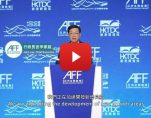
HONG KONG SAR – Media OutReach Newswire – 26 January 2026 – The 19th Asian Financial Forum (AFF), opened this morning (January 26) at the Hong Kong Convention and Exhibition Centre with more than 3,600 influential leaders from over 60 countries and regions joining the two-day summit, the region’s first major international financial event of 2026.
Co-organised by the Hong Kong Special Administrative Region (HKSAR) Government and the Hong Kong Trade Development Council (HKTDC), this year’s AFF, themed “Co-creating New Horizons Amid an Evolving Landscape”, takes on added significance being the first such event of China’s 15th Five-Year Plan period (2026-2030).
“Featuring more than 150 prominent speakers, from Hong Kong, throughout the Asian region and around the world, the Forum will inspire insight and innovation, create partnerships and explore fresh business opportunities,” John Lee, Chief Executive of the HKSAR, said in his opening remarks at the Forum.
Mr Lee also spoke of the boundless opportunities for Hong Kong under the unique principle of “one country, two systems”, that assures Hong Kong of the unwavering support of China, while continuing to expand its global markets and reach.
“This unparalleled positioning solidifies our institutional strengths: the rule of law, a judiciary that exercises its power independently, an open and transparent market, the free flow of capital and a low and simple tax regime,” Mr Lee said.
Mr Lee later witnessed the signing of a co-operation agreement between the Financial Services and the Treasury Bureau and the Shanghai Gold Exchange, marking a new milestone in deepening co-operation between the gold markets of Hong Kong and Shanghai.
The agreement was signed by the Secretary for Financial Services and the Treasury, Christopher Hui, and the Chairman of the Shanghai Gold Exchange, Yu Wenjian.
“The agreement just now signed is far more than a formal document,” said Mr Hui.
“It represents a resolute commitment to advancing the synergistic development of Hong Kong and Shanghai as premier international financial and gold markets. It reflects our joint determination to deepen the integration and complementary strengths of Hong Kong and Shanghai, so that together we can expand our share and influence in the global gold market, and better support Renminbi internationalisation.”
Mr Hui outlined the strategic significance of the agreement and the overall development blueprint for Hong Kong’s gold market.
“In recent years, amid heightened geopolitical uncertainty, inflationary pressures, and ongoing restructuring of the international monetary system, the strategic importance of gold has become even more pronounced,” Mr Hui said.
The agreement covers two major forward-looking areas of co-operation: establishing a high-level, collaborative governance structure for Hong Kong’s new gold central clearing system; and opening new avenues for physical infrastructure synergy and market interconnectivity.
“The signing of this agreement with the Shanghai Gold Exchange marks the dawn of a new chapter—one in which Hong Kong and Shanghai join forces to shape the future of global gold markets,” Mr Hui said.
A discussion session on gold trading themed “Global Spectrum – Gold Exchange” features expert panelists invited to examine recent market developments and share insights on Hong Kong’s role, potential and opportunity as a world-class gold trading centre. Speakers include overseas experts James Emmett, Chief Executive Officer, MKS PAMP SA and David Tait, Chief Executive Officer, World Gold Council.
Other highlights on day one of the AFF include a keynote luncheon speech by Dr José Manuel Barroso, former President of the European Commission, former Prime Minister of Portugal, and current Chairman of Goldman Sachs International Advisory Board, to share his insights on the current global landscape and macro‑level challenges.
Other notable speakers today include Zou Jiayi, President of Asian Infrastructure Investment Bank; Scott Morris, Vice-President (East and Southeast Asia, and the Pacific) of the Asian Development Bank; Mehmet Şimşek, Minister of Treasury and Finance of Türkiye; Klemen Boštjančič, Deputy Prime Minister and Minister of Finance of Slovenia; H.E. Waleed Saeed Abdul Salam Al Awadhi, Chief Executive Officer of Securities and Commodities Authority of United Arab Emirates; Burkhard Balz, Member of the Executive Board of the Deutsche Bundesbank; Rhee Chang-yong, Governor of the Bank of Korea; and Gokul Laroia, Chief Executive Officer Asia of Morgan Stanley.
The AFF serves as the opening event of the International Financial Week in Hong Kong, featuring over 10 partner activities covering a range of global financial and business topics, including ASEAN opportunities, asset and wealth management, and artificial intelligence.
India’s largest information technology services firms together reported a net reduction of close to 3,000 employees in the third quarter of the 2025–26 financial year, underscoring a structural shift in hiring as companies rebalance workforces around artificial intelligence, cloud platforms and higher-value digital engineering.
Quarterly disclosures showed that headcount at several bellwether firms edged lower despite stable deal pipelines. The combined net decline, modest by historical standards, contrasted sharply with the aggressive campus hiring and broad-based workforce expansion that defined the sector for more than a decade. Executives and analysts pointed to a “barbell” pattern in demand, with strong hiring at the high end for niche digital and AI skills and limited intake, or attrition-led pruning, in legacy application maintenance and commoditised services.
At Tata Consultancy Services, the country’s largest IT services exporter by revenue, total employee strength slipped during the quarter as voluntary attrition stayed elevated in certain service lines and fresh hiring remained selective. Infosys also reported a marginal fall in headcount, reflecting a focus on utilisation, internal redeployment and productivity improvements rather than large-scale lateral recruitment. Wipro and HCLTech posted similar trends, with management teams emphasising skill transformation over volume growth.
The net reduction came even as revenue growth stabilised sequentially for most firms, helped by cost optimisation deals, vendor consolidation and demand for cloud migration. Industry executives said the hiring slowdown was not a signal of weakening fundamentals but a recalibration after years of overcapacity built during the post-pandemic surge in digital spending.
What is different this cycle, analysts argue, is the depth of the technology shift reshaping delivery models. Generative AI tools, low-code platforms and automation frameworks are beginning to decouple revenue growth from headcount expansion. Routine coding, testing and support tasks are increasingly automated, reducing the need for large teams, while boosting productivity per employee.
This dynamic has produced the barbell model now widely discussed in boardrooms. On one end, firms are competing fiercely for specialists in data engineering, AI model deployment, cybersecurity, semiconductor design services and advanced cloud architecture. On the other, demand for entry-level roles tied to traditional application development and infrastructure support has softened, leading to fewer campus offers and limited backfilling of exits.
Management commentary during earnings calls reinforced this shift. Several chief executives highlighted large internal reskilling programmes, with tens of thousands of employees undergoing training in AI, machine learning and cloud-native technologies. The emphasis has moved from hiring for scale to building depth in targeted capabilities that command higher billing rates and longer-term client commitments.
Client behaviour has also played a role. Enterprises in North America and Europe, which account for the bulk of export revenues, continue to scrutinise technology budgets amid macroeconomic uncertainty. Discretionary projects have faced delays, while spending has been redirected toward efficiency-led initiatives where automation is central. This has compressed demand for traditional staff-augmentation models that once absorbed large numbers of engineers.
Despite the headline job losses, the sector remains a major employer, with total headcount across the top firms still running into the millions. Analysts caution against interpreting the quarterly decline as a broad-based contraction. Instead, they see a transition phase in which workforce pyramids are being reshaped to align with evolving client needs and delivery economics.
Wage dynamics reflect the same adjustment. Salary hikes have been measured, variable pay has been linked more closely to utilisation and skill relevance, and onsite deployments have been rationalised. At the same time, niche talent continues to command premiums, widening pay dispersion within firms.
Bitcoin slipped below a widely watched technical floor this week, extending a pullback that traders say reflects broader unease over global macro conditions even as large holders quietly add to positions. The move saw the largest cryptocurrency trade under a descending support line associated with a bearish flag formation, a pattern often read as a continuation signal after a sharp run-up. Market participants pointed to a mix […]
Arabian Post Staff -Dubai Saudi lenders are expected to extend between $65 billion and $75 billion in new corporate loans in 2026, underpinned by sustained investment flows into real estate and utilities and a broad pipeline of state-backed projects, according to an assessment by S&P Global. The projection points to another year of robust balance-sheet expansion as banks continue to finance the kingdom’s economic transformation agenda. […]
Mozambique has secured a fresh boost for its offshore gas ambitions after the Board of Directors of the African Development Bank approved a $150 million senior loan for the Coral North floating liquefied natural gas project. The decision, taken on January 14, signals renewed momentum for the country’s flagship gas developments and underlines lender confidence in large-scale energy infrastructure anchored in the Rovuma Basin. The financing is […]
XRP slipped to around $1.93 in early trading, extending a mild pullback even as short-term indicators began to suggest a possible technical rebound. The move unfolded without a fresh headline catalyst, leaving traders to focus on positioning, liquidity conditions and well-watched chart levels rather than new developments tied to the token’s broader narrative. Price action through the past several sessions has been narrow, marked by brief rallies […]
Dogecoin extended losses on Tuesday as liquidation pressure rippled through the meme-coin segment, reinforcing a market tone defined by selling into rallies rather than chasing rebounds. The token fell about 2% on the day, underperforming parts of the broader crypto complex as traders trimmed exposure amid persistent resistance overhead and thinning liquidity during intraday bounces. Price action showed repeated failures near a well-watched resistance band between $0.126 […]
HONG KONG SAR – Media OutReach Newswire – 22 January 2026 – This news release is made by Johnson Electric Holdings Limited (“Johnson Electric” or the “Company” and together with its subsidiaries, the “Group”) for the business operations and selected unaudited financial information of the Group for the nine months ended 31 December 2025.
The Group’s sales for the nine months ended 31 December 2025 were US$2,726 million compared to US$2,730 million for the same period in the previous financial year, a decrease of approximately US$4 million. Exchange rate movements had a favourable impact of US$40 million on the Group’s sales during the period.
Sales of Automotive Products Group (“APG”)
APG’s sales for the nine months ended 31 December 2025 were US$2,301 million, a decrease of US$14 million or 1% compared to the same period in financial year 24/25. Excluding currency effects, APG’s sales decreased by US$49 million or 2%.
The division’s sales changes by region, excluding currency effects, were as follows:
Nine months ended 31 December 2025
Asia-Pacific
6%
Decrease
Europe, the Middle East and Africa
1%
Decrease
Americas
1%
Increase
Total
2%
Decrease
In Asia-Pacific, sales decreased by 6%, driven by pricing adjustments implemented to remain competitive and weaker demand for non-domestic car brands in China, which has historically been a strong market for APG. This was partially offset by growth in sales to domestic car brands. Sales of products for thermal management, steering and closure applications, together with oil pumps decreased, partially offset by increased sales of products for braking, vision and transmission applications.
In Europe, the Middle East and Africa (“EMEA”), sales decreased by 1%. Sales of products for closure, vision and thermal management applications decreased, mitigated by increased sales of oil pumps, powder metal components and other products for transmission applications.
In the Americas, sales increased by 1%. Sales of powder metal components, oil pumps and products for thermal management applications increased, largely offset by decreased sales of products for braking and engine and fuel management applications due to the phasing out of certain programs.
Sales of Industry Products Group (“IPG”)
IPG’s sales for the nine months ended 31 December 2025 were US$425 million, an increase of US$10 million or 2% compared to the same period in the previous financial year. Excluding currency effects, IPG’s sales increased by US$5 million or 1%. The overall performance reflects a mixed regional picture, shaped by varying market and customer dynamics.
The division’s sales changes by region, excluding currency effects, were as follows:
Nine months ended 31 December 2025
Asia-Pacific
1%
Decrease
Europe, the Middle East and Africa
6%
Increase
Americas
2%
Decrease
Total
1%
Increase
In Asia-Pacific, sales decreased by 1%, primarily due to significant price competition affecting both IPG and some of its customers in certain product segments. Consequently, sales of products for food and beverage, floor care and printer applications decreased. This was largely offset by increased sales for lawn and garden, medical and data centre cooling applications.
In EMEA, sales increased by 6%, driven by a combination of inventory replenishment by certain customers following their consumption of previous inventory surpluses, as well as the launch of new products. This resulted in increased sales of products for lawn and garden, and heating applications and flexible printed circuits. This was partially offset by a decrease in sales of products for beverage applications.
In the Americas, sales decreased by 2% mainly due to the combined effects of reduced demand from certain customers and some programs reaching end of life. This resulted in decreased sales of products for ventilation and surgical applications. This was partially offset by stronger sales of piezo motors and piezo motion subsystems, which benefited from strong demand for high-precision equipment for semiconductor manufacturing and medical drug-dosing systems.
Chairman’s Comments on Sales Performance and Outlook
Commenting on the Group’s sales performance and near-term outlook, Dr. Patrick Shui-Chung Wang, Chairman and Chief Executive, said: “Johnson Electric’s sales for the financial year to date have remained stable, reflecting generally subdued macroeconomic conditions and high levels of uncertainty related to geopolitics and US trade policies. Based on current trading conditions and customer orders, full-year Group sales are expected to be broadly similar to the prior year. In this environment, Johnson Electric remains focused on executing its strategy to deliver long-term value through innovation, operational excellence, and a resilient global supply chain.”
Cautionary Statement
Shareholders and potential investors in the Company are reminded that the information provided in this news release, including information related to the expected outlook for the full year, is based on the Group’s unaudited internal records and management accounts. This information has not been reviewed or audited by the Company’s auditors.
Shareholders and potential investors should exercise caution when dealing or investing in the shares of the Company.
Hashtag: #JohnsonElectric
The issuer is solely responsible for the content of this announcement.
About Johnson Electric Group
The Johnson Electric Group is a global leader in electric motors, actuators, motion subsystems and related electro-mechanical components. It serves a broad range of industries including Automotive, Liquid Cooling, Robotic Joints, Smart Metering, Business Equipment, Ventilation, Home Automation, Large Appliances, Power Tools, Medical Devices and Lawn & Garden Equipment. The Group is headquartered in Hong Kong and employs over 30,000 individuals in over 20 countries worldwide. Johnson Electric Holdings Limited is listed on The Stock Exchange of Hong Kong Limited (Stock Code: 179). For further information, please visit: www.johnsonelectric.com.
Wall Street trading desks are quietly reducing exposure to one of the most dependable strategies in the digital-asset universe, signalling a shift in how large financial players view risk and reward in crypto markets. The so-called bitcoin basis trade, long prized for delivering steady, low-volatility returns, is showing signs of strain as funding costs rise, spreads compress and market dynamics evolve. The basis trade involves exploiting the […]
Wall Street posted a powerful advance during the latest trading session, adding an estimated $700 billion to the combined value of listed companies as investors pushed major indices higher on a mix of easing inflation signals, resilient corporate earnings and renewed appetite for growth shares. The move underscored the scale at which US equity markets can reprice within hours when sentiment aligns across sectors. The benchmark S&P […]
Bitcoin has pushed through a stubborn price ceiling near $95,000, reviving bullish sentiment after weeks of consolidation, yet underlying data points to a phase of heightened risk as participation from smaller wallet holders continues to thin. The advance, driven largely by institutional flows and derivatives positioning, has brought the market back to levels that previously triggered sharp corrections, prompting analysts to warn that price strength may be […]
By Nitya Chakraborty The annual summit of World Economic Forum began in the Alpine hills of Davos in Switzerland on January 19 with the European leaders and the businessmen rattled over the confrontationist approach taken by the U.S. President Donald Trump on Greenland annexation. After imposing 10 per cent tariff on the EU countries taking […]
Goldman Sachs is examining whether to engage with the fast-growing prediction-markets sector, a move that could reshape how Wall Street views platforms long seen as niche or legally ambiguous. Chief executive David Solomon has confirmed that the bank has held discussions with executives from Polymarket and Kalshi, describing these venues as sophisticated markets that resemble derivatives trading more than online betting. The conversations underscore a strategic recalibration […]
Copper prices slid in late morning trade on Tuesday as investors locked in profits after a strong run and renewed scrutiny fell on consumption prospects in China, the world’s largest user of the industrial metal. The pullback left the market near its lowest point in a week, underscoring how quickly sentiment can turn when demand signals soften. Benchmark three-month copper on the London Metal Exchange was down […]
Global investors are being urged to rethink long-held assumptions about United States stock market dominance after Goldman Sachs projected that emerging market equities and select European stocks are positioned to deliver stronger returns over the next five years. The investment bank’s outlook points to a combination of lower valuations, stronger economic growth prospects and a gradual narrowing of the earnings gap with the US, challenging strategies that […]
By Nitya Chakraborty The Washington talks for discussing the future of Greenland failed on Wednesday with the foreign ministers of Denmark and Greenland returning back home with the message from White House that Greenland rightfully belongs to USA and Trump will be deciding on the timing of its takeover. The U.S. does not care for […]
By Ashok Nilakantan Ayers When India’s finance minister Ms Nirmala Sitharaman rises to present the 7th Union Budget on February 1, a record of sorts, the moment will carry an uncommon weight. This is no routine fiscal exercise, no mere balancing of columns and commas. Instead, the budget is being cast — by industry leaders, […]
Matein Khalid The tragic images of the bloodbath in Iran, caused by the regime’s crackdown on protests have horrified the world and amplified the price surge in both oil and precious metal markets, with silver at $95 an ounce and tin up almost 30% in the first two weeks of 2026. Emerging markets will unquestionably be the dominant theme of 2026 now that the macro data suggests […]
HONG KONG SAR – Media OutReach Newswire – 13 January 2026 – Today, KGI has released its 2026 Global Market Outlook, covering markets in the US, Mainland China, Hong Kong, Taiwan, and Singapore.
(From left) James Chu, Chairman at KGI Securities Investment Advisory; James Wey, Head of International Wealth Management at KGI; Cusson Leung, Chief Investment Officer at KGI
After a turbulent year of trade disruptions and policy uncertainty under President Trump, investors face new questions. China has unveiled its 15th Five-Year Plan, as policymakers aim to support domestic growth amid global challenges. The market outlook for 2026 is shaped by interest rate decisions, economic resilience, and shifting international dynamics.
Under this backdrop, we propose the “LEAD” strategy for 2026:
Liquidity Shift
Earnings Focused
Adding Credit
Diversified Assets
Cusson Leung, Chief Investment Officer at KGI, says: “Looking ahead to 2026, investors can adopt a LEAD strategy: L stands for Liquidity Shift, benefiting from a weakening US dollar and interest rate cuts, with funds expected to flow to non-US dollar and Asian currencies; E stands for Earnings Focused, focusing on earnings growth to support valuations and allocating to US, European, and Japanese stocks; A stands for Adding Credit, locking in the credit of leading companies and increasing holdings of A-rated investment grade bonds; and D stands for Diversified Assets, responding to the upward trend in both stocks and bonds by including alternative assets to optimize asset allocation.”
Macro & US Markets The US economy will experience a more pronounced downturn in 4Q25, which will extend into 1H26, and this will have a negative impact on consumption, slowing investment activity. Nevertheless, AI-driven productivity gains should provide some support, with US GDP growth in 2026 forecast at 2.2%. The eurozone will see moderate growth, with Germany benefiting significantly from fiscal expansion and economic improvement. Japan’s economy will strengthen on domestic demand, aided by additional fiscal stimulus. China has demonstrated resilience under trade protectionism in 2025. With inflation risks easing and labor market risks rising, the US Fed cut the interest rates in September 2025, with a total reduction of 75 bps in 2025, followed by an additional 50-75 bps in 2026.
Regarding US stocks, AI-driven productivity gains and cost reductions should sustain solid profitability, with S&P 500 earnings projected to grow by 13.55% year-on-year (YoY) in 2026. However, higher risk premiums may cap valuation upside, leading us to project a year-end target of 7,650 points. Market performance will reflect risk-driven declines in 1Q26, stabilize and recover in 2Q26, and rally significantly around the midterm elections in 4Q26. By sector, among AI-related themes we favor technology, semiconductors, utilities (on higher power demand), machinery for advanced manufacturing, and industrial REITs. Non-AI beneficiaries include aerospace and defense (on higher military spending), pharmaceuticals (on tariff benefits), and capital market segments (supported by active investment banking). As for fixed income, US economic weakness and Fed rate cuts will drive Treasury yields lower, with 10-year yields expected to fall to 3.5-3.7% by 2Q26. We recommend allocating to US Treasuries or high-rated investment-grade corporate bonds in 1H26, then rotating into high-yield bonds in 2H26 as policy rates and economic conditions reach a bottom.
James Chu, Chairman at KGI Securities Investment Advisory, says:“AI is triggering a new productivity revolution, supporting economic growth and strengthening corporate earnings. While the US economy is expected to slow, a recession remains unlikely, and the short-term impact of tariff policies should gradually fade by the first quarter of 2026. Although the Fed may shift from cutting rates at every meeting to cutting at alternating meetings, the overall environment remains a rate-cutting cycle. In a non-recession backdrop, lower interest rates should continue to support equity market performance.”
Mainland China and Hong Kong Markets In terms of the macroeconomy, with the conclusion of trade agreements among many countries, risks have subsided. However, due to external drag, China’s GDP growth is expected to slow slightly to 4.6% in 2026. In 2026, investors should focus on four key areas for Hong Kong and mainland China markets: (1) In the consumption sector, domestic demand continued to be the core growth driver, contributing more than half of GDP. As the “trade-in” effect diminishes, the central government is expected to implement the “15th Five-Year Plan” and economic conference plans, launching a new round of subsidies covering culture, entertainment, and sports to continuously boost consumer spending. (2) In the financial market, risk appetite has increased. Given the narrowing spread between bond yields and fixed deposit rates, large amounts of savings are flowing into the capital market seeking returns. The fundamentals of the banking and insurance industries have bottomed out, and the credit structure is accelerating its shift from real estate to supporting the real economy. (3) Regarding the issue of “anti-involution,” the PPI remains weak, and capacity reduction has become a focus. Compared to 2015, this round involves more downstream private enterprises and needs to consider employment, presenting greater challenges. While industry consolidation is expected to be lengthy, the impact is controllable and beneficial for long-term healthy development. (4) Regarding new quality productive forces, this will replace real estate and infrastructure as the main investment focus. Digital infrastructure supports AI and embodied intelligence, and humanoid robots are expected to see commercialization in 2026, “iPhone moment.” Leading companies with core technological autonomy in innovative drugs will enjoy higher valuation premiums.
Overall, we are optimistic on Hang Seng Index. We expect the Federal Reserve’s interest rate cuts to drive fund inflows to the Hong Kong and mainland stock markets. Based on an upward revision of the forward PE ratio to 13.5x and 8% earnings growth, we set a target of 30,000 points for the Hang Seng Index by the end of 2026, representing a potential upside of approximately 14%. As confidence recovers, the investment style is expected to shift from defensive to growth stocks. Recommended 12 stocks: XPeng Motors (9868), UBTECH (9880), Tencent Holdings (700), Alibaba (9988), China Hongqiao (1378), AIA Group (1299), Ping An Insurance (2318), China Merchants Bank (3968), Akeso Biopharma (9926), Pop Mart (9992), Tencent Music (1698), and Sino Land (83).
Cusson Leung, Chief Investment Officer at KGI, says: “2026 marks a crucial turning point for the Chinese economy. While the market anticipates GDP growth to slow to 4.6%, “new quality productive forces,” resembling humanoid robots, is taking over as a new growth engine. The most critical signal in the market is the “awakening” of idle cash—massive savings are flowing from low-interest fixed deposits to the capital market seeking returns. With risk appetite returning and policy support intensifying, now is the time to shift investment strategies from “defensive” to “growth.” Driven by both valuation repair and earnings growth, we are optimistic that the Hang Seng Index will reach 30,000 points, and the allocation value of Hong Kong and mainland China stocks has reappeared.”
Taiwan Market Compared to the dot-com era bull run, which lasted almost five years, the current AI frenzy has been around for about three years, suggesting that the uptrend is still in its middle phase and could extend through 2026.
AI plays are trading at high PEs, such valuations are backed by strong fundamentals. In fact, the PEG ratio of Taiwan’s AI supply chain has yet to surpass 1x. We estimate that aggregate earnings of AI plays will grow by 21% YoY in 2026, following impressive upticks of 35% in 2024 and 43% in 2025. AI stocks now account for more than 60% of TAIEX earnings, and with the ongoing AI arms race, overall TAIEX earnings growth is projected to accelerate from 14% in 2025F to 20% in 2026.
Although the AI frenzy should keep the bull market intact, volatility will rise in tandem due to: (1) substantial cumulative gains, and the fact that valuations are approaching historic highs; (2) policy and political uncertainty surrounding the US midterm elections; and (3) potential changes in the US Fed’s rate-cut pace. We expect the TAIEX to repeat a “smile-curve” pattern, featuring continued strength in 1Q26, followed by healthy corrections in 2Q-3Q26 before closing the year with a renewed upswing.
We think investors need to pay attention to two major themes. The first is a broad-based product spec upgrade trend across the AI supply chain, which will drive the industry into a new growth phase, with beneficiaries including foundries, GPU and ASIC designers, advanced packaging (such as CoWoS), and ODMs, as well as testing interfaces, memory, thermal solutions, CCL, ABF substrates, PCBs, switches, and power component suppliers amid strong AI computing demand and ongoing GPU platform upgrades. The second is diversification and defensive asset allocation. Innovations in consumer electronics, such as foldable iPhones and smart wearables, will provide growth opportunities, while companies with resilient domestic demand and stable high dividend yields offer a balanced strategy combining growth and income. Overall, investors should strike a balance between growth and resilience against volatility in their portfolios, in the face of market fluctuations.
James Chu, Chairman at KGI Securities Investment Advisory, says:“The solid earnings growth driven by AI and still reasonable valuations form a strong foundation for the ongoing bull market in Taiwanese equities. With AI adoption accelerating across enterprises and consumers, demand for computing power is rising rapidly. Yet supply remains constrained by chip and power bottlenecks, meaning hardware suppliers are likely to face continued shortages through 2026. Taiwan’s AI supply chain is set to remain a key beneficiary, particularly those tied to next-generation specification upgrades.”
Singapore Market In 9M25, the overall performance of Singapore’s economy was better than expected as the global trade tensions eased after the US pivoted on its reciprocal tariffs and reached deals with its major trading partners. The manufacturing, wholesale trade and finance & insurance sectors remained the growth pillars of the Singapore economy, and each sector delivered decent growth. In particular, manufacturing’s growth has been robust, driven by the electronics, transport engineering and biomedical manufacturing clusters. The full year outlook is upbeat, as the growth momentum shall continue till the end of the year.
Looking ahead, the global economic outlook for 2026 suggests slower GDP growth for most of Singapore’s key trading partners, including China and the Eurozone, largely due to the impact of US tariffs, which will temper demand for Southeast Asian exports, though US growth is expected to remain resilient from AI investment. Consequently, Singapore’s outward-oriented sectors, particularly manufacturing and trade-related services, are projected to expand at a slower pace than in 2025, although the electronics and related sectors will benefit from AI demand, while some precision engineering and biomedical output may moderate domestically, the construction sector is set to grow, but consumer-facing sectors are likely to remain subdued. However, the relatively low interest rates and continuous government support shall buffer the impact of the slowdown, and the capital market will still benefit from the upward re-rating catalysts.
Chen Guangzhi, Head of Research at KGI Singapore, says: “Thanks to trade de-escalation and the AI wave, Singapore experienced significant economic expansion in 2025. Proactive government initiatives turbo-charged the equity bull run, and this strong momentum is expected to deliver an optimistic economic outlook for 2026.” Hashtag: #KGI #MarketOutlook
The issuer is solely responsible for the content of this announcement.
KGI
KGI* has been a leading financial institution in Asia since 1997. Our scope of business encompasses wealth management, brokerage, fixed income, and asset management. We are committed to offering a comprehensive range of financial products and services to corporate, institutional, and individual clients throughout Asia. Backed by KGI Financial Group, we have a robust footprint in Asia, covering Taiwan, Hong Kong, Singapore, Indonesia, and Thailand^.
*KGI refers to KGI Asia Limited and its affiliates. ^an investee enterprise of KGI Securities, not a subsidiary.
DISCLAIMER
All the information contained in this document is not intended for use by persons or entities located in or residing in jurisdictions which restrict the distribution of this document by KGI Asia Limited (“KGI”), or any other affiliates of KGI. Such information shall not constitute investment advice, or an offer to sell, or an invitation, solicitation or recommendation to subscribe for or invest in any securities, insurance or other investment products or services nor a distribution of information for any such purpose in any jurisdiction. In particular, the information herein is not for distribution and does not constitute an offer to sell or the solicitation of any offer to buy any securities in the United States of America, or to or for the benefit of United States persons (being residents of the United States of America or partnerships or corporations organised under the laws of the United States of America or any state, territory or possession thereof). All the information contained in this document is for general information and reference purpose only without taking into account of any particular investor’s objectives, financial situation or needs and may not be redistributed, reproduced or published (in whole or in part) by any means or for any purpose without the prior written consent of KGI. Such information is not intended to provide any legal, financial, tax or other professional advice and should not be relied upon in that regard.
All investments involve risks. The prices of securities fluctuate, sometimes dramatically. The price of a security may move up or down, and may become valueless. It is as likely that losses will be incurred rather than profit made as a result of buying and selling securities.
Bond investment is NOT equivalent to a time deposit. It is NOT protected under the Hong Kong Deposit Protection Scheme. Bondholders are exposed to a variety of risks, including but not limited to: (i) Credit risk – The issuer is responsible for payment of interest and repayment of principal of bonds. If the issuer defaults, the holder of bonds may not be able to receive interest and get back the principal. It should also be noted that credit ratings assigned by credit rating agencies do not guarantee the creditworthiness of the issuer; (ii) Liquidity risk – some bonds may not have active secondary markets and it would be difficult or impossible for investors to sell the bond before its maturity; (iii) Interest rate risk – When the interest rate rises, the price of a fixed rate bond will normally drop, and vice versa. If you want to sell your bond before it matures, you may get less than your purchase price. Do not invest in bond unless you fully understand and are willing to assume the risks associated with it. Please seek independent advice if you are unsure.
You are advised to exercise caution and undertake your own independent review, and you should seek independent professional advice before making any investment decision. You should carefully consider whether investment is suitable in light of your own risk tolerance, financial situation, investment experience, investment objectives, investment horizon and investment knowledge.
No representation or warranty is given, whether express or implied, on the accuracy, adequacy or completeness of information provided herein. In all cases, anyone proposing to rely on or use the information contained herein should independently verify and check the accuracy, completeness, reliability and suitability of the information. Simulations, past and projected performance may not necessarily be indicative of future results.
Information including the figures stated herein may not necessarily have been independently verified, and such information should not be relied upon in making investment decisions. None of KGI, its affiliates or their respective directors, officers, employees and representatives will be liable for any loss or damage of any kind (whether direct, indirect or consequential losses or other economic loss of any kind) suffered or incurred by any person or entity due to any omission, error, inaccuracy, incompleteness or otherwise, or any reliance on such information. Furthermore, none of KGI, its affiliates or their respective directors, officers, employees and representatives shall be liable for the content of information provided by or quoted from third parties.
Members of the KGI group and their affiliates may provide services to any companies and affiliates of such companies mentioned herein. Members of the KGI group, their affiliates and their directors, officers, employees and representatives may from time to time have a position in any securities mentioned herein.
Arabian Post Staff -Dubai Emirates NBD Bank, the UAE’s second largest lender by assets, has taken a step towards expanding the domestic capital markets by mandating its debut dirham-denominated Regulation S three-year fixed-rate digitally native notes, marking a move that blends traditional funding with blockchain-enabled issuance infrastructure. The planned transaction signals growing confidence among regional issuers in digital settlement frameworks while maintaining alignment with established international clearing […]
Average petrol prices across the United States have dropped to about $2.79 a gallon, marking the lowest national level in roughly five years and delivering tangible relief to households after a prolonged period of volatility at the pump. Data compiled from nationwide fuel surveys show the decline has been broad-based, with most states reporting steady week-on-week falls as winter demand ebbs and supply conditions improve. The slide […]
Chainlink’s token LINK is showing signs of technical strain as chart patterns point to a bearish pennant forming against a backdrop of fading institutional demand for exchange-traded crypto products tied to the oracle network. The setup has drawn attention across digital-asset desks at a time when broader crypto markets remain sensitive to shifts in liquidity, regulatory signals and risk appetite. LINK has spent several weeks consolidating after […]



 https://www.brandhk.gov.hk/
 https://www.linkedin.com/company/brand-hong-kong/
 https://x.com/Brand_HK/
 https://www.facebook.com/brandhk.isd
 https://www.instagram.com/brandhongkong





 By Ashok Nilakantan Ayers When India’s finance minister Ms Nirmala Sitharaman rises to present the 7th Union Budget on February 1, a record of sorts, the moment will carry an uncommon weight. This is no routine fiscal exercise, no mere balancing of columns and commas. Instead, the budget is being cast — by industry leaders, […]