News related to
secure

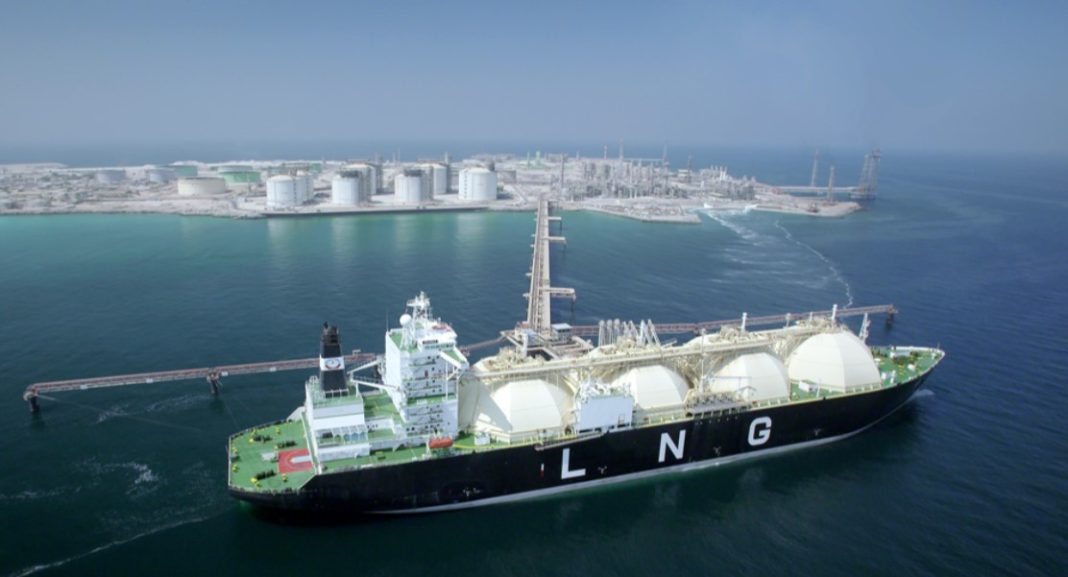
Abu Dhabi’s state energy company signed a 15-year sales and purchase agreement with a unit of British energy major for the delivery of up to 1 million tonnes per annum of liquefied natural gas. The contract represents the first long-term LNG sales deal between the company and Shell and marks the eighth offtake agreement secured for its new export facility.

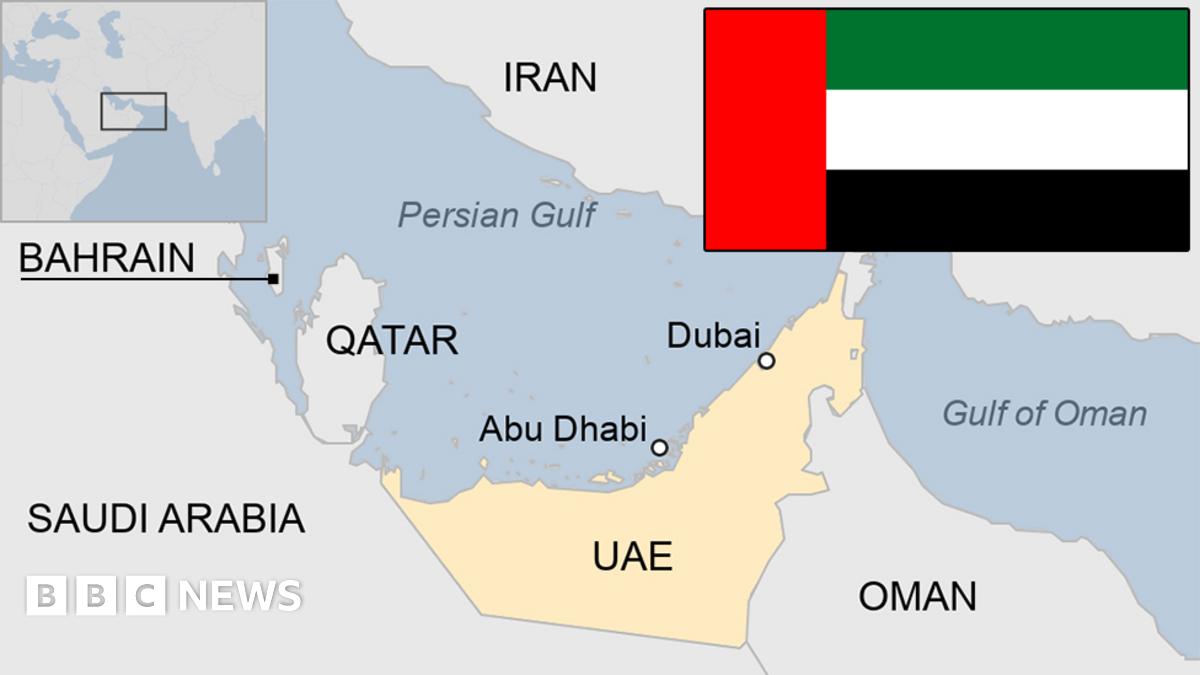
The LNG will be supplied from the Ruwais LNG project in Al Ruwais Industrial City, Abu Dhabi, which is under development and is set to become the first LNG export plant in the Middle East and Africa region to operate on clean power. Shell holds a 10 per cent equity stake in the project. The agreement converts a previous heads of agreement into a definitive contract and accelerates the project’s commercial timeline.

By securing this deal, more than 8 mtpa of the facility’s planned 9.6 mtpa capacity has already been contracted across Asia and Europe, just 16 months after the project’s final investment decision in July 2024. The project comprises two liquefaction trains of 4.8 mtpa each and is designed to more than double the company’s existing LNG production capacity to around 15 mtpa.

The deal is timed to global gas-market conditions where demand is picking up and energy security is a key concern for buyers. By locking in long-term supply, the exporting company seeks to position itself as a “reliable global supplier of lower-carbon LNG”, while the buyer views the contract as a strategic commitment to expanding its LNG portfolio and securing long-term supplies.

For the seller, the rapid pace at which contract commitments have been won is significant. The chief executive of the gas-division described the achievement of contracting more than 80 per cent of the plant’s capacity within roughly a year of FID as “a new benchmark” for large-scale LNG projects globally, and noted that construction, contractor mobilisation and site works remain on track for commissioning by the end of 2028. The buyer emphasised its long-standing partnership of more than fifty years with the Abu Dhabi exporter and said the agreement supports its global LNG-expansion strategy.

Analysts note that the project’s clean-power design, advanced technology deployment, and rapid contracting distinguish it in the LNG market. That said, while the exporting company releases its ambition to expand its LNG portfolio, competitors in the region are also pursuing aggressive growth, raising competitive risk. Moreover, delivering commercial operations at a low-carbon intensity adds complexity and cost — achieving the projected timeline and performance will require careful execution.

On the demand side, the contract underscores how buyers are increasingly seeking longer-term and lower-emissions supply arrangements in the transition-era gas market. For the buyer, the deal adds to its diversified portfolio of LNG suppliers as it faces intensified competition for cargoes from traditionally dominant exporters. The seller’s ability to secure multiple offtake agreements rapidly helps de-risk the project and supports financing and construction momentum.

One key theme emerging is the alignment of LNG expansion with sustainability credentials. The Ruwais facility’s design to run on clean grid-powered operations, along with claims of being among the lowest-carbon intensity LNG plants globally, reflects a shift in gas-project metrics: projects are now evaluated not solely on cost and capacity but also on carbon footprint and technology sophistication. This trends suggests that access to lower-carbon LNG could become a differentiator among suppliers and a value driver for buyers.

However, achieving this low-carbon ambition may face challenges such as securing clean-power infrastructure, managing capital-cost escalation, and meeting stringent environmental and regulatory expectations across export markets. The broader LNG market is also subject to volatility in feed-gas supply, shipping capacity constraints, and fluctuating demand growth in key markets such as Asia and Europe.

Video game publisher Nintendo has won a legal victory against a Colorado streamer identified as Jesse Keighin, following his broadcast of pirated, unreleased games for the Switch console. The court awarded Nintendo US$17,500 in damages after Keighin failed to respond to the lawsuit and default judgement was entered in March. The company’s filing indicates that Keighin, who used the handle “Every Game Guru”, streamed at least 10 […]

Apple’s Wallet app is set to embrace a new era of digital identity with the introduction of a “Digital Passport” capability that will allow holders of United States passports to store their credential securely on an iPhone or Apple Watch. The innovation is expected to ship with iOS 26 and brings transformative implications for travel and identity verification, although its roll-out and functionality remain subject to constraints. […]

South Korean industry and government have secured a major hardware boost as Nvidia will deliver more than 260,000 of its flagship “Blackwell” AI chips to the Republic of Korea in a partnership spanning the public sector and major corporations. The deal, announced during the Asia‑Pacific Economic Cooperation Summit in Gyeongju on 31 October, positions South Korea as a rising artificial-intelligence hub and reflects Nvidia’s pivot amid shifting global semiconductor geopolitics.

The agreement covers deployments across multiple sectors: the government will obtain roughly 50,000 of Nvidia’s GPUs for its National AI Computing Centre; top chip-maker Samsung Electronics and conglomerate SK Group are each set to install about 50,000 units; automaker Hyundai Motor Group another 50,000; and internet-giant Naver Corporation around 60,000.

Nvidia’s chief executive, Jensen Huang, described the arrangement as an opportunity to “produce intelligence as a new export” for South Korea—drawing on its track record in electronics, ships and cars. He met President Lee Jae Myung and leading industrial executives during APEC’s leader-week, underpinning the deal’s strategic importance.

For South Korea the timing is critical. The country’s ambition to become one of the world’s top three AI powerhouses is tied to this surge in computing capacity. Officials estimate that the new GPU stock will raise South Korea’s installed AI-chip inventory from roughly 65,000 to over 300,000 units—more than a four-fold increase.

The motive spans multiple strands. Domestically, the government has signalled its intent through a budget push to triple AI-related spending to 10.1 trillion won in the 2026 fiscal year, with AI infrastructure now a key focus alongside semiconductors, autos and ship-building. Meanwhile, on the global stage, the transaction reflects Nvidia’s response to US export restrictions targeting China: by deepening partnerships with allied economies, Nvidia hedges market access and secures demand beyond geopolitical risk zones.

Industry commentators note the strategic value for South Korea’s private sector. Samsung’s aim to build an AI-factory on the back of these chips and Hyundai’s plan to apply them in autonomous driving and smart factories indicate a broad industrial integration of AI hardware. SK Group’s creation of an industrial-AI cloud, together with Naver’s scaling of its model-training infrastructure, further illustrate the ecosystem approach.

However, risks remain. The logistics of deploying such volumes of high-performance chips across multiple sectors present challenges in cooling, power supply and skilled workforce capabilities. Moreover, the influx of foreign hardware raises questions about long-term sovereignty of critical AI infrastructure—South Korea may become reliant on external chip providers even as it strives to build home-grown strength. Some analysts caution that building capacity alone does not always translate into global leadership in AI.

Another layer of uncertainty stems from the export environment. US policy is tightening its grip on shipments of Nvidia’s most advanced chips to China and other countries. While the South Korean deal has been approved, shifts in global regulation or export licences could affect timelines or chip-variants supplied.

For the key players in South Korea the stakes are substantial. Samsung and SK are leveraging this infusion to advance semiconductor development and edge-computing systems. Hyundai is tackling next-generation vehicle autonomy. Naver and Kakao increasingly rely on large-scale model training—now anchored to the new hardware. At a national level, the government aims to unlock innovation, jobs and exports through “sovereign AI” infrastructure under domestic control.

In global context, South Korea’s move places it firmly within the push by middle powers to stake out a significant role in the AI value chain, not merely as chip supplier but as a platform developer and services export economy. For Nvidia it reinforces its global reach and market dominance at a time when alternatives seek to challenge its position. The magnitude of the chip deployment and its industrial-strategic alignment make this one of the most consequential AI-hardware partnerships of the year.

Istanbul flagged-carrier Turkish Airlines has completed a five-year financing agreement worth 2.9 billion yuan with Bank of China, under the coordination of its Türkiye unit and Macau branch. The deal positions the airline to accelerate fleet expansion, enhance infrastructure at Istanbul Airport and diversify its funding strategy.

The financing aligns with Turkish Airlines’ strategic ambition to raise its fleet to more than 800 aircraft by 2033. The carrier currently operates some 512 aircraft, including 26 freighters, and serves 353 destinations across 131 countries, making it the airline with the broadest country-reach globally.

Chief Financial Officer and board member Murat Şeker described the transaction as a strengthening of the airline’s financial structure and noted it would contribute to deeper economic and cultural collaboration between Türkiye and China. The lender, Bank of China Türkiye, collaborated with its Macau branch to deliver this cross-regional funding solution.

Analysts view the move as a sign of increasing Chinese willingness to facilitate offshore financing in yuan for non-Chinese corporates. Xinhua reports that the loan will also support cargo-business growth and the construction of a new simulator training centre within Istanbul Airport’s ecosystem.

For Turkish Airlines, the financing serves as a milestone in its drive to broaden funding channels beyond traditional Western banking and leasing markets. It arrives after the airline announced major aircraft purchase agreements, including 150 of the Boeing 737 Max family and up to 75 Boeing 787 wide-bodied jets, although final engine supply details remain subject to negotiation.

The infrastructure element stands out: part of the funding is earmarked for new facilities at Istanbul Airport, underscoring Turkish Airlines’ ambition to solidify Istanbul as a global aviation hub. The airline notes that the deal supports “core development initiatives including fleet expansion, business growth, new facility investments and infrastructure projects”.

In a broader context, Türkiye’s aviation sector faces rising costs—fuel, labour and regulatory compliance among them—so locking in a yuan-denominated facility may serve as a hedging mechanism against currency volatility and reliance on US-dollar debt. For Chinese finance, this deal further reinforces the Belt and Road Initiative’s financial architecture and the internationalisation of the yuan.

Despite the positives, risks remain. While Turkish Airlines has grown rapidly—its fleet jumped from about 100 aircraft in 2006 to 500 by 2025—the aggressive expansion strategy faces pressure from global economic uncertainties, competition in the MEA region, and potential over-capacity. Analysts caution that long-term debt commitments must be matched by sustained profitability and disciplined cost control.

Aircraft-financing environments have grown more complex since the pandemic, with lessor appetite curtailed and interest rates trending higher. By turning to a Chinese state-bank facility, Turkish Airlines is signalling both innovation and urgency in addressing its funding needs—but the source and terms of this financing will remain closely watched by investors and market participants.

For Bank of China, the arrangement opens the door to further cross-border deals with regional air-carriers and strengthens the bank’s credentials in aviation market financing outside its traditional geography. Observers say it may trigger similar deals as airlines seek diversified sources of capital and navigate constrained global leasing markets.

Tech entrepreneur Elon Musk said his social media platform X has rebuilt its messaging system and will launch a standalone app, branded as “X Chat”, which uses peer-to-peer encryption architecture “similar to Bitcoin”. He stated that the system will eschew advertising hooks and treat security not as a binary but in “degrees of insecurity”, aiming to make X Chat the “least insecure” messaging system. According to Musk, […]

By K Raveendran The narrative circulating among professionals in high-performing technology firms is increasingly marked by anxiety. Reports of employees receiving lay-off notifications at 3 a.m. are emblematic of a culture in which even top-paid staff feel tethered to the abyss of “you may not be here tomorrow”. The juxtaposition of lucrative compensation and precarious […]

The article Big Tech’s Brutal Culture Pushes Employees Down An Abyss Of Anxiety appeared first on Latest India news, analysis and reports on Newspack by India Press Agency).

Advertisements

European data-centre operator AtlasEdge has secured a €253 million green financing package to scale up its campus in Lisbon, Portugal. The facility, split into two tranches, is respectively earmarked for the first building and the second of the site, with the company also acquiring land to host a third phase, LIS003, drawing on Portugal’s renewable-energy credentials. The financing comprises a seven-year senior-secured term-bond arrangement. The first tranche, […]

The White House announced a policy that prohibits credentialed reporters from freely entering Room 140, a section of the West Wing known as “Upper Press” housing senior communications staff, unless they first secure an appointment. The directive originates from the National Security Council, which cited the protection of “sensitive material” now routinely handled in that zone. Press Secretary Karoline Leavitt and her deputy Steven Cheung are among […]

Tokyo-based digital forwarder Shippio has secured fresh capital to accelerate its transformation of international trade logistics, signalling a push to capture a major share of cargo flows into and out of Japan and beyond. The company, founded in 2016, has raised a total of approximately ¥3.24 billion in its Series C round, comprising ¥1.87 billion in equity and ¥1.37 billion in debt financing, bringing its lifetime funding to roughly ¥7 billion overall.

Key investors in this round include DNX Ventures as lead investor, along with Suzuyo, New Commerce Ventures and YMFG Capital in the equity portion, and a consortium of financial institutions—such as Shoko Chukin Bank, Japan Finance Corporation, Mizuho Bank, Mitsubishi UFJ Bank and Resona Bank—providing the debt portion. The funds will support Shippio’s goal of capturing a 30 per cent share of Japan’s total cargo volume through product development, customer expansion and mergers and acquisitions.

Japan, as an island economy heavily dependent on imports and exports, has seen a dramatic up-surge in e-commerce and cross-border trade: customs clearance permits have reportedly increased eight-fold between 2016 and 2024. Despite this, many logistics operations remain mired in analog workflows and manual documentation. Shippio aims to plug that gap by deploying a digital platform that offers shipment tracking, cost analysis, invoice management and customs processing. The founder and co-CEO, Takanori Sato, has remarked that the company is building a multi-sided network for importers/exporters and freight forwarders, with an eye on becoming the leading digital forwarder in Asia.

Shippio’s growth trajectory is evident: industry data indicates the company achieved approximately US$1.8 million in revenue in 2024, up from roughly US$590 000 in 2023, representing year-on-year growth of more than 200 per cent. Though earlier funding profiles remain opaque, publicly available records state Shippio underwent a Seed round of ¥190 million in December 2018 and has proceeded through Series A and Series B stages.

The logistics industry in Japan presents both a compelling opportunity and formidable challenge. On one hand, the market is highly fragmented, low margin, and hard-to-digitise—qualities that deter many investors. On the other, digital disruption in freight forwarding is overdue and ripe for those who can execute. In an interview with a logistics-industry podcast, Sato acknowledged the complexity of the space, noting that legacy practices have persisted for decades, and that the challenge lies not simply in building technology but in shifting enterprise behaviour and workflows.

Shippio now aims to expand its platform coverage beyond freight forwarding into wider supply-chain orchestration, including customs brokerage, trucking and warehousing. The company has already opened an office in Ho Chi Minh City to establish a Southeast Asia footprint, recognising that Vietnam and other manufacturing-heavy nations will be key origins for cargo flowing to Japan and other Asian markets. Its ambition to gain 30 per cent share implies a very steep climb: the total Japanese import-export market for logistics services is large, and incumbent players have entrenched relationships.

Industry analysts observe that Shippio’s dual-capital structure—equity plus debt—reflects a hybrid growth model where the company needs forward-looking product development as well as stable working-capital to service logistics networks. The inclusion of major banks suggests confidence in Shippio’s revenue model and risk profile. However, some caution that scaling in freight forwarding entails managing international customs regimes, myriad carriers, modal shifts and often low visibility in cost structures and margins. How well Shippio executes integration of its digital platform with real-world assets and operations will determine whether it can move beyond a niche player into a regional logistics heavyweight.

Rosewood Hong Kong has been crowned the number one hotel in the World’s 50 Best Hotels list for 2025, marking another milestone for the prestigious hotel rankings. However, a standout newcomer on this year’s list is Jumeirah Marsa Al Arab, a luxury resort in Dubai, which made an impressive debut at 20th place, just eight months after opening its doors to guests. Located on a private island […]

Texas has approved a significant $1.1 billion loan for a proposed natural gas-fired power plant in the Permian Basin, marking the largest financial commitment under a state programme designed to secure the state’s energy future. The funding, provided at low interest rates, aims to address the rising demand for electricity driven by both industrial growth and the increasing need for energy to power emerging technologies, including artificial […]

The European Central Bank is moving closer to launching a pilot phase for the digital euro, with the prospect of beginning in 2027, contingent upon the agreement of national governments and the European Parliament on a legal framework next year. The digital euro, a form of central bank digital currency, has been under discussion for several years, with the ECB exploring its potential to complement cash in the digital economy.

As Europe grapples with the rise of cryptocurrencies and the growing trend of digital payments, the digital euro could provide an official, secure alternative to private sector digital currencies. The ECB’s President, Christine Lagarde, has emphasised the need for such a digital currency to support the stability and efficiency of the European financial system, ensuring that the euro remains relevant in the digital age.

The digital euro would function as a central bank liability, meaning it would be fully backed by the ECB. It would be designed to facilitate seamless transactions within the European Union, enhancing the speed and security of payments while reducing the costs associated with cash handling. The move aligns with global trends, as several central banks, including those of China and Sweden, have already made significant progress in developing their own digital currencies.

According to the ECB, the pilot phase of the digital euro will test its usability, privacy measures, and integration with existing payment systems. This will provide invaluable insights into its effectiveness and address potential challenges, such as ensuring the currency’s security against cyber threats and the impact on existing banking systems. A key aspect of the digital euro is that it will be designed to coexist with physical cash, offering citizens the flexibility to choose between digital and traditional forms of payment.

Although the digital euro will be built on blockchain technology, it will differ from cryptocurrencies like Bitcoin. While cryptocurrencies operate on decentralised networks, the digital euro will be centralised, controlled by the ECB. This distinction is important for maintaining monetary control and ensuring that the currency does not fall prey to the volatility often associated with digital assets. The goal is to create a stable digital currency that enhances the European Union’s ability to manage monetary policy, while also improving the payments landscape for consumers and businesses.

The upcoming legal framework is crucial in determining how the digital euro will be implemented and regulated. The European Commission is expected to propose legislation that will outline how the digital currency will be integrated into the broader financial system. National governments and the European Parliament will then need to agree on the proposal, a process that is expected to take several months. The legal framework will address issues such as the protection of personal data, the accessibility of the digital euro to all citizens, and how it will interact with existing digital payment systems.

For the ECB, the digital euro represents a forward-thinking solution to challenges posed by the growing use of digital payment methods and the risk of losing control over the money supply. Central banks around the world are racing to develop their own digital currencies in response to the rapid rise of private sector innovations like stablecoins and cryptocurrencies. The digital euro could potentially safeguard the sovereignty of the eurozone’s monetary system while fostering innovation in payments.

The shift towards a digital currency also holds significant implications for the banking sector. By providing a digital alternative to cash, the ECB could help reduce the reliance on commercial banks for certain types of payments. This could reshape the banking sector, influencing the role of traditional banks and their relationship with consumers. At the same time, the introduction of the digital euro could offer new opportunities for businesses, especially in the area of cross-border payments, where speed and efficiency are essential.

However, the introduction of a central bank digital currency is not without its challenges. Privacy concerns are a major issue, as the digital euro would need to balance transparency with the protection of personal data. The ECB has stated that it will ensure robust privacy protections, but questions remain about the extent to which transactions will be monitored and tracked. Additionally, the potential for disruption to the existing banking and payment systems must be carefully managed to ensure a smooth transition.

The DFA Design for Asia Awards 2025 has opened its submission window for entries, signalling a heightened push to elevate Asian-led design onto the global stage. Organised by the Hong Kong Design Centre in partnership with the Cultural and Creative Industries Development Agency of the Hong Kong Special Administrative Region, the awards target projects that demonstrate innovation, social impact and cross-border relevance. The entry period runs from 1 April to 7 July 2025, allowing participants to apply across six design disciplines and 30 diverse categories.

The competition spans Communication Design, Digital & Motion Design, Fashion & Accessory Design, Product & Industrial Design, Service & Experience Design, and Spatial Design. Eligibility is specified for projects launched in one or more Asian markets between 1 January 2023 and 31 May 2025, signalling a forward-looking emphasis on design influenced by the region’s evolving markets. A 50 per cent early-bird discount on the entry fee is offered for submissions by 30 April, roughly halving the cost to HKD 1,100 from the standard HKD 2,200 per entry.

The competition’s organising body emphasises that submitted projects should go beyond aesthetic appeal to reflect cultural values, social responsibility and human-centred innovation. The awards platform is positioned as a launchpad for designers and companies to gain international recognition, network globally and exhibit work in both online and physical showcases. The judging panel comprises design professionals from across the world, applying rigorous assessment criteria including creativity, usability, sustainability, aesthetic quality, and impact in Asia.

Key strategic shifts in this edition include an extended submission deadline and an expanded suite of benefits for winners, which include trophies, certificates, inclusion in an awards publication, eligibility for exhibitions and an online gallery, as well as invitations to high-profile events such as the Business of Design Week. This broadening of value-added rewards underscores the awards’ intent to deepen its role not merely as a recognition mechanism but as an accelerator of design careers and commercial opportunities.

Emerging design hubs across Asia stand to gain elevated visibility through this platform. Analysts observe that as demand grows for design solutions rooted in local culture yet globally scalable, events like these help bridge creativity with market viability. One jury member from a previous edition noted that a winning spatial design in Hong Kong “interprets what a library should be architecturally” and “brings the outdoor space indoor,” illustrating how design can engage both aesthetic and functional concerns.

Challenges persist for participants, particularly in meeting the criteria of “impact in Asia” while maintaining global relevance. Designers must navigate a competitive field: in the 2024 edition, 215 awardees were recognised across Grand, Gold, Silver, Bronze and Merit levels. The ability to demonstrate both commercial success and societal benefit is increasingly important, underscoring the awards’ focus on real-world outcomes rather than purely conceptual achievements.

Corporate and design-studio entrants will need to align submissions with multiple review dimensions: geographical market launch, human-centred innovation, sustainability credentials, and cultural resonance. A deeper trend is evident in how the awards reflect the evolving design ecosystem in Asia: beyond Hong Kong and major capitals, secondary cities and cross-border design collaborations are gaining traction. The judging criteria explicitly reward cross-market impact and innovation that resonates beyond local boundaries.

For the design industry, participation offers strategic advantages. Winning projects receive global exposure through awards publications and exhibitions, enabling both established studios and emerging talent to secure business leads and partnerships. The inclusion of the online showcase platform ensures that award-winning work reaches a wider audience beyond the physical event footprint. Observers suggest that for design firms seeking to expand internationally, a credential from this awards programme adds credibility in a crowded market.

Financially, the fee structure and early-bird promotion lower barriers to entry, but entrants must commit to a publication and promotion fee if selected as winners. This consideration means designers must evaluate the return on investment in terms of exposure and business potential. The awards’ transparency around deliverables and eligibility criteria signals a mature stage in its evolution since its launch in 2003.

Organisers have emphasised that the awards welcome designs with “deep Asian cultural roots” yet global aspirations, underscoring a dual objective of cultural preservation and market expansion. As the platform attracts entries from across the Asia-Pacific region, this edition could reveal emerging trends in spatial design, sustainable product systems, inclusive services and motion design. The overarching theme is that design is not simply aesthetic but a tool for transformation—economically, socially and culturally. Entrants are therefore expected to present work that balances form and function, local context and global relevance.

Net Profit Surges over 25%, Proposed an Interim Dividend of HK 1.0 cent per share Financial Highlights For the six months ended 31 Aug HK$’000 2025 2024 Change Profit before taxation 44,696 35,962 +24.3% Profit for the period attributable to shareholders 38,381 30,535 +25.7% Net profit margin 46.8% 35.1% +11.7 p.p Basic earnings per share (HK cents) 2.0 1.6 +25.0% HONG KONG SAR – Media OutReach Newswire […]

Tech giant Google has announced a $2.85 million funding package to support artificial-intelligence skills development, education, online safety and cybersecurity in South Africa. The funding was disclosed at the AI Expo Africa event in Johannesburg and forms part of Google’s broader continental strategy to cultivate an AI-ready workforce and digital ecosystem. The funding will be channelled through Google. org, the company’s philanthropic arm, and it builds upon […]

Matein Khalid Critical minerals have become a national security priority for GCC states as China has weaponised its dominance over supply chains, refining capacity and magnet production. These materials, including lithium, nickel, cobalt, tin, tungsten, vanadium and germanium, are essential for defence systems such as Lockheed’s F-35 stealth fighters, Raytheon’s hypersonic missiles and General Dynamics’ Virginia-class submarines, as well as civilian applications in advanced semiconductors, electric vehicles, […]

Shareholders of the Zurich-listed skincare company Galderma Group AG have secured approximately SFr 2.6 billion through a sale of an 8.4 per cent stake via accelerated book-building, making it the largest secondary share placement since the firm’s IPO. The sale by the consortium led by the private-equity house EQT AB along with the Abu Dhabi Investment Authority and Auba Investment Pte. Ltd. comes after the Swiss dermatology […]

President Donald Trump is advancing plans to nominate Ryan Baasch, a senior aide within the White House’s economic policy team, for a commissioner seat at the Federal Trade Commission. Sources familiar with the matter say the 37-year-old special assistant at the National Economic Council would step into the post vacated by Commissioner Melissa Holyoak, who is expected to be tapped for the role of U. S. Attorney […]

Greenlogue/AP Abu Dhabi Future Energy Company PJSC – Masdar has secured two large-scale solar photovoltaic projects in Saudi Arabia, with a combined capacity of 2 gigawatts, under the country’s sixth round of the National Renewable Energy Programme. One facility, located in Najran Province, will deliver 1,400 megawatts, and the other, in Jizan Province, will provide 600 MW. Both projects will operate on a build-own-operate basis and are […]

Thrifty Car Rental UAE has introduced the region’s first self-service digital car rental kiosk, a move aimed at transforming how vehicles are rented across the Emirates. The kiosk, unveiled at the lobby of Novotel and Ibis Deira Creekside Dubai, allows customers to browse available vehicles, complete identity verification and make payment entirely digitally — the car can then be delivered within one to three hours. The launch signals a clear shift toward technology-led mobility solutions in the car rental industry.

The kiosk offering is part of Thrifty’s broader strategy to engage customers seeking convenience, speed and flexibility. At the Arabian Travel Market 2025 the firm outlined its ambition to expand this self-service model across high-traffic zones, including residential areas, shopping centres and transit hubs. The head of retail at Thrifty, Chand Soni, said the company was “building more than a rental network; we’re building a connected experience.”

Industry data suggest that the regional car rental market is undergoing a fundamental digital transformation, driven by customer demand for contactless service and the tourism sector’s push for smarter mobility. A market research report covering Oman values the digitisation of car rental — including self-service kiosks and app-based models — at US$150 million and growing, citing rising smartphone penetration and government digital-economy initiatives.

Thrifty’s kiosk system employs a touchscreen interface, secure identity verification and live payment integration. Users select vehicle type, rental duration and location via the kiosk, triggering delivery logistics in what the company promises as “minutes, not hours”. The vehicle is dropped off at a location of the renter’s choice. The system is designed to address both leisure travellers and residents who may need a flexible vehicle-rental alternative without the usual counter-based rental process.

The shift comes as car rental players in the region face increased competition not just from traditional rivals but from app-based mobility services and subscription models. For example, Thrifty itself is rolling out flexible rental plans — including monthly specials and lease-to-own options — to attract customers who prefer longer-term flexibility over ownership. The kiosk adds another layer of convenience for shorter-term rentals or spontaneous plans.

The move may also help Thrifty scale more efficiently. By deploying kiosks in multiple locations, the company can reduce staffing and branch-infrastructure costs, optimise fleet utilisation and meet spontaneous demand without needing multiple full‐service outlets. Soni noted the goal of doubling the network of touchpoints in the period ahead.

However, executing this strategy will bring challenges. The initial investment in digital kiosks and supporting IT infrastructure is substantial, and the process requires robust identity verification, payment security and logistics coordination. According to regional research, smaller operators may struggle to deploy such tech due to cost constraints and customer inertia — in some markets a majority of users remain more comfortable engaging via staffed counters.

Another risk lies in customer adoption. While younger and tech-savvy users may welcome the kiosk format, others may prefer the human interaction offered by traditional rental counters. Thrifty will need to ensure service reliability, vehicle availability and customer support — especially if rentals are completed entirely digitally and delivery timelines become core customer expectations.

Regional mobility trends underscore the importance of innovation. With the UAE emphasising tourism growth, smart infrastructure and digital transformation, the launch aligns with broader national strategies. Thrifty’s positioning at the intersection of mobility, digital convenience and customer experience may help meet evolving consumer behaviour, but sustaining value will depend on execution across logistics, fleet management and customer service.

For business travel, hotel partnerships and leisure rentals, the kiosk offers a compelling convenience proposition. At the same time, Thrifty must manage fleet availability, delivery logistics and system uptime to avoid service disruptions. Monitoring how customers adopt the kiosks, how much rental behaviour changes and how much cost or revenue upside emerges will be key to assessing whether this innovation delivers long-term competitive advantage.

Forum invites businesses to Lead with Smart Tech towards Innovation, Resilience, and Growth in today’s digital-first economy KUALA LUMPUR, MALAYSIA – Media OutReach Newswire – 29 October 2025 – Canon today announced its upcoming Think Big Klang Valley Series, happening on 12 November 2025 at the Sheraton Petaling Jaya Hotel. Under the theme of ‘Future-Ready Malaysia: Innovation, Resilience, Growth’, the forum will bring together industry leaders and […]

The national assembly’s Committee on Agriculture launched a week-long oversight tour of the Eastern Cape that began with a visit to the Eastern Cape Rural Development Agency-backed macadamia and citrus programmes, signalling heightened focus on agricultural transformation and small-farmer inclusion. The delegation arrived in the Raymond Mhlaba local municipality to meet traditional authority Chief Siseko Maqoma and inspect packhouse operations in the Kat River/Seymour area, before moving […]

BARCELONA, SPAIN – Media OutReach Newswire – 28 October 2025 – OPPO’s global launch of the Find X9 Series reinforces its continued commitment to the high-end segment. This move coincides with the brand’s global user base exceeding 740 million, reflecting its success in engaging new generations through user-centric innovation. “OPPO is advancing its brand and user experience with a clear focus on the new generation of global […]

VISHNU RAJA
RYO YAMADA
HITORI GOTOH
IKUYO KITA