Docker has made its enterprise-grade hardened container images freely available to the global developer community, marking a significant shift in how secure software supply chains are built and maintained. The company confirmed that images once restricted to paid enterprise customers are now open source and released under the Apache License 2.0, allowing unrestricted use, modification and redistribution. The move centres on Docker Hardened Images, a curated set […]
SINGAPORE – Media OutReach Newswire – 21 December 2025 – As Singapore’s economy continues to evolve and sectors undergo rapid transformation, the need for adaptable, industry-ready talent remains paramount. The Singapore Institute of Management (SIM), one of the nation’s leading private education institutions, continues to play a significant role in equipping graduates with the competencies required to excel in a competitive labour market.
Findings from the SkillsFuture Singapore (SSG) Private Education Institution (PEI) Graduate Employment Survey 2023/2024 provide valuable insights into the employment landscape for PEI graduates. The survey reported that 74.8% of PEI graduates in the labour force secured employment within six months of graduation. Of this group, 46.4% attained full-time permanent roles, while others engaged in part-time, temporary or freelance employment.
Although overall employment rates reflect a slight softening in the job market, the median gross monthly salary for full-time permanent employment increased to S$3,500, signalling continued demand for qualified talent. Graduates in Information and Digital Technologies achieved the highest median salary at S$4,080, underscoring the strong market appetite for digital and technological skillsets, areas in which SIM’s IT and Computer Science programmes are well aligned.
SIM’s Business graduates also continue to perform competitively across the finance, technology and consulting sectors, leveraging analytical proficiency and global perspectives to contribute to multinational corporations and high-growth enterprises. In parallel, Arts and Social Sciences graduates are building meaningful careers in communications, media and the public service, where creativity, problem-solving and community engagement remain critical.
Graduate Success Pathways
The survey findings are reinforced by the varied experiences of SIM graduates who have progressed into competitive roles across multiple industries. Their journeys demonstrate how diverse learner profiles can achieve successful outcomes when supported by accessible pathways and industry-relevant learning.
Many SIM graduates enter programmes with different educational starting points — from polytechnic diplomas to mid-career transitions — and go on to advance through learning designed to strengthen both academic foundations and practical skills. Graduates have leveraged internationally recognised qualifications offered at SIM to secure positions in multinational organisations, high-growth technology firms, financial institutions, and public service agencies. Others pursue postgraduate education at reputable universities worldwide, building on their undergraduate success.
Students benefit from exposure to real-world environments through internships, applied industry projects and student leadership opportunities, which help build capabilities valued by employers. These experiences contribute to stronger career readiness and more resilient employability outcomes, supporting transitions into fast-moving sectors that are central to Singapore’s economic priorities.
Collectively, these pathways reflect SIM’s ongoing role in enabling talent progression — supporting students in unlocking new opportunities, whether beginning their careers, switching industries or enhancing their professional expertise.
SIM’s Contribution to Workforce Development
The survey findings underline the important contribution of private education pathways within Singapore’s broader talent ecosystem. While autonomous universities continue to report higher employment rates and salary outcomes, SIM remains a key provider of industry-relevant programmes that complement national skills priorities, serving a wide spectrum of learners and supporting their career advancement goals.
The upward salary trend among full-time permanent roles, together with strong performance in technology and business fields, indicates that SIM graduates are well-positioned to participate in sectors driving Singapore’s continued growth.
The issuer is solely responsible for the content of this announcement.
About SIM Global Education
SIM Global Education (SIM GE) is a leading private education institution in Singapore and the region. We offer more than 140 academic programmes ranging from diplomas and graduate diploma programmes to bachelor’s and master’s degree programmes with some of the world’s most reputable universities from Australia, Canada, Europe, United Kingdom, and the United States. SIM GE’s cohort is made up of 16,000 full- and part-time students and adult learners, of which approximately 36% are international students hailing from over 50 countries.
SIM GE’s holistic learning approach and culturally diverse learning environment aim to equip students with knowledge, industry skills and employability competencies, as well as a global perspective to succeed as future leaders in a fast-changing, technologically driven world.
For more information on SIM Global Education, visit sim.edu.sg
Rivian has begun deploying a major software update that introduces Universal Hands-Free Driving across supported highways, alongside expanded digital key functionality on both iOS and Android devices, marking a significant step in the electric vehicle maker’s push to narrow the software gap with more established rivals. The update, delivered over the air to owners of the R1T pickup and R1S SUV, enables drivers to operate their vehicles […]
IBM has set out an ambitious plan to equip five million people across India with skills in artificial intelligence, cybersecurity and quantum computing by 2030, deepening its long-running SkillsBuild programme and expanding partnerships with governments, universities and employers to address widening technology talent gaps.
The initiative, led by IBM, centres on scaling IBM SkillsBuild, a free digital learning platform that blends online courses, project-based learning and industry-recognised credentials. The company said the expansion will prioritise job-ready capabilities aligned with fast-evolving enterprise demand, including generative AI applications, cloud security and the foundations of quantum information science.
IBM executives framed the move as a response to structural shifts in the labour market, where automation and AI adoption are reshaping roles faster than traditional education systems can adapt. India’s large and youthful workforce, combined with rapid digitalisation across banking, healthcare, manufacturing and public services, has made skills development a policy and business imperative. Government estimates show millions of new digital roles emerging this decade even as legacy jobs are redefined.
The company plans to deepen curriculum integration with higher education institutions, vocational colleges and secondary schools, embedding SkillsBuild content into coursework while expanding teacher training so faculty can deliver updated material. IBM also intends to widen collaborations with state governments and industry bodies to tailor programmes for local employment needs, particularly in tier-two and tier-three cities where access to advanced training has lagged.
SkillsBuild offers modular pathways that range from introductory digital literacy to advanced certifications, with content developed by IBM practitioners and academic partners. Learners can earn digital badges in areas such as data analysis, AI ethics, cybersecurity fundamentals and cloud computing, alongside exposure to quantum concepts through simulations and guided labs. IBM said it will add more experiential components, including hackathons, internships and employer-linked projects, to strengthen transitions from learning to work.
Cybersecurity has been highlighted as a priority track, reflecting persistent shortages of security professionals and rising risks to critical infrastructure and enterprises. Courses will cover threat analysis, incident response and secure system design, with an emphasis on practical skills that align with global frameworks. In AI, the focus extends beyond coding to include responsible deployment, model governance and sector-specific use cases, areas that employers increasingly cite as gaps among graduates.
Quantum computing, still an emerging field, forms the third pillar of the programme. IBM operates one of the world’s largest fleets of quantum systems accessible via the cloud, and the curriculum introduces learners to quantum mechanics, algorithms and programming tools. While near-term job creation in quantum remains limited, IBM argues that early exposure will build a pipeline of talent capable of supporting research, hardware development and future commercial applications.
The scale of the target reflects IBM’s broader workforce strategy, which has shifted towards skills-based hiring and continuous learning. The company has previously said that formal degrees are no longer the sole proxy for capability, particularly in fast-moving technology domains. By expanding free access to training and credentials, IBM aims to widen participation among women, underrepresented communities and learners from non-traditional backgrounds.
Industry analysts view the plan as part of a competitive race among global technology firms to cultivate ecosystems of skilled users and developers. Cloud providers, software companies and chipmakers have all launched large-scale training commitments, seeking both social impact and long-term commercial benefits as trained professionals tend to adopt familiar platforms. For India, such programmes complement national efforts to boost digital skills and attract high-value investment, though experts caution that quality, relevance and job linkage will determine outcomes.
Google has unveiled new charges for Android apps and games distributed outside the Play Store in the United States, setting fees of $2.85 per app install and $3.65 per game install as it moves to comply with a court injunction won by Epic Games while attempting to preserve revenue from its Android ecosystem. The policy, which applies to external distribution that still relies on Google Play services, […]
Greenlogue/AP A major commitment by Alterra to a renewables platform run by Copenhagen Infrastructure Partners is set to channel long-term capital into clean power, storage and transmission projects across multiple markets, strengthening the scale and pace of energy transition investment worldwide. Alterra, the UAE’s climate investment vehicle with a stated target of deploying $30 billion by the end of the decade, confirmed it is investing in a […]
Proton VPN has moved into third position in TechRadar’s global VPN rankings, overtaking ExpressVPN and marking a notable shift in a market where privacy assurances and corporate ethics are becoming decisive factors for users. The change places the Switzerland-based provider behind only NordVPN and Surfshark in one of the most closely watched consumer technology comparisons, signalling how competition among virtual private network services is increasingly shaped by […]
SK hynix has secured a significant validation for its enterprise memory portfolio after completing Intel’s Data Center Certified process for a 256GB DDR5 RDIMM designed for the Xeon 6 server platform, marking a first for a module built on 32-gigabit die technology. The certification positions the South Korean chipmaker at the forefront of high-capacity memory deployment for data centres facing sharp increases in workload density driven by […]
Netskope has unveiled a new data centre in Malaysia, sharpening its expansion across Southeast Asia as governments and enterprises tighten rules on data residency and demand greater control over cloud security. The move places the US-based cybersecurity firm closer to customers in regulated industries that are accelerating cloud adoption while seeking assurances on where sensitive information is processed and stored.
The Malaysia facility, located to serve customers across the country and neighbouring markets, extends Netskope’s NewEdge network, the company’s global security infrastructure that underpins its secure access service edge offerings. By processing traffic locally, the firm says it can reduce latency, improve performance for cloud applications, and help organisations meet domestic compliance obligations without fragmenting their security architecture.
This expansion reflects a broader shift in Southeast Asia, where data protection regimes have become more explicit and enforcement has intensified. Malaysia’s Personal Data Protection Act, alongside sector-specific requirements for finance, healthcare and telecommunications, has pushed multinational firms to re-evaluate cross-border data flows. Similar pressures are evident in Singapore, Indonesia and Thailand, creating demand for security platforms that combine global reach with local presence.
Netskope’s regional strategy has focused on building infrastructure rather than relying solely on partner facilities. The Malaysia data centre complements existing points of presence across Asia Pacific and is designed to support services such as cloud access security brokerage, secure web gateways and zero trust network access. Company executives have said that proximity is increasingly critical as enterprises migrate mission-critical workloads to software-as-a-service platforms and public clouds.
Industry analysts note that the competitive landscape in cloud security has intensified as vendors race to offer compliant, low-latency services. Global rivals including Zscaler, Palo Alto Networks and Cisco have all invested in regional infrastructure to address sovereignty concerns. What differentiates players, analysts argue, is the ability to deliver consistent policy enforcement across geographies while adapting to local legal frameworks.
Malaysia has emerged as an attractive hub for such investments due to its growing digital economy, improving connectivity and government incentives aimed at data centre development. The country has positioned itself as a neutral base for regional operations, with policymakers encouraging foreign technology firms to establish infrastructure that supports domestic innovation and cross-border trade.
For enterprises, the presence of a local Netskope facility may ease long-standing concerns about routing traffic through distant jurisdictions. Financial institutions, in particular, have faced scrutiny over outsourcing arrangements and third-party risk management. Local processing can simplify audits and reporting while maintaining alignment with global security standards.
The expansion also speaks to changing threat dynamics. Cyber risk in Southeast Asia has risen alongside digitalisation, with ransomware, phishing and cloud misconfigurations posing persistent challenges. Security teams are under pressure to gain visibility across hybrid environments that span on-premise systems, multiple cloud providers and a distributed workforce. Vendors that can aggregate telemetry and enforce zero-trust principles close to the user are gaining traction.
Netskope has invested heavily in research and development to support this approach, including machine learning models that analyse cloud usage patterns and detect anomalous behaviour. The Malaysia data centre will feed into these capabilities, enabling faster inspection and response times for regional customers.
Beyond compliance and security, performance considerations are becoming a board-level issue. Latency can directly affect user productivity and customer experience, particularly for real-time collaboration tools and data-intensive applications. By shortening network paths, local infrastructure can deliver measurable gains, strengthening the business case for in-country deployments.
The move is expected to bolster Netskope’s channel ecosystem in Southeast Asia, where managed security service providers and systems integrators play a central role in enterprise adoption. Local infrastructure allows partners to offer services tailored to national requirements while leveraging a globally recognised platform.
SINGAPORE – Media OutReach Newswire – 20 December 2025 – The Singapore Institute of Management (SIM) reinforces its commitment to student success through flagship career fairs that connect graduates with leading employers across diverse industries. These initiatives form part of SIM’s comprehensive employability ecosystem, Career Connect, which integrates coaching, mentorship, internships, and high-visibility recruitment events. Supported by the CareerSense app, students enjoy centralized access to job listings and event registrations, ensuring a seamless career planning experience.
Two Opportunities to Engage Annually
SIM organizes two major career fairs each year, strategically aligned with industry hiring cycles. This biannual format provides flexibility for students seeking internships during their studies or full-time positions upon graduation.
DREAMS Career Fair – Flagship Event
DREAMS is SIM’s premier career fair, featuring over 100 leading companies from sectors such as finance, technology, logistics, and consulting. Participating employers include Big Four accounting firms, major banks, and multinational corporations. The event offers extensive networking opportunities, interactive employer booths, and on-the-spot interviews for internships and graduate roles. This serves as a powerful launchpad for students to secure meaningful career opportunities.
IGNITE Career & Internship Fair – Industry-Specific Networking
IGNITE is SIM’s targeted networking event focused on sectors such as accounting, banking, technology, and logistics. Unlike large-scale fairs, IGNITE facilitates smaller, more personalized interactions with recruiters, enabling students to engage in substantive conversations and build deeper connections. The event includes company talks offering insider insights into niche roles and career pathways, complemented by mentorship and personalized guidance.
From Campus to Corporate
Students at SIM leverage career fairs and employer engagement events to build clearer pathways into the workforce. Many approach these opportunities by researching participating organisations, strengthening their resumes and practising how to communicate their strengths effectively, steps that help them gain direct exposure to recruiters and better understand evolving industry expectations.
While early interaction at career fairs may not immediately result in internships or job offers, they have provided meaningful insights and networking opportunities that later contribute to successful applications. Through repeated engagement and improved preparation, students have been able to secure internships and full-time roles at major firms across different sectors.
These outcomes reflect how structured career development activities at SIM support students in strengthening both their technical and interpersonal competencies, expanding their professional networks and transitioning more confidently into competitive industries.
Beyond Recruitment: A Holistic Employability Ecosystem
SIM’s Career Connect integrates career fairs with sustained employability programming, skills workshops, mentorship initiatives such as Project Protégé, and internship matching via the CareerSense app. This holistic approach ensures students have repeated engagement with employers throughout the year and supports recognition through awards like the SIM EDGE awards, which celebrates the well-rounded development of students.
More than recruitment channels, these fairs exemplify SIM’s commitment to bridging talent, industry needs and employment opportunity. External coverage of DREAMS and IGNITE further validates SIM’s commitment in equipping graduates to thrive in an evolving job market.
The issuer is solely responsible for the content of this announcement.
About SIM Global Education
SIM Global Education (SIM GE) is a leading private education institution in Singapore and the region. We offer more than 140 academic programmes ranging from diplomas and graduate diploma programmes to bachelor’s and master’s degree programmes with some of the world’s most reputable universities from Australia, Canada, Europe, United Kingdom, and the United States. SIM GE’s cohort is made up of 16,000 full- and part-time students and adult learners, of which approximately 36% are international students hailing from over 50 countries.
SIM GE’s holistic learning approach and culturally diverse learning environment aim to equip students with knowledge, industry skills and employability competencies, as well as a global perspective to succeed as future leaders in a fast-changing, technologically driven world.
For more information on SIM Global Education, visit sim.edu.sg
Arabian Post Staff -Dubai Abu Dhabi National Oil Company has finalised a $2 billion green financing facility backed by the Korea Trade Insurance Corporation, strengthening its funding base for lower-carbon projects as it seeks to align hydrocarbon operations with long-term energy transition goals. The facility, structured under ADNOC’s Sustainable Finance Framework, is earmarked for eligible investments across the company’s upstream, downstream and chemicals businesses, including emissions-reduction technologies, […]
The global center of gravity for retail real estate innovation has shifted. For decades, Europe and the United States dictated the rules of the game—setting the benchmarks for planning, service, and concept. However, according to commercial real estate expert Roksolana Pyrtko, that era is ending. The new frontier of retail innovation is undoubtedly the Middle East. In a recent comprehensive analysis, Roksolana Pyrtko details how developments in the UAE, […]
Canada faces another period of economic uncertainty as the U. S. Supreme Court weighs a case that could reshape the legal foundations of tariffs imposed during Donald Trump’s presidency, reviving questions about the stability of cross-border trade rules and the exposure of Canadian industries to abrupt policy shifts. The pending decision centres on the scope of presidential authority to levy tariffs under long-standing U. S. trade statutes, […]
Red Hat has acquired Chatterbox Labs, a specialist in artificial intelligence safety and security tooling, aiming to embed advanced risk-testing and guardrails into its enterprise AI platform to help organisations deploy trustworthy, production-grade AI at scale. The deal, announced this month by the hybrid cloud and open source software provider, expands Red Hat’s AI portfolio, which now includes bespoke safety capabilities designed to address vulnerabilities inherent in […]
South Korea’s central bank has unveiled temporary measures to increase the supply of US dollars in the onshore foreign exchange market, responding to renewed pressure on the won and heightened volatility driven by global monetary conditions and capital flows. The steps, announced in Seoul, are designed to stabilise market functioning rather than signal a shift in the broader policy stance, according to officials familiar with the decision.
The Bank of Korea said it would expand and fine-tune existing mechanisms that channel dollar liquidity to domestic banks, including adjustments to foreign exchange swap operations and closer coordination with financial institutions that rely on short-term dollar funding. The announcement followed sharp movements in the won that reflected a stronger dollar globally, shifting expectations over US interest rates and risk-averse sentiment among international investors.
Authorities stressed that the measures are temporary and targeted. Central bank officials indicated that the aim is to smooth excessive fluctuations and ensure that firms and banks can access foreign currency at reasonable costs, rather than to defend a specific exchange rate level. Market participants have long viewed this distinction as important, particularly after past episodes when heavy-handed intervention drew criticism from trading partners.
South Korea’s economy is deeply integrated into global trade and finance, making its currency sensitive to swings in the dollar. Exporters and importers alike depend on predictable access to foreign currency, while domestic banks hold sizeable short-term foreign liabilities that can become vulnerable during periods of stress. Episodes of dollar scarcity can amplify volatility, as companies rush to hedge exposures and banks scramble to secure funding.
The central bank’s move builds on a toolkit refined over the past decade. FX swap facilities allow banks to exchange won for dollars with the central bank for a set period, easing immediate shortages without depleting official reserves. By adjusting maturities, volumes and pricing, policymakers can influence conditions in the onshore market while signalling readiness to act if dislocations worsen.
Government officials, speaking separately, said fiscal and regulatory authorities were aligned with the central bank’s approach. The finance ministry has held regular consultations with the Bank of Korea and financial regulators to monitor cross-border capital movements, particularly as global investors rebalance portfolios in response to shifting yield differentials. Officials noted that South Korea’s foreign exchange reserves remain ample by international standards, offering a buffer against disorderly market moves.
Economists said the measures reflect a broader trend among Asian central banks grappling with a strong dollar environment. While many economies in the region maintain flexible exchange rates, policymakers have shown a willingness to step in when liquidity dries up or price action becomes detached from fundamentals. In South Korea’s case, analysts pointed to stable external balances and a manageable current account position as factors that give authorities room to act calmly.
Banks welcomed the announcement, saying predictable access to dollar liquidity helps reduce funding costs and limits the risk of knock-on effects to credit markets. A senior treasury executive at a major commercial bank said the adjustments would “help smooth day-to-day operations” at a time when global markets remain sensitive to policy signals from Washington and other major capitals.
Currency strategists cautioned, however, that temporary measures alone cannot offset sustained external pressures if global conditions remain unfavourable. They noted that the won’s performance will continue to be influenced by US monetary policy expectations, geopolitical developments and investor appetite for emerging market assets. Any prolonged mismatch between dollar demand and supply could require further action, though officials have signalled a preference for gradual, market-friendly steps.
The Bank of Korea has repeatedly emphasised that foreign exchange policy operates alongside, not in place of, its primary mandate of price stability. With inflation dynamics evolving and domestic growth facing headwinds from weaker external demand, policymakers are balancing multiple objectives. The central bank has avoided linking the FX measures directly to interest rate decisions, underscoring that liquidity management in currency markets serves a different purpose.
SINGAPORE – Media OutReach Newswire – 19 December 2025 – As hiring expectations continue to evolve in a competitive labour market, employers increasingly seek graduates who possess both academic knowledge and practical workplace experience. Internships have become a critical component of graduate readiness, providing opportunities for students to apply theoretical learning in real-world contexts.
At the Singapore Institute of Management (SIM), internships are integrated into the broader approach to career preparation, supporting students as they transition from education to employment through structured exposure to industry environments.
The Role of Internships in Graduate Readiness
Internships enable students to develop practical skills while gaining insight into professional expectations and workplace culture. Through hands-on experience, students strengthen competencies such as problem-solving, communication and adaptability—attributes that remain highly valued across industries.
For SIM students, internship opportunities are positioned as part of a wider employability framework, designed to support informed career decisions and broaden access to diverse professional pathways.
An Integrated Internship Ecosystem
SIM collaborates with a wide range of organisations, including Small and Medium Enterprises (SMEs) and Multinational Corporations (MNCs), across sectors such as technology, professional services, logistics and business operations. These partnerships provide students with exposure to roles aligned with evolving industry needs.
Students may secure internships independently or apply through SIM’s Talent Development Programme, an in-house internship initiative administered by the Career Connect Office. This structure allows flexibility while ensuring alignment with academic requirements and career development objectives.
Access to Global Opportunities Through Alumni Networks
SIM’s alumni network further supports student employability by facilitating access to overseas internships and international work exposure. Alumni-led initiatives and professional connections create opportunities for students to gain insight into different business environments and cultural contexts, contributing to broader professional perspectives in an increasingly interconnected global economy.
Experiential Learning and Career Progression
Students are able to explore different industries through internships, refine their career interests and build both technical and interpersonal skills. Some students undertake multiple placements across sectors, gaining exposure to varied organisational settings and work functions. These experiences support clearer career direction and stronger preparedness for full-time employment upon graduation.
The outcomes reflect how experiential learning, when embedded within academic programmes and supported by structured career guidance, can contribute meaningfully to graduate employability and longer-term career progression.
Embedding Sustainable Employment and Employability
The principles of Sustainable Employment and Employability are central to SIM’s approach. Sustainable employment focuses on creating fair adaptable and long-term job opportunities while employability emphasizes continuous learning transferable skills and resilience in the face of change.
At SIM, these principles are embedded into every internship experience. Programmes are designed not only to prepare students for their first job but to equip them with lifelong skills for a dynamic and evolving workforce. Internships at SIM are not mere stepping stones they are accelerators for success. By combining academic rigor with practical experience SIM empowers students to graduate with confidence and competence. Whether aspiring to work locally or globally SIM internships prepare students for the challenges and opportunities ahead.
The issuer is solely responsible for the content of this announcement.
About SIM Global Education
SIM Global Education (SIM GE) is a leading private education institution in Singapore and the region. We offer more than 140 academic programmes ranging from diplomas and graduate diploma programmes to bachelor’s and master’s degree programmes with some of the world’s most reputable universities from Australia, Canada, Europe, United Kingdom, and the United States. SIM GE’s cohort is made up of 16,000 full- and part-time students and adult learners, of which approximately 36% are international students hailing from over 50 countries.
SIM GE’s holistic learning approach and culturally diverse learning environment aim to equip students with knowledge, industry skills and employability competencies, as well as a global perspective to succeed as future leaders in a fast-changing, technologically driven world.
For more information on SIM Global Education, visit sim.edu.sg
Heavy rainfall across Dubai prompted authorities to urge residents to remain indoors as flooding alerts were activated across several neighbourhoods, disrupting transport, schooling and daily life while emergency teams moved to manage water accumulation on key roads.
Police and civil defence units said weather conditions had deteriorated rapidly overnight, with intense downpours leading to waterlogging in low-lying areas and reduced visibility on major arteries. Motorists were advised to avoid unnecessary travel, particularly near underpasses, tunnels and wadis, where runoff posed heightened risks. Schools in parts of the emirate shifted to remote learning, while several private institutions announced temporary closures after campus access became difficult.
The advisory underscored how Dubai urges residents indoors amid heavy rainfall, reflecting a coordinated response involving municipal services, transport authorities and utilities. Drainage pumps were deployed in multiple districts as crews worked to clear debris from stormwater grates. Electricity and water providers said services remained largely stable, though teams were on standby to address any outages caused by flooding or lightning strikes.
Meteorological officials attributed the rainfall to an active weather system drawing moist air across the region, producing prolonged showers and occasional thunderstorms. Forecasts indicated intermittent rain could persist through the day, with gusty winds and hail reported in isolated pockets. Authorities cautioned residents against venturing into flooded streets, stressing that even shallow water can conceal hazards and compromise vehicle control.
Public transport services adjusted schedules as a precaution. Portions of the road network experienced slow-moving traffic during peak hours, while ride-hailing operators reported higher demand as residents avoided driving. At the city’s airports, airlines warned of possible delays and advised passengers to check flight status before travelling. Ground handlers said operations were continuing with additional safety measures to manage wet runways and reduced visibility.
Dubai Municipality said its crisis management protocols had been activated, with field teams monitoring drainage performance and responding to citizen reports. The Roads and Transport Authority urged commuters to follow official updates and avoid sharing unverified information, noting that real-time advisories would be issued as conditions evolved. Health officials reminded residents to keep children indoors and to secure loose items on balconies and rooftops to prevent accidents during strong winds.
Urban planners and climate researchers note that extreme rainfall episodes are testing the resilience of cities built in arid environments. While Dubai has invested heavily in drainage infrastructure, the intensity and duration of storms can overwhelm systems designed for historically lower precipitation levels. Experts emphasise the importance of adaptive planning, including enhanced runoff capacity, permeable surfaces and improved forecasting integration to reduce disruption during severe weather.
Businesses across retail and hospitality sectors adjusted operations as footfall dipped in affected areas. Some malls delayed opening hours, while restaurants shifted to delivery-only service. Employers were encouraged to offer flexible work arrangements, particularly for staff commuting from flood-prone districts. Insurance providers reported an uptick in inquiries related to vehicle and property coverage, advising policyholders to document any damage once conditions allow safe inspection.
Chee Choong Ng is appointed as Senior Vice President, Human Resources for Asia Pacific
Samuel Lee is named Managing Director for Taiwan
SINGAPORE – Media OutReach Newswire – 18 December 2025 – DHL Express has made two key leadership appointments in Asia Pacific: Chee Choong Ng as Senior Vice President of Human Resources (HR) for Asia Pacific, and Samuel Lee as Managing Director for Taiwan. These appointments, which take effect on January 1, 2026, underscore DHL’s commitment to strengthening its people strategy and accelerating growth in one of the region’s most dynamic markets.
From L to R: Chee Choong Ng and Samuel Lee
Ken Lee, CEO for Asia Pacific, DHL Express, said, “Finding the right talent is more critical than ever, particularly in today’s volatile environment, where we need to balance the demands of a changing workforce with business priorities. Offering our people pathways to growth also makes us a Great Place to Work, which is why I am proud to see two crucial roles within the region taken up by Chee Choong and Samuel, both with extensive experience in the business.
Chee Choong’s experience in operations and country leadership, combined with his strong focus on people development, makes him the ideal choice to lead our HR strategy. At the same time, Samuel’s track record proves that he will further strengthen our position in Taiwan, a market that is vital to our regional network and global trade.” Chee Choong Ng is Asia Pacific’s new HR head
Previously the Managing Director for Taiwan, Chee Choong, takes over the Asia Pacific region’s HR portfolio from Mateen Thiruselvaam, who has retired after many years of dedication at DHL Express. Chee Choong brings over two decades of experience within DHL Group and the logistics industry. He first joined DHL in 2004, holding various operational roles before becoming Hong Kong’s Vice President for Operations in 2017. In the last few years, he was tasked to lead Hong Kong and Taiwan, respectively, in 2020 and 2024, where he achieved a record employee engagement rate, and improvements in customer satisfaction and operational excellence levels.
In his new role, Chee Choong will lead strategic initiatives to position DHL Express as the employer of choice in a rapidly evolving workplace landscape. With emerging technologies, changing labor patterns and segment sizes shaping the future of work, Chee Choong’s achievements in people development and engagement will be instrumental in driving HR transformation across the region.
Chee Choong Ng said, “I am honored to take on this role at such a pivotal time. The workplace is undergoing profound changes. We need to remain close to our employees to ensure their needs are met. I look forward to aligning our people strategy and creating an environment where our people can thrive, innovate, and feel valued so that we can better support business goals.” Samuel Lee as new leader for DHL Express Taiwan
Following Chee Choong’s move, Samuel Lee will take over the role of Managing Director for DHL Express in Taiwan. He has been a seasoned DHL Express leader since 1998. He has an impressive career spanning Singapore, Thailand, Hong Kong, and Shanghai, where he played a key role in building and expanding DHL’s strategic hubs in those territories. He was most recently the General Manager of the Central Asia Hub in Hong Kong, achieving record-breaking performance, exceptional employee engagement scores, and the seamless completion of a EUR376 million expansion project in 2023.
Taiwan’s robust technology sector, thriving e-commerce industry, and strong export-oriented economy make it a critical market for DHL Express. Samuel’s deep operational expertise and years of leadership will ensure DHL continues to deliver world-class service and support the growth of businesses in this dynamic market.
Samuel Lee said, “Taiwan is a vibrant market with immense potential, and it holds a unique position in global trade, particularly as a hub for technology and innovation. The team has established a remarkable reputation in Taiwan, and I am proud to be working alongside them. Our focus remains on delivering exceptional service and creating new opportunities for growth to better enhance Taiwan’s role in global supply chains.”
Asia Pacific continues to grow as a powerhouse in global trade, driven by strong manufacturing bases, booming e-commerce, and rapid digitalization. These leadership appointments reaffirm DHL Express’s commitment to delivering excellence and enabling businesses to connect seamlessly across borders. Hashtag: #DHL
The issuer is solely responsible for the content of this announcement.
DHL – The logistics company for the world
DHL is the leading global brand in the logistics industry. Our DHL divisions offer an unrivalled portfolio of logistics services ranging from national and international parcel delivery, e-commerce shipping and fulfillment solutions, international express, road, air and ocean transport to industrial supply chain management. With approximately 400,000 employees in more than 220 countries and territories worldwide, DHL connects people and businesses securely and reliably, enabling global sustainable trade flows. With specialized solutions for growth markets and industries including technology, life sciences and healthcare, engineering, manufacturing & energy, auto-mobility and retail, DHL is decisively positioned as “The logistics company for the world”.
DHL is part of DHL Group. The Group generated revenues of approximately 84.2 billion euros in 2024. With sustainable business practices and a commitment to society and the environment, the Group makes a positive contribution to the world. DHL Group aims to achieve net-zero emissions logistics by 2050.
Arabian Post Staff -Dubai Dubai-based Emirates NBD Bank has launched a $700 million seven-year bullet term loan aimed at lenders across Asia, marking a notable cross-border funding move as regional banks continue to diversify their funding bases amid shifting global liquidity conditions. The facility carries an interest margin of 100 basis points over term SOFR and includes a $200 million accordion option, allowing the borrower to increase […]
Dubai International Financial Centre has taken a further step in positioning Dubai as a key node in the global digital economy by strengthening its privacy governance framework and widening its engagement in cross-border trade initiatives, underscored by its admission as a Member of the Global Forum Assembly. The move signals growing international recognition of the DIFC’s data protection regime and its ambition to shape global standards at a time when data flows, digital services and regulatory trust have become central to economic competitiveness.
The DIFC confirmed its membership of the Global Forum Assembly, a multilateral platform that brings together governments, regulators, international organisations and private-sector stakeholders to advance cooperation on privacy, data protection and digital trust. Membership is extended to jurisdictions that demonstrate mature, enforceable frameworks aligned with international norms, placing the DIFC alongside established financial and digital centres that have made privacy governance a core component of their economic strategy.
Officials at the DIFC said the step reflects the centre’s long-term investment in building a regulatory environment that balances innovation with strong safeguards for personal data. The DIFC’s Data Protection Law, which operates independently from federal frameworks, is designed to mirror global best practices, including principles found in European and other advanced privacy regimes, while remaining tailored to the needs of financial services, technology firms and multinational businesses operating across borders.
The timing is notable as digital trade accelerates across financial services, fintech, artificial intelligence, cloud computing and professional services. Businesses increasingly assess jurisdictions not only on tax efficiency or infrastructure but also on the credibility of their data governance. For Dubai, positioning the DIFC as a trusted hub for data-driven commerce supports broader economic diversification goals and aligns with national ambitions to expand digital exports and attract high-value investment.
Participation in the Global Forum Assembly gives the DIFC a seat in discussions shaping the future of cross-border data flows, adequacy frameworks and interoperability between privacy regimes. These debates have intensified as countries seek to protect citizens’ data while avoiding regulatory fragmentation that can raise costs and deter innovation. By contributing to policy dialogue, the DIFC aims to influence standards that enable data to move securely between markets without undermining individual rights.
Regulatory specialists note that the DIFC’s framework has evolved steadily, with enforcement powers, clear obligations for data controllers and processors, and mechanisms for redress. This institutional depth has been a key factor in gaining international credibility. Businesses operating in the centre are required to comply with detailed rules on consent, lawful processing, breach notification and cross-border transfers, creating a predictable environment for global firms managing complex data operations.
The emphasis on inclusive cross-border trade also reflects a shift in how digital economy hubs define competitiveness. Rather than focusing solely on domestic regulation, leading centres are investing in compatibility with other regimes to ensure that companies can scale across regions. The DIFC has positioned its privacy framework as an enabler of such compatibility, supporting firms that serve clients in multiple jurisdictions while maintaining high standards of protection.
Technology policy analysts point out that privacy governance is increasingly intertwined with trust in emerging technologies such as artificial intelligence. Robust data protection regimes are seen as foundational to responsible AI development, particularly in financial services where algorithmic decision-making relies heavily on personal and transactional data. By reinforcing its privacy credentials, the DIFC strengthens its appeal to AI-driven firms seeking a stable regulatory base.
The move also has implications for regional competition. Financial centres across the Middle East and beyond are racing to attract digital businesses, often through regulatory innovation. The DIFC’s membership of the Global Forum Assembly distinguishes it within this landscape, signalling alignment with international norms rather than regulatory isolation. This approach may resonate with multinational firms that prioritise consistency across markets.
For policymakers, the development illustrates how sub-national jurisdictions can play an outsized role in global digital governance. Although operating within a broader national framework, the DIFC’s independent legal system and regulator allow it to engage directly with international bodies and contribute expertise drawn from its experience overseeing a diverse ecosystem of banks, asset managers, fintechs and technology companies.
Chainlink’s LINK token has settled into a narrow trading range above the $12 level, signalling a period of consolidation as market participants reassess risk appetite across digital assets. Price action around the $13 mark has been marked by subdued volatility, even as broader cryptocurrency markets digest shifting expectations on interest rates, exchange-traded fund flows and regulatory scrutiny. The stabilisation comes after a volatile first half of the […]
TAIPEI, TAIWAN – Media OutReach Newswire – 17 December, 2025 – CyCraft Technology has been identified as a Gartner® Sample Vendor in both Preemptive Exposure Management (PEM) and Unified Exposure Management (UEM) solutions. With our External Attack Surface Management (EASM) platform and XecGuard LLM firewall, CyCraft continues to integrate AI innovation into cybersecurity strategies at forefront.
With AI reshaping cybersecurity landscapes, it is pivotal to adopt unified management that preemptively leverages and secures AI. Integrating AI into cybersecurity defense is one of the emerging trends to combat AI-enabled or affiliated risks. C-suite executives and IT leaders must transit from the traditional detect-and-respond model to an AI-informed, proactive security governance.
Unified Exposed Assets and Attack Surface Management “The complexity of modern environments leads to fragmented data and isolated visibility. Unified exposure management enables holistic visibility through unified telemetry, enabling comprehensive attack surface visibility, accurate risk assessment and prioritization of remediation efforts.” Gartner, Emerging Tech: AI Vendor Race: Unified Exposure Management Will Drive Displacement of Fragmented Point Solutions, 29 September 2025.
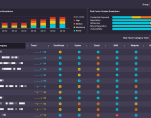
CyCraft External Attack Surface Management (EASM) automatically discovers potential external threats, correlates multiple intelligence and provides an overview of digital assets from the attacker’s perspective. Constantly discovering exposed credentials on surface web, dark web or public markets, this module mobilizes early warning and leakage tracing. Moreover, with the exclusively trained AI model, EASM offers mitigation and audit recommendations tailored to various compliance requirements.
Caption: CyCraft EASM integrates multi-sourced intelligence and asset management, automating attack path simulation and impact analysis.
AI-empowered Model Safety, Application Security and Posture Governance “The emerging AI-enabled threat landscape demands more than just faster detection and response; it requires predictive threat intelligence combined with AI-driven analytics and preemptive action. AI and machine learning (ML) technologies must be used to anticipate attack paths and predict where an adversary is likely to strike to more effectively neutralize potential attacks before they begin.” Gartner, Emerging Tech Impact Radar: Preemptive Cybersecurity, 7 October 2025.
LLM inherent and related risks are not virtual shadows but substantial threats that jeopardize everyday existence. Since GenAI or LLM outputs are difficult to control, the continuous verification of both input and output is the only way to ensure the validity of a solution.
Built on this logic, CyCraft’s XecGuard is an easily deployable Guardrail module, including cybersecurity, compliance and ethical Guardrails. Defending against Prompt Injection, Jailbreak and Prompt Extraction, XecGuard tackles AI-enabled threats without compromising its performance.
Caption: Compared with other LLMs, CyCraft XecGuard presents more robust model safety.
To assess your LLM safety range with quantifiable standards, CyCraft XecArena provides different attack scenarios to compare their performance. Users need to coax the LLM to break its System Prompt or leak confidential information. Join this multi-round testing on XecArena now!
CyCraft continues driving AI innovation in enterprise cybersecurity. In our opinion, this research momentum has further been witnessed by the reception of NeurIPS and EMNLP.
“We believe, being acknowledged in these influential Gartner reports validates our strategic vision and technological innovation,” said Dr. Benson Wu, CEO and Co-Founder of CyCraft Technology. “We’ve consistently invested in AI-driven, preemptive capabilities that enable organizations to stay ahead of invisible threats.”
Evaluation Application For organizations seeking full functionality, CyCraft is offering a limited evaluation program for 50 qualified enterprises. Participants will receive two External Exposure Analysis Reports, enabling security and governance teams to quantify external attack surface risks and establish data-driven priorities for remediation.
Gartner, Emerging Tech: AI Vendor Race: Unified Exposure Management Will Drive Displacement of Fragmented Point Solutions, 29 September 2025.
Disclaimer
Gartner does not endorse any company, vendor, product or service depicted in its publications, and does not advise technology users to select only those vendors with the highest ratings or other designation. Gartner publications consist of the opinions of Gartner’s business and technology insights organization and should not be construed as statements of fact. Gartner disclaims all warranties, expressed or implied, with respect to this publication, including any warranties of merchantability or fitness for a particular purpose. GARTNER is a trademark of Gartner, Inc. and its affiliates.
The issuer is solely responsible for the content of this announcement.
About CyCraft
CyCraft is a leading AI cybersecurity company, dedicated to automating cybersecurity with AI technology. With a proven track record in government, finance, high-tech semiconductor, and other industries, and strong recognition from international institutions, CyCraft continues to build Asia’s most advanced AI Security Operations Center, fully committed to safeguarding enterprise digital resilience.
CyCraft’s product suite encompasses AI Red Teaming for automated validation of Large Language Model (LLM) security and strengthening cloud and on-premise AI models with AI Guardrail technology—aiming to build multi-layered cybersecurity resilience for the entire AI ecosystem. The XCockpit AI platform integrates three pillars of XASM (Extended Attack Surface Management): EASM, IASM, and automated endpoint protection, providing enterprises with proactive, preventative, and real-time deep defense.
Eastern European Union governments are coordinating a collective push to unlock larger and faster streams of funding to strengthen military defences against Russia, as leaders from eight frontline states meet in Helsinki to align priorities and influence the bloc’s budget and lending rules. Discussions among leaders from Finland, Estonia, Latvia, Lithuania, Poland, Czech Republic, Slovakia and Romania focus on closing gaps in air defence, long-range fires, ammunition […]
IHBMSU and The Digital School have formalised a memorandum of understanding aimed at accelerating digital education initiatives, widening access to cross-border learning programmes and building structured pathways that connect education to employment, according to statements issued by the two institutions.
The agreement outlines cooperation across curriculum design, online delivery platforms and faculty collaboration, with a stated focus on making accredited learning more accessible to learners who face economic or geographic barriers. Officials involved in the partnership said the MoU is intended to combine IHBMSU’s academic framework with The Digital School’s digital infrastructure to support scalable, internationally oriented education models.
Under the terms of the arrangement, the two entities will jointly develop online and blended courses aligned with industry demand, covering areas such as business management, technology, data literacy and applied digital skills. Programmes are expected to be structured to allow flexible pacing and modular certification, enabling learners to accumulate credentials that can be stacked towards full degrees or professional qualifications.
Representatives from both sides said a core pillar of the collaboration is the creation of “learning-to-earning” pathways, particularly for underserved communities. This includes aligning course content with employer needs, embedding practical projects into curricula and facilitating links with industry partners for internships, apprenticeships and job placements. The aim is to reduce the gap between academic training and labour-market outcomes, an issue that has drawn growing attention from policymakers and education providers worldwide.
The MoU also commits the partners to mobilising technical and financial resources to ensure the long-term sustainability of joint initiatives. This may involve co-investment in digital platforms, outreach programmes and learner support systems, as well as engagement with philanthropic organisations, development agencies and corporate sponsors interested in workforce development and social impact education.
IHBMSU officials said the partnership reflects a broader shift within higher education towards digitally enabled delivery and international collaboration. Universities across regions have been under pressure to modernise teaching methods, expand access beyond traditional campuses and respond more quickly to evolving skill requirements. By working with a digital-first education provider, IHBMSU aims to extend its reach to learners outside its conventional geographic footprint while maintaining academic standards.
The Digital School, for its part, said the collaboration strengthens its mission to provide affordable, technology-driven education at scale. The organisation has positioned itself as a platform that blends online instruction, adaptive learning tools and partnerships with accredited institutions. Executives involved in the MoU said working with IHBMSU would allow it to offer learners recognised qualifications alongside practical, employment-focused training.
Education analysts note that such partnerships have become more common as institutions seek to balance quality assurance with the need for speed and flexibility. Digital platforms can lower delivery costs and reach large audiences, but questions around accreditation, assessment integrity and learner outcomes remain central. Collaborations with established universities are often seen as a way to address these concerns while retaining the benefits of digital scale.
The agreement also places emphasis on global learning opportunities, including cross-border classrooms, virtual exchange programmes and collaborative projects involving students from multiple countries. Advocates argue that exposure to international peers and perspectives can enhance employability and cultural competence, particularly in sectors where remote and distributed work has become standard.
While financial terms of the MoU were not disclosed, both parties indicated that pilot programmes would be rolled out in phases, with feedback from learners and employers used to refine course offerings. Metrics such as completion rates, job placement outcomes and learner satisfaction are expected to play a role in evaluating the partnership’s impact.
The move comes against a backdrop of heightened demand for reskilling and upskilling, driven by technological change and shifting labour markets. Employers in fields ranging from information technology to digital marketing and business analytics have reported difficulties finding candidates with job-ready skills, even as large numbers of graduates struggle to secure suitable employment. Education providers have been under pressure to demonstrate that qualifications translate into tangible economic opportunities.



 sim.edu.sg

















 https://www.linkedin.com/company/cycraft
 https://www.facebook.com/cycrafttechnology