News related to
secure

Greenlogue/AP Saudi Arabia’s Public Investment Fund has mandated Crédit Agricole CIB, JPMorgan and Société Générale to arrange a dual-tranche, euro-denominated green bond issue in three- and seven-year maturities, sources close to the matter said. This marks the fund’s inaugural euro green bond issuance and appears set to be its only green debt deal of the year. By pursuing this move, the sovereign wealth fund signals a further […]

Dubai Aerospace Enterprise has enlisted a consortium of international and regional banks to host a series of fixed income investor calls beginning 6 October 2025, with the aim of gauging demand for a potential benchmark 5-year senior unsecured US dollar sukuk issuance. The mandate positions Emirates NBD Capital, First Abu Dhabi Bank, Goldman Sachs International and HSBC as active bookrunners, while Abu Dhabi Commercial Bank, Ajman Bank, […]

Sammaan Capital will sharply expand its affordable housing lending operations after Abu Dhabi’s International Holding Company invested $1 billion for a controlling stake, the non-banking lender’s CEO, Gagan Banga, told Reuters. The infusion is expected to accelerate the drive toward an assets-under-management goal of ₹1 trillion by fiscal 2027. To underpin its expansion, Sammaan plans to launch about ten new branches monthly, concentrating on tier-4 and tier-5 […]

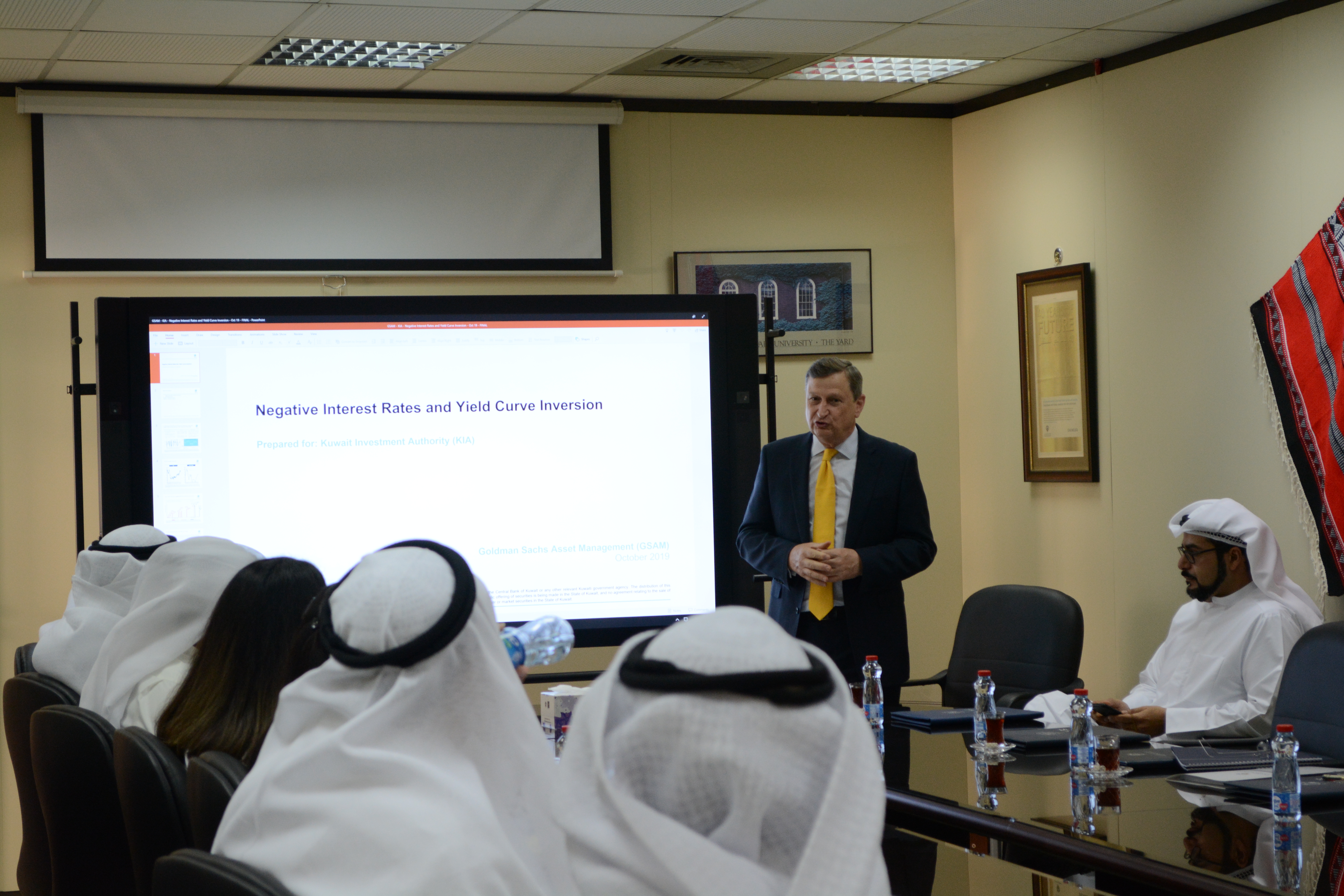
Goldman Sachs has launched a new office in Kuwait, asserting a significant push to enhance its reach across the Middle East and deepen its ties with Gulf-region clients under fresh leadership.

The New York-based investment bank said its role over five decades in Kuwait spans investment banking, capital markets and asset management. As part of its latest expansion, Goldman has tapped Mohammad Almatrouk as managing director of the Kuwait office, pending regulatory green light, while Fahad Alebrahim has been appointed managing director of the firm’s private wealth business in Kuwait.

David Solomon, Goldman Sachs’s Chairman and Chief Executive, framed the move as a commitment to “grow our capabilities across the Middle East and better serve our clients,” emphasising Kuwait’s economic vision as a catalyst for the firm’s expansion.

Goldman Sachs points to a long-standing capacity-building partnership in Kuwait that includes a professional training scheme designed to nurture talent at institutions such as the Kuwait Investment Authority, the Public Institution for Social Security and the Kuwait Fund. That programme, the bank says, will continue to play a central role in integrating local human capital into its global operations.

The choice of Kuwait underscores a growing focus on the Gulf’s institutional capital. Kuwait, host to one of the world’s largest sovereign wealth funds, has attracted global financial firms looking to align with its diversification and investment ambitions. Goldman Sachs’s decision follows earlier regional expansions, such as establishing a presence in Abu Dhabi and securing a banking licence in Saudi Arabia.

Kuwait’s Director General of the Direct Investment Promotion Authority, Sheikh Dr. Meshaal Jaber Al-Ahmad Al-Sabah, praised the move as aligned with Kuwait’s economic diversification and global integration goals. He stressed that opening the office supports national priorities including talent development and sustainable growth.

Regional analysts view Goldman’s Kuwait office as part of a broader recalibration by global banks to embed themselves closer to Gulf capital sources. Over the past two years, deal activity in sovereign and quasi-sovereign asset structures has exploded, prompting major firms including Lazard, JPMorgan and Deutsche Bank to expand in the Gulf with new leadership hires.

Inside Goldman Sachs, the timeline coincides with a leadership transition: the firm’s co-head for the Middle East and North Africa, Fadi Abuali, is slated to retire after nearly 28 years of service. His departure is expected to reshape the firm’s regional hierarchy just as Kuwait becomes a new hub.

Some observers caution the move carries execution challenges. Regulatory approvals in Kuwait must be secured, and Goldman must integrate the new office into its broader Gulf operations without duplicating functions. Success will depend on maintaining local relationships while delivering global platform advantages.

Cisco will unveil its latest innovations at GITEX GLOBAL 2025 in Dubai, aiming to equip enterprises across the Middle East and broader region with infrastructure built specifically for the AI era. The showcase focuses on AI-ready data centres, resilient network architectures, and strengthened security frameworks designed to support advanced workloads in data-intensive environments.

By joining the AI Infrastructure Partnership alongside BlackRock, Microsoft, NVIDIA, xAI and others, Cisco has committed to accelerating capital flows into datacentre and infrastructure projects. The partnership expects to unlock $30 billion in initial funding, scaling up to $100 billion including debt financing. Cisco brings its network, security and systems expertise to support the platform’s mission of secure, at-scale AI infrastructure.

At the heart of Cisco’s push is its new Cisco Data Fabric, launched in integration with Splunk, which provides federated data access across systems such as Amazon S3, Iceberg, Delta Lake and Snowflake, routing workloads intelligently to the best analytics or storage engine. This architecture is intended to reduce data movement, shorten analysis latency, and enable enterprises to transform machine data into AI-ready intelligence.

To support retrieval-augmented generation and agentic AI deployments, Cisco introduced the Secure AI Factory solution with NVIDIA and VAST Data. This validated architecture accelerates data extraction and retrieval at scale while enforcing security guardrails for every token processed. AI PODs built under this architecture offer pre-validated, high-performance building blocks for enterprise AI.

Networking and security are being redefined for the AI workload environment. At Cisco Live 2025, the company launched a next-generation network architecture for campus, branch and industrial environments, delivering unified management and devices purpose-built to support AI traffic patterns. It also introduced Hybrid Mesh Firewall and Universal Zero Trust Network Access to embed security into network fabric across hybrid and distributed environments. These features aim to simplify policy enforcement, improve visibility, and reduce complexity in securing both human users and AI agents.

Cisco CEO Chuck Robbins disclosed that fiscal year 2025 saw record AI infrastructure orders. In its final quarter, the company secured over $800 million from webscale clients, bringing total AI-focused orders to more than $2 billion—more than double its initial target. He described the pipeline as steadily growing into “hundreds of millions” as enterprises demand scalable, secure solutions.

In the Middle East, Cisco plans to demonstrate the regional relevance of its technologies under the theme “Make AI Work for You.” According to Cisco’s new AI Readiness Index, a vast majority of organisations in the UAE expect to expand their data centre capacity for AI within five years. The company will also present its work with Splunk on security and observability platforms at the event.

Cisco’s collaboration with Saudi Arabia’s HUMAIN is intended to build out an open, scalable AI infrastructure ecosystem aligned with Vision 2030. The multi-year programme includes deployment of cloud-based AI infrastructure, joint research initiatives, and efforts to grow local talent and innovation. The partnership underscores Saudi ambitions to position itself as a global AI hub.

Cisco sees accelerating demand for network modernisation. Its internal research reports that 97 percent of IT leaders view modernised networks as critical to deploying AI, cloud and IoT workloads, and 98 percent rate secure networking as essential for growth. However, the same study notes that only 40 percent of organisations have begun deploying advanced segmentation or intelligent control, illustrating an execution gap.

To strengthen its AI strategy, Cisco also expanded its presence in Indonesia by signing a Letter of Intent with BRIN to develop AI and cybersecurity capabilities via its Country Digital Acceleration programme. The plan includes building an AI Centre of Excellence and delivering training in AI, security and networking to 500,000 Indonesians by 2030.

Splunk’s observability portfolio itself is being reworked to embrace agentic AI, deploying AI agents to automate tasks such as root cause detection, alert correlation and issue resolution. This is intended to lighten the operational burden on IT and engineering teams while driving real-time insight.


A consortium led by Saudi Arabia’s Public Investment Fund, with Silver Lake and Jared Kushner’s Affinity Partners, has struck a deal to acquire Electronic Arts for approximately $55 billion, taking the iconic game publisher private. Under the agreement, EA’s shareholders will receive $210 per share, a 25 percent premium over the share price before the deal emerged, as the consortium combines fresh equity with a leveraged debt […]

Perplexity now offers its AI-enabled browser Comet free to users worldwide, removing its earlier US$200/month subscription restriction. The company also launched Comet Plus, a paid tier offering curated news content and revenue sharing with publishers. Comet integrates Perplexity’s AI directly into the browsing experience, combining the firm’s answer-engine with an assistant that can summarise pages, complete tasks, and guide users across tabs. It was first released in […]

Advertisements

Google has chosen Saudi startup Lahint for inclusion in its Growth Academy: AI for GovTech 2025 cohort, positioning the company among 24 global government-technology innovators supported by Google. The move aims to strengthen Lahint’s capacity to deliver AI-enabled public services and further Saudi Arabia’s push for digital transformation under Vision 2030.

Lahint, established in 2023 by Ahmed Saber and Mohamed Ibrahim, secured a $1 million pre-seed investment earlier this year to scale its AI and automation offerings in government services. The platform currently manages more than 60 digital government services and serves over 200 businesses, integrating robotic process automation and AI to streamline licensing, permits and administrative workflows.

By integrating Lahint into its accelerator, Google pledges technical support, mentorship and access to cloud infrastructure—tools that could accelerate Lahint’s roadmap to full automation of priority public services. Lahint has already earned multiple ISO certifications and is accredited by the Saudi Data & AI Authority with a Waee badge for AI ethics compliance.

Lahint has advanced its internal timeline for key automation milestones. The company is now targeting completion of its GovTech automation program by early 2026, a shift from an earlier 2027 target. This acceleration comes alongside newly signed partnerships with government entities to deploy real-time status reporting and predictive compliance tools covering domain areas such as licensing, taxation and corporate registration.

Saudi Arabia’s broader AI landscape is scaling rapidly. In 2025, the kingdom announced over $14.9 billion in investments at LEAP and pursued MoUs under SDAIA to reinforce its data and AI infrastructure. The establishment of HUMAIN, a state-backed AI company under the Public Investment Fund, is central to that strategy. HUMAIN, launched in May 2025, has already inked collaboration agreements with Nvidia, AMD and Qualcomm to develop AI factories and Arabic large language models.

Google’s AI programme in Saudi Arabia is part of a wider arrangement. A $10 billion joint investment by Google Cloud and the Public Investment Fund backs a national AI hub to reinforce the local ecosystem and serve regional demand.

HANOI, VIETNAM – Media OutReach Newswire – 7 October 2025 – The mega concert G-DRAGON 2025 WORLD TOUR [Übermensch] will take place on November 8 at 8Wonder Ocean City, with tickets officially opening for sale on October 7, 8, and 9. Prices range from VND 2 million to VND 8 million, offering a variety of exclusive benefits. With such anticipation, ticket sales are expected to spark an […]

HANOI, VIETNAM – Media OutReach Newswire – 6 October 2025 – Vingroup today announced the establishment of VinMetal Joint Stock Company for Manufacturing and Trading, officially entering the metallurgy industry and expanding its existing Industrials & Technology pillar. The new company aims to meet the internal material needs of Vingroup’s ecosystem while contributing to the development of Vietnam’s heavy industry. VinMetal is launching with an initial investment […]

Unlocking Africa’s Growing Payment Corridors for UAE Enterprises UAE now has a payment partner that unlocks Africa’s growing economic opportunity Verto today announced its official launch in the UAE. With over $25 billion processed annually for clients such as Unilever, and Maersk, the company’s platform is designed to address the unique challenges of cross-border payments between UAE and emerging market currency corridors (particularly in Africa), offering businesses […]

Atelic today unveiled Atelic Studio, a new toolkit designed to help companies deploy enterprise-grade AI solutions with enhanced security, streamlined integration and measurable business returns. The Dubai-based firm says Studio represents a shift toward more accessible, modular and trustworthy AI for sectors such as industry, healthcare and energy markets.

Atelic presents Studio as a vendor-agnostic, multi-tenant platform that supports organisations in managing AI model deployment, data pipelines and governance from a unified interface. The company emphasises that the goal is to deliver “trusted AI” at scale — giving enterprises control over security and compliance while achieving return on investment.

According to Atelic, Studio’s architecture layers include model management, access control, explainability tools and deployment orchestration. It supports hybrid and cloud environments and allows users to plug in models from existing AI providers or open-source frameworks. In promotional documentation, the company describes Studio as both “secure” and “strategic” — stressing that enterprises should not just build models but build them for business impact.

Atelic’s background lies in AI software, chatbots, predictive analytics and data engineering across markets. Earlier projects focused on custom AI solutions, but the push with Studio marks a move toward a standardised platform offering. The firm’s public profile positions it as a tech partner aiming to help organisations “automate, innovate, and grow.”

Industry analysts note that the challenge Atelic is trying to solve is not trivial: many enterprises struggle with integrating AI into legacy infrastructure, managing security risks, and proving business value. Such obstacles have prevented AI pilots from crossing into production in many firms. If Studio lives up to its claims, it could attract customers looking for a balanced bridge between agility and control.

In the Middle East, the push for digital transformation has seen strong governmental and corporate backing. Atelic anticipates demand from local energy, healthcare and industrial firms that are under pressure to adopt AI responsibly. The company says it will offer pilot engagements through regional partnerships to demonstrate local compliance, security and use-case feasibility.

Atelic has not publicly disclosed pricing or commercial terms for Studio. Observers believe the platform market is crowded—competitors include major cloud AI platforms, AI ops tools, and niche MLOps startups. The success of Studio will hinge on differentiation: the promise of enterprise trust, modular integration, and clear business metrics.

Technical job listings from Atelic suggest the company is building out the platform’s infrastructure: a Full Stack Software Developer role cites work on an “AI industrial platform” using a multi-tenant architecture. Meanwhile, a short video presentation of Studio describes it as a secure, vendor-agnostic AI user interface that aims to future-proof enterprises as requirements evolve.

iFLYTEK is stepping up its engagement in the Middle East, unveiling two flagship AI products at GITEX 2025 in Dubai as part of a broader strategy to localise its offerings and anchor its presence in the region.

The company’s showcase spans three core portfolios—AI Translation, AI Infrastructure and AI Solutions—tailored for Gulf markets, with particular emphasis on Arabic dialect support and secure deployment. Among the new offerings is the AI Translation Earbuds, designed to enable seamless multilingual communication, and the e-ink AINote 2 work device, both making their global debut at the event. The debut underscores iFLYTEK’s intent to go beyond product marketing, emphasising solutions that address regional business needs.

Vincent Zhan, Vice President of iFLYTEK, asserted that the company is focused “to deliver intelligent solutions that address real business challenges” rather than merely present tech demonstrations. The firm has already placed a local team in Dubai to oversee deployment, maintenance, and customer support. It also customised algorithms to handle multiple Arabic dialects, expecting that linguistic responsiveness will differentiate it from global rivals.

iFLYTEK’s portfolio for the event includes the Spark WallEX system, designed for intelligent space management, along with Spark Smart Blackboard and Spark GuideX. The firm says these are engineered to support a range of sectors, including education, healthcare, enterprise operations and government. Its “All-in-One AI Solution” is positioned as a secure infrastructure package for organisations seeking turnkey AI adoption.

The Middle East expansion is part of a larger international push. Outside Asia, iFLYTEK is targeting Europe, as trade tensions and regulatory pressures create incentives to diversify markets. It is reportedly planning offices in France and Hungary, with growth ambitions in Spain and Italy. In March 2025, Zhan cited tariffs in the US as influencing iFLYTEK’s decision to look more aggressively into Europe and the Gulf.

China’s AI giant also faces headwinds. It was placed on a US trade blacklist in 2019, making procurement of certain high-end components dependent on US approvals. To mitigate vulnerability, iFLYTEK has shifted many of its models to Huawei’s chip platforms. It developed its Xinghuo X1 large language model in partnership with Huawei, reportedly running entirely on domestic chips. The firm claims to have pushed chip efficiency from 20 per cent to nearly 80 per cent of equivalent U. S. hardware, though Huawei leadership acknowledges that domestic chips still lag behind by a generation.

Market observers note that iFLYTEK’s shift toward the Gulf aligns with governments in the UAE and Saudi Arabia pushing AI-first national strategies. However, the company must navigate regulatory, data residency and market competition risks. In the Gulf, local AI and language processing firms are emerging, and global players like Amazon and Microsoft are pressing deeper into the region.

iFLYTEK’s presence at major global events is integral to its positioning. In July 2025, at MWC Shanghai, it launched the Spark All-in-One AI Machine and Dual-Screen Translator 2.0—capable of handling translation across dozens of languages—to reinforce its push into enterprise AI. The company has also rolled out smart products such as the AINOTE Air 2 across Asia and Gulf markets, with strong uptake in multilingual productivity segments.

HANOI, VIETNAM – Media OutReach Newswire – 6 October 2025 – This November, for the very first time, Vietnamese audiences will be immersed in an unprecedented music event: the global superstar G-DRAGON’s world tour, landing right on the Eastern bank of Hanoi. Few realize that securing the nod from G-DRAGON required 8Wonder, the mega-festival brand of Vingroup, to overcome the incredibly stringent standards set by this S-tier […]

DP World has signed a memorandum of understanding with PayPal to roll out a digital payments solution meant to accelerate cross-border trade, bringing settlement times down from days to minutes. The agreement is part of DP World’s broader Digital Payments programme, targeting merchants, shippers, exporters, importers and marketplaces with a more transparent, lower-cost infrastructure. Under the deal, DP World will not itself act as a regulated payments […]

Annual leadership business series by Canon Singapore equips business leaders with strategies and a resilience-ready toolkit to navigate global and economic shifts impacting Singapore SINGAPORE – Media OutReach Newswire – 6 October 2025 – Canon today announced the return of the highly-anticipated annual Think Big Leadership Business Series in Singapore, designed to help businesses tackle challenges in an era of global uncertainty and technological disruption. This year’s […]

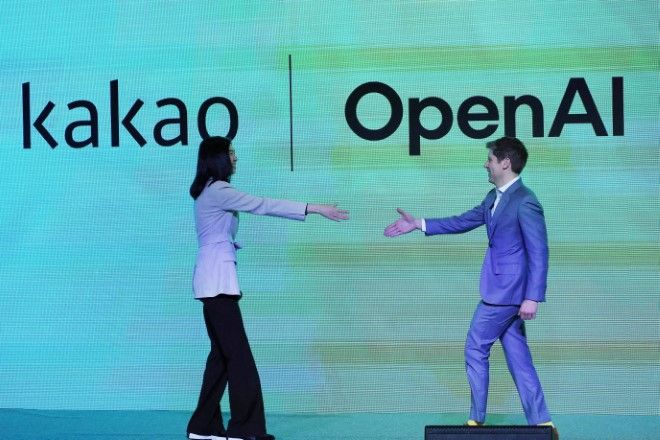
OpenAI chief executive Sam Altman is leading a high-stakes campaign across East Asia and the Middle East to secure investment and bolster chip supply for the company’s AI infrastructure push. He has held talks since late September in Taiwan, South Korea and Japan with leading hardware suppliers to prioritise OpenAI’s orders and expand capacity.

Altman has met with Taiwan Semiconductor Manufacturing Company and Foxconn, as well as Samsung and SK Hynix, pressing them to accelerate production and give OpenAI preferential access. In South Korea, Samsung and SK Hynix have signed letters of intent to supply memory chips for OpenAI’s data centres. Meanwhile, OpenAI plans further fundraising discussions in the United Arab Emirates.

The urgency of Altman’s mission reflects the intensifying global competition for advanced computing resources. OpenAI projects it will spend around US$16 billion this year on renting computing servers, with long-term forecasts stretching to US$400 billion by 2029 as AI models grow ever more complex.

Industry analysts note that the semiconductor supply chain remains highly constrained. TSMC dominates GPU chip production, and memory manufacturing is largely concentrated in East Asia, creating significant strategic leverage for the manufacturers approached by Altman.

As part of his tour, Altman is also pressing Japanese firms to contribute to infrastructure support. Hitachi has entered discussions to provide power transmission and distribution systems for OpenAI’s data centres, while sharing technical resources under joint development agreements.

Sources familiar with the process say Altman pushed for direct prioritisation in chip delivery schedules, asking that OpenAI receive top-tier production slots. In some cases, he proposed co-investment or co-development of next-generation AI hardware to bind partner incentives more closely.

In South Korea, early architecture proposals include planned data centres of 20 megawatts in collaboration with Samsung and SK Hynix. Altman is reportedly exploring “floating” data centre designs to manage land constraints and cooling demands.

The UAE leg of his mission is expected to involve negotiations with sovereign investment firms such as MGX and Mubadala, with the aim of funding both OpenAI’s expansion and joint infrastructure ventures in the region. In past rounds, UAE investors have already taken part in funding OpenAI operations.

Challenges remain significant. The sheer scale of chips and memory required for stacked AI model training is pushing the boundaries of global wafer fabrication capacity. Market watchers point to the high capital expenditure and long lead times in the semiconductor industry as obstacles to rapid scaling. Some of Altman’s proposals—for example, co-development of bespoke ASICs—are still in preliminary stages and face technical risk.

OpenAI’s valuation and investor backing give the company leverage. Earlier this year, it closed deals that valued it at about US$500 billion, with new capital injections from investors including SoftBank and UAE entities. Those moves have fortified its position in negotiating upstream deals with manufacturers.

Arabian Post Staff -Dubai Chinese automakers have revived a barter-style trade with Iran, sending semi-assembled vehicles in exchange for containers of copper and zinc that feed China’s non-ferrous metals sector. This swap, involving no traditional cash payments, emerges as a creative workaround amid the constraints of sanctions and currency pathways. Every few months, a facility on the Yangtze churns out engines and chassis, which are sent to […]

 by Mahboob Subuhani, Regional Director, IT Solutions – MEA & APAC at Sigma Software Group Dubai stands as a global benchmark for government digitalisation. In 2025, 99.5% of its services are digitised (120+ gov apps), with over 173 million digital transactions processed across 1400+ services, serving 57 million beneficiaries.    Today, Dubai ranks 4th globally in the IMD Smart City Index 2025, and 1st in the GCC, […]

The Ai Everything Global Supernova Challenge concluded in Dubai with Pulsar. ml crowned champion among 30 startups from 15 nations vying for a USD 60,000 prize pool. The event drew over 150 global investors representing some USD 50 billion in assets under management, who watched founders pitch AI solutions across sectors including robotics, fintech, e-commerce and healthcare. Pulsar. ml, based in Canada and led by founder Mohamed […]

Ras Al Khaimah has greenlit Wynn Boulevard, a new infrastructure artery that will link the forthcoming Wynn Al Marjan Island integrated resort with the E311 and E611 highways—connecting it directly to Dubai and neighboring emirates. Authorities have allocated over AED 1 billion for the project, which was unveiled during the launch of the Marjan Beach development. Graham Hallett, chief development officer at Marjan, confirmed that contracts worth […]

WhatsApp is rolling out a mechanism that allows users to reserve their preferred handles ahead of its planned shift to username-based identities. The feature was uncovered in the Android beta version 2.25.28.12, which includes settings linking to “username reservation” in preparation for the broader username rollout. The reservation system acts as a precursor to a full username feature that is still under development. It aims to mitigate […]

Baku, Azerbaijan — Cüzdan LLC has launched a nationwide payment orchestration platform built on the technology of PayTabs Group, aiming to streamline payments for merchants and consumers across Azerbaijan. The new infrastructure enables live pay-in and pay-out transactions and seeks to boost digital inclusion by offering enhanced speed, security and flexibility in payment processing.

The platform is designed to allow merchants to onboard quickly, route payments intelligently across multiple payment service providers, and offer consumers a broader choice of payment methods. Cüzdan says the system is live and integrated with the country’s major acquiring banks. The partnership combines Cüzdan’s local network in sectors such as retail, manufacturing and consumer finance with PayTabs’ proprietary orchestration backbone.

Mustafa Baltacı, Chief Executive Officer of Cüzdan, described the launch as a pivotal moment in Azerbaijan’s shift toward a digital economy. He said the platform “serves the full spectrum of our economy — from neighbourhood shopkeepers to growing SMEs to major enterprises — with modern, secure payment solutions that drive growth and financial inclusion.” PayTabs’ growth-and-development officer, Hany Soliman, added that the firm is “proud to power Cüzdan’s payments journey” by supplying the technological architecture underpinning the rollout.

This launch marks PayTabs’ entry into Azerbaijan, extending its operational footprint beyond the GCC, Levant, North Africa and Central Asia regions into the Caucasus. Abdulaziz Al Jouf, CEO and founder of PayTabs, affirmed that this “hallmark partnership” reinforces the group’s goal to support digital transaction infrastructure across wider geographies.

Industry observers see this move as timely. Azerbaijan’s economy is pushing to modernise its payments infrastructure, support small and medium enterprises in digital adoption, and reduce friction in cross-border and domestic e-commerce flows. The flexibility offered by orchestration platforms — which manage routing, fallback, reconciliation, fraud checks and settlement across multiple payment providers — is now viewed as essential in markets with fragmented banking and payments systems.

Yet challenges remain. Success will depend on how quickly local merchants adopt the platform, the reliability of the supporting payments infrastructure, and the alignment of regulatory oversight. Ensuring interoperability with regional and international payment rails will also be vital if Cüzdan aims to facilitate cross-border commerce.

World Liberty Financial, the crypto venture tied to Donald Trump’s family, has announced it will issue a debit card enabling users to spend digital assets as conventional currency, with a pilot slated next quarter and full deployment targeted by late 2025 or early 2026.

At Singapore’s TOKEN2049 conference, CEO Zach Witkoff stated that the underlying aim is to “bridge crypto assets with everyday spending,” forecasting that the card could go live in the fourth quarter or first quarter of 2026. Co-founder Donald Trump Jr. joined the presentation, underscoring the project’s ambition to integrate cryptocurrency more deeply into consumer payments.

Beyond payments, World Liberty is advancing a plan to tokenise real-world commodities, aiming to use blockchain infrastructure to trade assets like oil, gas, timber and cotton. Witkoff described these as “really interesting” domains for on-chain trading, pointing to what the company sees as excess transactional inefficiency in traditional markets. The firm also launched its governance token, WLFI, earlier this month, and has introduced USD1, a dollar-pegged stablecoin backed by U. S. Treasuries and other cash equivalents to cut dependency on conventional banking rails.

World Liberty has secured a high-profile institutional backer: the UAE-based Aqua 1 Foundation invested USD 100 million in WLFI tokens, becoming the venture’s largest public investor. The strategic pact aims to fuel World Liberty’s expansion in South America, Europe and Asia, and to jointly incubate blockchain initiatives.

The governance token WLFI currently is non-transferable, granting holders voting rights rather than direct tradeability; World Liberty has said it is “working behind the scenes” to make WLFI transferable in the future. A large portion of WLFI’s supply remains held by the Trump family and affiliated entities.

The stablecoin USD1 gained traction after a major crypto exchange deal: World Liberty was among the early adopters when the funds backed by an Abu Dhabi entity were routed through USD1 to a major crypto platform, helping to elevate USD1’s market position in the stablecoin ecosystem.

Regulatory and ethical concerns already shadow the venture. Critics argue the project blurs lines between private enterprise and public office, noting that much of the Trump family’s wealth could become entangled with policy outcomes. Donald Trump Jr. has dismissed conflict-of-interest allegations as “complete nonsense,” but scrutiny over the convergence of politics and crypto is intensifying.

WLFI has exhibited wide volatility since launch, riding speculative momentum across global exchanges. Meanwhile, competing crypto card offerings already exist, with established fintechs and digital-asset platforms offering crypto-linked cards in partnership with Visa and Mastercard. Witkoff contends World Liberty’s version will differentiate through tighter integration with its stablecoin and tokenisation strategy.

VISHNU RAJA
RYO YAMADA
HITORI GOTOH
IKUYO KITA