News related to
secure

BANGKOK, THAILAND – Media OutReach Newswire – 14 July 2025 – Gother, a tourism service platform, operated by Search Engine Optimization, a joint venture between Beacon Venture Capital (venture arm of Kasikornbank) and Krungthai Ventures (venture arm of Krungthai Bank) is showing strong upward momentum following a 300% business growth in just seven months since launch in the past year. Aimed at upgrading its platform, Gother is […]

Tokyo-listed Metaplanet has bolstered its treasury by buying 797 additional bitcoins, worth approximately $96 million, raising its total holdings to 16,352 BTC—valued near $2 billion—as Bitcoin surged past $120,000. The move mirrors the blueprint of US-based Strategy: leverage equity and debt issuance to accumulate crypto assets, which can then be used as collateral for broader expansion.

CEO Simon Gerovich reiterated that Metaplanet intends to use its growing Bitcoin reserves not for trading or liquidation, but to underpin financing for acquisitions in cash-generating sectors—particularly digital banking and financial services. The company plans to tap into traditional financing channels, including zero-interest bonds and preferred-share issuance, while steering clear of convertible debt. This purchase follows a series of substantial bond financings: earlier this month, Metaplanet issued 30 billion yen in zero‑coupon bonds to acquire an additional 1,005 BTC, bringing total holdings to around 13,350 BTC.

Industry analysts say Metaplanet now ranks as Asia’s largest and the world’s fifth-largest corporate Bitcoin holder, outranking companies such as Tesla, Coinbase, and Block Inc.. The firm has set ambitious targets: 100,000 BTC by end‑2026 and 210,000 BTC by end‑2027—accounting for nearly 1% of the global Bitcoin supply.

Boosted by these strategic shifts, the company’s market capitalisation surpassed ¥1 trillion, and its stock has climbed more than 345% this year. The pivot, originally a hotel chain, to a Bitcoin treasury vehicle began in 2024 and has drawn parallels to MicroStrategy’s transformation into a crypto-centric enterprise.

While bitcoin-backed financing is still in its infancy among mainstream banks, select institutions—such as Standard Chartered and OKX—have begun piloting crypto as collateral. Gerovich emphasised that once accumulation reaches “escape velocity,” Metaplanet’s holdings could be leveraged similarly to traditional assets to secure financing for acquisitions.

Sceptics voice concerns around volatility and the sustainability of the “bitcoin yield” model. Veteran short-seller Jim Chanos dismissed these valuations as “financial gibberish,” yet Gerovich welcomes critics, stating he invites them to short the stock if they are not convinced of the strategy.

Metaplanet is exploring acquisitions of digital banks and financial services companies that align with its strategy. The company is also aiming to strengthen its treasury infrastructure through asset-backed financing, including bond issuances, preferred equity deals and a planned $5 billion capital raise targeting expansion into its Florida subsidiary.

DP World has finalised a 30‑year concession worth US $800 million to modernise and operate the port of Tartus on Syria’s Mediterranean coast, as per official statements issued on 13 July 2025. The agreement, inked in Damascus between DP World and Syria’s General Authority for Land and Sea Ports, was witnessed by Syrian President Ahmed al‑Sharaa, along with DP World’s Chairman and Group CEO Sultan Ahmed bin Sulayem and Qutaiba Ahmed Badawi, […]

A growing number of market analysts predict Ruvi AI’s RUVI token will outperform speculative memecoins like Shiba Inu in the forthcoming crypto bull cycle. They highlight RUVI’s audited smart contracts, real-world AI and blockchain utility, robust presale metrics, and VIP incentives as evidence of its potential to deliver returns far beyond meme-driven tokens.

RUVI recently secured an independent audit from CyberScope, addressing smart-contract vulnerabilities and enhancing investor confidence. The project has also onboarded WEEX Exchange to ensure post-presale liquidity, further bolstering trust among institutional and retail backers. With $2.2–$2.3 million raised and approximately 180–185 million tokens sold to over 2,100 holders in Phase 2, analysts suggest the foundation has been laid for a significant market debut.

RUVI’s utility-first design distinguishes it from memecoins. Integrated AI tools aim to improve marketing campaign efficacy, while blockchain-secured payments support content creators. In finance, the token underpins fraud detection and cross-border payment services. This multifaceted approach suggests sustained demand beyond speculative interest.

Analysts anticipate an increase from the presale price of $0.015 to $0.07 upon listing, yielding an initial ~5× gain. Post-listing projections place RUVI at $1—implying a 66× return from current prices. Some estimate upside reaching 13,500–13,800% over a full bull cycle—figures drawn by comparing RUVI to early-stage tokens like Ripple’s XRP and Cardano’s ADA.

RUVI’s VIP tiers amplify these potential gains. A $750 investment yields 70,000 tokens; a $2,100 stake offers 224,000 tokens; and a $9,600 commitment doubles token allocation with a 100% bonus. At a $1 valuation, these tiers could translate into $70,000, $224,000, and $1.28 million respectively.

Critics caution against early-stage token exuberance. They note reliance on bull market conditions and warn that memecoin popularity can surge unpredictably. Shiba Inu, though lacking intrinsic utility, has navigated volatile market cycles before. Sustainable success for RUVI will depend on seamless platform deployment, AI adoption across industries, and execution of its roadmap.

That said, analysts emphasise RUVI’s structured growth path—completed audits, exchange partnerships, utility-based ecosystem—and contrast it with the hype-centric nature of memecoins. Drawing parallels with Ripple’s early journey, they see RUVI carving out a role among next-gen crypto major players.

As global attention shifts from memecoins to purpose-built crypto infrastructure, RUVI is gaining traction among sophisticated investors seeking risk-reward clarity. With its presale in full swing, the token’s performance will show whether the project can translate early promise into lasting market impact.

UAE’s new Comprehensive Economic Partnership Agreement with Azerbaijan has catapulted bilateral non‑oil trade to unprecedented levels, now accounting for half of Azerbaijan’s commerce with Gulf Cooperation Council countries. This landmark pact promises to mould economic trajectories for both nations by 2031.

Dr Thani bin Ahmed Al Zeyoudi, UAE Minister of Foreign Trade, revealed that non‑oil trade surged by 36.2 percent in 2024, reaching US $2.24 billion—equivalent to 50 percent of Azerbaijan’s trade with the GCC. This accomplishment is underpinned by a robust 4.1 percent expansion in Azerbaijan’s overall GDP and a 6.3 percent rise in its non‑oil sector.

Signed in Abu Dhabi with the presence of UAE President Sheikh Mohamed bin Zayed Al Nahyan and Azerbaijani President Ilham Aliyev, CEPA is expected to inject US $680 million into UAE GDP and US $300 million into Azerbaijan by 2031. It further cements the UAE’s status as Azerbaijan’s top Arab investor, with cumulative UAE investments now exceeding US $1 billion.

The CEPA supports strategic priorities in manufacturing, automotive, agriculture, logistics, and financial services, with planned expansion of UAE investments in energy and renewables via state-owned giants ADNOC and Masdar. Masdar’s portfolio in Azerbaijan is set to exceed 1.2 GW by 2027 following a 4 GW renewables agreement including solar and hydrogen projects.

This accord also aligns with broader UAE ambitions under its CEPA programme, aimed at achieving US $1.1 trillion in non‑oil trade by 2031. Already, the initiative delivered a record US $816 billion in 2024, marking a 14.6 percent year-on-year increase, and positions the UAE as having 27 CEPA agreements with markets comprising over one‑quarter of global population.

Beyond trade figures, CEPA signifies a strategic push to diversify UAE exports and deepen supply‑chain resilience. It enables Azerbaijani goods access to Gulf and global markets, while encouraging UAE capital deployment in Eastern Europe via Azerbaijan’s Gateway logistics advantage. Sectors like food security, real estate, and logistics are flagged for development across both economies.

Financial cooperation is gaining momentum too. Talks between Azerbaijan’s Central Bank and Abu Dhabi Securities Exchange may lay groundwork for capital-market linkages. Additionally, Azerbaijani remittances to UAE saw a 52.1 percent rise in Q1 2025, reaching US $18.8 million.

Humanitarian and environmental collaboration with CEPA includes UAE support for demining through Azerbaijan’s Mine Action Agency and joint efforts during COP summits.

CEPA is poised to enrich private‑sector ties, particularly for SMEs, while also strengthening tourism links—highlighted by over 185 monthly flights connecting the UAE and Azerbaijan. Earlier cooperation has boosted non‑oil trade 43 percent in 2024 to about US $2.4 billion.

In the energy domain, strategic joint ventures have been flourishing. ADNOC holds a 30 percent stake in Azerbaijan’s Absheron project, and SOCAR reciprocated with oil‑field stakes in UAE territory. Renewable efforts include a 445 MW solar plant in Bilasuvar and a 315 MW installation in Neftchala under Saudi-UAE investment.

Stonepeak, a US-based infrastructure investor, has agreed to acquire a 50 per cent co-controlling stake in IFCO Group from a subsidiary of the Abu Dhabi Investment Authority. The transaction positions Stonepeak alongside European mid-market investor Triton, which will continue its existing 50 per cent ownership. Financial terms were not disclosed, and the deal remains subject to customary regulatory approvals, with completion targeted in the fourth quarter of 2025.

Founded in 1992, IFCO operates one of the world’s largest reusable packaging container systems, managing over 400 million units and facilitating approximately 2.5 billion shipments of fresh food annually across more than 50 countries. This extensive network, supported by around 140 service centres, serves more than 18,000 growers and over 300 retailers, delivering substantial cost efficiencies, sustainability gains, and operational scalability compared to single-use packaging.

ADIA initially invested in IFCO’s carve-out from Australian logistics group Brambles in 2019, following a $2.5 billion sale to Triton. Over the intervening years, IFCO has undergone a comprehensive strategic and operational transformation, including enhanced digitalisation and an expanded global footprint, setting the stage for this latest ownership transition.

IFCO’s chief executive officer, Michael Pooley, praised the combined expertise of Stonepeak and Triton, emphasising that the new partnership will support growth and reinforce IFCO’s “market leading position globally”. Nikolaus Woloszczuk, Senior Managing Director at Stonepeak, described IFCO as a “critical component of the logistics infrastructure delivering fresh produce” and underlined the firm’s commitment to accelerating the company’s expansion—particularly in North America—as part of Stonepeak’s broader infrastructure investment strategy.

Triton’s co‑head of business services, Stephan Förschle, affirmed the firm’s ongoing commitment to IFCO, signalling confidence in the combined vision with Stonepeak to deliver value through digitalisation and sustainability initiatives. Representing ADIA, executive director Hamad Shahwan Aldhaheri noted that since the 2019 investment, IFCO had built “solid foundations for the future, based on strong operational performance and enhanced digital capabilities”.

Advisory teams have been engaged from both sides of the transaction. Citi and Morgan Stanley served as financial advisers to ADIA and Triton, with Bank of America also representing ADIA, while Kirkland & Ellis and Latham & Watkins provided legal counsel. Stonepeak was advised by Citi financially and Kirkland & Ellis legally.

Analysts indicate that the deal could value IFCO at approximately €5.5 billion including debt, implying a consideration near €2 billion for the 50 per cent stake, according to Bloomberg. This valuation reflects IFCO’s robust market position and future growth prospects in sustainable logistics.

The combination of Triton’s deep sector knowledge and Stonepeak’s infrastructure expertise—including its focus on transport, logistics, and digitalisation—positions IFCO to capitalise on rising demand for circular economy solutions in food supply chains. With container reuse gaining regulatory momentum and retailer focus on waste reduction intensifying, IFCO’s closed-loop model is becoming increasingly central to sustainable logistics strategies.

Market observers expect this deal to reinforce growing investor interest in circular supply chain infrastructure, especially as environmental and governance factors shape capital allocation. The high valuation underscored by global advisory firms suggests confidence in IFCO’s ability to deliver both financial returns and environmental impact through its RPC-based system.

The completion of this transaction in late 2025 will mark a significant milestone for all stakeholders. ADIA exits after six years of investment and strategic support. Triton remains, signalling continuity in governance and operation. Stonepeak enters as a long-term partner, with capital and network to help scale IFCO’s platform further—particularly in North America.

Nigeria has secured a $747 million syndicated loan, led by Deutsche Bank, to fund the initial 47.47‑kilometre phase of its flagship coastal highway spanning from Victoria Island to Eleko Village in Lagos. The Ministry of Finance confirmed the financing on Wednesday, marking a record for road infrastructure funding in the country. Lenders in the syndicate include First Abu Dhabi Bank, African Export‑Import Bank, Abu Dhabi Exports Office, ECOWAS […]

Advertisements

Samsung has launched a new generation of Galaxy AI features embedded directly on its smartphones, combining cutting‑edge intelligence with enhanced privacy safeguards. Designed to rival Apple Intelligence and Google Gemini, Galaxy AI now performs tasks such as voice‑to‑text, photo editing, call transcription and real‑time translation entirely on device—only resorting to anonymised cloud support for complex jobs, thus protecting personal data. At the heart of this shift is […]

Behomes is announcing the launch of its new mobile app — Behomes Hub — created to connect real estate professionals, streamline day-to-day operations, and unlock new income opportunities in the UAE property market. Core features include a professional social network for agents, brokers, developers, and investors, as well as access to exclusive service referral programs with high-value cashback. “Our mission is to support every real estate professional […]

Major technology firms and start‑ups are racing to adopt the Model Context Protocol, the open‑source standard that streamlines communication between large language models and external tools. Since its debut in November 2024, Anthropic’s creation has gained swift endorsement from OpenAI, Google DeepMind, Microsoft and others and is now being adopted to power the next wave of agent‑based AI. However, the protocol’s rapid integration has exposed serious vulnerabilities—forcing […]

Four sources confirm that Saudi Aramco is negotiating to acquire 2 million tonnes per annum of liquefied natural gas from Commonwealth LNG’s planned Cameron, Louisiana export facility. This addition would bring Commonwealth closer to its ambition of locking in 8 mtpa from its total 9.5 mtpa capacity, enhancing its commercial viability and drawing it nearer to a final investment decision by year‑end. Commonwealth LNG, backed by private equity firm Kimmeridge, […]

Suhail bin Mohammed Al Mazrouei, Minister of Energy and Infrastructure, reaffirmed the UAE’s full backing for OPEC+ mechanisms, underlining the nation’s commitment to sustaining equilibrium in global oil markets through capacity expansion and coordinated policy.

At the 9th OPEC International Seminar in Vienna on 9 July, Al Mazrouei praised OPEC+ for its collective decision‑making model, which he said ensures production responds to actual market demand rather than price speculation. He noted that the UAE’s strategic investments in expanding production capacity reflect a readiness to release additional oil when consumption trends warrant, providing a stabilising buffer to global supply. The minister highlighted that this expansion aligns with prudent leadership foresight aimed at reinforcing market resilience.

He emphasised that there has been no substantial rise in inventories despite several months of gradual production increases. “Even with the increases…we haven’t seen a major buildup in inventories, which means the market needed those barrels,” he stated. This observation supports broader OPEC+ data showing that successive monthly output increments have been absorbed by demand, a trend that the UAE believes underlines the rationality behind its expanded quota.

Since April, OPEC+ has reversed approximately 2.17 million barrels per day of voluntary output cuts via a phased rollout: 138,000 bpd in April, then 411,000 bpd in each of May, June and July, followed by a proposed 548,000 bpd increase for August – a move reflecting growing market confidence. Notably, the UAE is set to complete a 300,000 bpd quota increase by September, a benchmark reached ahead of the original 2026 timeline as OPEC+ expedited its capacity hike schedule.

Analysts suggest that such robust production gains could recover roughly 2.5 per cent of global demand by September. Al Mazrouei remarked that the UAE’s investments will strengthen its role within OPEC+ and that once additional capacity comes online, it will serve as a crucial stabilising factor during demand shifts.

He further argued that focusing solely on oil price levels is insufficient. Rather, OPEC+ aims to strike a sustainable balance that encourages long‑term investment. “We need the price to be right for investments to happen,” he said, warning of the consequences of underinvestment across producers.

Current market dynamics appear to confirm this approach: data from mid‑June and early July indicate that inventories across OECD nations remained stable despite the production uptick, confirming demand absorption remains robust. That observation, Al Mazrouei suggested, validates the pace of OPEC+ supply restoration and diminishes concern about a looming oversupply.

While output is increasing, policy is cautious. The Group of Eight core OPEC+ members—Saudi Arabia, Russia, UAE, Kuwait, Oman, Iraq, Kazakhstan and Algeria—are proceeding in measured increments. Al Mazrouei underscored that OPEC+ continues to meet monthly via ministerial and committee reviews, carefully calibrating production relative to shifting market fundamentals.

Beyond ensuring balance, the UAE’s production capacity expansion also carries strategic benefits. Having secured a higher individual quota, the country aims to restore and extend its market share. This reinforcement was acknowledged by external observers, including Richard Bronze of Energy Aspects, who noted “the UAE is benefiting from this speeding up of the quota increases” within a context of broader OPEC+ output acceleration.

Despite concerns about slowing economies in key importers, including China, and rising US trade tensions, OPEC+ retains a cautiously optimistic outlook. Prices in July experienced modest one‑per‑cent gains near $69 per barrel following the announcement of the August supply increase—an indicator that demand continues to absorb the additional volumes.

Nevertheless, OPEC+ remains vigilant about macroeconomic risks. Commentators have warned that demand softness later this year, driven by uncertainties in global growth and trade policies, could pressurise prices. Al Mazrouei echoed that view, stressing that short‑term supply increases must be accompanied by stable investment in oil infrastructure to prevent future shortages.

Persistent coordinated production strategy is a central theme from the Vienna seminar. Ministers emphasised OPEC+’s response to shifting fundamentals rather than geopolitical or speculative impulses. With the group moving to complete the unwind of emergency cuts, markets will closely monitor whether global demand continues to match supply advances.

San Francisco–based ZeroEntropy has emerged at the forefront of a crucial yet underrepresented segment in artificial intelligence: retrieval‑augmented generation. The startup, co‑founded by Moroccan engineer Ghita Houir Alami and CTO Nicolas Pipitone, has raised $4.2 million in seed funding to refine how large language models access contextually relevant data. This investment underscores growing investor conviction that LLM performance hinges on the quality of retrieved information, not just model […]

Nvidia is set to begin production of a new, lower‑spec Blackwell‑architecture AI chip for the Chinese market as early as June, aimed at complying with US export controls while maintaining its presence in the nation’s booming data centre sector. Priced between $6,500 and $8,000—significantly cheaper than the $10,000–$12,000 H20—the chip trades performance for accessibility under current regulatory constraints.

The streamlined variant is based on the RTX Pro 6000D, utilising conventional GDDR7 memory instead of high‑bandwidth memory and eschewing TSMC’s advanced CoWoS packaging to stay within US‑mandated memory bandwidth limits of 1.7–1.8 TB/s. Industry analysts note this is markedly below the 4 TB/s capability of the H20.

Yet Nvidia is not stopping there. As part of a dual‑chip strategy, it is reportedly developing a second Blackwell model scheduled to enter production by September. The specifications remain undisclosed but are expected to similarly align with US export regulations.

China accounts for around 13 per cent of Nvidia’s revenue, a slice that has shrunk sharply from a pre‑2022 peak due to export restrictions, which caused market share to decline from roughly 95 per cent to near 50 per cent today. A ban on the H20 in April prompted the company to write off about $5.5 billion in inventory and forgo an estimated $15 billion in sales.

CEO Jensen Huang has acknowledged the company’s “limited” options, stating that until a compliant design is approved by US authorities, Nvidia remains locked out of China’s $50 billion data centre market. Without it, his comments suggest many customers may migrate to domestic alternatives like Huawei’s Ascend 910B.

Domestic competition in China has intensified. Huawei’s Ascend 910B and others have gained momentum, closing the gap to Nvidia’s downgraded models within one to two years, according to semiconductor analysts. Nvidia counters this with its CUDA programming ecosystem — a key competitive advantage. With CUDA deeply integrated into AI development workflows globally, it may anchor developer loyalty even as hardware capabilities shift.

Further complicating the picture are whispers of a third chip internally known as “B30” or “B40”, which appears designed to operate in clusters and align with new export rules by focusing restrictions on individual chip rather than entire systems. Reports indicate interest from China’s leading tech companies—ByteDance, Alibaba and Tencent—with ambitions to produce more than 1 million units this year. Nvidia has not directly confirmed the chip, and one Chinese supplier, ZJK Industrial, briefly announced production ramp‑up for the B40 before retracting the statement, triggering increased market speculation.

US officials have shown concern that widespread availability of such chips—even within controlled clusters—could bolster China’s capabilities in foundational model training and inference tasks. Commerce Department Under‑Secretary Jeffrey Kessler recently told lawmakers that AI chip smuggling “is happening”, echoing longstanding export fears. Nvidia’s Huang maintains there is “no evidence” of diversion, but a consistent black‑market narrative continues to shadow the sector.

Chinese firms have outlined plans to deploy thousands of H100 and H200 chips in new data centres, particularly in western provinces such as Xinjiang and Qinghai, where abundant renewable power and cool climates offer logistical advantages. Target installations indicate upwards of 115,000 such processors in aggregated plans—most of which remain aspirational due to export prohibitions and logistical challenges.

Analysts suggest that while Nvidia’s tiered Blackwell chips may temporarily appease China’s AI infrastructure demands, the deeper impact will depend on regulatory outcomes and the strength of the CUDA ecosystem. If export restrictions ease, Nvidia stands to regain momentum; if they tighten, domestic chipmakers like Huawei will likely secure a larger foothold.

This unfolding scenario underscores a shift in semiconductor geopolitics: global tech leaders are adapting designs to fragmented access zones while local players race to fill the vacuum. The episode illustrates how export policy, market demand and strategic software assets intersect in shaping tomorrow’s AI hardware landscape.

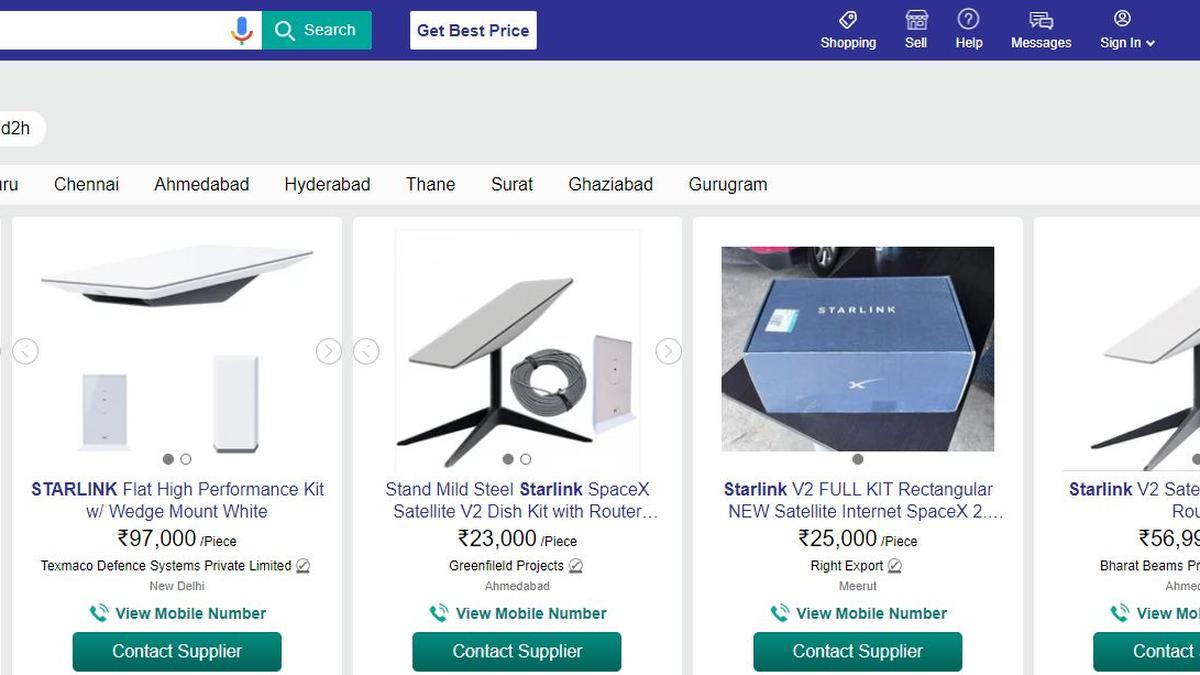
Elon Musk’s satellite‑internet venture has obtained its space regulator’s final approval to launch commercial services, removing the only remaining legal obstacle after securing a telecom licence last month. This paves the way for Starlink to become the third satellite broadband operator in India, alongside Eutelsat‑OneWeb and Reliance Jio‑SES.

The Department of Telecommunications issued Starlink the Global Mobile Personal Communication by Satellite permit in early June, marking a pivotal step towards nationwide commercial deployment. Space regulator IN‑SPACe has now finalised its authorisation—pending Starlink’s formal acceptance and countersignature—bringing the company on par with its established rivals.

Starlink must still secure dedicated spectrum, construct ground infrastructure, and complete stringent security trials before service can commence. Officials indicate the spectrum will be allocated administratively rather than via auction, aligning with Starlink’s position over competing demands that included those from Reliance Jio.

The security evaluation phase remains critical. Indian authorities have insisted that all satellite‑based traffic must transit through domestic gateways and comply with legal interception protocols. Supply chain localisation and gateway siting near international borders will also be mandated. Past concerns over unauthorised Starlink usage in border regions prompted increased scrutiny by the ministry of home affairs and Department of Telecommunications earlier this year.

Starlink joins an increasingly competitive satellite broadband landscape. Eutelsat‑OneWeb received its GMPCS licence in August 2021 and full permissions in late 2023, while Jio‑SES obtained its telecom licence in March 2022 and space clearance by mid‑2024. Meanwhile, Amazon’s Project Kuiper awaits its approvals.

Local telecom giants are now preparing partnerships with satellite providers to enhance connectivity. Bharti Airtel and Reliance Jio signed pacts with Starlink earlier this year to deliver broadband across remote regions once authorisations were finalised. These alliances reflect a broader push by India to extend digital infrastructure to underserved rural and mountainous communities, where roughly 40 percent of the population remains without reliable internet access.

Starlink’s global network now spans over 6,750 satellites and serves diverse markets from Antarctica to developing Asia. In India, the company faces challenges adapting to the country’s famously low data prices, with mobile rates among the world’s cheapest. Each operator must also comply with provisions demanding indigenisation of at least 20 percent of ground infrastructure and multilayered security approval regimes.

As New Delhi aligns satellite spectrum policy—including assigning bandwidth for five‑year terms at a fee capped at 4 percent of adjusted gross revenue—operators will negotiate additional urban or rural levies and infrastructure contributions. Communications Minister Jyotiraditya Scindia’s consultations with SpaceX executives signal sustained governmental interest in leveraging satellite technologies to bolster India’s digital ambitions.

Starlink’s entry marks a significant shift in India’s telecom ecosystem. It promises to elevate broadband penetration in neglected geographies while testing the resilience of India’s stringent regulatory and security frameworks. The speed at which Starlink secures spectrum, builds its ground presence, and satisfies national interception mandates will determine how soon millions of users beyond urban centres experience high-speed satellite internet.

Shares of Nissan Motor Co. dropped sharply following the firm’s decision to increase its convertible bond issuance to ¥200 billion, up from the initially announced ¥150 billion. The company cited strong investor demand during the book-building process as justification for the upsized deal, though market reaction suggests heightened concerns over shareholder dilution. This convertible debt forms a key part of Nissan’s broader funding strategy, which includes a planned $4 billion […]

In recent years, Dubai’s real estate market has become one of the most attractive investment destinations globally. With its strategic location, tax-free benefits, and luxury developments, investing in real estate through platforms like Megapolis.ae offers both stability and high potential returns. Why Dubai? Dubai is more than a city — it’s a symbol of modern prosperity, innovation, and luxury living. Thanks to the UAE’s investor-friendly policies, world-class […]

Jack Dorsey, the co‑founder of Twitter and current head of Block, has introduced Bitchat, a peer‑to‑peer encrypted messaging tool that operates entirely without internet or cellular networks, relying instead on Bluetooth Low Energy mesh technology within a 300‑metre radius. It is currently available in beta via Apple’s TestFlight, which has already reached its 10,000‑user capacity. The app enables fully decentralised communication: messages hop from device to device […]

Ruvi AI, a blockchain-based utility token enhanced with artificial intelligence, is garnering considerable attention, with analysts forecasting returns that echo the early days of Ethereum. The presale has raised over $2.2 million, with approximately 180 million tokens sold and more than 2,000 holders already onboard. Priced at $0.015 during Phase 2, the token is expected to rise to $0.07 post-presale, offering investors a near five-fold gain before public trading begins. Market watchers anticipate a $1 valuation after listing—a potential 66× return—or even projections of 104× to 137× in a full bull market.

Security and transparency are strong points. Ruvi AI has undergone a third-party audit from CyberScope, confirming its smart contracts are free from vulnerabilities. A partnership with WEEX Exchange ensures liquidity once the token hits public markets, addressing key investor concerns.

Beyond hype, Ruvi AI distinguishes itself through concrete use cases. In marketing, its AI-driven tools enable precise ad targeting and smarter budget allocation. Within entertainment, blockchain-secured payments and AI audience analytics support content creators. The token also addresses fintech, with applications in fraud detection and secure transactions.

VIP tiers offer additional incentives: Tier 2 at $750 with a 40% bonus, Tier 3 at $2,100 with 60%, and Tier 5 at $9,600 with 100%. These tiers significantly enhance token allocation and potential returns.

Comparisons to established platforms underscore the excitement. Analysts position Ruvi AI as more purpose‑driven than meme coins like Shiba Inu, and liken its structure and transparency to Ethereum’s early roadmap. It is also being cast as a challenger to Ripple and Tron, thanks to its utility-first model and robust security credentials.

Despite enthusiastic projections, sceptics warn that such forecasts often rely on promotional narratives and may underestimate typical crypto volatility. Many articles encouraging investment are sponsored, necessitating cautious interpretation and thorough due diligence.

Market analysts note that Ruvi AI’s clear presale roadmap—starting at $0.015, locked at $0.07, with target of $1—offers an unusually transparent growth trajectory for early investors. Still, experts emphasise that projections of 66× to 137× assume robust market conditions and widespread adoption of AI‑enabled blockchain technology.

Institutional interest is still nascent, yet alignment with AI and blockchain sectors reflects broader tech trends. Continued platform development, ecosystem partnerships, and adoption by key industries will be crucial to validating current projections.

With Bitcoin prices soaring past $100,000 again and investor optimism at a high, the UAE’s strategic push into crypto is paying off. But what does this bull market really mean for the country’s economy, its investors, and its long-term financial future? The UAE has spent the last few years laying the groundwork to become a global crypto capital. While some countries have struggled to regulate or simply […]

Continues to see strong growth in traditional powerhouse sectors such as automotive, technology and e-commerce Sees new opportunities in Malaysia for growth in life sciences and healthcare as well as new energy DHL is well-positioned to support Malaysia’s trade and logistics ambitions with expanded investments and capabilities KUALA LUMPUR, MALAYSIA – Media OutReach Newswire – 9 July 2025 – DHL, the world’s leading logistics provider, has reaffirmed […]

Federal Authority for Identity, Citizenship, Customs and Port Security has issued a strong and authoritative rebuttal to claims circulating that the United Arab Emirates is offering lifetime Golden Visas to certain nationalities. In its statement on 8 July, ICP emphasised that Golden Visa eligibility is strictly governed by existing laws, ministerial decisions, and official regulations. Applications are processed only via UAE government channels—no consultancy firm, internal or external, has legitimate authority to promise visa grants under simplified conditions.

The statement was prompted by alleged press releases from a foreign consultancy office claiming applicants could secure lifetime Golden Visas for all categories from abroad. ICP characterised these claims as legally baseless and made without coordination with UAE authorities. Following these claims, several Indian and UAE-based outlets reportedly published the information before the ICP clarified its position.

While ICP refrains from naming the specific consultancy, it has warned of impending legal action against entities using false promises to extract money from individuals seeking long-term residency in the UAE. “Entities spreading such false information [are] exploiting [people’s] hopes for a dignified life,” the authority stated. It urged the public to verify procedures through official sources, including its website and app, or by contacting the designated call centre at 600522222.

The ICP insisted that the Golden Visa framework remains unchanged: eligibility criteria, procedural regulations, and visa categories continue to be defined by UAE law and ministerial orders alone. The visa remains accessible only to those meeting these statutory provisions, and all processes must follow the established, government-operated digital platforms.

This response comes amid a broader pattern of misinformation regarding Golden Visa eligibility. Earlier this month, another wave of misleading reports claimed investors in digital currencies—particularly in Toncoin—had qualified for a ten-year Golden Visa by staking cryptocurrency. In response, ICP, alongside the Securities and Commodities Authority and the Virtual Assets Regulatory Authority, issued a joint statement rejecting those claims and reminded the public that cryptocurrency investment is not a recognised category for Golden Visa issuance.

Under the official programme, Golden Visa eligibility remains targeted to specific categories: real-estate investors, entrepreneurs, exceptional talents, qualified professionals, scientists and researchers, high-performing graduates and students, frontline workers, humanitarian pioneers, and notable maritime asset holders. The ICP reaffirmed that these criteria are set in accordance with legal frameworks and are unchanged by the rumours.

Despite the cross-border spread of misinformation, UAE authorities appear resolute in their commitment to transparency, integrity, and regulatory enforcement. The ICP has stated that all application processes must occur through official digital services, and only those platforms bear the authority to collect fees or accept documentation. Third-party entities claiming to facilitate visa applications risk legal consequences.

Experts underscore the potential fallout from such false claims. “Misleading promises fuel public confusion and pose reputational risks for the UAE’s visa systems,” noted one legal analyst based in Dubai, requesting anonymity. Misinformation casts doubt on the authenticity of the Golden Visa programme and could encourage fraud. UAE authorities increasingly rely on legal measures and public advisories to counteract false narratives.

The timing of this clarification aligns with heightened international interest in UAE residency schemes. In early July, news emerged that the UAE was piloting a streamlined lifetime Golden Visa pathway for Indian nationals under the UAE‑India Comprehensive Economic Partnership Agreement. Under the pilot, eligible Indian applicants could receive life-long residency without property investment, upon nomination and the payment of AED 100,000. This development appears to have driven a surge in media attention and consultation requests aimed at service providers.

While the ICP has not confirmed or elaborated on a pilot programme specific to any nationality, it advised the public to seek information strictly through official platforms. Interested parties are encouraged to consult the ICP website or app for updates on visa categories, including any new arrangements introduced under international agreements.

Signals from the UAE government reflect a dual strategy: expanding its talent- and investment-focused Golden Visa system, while firmly safeguarding procedural integrity. Through legislative collaboration, digital transformation, and cross-border trade agreements, the UAE continues to enhance its residency framework. However, officials remain vigilant against exploitation and fraudulent intermediaries.

As the visa environment evolves, clarity from ICP and associated authorities remains vital. Their recent intervention serves to remind the public that any deviations from established criteria are unauthorised and legally questionable. For those pursuing Golden Visa status, due diligence and reliance on official channels are indispensable.


Iran has achieved its highest energy output in nearly half a century, as crude production and exports continue expanding despite escalating tensions and Western sanctions. In 2024, total oil output—including crude and gas liquids—reached approximately 5.1 million barrels per day, marking levels unseen since before 1978. Indicators from the first half of 2025 signal further growth, reinforcing Tehran’s stance that its energy sector remains resilient even under pressure.

China remains the principal destination for Iranian crude. According to Vortexa and Kpler data, Beijing imported an average of 1.4 million bpd of Iranian crude and condensate during the first half of 2025. In June alone, Chinese imports surged to a record 1.8 million bpd, exploiting floating storage reserves accumulated previously.

Despite U. S. legal restrictions, these volumes endure through intricate shipping methods and discounts. As of June, Iranian crude was being sold to China at discounts of $3.30–$3.50 per barrel below Brent—the widest spread since 2023—partly triggered by weak demand from independent Chinese “teapot” refineries and additional U. S. sanctions on mid-tier processing firms in Shandong province. Refineries such as these have cut utilisation rates to around 51 per cent, down from 64 per cent last year.

Iran’s export capacity has been safeguarded by infrastructural alternatives designed to bypass the Strait of Hormuz. The Goreh‑Jask pipeline and Jask terminal—capable of exporting around 300,000 bpd—offer strategic flexibility, although actual utilisation fell to under 70,000 bpd in late 2024. Elsewhere, Saudi Arabia and the UAE have also enhanced their own bypass routes through the Strait to mitigate risk.

Nonetheless, current events pose fresh challenges. Israeli strikes in June damaged parts of oil infrastructure near Tehran and affected the South Pars gas field—responsible for up to 700,000 bpd of condensate. Exports from key terminals such as Kharg Island briefly dropped below 120,000 bpd from a weekly average of 1.7 million bpd. However, Iran manages significant stockpiles—approximately 27.5 million barrels afloat—that can sustain exports for weeks.

Domestic dynamics complicate this energy story further. Iran’s gasoline consumption has outpaced refining capacity by nearly 15–20 per cent since late 2024, triggering reliance on reserves and imports to fill shortfalls. Peak summer demand reached unprecedented levels, surpassing 143 million litres in a single day. Panic-buying followed some military strikes, exposing strains in planning and supply.

Iran’s global energy standing aligns with broader market projections. The International Energy Agency forecasts that global oil supply will exceed demand in 2025 by around 1.8 million bpd, a backdrop that may soften impacts from Iranian output. At the same time, discussions in Washington about lifting U. S. sanctions have raised concerns in Beijing, particularly for its fragmented independent refining sector. Analysts warn that a sudden lifting of sanctions could flood global markets—with an additional 500,000 bpd of Iranian oil—and undercut smaller Chinese players by crushing their margins.

Iran’s energy strategy shows calculated resilience. While nuclear tensions invite military risks, the oil ministry appears intent on diversifying markets, expanding infrastructure, and leveraging geopolitical leverage. Iran Daily reported that production comprised 4.3 million bpd of crude plus around 0.7 million bpd of other liquids in 2024. Analysts advocate that increased domestic use, ageing facilities, and investment gaps could temper the pace of future gains unless Tehran secures long-term funding and technical partnerships.

Observers note the inherent paradox: Iran continues ramping production even as global energy security faces renewed uncertainty. Control over chokepoints such as the Strait of Hormuz remains central. Although no full closure has occurred—the Iranian parliament proposed closure in late June pending council approval—the symbolic threat alone underlines Tehran’s strategic positioning. Global markets, buoyed by inventories and diversified routes, have so far absorbed the shock. Yet any escalation could rapidly unsettle thresholds.

TikTok is preparing a standalone version of its app for U. S. users, slated for launch on 5 September 2025, as part of its strategy to comply with the U. S. law mandating a sale or ban of its American operations. The current app will remain functional until March 2026, although officials say this date is subject to change. Under the Protecting Americans from Foreign Adversary Controlled […]

VISHNU RAJA
RYO YAMADA
HITORI GOTOH
IKUYO KITA