News related to
secure

Dubai has delivered its strongest residential performance on record in 2025, with total home sales valued at AED 547 billion, or about $149 billion, reflecting a 28% year-on-year rise and underscoring the emirate’s sustained appeal to investors and end users. Transaction volumes climbed to roughly 203,000 deals, marking a 20% increase and setting a new benchmark for market activity across the city. Data compiled by Betterhomes show […]

Abu Dhabi has constituted the board of its new sovereign investment platform, L’IMAD Holding Company, marking another step in the emirate’s drive to broaden revenue streams and deepen its presence in global deal-making. The formation of the board, announced by the Abu Dhabi Media Office, places the vehicle alongside a growing roster of state-backed investors tasked with deploying capital across sectors seen as strategic to long-term growth. […]

HO CHI MINH CITY, VIETNAM – Media OutReach Newswire – 12 January 2026 – Ho Chi Minh City Development Commercial Bank (HDBank, ticker symbol: HDB) has successfully issued a second tranche of international green bonds worth US$50 million to the Dutch Entrepreneurial Development Bank (FMO) and British International Investment (BII), the UK’s development finance institution and impact investor, completing its $100 million international green bond initiative in 2025.

HDBank's international green bond programme strengthens funding diversification and supports sustainable, green and inclusive finance initiatives in Vietnam.
HDBank’s international green bond programme strengthens funding diversification and supports sustainable, green and inclusive finance initiatives in Vietnam.

The announcement was made at “The USD100 Million Green Bond Issuance Disclosure Ceremony” recently held between HDBank and its green bond investors including FMO, BII and the International Finance Corporation (IFC) – a member of the World Bank Group in the presence of the Deputy Consul General of the Netherlands and representatives from the British Consulate General in Ho Chi Minh City.

The bonds included $30 million privately issued to FMO and $20 million to BII. The first tranche was issued to IFC, which facilitated the participation of FMO and BII in the second tranche.

The bonds have a three-year term, are non-convertible and unsecured and issued without warrants.

Nguyen Huu Dang, HDBank’s CEO, said: “Sustainable development goals lie at the heart of HDBank’s strategy, which is centred on delivering the best value for customers, partners and the community. This international green bond initiative marks an important stepping stone on our journey towards achieving those goals.”

The issuance help diversify HDBank’s funding sources, support its sustainable growth strategy and create a foundation for it to continue attracting additional international capital for green finance, sustainable development and inclusive finance initiatives in Vietnam.

This, in turn, helps customers access capital to deploy solar energy projects, electric vehicles, green buildings, and other energy-saving solutions.

Projects financed by the green bond proceeds must undergo rigorous screening, meet environmental and social risk management requirements, and comply with eligibility criteria under the Bank’s Sustainable Finance Framework. These projects are expected to reduce approximately 102,000 tons of CO₂ over 10 years, improve environmental quality and contribute to Vietnam’s Net Zero 2050 commitment.

Weichuan Xu, IFC’s lead for the Financial Institutions Group in Vietnam, Cambodia and Lao PDR, said the issuance marked a significant step in expanding HDBank’s climate finance portfolio and advancing Vietnam’s economic and social progress.

“The funds raised will support projects that foster sustainable industries, generate jobs and strengthen communities,” he added.

Representatives from FMO and BII also highlighted the transaction as a strong signal of the growing readiness and potential of Vietnam’s sustainable finance ecosystem, helping attract more capital for climate-responsible projects.

With this milestone, HDBank reinforces its commitment to sustainable finance and the long-term prosperity of its customers, partners and the community, while expanding its presence on the global financial map.

Hashtag: #HDBank

The issuer is solely responsible for the content of this announcement.

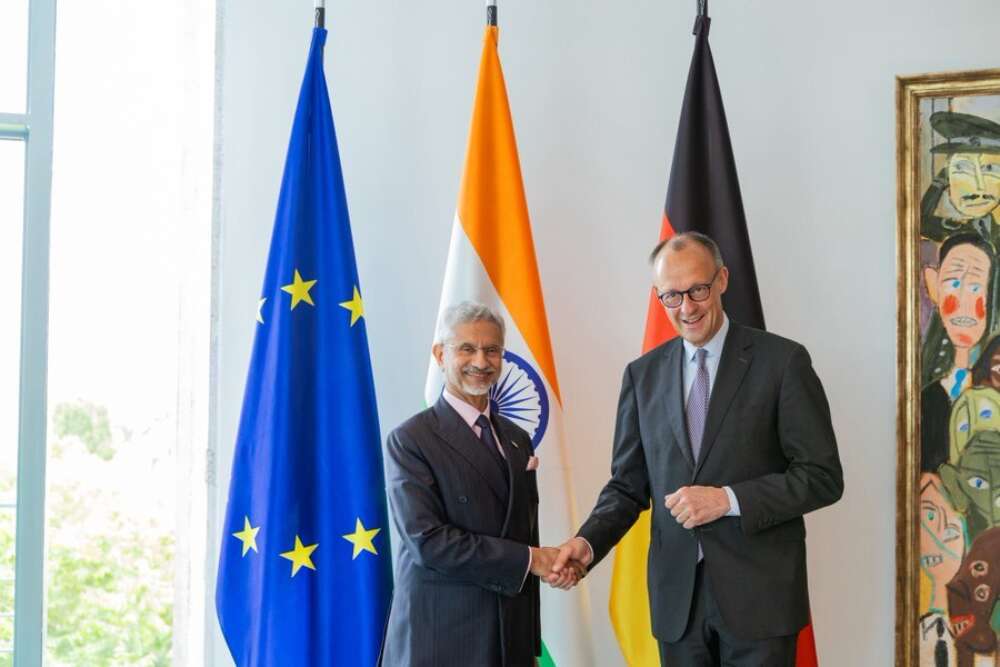
Germany’s opposition leader Friedrich Merz has suggested that a long-stalled trade agreement between the European Union and India could be clinched by the end of January, injecting momentum into negotiations that Brussels and New Delhi have struggled to close for more than a decade as global supply chains remain under strain from geopolitical frictions.

Speaking at a policy forum, Friedrich Merz said the bloc and India were “closer than many assume” to resolving key differences, adding that the economic case for a deal had sharpened after prolonged disruptions linked to strategic competition between major powers. His comments come as European manufacturers continue to grapple with uneven access to critical inputs following China’s tightening of export controls on minerals vital for electric vehicles, electronics and defence applications.

Negotiations for an EU–India free trade agreement were relaunched in 2022 after an eight-year hiatus, with both sides aiming to expand trade that exceeded €120 billion in goods and services last year. Officials involved in the talks say progress has been made on tariff reductions and rules governing digital trade, though sensitive areas such as agriculture, labour standards and intellectual property remain contentious. Merz’s remarks underscore a growing sense in Berlin and other capitals that the agreement has moved from a strategic aspiration to an economic necessity.

Germany, Europe’s largest economy, has been among the strongest advocates of diversifying trade ties beyond China, particularly after export controls imposed by Beijing on gallium, germanium and graphite created months of bottlenecks for automotive and renewable energy firms. Those controls, introduced amid the broader U. S.–China trade dispute, highlighted vulnerabilities in Europe’s dependence on a narrow set of suppliers for critical raw materials.

Executives in the auto sector say shortages of battery-grade materials last year forced production adjustments and delayed investment decisions. While some supply has since stabilised, industry groups argue that long-term resilience requires deeper partnerships with alternative producers and manufacturing hubs. India, with its expanding industrial base and policy push to attract foreign investment, has emerged as a central pillar of that strategy.

European officials note that the proposed agreement would not only cut tariffs—currently as high as 60 per cent on some vehicles entering India—but also establish clearer rules for public procurement and data flows. For India, the deal promises greater access to the European market for pharmaceuticals, textiles and IT services, while also encouraging technology transfer and skills development.

Trade analysts caution that closing the pact by late January would require political compromises on both sides. European negotiators have pressed for stronger environmental and labour commitments, while Indian counterparts have sought flexibility to protect small farmers and domestic manufacturers. Still, the geopolitical context is shifting calculations. The European Union has accelerated its “open strategic autonomy” agenda, seeking to balance openness with security of supply, and India has signalled willingness to align more closely with Western economies without abandoning its strategic independence.

Merz’s intervention also reflects domestic pressures within Germany, where exporters are seeking new growth markets as demand in China cools. German industry groups have repeatedly urged policymakers to prioritise agreements with fast-growing economies, arguing that delays risk ceding ground to competitors from East Asia and North America.

The broader backdrop includes intensifying scrutiny of China’s role in global supply chains. Beijing has defended its export controls as legitimate measures to safeguard national security and manage resources, but the ripple effects have reinforced calls in Europe for diversification. The European Commission has already launched initiatives to secure access to lithium, cobalt and rare earths through partnerships in Africa, Latin America and Asia, with India seen as both a market and a manufacturing partner.

Diplomats familiar with the EU–India talks say technical chapters are largely drafted, leaving political decisions to bridge remaining gaps. Any agreement would still need approval from member states and the European Parliament, a process that could extend beyond the negotiating deadline even if a political deal is struck.

Moves to prohibit political donations made in cryptocurrency are gathering pace at Westminster, as lawmakers warn that digital assets could be exploited by hostile states and anonymous actors to influence elections and undermine democratic safeguards. Cross-party concern has sharpened following intelligence assessments that flagged the vulnerability of political finance rules to opaque funding channels. Legislators argue that while donations in cash and traditional banking systems are subject […]

By Nantoo Banerjee The theatres of state-sponsored piracy are expanding, from the traditional Red Sea, Gulf of Oman, Somali Basin to the Black Sea and now the Atlantic. The recent US seizure of Russian-flagged oil tanker, Marinera, originally known as the Bella-1, after pursuing the vessel for weeks across the Atlantic, may be considered as […]

The article US Gunboat Diplomacy Challenges The World Order appeared first on Latest India news, analysis and reports on Newspack by India Press Agency).

Public spaces across Downtown Dubai were restored in under 55 minutes after New Year’s Eve celebrations, as Emrill completed a large-scale overnight clean-up following one of the city’s biggest annual events. More than 308 team members were deployed across the district to clear waste, reset streets and pedestrian zones, and return key public areas to normal use before early-morning activity resumed. The operation, delivered for the thirteenth […]

Advertisements

Greenlogue/AP Abu Dhabi Future Energy Company PJSC – Masdar has signed a long-term power purchase agreement for a 150-megawatt solar photovoltaic project in Angola, marking its first contracted power deal in the country and extending the company’s African portfolio at a time when regional governments are accelerating grid expansion and energy diversification. The agreement covers the Quipungo Solar PV project, located in Angola’s southern region, and was […]

Qatar and the United Arab Emirates are set to join a United States–led initiative aimed at securing global artificial intelligence and semiconductor supply chains, signalling a widening of Washington’s technology diplomacy into the Gulf and underlining the strategic importance of advanced computing hardware to future economic and security policy. The planned inclusion of the two Gulf states was outlined by Jacob Helberg, the US undersecretary of state […]

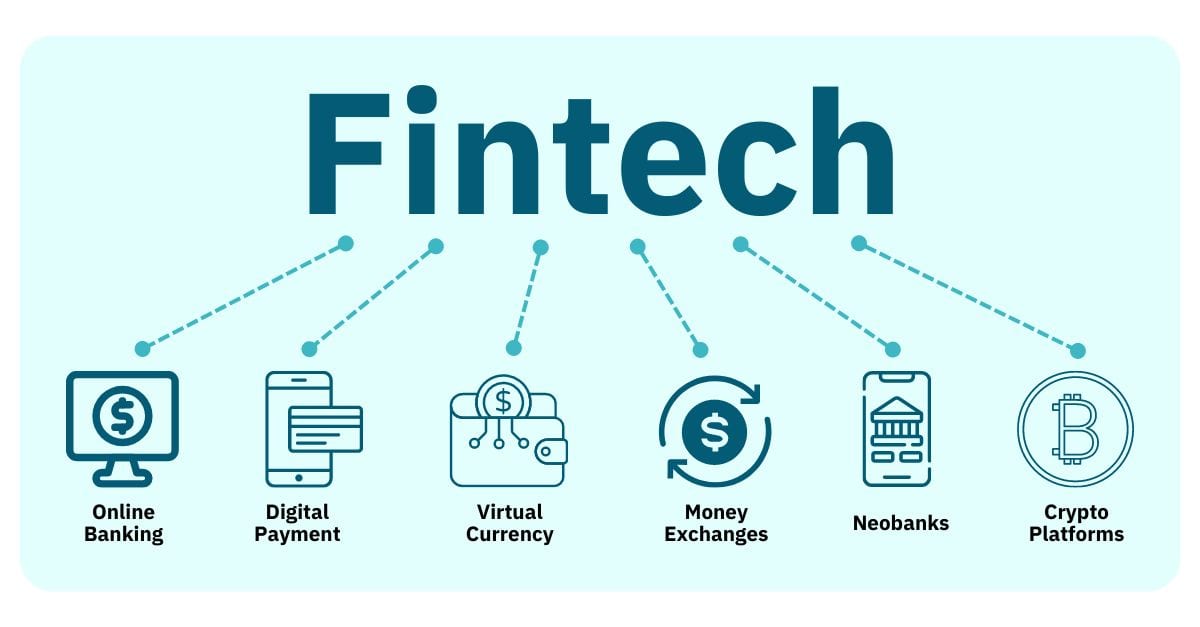
Bengaluru | Banking-as-a-Platform is moving from concept to commercial backbone across the country’s financial system, as lenders open their digital rails to fintech partners and reposition themselves as infrastructure providers rather than closed institutions. The model allows banks to expose core capabilities—accounts, payments, lending, compliance and data—through secure application programming interfaces, enabling third parties to build, distribute and monetise financial products at speed.

This shift has gathered momentum as regulatory digital public infrastructure, rising smartphone penetration and instant payments have converged. Unified Payments Interface volumes continue to expand across peer-to-peer and merchant transactions, while account aggregation frameworks allow consent-based data sharing that reduces onboarding friction and credit assessment time. Against this backdrop, platform-led banking is emerging as a scalable engine for fintech growth, changing how products are designed, priced and distributed.

Large lenders and new-age banks have invested heavily in API layers that sit atop legacy cores, separating product logic from distribution. This architectural change allows fintechs to “plug” into regulated balance sheets without becoming banks themselves, “play” by composing features such as KYC, payments or credit scoring, and “scale” nationally without building costly compliance stacks. For banks, the appeal lies in fee income, wider distribution and better utilisation of capital through co-lending and embedded finance.

Executives across the sector say the platform approach has shortened product launch cycles from months to weeks. Consumer lending, merchant credit, wealth distribution and cross-border remittances have been early beneficiaries, with embedded finance extending to ride-hailing, e-commerce, logistics and software-as-a-service platforms. Small enterprises, long constrained by paperwork and collateral requirements, are gaining access to working capital through cash-flow based underwriting that draws on real-time transaction data.

The commercial logic is reinforced by economics. API monetisation—charging per call, per transaction or via revenue sharing—creates annuity-like income streams for banks. Fintechs gain variable cost structures that align expenses with growth. Analysts note that platforms with high uptime, predictable latency and robust documentation are attracting repeat developers, creating network effects similar to cloud marketplaces.

Regulatory guardrails remain central to the model’s credibility. Data localisation rules, customer consent standards and outsourcing guidelines shape how banks expose systems and how partners handle information. Supervisors have emphasised accountability, making licensed entities responsible for customer outcomes even when services are delivered through partners. This has pushed banks to strengthen vendor risk management, audit trails and incident response, while fintechs have had to mature governance and security practices.

Competition among banks has intensified around developer experience. Dedicated sandbox environments, self-serve onboarding and standardised APIs are becoming differentiators. Some lenders have carved out platform subsidiaries to attract talent and ring-fence technology risk, while others have partnered with specialist middleware firms to accelerate rollout. Public sector banks, once seen as slow movers, are also modernising stacks to participate in ecosystem distribution rather than cede ground.

The platformisation trend is reshaping balance-sheet strategies. Co-lending arrangements allow banks and non-bank financiers to share risk, with fintechs originating and servicing loans using data-driven models. In payments, banks are focusing on high-volume, low-cost rails while fintechs compete on user experience and value-added services. Wealth platforms are distributing mutual funds, bonds and insurance through APIs that streamline compliance and reporting.

Challenges persist. Legacy core systems can constrain throughput, requiring phased migrations that test execution discipline. Cybersecurity threats rise with greater connectivity, demanding continuous monitoring and zero-trust architectures. Pricing APIs too aggressively risks discouraging innovation, while underpricing leaves money on the table. There is also the question of differentiation: as APIs commoditise, banks must decide where to invest for unique value, whether in data analytics, sector-specific products or risk pricing.

Talent remains a pressure point. Demand for engineers fluent in financial protocols, security and scalable systems outstrips supply, pushing up costs. Cultural change inside banks—shifting from project delivery to product thinking—has proven as important as technology. Successful platforms tend to empower cross-functional teams, publish clear roadmaps and treat external developers as customers.


Government authorities are moving to compel smartphone manufacturers to submit portions of their operating system source code for mandatory security audits, escalating a standoff with global technology companies that warn such a requirement could undermine intellectual property protections and user privacy. The proposal, under discussion within policy circles in New Delhi, reflects mounting concern about cyber intrusions, supply-chain vulnerabilities and the growing role of mobile devices in payments, governance and national security.

Officials familiar with the matter say the plan would require vendors selling smartphones in the country to make critical software components available for inspection by government-approved laboratories. The focus would be on core operating system layers, firmware and security modules rather than consumer-facing applications. Proponents argue that access to code is essential to verify whether hidden vulnerabilities, backdoors or insecure update mechanisms could be exploited by hostile actors.

The push has brought the government into direct tension with companies such as Apple and Samsung, whose devices dominate the premium and mass-market segments. Executives and industry representatives have privately conveyed resistance, arguing that exposing proprietary code, even to auditors bound by confidentiality, creates unacceptable risks of leaks and reverse engineering. They also contend that global platforms already undergo extensive third-party security testing and comply with international standards.

At the heart of the debate is whether national security imperatives justify a departure from prevailing global norms. Countries including China and Russia operate regimes that allow state scrutiny of technology products, though often under opaque processes that foreign firms say are difficult to reconcile with commercial safeguards. Western regulators have largely relied on certification frameworks, vulnerability disclosure programmes and cooperation with vendors rather than direct access to source code. India’s approach, if formalised, would place it closer to the former camp, potentially setting a precedent for other large emerging markets.

Government officials counter that smartphones have become gateways to sensitive data far beyond personal communications. Devices are routinely used for digital identity verification, financial transactions and access to public services. Any systemic weakness could have cascading effects. They also point to a rise in sophisticated cyber operations attributed by security researchers to state-linked groups, arguing that reliance on vendor assurances is no longer sufficient.

The proposal is understood to be steered by the Ministry of Electronics and Information Technology, which has expanded its remit in cybersecurity and digital governance. Policy discussions have examined models ranging from escrow-based code access, where source material is held by a trusted intermediary, to controlled on-site inspections without code being copied. Each option presents trade-offs between assurance and exposure.

Industry bodies warn that mandatory disclosure could chill investment and complicate product launches. Smartphone operating systems are developed on global codebases, updated frequently and protected by layers of licensing agreements with component suppliers. Altering that structure for a single market risks fragmenting development and delaying security patches. There are also concerns about reciprocity: once one jurisdiction demands code access, others may follow, multiplying compliance burdens.

Privacy advocates occupy an ambivalent position. Some support deeper scrutiny to ensure devices do not surreptitiously collect or transmit data. Others caution that state access to low-level software could itself become a vector for abuse if oversight is weak. They stress the need for transparent audit criteria, independent supervision and clear limits on how findings are used.

The commercial stakes are significant. India is one of the world’s largest smartphone markets by volume and a critical manufacturing hub under production-linked incentive schemes. Companies have invested heavily in assembly plants and local supply chains, betting on policy stability. A protracted dispute over code access could influence decisions on future capacity and research investment, even if an outright exit is unlikely.

Google has unveiled a Universal Commerce Protocol designed to allow artificial intelligence agents to search, recommend and complete purchases across multiple retail platforms, marking a strategic push to standardise how online shopping works in an era of increasingly autonomous digital assistants. The announcement was made at the 2026 National Retail Federation conference, where technology providers and merchants gathered to outline priorities for the year ahead. The protocol […]

Robinhood Markets has set out plans to build an Ethereum layer-2 network as part of a broader push to deepen its role in crypto trading, tokenised equities and on-chain yield products, arguing that anchoring the project to Ethereum’s security is central to winning user trust and regulatory confidence. The brokerage, best known for commission-free equity trading, says the layer-2 is designed to handle higher transaction volumes at […]

Meta has secured access to as much as 6.6 gigawatts of nuclear power through a cluster of agreements with established utilities and advanced reactor developers, underscoring how the energy demands of artificial intelligence are rewriting the investment playbook for Big Tech and the power sector alike. The arrangements, involving power supply and development pathways with Vistra, Constellation, TerraPower and Oklo, aim to underpin Meta’s expanding network of […]

Bangkok’s long-held reputation as the “Detroit of the East” is under strain as the global shift towards electric vehicles reshapes South-East Asia’s industrial map, with Vietnam emerging as a more agile rival built around a powerful domestic champion. For half a century, Thailand’s automotive sector has been the backbone of its manufacturing economy, contributing about a tenth of national output and supporting hundreds of thousands of jobs […]

President Donald Trump pressed executives from major oil companies on Friday to commit at least $100 billion of private capital to rebuild Venezuela’s depleted oil industry, but several leaders voiced deep reservations about the risks and structural barriers to doing business in the South American country. The meeting, held in the East Room of the White House and attended by representatives from ExxonMobil, Chevron, ConocoPhillips and other […]

RAKBANK has secured in-principle approval from the Central Bank of the UAE to issue a dirham-backed stablecoin, marking a significant step in the country’s effort to anchor digital finance within a regulated banking framework. The approval places the Ras Al Khaimah-based lender among a widening circle of UAE financial institutions seeking to deploy tokenised money for payments, settlements and treasury use as demand accelerates across regional and […]

Boltz has raised $28 million in fresh funding while entering a strategic partnership with Pfizer that underscores the accelerating push by major drugmakers to embed artificial intelligence deeper into biomolecular research. The deal combines Pfizer’s extensive scientific datasets and therapeutic development expertise with Boltz’s open-source foundation models designed to analyse and generate biological data, aiming to shorten discovery timelines and improve the odds of clinical success. The […]

Arabian Post Staff -Dubai Turkish Airlines has broken ground on a broad package of infrastructure projects valued at more than 100 billion lira, signalling a long-term commitment to expand capacity, resilience and training as global aviation demand continues to normalise. The carrier said the programme, equivalent to about $2.3 billion at prevailing exchange rates, spans eight new facilities across several locations in Türkiye and is designed to […]

SINGAPORE – Media OutReach Newswire – 18 July 2025 – As more people choose to age independently at home, ensuring safety and security has never been more important. Arlo Technologies, Inc. (NYSE: ARLO), a leader in smart home security, is helping seniors and their families stay protected, connected, and reassured, with smart features that are easy to use and designed to fit seamlessly into everyday life.

WHY HOME SECURITY MATTERS FOR SENIORS
Living alone can bring unique challenges for the elderly, from rising concerns around home break-ins, to the growing need for remote support from family members, security plays a vital role in enabling seniors to confidently remain in their own homes.

HOW ARLO SUPPORTS SENIOR SAFETY
Simplicity For Peace Of Mind

  • Simple, Wire-Free Setup: No complicated installations – Arlo’s cameras are designed for easy placement indoors or outdoors, perfect for seniors who want hassle-free security.
  • Hassle-Free Power Options: From solar panels to wired security options, Arlo offers flexible power solutions, so seniors don’t need to worry about changing batteries.
  • Share Access with Family: Multiple family members can be granted access through the Arlo Secure Plus app, making it easier for loved ones to stay connected and support from afar.
  • Easy Remote Check-Ins: Arlo’s Secure mobile app lets family members check in on loved ones in real time, viewing live feeds or receiving alerts, offering peace of mind from anywhere.
  • Two-Way Communication: Arlo’s cameras are designed with built-in microphones and speakers allowing seniors to speak directly with family or carers.
  • Deterrence Features: Built-in sirens and spotlight capabilities can help deter potential intruders before anything happens.

Smart AI For Peace Of Mind

  • Smart Alerts: Customisable motion alerts will notify caregivers by sending a notification to their smartphones – helping to facilitate prompt responses to potential dangers.
  • Know Who’s At The Door: Arlo’s wire-free video doorbells and cameras let seniors see and speak to anyone at the door without getting up or opening it, offering both convenience and security. Arlo’s cameras can also be personalised to recognise familiar faces. When a known person is detected, their name can appear directly in the notification, ideal for seniors with vision challenges.
  • Know Whose Vehicle Is On The Property: Personalised vehicle alerts also provide extra reassurance, helping seniors confirm when a family member has arrived or a known car is in the driveway. Again, ideal for seniors with vision challenges.
  • Custom Detection Zones: Set up alerts for things that might be forgotten, such as a side gate left open. Keeping seniors aware without relying on memory alone.
  • Fire & Smoke Alarm Detection: For seniors who are still confidently cooking at home, Arlos’ AI-powered notifications alert you when a flame is detected. Whether it’s an unattended stovetop or a forgotten oven, Arlo can instantly alert caregivers or family members, helping prevent accidents before they escalate.
  • Advanced Audio Detection: For seniors using an Essential Indoor 2K camera, Arlo’s Advanced Audio Detection capability notifies users when critical sounds such as screams, gunshots, dog barks, glass breaking, or Smoke/CO alarms are detected. Bringing added security to everyday tasks such as cooking & putting glassware away.

As our loved ones age, their safety and well-being becomes even more important. We want to support them with the care they deserve, while respecting their independence. Arlo’s technology adds an extra layer of reassurance without being invasive, making home security smarter and safer for older people living alone. From smart alerts to remote check-ins, Arlo understands independence without compromise.

For more information on the full range of Arlo smart security products and services, visit https://www.arlo.com/asia/.
Hashtag: #Arlo

The issuer is solely responsible for the content of this announcement.

About Arlo Technologies, Inc.

Arlo is an award-winning, industry leader that is transforming the ways in which people can protect everything that matters to them with advanced home, business, and personal security solutions. Arlo’s deep expertise in AI- and CV-powered analytics, cloud services, user experience and product design, and innovative wireless and RF connectivity enables the delivery of a seamless, smart security experience for Arlo users that is easy to set up and interact with every day. Arlo’s cloud-based platform provides users with visibility, insight, and a powerful means to help protect and connect in real-time with the people and things that matter most, from any location with a Wi-Fi or a cellular connection. Arlo has recently launched several categories of award-winning connected devices, software, and services. These include wire-free, smart Wi-Fi and LTE-enabled security cameras, video doorbells, floodlights, security system, and Arlo’s subscription services: Arlo Secure and Arlo Safe.

With a mission to bring users peace of mind, Arlo is as passionate about protecting user privacy as it is about safeguarding homes and families. Arlo is committed to implementing industry standards for data protection designed to keep users’ personal information private and in their control. Arlo provides enhanced controls for user data, supports privacy legislation, keeps user data safely secure, and puts security at the forefront of company culture.

Brussels has directed European Union regulators to compel X to retain internal records linked to its Grok chatbot through the end of 2026, widening a probe into allegations that the tool surfaced antisemitic material and generated non-consensual sexual content. The preservation order, issued under the bloc’s digital rules, is designed to prevent the loss or alteration of documents while investigators assess whether safeguards were adequate and whether […]

SharpLink has moved $170 million worth of Ether into restaking arrangements on Linea, using Anchorage Digital as its custody and staking partner, signalling a calculated effort to extract yield from a growing corporate Ethereum treasury while leaning on regulated infrastructure to manage risk. The deployment represents a defined slice of SharpLink’s wider Ethereum holdings, which the company has disclosed at about $2.7 billion in value. By placing […]

Solana Mobile plans to distribute its long-awaited SKR token on January 21, marking a significant step in the company’s effort to build a self-contained mobile ecosystem around blockchain applications. The token will be airdropped to users of the Seeker smartphone and to developers participating in Solana Mobile’s app environment, according to an announcement made on Wednesday. The launch places Solana Mobile at the centre of a growing […]

Fireblocks has agreed to acquire crypto accounting and compliance specialist TRES Finance in a transaction valued at about $130 million, a move that brings together one of the industry’s largest digital-asset infrastructure providers with a fast-growing financial intelligence platform serving institutional investors. The deal, confirmed by people familiar with the matter, folds TRES Finance’s reporting and compliance tools into Fireblocks’ custody, settlement and tokenisation stack as competition […]

VISHNU RAJA
RYO YAMADA
HITORI GOTOH
IKUYO KITA