News related to
trade

Matein Khalid While I was not surprised by Moody’s decision to cut the sovereign credit rating of the US from Aaa to Aa1 since I have done my best to warn my friends in this post about the King Dollar’s vulnerable underbelly on debt/deficits, I am surprised that the credit rating agencies is willing to risk the wrath of Trump White House with this move. After all, […]

Matein Khalid The US Treasury bond market is unnerved by Powell’s reluctance to cut rates at the May FOMC and increasing short bets on long duration Uncle Sam IOUs by the world’s biggest hedge funds. This is the reason the 2-year Treasury note yield, the single security most sensitive to changes in expectation of US central bank monetary policy, has risen 15 basis points this week to […]

HONG KONG SAR – Media OutReach Newswire – 17 May 2025 – Invest Hong Kong (InvestHK), the Hong Kong government’s investment promotion arm, announced today (17 May 2025) that Ms Alpha Lau, Director-General of Investment Promotion at InvestHK, visited Cairo, Egypt, to engage with Egyptian businesses eager to establish operations in Hong Kong and capitalise on Asia-Pacific opportunities. During her visit, Ms Lau will attend the Guangdong–Hong […]

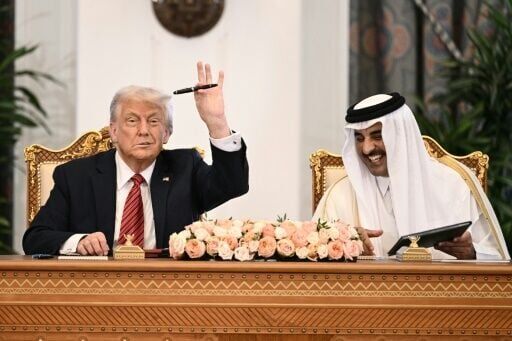
By K Raveendran Donald Trump’s Gulf tour has marked a defining chapter in his post-presidential brand of deal diplomacy, delivering a staggering $2 trillion in agreements that stretch across Saudi Arabia, the United Arab Emirates, and Qatar. This campaign stands in sharp contrast to the flagging results of his so-called trade mark tariff war, which—despite […]

Donald Trump concluded his Gulf tour with the White House touting more than $2 trillion in economic agreements, a figure that has drawn significant scepticism from financial analysts and diplomatic observers. The administration presented the headline number as a demonstration of strengthened U.S.-Gulf relations and expanded economic ties. However, a detailed examination of the announced agreements reveals a far lower total when measured against firm commitments. Official […]

By Dr. Nilanjan Banik Renowned Nobel laureate economist Robert Solow was once asked if having a trade deficit is bad for any economy. He answered by saying he would always have a trade deficit with his barber and would always run a trade surplus with his students. Such is the nature of the game in […]

Marine fuel sales at the Port of Fujairah climbed to their highest level in over a year in April, marking a second consecutive month of growth and reinforcing the port’s status as a key global bunkering hub. Excluding lubricants, total sales reached 669,378 cubic metres, equivalent to approximately 663,000 metric tons, according to data from the Fujairah Oil Industry Zone released by S&P Global Commodity Insights.

This performance represents a 4.6% increase over March’s 639,811 cubic metres and a 20.8% rise from February’s record low of 554,117 cubic metres. The rebound aligns with a broader recovery in global shipping activity and increased demand for marine fuels, particularly high-sulphur fuel oil , amid fluctuating oil prices and evolving environmental regulations.

HSFO sales at Fujairah experienced a significant uptick, rising 17.9% month-on-month to 168,140 cubic metres in March, and continued to show strength into April. This growth is largely attributed to the increased use of exhaust gas cleaning systems, or scrubbers, by shipowners seeking cost-effective compliance with the International Maritime Organization’s 0.5% sulphur cap. The price differential between HSFO and low-sulphur alternatives has made scrubber-fitted vessels more economically viable, driving demand for HSFO.

Despite the gains in HSFO, low-sulphur fuel oil remains the dominant marine fuel at Fujairah, accounting for approximately 67.3% of total sales in March. However, LSFO volumes have faced downward pressure due to increased competition from neighboring ports and fluctuating global supply chains. In April, LSFO sales totaled 442,392 cubic metres, down 13.9% year-on-year and 2.1% lower than in March.

The port’s strategic initiatives to diversify fuel offerings and invest in alternative energy sources are also influencing sales dynamics. In July 2024, FOIZ allocated 54,000 square metres of land for the construction of a biofuel processing plant, signaling a commitment to sustainable fuel solutions. The facility, developed in partnership with Bahrain-based Mercantile and Maritime Group, aims to produce B24 biofuel blends, which combine 24% fatty acid methyl ester with 0.5% sulphur marine fuel. These blends can reduce carbon dioxide emissions by 15–20%, aligning with the IMO’s decarbonization targets.

Fujairah’s position as the world’s third-largest bunkering hub remains solid, with 2024 sales totaling 7.6 million cubic metres, up 1.9% from the previous year. This growth outpaced China’s Zhoushan port, which reported 7.26 million tons in the same period. The increase in sales is attributed to higher refueling demand in the first half of 2024 and larger delivery volumes, as shipping disruptions elsewhere prompted more liftings at key bunker ports globally.

However, the port faces challenges, including competition from neighboring ports like Khor Fakkan and Jebel Ali, which have attracted some demand due to competitive pricing. Additionally, geopolitical tensions and global shipping uncertainties continue to impact fuel demand patterns. Despite these hurdles, Fujairah’s strategic location and ongoing investments in infrastructure and alternative fuels position it to adapt to the evolving maritime fuel landscape.

The port’s commitment to transparency and data sharing through partnerships with organizations like S&P Global Commodity Insights enhances its appeal to global traders and investors. By providing detailed inventory levels and sales data, Fujairah enables market participants to make informed decisions, fostering a more efficient and responsive bunkering market.

Advertisements

Regional links enhanced and 24 bilateral accords reached HONG KONG SAR – Media OutReach Newswire – 15 May 2025 – A delegation of more than 50 business leaders from Hong Kong and Mainland China, led by Chief Executive of the Hong Kong Special Administrative Region (HKSAR) John Lee, concluded a fruitful visit to Kuwait yesterday (May 14), reaching a raft of bilateral accords and paving the way […]

By P Sudhir People on both sides of the border were relieved. The four-day-long military engagement between India and Pakistan came to a close on the late afternoon of May 10. Despite this, gunshots were heard late in the night. But later, the DGMOs of both countries confirmed that the ceasefire has held and war […]

The Philippine peso has continued its downward trajectory against the US dollar, closing at 58.655 per dollar last week. This marks its lowest level in over a year, providing a financial boon to overseas Filipino workers who remit earnings back home. The depreciation enhances the value of remittances when converted to pesos, offering increased purchasing power for recipients.

Analysts attribute the peso’s decline to a combination of domestic and international factors. Domestically, the Bangko Sentral ng Pilipinas implemented a series of interest rate cuts in 2024, totaling 75 basis points, bringing the policy rate to 5.75%. These cuts aimed to stimulate economic growth but also widened the interest rate differential with the US, exerting downward pressure on the peso. BSP Governor Eli Remolona Jr. indicated that the central bank has been more active in the foreign exchange market, intervening modestly to manage volatility.

Internationally, the US dollar has exhibited strength due to cautious monetary policy by the Federal Reserve. While the Fed is expected to commence rate cuts by mid-2025, the timing and magnitude remain uncertain. This uncertainty contributes to the peso’s volatility. Jonathan Ravelas, a senior adviser at Reyes Tacandong & Co., noted that the peso’s weakness could persist amid global economic uncertainties and domestic policy challenges.

The Philippine government’s economic outlook reflects these challenges. The growth target for 2024 has been adjusted to a range of 6.0% to 6.5%, down from a previous upper limit of 7%. For 2025-2028, the growth target has been revised to 6.0% to 8.0%. The peso is expected to average between 57 to 57.50 per dollar in 2024, with projections of 56 to 58 per dollar for 2025. Inflation assumptions have also been adjusted, with a range of 3.1% to 3.3% for 2024 and 2.0% to 4.0% for … -202 … .

Despite the peso’s depreciation, investor sentiment towards the currency has shown signs of improvement. A Reuters poll indicates that long positions on the Philippine peso have reached their highest levels since mid-September. Analysts suggest that the peso is relatively insulated from global tariff threats compared to other Southeast Asian currencies. However, the currency’s performance remains sensitive to global risk sentiment and trade policy developments.

For OFWs, the weaker peso translates to increased value for remittances. This development is particularly beneficial for families in the Philippines who rely on these funds for daily expenses, education, and healthcare. The enhanced purchasing power can alleviate financial pressures amid rising costs of living.

Matein Khalid I was neurologically programmed to disbelieve every communique issued by the Indian or Pakistani military in the wartime and thus missed the spectacular 50% rise in the shares of A​VIC Chengdu Aircraft, a Shenzhen listed vendor of the $39 million J-10 fighter jet that downed three Indian ​$250 million Rafales, a MiG-29 and Sukhoi-30 while Frenc​h, British and US intelligence told sources in Reuters, Bloomberg, […]

U.S. President Donald Trump has announced plans to lift longstanding U.S. sanctions on Syria, in place since 1979 and intensified during the Syrian Civil War. During his Middle East tour, Trump revealed the decision at the U.S.-Saudi Investment Forum, describing the sanctions as historically significant yet now detrimental. The sanctions had frozen Syrian assets, banned petroleum imports, and isolated the country from the global economy. Critics highlight […]

Thailand’s Ministry of Finance has announced plans to issue 5 billion baht in digital investment tokens, dubbed “G-Tokens,” aiming to broaden public participation in government bond investments. This initiative marks a significant step in integrating digital assets into the country’s financial strategy.

Finance Minister Pichai Chunhavajira stated that the G-Tokens will be available for purchase within the next two months, following cabinet approval. The tokens are designed to offer higher returns than traditional bank deposits, making them an attractive option for retail investors. “Investors can invest with a small amount of cash for the new tokens,” Chunhavajira noted, highlighting the accessibility of the investment.

The G-Tokens will be issued under the existing Public Debt Management Act of 2005 and regulated by the Digital Asset Business Decree of 2018. The tokens are not classified as traditional debt instruments but are part of the government’s budget borrowing plan. Patchara Anuntasilpa, director-general of the Public Debt Management Office, emphasized that the tokens are an innovation in the country’s financial landscape, allowing more retail investors to become part of the digital economy.

Investors can purchase G-Tokens through licensed digital asset exchanges, brokers, and other authorized entities. The minimum investment is set at 100 baht , significantly lowering the threshold for participation in government bond investments. This move is expected to attract a broader base of investors, including those who have traditionally been excluded from such opportunities.

The digital nature of G-Tokens offers several advantages over conventional government bonds. They can be traded on specialized digital platforms, providing greater flexibility and accessibility for investors. Ownership is verified using digital systems, and the tokens can be transferred through designated digital asset platforms. Interest payments and principal redemption will be made electronically to holders via their registered accounts, following the schedule outlined in the prospectus.

The initiative aligns with Thailand’s broader efforts to modernize its financial infrastructure and promote financial inclusion. By leveraging blockchain technology, the government aims to streamline the bond issuance process, reduce costs, and enhance transparency. The G-Token issuance also serves as a pilot to test the market’s response to digital financial instruments, with the potential for future expansions based on demand.

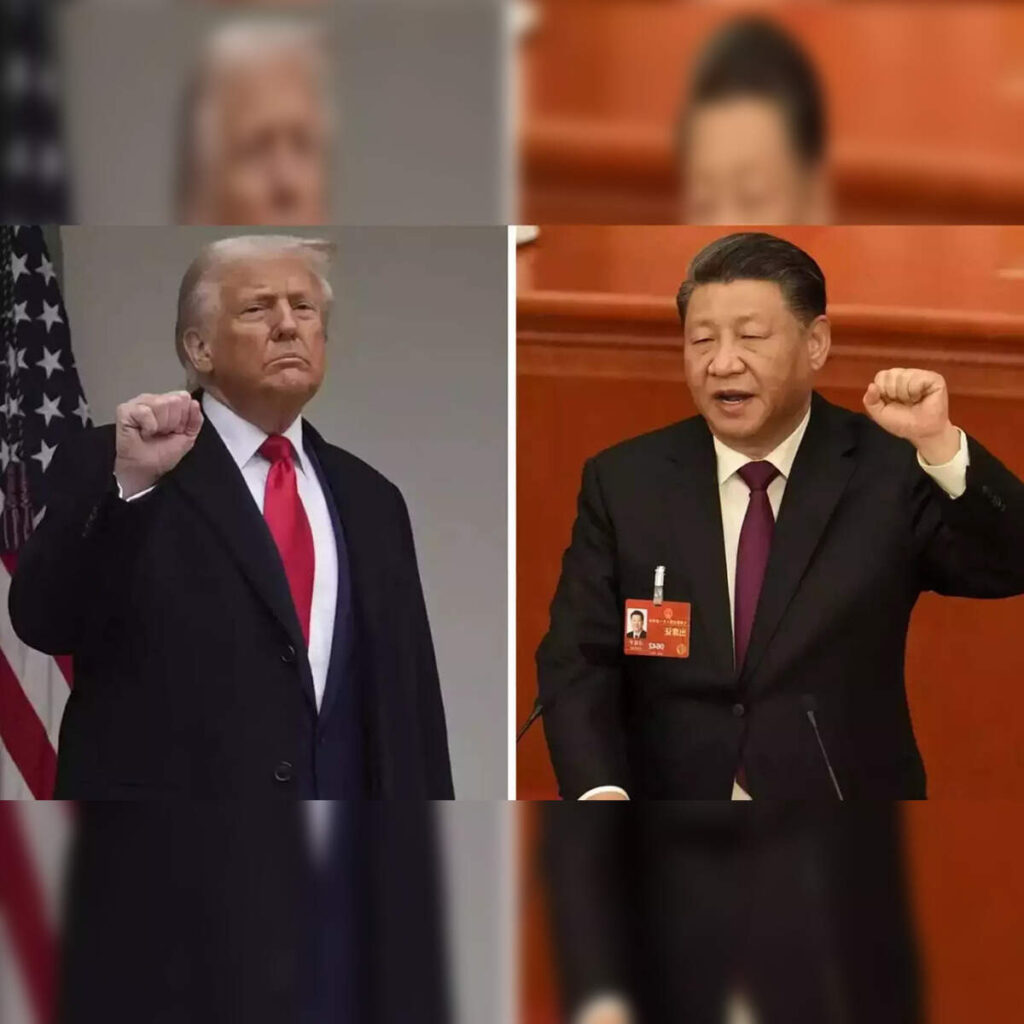
By Nitya Chakraborty Soon after organizing a 90 day truce last week end at Geneva through three day intensive talks between top officials of the United States and China, President Donald Trump is on a three nation tour covering Saudi Arabia, Qatar and UAE to pursue his deal making focusing on both trade and security. […]

Libya has formally integrated into the Medusa subsea cable system, marking a pivotal advancement in its telecommunications infrastructure. This 8,700-kilometre fibre-optic network, encompassing 24 fibre pairs and a capacity of 20 terabits per second per pair, is set to connect 11 countries across the Mediterranean, including Libya, by the end of 2025. The Medusa project, spearheaded by AFR-IX Telecom and supported by the European Union and Orange, […]

BYDFi has launched MoonX, an on-chain trading engine designed to bridge the gap between centralised and decentralised exchanges. The platform aims to provide a secure and efficient trading environment, particularly for the volatile Meme Coin market.

MoonX integrates Safeheron’s security technologies, including Multi-Party Computation and Trusted Execution Environment , to enhance asset protection and transaction integrity. These measures address the vulnerabilities highlighted by the $20 million hack of the DEXX exchange in November 2024, which exposed weaknesses in private key security.

The platform supports over 500,000 token pairs across blockchains such as Solana, Ethereum, Base, and BNB Chain. Features like take-profit and stop-loss orders, smart money tracking, and one-click trading are tailored to the needs of high-risk traders seeking rapid market movements.

Ticketmaster, the dominant force in global ticketing, has begun displaying the full cost of tickets upfront, including service and facility fees, in compliance with a new Federal Trade Commission rule banning hidden “junk fees.” This regulatory change, effective from 12 May 2025, mandates that companies across sectors such as live events, hospitality, and vacation rentals disclose all mandatory fees at the outset of the purchasing process. The […]

Tim Draper, a billionaire venture capitalist and early supporter of Bitcoin, has made a bold prediction that the world’s leading cryptocurrency will eclipse the US dollar within the next decade. Draper, renowned for his investments in companies like Skype and Tesla, has long been a vocal proponent of Bitcoin and blockchain technology. His latest remarks, shared in an interview with CoinDesk, suggest a dramatic shift in the global financial landscape, one that could fundamentally change the way economies operate.

Draper’s prediction stems from his belief in Bitcoin’s ability to outpace traditional fiat currencies, including the US dollar. He envisions a future where Bitcoin not only becomes the dominant currency but also where the US dollar, as it exists today, is no longer in circulation. According to Draper, Bitcoin will continue to climb “to infinity” against the dollar, reflecting his confidence in the cryptocurrency’s long-term potential.

The venture capitalist’s faith in Bitcoin is rooted in the unique advantages he believes it holds over traditional money. Draper argues that Bitcoin, unlike the dollar, is not subject to inflationary pressures or government intervention. With a fixed supply of 21 million coins, Bitcoin is designed to be deflationary, which he sees as an essential feature for ensuring the stability of its value over time. This attribute, Draper suggests, makes Bitcoin a far more secure store of value than the dollar, which is increasingly vulnerable to the impacts of monetary policy and national debt.

Bitcoin’s volatility has been one of the major concerns for those sceptical about its potential to replace traditional currencies. However, Draper remains undeterred by such criticisms. He notes that while Bitcoin has experienced significant fluctuations in price since its inception, these swings are a natural part of its maturation process. As more institutional investors and retail traders adopt Bitcoin, Draper expects its volatility to decrease, paving the way for it to become a mainstream currency.

Draper’s confidence in Bitcoin’s future is not just about its potential as a store of value but also about its capacity to facilitate global transactions. With growing concerns over the cost and inefficiency of traditional banking systems, Bitcoin offers a fast, low-cost alternative for transferring money across borders. The cryptocurrency operates on a decentralised network, allowing individuals to bypass centralised banks and governments. Draper believes that as the world becomes more interconnected, Bitcoin’s advantages will become increasingly apparent, particularly in regions where access to traditional banking services is limited.

In his conversation with CoinDesk, Draper also touched upon other technological developments that he believes will shape the future of human communication. Among these, he highlighted advancements in artificial intelligence and genetics, which he predicts will revolutionise the way humans interact with animals. Draper imagines a world where AI enables people to communicate with animals in a way that was once thought impossible. Such advancements, while still in the realm of science fiction for now, reflect Draper’s broader vision of a future where technology breaks down barriers between humans, animals, and even machines.

While Draper’s vision of a Bitcoin-dominated financial system may seem far-fetched to some, it aligns with a growing trend in the cryptocurrency world. The increasing institutional interest in Bitcoin, with large corporations and financial firms adding the cryptocurrency to their portfolios, is seen as a key indicator of its growing legitimacy. Additionally, the global shift towards digital currencies, spurred by the rise of central bank digital currencies , suggests that traditional financial systems may be on the brink of significant transformation.

Countries like El Salvador have already made Bitcoin a legal tender, and other nations are considering similar moves. Meanwhile, in the US, there is ongoing debate over the regulation of cryptocurrencies, with lawmakers grappling with how to create a legal framework that supports innovation while protecting investors. Draper’s prediction, however, suggests that Bitcoin will eventually render such debates moot, as it becomes the global standard for digital transactions.

Despite the optimism surrounding Bitcoin’s potential, there are still significant hurdles that must be overcome before Draper’s vision can be realised. Regulatory uncertainty remains a major obstacle, with governments around the world seeking to impose stricter controls on cryptocurrencies to combat illegal activities like money laundering and tax evasion. Furthermore, the environmental impact of Bitcoin mining has raised concerns among environmentalists, who argue that the energy consumption of Bitcoin’s proof-of-work consensus mechanism is unsustainable.


U.S. consumer prices climbed 2.3% year-on-year in April, marking the lowest inflation rate since February 2021 and falling short of the 2.4% forecast. On a monthly basis, the Consumer Price Index rose 0.2%, also below the anticipated 0.3%. This deceleration occurred despite the introduction of sweeping tariffs by the Trump administration earlier in the month. The inflation data, released by the Labor Department, suggests that the immediate […]

Visa-free travel arrangement and 35 bilateral accords signed HONG KONG SAR – Media OutReach Newswire – 13 May 2025 – Hong Kong Special Administrative Region (HKSAR)’s Chief Executive John Lee is leading a delegation of over 50 business leaders from Hong Kong and Mainland China to Qatar and Kuwait to forge closer connections and promote the city’s advantages to the Middle East. This historic visit marks the […]

The US Federal Reserve has stopped sugar-coating it: stagflation is no longer a fringe fear. It’s a looming threat. Last week’s sharp warning from Chair Jerome Powell confirmed what many of us in the global financial community have anticipated for months. Slower growth, persistent inflation, and rising unemployment are converging in a way that should set off alarm bells for investors worldwide. Make no mistake—this isn’t an […]

By Sushil Kutty The western Press is egging United States President Donald Trump to press India for third-party mediation in the Kashmir imbroglio roiling India-Pakistan relations, while at the same time asserting that Trump has put India, led by Prime Minister Narendra Modi, in a “tight spot”. Prime Minister Modi wasn’t asked for his opinion […]

Oil prices surged over $2 per barrel in Asian trading on Monday, buoyed by a significant easing of trade tensions between the United States and China. Brent crude futures climbed $2.11, or 3.3%, to $64.14 a barrel, while US West Texas Intermediate crude futures rose $2.12, or 3.47%, to $63.14. The rally followed a joint announcement from Washington and Beijing declaring a 90-day suspension of additional tariffs, […]

Arabian Post Staff -Dubai President Donald Trump’s ambitious pursuit of $1 trillion in investment pledges from Saudi Arabia is encountering a formidable challenge: the kingdom’s own sweeping economic transformation plans, which are projected to cost nearly twice that amount. As Trump embarks on his first Middle East tour of his second term, his administration is focusing on securing substantial trade and investment agreements with Gulf allies, including […]

VISHNU RAJA
RYO YAMADA
HITORI GOTOH
IKUYO KITA