News related to
world’s

MACAU SAR – Media OutReach Newswire – 9 October 2025 – Galaxy Macau™ Integrated Resort is delighted to present an evening of operatic splendour with “Galaxy Macau™ Presents – Galaxy Music Gala: Sumi Jo – Mad for Love” as internationally acclaimed South Korean soprano Sumi Jo makes her long-awaited Macau debut at 17:00 on December 28 at Auditorium of the Galaxy International Convention Center (GICC). Tickets will […]

Branded residential developments in the Middle East and North Africa are now capturing a larger share of global signings, with standalone projects set to make up 45 per cent of the regional portfolio—well above the global average of 36 per cent.

Data from Global Branded Residences shows that the MENA region now accounts for 36 per cent of new global branded residence signings, outstripping traditional hubs such as North America, Europe and Asia. The region currently has 99 completed branded residences and 241 under development, representing 13 per cent of existing global supply and 25 per cent of the pipeline. The UAE leads with 201 projects, followed by Saudi Arabia and Egypt.

Dubai remains the most active city globally, with nearly 160 branded developments either completed or in the pipeline—surpassing markets like Miami, London, and New York. The breakdown in MENA shows that 31 per cent of completed branded residences are standalone, while 51 per cent of the pipeline comprises standalone projects. This shift indicates broader confidence among developers in models unlinked to hotel operations.

Fashion and lifestyle brands are playing an increasingly prominent role in driving the shift away from purely hospitality-anchored residences. In MENA, fashion labels account for 51 per cent of non-hotel branded projects—nearly double the global average of 26 per cent. Non-hotel brands now represent 30 per cent of the regional pipeline, up from 24 per cent among completed schemes. In effect, branded residences in the region are diversifying beyond hotels into lifestyle, design and luxury branding.

Fairmont is poised to be the largest operator in the region, with 19 schemes across completed and pipeline stages. New entrants include jewellery brand De Grisogono and hospitality/lifestyle brand Nobu.

Globally, the branded residences sector has expanded rapidly over the past decade. The total number of schemes globally stands at 1,746—779 completed and 967 under development. Across this global portfolio, hotel brands still dominate, accounting for 79 per cent of projects. However, standalone branded residences—those without hotel attachments—are projected to rise from about 8 per cent of the world’s projects to 12 per cent over time.

Broadly, the market is seeing several converging trends. Buyers are increasingly willing to pay a premium—often 20 to 35 per cent or more—for branded units over comparable non-branded luxury real estate, citing consistency of design, service, and long-term resale value. Developers, in turn, see branding as a differentiator that supports stronger pricing, absorption rates and margins. In fast-growing wealth markets, branding provides credibility and global marketing reach.

Asia Pacific has also moved into the spotlight. GBR has formally launched operations in APAC, targeting markets such as Thailand, Vietnam, India, Malaysia and emerging resort destinations. The firm forecasts that branded development projects in APAC may more than double, with the region evolving into one of luxury real estate’s fastest growing markets.

Nevertheless, challenges remain. Aligning brand partnerships with regional regulatory, legal and operational frameworks is complex. Delivering consistent service quality over time, especially in newer locations with less mature hospitality infrastructure, is no small task. In denser branded markets, developers must differentiate amenities, design and buyer experience to avoid commoditisation.

Nasdaq Dubai has officially welcomed the listing of USD 500 million Sustainability-Linked Financing Sukuk issued by Emirates Islamic, heralding what the bank describes as the world’s first issuance of its kind. The structure is designed to tie financial terms to environmental and sustainability metrics, reflecting escalating demand in both Islamic finance and ESG markets. The Sukuk is issued under Emirates Islamic’s USD 4 billion Sukuk Programme and […]

Dubai Airports has announced an extended 10-year strategy aimed at transforming Dubai International and Dubai World Central – Al Maktoum into the world’s most accessible and inclusive airports by 2035. The plan underscores a shift from enhancing infrastructure alone to driving cultural change, embedding empathy and user-centred design in every element of the passenger journey.

The strategy rests on three pillars: reinforcing existing accessibility frameworks, improving guest experience across every touchpoint, and elevating the airports’ status as global benchmarks in inclusive aviation. The commitment aligns with the UAE’s broader obligations to support the rights of People of Determination and Dubai’s ambition to become a disability-friendly city.

Majed Al Joker, Chief Operating Officer of Dubai Airports, emphasised that accessibility is a “core pillar” rather than a peripheral initiative. He noted that, for the first time, the airport authority is co-creating programmes with the PoD community to redesign the passenger journey from their lived perspective. The launch coincides with the debut of a public awareness campaign called “DXB for All”, which presents six narratives of travellers with sensory sensitivities, mobility challenges, hearing or visual impairments, and highlights their airport experiences.

This new phase builds on the 2022 “We All Meet the World Differently” campaign. While that initiative focused primarily on raising awareness, the current strategy delves deeper by integrating accessibility into operations, staff training, and passenger interactions. Airport operators intend to cultivate empathy across staff, travellers, and the public, encouraging all stakeholders to reframe how they engage with PoD.

To facilitate inclusive travel, Dubai Airports already provides a suite of services: a Travel Planner visual guide, the Sunflower Lanyard to signal discreet assistance, free two-hour parking, dedicated taxis, wheelchair support from curb to gate, over 520 hearing loops across terminals, and a sensory-friendly Assisted Travel Lounge in Terminal 2. These measures will be expanded and refined under the new strategy.

The initiative is being deployed through the “oneDXB” partnership network, which includes Emirates, flydubai, Dubai Police, GDIFA, Dubai Customs, dnata, Dubai Health, Dubai Duty Free, Serco, and other stakeholders. The collaborative structure ensures that airport services, security, passenger handling, health and taxi operations all align with inclusivity goals.

Challenges are considerable. DXB is already operating near capacity: in 2024 it handled 92.3 million passengers, its highest ever annual volume. That puts pressure on space, queueing, and infrastructure to adapt without undermining operational efficiency. Meanwhile, DWC is undergoing significant expansion—with a projected $35 billion investment to scale it toward handling up to 260 million passengers annually. Dubai Airports plans to shift major operations to DWC by 2032, adding urgency to ensuring that new terminals and systems are fully accessible from the start.

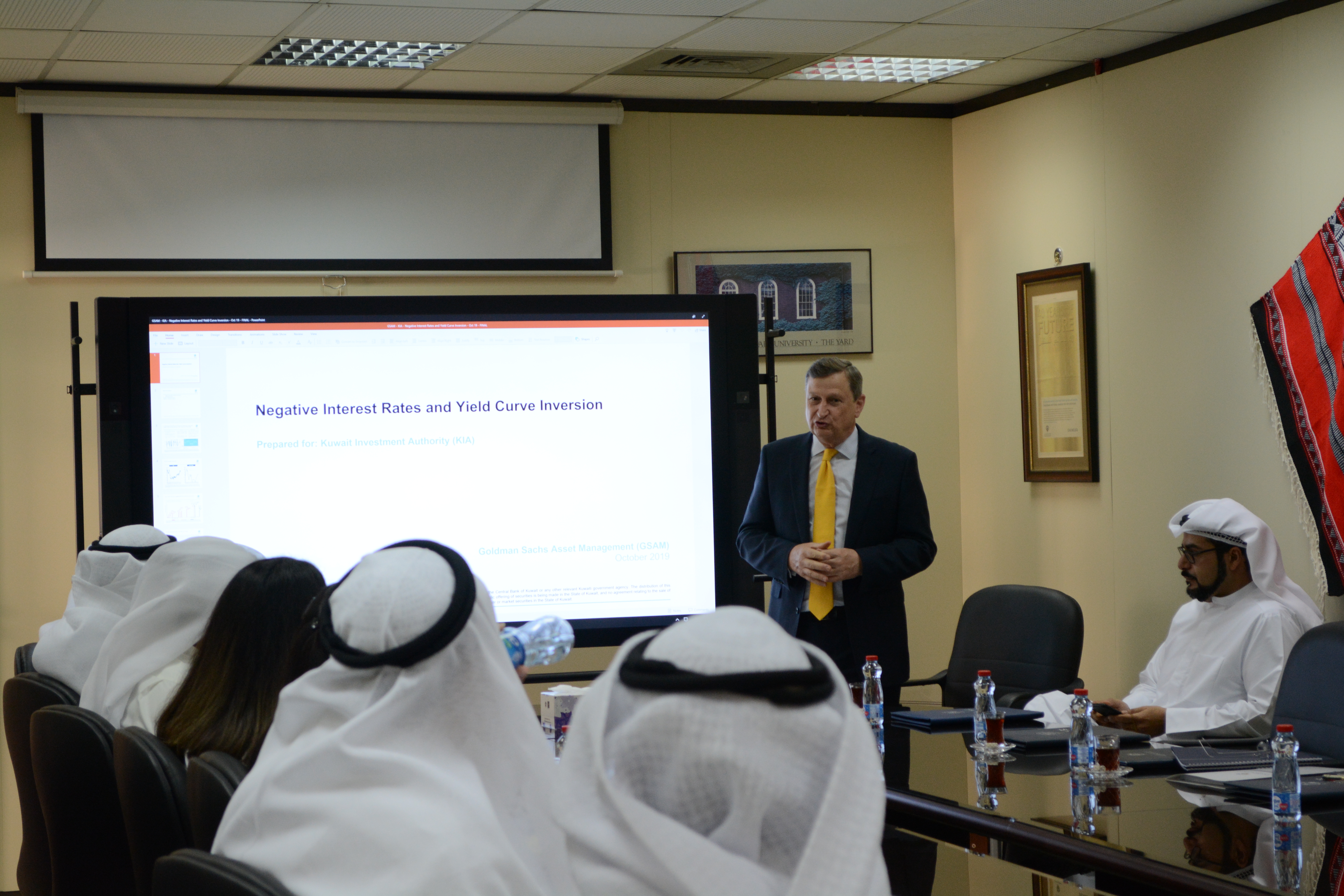
Goldman Sachs has launched a new office in Kuwait, asserting a significant push to enhance its reach across the Middle East and deepen its ties with Gulf-region clients under fresh leadership.

The New York-based investment bank said its role over five decades in Kuwait spans investment banking, capital markets and asset management. As part of its latest expansion, Goldman has tapped Mohammad Almatrouk as managing director of the Kuwait office, pending regulatory green light, while Fahad Alebrahim has been appointed managing director of the firm’s private wealth business in Kuwait.

David Solomon, Goldman Sachs’s Chairman and Chief Executive, framed the move as a commitment to “grow our capabilities across the Middle East and better serve our clients,” emphasising Kuwait’s economic vision as a catalyst for the firm’s expansion.

Goldman Sachs points to a long-standing capacity-building partnership in Kuwait that includes a professional training scheme designed to nurture talent at institutions such as the Kuwait Investment Authority, the Public Institution for Social Security and the Kuwait Fund. That programme, the bank says, will continue to play a central role in integrating local human capital into its global operations.

The choice of Kuwait underscores a growing focus on the Gulf’s institutional capital. Kuwait, host to one of the world’s largest sovereign wealth funds, has attracted global financial firms looking to align with its diversification and investment ambitions. Goldman Sachs’s decision follows earlier regional expansions, such as establishing a presence in Abu Dhabi and securing a banking licence in Saudi Arabia.

Kuwait’s Director General of the Direct Investment Promotion Authority, Sheikh Dr. Meshaal Jaber Al-Ahmad Al-Sabah, praised the move as aligned with Kuwait’s economic diversification and global integration goals. He stressed that opening the office supports national priorities including talent development and sustainable growth.

Regional analysts view Goldman’s Kuwait office as part of a broader recalibration by global banks to embed themselves closer to Gulf capital sources. Over the past two years, deal activity in sovereign and quasi-sovereign asset structures has exploded, prompting major firms including Lazard, JPMorgan and Deutsche Bank to expand in the Gulf with new leadership hires.

Inside Goldman Sachs, the timeline coincides with a leadership transition: the firm’s co-head for the Middle East and North Africa, Fadi Abuali, is slated to retire after nearly 28 years of service. His departure is expected to reshape the firm’s regional hierarchy just as Kuwait becomes a new hub.

Some observers caution the move carries execution challenges. Regulatory approvals in Kuwait must be secured, and Goldman must integrate the new office into its broader Gulf operations without duplicating functions. Success will depend on maintaining local relationships while delivering global platform advantages.

Teams at GITEX Global 2025 in Dubai will put liquid-cooled AI laptops under extreme thermal stress, testing whether advanced cooling systems can uphold sustained performance in one of the world’s harshest climates. Omnix International’s HOT Systems division, in partnership with PNY, will unveil a lineup of AI workstations, liquid-cooled laptops and the new HOT Guard monitoring suite, aiming to prove that these machines can maintain stability in high ambient temperatures.

At the heart of the exhibit is the challenge posed by regional heat: daytime temperatures in Dubai frequently exceed 40 °C, while indoor exhibition halls still pose cooling constraints. For high-performance AI workloads—particularly those involving CAD, BIM and machine learning—thermal throttling can cripple throughput. HOT Systems claims its integrated cooling and hardware optimisation can circumvent that performance drop. The accompanying HOT Guard software will monitor temperatures, fan and pump behaviour and security in real time on site.

Liquid cooling is no novelty in high-density server enclosures, but applying it in portable form factors presents a tougher engineering problem. In data centres, the shift from air to liquid systems has accelerated because conventional cooling struggles to keep up with power densities above 10–15 kW per rack. Liquid systems offer reduced power use, higher thermal headroom and often reclaimed waste heat reuse. But translating that to mobile form demands compact and robust fluid paths, efficient pumps, and risk control against leakage.

Advances in chip cooling are reinforcing that liquid systems represent more than a marginal improvement. Microsoft engineers have developed a microfluidics cooling technique that embeds coolant channels within the silicon substrate itself, enhancing heat removal efficiency at the chip level. That suggests future AI hardware may increasingly rely on liquid solutions at a micro scale.

Regional data centre operators are already embracing the shift: Khazna Data Centres, active across the UAE, has rolled out the country’s first liquid-cooled AI data centre and is developing more AI-optimised campuses. The move reflects recognition that standard cooling infrastructure cannot scale profitably with AI workloads.

Technical design choices behind liquid cooling include direct-to-chip systems, which place cold plates atop CPUs or GPUs, and immersion cooling, where liquid envelops hardware. The former is more suited for modular, retrofit deployments; the latter can offer full heat removal but introduces maintenance and material challenges, especially for localised devices. A recent review in AI systems architecture emphasises single-phase direct cooling as a flexible compromise for power levels below extreme thresholds, though it demands high reliability in fluid delivery and sealing.

Within the exhibition context, the HOT Systems demo will likely emphasise sustained throughput rather than peak benchmarks. The company plans real-world workflows—such as rendering, simulation and AI model inference—to demonstrate how the cooling system maintains clock speeds under load. PNY’s involvement underlines the reliance on qualified memory, GPUs and driver support, ensuring that thermal gains translate into usable computing stability.

End-users in architecture, media, engineering and AI fields are closely watching such developments. If heat throttling can be mitigated in this climate, portable AI rigs could expand in markets previously constrained to air-conditioned labs. But adoption depends on how well the solutions resist failure under harsh dust, vibration and heat cycles inherent to Gulf environments.

DP World has signed a memorandum of understanding with PayPal to roll out a digital payments solution meant to accelerate cross-border trade, bringing settlement times down from days to minutes. The agreement is part of DP World’s broader Digital Payments programme, targeting merchants, shippers, exporters, importers and marketplaces with a more transparent, lower-cost infrastructure. Under the deal, DP World will not itself act as a regulated payments […]

Advertisements

Arabian Post Staff -Dubai Chinese automakers have revived a barter-style trade with Iran, sending semi-assembled vehicles in exchange for containers of copper and zinc that feed China’s non-ferrous metals sector. This swap, involving no traditional cash payments, emerges as a creative workaround amid the constraints of sanctions and currency pathways. Every few months, a facility on the Yangtze churns out engines and chassis, which are sent to […]

 by Mahboob Subuhani, Regional Director, IT Solutions – MEA & APAC at Sigma Software Group Dubai stands as a global benchmark for government digitalisation. In 2025, 99.5% of its services are digitised (120+ gov apps), with over 173 million digital transactions processed across 1400+ services, serving 57 million beneficiaries.    Today, Dubai ranks 4th globally in the IMD Smart City Index 2025, and 1st in the GCC, […]

Botswana has become the target for a bold new data infrastructure initiative after U. S. operator ChillMine and Netherlands-based AAAS Energy inked a memorandum of understanding to develop a solar-plus-storage data centre campus near Palapye. The proposed facility, intended to support AI workloads, hyperscale operations and energy-intensive computing, will be integrated into the Leupane Energy Hub and Industrial Park. The energy backbone of the hub is planned […]

Aluminium Products Company of Saudi Arabia and Hong Kong–based Asia Aluminum Group have inked a master framework agreement to build the largest integrated downstream aluminium industrial complex in the Kingdom, with planned investment reaching up to USD 500 million. The initiative centres on three joint ventures covering aluminium extrusion, modular housing, and solar panel frame manufacturing. The agreement was signed in Hong Kong by ALUPCO Chief Executive […]

Valetax, a leading global provider of trading services, is proud to announce its participation as an Elite Sponsor at Forex Expo Dubai 2025, one of the world’s most prestigious financial events. The expo will take place on 6–7 October 2025 at the Dubai World Trade Centre, drawing traders, partners, and industry experts from across the globe. As an Elite Sponsor, Valetax is set to make a remarkable […]

Matein Khalid Will we still be dancing when the music stops as Citigroup and UBS were in the autumn of 2007. Even my friends dissed me when I predicted a global financial crash as early as January 2007, but I track credit cycles like a bloodhound and it flashed the mother of all distressed SOS’s as it does now. In 2007, the trillion dollar daisy chain of […]

The spectacular showcase reaffirms Bangkok’s rising status as a premier global destination for luxury watches. BANGKOK, THAILAND – Media OutReach Newswire – 2 October 2025 – Siam Paragon, a legendary landmark in the heart of Bangkok, Thailand, and a must-visit destination for local and international visitors, has solidified its reputation as the premier luxury watch destination with the success of “Siam Paragon Bangkok Watch Week 2025.” Recognized […]

By K Raveendran Bill Gates’ recent revelation about how a critical recruitment drive of fifteen Indian engineers had once saved Microsoft from slipping into irrelevance comes at a time when the United States under Donald Trump is imposing restrictive visa measures that are designed to block the very talent pool that had proven indispensable for […]

The article Trump’s Visa Tariff May Be Blessing In Disguise For India’s Talent Reservoir appeared first on Latest India news, analysis and reports on Newspack by India Press Agency).

DELRAY BEACH, FL, Sept 2025 – Global Call Forwarding, a leading global provider of enterprise-grade virtual phone numbers and cloud communication solutions, will return to GITEX Global 2025 to exhibit its latest innovations in voice technology, CRM & helpdesk integrations, BYOC solutions, and AI-powered Call Insights. The company will be showcasing solutions designed to help modern tech and software companies streamline communications across international markets. Following successful […]

The city-state’s employers have set a striking pace as they head into the final quarter of 2025: a Net Employment Outlook of 45 per cent signals that nearly three in five organisations expect to expand their workforces. That optimism comes amid shifting global headwinds, structural reforms, and a rising demand for specialised talent.

The ManpowerGroup Employment Outlook Survey canvassed 525 UAE employers across sectors to assess hiring intentions. A positive balance of 45 per cent means that those anticipating workforce increases outnumber those expecting reductions by nearly half. This figure places the UAE among the world’s more aggressive labour markets, especially given challenges such as global trade uncertainty, rising automation, and fluctuating commodity prices.

This projected hiring boom is not evenly distributed. The strongest demand lies in transport, logistics and automotive, energy and utilities, and consumer goods and services. These sectors appear ready to leverage infrastructure projects, green energy transitions, and regional consumption growth. Meanwhile, the information technology sector is showing solid demand at +48 per cent, reflecting sustained digital transformation pushes.

Driving much of this confidence is corporate expansion: 40 per cent of participating firms cited scaling operations as their primary reason for hiring. Another 28 per cent pointed to pivoting business models and growth into new areas. In addition, nearly 30 per cent of respondents acknowledged that talent shortages—and competition for specialised skills—are influencing recruitment strategies.

Yet the buoyant sentiment is tempered by caution. Roughly 10 per cent of employers still expect to trim staff, particularly in roles vulnerable to automation or in sectors facing structural disruption. Around 15 per cent responded that they will hold staffing constant, prioritising internal upskilling over external recruitment. In interviews, some HR executives noted that while they want to hire aggressively, wage inflation, geopolitical uncertainty, and regulatory shifts may prompt them to phase recruitment over several quarters.

Regional and global context strengthens the UAE’s position. In the third quarter of 2025, the UAE recorded a world-leading NEO of +48 per cent. That marked a standout alignment with its long-term growth strategy, and the Q4 figure of +45 per cent suggests sustained momentum rather than a cyclical spike. Elsewhere, the global average NEO stood at +24 per cent during Q3 — placing the UAE’s outlook nearly double the global benchmark.

Analysts view this hiring optimism as part of a broader strategy to reposition the UAE as a knowledge-economy hub. Recent government initiatives have focused on advanced manufacturing, artificial intelligence, sustainability, and logistics corridors. These programs have triggered demand not only for engineers and technicians but also for data scientists, sustainability consultants, and cross-disciplinary professionals. In one corporates sector round-table, a senior UAE CEO observed that “the competition for deep tech talent is global, and we must offer not just pay but opportunity, stability and a pathway for growth.”

Labour authorities are also aligning policies with employer needs. New visa frameworks, targeted Emiratisation programmes, and regulatory incentives for R&D investment are being synchronized with workforce forecasts. At the same time, the UAE’s PMI for non-oil activity has held above the expansion threshold, underlining demand growth across private sectors and supporting hiring intent.

However, potential headwinds remain significant. Global supply chain disruptions, slowing demand in key export markets, and monetary tightening in major economies could dampen growth. Employers may delay or scale back hiring plans if external pressures intensify. Some labour economists warn of mismatches between skills supplied locally and those demanded, especially in emerging fields.


Matein Khalid The old adage that stock markets swing between fear and greed has been borne out by the mixed performance of Saudi Arabia’s Tadawul All Share Index over the first nine months of 2025. A turning point came on Wednesday September 24 when the Tadawul staged its biggest single-day rally since 2020, after a Capital Market Authority board member signalled that the 49 percent foreign ownership cap on Saudi equities […]

Matein Khalid Wall Street’s strong bid is skating on macro thin ice as a government shutdown that reflects the toxic polarization in Congress looms. The latest PCE data shows that Powell’s fear for a tariff related uptick in inflation was well founded and Fed funds futures have narrowed the odds of a December rate cut to only 60%, which is perfectly rational given that the US economy […]

A UAE unveiling today brought BYD’s Megawatt Flash Charging system to public attention in partnership with Al-Futtaim, promising a vehicle charging speed that aims to rival petrol refuelling. The pilot is expected to add up to 400 km of range in five minutes under ideal conditions, with the infrastructure rollout to begin across selected locations in the Emirates. The technology is part of BYD’s Super e-Platform, leveraging […]

Washington’s plan to sharply raise the cost of H-1B visas—the key route for skilled overseas professionals into the United States—has consequences far beyond immigration policy. It signals a potential reallocation of talent, capital and innovation that could redefine where the next wave of technology growth takes place. If the US prices out the world’s top engineers, data scientists and entrepreneurs, those individuals will gravitate toward regions offering […]

OPEC+ is poised to approve another lift in oil output of at least 137,000 barrels per day when its core members convene on 5 October to finalise November quotas, according to three individuals familiar with the discussions. The decision is part of the alliance’s broader push to reclaim lost market share amid surging crude prices. Since April, the group has reversed earlier production cuts, having already raised […]

Sheikh Mohammed bin Zayed Al Nahyan received Sam Altman, chief executive of OpenAI, in Abu Dhabi on Saturday, where they engaged in talks designed to deepen AI collaboration between UAE institutions and OpenAI. The meeting concentrated on intensifying research cooperation, advancing practical AI applications, and aligning strategies to bolster the UAE’s integrated AI ecosystem. The UAE’s state media noted the partnership “aligns with the UAE’s ambition to […]

Dubai has secured a position among the world’s top four FinTech centres, according to the latest Global Financial Centres Index published on 25 September, signalling a pivotal shift in the emirate’s financial technology trajectory.

The GFCI report places Dubai at 11th globally in the overall ranking of financial centres, but underscores its standing as one of the most dynamic hubs for FinTech innovation. The Dubai International Financial Centre has played a central role in driving this transformation.

DIFC now houses over 1,500 companies focused on AI, FinTech, and innovation, making it the region’s largest cluster of its kind. These firms have collectively raised more than US$4.2 billion in funding, strengthening the UAE’s appeal as a destination for growth-stage tech ventures. Sheikh Maktoum bin Mohammed bin Rashid Al Maktoum, First Deputy Ruler of Dubai and Minister of Finance, credited the rise to the strategic goals of the Dubai Economic Agenda D33 and to Dubai’s business-friendly infrastructure and regulatory regime.

Essa Kazim, Governor of the DIFC, stressed that the momentum reflects long-term planning and deep investment. He noted that positioning Dubai among the top global FinTech players has required calibrated incentives, robust legal frameworks, and international partnerships. Arif Amiri, Chief Executive Officer of the DIFC Authority, said the locale’s success stems from synergy among institutional support, talent attraction, and ecosystem-building efforts.

Dubai’s ascent in the FinTech league emerges amid intensifying global competition. Traditional financial centres such as London, Singapore, and Hong Kong continue to maintain strong footholds, leveraging established networks, global institutions, and mature regulatory systems. Yet Dubai’s rapid rise indicates that newer hubs with nimble regulation and aggressive incentives can leapfrog in the tech-driven financial services landscape.

The GFCI 38 ranking shows Dubai overtaking several peers in the Gulf and Asia, with the city gaining one rank to 11th place overall and closing gaps in score metrics used to assess competitiveness, such as human capital, reputation, and business environment. The GFCI emphasises that “expected future significance” is one of the domains in which Dubai leads globally—an indication that market participants foresee further growth in its influence.

VISHNU RAJA
RYO YAMADA
HITORI GOTOH
IKUYO KITA