News related to
world’s

Take-Two Interactive has reportedly cut its artificial intelligence team in a move that jars with the company’s own public language on generative AI and raises fresh questions about how one of the world’s biggest games publishers plans to use the technology ahead of a packed release slate. Reports over the past few days said the publisher removed its head of AI, Luke Dicken, along with other members […]

  Strategy has bought another 4,871 Bitcoin for $329.9 million, extending the company’s long-running cryptocurrency accumulation plan and taking its total holdings to 766,970 BTC as of April 5, according to a regulatory filing released on April 6. The company said the latest purchases were made at an average price of $67,718 per Bitcoin, lifting its aggregate spend on the token to about $58.02 billion since it […]

Arabian Post Staff -Dubai   BNW Developments, which describes itself as Ras Al Khaimah’s largest private developer, has entered Dubai’s off-plan market with Orvessa Residences by Michel Adam, a branded residential scheme in Al Furjan that marks the company’s latest push beyond its fast-growing base in the northern emirate. The move extends BNW’s branded-homes strategy at a time when Dubai continues to draw both end-users and investors […]

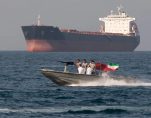
Oil prices pushed higher on Tuesday as Donald Trump intensified pressure on Iran, sharpening investor anxiety over the fate of the Strait of Hormuz and the risk of a wider supply shock across global energy markets. Brent crude traded above $110 a barrel and US West Texas Intermediate rose past $113, extending a rally driven by fears that a prolonged disruption in the Gulf could squeeze flows […]

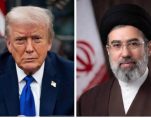
Arabian Post Staff -Dubai Iran said on Monday it wanted a durable end to the war with the United States and Israel rather than a temporary truce, rejecting pressure to reopen the Strait of Hormuz on Washington’s timetable as President Donald Trump warned the country could be “taken out” if it failed to meet his Tuesday night deadline for a deal. Tehran’s stance underscored how far apart […]

Polymarket has unveiled what it calls a full exchange upgrade, setting out plans to rebuild the core plumbing of its prediction market, launch a native collateral token and strengthen the systems it uses to turn disputed outcomes into settled trades. The move comes as the company, widely discussed at a roughly $20 billion valuation, positions itself for a broader push into the United States and for a […]

Arabian Post Staff -Dubai Donald Trump has said a Tuesday deadline for Iran to accept a deal remains final, sharpening a crisis that has already pushed energy markets higher, intensified diplomatic pressure and raised fresh concern over the risk of a broader Middle East conflict. Speaking on April 6 at the White House, the US president said Tehran had made what he described as a significant move […]

Advertisements
India has moved to secure 2.5 million tonnes of imported urea ahead of the kharif sowing season, opening one of its largest buying exercises in months as the West Asia war squeezes gas availability, disrupts shipping routes and cuts domestic fertiliser output. State-run Indian Potash Ltd has invited bids for 1.5 million tonnes for west coast ports and 1 million tonnes for east coast ports, with vessels required to sail by 14 June and bids due on 15 April.

The timing reflects pressure building across the farm supply chain just before planting for rice, maize and soybean gathers pace in June. India is the world’s biggest urea importer and remains exposed not only to overseas fertiliser shipments but also to liquefied natural gas supplies from the Gulf, a key feedstock for domestic urea plants. Market disruption linked to the conflict has forced policymakers and import agencies to act earlier and at larger scale than usual to avoid a supply gap during the monsoon cropping cycle.

The tender itself underlines the urgency. Indian Potash’s notice, dated 4 April, shows the company is seeking granular or prilled urea in bulk for agriculture use, with separate pricing required for FOBT and C&FFO terms. The notice also sets the bid opening for 15 April and says offers must remain valid until 23 April. Those details matter because India’s tenders often serve as a benchmark for global trade, influencing price expectations far beyond its own market.

Supply stress has emerged on two fronts. First, disruption around the Gulf has affected fertiliser cargo movements through the Strait of Hormuz, one of the most sensitive trade chokepoints for both natural gas and finished fertiliser. Second, tighter LNG availability has curtailed feedstock for urea manufacturing at home. Reuters reported that the conflict had cut domestic output by about 600,000 to 700,000 tonnes a month, while other reports in the domestic press said production in one month had slipped to about 18 lakh tonnes from around 24 lakh tonnes.

That drop is striking because domestic capacity had been strengthened over the past decade. Official figures released last month said urea production in 2024-25 stood at 306.67 lakh metric tonnes, after touching a record 314.07 lakh metric tonnes in 2023-24. The broader policy effort has been to reduce import dependence through revived plants and brownfield additions, yet the present disruption shows that energy exposure still leaves the sector vulnerable when conflict hits upstream supply and freight corridors.

Trade data had already pointed to a more import-dependent year even before the latest escalation. Fertiliser Association of India data reported in January showed urea imports jumped 120.3 per cent year on year to 7.17 million tonnes in April-November 2024-25. That surge suggested domestic output and demand were already misaligned, leaving little buffer when the external shock arrived. The latest tender therefore looks less like a one-off emergency purchase and more like an attempt to rebuild a thinning pipeline before farm demand accelerates.

The price implications are equally important. Reuters said India’s previous tender had cleared at $418.40 a tonne, and traders now expect the new purchase to test higher levels because global availability has tightened. Argus reported that the war had effectively cut off exports from major Gulf producers including Qatar, Saudi Arabia, the UAE and Bahrain, which together usually account for roughly 1 million tonnes a month, or about a fifth of global urea trade. It also cited Kpler data showing more than 900,000 tonnes on stranded vessels beyond Hormuz.

Officials have also been working on contingency planning outside the tender route. Domestic reports said a task group had been formed to assess global urea sources and prepare import options, while gas supply to fertiliser units has been partially restored through spot purchases and reallocation. That may soften the production hit, but it does not fully remove the risk because any prolonged interruption in Gulf shipping or LNG flows would keep pressure on both landed prices and physical availability.

By Nantoo Banerjee The Reserve Bank of India and the government may officially deny or even pretend to ignore the adverse impact of the continuous downhill journey of the Indian Rupee against the US Dollar on the economy, the disturbing trend, if not contained, is bound to lead the heavily import-reliant nation to high inflation […]

The article Indian Rupee’s Continuous Downtrend Is A Big Concern appeared first on Latest India news, analysis and reports on Newspack by India Press Agency).

Greenlogue/AP Solar power capacity across the Gulf Cooperation Council has expanded at an exceptional rate, with a new GCC-Stat report showing average annual growth of 88.1 per cent between 2013 and 2024, underscoring how one of the world’s leading hydrocarbon-producing regions is accelerating investment in cleaner energy while also strengthening climate resilience measures. The same report said electricity generated from solar energy climbed from 0.13 thousand gigawatt-hours […]

Dentsu has appointed Yusuke Kagohara as chief financial officer for Southeast Asia, handing him a mandate that goes beyond traditional finance oversight as the advertising and marketing group tightens governance and prepares for a more disciplined phase of expansion across one of Asia’s most competitive markets. The appointment took effect immediately, and Kagohara will report to Sanjay Bhasin, chief executive for Southeast Asia.

The move lands at a sensitive point for global agency networks. Growth remains available across Southeast Asia, but margins, client expectations and regulatory scrutiny are all sharpening. Dentsu’s own framing makes clear that this is not merely a replacement hire. Company statements and industry reports describe the post as part of a wider effort to deepen strategic and financial discipline and strengthen governance across the regional cluster, which covers Indonesia, Malaysia, the Philippines, Singapore, Thailand and Vietnam. The business employs more than 4,000 people in the region under what Dentsu describes as a borderless operating model formed in 2023.

Kagohara arrives with a profile that fits that brief. Before this appointment, he served as group head of risks and controls at Dentsu Group Inc., where he worked on internal controls, enterprise risk management and broader governance and remediation efforts. Earlier assignments included chief financial officer and deputy chief financial officer roles in Beijing and at Dentsu Creative China, experience that gave him exposure to large and complex operating environments in Asia. Industry coverage of the appointment has also highlighted his background in corporate strategy, transformation and all-round finance, suggesting the company wanted someone comfortable with both compliance architecture and commercial execution.

That background matters because agency finance chiefs are no longer judged only on forecasting, cost control and reporting. They are increasingly central to how networks integrate acquisitions, police internal controls, price AI-enabled services and defend profitability while clients demand more measurable returns. Dentsu has been signalling this shift at group level for months. Its global management overhaul announced in February was pitched around stronger execution, while its 2025 integrated report and governance materials emphasised capital discipline, internal investment, productivity and the strengthening of leadership and controls.

Southeast Asia gives that challenge extra complexity. The cluster spans fast-growing but highly uneven markets, each with different media structures, regulatory standards, client mixes and digital maturity. Dentsu has described the region as one of the world’s fastest-growing, and its own ad spend outlook has projected Asia Pacific growth ahead of the wider global economy. In December, the company forecast that global advertising spend would rise 5.1 per cent in 2026 to more than $1 trillion, with Asia Pacific remaining the fastest-growing region. For a network trying to convert that momentum into durable earnings, stronger financial control becomes a strategic tool rather than a back-office function.

Bhasin’s comments underline that point. In remarks carried by multiple reports and company-linked posts, he said growth on its own was not enough and that the business needed expansion that was “accountable, resilient, and built to last”. He described Kagohara’s experience in governance, transformation and complex markets as critical to the next stage of Southeast Asia’s development. Kagohara, for his part, said the region stood out for its scale, complexity and ambition, adding that strong fundamentals were universal even when market conditions varied widely. Those comments indicate a leadership view that the next test for Dentsu is not whether Southeast Asia can grow, but whether it can do so with tighter controls and greater consistency across markets.

The timing also follows a change in the seat Kagohara is filling. Trade reports late last month said Bharti Agrawal, who had served as CFO for Southeast Asia at Dentsu, had moved to Monks as chief financial officer for APAC marketing services. That succession gives the new appointment a sharper operational significance, because it suggests Dentsu moved quickly to avoid drift in a role that sits at the centre of planning, compliance and regional coordination.


Cloudflare’s launch of EmDash has opened a fresh front in the struggle over the future of web publishing, landing at a moment when WordPress is already under pressure from courtroom battles, security criticism and questions over who gets to define the rules of the world’s biggest content management ecosystem. EmDash, presented by Cloudflare as a “spiritual successor” to WordPress, is being pitched as a modern, open-source alternative […]

KUALA LUMPUR, MALAYSIA – Media OutReach Newswire – 5 April 2026 – Swiss Watch, Malaysia’s premier luxury timepiece and jewellery curator, has been appointed as the Purveyor of Fine Watches and Jewellery to His Royal Highness, the Sultan of Selangor. This prestigious seal of approval from the Royal family marks a truly historic milestone for Swiss Watch.

His Royal Highness, The Sultan of Selangor, with the Executive Directors of Valiram.

Proudly Malaysian, Swiss Watch has grown to become a cornerstone of the luxury watch and jewellery community in the region, collaborating closely with the world’s most esteemed maisons. This Royal Warrant is a testament to this journey, reflecting Swiss Watch’s unwavering dedication, its shared pursuit of excellence, and the sincere commitment of its network of Watch Experts.

“Our team has been instrumental in shaping Swiss Watch into a leading watch retailer in the region – we would not have come this far without their continuous contributions. This recognition is a momentous milestone in our ongoing journey in Celebrating Fine Watchmaking, and Swiss Watch is more committed than ever to continue creating exceptional experiences that celebrate the legacy of fine watchmaking,” said Ashvin Valiram, Executive Director of Valiram.

The recognition validates Swiss Watch’s position as a leader in luxury watch and jewellery retail, operating 10 Swiss Watch boutiques and more than 30 specialist boutiques across Malaysia, Singapore, Australia, and Thailand. Each boutique serves as a curated destination where discerning collectors can discover the world’s most renowned watch and jewellery maisons.

Swiss Watch has been given the Royal Warrant plaque by His Royal Highness, The Sultan of Selangor.

Established in 2001 by leading luxury and lifestyle retail specialist Valiram, Swiss Watch has built a distinguished heritage rooted in local excellence while maintaining global standards of luxury. The company’s journey began with its first boutique at Penang International Airport, featuring an extensive selection of 16 watch brands at that time, earning the company a spot as one of the most prestigious watch emporiums.

This recognition reinforces Swiss Watch’s philosophy of discretion, expertise, and service excellence — values that remain central to its identity as it continues to honour the art of horology for future generations.

Hashtag: #SwissWatch


The issuer is solely responsible for the content of this announcement.

About Swiss Watch

Swiss Watch began as a multi-brand emporium of luxury watches established by luxury and lifestyle retail specialist Valiram. The business has grown remarkably since its inception in 2001 and today comprises ten Swiss Watch boutiques, and more than 30 specialist watch and jewellery boutiques representing the world’s best-loved brands and a sizable portfolio of almost 40 brands across Malaysia, Singapore, Australia and Thailand. Swiss Watch has become synonymous with horology destinations that cater for watch enthusiasts and collectors as much as it does for the first-time watch buyer, offering a compelling shopper experience through elegantly appointed boutiques enriched by exceptional service. Discover more at .

Arabian Post Staff -Dubai Dubai and Abu Dhabi have retained places among the world’s leading smart cities in the latest IMD Smart City Index, underscoring how the two emirates have turned digital infrastructure, public services and urban planning into a defining part of their global profile. The 2026 index placed Dubai sixth and Abu Dhabi tenth out of 148 cities, while the 2025 edition had ranked them […]

France is preparing targeted support for motorists who rely on their cars for work and daily life after the war involving Iran drove up oil prices and sharpened pressure on household budgets, with Prime Minister Sébastien Lecornu signalling that broad-based fuel subsidies remain off the table even as pump costs climb. Speaking in Bordeaux, Lecornu said ministers had been asked to draw up measures for people who […]

Washington has doubled to $40 billion a US-backed maritime reinsurance facility aimed at coaxing commercial vessels back through the Strait of Hormuz, as the five-week war with Iran continues to unsettle one of the world’s most important trade arteries. The expanded programme, announced on Friday by the US International Development Finance Corporation and Chubb, adds AIG, Berkshire Hathaway, Travelers, Liberty Mutual, Starr and CNA to the scheme, […]

A Japanese-owned liquefied natural gas tanker has crossed the Strait of Hormuz, offering the clearest sign yet that tightly controlled commercial traffic may be resuming through one of the world’s most sensitive energy corridors after weeks of disruption linked to the war involving Iran. The vessel, SOHAR LNG, is the first Japan-linked LNG carrier confirmed to have made the passage since the conflict began on 28 February, […]

Oil prices jumped sharply on Thursday after US President Donald Trump said the United States would step up attacks on Iran over the coming weeks, stoking fears that disruptions around the Strait of Hormuz could last longer and tighten supplies of crude and refined fuels across global markets. West Texas Intermediate settled at $111.54 a barrel after surging more than 11%, while Brent closed near $109.03, extending […]

A powerful undersea earthquake off Indonesia’s eastern islands killed at least one person, damaged homes and public buildings, and triggered a tsunami warning that was later lifted after small waves were recorded along parts of the coast. Authorities said the magnitude 7.4 quake struck northwest of Ternate in North Maluku at a depth of about 35 km, sending residents into the streets in Ternate, Bitung and Manado […]

India has opened talks with leading global producers of nitrogen and phosphatic fertilisers to secure supplies directly, as the war involving Iran continues to disrupt Gulf trade routes, lift freight costs and unsettle prices ahead of the kharif planting cycle. Officials have moved to widen procurement channels after supply risks from the Middle East, a major source of imported urea and diammonium phosphate, sharpened over the past month.

The push reflects both urgency and caution. Government officials have said fertiliser stocks stand at about 18 million tonnes, up from 14.7 million tonnes a year earlier, against expected demand of roughly 39 million tonnes for the coming season. That gives policymakers some room, but not enough to ignore the exposure created by conflict near the Strait of Hormuz and tighter supply from traditional exporters. India has already been seeking larger volumes from Russia, Belarus and Morocco, while also sounding out other producers as insurance against further disruption.

At the heart of the concern is the structure of India’s import dependence. Reuters reported in March that more than 40 per cent of the country’s urea and phosphatic fertiliser needs are tied to the Middle East. Disruption there has a double effect: it threatens cargo availability and also raises the cost of natural gas, a crucial feedstock for nitrogen fertilisers. Domestic production has also come under pressure. Output of urea was reported at about 1.8 million tonnes a month during plant maintenance, below the more usual 2.4 million tonnes, adding to the need for timely imports even as officials insist there is no immediate shortage.

Price risk is now as important as volume risk. Fertiliser prices had already been climbing before the latest procurement outreach, with Reuters reporting that benchmark prices for some products rose to more than $600 a tonne from about $425. Wider market reporting has shown the same direction of travel. ICIS described March conditions as a period of heightened volatility across nitrogen, phosphate and sulphur markets as conflict in the Middle East hit trade flows and sentiment. Reuters and other industry reporting have also pointed to sharp jumps in urea and ammonia prices as shipping through Hormuz became more uncertain.

For the government, the political and economic challenge is to prevent that international surge from reaching farms at full force. Urea continues to be sold at a notified price of ₹242 for a 45-kg bag, while the Department of Fertilizers said in March that the retail price of DAP had been maintained at ₹1,350 for a 50-kg bag for the rabi season through subsidy support. That pricing shield helps farmers, but it also increases the fiscal burden when import costs rise. Industry material published in February said the state still bears about 90 per cent of the cost of urea, underlining how exposed the subsidy bill becomes when global markets tighten.

India has not relied on a single response. Apart from direct talks with overseas suppliers, firms have secured long-term volumes from Russia, including 2.8 million tonnes under reported arrangements, while a global tender for 1.3 million tonnes of urea was issued to reinforce reserves. Officials have also taken steps to support domestic output by prioritising gas allocation to fertiliser plants. The strategy suggests New Delhi is trying to build overlapping buffers rather than betting on a quick stabilisation in Gulf shipping.

The market backdrop gives that strategy added weight. Industry executives and analysts have warned that a prolonged conflict could squeeze farmers globally, alter crop choices and feed through into food inflation. Yara, one of the world’s largest fertiliser companies, has said farmers are being squeezed by the jump in input costs, while broader reporting has shown developing economies to be especially vulnerable because they are more dependent on imported fertilisers and have less room to absorb price shocks. For India, where fertiliser availability is tied directly to crop yields, rural incomes and food-price management, the issue is not only one of trade logistics but of macroeconomic stability.

Rising global energy prices are adding a fresh inflation risk to the United States even as the International Monetary Fund said the world’s largest economy remains on a solid growth path, with trade and fiscal changes expected to narrow the current-account deficit only modestly over the medium term. The IMF’s latest assessment said growth in the US is projected to reach 2.4 per cent in 2026, while […]

By Dr. Gyan Pathak While world’s untaxed wealth of the richest 0.1 per cent hidden offshore surpasses entire wealth of the poorest half of the humanity, India remains the receiver of the highest number of the regressive tax recommendations by the International Monetary Fund (IMF) that increases tax burden on the lower-income households more than […]

The article India Gets Highest Number IMF’s Advice To Tax Lower-Income Households More appeared first on Latest India news, analysis and reports on Newspack by India Press Agency).

U. S. Treasuries fell across the curve after President Donald Trump used a televised address to harden his stance on Iran, unsettling investors who had been looking for signs of de-escalation and instead got a warning of heavier military action that sent oil prices sharply higher and revived fears of another inflation pulse through the global economy. The move in government debt reflected a quick reassessment of […]

Arabian Post Staff -Dubai The United Arab Emirates, led by Deputy Prime Minister and Minister of Interior Lieutenant General Sheikh Saif bin Zayed Al Nahyan, took part in the 43rd session of the Council of Arab Interior Ministers on 1 April, with the meeting held by videoconference and attended by interior ministers and senior security officials from across the Arab world. The session brought together representatives of […]

VISHNU RAJA
RYO YAMADA
HITORI GOTOH
IKUYO KITA