Just in:

News related to
world’s

Abu Dhabi Investment Authority (ADIA), one of the world’s largest sovereign wealth funds, has acquired a significant stake in Innocap, a Canadian alternative investment management firm. This investment highlights the growing interest of Middle Eastern investors in North American financial markets, with ADIA’s move signaling its confidence in the potential of emerging asset management models.

Innocap, which specializes in providing customized investment solutions for institutional clients, has gained traction in the financial sector due to its innovative approach in combining quantitative and discretionary strategies. The firm is known for its expertise in alternative investments, including hedge funds and private equity, offering tailored solutions for clients looking to diversify portfolios and optimize returns.

This acquisition marks a key step in ADIA’s ongoing strategy to enhance its portfolio with high-growth opportunities across global markets. ADIA has historically focused on securing long-term returns by investing in a wide array of asset classes, including equities, fixed income, real estate, and private equity. The decision to invest in Innocap reflects ADIA’s intent to tap into the expanding alternative investment space, particularly in regions where the demand for such strategies is on the rise.

Innocap’s management has expressed excitement over the partnership, which they believe will allow them to scale operations and enhance their product offerings. The firm’s deep experience in quantitative strategies and its robust network of institutional investors aligns well with ADIA’s strategic goals of identifying high-performing, sustainable investments in evolving markets.

ADIA’s acquisition strategy has been increasingly focused on technology-driven firms, as it seeks to benefit from the growth of tech-driven financial services. The investment in Innocap is part of a broader trend of sovereign wealth funds expanding their reach into specialized financial services. This move also mirrors the growing trend of institutional investors diversifying their portfolios into non-traditional assets, including those managed by firms like Innocap that specialize in leveraging advanced technology and financial engineering.

The deal is expected to enhance Innocap’s ability to develop cutting-edge investment strategies, further positioning the firm as a leader in the alternative investment space. Experts have noted that ADIA’s involvement will likely bring significant benefits to Innocap’s clients, including greater access to global capital markets and an expanded range of investment solutions. The partnership is seen as mutually beneficial, with ADIA gaining access to Innocap’s advanced strategies and innovative approaches, while Innocap benefits from the strategic backing and resources of one of the world’s largest investment funds.

For ADIA, the deal reflects a strategic shift towards investing in firms that specialize in niche, high-return asset classes. As the demand for alternative investments grows globally, particularly in regions like North America, the acquisition of Innocap positions ADIA to take advantage of new opportunities in asset management. The move is also in line with the fund’s goal of diversifying its holdings in a range of high-growth, high-potential sectors.

Innocap’s leadership sees this partnership as a way to solidify its position in a competitive industry, where differentiation through technology and innovation is key to sustained growth. The firm’s ability to deliver bespoke investment strategies will be enhanced with the added resources and international presence that ADIA brings to the table. Industry analysts expect the firm to leverage this new relationship to accelerate its growth trajectory, particularly as more institutional investors seek out alternative investment solutions that are both sophisticated and flexible.

The acquisition is also expected to pave the way for new collaborations between the two organizations, including potential expansions into emerging markets. ADIA’s global network and resources will likely provide Innocap with the tools needed to expand its footprint beyond North America, tapping into growth markets across Asia and the Middle East.

In the context of broader investment trends, the deal represents a convergence of traditional and alternative asset management strategies. ADIA’s move into the alternative investment space further reflects the growing appetite among institutional investors for higher-yielding, diversified portfolios. With Innocap’s expertise in managing complex, multi-strategy portfolios, the firm is well-positioned to meet this demand while benefiting from the backing of one of the world’s most influential sovereign wealth funds.

As the deal progresses, the focus will likely be on how both parties can integrate their strategies to enhance overall portfolio performance. For ADIA, this investment offers an opportunity to expand its footprint in an increasingly complex financial landscape, where the line between traditional and alternative investments is becoming more fluid.


SINGAPORE / BARCELONA, SPAIN – Media OutReach Newswire – 16 January 2025 – CDNetworks, the APAC-leading network to deliver edge as a service, will present its latest gaming solutions at ICE 2025 in Barcelona, Spain on 20th – 22nd January. At the event, the company will demonstrate how its advanced solution enables game providers to deliver seamless, secure, and high-performance gaming experiences on a global scale. The […]

HONG KONG SAR – Media OutReach Newswire – 16 January 2025 – To attract high-yield visitors to Hong Kong, the Hong Kong Tourism Board (HKTB) constantly promotes the development of Meetings, Incentives, Conventions and Exhibitions (MICE) tourism through elevating business travellers’ experience in Hong Kong, reinforcing the city’s position as the “World’s Meeting Place”. In line with this mission, and with the vision of the newly released […]

Dubai has unveiled the Creators HQ, a pioneering initiative aimed at attracting 10,000 influencers to the United Arab Emirates (UAE) in the coming years. Located in Emirates Towers, this hub is designed to empower digital content creators by providing comprehensive support, including assistance with UAE Golden Visa applications, relocation services, and business setup facilitation. The Creators HQ was inaugurated during the third edition of the 1 Billion […]

AD Ports Group, a leading player in the global ports and logistics sector, has announced a major investment of $30 million in the construction of a greenfield grain terminal in Kazakhstan. The total investment for the project is expected to exceed $50 million, with the remaining funding being sourced from local partners and stakeholders. The grain terminal, to be developed in two phases, is strategically located in […]

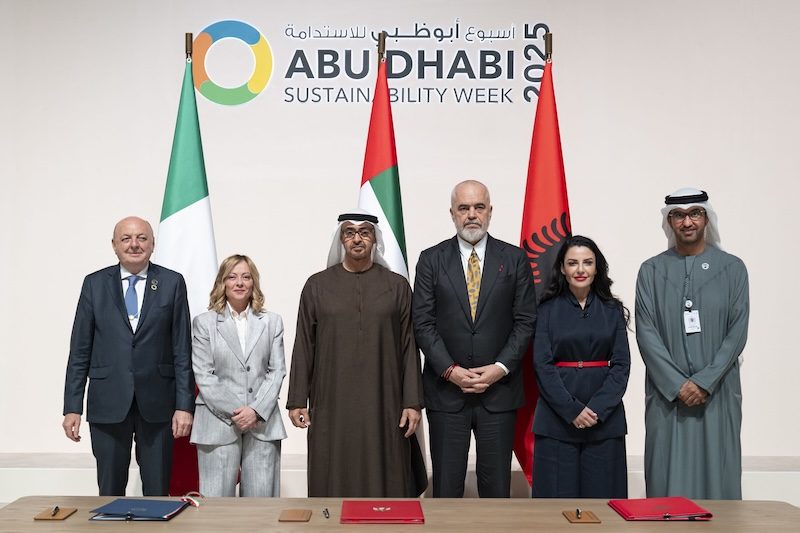
A groundbreaking project is set to revolutionize energy transmission as the UAE, Italy, and Albania unite to build a $1 billion undersea cable that will connect the three nations. This ambitious infrastructure initiative, touted as one of the most significant energy projects in the region, aims to enhance energy security, boost renewable energy integration, and strengthen ties between Europe and the Middle East.

The proposed undersea cable will span the Mediterranean, linking Albania’s grid to Italy’s energy system, with an additional link to the UAE. Once completed, the cable is expected to facilitate the efficient transfer of electricity, particularly renewable energy generated from solar and wind sources in the UAE and Albania. The project is a bold step toward reducing carbon emissions and advancing the global energy transition.

This collaborative effort is backed by significant political and economic support, with each country bringing unique advantages to the table. The UAE’s vast solar energy resources and its commitment to sustainable energy development are pivotal in this venture. Italy, with its advanced energy infrastructure and strategic location in the Mediterranean, serves as a critical hub for energy distribution in Europe. Albania, although not traditionally known for its energy exports, is set to play a crucial role in the renewable energy supply chain, utilizing its untapped potential for hydropower and wind energy generation.

The undersea cable will have the capacity to carry up to 1,000 megawatts of electricity, marking a significant milestone in renewable energy integration. The project aims to address the growing demand for clean energy in Europe while providing the UAE with a reliable market for its abundant solar power. Additionally, the cable will serve as a crucial link in the Mediterranean’s evolving energy landscape, enabling cross-border electricity exchange and fostering greater energy cooperation between nations.

The strategic importance of this initiative cannot be overstated. For the UAE, it represents an opportunity to diversify its energy export markets and reduce its reliance on traditional fossil fuel exports. The undersea cable will allow the UAE to leverage its renewable energy potential, particularly solar power, which has seen substantial growth in recent years. This will also help the country meet its sustainability goals and contribute to global efforts to combat climate change.

Italy, on the other hand, stands to benefit from enhanced energy security and the opportunity to access cleaner energy sources. With the European Union’s ambitious climate targets in mind, the undersea cable provides Italy with a reliable avenue to meet its renewable energy quotas while reducing carbon emissions. The cable also complements Italy’s existing efforts to integrate renewable energy into its grid and reduce dependence on fossil fuels.

Albania, while facing challenges in modernizing its energy infrastructure, offers considerable potential as a renewable energy producer. The country boasts a diverse range of renewable energy resources, including hydropower, solar, and wind energy, which can be harnessed for export to neighboring nations. By joining this project, Albania stands to benefit from increased investments in its energy sector, as well as improved grid connectivity that can stimulate economic growth and job creation.

The undersea cable project is expected to be completed by 2028, with construction set to begin in the coming years. The cable will be laid along the Mediterranean seabed, with specialized vessels and teams working to ensure the project’s success. The engineering challenges associated with such an ambitious undertaking are significant, requiring advanced technology and meticulous planning. However, the potential benefits of the project are enormous, with experts predicting a transformative impact on regional energy markets.

The alliance between the UAE, Italy, and Albania reflects a broader trend of increasing cooperation on global energy challenges. With a shared commitment to reducing carbon emissions and promoting sustainable energy solutions, the countries are setting an example for future international collaborations. By combining their unique strengths, they are forging a path toward a greener and more interconnected energy future.

The project holds significant implications for the broader geopolitical landscape. As energy interconnections grow in importance, countries are increasingly looking to build robust, sustainable, and resilient energy networks that can withstand the challenges posed by climate change and geopolitical tensions. The undersea cable is a testament to the growing recognition that collaboration is key to addressing the world’s energy needs, as no single nation can solve these challenges alone.

This project is also part of a broader strategy to diversify the energy mix in Europe and the Middle East, regions that have traditionally relied heavily on fossil fuels. By connecting these regions through advanced infrastructure like the undersea cable, the project will help to diversify energy sources and increase resilience to energy supply disruptions.

By Nantoo Banerjee There seems to exist a method in US President-elect Donald Trump’s madness when he talks about his desire to annex Canada and Greenland, and renaming the Gulf of Mexico among others. A US annexation of Canada is possible through a treaty between the two countries involving the British Monarch, or a referendum […]

Advertisements

Saudi Arabia has officially assumed leadership of the International Society for Reef Conservation (ICRI) Secretariat, marking a pivotal moment in the global fight to protect coral reefs. The move was confirmed during the 2025 ICRI conference, where environmental ministers and stakeholders from around the world gathered to discuss the escalating challenges coral reefs face and the urgent need for coordinated global action. Saudi Arabia’s selection as the […]

As India becomes the world’s fastest growing major diamond jewellery market, industry leaders De Beers Group and GJEPC will collaborate to support the gem and jewellery trade with education and promotional assets to support the natural diamond narrative MUMBAI, INDIA – Media OutReach Newswire – 9 January 2025 – De Beers Group, the world’s leading diamond company, and the Gem & Jewellery Export Promotion Council (GJEPC), India’s […]

Venture capital funding in Saudi Arabia and the UAE has experienced a notable decline, as shifting investor priorities and regional economic trends impact the growth of startups and early-stage businesses in both countries. The drop reflects broader changes in the global investment landscape, marked by a heightened focus on risk-adjusted returns and increased caution in the face of global economic uncertainty. In the past year, venture capital […]

PureHealth’s subsidiary, Ardent Health, has executed a strategic move to bolster its presence in the United States healthcare market. The UAE-based health provider announced the acquisition of a significant U.S. healthcare player, marking a pivotal moment in its global expansion strategy. This development positions Ardent Health as a more formidable force within the competitive American healthcare landscape, aligning with PureHealth’s long-term goals to diversify and expand its operations internationally.

The deal, valued at billions of dollars, grants Ardent Health an influential role within the U.S. healthcare sector, which has seen increasing demand for services, particularly in the aftermath of the COVID-19 pandemic. Ardent Health, which already operates a network of hospitals, outpatient centers, and healthcare services across the U.S., will leverage this acquisition to further expand its geographical footprint and service offerings. Experts believe this acquisition reflects a calculated strategy to access new patient populations, advance healthcare innovation, and enhance service delivery across different states.

The acquisition involves several hospitals and healthcare facilities, adding more than 2,000 beds to Ardent Health’s network, enhancing its capacity to meet growing demand for healthcare services, particularly in underserved regions. This move further aligns with the increasing trend of healthcare consolidation in the U.S., as healthcare providers look to increase their operational efficiencies and compete with larger hospital networks.

The acquisition also opens up new opportunities for Ardent Health to integrate its healthcare models with the acquired facilities. With a focus on innovative care delivery systems, Ardent aims to introduce cutting-edge technologies such as telemedicine, digital health solutions, and artificial intelligence-driven diagnostics to improve patient outcomes. This integration could provide Ardent with a competitive advantage, positioning it as a leader in offering cost-effective, patient-centric care.

For PureHealth, this acquisition aligns with its broader strategy to diversify its portfolio and deepen its international presence. The company’s growth trajectory has been marked by aggressive expansion into various international markets, with a particular emphasis on the U.S., a market that has shown resilience and growth even amidst economic challenges. PureHealth’s CEO, who has been instrumental in orchestrating the acquisition, commented that the move is crucial for achieving the company’s goal of becoming a leading global player in healthcare by 2025.

Healthcare analysts have noted that this acquisition also represents a shift towards a more integrated and patient-focused healthcare model. By expanding its reach in the U.S., Ardent Health is poised to compete with well-established U.S.-based healthcare systems. This growth will likely allow Ardent Health to capitalize on the growing trend toward value-based care, which incentivizes healthcare providers to improve patient outcomes while reducing costs.

The deal underscores the growing importance of international investment in the U.S. healthcare sector, as foreign entities increasingly recognize the opportunities in one of the world’s largest and most lucrative healthcare markets. This acquisition also highlights the ongoing trend of Middle Eastern healthcare giants making strategic inroads into Western markets, a move that reflects the global nature of the healthcare industry and the increasing demand for quality care worldwide.

Ardent Health, under the leadership of PureHealth, is expected to continue its trajectory of growth, driven by this acquisition and other strategic initiatives. The acquisition process, which is still subject to regulatory approvals, will likely face scrutiny from U.S. antitrust regulators. However, experts anticipate that the deal will clear these hurdles, as it is expected to strengthen competition and improve healthcare service delivery in the affected regions.

The expansion of Ardent Health’s footprint is seen as a response to the broader challenges facing U.S. healthcare, such as rising costs, an aging population, and disparities in access to quality care. By acquiring facilities in underserved markets, Ardent Health aims to bridge some of these gaps while enhancing its overall service offerings. Furthermore, the acquisition aligns with PureHealth’s emphasis on improving healthcare infrastructure in emerging markets, where there is a pressing need for advanced healthcare systems.

As the healthcare sector evolves globally, players like PureHealth’s Ardent Health are capitalizing on mergers and acquisitions to achieve economies of scale, increase their market share, and enhance patient care. The success of this acquisition will likely have a ripple effect across the industry, prompting further consolidation and strategic partnerships within the healthcare sector.

HONG KONG SAR – Media OutReach Newswire – 6 January 2025 – The Hong Kong Industrial Artificial Intelligence and Robotics Centre (FLAIR), specialising in AI and robotics application R&D, will make its debut at CES 2025 in Las Vegas, USA, from 7 to 10 January. CES 2025: A Hub for Global Tech Innovation CES, the world’s most influential technology event, connects global brands, industry leaders, and innovators […]

By Nantoo Banerjee The slump in India’s GDP growth rate is understandable. Contrary to the government claims, the job market is down. The income growth, in general, is shrinking. A vast section of consumers are not spending enough, except for wage goods or daily dire necessities, as their real income is not growing. The FMCG […]


Dubai has firmly established itself as one of the world’s most influential urban centers, securing a spot among the top 10 cities globally in the 2024 Global Power City Index (GPCI). The index, which evaluates cities based on various economic, cultural, political, and environmental factors, underscores Dubai’s growing status as a critical global hub for finance, innovation, and infrastructure.

The GPCI is a highly regarded tool that ranks major cities worldwide according to their strength in multiple categories, including business environment, human capital, cultural interaction, and quality of life. Dubai’s ascent in the rankings is attributed to its robust economic performance, advanced technological infrastructure, and the expansion of its global reach through strategic international partnerships.

One of the primary factors behind Dubai’s rise is its dominance in the business and financial sectors. The city has become an increasingly important player in global markets, offering a favorable environment for both startups and multinational corporations. It is home to a dynamic economy, buoyed by its position as a key financial hub in the Middle East, drawing significant foreign investment and becoming the headquarters for numerous international firms.

Dubai’s business-friendly regulatory environment has contributed significantly to this growth. Policies that promote ease of doing business, combined with tax incentives and world-class infrastructure, have made it a magnet for companies and entrepreneurs seeking to establish a presence in the region. The city’s ambitious plans to further develop its financial sector and embrace emerging technologies such as blockchain and fintech have also cemented its place as a future-facing global economic powerhouse.

The city’s commitment to technological innovation has also played a crucial role in its rising global standing. Dubai has been at the forefront of the tech revolution in the Middle East, with a heavy focus on smart city initiatives and advancements in artificial intelligence, digital payments, and autonomous transport systems. The government’s initiatives, such as the Dubai Smart City project, have positioned it as a model for cities worldwide seeking to integrate technology into urban development.

Dubai has been increasingly recognized for its role in international trade. The city’s ports and logistics infrastructure, including the world-renowned Jebel Ali Port, have made it a central node in global shipping and freight networks. The expansion of Dubai’s air transport sector, led by Emirates Airlines, has further strengthened its position as a vital air transit hub, connecting it to key global markets and boosting its tourism industry.

Dubai’s influence extends well beyond the financial and technological sectors. The city is also gaining recognition for its leadership in cultural and lifestyle offerings. The growth of its art, entertainment, and sports industries has enhanced its soft power, attracting international events such as the Dubai International Film Festival and Formula 1 Grand Prix. The city’s unique blend of modernity and tradition appeals to a diverse range of visitors and residents, making it an increasingly sought-after destination for global talent.

On the social front, Dubai’s focus on enhancing the quality of life for its residents has helped it climb in the GPCI rankings. The city’s government has invested heavily in developing green spaces, improving public transportation, and providing high-quality healthcare and educational facilities. These efforts contribute to Dubai’s reputation as a livable city with a high standard of living, further attracting expatriates from around the world.

Dubai’s dynamic real estate market also plays a pivotal role in its positioning on the global stage. The city’s skyline, dominated by landmarks such as the Burj Khalifa and other ultra-modern developments, has become synonymous with cutting-edge architectural design and luxury living. With ongoing projects in sustainable urban development and the continued growth of residential, commercial, and tourism sectors, Dubai’s real estate market remains a key driver of its economic growth and global visibility.

The city’s tourism industry continues to thrive, drawing millions of visitors annually for business, leisure, and cultural experiences. Dubai’s attractions, including iconic landmarks, shopping festivals, and luxury resorts, attract travelers from around the world, bolstering its image as a global tourism destination. The government’s strategic focus on expanding the city’s tourism infrastructure and diversifying its offerings, such as through cultural initiatives and major international exhibitions, has contributed to its international appeal.

Dubai’s rise in the GPCI rankings is a testament to the city’s forward-thinking approach and its ability to adapt to changing global dynamics. Its growth trajectory aligns with its broader vision of becoming a global leader in innovation, sustainability, and economic development. As Dubai continues to attract global talent, investment, and attention, it is poised to solidify its position as a central player in the global urban landscape.

This transformation is also reflected in the city’s ambitious plans for the future. Dubai aims to continue enhancing its competitiveness by investing in next-generation infrastructure, sustainable urban planning, and new industries such as space exploration. Its growing stature in the GPCI highlights its resilience and capacity to navigate challenges, from geopolitical uncertainties to global economic shifts, while maintaining its upward trajectory.

By Nitya Chakraborty from Hanoi Vietnam, the Communist nation with nearly 10 crore population is presently the focus of the big investors of the world including the USA as the nation’s leadership has made a miracle in building a highly skilled youth brigade along with the creation of an investment climate which can compete with […]

SINGAPORE – Media OutReach Newswire – 3 January 2025 – Flint, the pioneering deep tech company developing a proprietary paper battery technology, has raised US$2 million in seed funding. This funding round, led by a global consortium of angel investors, will accelerate Flint’s efforts to bring high-performance, sustainable energy storage solutions to market. “This funding milestone represents years of technical breakthroughs, and now, with real-world applications on […]

Cryptocurrencies continue to revolutionize the financial world, with stablecoins standing at the forefront of this evolution. The $205 billion market for stablecoins is now approaching a level of mainstream integration that could redefine how digital assets are utilized in daily transactions and financial services.

Stablecoins, digital currencies pegged to assets like the U.S. dollar or gold, have gained significant traction over the past few years, driven by their stability compared to volatile cryptocurrencies like Bitcoin or Ethereum. Unlike their counterparts, stablecoins aim to maintain a fixed value, making them more attractive to investors and consumers looking for reliability in the crypto space. The potential for mainstream adoption lies not just in their price stability but in their growing use cases across sectors ranging from decentralized finance (DeFi) to remittances and even digital identity verification.

Tether (USDT), USD Coin (USDC), and Binance USD (BUSD) dominate the stablecoin market, each playing a crucial role in driving the sector’s growth. As the overall cryptocurrency market reaches new milestones, these stablecoins continue to provide the foundation for many of the transactions and liquidity movements that are essential to the ecosystem’s functionality. In fact, stablecoins now account for over 10% of the entire cryptocurrency market capitalization, a trend that is only expected to grow as more institutional players enter the space.

The increasing use of stablecoins has caught the attention of both regulators and traditional financial institutions. Governments around the world are exploring ways to regulate stablecoins, driven by concerns over financial stability, anti-money laundering (AML), and countering the financing of terrorism (CFT). Despite this, the rise of stablecoins is seen as inevitable by many experts, as they offer an alternative to traditional fiat currencies, especially in regions with unstable economies or where access to banking services is limited.

One of the most compelling arguments for the mainstream integration of stablecoins is their utility in cross-border payments. Traditional remittance channels often carry hefty fees and take several days to process. Stablecoins offer a faster, cheaper, and more transparent alternative, allowing users to transfer funds across borders in real time at a fraction of the cost. This has made them particularly popular in emerging markets, where they have the potential to provide financial inclusion to the unbanked and underbanked populations.

Beyond payments, stablecoins have also become integral to decentralized finance (DeFi), a sector that has exploded in popularity over the past few years. DeFi platforms offer a wide range of financial services, such as lending, borrowing, and trading, without the need for intermediaries like banks or brokers. Stablecoins are often used as collateral for these services, providing a level of security for both borrowers and lenders. The appeal of DeFi is growing rapidly as more individuals look for alternatives to traditional financial systems, and stablecoins have proven to be a critical part of this shift.

Stablecoins are increasingly being explored as a solution to the volatility of cryptocurrencies in the world of digital assets. While the prices of Bitcoin, Ethereum, and other cryptocurrencies can fluctuate wildly, stablecoins provide a more predictable store of value. This makes them an attractive option for investors who are seeking to hedge against the market’s ups and downs, as well as for businesses looking for stability in their crypto transactions. The ability to maintain a stable value also positions stablecoins as a potential bridge between traditional finance and the cryptocurrency world.

Financial giants like JPMorgan and BlackRock are also positioning themselves to leverage stablecoins and blockchain technology to streamline their operations. JPMorgan’s recent experimentation with blockchain-based stablecoins in its payment systems is a testament to the growing mainstream interest in this sector. Similarly, BlackRock, the world’s largest asset manager, has expressed interest in stablecoin-backed investment products. These high-profile endorsements signal that stablecoins are not just a niche technology but could soon become a core component of global financial infrastructure.

The rise of central bank digital currencies (CBDCs) is expected to further accelerate the adoption of stablecoins. While CBDCs are government-backed digital currencies that function similarly to stablecoins, they could eventually coexist alongside private sector stablecoins, creating a hybrid ecosystem. Central banks are actively researching and piloting CBDCs, and the success of stablecoins in the private sector may provide a blueprint for the development of these digital currencies.

Despite the optimism surrounding stablecoins, several challenges remain. Regulatory uncertainty is one of the biggest hurdles facing the market. While stablecoins are seen as a way to democratize finance, they are also under scrutiny from regulators who worry about the potential for systemic risk. There is growing pressure for stablecoins to comply with traditional banking regulations, including Know Your Customer (KYC) and Anti-Money Laundering (AML) standards. This could result in more stringent requirements for stablecoin issuers, potentially stifling innovation in the space.

Concerns over the transparency and security of stablecoin reserves have been raised. In 2022, Tether, the largest stablecoin issuer, came under fire for allegedly misrepresenting the composition of its reserves, which raised questions about the stability of the entire market. Although Tether and other issuers have taken steps to improve transparency, the issue of trust remains a critical challenge for the long-term viability of stablecoins.

Another concern is the environmental impact of stablecoins, particularly those that rely on energy-intensive blockchain networks. While many stablecoins are built on the Ethereum network, which has faced criticism for its high energy consumption, newer stablecoin projects are increasingly turning to more energy-efficient blockchains like Solana and Avalanche.

Arabian Post Staff -Dubai The United Arab Emirates, once a federation of small desert states, has become a beacon of rapid development and transformation over the past five decades. Under the visionary leadership of the late Sheikh Zayed bin Sultan Al Nahyan, the UAE has emerged as a global economic hub, with its journey serving as an inspiration to countries around the world. From humble beginnings in […]

By Nantoo Banerjee Unbelievable but true. The government of the United States of America, supposedly the vanguard of modern capitalism, is fighting with its back to the wall to prevent a private corporate takeover of a publicly-listed US firm by a widely-held Japanese company. Both the outgoing US President Joe Biden of the Democratic Party […]

Manmohan Singh, the former prime minister credited with steering India through one of its most transformative periods of economic reform, has passed away at the age of 92. A technocrat-turned-politician, Singh’s leadership in the late 1990s and early 2000s reshaped India’s global economic standing, laying the foundation for its emergence as a major player in the international arena.

Singh’s legacy as a pivotal figure in India’s economic history is unparalleled. Serving as finance minister in the early 1990s under Prime Minister P.V. Narasimha Rao, he orchestrated bold economic reforms that shifted the country away from a protectionist, state-driven economy to one that embraced liberalization, privatization, and globalization. This shift unlocked India’s vast potential, transforming it into one of the world’s fastest-growing major economies.

Under Singh’s leadership as prime minister from 2004 to 2014, India saw continued economic growth despite facing challenges such as the global financial crisis of 2008. His tenure also marked significant strides in foreign policy, healthcare, and social welfare, although his government was often criticized for inefficiency and corruption scandals. Despite these challenges, Singh’s image as a steady and pragmatic leader remained intact, earning him respect both domestically and internationally.

Born on September 26, 1932, in Gah, a village now in Pakistan, Singh was educated at the University of Cambridge and the University of Oxford, where he earned a doctorate in economics. His early career was steeped in academia and international organizations, including the United Nations and the World Bank, where he worked on developmental issues.

Singh’s journey into politics was unexpected. He was appointed as the finance minister by Rao during a time of severe economic crisis in 1991. Faced with a collapsing economy, Singh oversaw the liberalization of India’s trade policies, the reduction of import tariffs, and the reduction of government intervention in the market. These reforms, considered radical at the time, set India on a path of rapid economic growth that lasted for decades.

His tenure as prime minister began in 2004, when he became the first person from outside the Congress party’s political elite to hold the office. Initially seen as a “reluctant king” — a term used by many to describe his quiet and reserved nature — Singh proved his mettle by leading India through a series of crises. His ability to work within a coalition government, which included various regional and ideological factions, was vital to his success. Singh’s pragmatic approach helped balance India’s need for economic reforms with the demands of social welfare programs.

His government’s accomplishments included the expansion of social security programs, especially in rural areas, and efforts to modernize infrastructure. Singh was instrumental in securing India’s nuclear deal with the United States in 2008, a landmark agreement that further integrated India into the global economic and political system. Despite facing criticism from some quarters about his handling of domestic issues, including rampant corruption within his administration, Singh remained a respected figure in India’s political landscape.

Singh’s calm and measured demeanor stood in stark contrast to the often combative political environment of India. He was regarded as an intellectual, often eschewing the public spotlight and preferring a more subdued form of leadership. His style of governance, however, drew mixed reviews. While some appreciated his cautious approach to reform, others believed he was too passive in confronting challenges within his party and government.

Throughout his tenure, Singh navigated tensions between economic modernization and India’s deeply entrenched social issues. His policies aimed at expanding access to education, healthcare, and rural development were seen as critical in tackling the vast disparities that continue to exist across India’s population. Despite the political hurdles he faced, Singh’s vision for India was one of a globally integrated economy balanced with robust social safety nets.

Following his time as prime minister, Singh continued to remain an influential voice in Indian politics, though his political party, the Congress, faced challenges in the years after his leadership. His tenure, which ended with the 2014 elections, was marked by the rise of new political forces, most notably the Bharatiya Janata Party (BJP) and its leader Narendra Modi, who became prime minister in 2014. While Singh retired from active politics, his thoughts on the country’s future remained highly regarded, often offering critiques of the policies of his successors.

Bitcoin has been hovering near significant price levels, prompting traders and investors to closely monitor market movements. As the cryptocurrency approaches the psychological $100,000 mark, many speculate whether it will maintain its upward momentum or face another setback. While numerous indicators are used to predict Bitcoin’s movements, experts agree that none can guarantee precise timing. The challenge lies in deciphering the market’s sentiments and understanding the underlying factors that influence its volatility.

Historically, Bitcoin has been subject to dramatic fluctuations, with traders attempting to predict its movements based on a range of technical and fundamental factors. While lagging indicators, such as moving averages and relative strength indices (RSI), offer some guidance, they often fail to provide real-time insights that would allow investors to capitalize on price swings before they occur. For this reason, market sentiment remains a crucial yet elusive factor in forecasting Bitcoin’s next move.

One of the key elements that influence Bitcoin’s price is investor sentiment, driven by factors like macroeconomic conditions, regulatory developments, and institutional adoption. As Bitcoin’s price has grown, so has interest from major financial institutions, leading to a surge in demand. Institutional investors have been particularly attracted to Bitcoin’s potential as a hedge against inflation and a store of value amid uncertain economic conditions.

Over the past several years, Bitcoin has increasingly been viewed as “digital gold” by some of the world’s largest financial institutions. This shift in perception has played a significant role in driving up Bitcoin’s price, as companies like Tesla and Square, along with numerous hedge funds, have invested heavily in the cryptocurrency. This institutional buy-in has sparked further bullish sentiment, making Bitcoin’s potential for reaching new highs a frequent topic of discussion in financial circles.

However, this optimism is tempered by ongoing regulatory challenges. Governments around the world have expressed concerns about the volatility of cryptocurrencies, prompting regulatory scrutiny. Recently, there has been a wave of regulatory developments, particularly in the United States and Europe, aimed at increasing transparency and reducing the risk of illegal activities associated with cryptocurrency transactions. While these regulations are still evolving, many believe that they will eventually offer greater clarity and stability for Bitcoin’s future growth.

Bitcoin faces challenges in maintaining its value amidst the increasing popularity of decentralized finance (DeFi) and alternative cryptocurrencies. Ethereum, the second-largest cryptocurrency by market capitalization, continues to dominate the smart contract space, while newer blockchain platforms are pushing for increased scalability and efficiency. As investors explore other projects, Bitcoin’s role in the cryptocurrency ecosystem faces some competition, though its dominance remains strong.

On the technical side, several analysts point to the upcoming halving event in 2024 as a potential catalyst for Bitcoin’s price surge. Halving occurs approximately every four years and reduces the reward miners receive for verifying transactions, effectively decreasing the rate at which new Bitcoin enters circulation. Historically, halving events have been followed by significant price increases, although there are no guarantees that this pattern will repeat.

As the $100,000 mark approaches, Bitcoin’s price movements are being closely watched by both retail investors and professionals. The psychological impact of hitting this milestone could influence market behavior, with some speculating that it may trigger another wave of FOMO (fear of missing out) as traders rush to capitalize on the upward trend. However, others caution that Bitcoin’s price may face resistance at this level, with profit-taking occurring among long-term holders who may choose to lock in gains.

Despite the uncertainty, Bitcoin’s long-term outlook remains optimistic. The cryptocurrency continues to gain mainstream recognition, with major companies and investors continuing to enter the space. Furthermore, Bitcoin’s decentralized nature and limited supply make it an attractive asset in a world where inflationary pressures continue to rise. As more people view Bitcoin as a store of value rather than just a speculative investment, its role in the global financial system becomes increasingly significant.

By Nantoo Banerjee It will be unfair to expect much from the new Reserve Bank governor, Sanjay Malhotra, a career bureaucrat and former revenue secretary, in terms of delivery of key functions of a central bank chief such as controlling inflation, stabilizing domestic currency, foreign exchange control and lifting economic growth. If three of his […]

PHU QUOC, VIETNAM – Media OutReach Newswire – 19 December 2024 – Phu Quoc is rapidly solidifying its position as a new luxury resort paradise in the world, with the arrival of renowned hospitality brands, including Rixos, Ritz-Carlton Reserve and The Luxury Collection in the near future. This December represents a pivotal moment for Phu Quoc and Vietnam, with two events being hailed as ‘historic milestones’ for […]

SoftBank Group has unveiled an ambitious $100 billion investment plan aimed at expanding artificial intelligence infrastructure in the United States. The announcement, led by CEO Masayoshi Son, positions the Japanese telecom and technology giant as a major player in shaping the future of AI development. The investment, which will span the next four years, underscores SoftBank’s commitment to leveraging AI technology for both economic and technological growth […]

VISHNU RAJA
RYO YAMADA
HITORI GOTOH
IKUYO KITA
Just in: