News related to
world’s

Abu Dhabi’s population surged by 7.5 per cent in 2024, reaching 4,135,985, fresh figures from the Statistics Centre – Abu Dhabi reveal. This marks a 51 per cent increase since 2014, reinforcing the emirate’s status as a magnet for global professionals and investment, outpacing many established financial centres. That population increase was driven by a 9.1 per cent expansion in the workforce, with professional roles rising 6.4 per cent. The demographic profile shows 54 per cent of […]

Autoworld International FZCO is investing AED 45 million to construct a 162,000 sq ft logistics and assembly hub in Dubai’s Jebel Ali Free Zone, aiming to strengthen its distribution of Bajaj two‑ and three‑wheelers across the Middle East and Africa. Slated for completion by 2026, the facility will incorporate an assembly line for motorcycles and auto‑rickshaws, alongside dedicated storage for spare parts, tyres and lubricants. The hub also positions the company to […]

Over ninety per cent of employees in India use generative artificial intelligence tools at work, with 92 per cent logging daily use, according to a recent report by the Boston Consulting Group. This figure places India well above the global average of about 72 per cent.

The BCG study, based on a survey of 10,600 workers across 11 countries, highlights India’s prominence in integrating generative AI. Alongside this, some 17 per cent of workers report that their organisations have embedded AI agents into daily workflows, ranking India among the top three nations globally for such integration.

High adoption has come with heightened concern. Nearly half of Indian employees—48 per cent—believe their roles are at risk of disappearing within the next decade due to AI, outpacing global levels at 41 per cent. Anxiety is compounded by low levels of understanding and guidance: only 33 per cent say they comprehend how AI agents function, while just 36 per cent feel they have received adequate training.

Despite these concerns, AI is delivering tangible productivity benefits. Almost half of Indian users report saving more than an hour per day through AI assistance, yet only one‑third receive support in leveraging that time for strategic tasks. Workflow redesign is emergent as a key differentiator: companies that pivot beyond tool deployment to reengineer tasks, offer structured training, and secure leadership backing are achieving stronger outcomes.

Experts cite several critical enablers for successful AI adoption. In‑person upskilling, access to approved AI platforms, and visible executive endorsement dramatically enhance uptake. In fact, where frontline workers report robust leadership support, regular usage jumps from 41 per cent to 82 per cent.

Security and governance issues remain pressing. About 46 per cent of workers worry that AI decisions lack sufficient human oversight, 35 per cent fear bias or unfairness, and 32 per cent question accountability for errors. Parallel research highlights that 92 per cent of executives flag security vulnerabilities—ranging from cyber‑attacks to data privacy—as major hurdles in AI implementation.

India’s trajectory is supported by robust public and private investment. The UN Trade and Development’s 2025 Technology and Innovation Report names India tenth globally in private‑sector AI investment. Infrastructure initiatives, such as the IndiaAI Mission’s goal to build one of the world’s largest AI compute networks by 2027, are bolstered by efforts from academia and industry. Centres of excellence at institutions like IIT Delhi and IIIT Hyderabad, alongside corporate alliances, are driving innovation and applied AI solutions.

AI’s impact is felt across sectors. In public services, digital infrastructure and chatbots are enhancing citizen access. In agriculture, finance and healthcare, predictive analytics and generative AI are reshaping service delivery. Private‑sector growth projections suggest India’s AI services market could reach up to US $17 billion by 2027.

Nonetheless, workforce readiness remains uneven. While 74 per cent of participants in a Microsoft‑sponsored skills programme hailed from smaller towns—and 65 per cent were women—skilling delivery is uneven, with many employees still left to self‑learn or rely on unauthorised tools.

For companies seeking competitive edge, the insight is clear: widespread tool usage alone does not guarantee impact. Only by pairing AI with thoughtful workflow redesign, ethical governance and targeted training can businesses capture the full value of generative intelligence.

Google has entered a landmark 200‑megawatt power purchase agreement with Commonwealth Fusion Systems, in what is being hailed as the world’s first corporate direct offtake of fusion energy. The power will be supplied by CFS’s ARC fusion reactor, planned for a site in Chesterfield County, Virginia, a critical data‑centre hub. Under the agreement, Google will also boost its equity stake in CFS, matching its commitment from a […]

By Nantoo Banerjee The techniques of traditional warfare seem to be fast changing. Attack drones are increasingly playing a significant role in military aggression alongside missiles. The 12-day Israel-Iran war and the ongoing Russia-Ukraine battle showed how devastating the role of drones in modern wars is. In one of the most daring attacks, Ukraine said […]

Two of Dubai’s Top 20 Real Estate Professionals Come from the Same Brokerage Dubai, UAE – June 2025: With thousands of agents competing in one of the world’s fastest-paced property markets, Dubai real estate has become as much about standing out as it is about selling. In this competitive climate, brokerages are pressured to offer more than just a desk—they must offer vision, support, and leadership. That’s […]

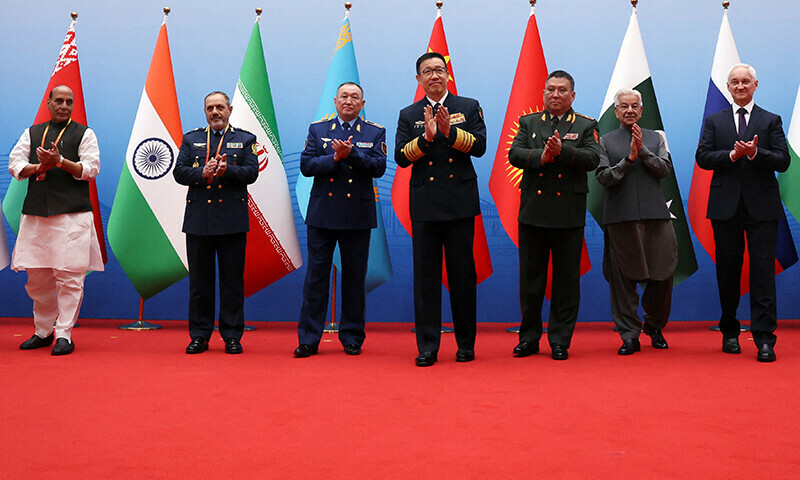
By Nitya Chakraborty India’s total diplomatic isolation was in show in the Shanghai Cooperation Organisation (SCO)’s defence ministers meet in Qingdao city in China on June 25 and 26 when a joint statement was prepared calling upon the members to jointly fight terror but there was no mention of Pahalgam killings on April 22 while […]
Advertisements

UNESCO has mobilised global policymakers, academics and civil society leaders in Bangkok to cement the adoption of its 2021 Recommendation on the Ethics of Artificial Intelligence, the world’s only universal AI ethics framework endorsed by all 194 member states. With over 1,200 delegates from 88 nations and more than 35 ministers present, the third Global Forum on the Ethics of AI underlined the urgency of embedding ethics […]

Alain Robert, the daredevil climber known as the French Spiderman, has ascended the 116‑metre Meliá Barcelona Sky Hotel without any ropes or harnesses to launch TIGERSHARK—claimed as the world’s first cryptocurrency backed by real‑world extreme sports feats. Clad in Tigershark-branded gear and accompanied by his son, former French Navy marine Julien Robert, he live-streamed the stunt via X to mark what organisers call a “Mission 1: Spiderman & Son” initiative.

Organisers describe TIGERSHARK as part of an emerging “Action Economy” in which each token is tied to real adrenaline-fuelled missions spanning big‑wave surfing, wingsuit flying, motocross and parkour. Holding the token grants access to private events, exclusive behind‑the‑scenes content and athlete “drops” – an attempt to fuse thrill‑seeking with blockchain community building.

Lilly Douse, spokesperson for Tigershark, emphasised the departure from traditional token launches: “not airdrops, not smoke and mirrors, but actual real‑world extreme feats, true adrenaline”. She added that the venture is betting on “guts and grits” as the currency’s value proposition.

Robert’s legacy as an urban climber spans more than 150 structures, including the Burj Khalifa, Eiffel Tower and Petronas Towers, all scaled without safety gear. At his current age in the early 60s, he remains committed to pushing boundaries—and this stunt launches a broader strategy merging sport, entertainment and crypto technology.

Discussions are already underway with elite athletes in other high‑risk disciplines—such as base jumping, parkour, wingsuiting and motocross—to participate in future missions. Tigershark’s roadmap includes sponsorships, branded merchandise, global events and athlete plugins, positioning itself as more than a token, but a fully-fledged action-sports brand powered by cryptocurrency.

The circus‑style unveiling has caught the attention of both crypto enthusiasts and adventure-sport communities. While token offerings tied to lifestyle and entertainment have a precedent, Tigershark’s novel angle lies in monetising raw human risk and authenticity. Crypto commentators on social media have amplified the narrative, describing the stunt as “the realest launch Web3 has seen” and “the wildest crypto launch ever”.

However, critics have raised concerns. The stunt’s stunt‑token concept may attract speculative interest, but some analysts warn linking token value to unpredictable physical events could introduce heightened volatility. Moreover, regulatory scrutiny looms over crypto ventures that employ unconventional marketing tactics, especially those involving public stunts with safety or legality risks.

Tigershark’s strategic focus on live‑streamed extreme feats and token‑holder exclusives mirrors broader trends in Web3: blending content, experience and community. Yet the project must deliver consistency and transparency. Observers will scrutinise whether future missions occur as scheduled, whether token economics remain sound, and whether token-holders genuinely receive promised perks.

By embedding risk and spectacle into its founding act, TIGERSHARK sets itself apart from conventional token launches. Early investor sentiment appears buoyed by novelty and potential for real‑world engagement. But delivering a sustainable “Action Economy” will require navigating regulatory complexities and proving that this fusion of blockchain and extreme sport can transform fleeting adrenaline into long‑term value.

NVIDIA Corp is a equity in the USA market. The price is 154.31 USD currently with a change of 6.45 USD from the previous close. The latest trade time is Thursday, June 26, 17:06:55 +0530. Nvidia Surpasses Microsoft to Reclaim Global Valuation Crown Nvidia has overtaken Microsoft to retake its position as the world’s most valuable publicly traded company, with a market capitalisation reaching approximately $3.77 trillion. The […]

Abu Dhabi sovereign investor ADQ is negotiating the acquisition of a 35 percent stake in Limagrain’s vegetable seeds unit, forging a strategic partnership focused on developing hard‑climate‑resilient crops. The envisioned alliance includes joint research and development initiatives in the UAE, designed to accelerate innovation in seeds tailored to extreme conditions. The proposed investment centres on Limagrain Vegetable Seeds, the vegetable‑seed division of France‑based cooperative Limagrain, a global market […]

By Saifur Rahman Global credit rating agencies Moody’s Investors Service, Standard and Poor’s and Fitch Ratings have assigned ‘AA’ rating with stable outlook for the UAE economy, despite the regional tension. This comes right after the cessation of the military conflict in the region that significantly reduces security, political and economic risks. Standard and Poor’s (S&P Global) on June 17 has assigned ‘AA/A-1+’ long- and short-term foreign […]

Greenlogue/AP A newly released global analysis reveals that funding for climate adaptation in the world’s most hazard-prone nations has dropped sharply, leaving them dangerously exposed to floods, heatwaves and storms. The Climate Risk Index 2025, based on data spanning 1993 to 2022 from EM-DAT, the World Bank and IMF, found that more than 765,000 people died and nearly US$4.2 trillion was lost in direct economic damage due to […]

Tether chief executive Paolo Ardoino has pledged to catapult the company into the position of the world’s leading Bitcoin miner by the end of 2025, asserting that crypto‑mining is key to safeguarding its $10 billion‑plus Bitcoin reserves. He outlined a sweeping strategy centred on large‑scale investment in mining and energy infrastructure across Latin America.

Ardoino said Tether has already channelled upwards of $2 billion into mining and energy systems and is now accelerating deployment. While the company’s precise hash‑rate remains confidential, executives emphasise that their investment reflects both scale and strategic intent. The mining push forms part of a broader financial architecture designed to secure the firm’s Bitcoin holdings and further embed it within the Bitcoin ecosystem.

The announcement emerged at the Bitcoin Conference in Las Vegas, where Ardoino noted Tether’s robust earnings—reporting a $13 billion profit in 2024—and a sizeable portfolio of U.S. Treasuries. He revealed the firm holds more than 100,000 BTC and hinted that the mining operation will leverage renewable energy sources supporting its underlying reserves.

Tether is concurrently preparing to open‑source its Bitcoin Mining Operating System, which the company says will democratise mining by enabling participants ranging from individual Raspberry Pi setups to large‑scale farms to connect into secure point‑to‑point networks. The move is intended to broaden participation, enhance resilience of the Bitcoin network, and solidify Tether’s position as a leader in infrastructure innovation.

Energy infrastructure forms a crucial part of Tether’s strategy. Ardoino highlighted investments across Latin America in renewable energy projects, including substantial commitments in Uruguay and El Salvador, where Tether relocated its headquarters and backs geothermal initiatives through a project known as Volcano Energy. These investments reflect a dual focus: securing clean, reliable power for mining and contributing to regional energy resilience.

The strategic rationale centres on mitigating the risks of holding large Bitcoin reserves. Mining, Ardoino explained, provides not only operational control but also reinforces financial sovereignty, anchoring assets within a secured blockchain‑based ecosystem. By internalising hash‑rate and power sources, Tether aims to shield its holdings from external dependency and volatility.

Security considerations have informed the launch of MOS. As a decentralised architecture, the system allows devices to operate without reliance on central servers, reducing vulnerability to single‑point failures or third‑party disruptions. Looking ahead, Tether plans to integrate artificial‑intelligence tools into MOS to monitor performance and optimise operations in real time.

Tether’s move into open‑source mining software dovetails with its broader tech ambitions. Ardoino introduced QVAC, an AI platform that uses non‑custodial wallets, and unveiled plans for a Bitcoin‑centric wallet developed with Rumble. These projects underscore Tether’s strategy to embed Bitcoin deeper into digital finance and expand its ecosystem services.

Market observers note that Tether’s mining ambition places it in direct competition with publicly traded mining firms. Although exact hashrate figures are absent, the scale of investment and reserve holdings suggest that surpassing existing miners is credible by late 2025. Tracking progress will require scrutiny of deployment timelines and performance metrics, which Tether has declined to specify.

Financial analysts regard Tether’s diversified asset approach—spanning Bitcoin, gold and U.S. Treasuries—as a deliberate hedge strategy. The large Bitcoin reserves, reportedly worth over $10 billion, alongside substantial gold and treasury holdings, underpin a multifaceted capital structure. By converting passive holdings into active mining assets, Tether aims to generate operational yield and enhance asset security.

Critics of large‑scale corporate mining warn of environmental strains and centralisation risks. Tether’s emphasis on renewable energy uptake and decentralised software architecture reflects an attempt to mitigate these concerns. If MOS and energy projects deliver as promised, the model may provide a template for sustainable, corporate-scale participation in Bitcoin mining.

Next steps include the public release of MOS, scheduled for later in 2025, alongside scaling up of energy infrastructure across targeted Latin American sites. Close monitoring of mining output, energy efficiency, and systems performance will determine whether Tether’s pledge translates into actual dominance in global Bitcoin mining.

Dubai has earned its reputation as the financial and technological capital of the Middle East—and when it comes to cryptocurrencies, the city is blazing ahead. With crypto-friendly regulations, tax-free gains, and strong government support for blockchain innovation, more people than ever are turning to secure, efficient crypto exchanges in Dubai to buy, sell, and hold digital assets. Whether you’re an investor, trader, or curious beginner, choosing the […]

Polymarket, the world’s largest blockchain-based prediction market platform, is on the verge of completing a funding round exceeding $200 million that would value the company at over $1 billion. The strategic investment reflects growing investor confidence in forecasting platforms as tools for real-time insights and market intelligence.

The company, founded in 2020 by Shayne Coplan and headquartered in New York, has previously secured $70 million across Series A and B rounds led by General Catalyst, Founders Fund, alongside participation from Ethereum co-founder Vitalik Buterin. That capital helped Polymarket scale its operations offshore, particularly following regulatory setbacks in the United States, where it withdrew services under pressure from the Commodity Futures Trading Commission.

Sources indicate the new investment round will build on these foundations, raising upwards of $200 million and propelling Polymarket into unicorn status with a valuation north of $1 billion. Those close to the transaction describe a diverse syndicate of venture capital firms, strategic investors and high-profile figures from the crypto and financial sectors, though official names are yet to be disclosed.

Polymarket’s appeal lies in its novel combination of decentralised finance, crowd-sourced wisdom and smart contract automation. The platform allows participants to trade on real-world events—ranging from elections and policy outcomes to entertainment and economic indicators—by buying and selling shares reflective of outcome probabilities. Transactions occur using USDC on Polygon, ensuring on-chain settlement and transparency.

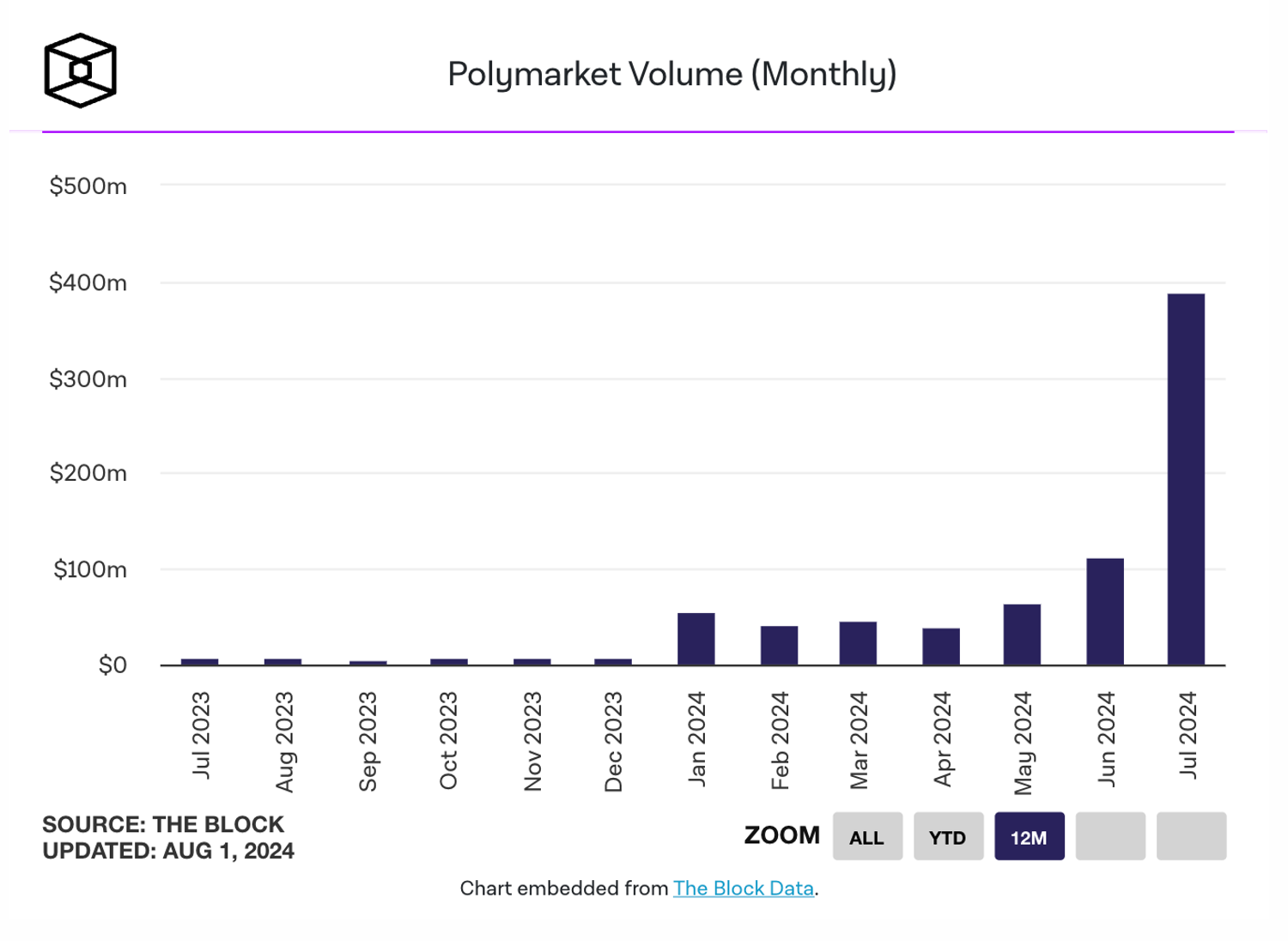
Trading volumes attest to the platform’s influence. In August 2024 alone, Polymarket processed approximately $472 million in trades, with political markets—especially those related to the US presidential election—accounting for nearly $1 billion in wagers by November 2024. Peter Thiel’s Founders Fund highlighted its trust in Polymarket’s market intelligence: “checking Polymarket when breaking news happens has become a habit”.

That compelling performance comes amid regulatory headwinds. Polymarket has barred US users since reaching a settlement with the CFTC in early 2022, which included a US$1.4 million fine and the appointment of former CFTC chairman J. Christopher Giancarlo to its advisory board. These changes aimed to address compliance concerns as the platform expanded internationally. More recently, the FBI reportedly raided Coplan’s home in autumn 2024 as part of an investigation into whether US-based activity violated these agreements.

Despite these challenges, Polymarket has continued to deepen its appeal. Ethereum co-founder Vitalik Buterin has publicly supported the broader application of prediction markets, terming them pioneers in “Info Finance,” an area he believes can enhance journalism, governance and scientific transparency. Polymarket’s data is now cited within Bloomberg’s Terminal services, offering institutional investors fresh analytical layers based on global betting dynamics.

The potential $200 million funding round is expected to include an allocation of token warrants enabling investors to participate in a future token issuance by Polymarket. Earlier reporting by CoinDesk and The Defiant in late 2024 highlighted a $50 million interim funding plan tied to a utility token offering, intended to integrate with or supplant the UMA oracle dispute-resolution system. That mechanism would allow users—or token holders—to validate market outcomes, an evolution that could expand Polymarket’s governance and on-chain autonomy.

Market observers view this token strategy as a logical advancement. Rising volumes and user engagement on election forecasts have revealed limitations in relying solely on external oracles; introducing a native token could decentralise verification and cement Polymarket’s position in the governance of its own markets.

Emerging trends suggest Polymarket is transitioning from an insurgent, crypto-native prediction exchange to a mainstream information infrastructure. Its user base now spans political analysts, financial professionals and retail traders. The recent partnership with X integrates Polymarket’s probabilistic feeds into social media dynamics, allowing users to access market sentiment in real-time alongside breaking news.

Yet questions over regulatory alignment remain. The CFTC is reportedly examining off-shore platforms that permit US bettor access, and lawmakers are considering broader prohibitions on event-based derivatives. The fallout from the 2024 FBI inquiry adds a layer of legal uncertainty, even as Polymarket navigates regulatory environments in Europe and Asia, where its platform has faced access restrictions from gambling regulators in Belgium, Poland, Singapore and France.

As Polymarket nears completion of its landmark funding round, it stands at a crossroads defined by opportunity and scrutiny. A valuation exceeding $1 billion would underscore investor conviction in its model, but unlocking the full potential of prediction markets may depend as much on regulatory clarity as on capital infusion.


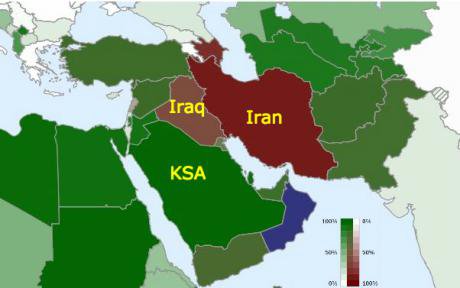
By Nantoo Banerjee It may be wrong to believe that Israel and the United States of America are the only two countries strongly against Iran’s bid to become a nuclear-armed country. The entire world is concerned about nuclear proliferation and nuclear smuggling and its falling into the wrong hands. The nature of the Iranian regime […]

Reddit is exploring integration of Worldcoin’s iris‑scanning Orb technology to verify that account holders are genuine, unique individuals while preserving user anonymity. The move aims to curb bot activity and AI‑generated content, and to comply with emerging age‑verification regulations. In discussions with Tools for Humanity, the Orb would capture an encrypted representation of a user’s iris—known as an IrisCode—to assign a secure, anonymous World ID. That identifier confirms […]

Saudi Arabian Oil Company, widely known as Aramco, is dramatically expanding beyond its oil and petrochemical roots into a diversified, technology-centric energy powerhouse. Under Chief Executive Amin Nasser, the enterprise is balancing its historic role as a revenue pillar for the Kingdom with aggressive investments in artificial intelligence, renewables, blue hydrogen, carbon capture and e‑fuels. Aramco’s strategic pivot is anchored in its financial strength. The company reported […]

The United Arab Emirates will integrate its National Artificial Intelligence System into the highest levels of government from January 2026. The system will serve as an advisory member of the Council of Ministers, the Ministerial Development Council, and the boards of all federal entities and government-owned companies. Its mandate includes supporting decision-making, providing real-time analysis, offering technical advice, and enhancing policy efficiency across every sector.

Dubai’s ruler and UAE Prime Minister, Sheikh Mohammed bin Rashid Al Maktoum, made the announcement on 20 June, emphasising that the world is undergoing “comprehensive transformation—scientifically, economically and socially.” He underscored that the move is intended to prepare the country for future challenges and to “ensure continued prosperity and a dignified life for future generations”.

This development builds upon the UAE’s decade‑long focus on artificial intelligence, which began with the appointment of Omar Sultan Al Olama as the world’s first Minister of State for Artificial Intelligence in October 2017. In early 2019, the National Artificial Intelligence Strategy 2031 was launched, setting the ambition to position the UAE as a global AI leader by 2031. Subsequent milestones include the founding of the Mohamed bin Zayed University of Artificial Intelligence in 2019 and Abu Dhabi’s Digital Strategy 2025‑2027, which aims to establish a fully AI‑powered government by 2027.

Analysts suggest that embedding the AI system at ministerial and federal‑company levels could accelerate data‑driven governance, reduce bureaucratic lag, and foster greater inter‑departmental cohesion. One Gulf Business commentator noted that the AI system would “enhance the efficiency of government policies adopted… across all sectors”. However, questions remain over oversight and transparency mechanisms, especially as the system begins analysis in real time.

International observers view the UAE’s strategy as part of a wider push by governments to use AI in public administration. Examples include Japan’s smart city prototype “Woven City” and various national AI offices globally. Still, no other nation has yet placed an AI inside its cabinet with ministerial‑level access.

Experts highlight both promise and peril. Proponents argue the system’s analytical speed can help identify emerging economic, environmental, and public health challenges before they escalate. Critics, however, caution that AI must be complemented by human judgment to avoid embedding algorithmic bias or over‑reliance on model outputs. Ethical guidelines—such as transparency, accountability, and fairness—will need to be codified and enforced to mitigate these risks.

Practical implementation looms as another challenge. Seamless integration into federal bodies and government companies will require significant investment in digital infrastructure, staff training, and inter‑agency coordination. These tasks fall within the remit of the Minister of State for AI, Digital Economy and Remote Work Applications, Omar Sultan Al Olama, who has spearheaded the country’s AI strategy since 2017.

As part of a broader governance overhaul, Sheikh Mohammed also announced the launch of a dedicated Ministry of Foreign Trade, led by Thani bin Ahmed Al Zeyoudi—and the renaming of the Ministry of Economy to the Ministry of Economy and Tourism under Abdullah bin Touq Al Marri.

The government asserts that the AI system will augment human capacity without replacing it, and that final decisions on strategy and policy will remain with elected or appointed officials. Mechanisms to monitor AI‑led inputs and outcomes are expected to be announced before the system’s January 2026 launch, according to insiders.

A British Royal Navy F‑35B Lightning II remains immobilised at Thiruvananthapuram International Airport after declaring an emergency on 14 June. The pilot reported low fuel amid rough sea conditions over the Arabian Sea before the jet, deployed from HMS Prince of Wales during the Indo‑Pacific Operation Highmast, touched down at 21:28 IST. The Indian Air Force’s Integrated Air Command and Control System coordinated the diversion alongside civilian air traffic control, declaring a full-scale emergency to ensure safe handling.

Initial refuelling took place on Sunday under IAF supervision, but the aircraft could not return to the carrier due to a hydraulic system failure. Royal Navy technicians arrived via helicopter from the carrier that night and began repair operations, but their efforts remain unsuccessful six days on. Additional British and American technical personnel—possibly including Lockheed Martin experts—have since taken charge, while a larger maintenance team is expected. If repairs remain inconclusive, the jet may be airlifted back aboard a military transport aircraft.

Valued at over $100 million, the F‑35B represents one of the world’s most advanced and expensive combat aircraft, equipped with short take‑off and vertical landing capability, stealth design, networked sensors, and naval adaptability. Its unscheduled landing in India highlights both the logistical complexities of advanced military aviation and the robust coordination between allied forces.

Security protocols have been stringent. The aircraft is stationed in Bay 4 under armed Central Industrial Security Force guard. The British team rejected offer to relocate it to a civilian hangar or protective shed, citing confidentiality concerns over sensitive systems, and insisted on repairs in open view under controlled conditions. Meanwhile, Royal Navy personnel, including the pilot and technicians, remain onsite with food and lodging provided by airport authorities, with Indian teams facilitating logistics throughout.

The incident marks the first unscheduled landing of a foreign-manufactured F‑35 on Indian territory and comes amid growing UK‑India defence cooperation. The jet had been flying as part of joint maritime exercises, including PASSEX drills with INS Tabar and other British ships in the northern Arabian Sea on 9–10 June. Analysts have noted the deployment underscores interoperability and strategic alignment between both nations, rather than any response to Middle East tensions.

Within 48 hours of landing, the aircraft had been refuelled and initially positioned for departure. However, the discovery of hydraulic malfunction extended its stay, prompting the dispatch of specialists from the UK and the US. Defence officials confirmed that the jet could be repatriated on a cargo plane if ground repairs remain unfeasible.

The episode has drawn public attention not only for its rarity but also for the international coordination displayed. Local observers are closely watching developments, while military commentators underscore the necessity of emergency recovery airfields like Thiruvananthapuram for carrier-based operations during unpredictable monsoon-season weather.

As of 20 June, the jet remains on the tarmac, awaiting either restoration or return via air transport. With a multinational technical team now assembled, a departure window is expected later this week—subject, of course, to successful hydraulic repair and formal clearances under Indian aviation protocols.

Aldar has secured over AED 3.5 billion in sales during the initial launch week of its Fahid Beach Residences and The Beach House on Fahid Island, underscoring strong demand for the developer’s new coastal wellness vision. Sales encompass a mix of 1- to 4‑bedroom apartments, townhouses and penthouses, with prices starting from around AED 3 million for residential units, and represent a pivotal milestone for the island’s debut as Abu Dhabi’s […]

Niger’s military-led government announced on 19 June 2025 that it is nationalising the Somair uranium joint venture, formerly dominated by French nuclear fuel company Orano. The announcement, aired on national television, declared that the State will now hold full ownership and management of the mine, citing inappropriate and inequitable conduct by Orano. Authorities assert that the 63 per cent stake held by Orano—alongside the remaining 37 per cent via state firm […]

If the United States launches direct military strikes against Iran, global stock markets will likely react with speed and force—dropping hard before any official policy statements are made or economic forecasts adjusted. This would not be a measured repricing. It would be a sharp reflex from investors who have, until now, largely overlooked the rising threat of a wider regional war in the Middle East. Equities across […]

VISHNU RAJA
RYO YAMADA
HITORI GOTOH
IKUYO KITA