News related to
Bank

BlockTower Capital founder Ari Paul has accused Coinbase of failing to return about $25 million belonging to his firm, while alleging that similar security breaches affected at least a dozen institutions and involved more than $1 billion. Paul, BlockTower’s founder and chief investment officer, made the claims in a social-media post on September 28, saying the loss occurred “a couple years ago”. He alleged that what initially […]

Arabian Post Staff -Dubai Senior Emirati women leaders have gathered in Dubai for a Women Board of Directors and PwC Middle East forum focused on leadership, resilience and expanding women’s influence across the UAE’s public and private sectors. The “Reaffirmation” gathering, held on September 28 at PwC Middle East’s Emaar Square offices, brought together Huda Buhumaid, Raja Al Mazrouei, Aarefa Al Falahi and Maha Al Hosani with […]

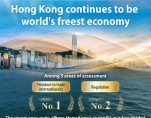
HONG KONG SAR – Media OutReach Newswire – 7 October 2026 – Hong Kong has again been rated as the world’s freest economy, according to the Economic Freedom of the World 2026 Annual Report, published on October 6 by the Canada-based Fraser Institute. Hong Kong remained top among 165 jurisdictions worldwide with Switzerland in second place.

The Hong Kong Special Administrative Region (HKSAR) Government welcomed the latest report, noting that, among the five areas of assessment, the city continued to be ranked first globally in “Freedom to trade internationally” and second in “Regulation”.

Hong Kong retains leading position as the world's freest economy

“The Fraser Institute’s report once again affirms Hong Kong’s strengths as a free-market economy and its open, efficient and fair business environment,” a spokesman for the HKSAR Government said. “Amid increasing global economic uncertainties and rising trade protectionism, Hong Kong remains firmly committed to maintaining its free port status, zero-tariff policy, and simple and low tax regime, providing a secure, stable, fair, predictable and internationalised business and investment environment for investors and entrepreneurs from around the world.”

“One country, two systems” advantages

The HKSAR Government highlighted that, under the “one country, two systems” framework, Hong Kong enjoys the strong support of the Chinese Mainland and maintains close connections with the rest of the world.

“While offering convenient access to both the Chinese Mainland and international markets, Hong Kong continues to practise common law in both Chinese and English,” the spokesman said. “It also offers financial, shipping, trading and professional services that align seamlessly with international best standards, supported by an efficient government structure and a clean and professional civil service.”

These strengths enable Hong Kong to fully leverage its roles and functions as a ‘super connector’ and ‘super value-adder’, making it the best gateway for Mainland enterprises to enter international markets and for overseas enterprises to enter the Mainland.

Attracting investment and talent

So far this year, Hong Kong has continued to scale new heights in various international competitiveness rankings covering finance, innovation and technology (I&T), education and talent, reflecting wide recognition by the international community of Hong Kong’s core strengths and the HKSAR Government’s efforts to promote high-quality social and economic development.

Indeed, Hong Kong’s favourable business and living environment, coupled with the proactive and concerted efforts of the HKSAR Government and all sectors of the community, continues to attract enterprises and talent from around the world.

Last year, the number of companies in Hong Kong with parent companies overseas or in the Mainland exceeded 11,000, an increase of 11 per cent over 2024 and a record high.

The Office for Attracting Strategic Enterprises (OASES), established by the HKSAR Government in 2022, has successfully attracted over 120 strategic enterprises to date, including many global industry leaders with a market capitalisation or valuation exceeding $100 billion and possessing cutting-edge technologies.

On talent attraction, from end-2022 to August this year, over 670,000 applications were received and over 470,000 were approved under various talent admission schemes, with more than 310,000 individuals having arrived in Hong Kong.

Over the past year, Hong Kong recorded considerable growth in funds raised through initial public offerings, bank deposits and assets under management in the asset and wealth management business, reflecting international investors’ confidence in and recognition of Hong Kong.

Looking ahead

Last month, the HKSAR’s Chief Executive, John Lee, announced the First Five-Year Plan for Economic and Social Development of the Hong Kong Special Administrative Region (2026-2030) (Hong Kong’s First Five-Year Plan) and the 2026 Policy Address.

Hong Kong’s First Five-Year Plan states that Hong Kong will remain committed to a free and open economic system and the free flow of capital, goods, people and information, all of which are Hong Kong’s core strengths under the “one country, two systems” framework.

“These efforts will inject stronger impetus into social and economic development, open up broader development prospects for local enterprises and the public, and provide greater opportunities for enterprises, investors and talent worldwide,” the spokesman said.

Hashtag: #HongKong #Freest #Economy #Investment #Talent


The issuer is solely responsible for the content of this announcement.

Ghana’s annual inflation could slow to between 4.1 per cent and 4.4 per cent in September, Databank Research has projected, as improved supplies of key food staples are expected to reverse part of August’s price pressure. The forecast would mark a renewed decline from the 5.0 per cent recorded in August, when headline inflation increased from 4.6 per cent in July. Databank said a late-season improvement in […]

Arabian Post Staff -Dubai Deutsche Bank has made three key appointments in its Dubai office as the German lender broadens investment banking coverage across the Middle East and seeks to capture growing capital-markets and institutional-client business. Ilya Korobov has relocated from London to Dubai as a director of debt capital markets for Central and Eastern Europe, the Middle East and Africa. He joined Deutsche Bank in November […]

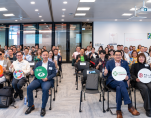
HONG KONG SAR – Media OutReach Newswire – 7 October 2026 – The World Green Organisation (WGO) successfully hosted the Sustainable Finance & Climate Innovation Exchange 2026 (ESG XCHANGE 2026) on 9 September 2026 as part of the Hong Kong Green Week 2026 event series, bringing together more than 100 senior executives, industry experts and professionals from banking, investment, insurance, real estate, technology, artificial intelligence, GreenTech, ESG and sustainability, professional services and other sectors.

Group Photo All

The event was supported by AWS Hong Kong as Event Partner and BOC Group Life Assurance Company Limited as Strategic Partner, with Hong Kong Institute of Circular Economy and Cantabrigian Consulting Limited serving as Supporting Organisations.

The event featured a distinguished line-up of senior leaders and experts from the financial, technology, GreenTech, business and social impact sectors to exchange perspectives on the future of sustainable transformation., including:

  • Mr. Ronald Young, Head of Sustainable Banking Development, Hong Kong Monetary Authority
  • Dr. William Yu, Founder and Chief Executive Officer, World Green Organisation
  • Mr. Chris So, Managing Director, AWS Hong Kong
  • Mr. Terry Yung, Chief Investment Officer, BOC Group Life Assurance Company Limited
  • Ms. Vivienne Chiu, Chief Brand and Communications Officer, BOC Group Life Assurance Company Limited
  • Mr. Eugene Li, Head of Outsourcing, GBA NATC Director, IBM
  • Mr. Ronald Cheung, Founder and Chief Executive Officer, Lifewood Data Technology Ltd.
  • Ms. Annie Cheung, Executive Director and CEO, Peoplebank Hong Kong Limited
  • Mr. Peter Wong, Deputy CEO, Dialogue-in-the-Dark HK Foundation
  • Mr. Angus Chan, Senior Manager, GreenTech, Hong Kong Science and Technology Parks Corporation
  • Mr. Arthur Lam, Co-founder and CEO, Negawatt Utility Limited
  • Mr. Terence Chow, Senior Generative AI Go-To-Market Specialist, AWS
  • Mr. Eric Chau, Enterprise Partner Success Strategist, AWS


From Sustainable Finance to Climate and Technology Innovation

The forum explored how capital, technology, innovation and people can work together to accelerate the transition towards a more sustainable and resilient economy. Speakers shared practical experience and forward-looking perspectives across sustainable finance, GreenTech, artificial intelligence, ESG innovation, talent development, accessibility and social impact.

A keynote presentation by Mr. Ronald Young, Head of Sustainable Banking Development at the Hong Kong Monetary Authority, highlighted key initiatives advancing sustainable finance in Hong Kong. Mr. Terry Yung, Chief Investment Officer of BOC Group Life Assurance Company Limited, shared an investment perspective on sustainable transformation, while Ms. Vivienne Chiu, Chief Brand and Communications Officer of BOC Life, highlighted the role of corporate engagement, strategic partnerships and innovation support in advancing ESG solutions and creating wider societal value.

The discussions reinforced Hong Kong’s role in international finance, technology and innovation, highlighting the importance of cross-sector collaboration in turning ESG strategies into measurable business, climate and societal value.

AI as an Enabler of Sustainable Transformation

Artificial intelligence emerged as a key theme throughout the event, with speakers examining how AI and data technologies can support ESG decision-making, improve operational efficiency, strengthen climate and sustainability intelligence, and accelerate innovation across industries.

At the same time, discussions also highlighted the importance of responsible AI adoption, workforce reskilling, accessibility and social inclusion, ensuring that technological advancement creates broader opportunities for businesses and society.

Turning ESG Strategy into Real-World Impact

Speaking at the event, Dr. William Yu, Founder and Chief Executive Officer of the World Green Organisation, highlighted that sustainable transformation requires the collective participation of finance, technology, business and society.

The future of ESG transformation will increasingly depend on how effectively organisations combine finance, technology, AI, human capability and cross-sector collaboration to create measurable business, climate and societal value.

WGO will continue to develop the ESG XCHANGE series as a platform to connect different sectors, promote practical partnerships and translate ESG strategies into business value, climate impact and societal value.

Hashtag: #WGO


The issuer is solely responsible for the content of this announcement.

About World Green Organisation

The World Green Organisation (WGO) is an independent non-governmental organisation concerned with environmental conservation and environmentally related livelihood and economic affairs. It provides a holistic approach to a fully integrated three-pronged solution that combines social, environmental and economic dimensions for a paradigm shift towards low-carbon and climate-resilient development pathways.

Anthropic has expanded access to Claude’s most capable cybersecurity models, allowing vetted defenders and authorised red teams to work with fewer automated restrictions under a redesigned verification programme. The AI company said its expanded Cyber Verification Program, announced on October 6, combines its previous verification scheme with Project Glasswing, a controlled-access initiative created for organisations protecting critical software. The new structure divides access into Defense, Red Team […]

Advertisements

Arabian Post Staff -Dubai Saudi Real Estate Refinance Company has agreed to acquire another residential mortgage portfolio from Banque Saudi Fransi, marking the third portfolio purchase between the two institutions as Saudi Arabia expands liquidity in its housing finance market. The Public Investment Fund-owned company, known as SRC, said the transaction would reinforce cooperation with BSF by supplying liquidity to mortgage lenders and increasing their capacity to […]

By Annie Domini Jeffrey Archer, British writer and politician synonymous with pot-boilers, page-three scandals and perjury, but also page-turners that were among the biggest publishing blockbusters of all times, has died at 86. Archer was a household name in India, and incidentally sold more copies his books here than in his home turf, the UK, […]

The article Best-Selling British Writer And Icon Jeffrey Archer Dies At 86 appeared first on Latest India news, analysis and reports on Newspack by India Press Agency).

Combining real-time AI credit monitoring with Ethereum smart contracts and USDC settlement, Asia’s digital trade finance leader addresses a US$2.5 trillion SME trade financing funding gap opportunity.

HONG KONG SAR – Media OutReach Newswire – 6 October 2026 – Qupital, Asia’s leading AI-driven fintech platform specializing in cross-border e-commerce trade finance, today announced the official launch of the world’s first AI-driven on-chain e-commerce lending protocol. The breakthrough solution shifts day-to-day trade loan operations into an automated, highly transparent framework powered by smart contracts and proprietary AI credit monitoring.

The launch comes directly ahead of Token 2049, as Qupital positions itself at the intersection of Decentralized Finance (DeFi) and Real-World Assets (RWA). By deploying USDC via Ethereum smart contracts, Qupital eliminates legacy banking delays and manual oversight, delivering instant, 24/7 liquidity to high-growth global merchants. The protocol utilizes automated dynamic credit monitoring to continuously adjust credit exposure based on real-time sales-to-loan performance. When store metrics deviate from set parameters, smart contracts automatically invoke payment gateway APIs to intercept platform cashflows, which captures store earnings to satisfy debt obligations and revenue targets.

Key Innovations of the Protocol

  • Instant, 24/7 Global Liquidity: Complements existing banking channels by deploying USDC directly to e-commerce merchants via smart contracts, enabling real-time capital access synchronized with global e-commerce velocity.
  • AI-Guarded Risk Control: Integrates Qupital’s proprietary AI engine with automated payment gateway APIs to monitor sales performance and capture settlement cashflows directly, drastically reducing credit risk. Merging AI intelligence with on-chain execution for trade finance. Powering digital trade through automated, smart-contract-driven liquidity vaults unlocks unprecedented operational efficiency and dynamic risk control without human intervention.
  • Automated Capital Efficiency: Replaces manual back-office drawdown verification and settlement calls with smart contracts, accelerating capital turnover and reducing operational overhead.
  • Real-Time Proof of Reserves & Auditability: Every active loan is tokenized on-chain to Qupital’s Treasury Vault, providing institutional lenders and partners with 1:1 real-time balance sheet verification.

A Multi-trillion Market opportunity

B2B cross-border stablecoin settlements are projected to reach $5 trillion by 2035, with over 54% of cross-border enterprises preparing to adopt stablecoin payment infrastructure. Qupital’s protocol directly addresses this surge in institutional and merchant demand.

“Agentic commerce and instant global settlement require financing infrastructure that operates around the clock. While traditional banking channels remain a core pillar of our trade finance operations, utilizing blockchain rails allows us to streamline distribution and accelerate settlement times. Integrating our proprietary AI risk engine directly into on-chain frameworks eliminates operational friction, minimizes non-performing loans, and expands our global footprint.”

— Winston Wong, Co-Founder & CEO of Qupital

Having processed over US$9.5 billion in cumulative trade financing while maintaining industry-leading credit performance, Qupital’s move on-chain sets a new institutional standard for tokenized trade finance. The company already has an active pipeline of USD 100 million in financing to be fulfilled on-chain.

Building on its recently announced Series C financing, Qupital continues to execute on its long-term growth roadmap. The launch of the protocol further diversifies Qupital’s capital execution options and accelerates its entry into new global markets. By bringing real-world quality trade assets on-chain, Qupital directly addresses the multi-trillion-dollar SME financing gap, delivering accessible, frictionless capital to digital enterprises that are underserved by traditional banks and financial institutions worldwide.

Hashtag: #Qupital


The issuer is solely responsible for the content of this announcement.

About Qupital

Qupital is a Series C stage fintech platform and Asia’s leader in data-driven financing solutions for digital businesses. Headquartered in Hong Kong, Qupital empowers e-commerce businesses trading on global platforms including Amazon, JD.com, Tmall, TikTok Shop, and Pinduoduo. As the first platform in Asia to securitize e-commerce merchant loans, Qupital combines industry-leading credit performance and sustained profitability with backing from global financial institutions including HSBC and MUFG, as well as strategic investors including M Capital, Alibaba, MindWorks Capital, Greater Bay Area Homeland Development Fund, and the Innovation and Technology Ventures Fund of the Hong Kong SAR Government.

By Nantoo Banerjee The hand-picked 30-share sensitive index (Sensex) of Bombay Stock Exchange, which has long been seen as the country’s overall industry performance barometer, seems to be losing its reliability under profit-booking punters’ whims. The Sensex faced sharp selling pressure last week, closing down at 72,972.56 after plunging over 1,000 points earlier in the […]

The article Corporate Sector Is Growing Well Despite Iran War, Poor Monsoon appeared first on Latest India news, analysis and reports on Newspack by India Press Agency).

By R. Suryamurthy Nine years after GST replaced a maze of central and state indirect taxes, the most revealing measure of its success may no longer be the monthly collection number. The harder question is whether India has built a tax system in which the government can distinguish between a taxpayer who is trying to […]

The article GST 3.0 Needs A New Bargain With Taxpayers, A Climate Without Fear appeared first on Latest India news, analysis and reports on Newspack by India Press Agency).

Grade A Office Availability Rate Drops Further, High Street Leasing Activities Focus on Kowloon

  • Residential Market: Market sentiment turned more cautious in Q3, with total residential transaction numbers slipping by 40% q-o-q and 21% y-o-y to record around 13,240 cases. Home prices softened by 0.8% between July and August, yet, supported by stronger 1H performance, still recorded a cumulative rise of 7% in the first eight months of 2026.
  • Grade A Office Market: Citywide net absorption reached 412,400 sq ft in Q3, mainly driven by expansion activities by the banking, financial services and insurance (BFSI) sector. Rents in Greater Central continued to pick up, while rental level declines in non-core submarkets narrowed. The overall office market rental level is expected to rise by +5% to +7% in 2026.
  • Retail Market: Overall retail sales growth remained resilient on the back of growing tourist arrivals and stronger economic fundamentals supporting local consumption sentiment. The overall high street vacancy rate remained broadly stable in Q3, with leasing activities concentrated in Mongkok and Tsimshatsui.

HONG KONG SAR – Media OutReach Newswire – 5 October 2026 – Global real estate services firm Cushman & Wakefield today held its Hong Kong Property Markets Q3 2026 Review andOutlook press conference. The Hong Kong residential market entered a consolidation phase in Q3 amid a shift in the U.S. Federal Reserve’s interest rate outlook, increased stock market volatility, and tighter cross-border capital controls in the Chinese mainland. Against this backdrop, residential transaction numbers dropped by 40% q-o-q to record around 13,240 cases in Q3, while home prices declined by 0.8% during July and August. In the Grade A office market, the total new leased area for Q3 reached 1.4 million sq ft, the highest quarterly level since 2019, supported by expansion activities from the BFSI sector. Citywide net absorption reached +412,400 sq ft for the quarter, bringing the overall availability rate to trend further downward, while YTD rental growth recorded +6.1%. In the retail sector, total retail sales remained resilient in Q3. The overall high street vacancy rate remained broadly stable during the quarter, chiefly supported by more active leasing commitments in Mongkok. Leasing activity in Hong Kong Island districts moderated somewhat.

Grade A office leasing market:BSFI expansion demand fuels leasing momentum

The Q3 2026 period marked another active quarter for Hong Kong’s Grade A office market. Total new leased area reached 1.4 million sq ft in Q3, the highest quarterly level since 2019. The banking, financial services, and insurance (BFSI) sector, and consumer products / manufacturing sectors, were the key demand drivers, with BFSI occupiers largely expansion-led. Citywide net absorption reached +412,400 sq ft in the quarter. This performance helped pull down the overall availability rate 0.4 percentage point q-o-q to 19.1%. Core district rents continued to outperform non-core areas. Greater Central rents continued to climb by a further 3.0% q-o-q in Q3, while non-core area rental level declines further narrowed. Rents in Hong Kong East and Hong Kong South edged up slightly in Q3. The overall citywide rental level rose by 1.7% q-o-q in Q3, bringing YTD rental growth to +6.1%.

John Siu, Managing Director, Hong Kong, Cushman & Wakefield,said, “Rents in Greater Central grew by 13% YTD, reflecting strong demand for prime offices. However, mid-priced Grade A offices, particularly those with net effective rents of around HK$45-60 psf, are expected to continue facing headwinds, as abundant existing space and forthcoming supply across multiple submarkets within this price range is likely to sustain intense competition.”

Siu added, “Looking ahead, positive market momentum is likely to partly offset the scheduled 1.2 million sq ft of new supply in Q4, keeping the availability rate broadly stable at 19% to 20% at the year-end. With a decelerating supply pipeline beyond 2026, availability may have passed its cyclical peak in 2025, but non-core areas will continue to face absorption pressure. Full-year rental growth in Greater Central is now projected to grow by +12% to +14%, supporting the citywide Grade A office rental level to rise by +5% to +7% in 2026.”

Retail leasing market: Retail sales growth remains resilient, with Mongkok leading high street leasing activities

Hong Kong retail sales growth remained resilient in Q3, driven by growing tourist arrivals and stronger economic fundamentals supporting local consumption sentiment. The city’s overall retail sales for the January to August 2026 period reached HK$266 billion, up 8.5% y-o-y. Among key retail categories, the Jewellery & Watches sector recorded the strongest performance, recording y-o-y sales growth of 22.6%. Other sectors, such as Medicines & Cosmetics (+5.0%) and Fashion & Accessories (+3.2%), recorded more modest low single-digit growth.

The overall high street vacancy rate remained broadly stable at 5.4% in Q3, chiefly supported by more active leasing commitments in Mongkok, with the district’s vacancy rate dropping to 4.8% from 8.6% in Q2. In Tsimshatsui, although the vacancy rate moved up to 9.5%, notable new transactions were also recorded during the quarter. On Hong Kong Island, vacancy rates in Causeway Bay and Central increased in Q3, rising to 5.1% and 1.4%, respectively, after remaining at 0% for two consecutive quarters. With prime retail spaces in both districts fully occupied in previous quarters, leasing activity moderated in Q3.

High street retail rents in both Causeway Bay and Tsimshatsui remained unchanged in the quarter. In Mongkok, stronger leasing momentum supported a 0.4% q-o-q rise in rental levels. As for Tsimshatsui, a slowdown in the luxury segment combined with relatively high vacancy weighed on the district’s rental performance, resulting in a fall of 1.1% q-o-q. In the F&B sector, rents remained under pressure amid high availability, dropping within a 1% range q-o-q across the four key districts.

John Siu commented, “We have observed stronger leasing demand from Japanese, South Korean and Thai brands in recent months. Looking at the first-stores recorded so far this year, approximately 36% originated from Japan, South Korea and Thailand, similar to the share accounted for by Chinese mainland brands, while exceeding the 29% recorded for 2025 full-year. We expect this trend to continue through the remainder of the year. Looking ahead, the Hong Kong retail market is expected to remain supported by resilient local consumption resulting from stronger economic fundamentals, together with greater tourist spending underpinned by a stronger RMB, and a pipeline of planned mega-events. These factors will bring continued momentum to the city’s retail market. We also expect local and non-local retailers to remain selective, with demand focused on well-located retail spaces in core districts offering attractive rental packages. In turn, the city’s retail market is likely to maintain a gradual recovery trajectory. We forecast high street retail rents in Causeway Bay and Central to pick up by 2% to 3% y-o-y in 2026, with Tsimshatsui and Mongkok recording modest rental growth of 1% to 2% y-o-y.”

Residential Market: Home prices consolidate as transaction numbers cool in Q3, rate hikes remain key

The Hong Kong residential market consolidated somewhat in Q3 following the strong momentum recorded in 1H. After the sustained release of purchasing power over the past year, coupled with the shift of the U.S. Federal Reserve rate direction, increased stock market volatility and heightened uncertainties, some prospective buyers reverted to a wait-and-see stance. This resulted in a noticeable slowdown in transaction activity from July onwards. The monthly transaction number, which averaged more than 7,000 cases in Q2, fell back to around 4,000 deals between July and September. A total of 13,242 residential transactions were recorded in Q3, down 40% q-o-q, bringing cumulative transactions to reach 54,052 cases for the first nine months of the year, representing an 18% increase y-o-y.

Edgar Lai, Senior Director, Valuation and Consultancy Services, Hong Kong, Cushman & Wakefield, commented, “Housing price growth momentum decelerated in Q3 2026. Rating and Valuation Department data suggests that the overall residential price index softened by 0.8% in the two months from July to August, yet still achieved 7.0% growth for the first eight months of 2026. Meanwhile, our Cushman & Wakefield mid-and-small size units price index shows that home prices mildly dropped 0.1% q-o-q, yet still registering a cumulative increase of 7.7% year to date. Our tracking of popular housing estates shows that prices softened in Q3 across different market segments. Prices at City One Shatin, representing the mass market, declined by 5.7% q-o-q, while prices at Taikoo Shing, representing the mid-market, dropped by 0.6% q-o-q. Residence Bel-Air, representing the luxury segment, retreated by 3.8% q-o-q. Following the sustained release of purchasing power over the past year, coupled with tighter cross-border capital controls from the Chinese mainland, and the U.S. Fed rate hike of 0.25% in September, our September Verbal Enquiry Index declined by 35% compared with the peak seen in May.”

Rosanna Tang, Deputy Managing Director, Head of Research, Hong Kong, Cushman & Wakefield, added, “The city’s residential market consolidated in Q3, with monthly transactions retreating to around 4,000 cases. The slowdown reflects a more cautious stance among homebuyers amid shifting interest rate expectations and heightened external uncertainties. Looking ahead, the frequency and pace of rate hikes, together with whether local banks will follow suit, will be the key factors affecting homebuyers’ purchasing decisions and affordability. Given the slower pace of transactions in Q3, we have revised our full-year residential transaction forecast to around 67,000 to 68,000 cases.

“As for pricing, should the U.S. Fed rate further increase in Q4, the residential market is expected to remain in a consolidation phase, with 2026 annual home prices likely to fluctuate in a narrow range near +7%. The rental market, however, will be more resilient underpinned by rental demand brought by the inflow of talent, non-local students, and new entrants to the city. With rental growth of 4.9% recorded in the first eight months of the year, we project a 5% to 7% y-o-y increase for the full year of 2026.”

Hashtag: #CWK

The issuer is solely responsible for the content of this announcement.

About Cushman & Wakefield

Cushman & Wakefield (NYSE: CWK) is a leading global commercial real estate services firm for property owners and occupiers with approximately 53,000 employees in nearly 350 offices and 60 countries. In Greater China, a network of 23 offices serves local markets across the region. In 2025, the firm reported revenue of $10.3 billion across its core services of Valuation, Consulting, Project & Development Services, Capital Markets, Project & Occupier Services, Industrial & Logistics, Retail, and others. Built around the belief that Better never settles, the firm receives numerous industry and business accolades for its award-winning culture. For additional information, visit www.cushmanwakefield.com.hk or follow us on LinkedIn (https://www.linkedin.com/company/cushman-&-wakefield-greater-china).

BANGKOK, THAILAND – Media OutReach Newswire – 5 October 2026 – The Long-Term Resident (LTR) visa has attracted 12,010 high-potential foreigners to Thailand in four years, generating approximately USD 1.28 billion (THB 43 billion) in economic value, according to the Board of Investment (BOI). The visa is a key mechanism for attracting executives and highly skilled personnel for future industries while increasing purchasing power and stimulating domestic spending and economic activity. A new online system now links services from four government agencies in an integrated process.

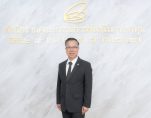
Mr. Narit Therdsteerasukdi, Secretary General of the Thailand Board of Investment (BOI)

Introduced in September 2022 to attract high-potential foreigners to reside and conduct economic activities in Thailand, the LTR visa program has generated an average economic value of more than USD 107,000 (THB 3.6 million) per recipient, according to BOI data. The calculation covers visa fees, spending in Thailand by visa holders, direct investment, and tax revenue from highly skilled professionals.

Amid intensifying global competition for highly skilled personnel, the LTR visa is an important mechanism for bringing global talent into Thailand. This is particularly relevant as the country prepares for a new wave of investment in advanced-technology industries, including semiconductors and advanced electronics, digital technology and AI, humanoid robotics, aviation, and biotechnology.

“The LTR visa is a strategic pillar to attract global talent as Thailand absorbs a new wave of advanced technology investments,” said Narit Therdsteerasukdi, Secretary General of the Board of Investment. “Drawing top-tier executives and technical specialists from around the world is vital to strengthening our national competitiveness and securing technology transfers from international partners.”

Approved LTR visa recipients primarily come from leading economies. The United States accounts for the largest group, with more than 2,400 approvals, followed by Japan with more than 1,300 and the United Kingdom with more than 1,000. Japanese nationals comprise a notable share of the specialist bracket, aligning with Japan’s heavy footprint in Thailand’s automotive and precision-electronics supply networks.

The 12,010 approved LTR visa recipients fall into five categories: 1,779 Highly-Skilled Professionals; 1,043 Work-from-Thailand Professionals, who work from Thailand for overseas employers; 737 Wealthy Global Citizens; 4,561 Wealthy Pensioners; and 3,891 Dependents of recipients in the first four categories.

Among recipients in the Highly-Skilled Professionals and Work-from-Thailand Professionals categories, 54% hold executive-level positions and 36% are professionals in various fields; the remainder are at the technical level. Applicants in each category must meet specific criteria, such as requirements relating to assets, income, investment evidence, work experience, and health insurance, and undergo rigorous checks by the relevant agencies.

To handle rising application volumes and remove long-standing administrative bottlenecks, the BOI rolled out an integrated digital processing portal in September 2026. The platform centralizes review procedures across four primary state bodies: the Department of Consular Affairs, the Immigration Bureau, the Department of Employment, and the Revenue Department.

Complementing the portal, the Thailand Investment and Expat Services Center (TIESC), a one-stop service center, is located on floors 6-7 of the Parade Zone at One Bangkok. “The center is intended to strengthen Thailand’s competitiveness in continuously attracting high-potential talent from around the world,” said Mr. Narit.

In addition to attracting foreign talent through the LTR visa, BOI also facilitates visas and work permits for executives and personnel working in BOI-promoted businesses through the BOI Visa, and offers the Smart Visa for startups. BOI also supports the skills development of Thai personnel through the Skill Bridge measure, and helps Thai entrepreneurs adopt modern technology to enhance their competitiveness through the Business Transformation measure. These measures work hand in hand to attract international experts, develop Thai personnel, and upgrade Thai businesses, strengthening Thailand’s readiness for the transition to a new economy driven by technology and innovation.


Note: Currency conversions are based on the Bank of Thailand’s average selling rate of approximately 1 USD = 33.6 THB.

Hashtag: #Thailandboardofinvestment #BOI #FDI #Investment

The issuer is solely responsible for the content of this announcement.

Thailand Board of Investment (BOI)

Established in 1966, the Office of the Board of Investment (BOI) has played an important role for more than 60 years in promoting value-creating investment by both foreign and Thai investors, strengthening competitiveness and supporting Thailand’s sustainable economic restructuring toward the new economy.

Ethiopian federal forces have retaken Mekelle’s airport and moved into other strategic parts of the Tigray regional capital after fighters loyal to the Tigray People’s Liberation Front withdrew, marking a significant shift in renewed fighting in northern Ethiopia. The advance gave federal troops control of a crucial transport hub serving Mekelle as Tigrayan forces pulled back from positions around the city. The whereabouts of senior TPLF figures […]

Cloudflare has released two open-source artificial intelligence decision models, Clef and Clef-flash, mounting a direct challenge to TypeSafe AI’s Jev in the emerging market for fast, structured decisions inside software and autonomous-agent workflows. The company made both models available through Workers AI on October 1 and released their weights on Hugging Face under the Apache 2.0 licence. Clef has 27 billion parameters, while the latency-focused Clef-flash has […]

Arabian Post Staff -Dubai The UAE Ministry of Finance has listed its second five-year Sovereign Retail T-Sukuk on Nasdaq Dubai, opening the government-backed Islamic instrument to secondary-market trading after subscription, allocation and settlement were completed. The offering drew subscription orders of AED285 million, about 5.7 times its AED50 million target, underscoring demand among individual investors for the second issuance under the sovereign retail programme. The sukuk carries […]

HONG KONG SAR – Media OutReach Newswire – 2 October 2026 – UstarPay announced that it will co-host “Token2049 Networking Event with BitGo, HashKey & UstarPay” with BitGo and HashKey Cloud during TOKEN2049 Singapore. The event will take place in Singapore and will be subject to registration approval. The exact venue address will be provided to approved participants after registration.

The event will bring together industry participants from digital assets, fintech, payments, Web3 infrastructure, institutional services, and cross-border finance. It aims to provide a face-to-face networking platform for institutions, project teams, infrastructure providers, investors, and professionals. Discussions will focus on digital asset infrastructure, compliant payments, stablecoin use cases, wallet and card services, and how digital assets can enter real-world payment scenarios.

Event Details

Event Name: Token2049 Networking Event with BitGo, HashKey & UstarPay
Date & Time: Wednesday, 7 October, 18:00–21:00 GMT+8
Event Partners: BitGo, HashKey Cloud, UstarPay
Registration: Submit an application through the official Luma event page
Registration Link: https://luma.com/qjgwthvg
Entry: Approved participants may enter with a valid QR code

Please note that this event requires registration approval. All participants must submit an application through the official Luma event page. The hosts will review applications based on applicant background, industry relevance, and event capacity. Once approved, participants will receive an event QR code. Only approved participants with a valid QR code will be admitted to the event. An invitation or shared event information does not constitute official admission credentials.

Stablecoins Enter the Next Stage: From On-Chain Assets to Real-World Payments

In recent years, stablecoins have evolved from a funding tool primarily used in crypto trading into a payment and settlement medium within the global digital economy. As cross-border work, global freelancing, online subscriptions, e-commerce, and international trade continue to grow, the market demand for faster, more flexible, and geographically accessible payment methods has continued to increase.

However, for digital assets to truly enter everyday life, one core question remains: how can the speed of on-chain transactions be connected with the trust, compliance, and settlement systems required by the real world?

In traditional financial and payment networks, every movement of funds must address fundamental questions: who the user is, where the funds come from, whether the transaction is compliant, whether risk can be identified, and whether the settlement trail can be audited. For digital asset payments, these questions do not disappear simply because technology becomes faster. Instead, they become essential conditions for digital assets to move toward broader, scalable adoption.

UstarPay’s role is to build the infrastructure that connects on-chain assets with real-world payment scenarios during this transition.

About UstarPay’s Role in Real-World Digital Asset Use

UstarPay is a PayFi-focused infrastructure platform connecting supported digital assets with real-world spending and transaction use cases. Its core vision is to help digital assets move beyond trading, holding, or investment and become more practical for everyday and commercial use, subject to applicable requirements.

By connecting wallet, card, and related technology infrastructure, UstarPay helps eligible individuals and businesses access card and transaction solutions using supported digital assets. In applicable markets, and subject to supported assets, product settings, and relevant requirements, users may explore stablecoins and other supported digital assets for online shopping, travel and hotel spending, subscription services, cross-border purchases, in-store purchases, and, where applicable, ATM withdrawals.

For enterprises, UstarPay explores modular technology support connected to card applications, risk management, and settlement workflows. Relevant use cases may be considered for eligible platforms and businesses, subject to applicable laws, partner requirements, product scope, and case-by-case assessment.

UstarPay believes the future of digital asset use is not only about whether a transaction can be completed, but also whether relevant activity can be verified, monitored, risk-assessed, reviewed, and settled. Based on this view, UstarPay is exploring “Proof-of-Spend” as part of its digital asset application narrative. By connecting identity verification, AML processes, asset custody, on-chain risk assessment, transaction records, and settlement workflows, UstarPay is exploring how digital asset applications can be supported by more verifiable, monitorable, and traceable process foundations.

From a risk management and traceability perspective, UstarPay considers identity verification, on-chain transaction monitoring, asset custody, and settlement records as relevant components where applicable. The company may work with relevant technical service providers in these areas. This registration does not mean that all products, services, or markets are authorized or available. Relevant services remain subject to applicable laws and regulations, user eligibility, supported assets, product settings, partner requirements, and jurisdictional restrictions.

Guided by “Real Crypto, Real Life,” UstarPay’s long-term direction is to help supported digital assets move from on-chain holdings toward card and transaction applications that can be used in everyday and commercial contexts, subject to product configuration, applicable requirements, supported assets, and regional availability.

Event Significance: Connecting PayFi, Stablecoin Payments, and Institutional Infrastructure

The co-hosts of this event span digital asset custody, institutional infrastructure, PayFi, stablecoin payments, and on-chain yield. This reflects the digital asset industry’s ongoing evolution from single-purpose trading scenarios toward more mature financial and payment infrastructure.

As stablecoins continue to become an important tool for value movement in the global digital economy, the market demand for compliant payment access, secure asset custody, risk control infrastructure, and cross-border settlement capabilities continues to grow. Through this event, UstarPay hopes to engage with more industry participants to discuss how digital assets can enter the real world in a safer, more compliant, and more practical way.

Hashtag: #UstarPay

The issuer is solely responsible for the content of this announcement.

About BitGo

BitGo (NYSE: BTGO) is the digital asset infrastructure company delivering custody, wallets, staking, trading, financing, stablecoins, and settlement services from regulated cold storage. Since 2013, BitGo has focused on accelerating the transition of the financial system to a digital asset economy. BitGo maintains a global presence and multiple regulated entities, including BitGo Bank & Trust, National Association, the first federally chartered digital asset trust bank owned by a publicly traded company. Today, BitGo serves thousands of institutions, including many of the industry’s top brands, financial institutions, exchanges, and platforms, and millions of investors worldwide. For more information, visit .

About UstarPay

UstarPay is a PayFi-focused infrastructure platform designed to connect digital assets with real-world spending and transaction use cases. By connecting wallet, card, and related technology infrastructure, UstarPay helps eligible users and businesses access convenient card and transaction solutions using supported digital assets.

With a focus on compliance, transparency, and risk management, UstarPay is developing digital asset experiences designed to support traceability and transparency in supported markets. Guided by “Real Crypto, Real Life,” the company is focused on making supported digital assets more practical and relevant to everyday life, subject to applicable requirements and availability. Relevant services remain subject to applicable laws and regulations, user eligibility, supported assets, product settings, and regional availability.

For more information, please visit .

About HashKey Cloud

HashKey Cloud is the institutional staking and yield infrastructure of HashKey Group (HKEX: 3887). It focuses on providing secure, auditable multi-chain staking and yield services for global institutions, asset managers, and professional investors. Our services include ETF/DAT staking, prime VIP staking, API staking, and prime yield, empowering institutions to manage on-chain assets and returns with efficiency and confidence.

Disclaimer: Relevant services are subject to applicable laws and regulations, user eligibility, supported assets, partner requirements, and geographic restrictions. Not all services are available in all markets.


Foreign investors are taking a growing role in financing North America’s artificial intelligence infrastructure build-out as technology companies tap global pools of capital to meet spending approaching $1 trillion, according to JPMorgan Asset Management. Charles Wu, head of Asia-Pacific alternatives institutional client strategy at JPMorgan Asset Management, told the SuperReturn Asia conference in Singapore on Wednesday that banks and institutional investors from Asia, the Gulf and other […]

Open USD, a dollar-backed stablecoin supported by major payments, technology and cryptocurrency companies, has gone live with a model that distributes reserve income and ownership to businesses that help expand its use. The stablecoin began operating on Wednesday across Ethereum, Solana, Base and Tempo, according to Open Standard, the independent company behind the project. Coinbase, Mastercard, Shopify, Stripe and Visa are its founding partners and investors, and […]

OpenAI is seeking at least $30 billion in fresh capital at a valuation of about $1.4 trillion before the new investment, as the ChatGPT maker turns again to private markets after delaying plans for an initial public offering. Discussions with prospective investors remain at an early stage and terms could change, people familiar with the fundraising have said. Investor demand is driving the potential transaction as OpenAI […]

Japan’s two-year government bond auction drew stronger-than-average demand on Wednesday as yields near three-decade highs encouraged investors to buy short-dated sovereign debt despite expectations that the Bank of Japan could tighten monetary policy further.

The sale of about ¥2.8 trillion of two-year Japanese government bonds attracted demand above its 12-month average, improving markedly from the weak August auction. The result suggested that higher yields are beginning to compensate investors for the risk of additional increases in official interest rates.

The two-year JGB yield was around 1.95% before the auction, close to 2% and its highest region since 1995. Short-dated bonds had gained earlier in the session, tracking an overnight advance in comparable US Treasuries, with the two-year yield edging lower as prices rose.

Demand at the auction was closely watched because two-year debt is particularly sensitive to expectations for Bank of Japan policy. The central bank raised its policy rate to 1.25% in September, the highest level in 31 years, as policymakers confronted persistent inflation pressures, elevated energy costs and the effects of a weaker yen on import prices.

Minutes of the Bank of Japan’s July meeting, released this week, showed policymakers had discussed whether interest rates might need to rise faster if inflation risks intensified. Several board members stressed the importance of anchoring inflation around the central bank’s 2% target, reinforcing market expectations that policy normalisation has further to run.

Those expectations have driven yields sharply higher across Japan’s government bond curve. The benchmark 10-year yield was around 3.09% on Tuesday, near the 30-year high of 3.115% touched last week. Five-year yields have also reached record levels, while yields on super-long bonds remain elevated as investors weigh inflation, fiscal spending and the outlook for government issuance.

Wednesday’s auction nevertheless indicated that the repricing is creating buying opportunities at the shorter end of the curve. Investors receive greater income from newly issued bonds than they did earlier in the year, providing a cushion against the possibility of further price declines if the central bank raises rates again.

The result followed a strong sale of 40-year government bonds on Tuesday. The Ministry of Finance received ¥928 billion of competitive bids for ¥299.7 billion accepted at that auction, producing a bid-to-cover ratio of about 3.1. The highest accepted yield was 4.125%, according to ministry data. Demand for the longest maturity was the strongest in several years.

The two auctions offered evidence that elevated yields can draw buyers back even as Japan’s bond market adjusts to a markedly different interest-rate environment. The Bank of Japan has been reducing the scale of its government bond purchases, leaving private investors to play a larger role in determining prices after years of exceptionally heavy central-bank intervention in the market.

The adjustment has been accompanied by unusually large moves in yields. Japan’s 10-year yield crossed 3% this month for the first time since 1996, while the two-year yield has climbed substantially during 2026 as traders repeatedly brought forward expectations for monetary tightening.

Inflation remains central to those calculations. Higher oil and other commodity costs linked to the Middle East conflict have added pressure to import prices, while the yen’s weakness has increased the local-currency cost of goods purchased overseas. Bank of Japan Governor Kazuo Ueda has said currency movements can have a significant impact on the economy and prices.

Global bond markets have also been under pressure from persistent inflation concerns, heavy government borrowing and expectations that major central banks may keep interest rates higher for longer. Rising US Treasury yields have at times amplified moves in JGBs, particularly as investors reassess relative returns between Japanese and overseas debt.

Japan’s Finance Ministry had announced the two-year auction for Wednesday as part of its regular issuance programme. The previous two-year sale in August produced substantially weaker demand, with its bid-to-cover ratio falling below the preceding 12-month average as investors positioned for a September Bank of Japan rate increase.

Arabian Post Staff -Dubai Saudi Arabia’s local-currency debt market is poised to attract greater foreign participation as riyal-denominated government sukuk enter JPMorgan’s Government Bond Index-Emerging Markets series from 2027, according to Fitch Ratings. Fitch said the planned inclusion should draw additional overseas investment into a market that is already more developed than local-currency debt markets elsewhere in the Gulf Cooperation Council. Foreign investors accounted for 15% of […]

KUALA LUMPUR, MALAYSIA – Media OutReach Newswire – 30 September 2026 – Cashku, the AI-native digital wealth platform operated by Advisonomics Sdn Bhd and licensed by the Securities Commission Malaysia (“SC“), today announced a distribution partnership with Kenanga Investors Berhad (“Kenanga Investors“), the asset and wealth management arm of Kenanga Investment Bank Berhad and one of Malaysia’s largest investment management firms.

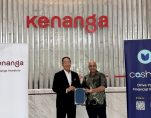
Datuk Wira Ismitz Matthew De Alwis, CEO and Executive Director, Kenanga Investors Berhad and Raevendren Ramachandran, CEO, Cashku

Under the partnership, a selected range of funds offered by Kenanga Investors and its Institutional Unit Trust Adviser partners will be available to Cashku users with no sales charge and from a minimum investment starting from RM10.

For investors, the effect is practical: investors can review fund information, open an account, set their investing goals, invest and make additional investments within a single application, with suitability assessed at the point of investment and monitored continuously thereafter.

Cashku has rebuilt the advice layer of wealth management around agentic AI; software that does not simply answer questions, but carries out risk profiling, goal-based portfolio construction, suitability assessment and ongoing portfolio monitoring, under the oversight of licensed human advisers and within the SC’s regulatory framework. That architecture, for which Cashku received a DIGID award for data-driven advisory under the SC’s Digital Innovation Fund in 2024, is what allows the platform to reach investors at a materially lower cost to serve.

The partnership arrives as Malaysia’s fund management industry reaches record scale. Assets under management rose 6.9% to a record RM1.14 trillion in 2025, with unit trust funds forming the largest single category at roughly half of that total. The SC’s Capital Market Masterplan 2026–2030 targets a capital market of over RM6 trillion by 2030 and names an inclusive capital market for all Malaysians as one of its four strategic themes — an agenda that depends on reaching the Malaysians who are not investing today. Individual participation in the capital market currently stands at 25%, and the Masterplan finds that around 60% of non-investors are under the age of 40.

“Malaysia’s problem has never been the quality of its funds — it has been access to the advice that helps people use them well. Financial planning has traditionally been reserved for those wealthy enough to pay for it, which is why most households have never had a plan at all. Cashku exists to change that: to give every Malaysian a plan built around their own goals. Partnering with managers like Kenanga Investors is how that gap closes.”

— Raevendren Ramachandran, Chief Executive Officer, Cashku

“Digital distribution is a natural extension of the Group’s own digitalisation agenda. Working with a licensed platform such as Cashku allows us to reach investors who are starting earlier and investing in smaller amounts than traditional channels are built to serve, without compromising the standards of suitability, transparency and governance our clients expect.”

— Datuk Wira Ismitz Matthew De Alwis, Chief Executive Officer and Executive Director, Kenanga Investors.

Cashku will continue to expand the range of funds available on the platform.

Hashtag: #Kenanga

The issuer is solely responsible for the content of this announcement.

About Kenanga Investors Berhad 199501024358 (353563-P)

Kenanga Investors Berhad is a licensed fund management company regulated by the Securities Commission Malaysia and a wholly owned subsidiary of Kenanga Investment Bank Berhad. It provides investment solutions spanning collective investment schemes, portfolio management services, alternative investments, and wills and trusts for retail, corporate, institutional and high net worth clients through a multi-distribution network.

The LSEG Lipper Fund Awards 2026 recognised four funds under the Malaysia Provident Funds category; Kenanga Growth Fund was named Equity Malaysia (5 Years), Kenanga Growth Fund Series 2 was awarded Equity Malaysia Diversified (3 Years), Kenanga Malaysian Inc Fund was awarded Equity Malaysia Diversified (10 Years) while Kenanga Managed Growth Fund was recognised with the title Mixed Asset MYR Balanced – Malaysia (10 Years).

The Hong Kong-based Asia Asset Management’s (“AAM”) 2026 Best of the Best Awards awarded Kenanga Investors under the following categories, Malaysia Best Impact Investing Manager, Best Impact Investing Manager in ASEAN, Malaysia Best Equity Manager, Malaysia CEO of the Year (Co-Winner), Malaysia CIO of the Year, Malaysia Best House for Alternatives and Malaysia Best ESG Engagement Initiative.

At the AAM ETF Awards 2026, Kenanga Investors received an accolade under the category Malaysia Leverage and Inverse ETF of the Year for the Kenanga KLCI Daily (-1x) Inverse ETF. The IFN Investor Awards 2025 awarded the Kenanga Islamic Balanced Fund under the categories of “IFN Investor Best Balanced Mixed Assets Fund in Malaysia — MYR 2025”, “IFN Investor Best Balanced Mixed Assets Fund in Asia Pacific 2025”, and “IFN Investor Best Global Balanced Mixed Assets Fund 2025”.

For the ninth consecutive year, we were affirmed an investment manager rating of IMR-2 by Malaysian Rating Corporation Berhad, since first rated in 2017. The IMR rating on reflects the fund management company’s well-established investment processes and sound risk management practices.

VISHNU RAJA
RYO YAMADA
HITORI GOTOH
IKUYO KITA