News related to
Bank

Arabian Post Staff -Dubai Emirates NBD has closed $2.25 billion in five-year financing, completing one of the Gulf’s largest syndicated borrowings at a time when war-linked market turbulence has unsettled regional assets, shipping routes and funding sentiment. The package combines a $1.75 billion sustainability-linked syndicated term loan and a $500 million Club Commodity Murabaha term facility arranged through Emirates Islamic. The scale of demand appears to be […]

Pressure on the rupee is poised to intensify after the Reserve Bank of India ordered banks to sharply cut net open rupee positions in the onshore market, forcing a scramble to unwind large arbitrage trades that had linked domestic and offshore pricing. Bankers have warned that the adjustment could amplify volatility, strain treasury books and unsettle corporate hedging activity even as the central bank seeks to restore […]

By Dr. Gyan Pathak The Congress announced five guarantees to Assam voters on Sunday March 29, and two days later on March 31, BJP has released its manifesto and gave 31 promises. A special feature of the BJP’s manifesto is its comparison of achievement of NDA and UPA rule in the state trying to outshine […]

The article BJP’s Election Manifesto For Assam Tries To Outshine The Congress appeared first on Latest India news, analysis and reports on Newspack by India Press Agency).

Ingdan Posts Landmark Full-Year Results with 50.1% Revenue Growth, Backed by Robust AI Chip Demand and Expanding Proprietary Product Portfolio

Highlights of the Annual Results for the Year Ended December 31, 2025:

  • Robust Revenue Growth: Group revenue surged by 50.1% year-on-year to RMB15,206.7 million, driven by heightened demand for AI computing power and a strategic expansion into high-growth AI application markets.
  • Strong Profitability: Gross profit increased by 24.1% to RMB1,104.2 million. Net profit was approximately RMB310.2 million, up 13.4%; profit attributable to equity shareholders of the Company grew by a robust 13.1% to RMB214.8 million, demonstrating effective monetization of its platform and operational efficiency.
  • Building on the substantial investments made in large-scale AI computing power and proprietary products in 2025, the Company is confident that its revenue growth trajectory will accelerate in 2026.

HONG KONG SAR – Media OutReach Newswire – 1 April 2026 – Ingdan, Inc. (“Ingdan” or the “Company,” Stock Code: 400.HK; together with its subsidiaries, the “Group”), an innovative technology services platform group, today announced its audited consolidated results for the year ended December 31, 2025 (“2025” or “the Year”). The results reflect a landmark year of performance, further cementing the Company’s position at the core of the AI industry value chain. The Group serves as an ecosystem services platform anchored in AI chips, with a strategic focus on AI computing power centers and AI smart terminals. The Company is dedicated to building an AI industry connector with broad industrial linkages. Its core positioning is to bridge upstream AI chip technology with the needs of downstream innovation enterprises. The Group has established deep partnerships with world-leading chip manufacturers including NVIDIA, Xilinx, Intel, AMD, and SanDisk. Leveraging chip distribution as its gateway, the Group provides customers with an integrated, full-chain service covering technology solutions, supply chain services, technical training, and after-sales operation and maintenance — connecting the ecosystem service chain from chip supply to end-application deployment, and empowering the industrialization of AI technology.

2025 Full Year Financial Highlights

Benefiting from continued robust AI computing power demand and a significant uptick in chip requirements across AI technology-related industries, the Group’s revenue for the year reached approximately RMB15,206.7 million, comprising 62.6% from technology solutions, 37.0% from distribution business, and 0.4% from proprietary products — representing a year-on-year increase of approximately 50.1% from RMB10,129.1 million in 2024. The Group’s gross profit was approximately RMB1,104.2 million, up 24.1% year-on-year. Operating profit was approximately RMB532.4 million, up 24.4% year-on-year. Net profit after tax was approximately RMB310.2 million, up 13.4% year-on-year. Profit attributable to equity shareholders of the Company was approximately RMB214.8 million, up 13.1% year-on-year.

As at December 31, 2025, the Group’s cash and bank balances (including pledged deposits) amounted to RMB1,264.3 million, bank loans stood at RMB2,628.0 million. The total number of issued ordinary shares was 1,644,262,732 shares, with basic weighted average shares of 1,582,928,000 shares.

Deepening AI Computing Power Supply Chain: Comtech Continuously Empowering Industry Innovation

In the current strategic growth phase of the global semiconductor industry, the synergistic evolution of AI, cloud computing, and IoT technologies — combined with breakthroughs in humanoid robotics — is driving exponential growth in global computing power demand. This trend is not only spurring iterative demand for high-performance computing chips such as GPUs and ASICs, but also accelerating technological upgrades across the entire industry chain, including high-speed storage chips and intelligent networking equipment.

Against this backdrop, the Group’s core business unit, Comtech (“Comtech”) — a technology services platform for the chip industry — serves as a core supplier in the AI computing power supply chain, and is deeply engaged in the development of global computing power networks, with its service coverage spanning data centers, AI servers, AI switches, optical modules, and a wide range of AI application sectors. Comtech collaborates closely with leading global chip manufacturers, acting as an authorized distributor for over 80 core suppliers, including NVIDIA, Xilinx, Intel, AMD, and SanDisk, and many leading domestic chipmakers.

Leveraging years of deep market expertise, Comtech has accumulated extensive technical experience and industrial resources, enabling it to provide chip application solutions and supply chain management services to tens of thousands of downstream clients. Utilizing proprietary AI technologies, large language models (LLMs), and specialized knowledge bases, Comtech delivers intelligent and automated solutions in chip selection, hardware design, software development, and system integration, significantly enhancing product performance and reliability.

Comtech’s proprietary product line is entering a new era of AI acceleration. The Company holds multiple proprietary intellectual property rights in AI chip applications and intelligent supply chain, including an intelligent algorithm library, industry-specific large language models, an intelligent hardware design platform, an adaptive system architecture, and a broad portfolio of innovative technology patents. Its subsidiary, Kepler Lab, has successfully developed SOM-level proprietary products based on core chips including NVIDIA Jetson and Xilinx FPGA. Benchmarked against international advanced standards, these domestically developed AI edge computing products have achieved mass shipments to customers including customs authorities and banks, and are being actively expanded into emerging sectors such as robotics, medical devices, and autonomous driving. With high gross margins and a customer base that naturally overlaps with the Company’s traditional distribution business, this proprietary product line is poised to establish a second growth curve — marking the Company’s strategic transformation from a supply chain service provider to a technology value-added service provider, and opening compelling new possibilities for the Group’s long-term value creation.

As at December 31, 2025, Comtech’s adjusted distribution cost (“ADC”) inventory amounted to approximately RMB772.0 million. For the year ended December 31, 2025, ADC inventory turnover for Comtech was approximately 21 days.

Ingdan Technology Accelerates Strategic Positioning: AI Servers and Talent Development Advancing in Tandem

AI Computing Center Business: Precisely Capturing Domestic Computing Power Demand

In view of accelerating global AI technological advancement and sustained growth in domestic computing power demand, universities, medical schools, and research institutions have an increasingly urgent need for self-controllable, high-performance AI computing power. The Group’s intelligent computing power technology and services platform Ingdan Technology (“Ingdan Technology”), is capitalizing on the import-substitution opportunity by strategically deploying its AI server business and making large-scale investments in AIDC (AI Data Center) computing power center operations and proprietary product development.

Through deep collaboration with Huawei and leveraging the Ascend 910 chip, Ingdan Technology has launched the DeepSeek all-in-one workstation to precisely address the core computing power needs of scientific researchers. The DeepSeek all-in-one workstation features stable computing performance, robust data security, and full technological autonomy — achieving a distinctive competitive advantage through the combination of leading manufacturer endorsement and customized services.

Ingdan Academy: Talent Development Surges More Than Fourfold, Supporting National Semiconductor Strategy

Leveraging the Group’s extensive resources and technological expertise in the chip industry, Ingdan Academy introduces world-leading chip application technologies and is dedicated to developing talent in chip application and AI. To date, Ingdan Academy has cumulatively trained over 9,000 chip application engineers — surpassing the previous milestone of 2,000 by more than fourfold — serving over 1,200 enterprises and supplying a large number of high-quality professionals to the chip and AI industries. Through continuous talent training and technical support, Ingdan Academy is working to help Shenzhen become a global center for chip application and AI, contributing to the development of the nation’s semiconductor industry.

Chief Executive Officer’s Outlook

Mr. Jeffrey Kang, Chairmanand CEO of Ingdan, Inc., commented: “2025 has been a year of profound milestone significance in the Company’s development journey. Building on the substantial investments made in large-scale AI computing power and proprietary products throughout 2025, we are confident that our revenue growth trajectory will accelerate in 2026.The astonishing growth in AI computing power demand has fully validated the Group’s forward-looking strategic positioning across the AI chip application value chain.Looking ahead, we anticipate significant performance improvement driven by robust and sustained growth in demand for AI chips, GPUs, and storage networking chips. Supported by a robust bank financing framework, we expect sales to major customers to grow substantially — injecting powerful momentum into the Group’s exceptional performance growth in 2026 and laying a solid foundation.

We are full of confidence in the Group’s future development, and we extend our sincere gratitude to every shareholder, customer, and business partner for their continued trust and support.”

Cautionary Statement

The information contained herein has not been independently verified. No representation, warranty or undertaking, express or implied, is made as to, and no reliance should be placed on, the fairness, accuracy, completeness or correctness of the information or the opinions contained herein by the Company or any of its affiliates, advisers or representatives. The information contained herein should be considered in the context of the circumstances prevailing at the time and is subject to change without notice. The Company does not undertake to update the information contained herein to reflect events or circumstances occurring after the date hereof.

This document is not intended to provide, and you should not rely upon it for, a complete or comprehensive analysis of the Company’s financial or operating condition or prospects. Neither the Company nor any of its affiliates, advisers or representatives shall have any liability whatsoever (in negligence or otherwise) for any loss howsoever arising from any use of this document or its contents or otherwise arising in connection therewith.

This document may contain forward-looking statements that reflect the Company’s current intentions, beliefs and expectations regarding future events as of the dates indicated herein. Such forward-looking statements are not guarantees of future performance and are based on numerous assumptions regarding the Company’s present and future business strategies and the environment in which the Company will operate in the future, and are subject to significant risks and uncertainties. In light of these risks, uncertainties and assumptions, actual results may differ materially from those expressed or implied by such forward-looking statements. The Company and its affiliates, advisers and representatives undertake no obligation and make no commitment to update any forward-looking statements to reflect events or circumstances occurring after the relevant date.

Hashtag: #Comtech #Ingdan #AI #IC #Chips #humanoid #Intel #AMD #Sandisk #NVIDIA #Tech #RevenueGrowth #TechGrowth #AIInvestment #ProprietaryProducts #KeplerLab #Comtech #IngdanTechnology #IngdanAcademy #AIAcceleration #TechTransformation

The issuer is solely responsible for the content of this announcement.

About Ingdan, Inc.

Ingdan, Inc. (Stock Code: 400.HK) is an ecosystem services platform anchored in AI chips, with a strategic focus on AI computing power centers and AI smart terminals. The Company is dedicated to building an AI industry connector with broad industrial linkages. Its core positioning is to bridge upstream AI chip technology with the needs of downstream innovation enterprises. Leveraging chip distribution as its gateway, the Company provides customers with an integrated, full-chain service covering technology solutions, supply chain services, technical training, and after-sales operation and maintenance — connecting the ecosystem service chain from chip supply to end-application deployment, and empowering the industrialization of AI technology.

Headquartered in Shenzhen, the Group operates offices and branches across major cities in China, including Hong Kong, Shanghai, Beijing, Wuhan, Chengdu, Nanjing, Hangzhou, and Xi’an, as well as representative offices in Singapore and Japan. The Group’s core businesses are Comtech — a technology services platform for the chip industry; and Ingdan Technology — a platform providing intelligent computing power technology and services.

For further information, please refer to the Company’s website at www.ingdangroup.com

  Breaches involving employee information reported to the UK’s data regulator climbed again in 2025, reaching their highest level since the Information Commissioner’s Office began publishing comparable incident data in 2019, according to an analysis by law firm Nockolds that draws on ICO reporting. The rise adds to mounting concern among employers that staff records, payroll details and internal HR files are becoming harder to protect as […]

Arabian Post Staff -Dubai Gold edged higher on Tuesday but remained on course for its sharpest monthly decline since October 2008, as investors weighed a powerful mix of delayed hopes for US rate cuts, a surge in energy prices linked to the Iran war and a stronger dollar through much of March. Spot gold was up about 3.2% at $4,652.31 an ounce by Tuesday, yet still showed […]

Nigeria has forfeited a potential revenue surge from elevated crude prices during the Iran war because it could not raise production enough to match the market opportunity, according to Dele Oye, chairman of the Alliance for Economic Research and Ethics, who said the lost upside could amount to about $20.2 billion a year. He argued that Brent’s climb far above Nigeria’s budget benchmark should have delivered a […]

Advertisements

Arabian Post Staff -Dubai   Emirates NBD Group has closed $2.25 billion in long-term financing, in a deal that ranks among the largest syndicated borrowings in the Gulf and underscores the lender’s ability to attract offshore funding even as markets navigate geopolitical tension and higher funding costs. The package comprises a $1.75 billion five-year sustainability-linked syndicated term loan and a $500 million five-year club commodity murabaha facility. […]

SHENZHEN, CHINA – Media OutReach Newswire – 31 March 2026 – On March 31, 2026, Linklogis Inc. (09959.HK, “Linklogis”) released its 2025 annual results. During the year, the total revenue and income amounted to RMB983 million. Revenue and income in the second half of the year increased significantly by 62% compared with the first half of the year, reaching RMB608 million. In 2025, the total volume of supply chain assets processed by its technology solutions reached RMB508.1 billion, representing a 27% year-on-year increase, while the number of anchor enterprises served increased to 3,145. As of the end of 2025, Linklogis had cumulatively served more than 430,000 SMEs with efficient and convenient digital inclusive fintech services. The company maintained a solid financial position, with cash reserves reaching RMB4.9 billion, while liquidity remained ample.

In addition, Linklogis has always placed shareholder interests at the core of its corporate governance, rewarding investors’ trust through sustained and tangible actions. In August 2025, the Board approved a new share repurchase program of no less than US$80 million to be implemented over a one-year period. Under this repurchase program, the company has cumulatively repurchased shares totaling HK$365 million (approximately US$47 million), demonstrating its confidence in its long-term value through concrete actions.

Focusing on Core Business, Accelerating Business Structure Optimization

In 2025, Linklogis remained focused on its core business and accelerated the optimization of its business structure. The total volume of supply chain assets processed by its technology solutions reached RMB508.1 billion, up 27% year-on-year. With a market share of 22%, the company ranked first in the industry for the sixth consecutive year. The number of anchor enterprises served increased to 3,145, including 54 of China’s Top 100 enterprises and 151 of China’s Top 500 enterprises, while the number of financial institution partners reached 428, further improving the efficiency of industry-finance collaboration.

Linklogis’ supply chain finance technology solutions include Anchor Cloud, which consists of Multi-tier Transfer Cloud, AMS Cloud and Treasury Cloud, as well as FI Cloud, which consists of ABS Cloud and eChain Cloud. In 2025, the total volume of supply chain assets processed by Anchor Cloud reached RMB369.6 billion, representing a year-on-year increase of 31%. The total volume of supply chain assets processed by Multi-tier Transfer Cloud reached RMB304.2 billion, surging 47% year-on-year, with its contribution to the group’s total asset volume rising from 52% in 2024 to 60% in 2025. The total volume of supply chain assets processed by AMS Cloud, however, was RMB65.4 billion, down 13% year-on-year due to the continued decline in issuance volume in the supply chain asset securitization market.

The total volume of supply chain assets processed by FI Cloud reached RMB128.9 billion, up 20% year-on-year. Both ABS Cloud and eChain Cloud recorded solid double-digit growth in transaction volume, contributing to a 25% year-on-year increase in FI Cloud revenue. In the ABS Cloud segment, the total volume of supply chain assets processed reached RMB69.1 billion, rising 28% year-on-year. In the eChain Cloud segment, the total volume of supply chain assets processed reached RMB59.7 billion, increasing 13% year-on-year.

Linklogis focused on six key industries, including infrastructure and construction, new energy and advanced manufacturing, and worked with its subsidiary Bytter Technology to deepen targeted cross-selling, achieving breakthroughs in high-quality customer acquisition. Leveraging its one-stop comprehensive industrial-finance solutions and innovative scenario-based applications, Linklogis worked with a number of central and state-owned enterprises and leading private enterprises, including Shougang Group, China Coal Mine Construction Group Corporation and JA Solar Technology, to launch integrated industrial-finance platform projects. At the same time, it provided targeted support to 17 high-quality enterprises, including Shanghai Construction Group, Yunnan Construction and Investment Holding Group and Luzhou Laojiao, covering scenarios such as order financing, bill collateral, and supply chain bill transfer, supporting coordinated growth in both scale and value creation.

Building the “Second Growth Curve”, Unlocking Global Trade Finance Potential

2025 marked a pivotal year for Linklogis’ international business as the company embarked on a new chapter and accelerated the development of its “second growth curve.” During the year, Linklogis officially launched a comprehensive rebranding of its international business, introducing “Unloq” as its new identity for the global market, reflecting its vision of unlocking the potential and efficiency of global trade finance. Guided by a core strategy centered on cross-border trade corridors, scenario-based finance and technology-driven risk management, Unloq is committed to building a globally connected digital supply chain finance platform with strong local execution capabilities.

In line with its core strategy, the company has leveraged its cloud-native technology to launch the innovative “SC+ Platform”, designed to connect global real-world trade with digital finance. The “SC+” signifies its core function of connecting smart contracts with compliant digital payment instruments, forming a technology-enabled solution for global trade finance. The platform is dedicated to building the next-generation digital infrastructure for global trade finance and addressing systemic challenges in cross-border trade, including credit verification, fund turnover, and clearing and settlement efficiency. Through the platform, funders can utilize various compliant payment methods to purchase trade receivables.

To date, Unloq has completed the deployment of the core architecture of the SC+ Platform. Working with multiple commercial partners, Unloq has advanced the rollout of innovative applications leveraging compliant digital payment methods. In 2025, Linklogis successfully secured the bid for a Web3.0-based supply chain finance platform project for a leading central state-owned enterprise, marking a new milestone in its technological capabilities and industry recognition in the field of digital trade infrastructure.

In its international business, Unloq accelerated the expansion of cross-border trade services. In addition to traditional B2B goods trade, cross-border e-commerce and online travel agencies, it also expanded into cross-border logistics, bringing the total number of platform customers to 1,550, representing a net year-on-year increase of 451. With the deeper penetration of the SC+ Platform in cross-border trade finance, the continued expansion of its global localized service network, and the accelerated integration of solutions supporting Chinese enterprises’ overseas expansion, Linklogis’ cross-border and international business is expected to enter a phase of exponential growth in both asset volume and revenue in 2026, embarking on a new chapter of high-quality and sustainable development.

Advancing the “AI-powered Industrial Finance” Strategy: From Internal Empowerment to Industry Value Co-Creation

Linklogis remains committed to its “AI-powered Industrial Finance” strategy and continues to promote the deep integration of AI with supply chain finance across the entire value chain. Built on years of technological expertise and scenario-based refinement, its AI capabilities have evolved from internal productivity tools into a sophisticated intelligence engine that empowers the entire industrial ecosystem. By deeply integrating leading domestic large language models with its proprietary supply chain finance scenario knowledge graph and multimodal business elements, the company has systematically advanced the ongoing iteration and capability enhancement of its self-developed vertical model, LDP-GPT. Building on this foundation, Linklogis has developed the “BeeLink AI Agent” product matrix, covering more than ten core scenarios including intelligent trade document checking, intelligent PBOC registration, intelligent KYC, and intelligent risk management.

In 2025, BeeLink AI Agent continued to deliver breakthroughs in market penetration and commercialization. The number of customers served rose to 42, including domestic and overseas financial institutions and industry leaders such as Standard Chartered Bank, Bank of Hangzhou, and China Electrical Equipment Finance. Processing efficiency improved by 20 times, while accuracy in key processes reached 99%. As AI continues to evolve toward an agent-based paradigm, Linklogis will take “AI Agent+” as a strategic lever to comprehensively upgrade BeeLink AI Agent from functional tools to intelligent collaboration. It will prioritize breakthroughs in advanced capabilities such as cross-system task coordination, natural-language interactive decision-making, and adaptive workflow optimization, enabling customers to move from point intelligence to enterprise-wide intelligence, and from business insights to intelligent decision-making, thereby delivering end-to-end value across the entire value chain.

Linklogis actively responded to China’s “dual carbon” strategy and high-quality development agenda by embedding ESG principles into product innovation and the entire service lifecycle, leveraging technology to advance green finance, inclusive finance, and sustainable development. In 2025, the volume of sustainable supply chain assets served by the company exceeded RMB66.8 billion, representing a year-on-year increase of 80%, with its share of total serviced assets rising from 9% in 2024 to 13% in 2025. During the year, SMEs that obtained financing through Linklogis Supply Chain Multi-tier AR Transfer Platform benefited from an average financing cost of only 2.85%. The company continued to deepen its presence in four key sectors—renewable energy, rural revitalization, environmental protection, and public health—while further expanding into sustainable sectors such as the new energy vehicle supply chain, green buildings, and the circular economy. Through these initiatives, it directed financial resources more precisely to key segments that generate both green and low-carbon benefits and strong social impact, gradually building a broader and more influential sustainable development ecosystem that integrates industry and finance.

Expanding Full-scenario Deployment, Enhancing the Smart Industrial Finance Treasury Product Matrix

Through the acquisition of Bytter Technology, Linklogis made a strategic entry into the corporate treasury management sector. By synergizing management teams and business operations, the company successfully established the Treasury Cloud product line, providing diverse customers with end-to-end treasury management services covering settlement operations, cash planning, financing management, risk monitoring, and intelligent decision-making. As a key component of Linklogis’ “Smart Industrial Finance Treasury” strategy, Treasury Cloud is anchored by a dual-engine approach powered by AI and data, and has established a comprehensive product matrix, including the F1 treasury management system and T6 cash management system for anchor enterprises, the bank treasury system for financial institutions, and the Yingzilian SaaS platform for SMEs.

Since September 11, 2025, Bytter Technology has been consolidated into the group’s financial statements. The integration of the Treasury Cloud business has been fully completed. Linklogis will continue to deepen resources integration and business collaboration between Treasury Cloud and the group’s other supply chain finance technology businesses in areas such as product R&D, channel expansion and customer service. The company will accelerate the development of an integrated, intelligent and scalable Smart Industrial Finance Treasury platform, providing customers with one-stop digital solutions covering treasury management and industrial-finance collaboration.

Charles Song, founder, Chairman and CEO of Linklogis, said: “The year 2026 marks the tenth anniversary of Linklogis. As we stand at the threshold of a new decade, we will remain firmly committed to a core strategy of being technology-driven and globally connected, while steadfastly advancing our dual-engine approach of deepening domestic industrial finance and expanding global digital trade. We will seize opportunities amid transformation and strengthen our competitive advantages through innovation. In the domestic market, we will continue to advance the “AI-powered Industrial Finance” strategy. Anchored by the comprehensive upgrade of BeeLink AI Agent, we will accelerate AI’s evolution from scenario-based enablement to ecosystem-level collaboration. At the same time, leveraging our full-stack capabilities in Smart Industrial Finance Treasury solutions, we will continue to refine our integrated one-stop solutions, consolidate our market leadership, and ensure the steady growth of our core business. In international markets, we will accelerate the expansion of global cross-border digital trade networks through Unloq and roll out the SC+ Platform along key global trade corridors. We aim to become a key builder and connector in the ongoing digital and intelligent transformation of global trade finance. The future is already unfolding. Only the adaptable can prevail, and only the persistent can go the distance. With technology as our oar and industry as our vessel, Linklogis will continue to join forces with our partners, embarking together on the magnificent journey toward a digital and intelligent future for global industrial finance.”

Hashtag: #Linklogis

The issuer is solely responsible for the content of this announcement.

South Africa will cut a fuel tax for April to soften the hit from surging global oil prices, as Finance Minister Enoch Godongwana moves to contain a steep rise in petrol and diesel costs that threatens to feed inflation across Africa’s most industrialised economy. The step comes as oil markets remain under strain from conflict-linked supply disruption in the Middle East and as the rand has weakened […]

Arabian Post Staff -Dubai Sharjah Islamic Bank is pressing ahead with a rights issue worth up to AED2.59 billion, or about $705 million, in a move designed to reinforce its capital base, fund balance-sheet expansion and preserve financial flexibility as the lender pushes for further growth. The bank said the offer will raise issued capital from about AED3.24 billion to as much as AED4.31 billion through the […]

Arabian Post Staff -Dubai Abu Dhabi Global Market has reported a 36 per cent rise in assets under management for 2025, capping a year in which the international financial centre also expanded its workforce by 51 per cent and lifted active licences to 12,671. The figures, released as ADGM marked its 10th year of operations, underline how strongly Abu Dhabi has been drawing global fund managers, banks […]

Blackstone has opened talks with investment banks over a possible Mumbai listing of AGS Health that could raise as much as $500 million, according to reports on Tuesday, putting another sizeable healthcare-linked offering on the radar even as the primary market remains more selective than it was a year ago. The discussions are at an early stage, and the proposed float has yet to move into formal filing territory, but people familiar with the matter have said the firm is considering a mix of fresh shares and secondary sales and is seeking a valuation of as much as $3 billion.

AGS Health sits in a part of the healthcare economy that has drawn strong financial interest: revenue cycle management, the business of helping hospitals, physician groups and health systems handle billing, coding, claims, collections and data-led workflow improvement. The company describes itself as a technology-enabled operator serving major healthcare providers in the United States, with intelligent automation and AI woven into those services. On its website, AGS says it processes tens of billions of dollars in accounts receivable annually and supports clients through a large coding and back-office workforce spread across multiple geographies.

The mooted flotation would fit a broader pattern in which buyout firms are trying to crystallise gains from businesses built around outsourced healthcare administration and software-supported services. AGS had already been seen as a prized asset before Blackstone took control, with deal reporting last year and in 2025 pointing to intense interest from private equity groups in the company as well as in peers serving the same market. That activity underlined how investors view healthcare operations platforms as steadier, more scalable assets than many consumer-facing businesses, especially when they are tied to recurring work for hospitals and insurers.

Blackstone’s interest in AGS also reflects the continuing attraction of cross-border healthcare services models anchored in delivery centres in South Asia and the Philippines while selling into the US healthcare system. AGS says it operates globally and markets itself as a strategic growth partner for provider organisations facing rising administrative costs, denial management pressures and a growing need for automation. Its own recent company material has placed heavy emphasis on AI-powered coding, denial management and compliance support, showing how the pitch to clients has shifted from labour arbitrage alone to a combination of software, analytics and domain expertise.

Whether the listing proceeds on the terms being discussed will depend not only on AGS’s financial profile but also on market mood. Reuters has reported that the domestic IPO pipeline remains active, with large names such as Zetwerk and INOX Air Products advancing plans, yet it has also noted that sentiment has been weaker in 2026 after underperformance in some new-age and technology listings and amid heavy foreign outflows from equities linked to geopolitical tensions and oil-price shocks. That makes valuation discipline more important for sponsors seeking exits through public markets.

Healthcare, however, is one of the areas where issuers still believe they can command investor attention. Reuters reported last week that Manipal Health Enterprises filed for an IPO of up to $1.17 billion, betting on demand for specialised care, consolidation and higher insurance coverage. Against that backdrop, AGS would offer investors a different healthcare angle: not hospitals or pharmaceuticals, but the infrastructure of billing, coding and claims management that sits behind care delivery. For fund managers looking for healthcare exposure without direct clinical risk, that model may prove easier to value, though the dependence on US reimbursement systems and hospital spending cycles will remain a point of scrutiny.

Another factor in AGS’s favour is that revenue cycle management has stayed a live consolidation theme. Reuters reported in 2024 that EQT agreed to acquire GeBBS Healthcare Solutions for more than $850 million, while other reports have highlighted interest from major investors in comparable healthcare outsourcing assets. Those transactions suggest that buyers are still willing to pay for scale, client retention and workflow technology in a sector where providers are under constant pressure to improve cash collection and reduce administrative leakage. If Blackstone can pitch AGS as a business with strong client stickiness and growing automation capability, the company may find a receptive audience despite choppier equity conditions.

Lloyds Banking Group has disclosed that an IT defect exposed the personal data of up to 447,936 customers after a faulty overnight software update allowed some mobile app users to see other people’s current-account transactions. The incident, which affected the Lloyds, Halifax and Bank of Scotland apps on 12 March, has intensified scrutiny of operational resilience at major lenders as more banking activity shifts to digital channels. […]

Japan’s investors are being pushed back towards overseas yield trades as the war involving Iran unsettles the country’s traditional refuge assets, weakens the yen and lifts the cost of imported energy. What had looked like a steadier domestic backdrop at the start of 2026 has been disrupted by a surge in oil prices, renewed pressure on the currency and a sharp reassessment of where Japanese savers and […]

Arabian Post Staff -Dubai European shares held their ground on Monday as investors waited for German and euro zone inflation readings that could show how sharply the Middle East war is feeding through into prices, after a surge in oil left the STOXX 600 heading for its worst month since the first pandemic shock of March 2020. The pan-European STOXX 600 was up about 0.2 per cent […]

Arabian Post Staff -Dubai Sharjah Islamic Bank is seeking to raise as much as AED2.59 billion through a rights issue that would give the lender more room to expand its balance sheet, reinforce capital buffers and support the next stage of growth after a year of stronger profit and asset gains. The plan would lift issued capital from about AED3.24 billion to about AED4.31 billion through the […]

Omniyat Holdings has said it has enough liquidity to handle its debt obligations after Fitch placed the Dubai ultra-luxury developer on Rating Watch Negative, citing geopolitical risk linked to the Iran war and the potential for weaker buyer demand in Dubai and across the Gulf. The company said it held more than AED 5.3 billion in cash, cash equivalents and other financial assets at the end of […]

India’s rupee surged on Monday after the Reserve Bank of India tightened banks’ foreign-exchange position limits, forcing lenders to cut dollar holdings and unwind arbitrage trades that had built up as the currency slid to a record low at the end of last week. The rupee rose as much as 1.4% in early trade and was quoted around 93.48 to 93.85 per US dollar, marking its sharpest one-day gain since February.

The immediate trigger was the RBI’s March 27 directive capping banks’ net open rupee positions in the onshore deliverable market at $100 million by the close of each business day from April 10. That replaced a looser framework under which banks’ boards could set limits up to 25% of total capital. Traders said the order prompted a burst of dollar selling as banks moved to reduce exposures that had become profitable while the rupee was weakening.

The rebound followed a bruising stretch for the currency. On Friday, the rupee hit a record low of about 94.84 to the dollar after heavy pressure from higher crude prices, risk aversion and foreign outflows. Reuters reported the rupee had fallen more than 4% in March, putting it on course for its worst monthly performance in more than seven years, while broader anxiety over the Middle East conflict and its implications for energy markets deepened concern over India’s import bill and external balance.

At the centre of the RBI’s move is the gap between the domestic market and the offshore non-deliverable forward, or NDF, market. Banks had been exploiting pricing differences between the two venues, building large arbitrage books that were profitable during the rupee’s slide. Estimates for those positions vary, but Reuters and other market reports put them broadly in the $25 billion to $50 billion range. By suddenly tightening the rules, the central bank appears to have targeted not only volatility in the spot market but also the speculative mechanics that were amplifying pressure on the currency.

That has given the rupee breathing room, but it has also shifted the strain onto banks. Lenders have warned that rapid compliance could force a disorderly unwinding of positions and crystallise losses in treasury books. Several banks have asked the RBI for three months to comply, arguing that a phased adjustment or permission to hold existing trades to maturity would reduce the risk of market disruption. Equity investors appeared to register that concern, with banking shares falling amid estimates that mark-to-market losses could run into thousands of crores if the unwind is abrupt.

The central bank’s intervention is being read in dealing rooms as one of its strongest attempts in years to reassert control over rupee pricing. Market participants said the RBI has already been active in local and offshore markets, using reserves and liquidity tools to keep the currency from sliding too quickly. The new cap adds a regulatory weapon to that defence. It also sends a signal that the central bank is prepared to curb trading strategies it sees as destabilising, even at the cost of squeezing bank profitability in the short term.

Whether the rupee can hold on to these gains will depend less on technical unwinding and more on the backdrop that pushed it down in the first place. Brent crude has climbed sharply, with Reuters reporting a move above $115 a barrel on Monday and a monthly gain of nearly 60%. For an economy that imports the bulk of its oil, that raises the risk of a wider current account deficit, imported inflation and renewed pressure on the currency. Bond yields also edged higher, indicating that traders remain alert to the wider macroeconomic fallout even as the rupee recovers ground.

TAIPEI, TAIWAN – Media OutReach Newswire – 30 March 2026 – More than half of Taiwan’s small businesses recorded growth in 2025, while confidence heading into 2026 climbed to its highest level since 2020, according to the Asia-Pacific Small Business Survey 2025–26 conducted by global professional accounting body CPA Australia.

SBS Infographic 2026 Taiwan Eng

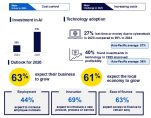
The survey found that 53 per cent of Taiwanese small businesses grew in 2025, slightly below the 57 per cent recorded in the previous survey. Looking ahead, business sentiment strengthened notably. In 2026, 63 per cent of respondents expect their business to grow, while confidence in the local economy also improved, with 61 per cent anticipating economic growth, the highest level recorded since Taiwan was first included in the survey in 2018.

Taiwan’s small and medium‑sized enterprises (SMEs) continue to play a vital role in creating new jobs. In 2025, 31 per cent of SMEs increasing staff numbers, while 44 per cent plan to hire additional employees in 2026.

With rising costs identified as the biggest challenge facing Taiwan’s SME in 2025, many businesses identified cost control as the most positive contributor to business performance last year.

Mr Elic Lam FCPA (Aust.), Honorary Taiwan Advisor at CPA Australia, said Taiwan’s economic fundamentals continue to support small business resilience, “Rising global demand for semiconductors and AI related chips continues to create opportunities for exporters and suppliers across Taiwan’s value chain,” Mr Lam said. “While geopolitical tensions and intensifying competition are adding uncertainty, government support measures for SMEs, including targeted subsidies and tax incentives, together with Taiwan’s resilient domestic demand, are helping to lift business confidence.”

Technology adoption, particularly artificial intelligence (AI), is becoming increasingly widespread among Taiwanese small businesses. The survey found that 33 per cent of small businesses identified AI as the technology they invested in most heavily invested in 2025, up from 29 per cent in the previous year.

Cyber risk among Taiwanese small businesses fell markedly. The share of small businesses reporting losses of time or money due to cyber incidents declined sharply from 59 per cent in 2024 to 27 per cent in 2025, reflecting stronger awareness and the uptake of basic protective measures across the sector.

However, the survey also indicates there is room to strengthen the returns from digital investment. Only 40 per cent of respondents reported that their technology investment in 2025 improved profitability, compared with the survey average of 56 per cent.

Mr Lam noted that Taiwan’s SME sector is undergoing a generational transition that is influencing technology adoption patterns, “Many SMEs in Taiwan are moving from first generation ownership to second or third generation leadership, and technology adoption remains cautious and practical,” he said. “The increase in AI investment reflects both external drivers, such as changing customer expectations and government policy support for digital transformation, as well as internal factors, including younger owners’ familiarity with AI tools and rising operating and staffing costs.”

“To improve profitability, SMEs should focus on applying digital solutions in areas with the greatest impact. For example, as rising costs were identified as the most negative factor affecting performance in 2025, investing in ready-to-use and AI enabled accounting or financial management tools can help reduce operating expenses and lift productivity.”

Access to finance is another notable finding. Financing conditions in Taiwan improved significantly in 2025, even as borrowing softened. Two-thirds of businesses (66 per cent) I said it was easy to access external finance, placing Taiwan among the top three surveyed markets and representing a sharp increase from 28 per cent in 2024. Looking ahead, financing conditions are expected to remain supportive, with 63 per cent anticipating easy access to finance in 2026.

Despite the marked improvement in financing conditions, demand for finance was more subdued. In 2025, 54 per cent of SMEs sought external finance, down from 72 per cent in 2024.

“The Taiwan government has expanded inclusive and guaranteed financing mechanisms to support SMEs, including higher guarantee ratios under the SME Credit Guarantee Fund and preferential loans offered through state affiliated banks,” Mr Lam said. “These measures have made bank financing more accessible for small businesses.”

“Even so, many SMEs remain cautious about taking on new debt. In a stable domestic environment, businesses can maintain steady growth, but external uncertainties drive them to take a prudent approach to borrowing. This aligns well with the government’s policy focus on gradual and resilient SME transformation rather than rapid, high risk expansion.”

Lam concluded, “To navigate international uncertainty and intensifying market competition, Taiwan’s small businesses should make better use of government policy support to upskill their workforce through AI adoption, foster innovation, and diversify export markets by strengthening online sales channels.”

The Asia Pacific Small Business Survey 2025–26 gathered views from 4,166 small businesses across 11 markets in the region, including Singapore, Chinese Mainland and Australia. The Taiwan survey sample comprised 311 small businesses.

Hashtag: #CPAAustralia

The issuer is solely responsible for the content of this announcement.

About CPA Australia

CPA Australia is Australia’s leading professional accounting body and one of the largest in the world. We have more than 176,000 members in over 100 countries and regions, including more than 22,500 members in Greater China. Our core services include education, training, technical support and advocacy. CPA Australia provides thought leadership on local, national and international issues affecting the accounting profession and public interest. We engage with governments, regulators and industries to advocate policies that stimulate sustainable economic growth and have positive business and public outcomes. A CPA is a Certified Practising Accountant. More at

India has cut special excise duties on petrol and diesel after a sharp rise in global crude prices, seeking to shield consumers from a broader inflation shock as the Iran war and disruption around the Strait of Hormuz continue to unsettle energy markets. A government order issued late on Thursday reduced the special excise duty on petrol to Rs 3 a litre from Rs 13, while the levy on diesel was removed entirely from Rs 10 a litre. At the same time, New Delhi imposed fresh windfall taxes on diesel and aviation turbine fuel exports to recover part of the revenue loss and manage the fiscal hit.

The move underlines the pressure facing policymakers as oil prices remain volatile and the rupee weakens, raising the cost of imports for one of the world’s biggest crude buyers. Brent crude climbed above $112 a barrel on Friday, extending a rally driven by doubts over any near-term ceasefire and persistent fears that supply disruptions in the Gulf could deepen. Traders and analysts have said the risk premium now reflects not only lost barrels but also the strategic importance of Hormuz, through which a large share of global oil and liquefied natural gas flows.

For India, the tax cut is as much about inflation management as political optics. Retail prices at state-run fuel retailers have been largely held steady even as global crude costs have climbed, forcing public-sector oil marketing companies to absorb losses on every litre sold. Reuters reported that those losses were running at about Rs 24 a litre on petrol and Rs 30 on diesel at the time of the duty cut, a burden that had begun to raise concerns about the financial strain on the country’s dominant fuel retailers. By lowering excise duties, the government creates room for those companies to keep pump prices stable without taking the full blow on their balance sheets.

That relief, however, comes with a cost. The excise reduction is expected to trim government revenue by roughly Rs 70 billion every fortnight, with the net impact estimated at about Rs 55 billion after accounting for the new export levies on diesel and jet fuel. Those numbers matter because New Delhi is already balancing slower growth risks, higher import costs and sensitivity in bond markets. India’s 10-year government bond yield rose as investors weighed the inflationary impact of oil and the possibility that fiscal targets may come under pressure if energy turbulence persists.

Currency markets have been sending a similar warning. The rupee slipped beyond 94 to the US dollar, marking a record low and capping its weakest fiscal-year performance in more than a decade. Higher oil prices have compounded external pressures by widening import costs and fuelling worries over inflation, while signs of reduced support from the Reserve Bank of India have added to volatility in both the currency and government debt markets. The combination of a softer rupee and expensive crude intensifies the urgency for measures that can prevent fuel inflation from feeding into transport, food and manufacturing costs.

The government has paired the tax changes with broader supply assurances. Officials have said retail fuel prices will remain stable and that supplies of fuel, fertiliser and coal are adequate. India has also increased the availability of liquefied petroleum gas for industrial use, an indication that authorities are trying to prevent energy stress from spilling into factories and power demand. That broader messaging is aimed at containing panic in a market already on edge over whether the Middle East conflict could trigger a more prolonged energy shock.

The burden of holding down prices has not been distributed evenly across the sector. State-run retailers, which control more than 90 per cent of the country’s fuel stations, have largely refrained from raising pump prices, while private players have begun adjusting. Nayara Energy, for example, increased gasoline and gasoil prices this week, citing the combined impact of a weaker rupee and surging global crude prices. The divergence highlights the structural challenge for the government: keeping inflation contained without unduly damaging the finances of state-backed refiners and marketers.

Arabian Post Staff -Dubai Telda has moved beyond payments and cards to add stock and fund investing to its app, opening a new front in Egypt’s fast-growing race to attract first-time retail investors. The Cairo-based fintech said on Sunday that users can now buy and sell shares on the Egyptian Exchange and subscribe to investment funds from within the same platform, without relying on a traditional broker […]

Arabian Post Staff -Dubai Gold prices climbed sharply on Friday, reversing part of this week’s slide as investors stepped back into the market after bullion fell to a four-month low, while traders also watched for any sign that tensions in the Middle East might ease. Spot gold rose more than 3% at its intraday peak before trading about 2.6% higher at $4,491.78 an ounce by afternoon dealings […]

Disneyland Paris has formally opened a new phase of its long-running expansion, using the March 29 debut of World of Frozen to relaunch its second gate as Disney Adventure World, a move the company says marks the biggest transformation in that park’s history. Official announcements from Disneyland Paris, backed by Reuters and Associated Press reporting, show the renamed park now centres on a large new Frozen-themed land, […]

VISHNU RAJA
RYO YAMADA
HITORI GOTOH
IKUYO KITA