Oil prices jumped sharply on Thursday after US President Donald Trump said the United States would step up attacks on Iran over the coming weeks, stoking fears that disruptions around the Strait of Hormuz could last longer and tighten supplies of crude and refined fuels across global markets. West Texas Intermediate settled at $111.54 a barrel after surging more than 11%, while Brent closed near $109.03, extending […]
Arabian Post Staff -Dubai Banks across the Gulf are on course to set aside sharply higher sums for bad loans over the next two years, as investors and analysts weigh the knock-on effects of prolonged regional conflict, softer property sentiment and the possibility that stress in real estate could begin feeding through to bank balance sheets. Estimates compiled by Visible Alpha, part of S&P Global Market […]
JAKARTA, INDONESIA – Media OutReach Newswire – 3 April 2026 – Green SM Indonesia and Bank Central Asia (BCA) today announced the signing of a five-year investment loan agreement with a total value of IDR 600 billion, marking the formalization of a long-term financial partnership between the two parties.
Green SM Indonesia has officially signed a IDR 600 billion investment loan agreement with BCA, strengthening its long-term financial foundation and advancing sustainable urban mobility in Indonesia.
The agreement marks the next phase of cooperation between Green SM Indonesia and BCA, reflecting a shared commitment to supporting sustainable, well-governed business development in Indonesia’s urban mobility sector.
The investment loan facility is intended to support Green SM Indonesia’s operational readiness and service continuity. The facility provides a stable financial structure to underpin the company’s disciplined growth approach and support consistent service delivery across its existing urban operations.
The signing builds on earlier cooperation between the two parties, which began with Green SM’s market launch in Jakarta in December 2024. Since then, BCA and Green SM Indonesia have collaborated on customer-focused programs and initiatives to improve service accessibility and raise awareness of environmentally responsible transportation solutions. The transition from cooperation activities to a formal financing arrangement reflects the maturation of this partnership and BCA’s support in Green SM Indonesia’s operational model and governance standards.
The cooperation also reflects BCA’s broader role in supporting business sectors that are adapting to evolving urban development needs, including shifts toward more efficient and forward-looking mobility solutions.
Representing BCA, Mr. Denny Haryanto, SVP Corporate Banking BCA said: “This agreement reflects our approach to supporting businesses with a long-term outlook. Sustainable transportation is increasingly important to Indonesia’s urban development. Through this cooperation, we support initiatives that align with long-term economic resilience and environmental responsibility.”
Mr. Deny Tjia, Managing Director of Green SM Indonesia, said the agreement reflects trust built through consistent cooperation and shared values. “The investment loan agreement reflects recognition of the disciplined operating model and long-term development orientation that Green SM Indonesia has pursued since its early stages. The facility further strengthens the company’s financial foundation, supporting stable and consistent service delivery across the cities where it operates.”
Since commencing operations, Green SM Indonesia has established a presence in several major urban centers, including Jakarta, Makassar, Bekasi, Surabaya, and Bali. These cities face increasingly complex urban mobility requirements alongside rising expectations for cleaner, more responsible transport solutions. In the Indonesian market, Green SM provides all-electric taxi services that support routine urban travel while reducing emissions and noise. The company’s operating approach emphasizes reliability, professional service standards, and scalability aligned with city-level transport planning.
Through this agreement, Green SM Indonesia and BCA reaffirm their shared view that the transition to sustainable urban mobility requires not only electric vehicle technology but also sound financial structures, responsible governance, and long-term commitment. The investment loan agreement is a practical step to support that transition in Indonesia’s evolving mobility landscape.
Hashtag: #GreenSM
The issuer is solely responsible for the content of this announcement.
About GSM & Green SM
GSM (Green Smart Mobility) is the world’s first company to operate an all-electric ride-hailing service across multiple platforms. As a pioneer in sustainable transportation, GSM has built the foundation for a cleaner, smarter, and more responsible mobility model powered entirely by VinFast electric vehicles. GSM is committed to developing a future-ready mobility ecosystem and inspiring greener lifestyles in countries rapidly embracing sustainability.
Green SM is GSM’s official global brand, representing the company’s vision and values in every market it serves. In Southeast Asia, Green SM operates in Indonesia; under the name Xanh SM in Vietnam and Laos; and as Green GSM in the Philippines. Across all markets, the brand offers a refined travel experience with VinFast electric cars, professional drivers, and a service culture centered on safety and care.
Green SM represents progress toward a future where technology, the environment, and humanity advance together in harmony. The brand is committed not only to providing zero-emission transportation but also to fostering an environmentally conscious society in every market it serves.
Microsoft has unveiled a $10 billion investment plan for Japan running from 2026 to 2029, marking one of the company’s biggest artificial intelligence commitments in Asia and a major escalation from its earlier pledge in the country. The package, worth about 1.6 trillion yen, is aimed at expanding AI infrastructure, strengthening cyber defence cooperation with Tokyo and widening access to domestic cloud capacity for government agencies and businesses.
The announcement signals how sharply competition for AI infrastructure has intensified across Asia. Microsoft said the programme will focus on adding computing capacity inside Japan at a time when governments and corporations are demanding secure, local processing for sensitive workloads. Brad Smith, Microsoft’s vice-chair and president, disclosed the plan during a visit to Tokyo, where the company also set out training and security goals tied to the investment.
Under the plan, Microsoft intends to train one million engineers and developers by 2030, a figure that underlines the labour challenge facing Japan as it tries to scale AI use across the economy. The company is also expanding cybersecurity collaboration with the Japanese government, including work around threat intelligence and cybercrime prevention. Those elements give the package a dual purpose: commercial expansion for Microsoft and strategic support for a country that has made digital resilience and industrial competitiveness central to policy.
The new commitment builds on a smaller programme announced in April 2024, when Microsoft said it would invest $2.9 billion over two years to expand cloud and AI infrastructure in Japan, while also launching wider digital skilling efforts, opening its first Microsoft Research Asia lab in the country and deepening cooperation on cybersecurity. The latest package therefore appears less like a standalone move than the next stage of a longer campaign to lock in market share and policy relevance in one of Asia’s most advanced economies.
Japan offers Microsoft an attractive mix of high-value enterprise customers, a technologically sophisticated manufacturing base and a government that has been openly supportive of industrial uses for generative AI. Tokyo’s policy stance has increasingly favoured the deployment of advanced digital tools to lift productivity, offset labour shortages and bolster economic security. That political environment has made Japan a focal point for global technology groups seeking not just customers, but durable alignment with state priorities on data sovereignty and national resilience.
Market conditions also help explain the scale of the move. Reuters reported that around one-fifth of working-age people in Japan are now using generative AI tools, showing that adoption has advanced but remains well below leading global levels, leaving substantial room for growth. At the same time, labour projections point to a steep shortage of AI and robotics specialists by 2040, raising the stakes for corporate training programmes and local infrastructure investment. For Microsoft, that creates an opening to sell both computing capacity and the wider ecosystem needed to make AI usable at scale.
Partnerships with local players will be central to execution. Microsoft said it would work with firms including SoftBank and Sakura Internet to expand domestic AI computing capacity and provide more secure local access to Azure services. That matters in Japan, where demand from public institutions and regulated industries often hinges on where data is processed and how operational control is shared. Collaboration with established domestic groups may also help Microsoft navigate competitive pressure from rival cloud providers and home-grown digital infrastructure ambitions.
Arabian Post Staff -Dubai A three-way alliance between the International Monetary Fund, the World Bank Group and the International Energy Agency has opened a new front in the battle against the widening energy and economic turmoil linked to the war in the Middle East, with the institutions agreeing to form a coordination group to help governments manage price shocks, funding strains and supply disruptions. The move, announced […]
Arabian Post Staff -Dubai du Pay and GCash have moved to tighten the UAE-Philippines remittance corridor with a partnership aimed at giving Filipinos in the Emirates faster transfers, broader digital utility and fresh promotional offers in one of the region’s most active migrant payment markets. The tie-up, announced on April 2, is designed to let money sent through du Pay land in GCash wallets within minutes, […]
Rising global energy prices are adding a fresh inflation risk to the United States even as the International Monetary Fund said the world’s largest economy remains on a solid growth path, with trade and fiscal changes expected to narrow the current-account deficit only modestly over the medium term. The IMF’s latest assessment said growth in the US is projected to reach 2.4 per cent in 2026, while […]
Arabian Post Staff -Dubai Dubai lender Emirates NBD has won approval from the Reserve Bank of India to acquire up to 74 per cent of Mumbai-based RBL Bank, a decision that moves one of the largest cross-border banking deals in the country closer to completion and could reshape the private lender’s ownership, governance and market position. The approval, disclosed on April 2, allows Emirates NBD to […]
By Dr. Gyan Pathak While world’s untaxed wealth of the richest 0.1 per cent hidden offshore surpasses entire wealth of the poorest half of the humanity, India remains the receiver of the highest number of the regressive tax recommendations by the International Monetary Fund (IMF) that increases tax burden on the lower-income households more than […]
Masdar and TotalEnergies have signed a binding agreement to combine their onshore renewable energy portfolios across nine Asian markets into a 50:50 joint venture valued at $2.2 billion, marking one of the more significant cross-border clean energy tie-ups involving Gulf and European players this year. The new platform, to be headquartered in Abu Dhabi, is set to become the exclusive vehicle through which the two companies develop, […]
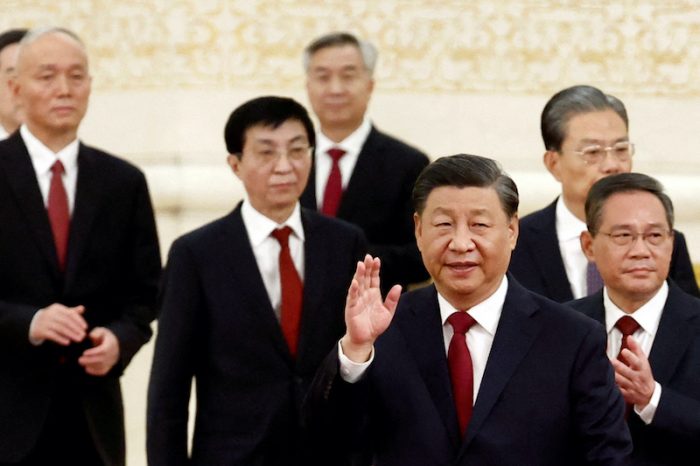
China’s central bank has pulled cash from the banking system for the first time in about a year, signalling a more cautious near-term approach to liquidity management as higher oil prices begin to feed into factory costs, transport bills and corporate margins.
The People’s Bank of China conducted a small reverse repo operation on 2 April while a far larger batch matured, producing a net daily withdrawal of 223.5 billion yuan. The move came after policymakers had spent months leaning towards support for growth, and it suggests Beijing is trying to preserve room for manoeuvre rather than rushing into broader easing while imported inflation risks build.
That calibration matters because China is facing two conflicting pressures at once. On one side, domestic demand remains weak, producer prices are still soft, and policymakers have already acknowledged that supply continues to outstrip demand in parts of the economy. On the other, the oil shock linked to the Middle East conflict is lifting input costs and complicating the case for an immediate flood of fresh liquidity. China’s central bank said after its first-quarter monetary policy committee meeting that it would maintain an “appropriately loose” stance while keeping liquidity ample and supporting a recovery in prices.
The timing of the drain is striking because it follows signs that parts of the economy had started to stabilise before energy costs became a bigger threat. Official manufacturing activity returned to expansion in March, with the PMI rising to 50.4 from 49.0 in February, while a private survey showed factory output and orders still growing even as cost pressures intensified. Those readings pointed to a modest improvement in momentum, but they also showed that the rebound is vulnerable to rising commodity prices and longer supplier delivery times.
Economists and policy advisers in China have begun to frame the challenge less as a choice between stimulus and restraint, and more as a balancing act between supporting growth and containing imported inflation. Huang Yiping, a central bank adviser, said this week that oil-led price pressure was hurting profitability and narrowing the room for policy to respond, even though broader inflation remains below the official target. China’s consumer inflation rose 1.3% in February, the highest in more than three years, but still below Beijing’s target of around 2% for 2026.
For markets, the signal is not that Beijing has turned hawkish. The seven-day reverse repo rate remained unchanged at 1.4%, and the central bank has continued to stress that it can still use rate cuts, reserve requirement reductions and other tools if needed. What has changed is the sequencing. Officials appear unwilling to react to every external shock with an immediate dose of easier money, especially when higher oil prices could push up headline inflation even as underlying demand stays fragile.
That caution is also tied to the broader policy picture. China set a 2026 growth target of 4.5% to 5%, below last year’s goal, reflecting weaker confidence in the external environment and the unfinished task of shifting growth away from debt-heavy sectors and towards household consumption. Policymakers have pledged to support demand, private investment and prices, but the tone from Beijing has been measured rather than aggressive. The central bank’s liquidity withdrawal fits that pattern: it does not amount to a policy reversal, but it does show a preference for targeted fine-tuning over blunt stimulus.
The oil backdrop helps explain why. China has entered the current energy shock in a stronger position than some of its Asian peers, with strategic stockpiles, diversified power supply and a large electric-vehicle base helping to soften the blow. That resilience has supported Chinese assets during wider market turbulence. Yet the country is not immune. Independent refiners have already been cutting processing rates as crude costs climb and domestic fuel demand stays under pressure, while manufacturers are reporting the fastest increase in output prices in years.
U. S. Treasuries fell across the curve after President Donald Trump used a televised address to harden his stance on Iran, unsettling investors who had been looking for signs of de-escalation and instead got a warning of heavier military action that sent oil prices sharply higher and revived fears of another inflation pulse through the global economy. The move in government debt reflected a quick reassessment of […]
Arabian Post Staff -Dubai Oil prices leapt on Thursday after President Donald Trump said the United States would keep striking Iran for at least the next two to three weeks, dashing hopes that Washington was preparing to scale back military action and easing concerns in energy markets only briefly. Brent crude rose above $108 a barrel and West Texas Intermediate climbed past $106 in early trade, reversing […]
Cordros Securities has projected a calmer but still constructive second quarter for Nigeria’s equities market, arguing that the sharp gains posted in the first three months of 2026 may give way to more selective buying, with bank stocks likely to remain at the centre of investor attention. That view comes after a powerful first-quarter rally on the Nigerian Exchange, where banking counters were among the strongest performers […]
South Korea’s consumer prices rose 2.2 per cent in March from a year earlier, quickening from 2.0 per cent in both January and February as higher energy costs fed through the economy and kept inflation above the Bank of Korea’s medium-term 2 per cent target. The increase was milder than market expectations for 2.4 per cent, but it still marked the fastest annual pace since December and underscored the strain created by elevated crude prices linked to conflict-driven instability in the Middle East.
On a monthly basis, consumer prices rose 0.3 per cent in March, matching February’s pace. Petroleum products were a major driver even after Seoul introduced emergency measures to curb the blow to households and businesses. Government controls on fuel prices helped limit the pass-through, yet petroleum product prices still rose sharply from the previous month, showing how external energy shocks are overpowering domestic stabilisation efforts.
The inflation print matters because it lands at a moment when policymakers are trying to balance stronger export-led growth against mounting imported price pressures. The Bank of Korea said in its February outlook that consumer-price inflation for 2026 was expected to average 2.2 per cent, slightly above its previous 2.1 per cent forecast. That projection was made before the latest oil surge intensified, leaving economists to question whether the central bank’s assumptions have already been overtaken by events.
Core inflation, which strips out volatile food and energy items, eased slightly to 2.2 per cent in March from 2.3 per cent in February. That suggests underlying domestic demand pressures remain contained, even as headline inflation is being pushed up by imported costs. Another closely watched measure, which excludes agricultural products and petroleum, had been running at 2.5 per cent in February, indicating that sticky service-sector and household spending components have not fully disappeared.
Food prices offered some relief. Agricultural product prices fell in March as supply conditions improved, helping offset part of the jump in fuel-linked costs. That softer food picture helped explain why the overall figure came in below forecasts despite the energy shock. Still, analysts say the cushion from better farm output may prove temporary if transport, fertiliser and logistics costs keep climbing with oil.
South Korea is especially exposed because of its dependence on imported energy. About 70 per cent of its crude oil imports come from the Middle East, leaving the country vulnerable whenever shipping routes or production in the region come under threat. The government has already floated wider demand-management steps, including possible driving curbs beyond the public sector if crude prices climb further, a sign of how seriously officials are treating the supply risk.
Seoul has also moved on the fiscal side. This week the government proposed a supplementary budget of 26.2 trillion won, or about $17.3 billion, aimed at cushioning the economy from the oil shock and supporting low-income households and affected businesses. Of that, 10.1 trillion won is earmarked for measures tied to surging oil prices, including support for refiners operating under the emergency pricing system. The package highlights concern that inflation and slower consumption could combine to weaken the broader recovery.
For the central bank, the March data complicate an already delicate policy setting. The Bank of Korea’s next rate decision is due on April 10. Policymakers had held rates steady in February, and the latest inflation reading, while lower than forecast, is unlikely to offer much comfort because upside risks remain tied to oil, the exchange rate and transport costs. At the same time, softer core inflation argues against an aggressive response unless the energy shock broadens into wages and services.
Arabian Post Staff -Dubai Silver tumbled on Thursday, extending a volatile run in precious metals as higher oil prices, firmer Treasury yields and a stronger dollar pulled investors out of bullion. Spot silver was reported down about 4.6% on the day, while market data showed the metal trading near $72.31 an ounce and futures dipping to an intraday low around $70.35, leaving the market pressing against […]
Arabian Post Staff -Dubai Gold fell sharply on Thursday, but the viral claim that bullion had crashed below $4,600 and lost more than $1 trillion in market value in a single day appears to overstate what can be firmly confirmed from broad market data. By late trading, spot gold was quoted at $4,664.39 an ounce and US gold futures at $4,691.10, after a strong rebound a day […]
Malta has sharpened its fight with Brussels over plans to tighten European Union oversight of crypto companies, arguing that a heavier centralised regime would drive firms towards the United States, the UAE and parts of Asia instead of keeping them inside the bloc. The warning marks the latest escalation in a widening dispute over how the EU should police digital-asset businesses under its new Markets in Crypto-Assets […]
Ryanair has warned that jet fuel supplies into Europe could come under pressure from May if the US-Israeli war with Iran continues, with chief executive Michael O’Leary saying as much as a quarter of the airline’s fuel could be at risk during May and June if disruption around the Strait of Hormuz is not resolved by the middle or end of April. The warning, made on April […]
Arabian Post Staff -Dubai Serhii Zakharov, founder and chief executive of PayDo, has been honoured at FinTech Week Dubai 2026 with the Excellence in Financial Leadership Award in the Digital Payments Innovation category, adding a personal accolade to a year in which the London-based payments firm has been expanding its regulatory footprint and product stack. Event-linked coverage and company-linked posts place the award at FinTech Week Dubai, […]
Berkeley Group is halting new land purchases and slowing construction, marking one of the sharpest signals yet that Britain’s housing recovery remains vulnerable to higher costs, planning friction and tighter development economics. The FTSE 100 housebuilder said the pressure from taxes, regulation and wider market uncertainty has made fresh land buying harder to justify, even as it tries to protect margins and preserve cash. The decision […]
Mistral has raised $830 million in debt financing to build a large AI computing hub near Paris, a move that places the French start-up at the heart of Europe’s effort to develop home-grown artificial intelligence infrastructure and rely less on overseas cloud providers. The funding, the company’s first debt raise, will be used to buy 13,800 Nvidia chips for a data centre at Bruyères-le-Châtel, south of the […]
Coca-Cola and its authorised bottling partners in South Africa have set out plans to invest 17.6 billion rand, about $1 billion, in the country through 2030, betting that wider production capacity and a stronger distribution network will deepen their footprint in one of the group’s most important African markets. The announcement was made in Johannesburg at the sixth South Africa Investment Conference and covers Coca-Cola Beverages South […]
Ripple’s partnership with Convera has pushed the crypto company further into mainstream cross-border finance, linking its blockchain infrastructure with a commercial payments group that serves businesses across more than 140 currencies and 200-plus countries and territories. Announced on March 31, the deal is designed to let corporate customers move money across borders more quickly by using stablecoins as settlement rails while keeping the customer-facing transaction anchored in […]