News related to
India’s

By Ashis Biswas Within the South Asian context, a noticeable coarsening of diplomatic discourse among four countries has occurred, following the violent regime change in Bangladesh, a brief encounter involving India and Pakistan and sporadic skirmishes between Pakistan and Afghanistan. A new political alignment, whose contours will be clearer after the Bangladesh general elections, is […]

The article Disturbing Decline Of Diplomacy Across South Asia Bodes Ill For All appeared first on Latest India news, analysis and reports on Newspack by India Press Agency).

By Nantoo Banerjee It does not make sense for India to deplete its hard-earned foreign currency reserves to temporarily protect the Rupee’s exchange value. In fact, Indian Rupee’s downturn vis-à-vis other major currencies has not adversely impacted the country’s impressive economic growth, at least for the present. On the contrary, it has made exports cheaper […]

The article Rupee Decline May Not Be Bad For Economy Now appeared first on Latest India news, analysis and reports on Newspack by India Press Agency).

A wave of AI-generated videos circulating on social platforms has drawn regulatory and public attention after Meta removed a cluster of manipulated clips tied to public discourse in India, underscoring the accelerating threat posed by deepfakes and the strain on existing cybersecurity defences. The action has reignited debate over platform accountability, election integrity, and the pace at which safeguards are keeping up with generative tools.

Meta said the videos breached its policies on manipulated media and deceptive practices, adding that enforcement teams had detected coordinated behaviour designed to amplify misleading narratives. The company did not detail the creators or precise reach, but independent analysts tracking social traffic reported that some clips had amassed hundreds of thousands of views before moderation. The removals came amid heightened scrutiny of AI-driven misinformation as synthetic video and audio tools become cheaper, faster and harder to spot.

Security specialists warn that the technical leap in realism has lowered the barrier for malicious actors. Diffusion models and voice-cloning systems can now produce convincing footage with minimal training data, enabling impersonation, fabricated statements and false evidence. The risk profile extends beyond politics to financial fraud, reputational attacks and social engineering. Banks and insurers have flagged a rise in scams that combine deepfake video calls with stolen personal data to bypass verification checks.

India’s digital ecosystem amplifies the challenge. With one of the world’s largest online populations and intense engagement on short-video platforms, manipulated content can travel rapidly across languages and regions. Fact-checking groups say the velocity of sharing often outpaces verification, while takedowns, even when swift, can struggle to contain copies and re-uploads. Researchers at leading institutes have documented how watermark removal, compression artefacts and cross-platform reposting degrade detection signals.

Government authorities have been pressing technology companies to strengthen guardrails. Draft rules under the Information Technology framework emphasise due diligence for intermediaries, traceability of originators in defined cases, and clearer disclosures for synthetic media. Officials have also signalled expectations for labelling AI-generated content and responding promptly to lawful takedown requests, while balancing free expression and privacy. Industry groups argue that clarity on standards and timelines is essential to avoid uneven enforcement.

Meta has highlighted investments in detection and transparency, including classifiers trained to identify AI artefacts, partnerships with academic labs, and labels applied when confidence thresholds are met. The company also points to cross-platform threat sharing through industry forums to flag emerging manipulation techniques. Critics counter that adversarial innovation is moving faster than defensive models and that labels can be stripped or ignored, especially when content is shared outside original platforms.

Election experts say the stakes are rising as campaigns increasingly rely on video to reach voters. Even short-lived false clips can shape perceptions, sow doubt or distract from substantive debate. Studies of prior electoral cycles show that corrections often fail to reach the same audiences as the initial misinformation, leaving residual effects. Civil society organisations have urged a layered response that combines platform enforcement, rapid response hotlines, and public education on media literacy.

Cybersecurity firms are adapting with multi-signal approaches that fuse video forensics, network analysis and behavioural cues. Techniques include analysing eye-blink patterns, head-pose consistency, acoustic fingerprints and temporal anomalies, alongside monitoring coordinated posting patterns. Yet experts caution that no single method is foolproof. As generative systems learn to mimic these signals, defenders must iterate continuously, increasing costs for both sides.

The economic dimension is also coming into focus. Advertising clients are wary of brand adjacency to manipulated content, prompting demands for stronger brand-safety assurances. Meanwhile, startups offering verification, provenance tracking and content authentication are attracting investment. Standards bodies are promoting cryptographic provenance frameworks that embed origin metadata at creation, though adoption remains uneven across devices and platforms.

By K Raveendran Gold’s surge has turned a long-running Indian household instinct into a global macro trade. With spot prices pressing above the $4,500 an ounce mark late in 2025 and year-to-date gains running above 70 percent, the metal is headed for its strongest annual performance since 1979. The question now animating dealing rooms as […]

The article Gold’s Race To Magic $5000 Most Keenly Watched Milestone For 2026 appeared first on Latest India news, analysis and reports on Newspack by India Press Agency).

By Dr Arun Mitra The new nuclear bill, titled Sustainable Harnessing and Advancement of Nuclear Energy for Transforming India (SHANTI), passed by Parliament, has received the assent of the President of India, Droupadi Murmu. With this, it has become an Act governing various aspects of nuclear energy in the country. There is a strong push […]

The article The New Nuclear Bill Severely Compromises India’s National Interests appeared first on Latest India news, analysis and reports on Newspack by India Press Agency).

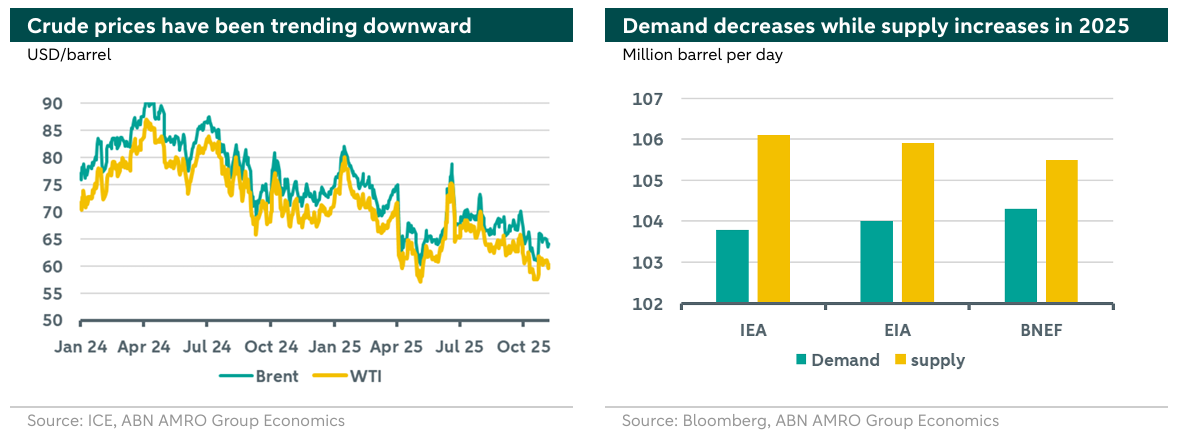
By K Raveendran As 2026 approaches, the global oil market is heading into a year that could decisively reshape price dynamics, fiscal planning in producing states, and energy security calculations for importing economies. The defining feature of the coming year is not demand destruction or geopolitical shock, but the growing weight of surplus supply. Market […]

The article 2026 Would Be A Year Of Lower Oil Prices And Crude Oversupply appeared first on Latest India news, analysis and reports on Newspack by India Press Agency).

By Ashis Biswas How serious is the slogan for wresting the seven sister states in India’s northeast region, raised by Islamic extremists in Bangladesh, for New Delhi? For a proper assessment of the political challenge this poses for India, a brief study of background information is necessary. Bangladesh sought to revive old links with Pakistan […]

The article Bangladesh’s Bluster On Northeast India: Empty Threats, Or More? appeared first on Latest India news, analysis and reports on Newspack by India Press Agency).

Advertisements

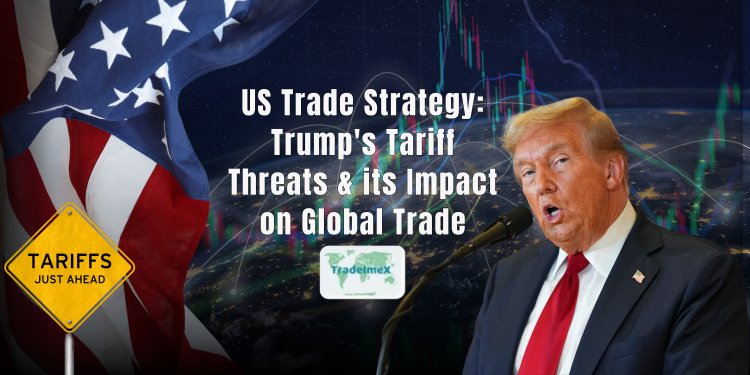
By Nantoo Banerjee US President Donald Trump may have problems with Russia, Venezuela and a host of other states and has every right to decide on the US trade and diplomatic policies to deal with those countries. But he has no right to thrust upon other free nations his likes, dislikes and prejudices. Unfortunately, he […]

The article Trump Has Become A Threat To Free Trade appeared first on Latest India news, analysis and reports on Newspack by India Press Agency).

Google has committed USD 8 million to support a network of artificial intelligence Centres of Excellence in India, signalling a deeper push into applied AI for public services, health care and local-language technologies while tying the investment to a parallel clean-energy partnership aimed at powering digital infrastructure sustainably.

The funding, announced by Google, is designed to accelerate research, product development and deployment across priority areas that include healthcare delivery, Indic language models and urban governance tools. The company said the centres will work with academic institutions, startups and public-sector bodies to translate laboratory advances into systems that can be deployed at scale, reflecting a broader shift among global technology firms towards mission-oriented AI programmes.

The allocation targets three primary domains. In healthcare, the centres are expected to focus on AI-assisted diagnostics, disease surveillance and workflow automation to reduce administrative burdens on clinicians. Google has previously tested AI models for medical imaging and population health analytics, and the new funding is intended to localise such tools for regional health systems, with attention to data privacy and clinical validation. Researchers involved in early-stage planning say the emphasis will be on interoperable platforms rather than standalone pilots, a response to criticism that many AI health projects fail to move beyond proof of concept.

Language technology forms the second pillar of the initiative. India’s linguistic diversity has long posed challenges for digital inclusion, and the centres are tasked with advancing large language models and speech systems that perform reliably across Indic languages and dialects. Google has already released open datasets and models for low-resource languages; the new programme seeks to improve accuracy, reduce bias and expand access for education, e-governance and small businesses. Industry observers note that competition in multilingual AI has intensified as regional startups and global rivals race to build models that can handle code-switching and local context.

Urban governance rounds out the focus areas, with planned projects covering traffic management, air-quality monitoring and municipal service delivery. Smart-city programmes have generated mixed results over the past decade, often constrained by fragmented data and procurement hurdles. By situating research within Centres of Excellence, Google aims to create replicable frameworks that cities can adapt, rather than bespoke systems tied to individual vendors.

Beyond the AI investment, Google has paired the announcement with a new solar partnership intended to support the energy needs of data centres and AI workloads. The company has pledged to match growth in computing capacity with clean-energy procurement, aligning with its global goal to operate on carbon-free energy around the clock. Analysts say the coupling of AI funding with renewable energy reflects mounting scrutiny of the environmental costs of large-scale computing, particularly as generative AI drives higher power demand.

The USD 8 million commitment is modest compared with Google’s global AI spend, yet its targeted design has drawn attention from policymakers and researchers. Government officials involved in discussions around the Centres of Excellence say the model allows for shared governance, with academic rigour balanced against industry deployment expertise. The approach also aligns with national ambitions to position the country as a hub for responsible AI development, emphasising safety, transparency and societal benefit.

Competition among technology firms has sharpened as Microsoft, Amazon and others expand partnerships with universities and public agencies across the Global South. In this context, Google’s move is seen as both a strategic investment and a reputational play, aimed at demonstrating that advanced AI can address public-interest challenges rather than solely commercial applications. Startups working in health tech and language processing expect spillover benefits through access to datasets, compute resources and mentorship.

IBM has set out an ambitious plan to equip five million people across India with skills in artificial intelligence, cybersecurity and quantum computing by 2030, deepening its long-running SkillsBuild programme and expanding partnerships with governments, universities and employers to address widening technology talent gaps.

The initiative, led by IBM, centres on scaling IBM SkillsBuild, a free digital learning platform that blends online courses, project-based learning and industry-recognised credentials. The company said the expansion will prioritise job-ready capabilities aligned with fast-evolving enterprise demand, including generative AI applications, cloud security and the foundations of quantum information science.

IBM executives framed the move as a response to structural shifts in the labour market, where automation and AI adoption are reshaping roles faster than traditional education systems can adapt. India’s large and youthful workforce, combined with rapid digitalisation across banking, healthcare, manufacturing and public services, has made skills development a policy and business imperative. Government estimates show millions of new digital roles emerging this decade even as legacy jobs are redefined.

The company plans to deepen curriculum integration with higher education institutions, vocational colleges and secondary schools, embedding SkillsBuild content into coursework while expanding teacher training so faculty can deliver updated material. IBM also intends to widen collaborations with state governments and industry bodies to tailor programmes for local employment needs, particularly in tier-two and tier-three cities where access to advanced training has lagged.

SkillsBuild offers modular pathways that range from introductory digital literacy to advanced certifications, with content developed by IBM practitioners and academic partners. Learners can earn digital badges in areas such as data analysis, AI ethics, cybersecurity fundamentals and cloud computing, alongside exposure to quantum concepts through simulations and guided labs. IBM said it will add more experiential components, including hackathons, internships and employer-linked projects, to strengthen transitions from learning to work.

Cybersecurity has been highlighted as a priority track, reflecting persistent shortages of security professionals and rising risks to critical infrastructure and enterprises. Courses will cover threat analysis, incident response and secure system design, with an emphasis on practical skills that align with global frameworks. In AI, the focus extends beyond coding to include responsible deployment, model governance and sector-specific use cases, areas that employers increasingly cite as gaps among graduates.

Quantum computing, still an emerging field, forms the third pillar of the programme. IBM operates one of the world’s largest fleets of quantum systems accessible via the cloud, and the curriculum introduces learners to quantum mechanics, algorithms and programming tools. While near-term job creation in quantum remains limited, IBM argues that early exposure will build a pipeline of talent capable of supporting research, hardware development and future commercial applications.

The scale of the target reflects IBM’s broader workforce strategy, which has shifted towards skills-based hiring and continuous learning. The company has previously said that formal degrees are no longer the sole proxy for capability, particularly in fast-moving technology domains. By expanding free access to training and credentials, IBM aims to widen participation among women, underrepresented communities and learners from non-traditional backgrounds.

Industry analysts view the plan as part of a competitive race among global technology firms to cultivate ecosystems of skilled users and developers. Cloud providers, software companies and chipmakers have all launched large-scale training commitments, seeking both social impact and long-term commercial benefits as trained professionals tend to adopt familiar platforms. For India, such programmes complement national efforts to boost digital skills and attract high-value investment, though experts caution that quality, relevance and job linkage will determine outcomes.


By Nitya Chakraborty The political developments in Bangladesh including violence against any one opposing the fundamentalists are having dangerous consequences for India involving the security and geopolitical stability in the sub continent. According to this writer who has been following the churnings in the newly liberated nation since 1971, the outlook for India in terms […]


The article Latest Bangladesh Developments Have Dangerous Consequences For India appeared first on Latest India news, analysis and reports on Newspack by India Press Agency).

Prime Minister Narendra Modi arrived in Muscat on December 17 for a two-day visit that places the spotlight on a partnership shaped by geography, commerce and people-to-people ties across the Arabian Sea. Sayyid Shihab bin Tarik Al Said, Deputy Prime Minister for Defence Affairs, led the welcoming party at Muscat International Airport, receiving the guest and his delegation with ceremonial honours. The visit marks a milestone year […]

Apple is evaluating the assembly and packaging of iPhone chips in India as part of a broader effort to rebalance its global supply chain, with CG Semi emerging as a potential partner, according to people familiar with the matter and public disclosures by companies involved in India’s semiconductor push. The move would mark a deeper localisation step beyond final device assembly and signal confidence in India’s ability to host advanced backend semiconductor operations.

The discussions centre on outsourced semiconductor assembly and test, a critical stage that follows wafer fabrication and precedes integration into devices. Apple’s A-series and M-series chips are designed in California and fabricated by Taiwan Semiconductor Manufacturing Company. Packaging and testing have largely been concentrated in East Asia, with China playing a central role through specialised facilities. Shifting part of this work to India would reduce geographic concentration risk while aligning with policy incentives offered by New Delhi to attract high-value electronics manufacturing.

CG Semi, the semiconductor arm of CG Power and Industrial Solutions, has been positioning itself as a contender in this space through a joint venture with Japan’s Renesas Electronics and Thailand’s Stars Microelectronics. The consortium has outlined plans for an OSAT facility in Gujarat, supported by central and state incentives under the Semiconductor Mission. While timelines and customer commitments have not been formally disclosed, the venture has been presented by partners as targeting advanced packaging for automotive and consumer electronics chips, an overlap that fits Apple’s requirements.

People tracking the talks caution that Apple’s evaluation remains exploratory. The company typically subjects suppliers to multi-year qualification processes covering yield, reliability, intellectual-property safeguards and environmental standards. Any decision would depend on CG Semi’s ability to meet Apple’s exacting specifications at scale and to integrate with the existing manufacturing ecosystem that includes contract assemblers such as Foxconn and Tata Group entities already producing iPhones in India.

India’s pitch rests on a combination of incentives and momentum. Production-linked incentive schemes have helped lift smartphone assembly volumes, with Apple accounting for a growing share of exports. The government has since widened support to semiconductors, offering capital subsidies, infrastructure backing and fast-tracked approvals. Backend operations are viewed as a pragmatic entry point, requiring lower capital expenditure and shorter build times than wafer fabs, while still delivering skilled jobs and technology transfer.

Industry analysts say Apple’s interest reflects a global trend among chip designers to diversify OSAT footprints amid geopolitical tensions and supply disruptions. Packaging has become more complex as chips move to advanced nodes and heterogeneous integration, raising the strategic value of reliable partners. “Advanced packaging is no longer a commodity step; it’s a differentiator,” said one semiconductor consultant who advises multinational clients on Asia manufacturing strategies. “Design houses want redundancy without sacrificing quality.”

For CG Semi, an Apple engagement would be transformative. CG Power, part of the Murugappa Group, has roots in electrical equipment rather than semiconductors. Its partnership with Renesas brings process know-how and credibility, while Stars Microelectronics contributes OSAT experience from Thailand. Securing a marquee customer would accelerate learning curves and help anchor a local supplier network for substrates, testing equipment and specialised chemicals.

There are constraints. India’s semiconductor ecosystem remains nascent, with gaps in materials, talent depth and logistics that could challenge tight production schedules. Power reliability, water availability and customs efficiency are under scrutiny by global manufacturers. Apple has previously paused or redirected supplier plans when execution risks appeared elevated, underscoring the need for consistent policy implementation at the state level.

Apple has not commented publicly on specific supplier discussions. CG Power has also refrained from naming potential customers, reiterating in filings that its semiconductor venture is at a development stage. Officials involved in the Semiconductor Mission have said backend projects are progressing and that customer announcements will follow commissioning milestones.

By Nantoo Banerjee It is difficult to explain why the government took nearly 17 years to decide on launching a bill in Parliament to allow private participation in India’s nuclear power generation programme. The proposed Sustainable Harnessing and Advancement of Nuclear Energy for Transforming India (SHANTI) Bill to amend the civil liability law to shield […]

The article ‘SHANTI’ Act Alone May Not Fully Protect Nuclear Plants Against Liabilities appeared first on Latest India news, analysis and reports on Newspack by India Press Agency).

Danish pharmaceutical company Novo Nordisk has launched its blockbuster diabetes and weight-related therapy Ozempic in India, making the semaglutide-based injectable available across the country with a starting cost of about ₹2,200 per week for the lowest 0.25 mg dose. The move positions Ozempic as a key element in the fast-evolving metabolic health market, where type 2 diabetes and obesity rates are among the highest globally.

Available in pre-filled pens with 0.25 mg, 0.5 mg and 1 mg strengths, the therapy has been approved in India as an adjunct to diet and exercise for adults with uncontrolled type 2 diabetes. Novo Nordisk has set the monthly cost for the 0.25 mg dose at approximately ₹8,800, with incremental pricing for the higher strengths. The company says Ozempic delivers benefits beyond glycaemic control, including cardiovascular and kidney risk reduction, and supports weight management through appetite suppression.

India’s diabetes burden is among the world’s largest, with more than 100 million adults affected, according to World Health Organization estimates. Additionally, hundreds of millions live with overweight or obesity, factors that increase the risk of metabolic complications. The introduction of a globally validated therapy such as Ozempic provides clinicians with another option in managing these interconnected health challenges.

Industry analysts note that the launch comes as the country becomes a major battleground for GLP-1 receptor agonist drugs — a class that includes semaglutide and competitors such as Eli Lilly’s tirzepatide, marketed locally as Mounjaro. These therapies mimic gut hormones to regulate blood glucose and appetite, and have become focal points in efforts to curb both diabetes and excess weight.

Novo Nordisk’s roll-out follows the entry of Wegovy, its higher-dose semaglutide formulation specifically approved for chronic weight management, which debuted in India earlier in the year. Wegovy’s pricing adjustments have sparked a noticeable uptick in uptake, highlighting how cost influences adoption of these premium therapies. Ozempic’s pricing at a relatively lower weekly rate aims to broaden its accessibility, though some clinicians stress that affordability will remain a concern for patients without comprehensive insurance coverage.

The timing of the launch intersects with ongoing intellectual property developments. While the core semaglutide patent has expired in India, a secondary patent covering specific formulations remains valid until early 2026, limiting domestic generic competition. Indian courts have recently allowed local firms such as Sun Pharmaceutical Industries and Dr. Reddy’s Laboratories to manufacture semaglutide for export to countries where Novo Nordisk holds no patent but have barred domestic sales of these versions until the formulation patent lapses, shaping competitive dynamics in the near term.

Novo Nordisk India’s managing director, Vikrant Shrotriya, has acknowledged that the weekly pricing is positioned to balance accessibility with the company’s investment in supply infrastructure. He said the goal is to expand reach beyond major urban centres to tier-1 and tier-2 cities and dedicated diabetes clinics, where consistent access to modern therapies has traditionally lagged. Clinicians emphasise that appropriate patient education and specialist referrals will be crucial in ensuring safe and effective use, given that semaglutide therapies require monitoring for gastrointestinal and metabolic effects as part of comprehensive care.

The launch also intersects with broader digital health initiatives. Local health-tech firms are partnering with international drugmakers to offer patient support programmes that provide coaching and adherence tools for individuals on GLP-1 therapies. These services aim to bolster outcomes by integrating medication with lifestyle guidance, reflecting a holistic approach to long-term metabolic health management.

By K Raveendran Trade negotiations between Washington and New Delhi have moved into a critical phase as senior American trade officials arrive in India with the stated intention of clearing the final hurdles to a long-discussed agreement. The presence of Deputy US Trade Representative Rick Switzer and chief India-deal negotiator Brendan Lynch underscores the renewed […]

The article US Officials’ Delhi Trip Takes Trade Negotiations Into A Decisive Stage appeared first on Latest India news, analysis and reports on Newspack by India Press Agency).

Amazon has pledged to invest more than $35 billion in India by 2030, targeting a significant expansion of its technology, logistics, and export operations across the country. The announcement, delivered on 10 December at the Amazon Smbhav Summit in New Delhi, follows previous investments totalling about $40 billion since 2010 — including a $26 billion commitment in 2023.

The funding will be channelled along three strategic pillars identified by Amazon: AI-driven digitisation, export growth and job creation. The company intends to leverage artificial intelligence to reshape its marketplace operations and support small and medium-sized enterprises.

Amazon aims to boost cumulative exports from Indian sellers — which hit over $20 billion — to $80 billion by 2030. That step would represent a four-fold increase in volume while providing an impetus to local manufacturing, packaging, logistics and supply-chain networks.

As part of this push, the firm expects to generate at least 1 million new employment opportunities across direct, indirect and seasonal roles by the end of the decade. These would be distributed across technology, operations, logistics, fulfilment and customer support functions.

The announcement by Amazon aligns with similar large-scale commitments from other global tech players. A day earlier, Microsoft committed $17.5 billion for cloud and AI infrastructure in India, while Google has floated plans to inject about $15 billion over five years towards AI data-centre development in the country.

Amazon’s renewed commitment comes against a backdrop of intensifying competition in India’s e-commerce and delivery space. Firms such as Flipkart, along with app-based delivery services like Blinkit, Swiggy-led Instamart and Zepto, have rapidly expanded consumer-facing logistics, creating pressure on legacy players to scale up technological and operational capabilities.

According to a report by consultancy Keystone Strategy, Amazon’s past investments helped digitise over 12 million small businesses, enabled more than $20 billion in exports and supported around 2.8 million jobs as of 2024. The upcoming investment aims to deepen that impact by extending digital infrastructure, training, fulfilment and AI-powered tools to more businesses.

Microsoft has committed $17.5 billion — roughly Rs 1.5 lakh crore — to expand cloud and artificial-intelligence infrastructure in India, marking its largest investment ever in Asia. The announcement came after a meeting between Microsoft chief executive Satya Nadella and Prime Minister Narendra Modi in New Delhi. The funds will flow over the next four years, aimed at building data-centre capacity, upskilling the workforce and strengthening what the company calls “sovereign AI capabilities.”

Under the plan, Microsoft will significantly expand its cloud infrastructure footprint across several Indian states. A new hyperscale data-centre in Hyderabad is expected to go online by mid-2026, complementing existing facilities in Chennai, Pune, Mumbai, along with the company’s Jio-Azure regions in Maharashtra and Gujarat. The investment builds on a $3 billion commitment earlier this year — an amount that had already positioned India as a major node in Microsoft’s global AI ambitions.

Skill-development forms a core pillar of the strategy. The company aims to train millions of Indians in AI and related domains, equipping a growing workforce to design, manage and deploy advanced AI systems. Nadella described the investment as central to India’s “AI-first future,” emphasizing the need for both infrastructure and human capital to realise such a vision.

Industry analysts view the commitment as a signal that multinational technology firms increasingly see India not merely as a consumer market, but as a global hub for cloud and AI development. The scope and scale of Microsoft’s investment reflect a broader shift in the global tech landscape, where companies are betting on India’s large internet-user base and technical talent pool. The move could also encourage other global players to escalate investments, accelerating the pace at which India becomes a major node in the emerging AI economy.

Government officials welcomed the announcement as a boost to India’s ambition to emerge as a technology superpower. As Modi noted after the meeting, global optimism around India’s AI potential is growing — and the new investment is expected to create significant opportunities across industries, particularly for start-ups and youth seeking to build careers in cutting-edge technologies.

The size and ambition of Microsoft’s commitment also suggest that the company expects robust returns from a nation undergoing rapid digital transformation. By combining massive infrastructure build-out with aggressive talent development, Microsoft appears to be laying the groundwork for India to play a central role in shaping the next generation of global AI products and services — from cloud-native applications to enterprise-level AI deployments.

By Nantoo Banerjee India’s domestic civil aviation market, the world’s third largest after the United States and China, nearly collapsed last week as its major private airline, IndiGo, boasting nearly 70 percent of traffic share, suddenly cancelled hundreds of flights on the ground of pilot shortages after it failed to adapt to new flight crew […]

The article India Must Clip IndiGo’s Wings To Protect Fast-Growing Domestic Aviation Market appeared first on Latest India news, analysis and reports on Newspack by India Press Agency).

By Nitya Chakraborty The India-Russia joint statement issued on December 5 after two days of talks between President Vladimir Putin and the Indian Prime Minister Narendra Modi is more a vindication of India’s renewed exercise of its geopolitical status defying the pressure from the USA and the other western powers rather than a document on […]

The article Modi-Putin Summit Reinforces India’s Geopolitical Identity Amidst Headwinds appeared first on Latest India news, analysis and reports on Newspack by India Press Agency).

By T N Ashok NEW DELHI: Russian President Vladimir Putin arrived in India Thursday evening for a two-day state visit that has become a diplomatic flashpoint, testing New Delhi’s ability to maintain strategic independence amid mounting pressure from Washington and European capitals. The arrival marks Putin’s first trip to India since the Ukraine war began […]

The article Putin’s India Visit: A Stress Test Of Strategic Autonomy Amid Global Pressure appeared first on Latest India news, analysis and reports on Newspack by India Press Agency).

By Dr. Gyan Pathak When Indian rupee was falling in the Mumbai market against US dollar on Wednesday, December 3, 2023 – sliding past the 90-a-dollar mark for the second day, plumbing a new low of 90.29 in the morning trade after opening flat at 89.96, analysts were pegging the next level for the beleaguered […]


The article CEA’s Calmness Over Steep Fall Of Rupee Ignores Key Risks To India appeared first on Latest India news, analysis and reports on Newspack by India Press Agency).

By K Raveendran The steady erosion of trust between political parties and the Election Commission has become one of the more troubling developments in India’s democratic life, revealing an institutional drift that carries implications well beyond a single electoral cycle. The body entrusted with safeguarding the integrity of elections is expected to serve as an […]


The article An Election Commission That Treats Critics As Enemies Has No Place In Democracy appeared first on Latest India news, analysis and reports on Newspack by India Press Agency).

Smartphone makers in India have been instructed by the telecom ministry to preload a government-owned cybersecurity app on all new devices sold in the country, blocking users from deleting the application once installed. Under a directive issued on November 28, companies such as Apple, Samsung, Vivo, Oppo and Xiaomi have been given a 90-day window to ensure all handset models destined for India include the Sanchar Saathi app. For devices already in the retail pipeline or those awaiting sale, manufacturers must deliver the app via over-the-air software updates and ensure it appears prominently during first-use setup.

Authorities say the app plays a key role in telecom security by giving users tools to verify device authenticity through IMEI checks, report suspected thefts or fraud, and block lost or stolen phones. Since the app’s launch in January 2025, government data indicates it has helped recover over 700,000 lost devices and block millions of connections flagged as fraudulent. Officials argue that this move is critical to counter growing misuse of duplicate or tampered IMEI numbers—a problem that fuels scams and the resale of stolen phones across India’s vast second-hand device market.

This mandate marks the first time the government has required a permanently installed, non-removable application on all smartphones sold in the country. The decision reflects a broader tightening of regulatory oversight over telecom infrastructure and device authenticity, drawing parallels with security measures in other jurisdictions.

The requirement has triggered sharp criticism from technology companies and privacy advocates alike. For example, the policy of Apple prohibits pre-installation of third-party or government apps prior to device sale—an approach that could force the company to either seek exemptions or find workarounds. Industry representatives have warned that the mandate may strain compliance operations, increase production costs, and undermine relationships with handset vendors.

Beyond logistical concerns, digital rights groups argue the rule tramples on user consent and privacy. Critics contend that embedding a state-run app with potentially broad access on every phone amounts to unwarranted surveillance and sets a troubling precedent. Some lawmakers and civil liberties advocates dubbed the move “a Big Brother measure,” warning that once entrenched, such mandates could be expanded further, eroding individual privacy without adequate data-protection safeguards.

VISHNU RAJA
RYO YAMADA
HITORI GOTOH
IKUYO KITA